Press release

Bonn Climate Talks: What to watch for the fossil fuel transition

June 5, 2026

Bonn, Germany | June 8–18, 2026. As governments return to Bonn for the UNFCCC Subsidiary Bodies meetings (SB 64), the transition away from fossil fuels will be a key test of whether growing political momentum can translate into practical progress.

The climate agenda has entered a decisive implementation phase, and that shift is clearest on fossil fuels. The Brazilian Presidency is developing a global roadmap for the transition away from fossil fuels, while the Santa Marta process has brought 57 countries together to focus on how to make that transition happen in practice.

Bonn will be the first major test of whether this momentum can begin to shape the formal UNFCCC process. Three areas will be especially important to watch.

Just Transition, Transparency, and the Global Stocktake

How the transition away from fossil fuels features in the Just Transition Work Programme, transparency arrangements, and preparations for the second global stocktake. These discussions will help show whether governments are starting to translate broad commitments into national action.

Finance, Investment, and Economic Constraints

Debates on climate finance, transition investment, fossil fuel subsidy reform, debt constraints, and investment barriers will be central to whether countries —particularly developing countries—have the fiscal space and support needed to move from commitment to implementation.

Trade, Cooperation, and Non-Market Approaches

How trade policy, international cooperation, and non-market approaches can support the transition, including through discussions linked to Article 6.8. Key questions include whether governments can reshape economic incentives in favour of clean energy and green commerce, while strengthening cooperation between fossil fuel-producing and consuming countries.

What happens in Bonn will help set the tone for what is achievable at COP 31 in Türkiye this November.

Read IISD’s full take on how the Santa Marta conference on transitioning away from fossil fuels relates to Bonn.

IISD Experts Available For Interview in Bonn

Expert
Issue Areas
Media Contact

Vance Culbert

Senior Policy Advisor & COFFIS Secretariat Manager 

Fossil fuel subsidy reform, the Coalition on Phasing Out Fossil Fuel Incentives Including Subsidies (COFFIS)Aia Brnic, [email protected], +41 78 763 4546 

Natalie Jones

Senior Policy Advisor, Energy Program

Transitioning away from fossil fuels, public financial flows, energy security, International Court of Justice Advisory Opinion on Climate Change, as well as the Just transition work programme and the global stocktake workstreams.Mark Raven, [email protected], +44 7841 474125 

Paola Andrea Yanguas Parra

Policy Advisor, Energy Program

Transitioning away from fossil fuels, just transitions, Santa Marta outcomes, as well as the the mitigation program workstream.Mark Raven, [email protected], +44 7841 474125

Jonas Kuehl

Senior Policy Advisor, Energy Program

Transitioning away from fossil fuels, just transitions, fossil fuel subsidy reform Mark Raven, [email protected], +44 7841 474125 

Press Conference: Santa Marta to Bonn – Building Political Weight for the Fossil Fuel Transition

Time and Date: 2.30 p.m. CEST, June 8, 2026

Room: Nairobi 4, Main Building - Entrance Level

IISD will hold a press conference in Bonn to reflect on how the momentum from Santa Marta can build political weight for the transition away from fossil fuels within the formal UNFCCC process.  

The briefing will draw on IISD’s joint publication, Progressing the Transition Away From Fossil Fuels: A Guide for Policy-Makers Working on TAFF Roadmaps and Plans, and will explore how countries can move from ambition to implementation through credible roadmaps, financial reform, just transition planning, and international cooperation.

The press conference will be livestreamed by UNFCCC and available on demand via the official Schedule of Events page. 

Media Contacts

Mark Raven, Senior Communications Officer at IISD
[email protected]
+44 7841 474125

Aia Brnic, Communications Manager at IISD
[email protected]
+41 78 763 4546

Press release

New partnerships to strengthen the reliability of palm oil sustainability claims

May 11, 2026

The International Institute for Sustainable Development (IISD) and Malaysian Sustainable Palm Oil (MSPO) are partnering to strengthen the reliability, effectiveness, and visibility of sustainability claims associated with the MSPO Certification Scheme.

This collaboration comes at a critical time, when such claims are increasingly subject to regulatory scrutiny, due diligence requirements, and heightened expectations for verifiable and transparent information across global supply chains.

IISD and MSPO recognize that the future of sustainable consumption and trade will depend not only on certification coverage, but on the quality, clarity, and reliability of claims made to markets, regulators, and consumers.

IISD, an independent think tank headquartered in Canada, brings more than 30 years of expertise in policy and standards research, benchmarking, and evidence-based analysis. MSPO, Malaysia’s national certification scheme, plays a central role in advancing sustainable palm oil production in Malaysia and ensuring responsible supply chains.

Through this technical collaboration, IISD and MSPO will work together to

  • benchmark MSPO against international best practices and conduct a pilot to test selected recommendations to strengthen the reliability of MSPO’s claims,
  • develop clear and effective ways for MSPO to communicate its sustainability claims to support informed decision making among consumers and build trust among market actors, and
  • contribute to global efforts to advance reliable, evidence-based sustainability frameworks.

“This collaboration signals a clear commitment by IISD and MSPO to raise the bar for sustainability systems, ensuring that claims are not only made but are reliable, verifiable, and trusted in global markets,” said Mohd Hasbollah Suparyono, Officer in Charge at MSPO.

“Trust is a crucial component of any market-based sustainability initiative. Without clear evidence to substantiate their claims, there is no way for consumers and value chain actors to distinguish real impact from greenwashing,” said Cristina Larrea, director of agriculture, food, and sustainability initiatives at IISD. “We are delighted to be working with MSPO to help them deliver and disclose progress in making palm oil production in Malaysia more sustainable.”

Press release

India’s State Energy Firms can Boost Energy Security by Progressively Shifting Over INR 2 Trillion Per Year From Fossil Fuels to Clean Energy

May 5, 2026

New Delhi, May 5, 2026—India’s nine state-owned energy companies could progressively redirect a significant share of their over INR 2 trillion annual capital expenditure toward clean and reliable energy, strengthening energy security while accelerating the low-carbon transition, a new analysis finds.

This opportunity rests on the scale of investment these firms already command. In fiscal year (FY) 2025, the nine public sector undertakings (PSUs) invested INR 2.6 trillion across fossil fuels and clean energy, giving them exceptional capacity to influence long-term, strategic priorities through changes in capital allocation. Of this, INR 2.3 trillion in FY 2025 was directed to fossil fuels, compared to about INR 0.3 trillion in clean energy. Progressively redirecting a share of this existing investment mix could free up close to INR 2 trillion a year for clean energy, helping bridge the gap between short-term capital expenditure (CapEx) plans and India’s long‑term net‑zero ambitions, while aligning with the growing role of renewables and electrification in global energy security.

“While a significant share of PSUs’ current fossil fuel CapEx is tied to ongoing projects, new and incremental investments can be progressively rebalanced toward clean energy,” said Deepak Sharma, a consultant at the International Institute for Sustainable Development. “By prioritizing firm and dispatchable renewables, storage, critical minerals, and electrification, India’s state energy firms can reduce exposure to volatile global fuel markets while cutting emissions and strengthening long-term energy security.” 

In FY 2025, these PSUs generated INR 26 trillion in revenues—nearly 8% of India’s GDP—highlighting the scale at which they can shape the country’s energy future. They also transferred nearly INR 6 trillion to governments through taxes and dividends, giving them exceptional leverage to align public finances with long‑term investment priorities. It is precisely this intersection, argues the report, Mapping India’s Energy Transition: A Data Dive into the Strategic Role of State-Owned Enterprises in the Energy Sector, that makes them decisive actors in boosting energy security by accelerating India’s clean energy transition.

“Nine major PSUs do more than run operations—they help shape and drive the entire energy system,” Sharma added. “India’s public sector energy companies are foundational to both the economy and the energy system. Their scale, institutional reach, and public ownership give them a level of influence no other group of actors can match. With a clear mandate to deliver a share of national clean energy targets, they can turn economic strength into a decisive force for delivering India’s energy transition at speed and scale, addressing the security risks of a fossil-intensive energy system.”

The report finds that eight of the nine energy PSUs (excluding National Hydroelectric Power Corporation Ltd. India) account for about 11% of India’s greenhouse gas emissions on a Scope 1 basis—direct emissions from their own operations. This figure rises sharply when Scope 3 emissions are included: the downstream combustion of fuels and products these PSUs sell across the wider economy adds a further 33 percentage points, taking their combined footprint to nearly 44% of national emissions. These companies are also closely interdependent—coal mined by Coal India Limited is burned by National Thermal Power Corporation (NTPC), and grid electricity from NTPC reaches PSU refineries—meaning that coordinated action within the group can deliver outsized system-wide emissions reductions.

“India’s public ownership of the energy system gives it a rare strategic advantage in managing this carbon interdependence,” Sharma added. “With aligned mandates, common ownership, and coordinated planning, PSUs can move together—redirecting capital, managing risks, and accelerating emissions reductions at a system level. How effectively the government mobilizes this collective potential will be decisive for India’s low‑carbon transition.”

India’s energy PSUs have the financial strength, access to low-cost financing, and system-wide influence needed to scale clean and reliable energy. As India’s transition shifts from rapid capacity addition to delivering reliable power—requiring storage, stronger grids, and firm renewable energy—PSUs are becoming central. NTPC, for instance, began scaling renewables through long-term contracts with private developers and is now pursuing a 60 GW target for clean energy, expanding its own portfolio while investing in more stable, dispatchable clean power—a model for how PSUs can evolve their role in the energy system.

“PSUs are where India’s energy, economic, and climate realities converge,” Sharma concluded. “They absorb global fuel shocks, shape public finances, and anchor millions of livelihoods. What they do next will determine how fast India can reduce import dependence, scale clean and reliable power, and ensure the transition is both orderly and just."

Media contacts:

Deepak Sharma, consultant, IISD [email protected]

Madhulika Verma, senior communications officer, IISD; [email protected] 

Press release details

Press release

Scaling Up India’s Clean Energy can Protect its Economy—and its People—From Global Fuel Shocks

April 29, 2026

New Delhi, April 29, 2026 — Three trends are shaping India’s energy finances today: rapidly rising electricity consumption subsidies, growing exposure to global liquefied petroleum gas (LPG) price shocks, and a gradual shift toward clean energy. While the latter is encouraging news for the country’s longer-term energy security, progress is being undermined by ongoing fossil fuel subsidies, which are currently around three times higher than the support going to clean energy.

A new analysis from the International Institute for Sustainable Development shows that rising levels of broad-based fossil fuel subsidies are limiting the fiscal space for government to scale clean energy—precisely the solution India needs to decouple its energy system from volatile fossil fuel imports. Mapping India’s Energy Policy 2026: Power Subsidies and Supply Shocks Tightening Clean Energy Support outlines how this subsidy burden is expected to increase this fiscal year if global prices remain elevated and domestic prices for petrol, diesel, and LPG continue to be capped.

India spent at least INR 4.3 lakh crore (USD 51 billion) on energy subsidies last fiscal year, 75% of which were consumption subsidies for electricity and LPG, highlighting the scale of public spending currently required to manage energy affordability. While subsidies like this have played a critical role in expanding energy access and protecting households from high, volatile fuel prices, they risk becoming an unsustainable burden for governments. Electricity subsidies are growing faster than consumption due to higher cut-off limits for eligible consumers in some states, and LPG subsidies are tied to factors outside of the government’s control, such as surging global fuel prices.

LPG is the largest fossil fuel subsidy and a key source of fiscal vulnerability. India imports around 60% of its LPG, exposing subsidy spending to global price volatility. Subsidies for LPG reached INR 71,718 crore (USD 8.4 billion) in FY 2025—nearly half of which are under-recoveries (the losses oil and marketing companies incur when retail prices are kept below cost).

“The recent tensions in the Gulf highlight India’s exposure to global LPG price volatility. If prices remain elevated at current levels, under-recoveries could exceed INR 60,000 crore (USD 7 billion) in FY 2026–27, increasing pressure on public finances. Scaling alternatives such as electric cooking and decentralized biogas, while better targeting LPG support, can improve affordability and reduce long-term fiscal risks.”

Sunil Mani, IISD policy advisor

Subsidies for electricity consumption account for INR 2.41 lakh crore (USD 28 billion), or 58% of total energy subsidies in FY2025—nearly double their level a decade ago. These subsidies are equivalent to 20% of annual revenues for some states, with a growing share used to cover routine operating costs of power distribution companies rather than long-term efficiency improvements. The report finds that some states need to better target electricity subsidies to low-income households to ensure support reaches those who need it most while leaving fiscal room for investments in grid upgrades and clean energy.

“Electricity subsidies have played an important role in expanding access to energy and protecting consumers, but their current scale and recurring nature have entrenched fiscal and operational stress for state governments. Without better targeting and deeper reforms, rising subsidies risk crowding out spending on welfare priorities and long-term energy improvements.” 

Godwin Paul Chandra Sekar, IISD policy advisor

IISD’s analysis does point to growing support for clean energy. Subsidies for renewable energy reached INR 26,406 crore (USD 3 billion) in FY 2025, with nearly half of this directed to decentralized solutions such as rooftop solar and farmer-led renewable energy systems. Support for electric vehicles also rose to INR 16,812 crore (USD 2 billion), reinforcing their role in reducing oil dependence. Together, these shifts ease long-term fiscal pressures and strengthen energy security if supported by targeted policy and investment. However, India’s clean energy subsidies currently still account for only about 10% of the total pot.

The energy crisis is yet another opportunity for India to boost clean energy supplies. Strategic, targeted support—that combines investments in decentralized renewables, clean cooking alternatives, and electric mobility— strengthens India’s energy security and mitigates economic risk over time.

Swasti Raizada, IISD senior policy advisor 

Media contacts  

Swasti Raizada, senior policy advisor, IISD; [email protected]

Madhulika Verma, senior communications officer, IISD; [email protected]

Press release

India's EV and battery manufacturing future depends on states playing to their strengths

April 28, 2026

New Delhi, April 23, 2026— India can become a global electric vehicle (EV) and battery manufacturing hub—but depends on getting state policy design right. States can move beyond broad policy incentives toward targeted industrial strategies built around their existing strengths, according to a new report.

As the 2026 global energy crisis continues to expose India’s vulnerability to volatile oil markets, accelerating the adoption of EVs can reduce exposure to fuel price shocks. But without an effective parallel strategy to localize EV and battery manufacturing, accelerated EV uptake will only deepen reliance on imported cells, components, and high-end technology, widening the trade deficit and leaving the sector exposed to supply chain disruptions.

A new report by the International Institute for Sustainable Development, States in the Driver’s Seat: Policies localizing electric vehicle and battery manufacturing in India, shows how state governments can adjust their incentives to deepen the domestic localization of EV and battery supply chains. By mapping what states are offering—and where gaps remain—the report highlights why getting state policy design right is now central to India’s industrial and energy policy. 

The IISD report identifies three priorities for closing that gap. Policy support across central and state levels must do more to de-risk capital-intensive, first-of-their-kind investments. States must move beyond fragmented incentive packages toward integrated ecosystems that combine industrial infrastructure, testing and certification capacity, workforce development, and small and medium enterprise integration. And demand certainty—through public procurement, zero-emission vehicle mandates, and low-emission zones—will be essential to reduce market risk and draw private investment across the value chain.

While 33 of 36 states and union territories now have EV policies, most focus on deployment. Supply-side measures to promote EV and battery manufacturing exist in some states but are often spread across industrial, electronics, and EV policies. The result is that net localization remains below 20% for several high-value components, including battery cells, motors, convertors, and on-board chargers—showing a gap between policy intent and policy support.

"States have laid the foundation for EV manufacturing in India through common incentives like financial support, land concessions and tax waivers," said Swasti Raizada, senior policy advisor, IISD. 

The next step is to design policies that are built on each state’s industrial strengths and by targeting support to the most capital and technology-intensive parts of the supply chain.

Swasti Raizada

A comparative assessment of 14 major automotive states in the IISD report reveals that India’s EV manufacturing push is broad but uneven. While vehicle and battery assembly capacity is expanding, upstream and midstream segments—where capital requirements, technological complexity, and supply chain risks are highest—continue to receive comparatively less policy attention at the state level. States show wide differences in manufacturing maturity, policy coherence, and readiness to support capital  and technology-intensive segments of the EV and battery supply chain. 

State that aligns policies—and target specific segments of the EV and battery value chain—based on their comparative advantage, can better attract investments, deepen local value addition and create integrated manufacturing ecosystems.

"Deepening localization of EV and battery manufacturing will require states to effectively use risk-sharing tools beyond subsidies," adds Raizada. 

States need to lower entry barriers and support the creation of intellectual property—drawing lessons from India’s semiconductor push—to differentiate themselves, accelerate progress in high-value battery segments, and reduce import dependency.

Swasti Raizada

Optimizing state policies is critical to future-proofing India’s automotive manufacturing base that delivers local jobs, serves rising domestic demand, and reduces India’s exposure to volatile fuels and component imports. 

Media Contacts

Swasti Raizada, Senior Policy Advisor, [email protected] 
Madhulika Verma, Senior Communications Officer, [email protected]

Press release details

Press release

New Analysis Shows Governments Spent Five Times More Public Money on Fossil Fuels than Renewables, Putting Energy Security at Risk

As senior government officials arrive in Santa Marta, new analysis from the International Institute for Sustainable Development shows that governments’ public finance decisions remain out of step with a credible transition away from fossil fuels. It argues that any credible transition roadmap must begin by ending public financial support for fossil fuels and redirecting it toward cleaner, more resilient energy systems.

April 27, 2026

April 27, 2026—Today, one day before the high-level segment of discussions begins at the world’s first International Conference to Transition Away from Fossil Fuels in Santa Marta, IISD released a new analysis showing that public financial support for fossil fuels still far outweighs support for clean energy.  

The analysis finds that in 2024, public financial support for fossil fuels exceeded USD 1.2 trillion, compared with USD 254 billion for clean energy—meaning fossil fuels still received around five times more public support than renewables. It also demonstrates a clear pattern: when oil prices spike, governments have repeatedly chosen to increase public spending on fossil fuels, with subsidies reaching USD 1.7 trillion in 2022.

“Governments need to stop making the same mistakes and expect different outcomes. When energy prices spike, the instinct is often to spend more public money on fossil fuels. But that approach is costly, hard to unwind, and leaves people exposed to the next crisis. The better option is to protect households in the short term while using public finance to scale up renewables and build more resilient energy systems over time.”

Angela Picciariello, senior researcher at IISD

The analysis examines four major public finance flows: fossil fuel subsidies, G20 government support for renewable energy, state-owned enterprise capital expenditure, and international public finance. Together, they show both the scale of the imbalance and where governments can change course.

Four findings from the analysis:

  • Fossil fuel subsidies remain the biggest pressure point—and are likely to rise again. Global fossil fuel subsidies reached USD 921 billion in 2024. One of the clearest findings is that subsidies remain closely tied to spikes in global fuel prices. With oil prices elevated again in 2026, governments risk falling back into the same pattern as 2022, when subsidies shot up to USD 1.7 trillion.
  • G20 governments are financing renewable energy, but not yet at the pace needed. Government support for renewable energy in the G20 reached an estimated USD 169 billion in 2024. This is significant, but still far below fossil fuel support and not yet sufficient to match today’s energy security, affordability, and resilience challenges.
  • State-owned enterprises (SOEs) remain out of step with the transition. In 2024, G20 energy SOEs spent close to USD 360 billion on energy capital expenditure, with 81% still going to fossil fuel infrastructure. This leaves public balance sheets exposed to potential stranded assets. At the same time, there are signs of change, with some SOEs—particularly in China, India, and France—increasing support for renewable energy and grid upgrades. Globally, state energy firms deliver on their security and affordability mandates by diversifying into renewables, storage, and electrification.
  • International public finance is moving in the right direction, but it can go further. Fossil fuel finance from G20 governments and major multilateral development banks fell to USD 37 billion in 2024, while clean energy finance rose to USD 47 billion. This is an important shift, but more progress is needed to align international public finance with long-term energy security and climate goals.

The costs of staying on the current path are rising. 

“Energy crises hit low- and middle- income households hardest, eroding purchasing power and forcing difficult trade-offs between essentials such as food, transport, and heating. Yet governments have repeatedly responded to price spikes with broader fossil fuel support, especially subsidies, that are costly, inefficient, and often poorly targeted. Over time, these measures deepen fiscal pressure, reinforce fossil fuel dependence, and leave households exposed to the next shock.”

Angela Picciariello

IISD’s analysis argues that governments do not need to repeat the 2022 playbook. The analysis highlights several practical steps governments can take:

What governments should do now

  • Replace blanket fossil fuel subsidies with targeted social protection, especially during crises. Prioritize cash transfers, cost-of-living support, and energy assistance for low-income households to protect purchasing power quickly and fairly.  
  • Use public finance to reduce exposure to future shocks. Scale up investment in renewables, grids, storage, electrification, and efficiency to lower bills, reduce volatility, and build more resilient energy systems.  
  • Give SOEs clear transition mandates so public investment aligns with national energy security and clean energy goals.  
  • Use Santa Marta and the lead up to the 31st United Nations Climate Change Conference (COP 31) to advance credible national roadmaps for transitioning away from fossil fuels, backed by concrete public finance commitments.
  • Redirect international public finance faster toward clean energy and resilience, especially for countries most exposed to import dependence and price volatility.

The full analysis is published alongside IISD’s new Public Financial Support for Energy resource, which brings together data and explainers on how public money is shaping the global energy system.  

Notes for editors

The Public Financial Support for Energy website brings together data, explainers, and deep-dive analysis on how public financial flows are shaping the global energy system. The analysis combines major international data sources and original IISD research on fossil fuel subsidies, renewable energy support, state-owned enterprise spending, and international public finance to provide a consolidated picture of public support for energy. Together, they are intended to support governments and civil society experts working to align public finance with energy security, affordability, and climate goals.

Access the website here, and the explainers here:  

Media Contact 

Mark Raven, Senior Communications Officer at IISD: [email protected], +44 7841 474125

Press release

Marshall Islands Steps Up as Co-Chair of Global Coalition to Phase Out Fossil Fuel Subsidies as Gulf Crisis Exposes Cost of Oil and Gas Dependence

COFFIS members say subsidy reform—though politically difficult—is central to shielding consumers from future price shocks and unlocking a just transition away from fossil fuels.

April 25, 2026

April 25, 2026, Santa Marta, Colombia — The Republic of the Marshall Islands has become co-chair of the Coalition on Phasing Out Fossil Fuel Incentives Including Subsidies (COFFIS), bringing Pacific Island leadership into the heart of the coalition's governance as its members gather in Santa Marta for the First International Conference on the Just Transition Away from Fossil Fuels. The announcement marks a significant step for a coalition that has grown to 17 nations since its launch at the 28th United Nations Climate Change Conference (COP 28) in Dubai.

The announcement comes as a deepening energy crisis lays bare the cost of the world's continued dependence on fossil fuels. Energy markets have been upended by conflict in the Gulf, with the closure of the Strait of Hormuz causing the largest disruption in global oil supply in living memory, pushing Brent crude prices above USD 100 per barrel. Fuel, heating, and food costs have surged simultaneously, and millions of households—many already stretched by years of economic pressure—are facing bills they cannot afford.

"The Republic of the Marshall Islands joined COFFIS last year because we believe that keeping the promises made in Dubai—to transition away from fossil fuels and the subsidies that prop them up—is not optional. It is a matter of survival for countries like ours,” said Tina Stege, Climate Envoy for the Republic of the Marshall Islands. “We are stepping into the role of co-chair at a moment when the human cost of fossil fuel dependence is being felt in homes and communities around the world. Last month RMI declared a 90-day state of economic emergency as fuel prices hit USD 8 a gallon, and as part of a wider Response Plan we were forced to bring in temporary support measures. These are subsidies we cannot afford and don’t want to pay. That’s why the work of this coalition is vital preparation for getting us all off the fossil fuel rollercoaster before the next supply shock hits.”

COFFIS members recognize the gravity of what people are going through. Governments everywhere, including coalition members, have faced immense pressure to shield their populations from immediate hardship, with some introducing temporary emergency measures in response to spiking prices. However, several have chosen not to introduce new fossil fuel subsidies even under pressure, demonstrating that governments can use alternative policy options to respond more selectively and effectively when prices spike.

The Netherlands, for instance, announced a EUR 967 million support package, centred on targeted relief rather than fuel price cuts: direct support for low-income households facing high energy bills, an increased tax-free travel allowance for commuters, and structural investment in home retrofits, heat pumps, and energy efficiency. New Zealand opted for cash transfers to low-income households, while France combined energy vouchers for 3.8 million low-income households with a doubling of electrification support to EUR 10 billion annually by 2030, explicitly linking short-term relief to reducing fossil fuel dependence.

Blanket fossil fuel subsidies are highly ineffective tools to protect people from price shocks. In middle-income countries, the top earning 20% of the population receives 11 times the level of subsidies compared to the lowest, IMF data shows—with the bulk flowing to those who consume the most energy, not those who most need relief. Direct, targeted support, combined with electrification and improved energy efficiency measures, offers consumers more durable protection. More fundamentally, stopping the flow of public money to fossil fuels is the first concrete step any government must take if its transition plans are to be credible. This is why COFFIS members argue that subsidy reform belongs at the centre of every national transition roadmap being discussed here in Santa Marta.

Stientje van Veldhoven, Minister of Climate and Green Growth of the Netherlands and co-chair of COFFIS, said: "We warmly welcome the Marshall Islands as co-chair of this coalition. Their leadership reflects what this work is truly about—energy security, economic resilience, and a fair transition for communities on the frontlines. The current situation in global energy markets is a serious reminder of the costs of dependence on fossil fuels, and of why the work of COFFIS members matters. We also extend an open invitation to the governments gathered here in Santa Marta: phasing out fossil fuel subsidies is a vital part of delivering on the promise of a just transition. We encourage all willing countries to join us."

Progress within COFFIS reflects real commitment in practice. Eight members—Austria, Belgium, France, Ireland, the Netherlands, Spain, Switzerland, the United Kingdom—have now published fossil fuel subsidy inventories, a foundational step toward reform, with more expected in 2026. The Netherlands has published a national phase-out plan, and all other founding members are continuing to develop their own—a process that, as members have acknowledged, is technically and politically complex and takes time to do well.

Media contacts  

Pieter ten Bruggencate, Senior Spokesman Climate & Energy, Ministry of Economic Affairs and Climate, the Netherlands: [email protected]  

Aia Brnic, Communications Manager, IISD (COFFIS Secretariat): [email protected]  

About COFFIS

The Coalition on Phasing Out Fossil Fuel Incentives Including Subsidies (COFFIS) was launched at COP 28 in 2023 and now brings together 17 countries working to remove fossil fuel subsidies both collectively and through domestic action. It is chaired by the Kingdom of the Netherlands and co-chaired by the Republic of the Marshall Islands. IISD hosts the secretariat. More information: iisd.org/coffis 

Press release

Majority of Winnipeggers willing to swap single use for reusables. Restaurants ready for change but need more guidance and support - new survey

74% of Winnipeg restaurant-goers want their local eateries to do more about waste, according to a new survey conducted by IISD Experimental Lakes Area.

April 22, 2026

74% of Winnipeg restaurant-goers want their local eateries to do more about waste. For 82% of Winnipeggers that means a willingness to dine-in on reusable foodware and for over half that also means a willingness to use returnable containers when they grab take out. 

This is all accordingly to a new report released today from the Winnipeg-headquartered IISD Experimental Lakes Area (IISD-ELA) and the University of Toronto Trash Team. 

They surveyed 50 customers and 26 food service businesses across Winnipeg, including cafes and full-service restaurants. The results revealed a clear appetite for change and strong support for more reusable foodware across our city’s vibrant dining scene.

"The message from consumers is clear—Winnipeggers are ready to make the switch from disposable foodware to reusable alternatives, but they need convenience and clear communication."

Desiree Langenfeld, Plastics Science and Policy Biologist, IISD Experimental Lakes Area.

"81% of businesses rated their readiness to reduce single-use items as a 5 or higher on a 10-point scale. And that’s incredible to see. Now they need guidance on public health guidelines and financial support to transition away from cheap but harmful plastics."

The new report concludes that Winnipeg would benefit from following the lead of other cities such as Toronto and Banff by implementing a city-wide reusable foodware program.

“IISD Experimental Lakes Area in northwestern Ontario is the only place in the world where scientists can research on and manipulate real freshwater lakes,” said Pauline Gerrard, Executive Director, IISD Experimental Lakes Area. “The world’s freshwater laboratory is conducting research on real lakes, as we speak, to determine the harm that plastics are doing to our lakes.

This is why we have helped spearhead this survey—to put the results of our research into practice by reducing the number of single-use plastics that enter the production chain.”

In that vein, IISD-ELA and partners are planning to launch phase two of this project this summer, featuring a pilot program with local Winnipeg cafes and restaurants to implement a reusable foodware system for takeout in partnership with sustainable foodware pioneers Muuse.

-30-

For more information, or to coordinate an interview, please contact:

Sumeep Bath

Editorial and Communications Manager, IISD Experimental Lakes Area,

[email protected]

Press release

New EcoFilter System to Help Tackle Pollution in Johannesburg’s Jukskei River

The EcoFilter system will officially launch on April 23, 2026, at 10:00 a.m., at Victoria Yards—16 Viljoen St, Lorentzville, Johannesburg, South Africa. 

April 22, 2026

Johannesburg, April 22, 2026—A new nature-based EcoFilter system in Johannesburg is transforming how polluted urban rivers can be managed by combining water treatment, real-time data generation, and community benefits in a single solution.

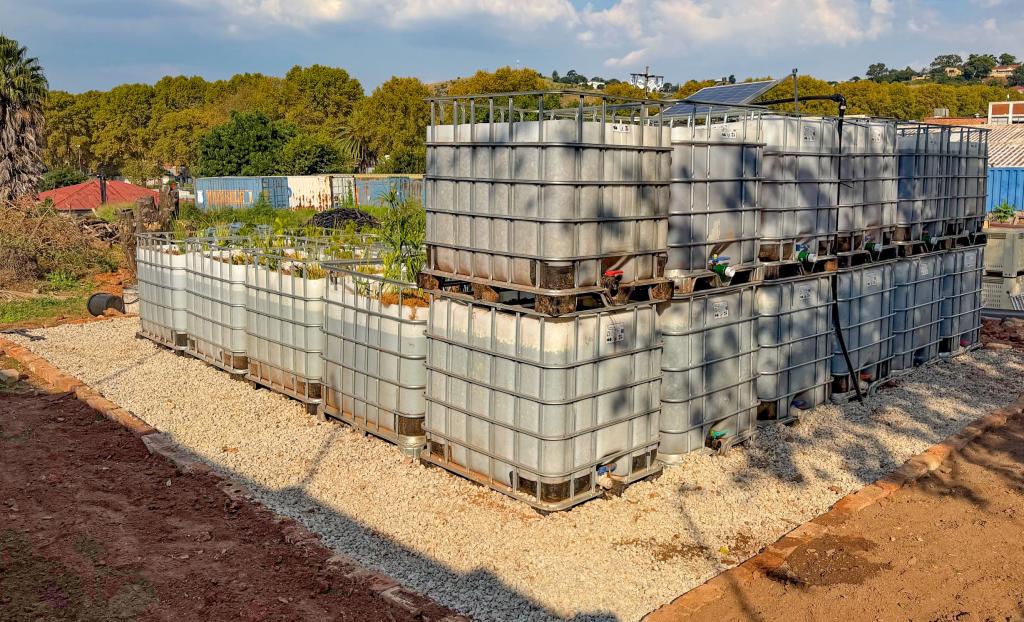
Installed in the Upper Jukskei River catchment, the EcoFilter system is designed to address persistent and chronic pollution challenges, including microbial contamination, excess nutrients, organic waste, and heavy metals. The system aims to provide accurate monitoring data, demonstrating the potential of nature-based solutions to improve water quality, while supporting the irrigation of women-led community gardens at Victoria Yards, in Johannesburg’s inner city.

The system will officially launch on April 23, 2026, at 10:00 a.m., at Victoria Yards—16 Viljoen St, Lorentzville, Johannesburg. 

SUNCASA | Ecofilter System at Victoria Yards, Johannesburg
Installed in the Upper Jukskei River catchment, the EcoFilter system will address persistent and chronic pollution challenges. 

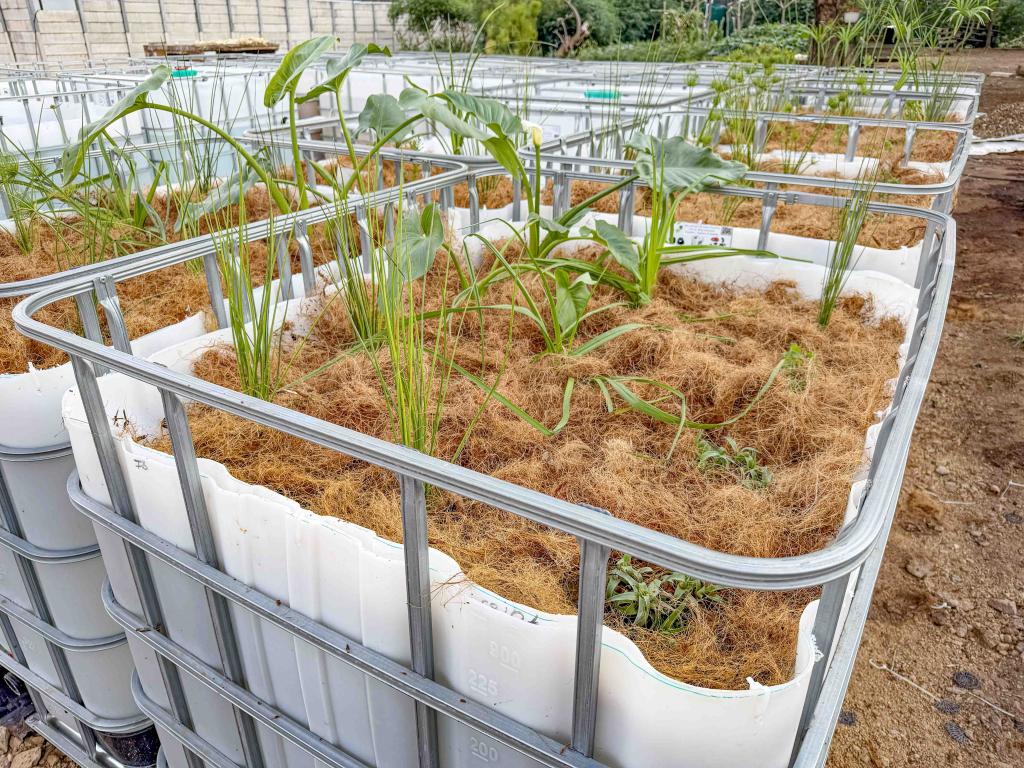
Designed to function like a natural wetland, the system enables continuous water-quality monitoring, generating long-term datasets to assess performance and inform evidence-based decision making. These data will help document progress, highlighting both successes and ongoing challenges in catchment management while supporting learning and replication in other parts of Johannesburg and across sub-Saharan Africa.

The EcoFilter consists of modular 1,000-litre units arranged in a series of ecological treatment cells that support both anaerobic and aerobic processes for water purification. While its primary function is to support biophysical monitoring of the Jukskei River and to evaluate its benefits for improving water quality, it also delivers direct benefits to the local community by supplying water for the irrigation of community gardens in the area. It will also provide a platform for education and research.

SUNCASA | Ecofilter System at Victoria Yards, Johannesburg
Designed to work like a natural wetland, the system enables continuous water-quality monitoring, generating long-term datasets to assess performance. 

The system was developed under the SUNCASA project (Scaling Urban Nature-based Solutions for Climate Adaptation in Sub-Saharan Africa) through a collaboration between Isidima Design and Development, Water For The Future, Zutari, and the University of Johannesburg. The system will be operated by trained staff from Water for the Future (WFTF).

SUNCASA works with local partners and communities to restore the Upper Jukskei River catchment through nature-based solutions. Interventions include removing invasive species and riverine waste, restoring riparian buffer zones, and expanding green spaces by planting indigenous vegetation. These interventions aim to strengthen the climate resilience of more than 1 million residents, particularly in relation to flooding, erosion, and water pollution.

SUNCASA | Women-led community garden at Victoria Yards, Johannesburg.
Women-led community gardens at Victoria Yards will benefit from the water filtered by the EcoFilter system. 


QUOTES

“The City of Johannesburg is committed to transitioning from reactive pollution management to innovative, sustainable solutions that restore the health of our urban rivers. The implementation of the eco-filter system in the Upper Jukskei River catchment represents a significant step forward in integrating nature-based solutions with smart monitoring technologies.

This initiative not only improves water quality and strengthens our ability to respond to pollution in real time but also demonstrates how environmental interventions can deliver meaningful socio-economic benefits. By supporting community-led urban agriculture at Victoria Yards, the project contributes to food security, job creation, and inclusive development.

As a city, we see this as a scalable model for urban water resilience—one that aligns with our broader objectives of ecological restoration, climate adaptation, and sustainable service delivery.”— Daniel Masemola, Director of water management and biodiversity, City of Johannesburg

“The EcoFilter system offers an innovative approach to improving water quality while generating the data needed to support scaling, policy relevance, and learning across SUNCASA. While it is not designed to make Jukskei water potable or address catchment-wide pollution on its own, it provides a visible, monitored bioremediation node, reducing pollution loads and demonstrating the potential of integrated green infrastructure at scale. We believe this solution can be successfully replicated in other cities.”— Richard Grosshans, IISD and SUNCASA bioremediation lead

“Protecting communities and river ecosystems will require eco‑filters to move from pilots to city‑wide deployment as a core part of Johannesburg’s wastewater treatment strategy.”—Amanda Gcanga, WRI country lead for urban water resilience &  senior urban policy analyst, and SUNCASA lead in Johannesburg

“Since 2017, WFTF has spearheaded the vision for a rehabilitated Jukskei, securing the land and pioneering the scientific partnerships—such as our work with Dr. Simon Lorentz (SRK Consulting) and UJ-PEETS—that ultimately made this EcoFilter possible. This system is the next evolution of our nature-based strategy, through which WFTF has transformed brownfields into thriving, women-led urban agricultural sites. By integrating years of river monitoring with community-driven action, we aren’t just filtering water; we are proving that local leadership is the essential catalyst for urban resilience. We are proud that our foundational work, including the water monitoring station established with Dr. Lorentz and continuous testing by Dr. Kousar Hoorzook and her team at UJ-PEETS, created the blueprint for SUNCASA to assist in scaling these vital interventions. For WFTF, this project represents the culmination of a community’s commitment to reclaiming their environment and securing a climate-resilient future for the Upper Jukskei.”— Romy Strander, Water for the Future 

“We have been monitoring the Jukskei River discharge, water quality, and meteorology at Victoria Yards in collaboration with Water for the Future for the past 6 years to improve our knowledge of urban hydrology and provide information for remediation systems like the EcoFilter." — Dr Simon Lorentz, SRK Consulting (SA) 

“The Jukskei River is in a poor state—and we should not accept that. This project is a demonstration, a practical step to show what works so we can do more of it across the city. It also needs to create opportunities for the people living closest to these conditions. What we’re learning is that nature-based solutions and placemaking are one system—when you repair the environment, you restore the place. ”— David van Niekerk, CEO, Johannesburg Inner City Partnership


MEDIA CONTACTS

Cesar Henrique Arrais, Senior Communications Officer, IISD; [email protected]

Bridget van Oerle, Marketing Manager, JICP; [email protected]

Muskaan Malik, Communications Manager, Water For The Future; [email protected]

Press release

World’s Top Fossil Fuel Importers Spent USD 314 Billion Subsidizing Fossil Fuels in 2024—More than 2.5x Public Spending on Renewables

By prioritizing fossil fuels over clean energy by a margin of 2.5 to 1, the world’s largest economies are subsidizing their own vulnerability to geopolitical crises by choosing to lock in high-risk, volatile energy systems instead of investing in lasting stability.

April 21, 2026

April 21, 2026—Nine of the world’s 10 largest fossil fuel importing economies spent USD 313.6 billion* subsidizing fossil fuels in 2024 yet allocated just USD 121.7 billion—roughly 39 cents per fossil fuel dollar—to renewable energy support, according to new data compiled by the International Institute for Sustainable Development (IISD). Together, these 10 economies account for an estimated 62% of global greenhouse gas emissions. (*The United States is excluded from subsidy totals—see notes to editors.)

Experts highlight that fossil fuel subsidies keep economies locked into energy systems that are more expensive, risky, and volatile than those based on renewables, batteries, electric vehicles, and other electrical technologies—and it is precisely this dependency that is now driving energy costs to crisis levels. Governments are right to act: households are struggling, and the need to provide relief is real. But how they respond matters. Subsidizing fuel prices hands the biggest benefits to the biggest consumers—the wealthy, not the vulnerable. In middle-income countries, the top-earning 20% of the population receives 11 times as much in subsidies as the lowest 20%. By contrast, direct cash transfers to low-income households protect the people who need it most, without locking in another decade of fossil fuel dependence.

"The data shows these economies are paying twice over: once for the subsidies, and again when price shocks hit," said Natalie Jones, senior policy advisor at IISD. "Renewables, batteries, and electric solutions offer a cheaper and more stable pathway than fossil fuels—yet public money continues to flow overwhelmingly in the wrong direction. 

"Every dollar spent subsidizing fossil fuels is a dollar that delays the only strategy that actually works."

Natalie Jones

The data reveals a stark imbalance within the group:

  • Fossil fuel subsidies: China leads (USD 86.7 billion), followed by the European Union (USD 73.0 billion), India (USD 67.5 billion), Japan (USD 45.1 billion) and the United Kingdom (USD 23.5 billion). The top three alone account for 72% of the group’s total.
  • Renewable energy subsidies: The EU leads at USD 47.7 billion, though its fossil fuel bill remains nearly two thirds higher. Japan’s clean energy subsidies (USD 40.8 billion) nearly match its fossil fuel spending. Mexico records the most extreme imbalance, with fossil fuels receiving more than 330 times the public support that clean energy receives.

Germany and Türkiye are examples of countries that have broken free of fossil fuel dependency through public financial support for renewables. 

Germany’s and Türkiye’s clean energy bets: Billions of avoided gas import costs

Germany has invested in renewable energy since the first oil crisis in 1974—and that persistence is now paying off. Having relied heavily on imported natural gas, it has been acutely exposed to the price shocks of the 2020s. IISD calculations show that its renewable feed-in-tariffs and feed-in-premiums saved EUR 25 billion in avoided gas imports in 2022, net of renewable support program costs. In the first quarter of 2026, net savings already reached EUR 3.3 billion, potentially rising to over EUR 13 billion for the full year if gas prices remain high.

Türkiye directed USD 8.5 billion to renewable energy in 2024—more than three times the recorded USD 2.2 billion in fossil fuel subsidies, though available data likely understates the true figure. New IISD research shows that this clean energy commitment is now paying measurable dividends.

The country imports over 90% of its gas, making it acutely vulnerable to price spikes. Yet IISD calculations show that its main feed-in tariff scheme, YEKDEM, saved USD 12.5 billion in avoided gas import costs from 2022 to 2025 — with every USD 100 of public support generating USD 265 in avoided gas imports at the height of the 2022 price shock. In March 2026 alone, Türkiye’s push for renewables saved an estimated USD 600 million on gas—even after the costs of supporting renewables are taken into account. 

"Türkiye’s and Germany’s examples are a powerful proof of concept. Countries that prioritized clean energy investment didn’t just do the right thing for the climate —they bought themselves genuine energy security," said Indira Urazova, policy advisor at IISD.

"As governments gather in Santa Marta this month, the message from this data is clear: shift public financial flows from fossil fuel subsidies to people, clean energy, and electrification. That is the only strategy that ensures energy security, drives down costs, and permanently shields consumers from the next price shock."

Indira Urazova

A crisis that was written into the data—and a choice about what comes next

The closure of the Strait of Hormuz since late February 2026, following U.S. and Israeli military strikes on Iran, has triggered the largest oil supply disruption in history, pushing crude prices above USD 100 per barrel. This is the foreseeable consequence of continued fossil fuel dependence, IISD researchers say. Some governments are responding with blanket fuel subsidies, repeating the mistake of 2022, when EU governments alone spent USD 204 billion in emergency fossil fuel support without removing the underlying vulnerability.

IISD's research shows that others are taking a different path: New Zealand opted for targeted cash transfers to low-income households rather than across-the-board fuel price cuts, while France combined immediate relief—energy vouchers for 3.8 million low-income households and liquidity loans for fuel-intensive small businesses—with a doubling of electrification support to EUR 10 billion annually by 2030, explicitly linking short-term relief to reducing fossil fuel dependence.

Santa Marta: Time to get the roadmaps right

With more than 80 countries having backed a global fossil fuel transition roadmap at the 30th UN Climate Change Conference (COP 30), the Santa Marta conference is the moment to translate that commitment into action. Fossil fuel subsidy reform is the critical first step of any credible transition plan — the entry point for realigning public finance with clean energy, researchers say. But credible roadmaps must go further by addressing production and consumption pathways together, ensuring affordable energy access, and embedding just transition measures. The billions currently flowing to fossil fuel subsidies from nine of the world’s largest importers represent the fiscal space that already exists. Redirecting even a fraction toward targeted social welfare, clean energy alternatives, and electrification would reduce energy poverty, lower long-term costs, and build genuine energy security, experts say.

"Another round of subsidies, another crisis, another emergency response — that is a choice, not an inevitability. Santa Marta is the moment to choose differently," said Natalie Jones.

"Fossil fuel subsidy reform is the first step, but governments must commit to a whole-economy transition plan that protects the most vulnerable households and builds the clean energy foundations that make the next price shock manageable." 

Natalie Jones

Notes to editors

  • U.S. fossil fuel subsidy data has been excluded from all totals and country comparisons. The United States previously reported this data to the Organisation for Economic Co-operation and Development, but it is no longer available following its withdrawal.
  • The “top 10 importers” are defined by total fossil fuel import volume (TJ) in 2024, with the European Union treated as a single aggregate.
  • Türkiye and Germany figures (avoided gas imports) are from forthcoming IISD research.

Media contacts

Aia Brnic, Communications Manager, IISD: [email protected]  
Mark Raven, Senior Communications Officer, IISD: [email protected]