
How Sub-Saharan African Cities Are Building Climate Resilience Through Nature-Based Solutions
By combining community engagement and multistakeholder governance, the SUNCASA project enters its third year of implementation with 2.4 million trees and shrubs planted over 3,500 hectares of restored land, and tangible impacts already enhancing urban communities’ resilience to climate change.
Restoring nature and strengthening community resilience to climate change are long-term efforts that often take years to produce tangible results. Entering its third year of implementation, the Scaling Urban Nature-based Solutions for Climate Adaptation in Sub-Saharan Africa Project (SUNCASA Project) has already delivered concrete benefits to communities, with 2.4 million trees and shrubs planted, restoring over 3,700 hectares of degraded watershed. This progress has been driven by inclusive, participatory community engagement and a unique multistakeholder partnership model.
Across Dire Dawa (Ethiopia), Kigali (Rwanda), and Johannesburg (South Africa), local organizations and communities scaled up nature-based solutions (NbS) that are both climate-focused and socially inclusive. These efforts have expanded agroforestry, reforestation, afforestation, riparian buffer zones, urban greening, and the removal of harmful alien invasive plants, achieving 85% of the project’s 3-year targets in the first 2 years of operations.
“It's exciting to see we're right in stride, which is not to say the teams haven't faced challenges. Those include erratic rainfall patterns that have made it very challenging to plant the seedlings, but the teams have figured out ways to overcome that,” said Lisa Beyer, World Resources Institute’s senior manager of Nature for Urban Resilience and SUNCASA’s NbS co-Lead.
“At the heart of SUNCASA is its unique partnership model, bringing together municipalities, interdisciplinary experts from academia, local organizations, women's groups, and our global team. Above all, however, it is the leadership and dedication of local communities that made these achievements possible in just 2 years—they are truly the engine of SUNCASA's success,” said IISD’s Samantha Boardley, SUNCASA’s interim project lead and NbS co-lead.
According to Professor Kibebew Kibret, SUNCASA's deputy technical lead in Dire Dawa and NbS expert from Haramaya University, the project’s design takes a singular approach by enabling strong multistakeholder coordination to advance NbS implementation. “I could say that, for the first time, science and society truly connected. Science and society came together to create real impact—scientific institutions brought technical knowledge, skills, and best practices, while communities contributed with their experience, including Indigenous perspectives,” said Professor Kibret.
For Kibret, a key factor behind achieving results in just 2 years has been the deep engagement of local communities. “They have fully embraced the project,” he highlighted. “On top of that, there has been a strong commitment from all of us—we are genuinely excited about the changes SUNCASA is bringing. Bringing all of this together, even in the harsh environment of Dire Dawa, has led to truly remarkable outcomes.”
Dire Dawa: From drylands to green growth
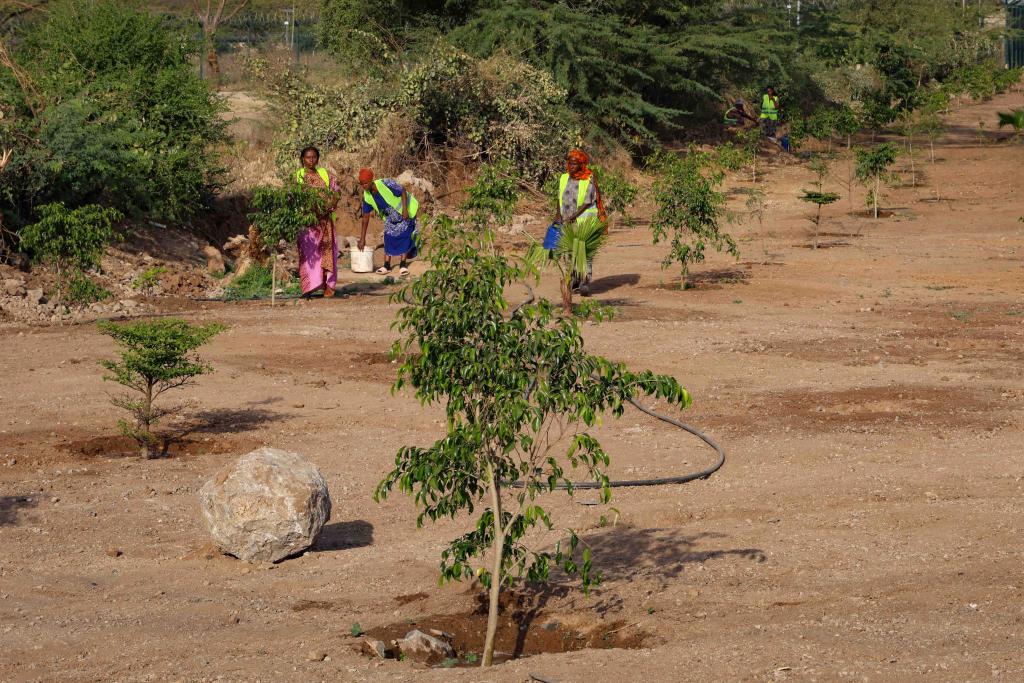
SUNCASA partners from 14 organizations had the opportunity to see first-hand how NbS are transforming both rural and urban areas of Dire Dawa. During their second Peer Learning Event, participants witnessed the commitment of local communities and the results achieved so far.
By December 31, 2025, a year before the project’s deadline, local partners and communities had reached 70% of the afforestation target, planting more than 500,000 trees and restoring 246 hectares of degraded land along the Dechatu River catchment. These efforts are helping address soil erosion, improve soil fertility, and enhance groundwater recharge.
Partners in Dire Dawa have also achieved 93% of the project’s agroforestry target, with nearly 380,000 trees planted across 359 hectares, generating new livelihood opportunities while strengthening food security.
“With trees bearing fruit, people are selling those fruits in the market and making some additional cash. And then they start to save money and purchase livestock. This brings advantage to our local community, other than just increasing green coverage and improving groundwater recharge,” said Matiwos Belayhun, SUNCASA monitoring, evaluation and learning coordinator at the Hararghe Catholic Secretariat.
The project has also exceeded its buffer zone restoration target, with 95 hectares restored, while achieving an impressive 94% tree survival rate overall.
“The major secret, I have to say, is getting along with communities. As long as you keep the interest of the community and try to be scientific, practical, and realistic—without exaggeration—I think the impact will come.”
“Within this short period of time, the life of the community has transformed significantly because of SUNCASA interventions,” remarked Professor Kibebew Kibret.
For the Mayor of Dire Dawa, Kedir Juhar, the impacts of SUNCASA’s NbS are already visible. “We see urban river catchments coming back to life. Green spaces are expanding, and communities are seeing tangible, practical change,” he said during the opening of the project’s second Peer Learning Event. “Every NbS we invest in our cities generates many benefits—saving lives, protecting infrastructure, and helping nature to come back.”
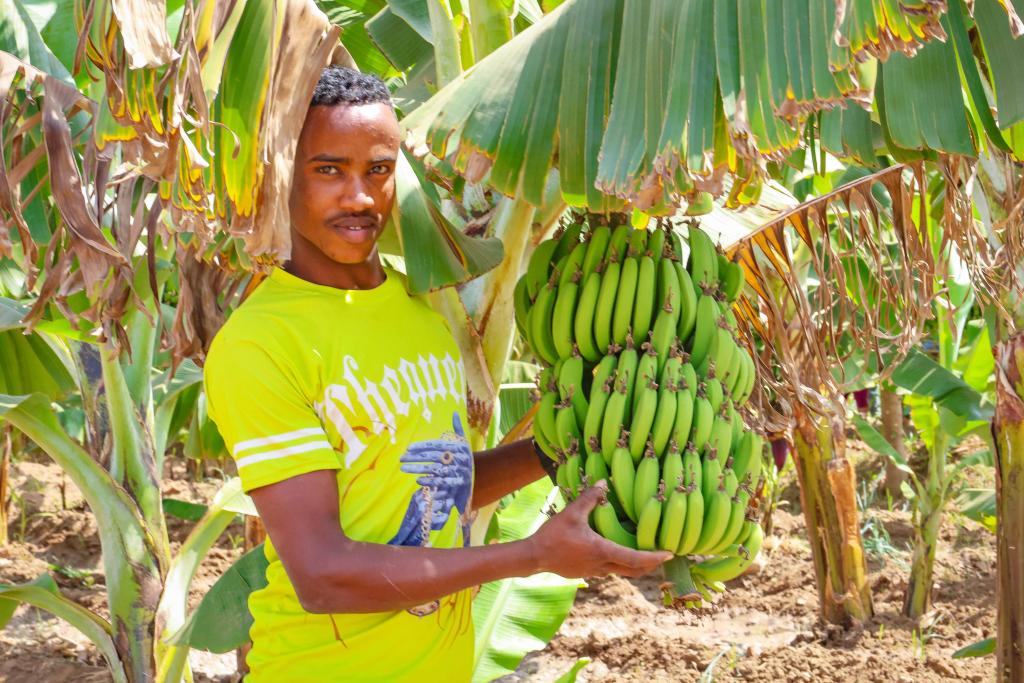
According to the SUNCASA integrated cost-benefit analysis for Dire Dawa, the city will save USD 1.35 million in flood-related repairs by 2050 as a result of the projects’ NbS investments. An additional USD 930,000 will be saved in avoided health expenses linked to floods, water pollution and urban heat. By working with local organizations and communities, SUNCASA is strengthening the climate resilience of 220,000 people in Dire Dawa.
Kigali: Transforming Urban Landscapes and Livelihoods
SUNCASA’s NbS implementation in Kigali is advancing well, with significant progress observed in the restoration of 362 hectares of riparian buffer zone area (92% of the project target) and 1,654 hectares of agroforestry system established – surpassing the initiative's target by over 450 hectares. By the end of the project’s second year, local partners and organizations had planted 1,267,559 trees and buffer plants across critical micro-catchments of the Nyabarongo River.
“The community working with SUNCASA says that the project is transforming the reality of the community, not only the landscape, the nature itself, but the reality of the real people,” underscored Benigne MUGWANEZA, project manager with the Rwanda Young Water Professionals (RYWP).
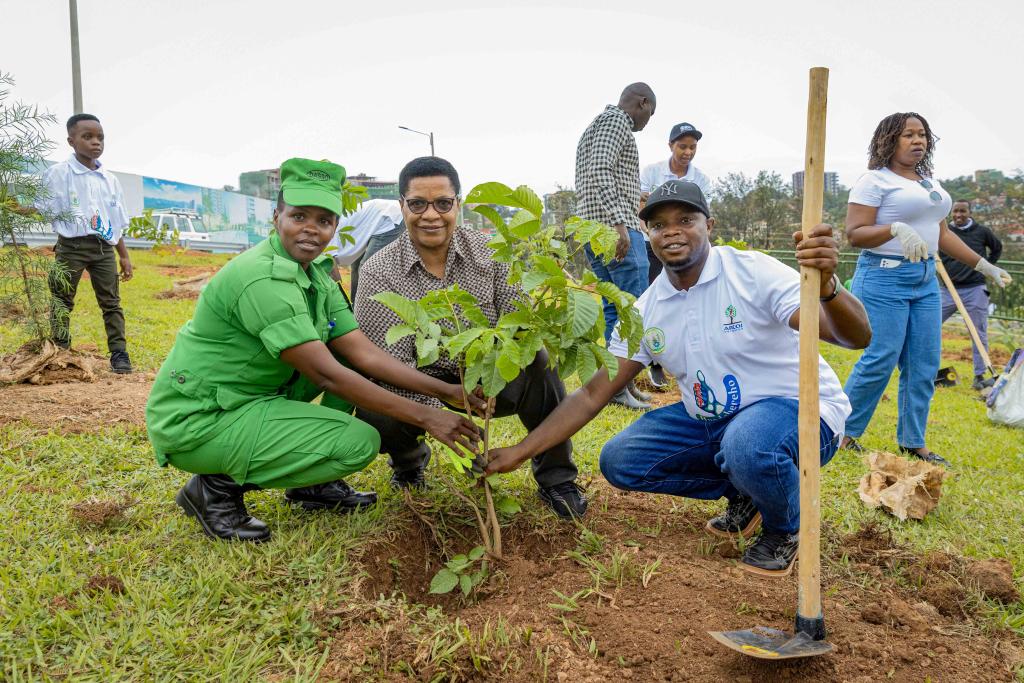
According to Theodore NSHIMYUMUREMYI, Monitoring, Evaluation and Learning Officer with ARCOS Network, SUNCASA is providing jobs to thousands of community members, particularly underrepresented groups such as women, youth, and people with disabilities.
For Mugwaneza, the impact extends beyond immediate job creation and landscape restoration. “The interactions SUNCASA has had with communities have brought people together and created opportunities to reconnect with nature and reflect on the role they can play in protecting it,” she explained.
She added that participation in NbS activities also builds valuable skills. “Every time someone participates in NbS work, they gain experience—strengthening their resume, expanding their knowledge, and building practical skills for working with nature.”
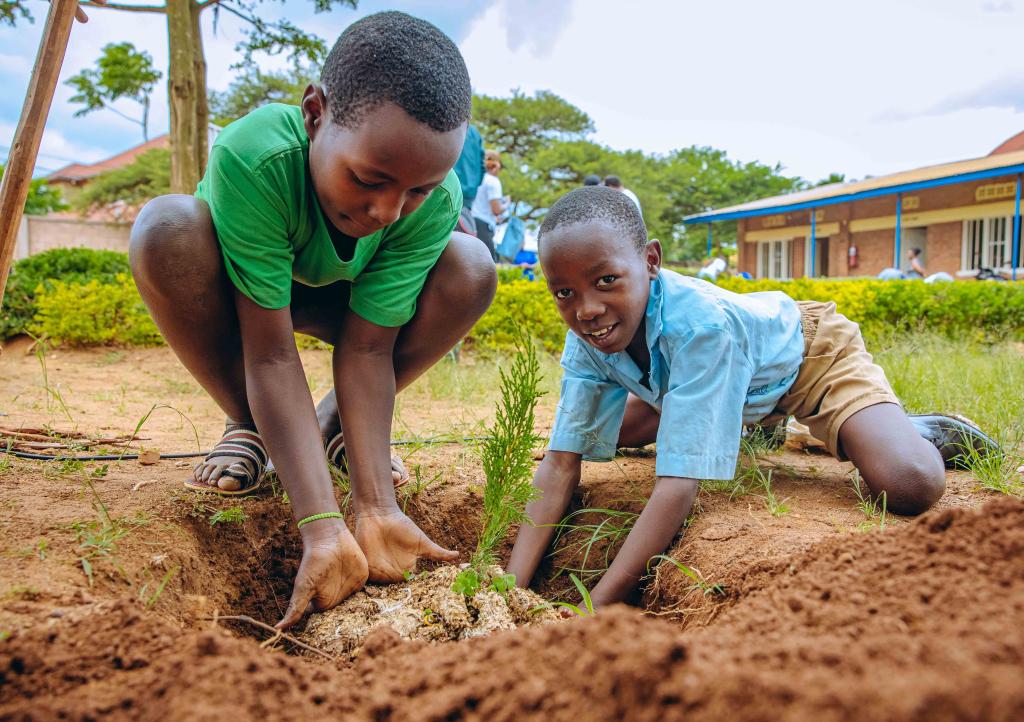
SUNCASA’s integrated cost-benefit analysis for Kigali indicates savings of USD 12 million in avoided costs from flood-related infrastructure damages by 2050, along with USD 5.57 million in health savings. The study projects that investments will pay back in just seven years, with every USD 1 invested in NbS generating USD 2.09 in combined economic, social, and environmental benefits. Nearly 1 million residents are having their resilience strengthened through SUNCASA NbS.
Johannesburg: Fight Against Invasive Species
Communities and partners in Johannesburg have shown strong commitment to implementing NbS, exceeding targets in tackling one of the city’s most pressing environmental challenges: the spread of alien invasive plants.
“Alien invasives are damaging the water quality and competing with our indigenous plant population, and this is destroying the ecosystem in the Jukskei River space,” explained Gugu Zondi, Integrated Catchment manager at Johannesburg City Parks and Zoos. “SUNCASA is one way of saying nature-based solutions work—we are letting nature work for itself.”
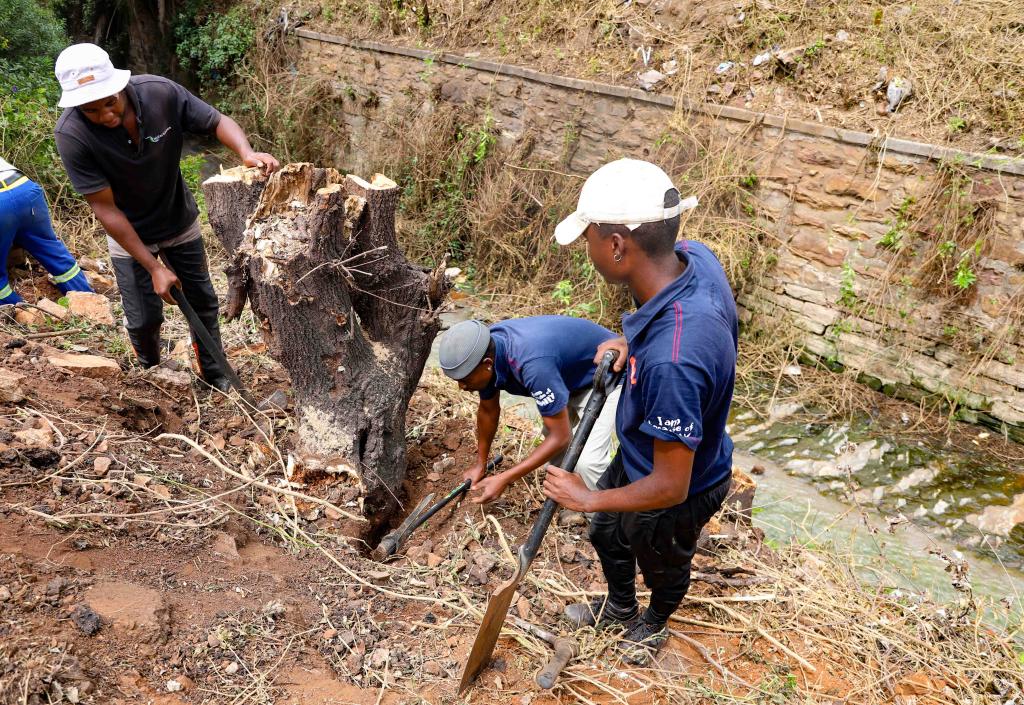
Restoring land in densely populated parts of Johannesburg, like Alexandra Township, is challenging due to limited land availability and competing demands.
By the end of Year 2, 496 hectares of riparian corridor from the source of the Jukskei River in Victoria Yards to Alexandra Township and critical sections of Braamfontein Spruits had been revitalized through the removal of invasive alien species and strategic rehabilitation using native indigenous plants. This represents 99% of the projects’ three-year target in Johannesburg. Revitalization efforts included the removal of 532 tonnes of debris from the river—much of it later transformed into sculptures and litter traps, fostering the eco-tourism in the area.
"SUNCASA has helped capacitate many people to obtain PCO (Pest Control Operator) licenses, enabling them to identify [invasive] species and apply effective clearing methods. NbS projects should leave a legacy—not only in the landscape, but in the people they reach,” said Boaz Tsebe, rehabilitation and invasive species specialist with Water for the Future.
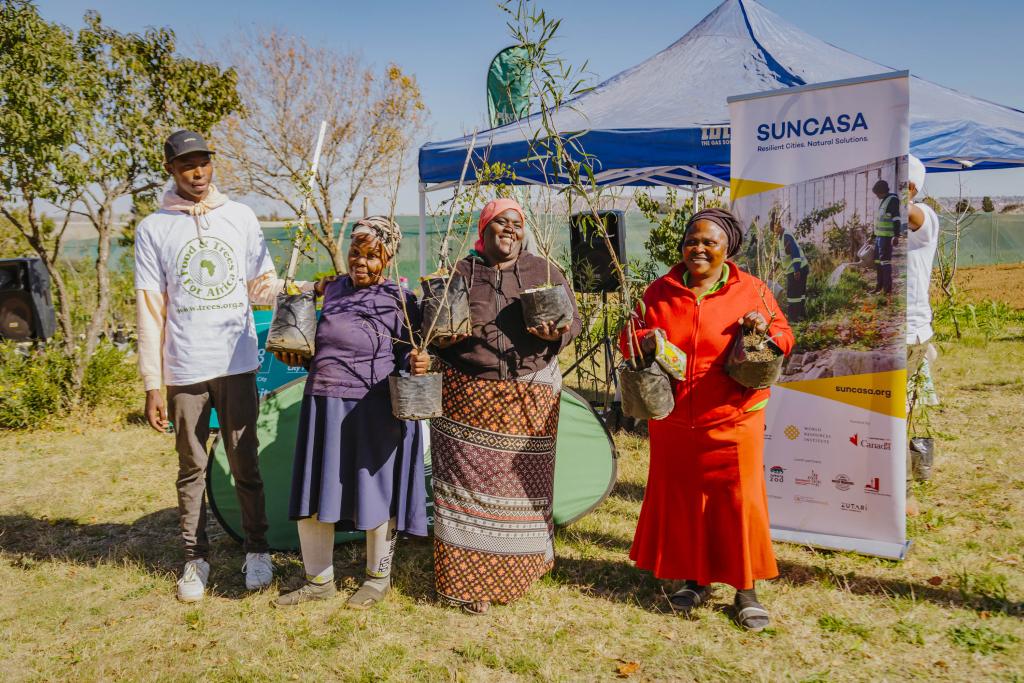
To support ecosystem recovery, nearly 28,000 indigenous and fruit trees have been planted to replace invasive species. These efforts are strengthening biodiversity, reducing flood risks and soil erosion, and expanding green spaces for local communities.
“The urban greening and the planting of indigenous trees interventions around our parks, around our catchment, around our residents, have given us the chance to introduce an educational element which will assist locals to support these initiatives, safeguard resources, and put them to greater use,” noted Semadi Manganye, co-founder and director of the Alexandra Water Warriors.
The integrated cost-benefit analysis for Johannesburg demonstrates that for every USD 1 invested in SUNCASA NbS, it will return USD 3.06 in socio, economic and environmental benefits. By 2050, the city is expected to save USD 2.2 million in alien invasive species management, USD 3.5 million in avoided flood-related infrastructure repairs, and USD 4.83 million in health expenses related to water pollution, urban heat, and flooding. Around 1 million residents are benefitting from SUNCASA NbS.
Challenging Gender-biased Norms and Practices
Gender equality and social inclusion (GESI)are at the core of SUNCASA’s approach and achievements. Through its local GESI partners, the project has made significant progress in challenging discriminatory norms and practices, promoting the meaningful participation of women and underrepresented groups in climate change adaptation policymaking and NbS implementation, as well as encouraging more equitable divisions of labour and inclusive decision-making at the household level.
By the end of year two, three major workshops on gender-responsive NbS, biased barriers to NbS governance and policy making, and strengthening women’s participation in municipal NbS decision-making, had been delivered, reaching a total of 1,247 participants across the project cities.
These trainings, which focused on household power dynamics and gender-biased norms, yielded notable results. Post-training evaluations showed an 82% increase in participants’ knowledge of gender equality and social inclusion issues, significantly exceeding the project target of 50%.
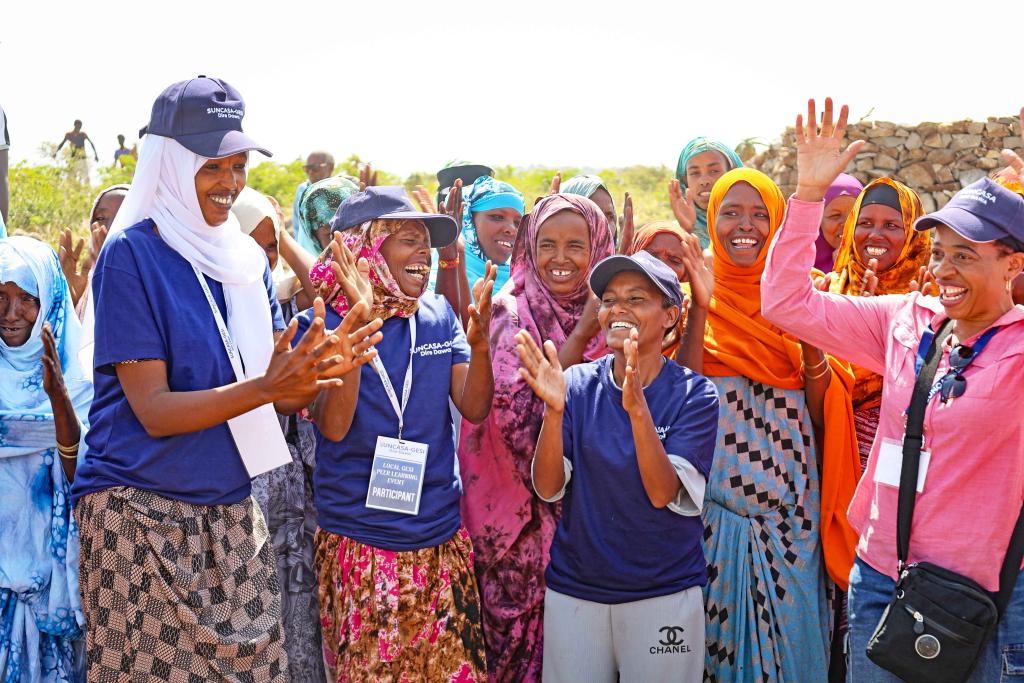
“We know very well that women are the ones who first face the consequences of climate change issues. In Rwanda, we have already had a leverage of women contributing, participating, always proactive. But what SUNCASA did was to emphasize that and make sure this would be impactful. Everyone—young people, women, children—are all working together on this, because it's not about one person, it is about a whole community,” said RYWP’s Benigne Mugwaneza.
Scaling Impact and Securing SUNCASA’s Legacy
As SUNCASA enters its third year of implementation—with several targets already achieved—local organizations and communities, as well as government stakeholders, are shifting their focus toward scaling up the impact of NbS and ensuring a lasting legacy in beneficiary communities.
“In 2026, I’m expecting that we, as governments, community organizations, and the private sector, all come together and sustain it. We try our best to work together and collaborate to make SUNCASA a long-term thing,” highlighted Gugu Zondi from Johannesburg City Parks and Zoos.
“My expectation is to finalize the remaining activities of SUNCASA, capitalize on the lessons learned, and work decisively to ensure the project’s sustainability,” said Professor Kibebew Kibret from Haramaya University.
Echoing this, Theodore Nshimyumuremyi from ARCOS Network emphasized: “By the end of this year, my expectation is to build on the success we have achieved through the SUNCASA project, working toward a lasting impact that won’t be forgotten.”
For WRI’s Lisa Beyer, the capacity built across the three cities will be key to sustaining long-term outcomes. “By the end of 2026, I think we’ll have built an amazing workforce—a GESI-responsive workforce that is balanced in terms of gender and inclusive of other marginalized groups,” she said.
“We are going to see not just restoration of land and the environment, but widespread changes for families and for those working and living in these communities. Local communities, governments, and leaders are all coming together to ensure that these projects truly support those most vulnerable, particularly in cities,” she added.
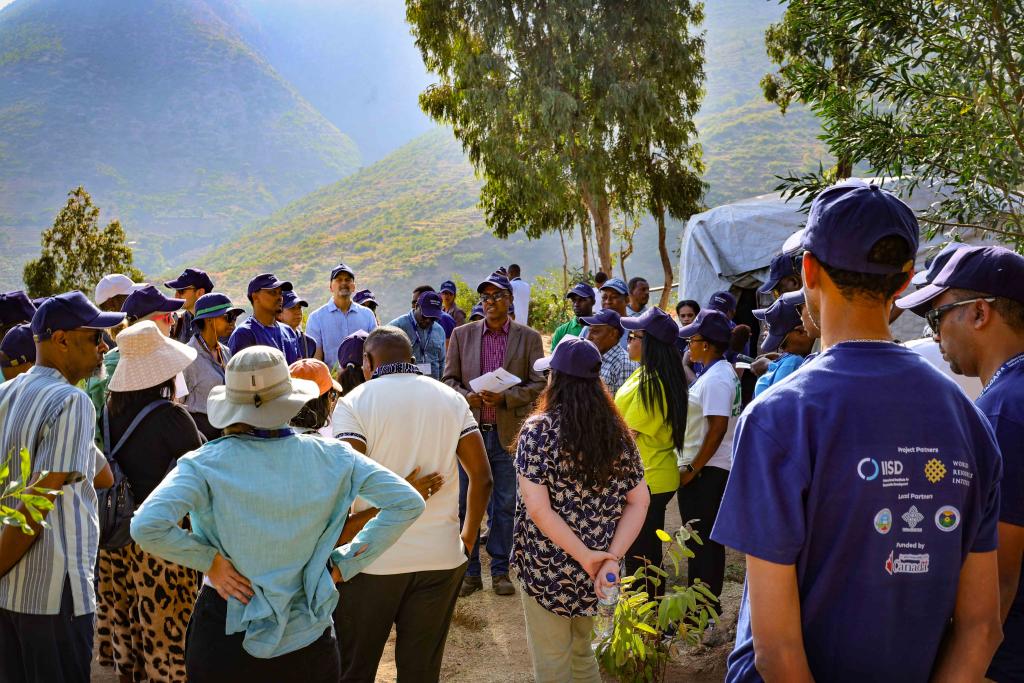
For Marc Manyifika, WRI Africa's Country Lead for Urban Water Resilience, the true success of SUNCASA lies in what remains after it ends, like stronger communities, empowered local leaders, and NbS that continue to shape more resilient cities. "Our priority now is to scale what works and ensure it lasts, so that SUNCASA’s impact continues to benefit communities and ecosystems well into the future," he said.
About SUNCASA
SUNCASA is a 3-year project enhancing resilience, gender equality, social inclusion, and biodiversity protection in urban communities in Ethiopia, Rwanda, and South Africa. It is delivered by the International Institute for Sustainable Development and the World Resources Institute, funded by the Government of Canada, and implemented with a wide range of local organizations and communities.
SUNCASA restores urban watershed areas through gender-responsive NbS such as agroforestry, afforestation, reforestation, buffer zone creation, and urban tree planting, ultimately strengthening the resilience of 2.2 million people.
Participating experts

Cesar Henrique Arrais
Senior Communications Officer
Cesar Henrique Arrais is a Senior Communications Officer for IISD's International Environmental Governance team, working on the SUNCASA project. He brings 10 years experience in communications, public relations, video production and journalism in public and private institutions in Canada and Brazil.
More about SUNCASA
Gender Equality in Action: Childcare program enables mothers to work on nature-based solutions in Kigali
SUNCASA partners from AVEGA Agahozo have established a childcare program for children aged 9 to 35 months at tree nurseries to support women by providing care while parents work.
How Biophysical Monitoring Turns Data into Action for Nature-Based Solutions
Rigorous and consistent data analysis provides the feedback needed to refine strategies, attract investment, and strengthen natural infrastructure that delivers multiple social, environmental, and economic benefits.
How to Measure Mindset Shifts on Gender and Social Inclusion
What is the best way to measure changes in mindsets about gender equality and social inclusion?
“I Am a Tree”: Students Bring Climate Awareness to Life Through Creativity
In Kigali, Rwanda, youth are taking the lead in climate action by turning dance, drama, poetry, visual arts, and even fashion into powerful platforms for environmental awareness.