Pandemic slows, but can't stop Experimental Lakes Area
Skeleton crews ensure more than half-century chain of data continues through pandemic at the ELA, but major projects on microplastics and oil spills delayed.
Operational challenges associated with the ongoing coronavirus pandemic delayed some planned summer work at a fresh-water research station near Kenora.
You might feel differently when you fill up your gas tank or pay your heating bill. But the official position of the Government of Canada is that there is not a federal carbon tax – there is a regulatory system of carbon pricing, the proceeds of which it distributes.
Announcements from the Canadian government to fund climate solutions in agriculture are encouraging, but Canada is falling behind its global peers when it comes to tackling emissions in this sector.
It’s been an exciting few weeks for climate policy in Canada. Fresh off the introduction of net-zero emissions accountability legislation, the government released its new climate plan, which will help guide Canada toward meeting its emissions reduction targets for 2030 and beyond. And for the first time, the federal government has explicitly highlighted how the agriculture sector—along with food producers across the country—can help us get there.
The announcements on agriculture are encouraging: funding for nature-based climate solutions in agriculture and cleantech; a national target to reduce fertilizer-related emissions by 30% compared to 2020 levels; and a promise to support climate-smart agriculture through the Canadian Agricultural Partnership. These are important steps, but Canada is falling behind its global peers when it comes to tackling emissions in agriculture, which matters because over 10% of our emissions come from this sector.
France, Germany, the Netherlands, and Portugal all have specific targets to reduce greenhouse gas emissions in agriculture. Ireland and New Zealand have entrenched their agriculture-related climate targets in law. While Canada’s new fertilizer emissions target is a good step, we can do better. A clearer target for the sector will help guide producers and industry toward a net-zero pathway.
Canada is falling behind its global peers when it comes to tackling emissions in agriculture, which matters because over 10% of our emissions come from this sector.
Many countries are making progress, thanks to comprehensive strategies to adopt more sustainable agricultural practices. The European Union’s Farm to Fork Strategy will tackle sustainability issues across the food chain, and 40% of the revamped Common Agricultural Policy budget has been proposed for climate action. France has explicit plans to have 50% of farms under agro-ecological practices by 2025, and the United Kingdom has just announced the biggest shakeup to its farm policy in the past 50 years, with a plan to eliminate harmful subsidies and foreground a climate-friendly, fair farming system.
As governments roll out stimulus packages in response to the COVID-19 pandemic, many sustainable agriculture plans are going even further. Denmark, France, Finland, Germany, and the Netherlands are just a few of the countries that have announced significant stimulus spending to kickstart climate action with producers. Joe Biden’s Plan for a Clean Energy Revolution and Environmental Justice calls for investment in climate-friendly farming and agricultural innovation.
To meet our Paris Agreement commitments, Canada needs strong climate action across all economic sectors. But we can’t leave behind our agricultural producers, who need help to manage the risks that climate change will present. Luckily, many of the same actions and policies to reduce emissions in agriculture can also help build resilience.
Many of the same actions and policies to reduce emissions in agriculture can also help build resilience.
With Budget 2021 right around the corner, Canada has a window of opportunity to get started on longer-term climate action in agriculture while supporting producers. We can take inspiration from best practices that other countries are already announcing and implementing. Here at home, the Farmers for Climate Solutions Task Force, of which IISD is a member, will be making concrete recommendations to the federal government on how to do so.
Canada is set to roll out further economic stimulus plans with unprecedented levels of spending on climate change. These investments should be celebrated—but we must keep our agricultural sector in the picture. Our climate ambitions will only be realized if we invest what it takes to build a fair, sustainable, and resilient agricultural sector for the benefit of all Canadians.
A series that equips youth from around the world with the skills and knowledge necessary to actively engage with climate change at the policy level—locally, nationally, and internationally. Empowering young advocates with the tools needed to understand and change climate policy to make a more climate resilient future.
IISD Next is creating, educating, and engaging a network of youth from around the world, who are interested in sustainable development and climate activism. As part of this effort, the dedicated campus workshop series is hosted every academic year, designed for a university student audience and conducted fully online. The workshop series is fully interactive, and prospective students can sign up for workshops specific to their world regions and time zones.
The workshops can be taken either together as a series or as individual workshops. Our programming is completely free of charge, and students who complete all four workshops are awarded a certificate that they can use for their CV. The courses are planned and delivered by IISD’s Youth Engagement Coordinator, Emily Kroft.
Cette année, nous sommes heureux de vous présenter toute une série d'ateliers disponibles en français!
Select the time zone group that works best for you and sign up for the 2025-26 IISD Next certificate series today!
Register for Time Zone group 1: UTC-12 (Baker Island), UTC-11 (Midway Islands), UTC-10 (Hawaiian Islands), UTC-9 (Anchorage), UTC -8 (Vancouver, Los Angeles), UTC-7 (Edmonton, Denver), UTC-6 (Winnipeg, Dallas, Mexico City)
Register for Time Zone group 2: UTC-5 (Toronto, New York, Lima), UTC-4 (Manaus, Halifax), UTC-3 (Rio de Janeiro)
Register for Time Zone group 3: UTC-2 (Greenland), UTC-1 (Cape Verde), UTC-0 (England, Ghana)
Register for Time Zone group 4: UTC+1 (Italy, Nigeria), UTC+2 (Romania, Zimbabwe), UTC+3 (Turkey, Kenya)
Register for Time Zone group 5: UTC+4 (UAE, Seychelles), UTC+5 (India), UTC+6 (Kazakhstan)
Register for Time Zone group 6: UTC+7 (Krasnoyarsk), UTC+8 (Beijing, Perth). UTC+9 (Tokyo), UTC+10 (Sydney), UTC+11 (Solomon Islands), UTC+12 (Fiji)
Groupe 7 (en français): UTC -8 (Vancouver, Los Angeles)
| Time Zone Group | Policy Engagement | Sustainable Development Goals | Water | Green Economies |
|---|---|---|---|---|
Group 1 Vancouver time (UTC-8) | Sept. 15, 2025 4:00–5:00 p.m. | Nov. 10, 2025 4:00–5:30 p.m. | Jan. 13, 2026 4:00–5:00 p.m. | March 17, 2026 4:00–5:00 p.m. |
Group 2 Halifax time (UTC-4) | Sept. 16, 2025 5:00–6:00 p.m. | Nov. 10, 2024 5:00–6:30 p.m. | Jan. 14, 2026 5:00–6:00 p.m. | March 18, 2025 5:00–6:00 p.m. |
Group 3 London time (UTC+0) | Sept. 15, 2025 5:00–6:00 p.m. | Nov. 10, 2025 5:00–6:30 p.m. | Jan. 13, 2026 5:00–6:00 p.m. | March 17, 2026 5:00–6:00 p.m. |
Group 4 Harare time (UTC+2) | Sept. 17, 2025 5:00–6:00 p.m. | Nov. 12, 2025 5:00–6:30 p.m. | Jan. 15, 2026 5:00–6:00 p.m. | March 19, 2026 5:00–6:00 p.m. |
Group 5 New Delhi time (UTC+5) | Sept. 18, 2025 6:30–7:30 p.m. | Nov. 13, 2025 6:30–8:00 p.m. | Jan. 16, 2026 6:30–7:30 p.m. | March 20, 2026 6:30–7:30 p.m. |
Group 6 Tokyo time (UTC+9) | Sept. 18, 2025 10:00–11:00 a.m. | Nov. 14, 2025 10:00–11:30 a.m. | Jan. 13, 2026 10:00–11:00 a.m. | March 12, 2026 10:00–11:00 a.m. |
Groupe 7 (en français) Vancouver time (UTC-8) | Sept. 16, 2025 8:00-9:00 a.m. | Nov. 14, 2025 8:00-9:00 a.m. | Jan. 6, 2026 8:00-9:00 a.m. | March 12, 2026 8:00-9:00 a.m. |
All sessions will be presented with live automated translated captions into the following languages: Arabic, Bengali, Chinese, Czech, Danish, Dutch, Estonian, Finnish, French, German, Hebrew, Hindi, Hungarian, Indonesian, Italian, Japanese, Korean, Malay, Norwegian, Polish, Portuguese, Romanian, Russian, Spanish, Swedish, Tagalog, Tamil, Telagu, Thai, Turkish, Ukrainian, Vietnamese. Here's how to turn live captions on when using Zoom.
The campus workshop series for 2025-2026 focuses on Policy Engagement, Sustainable Development Goals (SDGs), Water, and Green Economies. Subsequent editions may cover different topics, depending on student feedback and the latest trends in sustainability.
The policy engagement workshop provides instruction and insight into how young sustainability enthusiasts can better engage directly with policy at varying levels of government and see more concrete changes as a result of their activism.
Our second workshop provides a deep dive into the United Nations 2030 Agenda for Sustainable Development and its 17 Sustainable Development Goals. The workshop examines the different SDGs and their underlying targets, explains how these SDGs are structured and why, outlines their strengths and weaknesses, and provides an introduction to online tools that can be used to hold our governments accountable to their commitments.
The water workshop covers the link between science and policy using water as an area of focus. Water is an important topic of work for us at IISD because we are home to the IISD Experimental Lakes Area. In this session, we will cover how science can form a basis for policy-level decision making around freshwater resources.
The final workshop on green economies focuses on hot-button topics in sustainability discourse, such as eco-labelling and circular economies, to give students a better understanding of what these terms mean, what their nuances are, and what they look like in practice.
We are constantly learning from our participants and value their feedback deeply. Hear from a few of them below:
“The session was very beneficial in the sense that it focused on active ways to understand how to make change, at what level, all the while identifying the risks associated. Thank you.”
“The course exceeded my expectations. Please keep up the good work and educate more youths. Thank you again and good luck with your future work.”
“Emily [Kroft] was really polite and pleasant. Professional and respectful delivery of the content. She acknowledged the diversity of the group and made the most of everyone's different experiences in life that enriched the delivery of the information provided. I learned so much! Thank you.”
To schedule a workshop or learn more about our program, please contact our Youth Engagement coordinator, Emily Kroft, at [email protected].
Below, learn more about our other work on youth engagement, including a series of digital stories developed together with young leaders that directly confront the realities of our present and our future.
IISD Next is possible because of its partner, Wawanesa Insurance. Together, we can empower more youth, giving them the tools they need to be heard. Help empower the next generation through your individual donations or with an organizational partnership by contacting Philanthropy Manager Erin Bend.
“Create a video about the impact of climate change on fresh water .. but make it festive. And viral…”
"We have to ensure that we give a voice to people who are often considered voiceless in conversations about climate change and climate adaptation."
IISD energy expert Vanessa Corkal sat down with Aliénor Rougeot, coordinator of Fridays for Future Toronto, to get her take on Canada’s green recovery.
The Experimental Lakes Area (ELA), located east of Kenora, Ont., is preparing for its winter season, this, despite the impact COVID-19 has had on their research.
Five Takeaways From Canada’s Action on Nature-Based Solutions for Climate Adaptation Roundtable Dialogue
Since 2012, the city of Vancouver has had an evolving Climate Change Adaptation Strategy and, within this, a Rain Strategy that aims to protect residents as incidents of extreme rainfall and flooding become more common. A key component of this strategy is green infrastructure, which slows down and holds on to rainwater, allowing it to soak into the ground, thereby reducing the volume of water entering the city's sewer system.
Other cities in Canada are finding that by conserving natural wetlands, they can effectively manage high and low water levels associated with a changing climate while simultaneously cleaning up pollutants—all at a lower cost than traditional built infrastructure.
Nature-based solutions (NBS) such as these—and many others—may present our best chance to prepare effectively and purposefully for the risks and impacts of climate change and provide much-needed benefits for our communities.
IISD and Environment and Climate Change Canada hosted an international round table to unpack Canada’s experiences with NBS for adaptation, with the aim of discussing recent successes, challenges, lessons learned, and opportunities to shape the nation’s leadership in this area going forward.
The event brought together a wide range of speakers to discuss specific benefits NBS offer when it comes to tackling climate change, biodiversity loss, and global recovery from COVID-19.
Let’s start communicating that climate change is both an environmental and an economic issue. According to a report from the FCM and Insurance Bureau of Canada (IBC), preparing Canadian municipalities for the effects of climate change will cost CAD 5.3 billion per year. However, every $1 spent proactively in resilient infrastructure will yield $6 in future averted losses.
If you don't understand the services that nature provides, and you don't value those services, you are still putting a value on nature—it just happens to be zero.
There is increasing evidence that NBS such as wetlands provide significant internal return on investment while providing important adaptation benefits. Recognizing the potential role of NBS projects in reducing risks and costs associated with future climate events, Craig Stewart, Vice-President, Federal Affairs at IBC, highlighted the potential of nature-based insurance, protecting ecosystems that generate protection against natural disasters. These ecosystem-focused insurance programs, championed by the insurance sector, demonstrate that the protection of specific natural systems is good for mitigating risk as well as improving our collective finances.
This event reinforced the fact that, when it comes to climate adaptation in Canada, NBS are almost always a win for both people and the planet. Especially now, in the midst of a pandemic, we’re reminded like never before about the value of natural spaces and NBS. These insights, if scaled up and broadly adopted, can help us withstand many of the challenges a changing climate has in store.
The role of insurance solutions
Climate change and the biodiversity crisis are driving demand for nature-based infrastructure solutions throughout the world. Insurance schemes can help strengthen the financial and physical resilience of these projects.
Climate change is increasing the intensity and frequency of both extreme weather conditions and natural disasters around the world. Nature-based infrastructure can help protect communities from hazards such as floods and storms while also providing other valuable ecosystem services. Research shows that the implementation and maintenance of nature-based infrastructure are often more cost efficient than alternative grey (i.e., engineered) infrastructure solutions.
Nature-based infrastructure includes:
However, governments often lack the funds to invest in the maintenance of natural infrastructure and to restore it after damages from storms or floods, leading to degradation and decreased protection from future events. After natural catastrophes, government often need to act as “insurers of last resort,” which causes serious pressure on public budgets.
Innovative insurance solutions can help create or strengthen the investment case for the development and restoration of nature-based infrastructure. The insurance industry can play a crucial role in this field for two reasons:
Indemnity insurance compensates the insured party for the loss or damage of a physical asset such as infrastructure or real estate. The insured value is calculated based on the market and reconstruction value of the asset, while the insurance premiums are based on the cost of repairing the asset and the likelihood of damages. Indemnity insurance products are usually used for events with low severity but high frequency, and the payout of claims can involve a lengthy due diligence process.
Parametric insurance products offer coverage to respond to extreme weather events and natural catastrophes. The insurance payments are triggered by a set of parameters or disasters of a specific type and severity predetermined in the contract. For example, in the case of a hurricane, the parameters would be the wind speed and rainfall volume over defined timeframes and in specific locations. Parametric insurances disburse funds immediately after the triggering events, enabling rapid emergency responses as well as longer-term reconstruction.
The insurance industry is becoming increasingly active in the field of resilience and nature-based infrastructure. Here are three examples showing the successful use of insurance instruments in this domain.
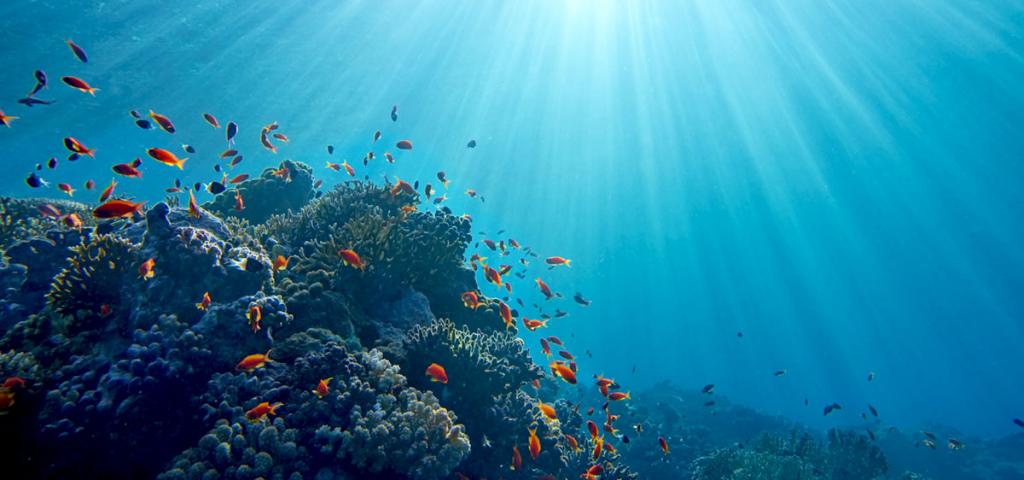
Coral reefs reduce wave energy and significantly protect people and properties during storms. In 2019, regional governments in Mexico, The Nature Conservancy, and Swiss Re launched a first-of-its-kind insurance solution for natural infrastructure, aiming to protect the barrier reef in the Mexican state Quintana Roo. The parametric insurance that was created for this purpose covers coral reefs and beaches along a coastline of 160 km of the Yucatán peninsula.
The insurance is triggered if wind speeds exceeding 100 knots are recorded, allowing for rapid disbursement of funds after severe storms. This enables trained community members to quickly begin restoration actions and minimize coral damage, protecting livelihoods and tourism assets related to the reef. The insurance payouts are multi-tiered according to wind speeds, with the maximum payout to be disbursed after events with wind speeds exceeding 160 knots. These calculations are based on wind speed data from previous storms, and payouts are automatically triggered after the predefined storm events, even if no damages occurred.
The insurance of the coral reef is managed through a trust fund: The trust fund purchases the insurance, receives insurance payouts in the case of a severe storm, and is responsible for organizing the reef repair work after such events. The fund also invests in the resilience and maintenance of the coral reef. The communities and asset owners on the coast benefit from the longer-term protection of the reef as a tourism asset, as well as from the insurance payouts that allow for the rapid restoration of the reef and the beaches after storms. The trust fund receives funds from public, private, and philanthropic sources as well as a federal fee collected from beachfront property owners who use the beach for commercial purposes.
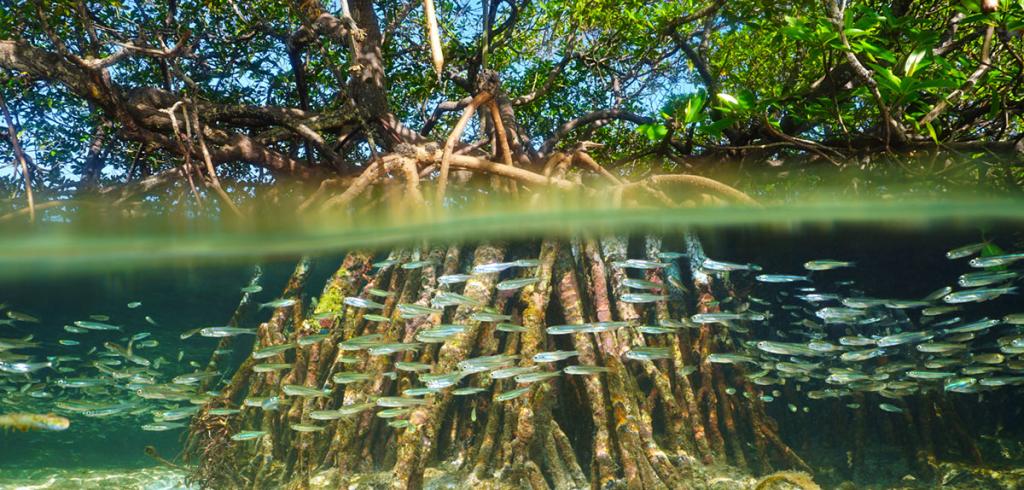
Mangroves are highly valuable nature-based infrastructure for climate adaptation and mitigation; around the world, mangroves protect more than 18 million people and reduce the flood damage to coastal assets by more than USD 82 billion a year. In addition, mangroves help mitigate climate change by storing large amounts of carbon.
The Global Innovation Lab for Climate Finance developed an innovative instrument that recognizes revenue streams derived from mangrove conservation and restoration. The Lab developed a social enterprise model, the Restoration Insurance Service Company (RISCO), which integrates mangroves’ risk reduction value into insurance products and monetizes the climate mitigation potential of mangroves through blue carbon credits.
In the Philippines, Conservation International is currently implementing the RISCO pilot phase for the Lab, aiming to conserve 3,400 hectares of mangrove forests and restoring an additional 600 hectares. Over 10 years, the pilot is expected to reduce flood risks for 7,000 people, provide a climate benefit of more than 600,000 tons of avoided and sequestered CO2 emissions, and generate more than USD 10 million in revenue from the insurance sector and blue carbon credits.
The RISCO model works as follows: RISCO identifies suitable sites for mangrove conservation and restoration, coordinates with local partners and the insurance industry, and helps the insurance sector evaluate the risk reduction benefits of the mangroves. The insurance companies pay a fee to RISCO for helping with the valuation of mangrove benefits, and for continued, verified mangrove conservation or restoration. RISCO receives funds not only from the insurance sector, but also from investors and blue carbon credit buyers. These revenues are invested in restoring and protecting mangroves, which improves coastal protection and stores significant amounts of carbon. Benefiting from reduced flood risks through the mangroves, the insurance sector offers insurance with reduced premiums to coastal asset owners.
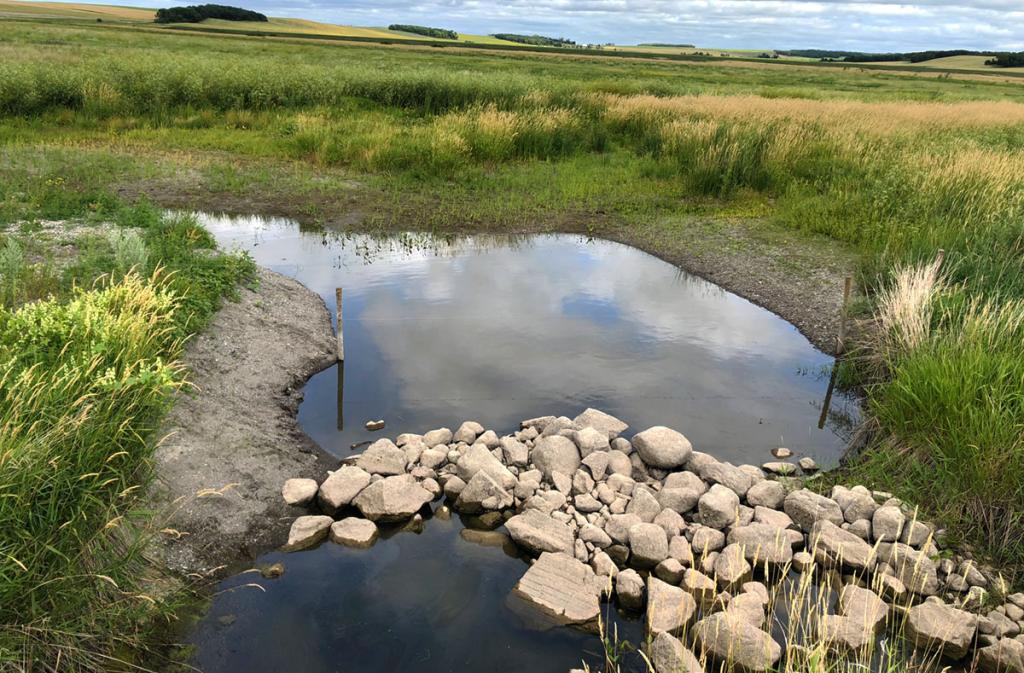
The Canadian city of Windsor is facing high flood risks and flood damage per capita. Nearly all wetlands upstream of the city have been drained for agricultural purposes, causing high water runoff in spring and during heavy rainfall. The Insurance Bureau of Canada (IBC) therefore proposes an insurance framework to encourage the proactive restoration and conservation of upstream wetlands. Such wetlands on private agricultural land would protect public infrastructure in the municipality of Windsor from spring flooding, while landowners would be compensated for the land-use change through the insurance.
The IBC proposes that cities like Windsor take out a parametric or indemnity insurance contract for its public infrastructure and receive payouts in case of floods. Meanwhile, a trust fund would manage and fund flood-resilience activities across different jurisdictions, such as hydrology studies and the restoration and maintenance of the upstream wetlands. Upon policy renewal every few years, the new insurance premiums would take into account the flood risk reductions from the wetland restoration projects. The savings from the reduced insurance premiums (along with contributions from other public and private parties like the national government) would recapitalize the trust fund and allow for further wetland restoration and conservation.
The insurance scheme proposed by the IBC is similar to a resilience bond. A resilience bond links insurance premiums to the implementation of projects that increase resilience and reduce risks: Avoided damages in the future are monetized through a rebate on the insurance premiums. The insurance scheme functions similar to progressive life insurance, where reduced premiums are offered if measures are taken to reduce mortality risks. In the case of resilience bonds, the rebate on the insurance premiums forms a source of funding for risk-reducing resilience projects such as wetland restoration.
As shown throughout these examples, the insurance industry can provide solutions that increase both the financial and the physical resilience of communities around the world by supporting nature-based infrastructure. Such innovative schemes are urgently needed to respond to the climate and biodiversity crisis and improve resilience toward catastrophic events.
Scaling up the use of insurance products for nature-based infrastructure offers a wide range of benefits to different stakeholders including local communities, governments of different levels, institutional investors, and the insurance industry itself. These parties could vastly benefit from increased financial and physical resilience through insurance schemes for nature-based infrastructure. Likewise, parties could realize varying benefits ranging from reduced insurance premiums, job creation, and new investment opportunities to the diverse environmental, social, and economic co-benefits of nature-based infrastructure. A crucial step is to identify, measure, and quantify these benefits or avoided costs. IISD is working with the Sustainable Asset Valuation (SAVi) methodology to provide these assessments for nature-based infrastructure, such as for example in the Saloum Delta in Senegal.
However, measuring and monetizing the benefits of nature-based infrastructure over time and harnessing approaches to capture such added value can be challenging, which hampers the broader application of innovative insurance solutions for nature-based infrastructure. The lack of a track record on the performance of nature-based infrastructure, in comparison with the track record of grey infrastructure, is one challenge for the insurance industry as well as for governments and investors. The projects above are nascent examples of building the track record for the investment case for nature-based solutions. To extend the use of insurance solutions for various nature-based infrastructure types, there is a need to create reliable modelling approaches that are not solely based on historical data but also estimate future benefits of nature-based infrastructure projects. With better (and spatially explicit) data, advances in climate projections, as well as site-specific and customized models, it will be possible to also develop and apply insurance solutions to the whole promising spectrum of nature-based infrastructure.
IISD has long recognized the challenges of quantifying and valuing the benefits of sustainable infrastructure. In cooperation with various partners, it has developed the SAVi methodology to help policy-makers and investors make informed decisions on sustainable infrastructure financing. SAVi allows the evaluation of the financial attractiveness of an infrastructure project across its life cycle, taking into account important environmental, social, economic, and governance factors that are overlooked in a traditional valuation.
IISD is using the SAVi methodology to assess the value of nature-based infrastructure around the world. For example, a recent project analyzed the economic value of the Saloum Delta in Senegal under different development scenarios. The assessment demonstrates (among other things) the positive impact of mangrove restoration on carbon sequestration and water filtering. The assessment of two wetlands in Sardinia, Italy, includes site-specific evaluation of the ecosystem services, the generated labour income, and a comparison with built infrastructure. A new collaboration between the Global Environment Facility (GEF), UNIDO, the MAVA Foundation and IISD will kick off in 2021 to further improve the track record of nature-based infrastructure as an alternative to grey infrastructure for climate adaptation and other infrastructure services.
These projects show that, even though challenging, it is possible to model the multi-faceted value of diverse nature-based infrastructure under different climate and policy scenarios. Stronger collaboration between stakeholders and the insurance sector could therefore be highly valuable for accelerating the use of innovative insurance products for nature-based infrastructure.
A new climate plan includes clear commitments to reduce our carbon footprint, build resilience, and play a leading role on the world stage.
On the fifth anniversary of the Paris Agreement, Canada has stepped up with a robust, credible new climate plan to fully meet our 2030 targets. Investments in clean energy, nature, and resilient communities—along with an ambitious price on carbon—will be instrumental in supporting the green recovery Canadians are asking for.
In particular, we are encouraged by the following:
Today’s announcements will need to be complemented by additional implementation of just transition policies to ensure workers and communities affected by the low-carbon transition can thrive in tomorrow’s economy.
The path to net zero is not just an environmental imperative—it is now a global economic race. A key challenge for this plan will be reaching the right level of public and private investment for Canada to compete internationally. This federal plan is a good start; now we need increased provincial ambition and commitments from the private sector. It’s time for us to come together to map out an inclusive transition that benefits all Canadians.
Their size, impacts, and why they must go
Fossil fuel subsidies hold us back and incentivize pollution. How much do Canada's governments subsidize fossil fuels, and why does it matter?
Oil, gas, and coal are multi-billion-dollar industries, yet every year fossil fuel companies get billions in tax breaks and handouts that increase their profits even further. In a world that’s shifting to clean energy, Canada could get left behind if these subsidies don’t change. Fossil fuel subsidies also work against other climate change actions, incentivizing the very pollution we’re trying to stop. Canada committed to phasing out inefficient fossil fuel subsidies 11 years ago—but even after over a decade, there are still large subsidies to fossil fuel production. With COVID-19 stimulus spending, fossil fuel subsidies went up in 2020 compared to previous years.
Taxes and subsidies are a complicated topic, so we created this web page to explain federal and provincial subsidies in Canada. We’ll cut through the jargon, so you can understand what’s really happening, debate it, and propose solutions for Canadians and Canada’s economy.
A subsidy is a financial benefit that the government gives, usually to a specific business, group, or industry. There are debates about the difference between “subsidy” and the broader term “support,” but that’s a pretty good plain English definition. (It’s also roughly how the World Trade Organization defines the term—and their definition is globally accepted.) This financial benefit most commonly comes as a direct handout of cash or a tax break. Either way, it’s more money in the pocket of whoever receives the subsidy. Fossil fuel subsidies go to fossil fuel producers or consumers—whether it’s for extracting oil, shipping gas through a pipeline, or burning fossil fuels for energy.
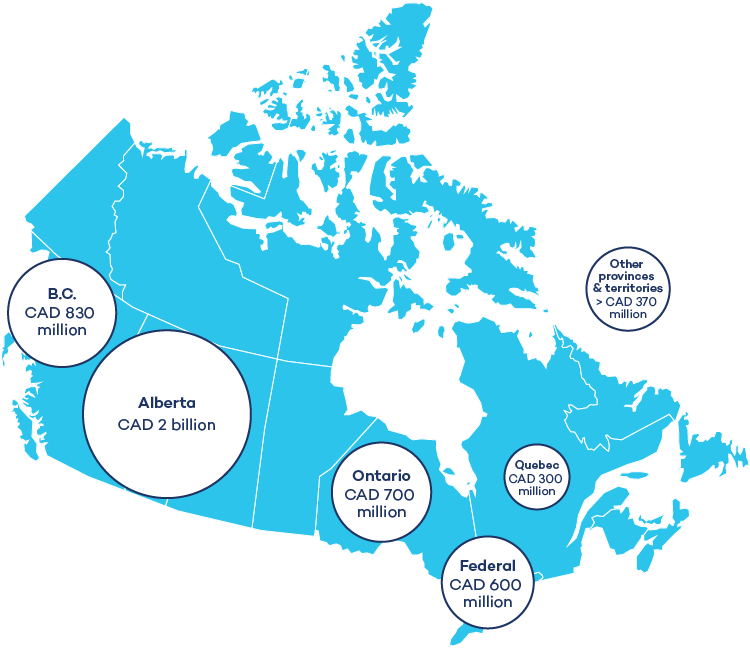
It’s difficult to know, because federal and provincial governments haven’t transparently reported how much they really provide in fossil fuel subsidies. From what we do know, it’s at least CAD 4.8 billion per year. That includes measures like special tax deductions and direct cash transfers that governments provide to fossil fuel companies. You can find a list of some of the largest subsidies below. Examples of federal subsidies include research and development support programs and tax breaks like flow-through shares, which incentivize oil, gas, and mining exploration.
Examples of provincial subsidies include crown royalty reductions in Alberta valued at an average of CAD 1.16 billion and deep drilling and infrastructure credits in British Columbia valued at CAD 350 million in 2019.
In addition to the more narrowly defined subsidies, governments also provide public finance to fossil fuels through loans, guarantees, equity, and grants. Canada is one of the largest international fossil fuel financers in the world, averaging CAD 11 billion per year from 2018 to 2020.
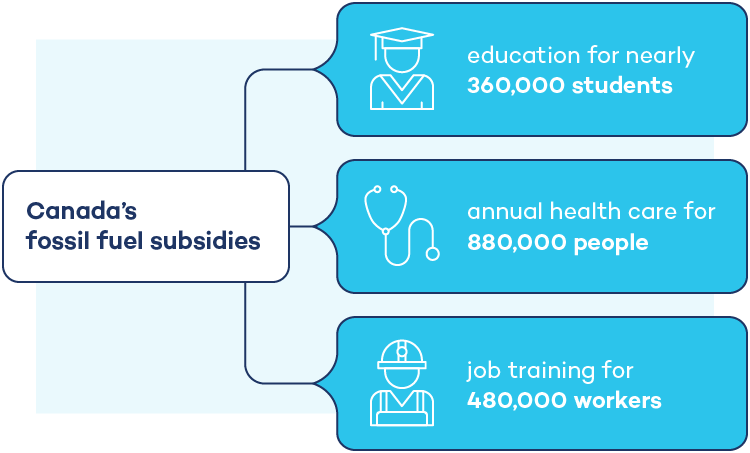
Canada’s subsidies represent a lot of money. Let’s put it in perspective.
Wouldn’t you rather this money be spent on issues that matter to Canadians?
Yes, but it gets worse. Fossil fuel subsidies also undermine the other climate change actions that Canada is taking. For example, the federal government recently introduced carbon pricing across Canada. By making carbon pollution more expensive, carbon pricing encourages us to pollute less. Just like Canada’s past success in stopping acid rain, putting a price on carbon pollution is a key part of the global fight against climate change. But through money and tax breaks, fossil fuel subsidies increase the same pollution that we’re trying to lower. Rather than making pollution expensive, they make it cheaper. This is like raising taxes on cigarettes to discourage smoking while also giving tobacco companies tax breaks so they can make more cigarettes and profits.
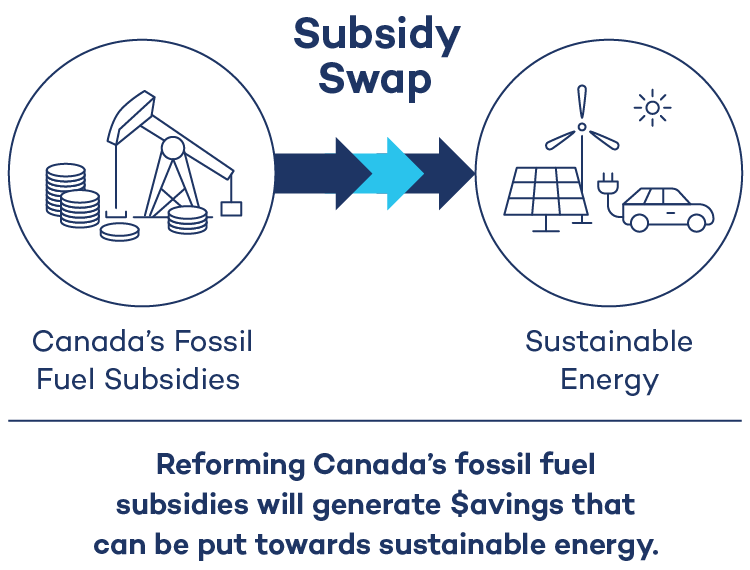
To make matters worse, fossil fuel subsidies disadvantage clean energy because they make it cheaper to produce or burn fossil energy. When fossil fuels are artificially cheap, investing in renewable energy becomes less attractive. In the long run, subsidies distort the market, pushing investment toward sectors that might not otherwise be viable. If even a small portion of subsidy savings were swapped to support renewable energy or energy efficiency, we could make a faster shift to an economically stable, climate-safe future. That sounds like a pretty good alternative compared to getting locked into dangerous climate change and unhealthy pollution!
In short: despite commitments for reform, progress is slow. At the provincial level, there have been very few efforts to reform subsidies. At the federal level, Canada committed to phasing out “inefficient” fossil fuel subsidies way back in 2009, as part of the G20. In 2021, they moved up their deadline to complete this to 2023.
However, Canada still hasn’t taken all the necessary steps to live up to these promises and has added new subsidies in the wake of COVID-19. In a scorecard ranking G20 countries’ support to fossil fuels (including subsidies and other policies like public finance), Canada ranked last among 11 OECD countries on progress in ending support to fossil fuels.
Canada is also lagging on public finance commitments. As one of the biggest financiers of fossil fuels internationally through Export Development Canada, the country is not yet on track to meet its Glasgow commitment to phase out this international financing by the end of 2022.
As part of its G20 commitment, the federal government is doing what’s called a “peer review” with Argentina. Through this process, Canada is evaluating “inefficient” federal fossil fuel subsidies. Overall, the process isn’t entirely clear and is well behind schedule. Where other reviews took 12–18 months, Canada and Argentina are now in their fourth year. We also don’t know which subsidies will or won’t be considered inefficient, or even which subsidies will be reviewed. IISD is following the peer review process and will keep our readers updated as it progresses.
The federal government has made moves to reform certain tax deductions that act as subsidies to fossil fuel companies. But with the 2023 commitment, the government still has a lot of work to do—and fast.
To start, the federal and provincial governments should stop introducing new subsidies for fossil fuel companies. At the same time, governments shouldn’t be extending the lifespan of any existing subsidies that are scheduled to expire. It’s also important that all government spending have clear conditions and standards to align spending with climate change goals.
As well, governments should be upfront with Canadians about how much money they spend on fossil fuel subsidies each year. This means increasing transparency and measuring subsidies using globally agreed-upon definitions and methodologies.
There are a number of misconceptions about subsidies that seek to exclude certain types, argue for estimation methods that minimize their size, or mislead on the goals of fossil fuel subsidy reform. These efforts to push policy-makers away from international guidelines and best practices have delayed fossil fuel subsidy reform in Canada. Here, we clarify some common misconceptions about fossil fuel subsidies in Canada:
Correction: Ultimately, these help fossil fuel industries compete and lower their cost of business, so they are correctly classified as subsidies. There can be a significant opportunity cost when government directs money to this type of subsidy rather than other clean energy or emission-reduction options. Grants and direct spending clearly fall within the World Trade Organization’s definition of subsidies.
Correction: Tax expenditures and royalty relief have the same impact as grants. They reduce government revenue while lowering the cost of producing fossil fuels, giving them an unfair advantage when countries need to be rapidly transitioning to renewables. They also clearly fall within the World Trade Organization definition of subsidies as “government revenue forgone or not collected.” They are included in internationally recognized subsidy methodologies.
Correction: Canada has reformed only a handful of tax measures and argues that those that remain are either not subsidies (see above) or are not inefficient. But Canada hasn’t given a robust definition of “inefficient,” making it difficult to hold them to their own commitment. In 2019, the Office of the Auditor General found that Canada’s assessment of inefficient subsidies for fossil fuels was incomplete and didn’t take into account the environmental or social costs of subsidies.
IISD has proposed four criteria that the Canadian government should use to identify inefficient fossil fuel subsidies, ensuring that they adopt a strong definition that doesn’t leave any loopholes for problematic subsidies to continue. This includes ensuring public funds are spent in ways that are: (1) aligned with Canada’s climate commitments; (2) supportive of a low-carbon economy; (3) consistent with a just transition; and (4) the best way to achieve the policy’s goal. Through this lens, it becomes apparent that there is essentially no room for fossil fuel subsidies in the context of Canada’s commitment to phase out inefficient subsidies by 2023.
Correction: When properly applied, subsidies can support the low-carbon transition and avoid bankruptcies and unemployment risks. For example, careful government spending can support worker transitions from fossil fuels to clean energy while encouraging a shift away from the production and consumption of fossil fuels.
Correction: Fossil fuel subsidy reform can be done in a way that supports job creation and enhances energy security, setting Canada up to thrive in a low-carbon economy. For example, ensuring affordable energy access in remote and northern communities in Canada is an absolute necessity. Historically, some fossil fuel subsidies have enabled this. However, a subsidy should only remain in place if it verifiably meets robust criteria for inefficiency, with a plan for eventual phase-out. IISD supports developing alternative policies that encourage clean energy options while maintaining affordable access.
To learn more, you can check out our report on applying best practices for fossil fuel subsidy measurement in Canada.
Here are some of the largest current subsidies in Canada.
| Subsidy name | Who gives it? | Who gets it? | How much is it worth?* |
|---|---|---|---|
| LNG Canada investment | Canada | LNG Canada | $275 million |
| Direct spending & budgetary transfers** | Canada | Oil and gas companies | $318 million |
| Crown royalty reductions | Alberta | Oil and gas companies | $1.136 billion |
| Tax exemptions for certain fuels & uses in industry | Alberta | Industry | $287 million |
| Royalty reductions, including deep drilling and infrastructure credits† | British Columbia | Oil and gas companies | $631 million |
| Reduced tax for aviation fuel†† | Ontario | Aviation Industry | $273.5 million |
| Tax exemption for coloured fuels used in agriculture | Ontario | Agricultural industry | $275 million |
| Fuel tax exemptions and reductions | Quebec | Industry and other consumers | $303.5 million |
* The exact amount changes from year to year, so unless otherwise listed, this is a yearly average based on OECD estimates from the period 2016–2019, with specific data used for all years available and averaged. During periods of higher oil prices, royalty payments will also tend to be higher.
**From fiscal year 2019/20. For a full breakdown, see our most recent federal subsidy report.
† From fiscal year 2018/19, as listed in British Columbia’s Public Accounts.
†† Data from Ontario’s Taxation Transparency Reports.
The IISD Global Subsidies Initiative has produced a wealth of information on subsidies to fossil fuels globally and in Canada.
You can learn more from this detailed report, which gives a breakdown of fossil fuel subsidies by Canada’s federal government in 2020.
If you’re curious about provincial and territorial subsidies, you can check out reports we’ve done on Alberta, British Columbia, Newfoundland and Labrador, Nunavut, Ontario, Quebec, and Saskatchewan.
This article was last updated in August 2022.