Insight

Net-Zero Should Not Be a Net Loss for Low-Income Economies

As countries make the transition towards net-zero economies, what do these policies mean for international trade?

September 2, 2021

Climate change policies have taken on many forms, including much-needed net-zero commitments, green new deals, and circular economy plans. Together, the economies of countries that already have, or intend to have, net-zero targets account for 68% of global GDP and 56% of the global population.

Net-zero and circular economy policies are new and must quickly move from being aspirational to actionable. But as these policies are implemented, they will impact international trade and, according to a new IISD report, influence the development of lower-income economies

When we take a snapshot of developing country exports, we see that resource exports are the most important when looking at their share of that country’s revenue. In sub-Saharan Africa, fossil fuel exports accounted for USD 146 billion of the region’s revenue in 2018, whereas the export of metals and minerals accounted for USD 110 billion. To put this in perspective, agricultural exports accounted for USD 48 billion in revenue. Most of these fossil fuel exports go to countries with net-zero targets.

The low-carbon energy transition will directly impact demand for key resources. Most net-zero and circular economy plans are predicated on the drastic reduction of oil demand, which means that developing countries might lose out. Oil exports from sub-Saharan Africa, for instance, accounted for 84% of that USD 146 billion in highly valuable revenue 3 years ago. 

With tightening markets for crude and refined oil in the short to medium term, it is questionable whether producers in lower-income economies could retain a competitive edge on the international oil market. They are not the lowest-cost producers, nor do they have the subsidy capacity to artificially lower their production cost. 

South Sudan, Angola, Nigeria, Chad, and the Republic of the Congo, in particular, rely on fossil fuels for more than 50% of their exports, a share that can soar to 96% in the case of South Sudan. These countries will urgently need to diversify their revenues and exports or risk being detrimentally affected by net-zero commitments and circular economy packages. This requires that they build industrial capacity quickly, given how challenging economic diversification has been in the past.

Critical minerals and the energy transition

While markets for fossil fuels will tighten, there is space for growth when it comes to metals and minerals, notably those essential to the energy transition. These include non-ferrous metals such as copper, aluminum, nickel, and zinc. Some of these materials serve dual purposes: nickel, for example, is used to make lithium-ion batteries but also to produce stainless steel, which is critical in the construction of wind turbines. Copper is a conductor for wind power but equally essential for general wiring and in the manufacturing of electric vehicles.

While markets for fossil fuels will tighten, there is space for growth when it comes to metals and minerals, notably those essential to the energy transition.

The potential growth for these markets is immense. Even if the circularity of key metals is improving, strong increases in demand coupled with challenges of supply (the time needed to develop new projects, export restrictions, rising production costs, social tensions, and climate-related stresses) will require greater investment in mineral-rich countries to accelerate the global energy transition.

Investments in mining projects in developing countries are capital intensive and rely on assumptions about the longevity of resource use. While African countries can be particularly important for producers, given their reserves—especially in platinum, manganese, bauxite, and chromium—there are also a number of concerning indicators that cast doubt on low-income countries being able to fully exploit demand growth. 

Already, there is a strong discrepancy between reserves and production, with several developing countries holding a larger percentage of minerals in reserve compared to what they produce. Furthermore, additional political and economic measures would be needed to ensure that export gains reflect positive developmental outcomes. 

Why economic diversification matters

The magnitude of the impacts that changes in fossil fuel and metal markets have on developing countries will depend on several factors and variables. These include the extent to which imports can effectively be substituted by cleaner alternatives, such as recycled materials, and the ability of developing countries to diversify their economies and rely on a wider set of exported goods. 

Still, because the scale of potential impacts is so significant, governments must plan ahead, while international partners must be ready to provide support. Besides technical assistance and capacity building (for example, under the Aid for Trade initiative), the promotion of intra-African trade in the context of regional integration, including the African Continental Free Trade Area, could support economic diversification.

While sub-Saharan African countries and least-developed countries tend to export a very narrow set of goods to their OECD trading partners and large emerging economies like China, intra-African trade is clearly more diversified and balanced. Regional trade has also grown significantly and consistently since 2002 to become the largest destination of sub-Saharan African countries’ exports. In addition to offering new opportunities for diversification, regional trade is also less likely to attract restrictions related to net-zero commitments or circular economy packages.

In sum, low-income economies that currently rely on fossil fuel exports will, if they do not diversify and adapt, see their export revenue reduced as net-zero and circular economy policies are implemented. On the other hand, the clean energy transition also offers opportunities for supplying the market with critical metals and minerals, which are often found in low-income countries. While the net effect will depend on the good and country in question, encouraging South¬–South regional trade flows can help all countries diversify their export revenue and reduce reliance on resource exports.

Insight

Can Trade in Electric Vehicle Raw Materials Create Development Opportunities?

As demand grows for electric vehicles, there are valuable lessons to learn from Chile and the Democratic Republic of the Congo.

September 2, 2021

The electric vehicle (EV) industry has grown significantly in the last few years. Despite a decline in 2020 due to the COVID-19 pandemic, EV sales overall were more resilient than those of internal combustion engine vehicles. Growth forecasts also remain encouraging, with the share of EV sales expected to increase from 2% in 2018 to 35% in 2030

This growth depends on strong supply chains, which rely on a secure and sustainable supply of raw materials, specifically minerals and metals. The most critical EV component is the battery, which encompasses between one third and one quarter of the vehicle’s total cost of production. In 2018, raw materials accounted for about 10% of EV production costs. 

Two important materials in lithium-ion batteries today are lithium and cobalt, which are both found in large amounts in developing countries such as Chile and the Democratic Republic of the Congo (DRC). The growing interest and projected increases in manufacturing EVs, along with the subsequent rising demand for specific minerals needed for this, present key opportunities for developing countries to step up as suppliers. 

The growing interest and projected increases in manufacturing EVs, along with the subsequent rising demand for specific minerals needed for this, present key opportunities for developing countries to step up as suppliers. 

Their ability to take advantage of this opportunity, however, depends on each country’s economic and political readiness to promote investment in sustainable production and to put in place trade and industrial policies that will shape the growth of their mining and manufacturing sectors while creating employment and value addition. Evolving battery technology also brings risks to raw material producers, as different battery chemistries require different raw materials. Investments in production and processing assets could become stranded if technological change leads to reduced demand for certain raw materials. 

Lessons from Chile and the DRC

Chile, for example, has significant comparative advantages for lithium extraction and refining. The country holds the largest percentage of the international reserves, and its extraction processes—which use natural evaporation driven by the sun’s energy—use less energy than extraction processes elsewhere.

However, the Chilean lithium industry has been slow to scale up due to a combination of regulatory uncertainty and technical challenges. To take advantage of rising lithium demand, the Chilean government must overcome these barriers while taking into account the need for environmental protection, sustainable water management, and local communities’ priorities.

Another example pertains to cobalt production in the DRC. The DRC was responsible for 71% of global cobalt production in 2019 and just over 50% of worldwide reserves. Large-scale or industrial mining is responsible for over two thirds of cobalt production in the DRC, with the other third supplied by artisanal mines. While some of this artisanal mining is formal and registered, most is not and is often associated with unethical labour practices. 

Supply chain concerns are driving innovation away from cobalt, with batteries continuously reducing, or even eliminating, the use of cobalt. The most noteworthy example of the result of such pressure imposed on downstream manufacturers is the ongoing class-action lawsuit brought against Apple, Google, Microsoft, Dell, and Tesla by a human rights group on behalf of victims injured or killed in artisanal mining in December 2019. The lawsuit identified both producers and intermediaries, including some of the largest cobalt producers.

Supply chain concerns are driving innovation away from cobalt, with batteries continuously reducing, or even eliminating, the use of cobalt.

In recent years, two other scandals underlined some of the challenges undermining the development of a trustworthy, ethical, and efficient cobalt industry. The first was related to corrupt mining deals, which were estimated to have deprived the Congolese state of over USD 1.3 billion in revenues. A second involved a Swiss criminal investigation into one of the largest international cobalt mining companies (Glencore) over its alleged corrupt practices in the DRC.

The political and governance challenges associated with mining have led some regulators around the world to tighten their oversight of the activities of their multinational companies, intermediaries, and even state-owned mining companies.

Battery producers are already working to develop batteries that rely less on primary materials, especially cobalt, as a result. Lithium-ion batteries already appear set to play a dominant role in the decade ahead, while technological revolutions are underway with regard to eliminating cobalt. As a result, it is imperative for lithium and cobalt producers and governments in mineral-rich countries to value this risk and plan their long-run mining policies accordingly.

Striking a delicate balance

Developing country governments have a range of trade, investment, and industrial policy tools available to maximize the development outcomes they can achieve from the EV boom. These include providing an enabling environment through an open and predictable trade regime and effective border clearance mechanisms. They also involve actions to improve connectivity, including transport, logistics services, and information and communications technology (ICT). 

Developing country governments have a range of trade, investment, and industrial policy tools available to maximize the development outcomes they can achieve from the EV boom.

Governments that seek enhanced domestic value addition have also been using export restrictions and local content requirements, though it is worth noting that these measures could face legal challenges at the World Trade Organization, along with prompting concerns about their impact on the openness and predictability of the multilateral trading system. 

In practice, there is a delicate balance to be struck between allowing sufficient flexibility in business operations to attract foreign investment and creating domestic employment, opportunities for value addition, or industrial development. Where demand for key raw materials looks stable in the medium term, policies that promote value-adding activities would appear to be a good long-term option, as long as the “created” industries are economically viable. Where demand for a key material is volatile, and in particular where it is likely to fall, trade measures to encourage domestic refining of those minerals run the risk of stranding assets, and revenue might be better applied to supporting the diversification of economic activity in the extractives sector.
 

Insight

Six Ways to Protect Coffee Growers' Yields and Livelihoods

Coffee is one of the world’s most heavily traded commodities, but climate instability and price fluctuations are putting farmer livelihoods at risk.

August 25, 2021

Intense market competition, price fluctuations, and climatic instability are just three examples of the challenges facing many coffee producers across the globe. Moreover, roughly 80% of the 12.5 million farms in the global coffee sector are smallholder operations in developing countries where the income generated in the coffee industry can be critical to families, communities, and governments.

The income generated in the coffee industry can be critical to families, communities, and governments.

As part of our advisory services work for developing country policy-makers, IISD’s State of Sustainability Initiatives (SSI) team looked at how three major coffee-producing nations are finding ways to protect farmers’ livelihoods and adapt to climate change. By identifying successes in Colombia, Costa Rica, and Ethiopia, we aim to help other governments tackling similar challenges.

Protecting Farmers’ Livelihoods

Coffee is one of the world’s most heavily traded commodities and provides jobs for over 125 million people worldwide. Certain practices can help farmers improve their chances of selling their products and secure a stable income.

Building coffee brand recognition

Strong branding and marketing can help sustainable coffee products stand out from cheaper alternatives on the supermarket shelf.

In Colombia, the non-profit organization Federación Nacional de Cafeteros has played an instrumental role in raising the profile of Colombian coffee. They first garnered widespread attention after creating the character “Juan Valdéz,” the archetype of a Colombian coffee grower that has become an internationally recognized icon for the “Café de Colombia” brand. Colombia now has such a solid reputation for high-quality coffee production that protected “geographical indications”—labels that use a product’s geographical origin as proof of its quality—have been established to differentiate Colombian coffee from its competitors in saturated markets, such as the European Union.

Complying with voluntary sustainability standards

Voluntary sustainability standards (VSSs) set a series of requirements that farmers must follow to ensure their products meet various social and environmental performance criteria, such as protecting biodiversity and ensuring workers’ safety. As demand for sustainable coffee grows in places like Europe and the United States, complying with VSSs can help farmers access new markets—often with the promise of earning higher prices and premiums.

As demand for sustainable coffee grows in places like Europe and the United States, complying with VSSs can help farmers access new markets.

There are many VSSs operating in the Ethiopian coffee sector. Results can vary, but several studies show how VSSs can help Ethiopian farmers earn better incomes. For example, one study estimated that Fairtrade-certified farmers and cooperatives received a total of nearly USD 30 million in premiums in 2015 to invest in community projects. Another found that Rainforest Alliance or joint Fairtrade and Organic certification helped increase Ethiopian farmers’ incomes and reduce poverty.

Diversifying farm businesses through agrotourism

Agrotourism can offer coffee farming communities a way to diversify their income sources and thus reduce their vulnerability to market instabilities. 

For example, coffee farms such as Café de Monteverde in Costa Rica offer educational tours and tasting experiences for tourists. Studies show that agrotourism ventures have helped Costa Rican farmers secure more stable livelihoods and better adapt to external stresses, such as declining crop prices and climate change. Furthermore, a study carried out in the village of Mastatal found that agrotourism had not only increased local revenue and food security but also fostered more environmentally sustainable farming practices.

Mitigating the Impacts of Climate Change

Climate change is impacting agricultural yields the world over. The following examples demonstrate how farmers can prepare and adapt amid changing weather patterns.

Adopting climate-resilient farming practices

Climate-smart farming practices range from crop diversification to forest conservation. Some countries have also made them a significant component of their climate adaptation strategies

In Ethiopia, farm-level adaptation measures such as irrigation, mulching, terracing, and pruning can help maintain coffee yields despite rising temperatures and erratic rainfall. Tree shade management can contribute by lowering temperatures and protecting crops from extreme weather. The Ethiopian government is helping communities plant shade trees and regenerate forests as part of their Climate Resilient Green Economy strategy. Shade coffee certification schemes have also proven to be effective in incentivizing Ethiopian farmers to protect forests.

Managing coffee pests and diseases

Pest control measures and resistant coffee varieties can help producers cope with the growth in pests and diseases caused by climate change.

Coffee farms in Colombia have seen a proliferation of pests, such as the coffee rust fungus and borer beetles. To stop these pests from destroying their crops, farmers are experimenting with different pest-control measures, such as releasing a predator of the coffee rust fungus—the Beauveria bassiana fungus. Through their Cenicafé research centre, the Federación Nacional de Cafeteros has also spent years developing coffee varieties that are resistant to rust and diseases. Furthermore, the Colombian government has invested over USD 1.4 billion in loans and other measures to replace coffee plants with rust-resistant strains.

Reducing carbon emissions in agriculture 

Lowering or even eliminating carbon emissions in coffee production is crucial for the sector’s long-term sustainability. It can help farmers build a competitive advantage too.

Costa Rica is a pioneer in carbon-neutral coffee production. It was the first country to introduce a Nationally Appropriate Mitigation Action plan to help coffee farmers reduce their emissions. Furthermore, the Costa Rican cooperative Coopedata was the first coffee company in the world to be certified for carbon neutrality by an internationally recognized standard—Publicly Available Specification (PAS) 2060. As well as contributing to the country’s goal to become carbon neutral, building this reputation will likely give Costa Rica an edge in international coffee markets.

While many hurdles remain, these examples demonstrate some of the unique and effective solutions that are contributing to a more sustainable coffee industry. The SSI team identified these practices to advise other countries facing similar issues—please visit our website for more information on our advisory services offered.

This blog was written from research conducted by Vivek Voora and Sara Elder. The author would like to thank Cristina Larrea, Sara Elder, and David Perri for their valuable feedback on earlier drafts of this blog.
 

Insight

How can Britain commit to net zero and still drill for millions more barrels of oil?

As the first G7 country to adopt a net zero commitment and the host of the upcoming United Nations climate talks, the United Kingdom faces a test of its climate ambitions as it considers a new oil field in the North Sea.

August 23, 2021

This originally appeared in The Guardian as an op-ed on August 23, 2021. The below excerpt is published with permission.


Just months before hosting the Cop26 climate summit in Glasgow, the UK government will decide whether to approve a massive new oilfield 75 miles north-west of Shetland. Boris Johnson has hinted at a likely go-ahead. The Cambo field, being developed by private-equity-owned Siccar Point and Shell, would produce 170m barrels of oil – oil the world cannot afford to burn.

The Cambo decision is the government’s first test since the International Energy Agency (IEA) warned against developing new oil and gas fields. In a landmark report this year, the IEA found that already-operating fields will produce more oil and gas over the coming decades than can be consumed if global heating is limited to 1.5C.

The UK was the first country to adopt a net zero emissions commitment. But buried in the small print of Britain’s statute books is a clause that explains the proposed Cambo development and explodes our climate credentials: “maximising economic recovery” – a legal obligation for the UK government to maximise the extraction of its offshore oil and gas. As we allegedly lead the charge towards a cleaner, greener future, UK policy remains legally bound to drill every last economically viable drop from the North Sea.

Read the full article.

Insight

How Can Trade Maximize Gains From Clean Energy Investment in Developing Countries?

As governments increasingly turn to trade policy to support the renewable energy transition, they also need to encourage the production of key components at home.

August 13, 2021

The growth of renewable energy is the most significant development in the global electricity market over the last two decades. Costs have reached a point where renewable energy can legitimately compete with traditional energy in almost all countries. 

Given the recent boom in the construction of clean energy projects, national governments are now increasingly keen to ensure that these projects create domestic employment and industrial development opportunities. In recent years, they have used a range of instruments, including trade policy restrictions—such as local content requirements or import tariffs—to incentivize domestic production. 

National governments are now increasingly keen to ensure that clean energy projects create domestic employment and industrial development opportunities.

While these restrictions may, under certain circumstances, play a role in stimulating local capacity to produce clean energy components, they also tend to increase project costs and prices for consumers, which in turn may delay the renewable energy transition. A new paper by IISD helps governments determine how to strike a balance between maximizing local benefits and minimizing project costs through trade policy with a particular focus on wind and solar energy in developing countries.

Wind and solar projects typically involve a mix of very specialized components manufactured in a small number of places at very large scales, along with components that are produced in many countries and everything in between. For wind energy, generators, transformers, nacelles, and rotors are likely to be procured from global manufacturers, whereas blades, foundation, cabling, and civil work can be procured and built locally. In the case of solar panels, solar modules and inverters are likely to be procured from global manufacturers, whereas the structures and electrical components—including wiring, protection equipment, and civil work—can be procured and built locally.

In practice, most low-income and lower-middle-income countries are net importers of wind and solar components. Among the top 30 leading exporters of solar components, only eight have a trade surplus, while 22 are net importers. This is even more marked in the wind sector, where only two countries export more than they import. 

In terms of trade protection, it is noteworthy that average tariffs on solar modules (3.8%) and inverters (5.4%) are significantly lower than the ones applied to structure (15.8%) and electrical components (12.4%). This seems consistent with the finding that solar modules need to be sourced globally, and, therefore, lower tariff levels would help ensure they are accessible to businesses. 

Similarly, in the case of wind, average tariffs on wind turbines (4.1%), which are generally sourced internationally, are lower than those applied to wind towers (12.4%), which can be produced locally. They are, however, only marginally lower than those on transformers (6.9%), which could also arguably be produced domestically.

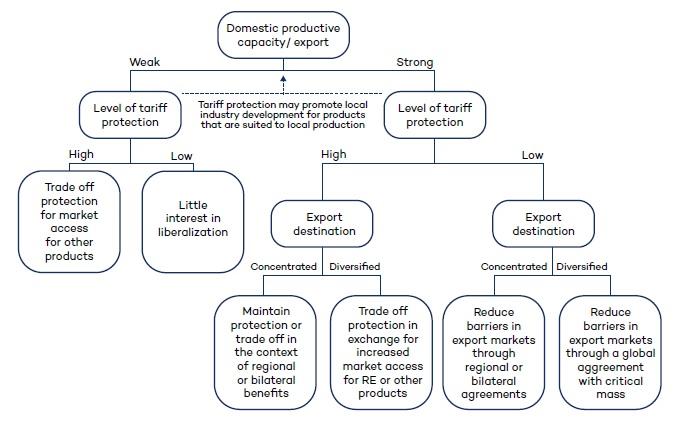
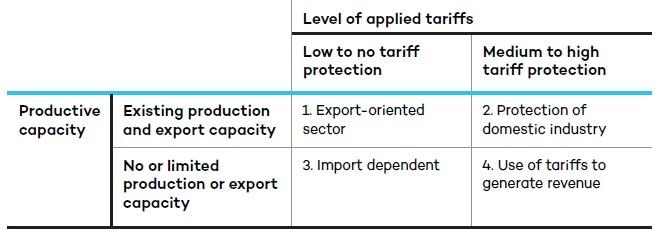
Bottom line: the average tariff structure of low-income and lower-middle-income countries only partially reflects the extent to which specific components are expected to be sourced internationally or locally. This is explained by other factors. Figure 1 represents a rough typology of different trade policy settings observed in practice depending on domestic productive capacity and tariff levels.

Table 1. Trade policy objectives: The productive capacity and applied tariffs matrix

Trade policy objectives: table about the relationship between productive capacity and applied tariffs
Source: Bridle & Bellmann, 2021.

In short, the imposition of tariffs may stimulate the deployment of additional productive capacity, particularly for products that are suited to local production. A good example is the production of heavy or bulky components such as towers, for which minimizing transport distances provides a cost advantage. In these cases, however, there is a need to balance the likelihood of achieving competitive production with increased project cost and the economic value of local production.

International initiatives that liberalize environmental goods and services could reduce costs and increase renewable energy deployment.

By contrast, the overall impact of tariffs on highly centralized components is very likely to be negative and reduce the deployment of renewable energy. In these cases, the barriers to entry for new manufacturers are so high that tariffs will only increase costs without fostering local production. For moderately centralized components (such as wind turbine blades), the results are strongly case dependent. 

International initiatives that liberalize environmental goods and services could reduce costs and increase renewable energy deployment. However, considering what precedes, countries’ interests in liberalizing trade in equipment for wind and solar energy generation will vary depending on their productive capacity, trade policy settings, and export destinations (see Figure 1). 

Figure 1. Policy options and considerations regarding tariffs on renewable energy equipment

Infographic on policy options and considerations on renewable energy equipment
Source: Bridle & Bellmann, 2021.

As international initiatives are pushed forward, the opportunities for liberalizing environmental goods and services should be accompanied by policies that support the competitive local production of components to help build the political and economic cases for a transition to renewable energy. This may call for allowing exceptions for some of these components as part of a list of sensitive items under either regional or plurilateral initiatives.

Insight

Connecting the Dots for Sustainable Supply Chains: Voluntary sustainability standards and SDG 17

To achieve the UN Sustainable Development Goals as a global community, we need more coordinated and coherent supply chains. Are voluntary sustainability standards the answer?

August 11, 2021

Voluntary sustainability standards (VSSs) are well placed for helping achieve the UN Sustainable Development Goals (SDGs), as they encourage multistakeholder collaboration to address some of the world’s most critical sustainability challenges.

VSSs are voluntary schemes that guide producers to use more sustainable practices in exchange for a seal and assurance of standards-compliant production. They gained prominence after the Rio Conference in 1992 as they were viewed as a means to mobilize supply chain stakeholders to address sustainability challenges in various commodity sectors.

“Creating a better world requires teamwork, partnerships, and collaboration”

Simon Mainwaring

Fast forward more than two decades to 2015, and the SDGs were embraced by the global community. Comprised of 17 global goals, the SDGs aim to engage and orient all segments of the global community—governments, civil society, and the private sector—toward achieving common development objectives.

Goal 17, which seeks to “strengthen the means of implementation and revitalize the global partnership for sustainable development,” underpins all the others. It promotes the establishment of multistakeholder partnerships, resource sharing, technology transfer, capacity building, policy and institutional coherence, measuring and assessment systems, and more equitable trade regimes.

This reflects one of the distinguishing features of the SDGs: to encourage inclusivity and collaboration. The complex challenges we face today—such as addressing climate change, reaching gender equality, and reversing biodiversity losses—are such that we need “all hands on deck” to find effective solutions that will move us toward a more sustainable future.

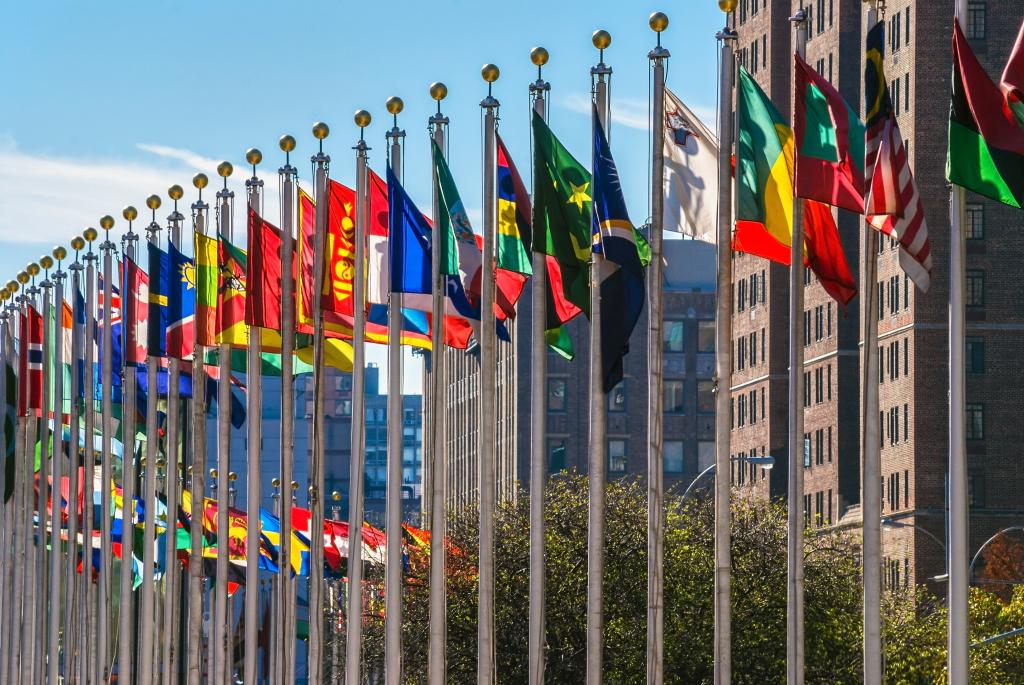
UN NY.jpg
The UN Sustainable Development Goals aim to engage and orient all segments of the global community toward achieving common development objectives. (Photo: iStock/andykazie)

VSSs embody the spirit of SDG 17, given that they are grounded in multistakeholder partnerships that aim to enable more sustainable production practices within commodity supply chains. Often made up of private sector, civil society, and non-government entities, VSSs are connecting stakeholders representing all parts of a supply chain. As such, they help facilitate conversations and develop solutions to sustainability challenges.

Examples of this work include resource sharing to reduce VSS compliance costs, adopting and developing new technologies, training producers and building the capacity of supply chain stakeholders, measuring the impacts of their programs, and supporting equitable wealth sharing by establishing living incomes or price premiums.        

Although VSSs have existed in the agricultural sector since the early 1970s, they have recently expanded to cover more sectors and commodities. This bodes well for addressing sustainability challenges in supply chains, but it is also causing confusion within the marketplace as to how they differ from one another.

“Voluntary sustainability standards are grounded in multistakeholder partnerships that aim to enable more sustainable production practices”

Several organizations have been working to address this concern by trying to examine VSSs in a structured manner and benchmark their production criteria. In reality, they can never be truly compared as they often work in different sectors and contexts, with different objectives and resources. To some degree, they should be viewed as being complementary.

In the cotton sector, for instance, the Better Cotton Initiative is working toward making sustainable cotton become more mainstream, while Cotton Made in Africa is focused on helping smallholder African cotton farmers adopt more sustainable production practices. Fairtrade and organic standards, on the other hand, provide cotton farmers with access to markets that aim to provide them with fair returns and protect the environment. These VSSs provide an ecosystem of complementary production standards that are enhancing the sustainability of the cotton sector in different ways.

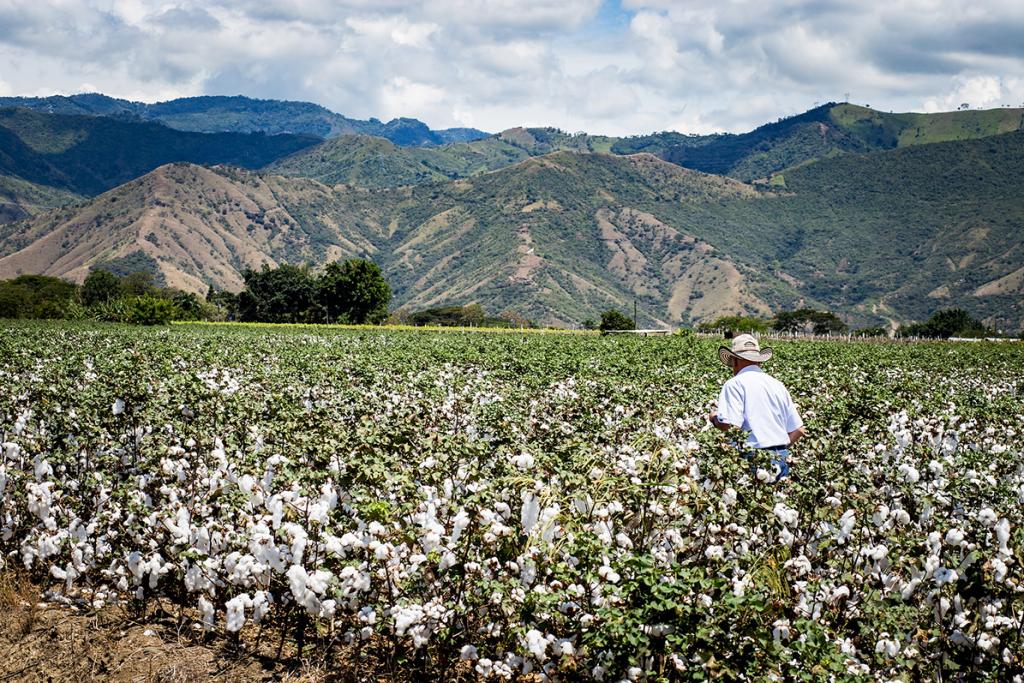
Farmer in a field of cotton
Voluntary sustainable standards in the cotton sector provide complementary production standards that are enhancing the sustainability of the cotton sector in different ways. (Photo: Pixabay/JosephMarin)

Simon Mainwaring succinctly conveys the need for collaboration within supply chains in his book We First: How Brands and Consumers Use Social Media to Build a Better World. He says: “Creating a better world requires teamwork, partnerships, and collaboration, as we need an entire army of companies to work together to build a better world within the next few decades. This means corporations must embrace the benefits of cooperating with one another.”

There is no doubt that we need to connect the dots and leverage existing resources in more coordinated and coherent ways if we are to achieve the SDGs as a global community. In this regard, VSSs have had—and will continue to have—a catalytic role to play within commodity supply chains.

Insight

A Green Recovery From COVID-19: Responding to the health crisis and the climate crisis in tandem

As we look to chart a path to a post-COVID future, young private sector leaders say we have an invaluable opportunity to avoid past mistakes.

August 11, 2021

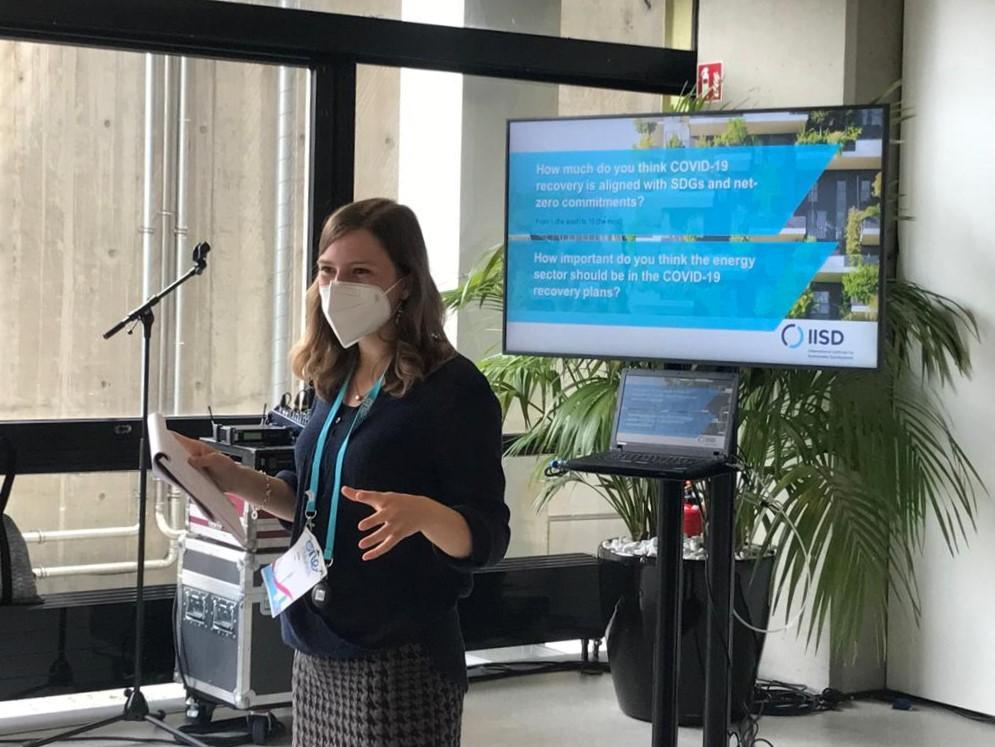
How can we achieve a COVID-19 recovery that avoids old patterns and assures a fossil-free future? For one of our first in-person workshops since the pandemic, Silke Bölts and IISD expert Lourdes Sanchez tackled this question with young international leaders from the private sector at the One Young World Summit in Munich, Germany.

Participants at the IISD workshop at the One Young World summit in Munich.
Participants at the IISD workshop at the One Young World summit in Munich. Photo taken by Lourdes Sanchez. 

Most of the participants believed that current global support for COVID-19 recovery is not in line with the United Nations Sustainable Development Goals nor with countries’ net-zero commitments—a major missed opportunity. As Luca Anselmi, who works in the renewable energy sector, explained, “It seems that some want to return to the past, while we need to build a better future. A lot of big opportunities could be missed.” 

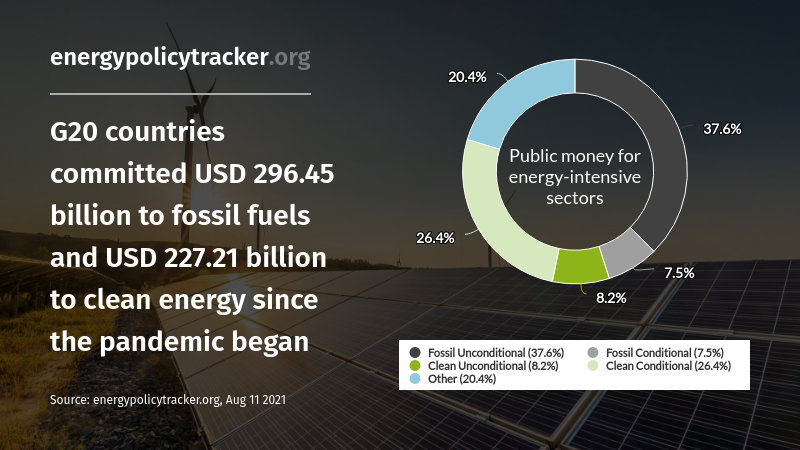
Their sentiments are backed up by research: the Energy Policy Tracker has found that, to date, 45% of all public money committed to energy production and consumption in G20 recovery packages has supported fossil fuels, versus only 35% for clean energy.

Card showing how much G20 countries committed to energy sectors since COVID-19 (296.45 billion to fossil fuels)

At the same time, many participants stressed the importance of the energy sector in recovery plans. “Electricity must be renewable,” said Friederike Göpel, who works as a project lead and business developer at BMW. “Otherwise, it will not be sustainable to drive a car. The energy sector needs to deliver its part in the recovery. Therefore, incentives for investments in fossil-free technologies need to be provided.”

But how can that be achieved? And what is the government's role in supporting this transition?

Silke Bolts leads a discussion at the One Young World Summit.
Silke Bölts leads a discussion during the workshop. Photo taken by Lourdes Sanchez. 

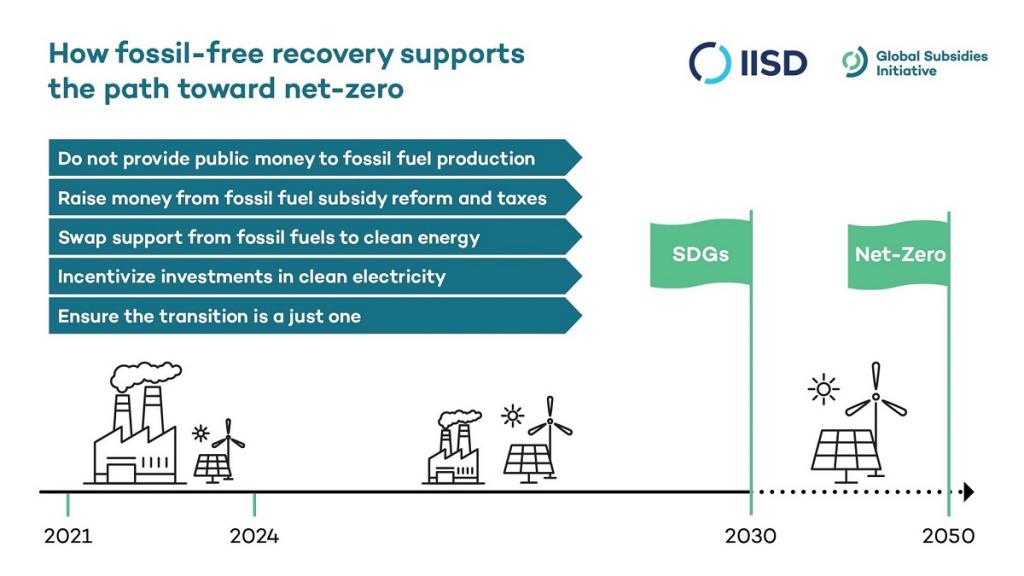
IISD’s report Achieving a Fossil-Free Recovery proposes five steps that governments can take to align their economic recovery with a sustainable energy sector. As countries continue to develop and implement their recovery plans, there is a critical window of opportunity to put these principles into action.

Fossil-free recovery road to net zero infographic

Participants suggested that COVID-19 is a chance for some countries, especially those in the Global South, to move away from or even leapfrog old technologies and instead directly invest in future-proof fossil-free ones. While some countries, such as Iceland or Costa Rica, already run on mostly renewable energy, most countries still have a long way to go to implement their pledges. 

Although the costs associated with catastrophic climate change would be far greater, the energy transition will not be free. Workshop participants discussed who should pay: governments, companies, or consumers? Fossil fuel subsidy reform is one way for governments to raise money while reflecting the social and environmental costs of burning fossil fuels. Another important tool is carbon pricing. But the reality is that some of the costs will get passed down to consumers in the form of higher taxes or higher prices.

In order to minimize the impact on people and communities and to protect vulnerable populations from high costs or hardship, participants agreed that governments must put measures like social compensation packages in place. Governments can also follow in the footsteps of Nordic countries’ green taxation policies by simultaneously lowering other consumer costs such as income taxes. In this way, policy-makers can reduce pollution while mitigating the effect on taxpayers’ budgets and stimulating economic growth.

However, governments have been slow to implement a price on pollution. “We have been discussing taxing fossil fuels already for quite some time,” Davina Savelli, who works at Deutsche Bahn, noted. “I remember learning about it when I was in school. But it has not been put into practice in the meantime. In business, we run pilots, analyze, improve, and then scale up. Why is it so different in politics?” 

“The discussion made me realize that we need to rethink the decarbonization of our economy more ambitiously after this pandemic.”

Adli Renhoren, an advisor at Energy Investment Management BV
Adli Renhoren speaks during the workshop discussion amongst participants. Photo taken by One Young World.

Another key point raised was that governments need to guarantee transparency on fossil fuel taxation. Tax revenue should be used for investments in renewable energy or for social compensation measures instead of just adding to the government’s general budget. Another “Gilets Jaunes” incident should be avoided, emphasized a participant. In the end, participants proposed a carrot-and-stick approach, meaning governments should provide incentives to those that abandon fossil fuels and penalize those that are reluctant.

But implementing the required changes is very complex, the group agreed. Many important questions were raised. How can energy efficiency and reduced consumption be incentivized (at least in the Global North, where this idea is often neglected)? How can renewable energy be promoted without resulting in higher costs for consumers (as has happened in Germany and Spain)? And how can young people drive solutions most effectively? Our work on Fossil-Free Recovery principles provides some answers to these questions—youth activists and organizations are voicing others—now what we need most is bold and responsible leadership from our governments.

“Very interesting workshop, with many different voices, from across all aspects of the Global North industry.”

Tamara Myers, One Young World Ambassador and Project Engineer at Deutsche Bahn
Insight

Addressing Biodiversity Loss and Climate Change: Three ways adaptation planning can help

Biodiversity loss and climate change must be addressed urgently and ambitiously – until now, these agendas have remained separate, but neither will be resolved unless both are tackled together. 

August 10, 2021

The urgency for action to address climate change and biodiversity loss requires coherent policy approaches that support transformative changes.

This is the central message delivered by global climate change and biodiversity experts of the Intergovernmental Panel on Climate Change (IPCC) and the Intergovernmental Science-Policy Platform on Biodiversity and Ecosystem Services (IPBES) in a historic meeting December 14 – 17, 2020. For the first time, the global scientific communities of both fields have joined forces and released an analysis that looks at the connections between climate change and biodiversity loss. Their call to action is clear: it is crucial for countries to focus on integrated approaches such as nature-based solutions (NbS).  

Their call to action is clear: it is crucial for countries to focus on integrated approaches such as nature-based solutions.

Developing countries have already recognized the vital role that protecting ecosystems can play in helping people and systems adapt to climate change by including measures such as ecosystem-based adaptation (EbA) in their National Adaptation Plans (NAPs). 

Bridging Biodiversity and Climate Change Adaptation

The NAP is a strategic process that aims to make people, ecosystems, and economies more resilient. It starts by analyzing current and future climatic change and assessing vulnerability to its impacts. This allows countries to then identify the most effective adaptation measures, mainstream adaptation into planning and budgeting processes at the national level, track progress and results, and evaluate areas for improvement.

Here are three ways countries are already using the NAP process as a key avenue to bridge biodiversity protection and climate adaptation.

First: Linking the NAP and the National Biodiversity Strategies and Action Plan helps countries coordinate and explore the synergies between adaptation and biodiversity protection.

The National Biodiversity Strategies and Action Plan (NBSAP) process aims to address the climate risks and vulnerabilities facing a country’s ecosystem and biodiversity. As a crucial part of the UN Convention on Biological Diversity (CBD), the NBSAP process represents the global community’s commitment to protecting biodiversity.

Countries are asked to develop their NBSAPs with considerations for potential impacts on important areas such as gender, sustainable development, traditional practices, public health, and more. Much like the NBSAP, the NAP process emphasizes the importance of a holistic approach to adaptation planning. One of these strategies often found in NAPs is protecting mangrove forests. This practice safeguards neighbouring communities from floods while also increasing habitats for coastal species. Similarly, NBSAP measures like reforestation of native species yield the climate action co-benefits of disaster risk reduction and carbon storage.

Consolidating workstreams and activities between future NBSAP and NAP processes can strengthen the synergies between biodiversity protection and climate adaptation planning. It also avoids duplication of work and waste of resources. Some key areas for collaboration include stocktaking, monitoring and evaluation, and exploring options for plan updates.

Second: Ecosystem resilience and vulnerability assessment are clear mandates of the NAP.

An analysis of the 19 NAPs submitted between 2014 and 2019 found that all of them stress the importance of incorporating detailed information about ecosystem vulnerabilities to climate change in their risk assessment. This process highlights how economies and people’s well-being rely on healthy ecosystems and emphasizes the role of nature in reducing community vulnerabilities to climate change.

As mentioned above, many adaptation strategies contribute positively to countries’ biodiversity goals. However, some can also create barriers. For example, introducing non-native tree species to help land ecosystems adapt to increasing temperatures and new disease or pest risks could threaten native species, thus affecting biodiversity protection goals.

NAP processes need to take a birds-eye view of the interactions between ecosystems, climate change, and people's livelihoods and well-being.

NAP processes need to take a birds-eye view of the interactions between ecosystems, climate change, and people’s livelihoods and well-being. Using an ecosystem-level approach to assess the co-benefits and tradeoffs of proposed adaptation actions will enable crucial science-based ecosystem safeguards.

Third: Using EbA as a central adaptation response in NAPs will help meet the objectives of multiple international agreements.

EbA is a nature-based solution that harnesses biodiversity and ecosystem services to reduce vulnerability and build resilience to climate change. EbA contributes to both ecosystem protection and climate adaptation.

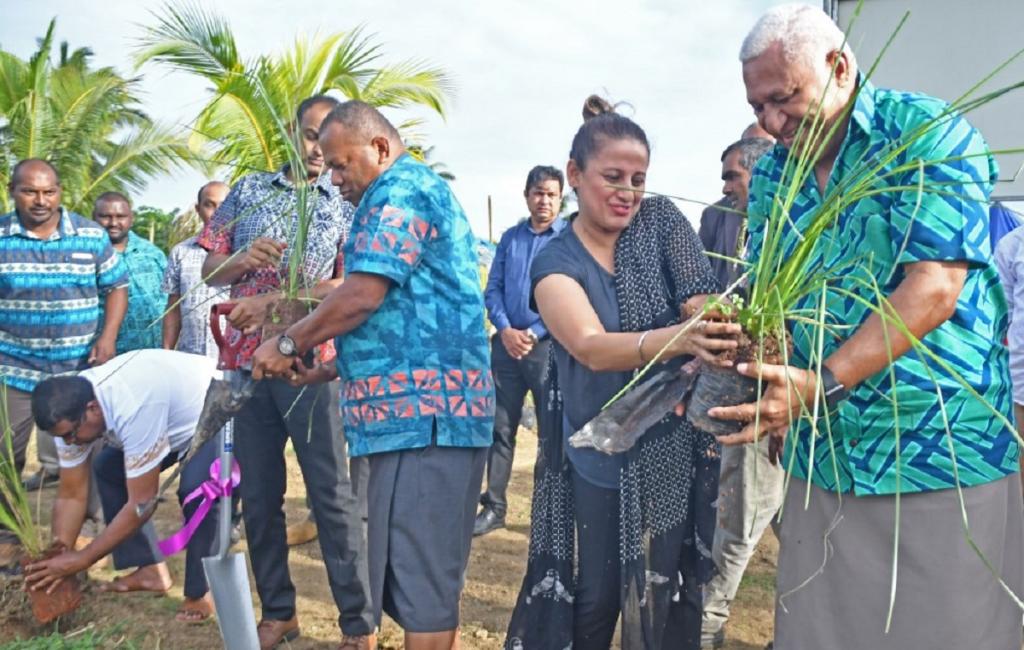
Many countries are already relying on EbA measures to live in a world impacted by climate change. In Fiji, EbA forms a prominent part of the country’s NAP and allows it the opportunity to link its adaptation goals with its NBSAP. EbA strategies such as watersheds and forest restoration, as well as planting vetiver grass along riverbanks and inland slopes, help Fiji protect its vibrant and rich biodiversity while helping communities adapt to climate impacts and mitigate disaster risks. Prioritizing EbA helps Fiji achieve its obligations under the United Nations Framework Convention on Climate Change (UNFCCC), the CBD, the SDGs, and the Sendai Framework for Disaster Risk Reduction and improves the country’s resilience to the climate crisis.

Planting vetiver grass in Fiji
Planting vetiver grass along Fijian riverbanks for biodiversity protection and climate adaptation. Fijian government via Facebook.

NAP processes showcase how integrating biodiversity protection into adaptation planning can create co-benefits and avoid sub-optimal solutions. To prepare for this climate crisis, we need to bring together actors of science, policy, and civil society to develop and promote approaches that generate equitable and effective outcomes for climate, biodiversity, and people.

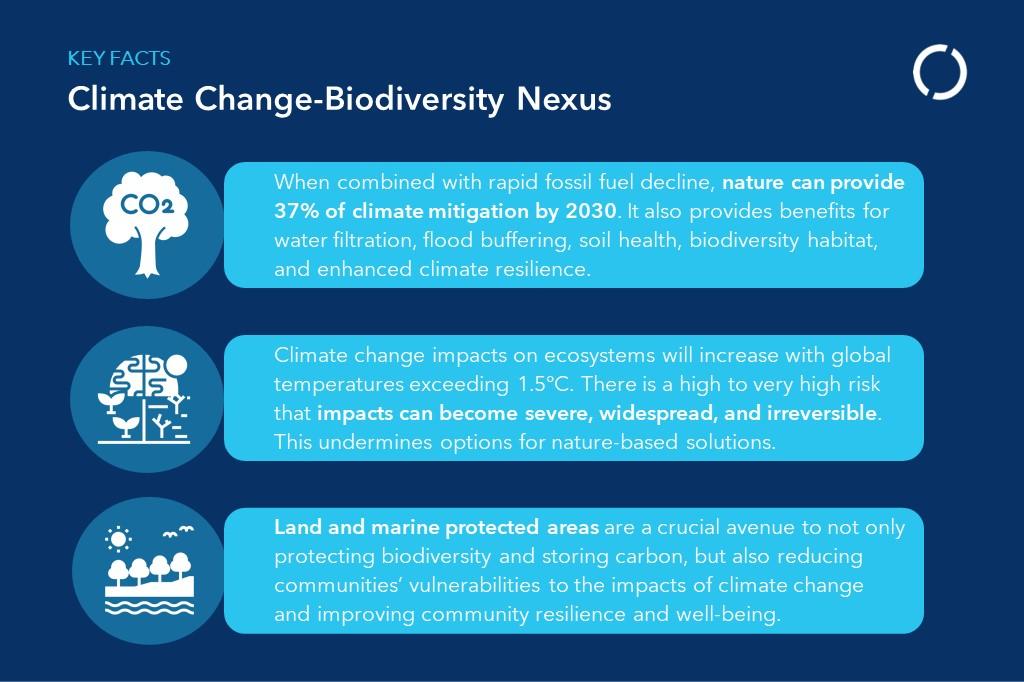
Key facts about the climate and biodiversity nexus

The NAP Global Network has developed a detailed guidance on how to maximize EbA in the NAP process and leverage the power of nature in building a more resilient future. Visit the NbS theme page to find out more.

Insight details

Insight

Canada Is a Land of Lakes, but Is Falling Behind When It Comes to Tracking Their Health

If Canada, at a local level, is to contribute to an increasingly global understanding of the world’s environmental health, we need to put the work in. We need a national plan to track and co-ordinate the health of our critical freshwater resources.

July 30, 2021

This originally appeared as an op-ed in the Ottawa Citizen on July 28, 2021, and is reprinted below with permission.


As someone who has worked as a freshwater scientist for more than 20 years, trust me when I say that the recent headline news that climate change is sucking the oxygen out of lakes around the globe was shocking, yet necessary.

The havoc that the ever-changing climate is wrecking on the finely balanced ecosystems on which we depend cannot be understated. And the news that the health of our fresh water—a critical staple for life on earth—is being undermined at such a foundational level should be sounding alarm bells.

What struck me most, however, on reading the study itself, was the incredible amount of work that took place behind the scenes to pull such a pan-continental effort together. A headline that might be glanced over at the kitchen table, and maybe even provoke a perfunctory disgruntled murmur on the way to the office, was the result of decades of painstaking work by people across nearly every continent.

Here in Canada, this work has been over 50 years in the making. For example, IISD Experimental Lakes Area contributed data on the physical and chemical elements of five reference lakes that have been collected since 1969. Fifty years of data collection means thousands of early mornings with the blackflies and mosquitos, rainy treks, and soggy sandwiches for intrepid researchers throughout the decades — and that’s just one of the global study sites.

Combine this dataset and the many others from Canada and around the world. Spend hours with these data ensuring consistency between methods, teasing out trends and rhythms and drivers — all to reveal the global picture.

While the final results represent a much-needed global assessment, the building blocks are very much local.

Those building blocks are lacking here, severely in some cases, despite Canada being home to the most lakes of any country in the world, including 20 per cent of the world’s freshwater supply.

Canada has very few sites dedicated to long-term monitoring of freshwater health, providing the kind of data that built the study on oxygen levels in lakes. A few satellite stations dotted across the breadth of a vast territory won’t really cut it when it comes to building an accurate and dynamic picture of the vicissitudes of the country’s resources.

Provincial governments also have very limited systems to track the long-term health of fresh water on an ongoing basis. And at the federal level, while the nascent Canada Water Agency is an exciting new program that will reframe how we look at fresh water at the national level, we still need to support local monitoring endeavours.

We’ve seen some exciting innovation in that sphere blossoming at the grassroots level. Any fired-up citizen in Manitoba, for example, can sign up to take samples that contribute to the Lake Winnipeg Foundation’s community-based monitoring program. Groups like GLEON are helping bring researchers together to formulate questions and calls for data.

But these fine efforts are few and far between. If Canada, at a local level, is to contribute to an increasingly global understanding of the world’s environmental health, we need to put the work in.

We need a national plan to track and co-ordinate the health of our critical freshwater resources.

Our neighbours to the south have developed several national programs, such as the National Earth Observation Network and the U.S. National Lake Assessment. In Europe, the standardized monitoring of freshwater across countries is enhanced by the EU Water Framework. The standardization of monitoring programs and open data platforms are crucial because they ensure that measurements made at the local level are available to everyone and can be used to evaluate national, continental, and global trends.

Home to the most freshwater lakes on planet earth, Canada must learn from our neighbours and colleagues to implement a coordinated national program for monitoring the health of our freshwater ecosystems.

It’s going to take a lot of work, so let’s get started.

Insight details

Topic
Water
Region
Canada
Project
IISD Experimental Lakes Area
Impact area
Nature
Insight

Growing Tea Sustainably: Examples from Kenya, India, and Sri Lanka

From climate change impacts to price fluctuations, producing tea can be a volatile business. Here's how some of the world’s major tea-producing countries are making the industry more stable—and sustainable.

July 26, 2021

A hot cup of freshly brewed tea is a beverage beloved by many. But how often do we think about the origins of each neatly packaged tea bag on our kitchen shelf? Millions of people across the planet earn livelihoods from the tea industry, but many tea-producing regions face a myriad of sustainability challenges. From climate change impacts to price fluctuations, producing tea can be a volatile business.

As part of our advisory services work for governments, IISD’s State of Sustainability Initiatives (SSI) team conducts research to identify practices to help address these challenges. These practices include the use of voluntary sustainability standards (VSSs)—certification schemes that define a set of requirements for producing and selling products sustainably. Here are three examples of how VSSs and other measures have been used effectively in Kenya, India, and Sri Lanka.

Kenya

Tea production provides five million Kenyans with livelihoods

Tea is a big industry in Kenya. First introduced to the country in 1903, it now contributes an estimated 5 million direct and indirect jobs. That means 10% of Kenyans rely on the industry for their livelihoods, including more than half a million smallholder tea farmers. 

Kenya is also one of the top tea-exporting nations, with an export value of a whopping USD 1.2 billion in 2019. It is leading the way in the trade of sustainable tea, with nearly all of its tea production complying with VSSs like Rainforest Alliance and Fairtrade. But with so many people relying on the industry, has this made a difference to farmers’ incomes?

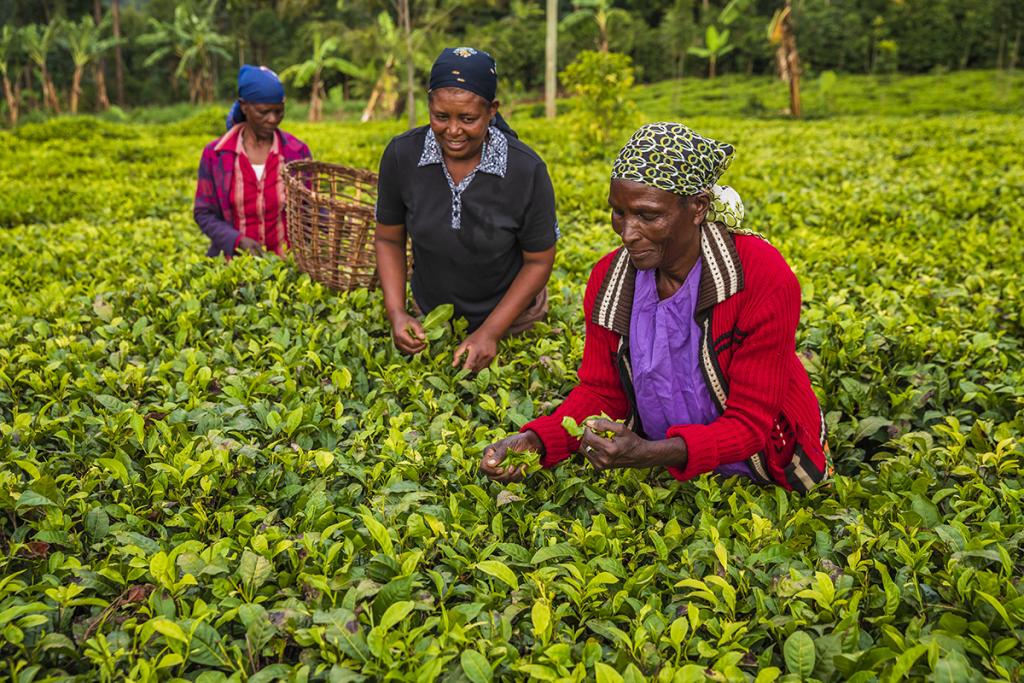
Women plucking tea in Kenya
10% of people in Kenya rely on the tea industry for their livelihoods. iStock/hadynyah

Certification and training can help ensure fair, stable wages

Thanks to the growing global demand for sustainable tea, complying with VSSs can provide farmers with access to new markets, which can offer higher prices and premiums. Providing fair wages is also often part of the criteria for certification. For example, Fairtrade sets a minimum price for most of its products and provides farmers with additional funds to invest in the community. When used to fix roads and bridges, this can also improve farmers’ connections to supply chain actors.

In Kenya, Farmer Field Schools also help train farmers in how to use sustainable production methods, such as better pest and soil fertility management. Introduced by the Kenya Tea Development Agency Holdings Limited and partners in 2006, the schools have helped producers increase yields. Studies show that they have also encouraged farmers to work collectively to source equipment and sell their produce—all of which can enhance farms’ profitability.

India

Poor working conditions and inequality affect tea growers in India

Records suggest that tea drinking has been part of Indian society since the 12th century. Cultivation was escalated by the British in the 19th century, and India is now one of the world’s leading tea-producing countries. In 2016, the Tea Board of India estimated that the country produced 1.3 billion kilograms of tea.

However, studies have shown that many tea plantation workers are denied their rights to decent working conditions. Tea-growing regions like Assam and Darjeeling often experience labour conflicts over issues like wages and access to healthcare. In addition, women bear the biggest brunt of inequality as they are most likely to be involved in plucking, which is low-paid and can lead to health issues.

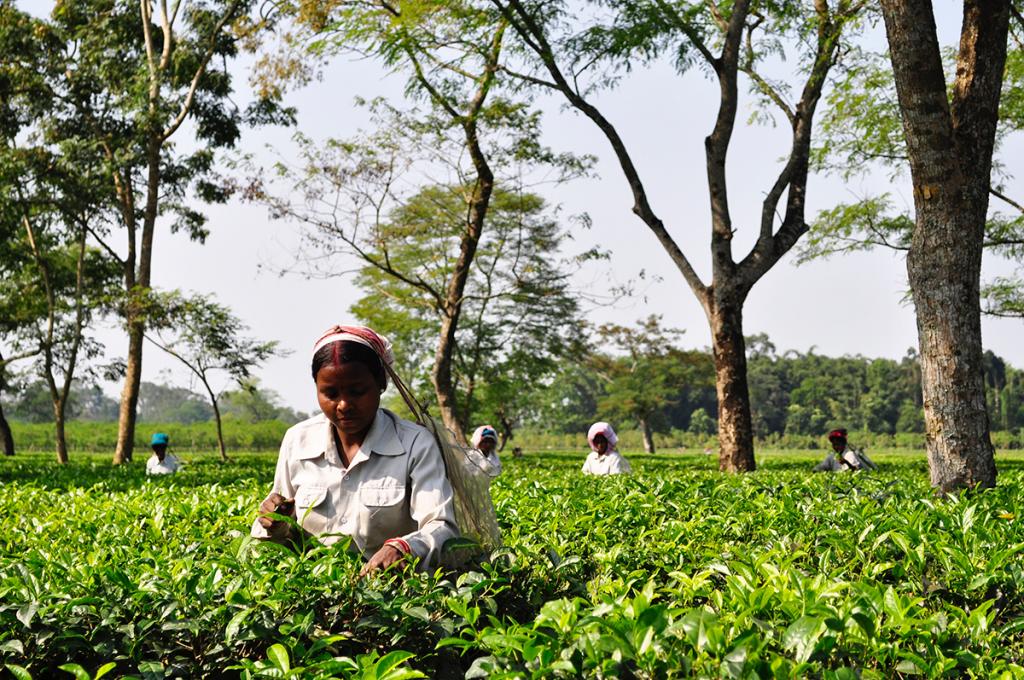
Women plucking tea in India
Many tea plantation workers in India are denied their rights to decent working conditions. UnSplash/Amit Ranjan

Certification and policies can improve living standards

Respect for human rights and protecting the health of workers are two criteria often included in VSSs. In India, almost half of tea is produced under the Trustea label, a VSS developed specifically for the Indian context. Trustea includes requirements for appropriate working conditions in their criteria for certification, including the provision of adequate training, maternity entitlements, and equal pay.

The Indian government has also helped improve working conditions for tea farmers and workers. For example, the Plantation Labour Act legally requires plantations to provide certain health and welfare benefits, from housing to medical facilities. Additionally, organizations like the Ethical Tea Partnership are increasingly focusing on gender equality projects, such as training to enhance women’s nutrition and participation in decision-making.

Sri Lanka

Sri Lankan tea production is vulnerable to climate change

Sri Lanka is one of the oldest tea-producing regions in the world. Ceylon tea exports contribute to around 2% of the country’s GDP, and the industry supports more than 450,000 smallholder farmers. Due to favourable climates, tea is primarily grown in the central highlands and southern inland regions.

However, given that Sri Lanka is a developing island nation, tea production is particularly vulnerable to stresses induced by climate change. Rising temperatures, unpredictable weather patterns, and pests are putting strain on an industry already weakened by competition and labour costs. What is more, these challenges are exacerbated by deforestation and the excessive use of chemicals and pesticides.

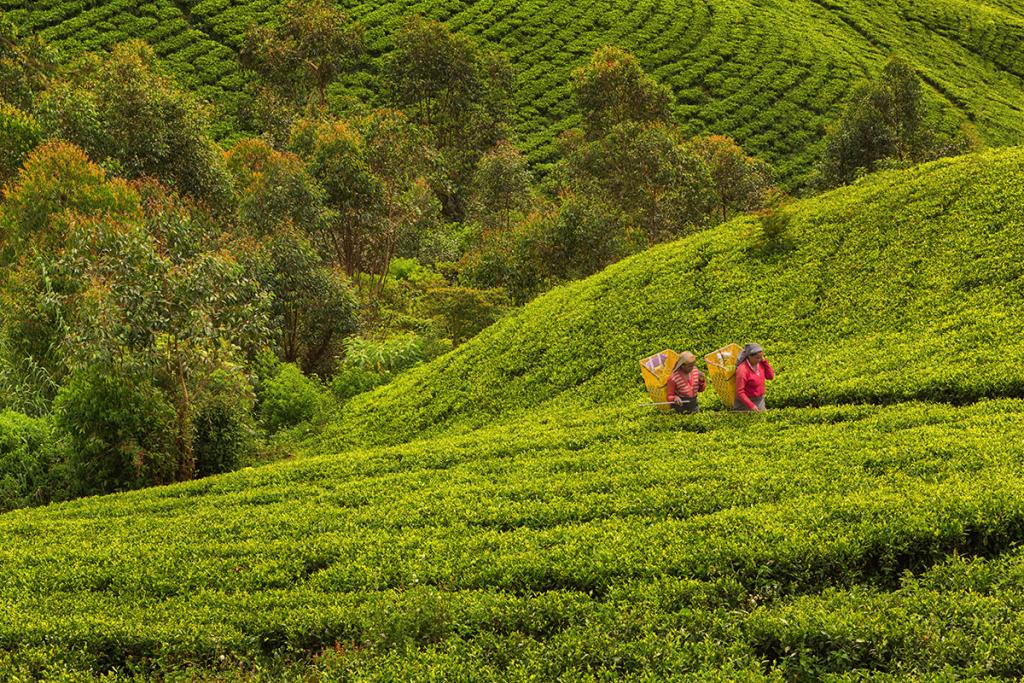
Tea workers in Sri Lanka
The tea industry supports more than 450,000 smallholder farmers in Sri Lanka, but production is vulnerable to stresses induced by climate change. iStock/tunart

Certification and governments can support climate adaptation

Many certification schemes seek to help communities adapt to climate change. The Rainforest Alliance runs programs in Sri Lanka that help workers adopt climate-smart agricultural practices. They educate tea farmers on how to maintain tree cover and reduce synthetic pesticide use. Their research shows that such practices benefit not only the environment but also the profitability of certified farms.

In addition, the Sri Lankan National Adaptation Plan for Climate Change has outlined a strategy to combat the effects of climate change. Measures range from introducing new heat, drought, and flood-tolerant cultivars to establishing a climate communication system that connects with tea farmers via mobile and Internet alerts. 

Learning From Others

Amid a variety of intense and complex sustainability challenges, these examples show that there is a range of approaches that can help tea farmers adapt and thrive. The impacts of these practices are the subject of ongoing research, but it appears that VSSs can play a major role in the quest for a more sustainable tea industry—particularly when supported by measures put in place by governments and other actors that support farmers. Identifying such practices forms a central part of the SSI team’s advisory services work, as it can help inform authorities seeking to tackle similar challenges.

This blog was written from research conducted by Vivek Voora and Sara Elder. The author would like to thank Sara Elder, David Perri, and Cristina Larrea for their valuable feedback on earlier drafts of this article.