Deep Dive

Securing the Future of Development Finance in a Fragmented World

A roadmap for the 4th International Conference on Financing Development

Development finance is under pressure. Cuts to aid, trade uncertainty, and debt burdens are exacerbating deep vulnerabilities in low-income countries. With the Fourth International Conference on Financing Development (FfD4) set to take place next week, our experts look at how to “future-proof” development finance. They examine the largest sources of development finance and assess their exposure to geopolitical risks, helping prioritize implementation of the FfD4 agenda.

June 19, 2025

At the end of this month, countries will meet in Seville for the Fourth International Conference on Financing for Development (FfD4), where they will formally adopt an agreement set to shape the global development finance landscape for the next decade. 

After more than a year of negotiations, the outcome document was finally agreed on by consensus, —a consensus made possible only after the United States chose to walk away from the process. Their withdrawal cleared the path for a rare agreement among the rest of the international community, lending the text a degree of legitimacy. However, its formation in the absence of a major global actor raises important questions, especially amid mounting global challenges and urgent needs for low-income countries.

The world’s most vulnerable countries grapple with rising debt burdens, climate-related shocks, and capital flight, the impacts of which are compounding in ways that threaten to derail progress on development goals, from building climate resilience to ending extreme poverty.

However, instead of stepping up, many countries have recently stepped back, prioritizing their own national interests rather than working together on global issues. The reduction of official development assistance (ODA) is a sharp demonstration of this, being cut or diverted to domestic priorities. The United States’ withdrawal from multilateral agreements aimed at scaling up development and climate cooperation, including the FfD4 Summit and the United Nations Framework Convention on Tax, reflects the same trend.

This shift has created a political climate where international cooperation tends to settle for the lowest common denominator, focusing on simple, narrow agreements instead of bold, wide-ranging ones. Nevertheless, the consensus reached on the FfD4 outcome document signals that multilateralism, while strained, remains possible, even in a fragmented global landscape.

The challenge now is to leverage this momentum, not just to endorse commitments, but to translate them into action.

Given the current context, the discussions at FfD4 will have to be focused on preventing systemic crises that could derail the whole agenda and pinpointing the key policy moves, both at domestic level and internationally, that can keep progress moving forward, even when crises occur. The outcome needs to be strong enough to withstand the challenges ahead.  

By analyzing actual financing flows, including tax revenues, transfers, subsidies, and debt servicing, we can better understand where countries are exposed and what policies offer the greatest leverage. Our analysis breaks down the risks and lays out development finance priorities that countries should focus on

Plaza de España, Seville.

Geopolitical Risks to Development Finance

1. Cuts to Aid Budgets

ODA is being pulled in multiple directions. As countries grapple with climate finance and humanitarian needs, budgets are shrinking. This is a major blow for low-income countries, as ODA often underwrites essential services and supports macroeconomic stability.

Data shows ODA grants remain critical because many lower-income countries lack social contributions that fund social protection elsewhere, making aid a vital income source.
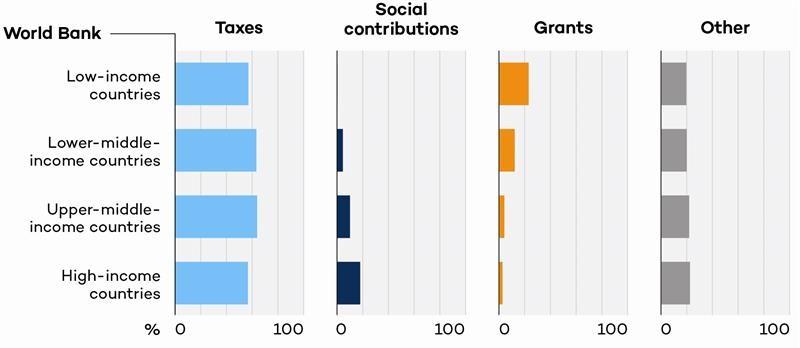
Government revenues by type, as % of total revenues
Source: Authors, based on IMF, 2024

The issue isn’t just a shortfall in funding. Without predictable ODA flows, countries may turn to more expensive or volatile financing, including commercial debt. This increases fiscal pressure and can lead to a vicious cycle of borrowing.

2. A Fractured Global Trade System

The cut in ODA not only affects capacity to finance public goods, but also the availability of external flows to balance import demand. In lower-income countries, secondary income (current transfers) and capital transfers (project finance) play a significant role in external revenues. As these flows become increasingly scarce, the pressure on exports intensifies.

Exports, secondary income, and capital account, as a percentage of imports.
Source: Authors, based on World Bank, 2025.

However, today’s trade system is increasingly unstable. Unilateral tariffs and eroding trust in multilateralism have disrupted supply chains and exposed exporters to more volatility, especially in goods trade, where lower-income countries earn the majority of their export revenues.

For many low-income countries, export revenues remain fragile due to weak tradable sectors, relying heavily on transfers to stabilize external accounts. This exposes them to shocks in political and labour markets globally, increasing vulnerability to trade disruptions.

3. A Looming Debt Crisis

External debt vulnerabilities are growing. Many low-income countries now rely on a more complex mix of public, private, and non-concessional debt. This shift, coupled with rising interest rates and falling foreign exchange reserves, has triggered balance of payment pressures in dozens of economies.
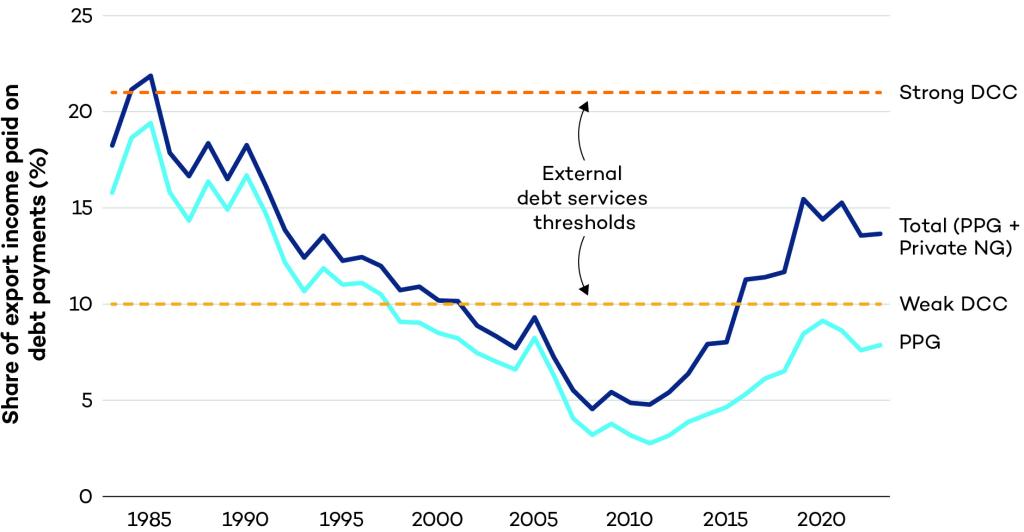
 

External debt services to exports
Source: Wiedenbrüg et al., 2025.

Rising exposure to external private debt and more complex creditor mixes risks diverting growing shares of scarce revenues to debt servicing, squeezing public spending on development priorities.

4. Domestic Resource Mobilization Under Pressure

The logical response to falling external finance is to raise more money at home. There’s huge potential to do this—especially through better tax systems—but overreliance on domestic resource mobilization (DRM) is risky.

Without a corresponding boost in external revenues, higher domestic spending could trigger inflation, currency instability, or debt distress.

Taxes remain the largest source of development finance, underpinning domestic budgets. However, data reveals that many countries’ tax systems still miss considerable revenue from wealth and natural resources, while harmful subsidies drain public funds and distort priorities. Social contributions are also underdeveloped, requiring integrated reforms beyond GDP-focused tax efforts.

Six Implementation Priorities After FfD4

The risks outlined above show why future-proofing development finance is critical. As countries adopt the FfD4 agreement, the focus must shift to action that addresses today’s challenges and builds resilience against tomorrow’s shocks.

The six priorities below set out where efforts should concentrate to safeguard progress and strengthen economies for the long term.

1. Reform and Refocus ODA

ODA must be restructured to reflect today’s priorities without double-counting or diluting its core purpose. One approach is to divide ODA into two streams, one focused exclusively on poverty reduction and another dedicated to global public goods like climate action.

A more ambitious proposal would involve a “Beyond ODA” framework, pooling contributions from public, private, and philanthropic sources based on countries’ ability to pay. While politically challenging, even incremental reforms can increase aid effectiveness.

2. Prevent Trade Disruptions from Harming Low-Income Countries

Trade disputes between wealthy nations should not come at the expense of low-income countries. High-income countries must avoid broad tariffs that affect these economies and ensure market access is maintained.

Regional trade integration and South–South cooperation can help diversify markets and reduce vulnerability, but these efforts need support. Stronger trade alliances and fairer trade rules are essential for building resilience.

3. Coordinate Debt Relief Around Balance of Payments Pressures

Debt relief should prioritize easing immediate external financing constraints, not just lowering debt-to-GDP ratios. The focus should be on avoiding economic collapse, supporting investment, and ensuring that relief is timely and adequate.

A deeper reform agenda would involve standardizing sovereign debt restructuring processes across creditor types, from bondholders to multilateral institutions.

4. Strengthen DRM

Three high-impact DRM reforms include:

Taxing wealth, rethinking tax incentive strategies, and capturing more from natural resources are three reforms that could help raise much-needed revenues for development.

Social contributions also need attention. Many low-income countries lack universal social protection systems. Closing this gap will require broader development strategies that account for human, social, and environmental well-being, not just GDP growth.

5. End Harmful Subsidies and Expand Green Taxes

Fossil fuel subsidies drain budgets and delay the energy transition. Reforming them—while protecting vulnerable populations—can free up fiscal space and support green development. Additional revenue can be raised through green taxes on carbon, waste, and pollution. These taxes are relatively easy to administer and align with sustainability goals.

6. Promote Export Growth Alongside DRM

DRM must be matched by efforts to boost export earnings. This includes

  • diversifying exports beyond a few commodities to reduce volatility
  • providing targeted incentives to boost industrial output
  • using trade taxes wisely to raise revenue without undermining competitiveness

This complements DRM and reduces the risk of balance of payment crises.

Flags of all countries shown in front of buildings in New York

Aid cuts, debt distress, and trade fragmentation have already begun to reshape the financial landscape for low-income countries. Future-proofing the FfD agenda requires anticipating these risks and acting to mitigate them.

At the global level, this means ensuring meaningful debt relief, stabilizing trade access, and redesigning ODA for today’s challenges. At the national level, countries must reform tax systems, scale social protection, invest in export capacity, and phase out harmful subsidies.

However, overloading domestic budgets in low-income countries with more responsibility without international backing is both unfair and unsustainable. A development finance strategy that relies too heavily on DRM alone risks backfiring, destabilizing economies and undermining the very goals it seeks to achieve.

The path forward must be integrated, evidence-based, and politically savvy. Only then can we build resilient, future-ready financing systems that truly support sustainable development.

Deep Dive

The G7 at a Crossroads: Advancing multilateralism, climate, environment, and energy action in an uncertain world

Canada’s G7 Presidency offers a critical chance to reaffirm the group’s leadership on climate action, resilience, biodiversity, and clean energy. Our experts break down what needs to happen to seize this moment.

June 10, 2025

Why the G7 Matters

This June, Group of Seven (G7) leaders will convene in Kananaskis, Alberta, at a pivotal moment, with geopolitical fragmentation, rising protectionism, and diverging domestic priorities challenging the body’s cohesion. Established in the 1970s to coordinate responses to global economic shocks, the G7—comprising Canada, France, Germany, Italy, Japan, the United Kingdom, the United States, and the European Union—has since evolved into an informal forum for addressing shared global challenges, including climate change, nature loss, and energy security. Collectively, G7 members represent approximately 30% of global GDP, a substantial yet declining share, and hold significant influence across international institutions.

Early signals suggest this year’s Presidency may fall short on climate ambition, reflecting deeper divisions within the G7. Political shifts, economic pressures, and diverging national priorities are making consensus harder to reach. These internal dynamics risk further weakening follow-through on past commitments. Most G7 countries are off track to meet key climate commitments made in earlier Summits, just as the urgency for coordinated action grows. According to the World Economic Forum 2025 Global Risks Report, disinformation and polarization are eroding public trust, making coordinated global action increasingly difficult. 

Canada’s Presidency: An opportunity for leadership and cooperation in troubled times

Canada’s G7 Presidency began amid considerable political upheaval, both globally and at home. Former Prime Minister Justin Trudeau resigned and was succeeded by Prime Minister Mark Carney. The U.S. administration ramped up pressure with tariffs targeting all G7 economies and sovereignty threats to Canada. These moves have further strained G7 relations at a time when global alliances are already under pressure.

Economic uncertainty is rising across the globe, marked by inflation, high debt burdens, and persistent supply chain disruptions. Climate ambition is waning in some countries, even as climate impacts such as human-caused natural disasters, droughts, and food insecurity continue hurting communities and economies. The biodiversity crisis is already disrupting agriculture, fisheries, and tourism in many countries, undermining food security and livelihoods, such as in Canada, where biodiversity loss is affecting pollinators critical to crops and threatening fish stocks vital to coastal communities.

Canada’s challenge is to steer the G7 to a successful outcome while retaining a clear focus on climate ambition, biodiversity restoration and preservation, and long-term prosperity.

Against this backdrop, and on its 50th anniversary, Canada’s 2025 Presidency presents a critical test of the G7’s credibility.While prospects for full consensus on climate and environmental ambition are very limited, the G7 has positioned itself as leading on critical global issues. To remain a relevant and trusted forum, it must find a way to continue to lead on climate resilience, action, biodiversity, and clean energy as drivers of economic prosperity and energy security. If unanimous consensus cannot be reached, the Canadian Presidency should pursue coordinated action through smaller groupings and/or optional issue-specific statements that uphold the G7’s long standing commitments.The imperative is clear: political stability, economic strength, and bold environmental and climate action are deeply interconnected and mutually reinforcing.

What We Know so Far

The Canadian Presidency has held two Ministerial Summits in advance of the Leaders’ Summit: The Foreign Ministers’ Summit, on March 12-14 in Charlevoix, Quebec pre-election, and the Finance Ministers and Central Bank Governors Summit held May 20-22 in Banff, Alberta, which occurred in the early days of Canada’s new government. The Finance Communique was the first since 2019 that did not include a set of climate and energy transition commitments. To demonstrate leadership, uphold its commitments during past summits, and compete in the global race to net-zero, the G7, led by the Canadian Presidency, will need to drive bolder results on climate, sustainable development, and the environment during both the June Leaders’ Summit and the not-yet-announced Environment and Energy Ministerial.

Read IISD’s reaction to the Finance Ministerial on our Inside the G7 webpage.

Flags of the G7 nations

High-Level Timeline of G7 Environment and Sustainability Efforts

Energy Security

Since the launch of the Rome G7 Energy Initiative for Energy Security in 2014, G7 discussions have emphasized energy security as a foundation of both economic and environmental sustainability, built on the pillars of diversification, transparency, competitiveness, efficiency, resilience, and emissions reduction.

Energy security must not be used as a justification for fossil fuel expansion, but as a reason to accelerate the clean energy transition. Investing in liquefied natural gas (LNG) is often wrongly framed as a climate and energy security solution despite its high lifecycle emissions and exposure to price volatility. Instead, public funding can support diversification into clean and price-stable renewable energy, rather than fossil fuel subsidies that can undermine energy security by encouraging wasteful consumption and locking in reliance on energy sources that are price-volatile, polluting, and depend on continuous supply from often geopolitically risky regions.

Recommendations

  • Implement the global stocktake (GST): The global stocktake, or GST, is a process under the Paris Agreement that assesses collective progress toward limiting global warming to 1.5°C and identifies gaps in national efforts. G7 countries must adopt nationally specific targets to contribute to global goals: doubling the rate of energy efficiency improvement, tripling renewable energy capacity, and transitioning away from fossil fuels. By implementing the GST, as the G7 committed to in 2023, member countries can accelerate the shift to stable, affordable energy systems that attract investment, lower costs for households and businesses, and reduce reliance on volatile fossil fuel markets.
  • Deliver on fossil fuel subsidy reform pledges. In 2023, G7 countries spent USD 282 billion on fossil fuel subsidies despite rising national debts. These public funds would be better spent on clean energy innovation, lowering household costs, and strengthening energy independence. Subsidies distort markets, expose budgets to oil price shocks, and mainly benefit wealthier households. Redirecting even part of this spending could close the clean energy investment gap and deliver targeted support. Despite repeated pledges to eliminate “inefficient fossil fuel subsidies” by 2025, progress is stalled. The G7 must act: develop national phaseout plans ahead of the energy and environment ministerial and drop the vague “inefficient” qualifier. Reform is essential for credible energy security and economic resilience.
  • Aligning financial flows with the clean energy transition means ending direct international public financing for fossil fuels, which G7 leaders committed to doing in 2022, 2023, and 2024 Leaders’ Communiques. Canada, France, Germany, Italy, and the United Kingdom have already done so, while the United States and Japan have not. Doing so would reduce risk, attract private capital, and help prevent stranded assets.
  • Retire outdated investment treaties and their investor-state dispute settlement (ISDS) clauses that let foreign firms sue governments over legitimate climate or public-interest measures. ISDS deters bold action toward low-carbon, resilient economies and fails to promote sustainable investment. Phasing it out and relying on domestic or regional courts would free governments to act and give investors clearer, more predictable rules. The G7 can lead by jointly stripping ISDS from existing treaties and replacing obsolete pacts with modern agreements that advance sustainable, fair growth without affecting cases already under way. Doing so would strengthen energy security by allowing governments to invest confidently in clean, stable energy systems without fear of legal retaliation from fossil fuel interests.

When the G7 invests in clean technology and policies, it drives down costs, accelerates innovation, and improves energy reliability and sovereignty by reducing exposure to volatile fossil fuel markets and concentrated supply chains, while supporting global partners through shared innovation and open markets.

Wind turbines stand in a field against a blue sky

Economic Prosperity, Trade, and Supply Chains

At a time when many countries and corporations are prioritizing domestic manufacturing, green industrial policy, and job creation, the G7 must lead by example: aligning industrial strategies with their previous commitments, enabling open and secure supply chains, deepening partnerships with developing economies, and advancing a just transition.

Recommendations

  • Deepen coordination on industrial decarbonization. The long-term competitiveness of critical industrial sectors, such as steel, aluminum, chemicals and cement, demands investment in breakthrough low-carbon technologies and processes. The G7 should build on their commitment to advance decarbonization efforts through the facilitation, promotion and support of their industrial sectors’ efforts to invest in innovative clean technologies by:
    • removing restrictive trade barriers through interoperability of standards for low-carbon goods;
    • promoting scaling production of needed inputs such as low-carbon electricity and hydrogen;
    • ensuring skilled workers are available and making a strong business case through high standard public procurement;
    • exploring ways to prevent their investment from being undercut by high-emitting foreign production
  • To reduce overdependence and improve resilience, the G7 should strengthen cooperation with trusted partners across the value chain, including leveraging the Minerals Security Partnership to support co-investment, infrastructure, and technical collaboration, especially with mineral rich developing economies. Canada and others can lead by advancing transparent, equitable frameworks that promote local value, strengthen governance, and uphold strong ESG and labour standards, including respect for Indigenous rights, building on the G7 Leaders’ Commitment pertaining to ESG in 2023. This approach should support open and rules-based trade,  strengthen supply chains, support shared economic opportunity and advance a stable net zero transition.
  • Scale just transition initiatives that deliver real community benefits. Governments need to recognize that responses to energy and economic transitions must be people-centric, embedding just transition plans in industrial policy with clear support for retraining, job matching, and social protection in partnership with unions, workers and communities. Internationally, the G7 should increase financial and political backing for Just Energy Transition Partnerships (JETPs) and other initiatives that prioritize community participation and local employment, as they committed to doing in 2022.

By working together on these fronts, G7 countries can reduce friction in global trade and help businesses scale across markets. But it’s also important that these efforts are not just inward-looking. Policies and subsidies should be designed to include and benefit emerging and developing economies too so the clean economy grows in a fair and globally inclusive way.

Protect Natural Systems to Strengthen Resilience

Biodiversity loss, freshwater stress, and the degradation of critical ecosystems pose direct risks to the G7. With half of global GDP dependent on nature, economies, food and energy systems, livelihoods and supply chains are increasingly vulnerable to climate change, pollution, land use change, invasive species and unsustainable resource use. These disruptions carry geopolitical, economic and fiscal consequences that are growing in scale and frequency.

This agenda is not new. The G7 has repeatedly recognized the need to reverse biodiversity loss and scale up adaptation, including through the 2024 Environment Ministers’ Communique, the 2023 Hiroshima Summit, and the development of the G7 Water Coalition. What is needed now is delivery.

A credible G7 strategy must fully integrate biodiversity protection, climate resilience, and freshwater management into economic planning and global partnerships.

As Canada hosts this year’s Summit in a region recently affected by extreme wildfires, its leadership on nature, water, and resilience will be closely watched.

Recommendations

  • In line with 2024 G7 commitments, strengthen global and domestic efforts to address extreme wildfires in both G7 countries and the Global South through improved land use planning, resilient building codes, and public education. Wildfires are already threatening lives, ecosystems, and economies, and require coordinated, sustained action that recognizes that climate change will increase this threat.
  • G7 countries party to the Kunming Montreal Global Biodiversity Framework (KMGBF) reaffirm their commitment to adopt and begin implementing ambitious National Biodiversity Strategies and Action Plans (NBSAPs). These plans should include clear targets for habitat protection, sustainable land use, and species recovery, while prioritizing Indigenous-led conservation, including through the establishment of Indigenous Protected and Conserved Areas.
  • Aligned with their 2021 commitment, advance nature-based solutions to build resilience, including water smart approaches such as restoring wetlands, forests, coastal, marine ecosystems, and promoting efficient water use aligned with natural water flows.
  • Strengthen National Adaptation Plans (NAP) and implementation finance, reaffirming G7 commitments of regular NAP updates and support developing countries in translating plans into action.
  • Integrate water security into climate resilience strategies, by embedding water management into national climate plans, investing in sustainable infrastructure especially for critical water services, and scaling ecosystem-based watershed management. The G7 should expand the Water Coalition with clear and measurable targets linking water availability to food systems and climate adaptation.
  • Restore freshwater ecosystems and tackle pollution, including by phasing out harmful substances such as PFAS, “forever chemicals” found in drinking water, soil, and food due to their prevalence in household products and manufacturing facilities. The G7 should, as they’ve committed to doing in the past, address emerging contaminants and harmonize water quality monitoring processes.
  • Use climate adaptation as a peacebuilding tool, recognizing the role of climate and environmental stressors in driving fragility, and support the alignment of adaptation plans with peacebuilding agendas, thus supporting partner governments, titleholders, and local actors in addressing nature-related drivers of conflict, including through increased adaptation finance and capacity support.

These actions not only reduce disaster risks and long-term fiscal liabilities, but also build the foundation for sustainable economic growth and stability. Additionally, they offer a visible path for G7 countries to demonstrate principled, practical leadership in the face of rising global risk.

The Presidency and Secretariat consulting during the morning plenary of 26 February 2025 at the resumed session of the 2024 UN Biodiversity Conference.

The Presidency and Secretariat consulting at the resumed session of the 2024 UN Biodiversity Conference. Credit: IISD/ENB: Mike Muzurakis

Reinforcing a Commitment to Multilateralism

The G7 must strengthen effective multilateralism through inclusive cooperation that reflects the diverse needs of all countries. It has a key role in rebuilding trust in global institutions, promoting fair burden sharing, and ensuring decision-making includes low- and middle-income countries. This means advancing institutional reform, upholding global rules, deepening partnerships, and setting norms on the climate and biodiversity crises. The G7 can either retreat into short-term interests or lead with ambition and solidarity by delivering on past commitments. A credible response to global challenges requires aligning climate and economic goals, mobilizing finance at scale, and reinforcing the multilateral system.

Canada can help the G7 lead. Prime Minister Mark Carney has pledged to revitalize Canada’s global leadership on multilateralism. Canada must ensure the G7, either unanimously or in subsets, drives progress on climate, nature, clean energy, inclusive trade, and institutional reform to deliver global stability and a people-centered energy transition.

Deep Dive

Smarter, Stronger, Scalable: The case for digital innovation in distributed renewable energy

Decentralized renewable energy (DRE) projects often launch with great fanfare, but the real challenge isn’t turning the lights on—it’s keeping them on. To scale what works, we need a smarter approach: predictive maintenance, real-time data, and digital innovation.

June 5, 2025

Snapshot

DRE has long promised to light up underserved communities, fuel local development, and close the energy access gap across the Global South. However, while many pilot projects have delivered short-term success, too many have faltered in the long run—not because of poor technology, but because of a critical gap in operations and maintenance. Traditional models have failed to meet the complex realities of rural and remote systems. 

This piece breaks down why so many DRE systems stall, and what a truly scalable solution looks like: predictive maintenance, digital integration, and a shift from reactive fixes to intelligent, connected systems that keep the power on.

What’s Holding DRE Back 

DRE’s promise has always been more than just clean electricity—it has represented hope. A hope to light up the remotest corners of the world, to enable children to study after sunset, to power irrigation pumps and health care facilities where the grid never quite made it, and to drive local economies through reliable, decentralized energy access.

In 2014, Dharnai in Bihar became a celebrated example as a "model solar village," powering homes, schools, and livelihoods through a dedicated 100kW solar microgrid.

While the microgrid significantly improved energy access in its initial phase, it started facing significant operational challenges over time. 

Studies documented performance variability in power generation, influenced by practical issues like inconsistent maintenance practices, shading, and improper panel orientation. The absence of integrated real-time monitoring systems and data analytics compounded these problems, making it difficult to proactively identify and address maintenance and performance-related issues. 

Solar panels in India

In 2013, Lakshmipura-Jharla, Rajasthan, a solar microgrid was established to provide dedicated energy services to rural households. While the microgrid improved energy access, studies revealed performance variability in power generation influenced by factors such as shading, panel orientation, and maintenance practices. The absence of continuous performance monitoring and data analytics made it challenging to identify and address these issues proactively, emphasizing the importance of integrating real-time monitoring systems to maintain consistent energy output.

Similarly, in 2015, Barapitha became Odisha’s first fully solar-powered village, and its success made headlines. In Maligaon, deep in Odisha’s Kalahandi district, and Lehni II in Uttar Pradesh, solar microgrids not only electrified homes but also introduced community governance mechanisms like village development committees to manage and maintain the systems. These were not just infrastructure projects. They were symbols of decentralized empowerment.

But then, one by one, these systems started failing. These are not isolated incidents—they are quite common, particularly in rural areas.

Time and again, DRE projects launch with great fanfare: high expectations, community celebrations, and media coverage. But after the ribbon-cutting fades, a predictable arc unfolds: maintenance lapses, minor technical glitches snowball into major faults, spare parts remain unavailable, and skilled technicians are too far away. Gradually, the once-bright lights go out.

Across the Global South, hundreds of DRE systems tell the same tale: excellent at the beginning, but lacking the operational resilience needed for long-term sustainability. A 2018 study by the International Renewable Energy Agency emphasized that without strong post-installation support and system upkeep, even the most promising DRE interventions risk falling into disrepair. The core issue? Operations and maintenance.

This has long been the Achilles’ heel of DRE systems, especially in the rural context, where road access is poor, skilled labour is scarce, and costs must be kept low. Traditional models, whether reactive (fix it when it breaks) or preventive (check it on a schedule regardless of need), have failed to serve the dynamic and remote nature of rural DRE. 

Further, the challenge of DRE today extends beyond just keeping systems running. It is also about scaling them up and integrating them meaningfully into the broader electricity ecosystem. As DRE transitions from pilot projects to mainstream infrastructure, we are faced with a new layer of complexity: once these thousands of weather-dependent DRE sources get connected to the grid, how do we forecast their generation? How do we coordinate that with energy demand and supply contracts (such as long-term power purchase agreements)? And how do we ensure the grid remains stable while doing so?

Scaling DRE demands more than duplication. It also requires orchestration. That means employing predictive models and digital tools to simulate generation variability, optimize system configurations, and make real-time decisions about when to draw power from the grid and when to feed into it. Without this layer of intelligence, large-scale DRE risks becoming a patchwork of uncoordinated systems, straining both local operations and national grid reliability.

This is where the future of DRE must pivot.

To sustain and scale up DRE systems, we must break from conventional maintenance paradigms and move toward a system that is intelligent by design.

It is no longer sufficient to build and hand over the systems. Instead, we need innovative, technology-driven solutions that anticipate failures before they happen, enable remote diagnostics, simulate system behaviour, and support communities with real-time data and insights. This is where digital technologies like Internet of Things (IoT)-based remote monitoring, artificial intelligence (AI)-driven predictive maintenance, and digital twins not only help keep the lights on but also ensure that DRE becomes a flexible and resilient pillar of future energy systems.

The Digital Shift: From feasibility to frontier

The research and implementation of DRE have increasingly leveraged technology to optimize system performance and enhance energy access solutions.

In the 1980s and 1990s, pilot projects focused on proving that DRE systems could work and analyzing their socio-economic viability for rural electrification. Over time, this evolved into using software to model and simulate renewable energy systems. Tools like HOMER Energy allowed planners to design optimal system configurations using local resource and demand data, simulating thousands of scenarios to identify the most cost-effective mix. These tools marked the beginning of digitalization in DRE.

But that was just the start. The field is now entering a new phase, where we don’t just model feasibility but use digital tools to manage real-time operations, predict faults, and support integration with broader electricity markets.

Bridging the Gap Between Innovation and Adoption

While the potential of integrating technology into DRE systems is immense, there could be various potential challenges as well. Some of them are highlighted below:

  • The high costs of technology adoption could deter small-scale developers. Even if the developer tries to pass on the cost to the end consumers, the resultant tariff of such systems will become high, making it lose its cost competitiveness against subsidized electricity rates, as is the case in most developing countries.
  • Connectivity issues in remote areas may hinder real-time data transmission and monitoring.
  • Limited digital literacy among the operators and technicians responsible for managing/maintaining these systems could further complicate the operations, and in case of an emergency, might add to the layer of existing challenges.
  • Data silos and lack of knowledge sharing remain an issue. The DRE pilot projects are often limited to specific locations. However, sometimes due to concerns over data privacy and a lack of open collaboration, insights and data from such interventions are inaccessible for broader use. This limitation hampers their full potential, as the valuable learnings from such projects could inform and enhance future interventions.
  • Other factors include the following: These digital innovations also face market risks, as limited demand for emerging, nascent products, due to a small market footprint, lack of awareness among developers, or the absence of supportive policies, can lead to their decline.

These roadblocks make a compelling case for broader policy support and capacity building.

Enabling the Future: Policy, finance, and capacity building

To unlock the full potential of digital DRE systems, we need a multi-pronged strategy:

  • Commercial viability of technology integration must be built into every stage, from planning to operations. Innovative business models, blended finance, and public–private partnerships can help make digitized DRE both impactful and investable.
  • Governments should scale up digital infrastructure in rural areas. Governments should continue to incentivize the expansion of rural digital infrastructure, including last-mile Internet connectivity through complementary technologies, such as satellite broadband and local manufacturing of IoT components.
  • Training and capacity building at the local level, through digital literacy programs and technician training, can ensure long-term community ownership.
  • Developing regulatory frameworks to break silos between different DRE interventions would enable interoperability between such digital solutions, and also ensure that the data from all these interventions gets effectively utilized for improvements in the sector.
  • Policy incentives and risk guarantees can reduce entry barriers for developers and communities to adopt intelligent DRE systems.

Frontier Technologies 

Emerging technologies like blockchain-enabled peer-to-peer trading and smart IoT-based demand response tools have been constantly pushing the boundaries of possibilities. Pilot projects in Karnataka and Uttar Pradesh are exploring blockchain platforms for community energy exchange, demonstrating a glimpse into decentralized, participatory electricity markets. In fact, Uttar Pradesh became the first state in India to launch a pilot project for peer-to-peer trading of rooftop solar power.

However, technology itself is not the silver bullet to scale the uptake of DRE.

True success for DRE can be achieved with the right ecosystem, one that blends policy, financing, and technology. India can set a global example in how to digitize and democratize energy systems for both resilience and inclusion.


The Road Ahead

Previous DRE interventions have shown that the challenge is not in installing DRE systems. The challenge lies in keeping the lights on and scaling these systems smartly, year after year, storm after storm, user after user. And that will only happen when DRE is not just distributed, but predictive, integrated, and intelligent. 

The next leap in energy access will not just be solar panels and batteries. It will be smart algorithms, real-time data, and interconnected ecosystems. We should be ready to power that future.


The Snapshot section in this article was developed with the assistance of Microsoft Copilot on May 26, 2025, to summarize the article’s key points. All AI-supported content was carefully reviewed and approved by the article’s original authors.

Deep Dive details

Deep Dive

What Needs to Happen at Bonn Climate Talks: Our experts weigh in on key issues

The mid-year talks in Bonn (SB 62) are a crucial checkpoint on the road to the 30th UN Climate Change Conference (COP 30) in Belém—an opportunity to build momentum and make progress on the issues that will define the next climate summit. From climate adaptation to climate finance and nationally determined contributions our experts outline which priorities must advance now to deliver results this November.

June 4, 2025

Tracking progress on adaptation

The COP 30 Presidency is placing adaptation at the top of the agenda for the Bonn talks, aiming to advance and conclude key mandates under this track. 

The key focus will be the Global Goal on Adaptation (GGA)the Paris Agreement’s political commitment to drive and enhance global progress on climate adaptation. 

Unlike mitigation, adaptation cannot be measured by a single global proxy metric, which makes tracking the progress, effectiveness and equity of adaptation actions more complex. 

Thankfully, at COP 28, parties adopted the United Arab Emirates Framework for Global Climate Resilience (UAE FGCR), outlining the framework to assess collective progress on the GGA. Since then, the UAE-Bélem work programme has established expert working groups to develop a set of 100 global adaptation indicators to track progress towards the GGA in collaboration with countries and observers.

Farmer walking with flock of goats in Kenya

“This is technical but critical work,” says Emilie Beauchamp, Lead on MEL for climate change adaptation with the Resilience Program.  “Indicators represent a key component of the transparency and planning architecture that will allow countries to track and communicate how and why adaptation has been achieved." 

In Bonn, IISD will be advocating for a final set of indicators that will be comprehensively gender-responsive, include tracking for means of implementation and be pragmatic for countries to use nationally. Ultimately, what we measure counts, and it will inform how countries are supported and how they plan.”

Emilie Beauchamp, Lead, MEL for Adaptation to Climate Change

The work is closely tied to informing national adaptation planning and monitoring, evaluation and learning (MEL) systems. It is also essential for driving equity in adaptation, as gender-responsive indicators can help better identify and address the root drivers of vulnerability.

National adaptation plan (NAP) assessment 

Another crucial point on the adaptation agenda for Bonn is the advancement of national adaptation plans (NAPs), which Ambassador André Corrêa do Lago, President of COP 30, pointed out “are evolving beyond the planning scope to become powerful tools for implementation and resource mobilization.”

Since its establishment back in 2010, the NAP process has helped countries identify and address their medium- and long-term priorities for adapting to our changing climate and build the systems and capacities needed to put adaptation at the heart of policy-making.

With 63 developing countries submitting their NAP documents to the UN, and many more currently advancing their broader NAP processes, governments were planning to assess the collective progress in formulating and implementing NAPs and reach a decision at COP 29 in Baku last year. However, they were not able to agree on a final outcome so countries will continue the NAP assessment at SB 62 – hoping to reach a decision at COP 30.

The negotiations at SB 62 will be important as they lay the foundation for COP 30 to adopt a balanced, robust outcome on the NAP assessment. As experts from the NAP Global Network explained, the NAP assessment represents an opportunity to recognize the importance of adaptation and the adaptation efforts of developing countries, highlighting the best practices, challenges and needs faced by countries in their adaptation planning process. If the NAP assessment is postponed again, there could be a further deterioration of trust between developing and developed countries, potentially slowing much-needed adaptation progress.

“In Bonn, we will continue advocating for a robust outcome that recognizes the need for a transition from planning to implementation, and we will urge countries not to backslide on language on gender equality and social inclusion and sectoral and vertical integration,” says Jeffrey Qi, Policy Advisor with the Resilience Program. 

“Developing countries need sufficient, predictable and accessible finance, as well as capacity support for their NAP processes. This point must be reflected in the final decision.”

Jeffrey Qi, Policy Advisor

International climate finance: Baku to Belém Roadmap to 1.3T

Mobilizing climate finance is more challenging than ever in this environment of rising trade protection and geopolitical instability. Processes such as the UN Framework Convention on Climate Change (UNFCCC) are forums to champion policies that advance sustainable development while addressing these economic realities.

The Baku to Belém Roadmap represents an urgent opportunity to deliver a clear, actionable path for both adaptation and mitigation that will transform global climate finance.

At the heart of this process is the imperative to mobilize sufficient finance to close the vast adaptation finance gap. It is critical that developing countries, especially those highly vulnerable to climate change impacts, gain access to adequate finance for adaptation and resilience building through mechanisms that do not exacerbate the debt burdens of vulnerable nations.

“At Bonn, we need parties to show their commitment to climate resilience and take concrete steps to mobilize substantial financial support for developing countries.”

Maribel Hernandez, Senior Policy Advisor

“This will help them to achieve their national adaptation priorities without compromising on economic and financial stability. Special consideration should be given to countries operating in conflict and peacebuilding contexts.” 
 

conflict-and-peacebuilding-somalia

Appropriate financial instruments and sources should be tailored to the specific circumstances, needs, and priorities of developing countries, especially least developed countries. These governments often face significant challenges in creating conditions for the successful implementation of innovative financial instruments or attracting private investments for climate change mitigation and adaptation.  

The roadmap must prioritize grants and highly concessional public finance, especially for projects that are not commercially viable but are essential for a just transition, such as renewable-ready energy grids and just transition packages for affected workers.

Finally, it must establish clear and transparent criteria for what constitutes climate finance. A robust grant-equivalent reporting system under the UNFCCC is vital, alongside a commitment that all finance flows align with the 1.5°C goal and are directed at solutions that are truly transformative. By integrating both adaptation and mitigation needs, the Baku to Belém Roadmap can move us from global ambition to meaningful change within countries.

The global stocktake and nationally determined contributions

At COP 28 in Dubai, parties agreed to establish the UAE Dialogue on Implementing the Global Stocktake (GST) Outcomes to foster collaboration, identify practical solutions, and track progress on key priorities. Bonn climate talks will build on the debates initiated in Baku and formally launch the Dialogue, ensuring collective progress on the GST’s urgent priorities.

The GST decision calls for tripling renewable energy capacity, doubling the global rate of energy efficiency improvements, and transitioning away from fossil fuels, while also scaling up adaptation efforts and climate finance, particularly for developing countries.

Countries now have a crucial opportunity to respond to this outcome through their next round of climate commitments. With the February 2025 deadline passed for the submission of updated nationally determined contributions (NDCs), the global spotlight is shifting to the next generation of climate commitments: NDCs 3.0.

“NDCs 3.0 require a bold, Paris-aligned approach that includes a just and equitable transition away from fossil fuel production and use.”

Natalie Jones, Policy Advisor

“This means committing to no new exploration licences for coal, oil, and gas; setting clear targets to reduce or phase out fossil fuel use and production, with leadership from countries with the highest transition capacity; and scaling up renewable energy and energy efficiency in line with global targets to triple capacity and double energy efficiency improvements by 2030.”

NDCs should also include a concrete timeline for phasing out fossil fuel subsidies—by 2025 for G7 and other advanced economies, and by 2030 or sooner for all others—in keeping with Sustainable Development Goals and the principle of common but differentiated responsibilities.

Aligning financial flows: Sharm el-Sheikh Dialogue on Article 2.1(c)

As momentum builds toward a decision on Article 2.1(c) of the Paris Agreement at COP 30, the Sharm el-Sheikh Dialogue offers a timely opportunity to move from discussion to decisions. Since its launch at COP 27, the Dialogue has brought parties together to explore how to align financial flows with low-emission, climate-resilient development, in line with Article 2.1(c), while ensuring complementarity with Article 9, which focuses on the delivery of climate finance from developed to developing countries. 

In Bonn, the first workshop in 2025 under the Sharm el-Sheikh Dialogue on Article 2.1(c) and its complementarity with Article 9 will take place June 17 and 18, creating space for sharing experiences and identifying solutions.

“The upcoming COP 30 decision on Article 2.1(c) should go beyond procedural formalities and embrace concrete, substantive steps,” says Natalie Jones, Policy Advisor at IISD. “For instance, it should call on parties to shift public finance—both international and domestic—away from fossil fuels and toward renewables and energy efficiency, with developed countries leading the way.” 

The decision should also call on parties to submit national action plans to phase out fossil fuel subsidies that do not address energy poverty or support a just transition, prioritizing the elimination of subsidies for fossil fuel exploration and production. 
 

Finally, the decision should call on parties to redirect state-owned enterprise capital investment from fossil fuels to clean energy by 2030, regulate private finance in line with 1.5°C pathways, and end support for false solutions, such as carbon capture and storage technologies. Crucially, it should unlock public finance for climate action by advancing reforms in the international financial and economic system.

Gender action plan

The COP 29 decision on gender and climate change offered direction for the next phase of the gender action plan (GAP). The new plan should address emerging issues and gaps identified in the recent review process while maintaining continuity with previous iterations. 

The updated GAP should provide national-level actors with practical strategies for integrating gender considerations in climate action, with the UNFCCC Secretariat and constituted bodies playing a facilitative role. This will require clear and meaningful linkages with other UNFCCC workstreams, including the UAE Framework for Global Climate Resilience, as well as national policies and plans, notably NAPs. 

There is also a need for improved accountability for the implementation of the GAP, with clear roles and responsibilities and strengthened monitoring and reporting based on well-defined, measurable targets and indicators linked to broader UNFCCC frameworks. Aligning the reviews of progress on the GAP with the GST will help streamline the process and promote the integration of gender in key reporting mechanisms, such as biennial transparency reports. The GAP should promote the collection and use of gender-disaggregated data across all areas of climate action. 

IISD expert Angie Dazé will be participating in the upcoming GAP workshop at SB 62 in Bonn.

“At Bonn, we need parties to focus on agreeing concrete activities that create the conditions for gender-responsive climate action. The GAP must provide countries with a clear roadmap to advance gender-responsive and inclusive climate action, ensuring equitable outcomes and accountability for implementation.”

Angie Dazé, Director, Gender Equality and Social Inclusion

Food systems

The transition to sustainable food systems is critical for addressing climate change, and in recent years, both momentum and ambition have grown within the climate community. Brazil now has the opportunity to build on this momentum to translate ambition into implementation and build bridges between forestry, biodiversity, and food security. 

A strong signal from Brazil is needed at SB 62 to demonstrate its intention to champion the transition of global food systems through its forthcoming COP Presidency, as well as through its participation in the G20 and BRICS organizations. 

“We are looking to see at least the confirmation of a dedicated food systems day on the COP 30 action agenda,” says IISD’s agriculture expert Claire McConnell. “This should include a focus on the role of farmers (including family farmers), the role of Indigenous Peoples and Indigenous food systems, the need for more and better-quality finance for farmers, the links between agri-food systems and deforestation, and the need to better integrate food systems and adaptation.”

It is vital that food systems and broader land use are also well reflected in the negotiations, including recognition of the climate finance gap for food systems and investment needs of farmers in the Baku to Belém Roadmap process, indicators under the GGA that capture both production and post-production adaptation, and the inclusion of food systems, consumption, forestry, and nature in the UAE Dialogue outcomes.

Claire McConnell, Policy Advisor

Global Mutirão and synergies among conventions

COP 29 and the new collective quantified goal on climate finance (NCQG) decision left some of the parties feeling disheartened. Additionally, there is a lack of trust in the Global South regarding this new round of negotiations. Ambassador André Corrêa do Lago pointed out that it is becoming increasingly urgent to reestablish faith in international cooperation and in the process at large after Baku. 

Recognizing this, the COP 30 Presidency urged negotiators to embrace the feeling of Global Mutirão—bottom-up mobilization to accelerate climate action at all levels. Heads of Delegation were invited to participate in a zero day of collective work to kick-start the conference with the right mindset. Brazil calls for tangible outcomes in Bonn, underlining that true success for this meeting will depend on the “ability to communicate meaningful progress to the people we serve.” The Brazilian Presidency is striving to connect as many stakeholders as possible, from civil society to Indigenous Peoples, from parties to the private sector. 

As part of this vision, the Presidency has launched a Circle of COP Presidents, uniting former COP leaders and the upcoming Convention on Biological Diversity and United Nations Convention to Combat Desertification presidencies to strengthen collaboration across the conventions and amplify shared ambition. 

“We urgently need to find renewed unity to face global challenges and geopolitical disruptors. This is a promising step toward strengthening trust in multilateralism and finding a more unified and coordinated approach across the Rio Conventions.”

Valentina Ramoli, Policy Advisor
Deep Dive

Seven Ways Fossil Fuel Subsidies Undermine Energy Security

Fossil fuel subsidies are often seen as a safety net, protecting consumers from rising energy prices. But do they actually help build long-term energy security? Our experts explain why this assumption might be deeply misleading.

April 22, 2025

In the aftermath of the cost-of-living crisis and Russia’s war in Ukraine, European Union countries drastically increased fossil fuel subsidies in 2022, with a moderate decrease in 2023. The crisis was a major driver of clean energy expansion in Europe, with non-fossil sources generating 71% of electricity in 2024. However, Europe’s subsidies for natural gas consumption are perpetuating reliance on imported energy, trading dependence on Russian piped gas for U.S.-supplied liquefied natural gas. We often hear energy security is about keeping the lights on and prices down, but there’s more to the story. True energy security isn’t just about today’s supply. It’s about building energy systems that foster economic development, political stability, and long-term prosperity—systems that are resilient, fair, and built to last.

That’s where things get interesting. Take fossil fuel subsidies: they’re meant to shield consumers from high prices and support economic growth by keeping energy affordable. But do they actually strengthen energy security—or quietly undermine it over time?

Here are seven ways fossil fuel subsidies weaken long-term energy security.

1. Self-Sufficiency

Tapping into reliable domestic energy sources strengthens a country’s energy independence—and therefore energy availability. Countries reliant on fossil fuel imports are vulnerable to market volatility and geopolitical shocks, since power stations, industries, and transport systems all depend on a steady flow of fuel. Strategic reserves can provide a temporary buffer, but they typically last only weeks or months.

In contrast, renewable energy coupled with battery storage does not rely on a continuous fuel supply. Once installed, renewables provide a secure and price-stable source of energy. For most countries, transitioning from fossil fuels to clean energy technologies (including renewables, batteries, and electric vehicles [EVs]) would improve energy security and reduce exposure to trade risks.

How do Fossil Fuel Subsidies Affect Self-Sufficiency?

Subsidies for Consumption

Most fossil fuel subsidies are aimed at consumption rather than production. In 2023, they accounted for 95% of all subsidies at USD 1 trillion. By artificially lowering fossil fuel prices, these subsidies discourage diversification of energy sources and the uptake of domestic renewables. This is especially problematic for importing countries, where lower prices drive overconsumption, increasing imports and exposing countries to international market fluctuations and supply chain disruptions. Lower fossil fuel prices also reduce incentives to invest in energy supply for the domestic market because it’s less profitable.

Gas tanks on the river Nieuwe Maas approaching Rotterdam, Netherlands at sunset.
Natural gas (European Union)

In the aftermath of the cost-of-living crisis and Russia’s war in Ukraine, European Union countries drastically increased fossil fuel subsidies in 2022, with a moderate decrease in 2023. The crisis was a major driver of clean energy expansion in Europe, with non-fossil sources generating 71% of electricity in 2024. However, Europe’s subsidies for natural gas consumption are perpetuating reliance on imported energy, trading dependence on Russian piped gas for U.S.-supplied liquefied natural gas.

Subsidies for Production in Open Markets

Subsidies for fossil fuel production also have limited benefits for national energy security. Fossil fuels are globally traded commodities, and prices are largely set on international markets. Subsidizing production, therefore, doesn’t guarantee affordable energy for local consumers. Instead, it boosts profits for fossil fuel companies selling into the global market.

A crowd of people walk by the Sydney Opera House.
Australia's natural gas paradox

Australia is one of the top 10 producers of natural gas in the world, but most is exported, and international market prices apply across most states. During the 2022 energy crisis, spot prices quadrupled, pushing electricity generators and industry to the brink of shutdown despite significant domestic supply.

Subsidies for Production With Trade Barriers

There are some exceptions. When governments require producers to sell energy domestically, such as through trade barriers or domestic market obligations, producer subsidies can boost energy supply and potentially improve affordability. However, these mechanisms often operate as consumer subsidies, distorting markets by favouring less-efficient energy sources, slowing diversification of the energy mix and resulting in revenue losses for governments that are ultimately borne by citizens.

Smog-filled cityscape with a mountain in the background.
Indonesia's coal

Indonesia has a domestic market obligation for coal, which requires 25% of production to be sold to local thermal power plants at discounted prices. In 2020 alone, this policy cost USD 900 million in foregone revenue for coal mining companies (including major state-owned players) with lower royalties and taxes for governments. While it ensures cheap coal for domestic use, it also undercuts the competitiveness of renewables to enter the market despite the country’s high renewable energy potential.

Finally, it’s important to remember that domestic production alone doesn’t guarantee self-sufficiency. Countries that export crude oil but lack domestic refining capacity, like Nigeria, must still import refined product, leaving them exposed to supply disruptions and import risks. 

2. Diversity of Energy Sources

A more diverse energy system is a more secure one. It reduces vulnerability to supply disruptions, improving availability. Fossil fuel supplies tend to be geographically concentrated and centralized, creating geopolitical dependencies and increasing the risk of single points of failure.

Renewable energy offers a powerful contrast. Solar, wind, hydro, geothermal, and tidal power are naturally spread out across different locations and rely on varied technologies, enhancing system diversity and resilience. They are also modular and scalable, making it easier to respond to changing conditions.

How do Subsidies Affect Diversity of Energy Sources?

Fossil fuel subsidies—whether for production or consumption—artificially lower the cost of coal, oil, and gas, hindering the diversification of the energy mix. They distort market signals that would otherwise encourage consumers and investors to reduce energy demand or switch to cleaner alternatives. The lack of diversity makes energy systems more vulnerable to supply disruptions, price volatility, and geopolitical tensions.

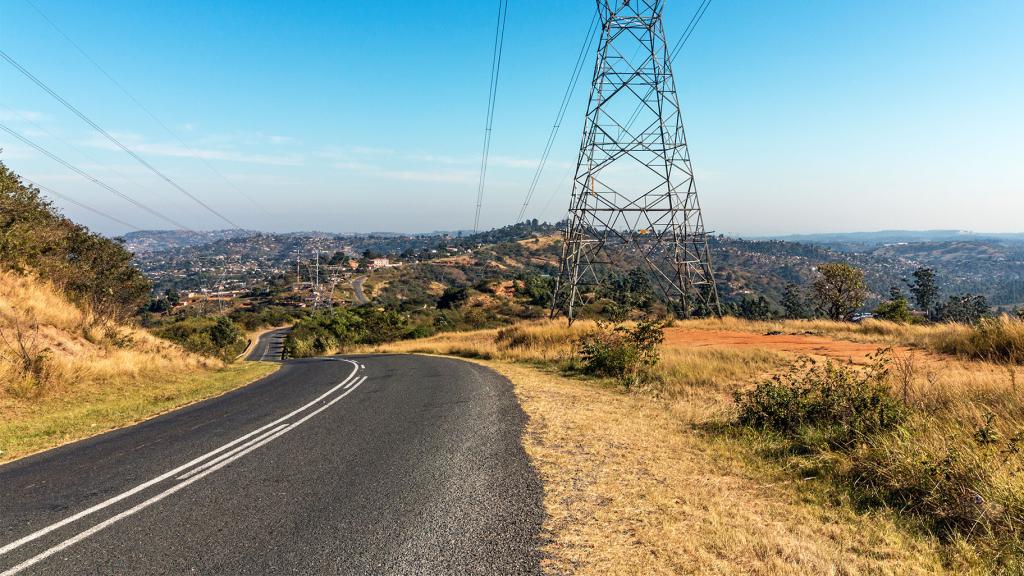
Power lines string alonside a road heading down rolling hills.
Africa's energy transition

A study of 35 sub-Saharan African countries from 2010 to 2020 found that fossil fuel subsidies significantly slowed the transition to renewable energy.
A women gets into a ride share in Berlin.
EU's fuel subsidies

Some EU countries continue to subsidize conventional vehicles primarily through lower diesel and gasoline taxes for company cars, with subsidies totalling around EUR 42 billion per year. These subsidies create a significant cost advantage for conventional vehicles over EVs in some countries and reduce the financial incentive for companies and employees to switch to EVs, slowing their adoption and prolonging oil dependence in the transport sector.

3. Affordability

Energy can be made affordable in two ways: by artificially lowering energy prices or by investing in long-term solutions for the energy system (requiring good management, strategic planning, and sound governance) coupled with direct welfare payments to vulnerable consumers. Fossil fuel subsidies take the former path—distorting energy markets, causing pollution, and locking in fossil fuel dependence.

True energy affordability also means resilience to energy price shocks. Exposure to volatile fossil fuel prices can quickly undermine energy access. That’s why managing demand is essential. Without it, cheap energy can drive overconsumption and push long-term costs higher. Consumer subsidies make this worse by stimulating demand and preventing markets from stabilizing at lower prices.

How do Fossil Fuel Subsidies Affect Affordability?

At first glance, consumption subsidies appear to improve affordability, but who is actually paying? While consumers may pay less at the pump and on electricity bills, the public still foots the bill, either through direct government spending or foregone government revenue. And despite common assumptions, these subsidies rarely benefit the poorest. In fact, most of the gains go to wealthier households that consume more energy. The most common type of subsidy, untargeted consumption support, disproportionately benefits those who need it least.

Worse still, subsidies divert funds from essential services, such as health care, education, and infrastructure. While fossil fuel subsidies might offer short-term relief, they actually undermine long-term affordability and poverty reduction by weakening public finances.

Clean energy offers a better path. Large-scale wind and solar are now cheaper electricity sources than coal and gas—in some cases even when paired with energy storage.

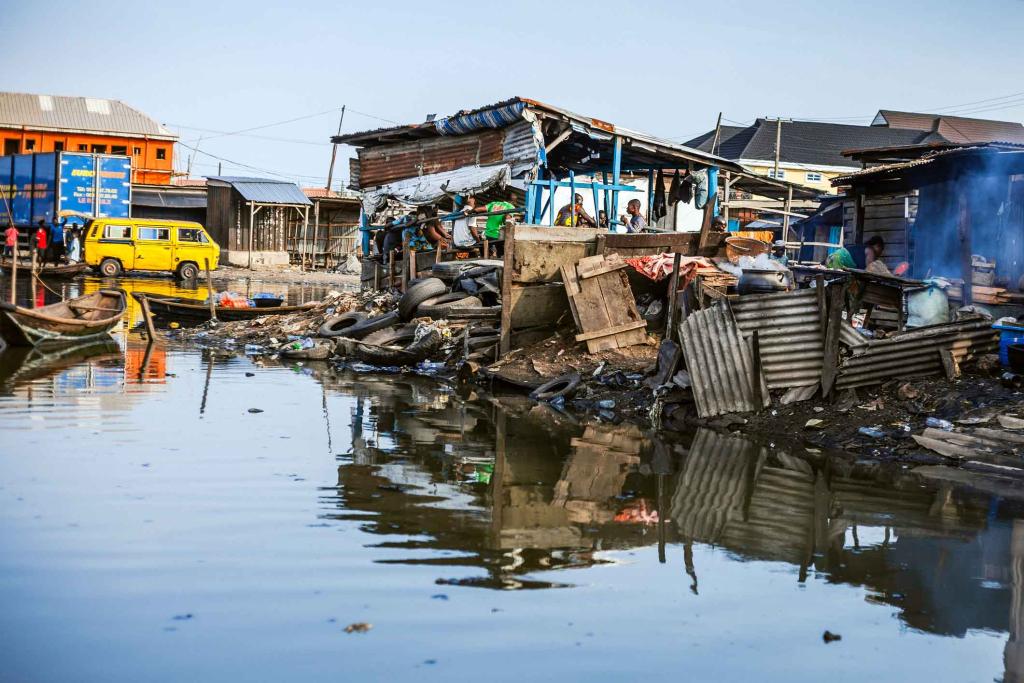
People living in the canals of the Makoko slum neighbourhood in Lagos, Nigeria.
Nigeria's fuel subsidies

Nigeria spent around USD 15 billion (roughly 3% of GDP) on fuel subsidies in 2022. Instead of easing poverty, these subsidies hollowed out public finances, contributing to chronic underfunding of essential public services and efforts to address ongoing poverty. When subsidies were rolled back in 2023, gasoline prices surged, triggering inflation and deepening energy poverty. What was meant to make energy more affordable ultimately led to the near collapse of the Nigerian economy.

The bottom line is that governments should support people, not fuels: subsidies should be targeted to vulnerable consumers directly through cash transfers or welfare payments, enabling them to afford energy or pay for other priorities.

4. Energy Intensity

Lower energy intensity, i.e., using less energy per unit of GDP, signals higher energy efficiency, which reduces demand and therefore promotes greater energy availability, affordability, and resilience. Simply put, the less energy an economy needs, the less vulnerable it is to shortages and volatility. It also helps lower the costs of goods and services by reducing the cost of energy in the overall economy.

How do Fossil Fuel Subsidies Affect Energy Intensity?

Fossil fuel subsidies—particularly those for consumption—undermine energy efficiency by encouraging overuse of energy sources. As a result, countries consume more energy per unit of economic output.

Subsidies also perpetuate reliance on fossil fuels, which prevents the shift to a less energy-intensive system. Fossil fuel-based systems are inherently inefficient, since around two thirds of the energy is lost (mostly as heat) by the time it reaches the end user. Increasing deployment of renewables and electrification can reduce energy intensity across the globe.

View of Ashgabat, Turkmenistan
Turkmenistan's energy intensity

Countries with large fossil fuel subsidies often have high energy intensity. For example, Turkmenistan’s energy intensity is higher than China’s, which has been reforming its fossil fuel subsidies and encouraging diversification into renewable energy, battery storage, and EVs. While Turkmenistan has ample fossil fuel supplies, the high energy intensity strains energy infrastructure, increases costs, and speeds up the depletion of finite energy resources.

5. Resilience of Domestic Infrastructure, Including Electricity Grid Reliability

Resilient energy infrastructure is critical to ensure accessibility. Strong grids, coupled with effective demand-side management, help ensure a continuous power supply, prevent price volatility caused by supply disruptions, and decrease reliance on external energy sources.

How do Subsidies Affect the Resilience of Domestic Infrastructure?

Fossil fuel subsidies can discourage investments in resilient, sustainable energy infrastructure. Consumer subsidies reduce the profitability of energy supply, leaving companies and governments with limited resources and incentive to expand or maintain infrastructure. When electricity tariffs are set below the cost of supply, state-owned utilities often accumulate unsustainable debt, making it harder to invest in grid reliability and energy access. This has happened in half of the G20’s emerging economies: Argentina, China, India, Indonesia, South Korea, and South Africa.

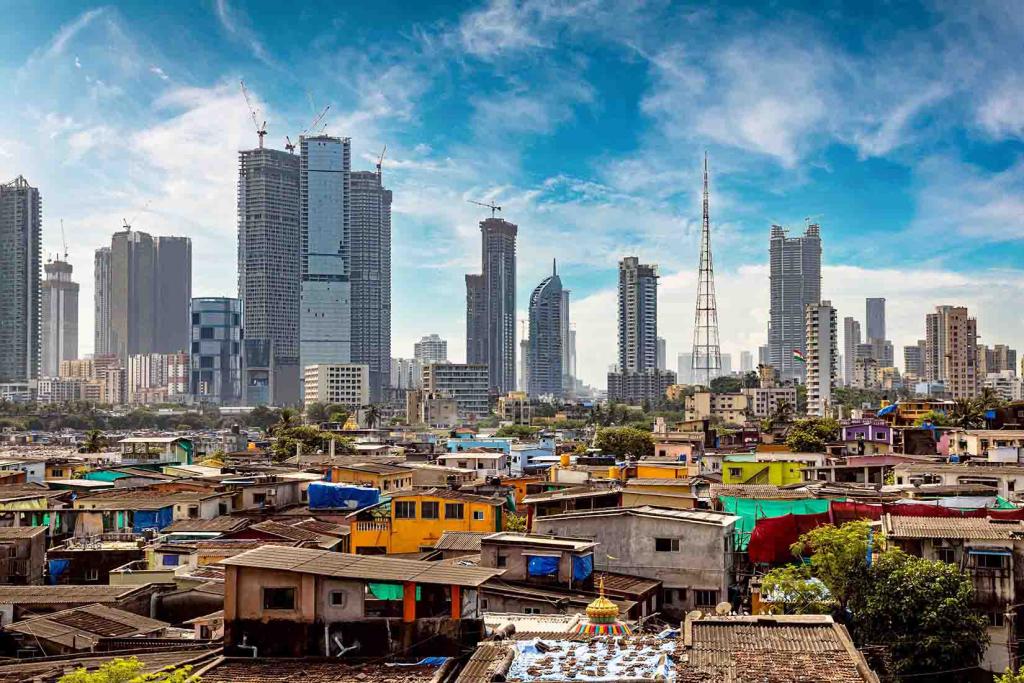
city view of Mumbai
India's electricity consumption subsidies

In India, subsidies for electricity consumption are the largest form of energy support, totalling at least USD 21 billion in 2023. These subsidies weaken the financial position of distribution companies, leading to underinvestment in infrastructure and persistent inefficiencies. Redirecting subsidies to vulnerable consumers, cost-reflective pricing, and improved billing would enhance the financial health of utilities, allowing for grid investment, a more reliable power supply, and reduced government bailouts of distribution companies.

6. Supply Interruption Risk

Effective management policies and procedures are needed to reduce the risks of supply disruptions and ensure availability and accessibility. Fossil-based systems rely on a continuous supply of fuel, creating more vulnerability. Clean energy technologies only need to be delivered once, with no ongoing fuel requirements.

How do Subsidies Increase Supply Interruption Risk?

Fossil fuel subsidies increase the risk of supply interruptions in several ways. They increase fossil fuel dependency, heightening the risks to supply due to geopolitical conflicts, natural disasters, and market volatility. Subsidies for consumption also distort market signals, discouraging investment in critical infrastructure like refining capacity and encouraging overconsumption.

In some cases, artificially low fuel prices create gaps between domestic and international markets, incentivizing smuggling and black markets. This not only exacerbates shortages but also undermines broader energy system governance. Subsidies often lie at the heart of chronic energy supply issues.

A policeman watches traffic in Cairo, Egypt
Egypt's subsidies problems

In 2013–2014, Egypt allocated around 20% of its annual fiscal budget to diesel, natural gas, electricity, kerosene, and other fossil fuel subsidies. Low fuel prices caused a range of problems: fuel smuggling, black markets, fuel shortages, and disincentives for investments into domestic refinery capacity. When the government attempted to rein in spending by cutting supply, shortages worsened. In July 2014, President Sisi’s administration slashed subsidies, raising diesel prices by 64%. Still, years of mismanagement and underinvestment left a legacy of persistent fuel supply problems. Subsidies also deepened Egypt’s reliance on imported gas, amplifying exposure to global supply shocks and price volatility.

7. Risks Due to Climate Change and Environmental Damage

Environmental impacts directly impact acceptability but can also undermine long-term energy security by interrupting supply or by increasing demand, availability, and accessibility.

How do Subsidies Increase Risks Due to Climate Change and Environmental Damage?

Fossil fuel subsidies accelerate climate change due to the use of high-emission energy sources. This contributes to more frequent and severe extreme weather events—like intense storms, sea level rise, and droughts—that can damage energy infrastructure and indirectly affect energy security.

IISD’s economic modelling projected that gradual removal of all consumer fossil fuel subsidies by 2030 could reduce greenhouse gas emissions by around 6% compared with a business-as-usual scenario in 35 countries, showing how one policy shift can deliver substantial climate and energy security benefits.

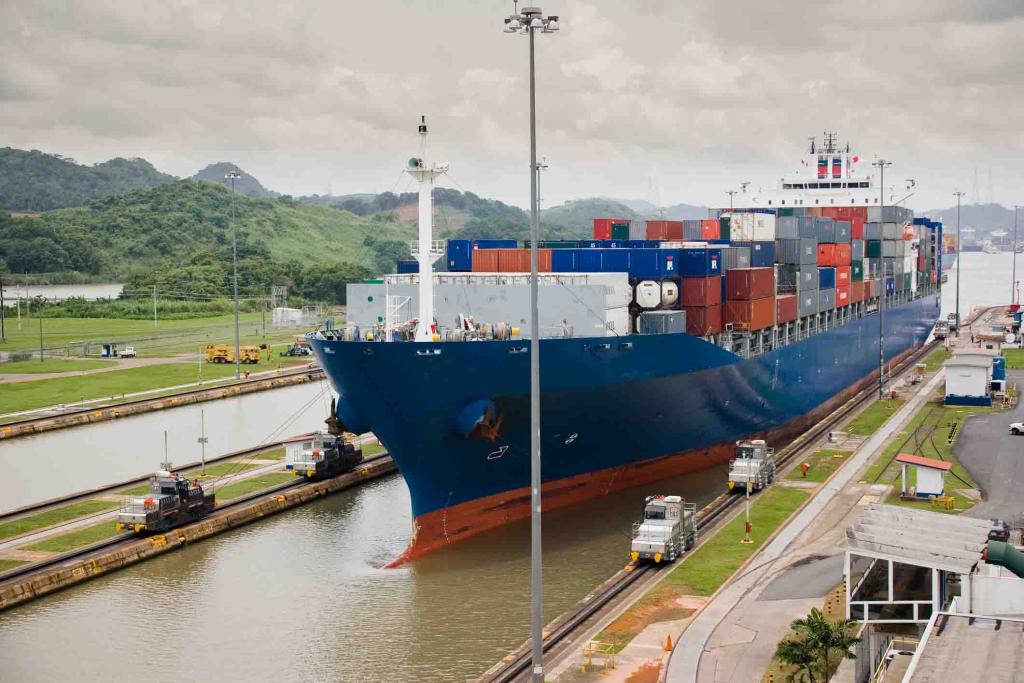
A ship travels through the Panama Canal
Panama's droughts

The Panama Canal, a critical artery for global fuel shipments, has faced major disruptions due to prolonged droughts. Lower water levels, exacerbated by climate change, cut the number of daily ship transits from 38 to 22, causing delays in oil and fuel shipments and triggering conflicts over water use. This illustrates how environmental stress can quickly become an energy security crisis.

In the wake of the latest energy crisis, we need to look deeper than short-term solutions to keep the lights on and the prices down. Putting fossil fuel subsidies under the microscope, we find they don’t measure up against core indicators of energy security: in fact, they are eroding progress. Countries need to phase out fossil fuel subsidies, leaving only targeted support for the most vulnerable. This would remove major distortions in energy markets and free up around USD 1.1 trillion to support people and an affordable and clean energy future free from price volatility, geopolitical risks, and pollution.

Deep Dive

How the G7 Can Advance Action on Fossil Fuel Subsidies in 2025

G7 countries are off track to phase out fossil fuel subsidies by 2025. Despite a challenging geopolitical outlook, fossil fuel subsidy reform is a timely way for cash-strapped governments to fund their spending priorities.

April 8, 2025

Sixteen years ago, the G7 made a commitment to phase out “inefficient” fossil fuel subsidies. Nine years ago, leaders agreed to do this by 2025. Time flies, and we’ve arrived at the G7 deadline.

So where are we now? By the numbers, the G7 is on course  to miss its phase-out deadline.  In 2023, the latest year for which estimates are available, G7 members’ fossil fuel subsidies hit a record high of USD 282 billion. By comparison, in 2016, G7 fossil fuel subsidies were USD 71 billion (in 2023 real terms).

This surge was triggered by Russia’s invasion of Ukraine in early 2022, as fossil fuel subsidies correlate with energy prices (usually positively for consumer subsidies and negatively for producer subsidies). As global fuel prices soared, governments introduced measures to shield consumers. In Europe, this support primarily went to gas, while Japan and Canada both increased petroleum subsidies for consumers; U.S. fossil fuel subsidy levels have remained unchanged.

The geopolitical outlook is not promising.  United States President Donald Trump has pledged to increase fossil fuel supply, and Russia’s invasion of Ukraine continues to drive energy security concerns—two factors contributing to energy market volatility and used to justify the high levels of fossil fuel subsidies.

On the positive side, fossil fuel subsidy reform is an issue that resonates across the political spectrum, as evidenced by G7 and G20 statements every year since 2009. This reform speaks to  values like government efficiency, fiscal responsibility, and environmental conservation.

This article explores trends in G7 members’ fossil fuel subsidies, recent action by G7 members to phase out these subsidies, and recommendations for G7 leaders for 2025 and beyond to make meaningful progress.

Trends in G7 Countries’ Fossil Fuel Subsidies

In 2023, total G7 fossil fuel subsidies rose by more than USD 40 billion above 2022 levels, which in turn were a large increase over preceding years (Figure 1). These increases were driven by countries’ responses to the energy crisis brought on by Russia’s invasion of Ukraine. The 2023 increase was led by Germany, whose fossil fuel subsidies rose from USD 18 billion to USD 83 billion year-on-year due to its price brakes on gas, heat, and electricity.


In 2023, Germany had the highest fossil fuel subsidies among G7 members (USD 83 billion), followed by Japan (USD 70 billion), France (USD 38 billion), Italy (USD 35 billion), the United Kingdom (USD 34 billion), the United States (USD 17.8 billion), and finally Canada (USD 3.4 billion)  (Figure 3). Germany and Japan, respectively, also had the highest fossil fuel subsidies as a proportion of GDP.

There are three groups of beneficiaries of fossil fuel subsidies: consumers, producers, and general services.

In all G7 countries, consumer subsidies dominated in 2023, as in previous years, averaging 88% across the bloc (Figure 2). Consumer subsidies are those targeted at reducing the cost of energy to households and businesses (e.g., in the transport or power-generating sectors), mainly through government controls on fossil fuels or power prices. While consumer subsidies reduce prices for consumers, in so doing, they also ensure demand does not spike downwards for producers. Although all countries except France and Italy had some producer subsidies, these were significant as a proportion of total subsidy volume in three of them: Canada (18%), the United Kingdom (11%), and the United States (30%) (Figure 3). Producer subsidies are those aimed at reducing the cost of producing fossil fuels. If delivered at the exploration and development stage, producer subsidies make “zombie energy” reserves commercially viable, thereby also pushing down energy prices for consumers. Although producer subsidies are smaller by value than consumer subsidies, their impact on markets and emission s is large because they crowd in  private sector investment to new fossil fuel supply projects that will stay in place for decades, locking in carbon for a long time. Notably, 2023 United States producer subsidies rose steadily to 76% above 2020 levels, driven mostly by increased tax expenditure  under state-level measures in West Virginia, Alaska, and Texas.

General services subsidies were much smaller across all G7 countries. General services subsidies are measures that create enabling conditions for the fossil fuel sector, e.g., government funding for fossil fuel sector-wide research and development, public support for construction of fossil fuel transport infrastructure, or inherited liability payments for fossil fuel pollution as well as payments to assume occupational health, retirement, and accident liabilities for workers and retirees.


Increases in direct budget transfers for fossil fuels dominated the large rises in subsidies in 2022 and 2023 (Figure 4). Large increases in such transfers occurred in France, Germany, Japan, and the United Kingdom and included, for instance, funds for power generators or public transport companies for purchases of fuel at higher market prices.


The higher total subsidy levels in 2022 and 2023 were primarily for natural gas, followed by petroleum and, to a lesser extent, end-use electricity generated from fossil fuels (Figure 5).


However, the breakdown of subsidies for different fuel types varied considerably among countries (Figure 6). Natural gas subsidies dominated in most countries, accounting for half to two-thirds of all subsidies in Germany, France, the United States, Italy, and the United Kingdom. In Japan and Canada, petroleum subsidies dominated (72% and 83% respectively). As seen in Figure 5, coal subsidies have steadily declined since 2010. Figure 6 shows that coal subsidies were higher than negligible only in Germany and the United States (3.1% and 8.1%, respectively).


The most significant measures behind these dynamics were those meant to combat rising energy price levels. For instance, France’s natural gas subsidies more than tripled in 2023 compared with 2022, to USD 24.9 billion, owing to its temporary cap on regulated retail gas prices. Italian natural gas subsidies nearly quadrupled in 2022–2023 relative to 2021 levels, to USD 19.3 billion in 2023, due to several measures. Japan saw large year-on-year increases in both natural gas subsidies and end-use electricity subsidies, from negligible volumes to USD 11.7 billion and USD 6.8 billion respectively in 2023, due to measures to mitigate gas and electricity prices. Canada’s petroleum subsidies have increased by 2.2 times since 2019, mostly due to provincial-level measures in Ontario, Quebec, and Alberta. Finally, the United Kingdom’s largest share of subsidies was to natural gas, at USD 17.8 billion, a decrease from the previous year’s USD 35.5 billion but still well above 2021’s USD 8.7 billion.

Supporting People Rather than Fossil Fuels

It did not have to be this way. The energy crisis of 2022–2023 did not necessarily have to lead to such a huge increase in fossil fuel consumption subsidies. And, looking to the future, despite progress on rolling out renewables, households and businesses in the G7 are still exposed to the volatility of global fossil fuel prices. Although the ultimate solution is to electrify everything with renewables, in the transition, governments have alternative policy options to fossil fuel subsidies that address social and economic issues, but without encouraging fossil fuel use.

For instance, instead of capping prices for gas, electricity, and heat during the energy crisis, some G7 governments could instead have provided direct financial support to households through tax cuts or social protection programs, allowing them to decide whether to spend the money on higher fossil fuel prices or use it to adopt energy-efficient alternatives like heat pumps and insulation.

In general, governments can also offer rebates to households and businesses to encourage investment in more efficient equipment. Governments can also ramp up support for renewable energy generation, storage, and integration, which offer a long-term solution to price volatility and energy security.

Several G7 countries are already using cash transfers for vulnerable groups, which were often scaled during the energy price crisis. For example, in Germany, there is a housing benefit, which includes an energy component, granted to low-income households. Meanwhile, France has energy cheques, and Italy has a social bonus for economic hardship.

What Have G7 Members Done to Meet Their Commitment?

The energy price crisis is not an exception to the overall trend in G7 members’ fossil fuel subsidies. As seen in Figure 1, fossil fuel subsidies across the bloc have not meaningfully reduced since the commitment was made in 2009. Rather, and especially since 2018, they have increased.

Some G7 countries have taken steps forward.

Since the G7 commitment was adopted, Canada reformed nine federal subsidies. Separately, Canada has published a self-review assessment framework and guidelines to identify and avoid creating new “inefficient” fossil fuel subsidies.

France has mandated, via the Public Finance Programming Act, that the ratio between “unfavourable expenditures,” which include fossil fuel subsidies, and “favourable” or “mixed” expenditures must fall by 30%.

Italy has an annually published catalogue of environmentally harmful subsidies, and its Ministry of Environment produces proposals for their phase-out every year. In 2021, it eliminated five fossil fuel subsidies, which amounted to savings of EUR 105.9 million. As part of its recovery and resilience plan, the government committed to reducing environmentally harmful subsidies by at least EUR 2 billion in 2026 and to defining the timetable for a further reduction of environmentally harmful subsidies by at least EUR 3.5 billion by 2030 in legislation. In the context of the G20 commitment to phase out fossil fuel subsidies, some G7 countries (the United States, Italy, and Germany) have published peer reviews.

In 2023–2024, G7 governments rationalized or put an end to some of the emergency measures that were introduced in early 2022 and are captured by the 2023 fossil fuel subsidy estimates. At the same time, some schemes proved to be difficult to remove, e.g., the cut in fuel duty rates  in the United Kingdom.

Canada, France, and the United Kingdom  are members of the Coalition on Phasing Out Fossil Fuel Incentives Including Subsidies (COFFIS), a coalition launched at the 28th UN Climate Change Conference (COP 28) that is working to remove fossil fuel subsidies both collectively and through domestic action. Other G7 countries should follow suit.

The first commitment undertaken by COFFIS members was to publish national inventories of fossil fuel subsidies by COP 29. France did this  as part of its 2024 Green Budget, while Canada has not yet (and the United Kingdom still has time until COP 30 since it joined at COP 29).

All G7 countries except Japan are members of the Clean Energy Transition Partnership (CETP), the group of 41 countries that have committed to end international public finance for fossil fuels and instead scale up support for clean energy. Japan also made a similar commitment as part of the 2022 G7 Leaders’ Communique, reaffirmed in 2023 and 2024. As international public finance is partially a form of subsidy, this commitment is relevant for an overall assessment of G7 members’ fossil fuel subsidies. CETP members have successfully reduced their overall international public support for fossil fuels by up to USD 13 billion, an 80% reduction  from pre-CETP levels. However, this is a small volume in comparison to total fossil fuel subsidy levels.

Apart from reforming subsidies for fossil fuels, some G7 nations have ramped up subsidies for renewable energy. For instance, the United States increased its renewable energy subsidies from USD 10.9 billion in 2020 to USD 40.6 billion in 2023. British renewable energy subsidies increased from USD 6 billion in 2020 to 7.6 billion in 2023. Other countries’ renewable energy subsidies remained steady: Germany’s were around USD 43 billion each year from 2020 to 2023, Italy’s were around USD 17 billion, while France’s remained steady at around USD 9 billion. However, others are backsliding. Following a high of USD 22 billion in 2022, Japan’s renewable energy subsidies dropped to USD 10.9 billion in 2023.

What Should G7 Commitment on Fossil Fuel Subsidy Reform Look Like in 2025?

The timeline that the G7 countries gave themselves runs out this year. There will be tough choices about redefining this commitment under Canada’s presidency this year (or the following year under France’s presidency). Either way, G7 governments should maintain the urgency of their commitment with a clear timeline and scope.

Geopolitics and market forces have also created a new window of opportunity for subsidy reform.  Oil prices just crashed, with crude falling to below USD 60 per barrel—the lowest prices since 2021. And the best time for reforming consumer fossil fuel subsidies is when oil prices are low. The G7 should embrace this opportunity to phase out their consumption subsidies.

At the same time, the G7 needs to resist the asks for more producer subsidies that typically emerge from the industry during low oil price periods. In particular, subsidies for new fossil fuel exploration and development are incompatible with the commitment made by all countries at COP 29 in 2023 on “transitioning away from fossil fuels in energy systems” because the science is clear that there is no room for new oil and gas production under a 1.5° C-compatible pathway or other pathways seeking to keep as close as possible to 1.5° C. In the G7, producer subsidies accounted for USD 11.4 billion in 2023. Producer subsidies do nothing to tackle energy poverty, as any cost reductions are spread across all industrial and household consumers, not just the vulnerable.

To date, G7’s progress on delivering the commitment has been, among other factors, also hindered by its vagueness: the qualifier “inefficient” and even the varying definitions of the term “subsidy” have been used as loopholes and justifications for inaction. The qualifier “inefficient” should be dropped. Instead, each G7 member should be required to create a national action plan for phasing out their fossil fuel subsidies.

The G7 should also expand its existing commitment to ending international finance for fossil fuels to its domestic finance.

If G7 governments are serious about helping each other create political momentum for reforms by a joint commitment, they should also get into specifics and break the commitment into actionable policy steps. They can learn from the approach recently adopted in the Agreement on Climate Change, Trade and Sustainability (ACCTS) by Costa Rica, Iceland, New Zealand, and Switzerland, and prohibit all subsidies to coal and to fossil fuel production as incompatible with climate action.

Fossil fuel subsidy reform is tough for governments, but it’s tougher for governments, society, and the planet not to implement it.

Deep Dive

What One Pearl Oyster Farm in Fiji Can Teach Us About Climate Resilience

Aquaculture has enormous potential. Among other benefits, it can feed growing populations while reducing pressure on wild fish stocks impacted by overfishing, climate change, pollution, and development. But given its projected expansion, aquaculture-as-usual is not enough. Instead, nature-based approaches will build resilience and prevent the further degradation of our ocean systems. Community-led pearl oyster farms in Fiji are showing the way.

April 2, 2025

In the sunlit waters of Savusavu, a team of Fijian men haul up their catch from small barges anchored just offshore. Several long lines of black-lip pearl oysters are drawn up, stacked one on top of another. As the lines are pulled up, small damselfish wriggle free, flopping on the deck before being quickly tossed back into the water. The women on board pause their shellfish sorting to gently extract clusters of verdant seagrapes from the oyster lines. The nutritious seaweed (Caulerpa racemosa) will be served to their families or sold on the market, along with the oysters.

“You see, these oyster lines act as biodiversity aggregators,” says Justin Hunter, founder of J. Hunter Pearls (JHP) and our tour guide for the day. Justin had agreed to bring a group of researchers to visit his pearl farm operations in Savusavu, known by locals as the hidden paradise of Fiji. As we lean in for a closer look, avoiding some fire coral, we see the oyster lines teeming with more damselfish and seagrapes, as well as tunicates (sea squirts) and other marine animals. Across our planet’s vast oceans, these oysters are a literal lifeline, enabling animal larvae to settle and sheltering fish and invertebrates from predators. As filter-feeding bivalves, oysters also act as nature’s water purifier, sucking up excess nutrients into their shells and tissue. “Oysters don’t need external feed,” explains Justin. “They take what they need from the water column.”

A person in Fiji works on an oyster farming net.

The community-led oyster farms in Savusavu are one example of a holistic approach to aquaculture. (Photo: Melonie Ryan)

Back on land, the visiting researchers witness how expert technicians coax the oysters to secrete lustrous, jewel and earth-toned pearls, the rarest of cultured ocean pearls that are so highly valued that they were recently gifted to royalty. But these pearl-producing, water-filtering, habitat-forming oysters are also delicious in their own right. Served raw on ice with a squeeze of lemon and a sprinkle of chilli, the oysters capture the briny essence of the sea and are a textural delight. The local community has taken note, and is now working with JHP to explore ways of selling oyster meat to local markets and hotels—and, in so doing, diversifying their oyster production beyond pearls. This has created new job opportunities—particularly for women and youth—and is increasing the return on oyster investments, given that only 18 months are needed for oyster babies to grow to an appealing size, compared to 5 years for pearl production.

Building on a community pearl farm pilot project

The community-led oyster farms in Savusavu are one example of a holistic approach to aquaculture (rearing aquatic animals or culturing seaweeds for food) that produces healthy protein and livelihoods for communities, while attracting biodiversity and taking up excess nutrients from the surrounding waters. JHP, the Wildlife Conservation Society (WCS) Fiji, the Pacific Community, and the International Institute for Sustainable Development are finding ways to improve and expand the community pearl farm pilot project that Justin Hunter initiated through collaboration on AQUAPearl. The project is supported by the International Development Research Council and the Government of Canada’s International Climate Finance Initiative and is one of a portfolio of nature-based aquaculture projects called AQUADAPT across the Pacific islands and Southeast Asia.

Unlike purely commercial aquaculture, AQUAPearl partners interpret nature-based aquaculture as creating food resilience using inclusive and sustainable aquaculture practices that restore ecosystems and help ensure sustainable livelihoods for coastal communities. As a nature-based solution, filter-feeding oysters on farms improve water quality, while the oyster lines attract biodiversity. To improve the pilot experience, WCS Fiji will monitor fish biomass and coral health near the oyster lines.  In addition, WCS will work with communities to restore upstream watersheds and enhance water quality over the long term. Together with watershed planning and management, better stewardship of the ocean and surrounding environment will be encouraged, helping to ensure that these ecosystems continue to thrive and that oysters are safe for human consumption.

A person plates seafood featuring oyster in Fiji.

The local community is working to explore ways of selling oyster meat to local markets and hotels. (Photo: Melonie Ryan)

The fisheries sector is Fiji’s third- largest natural resource sector and is closely linked to the diet, recreation, and social values of Fijian communities. But the combined effects of climate change, overfishing, and other factors have reduced fish catches and livelihood opportunities for Fijians. The AQUAPearl project is one step toward building resilience in communities that have been impacted by the loss of fisheries livelihoods. Oyster farming can help support families with additional income from oyster sales, and the provision of alternative protein sources. Indeed, when the COVID-19 pandemic hit Savusavu and pearl sales and supply chains ground to a halt, JHP’s team and communities suffered heavy income losses, but were able to pivot to harvesting oysters to meet household food needs.

This is the difference between nature-based aquaculture—where an emphasis on ecosystem and community health and resilience in the face of climate change, disasters, and other shocks is guided by community values, reciprocity, and relationships—and aquaculture-as-usual, where intense operations designed to meet food security needs can degrade and pollute ocean ecosystems, damaging future fishing opportunities by altering food webs and removing nursing grounds.

The risks of intensive commercial aquaculture

The triple-COP year (meetings of the three Rio Conventions successively in the same year for the first time) demonstrated a growing policy imperative for implementing nature-based solutions, as witnessed by multiple references to nature-based solutions or ecosystem-based approaches in decisions taken by countries. Yet, work remains on scaling up nature-based solutions and integrating the concept across sectors.

Globally, aquaculture production has surged past capture fisheries for the first time, and production in both has hit world highs of 223 million tonnes, with aquaculture production estimated at 131 million tonnes (data from 2022; FAO, 2024). Yet, despite its importance in feeding and sustaining growing populations while reducing stress on wild fish stocks that are impacted by overfishing, climate change, pollution, development, and other pressures, aquaculture is currently a blind spot for NbS. 

The pressure to feed the world with aquaculture is increasing, but if nature-based approaches are not prioritized, the environmental costs of intensive commercial aquaculture will further degrade ocean ecosystems.

Rearing carnivorous fish, also known as “fed aquaculture,” relies on fishmeal made from wild-caught small fish such as anchovies and sardines. The demand for fishmeal, and a thriving fish oil industry are driving overfishing of these nutritious small fish, harming the livelihoods and diets of the poorest populations in the world, and causing imbalances in intricate marine food webs. Unfortunately, switching to plant-based feed for aquaculture is not always the answer. The demand for plant-based feed, such as soy or maize, has driven deforestation and habitat destruction. And switching to plant-based feed, even if sustainably sourced, does not address the problem of effluent that is released in the sea or sea lice and other parasites that can transfer from escaped farmed fish to wild populations.

Other kinds of intensive commercial aquaculture have earned a bad reputation for their social and environmental impacts. In coastal zones, mangroves have been cleared for shrimp farming, resulting in pollution, habitat destruction, and soil salinization that can seep into groundwater and destroy agricultural lands. Mangrove destruction also means reduced climate resilience in the face of storm surges. Given the massive increase in aquaculture and its projected expansion—it is expected to reach 111 million tonnes in 2032, (an overall growth of 17% compared with 2022)—the resilience and sustainability of aquatic food systems should be prioritized, particularly for populations that are food-insecure and whose livelihoods depend on capture fisheries or aquaculture.

Integrating resilience into the fisheries and aquaculture sector

The AQUAPearl project and others in the AQUADAPT network are showing that there are more sustainable ways to farm aquatic animals for food, that do not require overfishing forage fish, convert valuable coastal mangroves into shrimp farms, or cause pollution. Aside from bivalves, it is also possible to sustainably farm animals higher up in the food web: rice-fish farming is another example of a nature-based approach to aquaculture called integrated multi-trophic aquaculture.

Three local women in Fiji laugh as they prepare oysters indoors.

The AQUAPearl project partners also integrate community-based, gender-responsive approaches to aquaculture. (Photo: Melonie Ryan)

The AQUAPearl project partners also integrate community-based, gender-responsive approaches to aquaculture, and actively pursue market research for potential export beyond local markets, establishing quality assurance protocols to support the shellfish aquaculture industry, while encouraging better stewardship of watershed ecosystems to prevent pollution.

But scaling up nature-based aquaculture requires capacity, innovation, and investments. Integrated, multi-sectoral, and whole-of-government approaches are also critical for success, given that a project like AQUAPearl is relevant to multiple policy objectives on biodiversity conservation, climate change adaptation, gender equality, food and livelihoods security, and economic development. For example, policy-makers can integrate nature-based approaches to aquaculture into their national biodiversity strategies and action plans (under the Convention on Biological Diversity) and their national adaptation plans (under the UN Framework Convention on Climate Change). Sectoral strategies for fisheries and aquaculture should also prioritize sustainable approaches. In particular, gender-responsive approaches are needed, as women make up 24% of the workforce in fisheries and aquaculture, and 62% of the processing subsector. They are also affected by wage gaps and gender-based violence (FAO, 2024). Thus, women’s contributions to the sector need to be recognized, and their working conditions must be improved.

Close up on a person opening an oyster using a tool.

Communities are at the heart of the AQUAPearl project. (Photo: Melonie Ryan)

In November 2024, the AQUAPearl team convened a stakeholder workshop with Fiji’s ministries of fisheries and forests, trade, and health, along with universities and non-governmental organizations. The project team introduced AQUAPearl to the stakeholders, sparking discussion and debate on what constitutes nature-based aquaculture. The participants also discussed health certification and trade requirements for a future shellfish industry in Fiji. The workshop catalyzed high-level support for the project and strengthened relationships between stakeholders. It was a promising step towards collaboration across ministries on nature-based aquaculture, highlighting its role in promoting a sustainable, gender-responsive blue economy in Fiji.

Communities are at the heart of the AQUAPearl project. The team will continue working with the communities in Savusavu alongside private sector, conservation, and government partners; supporting equitable governance models for leading the farms; providing training on oyster biology and business set-up; and purchasing native trees from nurseries for restoration. The team will also set up a quality assurance program that monitors oyster and water quality, conducts market research, and consolidates and shares results.

Each step taken moves us closer to a more resilient, holistic approach to aquaculture—an approach that other countries, not just Fiji, should be advancing.

Deep Dive details

Region
Asia and Pacific
Project
AQUA-Pearl
Impact area
Climate
Deep Dive

Getting Where We Need to Go: Net-zero transport in Canada

This publication is a part of IISD's Clean Energy Insights policy brief series, which outlines the benefits of a net-zero economy for Canadians across the country. (Download PDF)

March 17, 2025
 
policy-recommendations-button

Driving Canadian Economies, Sustainably

It is a fact of modern life that people need to move around. With a net-zero passenger transportation system, this can be done affordably, cleanly, and conveniently. This means prioritizing active transport (e.g., walking and cycling), electrified public transit (e.g., trains, streetcars, and buses), and small zero-emission vehicles [ZEVs]). To support these clean and efficient modes of transportation, urban planning and public infrastructure should be designed for efficiency, with mixed-use urban centres and effective intercity transit connections. Meanwhile, rural areas, small towns, and cities alike can be well-supplied with reliable public transit options and/or ZEV charging infrastructure to reliably meet most transportation needs. These solutions are already being deployed worldwide, benefiting millions of people from small Norwegian towns to large cities like Paris and Tokyo.

In Canada, recent progress in this direction has been mixed. On one hand, falling costs and supportive policies have increased ZEV sales over recent years—representing 16.5% of new light vehicle sales in the third quarter of 2024. Public transit ridership is slowly recovering after the COVID-19 pandemic, and ZEV charging infrastructure is expanding across the country—especially in provinces with ambitious supportive policies, such as British Columbia and Quebec. On the other hand, 70% of new passenger vehicle sales in 2022 were light-duty trucks, such as sport utility vehicles, which are heavier and less efficient than light-duty passenger cars like sedans and hatchbacks, and thus more expensive and polluting. Moreover, most Canadians depend heavily on their personal vehicles because more efficient alternatives, such as public transit and cycling routes, are often unavailable or inconvenient. This is influenced by zoning laws that restrict high-density housing and mixed-use neighbourhoods in cities, as well as governments prioritizing highways and road expansions over public and active transportation infrastructure. As a result, Canada’s transportation emissions have remained high since 2005, accounting for 22% of national emissions in 2022, second only to oil and gas production. The passenger transport system (which excludes freight) accounts for well over 50% of those emissions.

Lessons from around the world demonstrate that ZEVs, public transportation options, active transport infrastructure, and efficient urban planning can work. Meanwhile, the facts on the ground in Canada show that implementing these solutions is feasible. For example, over 50% of the population lives in the Quebec-Windsor corridor, with major cities like Ottawa, Montreal, and Toronto all situated conveniently for a high-speed rail network equivalent to examples in Europe. Despite Canada’s low overall population density (skewed heavily by vast, sparsely populated areas; see map), 82% of Canadians live in urban areas. This is comparable to other wealthy countries like the United Kingdom (85%), France (82%), and Norway (84%). A key challenge in Canada, relative to other wealthy countries, is that the urban spaces themselves have relatively low population densities, as influenced by the urban planning policy decisions outlined above. Remedying this, therefore, is not prevented by physical geography. Rather, the limitations of Canada’s current passenger transportation system—including traffic congestion, unreliable public transit, traffic fatalities, and urban pollution—can be solved by smart policy-making.

Population distribution in Canada, density by census division

Population distribution in Canada, density by census division map
Source: Statistics Canada, 2022.


Rethinking transportation in this way can bring vast economic opportunities. Most notably, a clean and efficient transport sector could directly employ an estimated 1.6 million people across the country by 2050, while reinvigorating Canada’s urban spaces and local economies, sparking growth and employment in a range of other industries, too. Indeed:

  • Investment in public transportation creates more jobs per dollar than car-centric infrastructure. A study of 20 metropolitan areas in the United States found that if half of the public money spent on highway infrastructure was spent on public transportation instead, there would be a net increase of over 180,000 jobs over 5 years. That is, 20% more jobs at no extra cost. Research sponsored by the Ontario Ministry of Infrastructure also found that investing in highways and bridges reduced jobs in the province while public transit created them. These improved employment outcomes follow from increased—and more efficient—economic activity, as explained in the next point.
  • Public transportation and high-density urban planning support local economies. The Ontario study highlighted above also found that public investment in road infrastructure decreased economic activity by crowding out private investment, whereas investments in public transit contributed to significant local growth. This is because public transit and increased urban density improve access to labour for businesses, employment for individuals, and innovation through clustering.
  • Increased ZEV demand could drive a new ZEV and battery manufacturing industry in Canada—particularly in Ontario and Quebec. Clean Energy Canada and the Trillium Network (2023) estimate that with adequate policy support this industry could support nearly 250,000 jobs by 2030, with an annual contribution of CAD 48 billion to the Canadian economy. This industry, in turn, could accelerate ZEV adoption rates across the country.

The limitations of Canada’s current passenger transportation system—including traffic congestion, unreliable public transit, traffic fatalities, and urban pollution—can be solved by smart policy-making.

Day-to-Day Benefits for Canadians


Public and Active Transport Is Typically the Cheapest Option

Car ownership is one of the largest expenses for many Canadian households—costing an average of CAD 16,644 annually—and these costs are increasing well beyond the rate of inflation. Costs include high upfront payments for new or used cars, high-interest loans used by households that cannot afford the one-off payment to purchase a car outright, car insurance, maintenance, and fuel. Well-designed, walkable cities with widespread and convenient public transport options and cycling infrastructure can, therefore, lower household costs by giving people the choice to drive less, reduce the number of cars they own, or opt out of car ownership altogether. People need to move, but with the right policies, many of them don’t need cars to do it. In addition to reducing household costs, public transit can also expand access to employment opportunities for those who cannot afford to own a car.

ZEVs Can Reduce Costs for Drivers

The most recent assessment from the Parliamentary Budget Officer (PBO) highlights that ZEV passenger cars cost 12% less than similar fossil-fuelled alternatives over the course of an 8-year life cycle. This translates to savings of over CAD 1,000 per year. Other studies in Canada suggest that savings can be as high as CAD 4,300 per year over 10 years. In both these studies, ZEVs remain cheaper in Canada—though less so—when government subsidies are excluded from the analysis. Similar statistics can be found in markets worldwide, with savings particularly noticeable for smaller cars and during periods of high oil prices. While the upfront ZEV purchasing costs are typically higher than fossil-fuelled cars, savings in fuel and maintenance more than make up for it over time. Upfront costs for ZEVs are also expected to decline further (relative to fossil-fuelled counterparts) as batteries become cheaper, and competition in the ZEV market grows. Supportive policies like subsidies and ZEV sales standards can accelerate this cost decline even further. For example, the federal ZEV sales standard is projected to reduce ZEV costs in Canada by 22% relative to a 2022 baseline cost trajectory.


Smooth and Fast Journeys

People use public transport when it is frequent and convenient. For commutes within and between cities, public transport avoids many of the inconveniences of car use, such as traffic and parking constraints. Public transport can also be faster on average than car use when supporting infrastructure is in place, as in Stockholm and Amsterdam. Evidence from Europe shows that between cities, highspeed (or at least high-frequency) rail is typically faster and more convenient than the equivalent car journey and even the equivalent flight over short-to-medium distances. Active transport—e.g., walking and cycling—is similarly quick and convenient for short journeys when urban planning supports it. This is especially true for cycling, which is often faster and more convenient than driving for short journeys in cities with supporting infrastructure. While many Canadians may have had difficult experiences with active and public transport due to underfunding and inefficient planning, usership can be expected to increase if these issues are addressed. What’s more, for every person using public or active transport, there is one less person adding to car induced traffic congestion—so drivers ultimately benefit, too.

Equitable and Accessible Transport

Planning for and funding public transit also enables greater mobility for those who are unable to drive. These groups include young people, the elderly, people with certain disabilities, and those who simply cannot afford to own a car. This last group is particularly disadvantaged in the current transportation system as poorer neighbourhoods typically have less access to public transport and greater distances to commute for employment opportunities. Expanding access to cheap, efficient, and accessible public transport can offer vulnerable people greater mobility than they experience in the current car-dependent transportation system. This can, in turn, empower individuals to live more independently, feel more connected to their communities, and take advantage of broader employment opportunities.

Reliable ZEVs

Despite the benefits of public and active transport noted above, some journeys will still be easier with a car—for example, parents travelling with multiple young children or individuals living in rural or suburban areas that lack convenient public transit connections. For most of those journeys, ZEVs—which include both battery electric vehicles (EVs) and hybrid vehicles—are reliable options. EVs already have sufficient range for the vast majority of journeys, and long-distance travel will become easier as charging infrastructure expands across the country. Indeed, the number of public charging ports in Canada almost quadrupled from 2018 to 2023—with this build-out expected to accelerate further as the ZEV sales standard takes effect. In the short term, drivers who consistently drive long distances in areas not yet connected with sufficient charging infrastructure can benefit from hybrid vehicles. These enable drivers to use electricity for short journeys while retaining the option of using fuel for longer drives. Looking ahead, batteries are becoming more efficient due to technological innovation, enabling drivers to reliably travel further on electricity alone. Finally, even if individuals sometimes require a car for specific journeys, this may not necessitate car ownership, as car-sharing services become increasingly common in cities around the world.


Clean Air

One of the clearest benefits of clean transportation is reduced air pollution in cities and towns. Air pollution from fossil-fuelled vehicles has been consistently shown to cause increased rates of respiratory illnesses (such as asthma in children and adults) and cardiovascular diseases. It has also been linked to other conditions, including neurological impacts and several types of cancer. A Canadian government study from 2021 estimated that 15,300 premature deaths are associated with air pollution—much of which comes from fossil-fuelled vehicles—each year, costing an estimated CAD 114 billion (Health Canada, 2021). Similar statistics for road traffic emissions specifically have been recorded in other jurisdictions. By switching to ZEVs, public transport, and active transport, many of these health impacts, economic costs, and premature deaths can be avoided.

Peaceful Spaces

ZEVs, public transport, and active transport all have the benefit of being quiet. Currently, high levels of traffic-related noise pollution—primarily driven by high traffic levels and combustion engines—seriously impact the mental and physical health of residents. Studies consistently identify a link between high traffic-related noise pollution and mental health challenges, such as depression and anxiety, as well as sleep deprivation. When this noise pollution is long-term, it increases the risk of physical health conditions, too, such as heart disease—causing an estimated 11,000 premature deaths in Europe every year. In addition, removing car-centric infrastructure like multi-lane arterial roads and parking lots from city centres creates room for pedestrian areas, green spaces, and parks, all of which improve people’s physical and mental well-being in urban settings.

Healthy Mobility

A combination of active and public transport as primary modes of transport has been consistently shown to improve health outcomes in a range of jurisdictions. This is because active and public transport encourages regular exercise, mitigating risks of severe health conditions like obesity and heart disease. Moreover, reduced car traffic in cities—driven by increased active and public transport usership—can significantly reduce casualties associated with vehicle collisions. Per mile, public transit riders are also around 10 times less likely than car passengers to be injured or killed in a road traffic accident . A clean transportation system saves lives.

Expanding access to cheap, efficient, and accessible public transport can offer vulnerable people greater mobility than they experience in the current car-dependent transportation system.

Key Policies for Federal and Provincial Governments to Develop Canada’s Net-Zero Transportation Sector

The policies needed to achieve net-zero transportation will differ across Canada, particularly between rural and urban areas. That said, common principles of (a) reducing journey distances through urban planning, (b) prioritizing active and public transportation wherever possible, and (c) shifting to ZEVs (especially smaller models) will create a cleaner, cheaper, and more convenient transport system for Canadians across the country. To get there, federal and provincial governments each have a role to play.


Conclusion

A clean transportation system would generate expansive economic opportunities for new industries and jobs across the country while giving Canadians access to cheap, reliable, and convenient mobility in their day-to-day lives. More than that, expanding public and active transport usership across the country would help save many lives and billions of dollars in health care costs by reducing air pollution, noise pollution, and traffic-related fatalities. Getting there will require policy action at federal and provincial levels—that is, Canadian governments must drive the change for the benefit of people nationwide.

A full list of references can be found here.

Re-Energizing Canada is a multi-year IISD research project envisioning Canada's future beyond oil and gas. This publication is part of IISD's Clean Energy Insights policy brief series under this project, which outlines the benefits of a net-zero economy for Canadians across the country.

Deep Dive details

Deep Dive

Building the Business Case for Biodiversity Credits: Hybrid financing solutions for scalable conservation

This article explores biodiversity credits as a critical tool to bridge the global biodiversity funding gap by fostering measurable conservation outcomes. It highlights challenges to outcome measurement, including the lack of standardized metrics, a weak business case, and scalability concerns.


David Kramer explores how integrating biodiversity credits into hybrid models, such as debt-for-nature swaps (DNSs) or carbon credits, could attract broader private sector investment. Emphasizing stakeholder engagement, regulatory frameworks, and market integrity, the article suggests that biodiversity credits should complement existing financing mechanisms. By leveraging biodiversity credits in this way, policy-makers can help drive sustainable growth while addressing crucial environmental risks and supporting biodiversity conservation.

February 25, 2025

Biodiversity credits offer a promising yet complex solution to close the global biodiversity funding gap by mobilizing private investment for conservation. Unlike biodiversity offsets, voluntary credits incentivize direct ecosystem restoration; however, challenges such as ambiguous business cases, standardization issues, and market scalability prevent adoption.

By integrating biodiversity credits into hybrid models, such as carbon markets or debt-for-nature swaps, policy-makers can drive investment while strengthening financial and ecological outcomes, in turn ensuring that conservation becomes both a corporate priority and an economic opportunity.

The Current State of Biodiversity Financing

Biodiversity is the variety of life on Earth. From ecosystems to species and genetic diversity, the health of the planet’s biodiversity is essential to sustaining human life, and there is an urgent need for its protection.

However, biodiversity is under threat due to resource exploitation and climate change, rendering many natural habitats unsustainable. Conserving it is essential for human survival and requires public and private sector involvement. Facilitating the flow of private capital is necessary to conserve and restore biodiversity, which is recognized by global actors through the Kunming-Montreal Global Biodiversity Framework. For financial flows to be directed toward biodiversity, it is essential to quantify its value in monetary terms. Framing biodiversity in economic terms underscores its significance and attracts private investment for restoration and conservation efforts. Biodiversity credits, a market-based tool to attract private investment into conservation, are an emerging innovative financial instrument enabling businesses to fund restoration efforts. However, their complexity and controversy hinder large-scale adoption.

Hummingbird in a rainforest.

The pivotal role biodiversity plays in the global economy is recognized by studies estimating that more than half of global GDP (USD 44 trillion) is dependent on intact ecosystems (i.e., biodiversity). Others suggest the economic value of global ecosystem services is around USD 125–USD 140 trillion per year. Biodiversity offers over USD 50 billion in potential profit from marine stocks and a similar amount in insurance savings. As previously mentioned, biodiversity loss poses enormous risks, with ecosystem services already declining by approximately USD 3.5–USD 19 trillion annually, and crop yields of staples like rice, maize, and wheat projected to drop by 3%–10% per degree of warming. Investment in biodiversity and nature-based solutions (NbS) mitigates these risks, creates job opportunities, strengthens food systems, and protects vital ecosystems. Acting proactively is necessary for sustainable growth and a stable global economy. Current biodiversity protection efforts remain insufficient. Biodiversity is severely underfunded, with estimates suggesting that current finance flows need to quadruple by 2030 to USD 296 billion.

The Role of Biodiversity Credits

To close the biodiversity financing gap, private capital is needed. As an emerging financial instrument, biodiversity credits can help play a role in bridging this gap. For the purposes of this article, biodiversity credits are defined within the context of the voluntary biodiversity credits (VBCs) market. VBCs are certificates representing measurable, evidence-based positive biodiversity outcomes from activities such as ecological restoration or conservation. They are designed to be durable and additional, achieving benefits beyond what would otherwise occur. Positive outcome is assessed by comparing conditions before and after project implementation to evaluate biodiversity improvements, mitigate threats, or prevent anticipated declines in biodiversity metrics. Durability refers to the long-term persistence of biodiversity outcomes, ensuring they remain effective and sustainable over time. Stakeholders, including the World Economic Forum (WEF)  and Kunming-Montral Global Biodiversity Framework, have advocated for their use.

It is important not to confuse biodiversity credits with biodiversity offsets, which are compliance-/regulatory-driven and considered a last-resort approach when addressing mitigation. Nonetheless, more than 100 countries have established policies on biodiversity offsetting to compensate for equivalent ecosystem degradation (e.g., the UK Biodiversity Net Gain requiring new developments to provide a positive net gain to their impact). Offsets account for much of the USD 11.5 billion in private capital directed toward ecosystem restoration and conservation. Unlike biodiversity offsets, VBCs are not intended to compensate for residual environmental damage elsewhere but instead serve as a mechanism to mobilize private funding directly for biodiversity conservation and restoration initiatives. They offer a way for corporations to mobilize private capital for biodiversity/nature. Further, VBCs support the Kunming-Montreal Global Biodiversity Framework, which is intended to encourage private sector investment in biodiversity with social safeguards. However, there are several challenges surrounding biodiversity credits, including the need for standardized metrics, a robust framework, and a functional market for VBCs.

Prominent stakeholders, such as the World Economic Forum, Biodiversity Credit Alliance (BCA), and International Advisory Panel on Biodiversity Credits, are advocating for the establishment of a VBC market. They emphasize that a high-integrity market with quality credits, supported by robust monitoring and verification, is essential for scaling VBC use. A VBC market requires clear guidelines for credit issuance, claims, and governance, alongside grievance mechanisms and data sovereignty. Within this space, BCA emphasizes the development of high-integrity methodologies, transparency, and inclusivity in defining, managing, and verifying biodiversity credits. BCA emphasizes additionality, durability, and ecological integrity while ensuring Indigenous rights and livelihoods. Clear metrics and governance aim to avoid pitfalls and foster biodiversity outcomes that benefit nature, communities, and buyers. While a range of biodiversity credit markets are emerging globally, their full potential has not yet been reached.

The Metrics Dilemma: Why a one-size-fits-all approach is problematic

Up to now, there is no consensus on biodiversity metrics, but this is vital for driving demand in nature-positive financing. While metrics are tailored to specific circumstances, businesses need standardized methods for their vast operations, making metric alignment challenging. Biodiversity metrics must be local context-specific, reflecting the prevailing conditions because biodiversity loss in one area cannot be offset across regions, such as with CO2 emissions, nor should it. This is an important differentiating factor for the biodiversity credits market, as they cannot be used/traded as offsets. As a result, metrics need to be science-based, have replicable data, include stakeholders, and align with disclosure frameworks to enhance corporate adoption.

At first glance, the voluntary carbon credits market seems to offer a learning opportunity. However, establishing a one-metric-fits-all (or set of metrics) for VBCs is more challenging than for carbon markets using eCO2 (equivalent CO2) because the metrics need to be locally specific. This is especially important because voluntary carbon markets have not yet adequately resolved concerns about greenwashing allegations, the adequacy of CO2 removal, or their overall effectiveness. Learning from the voluntary carbon markets means redirecting the focus toward establishing a rigorous framework by which VBCs are developed and issued to build a reliable market with such attributes. This underscores the WEF, BCA, and International Advisory Panel on Biodiversity Credits argument of establishing trust in the product and, in turn, the market through robust, transparent, and provable outcomes. Even with frameworks and metrics resolved, the most crucial question remains unanswered: Why should a business invest in a biodiversity credit?

The business case for VBCs is still unclear and complex to make, with critics often pointing to biodiversity’s non-fungibility, limited short- to medium-term corporate demand, and underestimation of the role of Indigenous Peoples and local communities. While VBCs have been promoted by prominent stakeholders, demand remains low. At present, it is projected to be around USD 1–USD 2 billion by 2030, which, compared to the USD 200 billion annual biodiversity funding gap, is insufficient to make a big contribution to closing this gap. Furthermore, others suggest that VBCs are redundant because carbon markets already exist, and a biodiversity perspective for those projects could be added. Various reports from The Boston Consulting Group, McKinsey and WEF, and Pollination agree that scaling up a VBC market is not as simple as some suggest due to the significant complexity, time-intensive development, and lack of an immediate reward for businesses that they could leverage, such as for NbS. As expected, key buyers—multinational corporations, financial institutions, and small- and medium-sized enterprises—are primarily motivated by marketing, brand enhancement, and risk mitigation: the lack of VBCs’ immediate added value creates an obstacle. Biodiversity outcomes are long-term and difficult to measure, and businesses typically prioritize short-term financial returns. Unlike carbon credits, biodiversity credits offer indirect benefits, such as supply chain protection, reputational gains, and risk mitigation, which are harder to quantify and less immediately compelling for investors.

It is difficult to predict whether corporations will fund conservation or restoration through credit purchases. From a business perspective, VBCs are nothing more than philanthropy or non-essential investments due to the weak or nonexistent return on investment. The only chance the VBCs have are the increasing regulatory pressure on corporations that would require them to buy VBCs, blurring the differentiation between offsets and credits. Markets will struggle to gain traction unless regulatory frameworks mandate biodiversity investments and/or corporations see biodiversity credits as critical for their long-term survival. Moving forward, fostering demand will require aligning biodiversity credits with broader sustainability frameworks and creating incentives that address the perceived lack of return on investment.

What Does This Mean for the Biodiversity Credits Market?

By viewing biodiversity credits as a form of corporate philanthropy or voluntary conservation effort, new opportunities emerge for leveraging them innovatively that could help establish and expand a sustainable market.

Making biodiversity credits more feasible could involve integrating VBCs into the existing carbon credits market, creating a combined biodiversity–carbon credit market. EcoAustralia, for example, issues credits by integrating carbon credits with biodiversity conservation. Through the purchase of these credits, buyers contribute directly to Australian conservation initiatives, promoting the protection and restoration of biodiversity. Unlike conventional offset systems, the EcoAustralia credits are not designed to balance biodiversity losses occurring elsewhere, making them a distinctive tool for conservation efforts. The mechanism consists of two key components: (a) a Gold Standard carbon credit, representing 1 tonne of avoided carbon emissions, and (b) an Australian biodiversity unit, equivalent to 1.5 square metres of permanently protected, publicly certified vegetation within Australia.

Another approach is integrating VBCs into DNSs to broaden initial investment and attract more stakeholders, especially during the early stages of agreements. Traditional DNS models often depend on government and donor funding, limiting scalability. Biodiversity credits enable greater private sector and philanthropic involvement by supporting measurable conservation outcomes from the start. Underwriting early investments or purchasing credits to ensure immediate liquidity by foundations could act as key catalysts during the initial stages. This diversified approach enhances financial viability. As a result, DNS could be more attractive, accelerating the protection of ecosystems while driving long-term private sector engagement. Amid recent geopolitical shifts, such as reductions in U.S. foreign aid, facilitating investments through channels like VBCs is increasingly vital. VBCs offer a structured, verifiable mechanism to quantify positive environmental impacts, such as habitat restoration and species protection, providing tangible returns for investors seeking environmental and social gains.

Combining prevention and restoration projects with biodiversity credits creates a powerful mechanism to channel funding into local communities by addressing critical business challenges, such as disaster risk reduction and ecosystem restoration for agriculture. NbS that focus on restoring degraded ecosystems, such as mangrove reforestation, wetland preservation, or soil rehabilitation, can help mitigate natural hazards like floods, droughts, and coastal erosion, which pose significant risks to infrastructure, food production, and supply chains. By tying biodiversity credits to these projects, local communities can receive funding to engage in restoration activities that conserve biodiversity but generate economic benefits as well through improved agricultural productivity, water security, and disaster resilience. When businesses, particularly those in agriculture and insurance, invest in such projects, they can address their own operational risks while ensuring long-term environmental sustainability. This dual-purpose approach ensures that biodiversity funding reaches the communities responsible for on-the-ground conservation, fostering local development, creating jobs, and building community resilience. In essence, solving the use case for businesses could help create a market for VBCs if addressed properly.

Conclusions and Recommendations

VBCs can facilitate regional biodiversity projects, making it easier for businesses, especially small- and medium-sized enterprises, to mobilize capital and participate in conservation efforts. This approach helps overcome the criticism that biodiversity credits are simply another form of offsetting. As private sector involvement becomes increasingly critical, clear incentives and policy frameworks are essential for attracting investment. Given the current weak business case for VBCs, they should primarily complement more established financing mechanisms, such as DNSs or carbon markets, rather than serving as stand-alone solutions. These mature mechanisms offer greater financial stability and investor confidence, providing a stronger foundation for scaling biodiversity-related investments.

Key Recommendations for Biodiversity Credits

To address the non-fungibility concern, it is crucial to demonstrate clear business value and drive private sector demand for biodiversity credits. Companies require tangible financial benefits, such as avoided costs, where biodiversity credit projects help mitigate financial risks (e.g., regulatory compliance and environmental liabilities). Additionally, biodiversity credits provide added benefits, including improved supply chain resilience and enhanced corporate reputation, both of which contribute to long-term profitability. Clearly quantifying these advantages strengthens the business case and encourages corporate participation. Therefore, a robust framework for assessing both avoided costs and added benefits is essential.

To reinforce this, it is essential to develop scalable and credible case studies that highlight the ecological and financial benefits of biodiversity credit projects. Well-documented projects that are effectively communicated to stakeholders—including policy-makers, businesses, and environmental organizations—will demonstrate practical solutions to key challenges. This, in turn, will build trust, create market momentum, and encourage broader adoption. Case studies can serve as catalysts for convincing stakeholders of viability and long-term impact.

However, until standards and regulatory frameworks are established, advancing biodiversity credit markets will require pilot programs that integrate biodiversity credits into hybrid financial models, such as carbon markets or DNSs. These programs should focus on proving the financial viability of biodiversity credits rather than prematurely refining technical metrics. Additionally, biodiversity credits must be strategically positioned within targeted markets, including voluntary biodiversity and carbon markets, as well as hybrid financing models, to unlock new funding streams for conservation efforts. Expanding into these markets will build investor confidence, enhance market liquidity, and create a solid foundation for the long-term credibility and scalability of biodiversity credits.

To scale biodiversity credit markets, immediate action is required from businesses, investors, and policy-makers. Without a clear business case, financial incentives, and strong market integration, biodiversity credits will fail to attract sustained private sector investment. Stakeholders must collaborate to develop a high-integrity market that not only supports conservation but also delivers measurable financial returns, risk mitigation, and competitive advantages for companies.

Deep Dive

Indonesian Electric Vehicle Boom: A temporary trend or a long-term vision?

Indonesia is pursuing policies to accelerate the adoption of electric vehicles (EVs) and build a thriving domestic industry. However, to maximize long-term benefits, the government must ensure foreign manufacturers do more than just sell cars—they need to invest in local jobs, supply chains, and technology transfer.

February 7, 2025

The Indonesian government has set an ambitious target of deploying 2 million electric cars and 12 million electric two-wheelers by 2030. The primary goal is said to reduce carbon emissions, as the transportation sector remains one of the country’s largest CO2 contributors. According to data from the Ministry of Energy and Mineral Resources, approximately 11 million cars currently on Indonesian roads generate over 35 million tons of carbon emissions annually, which accounts for 70%–80% of emissions in the cities. The ambition is not only to create a market for EVs—the country has the largest nickel reserves in the world and aims to become a leading producer of EV batteries. The strategy for developing the EV industry in Indonesia includes three key components: establishing a robust battery manufacturing industry, ensuring the readiness of infrastructure, and making EVs affordable for customers.

Smog-filled cityscape with a mountain in the background.

To achieve this ambition, over the past 2 years, the Indonesian government has introduced policies to promote EV adoption and foster industry growth, benefiting both domestic and foreign manufacturers. But what exactly has been implemented, and will these policies lead to sustainable growth or merely a temporary boom of EVs in the country?

EV Incentives in Indonesia

Value-Added Tax Reduction for Domestic Manufacturers

One of the key incentives introduced is a value-added tax (VAT) discount on EV purchases from April 2023 and continued in 2024. This policy reduces the VAT rate from 11% to 1% for EVs with local manufacturing facilities that meet the 40% local content requirement. This means buyers of EVs are required to pay only 1% of the standard 11% VAT rate, significantly lowering the cost to consumers. Major beneficiaries of this policy include Hyundai and Wuling, both of which have substantial local assembly operations that meet the domestic content requirement. This incentive has contributed to a notable increase in EV interest, with a remarkable 104.13% growth in the second quarter of 2024 compared to the same period in the previous year.  However, this growth still accounts for only a small fraction (2.92%) of the national automotive market. 

Zero Import Duty for Foreign Manufacturers

The most recent incentive to attract foreign EV manufacturers is the 0% import duty on completely built up (CBU) and completely knocked down (CKD) EVs for manufacturers committing to establish domestic factories by 2026. To access this incentive, importers must provide a bank guarantee equivalent to what would have been paid in import duties and luxury taxes (50% and 15%, respectively). BYD, a prominent Chinese EV producer, is a notable participant in this program.
To illustrate the government’s subsidy expenditure, we compare the Hyundai Ioniq 5 and BYD Atto 3 cost structures. Estimates indicate that for every USD 10 in sales, the Indonesian government foregoes approximately USD 2.6 in tax revenue for BYD and USD 1 for Hyundai. This disparity reflects the differing levels of support provided under each policy.


Source: PT Hyundai Mobil Indonesia price list.

The larger subsidy provided to foreign manufacturers reflects the higher risk faced by new market entrants, as they must invest in unfamiliar territory and make substantial upfront investments in local manufacturing. The import duty exemption allows foreign companies to test the market at lower costs before committing to full-scale manufacturing investments. This approach addresses the "chicken-and-egg" problem: offering market access before the required factory setup. If the market proves promising, these entrants may proceed with establishing local factories. Otherwise, if they withdraw, the government retains the bank guarantee to cover potential revenue losses.

Market Reactions to Incentives

Before 2023, the EV market was dominated solely by Hyundai and Wuling. Shortly after the VAT reduction policy was introduced in April 2023, EV unit   market shares (in comparison with total passenger car sales) doubled. The tax relaxation spurred four additional EV brands—Chery, Neta, MG, and Seres—to establish factories qualifying for the VAT reduction, entering the market in early 2024, though some of them had recorded importing EVs before. The boost in market volume and converting importers to manufacturers showcase the policy's success. 

About 2 and a half months after the import policy was introduced in May 2024, there was a surge in EV sales of foreign brands, including BYD, Citroen, and Vinfast. Despite data being available for only two imported EV brands compared to six domestic brands, it is already evident that imported EVs quickly seized a significant market share, with BYD alone accounting for half of total EV sales. This heightened competition resulted in a steep decline in Hyundai’s average monthly sales, which dropped from 600 units in the second half of 2023 to only 180 units from February to September 2024. Wuling also saw a contraction in sales but began regaining momentum in September. While the import policy has proven effective in boosting EV sales in the short term, it appears to disproportionately benefit CBU importers.

Indonesia's incentives demonstrate a strong commitment to EV adoption by making the market more competitive and attractive to a broader range of manufacturers. This is evident in the rising market share of EVs compared to internal combustion engine vehicles. However, an increase in EV adoption and market share doesn’t automatically translate into a growing EV ecosystem. The policy, while indeed increasing EV sales, poses several risks that could be counterproductive.

Response From Domestic EV Manufacturers

Creating a robust EV ecosystem in Indonesia requires more than just assembly plants; it demands comprehensive investments in upstream components, such as battery manufacturing and public charging infrastructure. Hyundai has played a significant role in this regard, owning 18% of SPKLU (Stasiun Pengisian Kendaraan Listrik Umum, public EV charging station) charging units as of September 2023, second only to the state-owned electricity provider, which holds a 73% share. Hyundai's SPKLU network extends beyond Java and metropolitan areas, and the company is also heavily invested in local battery manufacturing through its joint venture, HLI Green Power, with LG Energy Solution and PT Indonesia Battery Corporation. This initiative has enabled Hyundai to produce EVs with up to 80% domestic battery content, marking meaningful progress toward local value addition.

However, following the government’s import subsidy policy, Hyundai restricted its charging stations to Hyundai EVs only, effective August 2024—5 months after the policy’s introduction. Hyundai’s response reflects potential frustrations from established players who have invested heavily in local infrastructure and supply chains but now face increased competition from imports. For Hyundai, which has led investments in upstream supply chains and charging stations, declining sales due to competition from manufacturers without local production facilities undermines the incentives for further investment. This decision highlights an unintended consequence of the policy: reduced public access to charging infrastructure at a time when EV numbers are surging due to the influx of cheaper imported EVs. 

Risks and Concerns

Short Timeframe for Market Entry and Investment Decisions

The government developed the import policy to solve the “chicken-and-egg” investment dilemma by allowing foreign manufacturers to test the market before committing to local production. However, the narrow 2-year window to navigate the market, assess demand, and commence local operations may deter potential entrants who need more time for market evaluation and capacity building. While there is a possibility of extension, it is not guaranteed and only adds a risk of exclusivity for early entrants like BYD. Such exclusivity could undermine the objective of fostering a competitive EV market.

Minimal Local Content, Tingkat Komponen Dalam Negeri (TKDN)

Sustainable EV ecosystem growth requires substantial local content in manufacturing. The domestic content threshold (40%) is currently met mainly by the final assembly of imported components. Presidential Regulation No 79/2023 also extended the threshold increase to 60% from 2024 to 2026.  Hyundai’s Kona EV is the only exception with higher local content. The limited effort from manufacturers investing in domestic component producers to achieve more than 40% local content could indicate whether the bar is set too low. Similar concerns are expected to apply to BYD and other newcomers. If entrants primarily assemble imported components, the policy may only temporarily boost EV sales without a meaningful increase in local production. 

Furthermore, while the TKDN policy encourages investment in local production, the concurrent policy of allowing duty-free imports for CBU EVs creates conflicting incentives. This import policy offers a less costly alternative that delays local manufacturing commitments. The dual approach risks prioritizing short-term imports over building a robust domestic EV industry with a strong local content and supply chain. Such disparities may hinder Indonesia’s long-term progress toward building a self-sustaining EV industry with strong local content and a robust supply chain, counteracting the intended goals of fostering investment and local job creation. 

Over Subsidization

Generous subsidies for foreign entrants could place domestic manufacturers at a disadvantage. The estimated subsidy in ratio to retail price for BYD’s Atto 3 is more than double that for Hyundai’s Ioniq 5, potentially skewing the market. This imbalance has already contributed to a decline in Hyundai’s EV sales and a surge in BYD sales. Additionally, since BYD’s vehicles are manufactured in China, they may already benefit from subsidies provided by the Chinese government before being exported. This dual subsidy arrangement may create even more challenging conditions for local manufacturers. Such dynamics could create unfair competition for domestic EV producers.


What’s Next for EVs in Indonesia?

While Indonesia’s EV incentive policies reflect a strong commitment to increase market adoption, there remain several risks to achieving the long-term goals of fostering investment, local job creation, and industrial development. The simultaneous application of potentially conflicting incentives—duty-free imports for CBU EVs and subsidies tied to local content—may create an uneven playing field.

With policy shifts favouring short-term imports over local production, stakeholders may be deterred from further investing in EVs or transitioning from internal combustion engine manufacturing. In its current form, the policy risks destabilizing the EV ecosystem and undercutting the goals of the subsidies. The lack of policy stability and long-term focus may discourage investors who seek consistent and predictable incentives for building local infrastructure and upstream manufacturing. 

Given the substantial costs associated with these incentives, the government needs to ensure that foreign manufacturers contribute significantly to the local economy beyond short-term sales gains. Providing incentives to foreign EV producers will be justifiable if their investments exceed those of existing players. Without robust local production and integration into the domestic supply chain, the long-term benefits of these subsidies may not justify their costs. Only time will tell if the subsidies are worth the cost.

Deep Dive details