Deep Dive

Challenging Gender Discriminatory Norms, Practices, and Beliefs in Sub-Saharan Africa

SUNCASA held a series of training sessions to support women and other underrepresented groups in overcoming the barriers preventing their access to natural resources and meaningful participation in nature-based solutions governance. 

January 27, 2025

“Before the training, we didn’t know if our men could be engaged in a domestic role, such as cooking and baking. Now we know, and we will practice after the training.”

A woman participant from Hareall Kebele, Dire Dawa, Ethiopia

“I don’t care if other men laugh at me while I’m supporting my wife with household chores! I know what I’m doing and how my family will benefit from that.”

A man participant from Gasabo District, Kigali, Rwanda

“We all have the same or similar problems and life challenges, so it is important to solve them together.”

A woman participant from Johannesburg, South Africa

Socially and culturally constructed gender norms are widely recognized as a major obstacle for women and other underrepresented groups in achieving social and economic empowerment and participating in political processes. The pressures of domestic and caregiving responsibilities, along with restrictive norms that suppress the voices, agency, mobility, and earning potential of these groups, often prevent them from engaging in paid, productive work. These barriers also limit their involvement in local leadership and community governance, amplifying deep-rooted inequities.

To address these challenges in sub-Saharan Africa, the SUNCASA  project was designed with a clear mandate of reducing barriers to the participation of women and other underrepresented groups in planning, implementing, and monitoring urban nature-based solutions (NbS) in Dire Dawa (Ethiopia), Kigali (Rwanda), and Johannesburg (South Africa).

In addition to ensuring that at least 50% of the project’s participants are from these marginalized groups, SUNCASA, in collaboration with local gender equality and social inclusion (GESI) organizations, has designed a series of activities to enhance the protection and promotion of the human rights of women and other underrepresented groups. These efforts seek to challenge harmful and discriminatory social beliefs, gender norms, and practices that limit their access to resources and meaningful participation in NbS activities.

From October 2024 to January 2025, SUNCASA’s local partners—the Association of the Widows of the Genocide (AVEGA Agahozo) in Kigali, the Hararghe Catholic Secretariat (HCS) in Dire Dawa, and Women for Climate Justice Southern Africa (Gender CC) in Johannesburg—held training sessions for community members with two related goals:

  1. Challenge social norms and gender biases within communities, enabling equitable participation in the planning, implementation, and monitoring of NbS.
  2. Facilitate participatory discussions among couples to promote equitable division of labour and inclusive household decision making and to support NbS efforts.

The training sessions were attended by 694 community members, including women, men, youth, elders, local leaders, and people with disabilities, creating a foundation for more inclusive and sustainable NbS in the three cities. The workshops triggered discussions on the root causes of historical marginalization, exclusion, and gender-based violence related to NbS and climate change adaptation. It also started conversations on positive or negative gender and social norms and how individuals or families can shift them.

One of the training program outcomes was to provide participants with a deeper understanding of concepts related to gender equity, including how societal norms shape gender roles, as noted by a young woman from Kigali: “I always thought gender was just another word for sex, especially when we talk about ‘gender balance’ as a way to support women’s rights. Now I see that gender is something we learn from society and is not the same as being a woman.”

By engaging in participatory and interactive exercises, participants were also encouraged to recognize the importance of the equitable division of labour between men and women within their households. The activity created a safe space for men and women to openly share their challenges, acknowledging that both face societal pressures. As a man participant from Dire Dawa said, “If men are engaged in culturally ascribed women’s roles, neighbours and the community give names that ridicule men and that discourage and shame them to engage.” 

Amid a conversation on the shifting roles of men and women in society, an elderly man participant from Kigali shared, “In the past, we used to have women’s roles and men’s roles, but with the development and the cost of living becoming expensive, it’s no longer the case! Men cook food and care for kids, which was not the case in the past.”

Similarly, in Johannesburg, a young man told a personal story about subverting cultural expectations. “I was left alone to look after my niece, and I could not change a diaper, and nobody could teach me as both parents were at work! But guess what I did: I went on Google and learned how to change a diaper, and these days, I am so close to my niece, as I know how to look after her and feed her.”

Acknowledging the success of the GESI sessions, a woman from Dire Dawa highlighted that “Before the training, we didn’t know if our male [family members] could be engaged in the domestic role, for example, cooking and baking. Now we know, and we will practice that after the training.”  Building on this sentiment, an elderly couple from Ejaneni Kebele emphasized the broader impact of the training, particularly the couples’ demonstration training. “Though we are old to engage in the various activities assigned to males and females based on their gender, still the training enables us to teach and advise our children and kids.”

While the program advanced SUNCASA’s GESI goals of raising awareness and bringing forward positive stories of change, participants also acknowledged that meaningful change is a long-term effort. As one local leader from Kigali pointed out, “The world cannot be just unless all barriers related to gender are addressed.”

The training sessions kick-started fundamental discussions about the diverse roles that different community members play in climate action. As participants shared their experiences and committed to challenging societal norms, it became clear that achieving equity in NbS requires collective action and continuous dialogue.

With the conclusion of the training program, many participants will focus on sharing the lessons learned during the sessions within their communities. For example, in Kigali, the takeaways from interactive discussions among 45 trained couples will play a vital role in this effort. These couples will engage in meaningful dialogues and receive practical homework assignments to implement at home, challenging social norms and fostering positive change within their families and neighbourhoods. Over the course of 5 months, this initiative aims to inspire transformative shifts in attitudes and behaviours, shaping future strategies to ensure that everyone—regardless of gender or other social factors—can actively contribute to and benefit from NbS for climate change adaptation initiatives.

Furthermore, the GESI experts from SUNCASA will focus on strengthening the capacity of local governments, as duty-bearers, to foster and practice enhanced gender-responsive policy-making processes.

SUNCASA is a 3-year NbS project delivered by IISD and the World Resources Institute (WRI), in collaboration with a wide array of local partners, with funds from Global Affairs Canada.  


* We greatly appreciate the dedication and competence demonstrated by our GESI expert colleagues from the three cities—Bertha Chiroro (Gender CC), Cleopatre Cyezimana (AVEGA), Emebet Belete (HCS), Gisele Umuhoza (AVEGA), Hadas Temesegen (HCS), Ndivile Mokoena (Gender CC), Patrick Shyaka (AVEGA), Rediat Tassew Mezgebu (HCS), and Theogene Niyirora (AVEGA)

Deep Dive

Community-Based Adaptation in Southern Africa Is Gaining Momentum. Here’s how to scale it up.

Community-based adaptation (CBA) is a proven approach to building resilience to climate change. However, despite being around for over 20 years, there are still gaps in the policy context and limited resources available to realize its potential. Why? As part of the CBA SCALE+ project, experts from the International Institute for Sustainable Development reviewed over 50 policy documents from Southern Africa that revealed the gaps and the opportunities.

January 23, 2025

According to the Intergovernmental Panel on Climate Change, community-based adaptation (CBA) can successfully reduce climate risks, thus generating sustainable changes for the most vulnerable communities. However, despite being implemented for over 20 years, the current policy environment and lack of funding for this approach do not support wide adoption.

To better understand why, as part of the CBA Scale+ project, experts from the International Institute for Sustainable Development reviewed 53 policy documents related to climate change, adaptation, climate-sensitive sectors, and sustainable development from the African Union, Mozambique, Southern African Development Community, Zambia, and Zimbabwe.

The research showed that only 6% of the 53 policies reviewed explicitly mentioned CBA or locally led adaptation. Of the 16 policies that were reviewed in more depth, there were none that strongly integrated all of the key enabling elements for CBA to be scaled up in the region.  However, there are entry points in key policies, and opportunities exist to overcome the gaps, recognizing that adaptation planning is an iterative process.

Community-Based Adaptation: An effective approach

The Intergovernmental Panel on Climate Change notes that approximately 40% of the global population is now “highly vulnerable” to the harsh realities of climate change. Southern Africa’s ecosystems, communities, and infrastructure face significant risks due to climate change, and the region has already experienced widespread losses and damages. People have always lived with a degree of climate-related risk, but those risks are changing and increasing, and the growing uncertainty is heavily impacting the livelihoods of people in Mozambique, Zambia, and Zimbabwe.

Without an enabling policy environment, technical and financial resources for adaptation will not reach the communities that most need to build their resilience to climate change.

CBA, an approach aligned with locally led adaptation principles, has been recognized as an effective way to reduce climate risks and generate sustainable changes for the most vulnerable communities. It involves processes led by local actors, including subnational authorities and local organizations, to engage at-risk communities to understand their experiences with climate change and assess how risks may change in the future. This enables the identification of adaptation priorities designed to reduce the harm from current and future climate conditions, combining local knowledge with scientific climate information. CBA is tailored to local socio-economic contexts and fosters inclusive governance and effective adaptation, as well as trust between governments and communities. Involving marginalized groups in decision making enhances the community's capacity to monitor climate impacts and address the drivers of vulnerability.

Seven Key Policy-Enabling Factors for CBA

Globally, half (51%) of the national adaptation plans (NAPs) submitted to the United Nations Framework Convention on Climate Change as of July 31, 2023, include an explicit reference to CBA, including Mozambique's NAP, and 40% reference locally led adaptation. Despite growing recognition in countries’ adaptation plans and the proven potential of CBA, there remain barriers to its implementation at a scale that is in line with the urgency of the climate crisis and the needs of vulnerable communities. Without an enabling policy environment, technical and financial resources for adaptation will not reach the communities that most need to build their resilience to climate change. 

Our research, therefore, sought to develop a framework of key enabling factors needed to scale the implementation of CBA. We reviewed existing adaptation frameworks, such as the locally led adaptation principles, as well as others, such as the CARE Adaptation Good Practice Checklist, and considered how they could be reflected at a policy level. We narrowed these down to seven enabling factors that we believe will influence the extent to which CBA is implemented at scale. For each of these factors, specific criteria were identified to assess the extent to which they are present in policy documents.


Figure 1. Seven key enabling factors for CBA Scale – Source: CBA Scale+

Understanding the Existing Policy Environment for CBA in Southern Africa

In order for the CBA Scale+ project to support CBA implementation at scale in Southern Africa, we need to better understand what enabling factors for CBA were or were not included in policies. To this end, our research analyzed climate change, development, and sectoral policy documents from the African Union, Mozambique, Southern Africa Development Community, Zambia, and Zimbabwe.

Among these, all of the documents mentioned climate change, with 86% mentioning adaptation and/or resilience to at least some extent. This shows some progress in the integration of adaptation in sectoral and development policies.

However, 64% included only passing references to climate change adaptation and/or resilience, and only 6% (three documents) included explicit references to CBA. None of the documents referenced locally led adaptation.

Based on this preliminary analysis, our research explored 16 documents that included a substantial amount of information on adaptation and mentioned subnational levels of governance and/or actors in relation to adaptation. We evaluated these documents against the criteria of our CBA enabling factors framework to assess how well the enabling factors are reflected.

Woman working on a farm in Malawi

A woman harvests crops in Malawi

Enabling Implementation of CBA at scale: Gaps and entry points

The review of policy documents revealed both gaps with respect to the enabling factors for CBA and potential entry points for a more systematic approach to move toward implementation at scale.

Gaps in the Enabling Environment for CBA

Integration of Adaptation in Subnational Development Planning

For CBA implementation to reach scale, adaptation needs to be integrated into the subnational development plans that drive the allocation of resources at the local level. This is not widely recognized—just over half of the documents analyzed (56%) established a clear mandate for integrating adaptation in local development planning. Further, this crucial mandate is not highlighted in the Southern Africa Development Community policies analyzed, leaving room for improvement at the regional level.

Mechanisms for Collaboration With Civil Society Actors

Adaptation actions will be implemented by a range of actors, including civil society organizations (women’s groups, local non-governmental organizations, farmers’ cooperatives, etc.) and communities, so it is critical that institutionalized arrangements for adaptation engage these actors and facilitate collaboration among them and with local government authorities. Only 44% of the policies highlight mechanisms for ongoing collaboration with non-governmental actors.

Communicating With Local Actors

Commitments to communicate about adaptation processes to local actors are weak. Only 19% of the documents mention the importance of communicating about adaptation processes to subnational authorities and/or local organizations and communities. This is essential to ensure that local actors are able to participate in and influence adaptation decision making processes, a central aspect of the CBA approach.

Getting Finance to the Local Level

Getting finance to the local level is a priority for CBA actions to be implemented at scale. Half of the policies recognized the need for climate adaptation finance to reach the local level, but only 25% highlighted a mechanism to do so.

Among all the climate change, development, and sectoral policy documents analyzed by our experts, 64% included only passing references to climate change adaptation and/or resilience, and only 6% (three documents) included explicit references to CBA.

Entry Points for Scaling up CBA

Recognition of the Role of Local Actors

Engagement of local actors is at the heart of the CBA approach, and most of the documents analyzed recognized the importance of engaging local communities and/or institutions in the adaptation processes. Most of the policy documents (88%) highlighted subnational authorities as important actors for adaptation, and all but one (94%) also recognized the importance of engaging civil society actors in adaptation planning and action.  One of these is Mozambique’s NAP, which mentions, for example, the need to mobilize women-led community grassroots organizations in gender assessments to inform adaptation plans. However, there is less emphasis on the leadership of local actors—less than half of the documents (44%) explicitly address this issue.

Alignment With Relevant Policies

Adaptation isn’t implemented in isolation—it is closely linked with objectives related to sustainable development and biodiversity, requiring alignment of policies in these different areas to create opportunities for integrated approaches like CBA. All of the policies analyzed acknowledge the linkages between ecosystems, biodiversity, and/or sustainable development and adaptation.  Half of the documents elaborate the nature and adaptation linkages, while 40% provide details on linkages with sustainable development. For example, the 8th National Development Plan of Zambia highlights the country’s intention to pursue adaptation strategies that promote environmental sustainability.

Capacity Strengthening

Subnational authorities and local actors—including civil society organizations, community-based organizations, and others—need a range of capacities to contribute to scaling up CBA. All but one of the documents analyzed (94%) recognized the need to strengthen the capacities of either subnational authorities or local actors (though only 44% recognized the need to strengthen the capacities of both). For example, the national climate policy of Zimbabwe includes a specific chapter on education, training, and awareness and mentions the capacities of local authorities, farmers, and practitioners working with communities.

Recognition of Diverse Knowledge Systems

Three quarters of the policies reviewed mention local, traditional, or Indigenous knowledge, with most including details on how this knowledge will be used and integrated in adaptation initiatives. This shows great progress in terms of integration. For example, Mozambique’s NAP highlights the systematization and documentation of scientific, technical and local knowledge about climate as one of the tasks to be carried out by research institutes. Recognition of the need for different knowledge systems can compel more participatory approaches to adaptation, including CBA.

Commitments to Gender Equality and Social Inclusion

Adaptation is only effective if it generates equitable benefits for people of all genders and social groups, including Indigenous Peoples and youth. A commitment to target adaptation efforts toward the people who need them most can be an important driver for CBA. Most of the documents analyzed (81%) mentioned gender equality and social inclusion (GESI) in relation to adaptation, showing progress on the integration of GESI, and at least one policy per country gave more details on how this could be done. For example, Zambia’s NAP used gender and inclusiveness as 2 out of 10 criteria to prioritize their adaptation actions. Building on the strongest policies from each country, other country and Southern Africa Development Community policies should strengthen the integration of GESI.

Where to Go From Here?

CBA has demonstrated its effectiveness in building resilience among vulnerable communities in Southern Africa and beyond. Our analysis underscores that important progress has been made in integrating the enabling factors for CBA in policies, creating entry points that can be used to move toward implementation at scale. At the same time, the gaps reveal that there are significant opportunities to enhance this integration. The explicit recognition of the CBA approach in the policy documents is crucial, as well as increasing financial support to local actors and fostering community-based actors’ leadership. With the upcoming updates to nationally determined contributions and the iterative nature of NAPs, there is a promising window to embed CBA more deeply into policy and practice. If we seize that opportunity, we can leverage the strengths of CBA to build resilience where it’s needed most and at a scale that reflects both the severity of the climate crisis and the urgent needs of the most vulnerable.


The Community-based Adaptation: Scaling-up Community Action for Livelihoods and Ecosystems (CBA SCALE+) project is implemented by a consortium led by CARE Deutschland along with IUCN, FANRPAN, IISD and local partners, with financial support from The International Climate Initiative (IKI).

Deep Dive

Agreement on Climate Change, Trade and Sustainability: A landmark pact for trade and sustainability

The Agreement on Climate Change, Trade and Sustainability (ACCTS) is a path-finding international pact aimed at integrating environmental and trade policies. Signed by Costa Rica, Iceland, New Zealand, and Switzerland, ACCTS tackles fossil fuel subsidies, promotes trade in environmental goods and services, and establishes innovative eco-labelling standards. While it sets a new benchmark for sustainability in trade, IISD experts highlight its strengths, limitations, and potential for global impact.

December 13, 2024

Context

On November 15, Costa Rica, Iceland, New Zealand, and Switzerland signed the Agreement on Climate Change, Trade and Sustainability (ACCTS). ACCTS is a first-of-its-kind pathfinder agreement that aims to achieve environmental policy objectives through legally binding trade rules. The rules cover three main areas: controls on certain types of fossil fuel subsidies, liberalization of trade in 360 kinds of environmental goods and 114 types of services, and guidelines for voluntary eco-labelling systems. While the agreement shows how trade rules can help drive sustainable development, there are a worrying number of exceptions in the final text that could undermine the treaty’s effectiveness. On the positive side, the agreement is designed to develop over time through its review mechanism that allows for changes in scope and the addition of new members. 

What Progress Does ACCTS Make on Fossil Fuel Subsidies? 

After more than a decade of toothless reform commitments in G7, G20, Sustainable Development Goal, and United Nations Framework Convention on Climate Change documents, the ACCTS is the first legally binding international agreement to contain specific prohibitions of fossil fuel subsidies.

ACCTS is the first legally binding international agreement to contain specific prohibitions on fossil fuel subsidies, marking a crucial step toward sustainable development.

In 2023, these subsidies were at least USD 1.1 trillion globally and USD 3.8 billion in ACCTS signatories. ACCTS is the first legally binding set of commitments to emerge from among the range of existing coalitions that aim to drive ambition on fossil fuel subsidy reform: the Friends of Fossil Fuel Subsidy Reform, the World Trade Organization (WTO) members Fossil Fuel Subsidy Reform joint statement initiative, and the Coalition on Fossil Fuel Incentives Including Subsidies (COFFIS). Costa Rica, New Zealand, and Switzerland are members of all four. 

The ACCTS has good foundations on subsidies.  

First, the ACCTS definition of subsidies is based on the WTO Agreement on Subsidies and Countervailing Measures. Consistent with this definition, the ACCTS recognizes tax exemptions for exploration and extraction as subsidies. This is important because tax exemptions confer a benefit to the industry or consumers in the form of “revenue foregone” and account for a large share of subsidies to fossil fuels. Despite the WTO definition, some countries and industry bodies have argued otherwise and claimed these measures should not be disciplined. The ACCTS clearly includes tax exemptions within its scope.   

Second, the ACCTS provides an innovative mechanism for members to commit to a minimum net pricing on fossil fuels that takes into account carbon pricing, some energy taxes, and subsidies (the “Standardised Carbon Rate Measurement” or SCRM). The SCRM is the net total price applying to carbon dioxide (CO2) emissions from a given fossil fuel considering subsidies, carbon pricing, and some energy taxes. It mirrors the OECD’s Net Effective Carbon Rate and could include components like excise tax, carbon tax, and Emissions Trading Scheme price, minus any exemptions. For instance, a country might commit to an average SCRM of USD 50 per tonne of CO2 for gasoline. This is important because a lot of countries have carbon pricing (e.g., via the European Union Emissions Trading Scheme) but also provide exemptions for some sectors that can look like large subsidies in nominal terms. It is the net effect of policies that determine consumer prices (therefore demand), investment decisions, and government revenues, and this net effect is captured under the SCRM. For the ACCTS countries that choose to use the SCRM mechanism—currently Iceland and Switzerland—a subsidy only needs to be eliminated if it causes the SCRM to fall below the committed value. It is a positive development because the SCRM removes some hard-argued methodological hurdles in the way of measuring and reforming fossil fuel subsidies—an issue that the COFFIS Ministerial Statement also seeks to address.

Third, all types of coal subsidies are prohibited. None of the current signatories are major coal producers or users, so the value of the disciplines on coal has potential if countries with a larger coal profile join ACCTS in the future, a scenario that unfolded under the Powering Past Coal Alliance.

Fourth, ACCTS allows parties to list any subsidies they do not want to currently eliminate, but these are relatively small in amount, totalling USD 83 million in 2023. A standstill commitment means members cannot expand the scope or range of these subsidies. Parties can introduce only very small new subsidies because they are restricted to a maximum of USD 1.3 million a year (at current exchange rates).  

Fifth, the ACCTS commits governments to eliminating existing subsidies under its scope and not introducing new measures. This commitment has numerous exemptions, which are discussed below.

Giant Offshore Oil Platform Rig Drilling

What the ACCTS Does Not Act on in Relation to Subsidies

ACCTS’s major carve-outs could allow many harmful fossil fuel subsidies to persist or even be introduced. 

Importantly, ACCTS does not apply to all tax and royalty exemptions for oil and gas production, which is the largest category of production subsidies in many countries. Government disclosure is poor, but where it exists, it suggests as much as 67% of oil and gas production subsidies were tax and royalty write-offs. These are problematic because they incentivize producers to drill more new wells than they would otherwise, locking in higher future production and emissions.

Assessment of all credible and authoritative energy and climate scenarios shows that there is more than enough oil and gas in fields already in production or under development to meet 1.5°C-aligned demand. The ACCTS may also exclude subsidies for some electricity generated from unabated fossil gas. First, the agreement defines energy products as fossil fuels if their emissions exceed 380 grams of CO2 equivalent per kilowatt-hour of electricity. For context, combined cycle fossil gas power typically emits between 350–490 gCO2e/kWh directly, with life-cycle emissions ranging from 410 to 650 gCO2e/kWh. In contrast, gas with abatement technologies emits significantly less, ranging from 30–98 gCO2e/kWh directly and 94–340 gCO2e/kWh over its lifecycle. Second, ACCTS also includes a loophole for “time-limited” electricity-related fossil fuel subsidies “to ensure the security of the domestic energy supply of that Party as part of its transition to increased use of renewable energy.” This is most likely aimed at fossil gas, given that current signatories are not coal producers or users. The expansion of unabated gas power is not in line with climate science, and governments could clarify what they mean by “time-limited.” 

Some subsidies are shielded by international agreements, particularly in the aviation and shipping sectors. Reforming these subsidies is a key objective of coalitions such as COFFIS. ACCTS members who are also members of COFFIS can push for broader reform and set a high bar for others to follow. The ACCTS already indicates that its exemption for subsidies to maritime shipping fuel exists only until their reform at the international level, and maritime emissions pricing is currently under discussion in the International Maritime Organization.  

A further sector-specific exception is given for fuel subsidies to fishing, which are the subject of multilateral reform efforts at the WTO. Echoing the exceptions under negotiation in Geneva, parties are allowed to subsidize fuel to fishing, but only if the fishing is “biologically sustainable” and if the sector’s contribution to global catch and domestic fossil fuel consumption remains low.

A range of other exemptions exist for decommissioning, emergency response measures, social protection, and support to reduce greenhouse gas emissions from fossil fuels. These exemptions recognize the costs of transition but can be used as loopholes to continue to fund the fossil fuel industry instead of putting in place alternative policies. Subsidies to costly, unproven technologies, such as carbon capture and storage and fossil fuel-based hydrogen, are one such example. 

Finally, the net carbon tax rates notified by ACCTS members using the SCRM mechanism appear to be insufficient to guarantee meaningful levels of taxation or subsidy reform. Iceland’s SCRM for motor spirits, for example, is around USD 35 per tonne of CO2. This is considerably lower than the suggested minimum carbon tax floor recommended by the International Monetary Fund for developed countries (USD 75 per tonne) or by eminent climate economists Nicolas Stern and Joseph Stiglitz (USD 100 per tonne by 2030). 

All signatories of ACCTS commit to notifying each other of their fossil fuel subsidies. These inventories should be made available to the public, especially given that Costa Rica, New Zealand, and Switzerland are members of COFFIS, a coalition that requires such disclosure within a year of joining. 

Transparency of parties’ existing and new subsidies will reveal how much the ACCTS disciplines actually achieve.    
 

Solar panels environmental goods and services

How Does ACCTS Address Environmental Goods and Services?

Chapters 2 and 3 of the ACCTS deal with trade in environmental goods and services. 

Under Chapter 2 and its annexes, the parties commit to eliminating import and export duties on 360 kinds of environmental goods in order to foster a low-emission, climate-resilient, circular, and sustainable economy. The listed environmental goods serve a range of environmental purposes, including resource management, climate change adaptation and mitigation, and environmental protection, including pollution prevention and control. In comparison, the 2012 Asia-Pacific Economic Cooperation (APEC) list of environmental goods covered just 54 goods.

By fostering trade in 360 environmental goods and 114 services, ACCTS aims to build a low-emission, climate-resilient, and sustainable global economy.

The agreement is designed to enable other countries to join it. In the environmental goods context, this is reflected in the fact that some economies may require a longer transition period before they eliminate their tariffs as they wait for a critical mass of international trade in specific environmental goods to take place under no or very low tariffs. Until this point, larger economies might be reluctant to reduce their tariffs and risk losing competitiveness in the global market. The agreement, therefore, allows temporary delays in removing duties: import duties can be postponed for up to 8% of items for 6 years and up to 4% of items for up to an additional 6 years, while export duty removal can be postponed for up to 5 years.    

Similarly, Chapter 3 of the agreement seeks to promote trade liberalization in environmental and environmentally related services that support climate change mitigation and adaptation, circular economy, pollution prevention and control, or the sustainable use, protection, or restoration of biodiversity. The reference list of 114 environmental and environmentally related services against which parties take commitments includes services defined in relation to their substantial contribution to the established environmental goals and minimal harm to the purposes listed in the agreement. These services can be grouped into broad categories like business services, transport services, construction and engineering services, distribution services, environmental, and financial services. Within these, the agreement identifies sub-categories such as sanitation, construction, refuse disposal, and research and development. Pertinently, any service supplied in relation to unsustainable logging, mining, or oil, gas and coal exploration and extraction is excluded. In contrast, APEC's reference list focuses on 62 services classified into two groups: those directly related to environmental conditions, like urban planning and recycling, and those indirectly beneficial, such as energy efficiency services and environmentally focused construction projects.

Similar to the WTO’s General Agreement on Trade in Services, the chapter on services requires parties to grant market access through the four modes of supply (cross-border supply, consumption abroad, commercial presence, or movement of natural persons) and to not discriminate between foreign and domestic suppliers of environmental services, subject to any conditions and qualifications set out in the respective schedule of commitment of parties. 

Certain commonalities exist for both environmental goods and services. For example, while the listed environmental goods are subject to periodic reviews to reflect technological innovation, environmental changes, and alignment with amendments to the classification of goods under the Harmonized System for the application of the list of current environmental goods, the listed environmental purposes and environmental services, along with existing commitments under the schedules, can be reviewed to reflect evolving priorities of parties and the ongoing work under the WTO and other forums.

What Is the Role of Eco-labels in ACCTS? 

The ACCTS agreement highlights a broader trend of incorporating voluntary sustainability standards (VSSs) into trade policy. Notably, it includes a chapter on eco-labelling (Chapter 5), offering 13 non-binding guidelines to enhance the integrity and transparency of these programs. The chapter limits its scope and application to “voluntary” eco-labelling programs. It defines an eco-label as “a written or pictorial statement or claim attached to or provided with a good or service including by producers, traders, manufacturers, retailers or service providers relating to its environmental impact or aspects.”  According to our research, this marks the first trade agreement to define eco-labelling—clarifying its scope and addressing past ambiguities in VSS application.

Eco-labelling

Our research identifies five common rationales used for integrating VSSs into free trade agreements (FTAs): promotion, recognition, cooperation, guidelines, and support. The ACCTS references recognition, cooperation, and guidelines.

Recognition

In other FTAs, parties recognize that VSSs can contribute to the achievement and maintenance of a high level of environmental protection. Article 5.3 of the ACCTS follows this trend, stating that the parties recognize that high-integrity and high-quality voluntary eco-labelling programs can

  • encourage good environmental performance throughout supply chains by facilitating the demand for and supply of sustainable goods and services
  • enhance the potential commercial benefits and competitive advantage of leveraging environmental performance in marketing 
  • empower consumers and other stakeholders to make sustainable choices through reliable environmental information about goods and services.

Guidelines

While some existing agreements—such as the 2020 Chile–Ecuador Economic Complementarity Agreement—encourage the private sector to adopt credible voluntary mechanisms, ACCTS goes further by introducing more elaborated, yet still broad, non-binding guidelines. These guidelines aim to improve the quality of voluntary eco-labels, prevent false information regarding their use, reduce unnecessary trade barriers, and manage implementation costs. These guidelines (Article 5.4) state that voluntary eco-labels need to be

  • truthful, reliable, and contain verifiable information on environmental aspects
  • transparent and based on robust scientific and technical methods
  • developed through fair processes with stakeholder participation
  • account for the most significant environmental impacts across a product’s life cycle and may also consider additional non-environmental aspects
  • avoid creating unnecessary trade barriers and discrimination between goods or services based on their origin
  • aligned with international standards and promote harmonization of best practices
  • constantly improved in terms of environmental performance and minimize compliance costs
  • certified by independent third parties when required.

By codifying these principles, the ACCTS supports the development and use of voluntary eco-labels that promote sustainable consumption, enabling consumers to make informed decisions while also incentivizing producers to showcase their products’ environmental benefits.

Cooperation

The ACCTS emphasizes cooperation between parties on VSSs (Article 5.6), encouraging bilateral and plurilateral efforts, such as capacity-building and training initiatives, peer evaluations, and leveraging relevant work from regional and international organizations. Importantly, national contact points are established (Article 5.5) to facilitate communication and cooperation. Each party shall designate a national contact point, and they will convene annually. 
 

The ACCTS sets a new standard by incorporating innovative eco-labelling guidelines, empowering consumers to make sustainable choices and incentivizing producers to prioritize environmental performance.

Looking Ahead: How to strengthen ACCTS and its global influence

The ACCTS has established a new standard for incorporating sustainability into trade frameworks by tackling subsidies for fossil fuels, encouraging trade in environmentally friendly products and services, and creating useful eco-labelling requirements. Although the agreement's advantages demonstrate that governments can use trade agreements to advance environmental objectives, its lingering flaws and carve-outs underscore the necessity for continued development, including through its review mechanism.  The ACCTS has the potential to develop into a more extensive and significant model if current members deepen their commitments and more nations join. The agreement is a call to action for all stakeholders to ensure trade supports a sustainable, low-carbon future, and it is a promising start in efforts to balance environmental stewardship and economic growth. 

Deep Dive

Addressing Carbon Leakage: A toolkit

As more countries implement carbon pricing and other ambitious climate strategies, concerns are growing over carbon leakage—where production and emissions move to nations with lower climate ambition. This toolkit outlines the available policy options to address this challenge and examines the trade-offs of each approach. Download PDF

December 5, 2024

Context

As more countries adopt carbon pricing or other ambitious mitigation strategies, concerns are rising about carbon leakage: the displacement of production and emissions to countries with lower climate ambition. Carbon leakage is more than a technical issue; it raises fundamental questions about how we manage the differences in speed and approach to mitigation across countries. These differences are inevitable and necessary; every country's approach reflects its economic, social, and political contexts, and the Paris Agreement safeguards this diversity. At the same time, the global economy is so interconnected that the cross-border impacts of different mitigation approaches cannot be ignored.  

For this reason, an increasing number of countries have established policies to limit this leakage risk. While the European Union’s Carbon Border Adjustment Mechanism, introduced in 2023, is attracting considerable attention, other options exist. Our intention here is to present the toolkit available to policy-makers to address carbon leakage and discuss the trade-offs of each approach.

Figure 1. International differences in carbon pricing can generate carbon leakage 

cba-summary-1-carbon-leakage

Since the early 2000s, carbon pricing has increased in coverage but also diverged in price across countries. The share of all emissions covered by an explicit carbon pricing scheme—i.e., carbon taxes and emissions trading schemes (ETSs)—reached 24% in 2024, up from only 0.7% in 2003, as shown in Figure 2.


In parallel, carbon prices have diverged: in particular, prices under the EU and UK ETSs are notably higher than the ones under other major mechanisms (Figure 3).  


That divergence gives rise to concerns about carbon leakage. Indeed, there is growing evidence of it being a fact rather than a theoretical construct. While initial observational studies found little to no such evidence, this could have been due to their focus on the EU ETS during Phases I and II, characterized by low carbon prices and generous free allocations. More recent research by the International Monetary Fund and Organisation for Economic Co-Operation finds average observed carbon leakage rates of 25% and 13%. In other words, a reduction in emissions of 100 tons of CO2 in one country would result in 25 or 13 tons additional emissions, respectively, in another.

These studies obtain these results by observing how increases in carbon and energy prices in one country affect imports toward this country and, consequently, emissions in other countries. It is worth noting that this research is based on actual historical data, not on theoretical models. Leakage may increase in the future, as mitigation ambition is likely to keep increasing at different speeds across countries.  

Carbon leakage poses environmental and political problems. From an environmental perspective, mitigation somewhere is partially offset by increases in emissions elsewhere. On a more political level, support for decarbonization is likely to be endangered if it results in a loss of competitiveness.

Steel factory worker

International Carbon Pricing Frameworks 

The first-best solution to the risk of carbon leakage would be a global carbon price; without the price divergences, there would be no advantage for firms in low-price jurisdictions. The International Monetary Fund and the World Trade Organization (WTO) have produced research on hypothetical international agreements where all countries, or at least the countries with the highest levels of emissions, would agree on coordinated emissions mitigation. They both propose that parties to such a hypothetical agreement would put in place a certain carbon price or other non-price-based policies delivering the same emissions reduction as said carbon price. Both initiatives present different scenarios, some with either different but coordinated carbon prices (or equivalent policies) by country or with a unified carbon price (or equivalent policies).  


These two initiatives would have two key advantages. First, they could be designed to limit global emissions at a level compatible with the Paris Agreement’s objectives. Second, such agreements could be a suitable alternative to more unilateral measures such as border carbon adjustments (BCAs): by construction, they would impose a convergence in mitigation efforts across countries and, therefore, theoretically limit or even eradicate the risk of carbon leakage.  

Reaching such agreements faces significant political and practical hurdles, however: 

1. They require certain countries to make more stringent mitigation efforts than are present in their current nationally determined contributions. This represents a departure from the Paris Agreement’s principle of countries determining their climate ambitions independently. 
2. Under scenarios with a single carbon price (or equivalent policies), all countries would agree to a similar level of mitigation efforts. This may be seen as a departure from the principle of “common but differentiated responsibilities and respective capabilities.”  
3. Under scenarios with different prices (or equivalent policies), there would be political sensitivity around the criteria used to determine the level of mitigation effort, for example, development levels and historical emissions. Agreeing on a politically fraught framework, for which the financial stakes are so high, would demand a long and complex international process. 
4. Under scenarios with differentiated pricing (or equivalent policies) by country, countries with higher ambition may still face some risk of carbon leakage. The actual leakage risk would depend on the scale of divergence allowed under the framework. The WTO study found only a modest loss of exports under its differentiated carbon price model, peaking at 5% in the highest-price region (but such results are necessarily sensitive to the parameters set up in the models).  
5. Every national carbon pricing regime (or lack of regime) is the product of long and hard-fought domestic political battles and compromises, and each country’s regime design (not just price level, but also scope of coverage, competitiveness protections, available offsets, etc.) reflects its unique political, economic, environmental, and historical circumstances. In the foreseeable future, it is hard to imagine countries significantly revising those domestic regimes in the service of international cooperation on leakage prevention. 


While these initiatives constitute important thought experiments on how to mitigate emissions globally in a coordinated way and reduce the risk of carbon leakage, they face significant political challenges in the near term. 

In the absence of such first-best solutions, countries will adopt different policies to mitigate carbon leakage. This article discusses three such options for carbon leakage mitigation: BCAs, subsidies and free allocation, and product standards. It emphasizes the trade-offs they each pose for the countries implementing them and, crucially, their trading partners. 

The Rise of BCAs

Figure 5. Border carbon adjustments impose fees on imports-embedded emissions

cba-summary-2-bca-carbon-pricing

BCAs levy charges on imports to make those goods pay a carbon price equivalent to what they would have paid had they been produced in the implementing jurisdiction. They can also include adjustment at the point of export or rebates of the domestic carbon price. 

BCA is increasingly being used to prevent leakage. In the EU, the Carbon Border Adjustment Mechanism will begin charging imports for their embedded emissions as of 2026. The United Kingdom has also indicated it will have a BCA by 2027. Australia has commissioned an independent assessment on whether BCA is needed, and Canada wrapped up a similar consultation in 2022. The United States has four proposals before the current session of Congress for border charges related to carbon content. 

As a general proposition, BCAs can be effective at protecting against carbon leakage from imports, but they also come with important limitations. Unless they rebate the domestic carbon price for exports, however, they will not protect against leakage in foreign markets (whereby exports from the jurisdiction imposing a carbon price lose market share in third markets to exports from other countries that don’t price carbon as heavily, or at all). This is a problem if the covered sectors have significant export profiles. However, export rebates have their own challenges. Exempting the exported portion of production from carbon pricing weakens the incentives that the carbon price is supposed to transmit. Moreover, export rebates may be considered prohibited subsidies under WTO law, particularly if the domestic carbon pricing regime is a regulatory measure, such as a cap-and-trade regime. 

Cement industrial plant

BCA also suffers from an inherent tension of proper calibration of coverage along the value chain. If it covers not just basic materials but also downstream goods, it will more effectively prevent leakage. Otherwise, domestic producers paying a carbon price will simply lose market share to imports that are just beyond the scope of BCA coverage. But the further down the value chain coverage extends, the more complex and costly it is to administer the regime. Complex goods are the product of many inputs from multiple countries, and tracking embodied carbon along complex value chains can become too troublesome and costly just for the sake of leakage prevention. The trade-off is especially significant because the risk of leakage diminishes further down the value chain, as most carbon is embodied at the level of basic commodities, so even as administrative challenges increase, the benefits in terms of leakage prevention decrease. 

Another challenge arises from the risk of so-called resource shuffling. This occurs when trade patterns shift so that cleaner production is exported to jurisdictions with a BCA, and dirtier production goes to other destinations, but there is no change to the prevailing greenhouse gas (GHG) intensity of foreign production patterns. Resource shuffling can be prevented by assessing the GHG intensity of goods based on national averages or other defaults rather than actual data from individual producers. However, that practice also has problems. It penalizes producers that are “cleaner” than the baseline and rewards any producers that are “dirtier.” It may also be illegal under WTO law. Both problems might be at least partially addressed by a regime that used defaults but allowed individual producers to challenge those defaults with actual data. 

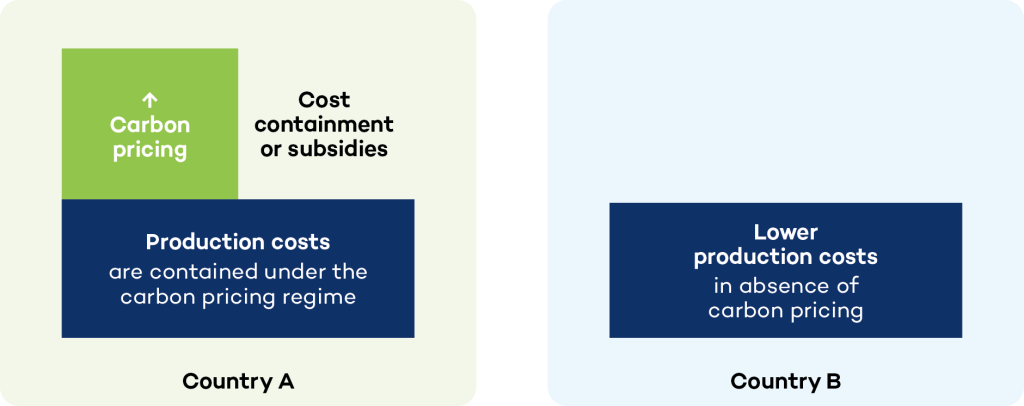
Carbon Cost Containment and Subsidies 

Figure 6. Carbon cost containment and subsidies lower production costs 

Carbon leakage toolkit figure 6

Carbon Cost Containment

The most prevalent tool to prevent carbon leakage currently consists of various cost-containment measures linked to carbon pricing. In jurisdictions with ETS, these have the common characteristic that operators are liable for emissions-related costs only if they emit above a certain baseline. Typically, sectors deemed at risk of carbon leakage have higher, i.e., more lenient, baselines than others. In jurisdictions with carbon taxes, cost containment typically comes through tax exemptions, often conditional on environmental performance or vulnerability to leakage. We focus here on ETSs, as they cover most emissions subject to explicit carbon prices in 2024.

The most prevalent tool to prevent carbon leakage currently consists of various cost-containment measures linked to carbon pricing. In jurisdictions with ETS, these have the common characteristic that operators are liable for emissions-related costs only if they emit above a certain baseline.

The point of the ETS-related carbon cost-containment mechanisms is that even though the covered firms effectively get rebated the cost of carbon for a large portion of their emissions (protecting against leakage), the carbon price still provides incentives. Every tonne of reduced emissions still earns tradable carbon credits that can be sold, and every additional tonne of GHGs emitted is still an additional liability of the full carbon price. Carbon cost containment in Canada’s Output-Based Pricing System (OBPS) is described for illustration in Box 1. Other carbon pricing schemes, such as Australia’s Safeguard Mechanism and the ETS regimes in the EU, the UK, and Korea, also use such approaches to address carbon leakage. 


Drawbacks for jurisdictions implementing carbon cost containment as part of ETS are twofold: first, the incentives to decarbonize might be weaker compared to a system without cost containment. There is conflicting evidence about this, yet it has been found that in some cases, firms receiving more free allocation decarbonize less. Lack of incentive to decarbonize may arise if firms predict their carbon credits will have relatively low values—that is, if firms predict that the credits they earn for beating the benchmark will be worth very little in future carbon markets. There are solutions to this problem, including, for example, so-called carbon contracts for difference. The second issue from the perspective of the producer is political: these cost-containment measures mean lower public revenue.  

For their trading partners, carbon cost-containment measures might result in unjustified promotion of firms by the countries implementing them. This was at the core, for example, of the countervailing measure adopted by the United States against higher levels of free allocation provided to firms most at risk under the Korean ETS. 

Subsidies  

A broad range of subsidies can mitigate carbon leakage. These can be, for example, grants, below-market interest rate finance, purchase of inputs at above-market rates, exemptions or credits of tax revenue or charges otherwise due, or provision of inputs or infrastructure at below-market rates. 

Subsidies targeted at lowering producers’ emissions intensity can reduce the costs of compliance with carbon pricing, lowering the risk that such pricing will lead to a loss of market share to foreign producers facing no or low carbon prices. In 2021, the Canadian government, for example, granted Algoma Steel a CAD 420 million subsidy to phase out coal-fired steelmaking processes at one of its mills, meaning that the mill faces lower carbon costs and thus lower risk of carbon leakage. 

Steel factory carbon leakage

However, such subsidies are a partial and costly tool for leakage prevention. They are partial because they can only remedy that problem in specific cases of support rather than generally. Moreover, even if they lower the domestic costs of carbon pricing by supporting decarbonization, they do not generally reduce those costs to zero. The use of subsidies as a leakage prevention tool is only available to a rather narrow range of governments that have fiscal space to do so. Retrofitting just one steel mill from GHG-intense to clean production methods can cost nearly CAD 2 billion.  

Subsidies can address specific market failures such as technology uncertainty, the need for specific inputs or infrastructure to make decarbonization work (coordination problems), uncertainty about the future value of carbon credits, etc. And that decarbonization, in turn, reduces the risk of leakage. But as tools for the prevention of leakage, subsidies by themselves face daunting challenges. They are perhaps best thought of as complements, not substitutes, for other policy tools.  

Product Standards 

Figure 7. Product standards set limits to emissions intensities of imports 

cba-summary-5-emissions

Product standards as a tool to prevent leakage would take the form of mandatory standards (technical regulations) that would not allow goods to be sold on the domestic market if their GHG intensity was above a certain level. This would apply to both domestically produced goods and imports. 

Product standards are in force in a few locations, such as the Clean Fuel Standard in force in Canada, which is applied only to fossil fuels. They have been explicitly considered as tools for leakage prevention in the leakage/BCA consultations in the United Kingdom and Australia.  

Like BCA, product standards would prevent carbon leakage via imports to the domestic market. Also like BCA, they would do nothing to protect against the prospect of leakage in a jurisdiction’s export markets. One way to address this failure would be to adopt such standards not as a unilateral tool but as a platform for international cooperation. The more countries agree to enact such standards, the lower the risk of leakage between producers selling the same product in global markets. That sort of convergence would be challenging to achieve and would probably have to involve some means of recognition of different stringency of standards in different countries, at least at the outset. 

Product standards are a relatively blunt instrument for addressing leakage risk, offering no incentives to improve beyond the level of the standard and no means to achieve market access other than lowering GHG emissions intensity to the specified level. This could be addressed by a regime design that charged for carbon intensity above the standard, rather than acting as a ban; a hybrid of a BCA and a standards-based model. More flexibility might be introduced by making it a tradable standard and/or allowing offsets. 

Presumably, the standard would have to be set to become more stringent over time. Setting the level of the standard would be a technical challenge. To set standards at achievable levels, regulators would have to forecast the future of technology development and costs. An unachievable or prohibitively costly mandatory standard would run the risk of simply shutting off access to the covered goods and/or diverting all domestic production to export. 

One Size Doesn’t Fit All 

All carbon leakage tools present trade-offs regarding impacts on decarbonization, competitiveness, public finances, and administrative complexities. Many of them also impose costs on trading partners and create risks of regulatory fragmentation.

There are risks that governments applying these tools don’t sufficiently consider or reflect developing countries’ interests in their design and that the tools can be designed to serve protectionist objectives rather than to support meaningful climate agendas.  

It is important to note that different instruments are not equally available to all governments: BCAs without export rebates would probably be ineffective for very export-oriented countries. Some countries may lack the fiscal space for subsidies or the administrative capacity for complex product standards.  

A meaningful international conversation about the use of such tools would help to find a more harmonious approach and explore the full extent of the impact that existing measures are already having—not only on global decarbonization efforts but across borders and onto global value chains. 

Warehouse of potash fertilizer plant production

Deep Dive

Powering the Clean Energy Transition: Net-Zero electricity in Canada

This publication is a part of IISD's Clean Energy Insights policy brief series, which outlines the benefits of a net-zero economy for Canadians across the country. (Download PDF)

December 2, 2024
 
policy-recommendations-button


A Bigger, Cleaner Power Grid

Canada’s clean energy transition will require electrification across all sectors, and that electricity must be net-zero. The near-complete phase-out of coal-fired electricity generation has already contributed to a 60% reduction of greenhouse gas (GHG) emissions (measured as carbon dioxide equivalent [CO2e]) in the power sector since 2005. Now only 47 Mt of CO2e remain to be mitigated to reach net-zero GHG emissions; however, this must be achieved while doubling (or even tripling) electricity generation by 2050 if Canada’s other sectors are to reach net-zero too. (“Net-zero” means that CO2e emissions are reduced to zero or that any residual emissions are offset by additional, verifiable, and permanent CO2e removals). While the transformation of Canada’s electricity grids in Canada has been impressive, there is still work to do. 

These dual tasks of expansion and decarbonization are clearly feasible and offer economic opportunities across Canada (see below).
 

With widespread renewable resources come widespread sustainable jobs. These jobs range from the technicians and engineers who design, implement, and maintain renewable energy generation projects to project managers and construction workers. Much like in the fossil fuel sector, the impact on employment goes beyond direct employment opportunities, as renewable power hubs support related service industries and otherwise boost local economies. Unlike the fossil fuel sector, however, renewable energy hubs will be distributed widely across the country, spreading jobs, wealth, and investment to communities nationwide.

Unlike the fossil fuel sector, renewable energy hubs will be distributed widely across the country, spreading jobs, wealth, and investment to communities nationwide.

Day-to-Day Benefits for Canadians


Lower prices for households

Technical experts at the CCI and CEAC have found that a net-zero electricity grid would reduce average energy costs for Canadians. The CCI finds that “average household energy spending—on energy bills and the equipment that that energy powers—will decrease by 12 per cent between now and 2050 under a net zero transition”. CEAC estimates that a net-zero grid would save Canadian households CAD 15 billion annually by 2050, with 70% of households saving an average of CAD 1,500 per year. There are several reasons for these consumer cost savings, discussed below. 

Low energy costs

Globally, onshore wind and solar are already cheaper sources of power than new fossil fuel alternatives across their lifespan, and costs continue to fall rapidly as these new technologies expand and develop. Recent data from the International Renewable Energy Agency shows that 81% of newly commissioned renewable power generation in 2023 was cheaper than fossil fuel alternatives. Cost savings like this have meant that renewable power generation saved the global power sector up to USD 409 billion between 2000 and 2023. In Canada, the Pembina Institute’s modelling of New Brunswick, Nova Scotia, and Alberta shows that a non-emitting power grid can provide the same energy services at a lower cost than natural gas-reliant alternatives. 


High energy efficiency

An expanded power grid would also unlock huge efficiency gains across the country, as the CEAC explains: “for most needs (heating and vehicles), electricity can be 2 to 4 times more efficient than the energy sources it will replace”. So, even if electricity rates increase in some parts of the country as the grid absorbs the cost of new infrastructure, consumer costs can still decrease as less energy is used. These cost savings can be multiplied when paired with demand-side management. For example, Nova Scotia’s recent investment of CAD 173 million in demand-side management is expected to save ratepayers CAD 542.8 million over the lifetime of the plan. 

Stable pricing

Renewable power sources, such as hydro, wind, and solar, do not rely on internationally traded fuels like oil and gas. A clean power grid, therefore, can be less vulnerable to rapid price spikes caused by commodity supply shocks beyond Canada’s control, such as those that followed Russia’s invasion of Ukraine in 2022. Low-cost wind and solar generation can be locked in by long-term power purchasing agreements that give grid operators cost certainty, resulting in more stable rates for consumers. Removing the price uncertainty inherent to fossil fuels enables businesses and households to efficiently plan, invest, and budget for their energy needs while freeing governments from spending millions in taxpayer money to protect consumers from sudden price spikes via emergency subsidies. Moreover, when households generate their own renewable energy—through rooftop solar—they can effectively hedge against future fossil fuel price spikes while generating tax-free savings on their electricity bills by selling excess power back to the grid. 

Managing transitions

Some research suggests certain households in Canada may see minor cost increases under a clean power grid, mostly in locations that currently have high rates of natural gas use; however, such risks can easily be offset by smart policy decisions. With lower energy costs across the economy and fewer subsidies required to offset the effects of fossil fuel price spikes, government support can be directed to the small percentage of households that are vulnerable to cost increases, ensuring that a clean power grid brings energy cost savings nationwide.


Clean Power can be Reliable  

Reliable technologies

As a baseline, Canada benefits from vast hydroelectric resources that can be used to offer firm, dispatchable power generation that is available almost all the time. Modelling shows that new renewables, such as wind and solar, can meet the rest of expected demand directly when paired with storage technologies, demand-side management techniques, and electricity-sharing infrastructure (interties) between provinces. The reliability and efficiency of these technologies have improved significantly in recent years. The cost of battery storage projects, for example, declined by 89% globally from 2010 to 2023 as technologies improved and manufacturing capacity expanded. Interties between provincial grids, meanwhile, are already an effective option to efficiently share clean electricity supplies across the country, but they require interprovincial agreement and coordination. This is one area where the federal government can play a pivotal role in coordinating with provinces and territories. 

Energy Security

Because clean power grids rely less on imported (or otherwise globally traded) fuels like oil and gas, Canadian governments can have more control over the cost and supply of electricity, even in times of international tensions or economic instability. This means that a well-designed renewable-based power grid not only protects consumers from sudden spikes in electricity costs but also enhances Canada’s energy independence, making the country more resilient in an increasingly volatile fossil fuel economy. This is not to say that clean power projects will not be impacted by global economic shocks—renewable supply chains will often still be global in scope—but rather that the operating costs of such projects, and thus the availability of affordable power for consumers, will be far less sensitive to developments beyond Canada’s control.


Healthier communities

Coal-fired power plants are especially polluting—emitting high concentrations of sulphur dioxide, nitric oxide, and nitrogen dioxide. These pollutants are linked to heart and lung conditions, with young children and the elderly at disproportionate risk. In 2014, it was estimated that Canada’s 14 coal-fired power plants caused 160 premature deaths and 140 hospital admissions, costing the Canadian economy CAD 800 million per year. While natural gas power generation is less polluting than coal, nitric oxide and nitrogen dioxide are still emitted. Switching to clean power generation—which does not emit such pollutants—can lead to significant health benefits for communities exposed to fossil fuel pollution.    

Healthier environments

Fossil fuel power generation also produces pollutants that remain in the local environment. For example, coal-fired power plants release mercury, a toxic, long-lasting pollutant that often contaminates waterways. Mercury poses significant health risks, particularly for young children, as it can impair cognitive function and motor skills when exposure occurs early in life or during fetal development from consuming contaminated fish. In addition, nitrogen oxides contribute to ground-level ozone and acid rain, both of which negatively impact local ecosystems. By switching to clean power generation, such local pollutants can be avoided.  

Key Policies for Federal and Provincial Governments to Develop Canada’s Net-Zero Power Grid

To accelerate Canada’s transition to a clean electricity grid while ensuring Canadians across the country benefit from clean, cheap, and reliable power, coordinated and complementary policies across provincial and federal governments will be needed.


Conclusion 

A clean power grid is an investment and one that will show returns across the country. By expanding and decarbonizing Canada’s electricity sector, Canadian governments can set the foundation for a successful energy transition between now and 2050, all while ensuring that Canadians will have access to clean, affordable, and reliable power for decades to come. No one level of government can complete this task on their own; federal, provincial, and territorial governments must cooperate and form agreements to make the most of Canada’s vast renewable energy potential in terms of both the environmental and economic opportunities that it presents.  

A full list of references can be found here.

Re-Energizing Canada is a multi-year IISD research project envisioning Canada's future beyond oil and gas. This publication is part of IISD's Clean Energy Insights policy brief series under this project, which outlines the benefits of a net-zero economy for Canadians across the country.

Deep Dive

A Precarious Pursuit

Europe's dash for liquefied natural gas in Africa puts European company profits over African state interests

Companies including BP, TotalEnergies, and Eni will reap the near-term revenues from liquified natural gas (LNG) projects in Africa. Mozambique, Nigeria, and Senegal are expected to wait until the mid-2030s or 2040s for significant returns, which might not materialize. As the world moves toward clean energy, future LNG demand is uncertain and oversupply is a real risk.

November 14, 2024

Over the last decade, major European oil and gas companies have led a dash for gas in Africa, seeking new exploration and development opportunities and territories. This effort has intensified following Russia's invasion of Ukraine, which caused an upheaval in global gas markets as sanctions on Russian imports led to high prices and bolstered greater interest in expanding liquefied natural gas (LNG) operations in African countries.

This article draws together findings from three International Institute for Sustainable Development research briefs on proposed increases in LNG production in Mozambique, Nigeria, and Senegal, focusing on three key messages about the risks that African countries are exposed to by pursuing LNG export projects with European-based companies.
Context

To respond to projected energy demand, since late 2021, European countries began negotiating new LNG-related agreements with several African countries, including Algeria, Nigeria, Mozambique, Senegal, Egypt, Namibia, and South Africa.

German Chancellor Olaf Scholz has made several tours to Africa over the last 2 years to open talks on gas extraction and LNG production in Senegal and signed LNG production memorandums of understanding in Egypt and Nigeria. Former Italian Prime Minister Mario Draghi negotiated gas deals with Algeria, Egypt, Angola, and the Republic of Congo. French President Emmanual Macron has also courted several African countries to help increase gas imports. In parallel, France's TotalEnergies, the largest fossil fuel company on the African continent and Italy's partially state-owned Eni, the second largest, hold a majority share in several of the LNG deals that have either been finalized, are awaiting final investment decisions, or are in the feasibility phase.

LNG demand is far from guaranteed, and oversupply is a real risk.

However, with European countries working to meet ambitious renewable energy targets that offer higher energy security than imported gas, LNG demand is far from guaranteed, and oversupply is a real risk. The International Energy Agency (IEA) forecasts a downturn in natural gas demand from 2030, while global LNG capacity is predicted to expand. The resulting LNG supply glut may lead to falling prices, tighter margins, and lower profits for LNG exporters. This situation means countries with vulnerable economies, such as those in sub-Saharan Africa, could be left in an even more precarious position if they gamble on LNG, even as the fossil fuel companies themselves secure favourable contractual terms designed to protect them from losses while maximizing short-term profits.

The Business Case for New African LNG Projects Is Not Favourable for Host Countries

Delayed Revenues

As shareholders, both African governments and European companies want prospective LNG projects to be profitable. However, host governments generally place more importance on long-term profitability than companies due to delayed revenue-sharing structures. For example, in Mozambique and Mauritania, LNG deals were designed so that most of the financial return initially flows to the companies while significant government earnings only come later, in the mid-2030s and 2040s. This revenue-sharing structure shifts risk to host countries, as near-term revenues are more predictable than those in the medium- or long-term.

In the event of less favourable market conditions from the mid-2030s, host governments face the risk of generating significantly less revenue than predicted. By the time government revenue shares reach their maximum amid global decarbonization trends, the profitability of these projects may be undermined by a global LNG supply glut, coinciding with the declining EU LNG demand predicted by the IEA and EU Agency for the Cooperation of Energy Regulators (ACER), respectively. European governments and politicians are supporting LNG deals that are more likely to benefit European oil and gas companies, while the financial risk is disproportionately taken by African states.

LNG Oversupply

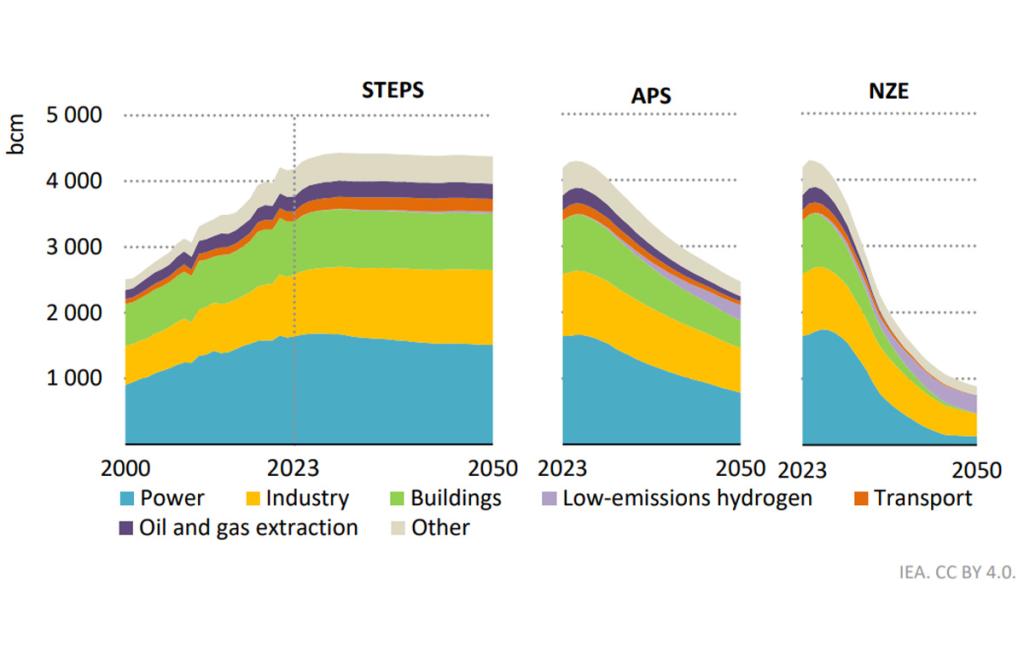
At the global level, the IEA estimates that under all its scenarios, natural gas demand will peak by 2030 and then decline to 2050. Under the Net Zero Emissions by 2050 (NZE) Scenario and the Announced Pledges Scenario (APS), declines are rapid, while under the Stated Policies Scenario (STEPS), the decline is slow (Figure 1). In all scenarios, the pipeline gas trade will decrease from 2030. LNG trade also decreases from 2030 in the NZE Scenario and APS, and even in the STEPS, where LNG trade increases from 2030, it is still less than committed LNG export capacity expansion. Global LNG Hub estimates this increase in global LNG capacity to be 40% by 2030.

As a result, in all the IEA scenarios, there is a surplus of LNG export capacity to 2040 relative to LNG trade requirements, leading to an LNG supply glut.

Figure 1. Global natural gas demand by IEA scenario, 2000–2050

Global natural gas demand by IEA scenario, 2000–2050

Source: IEA, 2024.

The EU has approved and launched legislation to cut greenhouse gas emissions by at least 55% by 2030. This "Fit for 55" package was complemented by the REPowerEU plan to enhance renewable energy and energy efficiency in response to the energy crisis spurred by Russia's invasion of Ukraine. According to ACER, "Europe’s Fit for 55 legislative package envisages a decrease in EU gas demand of 30% by 2030, relative to 2019 levels." 

Figure 2. Falling LNG demand in the EU under the REPowerEU scenario

Falling LNG demand in the EU under the REPowerEU scenario

Source: ACER, 2024.

The REPowerEU scenario in Figure 2 highlights the EU's reliance on the LNG spot market, with the EU depending on slightly over 40 cm of LNG spot supply from 2024 to 2025. However, by 2026, the gap in uncontracted LNG shrinks to just 11 bcm. Notably, between 2027 and 2030, the situation shifts entirely: long-term EU contracts for LNG would surpass projected demand. As a result, the EU's exposure to spot LNG would be minimal, limited to balancing and scheduling. The EU is expected to be over-contracted by 30 to 40 bcm during this period, with the surplus likely being redirected to global LNG markets, aided by flexible FOB contractual terms.

Increasing Competition

If LNG supply outpaces demand, there will be increasing competition between producers. In our assessment, African producers are more vulnerable to price competition than other global producers because they have higher breakeven prices for LNG exports. This is based on a calculation of asset-level breakeven gas prices, weighted based on their total forecasted production volumes according to the Rystad UCube data. African producers Algeria, Senegal, Nigeria, and Mozambique have higher LNG breakeven costs when compared to the largest producers and key competitor countries such as the United States and Qatar (Figure 3). While Algeria is also an African country, it has been exporting LNG since well before the other three countries, with Sonatrach, its national energy company, holding majority shares in all the LNG plants.


Note: The domestic weighted average breakeven gas prices were calculated using Rystad Energy UCube data on asset-level breakeven gas prices, which were weighted based on their total forecasted production volumes. The sum product of each gas field's breakeven price and their associated forecasted production volumes divided by the total forecast domestic gas production yields the weighted average of breakeven gas prices for a given country.

Regional variations between breakeven costs can be attributed to technical, financial, and security factors, such as the cost of capital, taxes, and royalties. For instance, in Mozambique, the security challenges in Cabo Delgado (where LNG projects are located) could escalate costs, threaten production, and reduce revenue for the government.

Stranded Assets

"Stranded assets" are defined as "assets that become devalued before the end of their economic life or can no longer be monetised due to changes in policy and regulatory frameworks, market forces, societal or environmental conditions, disruptive innovation, or security issues."

Higher breakeven gas prices make national production more vulnerable to global market fluctuations, as it would become unprofitable if global gas prices fall below domestic breakeven levels. These higher prices indicate increased production costs and reduced profit margins. With a forecasted LNG supply glut until at least 2040 and intensified market competition, new entrants like African producers with high operational costs are at greater risk of failure, potentially leading to the shutdown of operations and the creation of stranded assets. The majority of LNG deals between fossil fuel companies and African states, with the exception of existing projects in Algeria, have granted higher shareholding percentages to foreign fossil fuel companies (Offshore Technology, 2023; Energy Capital & Power, 2024; Global Energy Monitor wiki, 2024; Lusa, 2023; Global Fossil Infrastructure Tracker, 2022; BP, 2023).

LNG projects still under development in Mozambique, Senegal, and Nigeria are at high risk of becoming unprofitable, especially if they have high production costs or are exposed to fluctuating LNG export prices. New projects face even greater risks, as development typically takes 5 to 10 years; they are unlikely to begin producing—let alone delivering government revenues—before the 2030s, when global demand could be much lower. Even where there are prospects to utilize new gas reserves for domestic energy, this requires substantial infrastructure investments, including regasification plants and distribution pipelines.

The EU's decarbonization goals under the RePower EU and Fit for 55 packages create a mismatch between EU LNG demand and the planned LNG infrastructure in Africa. Furthermore, supporting development and procuring additional LNG from African countries whose LNG production costs are relatively high (Figure 3) places a burden on African countries to maintain such assets over the long term, risking stranded assets.

Stranded asset risk is high for these countries because European demand may drop before much of the current LNG project pipeline can be developed. Supporters of LNG projects suggest that African countries can pivot away from Europe and instead supply increasing gas demand that could appear in Asia. However, the IEA scenarios show a global decline in natural gas demand (Figure 1), coupled with LNG oversupply.

A green LNG ship travels across water off the coast of Senegal.

Host Countries Risk Falling Into a Debt Trap

The push by European governments and companies to expand oil and gas exploration and LNG terminals in Africa creates a promise for a new revenue stream that, if not properly planned for by host countries, could lock them into debt driven by long-term fossil fuel revenue expectations and impeding their shift to renewable energy. Even though LNG projects are majority-owned by private companies, governments typically acquire a debt-funded minority equity stake in the project. For example, in Nigeria, Shell, Total, and Eni own a total of 51% of Nigeria LNG; the remaining 49% is owned and financed by the Nigerian National Petroleum Company Limited, a state-owned company.

According to Carbon Tracker, oil and gas revenues form a crucial financial base for seven African nations—Algeria, Equatorial Guinea, Nigeria, Gabon, Republic of Congo, Angola, and Chad—with these countries relying on oil or gas for between 62% and 98% of their government income. Additionally, more than half of Africa's oil and gas-producing countries derive over 50% of their total export revenues from oil and gas exports, underscoring the sector's critical role in their economies.


Fossil fuel companies that have entered into deals with African states, including TotalEnergies, Eni, and BP, hold majority stakes in many of the proposed projects (Figure 4) and, as majority shareholders, will have control of LNG projects over the course of their commercial lives. To attract such investments, African governments often concede lower royalties, profit shares, and ownership stakes and may accept unfavourable terms, like reduced corporate tax revenue. This practice leads to the mortgaging of future fossil fuel revenues for capital, deepening debt through loans from Global North-controlled development banks, such as the IMF or World Bank or, increasingly, from Chinese national oil companies. This situation is particularly concerning given that these African countries have minimal responsibility for climate change and limited capacity to finance their energy transition.
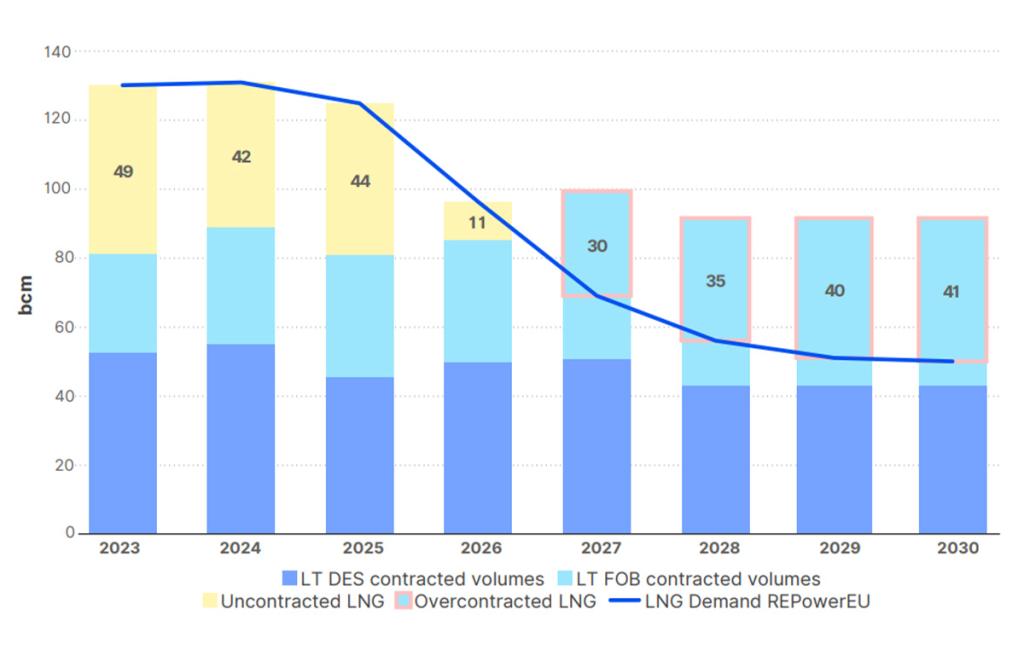
LNG remains costly when accounting for the entire value chain, requiring significant upfront investment in upstream production, liquefaction capacity, specialized storage facilities, and vessels. To pay off these investments, African countries could be getting locked into developments that will leave assets that may become increasingly expensive to maintain, debt that is hard to service and a prospect of revenue generation that is neither stable long-term nor aligned with evolving global energy commitments.

City residents and vehicles flood a street market in Nigeria.

European Actions Are Working Against Emissions Reductions Targets in Africa

European countries have shown international leadership around their own domestic carbon emissions pledges, having pledged to reduce emissions by at least 55% below 1990 levels. This is broadly in line with the Paris Agreement to limit global warming to 1.5°C above pre-industrial levels. They have also supported the global stocktake call for all parties to the United Nations Framework Convention on Climate Change to contribute to global efforts on "transitioning away from fossil fuels in energy systems." However, the mainstreaming of ideas around emissions reductions and the energy transition has not yet led to a move away from European promotion of fossil fuel investment, particularly in Africa. This has led to allegations of hypocrisy. For example, an open letter from "Don’t Gas Africa," signed by 18 African partners, observed that European promotion of carbon reduction at home and investment promotion for fossil fuel infrastructure abroad was "dangerous and short sighted."

Europe Influences LNG Investments in Africa

Europe's position on African LNG was precipitated by the crisis following the war in Ukraine. The short-term scramble for LNG to replace Russian imports has led to a shift in the medium-term LNG supply. This led to the high-profile political visits and deals signed with European leaders described above, but the fallout from this was not limited to Africa. Supply concerns led countries such as the United Kingdom, Norway, the United States, and Australia to issue a raft of new oil and gas licences. In particular, prior to the recent change of government, the United Kingdom reportedly planned to issue 72 new licences in 2024, which could lead to 101 million tonnes of emissions, the highest in 50 years.

In addition, European financial markets have further supported LNG developments. Since the signing of the Paris Agreement, about EUR 1 trillion has been raised for fossil fuel investments, with EUR 776 billion (77%) involving a European financial institution.

European Companies Drive Fossil Fuel Developments

European companies like TotalEnergies, Eni, and BP are major investors in LNG export projects in Mozambique, Nigeria, and Senegal. While European governments don't directly control these companies, they shape the regulatory and fiscal policies that influence corporate behaviour, creating a favourable environment for continued LNG development. Additionally, European governments play a significant role in clean energy investment through initiatives like the Just Energy Transition Partnership. Nigeria and Senegal have included natural gas in their Just Energy Transition Partnership plans with the support of European partners. However, these plans lack clarity on domestic gas infrastructure, which risks undermining broader climate commitments despite efforts to boost domestic electrification.

Fossil fuel companies in Europe have been actively attempting to influence politicians and policy-makers to secure favourable conditions for themselves and their interests.

One factor in maintaining support for LNG is corporate lobbying. Fossil fuel companies in Europe have been actively attempting to influence politicians and policy-makers to secure favourable conditions for themselves and their interests. An analysis by InfluenceMap of LNG lobbying identified 15 European oil, gas, and utility companies involved in constructing new LNG export terminals in Africa and import terminals in Europe. The assessment identified three phases in which these firms conducted advocacy in support of their business objectives: (1) promoting gas exploration and LNG infrastructure in Africa; (2) advocating for LNG import/transportation in Europe; and (3) weakening European climate policies that would reduce gas demand. According to the report, 13 companies engaged in at least one of these efforts, with Shell, BP, and TotalEnergies involved in all three. E.ON and Enel, in contrast, were found to be scaling up renewable energy and phasing out fossil fuels, supporting European climate legislation aimed at reducing fossil gas demand and transitioning to zero-emission technologies.

The Result

Europe's continued support for LNG developments places African countries at a further disadvantage in their objectives to meet decarbonization goals by the 2050s. Emissions linked to the extraction, processing, and transportation of LNG contribute toward total emissions for the host country, making decarbonization more challenging to achieve.

Technicians walk past rows of solar panels.

Recommendations for Policy-makers

  1. Europe should avoid further locking Africa into developments that lead to stranded assets. While African countries can carefully assess the risks associated with high LNG production costs and potential stranded assets, European governments and companies should also show their commitment to a sustainable future by ending support for expansion of gas exploration interests in Africa. LNG deals that seek to extract the natural resources and profits, leaving behind assets that are burdensome to maintain or less profitable, have no place in a sustainable energy system. European involvement in LNG projects should take into account the economic viability of LNG projects under different market scenarios, especially considering forecasted supply gluts in the mid-2030s.
  2. European companies and policy-makers should avoid measures that risk locking African states into a fossil fuel debt trap. European collaboration should focus on fostering partnerships that benefit both sides, reducing the drive for new fossil fuel extraction and supporting the decarbonization of the energy sector. European companies should reassess the long-term viability of LNG projects, given the predicted global supply glut and declining demand, and consider investments aligned with the sustainable energy supply chain instead. Such companies, with the support of policy-makers, should support developments that seek to diversify the host country's energy sector, supporting infrastructure investments for domestic energy development to minimize creating a debt trap cycle emanating from fossil fuel dependence.
  3. A push for gas by Europe in Africa undermines solidarity in meeting the emissions reduction targets. Europe should reduce its political and commercial support for LNG infrastructure in Africa and prioritize renewable energy investments to avoid "fossil fuel lock-in" and help African countries meet their decarbonization targets. European companies and financial institutions play a key role in African LNG exploration, so this is partly a European problem. European governments must introduce stricter regulations to curb corporate lobbying by fossil fuel companies, ensuring that climate policies and commercial agreements align with a phase-out of fossil fuel support and focus on renewable energy development both domestically and internationally.

Deep Dive details

Deep Dive

The WTO and Fisheries Subsidies: Where are we, exactly?

The WTO Agreement on Fisheries Subsidies, adopted in June 2022 after more than two decades of negotiations, marked a significant milestone for promoting sustainable development in the fisheries sector and was celebrated as a historic achievement. This key international instrument requires governments to avoid financially supporting fishing in situations where there are acute concerns about the sustainability of such fishing. WTO members are still negotiating additional rules on fisheries subsidies. What would these add, and where are we exactly in that negotiating process? This article offers a concise state of play of the current WTO process on the topic.  

November 6, 2024

Fish 1: The 2022 Agreement on Fisheries Subsidies

When WTO members sealed a multilateral deal to curb the most harmful forms of government subsidies to the fishing sector in 2022, they drew applause from around the world. Harmful fisheries subsidies are a serious challenge in terms of sustainable development. They encourage levels of fishing pressure that marine resources cannot bear, threatening not only marine ecosystems but also the food security and livelihoods of hundreds of millions of people who depend on fishing, often in vulnerable coastal communities in developing countries.

By prohibiting the provision of fisheries subsidies when they can be most damaging, the 2022 WTO Agreement on Fisheries subsidies (hereafter “the 2022 agreement,” also called “Fish 1”) is expected to help align government subsidy policies with sustainability imperatives in the fishing sector. This is a much-needed shift in the face of the ever-increasing share of fish stocks being exploited beyond sustainable levels globally (38%, according to the latest estimates by the Food and Agriculture Organization of the United Nations) and the well-known role of subsidies as a driver of such overexploitation. The agreement’s conclusion, therefore, was a major success.

More precisely, the treaty prohibits subsidies in three types of situations: (1) when fishing activities are illegal, (2) when fish stocks are in an overfished condition—i.e. their biomass is alarmingly low—and no measures have been introduced to help them recover, (3) when fishing occurs on the high seas outside of any collective management arrangement, which essentially means that no collective entity has the responsibility to ensure the sustainable management of these activities. In addition, the rules include a softer obligation for governments to be particularly cautious when providing subsidies to vessels that do not fly their flag and for the fishing of stocks whose sustainability status has not been assessed, as well as transparency requirements with regard to subsidies and other fisheries-related information.

The treaty now needs to be ratified by 111 WTO members to enter into force; 86 members have done so already, so 25 more ratifications are still needed. Once in force, the new set of rules will become legally enforceable. WTO members must thus also prepare to implement these new legal obligations, which they can start by using IISD’s Self-Assessment Tool for the Implementation of the Fisheries Subsidies Agreement. A dedicated fund has been set up at the WTO to provide developing country members with the financial support they need to implement the agreement.

Fish 2: Toward further, broader rules

All of this is promising, but it also raises the question of why WTO members are still negotiating to conclude additional rules on fisheries subsidies (often called “Fish 2”). The answer lies in the focused nature of the rules agreed in 2022. The 2022 agreement is essential in its own right, but the problem of subsidized overfishing is broader than the specific situations targeted by its prohibitions. Fisheries subsidies can be harmful even when fishing operators do not engage in illegal activities or when stocks are not (yet) in an overfished condition. They often encourage the development of oversized fishing fleets and incentivize excessive levels of fishing pressure, which can lead to fish stocks being overfished or even severely depleted further down the line. The original mandate for the negotiations recognized the scope of the problem: it required negotiators to discipline those subsidies that contribute to overcapacity and overfishing.

This is precisely why WTO members are currently negotiating further, broader rules on fisheries subsidies: to prevent subsidies from contributing to overfishing and fleet overcapacity in the first place. In other words, the rules would aim to address more directly the root cause of the problem (when subsidies start to encourage overcapacity and overfishing) rather than waiting for the most acute manifestations of that problem to appear (when overfishing has been going on for so long that stocks are in an overfished condition).

At the WTO’s Twelfth Ministerial Conference (MC12) in Geneva, where the 2022 agreement was adopted, such broader rules were also on the table, and their conclusion was crucial for many WTO members. However, members did not manage to agree on all the parameters of these disciplines. Rather than throwing the entire agreement overboard, they decided to conclude a smaller—but critically important—package and continue negotiating on these additional rules to prohibit subsidies that contribute to overcapacity and overfishing more generally. Now they are working to finish the job.
 

Dozens of boats in the sea

How far have we come?

WTO talks on fisheries subsidies resumed in 2023, with a very busy schedule of negotiating meetings throughout the year and in early 2024. The goal was to agree on additional provisions on fisheries subsidies by—or at—the WTO’s Thirteenth Ministerial Conference (MC13), held in Abu Dhabi in late February and early March 2024. Members began by reconsidering various possible approaches to these broader rules. As the discussions progressed, the chair of negotiations, Ambassador Gunnarsson of Iceland, tabled draft disciplines, which initiated a process of gradual convergence between members on most of the key elements in the rules, as reflected in a revised text issued at the end of 2023. Further negotiating meetings in early 2024 allowed members to continue narrowing gaps between positions and find further convergence on several outstanding issues. This progress was captured in a draft text for additional provisions which many members hoped to adopt at MC13. 

However, despite intensive talks in Abu Dhabi and an unprecedented level of convergence on virtually all issues on the table, members could not reach full consensus at the ministerial meeting. Nonetheless, the work undertaken in Abu Dhabi generated some of the building blocks needed to conclude the talks. First, it led to another revision of the draft text (later circulated formally here, and see IISD’s analysis of it here), which brought WTO members even closer to consensus. Second, it allowed particular members to work bilaterally and find common ground on very sensitive issues on which they held diametrically opposed positions. Finally, the last hours of MC13 saw a diverse group of WTO members undertake efforts to find compromises on several outstanding issues, and the adjustments suggested by this group in a so-called “floating text” are likely to prove important in finding a landing zone.

After hearing members’ views again in the months following MC13, many of which emphasized how close members were to landing a deal in Abu Dhabi, the chair of negotiations decided to attempt to conclude negotiations in July in Geneva. He issued a slightly amended text, suggesting a possible landing zone on outstanding issues based on the so-called “floating text” from MC13 and put the decision to WTO members at the July meeting of the WTO’s General Council (the organization’s highest decision-making body outside of the ministerial conference).

This text was the basis for further discussion among members in the week before the July General Council meeting. Some members still had reservations about particular aspects of the disciplines, and members explored possible solutions to these concerns. Despite this last gap-closing work, it also became evident during that week that consensus would again prove elusive. One large developing country member, in particular, had made it clear that it would not be in a position to adopt the proposed disciplines on the table. 

The current situation is a study in contrasts. On the one hand, WTO members have never been so close to consensus with regard to the actual substance of these additional rules. The overwhelming majority of them would like to conclude these negotiations by the end of the year on the basis of the current draft text, possibly with limited adjustments. On the other hand, full consensus has not materialized until now. Not all WTO members have been able to clearly signal that they would be ready to adopt the suggested disciplines, and one member has been explicitly calling for more substantial changes to the rules. For members to be able to deliver this crucial deal, a change in current political dynamics will be needed.

What disciplines are we looking at?

The draft text on the table reflects members’ gradual convergence on a “hybrid” approach that combines elements from several proposals made by different members and groups of members over the years. Overall, the structure of the rules is quite similar to the set of disciplines that were already being considered in the lead-up to MC12, yet with a few important changes.

The main rule establishes a broad prohibition of subsidies that contribute to overfishing and overcapacity. It includes a list of subsidy types that are presumed to be harmful (and thus prohibited) but is also accompanied by two types of exemptions. First, the subsidizing member can keep subsidizing when they can show that fisheries management measures are in place to keep fish stocks healthy, with stricter demonstration requirements for developed members, distant water fishing nations, and large subsidizers. This differentiation between members—i.e., tougher requirements for members with more industrialized and subsidized fishing sectors—is one of the key changes made to the draft rules over the last 2 years. Second, the main rule is tempered with a series of temporary and permanent exemptions for developing country members or groups of developing country members as special and differential treatment (SDT). Another key evolution in the draft rules since MC12 has been the gradual widening of some of these flexibilities for developing countries, in particular with regard to an exemption for subsidies provided to artisanal fishing.

This main prohibition is accompanied by a similar, conditional prohibition of subsidies that are targeted at fishing activities beyond the subsidizing member’s water, which includes a dedicated process for monitoring these subsidies. Finally, the draft text also includes a number of transparency obligations.
 

Fish in the ocean

Are these rules worth concluding?

A central question for WTO members, as they consider their next steps in these negotiations and how they could be brought to a successful conclusion, is what the rules on the table mean in terms of sustainable development. And this reflection should be guided by at least three central considerations. 
First, agreeing on these new rules is essential for protecting both marine ecosystems and the communities that depend on fishing for nutrition, jobs, and livelihoods. The suggested provisions are broader than those agreed in the context of the 2022 agreement, and so is their potential impact. These additional disciplines are key to better addressing the underlying role of subsidies as a driver of overfishing beyond the specific situations that are already addressed in the existing agreement.(*)

Second, the rules on the table are neither perfect from a sustainability perspective nor the ideal result from any member’s point of view. Precisely because of the breadth of the impact that these new disciplines could have, negotiations have been very intense and complex.  The suggested new rules are the result of painstaking work to find compromises between governments with very divergent initial positions. And after years of hard negotiating work, the draft text reflects the best set of disciplines on which members have managed to find convergence. Among the options that have been proposed and discussed, some would have been more ambitious from a sustainability perspective, but they did not generate consensus among members.

Third, the draft disciplines represent significant value in terms of sustainable development. They would prohibit the riskiest types of subsidies when no credible fisheries management measures are in place. And, while the temporary exemption for developing country members’ subsidies to large-scale fishing is very wide, it would only apply for a period of time. Eventually, a large majority of subsidies to large-scale fishing would need to be accompanied by fisheries management. The permanent exemptions for developing countries—for very small fishing nations and for subsidies to small-scale fishing—will have a much smaller impact. 

At a global institutional level, the disciplines would subject fisheries subsidies and their sustainability to scrutiny that currently does not exist, putting the issue explicitly on the ongoing international agenda in a WTO committee. 

Most importantly, the disciplines have the potential to change what society at large expects of policy-makers across the globe—and, as a result, how policy-makers behave—as they define the support that their government provides to the fishing sector. Fisheries subsidy policies would be expected to align with sustainable development objectives, a principle that would be enshrined in a multilateral, binding set of rules for the first time. 

The suggested rules are not perfect. However, from a sustainable development point of view, they hold a lot of value that should not be simply left on the table. 


(*) For a slightly more detailed version of these key considerations, see the final section of IISD’s analysis here.

Deep Dive

How to Make Nature-Based Solutions for Adaptation Work for Everyone

To be effective, nature-based solutions (NbS) for adaptation need to consider how our unique identities influence our interactions with the natural world and our capacity to adapt to the impacts of climate change. It sounds challenging, but it starts with integrated climate risk assessments. We share three key take-aways from IISD’s Climate Adaptation and Protected Areas Initiative (CAPA) that will help practitioners plan for effective, inclusive, and sustainable NbS for adaptation.

October 15, 2024

NbS for adaptation can enhance biodiversity and strengthen climate resilience for both communities and ecosystems. However, communities are made up of diverse people with different needs, who experience the impacts of climate change and biodiversity loss in distinct ways.

Knowing this, how can we ensure that NbS for adaptation benefit everyone?

It all starts with planning.

Planning for NbS for adaptation requires recognizing how different people are impacted by climate change, understanding the factors that influence their vulnerability and exposure to climate hazards, and working with them to identify which adaptation options might work for them.

It means identifying how adaptation priorities differ within and among groups and what factors might enable—or inhibit—their ability to access and share in the benefits of nature.

To ensure that NbS for adaptation initiatives are effective and sustainable, gender and social differences must be considered in the planning process.

The Intergovernmental Panel on Climate Change’s Sixth Assessment Report on Climate Change (2022) says that equity and justice are key considerations in climate change adaptation, and these principles cannot be advanced without attention to the adaptive capacity and disproportionate risks experienced by vulnerable people.

Globally, we know that people’s vulnerability to climate change varies depending on social factors, such as gender, sexuality, age, socio-economic status, race, ethnicity, Indigeneity, nationality, and ability, among others. We also know that people have different roles and responsibilities in the access, use, and management of natural resources, and this, too, can influence vulnerability to climate change. There is also now evidence that attention to gender and social differences improves the effectiveness of adaptation efforts overall. Additionally, policy initiatives focused on global biodiversity conservation (such as the IUCN (International Union for Conservation of Nature) Global Standard for Nature-based Solutions and Target 23 of the Global Biodiversity Framework) also highlight the importance of considering gender equality and social inclusion (GESI).

Women working on the land in Zambia

Including more diverse perspectives in resource governance and conservation efforts can also yield better results, given the unique and specialized relationships with nature possessed by different groups, such as women and Indigenous Peoples.

Having this information on how different groups interact with nature and how they are impacted by climate change and biodiversity loss is critical to the development of effective NbS for adaptation.

If NbS for adaptation are not designed with these differences in mind, they will miss the mark, which may lead to maladaptation and worsen vulnerabilities for some groups.

So, how can you collect this essential information during the planning process?

Understanding Gender and Social Issues in NbS for Adaptation: Our approach

IISD experts leading the CAPA Initiative, a 3-year project funded by Global Affairs Canada, recommend starting the planning of nature-based adaptation projects with an integrated climate risk assessment.

Seeking to promote natural solutions and strengthen climate resilience in Belize and the Greater Virunga and Kavango-Zambezi landscapes*, they first gathered information on climate change and biodiversity loss and assessed how these issues impact communities within or adjacent to the Protected Areas.

*Fiji's integrated climate risk assessment is currently ongoing.

A key aim of the process was to better understand the different impacts of these issues based on gender and other social factors. This information was gathered by integrating GESI criteria into the climate risk assessment. This involved attention to GESI both in the questions the assessment aimed to answer (for example, assessing the relative decision-making power and opportunities of different groups in conservation planning processes) and in the process undertaken (for example by ensuring gender-responsive methodologies were used to collect data through separate, confidential focus group discussions that were inclusive of underrepresented groups, such as women and youth).

The assessments, implemented together with the World Wide Fund for Nature Africa and the Wildlife Conservation Society in Belize, analyzed gender differences and helped to determine which groups within the landscapes are considered “underrepresented” regarding their participation in and leadership of natural resource and/or Protected Areas management.

In Belize and the Greater Virunga landscape, the groups identified as underrepresented consist of youth and Indigenous Peoples: the Garifuna in Belize and the Batwa populations in the Greater Virunga landscape. In the Kavango-Kambezi landscape, they consist of youth and persons with disabilities. Across the landscapes, women were identified as facing barriers due to gender inequality. These groups became the focus of the assessments, which enabled the CAPA initiative to better understand the unique constraints and opportunities they experience to design NbS for adaptation activities that could encourage their active participation and leadership.

What follows are three key take-aways that highlight important insights gathered from the assessments and how this information will help project partners plan for just and effective, fit-for-purpose NbS for adaptation.

Key Take-Away #1: People of different genders and social groups rely on different livelihood activities, which influences their adaptation priorities

Findings from the assessments demonstrated that men, women, and underrepresented groups undertake different livelihood strategies according to roles, responsibilities, and cultural norms that influence their daily activities. Gendered roles within key resource sectors mean that women and men are affected by the impacts of climate change in different ways. For example, in both the Greater Virunga and Kavango-Zambezi landscapes, women are often responsible for gathering water and fuelwood, as well as procuring food, which becomes more arduous during drought.

In Belize, fishing is dominated by men, who are strongly affected by declining fish stocks due to rising sea temperatures. The degree of dependence on a particular resource or livelihood strategy also plays a role in vulnerability to climate change. For example, climate hazards have resulted in Belize’s Garifuna communities scaling back their traditional farming practices. In the Kavango-Zambezi landscape, people with disabilities are facing challenges in cultivating home gardens—a key source of food security—because the river they previously relied on has dried up.

Group of people discussing in a circle

These differences in livelihood activities influence people’s priorities when it comes to adaptation. In Belize, youth expressed a preference for options that gave them hands-on, practical experience, such as coral, mangrove, and beach restoration, while women were least interested in options linked to forests and forestry due to safety concerns. In both the Greater Virunga and Kavango-Zambezi landscapes, both men and women expressed an interest in NbS for adaptation that were linked to the diversification of livelihoods to build resilience.

Having information on these differences in livelihoods and preferences is key to planning NbS for adaptation that can benefit everyone.

Key Take-Away #2: Resource access and control strongly influence barriers and opportunities for NbS for adaptation

Across the CAPA landscapes, the assessments highlighted the critical role that land tenure and other natural resource access and control issues play in shaping people’s livelihood opportunities and, consequently, their vulnerability to climate impacts.

In Belize, more women are interested in taking up livelihood strategies such as farming, yet many lack ownership of key assets, including land. Indigenous groups such as the Batwa in the Greater Virunga landscape and the Shangaani in the Kavango-Zambezi landscape have seen their traditional territories appropriated to create Protected Areas. In the latter, local communities have access to buffer zones with key natural resources, yet traditional authorities (often men) govern the use of communal resources. In the former, both men and women have access to ecosystem services, yet land is primarily owned by men who make decisions on land allocation and associated activities. Lack of land ownership is linked to less decision-making power regarding natural resource management in the Greater Virunga landscape.

NbS for adaptation are long-term investments in climate resilience and biodiversity conservation outcomes, which require secure land access or ownership. It is simply not feasible to expect community members to invest in long-term solutions if they face immediate climate risks and lack secure tenure. It is important to recognize that some groups, such as women, may not benefit in the same way if NbS for adaptation activities, such as land restoration, are prioritized over others. This is why it is helpful to gather information on the gender and social dimensions of resource access and use it to plan NbS for adaptation that can deliver equitable benefits to communities.

Key Take-Away #3: Women and underrepresented groups play important roles in natural resource management but often experience structural challenges and capacity gaps

In all three landscapes, the assessments revealed persistent barriers that limit the meaningful participation of women and other underrepresented groups in decision making related to NbS for adaptation. In the Greater Virunga and Kavango-Zambezi landscapes, most local Protected Areas management plans have demonstrable gaps in inclusivity. Often, women are present in planning meetings to give a semblance of participation, but the final decisions and plans do not reflect their concerns, needs, or goals. Similarly in Belize, the Garifuna are not always consulted on the management of ecosystems that hold cultural and traditional importance.

Across the landscapes, women and underrepresented groups expressed that they lack opportunities, knowledge, and technical skills to engage in NbS for adaptation.

In Kavango-Zambezi, women noted a desire for technical skills to enable their participation in agroforestry. In Belize, women and youth are highly motivated to participate in NbS for adaptation, yet they lack confidence in their ability to influence conservation and Protected Areas management priorities.

Mapping conservation and natural resource management structures to understand capacities, needs, and gaps is essential to planning NbS for adaptation. Often, women and underrepresented groups provide leadership within community-level groups. In Greater Virunga, there are many women involved in savings and loan programs, as well as livelihoods-related groups that deal with conservation issues. However, many of these groups are informal and lack broader decision-making power, technical skills, and access to information. The sustainability and success of NbS for adaptation is contingent on improved and inclusive governance over the long term, and women and underrepresented groups are key players in these efforts.

What Do These Findings Mean for Planning NbS for Adaptation?

In learning from CAPA, it is clear that NbS for adaptation must be planned with consideration for how people’s unique identities influence their interactions with the natural world and their capacity to adapt to the impacts of climate change. This can be accomplished by conducting an integrated climate risk assessment that incorporates GESI and using the findings to inform NbS for adaptation options.

Gathering this information can help identify creative ways to ensure different groups can benefit from various NbS for adaptation actions. What matters is finding balance in the planning of NbS for adaptation options, being honest about who may benefit and who may not, and ensuring options address different needs, capacities, and priorities. Planning NbS for adaptation with this information in mind will ensure that the solutions proposed are effective, inclusive, and sustainable.

For more on inclusive NbS for climate adaptation, see our guide for practitioners and communities here.  


This piece was largely informed by the reports produced by the two integrated assessment consultancy teams in the African landscapes and in Belize, which will be published and shared on the CAPA website. In the African landscapes, the consultancy team that performed the assessment consisted of the following: Luckson Zvobgo (Climate Change Context; NbS for Climate Adaptation; Governance, Gender, and Social Context); Evidence T. Kasinganeti (Governance, Gender, and Social Context as well as Conflicts Context); Sandra Bhatasara (Governance, Gender, and Social Context); Felix Kalaba (Ecosystem Context); and Andreas L. S. Meyer (Biodiversity; Climate Change Context). In Belize, the consultancy team Compass Communication and Research performed the assessment with assistance from the Wildlife Conservation Society Conservation Planning Team.

Deep Dive

Why We Shouldn’t Give Up on the SDGs

The SDG framework may seem out of reach, but it’s the backbone of global cooperation.

September 20, 2024

At a time when progress on sustainable development is being slowed by multiple global crises and increasing tensions, anticipation for the Summit of the Future is high. The event, convened at the United Nations (UN), aims to strengthen multilateral cooperation and set out clear steps for how the global community can work together. The meeting's ultimate outcome will be a multilateral commitment, on paper, to keep up the momentum on the Sustainable Development Goal (SDG) framework at a time when so many of its targets seem out of reach, especially with a fast-approaching 2030 deadline.

The gaps are indeed daunting. Some may see them as reasons to give up on the SDGs. But as the Summit gets underway, we hope delegates consider all the ways in which the UN’s 2030 Agenda and its 17 SDGs have, in fact, made progress (despite what the reporting may suggest) and built a solid foundation that will be crucial for future global cooperation.

SDG Progress Beyond the Averages

The long-story-short of SDG progress is that only 17% of the targets are on track toward their 2030 deadline; progress is moderate or minimal on close to half of the targets; and more than a third are either stalled or regressing. While overall progress is clearly insufficient, this “assessment by averages” can hide important success stories.

Progress in one group of countries can be offset by regression in others, and many SDG indicators amalgamate multiple trends that can hide success on a specific issue. In education, for example, the UN’s 2024 SDG report indicates girls have reached parity or even surpassed boys in school completion rates, while overall completion rates have been increasing steadily. However, a part of this success is offset by declines in student skills and a decrease in completion rates in some regions.

Similarly, in health, the world has seen significant reductions in HIV infections alongside improved access to HIV medications. Child mortality has reached a historic low. At the same time, the impacts of COVID-19 continue to show as a reduction in life expectancy. Grouped with several other troubling health metrics, this leads to an “average” finding of decelerating progress in healthhiding the first two wins.

These examples provide several lessons to keep in mind when we judge the value of the SDGs. First, the broad scope of the SDG framework leads us to look only at the highest levels of aggregation of both data and issues, almost systematically overlooking success stories in certain areas that would have been reason to celebrate under earlier hyper-focused development agendas.

Second, we must acknowledge the world is failing the very rationale for designing a comprehensive and universal agenda. Progress is highly uneven between countries and across issues.

Add to this that the impacts of COVID-19, conflict, and climate change are disproportionately affecting the most vulnerable, and we must admit the world is still not setting the right priorities that would unleash the SDGs’ true potential.

Finally, we must not forget the aspirational nature of the SDGs. The Goals aim to articulate the ultimate vision of “the world we want.” It is regrettable but not entirely unexpected that we may not achieve the entirety of these Goals in the first attempt. Unforeseen events have pushed the world off track. But rather than blame or discard the SDG framework, we should learn from the successes and failures to date to understand where the framework can be improved and what may be missing.

Looking Beyond the SDG Framework

While the SDG framework tries to articulate a holistic vision of the world we want, events and discourse over the past years have revealed changing perspectives on principles like inclusion, equality, and life in harmony with nature.

The international community has dramatically failed to live up to its promise to leave no one behind and address the needs of those most behind first. Underneath the dire assessment, however, attention has shifted from defining targets that are thought to reflect outcomes—like reduced poverty, equality and prosperity for all—to reforming processes such as inclusive governance and economic decision making. For example, Indigenous voices advocating for a rights-based approach to self-determination have increased our awareness that we must address multi-dimensional barriers to participation in the decision-making process to empower marginalized groups in devising pathways out of poverty and discrimination.

This discussion is accompanied by a perceived shift from objectives defining equality—often framed as equality of opportunity—to equity in outcomes. This acknowledges those who have been pushed back by complex causes should receive direct support based on their specific needs to guarantee their well-being.

The key to achieving equity is giving agency to those with lived experience in poverty and marginalization. They should decide how marginalization is defined and measured so that their voices are heard and counted in decision making. This is also reflected in a growing debate among NGOs, academia and some governmental donors about the need to localize international development aid.

Our understanding of our relationship with our environment is also changing. For example, the Global Biodiversity Framework recognizes that humans are part of nature and that ecosystems are also livelihoods. This is a departure from older concepts that pitched conservation objectives against the rights of those living in the areas to be conserved. Similarly, the concept of ecosystem goods and services—which focused narrowly on the monetary values of ecosystem benefits—has been replaced by the broader concept of nature’s contributions to people, which recognizes non-monetary benefits as well as negative consequences of human-environment interactions, such as spreading new pathogens.

The SDG Framework has also inspired shifts in the governance of implementation, especially on the role of local governments in monitoring and reporting. SDG localization is taking hold.

A growing wave of cities and local governments have produced voluntary local reviews, reflecting rising awareness of the shared challenges all communities face and commitment to align municipal development plans with the SDG framework. At local, subnational, national, and regional levels, the practice of regular voluntary reporting has also stimulated investments in statistical and other data-related capacities to track and critically review progress towards the SDGs.

The SDGs Are the Future

The Summit of the Future is an opportunity to rally behind the SDG framework, readjust priorities and restore trust and commitment in the multilateral system, making it fit for the next decades.

While recognizing that progress to date is insufficient, we should acknowledge the successes the 2030 Agenda has delivered. The SDG framework is not perfect, but there is still time to improve its track record.

Without losing sight of the dwindling time to 2030, the momentum coming out of the Summit can provide a space and impetus to gather ideas on how the SDG framework can be tweaked and complemented beyond its current deadline, building on the SDG experience and success stories and integrating changing perspectives on the key principles of this Agenda. These ideas can and should inform discussions leading to the 2027 SDG Summit, when the debate on the Beyond 2030 SDG Framework will start in earnest.

Deep Dive details

Deep Dive

Can Behavioural Science Help Scale Climate Change Adaptation Solutions?

Applying behavioural science to climate change adaptation solutions might feel resource intensive, but research shows it is likely less costly than an intervention that doesn’t work.

August 19, 2024

Adapting to the impacts of climate change requires changing behaviour on an individual and a collective level—from how households make a living to how communities manage ecosystems, as well as how governments make investments. So why do we ignore the factors that drive how, when, and why people make decisions as we’re designing and implementing climate change adaptation solutions? IISD and Rare’s new report illustrates how behavioural science can help to question and reframe our assumptions about people’s decision making while supporting us in designing interventions that are grounded in a greater understanding of the psychological, social, and structural drivers of human actions. 

The Challenge of Understanding People 

Several factors prevent countries from implementing and accelerating climate change adaptation solutions. Lack of financial resources and the uncertainties associated with future climate risks are just two of them. But these aren’t the only barriers. Specifically, the psychological and socio-cultural drivers of behaviour are often left unaddressed.  

In other words, we ignore the factors that drive how, when, and why people make decisions and take action when designing and implementing adaptation solutions.

Scientific bodies like the Intergovernmental Panel on Climate Change (IPCC), in its Assessment Report Six (IPCC, 2022), recognize the importance of understanding the behavioural dimensions of climate change adaptation. However, in practice, the psychological and socio-cultural factors that influence the adoption of climate change adaptation solutions are often under-researched or ignored.    

This is a major hurdle, considering that adapting to the impacts of climate change requires changing behaviour on both an individual and a collective level—from how households make a living to how communities manage their ecosystems, as well as how governments make investments.   

Tackling behaviour directly can feel quite complex. First, various historical, politico-economic, socio-cultural, and psychological factors can shape people’s decision-making processes.  

Second, people’s actions are situated within a decision-making system comprised of multiple actors, including governments, development partners, civil society organizations, the private sector, communities, and individuals—all facing unique incentives.  

Third, our understanding of how people make decisions is often based on assumptions, which leads to ineffective interventions.  

Conscious and unconscious processes—such as habits, emotions, biases, and social influence—impact people’s decisions. This means that even when people understand the relevance of a specific solution and shift their attitudes or intentions toward it, this often is not enough for them to adopt the solution.  

Most interventions designed to change behaviour tend to overlook such insights, so applying behavioural science to the design and implementation of climate change adaptation initiatives could help us address past failings and improve the acceptability, effectiveness, and sustainability of solutions. 

Aerial view of Naveiveiwali village and Wainibuka river and riverbank.

Aerial view of Naveiveiwali village and Wainibuka river and riverbank.

Case Study on Ecosystem-Based Adaptation in Fiji 

To pilot and apply a behavioural science lens to a climate change adaptation solution, we focused on a past ecosystem-based adaptation (EbA) project implemented by the Fijian government. 

EbA, also called nature-based solutions for adaptation, is an approach for adjusting to the impacts of climate change that focuses on protecting, restoring, and enhancing ecosystem services, all while improving communities’ well-being. The Fijian government is seen as a leader on this topic because it recognizes the need to prioritize EbA in key strategic policy documents. 

Between 2019 and 2020, the Fijian government implemented a project that supported communities vulnerable to riverine erosion and flooding by giving them vetiver grass to plant along the riverbanks. Vetiver is a non-invasive species of grass with a fast-growing and deep root system that helps stabilize the soil. It is a robust solution to manage climate uncertainties because of its tolerance to both prolonged drought and waterlogging.  

Sireli Bale, 25 years old of Malabe village bringing his bamboo raft to its mooring point after returning from his farm on the other side of the Wainibuka River.

The government deployed a one-off intervention in the villages that did three things: i) they provided free vetiver seedlings through a new vetiver grass nursery at the provincial level; ii) they provided payment for ecosystem services, meaning that each village—through existing community groups—got paid to collectively plant vetiver along the riverbank; and iii) government officials hosted awareness-raising sessions on vetiver planting targeted at men and young people. 

However, in 2023, 3 years after the communities had planted the seedlings, there had been no maintenance of the vetiver along the riverbanks in any of the villages.  

Our research, therefore, sought to explore the behavioural variables that could have contributed to (or impeded) the adoption of vetiver as an erosion-reducing practice among target communities. We selected three rural Indigenous Fijian communities that benefited from this project and a fourth one that did not receive support as a comparison site.  

Six Main Drivers of Adoption 

Our research found that the key drivers influencing vetiver grass adoption for riverbank rehabilitation in selected communities in Fiji are complex but identifiable.  

Many factors likely influence decision making around vetiver grass adoption at the household and community levels. Our analysis revealed that the six main drivers influencing the adoption (or non-adoption) of vetiver grass for riverbank erosion control against flooding were 

  • salience of loss: whether villagers feel strongly about the negative impacts that erosion and flooding have on their lives 

  • choice uncertainty: whether villagers are certain about the options available to them to reduce erosion 

  • outcome efficacy: whether villagers feel vetiver grass will successfully reduce erosion 

  • collective efficacy: whether villagers feel their community can plant and maintain vetiver to reduce erosion 

  • self-efficacy: whether villagers feel they personally can successfully plant and maintain vetiver grass to reduce erosion 

  • material access: whether villagers feel they can easily access and afford vetiver 

We found that together, these drivers worked in concert to push and pull decision-makers toward or away from adopting and maintaining vetiver grass. 

A diagram showing main drivers of behaviour for using vetiver

Each of these variables was identified from the data and further broken down into its constituent factors. The first two examples listed are salience of loss and choice uncertainty.  

Salience of loss refers to the emotional and cognitive responses individuals had toward flood risks and riverbank erosion. When discussing vetiver, several aspects repeatedly surfaced. Participants frequently mentioned experience with flooding and erosion, noting that riverine erosion and flooding seemed to be becoming more frequent and intense. One respondent noted, “The floods have become more often than normal [and] more intense, and the currents are way more swift and bold now that it eats away at our riverbanks every time it floods.” 

Another said, "We are very concerned that our village is going to be washed off one day. Flooding is occurring more regularly now as the river has become shallow and wider in some places where erosions have happened. The erosion keeps moving inland; we are concerned that one day it is going to take away houses too." 

These comments tied into the emotional salience of flooding, which was also a recurring theme. Participants expressed strong negative emotion related to the impact of riverine erosion and flooding on their lives and those of others.  

What was particularly striking was the way participants referred to the loss of land as a direct dilution of their cultural identity. Their attachment to place was obvious, with respondents' cultural identity being closely linked to their land, including the riverbank, heightening their concern about erosion.  

One participant said, “[The riverbank] is also a place where we rest and talk about our issues, it’s a bonding place for us women while we’re washing, fishing, or harvesting vegetables,” while another respondent mentioned, “The riverbanks are eroding fast, and we are losing land. Land is an important inheritance culturally as the size of the land depicts the strength of the clan.” 

Choice uncertainty involved the perceived lack of clear information about the options available for reducing flood risks. Participants often wondered what other solutions might be available for the community to use. This uncertainty can diminish people’s sense of agency, and respondents felt they lacked information about the choice set available to them and their outcomes. Community members weren’t clear on all the options at hand to help fight erosion or how these options compared to one another—or even to doing nothing. As one participant said, "We want to continue with vetiver but also want to know what other interventions are out there that we can probably choose from." 

In scenarios where such decisions could reduce farming land’s immediate potential, combined with our human propensity for preferring known, predictable risks over unknown, ambiguous ones, this uncertainty could be particularly problematic.  

The semi-structured interviews revealed that approximately 43% of respondents expressed uncertainty regarding the relative effectiveness of both hard and natural infrastructure. Opinions were evenly split on whether natural infrastructure like vetiver is more effective than hard infrastructure like walls. It was the same with the benefits of vetiver, with only half of respondents (48%) believing that planting vetiver would benefit them personally. Qualitatively, respondents also noted a perceived lack of relevant information on vetiver itself, with comments such as, "[We've received] no trainings/awareness on vetiver grass and its benefits," and "We've heard about it during the community planting program but there was no training or awareness done."  

Trust in authorities was another recurring theme, particularly related to how much faith villagers put in key messengers and their information. 

For a further breakdown of the other variables, you can read our full report here.

A father and son harvest Breadfruit in the afternoon at Nabouva Village.

Lessons in Addressing Climate Change Adaptation by Understanding People  

This case study illustrates how behavioural science can help to question and reframe our assumptions about people’s decision making and support us in designing interventions that are grounded in a greater understanding of the psychological, social, and structural drivers of human actions. 

Behavioural science research shows that a combination of interventions addressing multiple drivers is often required to drive and sustain collective action, and a singular intervention is unlikely to address all variables driving decision making at the household and community levels. 

This means that while each of the six drivers is important to support vetiver grass adoption, addressing each variable in a siloed manner will likely not be sufficient to bring sustained change.  

In this case, the Fijian government and development partners need to craft interventions that specifically target and address the drivers of vetiver grass adoption identified through research, rather than relying on the assumptions that we all too often fall prey to, for example, that more information will lead to behaviour change. In doing so, they can then test and validate whether those interventions lead to the psychological, social, or structural changes predicted to result in greater adoption (and to identify how a change in a specific driver influences behaviour downstream). 

More broadly, expanding the application of behavioural science into the realm of climate change adaptation calls for establishing new partnerships between climate change adaptation experts and behavioural scientists.  

Behavioural scientists are already engaging in many fruitful areas of collaboration, such as on financial, public health, and food choice decision making.

Our analysis highlights how important—and urgent—it is for climate change adaptation professionals to also engage with behavioural scientists early, at the start of project formulation rather than in the diagnosis phase, to ensure that initiatives are informed by a deep understanding of human behaviour.  

This is alongside real and considered community engagement, which is essential to understanding current behaviour and what it means for enhancing resilience and consideration of the adoption of EbA solutions within the broader context of climate change adaptation and development. In this case, the focus on vetiver adoption at the local level should not overlook the broader and more systemic issues that are causing riverbank erosion, likely driven by unsustainable development such as deforestation, poor road drainage systems, and gravel extraction from the riverbed. Climate change is exacerbating the negative impacts of these factors on communities that are dependent on riverine ecosystems for their livelihoods, and focusing solely on changing behaviour at the household and community levels is not enough to effectively address climate change adaptation.  

Finally, applying behavioural science can feel fairly resource intensive, and identifying ways to make this cost-benefit ratio relevant to policy-makers might be necessary if we are to scale climate change adaptation solutions more globally. Understanding current behaviour, and what determines behaviour, often requires collecting and analyzing multiple rounds of primary data at the household and community levels. However, this approach is likely a lot less costly than having an intervention not work, as it’s clear that failure to properly engage with communities in understanding and testing the factors that influence their climate change adaptation behaviour can backfire.  

Deep Dive details