Insight

Reimagining the River: How art can help us adapt to climate change

Thandokuhle Zungu, a gender equality expert supporting SUNCASA implementation in Alexandra Township, Johannesburg, reveals how imagination, storytelling, and the beauty of collaboration are reshaping climate action.

July 9, 2025

On the 10th of June 2025, I presented before an audience full of environmental leaders, gender advocates, and climate thinkers at the Nature, Climate, and Gender Symposium. I was there to represent the SUNCASA (Scaling Urban Nature-based Solutions for Climate Adaptation in Sub-Saharan Africa) Project, but I was also there to tell a story. Not just about climate adaptation or sustainability, but about a township called Alexandra, nestled on the banks of the Jukskei River in Johannesburg, where 1.2 million people live at the frontline of the climate crisis. A story about art, about women, about reclaiming dignity—and about the river that holds it all together.

A River in Crisis, a Community at Risk

SUNCASA | Litter trap installed in Jukskei River, Alexandra Township, Johannesburg. (Photo: Hannelie Coetzee)
Litter trap installed in the Jukskei River in Alexandra Township, Johannesburg. (Photo: Hannelie Coeztee)

In Alexandra, the Jukskei River is both a lifeline and a threat. Floods arrive each season like clockwork—ripping through informal settlements, displacing families, and wrecking infrastructure. But while climate change might be the big-picture cause, the immediate trigger is often far more tangible: solid waste. Plastic debris, discarded appliances, and rotting refuse clog stormwater drains and choke the river.

And yet we’ve long known that solving this isn’t just about cleaning up. You can’t engineer your way out of neglect. What Alexandra needs—and what we dared to attempt—is a different relationship with the river. One that merges science with story, infrastructure with imagination.

Where Science Meets Storytelling: The river creatures are born

In 2022, a team led by Namina Foundation, Armour, and Willem Synman developed a simple litter trap—an elegant engineering fix to a persistent problem. Alexandra Water Warriors (AWW), the organization I proudly serve, installed the trap along the Jukskei. When David van Niekerk from the Johannesburg Inner City Partnership saw it, he didn’t just see a tool. He saw potential.

This vision sparked something bigger: a reimagined river corridor—a “Green Corridor” that’s alive with culture, nature, and public space. With the artistic vision of Hannelie Coetzee and support from the City of Johannesburg and the SUNCASA Project, the idea blossomed into the River Creature Series.

We took what was functional and made it magical. Litter traps became interactive public sculptures—part infrastructure, part storytelling. A bathtub turned into a fish. A metal frame into a crab. The river became a gallery.
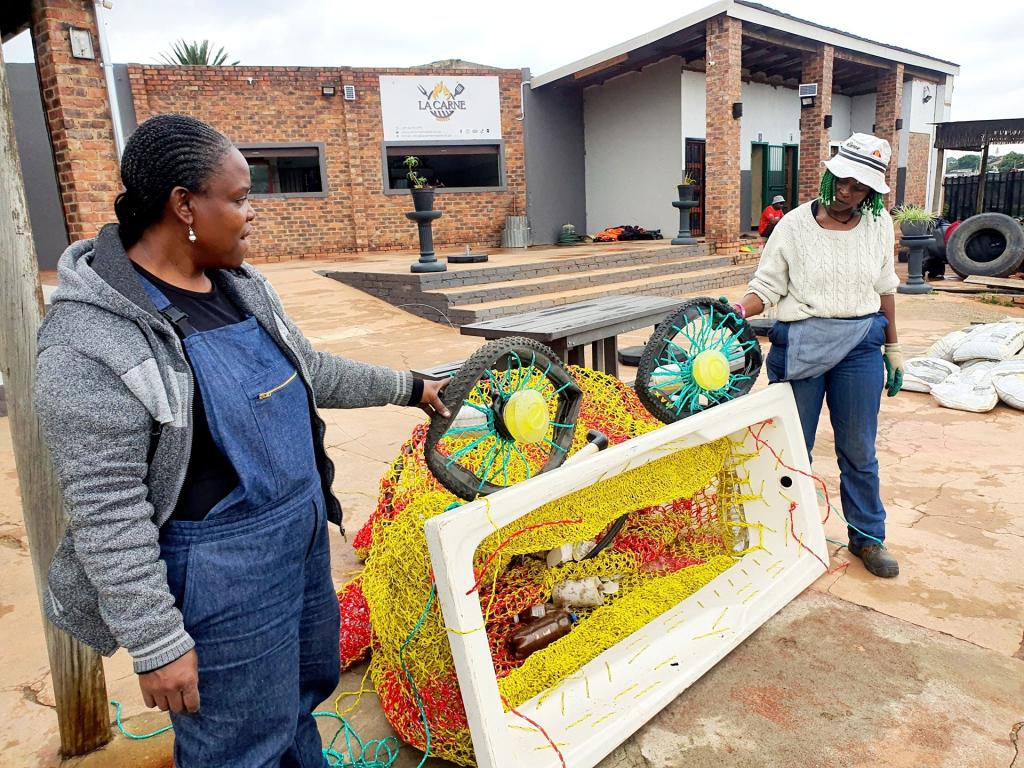
SUNCASA | Women from Alexandra Township showing an artistic litter trap made with a salvaged bathtub (Photo: Hannelie Coetzee)
Women from Alexandra working on The River Fish: A Living Litter Trap: A filter-feeding fish made with a bathtub salvaged from Jukskei (Photo: Hannelie Coetzee)

Co-Creation and Community Wisdom

But this was never just about aesthetics. It was about ownership. Before a single sculpture was built, we held community workshops—deep, messy, joyful sessions where science met tradition, and art met oral history. The participants shared stories of the river and drew their versions of river creatures. These weren’t focus groups. They were ceremonies of reconnection.

As AWW, our role was to ensure Alexandra’s voice rang loud and clear. The sculptures—Goat, Bird, Rat/Mongoose, Crab, Water Spirit—are more than creative installations. They are reflections of our lived experience and our hope.

Inclusion Is a Climate Solution

SUNCASA | Women from Alexandra making litter traps during the training sessions. (Photo: Alexandra Water Warriors)
Women from Alexandra making litter traps during the training sessions hosted by KULA Marolen Foundation. (Photo: Alexandra Water Warriors)

Of all the partners that have made this work possible, one stands out for me personally: the KULA Marolen Foundation, based in Alexandra, which trains local women to weave recyclable materials into the litter traps. They are the only organization in South Africa doing this.

For too long, women—especially in places like Alexandra—have been left out of the picture when it comes to innovation. KULA flips the script. They’ve turned waste into wages. They’ve made green jobs a reality. They’ve woven dignity into every fibre of those traps.

When I watch the KULA women work, I see more than skill: I see agency. I see mothers building futures. I see women no longer pleading to be included in the climate conversation but leading it.

A New Relationship With the River

Today, the Jukskei River feels different. Yes, the litter traps are helping. Yes, the art draws crowds. But more importantly, there’s a shift in mindset.

Children play near the sculptures and ask questions. Locals stop to take photos. Our Community Volunteers help clean and maintain the spaces. This river, once a no-go zone, has become a source of pride.

What’s unfolding here is not just adaptation. It’s restoration of land, but also of identity.
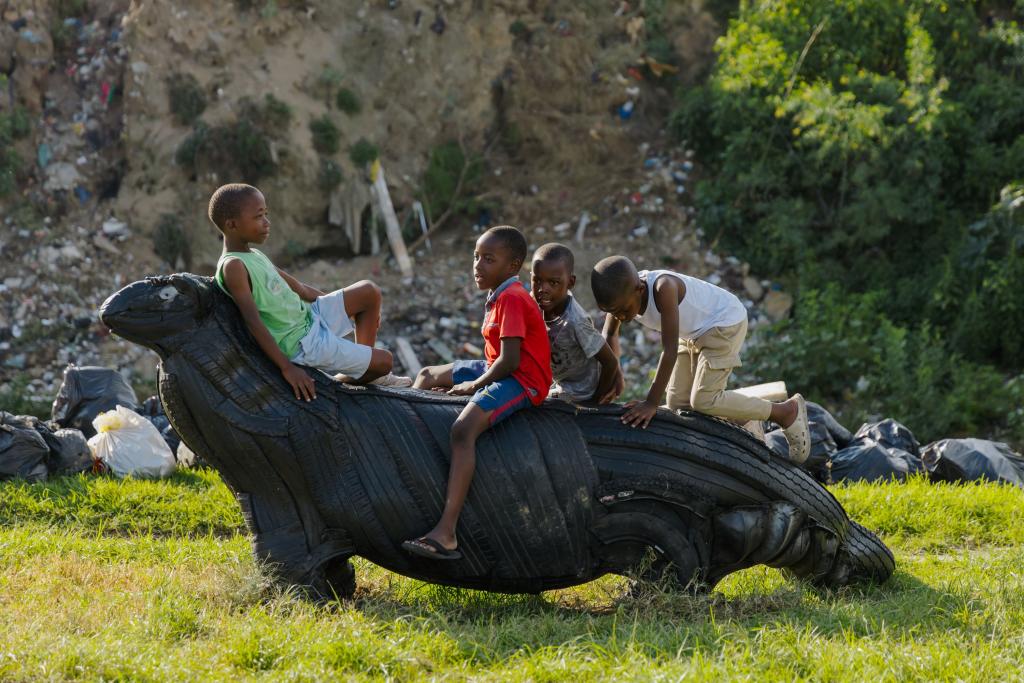
SUNCASA | Kids playing on a mongoose sculpture in Alexandra, Johannesburg.
Kids playing with the Mkhuseli the Mongoose: The Pest Controller:  Sculpted from discarded tires, the artwork highlights the role of urban wildlife.

What Does It Really Take?

People often ask: How did SUNCASA gain traction in a place as complex as Alexandra, where government often fails, where trust is fragile, where the daily struggles are so urgent that climate change can feel like a luxury concern?

The answer is simple, but not easy. Show up. Listen. Stay. Co-create.

SUNCASA didn’t come in with a “solution.” It came with humility. It didn’t ask us to adapt to it—it adapted to us. From the first workshop to the final installation, it honoured Alexandra’s knowledge, pain, and power.

It also gave us something rare in climate work: beauty. Not the polished, distant kind—but raw, rooted, joyful beauty born of collaboration.

Why Art Matters in the Fight for Climate Justice

SUNCASA | Launch of the "Art and Litter Traps" initiative in Alexandra, Johannesburg, on April 16, 2025.
Launch of the Art and Litter Traps initiative in Alexandra in April 2025. (Photo: Hannelie Coetzee)

In places like Alexandra, technical language doesn’t always land. But a sculpture? A mural? A song? Those speak in tongues we understand.

Art bypasses shame and builds connection. It doesn’t lecture. It invites. That’s why the River Creature Series worked. It gave us symbols we could love—and therefore protect.

In Alexandra, where inequality is etched into the landscape, art has become a form of resistance. It claims space. It tells us we belong. It says: We are not invisible.


A Different Kind of Future

I don’t know what the next flood will bring. I don’t know whether funding for climate projects like SUNCASA will continue. But I do know this: when people see themselves in the solution, they protect it.

When women are empowered, families are transformed. When rivers become stories, they become sacred. And when art meets activism, transformation is not only possible—it’s irresistible.

In Alexandra, we’re not just adapting. We’re rewriting the script.
One river creature at a time.
One woman at a time.
One story at a time.

And that, I believe, is how change really flows.

 Watch this video to learn more about the Arts and Litter Traps Initiative in Johannesburg.



Insight

Securing Land Rights and Women’s Participation in Land-Based Investments Is Crucial for Food Systems Transformations

Food systems must transform alongside securing land rights to ensure equity, sustainability, and empowerment—especially for women.

July 9, 2025

Food systems transformations must go hand in hand with securing land rights

Changing the way we produce, distribute, and consume food is essential to tackling many crises facing the world today—from climate change and biodiversity loss to increasing inequality, food insecurity, and malnutrition. But to bring about fair, resilient, and sustainable outcomes, these urgent food systems transformations must ensure secure and equitable land rights for communities that live on and from the land, especially for women and other historically marginalized groups. Promoting responsible and gender-responsive investments in agriculture and food systems can help achieve these critical interrelated objectives.

Inspired by our participation in the 10th Global Land Forum (GLF) in Bogotá, Colombia, last month, we reflect in this article on the important links between food systems transformations, land rights, and women’s empowerment. We propose ways that governments and other actors can promote responsible investments in agriculture and food systems that strengthen land rights and advance women’s empowerment.

The complex links between food systems, land rights, and women’s empowerment

Discussions at the 10th GLF highlighted the complex interrelationships between food systems, land rights, and women’s empowerment. On the one hand, strengthening land rights, especially for women, Indigenous Peoples, and small-scale producers, is crucial for ensuring equitable, resilient, and sustainable food systems. Women play a major role in food production globally, but are often excluded from land ownership and decision making about how land is used. Stronger land rights for women, Indigenous Peoples, and other excluded groups can support their empowerment and ensure they benefit equally from land-based investments in agriculture. Secure land tenure enables long-term investment in sustainable farming practices and is associated with better environmental stewardship and improved local food security and nutrition outcomes, especially where women are empowered. 

On the other hand, our current food systems and the market-led arrangements that govern them undermine the rights of people to live on and from the land. Industrial agriculture harms the biodiversity and ecosystems on which many communities rely for their food and livelihoods. The combination of an international investment regime that privileges foreign investors over local communities, concentrated corporate power in agricultural markets, and weak governance of land and investments in agriculture contributes to land grabs and the violation of the rights of those living on and from the land.

In many developing regions where investment in agriculture is needed to transform food systems, governance of such investments—and of land—is weak. In such contexts, large-scale investments in agriculture risk harming local communities, including by dispossessing them of their land, hindering their access to natural resources, or displacing subsistence farming and compromising household food security. They also risk reinforcing gender and other inequalities, especially where women and other groups are excluded from decision-making processes around these agricultural investments. 

In this context, it is fitting that the Bogotá Declaration both recognized the need for the urgent transformation of food systems and called for these transformations to be just, equitable, and inclusive, as well as to respect and strengthen human rights and land tenure.

Promoting responsible investment in agriculture and food systems is key to advancing just, equitable, and inclusive food systems transformations

Food systems transformation should involve or be accompanied by steps to strengthen land rights, including customary and communal rights, and advance gender-responsive land reform. Land governance should also be integrated into policy processes driving food systems transformations, including by involving participatory land-use planning, addressing impacts on land use, and ensuring tenure safeguards.

Promoting responsible investment in agriculture and food systems can also play a key role in advancing food systems transformations that strengthen land rights. Governments should strengthen the legal frameworks governing investments in agriculture, making them more robust and comprehensive by integrating recognized international principles such as the Voluntary Guidelines on the Responsible Governance of Tenure and the Committee on World Food Security Principles of Responsible Investment in Agriculture and Food Systems. Doing so can help ensure that investments in agriculture secure free, prior, and informed consent and involve the meaningful participation of affected communities and groups, including women and Indigenous Peoples; respect their rights, including customary rights; involve mechanisms, such as contract farming arrangements, that are fair and equitable; and create accountability for investors. 

Such robust legal frameworks are underpinned by comprehensive national laws governing agricultural investments, but they can also involve other complementary legal measures and tools. For example, at the GLF, IISD and partners delivered a session exploring how model agreements for responsible contract farming can be used to make contract farming fairer, more inclusive, and more equitable while advancing gender equality and women’s empowerment. Similarly, governments can use model contract templates for agricultural investments to promote investments in agriculture and food systems that are responsible, inclusive, and gender responsive. 

The importance of promoting responsible investment for inclusive and equitable food systems transformations is underscored in the Bogotá Declaration, which calls on governments, investors, and other stakeholders to promote investments that respect and strengthen land rights and tenure security, ensure benefit-sharing and meaningful participation of affected communities, and pay greater attention to women’s empowerment. 

Echoing this, we urge developing country governments and their development partners to redouble their efforts to strengthen legal frameworks to promote responsible, sustainable, and gender-responsive investments, making use of the full range of available guidance and tools to do so.

Insight

What’s Next for Climate Finance? From Seville to Belém

This blog was originally published by ODI Global


With the dust settling from COP29's hard-fought negotiations on the New Collective Quantified Goal (NCQG), attention is shifting to how the climate finance goal will be met. The challenge is how to scale up financing for increasingly connected priorities in a challenging landscape of debt stress and cuts in official development assistance.

July 9, 2025

The Fourth International Conference on Financing for Development (FfD4) in Seville offers important clues about how to continue the political momentum on the road to COP30 in Belém. The conference, which brought together world leaders, international institutions, businesses, civil society, and the UN to address financing challenges hampering sustainable development goals, for the first time meaningfully connected the FfD process to relevant UNFCCC decisions. 

It is the first time that the FfD process has meaningfully connected to relevant UNFCCC decisions. FfD4’s outcome document, the Seville Commitment, goes beyond the previous FfD outcome (the Addis Ababa Action Agenda) to meaningfully integrate climate finance within the broader development finance framework rather than treating it as a separate track. While the Addis Ababa Action Agenda acknowledged existing climate finance commitments (the $100 billion goal), the Seville Commitment actively calls for resources for implementation. This marks a significant evolution. 

Here are the five things that FfD4 achieved for climate finance:

Calling for resources for the implementation of UNFCCC decisions

The Seville Commitment features several connections to the multilateral processes for climate, biodiversity and desertification. More specifically for climate finance, it calls for 'the provision and mobilisation of means of implementation in line with the objectives and respective commitments under the UNFCCC and Paris Agreement’. This includes the contentious NCQG decision (see our thoughts here) and the UNFCCC-linked multilateral climate funds. 

This language matters. By setting the climate finance goal within the broader financing for development framework, the Commitment signals recognition that providing and mobilising financial resources to at least $300 billion by 2035 – and the scaling up to $1.3 trillion from all sources – will be linked to the discussions on international financial architecture reform and increasing mobilisation of private finance for sustainable development. 

Supporting the implementation of NDCs and NAPs  

The outcome document also calls for ‘support for the implementation of nationally determined contributions and national adaptation plans.’ Countries’ updated nationally determined contributions (NDCs), or NDCs 3.0, are due this year, and are expected to be more ambitious than the previous round, as prescribed in the Paris Agreement’s ratchet mechanism. The UNFCCC’s Standing Committee on Finance has previously estimated that developing countries’ needs in NDCs amount to US$455–584 billion per year by 2030. With NDCs 3.0 rolling in, it is possible that the estimated costs will be higher. There is a well-documented gap especially for adaptation finance needs, estimated at US$187-359 billion each year, which informed the Doubling of Adaptation Finance pledge made at COP21 that will expire this year. 

Supporting the implementation of NDCs and NAPs will require substantial finance beyond the $300 billion goal of the NCQG. To meet developing countries’ needs, there is a need for coherent financing strategies that use scarce concessional resources well but also seek to boost domestic resource mobilisation and enable climate-smart private investment.

‘Looking forward’ to the launch of the Baku to Belém Roadmap by COP30

In pursuit of the ‘scaling up’ to $1.3 trillion, the COP29 and COP30 Presidencies are developing the Baku to Belém Roadmap and report as mandated in Baku. As Brazil's COP30 Presidency has outlined to its Circle of Finance Ministers, five priority areas will shape the report expected by COP30 in Belém: MDB reform, expanding concessional finance and climate funds, country platforms to boost domestic capacity, innovative financial instruments for private capital mobilisation and strengthening regulatory frameworks.

These areas of focus are a welcome effort to address some of the key topics that shaped the NCQG deliberations. Some of these include the role of public finance: whether it should be used to de-risk and mobilise greater private investment to steer the real economy versus providing grants and highly concessional resources for climate actions with public good characteristics or less certain, monetisable returns, e.g., for adaptation. Navigating fiscal constraints in both developed and developing countries will be critical to scaling up finance for climate.

Stressing the importance of transparency in climate finance reporting  

The Seville Commitment's emphasis on transparency in climate finance reporting echoes the transparency arrangements featured in the NCQG decision. Starting in 2028, countries will produce biennial reports on collective progress, including specific reporting on enhancing access, the regional balance of climate finance and the impacts, results and outcomes of climate finance flows. The outcome document’s recognition of the importance of transparency demonstrates sustained momentum to track not just the quantity but the quality of finance flows.  

However, progress on this front will depend on what information can be collected for reporting on a wide range of sources of finance. The broad formulation of the scaling up to $1.3 trillion in the NCQG from ‘all public and private sources’ raises a relevant question of how ‘all’ private finance (mobilised, catalysed, etc.) flows might be counted. Capturing private finance flows has long been a challenge, including managing confidentiality aspects and approaches to make this information consistent (i.e. measuring the same thing), standardised (i.e. to the same unit, including time unit) and aggregated for assessment. 

The road to Belém

By acknowledging wider challenges – from high costs of capital to unsustainable debt levels – the Seville Commitment reflects a growing political awareness of the structural reforms needed to respond to the climate and biodiversity emergencies. How to get to the trillions needed will require coordination at several levels. 

The scale of the needs required gives us a sense of the challenge ahead, but current figures have limited practical use for supporting the mobilisation of finance at country level. Estimates must go beyond abstract investment needs and incorporate cost of capital considerations, ultimately moving towards detailed investment plans and sophisticated financing strategies to match different sources and instruments. These should be designed in ways that minimise costs and acknowledge respective constraints for both public and private actors.

How countries translate the Seville Commitment into action will vary based on national circumstances. Success requires policy frameworks that send clear, reliable signals to financial market participants – signals that promote financial resource mobilisation. Countries can design policy packages tailored to their specific needs and priorities, drawing from tools across fiscal policy, financial regulation and both monetary and non-monetary measures. By taking into account a joined-up perspective of their financing needs, national policies and sustainable development objectives, countries can reduce uncertainty for investors and strengthen efforts to attract and deploy sustainable finance. 

Just four months remain until the next COP. The road to COP30 and the delivery of the ‘Baku to Belém Roadmap to 1.3T’ will depend on whether the recognition of climate in the broader development framework leads to enhanced coordination or adds another layer of complexity to an already challenging landscape.

Insight details

Insight

The Compromiso de Sevilla and the Challenge of Financing Development: A reality check

As the dust settles in Seville, we look at where the conference made real progress, where it falls short, and the road ahead.

July 4, 2025

The Fourth International Conference on Financing for Development (FfD4) wrapped up yesterday. On day one, countries adopted the Compromiso de Sevilla, a year-long negotiated outcome aiming to close the widening gap in financing the Sustainable Development Goals. While the withdrawal of the United States highlighted deepening geopolitical fault lines, the agreement nevertheless signals that multilateralism remains possible, though shaped by compromise and the constraints of lowest-common-denominator consensus.

Though clearly present, the broader geopolitical dynamic often remained beneath the surface in discussions—perhaps due to time constraints demanding a forward-looking focus. Still, the conference carved out important space for deep, cross-cutting conversations on development finance. It was a rare chance to bring together voices from tax, debt, trade, and private finance, breaking down silos and sparking new ideas on how these tools can work hand in hand on the ground.

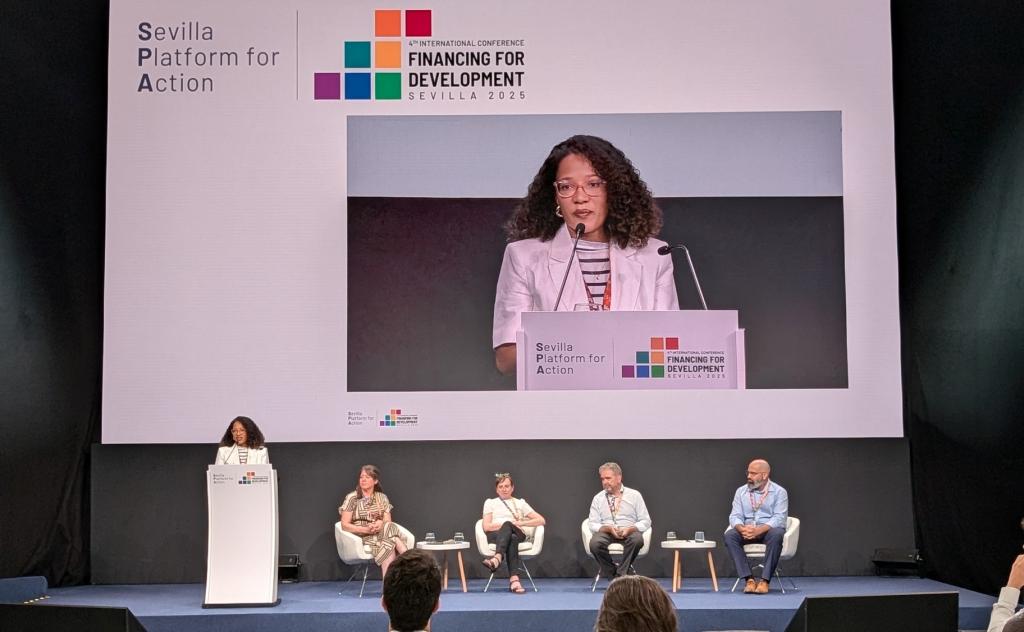
Elisangela Rita on the podium in the FfD4 conference hall

Domestic Resource Mobilization: A priority to bridge the aid gap?

Domestic resource mobilization (DRM) emerged as a priority at FfD4, with many countries viewing raising money at home as a necessary and pragmatic response to shrinking aid budgets.

Development partners pledged to collectively double DRM support to developing countries by 2030. A success was the call to increase taxation of natural resources, highlighting the significant revenue potential for resource-rich developing countries where extractives remain a major, but often under-taxed sector.

Tax expenditure reform also gained traction in Seville, with countries calling for greater transparency and oversight in how governments report tax benefits granted to companies. On the sidelines of the conference, IISD and partners launched the Global Coalition for Tax Expenditure Reform, a practical effort to turn those demands into action. The initiative is already endorsed by Brazil, France, Guinea, Nigeria, Rwanda, Senegal, Spain, and the United Kingdom.

African countries and G77 delegates also reaffirmed strong support for the UN Framework Convention on International Tax Cooperation, emphasizing the need for more inclusive and equitable global tax rules, a topic we’ll explore in depth in an upcoming webinar and report.

Despite these advances, the absence of a clear commitment to phase out fossil fuel subsidies is a major setback, representing a regression from the Addis Ababa Action Agenda.

It must also be noted that tax reforms alone won't close the gap and could risk deepening financial vulnerabilities if not balanced with growth in export revenues. Multilateral action—on debt relief, export growth, and targeted grant financing—still matters, and arguably more than ever.

Alexandra Readhead speaking on an FfD4 side event panel

Debt: Steps forward but no systemic relief at FfD4

Debt featured prominently throughout FfD4, with mounting fiscal pressures on development front and centre. The Compromiso stresses enhanced transparency, consolidated principles on responsible borrowing and lending, and improved data exchange, acknowledging that effective debt management hinges on coordinated action between creditors and debtors. At the conference, the “Borrowers’ Forum” was launched, a new platform to boost coordination among debt-distressed nations, amplifying their voice in global financial governance.

The conference also promoted state-contingent debt clauses to suspend payments during climate crises, helping build fiscal resilience in vulnerable countries going forward.

Such practical proposals can indeed support countries facing debt vulnerabilities. Calls to strengthen and systematize liquidity support—including through a proposed facility within existing institutions like the World Bank or International Monetary Fund—and efforts to improve the G20 Common Framework, including proposals to make it more predictable, inclusive and timely, also point to incremental progress.

However, they cannot replace a much-needed systemic response. Without a comprehensive solution, many heavily indebted countries will continue to have limited fiscal space and face weak external positions, struggling to finance their development priorities. Such a comprehensive initiative has not been adopted at the conference. In side events in Sevilla, IISD introduced the Debt for Resilience Initiative (D4R), a proposed framework for reforming the international debt architecture.  

Trade: FfD4 falls short on bold commitments

Countries in Sevilla tackled wide-ranging trade issues but stopped short of agreeing on a clear direction regarding the most difficult questions concerning international trade policies. The Compromiso contains no real commitment to the conclusion of the World Trade Organization negotiations, on fisheries subsidies and agriculture, which would help the trade system deliver for sustainable development.

It does, however, point to important practical steps to help developing and least developed countries benefit from international trade. Particularly important is the commitment to enhance capacity building for governments to engage effectively in international trade negotiations.

With Sevilla now behind us, governments should look at how they can build trade, both in practice and policy, more effectively into their development cooperation strategies. In a period of real uncertainty in the global economy, this is a moment to build resilience and sustainability, not just efficiency, into trade's contribution to development.

Looking Ahead

FfD4 demonstrated that multilateralism still works —through compromise and despite pressure. The real test now is delivering on the agreements reached, even if they fall short on some expectations. With technical consensus on many important reforms, the focus must shift to turning commitments into concrete policy action over the coming decade.

Insight

Why Coordinated Withdrawal From the Energy Charter Treaty Remains Essential for Effective Climate Action

June 28 marked a pivotal moment for European climate governance, as the European Union officially withdrew from the outdated Energy Charter Treaty. While the withdrawal represents a major milestone, it also sheds light on the complexities and risks created by the treaty's fragmented legal landscape.

June 30, 2025

Last weekend marked a pivotal moment for European climate governance: on June 28, the European Union and Euratom officially withdrew from the Energy Charter Treaty (ECT). While this withdrawal represents a major milestone, it also sheds light on the complexities and persistent risks created by the ECT's fragmented legal landscape. 

Now more than ever, states still bound to this outdated treaty should recognize that coordinated withdrawal remains the most pragmatic and legally sound path forward. 

A Fragmented and Risky Landscape

The ECT has long been controversial. Originally intended to promote energy investment, it has instead become notorious for facilitating investor–state dispute settlement (ISDS) claims against states pursuing ambitious climate and energy policies. Over recent years, countries like Germany, France, and the United Kingdom, alongside the EU itself, decided to leave the ECT, recognizing that reform was inadequate to align the treaty with climate imperatives. 

Yet despite these clear signals, some states have so far remained party to the treaty, attempting to rely on the "modernization" package finalized in December 2024. However, IISD's analysis shows that the so-called "modernized" treaty leaves open critical loopholes that could allow fossil fuel investors to challenge climate action and does not provide sufficient space for governments to pursue fossil fuel phase-out policies. 

Further complicating matters, the ratification of this modernization is already proving complex and uncertain. Some states have provisionally applied the reform, while others—including Belgium, Switzerland, and Japan—have chosen not to. Further, no state seems to have formally ratified the reform at the time of writing. This leads to a patchwork of coverage where different treaty standards apply simultaneously both within and outside the EU. Such a scenario makes legal outcomes unpredictable and could undermine ambitious climate and energy transition policies across borders, further underlining that unified withdrawal from the treaty remains the only viable option. 

EU Law – Adding More Complexity 

For EU member states especially, these complexities intersect with critical issues of compliance with EU law. In its landmark Komstroy judgment (2021), the European Court of Justice declared that ISDS between EU investors and EU member states under the ECT is incompatible with EU law. However, despite this unequivocal ruling, investment arbitration tribunals continue to entertain ISDS claims, directly contradicting EU law and creating mounting legal conflicts. It remains to be seen whether a 2024 declaration and more recent agreement among the member states will change this tendency. 

In addition, payment by EU member states of damages awarded in ISDS awards has been deemed unlawful under EU state aid rules, further highlighting the legal risks for states that remain in the ECT. Simply put, continued adherence to the ECT in any form places EU member states in difficult legal positions. 

A Coordinated Withdrawal: The viable path forward 

In response to these mounting risks and complexities, states must pursue a clear and coordinated approach. Withdrawal from the treaty remains the simplest, most viable, and climate-aligned option available. 

Withdrawal alone does not fully neutralize the treaty’s problematic legacy due to the ECT’s notorious "sunset clause," which protects existing investments for an additional 20 years after exit. Addressing this problematic clause should be an immediate priority, which can be achieved through strategic legal actions, including collective interpretation and a so-called inter se modification among withdrawing states. 

IISD's recently published Model Inter Se Agreement provides a blueprint for how states can collectively neutralize the sunset clause. Such an agreement could complement the EU’s internal clarification that the ISDS provision in the ECT does not (and never did) apply to intra-EU investment disputes—and thereby substantially reduce long-term legal risks and enhance policy space for decisive climate action. 

Urgent Call for Concerted Action 

With the EU and Euratom having now exited the treaty, other states should seize this moment to re-evaluate their positions. The current fragmented situation is legally uncertain, politically untenable, and unmanageable. Some states provisionally apply the reform, some don’t, and some reject modernization altogether. It risks entrenching legal unpredictability precisely when clarity and decisiveness are needed most. 

It is time for all remaining ECT parties to choose clarity and ambition over complexity and stagnation. A coordinated withdrawal, coupled with a carefully designed inter se agreement among departing states and complementing the EU's internal efforts, would offer more clarity, minimize legal fragmentation, and empower states to pursue bold climate and energy transitions without fear of harmful ISDS claims.

Insight

FfD4 Countdown: The 4th International Conference on Financing for Development must move beyond GDP

The upcoming International Conference on Financing for Development (FfD4) in Seville comes amid global conflicts, rising debt, and deepening inequalities. At the heart of these challenges lies an outdated measure: gross domestic product (GDP). FfD4 offers a chance to rethink this approach and shape a financial system that prioritizes well-being, dignity, and resilience.

June 20, 2025

The world is set to gather in Seville, Spain, from June 30 to July 3, with the opportunity to chart a new path for global development financing. The 4th International Conference on Financing for Development (FfD4), which is taking place one decade after FfD3 in Addis Ababa, Ethiopia, will convene at a critical juncture for sustainable development finance. 

The need to reform the international financial system has never been greater. Global conflicts, climate change impacts, rising debt and deepening inequalities, declining official development assistance, and stalled progress on the Sustainable Development Goals (SDGs) have created obstacles for even the best-laid plans of finance ministries. At the heart of these challenges lies an outdated measure: GDP. GDP is still the dominant metric for assessing development progress and determining eligibility for financing. However, its singular focus on economic output fails to account for crucial dimensions of well-being, such as environmental sustainability, social inclusion, and economic equity. 

FfD4 presents an opportunity to move beyond GDP and reshape financial frameworks to reflect what truly matters: the well-being, dignity, and resilience of people and the planet, now and in the future. By advancing the Beyond GDP approach in decision making, FfD4 can contribute to the redirection of global financial flows toward more inclusive, sustainable economies, realigning development financing with the core principles of the 2030 Agenda.

Why is relying on GDP problematic for development finance?

In Seville, national representatives will gather to discuss global financing for development, including reform of the international financial architecture and mobilization of investments to help accelerate progress on the 2030 Agenda for Sustainable Development and its 17 SDGs.

Central to this discussion is a long-overdue reassessment of GDP as the primary measure of progress on sustainable development. GDP continues to shape how resources are allocated and which countries qualify for development financing and debt relief. Yet, it offers a narrow view and excludes critical aspects of sustainable development, such as environmental sustainability, social inclusion, and equitable growth.

The need to move beyond GDP and adopt complementary measures of progress must remain front and centre at FfD4. An FfD4 commitment to “advance the process on measures of progress on sustainable development that complement or go Beyond GDP,” as agreed in the Pact for the Future, matters because continued reliance on GDP alone misguides financing decisions, perpetuates short-termism, and fails to capture the social, environmental, and intergenerational dimensions that underpin true progress. FfD4 can be a pivotal milestone for the global community—not just in recognizing the need for complementary and alternative metrics to GDP but also in committing to bold and practical reforms. Only by embedding Beyond GDP principles into national and international policy frameworks and mechanisms can the global community ensure that financial flows and investments are truly aligned with sustainable development for present and future generations. 

Why is it crucial for FfD4 to embrace the Beyond GDP agenda?

UN Secretary-General António Guterres has described our overreliance on GDP as a “glaring blind spot in how we measure economic prosperity and progress.” Governments have also committed to urgently addressing the shortcomings of GDP under the Pact for the Future, which was adopted at the UN Summit of the Future, by developing a framework for measuring sustainable development progress alongside recommendations for a limited number of country-owned and universally applicable indicators that complement and go beyond GDP. 

To advance this work, the Secretary-General appointed a High-Level Expert Group on Beyond GDP. This group is tasked with producing concrete recommendations by the end of 2026 to guide countries and institutions on how to measure sustainable development progress more comprehensively. The group is tasked with producing concrete recommendations by the end of 2026 to guide countries and institutions in measuring sustainable development progress more comprehensively. 

Integrating the Beyond GDP agenda into FfD4 could have far-reaching impacts. It would influence how countries access financing and debt relief, how resources are prioritized both nationally and globally, and how development progress is tracked and evaluated.

Embedding the Beyond GDP agenda in the FfD4 outcome is essential for realigning global financial flows with the true drivers of human and planetary well-being. It helps ensure that financing for development supports not just economic growth but also equity, sustainability, and resilience, now and for generations to come. 

What does the draft outcome document say? 

The first draft of the FfD4 outcome document emphasizes that the new financing for development agreement comes at a time of “profound transformation, rising geopolitical uncertainty, and growing systemic risks” (Section I, para.3). It highlights the growing political momentum for measuring and monitoring progress on sustainable development using metrics that go beyond GDP (Section III, para 33). It also underscores the necessity of considering complementary measures to move beyond GDP in order to inform the design, implementation, and practices of existing policies, as well as development cooperation policies, including access to concessional financing (Section II, para. 31, q.). 

Beyond critical access to financing and rethinking economic and financial systems, a major shift in mindsets is required to enable the transformative change that the world urgently needs. 

What challenges and opportunities lie ahead?

Currently, the global community has limited experience with broadly applicable measures beyond GDP that are country-owned and used to inform policy design and investment prioritization. While various indicators have been developed and tested by international agencies—including comprehensive wealth by the World Bank, inclusive wealth by the UN Environment Programme and UN Conference on Trade and Development, the Index of Sustainable Economic Welfare (ISEW) introduced by Daly and Cobb (1989), Oxford’s Multidimensional Poverty Index (MDPI), and Inclusive Growth by UNCTAD—their integration into national policy-making remains challenging. 

Recent studies showcase the potential for adopting alternative indicators at the national level. This includes the International Institute for Sustainable Development’s application of comprehensive wealth in Ethiopia, Indonesia, and Trinidad and Tobago; efforts to support national well-being indicators by the Organisation for Economic Co-operation and Development; and initiatives on natural capital accounting in countries including Ghana and the Philippines. These studies demonstrate that with capacity building and peer-to-peer support, it is possible to create country-owned indicators to complement GDP, providing a more accurate and holistic picture of national well-being and sustainability beyond GDP. However, translating these measures into long-term policy and investment decisions remains challenging as governance systems are focused on short-term GDP growth. Both governance systems—how decisions are made—and actual policy and investment choices require greater support and capacity building to help countries design policies and prioritize investments that shift their development pathways toward long-term sustainable development.

Some critical and specific contributions of Beyond GDP efforts, as outlined in the first draft of the FfD4 Outcome Document, can be operationalized relatively easily and provide significant benefits to countries. These benefits include using Beyond GDP approaches to select policies and investments and to track progress in development efforts. By leveraging the Beyond GDP agenda, countries can prioritize development policies, practices, and implementation efforts in areas such as education, social protection, infrastructure, and natural capital management. In this context, support systems can be established to reinforce social contributions aimed at achieving well-being-based social protection, rather than solely focusing on income improvement. This approach offers a more holistic understanding of development and underscores the importance of a broader set of investments in well-being. 

Beyond GDP efforts can also contribute to monitoring progress in sustainable development using metrics that extend beyond GDP. Given the numerous international initiatives and the recent recommendation by the Economic Commission for Latin America and the Caribbean to collect data and monitor progress on issues relevant to the Beyond GDP agenda, the recommendations from the High-Level Expert Group on Beyond GDP could be implemented using existing databases and monitoring efforts.

For this transformation to be truly effective, the perspectives of young people and the needs of future generations must be central to the development of innovative financial frameworks.

Youth perspectives on sustainable development and its financing are—and have always been—essential to promoting environmentally sustainable practices, social innovation, and creative economies. Efforts such as the Beyond Lab’s Youth Moving Beyond GDP initiative, which aims to create inclusive and transformative engagement of young people on the issue, will be central to FfD4. 

Where do we go from here?

FfD4 presents a critical opportunity to embed the Beyond GDP agenda across the financing framework—from how resources are accessed to how progress is measured. For successful integration, countries will require sustained support to collect, enhance, and apply data that capture all three dimensions of sustainable development. This includes using Beyond GDP indicators to guide decision making and direct investments toward initiatives that promote social equity, environmental sustainability, and long-term resilience. 

To move from ambition to action, FfD4 must deliver a clear mandate for countries to integrate alternative approaches to GDP in national and international policy frameworks. It must also establish ongoing funding and capacity building for national statistical offices to establish mechanisms that align financial flows (both public and private) with outcomes that support social and environmental well-being, not just economic growth as captured by GDP. Institutionalizing civil society and youth engagement in the design, implementation, and monitoring of Beyond GDP frameworks will ensure that policies reflect the realities and aspirations of both present and future generations. 

FfD4 is an opportunity to reimagine how we measure and finance progress. By moving beyond GDP and institutionalizing alternative frameworks, we can build economies that truly serve humanity and the planet, now and for generations to come. The time has come to finance what counts, value what matters, and leave no one behind.

Insight

Micro-Agrivoltaics: Hiding in plain sight

As India explores the promise of agrivoltaics, small and marginal farmers are cultivating crops beneath solar panels without formal support or mainstream recognition.


Researchers at the International Water Management Institute-Tata Water Policy Program (ITP) argue that this under-recognized practice of ‘Micro-Agrivoltaics” is a powerful opportunity to scale clean energy while boosting agricultural productivity and deserves greater attention and systematic study. 

June 17, 2025

There is growing interest in expanding and mainstreaming agrivoltaics in India. The Ministry of New and Renewable Energy (MNRE) recently helped organize 100 farmer-awareness workshops around the country’s flagship PM-KUSUM scheme, where the potential for agrivoltaics was among the key themes of discussion. The Indian Agricultural Research Institute (IARI) has now launched a Centre of Excellence for research into agrivoltaics and related themes. Meanwhile, the National Academy of Agricultural Sciences (NAAS) convened a brainstorming session and published a policy paper,  Agrivoltaics for Sustainable Crop and Energy Production, urging the Ministry of Agriculture and Farmers’ Welfare (MoAFW) and MNRE to craft a joint National Agrivoltaics Policy.

Innovative research and on-ground pilots are multiplying, showcasing promising business models that can be scaled. At the same time, private sector and renewable energy developers are also signaling strong interest in expanding agrivoltaics deployment.

Taken together, these developments underscore the significant enthusiasm surrounding agrivoltaics as a pathway to help scale solar deployment while supporting India’s farmers and agriculture sector. However, one dimension remains largely overlooked by key stakeholders and policymakers: “micro-agrivoltaics”.

The biggest appeal of agrivoltaics is dual land use—for solar energy generation and agriculture. In fact, some have argued that under certain conditions, and for certain crops, agrivoltaics can improve agricultural incomes. Small and marginal farmers, used to squeezing livelihoods from stamp-sized land parcels through intensive irrigation and multiple cropping, intuitively grasp this benefit. Many have installed small solar plants to run irrigation pumps and continued farming beneath the panels. These ‘live agrivoltaics pilots’ have largely remained unstudied. In this article, we highlight key findings from a small telephonic survey undertaken by ITP in north Bihar.

Over the past decade, solar irrigation has grown substantially—from less than 5,000 solar pumps in 2010-11 to more than 800,000 by 2024-25. Most of them have deployed (relatively) small capacity solar panels on farmers’ fields—primarily with the objective of powering irrigation. While the dominant practice is to fence off the land parcels where solar panels are deployed, some farmers have chosen to deviate from the norm. During our field visits in north Bihar, we found several farmers extending their cultivation underneath solar panels. Intrigued by this practice, we decided to initiate a quick assessment.

In 2024, ITP commissioned a phone survey of 162 farmers who were irrigating their crops using solar pumps. Of the farmers interviewed, 70 reported cultivating some crops underneath solar panels. The practice of cropping under solar panels was driven by small land holdings and extreme land fragmentation. The crops ranged across tomatoes, brinjal, chilli, ginger, carrot, cucumber, garlic, peas, lady finger, turmeric, cauliflower, and other leafy vegetables. While some reported doing this for just over a year, several had been practicing this for 3 years. One interviewed farmer shared 8 years of experience cultivating crops under solar panels. Findings show:

  • Only 10% of the farmers practicing ‘micro-agrivoltaics’ believed that cultivating crops underneath solar panels would hinder crop growth.
  • Except in the case of cherry tomatoes, farmers did not report any change in the density of crop cultivation underneath solar panels vis-à-vis open field cultivation.
  • About a third of the interviewed farmers thought that crops grown underneath solar panels require less irrigation and that the shading improved soil moisture retention.
  • The best yield improvements were reported for chilli, ginger, turmeric, tomatoes, brinjal, and leafy vegetables.
  • 25% of the micro-agrivoltaics farmers reported no change in crop yield under solar panels; 35% reported marginally higher yields; while 40% reported significantly higher yields under solar panels (>20% higher).

India’s roughly 25 million minor irrigation structures represent a large irrigation economy dominated by pumps in the hands of millions of small farmers. Collectively, solarizing the minor irrigation economy offers a potential for deploying about 200 GWp of solar—and if the Bihar survey is any indication, these could support hundreds of MWp of micro-agrivoltaics.

Although our sample was small, the survey was semi-structured, and sampling was based exclusively on convenience, the results point to the need for a more systematic investigation of the impact and potential of micro-agrivoltaics. ITP intends to build on this work in 2025 through a more systematic study of this promising 'grassroot innovation’ that has been hiding in plain sight.

Insight

Flooded Cities, Missed Opportunities: Why Ghana’s hybrid infrastructure approach could be a model for climate resilience

As flood risks rise across West Africa’s cities, public budgets are struggling to keep up. In Ghana’s Sekondi-Takoradi, a new economic valuation shows how investing in nature through restored wetlands and green spaces can deliver measurable returns for resilience.

June 10, 2025

Sekondi-Takoradi, a coastal city in Ghana’s Western region, is no stranger to the impacts of climate change. Recurrent flooding has become a persistent threat, regularly damaging infrastructure and disrupting daily life. Rapid urbanization has weakened the city’s natural defences, including wetlands and green areas. In response, the Sekondi-Takoradi Metropolitan Assembly (STMA) has proposed a hybrid infrastructure plan that integrates engineered drainage improvements with nature-based interventions, such as wetland restoration, green corridors, and urban gardens. This approach is gaining global recognition but remains overlooked in funding decisions due to the difficulty of quantifying its full benefits. 

To address that challenge, the Nature-Based Infrastructure (NBI) Global Resource Centre, in collaboration with STMA and the Covenant of Mayors in Sub-Saharan Africa (CoM SSA), conducted a full economic valuation of the city’s hybrid flood resilience plan. 

Avoided flood damage and reduced maintenance costs

The valuation compared a business-as-usual scenario to a hybrid infrastructure scenario, accounting for both direct and indirect effects using spatial modelling, cost-benefit analysis, and climate projections to calculate the full social, environmental, and economic impacts of the interventions over 26 years.

Results show that for every dollar invested, Sekondi-Takoradi could generate between USD 3.26 and 13.53 in returns, depending on the flood economic valuation method. The largest share of benefits comes from avoided flood damage, estimated at USD 747 million under the high-valuation scenario. In addition, reduced infrastructure maintenance costs, thanks to less frequent and less severe flood damage, add another USD 19 million in savings.

The hybrid scenario also delivers the following broader economic and environmental outcomes:

  • 76.85% internal rate of return, far exceeding typical public investment thresholds and demonstrating substantial value for money;
  • increased water retention and reduced flood damage, lowering recovery costs and improving climate resilience;
  • greater carbon sequestration, contributing to national mitigation goals and long-term climate targets;
  • improved air quality and health outcomes through enhanced green cover and reduced pollution;
  • increased land and property values, especially in flood-protected zones, boosting local tax revenues and private sector interest; and
  • local job creation and skills development through the construction and maintenance of nature-based and grey infrastructure systems.

How to compare green and grey on equal terms

The results indicate that NBI can compete economically with grey alternatives—if evaluated using appropriate tools that consider the economic value of externalities. For Sekondi-Takoradi, this insight helps prioritize projects and refine funding proposals. 

"We know that NBI can protect our communities, and with this report, we now have concrete data to guide our decisions and make a stronger case to investors that it is not only effective but also cost-efficient,” says Hon. Fredrick Faustinus Faidoo, Mayor of Sekondi-Takoradi.

But the implications go further. Many West African cities face similar challenges, including how to build climate-resilient infrastructure without overextending limited budgets. This assessment provides a replicable method to assess the full value of hybrid solutions, making it possible to weigh nature-based and grey infrastructure options on equal footing.

By capturing both avoided costs and broader societal outcomes, system-based valuation equips planners with the tools they need to justify long-term, resilience-focused investments.

Moving forward

This case highlights a broader need for decision-makers to look beyond upfront costs and consider the long-term value of interventions, especially those that reduce future risks. Recommendations include the following:

  • Municipal governments should incorporate full-system valuation into planning processes to identify investments with the highest long-term value.
  • National climate and infrastructure strategies should formally recognize hybrid infrastructure approaches for urban resilience and include guidelines for assessing their economic case.
  • Funders and development partners should support or require valuations that account for avoided losses, ecosystem services, and long-term benefits.

The cost of inaction is already measurable. What’s needed now is for governments, funders, and project planners to make nature-based and hybrid infrastructure the default, not the exception. 

Read the full report on Sekondi-Takoradi’s hybrid infrastructure valuation here.

Insight

What NDCs 3.0 Are (and Aren’t) Saying About Fossil Fuel Production

The third generation of national climate plans is expected to act on the 28th UN Climate Change Conference (COP 28) commitment to transition away from fossil fuels. But are fossil fuel-producing countries rising to the challenge?

June 6, 2025

The Paris Agreement was designed so that countries submit national climate plans known as nationally determined contributions (NDCs) every 5 years. Subsequently, a collective assessment of progress known as the global stocktake reviews the NDCs for their consistency with Paris Agreement goals. The outcome of the global stocktake feeds into the next generation of NDCs.

The first global stocktake resulted in a landmark agreement at COP 28 in 2023 on “transitioning away from fossil fuels in energy systems, in a just, orderly and equitable manner.” This deal was especially welcome given that meeting Paris Agreement goals requires governments to plan for a managed phase-out of fossil fuel production. In 1.5°C-aligned scenarios, coal production declines by 95% by 2050, and oil and gas production declines by at least 65% by 2050 and up to 100% in some pathways.

This year marks a pivotal moment in climate action, as countries are meant to submit their third-generation NDCs (NDCs 3.0). So far, 24 countries have already done so. These new NDCs 3.0 should respond to the outcomes of the global stocktake—but are they rising to the challenge? Specifically, do the submitted NDCs confront the imperative to transition away from fossil fuels, particularly as it relates to fossil fuel production? We focus on production here due to the imperative to reduce production to meet Paris Agreement goals, but demand reduction and substitution are equally important to include in NDCs.

Reducing emissions from production is not enough

The good news first: 10 out of the 16 fossil fuel-producing countries who have submitted their NDC 3.0 mention fossil fuel production—a clear majority. In addition, three countries that do not produce fossil fuels mention fossil fuel production: the Marshall Islands, Moldova, and Uruguay (which has oil and gas exploration). Acknowledging the central cause of climate change is a good start. 

The bad news: Most references to fossil fuel production—7 countries out of 10— focus on reducing emissions from production (e.g., during extraction or processing), rather than phasing down production itself. In addition, one country, Ecuador, highlights measures to adapt fossil fuel production infrastructure to a changing climate, such as putting pipelines underground to avoid landslides. The United Arab Emirates’ NDC goes into detail on how its oil and gas sector will use carbon capture, utilization and storage technology, end routine flaring, reduce methane emissions, and electrify operations to mitigate emissions. The United States’ NDC, similarly, mentions regulations to reduce methane emissions in the oil and gas sector. 

While reducing production emissions is important, it does nothing to address Scope 3 emissions—those resulting from the downstream combustion of the fuel, which are by far the largest component of fossil fuel emissions. A better approach would be to set quantitative targets for reducing fossil fuel production altogether.

No new licences, no new public financing

There are some good examples that countries can emulate. The United Kingdom’s NDC states that it will undertake consultation on halting new oil and gas licences to explore new fields. The science is clear that there is no room for new oil and gas fields, or new coal mines, in a 1.5°C world. Ending the issuance of new exploration licences is a critical step toward ending new fields altogether. 

Another good example is the reference in Canada’s NDC to its ending of new direct public support for the international unabated fossil fuel energy sector. Ending international public finance for fossil fuels is essential to transitioning away from fossil fuels.  Canada is a member of the Clean Energy Transition Partnership, signatories of which have reduced their fossil fuel international public finance by two thirds.

Economic diversification and just transition

Other good examples countries can draw on relate to economic diversification and just transition to reduce fossil fuel dependency. Canada’s NDC, for example, references its Canadian Sustainable Jobs Act and Sustainable Jobs Training Fund, which aim to ensure that workers and communities have the necessary tools and support to thrive in a net-zero economy. Similarly, the United Kingdom’s NDC says the government will accelerate the delivery of an Energy Skills Passport to support oil and gas workers in transitioning to renewable energy. The United Arab Emirates’ NDC notes that the country has prioritized economic diversification, with the non-oil sector’s share of GDP increasing from 30%–40% in the 1970s to around 75% today, including hospitality, real estate, industry, construction, and transportation. 

International cooperation

Perhaps the most interesting examples of discussion of fossil fuel production in NDCs relate to international cooperation. Kenya’s NDC states that to forego “the benefits of exploiting her fossil fuel resources,” “significant compensatory international support will be required.” 

International alliances are also mentioned. The Marshall Islands notes its membership in the Beyond Oil and Gas Alliance and the Powering Past Coal Alliance, while calling on fossil fuel producers “to act with the same ambition” and “collectively plan a just, fair and orderly transition away from fossil fuels.” 

Finally, Brazil’s NDC states that Brazil would “welcome the launching of international work for the definition of schedules for transitioning away from fossil fuels,” with “developed countries taking the lead.” Could this be a clue as to what Brazil is aiming for at COP 30? Brazil’s NDC is notably less forthcoming on how the country itself plans to transition away from fossil fuel production, however.

What’s next? 

NDCs 3.0 are a timely opportunity for fossil fuel-producing countries to include information and commitments relating to fossil fuel production. This can increase the transparency and clarity of their targets, as well as catalyze international momentum toward policies and support schemes to limit or wind down fossil fuel production. With more than 100 NDCs 3.0 still to come by the end of the year, countries should not let this chance pass them by.

At minimum, countries should commit to no new exploration licences for coal, oil, and gas, and to phase out fossil fuel subsidies. They should also put forward quantitative targets to reduce or phase out fossil fuel production and use, with countries that have the highest capacity to transition taking the lead in line with common but differentiated responsibilities and respective capabilities. 

Finally, NDCs should provide a pathway for ending public financial support for fossil fuels, including production. Subsidizing fossil fuels and other forms of public financial support is the opposite of “transitioning away.” Only 4 of the NDCs 3.0 mention fossil fuel subsidy reform. All NDCs need to include a roadmap for aligning public spending with the phase down of fossil fuels: anything less is insufficient to truly transition away from fossil fuels.

Correction: The original article stated that 3 of the NDCs 3.0 mention fossil fuel subsidy reform. The correct number is 4.

Insight

FfD4 Countdown: Vulnerable countries need access to sufficient climate finance, but it must also be tailored to their needs

The 4th Financing for Development Conference, scheduled for July 2025, presents a critical opportunity to advance climate financing for developing countries, while recognizing their unique needs, circumstances, and capacities.

May 23, 2025

As climate change impacts communities, ecosystems, and economies globally, the need for countries to efficiently mobilize finance for their climate change priorities is increasing.

The 4th International Conference on Financing for Development (FfD4), where countries will agree on the agenda for development finance for the next decade, presents a key opportunity to address these needs. As mentioned in the first draft of the conference’s outcome document, it is critical that developing countries, especially those highly vulnerable to the impacts of climate change, receive sufficient finance for mitigation, adaptation, and resilience building.

However, the current text does not sufficiently recognize that countries’ circumstances are highly specific. Their needs and priorities vary greatly, depending on their geographic, political, and economic contexts and the level of climate risk they are exposed to. This calls for a more tailored or, in some cases, phased approach that will allow countries to truly build resilience and effectively access the resources necessary to adapt to the changing climate.

Why Is It Crucial for FfD4 to Address Sources of Climate Finance?

According to the Intergovernmental Panel on Climate Change, approximately 40% of the global population now lives in areas highly vulnerable to climate change impacts. There is an urgent need to accelerate the implementation of the countries’ adaptation priorities, but insufficient finance remains one of the main barriers. According to the UN Environment Programme, the adaptation finance gap is estimated to be between USD 194 billion and USD 366 billion per year for developing countries.

Relying solely on public international funding will not be enough to ensure that countries’ adaptation priorities can be implemented, especially given the current decline in global development aid. Countries therefore need to look across diverse domestic, international, public, and private options for climate finance.

Some developing countries may not currently be in a position to increase domestic resources for adaptation finance or attract private sector investments. In this case, a phased approach may be needed to increase the mobilization of other sources of adaptation finance.

Developing countries, especially those highly vulnerable to climate change impacts, also need to access sufficient and adequate finance for adaptation and resilience building through mechanisms that do not exacerbate their debt burdens.

Financial instruments must be tailored to the specific national circumstances of developing countries, especially in least developed countries (LDCs), which often face significant challenges in creating conditions for the successful implementation of innovative financial instruments for climate change adaptation.

What Is Currently Missing in FfD4’s Approach to Climate Finance?

The text currently being discussed commits to ensuring that “developing countries that are particularly vulnerable to the adverse impacts of climate change receive sufficient climate finance to support mitigation, adaptation and resilience-building.” It mentions a range of financing instruments, including carbon finance, risk insurance, debt swaps, and climate resilience funds, that should respond to countries’ needs and priorities and help build capacity. 

However, the text uses the word “receive,” which seems contradictory in the context of using instruments like carbon finance, which usually implies mobilizing climate finance within developing countries themselves. The draft also overlooks the fact that the appropriateness of these instruments can vary based on countries’ national circumstances and capacities, not just their “needs and priorities.” To effectively scale up the use of innovative financial instruments for climate change adaptation and mitigation in LDCs, for example, a tailored approach might be needed to identify the most appropriate instruments for each national circumstance. For instance, high levels of debt and institutional weaknesses make it difficult for LDCs to issue catastrophe bonds, and the absence of appropriate regulatory frameworks and market infrastructure hinders the implementation of biodiversity credits. Establishing a carbon credit market also requires strong compliance mechanisms, including independent emissions evaluations, strict enforcement, and transparent regulators, which require significant capacity and public investment. 

The draft recognizes the importance of scaling up climate finance from all public and private sources. However, it does not sufficiently recognize that some countries, due to their specific circumstances, depend heavily on official development assistance and other forms of external aid to finance their adaptation needs. This dependency makes them vulnerable to fluctuations in international aid and changes in donor priorities. 

LDCs face unique challenges in mobilizing domestic finance for adaptation due to narrow fiscal bases, high poverty rates, and weak tax systems. Additionally, they are often unattractive to private sector investors due to perceived high risks stemming from weak regulatory frameworks, political instability, and underdeveloped financial markets. A phased approach is needed to address these issues through securing international public finance while progressively increasing domestic resources and private sector investments. Strengthening institutional capacity, improving fiscal and regulatory systems, and creating incentives to de-risk private investments are essential steps in this process.  

What Should Countries Agree on at FfD4?

  • If the focus of the text is on ensuring sufficient climate finance is available for vulnerable developing countries instead of being received from developed countries, we suggest changing the wording from “receive” to “have access to” or “secure” sufficient climate finance.
  • As the appropriateness of these instruments can vary based on countries’ national circumstances and capacities, and not just their “needs and priorities,” we suggest adding “via the appropriate financing instruments.... that can adequately respond to their national circumstances, needs, and priorities....”
  • Lastly, to further reflect that each country’s needs are specific, we recommend adding that we “acknowledge that “a tailored and phased approach may be required to help developing countries effectively mobilize sufficient climate finance.”
     

Insight details