Insight

From Depletion to Regeneration: Redirecting agricultural subsidies is crucial for promoting healthy soils

Healthy soils are key for sustainable food systems and climate resilience. We need to redirect agricultural subsidies from harmful chemical inputs to regenerative practices.

November 3, 2025

Healthy soils are critical for productive, sustainable, and climate-resilient food systems. They act as carbon sinks and aid mitigation by sequestering greenhouse gases. They also help build resilience to increasingly erratic weather patterns by providing a source of moisture for crops during dry spells and draining excess water more efficiently during heavy rains. 

Healthy soils are also critical for biodiversity. They provide habitats and food sources for animals and other organisms, including the soil microbes that cycle the nitrogen needed to support plant growth. This, in turn, boosts the productivity of soil ecosystems, resulting in more productive, resilient crops with a higher nutritional value. Boosting crop productivity and resilience through improved soil health also reduces the need for the application of chemical inputs, which can help lower emissions from food systems and mitigate risks to human health.

And yet, despite the multiple benefits offered by investing in improvements to soil health, many countries continue to provide subsidies that incentivize agricultural practices that degrade our soils, such as the use of chemical fertilizers. Such subsidies are generally introduced to promote agricultural productivity, boost food and nutrition security, and reduce rural poverty. However, subsidies incentivizing the use of chemical inputs often result in negative trade-offs in terms of soil health, which can in turn result in lower yields and nutritional quality of crops, threatening the livelihoods and incomes of farmers.

With governments worldwide struggling with increasingly constrained public finances, optimizing subsidies to improve soil health, without compromising productivity, is imperative. Identifying which subsidies incentivize harmful practices, understanding the scale and scope of these, and redirecting them to more sustainable and regenerative practices can help governments deliver better results with increasingly scarce public resources. 

Depending on the country context, this could involve redirecting subsidies toward practices that support improved management of soil nutrients and organic matter, such as incentivizing the use of organic inputs, as seen in countries such as Germany. It could also involve subsidies to incentivize practices that improve soil cover and diversity, such as integrating trees with crop and livestock farming systems to reduce soil erosion, boost soil fertility, and increase carbon sequestration. Brazil’s Low Carbon Agriculture Programme, for example, redirects subsidies toward regenerative practices, such as crop-livestock-forest integration and the restoration of degraded pastures. 

Soil Health Moves up the Policy Agenda

At the recent Africa Food Systems Forum in Senegal, participants heard from sub-Saharan African governments that are turning their attention to the link between subsidies and soil health. The Government of Malawi, with support from the World Bank, is implementing a series of soil health pilots to address challenges posed by soil health degradation. With over 40% of soils in Malawi classed as nutrient poor, and 75% of soils classed as degraded, Malawi is one of the sub-Saharan African countries most impacted by soil degradation. In response, the government is implementing a series of pilots, offering incentives to farmers for adopting sustainable practices intended to help boost soil fertility, boost productivity, and improve food and nutrition security. A range of approaches are being piloted, including payment for environmental services schemes. 

Kenya faces similar challenges, with soil erosion, nutrient depletion, and high levels of both soil acidity and salinization negatively impacting yields and food security in recent years. The government is now revising its agricultural subsidy system to better support soil health, guided by the Agricultural Soil Management Policy (2023), which addresses the link between fertilizer use, sustainable land management, and improvements to soil health.  

The role of reorienting agricultural subsidies to incentivize more sustainable practices also featured in international climate conversations this summer, underscoring growing international recognition of the need to align public budgets with sustainable development objectives. At the United Nations Framework Convention on Climate Change Standing Committee on Finance Forum held in Rome in September 2025, participants heard how the Colombian national development bank, in partnership with UNDP-Biofin, identified which subsidies were incentivizing practices driving deforestation and—with a focus on key value chains such as coffee and cocoa—began providing incentives instead for practices such as agroforestry. 

Repurposing agricultural subsidies and incentives was also recognized as a critical lever for food systems transformation at New York Climate Week.  At various sessions during the week, conversations highlighted how subsidies can drive change and improvements to soil health by encouraging farmers to adopt agroecological and regenerative practices instead of relying on agrochemical inputs. However, discussions also noted that scaling the impact of these practices requires an improved understanding of not only the climate and environmental benefits associated with investing in soil health, but also the socio-economic benefits, including yields, farmers' incomes and food security.

These discussions highlight growing consensus among a range of stakeholders at the regional and global levels on the critical role that repurposing agricultural subsidies can play in driving the transition to sustainable food systems, including through enhancing soil health. From Colombia to Malawi, governments are beginning to link agricultural subsidies and incentives to practices that deliver a range of climate, environmental, and socio-economic benefits. 

Moving Beyond Talk to Advance Reform Efforts

The International Institute for Sustainable Development (IISD) has identified a series of actions needed to advance efforts to redirect subsidies toward agricultural practices that boost soil health and deliver on a range of sustainable development outcomes:

  1. Define the problem: We need to better understand the scale and scope of harmful subsidies at a country level—how much is being spent, which practices are having harmful impacts on soil health and where, and what is the true cost of these negative impacts? For example, Target 18 of the Global Biodiversity Framework requires all countries party to the UN Convention on Biological Diversity to map and analyze existing subsidies to determine the extent to which they can be considered as potentially environmentally harmful. IISD is analyzing national reform targets for environmentally harmful subsidies under Target 18 and will provide methodological recommendations for how these can be strengthened in the future.
     
  2. Identify solutions: We need to identify policy solutions and a suite of potential reform options for how public money can be spent in ways that better deliver on enhancing soil health, among other sustainable development objectives. Through ongoing research work, IISD is examining how countries in East and Southern Africa are aligning agricultural subsidies with policies and practices aimed at enhancing soil health, with a view to identifying useful lessons or best practices which can help governments design or reform agricultural subsidy regimes that support a better balance between economic growth and environmental stewardship.
     
  3. Build political will and identify policy windows for action: Political support can grow gradually or shift suddenly—sometimes sudden events such as a budgetary crisis or an election can put subsidy reform on the government agenda. What we do know is that for sudden political shifts to result in successful reform, the groundwork of problem definition and solution identification needs to be done in advance. We need to be ready to act when the opportunity presents itself. This could include, for example, targeted engagement and outreach with farmers on the reform of subsidies in line with relevant policy windows to co-create practical approaches to subsidy reform together with farmers, including creating safe spaces for conversation about reform and targeted communications that amplify farmers’ voices in the call for subsidy reform. In December 2025, IISD is holding a round-table discussion in Nairobi, bringing together a range of stakeholders involved in, or impacted by, agricultural subsidy reforms linked to soil health in Kenya. This discussion, together with prior IISD work on the role of sustainability standards in improving soil health, lays the foundation for forthcoming work on soil health at the East Africa-regional level in the coming years.

Investing in soil health is not only an environmental imperative, but an economic and a social one too. Momentum is growing, both domestically and internationally, behind reforming agricultural subsidies to support soil health. Turning this momentum into action will require improved data and analysis, science-backed policy solutions, and political will to ensure public budgets are sustaining rather than depleting our soils. 

Insight

Biodiversity Credits in Canada: Why trust, clear rules, and Indigenous leadership are critical

Canada has a chance to design a credible, Indigenous-led biodiversity credit market, but only if integrity and rights come before market expansion.

October 30, 2025

Biodiversity credits are emerging as a potential tool to direct more funding toward protecting and restoring nature. Unlike offsets, which aim to compensate for environmental damage, credits are designed to generate measurable, net-positive biodiversity outcomes.

To explore how this idea could be applied in the Canadian context, the Nature Investment Hub and the International Institute for Sustainable Development co-hosted a round table with Canadian experts. The discussion highlighted both the opportunities and the practical challenges associated with developing a credible and effective biodiversity credit market in Canada.

Three themes stood out clearly from the conversation: ensuring market integrity, centring Indigenous leadership, and recognizing the role of regulatory signals in creating stable demand.

"Growth in the nature finance market is hampered by a lack of clarity on what different financial instruments can credibly achieve and at what scale. This session affirmed that the biodiversity credit market is nascent, but huge innovation potential can be catalyzed if we are willing to have honest conversations about inclusive benefits and leadership from Indigenous people, and learn lessons from mis-steps in the carbon market,” says Priya Bala-Miller, managing director of the Nature Investment Hub. 

Insights summarised here represent collective views of the session participants and should not be solely attributed to either IISD or the Nature Investment Hub. 


1. Market integrity is essential for credibility.

One of the main obstacles to scaling biodiversity credits is the lack of common standards and metrics. Currently, there is no unified approach to measuring biodiversity outcomes, which hinders confidence in the market. Experiences from carbon markets, including concerns about greenwashing and weak verification, were widely referenced by participants as lessons learned.

There was broad support for developing harmonized metrics and assurance mechanisms that can ensure consistency across projects and help identify risks early. Storytelling and flexible accounting methods are practical tools that can better capture the complexity of ecological outcomes without oversimplifying them.

2. Indigenous leadership is a precondition for a credible market.

Indigenous Peoples play a critical role in protecting biodiversity across Canada. At the round table, participants underscored that Indigenous leadership is not simply a principle—it is a practical requirement for building an effective market.

Indigenous communities are already developing their own biodiversity credit standards, often challenging conventional market concepts such as “additionality,” which can overlook long-standing stewardship. Ensuring that Indigenous peoples can lead standard-setting and governance processes, rather than being brought in later as partners or implementers, is essential to a legitimate and lasting system.

Supporting Indigenous-led standard development can also help Canada avoid some of the credibility and equity issues seen in other environmental markets.

3. Policy and regulation can help create stable demand.

The discussion also addressed the role of regulatory signals in shaping the future of biodiversity credit markets. Voluntary markets can help build momentum, but they may not deliver the scale needed to meet biodiversity goals on their own.

Take the example of the Department for Environment, Food and Rural Affairs Biodiversity Net Gain regulation in the United Kingdom, which requires developers to deliver a 10% net gain in biodiversity. This policy has quickly created demand for biodiversity credits and associated projects.

While Canada’s land governance context is different—particularly due to Indigenous rights and the extent of public land ownership—regulatory clarity could help de-risk investment, attract more capital, and provide a stable foundation for market development.

“There is already strong momentum on the supply side, with many biodiversity credit pilots underway. To match that, a project-based approach that introduces a mandatory market like the UK's Biodiversity Net Gain could be a logical next step to bring biodiversity into development projects,” says Albert Letting, senior policy advisor at IISD.

Moving Forward: Fast action, deliberate design

Advancing biodiversity credits in Canada will require moving on two tracks at once:

Quick Wins

  • supporting Indigenous-led pilot projects
  • accelerating action in provinces with enabling policy conditions
  • using communication strategically to build confidence among capital providers and communities


Deliberate Groundwork

  • clarifying jurisdictional issues
  • ensuring fair and inclusive benefit sharing
  • establishing voluntary disclosure and assurance standards that build trust over time

Aligning biodiversity credit efforts with related policy areas, such as green skills, innovation, and conservation planning, is critical to success and will help to develop a more coherent approach.

Read the session readout


Insight

What You Need to Know About World Trade Organization Reform

The multilateral trade system centred on the World Trade Organization (WTO) is under enormous pressure, as the global order becomes multipolar and as governments’ trust in liberalized trade gives way to more intervention in economies. IISD’s Alice Tipping walks us through how the system has evolved so far—and why its reform agenda offers a critical chance for countries to more deeply rethink the rules of global trade.

October 30, 2025

Institutional reform is the headline item at the WTO’s 14th Ministerial Conference (MC14) in March 2026. Most people outside Geneva do not believe the organization has evolved at all since it was established in 1994. Change has happened, but in the form of partial, ad hoc fixes. When faced with irreconcilable disagreements, creative diplomats have developed workarounds for blockages. But we are reaching the limit of what workarounds can accomplish.

The current system of rules is facing growing pressures—from the immediate shock of recent U.S. tariff policy to impacts from long-term forces such as climate change, technological advances, and intensifying power competition. Both sets of pressures mean governments are realizing that relying on whoever is most globally competitive to provide them with the goods and services they need through an efficient global market may not be enough to meet society’s needs. 

The WTO reform agenda is an opportunity for members to prepare an evolutionary leap for the organization, a leap that involves resetting some of the rules within the WTO’s system of treaties.

Working with workarounds

To take a step back, first, let’s look at how the organization has evolved. When some members refused to discuss climate change in the Committee on Trade and the Environment, sub-groups of members launched plurilateral initiatives, including the Trade and Environmental Sustainability Structured Discussions, to give themselves a space to talk about a wider range of environmental issues. These initiatives have prospered, and interestingly, seem to be facilitating discussions of these same topics in formal multilateral committees. The lesson being that the WTO’s deliberative function can expand to cover discussions that subsets of members think are important. 

The question of how new rules can be developed at the WTO is the most vexed of all the issues in the WTO reform agenda.


A workaround was also built to manage apparently irreconcilable differences in the WTO’s dispute settlement system. The WTO’s compulsory, binding multilateral system of dispute settlement is currently blocked from issuing binding decisions because of U.S. concerns that the system was overreaching. The workaround developed was the Multi-Party Interim Appeal Arbitration Arrangement. For its 58 members, accounting for almost 60% of global trade, the Multi-Party Interim Appeal Arbitration Arrangement restores the binding nature of the dispute settlement system. So, to that extent, the workaround works well.

This means the WTO’s dispute settlement system has bifurcated based on members’ preferences: multilateral (currently non-binding) vs. plurilateral (binding). Members could make the workaround permanent by amending the multilateral system so that dispute decisions are no longer binding. Or they could hang onto the bifurcated system in the hope that those who do not want binding dispute settlement one day change their minds. The decision above will eventually need to be tackled as part of the WTO reform process, not least because pressure is building for the renegotiation of some of its rules. If members do develop new rules, it will need to be clear whether and how those new rules are binding. 

The question of how new rules can be developed at the WTO is the most vexed of all the issues in the WTO reform agenda. Over the last few years, members who have wanted to negotiate rules on new topics (e.g., e-commerce and investment facilitation) have not been able to secure multilateral agreement to these negotiations. So they went ahead anyway, and have now agreed “plurilateral” texts of treaties on both topics that would apply among themselves. They have asked for agreement from all other members to have the treaties incorporated into the WTO’s legal framework, but several members remain opposed.  

This is where one of the most high-profile WTO reform issues comes up: the question of whether the principle of decision making by consensus—the obstacle preventing the plurilateral treaties above from being incorporated into the WTO legal framework—should be dropped or adjusted. The WTO rules allow for voting, but this still seems to be a Rubicon that members are not willing to cross. If members want consensus to remain the WTO’s key decision-making process, in order to include new rules in the WTO rulebook, they will need to work out how members who are blocking new rules can move forward. This is a conversation that all members who are committed to a healthy multilateral system should be prepared to have. If the cost of getting agreement is too high compared to the value of the new rules on the table, however, that conversation will remain stuck. One way out of this situation is to put more on the table, in the form of new rules or changes to old ones. It seems that this bigger negotiation, involving some new rules and changes to old ones, is where domestic and international politics and economics are taking us anyway. 

Are the 1994 rules still appropriate?

With apologies to reams of economic literature for the following simplification, the WTO agreements struck in 1994 reflect the assumption that an efficient global market was the best way to ensure a steady supply of all the goods and services societies needed (or wanted). They also assume that a government’s job is to enable its businesses to exploit their comparative advantage through trade so that consumers have enough money to buy everything they need (or want). For countries with very limited productive capacity, this may have always been a false promise. What has changed is that the pressures of the last 10 years have made all governments, including those with considerable productive capacity, look again at that assumption. 

As the 21st century looks more and more like a 2-degree world riven by geo-strategic competition, we need a new conversation about what interventions make sense for the common good, and which do not.


Some pressures have been sudden and violent. The COVID-19 pandemic made it clear that, overnight, large parts of the global market could simply grind to a halt. The Russia–Ukraine war woke Europe up to the danger of depending on a hostile power for energy. The United States’ aggressive approach to trade policy shows that the global market can be warped, suddenly and massively, by one powerful individual. Governments are responding by diversifying their trade relationships and by building politically reliable, rather than just economically reliable, supply chains. 

Other pressures have been building for decades. The scale of the Chinese government’s investments in education and infrastructure, and its direct involvement in the private sector, have left many businesses in the rest of the world feeling that they are competing not with Chinese counterparts, but with the Chinese state—and frequently losing. Many developed and developing country governments have become more interventionist to avoid complete dependence on a manufacturing giant they do not entirely trust. Those with the money compete with subsidies. Those without the money compete with local content requirements import or export restrictions in an effort to build local capacity.  

The other long-term pressures, which require a response beyond what the market can provide, are technology and climate change. Adapting to and mitigating climate change requires changes to economies that governments need to lead. In doing so, governments also want their own businesses to benefit from the growth of the new low-carbon economy. Simultaneously, data is becoming a key resource endowment, with processing capacity shaping a country’s ability to add value, both to services and to physical goods. Where data describes the behaviour of individuals or critical national systems, governments can and should shape how that information can be used.  

The risk here is that governments might, over the years, honour their WTO commitments more in the breach than in the observance as they increasingly intervene in their economies to achieve climate, security, or employment priorities. So far, most are trying to stay within the neo-liberal lines drawn in 1994, but as the 21st century looks more and more like a 2-degree world riven by geo-strategic competition, we need a new conversation about what interventions make sense for the common good, and which do not.

Working through issues, rather than around them

The next evolution the multilateral rules-based trading system needs may not be another workaround, but a reset of the rules governing how governments can intervene to shape trade. Subsidies to agricultural and non-agricultural products should be on the list, as should digital services and trade-related investment rules, import and export restrictions, and other topics. Many of these ideas have been floated in the WTO reform agenda discussions already. A reset could involve tightening some rules and loosening others. It also does not mean questioning everything; commitments to non-discrimination, transparency, and predictability should always be central to a system of rules, though there may be room for clarification. 

Ideally, a reset would skirt philosophical debates about what special and differential treatment for developing countries means and instead deliver practical progress. It could focus on issue-specific technical solutions of the kind we have seen in WTO agreements so far, from the Trade Facilitation Agreement to the draft additional provisions to the Fisheries Subsidies Agreement. A reset might or might not mean a new set of binding agreements; guidelines that governments actually follow are better than treaties they don’t. 

Multipolar multilateralism

An active renegotiation of the most sensitive of WTO rules is not going to start immediately. The major players (the United States, the European Union, India, and China) have to want to have the conversation, and they may feel the transitional phase we seem to be in, between one global order and another, is the wrong moment to bind their hands. They might be right. But the long-term pressures are not likely to go away. We are headed for a multi-polar world, and we will need a multi-polar approach to multilateralism to manage it. This means conversations both between the large players and among large, medium, and small players about the rules to play by. The alternative is to build a new set of rules through messy state practice involving resource-draining competition, where cooperation would have been possible, and a slowing of climate action when what we need is the opposite.

A conversation that builds a collective understanding of the changes underway, the pressures governments are under, and opportunities for collective action is the best way to prepare for the next evolutionary leap the WTO needs to make.


In the short term, governments will have to respond to immediate pressures; transparency and consideration between trading partners will help minimize further erosion of trust. In the medium term, what we need is an honest conversation, based on evidence from a range of sources about the choices and trade-offs of different trade policies. The WTO’s deliberative function has demonstrated that it has the flexibility to accommodate such a discussion, but forums and evidence-gathering of the kind IISD provides will be needed too. A conversation that builds a collective understanding of the changes underway, the pressures governments are under, and opportunities for collective action is the best way to prepare for the next evolutionary leap the WTO needs to make. MC14 is a good moment for ministers to begin to have that more honest conversation and to sketch the outlines of the work officials need to do to prepare for real agenda-setting decisions when the time is right.

Insight

“I Am a Tree”: Students Bring Climate Awareness to Life Through Creativity

In Kigali, Rwanda, youth are taking the lead in climate action by turning dance, drama, poetry, visual arts, and even fashion into powerful platforms for environmental awareness. Gender and Climate Resilience Specialist Rita Nishimwe has witnessed the impact of these young people firsthand and shares what goes into a “youth movement.”

October 2, 2025

What if the next generation of environmental changemakers weren’t in a conference room, but in a vibrant space of learning and creativity? In Kigali, Rwanda’s capital city, this vision is becoming a reality through a powerful youth-led initiative called Green City Clubs. Blending environmental education with art, community, and leadership, these school-based clubs are not only planting trees—they’re sowing the seeds of long-term change among students, parents, teachers, and surrounding communities.

Led by the Rwanda Young Water Professionals (RYWP) and supported by the Scaling Urban Nature-based Solutions for Climate Adaptation in Sub-Saharan Africa (SUNCASA) Project, the Green City Clubs are an inclusive, community-driven initiative already established in 17 schools across Kicukiro, Gasabo, and Nyarugenge Districts.  

On June 5, 2025, to mark World Environmental Day, Green City Clubs organized a student-powered environmental competition hosted at Group Scolaire Kimisagara School in Nyarugenge district. The event wasn’t just a celebration; it was a revelation.

Under the theme “Igiti Cyanjye, Nkurane Na Cyo,” or “My tree, I grow with it,” students turned ideas into action. Over 100 students from ages 9 to 18 participated in an array of creative activities: a poetry slam, singing contests, a dancing contest, drawing exhibitions, and a nature-themed fashion show. The school yard buzzed with music, energy, and connection. 

Two students present an artwork to a group of their peers. The piece depicts a city full of greenspace.
Celebrating creativity: students showcase a winning artwork at the Green Clubs environmental competition. (Photo: Rwanda Young Water Professionals)

Behind it all was the RYWP team, who not only coordinated the event but also reimagined what climate education could look like. It was clear that to truly engage young people, they needed more than another lecture—it had to be a vibrant, lived experience.

Working closely with school staff, RYWP introduced creative categories based on how students best express themselves. The impact was instant. In front of an audience of 1,500 students, the performers made clear that climate change is not only a scientific issue, but an experience shared by communities everywhere.

 “I am a Tree”: The power of performance

One phrase echoed again and again throughout the competition: “I am a tree.

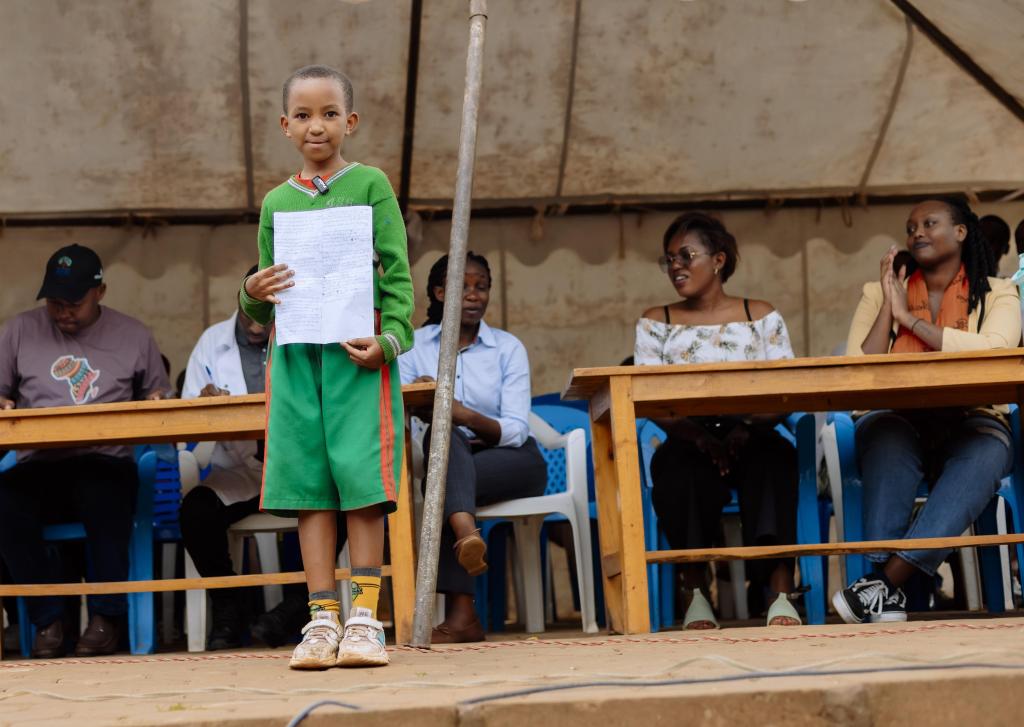
In song lyrics, poems, and spoken word performances, students imagined themselves as trees—leading, inspiring, and teaching. One student recited a poem called “Let Me Tell You About My Beautiful Tree,” giving voice to a tree that offered shade, fruit, beauty, and life. 
 

A young student stands on a stage holding a piece of paper and looks into the camera.
A young poet reciting “Let Me Tell You About my Beautiful Tree,” captivating the audience with emotional storytelling. (Photo: Rwanda Young Water Professionals)

Another student presented a drawing titled “Don’t cut me, I am your friend,” portraying trees kneeling to humans, hands extended in peace, begging not to be cut down. One dance performance paired students as tree roots and branches, showing the interconnection between nature and humanity.

These were not just creative choices—they were emotional statements. By embodying trees, students made us feel the pain of nature. That kind of empathy stays with you.

Many students carried on with their art and awareness projects after the event ended, without any prizes to motivate them. The message had truly taken root. 

A student holds a microphone and points to an artwork, explaining its message to his peers.
A student displays a drawing titled “Don’t cut me, I am your friend,” portraying trees pleading for preservation. (Photo: Rwanda Young Water Professionals)

Students Take the Lead

One of the defining principles of the Green City Clubs is that students are not just participants: they are leaders.

Each club established a leadership committee, including president, vice president, event coordinator and secretary. These roles come with responsibility. Students organize meetings, design activities, and mobilize their peers. They choose which environmental projects to pursue, from setting up recycling stations to planning tree-planting drives. This is not just about school credits—these students are taking responsibility for their environment and showing others the way.

At Kimisagara and other schools, students brainstormed original songs, sourced materials for costumes made of leaves and bark, and even wrote scripts about environmental justice. Given the space to lead, students led boldly. This approach flipped the traditional dynamic. Instead of adults teaching kids, it became a mutual learning journey; students educating communities, parents, and even government officials through their projects.

Inclusive Engagement 

By fostering genuine representation and fairness, the Green City Clubs did more than teach sustainability—they brought it to life, showing students how inclusion and climate action go hand in hand.

From the outset, gender equity was a priority. Each club election ensured balanced representation, resulting in 17 girls and 16 boys elected to leadership roles in all 16 schools engaged under the Green City Club Initiative. Two students with disabilities were also elected, ensuring that environmental action is accessible for all.
 

A student presents a dress to a group during a fashion show.
Students perform at a nature-themed fashion show in the Green Clubs competition. (Photo: Rwanda Young Water Professionals)

Moreover, participation in competitions and club activities was intentionally gender inclusive. From fashion showcases featuring both boys and girls in traditional eco-outfits, to poetry and dance duets, the project highlighted a truth often overlooked: everyone has a role to play in protecting the planet.

As one student poet boldly stated on stage, “A tree doesn’t choose who to shade, it protects all of us.”

Behind the Scenes

While students were the stars, none of this would have been possible without the steady support of school focal persons from each participating school.

They were with the students every day, organizing logistics, keeping schedules on track, making announcements, helping with rehearsals, and ensuring everything ran smoothly.

From coordinating club launches to setting up competition stages, focal persons were the project’s silent champions. They helped integrate the clubs into school life without disrupting academics, ensuring both educational quality and project success.

Perhaps more importantly, they became mentors, encouraging student creativity, celebrating small wins, and holding space for young leaders to grow.
 

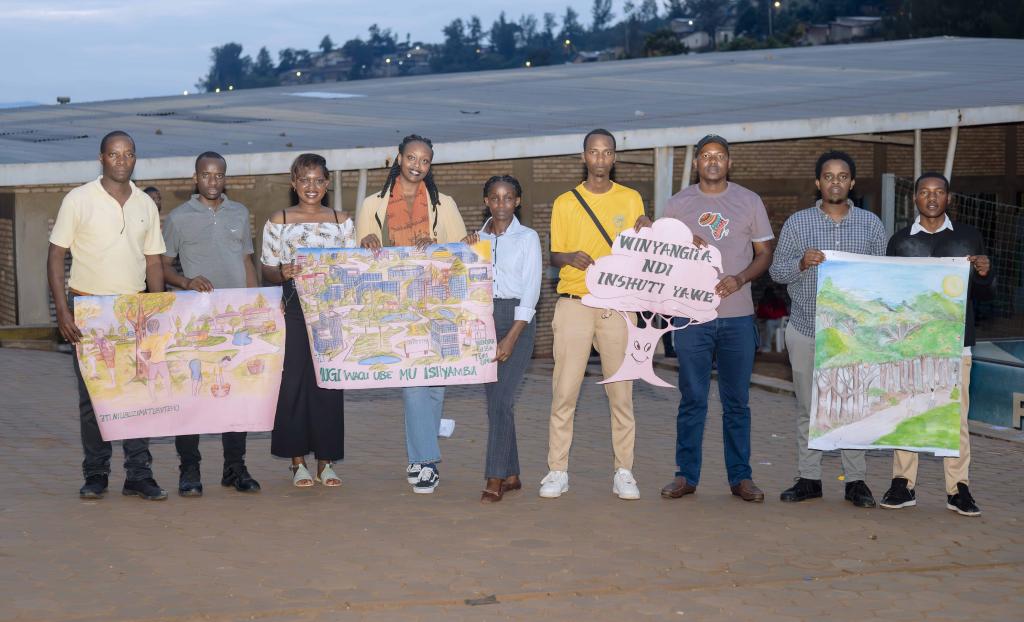
Nine people stand and pose for a photo. They hold up artwork to the camera in pairs.
Rwanda Young Water Professionals team and school focal persons coordinating the competition setup at Kimisagara. (Photo: Rwanda Young Water Professionals)

What’s Next for Green City Clubs?

Building on the momentum of the environmental competition, the Green City Club's journey is now entering an exciting new phase of hands-on environmental action and strategic growth. 

In the months ahead, all the participating schools will plant trees, a cornerstone of the club's practical impact. Through the “Grow With Your Tree” care and monitoring campaign, students will take responsibility for the tree's health and survival, learning how to nurture green life from the ground up. It's a long-term commitment to environmental stewardship rooted in accountability and care. 

Additionally, the success of the environmental competition has sparked a growing interest in continued creative expression. More schools are now preparing for follow-up poetry, art, and performance showcases, providing platforms for students to express messages about climate change and the environment through talent and imagination. 

Three students perform a dance for a group of their peers.
Students perform a dance during the Green Clubs competition. (Photo: Rwanda Young Water Professionals)

Beyond awareness, the clubs are expanding into student-led recycling programs and school greening projects. These initiatives empower learners to address everyday environmental challenges in schoolyards, from waste separation to the creation of eco-friendly zones. Perhaps most excitingly, the team is now working on a Green City Club toolkit, a practical guide designed to help more schools and students replicate the model. 

The vision is bold and clear: create a national network of youth climate champions who are not only aware of the environmental issues but fully equipped to inspire and to lead the response.


Insight

In Adapting to Climate Change in Canada, We Overlook Governance at Our Peril

As the weather cools, media attention on the need to prepare for climate change in Canada is waning as well. However, the federal government must remain committed to ensuring climate change adaptation actions and investments are taken forward.

September 29, 2025

Once again, many Canadians spent this summer seeking relief from excessive heat and humidity, being displaced by wildfires, or worrying about the risk of flash flooding and hail. As the impacts of climate change increasingly intrude into our daily lives, taking steps to reduce near- and long-term climate risks becomes more urgent. 

Canada does have a strategy to help us anticipate and manage the consequences of climate change. Canada’s National Adaptation Strategy (NAS), released in 2023, outlines a whole-of-society approach to safeguarding communities and preparing our economies to cope with worsening climate risks. Its release was a significant milestone in Canada’s efforts to prepare for climate change. It brought Canada in line with other Organisation for Economic Co-operation and Development countries (at last), and we demonstrated global leadership by including concrete targets and putting equity and environmental justice at the strategy’s core. 

Unfortunately, as highlighted in a report by the Commissioner of the Environment and Sustainable Development (CESD) released in June, the design and implementation of the strategy have significant weaknesses. 

In his report, Commissioner Jerry DeMarco drew attention to a disconnect between the most critical climate risks facing the country, such as the health impacts of wildfire smoke, and the objectives and targets of the NAS, pointing out that there is no formal system to regularly (re)assess these risks and update the strategy. 

The report also highlighted gaps for measuring progress, monitoring effectiveness, and reporting on outcomes, and cited challenges with the federal action plan supporting implementation of the strategy. In short, the report pointed to shortcomings within the governance system for climate change adaptation in Canada. 

But as Canadian summers are increasingly marked by oppressive heat and unhealthy air quality, with wildfires displacing thousands and impacting the health of millions, why should we be concerned by these weaknesses? 

Simply put, inclusive governance enables us to manage climate risk more effectively. While not always visible, strong governance arrangements play a vital role in changing systems and building resilience at scale. 


Climate impacts are pervasive, cutting across different sectors like health, infrastructure, and agriculture. Adapting to climate change is also context-specific, and the long timeframes and uncertainty can strain political will and accountability systems that are focused on short-term results. The absence of an effective governance system can therefore lead to a patchwork of disconnected programs and initiatives that may duplicate efforts, not target the areas of greatest need, and potentially even contradict one another. 

In contrast, according to the Intergovernmental Panel on Climate Change, policies and instruments that clearly articulate goals, assign roles and responsibilities, and are implemented in a coordinated and inclusive manner result in better adaptation outcomes. 

This is something we can achieve here in Canada. 

For one, we need to enhance the NAS’s system for tracking and assessing progress toward its objectives. We need a framework that includes timely progress reporting and indicators that are strategy-specific, SMART (Specific, Measurable, Achievable, Relevant, and Time-bound), and represent all of society. 

Greater clarity on roles and responsibilities among the five leading departments, Environment and Climate Change Canada, Natural Resources Canada, Health Canada, Public Safety Canada, and Housing, Infrastructure and Communities Canada, along with improved coordination of actions, would also advance progress. These actions need to be backed by strong senior-level leadership and commitment. 

Communities across Canada are calling for increased investment in much-needed adaptation actions like improved emergency management and the promised Resilient Home Retrofit program. At the same time, we also need to invest in the governance systems that will enhance the efficiency and effectiveness of these and other investments, ensuring they target the greatest risks and the most vulnerable communities. 

In its response to the CESD’s report, Environment and Climate Change Canada committed to improving coordination across ministries by the end of January 2026, tracking interim progress and developing a plan for resourcing a climate risk assessment that draws on existing analysis. 

In the coming months, as the weather continues to cool, so too will media attention on the need to prepare for climate change. But the federal government must remain committed to ensuring these actions and investments are taken forward. As our past failures to curb greenhouse gas emissions have locked us into changes in our climate that cannot be reversed, it is critical that we work together to put governance systems in place that will allow us to adapt more effectively.

This article was originally published in the Hill Times.

Insight

Why Gender Inclusion Must Drive the Just Energy Transition

The clean energy transition is an opportunity to advance gender equality and social inclusion, but policies must be grounded in the lived reality of women and under-represented groups.

August 15, 2025

As the global clean energy transition gains momentum, one principle becomes increasingly clear: we cannot talk about equity without addressing gender. Yet, for many women in South Africa—especially those in coal-affected regions like Komati in Emalahleni—the energy transition feels divorced from their everyday realities.

Women and underrepresented groups are among the most vulnerable to climate change and tend to face higher rates of energy poverty. As economies and communities transition away from fossil fuels, marginalized groups could be disproportionately impacted if governments depend on top down policy-making and overlook lived realities.

Yet, the energy transition is also an opportunity to help level the playing field. With a fair share of government resources and a voice in decision making, communities can shape their own futures—and evidence shows that this has shared benefits for the whole economy.

During a Think 20 convening hosted by Oxfam South Africa and the International Institute for Sustainable Development (IISD)—held in recognition of South Africa’s G20 presidency and putting the spotlight on the role of women in the energy transition during women’s month—the message was clear: climate justice is gender justice. If the energy transition is to be truly just, it must centre the voices, needs, and leadership of women and underrepresented communities.

A System That Excludes Women by Design

Too often, the models used to finance and implement energy transition projects are designed around a formal economy—one that assumes business registration, credit history, and institutional connections. This leaves many women, especially informal workers and entrepreneurs, locked out.

As Linet Miriti, Chief Gender Officer at the African Development Bank noted in remarks on gender and just transition, even with progressive initiatives like Affirmative Finance Action for Women in Africa, systemic barriers persist—from gender data gaps to rigid eligibility requirements and male-dominated value chains. Still, progress is possible. In Mpumalanga, 25 women farmers are leading the way in climate-smart agriculture, supported by AfDB-backed initiatives that combine financing with skills development.

Women are not just energy consumers. They are innovators, producers, and community leaders—and yet they’re structurally locked out of the very solutions meant to empower them.

Linet Miriti, African Development Bank

Decision-making power also demands much-needed attention. Women, youth, and persons with disabilities must have the power to inform and decide on the solutions that will actually work for them. Placing those affected in charge of decision making can have a multitude of benefits for governments and communities supporting inclusive solutions and community buy-in of energy transitions.

If there’s no childcare, no transport, no stipends, women won’t access skilling programs. It’s not about availability. It’s about accessibility.

Lebogang Mulaisi, Presidential Climate Commission

Participation That Is Not Just Performative

Recent research on community participation in Mpumalanga’s energy transition demonstrates that while institutions insist that consultation has occurred, community members often feel otherwise. The issue is not whether draft policies have been shared with communities—it is about the relevance of those policies and the respect shown for community input in their formulation.

Often when communities say, “We haven’t been consulted,” it does not mean they are not aware of the consultations, but rather that they “weren’t heard.” Presentations offered at town halls are often pre-packaged, focused on what has already been decided. When community members ask about schools, water, safety, or children's well-being—questions central to their lives—there are no answers.

This disconnect is rooted in how problems are defined. Policy-making still operates from the top down, with experts diagnosing problems and designing solutions before communities are brought in—if at all.

Researchers from the Public Affairs Research Institute, in partnership with IISD, adopted a different approach: ethnographic research. Listening to stories, rather than distributing questionnaires, uncovered critical, overlooked issues, such as

  • vanishing community infrastructure (e.g., water, roads, sports fields) previously provided by coal companies,
  • a lack of child care and support for children with learning difficulties,
  • a lack of qualified psychologists in regions dealing with intergenerational disadvantage, and
  • the essential role of informal care and local networks in community survival.

These findings underline the urgent need to move beyond performative participation in the just transition process toward the genuine co-production of solutions and policies. When women are included from the outset, they are not just beneficiaries of new programs but active creators, leaders, and decision-makers. This leads to more equitable participation in training, access to resources, entrepreneurship, and leadership in the green economy for sustained, long-term social transformation.

Rethinking the Role of the G20 and the Energy Transition

South Africa’s G20 presidency offers a unique platform to push an equitable energy transition forward. Yet for many citizens, the G20 still feels like a distant diplomatic process. As Bertha Chikoro from GenderCC-Southern Africa noted, “It’s happening here—but to most South Africans, it’s happening out there.”

It’s very important that government support for clean energy and just transition doesn’t exacerbate or perpetuate disadvantage as we move through the energy transition.

Tara Laan, IISD

The just energy transition is not just about megawatts and solar panels. It is about transforming entire economic systems, reshaping value chains, and redefining who drives development. As Mmathebe Zvobwo from True Caller South Africa put it, we should view this transition like the steam engine in the first industrial revolution or AI in the current digital era—it’s a moment to rebuild the economy from the ground up. That means

  • integrating energy transition jobs and skills into local economies;
  • rethinking value chains so that women and marginalized groups are not merely included, but centred; and
  • creating local economic ecosystems where renewable energy becomes a driver of both public and economic good.

A Call to Action

Lebogang Mulaisi of the Presidential Climate Commission warned: If we don’t act now—with urgency and accountability—we risk repeating the failures of the past.

This transition is not just about technology or emissions—it is about who holds the power to shape the future.

Without a mindset shift that sees underrepresented people as solution-holders, not just “vulnerable groups,“ we’re not transitioning—we’re reinforcing old systems.

Nkateko Chauke, Oxfam South Africa

If we get it right, this moment could be a turning point—not just for clean energy, but for equity and justice. If we get it wrong, we risk deepening the very inequalities the transition promises to address.

To make the energy transition truly just, governments in South Africa and across the G20 have a powerful opportunity: to design policies and investments that put women and marginalized communities at the heart of the new energy economy—not on the sidelines.

This article is based on expertise and insights shared at the T20 side event, Powering Equality

Insight

Let’s Get Serious About Tackling the Global Scourge of Plastic Pollution

So, it has come down to this. This month, delegates from around the world are hitting the tarmac in Geneva, huddling together for ten straight days to work out how we, as an international community, should tackle plastic pollution.

August 12, 2025

Those images circling on Facebook of turtles enmeshed in discarded plastic packaging? The stories you read about grocery bags making their way to even the furthest reaches of the Mariana trench? That perennially circuitous debate that you have with your friends about plastic versus paper straws?

It’s that lifecycle of plastics—from production to disposal, and all the rules countries will agree to uphold surrounding this—that will be hashed out as part of the second part of the fifth session of the UN’s Intergovernmental Negotiating Committee (INC-5.2) on plastic pollution, culminating in a global treaty to which all nations must adhere.

As someone who works daily for the protection of freshwater resources in Canada and abroad, especially through policies backed by robust scientific evidence, it is strikingly clear to me what needs to happen over the next two weeks so that the resulting treaty emerges fit for purpose and immediately effective.

I have actually been impressed by how this country has tackled the blight of plastics pollution over the past few decades—a welter of grounding in science, innovation, multi-level governance, community engagement, and international stewardship.


First up, we need a treaty that limits plastics production in the first place—this is because once any piece of plastic is made, it never really disappears, it just breaks down into smaller and smaller pieces. It’s why we have fish swimming around Toronto’s Humber Bay are stuffed to the gills with dozens of microplastics at any given moment, and microscopic remnants of bottle caps, Barbie dolls and Solo cups up in some of the remotest lakes in northern Ontario

Long story short: nowhere in Canada (or anywhere in the world, for that matter) is free from the scourge of plastics pollution. We must turn the tap off right at the source. This also means limiting how much new plastic countries can produce, as well as finding viable alternatives to plastics.

Next, we need to take the health of the living creatures who reside in our water bodies seriously. 

It should come as a stark surprise to absolutely nobody that ingesting microplastics can be harmful to fish and other species that live in water, and unfortunately much of the planet’s discarded plastics eventually end up in our oceans and freshwater ecosystems. This can lead to malnourishment, which can affect the overall health of the ecosystem. And let’s not forget that humans can ultimately end up ingesting those particles every time they eat a fish taco. 

The treaty that surfaces from INC-5.2 must reduce plastic getting into to aquatic ecosystems at all points along the supply chain. Of course, that means limiting new plastic production but also implementing rigorous cleanup programs to tackle plastic that is already there.

It has been years since the world first set sail on this endeavour for the world to collectively pen a plan to cut the plastic pollution that has marred our environment for so long. I will be watching closely to see whether this final round of talks results in a robust and functional treaty.


Once it finally comes to implementing the treaty, Canada must step up and show some leadership. 

I have actually been impressed by how this country has tackled the blight of plastics pollution over the past few decades—a welter of grounding in science, innovation, multi-level governance, community engagement, and international stewardship. Such a holistic approach to grappling with plastics in our environment should be heralded as a positive example of a country taking this critical issue seriously. 

We need to build on this legacy—ensuring that any future approach to plastic pollution encompasses everything from production to waste management, touching every stage of the full plastics lifecycle.

It has been years since the world first set sail on this endeavour for the world to collectively pen a plan to cut the plastic pollution that has marred our environment for so long. I will be watching closely to see whether this final round of talks results in a robust and functional treaty.

And as the world makes its commitments, now more than ever is the time for Canada to step up and demonstrate that we're committed to meaningfully capping plastic pollution from all angles, to protect us now and for generations to come.

This piece was originally published in The Hill Times and is republished here with permission.

Insight

How State-Owned Power Companies Are Impacting the Energy Transition in Emerging Economies

State-owned power companies are often overlooked in global climate conversations, but in many emerging economies, including South Africa, India, Viet Nam, and Indonesia, they are quietly advancing the clean energy transition. 

August 12, 2025

When it comes to tackling climate change, state-owned power companies (SPCs) aren’t usually the first institutions that come to mind, yet they are some of the most powerful actors in the global energy landscape. Controlling about half of the world’s power production capacity—and an equally significant share of the sector’s carbon emissions—SPCs hold the keys to ensuring energy security and a successful energy transition in many countries.

So far, however, the spotlight has rarely landed on them, especially in the emerging economies. Yet, as our recent State of Transition report reveals, several major SPCs in these regions are beginning to take meaningful steps toward a cleaner, low-carbon energy future. How?

SPCs Showing Leadership

In South Africa, Eskom has had no shortage of issues: financial constraints, operational challenges, and an overwhelming dependence on coal that still generates over 90% of its electricity. But the company has recognized the importance of implementing just energy transition (JET) initiatives.

In 2020, Eskom opened a Just Energy Transition Office, reporting directly to the CEO to ensure it received the necessary resources to fulfil its mandate. This office was deliberately established as a separate entity from the generation division to avoid potential conflicts of interest regarding coal phase-down. The JET Office has established good working relationships with international financial institutions, increasing collaboration and trust in Eskom’s JET activities.

In India, the country’s largest power producer, NTPC, has shown that even a fossil fuel-dominant SPC can still effectively drive renewable energy investments, including in partnership with the private sector. From 2010, NTPC played an important role in promoting the growth of solar power in India, partly by acting as a reliable off-taker of electricity to reduce risks for private developers. In 2013, the company started investing directly in renewable energy, and in 2022, it created a renewable energy subsidiary. 

By 2024, NTPC had become the top winner of utility-scale renewable energy auctions in the country, and it has used joint ventures and acquisitions to scale up its reach in the renewable energy sector even further.


In Viet Nam, rapid growth in renewables created an unexpected problem: grid congestion. State-owned utility EVN, responsible for the county’s transmission and distribution grids, responded by accelerating grid upgrades, rolling out technical solutions, such as improved forecasting of renewable energy supply and smart metering, and working closely with government to improve regulatory frameworks. The National Power Transmission Corporation, a subsidiary of EVN, has been able to secure official development assistance and loans to help finance these actions.

Meanwhile, in Indonesia, PLN has begun laying the groundwork for the early retirement of coal power stations, an initiative that remains politically sensitive and financially complex. In 2022, it developed a roadmap for phasing out coal plants, including some ahead of schedule. It even investigated financial options for these early closures and designated a pilot plant to test this approach and shorten operational lifespan by 9 years. But without—primarily international—financial backing and the full regulatory mechanisms in place, the pilot is stalled. Still, PLN’s effort marks a bold step in a country where coal remains politically entrenched.

Emerging Patterns

These stories may seem like isolated actions, but together they tell a bigger story about the evolving role of SPCs in the energy transition. Across countries, similar themes emerge.

First, financing is a critical bottleneck. Many SPCs in emerging economies, including Eskom, PLN, and EVN, are burdened with significant debt and struggle to mobilize capital. This is limiting their ability to invest in new technologies and infrastructure, such as grid upgrades to support renewable energy, or face potential loss of earnings, like in the early retirement of coal plants. Even the financially strongest among them, like NTPC, have had to implement measures to improve their financial resilience.

Second, political dynamics matter deeply. SPC’s energy transition ambitions may hit the hurdle of outsized support for fossil fuels in national power systems. Governments may voice support for climate action at the international level, but vested interests—especially in coal-heavy sectors—can stall or even reverse progress. For example, in South Africa and Indonesia, there is pushback on coal plant closures, and even NTPC, for all its renewables achievements, continues to expand coal capacity.

Third, SPCs may soon be better placed than ever to lead on energy transition. The declining costs of clean energy and storage are making it increasingly feasible for SPCs to invest in low-carbon technologies while continuing to deliver secure, reliable, and affordable electricity.

What Comes Next?

Unlocking the full potential of SPCs in emerging economies to drive energy transition will require coordinated support.

Governments need to support SPCs’ ambitious energy transition plans by enabling visionary leadership and developing the required legal frameworks. This includes shifting public financial support away from fossil fuels and toward clean energy.


What’s more, SPCs need to collaboratively develop energy transition plans that include just transition principles from the outset, are context specific, align with national objectives, and address international and domestic financing solutions. A JET office is a model that could be replicated.

Finally, the international finance institutions should partner with SPCs to design new, innovative funding models that reward SPCs for measurable progress on decarbonization.  

And the international research community has a role to play, too. There is still a lack of reliable, comparable data on how SPCs are advancing (or not) on decarbonization. Filling that gap will help build accountability and showcase what works.

Insight

Here's What Young People Are Looking for from the INC-5.2 Talks on Plastic Pollution

Ten Priorities the Youth Plastic Action Network Wants From an Ambitious Plastics Treaty

August 5, 2025

Right now, in Geneva, countries are negotiating to establish the world’s first international treaty to combat plastic pollution during part two of the fifth session of the UN Intergovernmental Negotiating Committee (INC-5.2)

The day before negotiations were set to begin, youth stakeholders were already gathering in anticipation of launching their newly formalized, but long standing, coalition: the Youth Plastic Action Network (YPAN). 

Group of diverse, young people sit on stairs looking at the camera and smiling

YPAN represents the voice of children and youth on the plastics treaty, and they are aiming for high ambition.  Youth from all over the world sat down in Geneva for a half day of discussions on what they expect to see from the treaty and how they plan to influence the negotiations at this late stage. 

To prepare for this momentous meeting, the youth drafted a set of 10 policy priorities to be made on behalf of the hundreds of children and youth whom they consulted during the inter-sessional work. These ten priorities will form the basis of their advocacy throughout the negotiations over the next two weeks. 

YPAN’s ten priorities are:

  1. Adopt a full lifecycle scope of plastics, from raw material extraction and polymer production to distribution, use, and end-of-life, including legacy pollution.
  2. Reduce the production of primary plastic polymers by establishing binding global targets, while phasing out direct and indirect fossil fuel subsidies.
  3. Eliminate chemicals of concern across the plastics lifecycle, while ensuring transparency in product composition and aligning with human health protections.
  4. Embed human rights and intergenerational equity throughout the treaty, including in the operative text. The treaty must guarantee rights to a clean, healthy, and sustainable environment; protect livelihoods; and ensure equitable transitions.
  5. Recognize the irreversible impacts of plastic pollution on biodiversity and mandate nature-positive approaches that shift consumption and production systems to protect ecosystem services, food systems, and planetary health.
  6. Ensure that treaty provisions are informed by independent scientific research and Indigenous knowledge systems, with clear safeguards against conflicts of interest.
  7. Support the development and scaling of safe, scientifically vetted substitutes to plastics, including non-plastic solutions. Create paths for affordability and accessibility while enacting policies to prevent greenwashing and ensure environmental benefit.
  8. Mandate eco-modulated Extended Producer Responsibility frameworks that require producers to take responsibility across the product lifecycle.
  9. Build strong financial mechanisms for implementation and capacity building, apply the polluter pays principle, and restructure harmful subsidies.
  10. Ensure that all stages of treaty development and implementation are inclusive and rights-based, while embedding transparency, accountability, and access in the governance structure. 
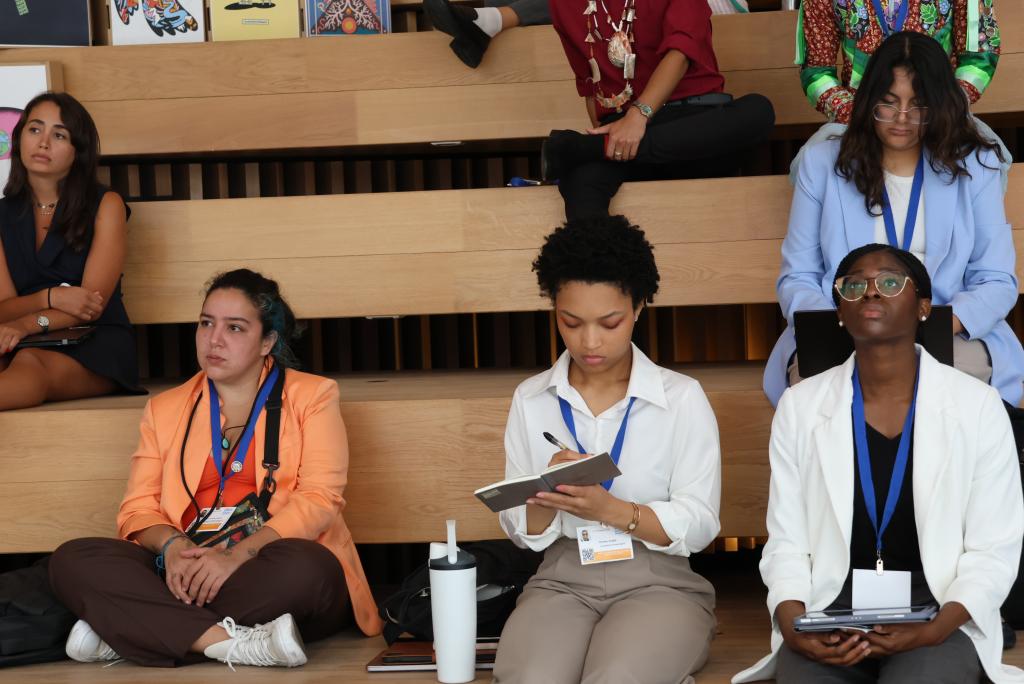
Three young women sit on the steps of an auditorium

The August 4th event kicked off with introductions from the leaders of the youth delegation, many of whom have been supporting these negotiations since the beginning. The stakeholders in attendance included youth, NGO staffers, international lawyers, and country delegates. 

The energy among the youth stakeholders in the room was hopeful, yet cautious in being overly optimistic. The youth delegation understands that the negotiations will be difficult, with different coalitions of countries holding very different views on issues like plastic production and chemicals of concern. 

“During the youth preparatory meeting, we discussed different scenarios of plastics governance, and all agreed that this treaty is an opportunity to address plastic pollution as a systemic issue and prompt a behavioural shift in plastic consumption."

 —Olga Skaredina, one of leaders of the new YPAN network. 

If a treaty is successfully signed, YPAN, which will be formally launched mid-way through the August negotiations, will continue to be active in the negotiations and implementation efforts that will result from the treaty. 

Youth voices should still be heard in the years of negotiation that follow the signing of a treaty such as this. The tenacity of these young people in advocating for an ambitious treaty is truly admirable and we look forward to following their actions over the coming weeks of intense negotiations and beyond.

Woman in a turquoise top speaking into a mic

If you’re a young person interested in learning more about policy and its impact or want to prepare for a career in sustainable development, IISD Next is currently recruiting a new group of participants for its Campus Workshop Series on Sustainability.

Insight

How FfD4 Helped Reinvigorate Political Will to Move Beyond GDP

The Fourth International Conference on Financing for Development (FfD4) in Seville generated much-needed political will to move beyond gross domestic product (GDP) as the sole measure of progress, marking a pivotal shift from an often technical discussion to a political and moral imperative to chart a new path for development financing and long-term sustainability. 

July 22, 2025

The conference, which took place from June 30 to July 3, reaffirmed the global community’s commitment to tackling pressing development challenges, such as poverty, malnutrition, human rights, and access to health care across the globe—but especially for countries in Africa, land-locked countries, Small Island Developing States (SIDS), and others. It also addressed systemic issues like global economic governance, illicit financial flows, and the lack of inclusion of experts from developing countries in decision-making processes. In the conference’s outcome document, heads of state reiterated their dedication to achieving sustainable development, particularly through the effective implementation of the 2030 Agenda for Sustainable Development. This commitment is especially critical given the estimated USD 4 trillion annual financing gap needed to meet the Sustainable Development Goals (SDGs) by 2030.

Among many solutions proposed to help close the financing gap, there has been a growing call to move beyond GDP as the primary measure of progress, and therefore, public investment. The shortcomings of GDP for sustainable development have been well known for many decades. It is addressed in the Global Goals, with SDG target 17.19 recognizing that measuring economic growth alone is not sufficient for achieving the SDGs. 

In September 2024, the UN Summit of the Future (SoF) specifically stressed the need to complement and go beyond GDP, given its failure to account for inequality, environmental degradation, unpaid care work, and the well-being of people and communities. In May 2025, the UN Secretary-General appointed an independent High-Level Expert Group on Beyond GDP to develop recommendations that will help countries and institutions adopt more comprehensive measures of sustainable development progress beyond traditional GDP metrics. Ff4D built on these efforts, creating an opportunity to chart a new path for development financing and long-term sustainability.

This article highlights the key recommendations from FfD4, with a particular focus on moving beyond GDP as a measure of progress. It also shares insights from young people and leading experts on the actions and strategies needed to advance this agenda.

What Is Covered in the FfD4 Outcome Document

The Seville conference brought into focus a long-standing global debate on the limitations of GDP as the dominant measure of national progress. The FfD4 outcome document reaffirms the commitment outlined in the Pact for the Future to develop a complementary framework of progress, including alternative indicators beyond GDP. It also anticipates the forthcoming recommendations of the UN High-Level Expert Group, which will propose a concise set of country-owned, universally applicable indicators for sustainable development (Section III, paras. 62 and 64). Additionally, the document emphasizes the need to support national development strategies that foster inclusive and sustainable economic growth while safeguarding developing countries from the disproportionate impacts of external shocks (Section I, para. 7). Achieving this vision requires a long-term approach to economic growth—one that incorporates an asset-based perspective that seeks to leverage and build on local environmental, social, and economic assets for long-term sustainable development (Section II, para. 51).

The FfD4 recommendations urge development partners to collectively double their support to developing countries by 2030 (Section II, para. n). It is proposed that this increased support be aligned with complementary measures to GDP, enhancing existing policies and practices to better reflect sustainability. These alternative metrics should also inform decisions on access to development finance and technical cooperation, promoting a more inclusive approach to international collaboration (Section III, para. 38). Furthermore, beyond-GDP indicators are recommended for use in monitoring and evaluating the design, implementation, and effectiveness of current policies and development cooperation strategies, including eligibility for concessional financing (Section II, paras. 31, q).

Beyond critical access to financing and rethinking economic and financial systems, a major shift in mindsets is required to enable the transformative change the world urgently needs. 

Efforts to Build Momentum on Beyond GDP at FfD4 

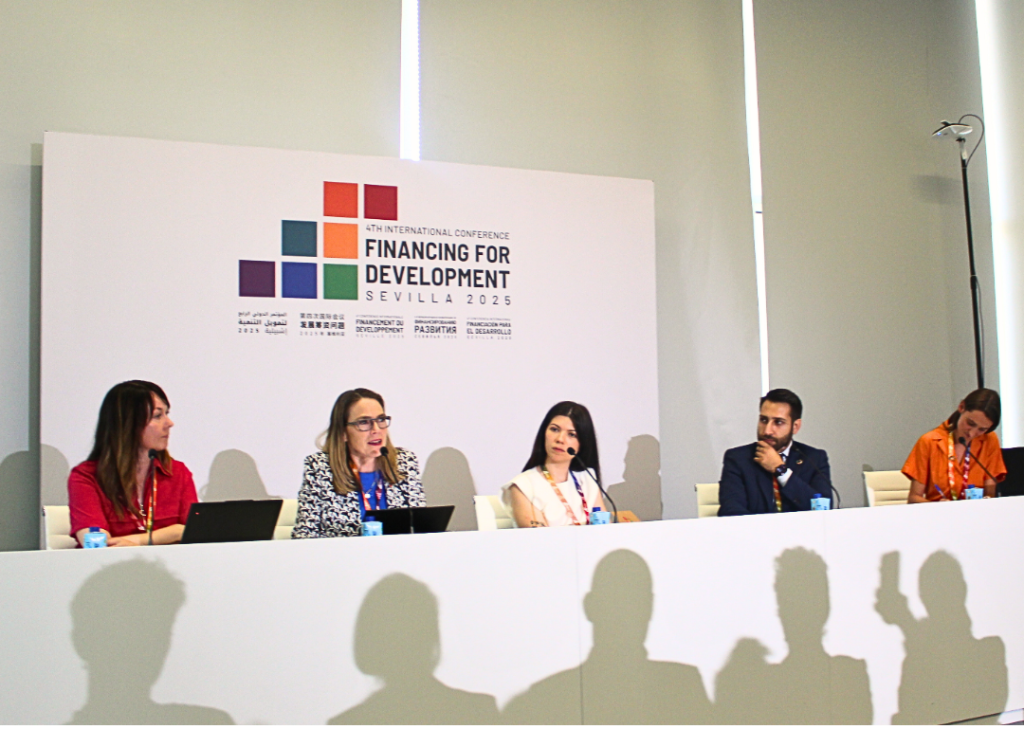
In an effort to bring this issue to the fore, the Beyond Lab, in partnership with IISD, Rethinking Economics, the UN Conference on Trade and Development, the UN Office of the High Commissioner for Human Rights (OHCHR), UN Youth, the International Development Research Centre (IDRC), and the governments of Germany and Zambia jointly hosted a side event titled Youth Moving Beyond GDP: Intergenerational Equity to Finance What We Value.  

High-level panellists, including Dr. Bärbel Kofler (Parliamentary State Secretary to the German Federal Minister for Cooperation and Development), Prudence Kaoma (Permanent Secretary in Zambia’s Ministry of Finance and National Planning), Mónica Colomer de Selva (Spain’s Ambassador-at-Large for Financing for Development), Felipe Paullier (UN Assistant Secretary-General for Youth Affairs), and Alexandre Pupo (Secretary-General of the International Youth Organization for Ibero-America) underscored the importance of young people as a central driving force in the push to move beyond GDP, calling for deep reforms in global financial institutions with young people at the centre of new development narratives and embedded into policy and decision-making processes.

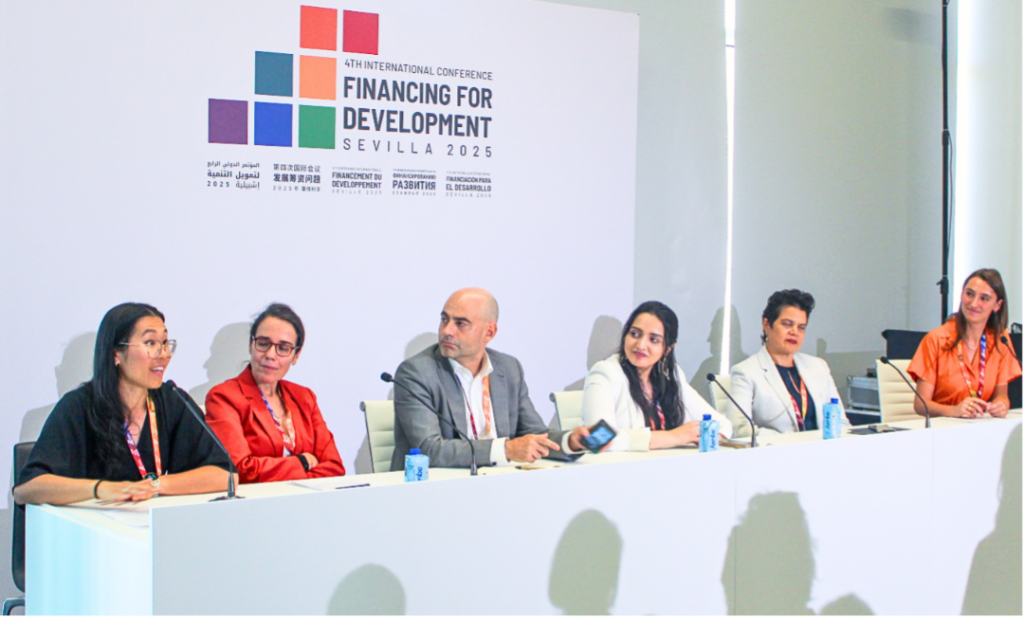
Youth representatives, including Antoine Kallab (Associate Director at the American University of Beirut) and Georgia Gadotti dos Anjos (Economistas Sin Fronteras), alongside experts Erin Tansey (Director of the Sustainable Inclusive Economies Program at IDRC), and Anu Peltola (Director of Statistics at UNCTAD) emphasized the need to rethink what we value, how we measure it, and who gets to shape the global development agenda. This work includes supporting the capacity of national policy-makers to better understand and use beyond-GDP metrics, as well as assisting countries in measuring both the quantity and quality of growth and the value it brings to people and planet.

Left to Right: Anu Peltola, Director of Statistics at UNCTAD; Erin Tansey, Director of the Sustainable Inclusive Economies Program at IDRC; Georgia Gadotti dos Anjos, Economistas Sin Fronteras; Antoine Kallab, Associate Director at the American University of Beirut

Other panellists, including Noemí Espinosa Madrid (Secretary General of the Association of Caribbean States), Borja Santos Porras (Vice Dean at IE School of Public and Global Affairs), and Amal Ridene (Climate Finance and Policy Specialist) further emphasized the need for beyond GDP efforts to account for local vulnerabilities and challenges, enabling countries to define well-being indicators that reflect their own contexts. Marcella Favretto (Chief of Sustainable Development at OHCHR) pointed to the move beyond GDP as ultimately reflecting a transition toward the "human rights economy," enabling countries to measure the rights and well-being of societies. Bing Lou (Senior Policy Advisor at IISD) summarized discussions under three key levers to move the dial on beyond GDP, including international collaboration to generate political momentum; establishing a common knowledge base of alternative metrics; and equipping countries to integrate alternative metrics into national policy frameworks,  thus helping governments better align financial investments with long-term sustainability.

Left to Right: Bing Lou, Senior Policy Advisor at IISD; Marcella Favretto, Chief of Sustainable Development at OHCHR; Borja Santos Porras, Vice Dean at IE School of Public and Global Affairs; Amal Ridene, Climate Finance and Policy Specialist; Noemí Espinosa Madrid, Secretary General of the Association of Caribbean States; Nathalie Delorm, Moderator, Beyond Lab at UN Geneva.

FfD4 also generated new partnerships and alliances on beyond GDP work. This included the announcement of the Youth Network for Beyond GDP, a joint initiative by the Beyond Lab, UNCTAD, and Rethinking Economics International to ensure young people are not just observers in the process but are embedded into intergovernmental policy and decision-making processes. Additionally, the Beyond GDP Global Alliance was launched as part of the Seville Platform for Action—led by Spain, the OECD, UNCTAD, and the Ibero-American General Secretariat (SEGIB), and in partnership with a number of governments and international organizations. The alliance aims to serve as a platform for international dialogue and action, facilitating the integration of multidimensional indicators into national policy-making, international cooperation, and financing frameworks.

Press briefing announcement of the Youth Moving Beyond GDP Network

What’s Next for Moving Beyond GDP?

While the level of ambition in the outcomes agreed upon at FfD4 drew some criticism, the unmistakable surge in Seville of political will at the highest levels instilled a degree of optimism for multilateralism, including on issues like beyond GDP. This political momentum is crucial to build on decades of compelling evidence and robust technical debate. Without energy from government leaders, even the best ideas and most sophisticated indicators will remain trapped in reports and pilot projects, never making the leap into real-world policy and investment.

As the movement gathers speed, the challenge will be to sustain political momentum. However, the Seville Platform for Action—with over 130 initiatives focused on implementing the Compromiso de Seville and outcomes agreed upon at FfD4—seeks to ensure commitment translates into action. This includes the Beyond GDP Global Alliance and the Youth Moving Beyond GDP initiative, which aims to ensure that future policies and investments for development financing are guided not just by numbers but by the values of all members of society, including youth and the planet.  

Now, the real test begins as the international community seeks to turn bold promises into lasting reforms, making global finance work for a sustainable and inclusive future.