Insight

Why Linking EU and UK Emissions Trading Systems Is a Win–Win for the Economy and the Environment

The launch of negotiations between the European Union (EU) and the United Kingdom to link their emissions trading systems (ETSs) marks a dual victory for both the economy and the environment. As part of a broader set of agreements announced on May 19, this move will ease bilateral trade, reduce the economic cost of decarbonization, and reinforce ambitious emissions reduction pathways.
 

May 22, 2025

What does the agreement cover?

The linking would mean, in concrete terms, that companies in each jurisdiction could trade emissions allowances with companies in the other jurisdiction, resulting in a single market price. The UK’s emissions cap and reduction pathway will be based on its own climate laws and Paris Agreement commitments but must be at least as ambitious as the EU’s. The UK will be consulted early in the development of EU legal acts related to the ETS and will provide a financial contribution to cover relevant EU policy costs.

What are ETSs, and what does linking them mean? 

ETSs place a cap on emissions from specific economic activities. To emit greenhouse gases (GHGs), regulated operators must obtain credits—called allowances—for every tonne they emit. These allowances are either auctioned by the government or given to operators for free, effectively placing a price on emissions, as those allowances can then be traded between operators. Carbon pricing is a highly effective approach to climate change mitigation, and ETSs are the most common form of pricing (covering ~18% of world emissions), followed by carbon taxes. After leaving the EU, the United Kingdom exited the EU ETS and set up its own system. Together, they cover 2.6% of world emissions.

When multiple ETSs are linked, operators can trade allowances across the systems. This also means that all participants face the same carbon price for emitting an additional tonne of carbon. Linking is complex, as it requires coordination on how each system operates, especially on how quickly their caps (the total amount of GHG emissions allowed) decline. Still, successful linkage examples exist, such as the EU and Swiss ETSs and the systems in California and Quebec. 

Why is linking good for trade? 

The EU and the United Kingdom both have carbon border adjustment mechanisms (CBAMs) set for full implementation in January 2026 and 2027, respectively. This means imports to both countries will soon face carbon-related charges to match domestic carbon prices. Beyond the financial cost, compliance involves complex product-level emissions reporting. Because the UK ETS currently has a lower carbon price than the EU ETS, introducing carbon border fees would have probably meant CBAM payments for British goods at the EU border. Both CBAM frameworks include provisions to exempt jurisdictions linked through ETSs. 

Under a linkage, no carbon fees would be paid for products traded between the two, which is particularly relevant for British exports to the EU—and, importantly, no emissions reporting would be required. Keir Starmer highlighted that linking would prevent British firms from paying GBP 800 million to the EU’s carbon tax. While technically accurate, this does not mean that the British firms would be off the hook for their emissions: this carbon price would need to be paid to the British government. The real benefit lies in removing the heavy administrative burden related to emissions reporting at the product level, a key criticism of CBAMs.

Why does linking reduce the cost of decarbonization?

If, for example, the United Kingdom and the EU both aim for a 5% cut in emissions, unlinked systems require each to achieve that reduction domestically. With linked systems, there is a more cost-efficient route: the jurisdiction with lower emission reduction costs reduces more emissions, while operators in the other jurisdiction buy additional allowances. This system allows the same overall reduction at a lower total cost. His Majesty’s Treasury estimates that the United Kingdom would decarbonize less and buy more allowances from the EU, leading to mutual gains—specifically, a 0.1% GDP boost for the United Kingdom. This framework mirrors the classic Economics 101 principle of “gains from trade.” A further benefit is that a larger, linked market is more liquid, and its carbon price is more stable in the face of shocks.

Why is linking good for climate action?

Both the EU and the United Kingdom aim for net-zero by 2050, but political pressure risks undermining ambition along the way. In July 2023, the UK ETS Authority unexpectedly announced the release of 53.5 million unallocated allowances for 2024–2027—about half a year’s emissions—while in September, several net-zero policies were rolled back, including the delay of the petrol and diesel car phase-out. These moves weakened industry confidence in the government’s ambition and lowered Britain’s carbon price. Similar pressures could hit the EU. 

Linking ETSs typically requires agreement on coordinated emissions cap trajectories since one side loosening its cap would flood the other’s market with cheap allowances. This mutual constraint helps safeguard long-term climate ambition. In its statement, the European Commission stressed that the United Kingdom’s cap trajectory will need to be at least as ambitious. It will be crucial for the final agreement to incorporate such mutual reassurances. While nothing will ever prevent the EU and the United Kingdom from jointly bowing to political pressure, at least such mechanisms should prevent them from doing so unilaterally.

All these reasons point to one conclusion: linking ETSs is a good move for both the economy and the environment. Policies that deliver benefits on multiple fronts deserve strong support.


Insight

One Underestimated Threat to Biodiversity, and How We Can Invest Wisely to Overcome It

Invasive alien species (IAS) are a key driver of biodiversity loss, driving up to 60% of all recorded global extinctions either on their own or alongside other factors. However, with early detection, this loss is preventable. On International Day for Biological Diversity, Susan Sekirime, the International Institute for Sustainable Development’s (IISD's) Climate Adaptation and Protected Areas (CAPA) Initiative Africa Lead, explains why we must make stopping the spread of IAS a priority, and the difference it can make to wildlife, ecosystems, and communities in protected areas.

May 20, 2025

Home to over 95 mammal and 600 bird species, Uganda’s Queen Elizabeth National Park (QENP) is being dramatically altered by invasive plant species whose arrival is being supercharged by increasing temperatures. Once a healthy savannah grassland, the park is rapidly transforming into a dense, thorny scrubland. Most problematic among these invasive species is dichrostachys cinerea, commonly known as sicklebush.

Each year, on International Day for Biological Diversity, we are called upon to reexamine our relationship with the natural world and recommit to respecting and protecting it.

This year, the focus is on the linkages between the 2030 Agenda and its Sustainable Development Goals (SDGs) and the goals and targets of the Kunming–Montreal Global Biodiversity Framework (GBF) as two universal agendas that must be pursued in tandem. The call to action is to accelerate action on the SDGs and the GBF in the last 5 years before the agreed implementation period expires.

Wildlife stood in a field

The threat of IAS was last highlighted in 2009 as an issue of concern and theme for the International Day for Biological Diversity. This threat continues to grow, and, according to a recent report by the Intergovernmental Science-policy platform on Biodiversity and Ecosystem Services, it is now one of the five major drivers of biodiversity loss.

According to the report, IAS are the sole driver in 16% of documented global extinctions, and have contributed, alone or alongside other drivers, to 60% of all recorded global extinctions. The scale and severity of the problem helped ensure that minimizing the spread and impact of IAS is enshrined as a core target for the GBF (Target 6)

Besides the threat they pose to wildlife, IAS impose enormous costs on agriculture, forestry, fisheries, and other natural resource-based sectors and human health. These costs have been estimated at more than USD 423 billion per year—an amount scientists believe has quadrupled every decade since 1970. Without concerted effort, and with the increased movement of people and goods brought about by globalization, as well as the compounding effects of climate change and habitat degradation, the number of IAS and their impacts are projected to increase.

Sicklebush

Removal Brings Relief, but at a Price

The most economical way to manage IAS is through prevention, along with early detection and rapid response (EDRR). These two approaches are much more effective than trying to manage a widespread infestation. What is now happening in QENP is proof of this.

Sicklebush has a wide natural distribution, ranging from southern and tropical Africa to India, though its true native range is still disputed. What is true for QENP is that while sicklebush has always existed in the park, its rapid spread, driven by drought conditions and higher temperatures, has meant that it now covers almost 50% of the park, according to the Uganda Wildlife Authority (UWA). This has created impenetrable thickets that have lowered the park's carrying capacity for grazing wildlife species, restricted wildlife movement, and blocked access to water points. Animals, both prey and predators, are now leaving QENP to seek food and water in the neighbouring communities, exacerbating human–wildlife conflict in the area, affecting the lives, livelihoods, food security, and well-being of many already-vulnerable people living in and around the protected area. This is also affecting the tourism industry—a significant source of revenue for the country and the local communities—as those animals remaining in the park are increasingly difficult to see.

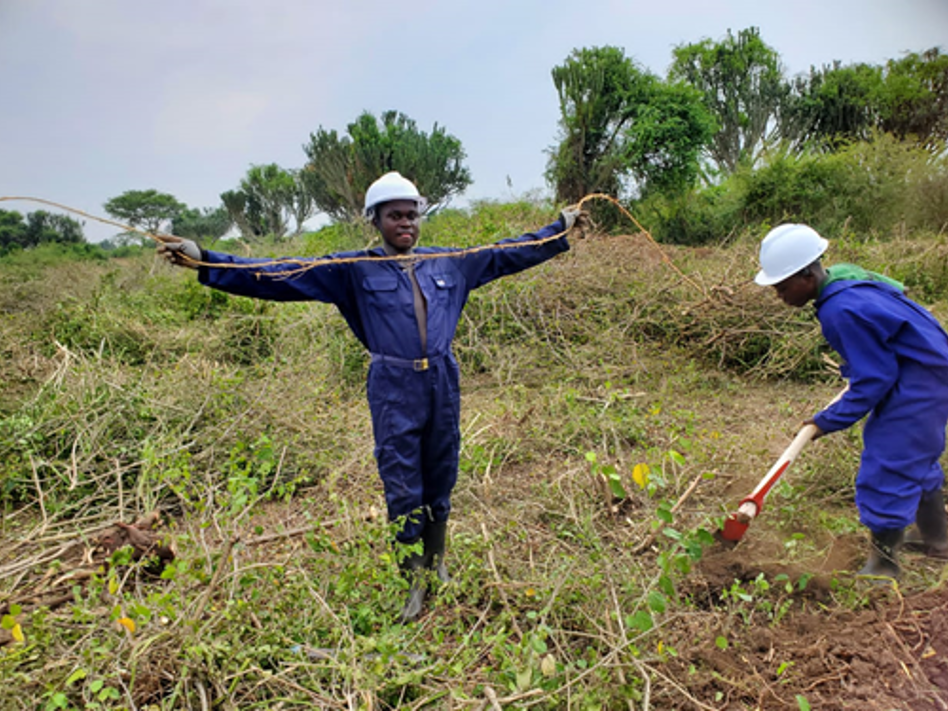
Under the CAPA Initiative, IISD and the Worldwide Fund for Nature have worked with local communities to clear sicklebush from over 200 hectares in strategically important areas in QENP, providing urgent relief to wildlife that could no longer access critical grazing grounds and watering points. The work made an impact quickly, but it is just a drop in the ocean given the scale of the problem. A total of 110,000 hectares of the park are estimated to be impacted by sicklebush and other IAS, according to the UWA.

Invasive alien species being removed

The cost of removing these invasive plants is high; it costs roughly USD 1,120 to clear 1 hectare of sicklebush manually. With the affected area totalling close to 110,000 hectares, roughly USD 124 million would be needed to fully eradicate the problem, and this would only cover the initial removal. To achieve effective results, more funding would be needed for follow-up management action to eliminate resprouts. UWA had attempted to eliminate and control sicklebush in QENP and other protected areas across the country through mechanical removal, but the use of machinery, while less expensive, did not adequately remove the root structure of the plant and catalyzed massive sprouting through remnant root systems, as well as leaving soils over-compacted, which hindered natural regeneration.

Investing in Early Detection

similar trend of overly costly removal of IAS is observed in most cases where attempts are made to eradicate IAS after it has spread, making investment in EDRR by far the best way forward. This is even more important now, with more than 1 million animal and plant species considered to be threatened with extinction and given the stark shortfall in global conservation funding [paywall] revealed last year at the 16th United Nations Biodiversity Conference (COP16) in Cali, Colombia. Tight budgets mean that conservation decision-makers must identify and prioritize those management strategies and investments in critical ecosystems that are most likely to achieve better results per dollar invested for species’ recovery and conservation.

Addressing tomorrow’s IAS invasions must begin today, with smart investments in EDRR in the form of surveillance systems to detect invaders in areas at high risk or of high biodiversity value, and aggressive quarantine and eradication techniques to eliminate potential IAS from specific locations before they spread and cause harm. Given the current climate change context, it will also be essential to recognize the interactions between IAS and climate change so that the appropriate forward-looking adaptation management strategies can be considered and adopted.

In QENP, the removal of invasive species had an immediate, localized impact. Within a day of the clearance work being completed, antelope and buffalo were once again grazing in these areas, and elephants were drinking from the Kazinga Channel; their path was no longer blocked by thorny scrub. Native plants are regenerating because they have more room. The ecosystem, including its wildlife, can recover; we just need to make the right decisions for its future.  

Insight

FfD4 Countdown: How Public Procurement Can Help Drive Sustainable Development

As discussions on financing for development intensify ahead of the Fourth International Conference on Financing for Development (FfD4), an important policy tool often gets overlooked: public procurement. While countries focus on how they can secure more resources for development, they often fail to consider how existing funds could be spent more sustainably.

April 17, 2025

Nevertheless, this is a crucial topic. With a decline in official development assistance and significant debt levels among low-income countries, the pressure for governments to deliver on the United Nations’ Sustainable Development Goals (SDGs) with limited resources is growing. This makes it even more important that available resources are efficiently spent in ways that align with development, climate, and nature goals.

Public procurement refers to how governments and state-owned companies purchase goods, services, and infrastructure projects. It is a major economic force: in emerging economies, it accounts for 15%–30% of total gross domestic product. This means up to a third of a country’s economic activity is driven by government spending.

This purchasing power gives governments a unique opportunity to lead by example and drive transformative change. By leveraging their vast purchasing power, governments can set ambitious sustainability benchmarks, stimulate innovation, and shape markets toward greener, more socially responsible practices. This ultimately ensures that taxpayers get the “biggest bang for their buck” and that procurement delivers value for money.

Despite its importance, procurement remains sidelined in international efforts to finance the SDGs. As we approach the FfD4 conference, countries are failing to give it the attention it deserves.

The current draft outcome document, on which countries will agree in June, suggests improving the transparency and oversight of government spending. While this is an important first step, countries should recognize that procurement is not merely a compliance-driven process, but a strategic policy tool to deliver the SDGs. It should also ensure that digital systems are implemented to support countries in making sustainable procurement choices.

How can countries leverage public procurement for sustainability? 

Public procurement is governments’ number one corruption risk, comprising 57% of all foreign bribery cases, and often falls short of delivering the sustainable development agenda due to systemic inefficiencies, lack of capacity, and a predominant practice of awarding public contracts based on the lowest price. Inefficient spending is often the result of corruption, lack of oversight, and outdated methods, like manual systems and paper-based workflows that can lead to delays and errors.

As a result, governments waste an estimated 1 trillion USD a year on inefficient or shortsighted procurement practices, money that isn’t spent on essential services like health care or education.

Reforms are necessary to ensure that countries prioritize value-driven procurement practices and enhance transparency, including through the adoption of digital tools.

Enhancing the Oversight and Transparency of Procurement Through E-Procurement and Open Data

According to the Copenhagen Consensus Centre, a full e-procurement system is a top 10 investment for a country to achieve the SDGs. Their study suggests that for an average low-income economy, the benefit-cost ratio for an e-government procurement system is 8 to 58, meaning that each dollar invested in the system yields 8 to 58 dollars in benefits. The ratio rises from 142 to 473 for a lower-middle-income economy.

Too often, however, when procurement systems are digitized, governments simply move slow, bureaucratic, paper-based processes online or publish non-machine-readable PDFs. Instead, digitization is an opportunity to transform public procurement into a smart, efficient, data-driven process that reveals how public money is spent. When shared as open data, it enables citizens to monitor, visualize, and influence funding decisions.

For example, patient groups Positive Initiative and 100% Life have helped governments in Moldova and Ukraine negotiate cheaper prices for critical HIV and hepatitis drugs by combining medicines procurement data with treatment expertise and patient experience. In Assam, India, Civic Data Labs used procurement, income, and flood data to reveal that infrastructure investments favoured vocal communities over those most in need—and helped correct the imbalance.

Raising ever more capital for development is not enough. In today’s economic context, we must ensure every dollar, euro, peso, or yen is well spent for maximum impact. After all, we can only manage and monitor what we have the open data to measure.

Raising Awareness and Embedding Sustainable Procurement in Policy Frameworks

Recent research from the International Institute for Sustainable Development focused on green procurement practices and, based on the state of public procurement in Indonesia, India, and South Africa, shows that countries need to raise awareness of sustainable procurement practices and embed them in their policy frameworks. Countries should:

  • create a solid legal basis and show a clear commitment to sustainable public procurement;
  • raise awareness and skills for sustainable public procurement, including how to introduce sustainability in technical specifications, how to identify the most sustainable bid and bidder, and how to ensure compliance with sustainability requirements. This can be achieved by setting up competence centres with dedicated training for government officials, and market participants/suppliers;
  • develop procurement policies and strategies that prioritize performance-based models, where payments are linked to outcomes linked to development objectives, and assess the full life-cycle costs of purchases;
  • address financial barriers by integrating sustainable public procurement into budget planning and overarching public financial management, tapping into international support.

By highlighting procurement’s role in sustainability at FfD4, countries can raise awareness and bring the issue into policy discussions. This could also prompt action from key players like multilateral development banks, which fund infrastructure in developing countries and could be instrumental in leading the shift to sustainable, climate-friendly practices.

Insight details

Insight

FfD4 Countdown: A Watered-Down Proposal on Tax Expenditures Risks Undermining Countries’ Domestic Revenue Mobilization

Governments’ decisions to grant preferential tax treatments have a direct impact on their ability–or inability–to finance their sustainable development goals. At the Fourth Conference on Financing for Development in June, countries must commit to greater oversight of tax expenditures, including implementing minimum reporting standards and rationalizing ineffective or harmful tax expenditures.

April 15, 2025

Tax expenditures are benefits for eligible taxpayers that reduce the tax they pay and the revenue the government collects. Countries worldwide use tax expenditures to pursue different policy objectives, such as attracting investment, boosting employment, and promoting the energy transition. At the same time, tax expenditures are costly and, when poorly targeted or overly generous, can drain crucial domestic revenues.

According to the Global Tax Expenditures Database (GTED), revenue forgone from tax expenditures lies around 4% of GDP and 25% of tax revenue globally. This has remained relatively stable since 1990, the first year for which the database gathers data. With foreign aid increasingly scarce and debt levels at unprecedented highs in many low-income countries, the need to rationalize tax expenditures as a way to increase domestic resource mobilization is becoming even more urgent.

The Fourth Conference on Financing for Development (FfD4), where countries will agree on the agenda for development finance for the next decade, is critical for taking this up. In the discussions leading up to the conference, states had agreed on a draft to “commit to increase transparency and improve oversight and management of tax expenditures, and implement minimum standards for tax expenditure reporting” [emphasis added]. However, this has been replaced by a passive suggestion to merely “encourage the enhancement [emphasis added] of oversight” in the latest draft version of the Outcome Document.

This watered-down proposal contradicts the urgency that FfD4 has placed on the need to increase domestic resource mobilization to resolve developing countries’ financing challenges. At a minimum, negotiators should push for the language from the previous draft to be reinstated in the Outcome Document. There should be a clear commitment to strengthen transparency, oversight, and management of tax expenditures, and implement minimum standards for tax expenditure reporting.

The Outcome Document should also be clear on the purpose of improving oversight of tax expenditures—that is, for countries to have better, more reliable information to rationalize and reform ineffective or harmful tax expenditures. This should be considered the “guiding star” of tax expenditure reporting, which is a means to an end rather than an end in itself.

What should the minimum standards for tax expenditure reporting be?

Reporting is a critical first step toward reforming tax expenditures. Without reliable information on the fiscal impact of tax expenditures and their effects (as well as on the tax expenditure regimes of other countries), it is virtually impossible for governments to make informed decisions about which benefits to remove, adapt, or maintain. Given their magnitude, reporting on tax expenditures helps governments create more reliable revenue forecasts and plan budgets with greater accuracy.

The Global Tax Expenditure Transparency Index (GTETI) provides a comprehensive framework for tax expenditure reporting based on international good practices. The index allows to identify three minimum standards that reports must meet: regularity, transparency, and specificity.

  1. Regularity means that governments issue tax expenditure reports at regular intervals, ideally linked to the annual budget cycle, so that political decision-makers and stakeholders know when to expect this information and which time span the report is covering. Association with the budget cycle also helps to view them in the context of normal public expenditure.
  2. Transparency means that governments publish information on all tax expenditures in use,  including measures for which revenue forgone has not been, or cannot be, for one reason or another, estimated.
  3. Specificity means that governments provide information for each individual tax expenditure provision. This includes estimations of revenue forgone along with the policy objective. This level of detail is key to any informed debate about the rationale for tax expenditures.

Member states should commit to implementing these minimum standards to ensure consistency and enhance cross-country comparison of tax expenditure regimes.

What do countries need to implement the FfD4 agenda on tax expenditures?

Building on these commitments and the reporting they are meant to trigger, countries have an opportunity to implement long-term strategies to rationalize tax expenditures. This requires ongoing support and collaboration.

The Platform for Collaboration on Tax has taken an important step by releasing high-level principles for designing and using incentives, which we understand will be complemented by practical tools. But reform takes time. It takes solutions tailored to the local context and hands-on implementation support. It takes many organizations and individuals to join forces, both domestically and internationally.

The International Institute for Sustainable Development, the International Centre for Tax and Development, ODI Global, the Council on Economic Policies, and the German Institute of Development and Sustainability represent an integral part of the tax policy ecosystem. Our organizations regularly engage with low- and middle-income countries in collaborative research and hands-on support on the design, use, impact, and reform of tax expenditures, as one of several tax policy matters. We are proposing a decade of focused action on tax expenditure reform, working closely with the Platform for Collaboration on Tax, and other stakeholders.

A Coalition on Tax Expenditures—made up of think tanks, non-governmental institutions, and academic institutions—would be the start of an inclusive, collaborative effort to design, implement, and monitor tax expenditures more effectively and to ensure that they align with countries’ development goals, protect tax revenues, and promote sustainable growth. The coalition would focus on

  • scaling up research and independent technical support to governments on designing, implementing, monitoring and evaluating tax expenditures;
  • exchanging expertise and best practices, creating a global knowledge-sharing platform on tax expenditures, building on existing efforts such as the Tax Expenditures Lab and the Community of Practice on Tax Expenditures;
  • leveraging complementary strengths from different organizations—be it in legal frameworks, policy evaluation, or economic modelling—to provide holistic support;
  • strengthening international momentum, ensuring tax expenditure reforms remain a priority in forums like FfD4 and beyond.

Reforming tax expenditures is critical to freeing up fiscal space for countries to fund development, climate, and biodiversity goals. Countries have a significant opportunity with the FfD4 to forge a collective commitment toward strengthening transparency, oversight, management, reporting, and reform of tax expenditures. A coalition of experts and institutions stands ready to provide the support and resources to help governments turn this commitment into reality.

Insight details

Topic
Taxation
Impact area
Sustainable Economies
Insight

FfD4 Countdown: Countries Must Eliminate All Public Financial Flows for Fossil Fuels

Government support for fossil fuels undermines domestic resource mobilization goals and holds back the transition to clean energy. Subsidies, public finance, and state-owned enterprise investments together contributed at least USD 1.5 trillion to fossil fuels in 2023. The Fourth International Conference on Financing for Development (FfD4) in July 2025 presents a huge opportunity to redirect this money for the benefit of people and the planet.

April 10, 2025

As the Fourth International Conference on Financing for Development (FfD4) approaches, countries are preparing to shape the global development finance agenda for the next decade. Currently, the outcome document being negotiated recommits to phasing out “inefficient” fossil fuel subsidies that do not address energy poverty or just transitions as soon as possible. However, the current text disregards other sources of public support for fossil fuels, such as public finance and capital expenditure of state-owned enterprises.

The FfD4 negotiations present a critical opportunity to address all public support for fossil fuels. The outcome of this process should include concrete commitments on phasing out public finance—both international and domestic—and state-owned enterprise investments. In addition, in relation to fossil fuel subsidies, the “inefficient” loophole should be dropped

Why Is It Crucial for FfD4 to Address All Public Financial Flows for Fossil Fuels?

Public financial flows for fossil fuels reached at least USD 1.5 trillion in 2023, the second-highest annual total on record after 2022, when Russia’s invasion of Ukraine triggered a global fossil fuel price crisis. The majority of this—USD 1.1 trillion—was support in the form of subsidies. However, a substantial amount came from state-owned enterprise investment (USD 368 billion) and international public finance (USD 29 billion). The figure for domestic public finance to fossil fuels is not known, but it is likely to be substantial as well.

These figures expose the high cost of relying on fossil fuels for energy. When the fuel price spikes—as it inevitably does since the price of globally traded commodities is inherently volatile—people will face hardship unless governments intervene. While in the short term there are better interventions than subsidizing fuels, such as redirecting funds to social protection, the solution is ultimately to move to clean energy, which is generally cheaper and has more predictable pricing.

Phasing out public financial flows for fossil fuels offers a crucial opportunity to free up fiscal space for sustainable development priorities. For instance, countries such as Zambia, Morocco, India, and Indonesia have reallocated savings from fossil fuel subsidy reform to alternative sources of energy and energy efficiency. The Clean Energy Transition Partnership signatories have committed to “prioritise … fully” their international public finance for clean energy while ending such support for fossil fuels. 

What FfD4 Should Say on Public Financial Flows for Fossil Fuels

The first draft of the FfD4 outcome reaffirms “the commitment to rationalize inefficient subsidies, and to phase out inefficient fossil fuel subsidies that do not address energy poverty or just transitions, as soon as possible.”

This is already an improvement on the Addis Ababa Action Agenda, which committed to “rationalize” inefficient fossil fuel subsidies “that encourage wasteful consumption by removing market distortions.” Singling out fossil fuel consumption subsidies was not a helpful approach. Although fossil fuel production subsidies represent a minority of subsidies (USD 36 billion), they lock in new fossil fuel production and thus have an outsized impact on greenhouse gas emissions. The zero draft of the FfD4 outcome repeated this mistake, which has since been rectified in the first draft. 

However, there is still room for improvement. First, FfD4 should drop the loophole that involves the phasing out of only “inefficient” fossil fuel subsidies. Instead, each country should be required to create a national action plan for phasing out its fossil fuel subsidies. This plan would require it to justify any remaining subsidies and identify alternative policy levers to achieve the same objectives. 

Second, FfD4 should include comparable language on public finance and state-owned enterprise investments for fossil fuels. It should commit to ending new direct public support for the domestic and international fossil fuel energy sector, and to align investments through state-owned enterprises with the principles of sustainable development, including ending all new capital investments in the fossil fuel energy sector. There could be an exception for limited and clearly defined circumstances that are consistent with the 1.5°C warming limit and the goals of the Paris Agreement.

These changes are crucial to effectively addressing the issue of financial flows for fossil fuels and supporting sustainable development. If FfD4 remains silent on non-subsidy-related public financial flows for fossil fuels, it risks legitimizing these flows and undermining domestic resource mobilization goals.

In conclusion, FfD4 is a chance to redirect public financial flows from fossil fuels to clean energy and other pressing sustainable development priorities. But for this to happen, the outcome document must go beyond recommitting to the phasing out of fossil fuel subsidies.

Insight details

Insight

Making Sense of Trade Turbulence: Responding to uncertainty, complexity, volatility, and ambiguity

Suddenly, the world wants to know more about tariffs. Google searches for “tariff” currently dwarf any previous records held by the search engine. Meanwhile, even the most seasoned trade experts are trying to better understand the unprecedented trade policy decisions coming out of Washington. Alice Tipping explains.

March 24, 2025

The only thing we seem to know for sure is that a pall of uncertainty has been cast over the global trading system. In light of this, I think we need to dust off a useful strategic framework that helps us think through the nature of the challenge before us, and plan for whatever may come: volatility, uncertainty, complexity, and ambiguity (VUCA).    

Volatility

President Trump can be expected to continue imposing—or threatening to impose—tariffs or other trade-restricting measures on U.S. trading partners. These tariffs, and the volatility around them, will continue to strain political relationships and disrupt trade. Like a storm, governments may not know how or when tariffs might be applied, but they should expect it might happen.

The classic strategy response to volatility risk is investing in preparedness, calibrating how much you invest in alternatives with the level of risk you face. The EU’s pursuit of a quick conclusion to its trade deal with India—one of the world’s fastest-growing consumer markets—is a good example; it builds alternative markets for EU exporters. Canada’s tariff retaliation plan is another. The fact that Canada was clear and firm about its preparedness tactic probably helped dampen the effect of the volatility for affected businesses. Countries that are not (yet) the target of U.S. tariffs are, in some cases, lowering their own tariffs unilaterally, apparently to manage the impact of increasing global prices on Brazilian consumers (see Brazil) or to get ahead of expected demands from the United States for tariff reductions (see India).

Uncertainty

We can predict the likely impacts of some decisions:  U.S. tariffs will probably raise domestic prices. But the extent of the price increase and long-term impacts of tariffs are more difficult to determine: will they bring production to the United States as the Administration hopes? Or reshape supply chains in other ways? The strategic response to this sort of uncertainty is to invest in information. The Internet is awash with analysis of what the impact of this year’s tariffs could be for the countries on whom tariffs are imposed.  What is (at least to me) just as important, but harder to find, is information about what the broader impacts of the tariffs could be for the rest of the world, such as the  International Food Policy Research Institute’s note on the impact of tariffs on South American agricultural producers.

The system isn’t broken if one player (albeit a very large one) ignores the rules. But it will be broken if everyone ignores the rules.

Alice Tipping, Director, Trade and Sustainable Development, IISD

Complexity

The impact of major disruptions in the biggest economy in the world—which is also the global reserve currency—will reverberate through global supply chains for goods and services as well as financial and debt markets. The normal response to complexity is to skill up, bringing in experts who can parse out impacts and weigh them to build an overall picture. Analysis will need to look at the impact of tariffs on the economics of different industries and the range of supply chains within those industries. It also needs to consider what the impact of tariff-led trade policy could be on the U.S. dollar and on countries with debt denominated in U.S. dollars.  There is good overall analysis out there on key industries and financial markets, but more granular data can be expensive and requires its own investment of time to grasp.

Ambiguity

Ambiguity, in the context of this strategic framework, means that the relationship between cause and effect isn’t clear. Over the last few weeks, it has not been clear what different responses to President Trump’s tariffs would achieve (if anything). The strategic approach is to test different options and see what happens, to infer from that what action causes what kind of reaction. This seems to be what governments are doing: actions to address U.S. concerns about border control have yielded only temporary relief, in Canada and Mexico’s experience. Similarly, complaints about the impact of tariffs from domestic politically powerful sectors (like the auto industry) appear to be able to get short exemptions. Targeted retaliatory tariffs, like the EU’s, seem to escalate the situation, but not indefinitely—there have been off-ramps. Not imposing retaliatory tariffs (the British approach) is a further option but hasn’t been in place long enough yet to gauge its effectiveness. An option floated in the commentariat but not yet tried is to use retaliatory measures other than tariffs, such as suspending intellectual property protections.

Why the Rules-Based Trade System Still Matters

All of the responses outlined above are unilateral actions, of course. A handful of thoughtful articles on possible multilateral actions have been penned by experts, including Ignacio Garcia Bercero’s note on the importance of the rules-based system (albeit with some needed reforms) and Joost Pauwelyn’s ambitious idea of a new Trump Round of tariff-reducing negotiations at the World Trade Organization. There has been less thinking, however, about how governments that would like to preserve an open and predictable global trading system can work together in the face of a trade policy environment that is volatile, ambiguous, complex, and uncertain.

One step that several are now taking is to bring disputes about U.S. tariffs to the World Trade Organization, underscoring that they still believe the rules apply and must be followed. A second—noted in Ignacio Garcia Bercero’s article (linked above)—is for countries to keep their retaliations consistent with legal obligations as far as possible. A third, which I’ve advocated for, is to keep looking for opportunities where cooperative trade policy makes sense despite the uncertainties.

The rules-based trading system, for all its faults, is a better structure for protecting and advancing the development interests of smaller and less powerful countries than a purely power-based system. It is also important to remember that the system isn’t broken if one player (albeit a very large one) ignores the rules. But it will be broken if everyone ignores the rules.

Insight details

Topic
Trade
Impact area
Sustainable Economies
Insight

FfD4 Countdown: Strengthening trade policy for sustainable development

The Fourth International Conference on Financing for Development (FfD4) in July 2025 is an opportunity to redefine the role of trade policy frameworks in supporting sustainable and inclusive development. Here is how.

March 13, 2025

The Financing for Development conference is a moment to point to specific changes that would help make global trade more inclusive and sustainable. The FfD4 outcome document will not be able to do everything, but even its treatment of broadly agreed upon priority issues could be more ambitious and forward looking.

In its current state, the first draft of the FfD4 outcome document touches on a range of important trade-related issues. Most of them are, however, familiar concerns, and the document misses an opportunity to articulate a vision for the role trade policy should play in financing development in the context of 21st-century challenges. Set out below are surgical fixes that could provide a forward-looking agenda for a more equitable and sustainable global trading system.

What should the FfD4 draft say about trade?

International trade is a powerful engine for economic growth, providing opportunities for market access, economic diversification, and poverty reduction. Yet, systemic inequalities, trade restrictions, and outdated agreements continue to limit the benefits that trade can deliver, particularly for developing countries. The FfD4 document should include three key elements of direction-setting. Reinforcing a rules-based, not power-based, trading system is the first step. Ensuring developing countries face fewer formal barriers when they access global markets is a second. Third, any new restrictions for environmental reasons should lift all producers toward sustainability.

Strengthening the multilateral trading system and World Trade Organization agreements

The multilateral trading system (MTS) under the World Trade Organization (WTO) is crucial to maintaining a fair and predictable global trade environment. However, rising trade tensions and stalled negotiations have weakened its effectiveness. The first draft recognizes the importance of a strong MTS and calls for the implementation of key WTO agreements on trade facilitation and fisheries subsidies. It also emphasizes the need for permanent solutions to public stockholding in agricultural trade. Each of these references is important. Completing negotiations on additional provisions for the WTO Agreement on Fisheries Subsidies is important for the ocean and all communities that rely on fishing. It would also enable us to fully meet SDG target 14.6.

The text rightly points out that rules on agricultural subsidies should be reformed to address trade distortions that disproportionately affect producers in developing countries. While public stockholding is a key priority, a comprehensive update of WTO agricultural trade rules is needed to remove trade distortions, particularly those affecting least developed countries (LDCs) and net food-importing developing countries.

The draft also points to the need for capacity-building support for LDCs to participate in international trade negotiations. This is crucial. The MTS must work for everyone; for it to do so, every voice needs to be heard.

Strengthening market access for developing countries

Market access remains a persistent challenge for developing countries, particularly LDCs and net food-importing developing countries. Although preferential trade arrangements exist, many developing economies continue to face barriers such as complex rules of origin and residual tariffs that limit their ability to compete effectively in global markets.

The first draft makes a welcome commitment to achieving full duty-free, quota-free access for LDCs. It also calls for real action on tariff escalation (where tariffs are higher on processed products) and support to help LDCs add value to what they produce. While long-standing, these priorities are key to building a more inclusive global economy.

Trade measures should support an inclusive, low-carbon global economy

The first draft calls for discussion of unilateral environment-related trade measures and their impact on prospects for developing countries. What the draft could usefully do is set out a vision of what these measures, if taken, should do. The FfD4 outcome document could clearly state that these measures—whether directly environment-related or trade measures implemented as a consequence of environmental policies—must be consistent with all relevant international obligations. Furthermore, they should be designed to support a transformation toward sustainable production everywhere rather than acting as barriers to market access.

Insight details

Topic
Trade
Taxation
Region
Global
Impact area
Sustainable Economies
Insight

How Indigenous Negotiators Fared in 2024

In the foreword in The State of Global Environmental Governance 2024, Hindou Oumarou Ibrahim assesses how Indigenous Peoples fared in global environmental talks in 2024. She shares her insights on what goals were reached, where "business as usual" must change, and what her priorities are for 2025.

March 13, 2025

Last year was heavy—particularly for me and for Indigenous Peoples who moved to action at all three Rio Convention Conferences of the Parties (COPs). I recall the late nights running between Parties, speaking with ministers, and navigating dynamics with COP Presidencies and the Secretariats to move the decisions forward.

It was very complicated, but at the end of the day, we got some good outcomes. We achieved the permanent subsidiary body on Article 8(j) in the Convention on Biological Diversity. We helped creating the first Indigenous Peoples’ Caucus and the Sacred Land Declaration at United Nations Convention to Combat Desertification COP 16. On climate, we worked to see a new workplan for the Local Communities and Indigenous Peoples Platform adopted, and to have the Indigenous Peoples’ right to the free, prior and informed consent recognized as a condition for any project in the carbon market. I’m so grateful we reached these outcomes.

(This article by Hindou Oumarou Ibrahim, Chair, UN Permanent Forum on Indigenous Issues, first appeared as the foreword in The State of Global Environmental Governance 2024.)

But how we are carrying on cannot continue. I left home in September for the UN General Assembly (UNGA). I travelled in October, November, and December for negotiations. Is that healthy for me? No. Is that sustainable for the planet? No. Is that helping to get better outcomes? I’m not sure.

I met many people like me who were in the three COPs and at the UNGA. For most countries, the same minister of environment is in charge of climate, biodiversity, and land. So why must we travel to three separate conferences? Not to mention the fact that we need to focus on implementing the decisions.

Hindou Oumarou Ibrahim
Hindou Oumarou Ibrahim, Chair, UN Permanent Forum on Indigenous Issues at the 2024 UN Biodiversity Conference (Photo by IISD/ENB | Mike Muzurakis)

I think the governance of the three Conventions needs to be revised, in a way that allows COP meetings to be organized differently, in a more efficient and holistic way. I’m standing with Indigenous Peoples, advocating that ecosystems are interconnected. Our crises are linked, and our actions must be linked, and yet we talk in these separate forums.

Humanity is under threat. Maybe developing countries are the most impacted now; maybe Indigenous Peoples are the most impacted now—but everyone is at risk. We cannot do our work separately. We are competing for the same funding from the same countries and from the same businesses but in separate negotiation areas. They give us peanuts here and there—and we celebrate these peanuts when we need billions and trillions. Perhaps if we coordinate all the actions of the Rio Conventions, we can have one push for the money that we want and the outcomes we need.

Progress for Indigenous Peoples in these talks is mixed. In addition to Parties, many non-party stakeholders now talk about Indigenous Peoples as the solution. They understand we have important contributions to bring to the table, and they want our voices there. On the other hand, when you look at Indigenous Peoples’ access to finance, we get less than 1% of the climate funding. There is some hypocrisy going around.

For 2025, I have two themes on top of my agenda. First: ensure we get direct access finance for Indigenous Peoples. We need money we can build our lives with—not siloed money for forests, water, and so on. The needs of Indigenous communities are interconnected, so we need flexible money that can adapt to our lives.

Second: critical minerals in the just transition. Often these critical minerals are in Indigenous Peoples’ lands, in developing countries with high biodiversity but low legal oversight. I want the world to think about making a global treaty to do no harm to the land. We are moving from oil to critical minerals without knowing how to restore the land, without limits to harm that Indigenous Peoples know.

Most people think it is just anecdotal or folkloric when we talk about Indigenous Peoples’ knowledge. When I say my grandmother can observe the clouds to predict the weather, they say: “Oh wow, this is amaaa-zing.” But it is true. I want people to better understand this about Indigenous Peoples’ knowledge. It is the real life we are living.

Usually when I’m on a panel as a black African Indigenous woman, people want me to talk about negative things. “How are you impacted by climate change? How are you impacted by whatever?” OK, but I want to talk about the actions I will take—the solutions we have as Indigenous Peoples and the support we need to implement them. Time runs out, and the panel is done—and I do not get the chance to talk about the positive.

We are in very difficult times now. Many countries have different views, especially about climate and biodiversity. My advice? Stay positive. Stay focused. It is important to pull the light out of the geopolitical darkness. Politicians come and go, but our life is continuous, so let’s join all our efforts together.

Indigenous Peoples have been very good at showing no matter what administration, no matter what we face—even genocide—the solutions are there. Just listen to us.

Hindou Oumarou Ibrahim, Chair, UN Permanent Forum on Indigenous Issues

Insight

FfD4 Countdown: Resource taxation must be part of the agenda at the Fourth Financing for Development Conference

The Fourth Financing for Development Conference (FfD4) in July 2025 presents a critical opportunity to address the taxation of natural resources. Negotiators should include this issue in the FfD4 agenda to make sure the conference leverages opportunities to enhance domestic resource mobilization and build on existing domestic and international efforts to promote fair and progressive taxation.

March 4, 2025

The zero draft of the outcome document of the Fourth International Conference on Financing for Development (FfD4) recognizes taxation’s crucial role in financing development as part of a robust public financial management system, and emphasizes international tax cooperation. However, the current text overlooks an important area: the taxation of natural resources.

For many developing nations, natural resource revenues, including mineral resources, are a key source of government income. The sector is also a major driver of illicit financial flows. This issue was clearly identified in the Addis Ababa Action Agenda, the outcome of the previous FfD conference. Failing to address resource taxation at FfD4 would represent a significant setback in tackling domestic resource mobilization challenges.


Why Is It Crucial for FfD4 to Address Resource Taxation?

Many developing economies depend on natural resource extraction. According to World Bank data, in 2021, natural resource rents represented more than 10% of gross domestic product (GDP) in 20 lower- and middle-income countries, and more than 4% of GDP in over 40 countries. The International Monetary Fund (IMF) 2024 Regional Economic Outlook describes 15 sub-Saharan Africa economies as resource intensive.

The sector is an important contributor to government revenue. In the mining sector, 24 of the largest companies, members of the International Council on Mining and Metals, reported paying USD 42 billion in 2024 and USD 54 billion in 2023 in taxes and royalties to host countries. Economies like Australia, Brazil, Canada, Chile, Indonesia, Norway or Saudi Arabia show that extractive industries can be leveraged to fund domestic development priorities.

However, revenue contribution from natural resources could be higher in developing economies. Among the notorious obstacles to optimal revenue collection from the sector are generous tax incentives, weak governance, poorly constructed contracts, aggressive tax planning by multinationals, and inadequate fiscal policies. The Addis Ababa Action Agenda already recognized the need to address “excessive tax incentives” and strive for “fair and transparent concession, revenue and royalty agreements, and for monitoring the implementation of contracts”.

Since 2015, we have seen more evidence of base erosion and profit shifting in the mining sector. IMF research shows that African countries are losing between USD 470 million and USD 730 million per year in corporate income tax on average from multinational enterprise tax avoidance. A single transfer pricing audit of a large mining company by the Mongolian tax administration led to an assessment of USD 228 million and a denial of USD 1.5 billion in carried forward losses.

Seizing the Moment for Reform at FfD4

Many countries have a unique opportunity to address these obstacles and rethink resource taxation according to their national priorities. With the race for energy transition minerals, and global competition for raw materials, many countries are now being given a chance to rethink how best to maximize the financial benefits of their natural resources.

There is strong international support for greater benefit sharing from critical minerals. The United Nations Secretary-General’s Panel on Critical Energy Transition Minerals 2024 report recommends to “accelerate greater benefit-sharing, value addition and economic diversification in critical energy transition minerals value chains as well as responsible and fair trade, investment, finance, and taxation”. South Africa’s G20 presidency aims to “work together to harness critical minerals for inclusive growth and sustainable development” and is promoting an “Initiative on critical minerals”. The African Development Bank recommends to “harness value addition in critical and rare earth minerals so as to mobilize additional domestic resources for complementing tax revenue in Africa”.

What Is Currently Missing in FfD4’s Approach to Resource Taxation?

The zero draft of the FfD4 outcome document emphasizes several important approaches to improve tax and domestic resource mobilization, such as a consistent approach to public financial management, a focus on broadening the tax base, subnational taxes, improving tax administration, ensuring fairness, equity, gender-based budgeting, environmental and climate considerations. It also supports international tax cooperation. However, unlike the Addis Ababa Action Agenda, it does not explicitly mention the contribution of natural resources to domestic resource mobilization.

Critical minerals are mentioned in the section of the draft outcome document dedicated to trade and value chains. Encouraging domestic value addition is important in the development agenda of many resource-rich countries, but equally important is the need to ensure fair fiscal terms and reliable government revenues.

How the FfD4 Draft Can Address Resource Taxation: A Call to Action

We suggest that a subparagraph be added to the section on “Fiscal systems and alignment with sustainable development”, paragraph 29:

  • Natural resources such as minerals and metals should be an engine of economic development and domestic revenue generation. We support strong resource governance, equitable sharing of financial benefits, domestic value addition and effective government oversight.

We also suggest emphasizing the revenue potential of critical minerals in the section on “Trade in critical minerals and commodities”, paragraph 46, and removing “stability” which may be erroneously interpreted as supporting unflexible stability clauses in mining contracts – “predictability” is a more acceptable proposition for investors and hosts governments alike:

  • d) We stress the importance of providing support to developing countries to negotiate commodity contracts with terms that provide predictability and stability for investment, while also providing adequate and reliable revenues for governments and flexibility to respond to changes in economic and market conditions.


The Fourth Financing for Development Conference should explicitly highlight the role of natural resources in domestic resource mobilization. Its section on fiscal systems must include resource taxation, a key factor in boosting revenues and driving sustainable growth in developing countries.

Insight details

Topic
Taxation
Impact area
Sustainable Economies
Insight

FfD4 Countdown: The Fourth Financing for Development Conference Must Address Urgent Debt Relief for Low-income Countries

The Fourth Financing for Development Conference (FfD4) in July 2025 offers an important opportunity to address sovereign debt challenges. A large number of low-income countries are either in debt distress or at high risk, while many others are burdened by crippling debt service costs. Urgent relief and reforms to the global debt architecture are needed. 

February 19, 2025

Developing countries are in urgent need of debt relief. As of end of the 2024, 35 low-income countries were either in debt distress or at high risk of it. But even countries that are not in debt distress face mounting pressures, with rising debt service costs exacerbated due to the effects of the pandemic, the invasion of Ukraine, and the tightening of monetary policy that followed. The UN Trade and Development reports that many developing nations spend significantly more on debt repayment than on essential services like healthcare or education. The main reason is that they borrow at interest rates 2–4 times higher than those in developed countries, like the United States, and 6–12 times higher than in Germany. Such high rates severely constrain their ability to invest in development projects.  

The international financial architecture further exacerbates this issue because it is highly asymmetrical and not fit for purpose–captured by and working in the interests of a narrow set of players.  

The FfD4 negotiations present a critical opportunity to reform this system. The outcome of this process should include concrete commitments, clear language, and an implementation strategy that directly addresses the needs for urgent debt relief for low-income countries. 

How does the current FfD4 draft address the issue of sovereign debt? 

The Zero Draft of the FfD4 Outcome Document has relevant content that addresses several critical areas of debt and debt sustainability. The proposals are structured under four main sub-sections: 

  1. Sustainable and responsible borrowing and lending, as well as debt crisis prevention: This part focuses on the early stages of the debt cycle. 

  1. Immediate provision of debt relief: This section stresses the urgent need to provide debt relief and of providing the fiscal space necessary for countries facing debt challenges to invest. 

  1. Improving debt restructuring processes in the absence of sovereign debt restructuring mechanisms: This part looks at debt architecture for debt crisis resolution. 

  1. Reform of Debt Sustainability Analysis (DSA) and Credit Ratings of Sovereigns: This section looks at revising both the International Monetary Fund’s and World Bank’s DSA methodologies and sovereign ratings. 

Throughout the debt and debt sustainability section, the Zero Draft of the Outcome Document distinguishes two sets of countries facing debt challenges: those that are highly indebted (measured by debt-to-GDP ratios) and are facing solvency problems, and those that face high debt servicing costs and liquidity constraints. The draft also calls for DSA reforms, specifically to "more accurately distinguish between solvency and liquidity" . 

What gaps remain in the FfD4 approach to sovereign debt? 

First, distinguishing between insolvent and illiquid countries in a binary way makes little sense in the sovereign realm. Upholding this distinction creates a conceptual issue and has important practical implications: The language seems to suggest that a debt relief initiative should be focused exclusively on countries facing liquidity challenges (item 49a). Meanwhile, countries facing debt distress seem to be “covered” under the third heading, on the reform of debt architecture. Yet, both groups require urgent debt relief.  

Second, while it is encouraging to see support for expanding and operationalizing an initiative like the Debt Sustainability Support Service (DSSS), it is unclear whether the DSSS is the best initiative for other developing countries, aside from the Small Island Developing States (SIDS) for which it was specifically designed. Considering the extensive political bargaining required to adopt any debt initiative–the Common Framework for Debt Treatment being a prime example–and the challenging geopolitical context, it’s difficult to foresee this endorsement  withstanding the upcoming drafting negotiations.  

Third, the call for support lacks expressions of firm commitments. Merely stating that the FfD4 “supports” certain objectives is not enough – the document must contain concrete language on what this support entails in practice. A good example is the call for increased capacity building for developing countries to better manage their public debt (item 48b). To address this, the language used needs to make it explicit that more bilateral and multilateral grants will be provided to deliver such capacity building.  

Finally, the draft seems, at times, to reinvent the wheel, proposing new initiatives rather than focusing on the implementation of existing ones. An example is the call for new principles for sovereign lending and borrowing (item 48a). Such principles already exist. New principles are not needed; rather the existing ones must be enforced.  

How can these gaps be addressed?  

Endorsing the development of an ambitious debt relief initiative for developing countries is paramount. However, it is unrealistic to expect consensus on the technical design of such an initiative during the FfD4 negotiations. Thus, the draft should include the following four elements:  

  1. Strong language calling for establishing an ambitious G20-approved debt relief initiative for countries unable to invest in development due to debt distress, or because of high debt servicing costs and liquidity constraints. 

  2. A call for the establishment of an independent expert group to the G20, with representation from debtors, Paris and non-Paris Club creditors, and other relevant stakeholders, to propose and build consensus towards a debt relief initiative, under consideration of the Debt Sustainability Support Service, and analogous initiatives. This independent expert group should also conduct a broader stakeholder process and be transparent about its recommendations to the G20.  

  3. The expression of "support" should accompany funding commitments, such as capacity building initiatives for greater parliamentary oversight. 

  4. Greater focus on implementing, operationalizing, and enforcing proposals, such as the principles for sovereign lending and borrowing, rather than reinventing the wheel. 

The Financing for Development conference is a chance to rethink how the international financial architecture can address sovereign debt challenges and how countries can borrow responsibly to finance development. But to make it happen, the outcome document must go beyond acknowledging the problem. Concrete and actionable commitments are essential to ensure meaningful progress on the debt relief countries urgently need. 

Banner photo: Credit to IISD/ENB | Mike Muzurakis

Insight details

Impact area
Sustainable Economies