Insight

Antidepressants: What happens when they end up in our fresh water?

March 18, 2021

Antidepressants are a lifeline for millions of people across North America and the world. In fact, venlafaxine—one of the most prescribed antidepressants—features among the top five most-consumed drugs by Canadians 25–64 years of age.

And as COVID-19 measures have taken their toll on populations, we are seeing prescriptions for those drugs growing.

What do antidepressants have to do with the environment?

Critical psychoactive therapeutic agents, such as the aforementioned antidepressants or antipsychotics, are of special interest to ecologists and freshwater scientists (called limnologists).

This is because psychiatric medications, in addition to being among the most prescribed drugs on the continent, are also some of the most commonly detected drugs in aquatic ecosystems. Over the last two decades, an increasing number of studies have confirmed the widespread presence of complex mixtures of pharmaceutical and personal care compounds in aquatic environments.

Even so, our understanding of the fate, behaviour, and effects of these compounds in aquatic ecosystems (including those who inhabit them) is still limited.

How do antidepressants end up in our fresh water?

Our bodies are great at getting rid of things they don’t recognize. When we take a pill, a large portion of the medicine can be excreted directly, unchanged. Pharmaceutical companies know this and actually adjust what is in the pill to make sure enough medicine actually reaches the intended destination within our bodies).

Once we excrete those compounds through urine, they enter into our wastewater. Wastewater treatment plants do a fantastic job of removing things like phosphorus and nitrogen that, in high concentrations, can cause problems like harmful algal blooms. These plants, however, were never designed to remove small amounts of complex chemicals like pharmaceuticals.

series of foil covered pills

Next step? The compounds are released into freshwater systems and can end up in lakes, where the organisms that reside within are continually exposed to them.

In fact, the presence of these pharmaceuticals—including antidepressants—in aquatic ecosystems continues to increase.

What do we know already about their impact?

There have already been some studies in laboratories to explore what happens to the physiology and behaviour of aquatic organisms that have been exposed to concentrations of those antidepressant compounds that you would find in freshwater environments such as lakes and streams.

The effects on those organisms were subtle and generally not intense enough to result in the death of the organism.

In fish, they noted some changes in behaviour too. For example, fish showed slower response times, which resulted in them exiting potentially dangerous situations at a slower pace. This clearly concerning effect could potentially affect their overall health (and ultimately population sizes). We have also seen effects on the nervous systems of aquatic organisms.
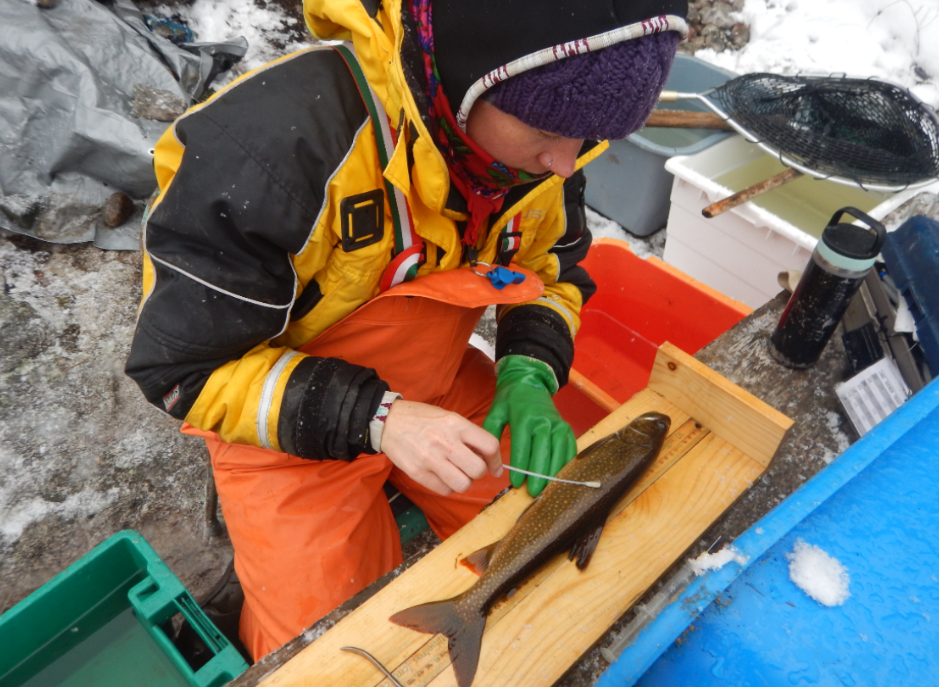
scientist swabs a fish on a wooden board with a swab

While laboratory studies are always useful, they can only reveal so much.

When you manipulate and experiment on whole ecosystems, you can explore the many different effects that a pollutant or drug has on multiple components of a lake ecosystem and on ecosystem services.

This is specifically relevant for these compounds. A slower fish may not mean much in a laboratory study, but it could be the difference between escaping or being eaten by a larger fish. Only by looking at all the components together can we see larger effects on the ecosystem.

That’s where we come in.

Where do we go from here?

Here at the world’s freshwater laboratory, we do just that—experiment on whole lakes to mimic and monitor what we see around the world every day.

In 2021, after preparatory small-scale experiments in laboratories and on the land, we are exploring what happens when venlafaxine, a commonly prescribed antidepressant, is introduced into freshwater environments.

We will be using small enclosures within a larger lake and introducing venlafaxine into them at the levels they have been detected in regular water bodies. Then, we will explore what happens at all levels of the food web and in every corner of the lake.

We want to know the toxicity of the drug on the fish (especially when they are young); we want to explore any behavioural changes in the organisms once their lake is exposed to the drug; we want to see if there is any impact on populations and population sizes; and we also want to discover how the drugs accumulate in the lake’s organisms.

Once we have those answers, we will be developing policies that empower our governments and industry to protect our fresh water from any harmful effects these critical drugs may have and to inform Canada’s wastewater treatment strategy.
Insight

Are Countries Walking the Talk on Cutting Carbon?

In the race against climate change, increasing ambition over time is necessary to avoid catastrophic warming. However, revised commitments from parties to the Paris Agreement lack two critical components of ambitious climate action: carbon pricing and fossil fuel subsidy reform.

March 16, 2021

Since the Paris Agreement was signed in 2016, countries have committed to act on climate change through their Nationally Determined Contributions (NDCs), plans that set country mitigation and adaptation targets every five years to keep global warming in check. Yet the United Nations Environment Programme’s recent Emissions Gap report on climate ambition shows that, under current government pledges, NDCs are largely insufficient and will lead to at least a 3°C warming by the end of the century. The ratcheting mechanism of NDCs—in other words, their increasing ambition over time—is critical to avoid a climate crisis.

How Can Countries Increase the Ambition of Their Climate Action?

Two particularly important tools that countries have at their disposal are carbon pricing and fossil fuel subsidy reform. Working as two sides of the same coin, these tools raise fossil fuel prices to be more in line with their true cost, which promotes more efficient consumption and therefore combats climate change while directing investments toward clean energy alternatives. Both can not only keep emissions in check and help countries meet their climate targets, but they also raise much-needed revenue for a green recovery from COVID-19. Every country should include ambitious carbon pricing and subsidy reform targets in its NDC. So far, however, this is not the case.

In a 2019 report, the International Institute for Sustainable Development (IISD) and Deutsche Gesellschaft für Internationale Zusammenarbeit (GIZ) showed that, out of almost 200 NDCs, only 8% of countries (14 NDCs) explicitly pledged to reform fossil fuel subsidies, and only 12% of countries pledged to put a price on carbon (50 NDCs). (The EU is treated as a block, as it has submitted a single NDC.)

Every country should include ambitious carbon pricing and subsidy reform targets in its NDC. So far, however, this is not the case.

While all countries committed to submitting revised NDCs in 2020, only 71 countries did so. It is possible that several countries may have interpreted the postponement of the 2021 United Nations Climate Change Conference (COP26) as a reason to postpone NDC updates as well, but this is problematic as it further complicates tracking progress on subsidy reform and carbon pricing. For example, Canada recently decided to significantly increase its carbon pricing to CAD 170 a tonne by 2030 but did not submit an updated NDC last year.

Analyzing the text of all NDCs—including those updated in 2020—reveals very few new or more ambitious green fiscal policy commitments. Only 57 explicitly commit to carbon pricing (including emissions trading schemes) and 12 to fossil fuel subsidy reform. Furthermore, several of these pledges are aspirational rather than firm action plans. Perhaps most disconcertingly, looking at the 2020 batch of NDCs, we found at best no improvement on fossil fuel subsidy reform and, at worst, two countries that might have backtracked on their proposals.

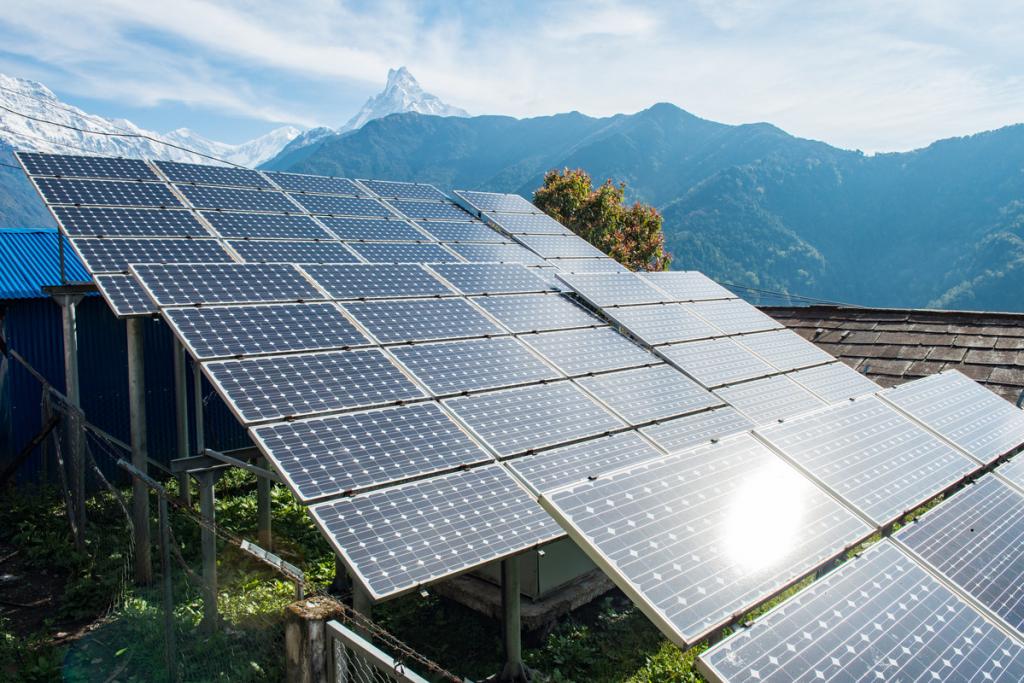
Solar panels in a field with mountains in the background
Solar panels in Nepal / Boyloso

Commitments to carbon pricing did increase, which is praiseworthy, but countries must openly acknowledge that fossil fuel subsidies are incompatible with climate action and begin to widely recognize and adopt fossil fuel subsidy reform as the powerful emissions reducing tool that it is.

Fossil Fuel Subsidy Reform and Carbon Pricing Are Still Underutilized in the 2020 Revised NDCs

Many countries make commitments to renewable energy subsidies as a means of meeting their mitigation targets, but fossil fuel taxation and subsidy reform remain underutilized. While renewable subsidies can incentivize deployment, their positive effects could be cancelled out if countries simultaneously continue underpricing fossil fuels.

Only a handful of countries link fossil fuel subsidy reform or carbon pricing to creating a fair playing field for renewables in their NDCs, including Burkina Faso, Colombia, Ethiopia, and Singapore. Ethiopia stands out for eliminating virtually all of its fossil fuel subsidies in 2008. Switzerland also acknowledges the importance of reviewing domestic fossil fuel subsidies while cooperating with other countries, including through the Friends of Fossil Fuel Subsidies Reform. However, these commitments are still exceptions rather than the norm.

What Is Missing From Most NDCs?

Some countries such as Armenia, Kiribati, and the Solomon Islands detail how revenues raised from carbon taxes or levies might or will be used. Armenia refers to the possibility of using carbon pricing revenues to fund climate change mitigation and adaptation projects. Despite these outlying positive examples, however, most NDCs remain vague on how the revenues from carbon pricing and subsidy reform will be used and on what compensation measures will be put in place to protect vulnerable groups. For instance, Nigeria pledges to reform subsidies to fossil fuel consumption and production, acknowledging that consumption subsidies benefit higher-income households most. Yet Nigeria falls short in detailing how these reforms might actually be accomplished or how vulnerable consumers might be protected in the process.

Most NDCs remain vague on how the revenues from carbon pricing and subsidy reform will be used and on what compensation measures will be put in place to protect vulnerable groups.

Several NDCs also send mixed signals by supporting fossil fuel subsidy reform but promoting natural gas as a bridge fuel, as in the case of Morocco. Surprisingly, still very few countries make a connection between green fiscal tools and green recovery despite the opportunities for large revenue gains and emissions reductions.

Where Are NDCs at Now, and Where Do Countries Need to Go From Here?

The biggest emitters, namely China, India, and the United States, have not yet submitted an updated NDC and have, particularly in the case of the United States and China, relied on a fossil fuel heavy recovery. But positively, we are seeing some of these trends start to change. India used low oil prices during the pandemic as an opportunity to raise excise duties on diesel and gasoline to help fund its COVID-19 recovery. China pledged to be carbon neutral by 2060 and recently launched an emissions trading scheme in the power sector. In the United States, the Biden administration has also shown an unprecedented willingness to tackle the fossil fuel industry head on, including by seeking to eliminate certain subsidies to fossil fuel producers.

Several NDCs revised in 2020 also make a case for a green recovery and building back better. But clearly, when it comes to fossil fuel subsidy reform and carbon pricing, there is a long way to go before countries’ promises match the level of ambition needed to limit climate change to 1.5°C.


Insight

Will Ngozi Okonjo-Iweala Usher in a New Era for Gender Equality in Trade?

The appointment of the first woman as Director-General of the World Trade Organization (WTO) sends a strong signal that equality between men and women can be achieved. But if the goal is to truly empower women, WTO leadership must first address how trade can entrench or reduce structural gender imbalances in the economy. 

March 8, 2021

Ngozi Okonjo-Iweala’s appointment as Director-General of the WTO has been widely welcomed, and with good reason, as she brings strong credentials to the role. Her appointment has also been hailed as historic: she is the first African and the first woman to head the organization, taking office over 25 years after the WTO first opened its doors.

Commentators, media outlets and Ngozi herself have highlighted the enormity of the tasks that lie ahead of her: rebuilding trust in a weakened institution, strengthening multilateralism, and fixing the dispute settlement mechanism, not to mention addressing the COVID-19 pandemic and its consequences.

But one of the challenges she faces has scarcely been mentioned, even though it is relevant for over half the inhabitants of our planet: mainstreaming gender into the WTO’s work.

Improving Gender Balance in Senior Staff and in Committees

A survey of the gender balance in the WTO shows significant room for improvement, both at the secretariat level and within the organizational structure.

Key bodies have been chaired overwhelmingly by men for decades. A woman’s appointment to the top role is a significant step toward breaking the glass ceiling in this male-dominated organization. However, WTO Members can do more to ensure they choose committee chairs, especially in key positions like the chair of the General Council, in a way that reflects and recognizes the women diplomats working in trade. Meanwhile, the Director-General can help set the tone for the membership in her choice of Deputy Directors-General—especially given that only a single woman, Valentine Rugwabiza, has ever served in one of these positions.

At the secretariat level, women have long been under-represented in leadership positions and over-represented in clerical roles. This is an area where Ngozi, in the top managerial role of the secretariat, can also take tangible action.

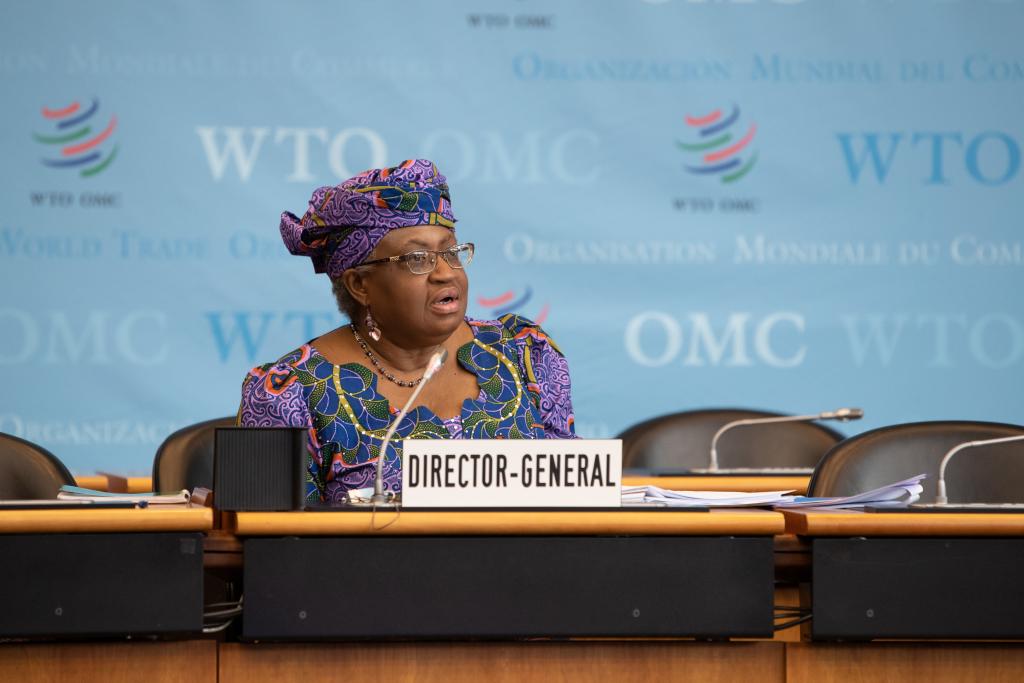
Ngozi Okonjo-Iweala, WTO Director-General
WTO Director-General Ngozi Okonjo-Iweala at the March 4, 2021, meeting of the General Council. (Photo and Copyright: WTO.)

Gender balance among the people who make up the WTO is just one small aspect of the trade and gender relationship; more concerted work will be needed to address the gender inequalities that are so deeply entrenched in international economic relations. A first step would be for the WTO to acknowledge the bidirectional nature of the relationship between trade and gender.

The Two-Way Relationship Between Trade and Gender

On the one hand, gender inequality impacts trade policy. Many countries have chosen to exploit women's labour—which is cheaper than men's—to develop their industrial and economic policies. Often, this means keeping women in precarious working arrangements, in low value-added sectors of value chains, and in the lowest-skill occupations in the tradable sectors in which they are most present, such as call centres, tourism, or textiles. In other words, women’s lower-cost labour is used as a source of competitive advantage in international trade in labour-intensive sectors, especially those where international competition is intense. Gender inequality thus becomes part of macroeconomic strategy.

Meanwhile, in all parts of the world, women-owned enterprises struggle to achieve competitive advantage in international trade: they tend to be concentrated in lower value-added industries or in sectors with lower export growth potential.

On the other side of the trade and gender relationship is the way in which trade and trade rules affect women differently than men. For instance, trade-related rules on intellectual property that raise the prices of medicines can adversely affect women in their role as consumers if they spend a higher portion of their income on medicines for the family. Trade and investment liberalization can affect women disproportionately when consumption taxes are introduced to compensate for a loss in governmental revenues as a result of tariff cuts and loss of corporate taxes.

Indeed, a standard policy prescription is to make up for the lost revenue by boosting indirect consumption taxes, such as value-added or sales taxes, which often increases women’s tax burden more than men’s. Similarly, liberalization can impact women positively, for instance if it creates new, decent jobs or when it results in tariff cuts on imported items that they consume. This side of the trade and gender relationship is complex and women will be impacted differently depending on where they live, where they work, and how the goods and services that they consume are affected by liberalization.

Trade Policy Is not Gender Neutral . . . 

For most of the WTO’s existence, trade policy was largely understood as being gender neutral. It was commonly—and incorrectly—assumed that trade policies provided the same opportunities for men and women. Until very recently, trade policy-makers were reluctant to accept that the differentiated and sometimes negative effects of trade for certain groups within countries was any concern of theirs.

In recent years there has been a tentative move away from this position, and in 2017 the majority of WTO Members called for creating a mandate within the organization to address impacts on women through the adoption of the Buenos Aires Declaration on Trade and Women's Economic Empowerment.

. . . but the WTO Risks Sidestepping the Main Issues

While it is positive that so many key WTO actors have acknowledged that trade is not gender neutral and that the WTO should take on a role to address that fact, this Declaration sidesteps the key issues at stake.

Also notable is the fact that, while support for WTO work on trade and gender is growing among the membership, the Buenos Aires Declaration—as well as a new working group on trade and gender established last December—has yet to attain the full support of all WTO Members. While the reasons for this vary, and the Declaration has significant room for improvement, the fact that some Members are unwilling to discuss it is an issue that cannot be ignored.

As its title indicates, it risks focusing WTO Members’ efforts too narrowly on initiatives that enable women entrepreneurs to access international markets without addressing the structural features of the international trading system that leave vulnerable people, the majority of whom are women, out in the cold.

For sure, helping channel funding and training to women entrepreneurs is easier than devising policies whereby developing countries can improve women’s working conditions and career opportunities in sectors such as tourism and textiles while also maintaining their competitive advantage in world markets. Connecting women entrepreneurs to export markets is also easier than assessing the complex ways in which a particular proposed trade measure could be beneficial or harmful for women in their roles as workers, producers, and consumers.

If Ngozi Okonjo-Iweala really wants to ensure that trade provides women with the same opportunities as it does for men, she will need to push WTO Members, her staff, and partner organizations to engage in earnest with all the aspects of the trade and gender relationship.

This blog is part of a new series dedicated to the nexus between trade, investment, and gender. The author would like to thank Nathalie Bernasconi-Osterwalder and Sofia Baliño for their comments on earlier drafts of this article.

Insight details

Insight

Climate Security and Peacebuilding in a Time of Converging Crises

While rarely in and of itself a sole driver of violence, climate change impacts can exacerbate traditional drivers of conflict. The international community must come together to help vulnerable countries build resilience on all fronts.

March 1, 2021

Climate change has long been considered a contributing factor to conflict and instability. Risks are particularly acute and amplified in states currently suffering from weak governance.

We sat down with Alec Crawford, Senior Policy Advisor and Lead on IISD's Environment, Conflict and Peacebuilding work, to discuss the United Nations Security Council's open debate on climate security, held on February 23: what came out of this, and how can the international community join forces to help?

What happened during the meeting, and why is it important?

The Government of the United Kingdom, which currently holds the presidency of the Security Council, hosted an open debate on the role of the Council and the United Nations more broadly in addressing the security risks posed by climate change in conflict-affected settings. British Prime Minister Boris Johnson highlighted the need for the Security Council to push for urgent action in building resilience in fragile states, reducing their vulnerability to both climate impacts and potential conflict risks.

What do these risks look like?

Climate change acts as a threat multiplier. It's not necessarily seen as a driver of conflict in and of itself, but it can exacerbate existing drivers: a history of tensions, poverty, ethnic differences, or inequality. By displacing communities and increasing competition over natural resources like land and water, climate change can heighten the risk of those conflict drivers, leading to broader grievances and, potentially, violence. This is particularly the case in contexts of weak governance.

The international community is recognizing not only that climate change undermines stability and peace but also that conflict increases climate vulnerability. Efforts at addressing climate and conflict have to go hand in hand.

How has IISD worked to link these two agendas?

IISD has been working in this space for about 15 years now. Through field research in places like the Sahel and the Middle East, we initially examined the links between climate change and insecurity.

We are now focusing on climate-resilient peacebuilding and conflict-sensitive climate programming. For example, how can you design these programs to ensure they enhance peacebuilding in fragile contexts? Most concretely, we've been looking at how to integrate and align National Adaptation Plan processes in conflict-affected states with peacebuilding agendas.

As the world seems to be focused on lowering greenhouse gas emissions, would you say that there's equal urgency for climate mitigation and adaptation? Can they both be used to protect communities from environment-related conflicts?

There is, first and foremost, an urgent need for significant emission reductions from the international community. But for many conflict-affected countries, mitigation is secondary, given they're just not significant emitters. For them, the focus has to be adaptation: reducing vulnerability to climate impacts, increasing adaptive capacities among communities and individuals, and strengthening government capacities to cope with an increasingly variable climate.

Conflict only serves to increase vulnerability to climate change and make adaptation more difficult.

Unfortunately, even if we take dramatic action now to reduce emissions, a certain degree of climate change is inevitable and is, in fact, already happening. Because of that, investing time and money to support climate adaptation is crucial.

What should international leaders' next steps be to help build climate resilience in conflict-affected countries?

We recently conducted a series of peer exchanges with representatives from Somalia, Nigeria, and Sierra Leone, whose countries are all in different stages of the peacebuilding process. They reiterated that their governments are already overstretched, under-resourced, and under-capacitated.

They need more resources—financial and human—to focus on climate risks and vulnerabilities and to bring together the adaptation and peacebuilding agendas as much as possible; alignment will help with addressing the shared drivers of vulnerability to both conflict and climate.

For international leaders, the focus must be on supporting both adaptation and peacebuilding in these contexts. Conflict only serves to increase vulnerability to climate change and make adaptation more difficult, while the changing climate further undermines stability. It's a vicious cycle that can spiral out of control unless we take a holistic and integrated approach to addressing these challenges.

***

With the UN Security Council's broad recognition of the links between climate change and security, the international community is one step closer to enhancing their support for vulnerable countries' adaptation efforts. There is a clear need to build resilience to both climate change and conflict in these regions, so let's push for these discussions to turn into action.

Insight

What the Next Generation Needs From a Green Recovery

A conversation with Canadian youth climate activist Aliénor Rougeot

The race to net-zero is accelerating, and Canada can no longer delay implementing a just and clean energy transition. But how effective will a green recovery be if we aren’t listening to the next generation—the youth who will actually be most affected by these policies in the years ahead?

February 25, 2021

IISD energy expert Vanessa Corkal sat down with Aliénor Rougeot, coordinator of Fridays for Future Toronto, to get her take on Canada’s new climate plan, how we can ensure our green recovery leaves no one behind, what we need to see in the 2021 federal budget, and why young people need a seat at the decision-making table. Follow their exchange below.

VC: What got you started with Fridays for Future Toronto?

AR: At the University of Toronto, I was doing sustainability work on campus. And then we had a Conservative government get elected here in Ontario, and we had the first wave of massive school climate strikes in Europe. That really combined in my mind into, “I need to do something bigger.” So with the support of people that were already doing environment work, I created Fridays for Future Toronto and it grew to be the youth-led group that it is now. It was very organic.

VC: In our Green Strings report, we identified seven principles the government should follow to ensure green recovery. When you look at those, what are the main principles you want to see adhered to as we recover from COVID-19 and tackle climate change? And did we miss anything?

AR: The part that really resonated with me the most is the idea of transparency and accountability. It's absolutely key, because I think we have a distrust of our institutions and the youth have it with regards to climate change. A just recovery would help to reconcile us with our institutions, but still more climate action is going to be needed. And the youth would like to be a part of a constant feedback process—instead of us needing to give unsolicited feedback in the streets.

VC: Where does your vision differ from what you see as the government's vision, and what is your perspective on the government's current level of ambition?

AR: We work as part of an international network, and when we talk to Fridays for Future in the Global South, and they see us committing to net-zero by years like 2050, they say, “No, you folks need to be at net-zero by 2030, 2035. Because we're the ones that are going to be drowning or facing these droughts.” And so for us, it's really hard to look at these targets and feel all right with them.

The vision we have is to look at everything that led us to this climate crisis and say, “What was the root cause?” How do we constantly let the promise of profit come before the need for community wellness? How do we constantly pretend that Indigenous issues are separate from climate issues? The word we use is climate justice. The way I simplify it is by looking at how addressing a climate issue can also address other issues. For example, cooperative community gardens can help address current climate issues. But at the same time, they address a social issue (the right to food) and can help people reconnect with their community, reconnect with the land. This kind of policy can bring about a more lasting change.

The vision we have is to look at everything that led us to this climate crisis and say, “What was the root cause?”

Our biggest fear as youth is that we will have solved the carbon issue of climate change. But then there will be another reason why our environment is hurting. I think we're scared to just constantly be reacting and fighting another crisis. I don't think anybody wants to live a life like that.

VC: What is your perspective, and the perspective of your colleagues at Fridays for Future, on the government's new climate plan?

AR: The main thing we’ve noticed is the constant focus on individuality. For example, electric vehicles are an individual solution. And it felt like there was still no willingness to say, “Hey, this is a collective thing and we're actually going to try to look at the root causes.”

And then the second big thing that I see is the idea that we can replicate the system we have, but “clean,” which to me is absolutely crazy. Because it shows a lack of understanding. It's not only about reducing carbon: there are other environmental and social problems. As a student of public policy, I think I understand why—it's easier to have these targeted solutions. But there's a problem of not being courageous enough to take a bigger step back.

Alienor Rougeot at a Fridays For Future Toronto march in 2015
Aliénor Rougeot at a Fridays for Future Toronto climate strike in March 2019 / Photo by Dina Dong, CC BY 

VC: We have Budget 2021 coming up, and we know that the government's promise is CAD 100 billion in stimulus. What do you want to see coming out of that budget?

AR: Budget 2021 has to have something that your Green Strings report talks about—conditions when money is given to industry. We have to know that industry is not going to replicate the harm they did before. That money needs to go toward people, toward innovation, toward a recovery. It shouldn’t be redistributed as dividends.

And we want cohesion. I think our budgets have never been climate coherent. For example, the government has put a lot of money into pipelines, like Trans Mountain. And when you look at it from afar, it's not coherent.

VC: How do you think the government can better engage with and listen to youth on green recovery? What would that look like?

AR: You can have youth councils, youth delegates, but I think first we need an understanding that on the climate issue, treating youth as only youth might be a flaw, as we have more at stake. I'm a little bit afraid of the government seeing youth councils as junior partner councils. They shouldn’t treat it as a separate consultation, but more as “these are the main people we need to get to.”

The youth would like to be a part of a constant feedback process—instead of us needing to give unsolicited feedback in the streets.

A lot of youth are either afraid or disheartened. Afraid to say something that's going to sound unknowledgeable and so politicians aren't going to listen, or disheartened, because they feel like they've actually learned the material but haven't been listened to. We want to hear, “We understood your ideas, that makes sense. And you don't have to speak our lingo. We're the politicians—it's our job to speak your language.” Concretely, we would love to be invited into conversations early on, instead of being told at the end, “This is what’s going to happen. What do you think?” By then it’s too late.

VC: Organizations like IISD also have a role to play in elevating youth voices. What advice do you have for non-governmental organizations to better integrate the needs of youth in their recovery and climate change work?

AR: Non-governmental organizations, to me, are doing a good job when they specifically reach out and we figure out the best angle to work together. But we need to remember that every time a member of one community takes time to do something with your group, it takes time away from their community work.

Before you bring a group in, take the time to look at their content and learn about their priorities.

If you do want a Youth Advisory Board or something similar, simplify the process by making sure to give us a time commitment that is clear and then really respect that. Try to compensate when you can—it makes a big difference for students or people that do a lot of this work unpaid. And when we feel like the time we spend and the input we give is going somewhere, that's very positive, obviously.

VC: Who is your climate change hero and why?

AR: My heroes are the older people that decide to support us or similar groups. I really find it wonderful to have folks dedicate their retired free time to empowering youth. The ones that come in and say, “I'm here if you need, and these are the skills I have.” We have people helping us pick up supplies, because I don't have a car. We have people telling us, you know what, we'll be the liaison at a long City Hall meeting. Doing that work is heroic for me in a very simple way. It really makes you feel like you're not being abandoned with the burden of the climate crisis.

Insight

ECT Watch: New Dispute Reignites Debate Over Treaty Protection for Fossil Fuel Investments

As we see yet another reminder of one of the Energy Charter Treaty's core drafting flaws, our expert takes stock of whether progress is being made on modernizing it.

February 19, 2021

As the month of February began, news of a new investor–state arbitration targeting a recent Dutch climate law brought back to the fore one of the Energy Charter Treaty’s (ECT) biggest problems: the prospect that foreign investors can use the treaty to target climate-focused regulations and legislation. The arbitration request comes just weeks before ECT negotiators prepare to reconvene online for their next round of "modernization" talks.

The request for arbitration was submitted by RWE, a coal power company headquartered in Germany, against the Dutch government. It cites the lack of compensation for the "disruption" caused by the country’s 2019 law requiring the phase-out of coal power by 2030.

The company says that the move will lead to hefty losses, making a coal-power plant that it built in the Netherlands six years ago unable to turn a profit from 2030 onward. Dutch officials, for their part, say that companies like RWE have a decade to adapt their power plant accordingly.

The RWE case itself has provided yet another reminder of one of the ECT’s core drafting flaws: that, in its current form, it provides legal protection to nearly all types of energy investments, regardless of their environmental and climate impacts. Combined with many of the ECT’s other provisions, such as its clause on fair and equitable treatment, the treaty has the potential to levy a harsh blow to governments seeking to move toward carbon neutrality.

Economic activities

The treaty’s contracting parties are currently debating what "economic activities" should benefit from investment protection under a modernized EC—and whether to exclude certain types of economic activities, such as those that relate to coal, natural gas, petroleum, and petroleum products.

The existing ECT text defines economic activities as those "concerning the exploration, extraction, refining, production, storage, land transport, transmission, distribution, trade, marketing, or sale of Energy Materials and Products except those included in Annex NI, or concerning the distribution of heat to multiple premises."

The energy materials and products featured in the above-mentioned annex are "oils and other products of the distillation of high temperature coal tar" and some other "similar" products, along with wood charcoal, fuelwood, and wood waste. Aside from those exclusions, the scope of the terms "economic activity" and "energy materials and products" is currently left wide open.

This is yet another reminder of one of the ECT’s core drafting flaws: that, in its current form, it provides legal protection to nearly all types of energy investments, regardless of their climate impacts.

In practice, this has meant that foreign investors can pursue arbitration against states that take measures to phase out their coal-fired or petroleum-fuelled plants, as the RWE case demonstrates. This has fuelled concern that the ECT will be a deterrent to governments seeking to develop increasingly robust regulations and laws to support climate action.

For example, the Netherlands, along with the European Union’s (EU) other member states, updated its climate law 2 years ago to bring it in line with the bloc’s climate and energy framework for the year 2030, which sets out the target of slashing greenhouse gas emissions by 40% from 1990 levels from this year to the end of the decade.

This EU-wide objective could increase significantly in ambition, pending the results of negotiations among the EU institutions for a Green New Deal and a new 2030 Climate Target Plan. This means that that Dutch legislators and their counterparts in other EU member states may soon be looking at further climate regulations or laws. The European Commission (EC) has proposed that its 40% target be upgraded to 55%, arguing that doing so will put the 27-member union in a better position to become carbon-neutral by mid-century.

These legislative and regulatory efforts are key components for the EU’s Nationally Determined Contribution (NDC) under the United Nations’ Paris Agreement, which sets out how governments will work to slash greenhouse gas emissions. These NDCs are also meant to become more ambitious over time to meet the Paris Agreement’s objective of limiting global temperature increases to 1.5°C above pre-industrial levels.

Sources familiar with the ECT talks note that, within the EU itself, there has been an intense debate underway among the bloc’s member states over whether to pursue an even more ambitious approach to how to define the term "economic activities," relative to what the EC is currently considering.

Many EU parliamentarians have indicated that they would not support an ECT that protects fossil fuel investments.

Under discussion has been how to phrase the exclusion of the treaty’s application to particular fossil fuel investments. Various options on the table consider the length of time for phasing out protection for certain plants that produce electricity from both renewable and fossil fuel sources, so long as the plants meet certain limits on the level of carbon dioxide produced relative to the fossil fuel inputs. These discussions have reportedly not led to a consensus outcome, leaving the EC’s negotiating position unchanged.

This debate has also spilled over into the public domain. Claude Turmes, Luxembourg’s Energy Minister, sent a letter on February 5 to EU Executive Vice President Frans Timmermans and European Commissioner for Energy Kadri Simson urging the bloc to take a stronger collective stance on ending the ECT’s protection of fossil fuel investments. He warned that failure to do so could have devastating implications for national policy space when it comes to taking ambitious climate action.

"Any exception or attempt to slow down to the termination of fossil fuels investment protection under the ECT will limit EU governments to take decisions in the direction of energy transition and reduction of CO2 emissions (and in the same time, the right to define their own energy mix)," said Turmes, according to a copy of the letter published by Euractiv.

On February 13, Teresa Ribera, Spain’s Vice President and Minister for the Ecological Transition and the Demographic Challenge, shared on Twitter that Madrid is ready to abandon the ECT, should the modernized version not align with the UN’s Paris Agreement. This sentiment has been expressed directly to the EC, she confirmed.

Should the modernized ECT not be well suited to climate action, withdrawal is a position that has been publicly supported by many EU parliamentarians, many of whom have separately indicated that they would not support an ECT that protects fossil fuel investments.

Under the ECT’s current language, should a state withdraw, then the treaty’s provisions will continue to apply to investments made before withdrawal for a 20-year period. Experts such as Tania Voon have noted that termination by multiple parties, including an agreement that drastically shortens that survival clause, could be a viable alternative.

The year ahead

Negotiations to modernize the ECT formally kicked off in December 2019, with three rounds held to date and a fourth planned for March 2–5, 2021. Subsequent negotiating rounds are currently slated for June, July, September, and November.

While a December 2020 progress report on the negotiations provides brief updates on each overarching topic under consideration, public details on the content of negotiating proposals remain scant. The EU has made its own ECT proposal public, but this is the exception rather than the rule among the ECT contracting parties. The information currently available from the Energy Charter Conference gives a very limited window into some of the textual haggling that is already underway.

Media reports indicate that the real horse trading will take place throughout 2021, making this year the one to watch. Some of the negotiating fault lines are already becoming apparent, as shown by the EU’s own internal deliberations over how to approach the topic of economic activities with the other contracting parties. Before the formal negotiations kicked off, Japan indicated that it did not see a need for changing the existing ECT text at all, though it has set out where the treaty could be revised should modernization efforts move forward.

As negotiators prepare to reconvene over Zoom in early March, they should consider how this modernized agreement will stack up against the Paris Agreement, along with some of the legal options that have been proposed in response. For example, the Treaty on Sustainable Investment for Climate Change Adaptation and Mitigation, an IISD-led project that was one of the winners of the Stockholm Treaty Lab’s 2018 prize, would give states a legal framework for encouraging “sustainable investments” and for eliminating and phasing out “unsustainable investments.” It would have them submit schedules listing what investments they consider to qualify under each category.

Over 25 years since the ECT took effect in the aftermath of the Cold War, the scope and scale of the climate challenge have become far more visible, as has the treaty’s many failings. A modernized ECT must rectify these flaws; otherwise, contracting parties must be ready to walk away from the accord entirely.

This article builds on our previous work and reporting on ECT and represents the first installment in our new ECT Watch series, where we track the developments in ECT negotiations and unpack what they mean for sustainable development and climate change.

Insight

Watching the Water: The case for real-time freshwater monitoring

February 17, 2021

It has been nearly a year since many across the world have packed up their offices and started working from home.

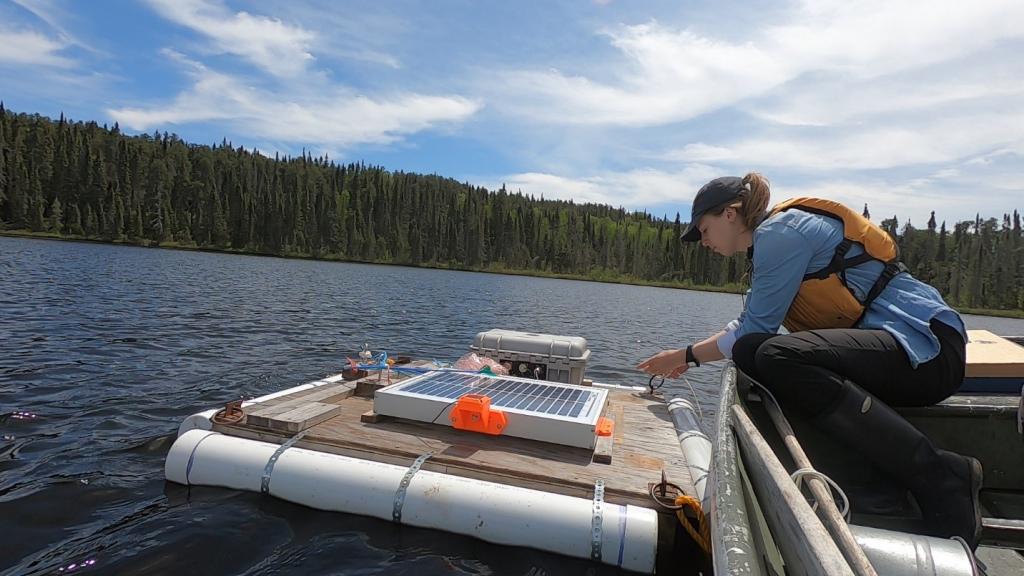
Despite working virtually, we still managed to make it safely out to the site to collect real-time data from Lake 227 during the 2020 summer season. This lake hosts the longest-running experiment at IISD-ELA in its 53-year history.

In June 2020, we deployed a sensor and AquaHive low latency telemetry platform in the surface water of the lake, which records and transmits temperature, chlorophyll a and blue-green phycocyanin concentration, and fluorescence on the hour, right to our laptops.

In other words, the AquaHive allows us to conduct freshwater monitoring in real time.

woman works on the dock of a lake

The case for faster freshwater monitoring

Monitoring programs are essential for understanding the quality and quantity of fresh water; however, traditional programs are expensive in terms of staff time and travel.

This means that the number of samples is limited by the cost of collecting each sample, the distance and time it takes to get to the site, and the number of personnel taking the samples. In addition, data interpretation is often later than the sample date. In some scenarios, samples are collected, transported to a laboratory, undergo analyses, transcribed, and then sent back for interpretation. This time lag may be too long to make important decisions, such as the safety of drinking water.

Deploying low latency sensors and platforms means that data can be collected and transmitted from sensor to screen with little to no delay, allowing faster decision making.

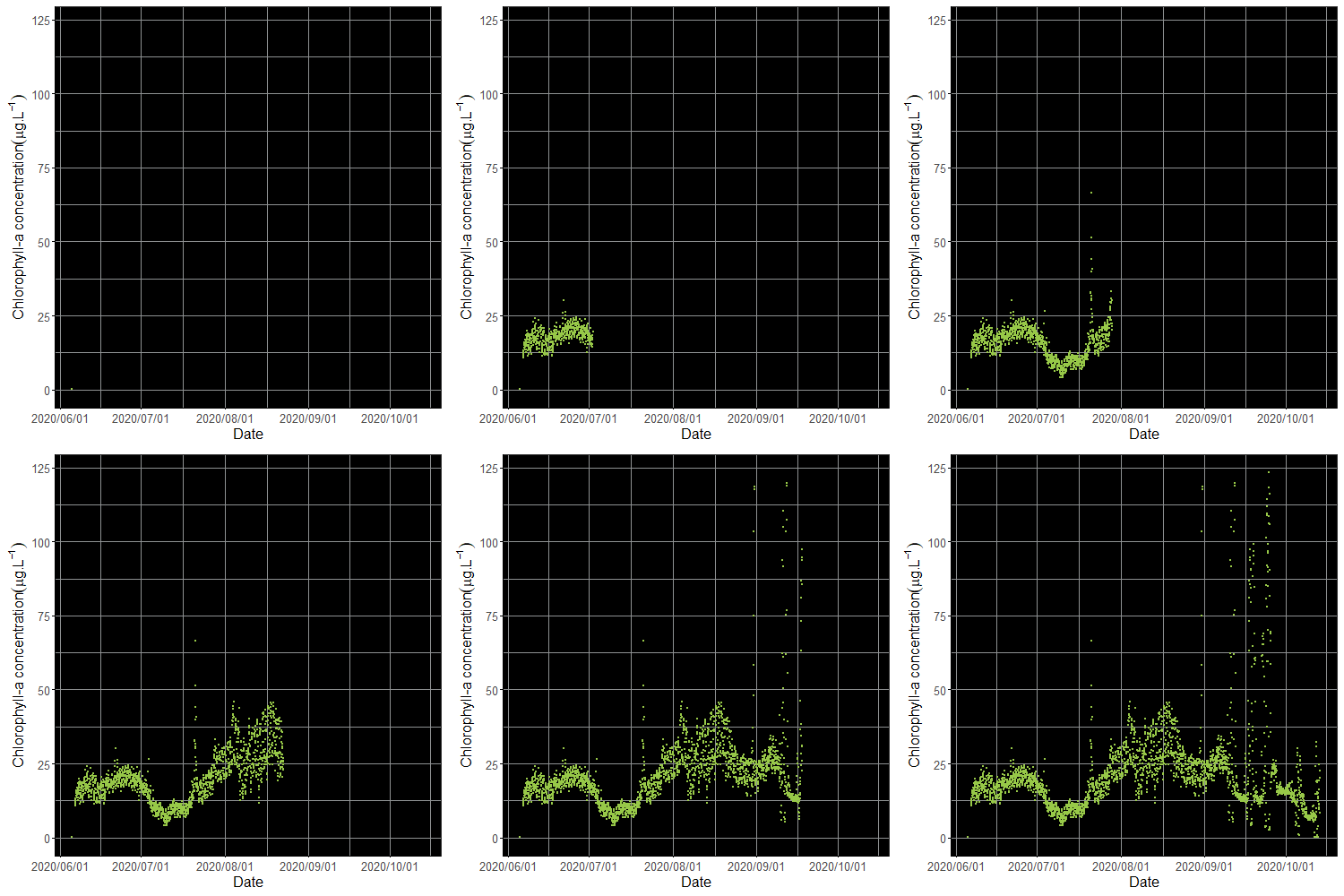
And the proof is in the pudding—from June 6 to October 13, 2020, we collected 3,091 recordings in real time from the AquaHive on Lake 227. This data revealed some interesting trends and changes that we would otherwise have had to wait for until recordings were downloaded, transcribed, and analyzed.

dynamic graph showing rates of chlophylla-a in a Canadian lake

Above: Every hour, sensors on Lake 227 record data and the AquaHive telemetry platform send it back to our computers in real time. This animated graph tracks the trajectory of chlorophyll-a concentration.

Real-time monitoring in the real world

What other benefits can sensor-to-screen monitoring bring us when applied in real-world monitoring situations?

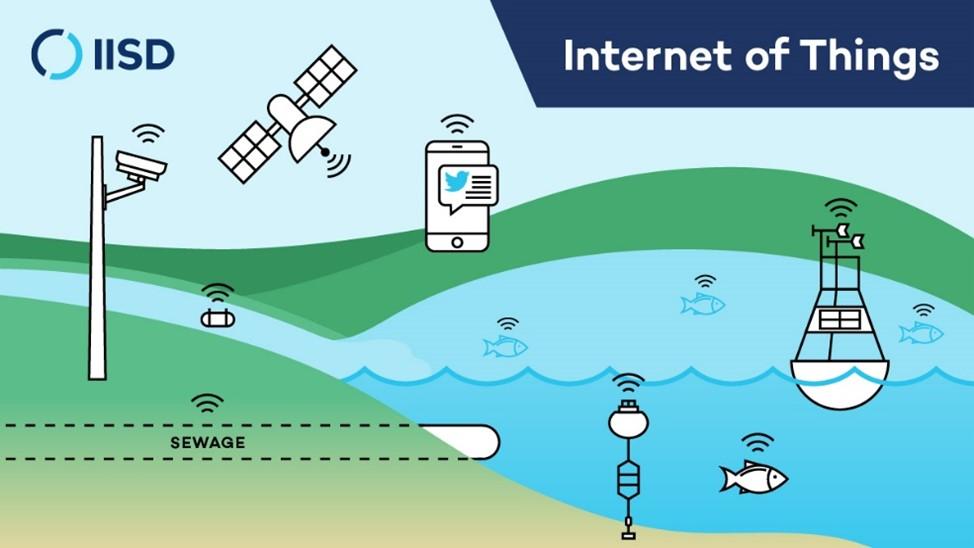
Below are three examples of how low latency platforms can help monitor and communicate freshwater data.

LOCAL COMMUNITIES MAKING REAL-TIME DECISIONS

Including and communicating with local communities about the environment and their safety builds trust and transparency.

The AquaHive platform logs and transmits hourly data to the cloud, letting us see trends and even alerting us when the water changes quickly or a parameter exceeds a set threshold, which could indicate an event such as a pollution spill. This could allow communities to save money by protecting their drinking water systems or let people know immediately when swimming and recreation are unsafe. It also builds evidence that communities can use to protect their local water.  

internet of things graphic

COLLECTING INFORMATION FROM REMOTE SITES

To arrive at Lake 227 from the central camp, you have to take a car, two separate boat rides, and two portages. While we are fortunate at IISD-ELA to have the equipment to access the site, many lakes around the world—and even in northern Ontario—are much more complicated to access. This limits what we can see and understand at remote sites, despite the possible importance to the environment, nearby communities, or pollution concerns. Using sensors and platforms that transmit data in real time can allow communities or scientists to collect much more data than previously attainable and improve capacity to make sound decisions.

EARLY WARNING DETECTION

Scientists use forecasting to predict changes or early warnings of future events, such as flood forecasts. Similar methods can be deployed for water quality warnings, for events such as algal blooms or pollutants, to allow faster decision making and management. Some innovative environmental managers have already begun using real-time systems—for example, the Government of Newfoundland and Labrador has deployed real-time water quality sensors that update graphs every 2 hours, allowing real-time interpretation and alerts for early warnings.  

The technology is here: now it is time to adjust how we do science—and turn that science into effective action to protect water.

Stay Tuned!

We plan to deploy the platform on Lake 227 for another season to collect more information about algal blooms. We are also working to deploy AquaHive and sensor platforms on the Winnipeg River in Manitoba.

Insight

Plenty of Low-Hanging Fruit for Feds to Pick in Curbing Consumption of Single-Use Plastics

Part of Canada’s action plan to ensure a green recovery from the pandemic should include incentives for small businesses, entrepreneurs, and researchers to develop innovative and sustainable solutions to reduce and prevent plastic pollution in fresh water, as well as better understand its effects.

February 1, 2021

As we continue to witness many regions of the country experiencing undulating waves of COVID-19 infections (and related shutterings and (re)openings), it seems fair to say that there are many aspects of our lives that have changed forever.

One important difference seems to be our use of plastics. 

Plastics continue to be a major part of our daily lives here in Canada, as they are durable, relatively inexpensive to produce, and versatile enough for use in a diverse range of products. However, the quantity and ability to recycle these products far outstrip their usefulness.

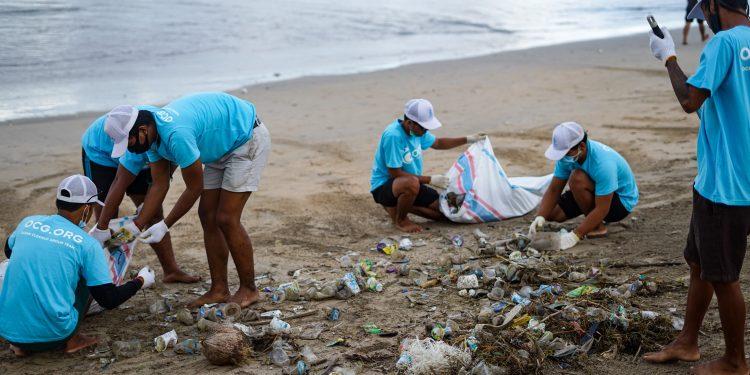
people on a beach wearing blue shirts picking up plastic waste

In fact, less than 10% of plastics in Canada are recycled, contributing to over 3 million tons of plastic being thrown into landfills or into the environment each year. Over one third of plastics produced in Canada are for single-use packaging or products—such as plastic bags, take-out containers, and bottlecaps—one of the largest sources of plastics found in fresh water.  

Part and parcel of the changes drafted into our daily life brought about by COVID-19, Canadians’ reliance on certain types of single-use plastics has increased.

We all remember when, at the height of the outbreak, some provincial health officials advised against using reusable bags and containers in grocery stores, with several chains banning them outright in favour of plastic bags. Although many of these restrictions are now being lifted, it may still be a while before consumers return to reusable bags.

Policymakers are also facing pressure to reverse or suspend legislation that would address plastic waste and pollution, such as Canada’s proposal to ban harmful single-use plastics by 2021.

The quantity and ability to recycle these plastics products far outstrip their usefulness.

And it doesn’t stop there; perhaps the most noticeable increase in plastic pollution brought about by COVID-19 has been in the form of single-use personal protective equipment (PPE), such as masks and gloves.

Single-use PPE is an absolutely necessary and effective public health measure, but these products are not always discarded properly and may end up as litter that can ultimately enter our waterways. How many did you see in the parking lot on your last trip to the grocery store?

Indeed, a recent study identifies plastic facemasks as a potential source of microplastic fibres in the environment. Although research is already underway to develop biodegradable or recyclable masks, even a temporary surge in plastic litter can lead to long-term impacts for freshwater environments.

So, let’s talk about the impact on the environment for a second.

In aquatic environments, organisms of all types—from algae to fish to birds—ingest or interact with plastics, causing reproductive issues, behaviour changes, starvation, physical harm and, in some cases, death.

When they break down into microplastics (< 5mm), these particles can easily travel long distances across watersheds where they can be ingested by fish, birds, and other animals—including humans. As an emerging threat to freshwater environments with potential human health implications, further scientific research on the sources, fate, and effects of microplastics is critical.

While this may sound all doom and gloom, there is actually some rather low-hanging fruit here that the federal government can easily enact to mitigate many of the potential long-term impacts of this surge in plastics use on the environment.

It is now up to us to build back better, and ensure that we balance ongoing surges in plastics usage with efforts to mitigate those impacts—all in the interests of ensuring the prosperity of Canadians and our environments for generations to come.

First, we need to move forward with our planned Canada-wide strategy on zero plastic waste, including a ban on harmful single-use plastic items by 2021. The recently announced federal ban on some single-use plastics is certainly encouraging, but there remains much to do if we are to meet the ultimate goal of zero plastic waste.

Part of Canada’s action plan to ensure a green recovery from COVID-19 should include incentives for small businesses, entrepreneurs, and researchers to develop innovative and sustainable solutions to reduce and prevent plastic pollution in fresh water, as well as better understand its effects.

Next, we need to see more education on proper disposal practices for PPE to ensure that those critical products do not end up as litter in our environment, including our freshwater resources.

And for the plastics that we can’t divert from waste streams, the federal government also needs to collaborate with industry and all levels of government to develop harmonized waste management procedures and innovative domestic recycling programs to ensure we are disposing of our plastics effectively and responsibly.

While COVID-19 has drafted in a series of lifestyle adjustments that no one could have anticipated, it is now up to us to build back better, and ensure that we balance ongoing surges in plastics usage with efforts to mitigate those impacts—all in the interests of ensuring the prosperity of Canadians and our environments for generations to come.

This article originally appeared in The Hill Times on February 1, 2021. It has been reprinted with permission.

Insight

Resilience in Action: What we learned from our first 5 years supporting adaptation governance

Progress takes many forms. How can we transform adaptation planning and decision-making systems to reduce harm and loss in the face of climate change? Here's what we've learned so far.

January 26, 2021

As the COVID-19 pandemic engulfed much of the world in 2020, climate change proceeded unabated. Indeed, 2020 was another record-breaking year in terms of climate impacts and tied for the warmest year on record. You can take your pick of stories that epitomized this alarming reality. The Arctic burned like never before, with blazes starting earlier, lasting longer, spreading further north, and, to add insult to injury, emitting a record amount of carbon dioxide into the atmosphere. Closer to the equator, the “hyperactive” 2020 Atlantic hurricane season saw a record number of storms—so many that meteorologists ran out of names for them barely halfway through the season.

These widely reported stories only reinforce what so many communities across the world—especially in least-developed countries and Small Island Developing States—already know: the hard work of preparing for and adjusting to the impacts of climate change must proceed apace. While the COVID-19 crisis has presented challenges in how we do this, it has also elevated the importance of certain adaptation actions. For example, strengthening the resilience of the health sector, scaling up climate-smart agriculture, and expanding water supply and sanitation systems are all investments that empower vulnerable populations to deal with the next crisis, whether climate-related or not.

Moreover, as countries use adaptation actions to promote gender equality and harness the promise of nature-based solutions, they can feed these approaches into resilient recovery efforts. In short, the urgent need to prepare for climate impacts does not have to detract from efforts to manage the pandemic.

Amid the tumult of 2020, we at the National Adaptation Plan (NAP) Global Network Secretariat were taking stock of how our support to more than 40 developing countries was advancing adaptation action. Because our support to a country’s NAP process is tailored to national contexts, it involves a wide range of activities—from the creation of government committees and training of journalists to the adoption of national policies and establishment of systems for tracking progress. What difference do these activities make in strengthening climate resilience?

Over the last year, we have seen firsthand the importance of strengthening systems and capacities that help countries navigate immediate and longer-term crises.

Answering this question wasn’t a self-serving exercise to celebrate the successes of our programming; we genuinely wanted to unpack and categorize the different types of changes we were seeing and share them with the adaptation policy community. What’s more, we felt a sense of urgency around doing this, as it seemed like the "nuts and bolts" contributions of the NAP process—that is, the often incremental but critical work of strengthening the enabling environment for adaptation action and of putting adaptation at the heart of decision making—were being overlooked or underappreciated at an important moment in the global conversation around adaptation. We therefore summarized several stories of change in our new report, Resilience in Action: Five Years of Supporting National Adaptation Plan (NAP) Processes, to make a case for investing in adaptation governance.

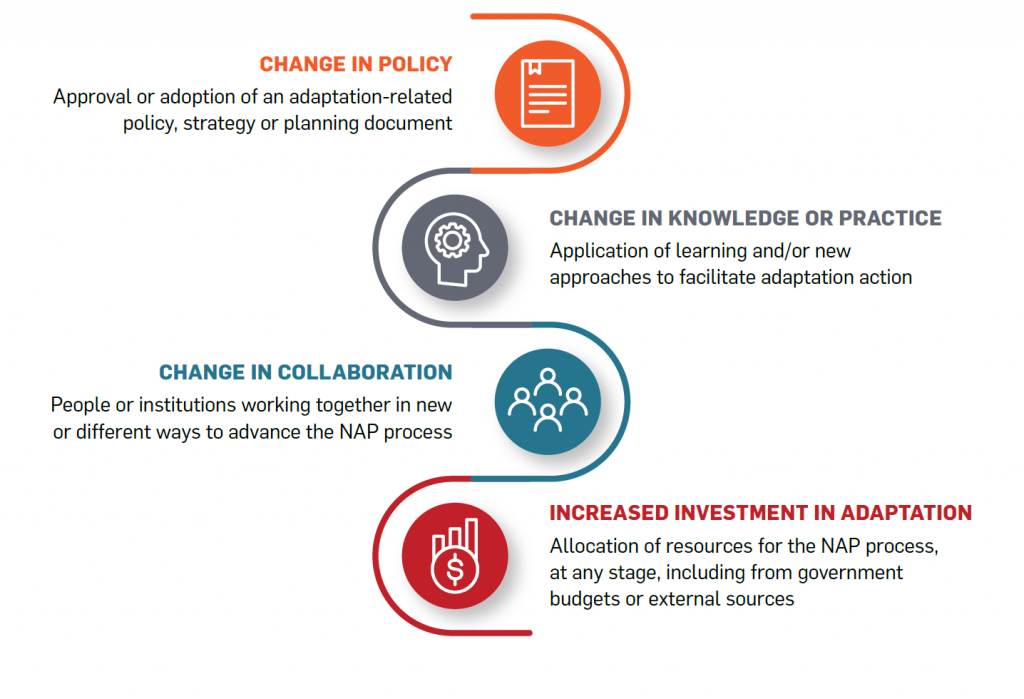
In reviewing what had been achieved across different countries, one key takeaway for us was that progress takes many forms. We identified four mutually reinforcing areas of change to describe the impacts of our work: change in policy, change in knowledge or practice, change in collaboration, and increased investment in adaptation (Figure 1 below). Our belief was that such changes—taken together—lead to the wholesale transformation of planning and decision-making systems needed to reduce harm and loss in the face of climate change.

Graphic showing four types of changes to transform adaptation governance
Figure 1. Four types of changes to transform governance systems for adaptation

Change in policy

Changes in policy are, unsurprisingly, the more traditional way of pointing to progress in adaptation planning. Whether it was the approval of Fiji’s first National Adaptation Plan or the development of Saint Lucia’s Sectoral Adaptation Strategy and Action Plan (SASAP) for the Agriculture Sector, the approval of new policies, plans, and strategies represent important mandates and frameworks for meaningful adaptation action. And quality matters. It’s not enough to churn out these documents and communicate them to domestic and international audiences. These documents need to be strategic and actionable, clearly identifying priorities and how they will be addressed, by whom, and in what time frame.  

Change in knowledge or practice

Ensuring these changes in policy are not only on paper requires changes in other domains. Changes in knowledge or practice, such as the development and use of Kiribati’s Integrated Vulnerability Assessment database or training South Africa’s government officials in the use of climate science in policy-making, mean that NAP processes target vulnerable communities and ecosystems, informed by the best-available science and Indigenous knowledge. If NAPs are more representative and responsive, they are more likely to lead to meaningful risk reduction.

Change in collaboration

We also learned that NAP processes are as relational as they are technical—how people and jurisdictions work together is crucial for successful adaptation. A series of high-level regional consultations in Ghana were critical to building awareness, support, and momentum for adaptation in the country, just as the creation of Peru’s Indigenous Climate Platform formalized and strengthened the contributions of Indigenous People to the country’s comprehensive management of climate change.

Increased investment in adaptation

Finally, one of the main litmus tests for the NAP process is the extent to which it brings in money for the implementation of adaptation actions. Since much of the support we provided unfolded for between 6 and 36 months, we didn’t expect to see a lot of examples under this category—at least not yet. This is due to one of the biggest lessons we learned: that the transition from planning to implementation is full of many intermediate activities that require skill sets that haven’t traditionally been at the heart of adaptation efforts.

Processes such as developing costing methodologies or financing strategies, integrating adaptation into budgeting processes, exploring public–private partnerships, and, of course, strengthening capacities to access climate finance highlight that the line between identifying and addressing adaptation priorities is neither short nor straight. But we did see important progress being made. Ethiopia’s NAP resource mobilization strategy now provides a clear direction of travel for securing resources for implementation, while Saint Lucia leveraged its aforementioned SASAP to secure USD 10 million from the Adaptation Fund.

These and many other changes brought about through the support of the NAP Global Network should give us hope during this time of uncertainty. Over the last year, we have seen firsthand the importance of strengthening systems and capacities that help countries navigate immediate and longer-term crises. National adaptation plan processes are about doing exactly this. The United Nations states that 125 developing countries have launched these processes, which bodes well for translating adaptation ambition into action. As we head toward the 26th Conference of the Parties (COP 26) and work to accelerate resilience efforts, the NAP Global Network will build on the achievements from its first five years, continuing to support developing countries and striving to place adaptation planning and decision making firmly at the centre of the global climate agenda.

Insight

What Does the Draft European Union–China Comprehensive Agreement on Investment Mean for Sustainable Development?

Will this deal actually yield the benefits that both sides have promised? Our expert analyzes the draft text to see where these commitments are upheld and where there's room for improvement. 

January 26, 2021

The year 2020 was dominated by the COVID-19 pandemic and its impacts, along with various moments of friction between major economic powers on a host of policy issues. However, despite these challenges, we saw governments show their ability to come together on shared priorities. A notable example was the announcement from the European Union (EU) and China on December 30, 2020, that they had reached a deal "in principle" for a Comprehensive Agreement on Investment (CAI).

The announcement from the world’s two largest economies did not come as a total surprise. Negotiations for this CAI had been ongoing for 7 years, and the leaders of both sides have long indicated their desire to conclude the negotiations before the end of 2020. However, given the timing amidst a pandemic and strong statements on both sides in favour of ambitious climate action and building back better, one would expect a strong sustainable development lens at the centre of the undertaking, rethinking, and redesigning of traditional approaches to economic liberalization.

The CAI draft text was released by the European Commission on Friday, January 22, following multiple requests from policy-makers, policy influencers, and the wider public, many of whom have asked whether the deal actually yields the benefits that both sides promise. The release of the text allows for a preliminary analysis of where this sustainable development lens has been applied—and where more might be done.

Market access: How much is gained?

The European Commission boasts that the CAI will give EU investors an "unprecedented level of access" to China, citing broad liberalization commitments following a "negative list" approach. In investment treaty negotiations, a negative list means that all sectors are included, except those that are specifically named otherwise.

The EU also highlighted market access commitments in the manufacturing and services sectors. However, the detailed schedules and annexes have not been publicly released, making it difficult to say how much these commitments go beyond what China has already pledged to provide through its recent domestic reforms in regulating foreign investment.

Prior to 2020, foreign investments in China were regulated by a set of fragmented and long-outdated laws, which critics said were no longer serving the needs of China’s economy in an era where its economic structure and foreign direct investment landscape were changing significantly. At the same time, the international community had also expressed mounting concerns over the need for a more open business environment in China. As a result, China adopted its unified Foreign Investment Law (FIL) in 2019, which came into effect in January 2020.

They fail to prioritize sustainable investments by not including references to tools such as the EU’s Taxonomy for Sustainable Activities or China’s Green Bond Endorsed Project Catalogue. The labour provisions seem even weaker, as the text does not create any new obligations.

The new FIL takes a pre-establishment negative listing approach similar to the draft CAI provisions. This means that, unless the foreign investors and their investments fall within the sectors listed in the negative list, the FIL commits to national treatment and equal protections in their establishment and operation in China (Article 4). The same law also establishes a flexible framework where experimental policies can be carried out, and the scope of opening up can be further expanded (Article 13). In this context, the draft CAI seems to provide limited advances relative to the levels of access that EU investors already have in the Chinese market.

Moreover, China already has bilateral investment agreements in force with all but one EU member state, specifically Ireland. All of these bilateral deals have investment protection and investment dispute settlement provisions, with two sections left for further negotiation under the CAI. The delay in concluding these sections is presumably because Brussels and Beijing are awaiting the outcome of the investor–state dispute settlement reform talks taking place at the United Nations Commission on International Trade Law (UNCITRAL).

This may also explain why the draft CAI expressly reaffirms the coexistence of the existing bilateral investment treaties between China and EU member states (Section VI, Article 15). This marks a notable difference from the approach the EU took when it entered similar agreements with countries such as Canada or Vietnam, which supplanted older bilateral treaties that Canada and Vietnam had with individual EU member states.

On the other hand, in addition to the EU’s commitments that would advance the facilitation and liberalization of Chinese investment in the EU, China also praised the provisions of the draft CAI for providing "Chinese business with more transparent and predictable business and legal environment[s]." This may refer to the Regulatory Framework section (Section III), where parties agreed to make all investment-related laws and regulations publicly available in a timely manner. Parties also agreed to allow stakeholders opportunities to comment on these laws and regulations, establish contact points to respond to investors’ enquiries, and streamline standard-setting and administrative procedures.

These are all among the "possible elements of investment facilitation" that China circulated in mid-2017 among World Trade Organization members in the months leading up to the launch of structured discussions in December 2017 for a proposed multilateral framework on investment facilitation. This framework is currently under negotiation among 106 of the organization’s 164 members.

Many of these commitments can also be found in Chapter II of China’s Foreign Investment Law. Meanwhile, the European Commission also claims that these "are rules and principles already embedded in EU law."

Environment and labour provisions: Room for improvement

Another section highlighted by both Brussels and Beijing is Section IV (Investment and Sustainable Development). The EU claims that this part "includes all of the key elements of the EU approach to sustainable development." China also considers this part as indicative of the "high-level quality" of the agreement. However, the text does not seem to support this high level of satisfaction.

For example, although the text recognizes the importance of enhancing the contribution of investments to the environment and to combating climate change, the parties only commit to facilitating and encouraging investment in environmentally or climate-friendly goods and services generally. In so doing, they fail to prioritize sustainable investments by not including references to tools such as the EU’s Taxonomy for Sustainable Activities or China’s Green Bond Endorsed Project Catalogue, which can provide valuable clarity as to which goods and services are most effective in achieving environmental and climate objectives.

The labour provisions seem to be even weaker, as the draft text does not appear to create any new obligations. Even with a commitment to pursue the ratification of unratified fundamental International Labour Organization (ILO) Conventions, the CAI allows parties to make "efforts on its own initiative."

In 2017, the European Commission published a Sustainability Impact Assessment report to assess how the CAI can affect sustainability issues in the EU and China. Among other recommendations, the report says that the CAI should include provisions that:

  • Retain adequate policy space to protect human rights (Recommendation 6)
     
  • Address private actors’ potential abuse of human rights (Recommendation 7)
     
  • Encourage compliance with international labour, environmental, and human rights standards by EU and Chinese investors (Recommendation 12)
     
  • Encourage the parties to create a monitoring mechanism focusing on company behaviours (Recommendation 14)

The CAI agreement, in principle, is still subject to further technical and legal work, which could mean some revisions to the existing text. New developments may also emerge in the implementation phase once the agreement enters into force. However, failing to incorporate those recommendations means that the deal will be a missed opportunity for both parties to maximize investments in sustainable development, especially in a time where sustainable and resilient recovery is among the top priorities of governments around the world.


The author would like to thank Nathalie Bernasconi-Osterwalder and Sofia Baliño for their valuable comments on earlier drafts.