Insight

The Disparity Between Climate Commitments and Clean Energy Spending

Are governments missing an historic opportunity to fund green transitions? How has the pandemic affected the energy system? Tom Moerenhout explains.

May 18, 2021

Where has government financial support been directed in the energy sector?

Early in the pandemic, a lot more support was directed to fossil energy. That includes direct funding for oil, gas, and coal production, as well as spending on sectors that rely on fossil energy, such as aviation, trucking, and shipping. With time, funding for clean energy started to pick up—although looking at G20 countries, around USD 293 billion of government stimulus funding has been pledged to fossil energy while USD 246 billion has supported clean energy. 

Most clean energy funding is invested in energy-efficiency measures: building retrofits; solar, wind, and green hydrogen in the power sector; and public transport and electric vehicles (EVs). Across the world, a lot of money has gone to the development of EVs, charging infrastructure, and purchase rebates. 

Unfortunately, stimulus funding has also gone to fossil fuels, particularly coal. Any funding that goes to coal mining or coal power plants has huge impacts in terms of climate change and air pollution, so every dollar spent on coal matters. 

Why did we see such a disproportionate amount of funding directed to fossil fuels early in the pandemic?

A lot of government support initially went to reducing economic damage through bailouts—including those linked to fossil energy. Our world economy is addicted to fossil fuels, and detoxing from that is going to be a lengthy process. So initially, there were few choices but to bail out some of these fossil fuel users, such as airlines, that really suffered and have quite a big impact on jobs.

Which governments are leading on clean investments?

Although it's natural to want to rank countries, most have both good and bad investments. In terms of electric mobility, for example, one of the biggest funders is China. They have performed very well in terms of incentivizing EV purchases and recharging infrastructure.

The European Union deserves a special mention: within their EUR 750 billion package, they agreed that more than one third will be allocated to climate. When that money comes in throughout 2021, it will make a big impact.

The Biden plan in the United States is also very impressive; we just need to see it adopted and implemented. Canada and Australia are interesting because of their internal contradictions. Canada has a lot of money going to fossil fuels, and at the same time, they have a really impressive number of clean energy policies. In Australia, coal and natural gas are still receiving major funding, although there is also a big push for clean energy. So in those cases, we need a decision, and we need it fast. Any investment made now could lock countries or regions into either a fossil fuel future or a green future.

I really believe that there is a lot of goodwill in terms of net-zero targets and other long-term goals. But that needs to be matched by stimulus decisions today.

Why are some countries doing better than others? 

Generally, countries that invested in clean energy had preparations in place already. The European Union had established the European Green Deal framework, so they were able to build on that. A lot of the content in the Biden plan came from the Green New Deal movement in the United States, which was a bottom-up process that eventually gained support from high-level politicians. We shouldn't be surprised by China's EV stimulus because China already had generous subsidies and produced more than 90% of global batteries that go to EVs. 

Overall, how are government responses to the crisis lining up with their climate commitments?

There's definitely a big mismatch between climate commitments and the funding decisions of most countries. I really believe that there is a lot of goodwill in terms of net-zero targets and other long-term goals. But that needs to be matched by stimulus decisions today, and unfortunately, those are simply not yet good enough.

To avoid catastrophic impacts, the Paris Agreement sets a target to limit the global temperature increase to 1.5°C above pre-industrial levels. If we don't change anything, we will be on track for two degrees of warming or more by 2060. That's in four decades. From an energy system perspective, this is a very short time period—even more so when you consider that current energy infrastructure that is installed or under construction would lead to 1.65°C of warming. Investments need to be much more radical, with more money directed to renewables, green energy, and electric mobility. 

But it's also essential to stop funding oil and gas companies, which receive billions of dollars in subsidies per year on top of any stimulus funding. These subsidies are wasteful and are deeply problematic for the energy transition. There's just too much money still going to fossil fuels to put us on track for that 1.5°C target. But of course, those companies have vested interests and a lot of influence over decision-makers. These areas remain difficult and require countries to have more courage. Our future will be massively impacted by the investments we see today.

There's just too much money still going to fossil fuels to put us on track for that 1.5°C target.

How should governments move forward with recovery commitments in the energy sector? 

There are four key goals that we need to focus on. First, add more renewable energy to the grid. Second, increase energy efficiency—which stimulus funding has helped with. Third, phase out coal rapidly—we're not at all on track to meet this goal yet. And fourth, cut methane emissions from oil and gas—we are also not on track there. So those last two should receive more attention than is the case right now.

The recent shift toward solar, electric mobility, and batteries has not happened in any other sector that quickly. This is beautiful.

But so far, it's not enough.
Insight

Five Key Principles for a Fossil-Free Recovery

Lourdes Sanchez, lead author of the report Achieving a Fossil-Free Recovery, explains how the COVID-19 pandemic has created a window of opportunity to fund a green recovery, along with five principles to do so.

May 17, 2021

How did COVID-19 affect the energy transition? 

COVID-19 has changed the way we perceive the future, from what kind of energy we’ll use to how we will use it. Due to the pandemic, people use more energy in their homes and travel much less, if at all. While we all hope that these circumstances are temporary, it is possible that they could lead to long-term behavioural changes in energy use. It’s an opportunity for governments to plan smart policies that encourage a shift to cleaner forms of energy and more efficiency as the energy sector moves forward.

How have governments reacted to the COVID-19 crisis? 

We have seen governments use COVID-19 recovery packages to put a lot of money into the energy sector. In general, countries that were already supporting the clean energy transition continued to do so by investing in renewable energy or electric vehicles. At the same time, countries that were dependent on the fossil fuel sector have spent a great deal of stimulus funding on non-renewables. The pandemic has placed us at a crossroads, and the decisions made by governments now will have huge impacts on the clean energy transition. 

How can leaders take climate action while recovering from COVID-19?

This is an opportunity to plan an economic recovery that creates jobs by accelerating the move to clean energy while making sure that the transition away from fossil fuels is equitable. That means a transition should create opportunities to develop a fairer and more inclusive society by considering people and communities as we develop new ways of strengthening the economy and doing business.

What does it mean when we say that the recovery should be “fossil free”? 

It means that we need to move away from fossil fuels. It doesn’t mean that our activities will suddenly stop. It's about using climate-friendly and cleaner alternatives to traditional energy sources. For example, instead of investing in new coal or gas power plants, countries can invest in wind turbines, solar panels, and electric grids. Instead of subsidizing gasoline and diesel, governments can buy electric buses for cities where people use this type of public transportation. 

The pandemic has placed us at a crossroads, and the decisions made by governments now will have huge impacts on the clean energy transition.

There are many other options and examples. But one thing is certain: the government's role is key because they define the policies and decide where public money is spent. Overall, instead of supporting fossil fuels, they can swap that spending for clean alternatives. 

What should be done in the short term and the long run to implement this idea? 

Our report Achieving a Fossil-Free Recovery promotes five main principles. 

First, stop using stimulus funding to perpetuate the production of fossil fuels, especially if the funding is not assisting with the clean transition. 

Second, governments should reform fossil fuel subsidies or implement taxes to raise revenue for the sector’s transition. These measures help to reflect fossil fuels’ true cost to society: they cause climate change and air pollution and come with high health and economic costs.

Third, instead of subsidizing fossil fuels, governments should swap that funding with cleaner alternatives to work toward the net-zero target and better meet people’s needs. 

Fourth, governments should incentivize private investments in clean energy. 

Lastly, while enacting these measures, governments should ensure a just transition by considering the effects on workers and communities. 

How do you convince governments of fossil fuel-dependent economies that these actions are necessary? 

Instead of trying to convince them, we have to help them see that change is happening regardless of their actions. Every day, more and more insurance companies and investment funds choose to diversify their money away from the fossil fuel sector. But at the same time, we know that this is not easy and that there are going to be a lot of people and businesses that are quite affected by this. On the other hand, new industries will arise that will need workers and investors.

The main message for governments is that it is possible to plan a transition. That’s the key word: plan. All the social, environmental, and economic risks must be considered and mitigated as much as possible. To do that, planning has to be rooted in a dialogue between the different groups that are likely to be affected by the shift. That is what we call a “just transition.”

Is it possible to get all countries on board when there are so many considerations at play, such as different economic systems, levels of deployment, and fossil fuel dependency? 

It is possible if we consider local context and priorities. For example, in Africa, a high percentage of the population does not have access to electricity at home or even to clean cooking fuels so it makes no sense to promote purchasing electric vehicles there. But a fossil-free energy transition also means increasing access to clean energy, so governments could invest in community solar power plants instead of expensive diesel generators. 

All the social, environmental, and economic risks must be considered and mitigated as much as possible.

They could also remove subsidies for transport fuels. This measure is unpopular because it causes the price of gasoline and diesel to increase. But the truth is, it’s the affluent segments of the population who benefit most from gas and diesel subsidies, as they own cars. Governments should instead subsidize forms of clean public transportation or provide cash transfers to those who will suffer the direct effects of price increases. 

There are also studies showing that improving access to public services, such as health or education, is a good alternative for people who might suffer due to fossil fuel subsidy reform. Ultimately, there are many options, but it’s critical that the local context is carefully analyzed and understood.

Insight

National Oil Companies and Climate Change: Economic Challenges and Potential Responses

Policy-makers and climate activists alike often overlook National Oil Companies’ role in global efforts to address climate change.

May 4, 2021

National oil companies (NOCs) are key players in the global oil and gas industry—they produce half of the world’s oil and gas, and invest 40% of capital into the sector. But policy-makers and climate activists alike often overlook NOCs’ role in global efforts to address climate change. Omission of NOCs from climate strategies will significantly hamper governments’ attempts to meet global climate goals, and NOCs—along with the countries that depend on their revenues—could be left behind.

On April 21, the National Resource Governance Institute (NRGI) and IISD co-hosted the first in a series of webinars aiming to fill this gap. Three key lessons emerged:

  1. Political will is crucial. Governments must drive the energy transition. This is valid for both producer country governments, which should direct their NOCs in line with national strategic and political priorities, and wealthy consumer country governments, which must provide climate finance to enable developing and emerging producer countries to overcome the serious challenges of transition.
     
  2. Tunnel vision is deadly. NOCs can’t continue on the costly assumption the oil market won’t change. Climate advocates must increasingly consider the developmental challenges of producer countries and the needs, and potential roles, of NOCs.
     
  3. Economic diversification is key. Oil- and gas-producing countries have struggled with diversification for decades. Solving this is even more urgent now as producer countries must start actively investing in the long-term future. New producers should avoid making investments from the beginning that lock the country into a high-carbon pathway.

No more business as usual

Making incremental reductions in emissions compared to a business-as-usual baseline is no longer enough to mitigate the effects of climate change. This is because of the rapid and fundamental transformation in the way we produce and consume energy.

This change creates a challenge for companies whose core business is extraction of oil and gas, and especially for governments heavily dependent on revenues from NOCs.

Making incremental reductions in emissions is no longer enough to mitigate the effects of climate change.

These companies and governments should consider any new oil and gas investments in light of the significant uncertainty about future demand for their products and the economic returns they will generate, as well as their impact on climate change targets. Meanwhile, the status quo approach in many countries—whereby NOCs reinvest most of their oil revenues straight back into the sector—poses a growing risk to efforts to move away from fossil fuels.

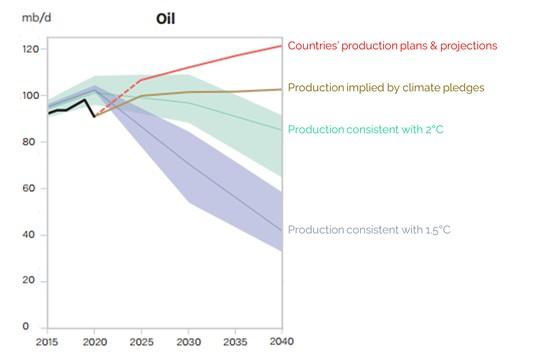
Global oil production would have to decline by 4% every year from 2020 to 2030 to be consistent with a 1.5°C pathway, according to the Production Gap Report. Yet current government plans and projections indicate an average 2% annual increase. This raises the question: what is the role for NOCs in a world of climate change adaptation and declining oil?

Graph showing oil production pathways.
Source: The Production Gap


Experts weigh-in

Executives from two NOCs, Colombia’s Ecopetrol and Uganda’s UNOC, joined our event to share their approaches to energy transition. Valérie Marcel of Chatham House, one of the world’s leading experts on NOCs, also contributed.

Juan Manuel Rojas shared Ecopetrol’s climate strategy, based on four pillars. While still focused on oil and gas, Ecopetrol aims to diversify its business into other sources of energy. The company bid for 51% of ISA, the state electricity grid operator. While many NOCs aim to reduce their direct operational emissions—so-called scopes 1 and 2—Ecopetrol’s energy transition strategy also targets scope 3, the indirect emissions that occur in its products’ value chain. The company aims to reduce emissions across scopes 1, 2 and 3 by 50% by 2050.

Asked to what extent these changes are driven by investors (88.5% of the company is state-owned and the rest is held by private investors), Rojas said often they are skeptical of the importance of an energy transition. From a financial perspective, many investors prefer their holdings to focus on one business area: if they want more electricity or more renewables, they would make those choices themselves. This creates a key tension in NOCs’ diversification efforts.

NOCs have two purposes: to deliver revenues to governments and to meet energy demand in their countries.

Peter Muliisa of UNOC shared Uganda’s challenges as new petroleum producer and a country with pressing socio-economic development needs. Like other countries in Africa, Uganda is highly vulnerable to climate change, and many officials and citizens see oil revenue as a means to help the country cope. However, with the global energy transition underway, UNOC has expressed a desire to develop a clear strategy on what the company needs to do to avoid exacerbating the effects of climate change on Uganda. Muliisa shared that, as a first step, early discussions are under way on how to restructure UNOC as an energy company rather than an oil company, ensuring Ugandans increasingly gain access to clean energy.

However, the government’s green light for construction of the East Africa Crude Oil Pipeline, which will carry Uganda’s oil to the Tanzanian coast, raises the question of potentially stranded assets. Muliisa explained that Ugandan officials hope to export oil through the pipeline before energy demand significantly shifts to renewables, but that the energy transition may affect longer-term production in the country.

Valérie Marcel, drawing also on the experience of these two companies, observed that NOCs have two purposes: to deliver revenues to governments and to meet energy demand in their countries (including often non-commercially). While clean energy is generally profitable, it does not create economic rents in the way oil does, which raises challenges for the countries’ economic strategies and government revenues. The second part of NOCs’ mandate could point to a role for NOCs in supplying renewable energy domestically. However, while NOCs can focus on reducing their costs or operational emissions, transitioning to renewable energy requires clear direction from their governments and consistent development strategies and climate policies, especially given the political consequences of lost economic rents.

Finally, Marcel said, the transition will affect different types of NOCs variously: high-cost versus low-cost, exporting versus importing, gas-focused versus oil-focused. Will it be easier for NOCs in new producing countries to transition than for established producers? In some ways yes, she said, as they are not yet locked into an oil development pathway. However, these producers often lack the financial resources needed for such a transition.

Our discussion series aims to increase learning between experts in the extractives governance and climate change fields, who have too often worked in silos. Our next event, on May 27, will explore whether NOCs should get directly involved in renewable energy investment and economic diversification.

Register now.

Patrick Heller is an advisor at NRGI and a senior visiting fellow at the Center for Law, Energy & the Environment, University of California, Berkeley. Greg Muttitt is senior policy advisor for energy supply at IISD.

Insight details

Insight

UN Negotiations to Reform Investor–State Arbitration Reach Critical Juncture

April 30, 2021

Nearly four years in, the United Nations (UN) talks to develop multilaterally agreed reforms to investor–state dispute settlement (ISDS) are now reaching a critical juncture as negotiators prepare to reconvene in May 2021, with the second half of this year likely to define the approach, ambition, and process that will lead to the final outcome.

These negotiations are held under the United Nations Commission on International Trade Law (UNCITRAL), specifically under Working Group III (WGIII), and formally began in 2017 after extensive preparatory work. The talks have now entered their third and final phase, where states will develop reform solutions to address ISDS-related concerns that they had identified in earlier phases.

This effort is an attempt to craft a multilateral response to the mounting frustrations over the current state of the international investment governance regime, especially over the impact of “old-generation” treaties, from which the vast bulk of ISDS cases emerge.

There are well over 3,000 bilateral investment treaties or treaties with investment provisions currently in force, according to the latest figures from the United Nations Conference on Trade and Development (UNCTAD). UNCTAD has mapped out the content of 2,575 such treaties, most of which are old-generation agreements, finding that at least 2,441 of these have some form of ISDS included. Over the years, the growing body of ISDS jurisprudence has shown that the system has serious flaws in both process and substance, ultimately affecting states’ ability to regulate in the public interest and constraining their policy space.

The reforms being considered at UNCITRAL are slated to be finalized and adopted by 2025, according to the current version of the draft “work and resourcing plan,” which is slated for discussion at the upcoming May session.

February Session Gives Signals of Upcoming Challenges

The first UNCITRAL WGIII negotiating session for 2021 took place in mid-February, with delegations convening virtually for five days to discuss certain issues related to how arbitrators in ISDS claims are selected and appointed; the code of conduct that these arbitrators would abide by; and the prospects of developing an appellate mechanism and other means of enforcing arbitral decisions.

This was the second session of virtual talks under UNCITRAL WGIII, with the first one taking place in October. An early session scheduled for March/April 2020 was postponed due to COVID-19. The transition to virtual negotiations has had a mixed track record to date. While it has allowed for states that were previously unable to participate to join in, along with other interested parties, this change has also exacerbated the difficulties of some delegations to engage fully, especially for those participants with limited bandwidth and poor network connectivity at home, or those struggling with competing tasks at the office.

The debate over textual drafting could foreshadow future tensions over how ambitious states can be, and ultimately want to be, at UNCITRAL in reforming the current ISDS system.

The February talks themselves, while addressing the above-mentioned agenda items, ran up against a challenge that is likely to return in negotiating sessions to come. As noted by Anthea Roberts and Taylor St John, one of the main recurring questions was whether the talks were sufficiently advanced that the Chair of WGIII could begin putting down draft text for some of the reform solutions under consideration. Roberts and St John note that those in favour of “structural reform including an appeals mechanism and court of first instance, want to start developing and reviewing texts,” while other delegations were wary of crafting text at this stage, citing concerns over whether new mechanisms would be effective.

The debate over textual drafting could foreshadow future tensions over how ambitious states can be, and ultimately want to be, at UNCITRAL in reforming the current ISDS system– along with what that ambition looks like. States had already determined in earlier phases of the WGIII process that reforms were needed and desirable. However, sources familiar with the meeting noted that there may not be consensus among states over whether an overhaul of the system is truly necessary—especially as a few delegations, private lawyers and industry groups indicated that the current system of investor–state arbitration is working well enough for their purposes, and they oppose meaningful reform, even though WGIII had previously agreed that reform was desirable.

The Road Ahead: Core considerations for states

As states gear up for intersessional work in the coming months, with this WGIII session resuming in May and the next session scheduled for November 15–19, there are several core considerations that those eager to see real reforms stemming from the process should keep in mind.

Already, there is the risk that this third phase in the WGIII process becomes overly technical as states start to engage with the Chair in the textual drafting and subsequent haggling over legal language. In the lead-up to the February 2021 meetings, for example, several of the notes drafted by the Secretariat to set out options and considerations for each agenda item were highly technical and provided a proliferation of detailed options and sub-options. This could lead to delegations effectively “missing the forest for the trees,” focusing on narrow technical options without sufficient regard to how they contribute to the broader reform objectives.  

Already, there is the risk that this third phase in the WGIII process becomes overly technical, which could lead to delegations missing the forest for the trees.

To avoid getting caught up in technical minutiae, states will need to prioritize those reforms that will have the most impact in addressing their key concerns with the ISDS system, rather than spreading themselves too thin by trying to engage in an in-depth way across all reform solutions. They can also build coalitions with like-minded countries on their priority issues.

Guiding this effort will be the work and resourcing plan. The current draft, set for discussion in May, requires a close examination of how it grapples with a “two-track” negotiating approach to address both structural and non-structural reforms. Already concerns have been raised, including in a joint submission by International Institute for Sustainable Development (IISD), the Columbia Center on Sustainable Investment, and the International Institute for Environment and Development, that the frequency and multiple types of meetings proposed for the coming four years will place a hefty strain on resource-strapped delegations.

The same submission also highlights the importance of transparency and inclusiveness in the process, while ensuring that cross-cutting issues identified earlier in the WGIII talks, such as exhaustion of local remedies and third-party funding, are given the attention they deserve. Indeed, the push to start drafting text for reform solutions should not mean that critical issues, such as the calculation of awards of compensation, fall off the negotiating agenda entirely.

Laying the Groundwork for Future Reforms

Ultimately, states will also need to look ahead to what the future of the international investment regime could look like, which will require deeper and larger-scale changes. For instance, states could consider an inclusive investment-related dispute settlement system that is not just about foreign investors and host states, but also about home states and other stakeholders.

The final, multilaterally agreed outcomes from the UNCITRAL process will need to be sufficiently ambitious that they lay the groundwork for states, either in bilateral or regional forums, to develop more far-reaching reforms with like-minded partners. In their priority areas, states need to signal at UNCITRAL that they are open to innovative reforms, rather than agreeing on the lowest common denominator just for the sake of consensus. This innovation is important—not only because it will help address some of the most entrenched challenges in ISDS but also because it will set the tone for future reforms in other forums. Setting the bar too low at UNCITRAL poses a real risk.

UNCITRAL WGIII is focusing on procedural reform around ISDS, meaning that there is a risk that the substantive rights and obligations remain untouched, addressing only a limited aspect of the wider systemic problems in international investment governance. If states are serious about ensuring that the international investment law regime is suitable for supporting the achievement of the Sustainable Development Goals, they must be ready to undertake far more extensive reforms, as noted by UNCTAD’s Reform Package for the International Investment Regime, for example.  

Ultimately, the goal behind all of this work—at UNCITRAL WGIII and elsewhere—should be to ensure that the future system that underpins international investment governance supports sustainable development at its core.
 

The author would like to thank Nathalie Bernasconi-Osterwalder, Suzy Nikièma, Joe Zhang, and Sarah Brewin for their thoughtful feedback and input into earlier drafts of this blog.

Insight details

Insight

Canada Steps Up on Climate Opportunity but Needs Private Sector and Provinces to Follow Its Lead

The federal government's new 2030 target is ambitious but achievable, and with a strong collective effort from the provinces and Canadian businesses, it can go even further.

April 23, 2021

When world leaders convened in Paris a little over 5 years ago to negotiate a new climate change agreement, their discussions were largely framed around economics—the price tag associated with taking action but also the costs of inaction.

Fast-forward to 2021 and the framing has changed.

As President Biden said in his opening of the Leaders Climate Summit this week, "The countries that take decisive action now to create the industries of the future will be the ones that reap the economic benefits of the clean energy boom that’s coming."

In a few short years, we have crossed a critical threshold: Climate change is no longer simply perceived as solely an environmental imperative but as an economic opportunity.

It’s not just politicians taking note of this: from Bay Street to Wall Street, the challenge and opportunity of confronting climate change are top-of-mind. “No issue ranks higher than climate change on our clients’ lists of priorities,” writes Larry Fink, head of BlackRock, in his 2021 letter to CEOs.

In a few short years, we have crossed a critical threshold: Climate change is no longer simply perceived as solely an environmental imperative but as an economic opportunity.

Buoyed by this collective shift in focus, and spurred on by an American leader keen to make amends for the climate inaction of his predecessor, world leaders gathered at President Biden’s summit to ratchet up their national climate commitments.

The United States unveiled a new target of reducing greenhouse gas emissions 52% below 2005 levels by 2030. The EU, Japan, and the EU all increased their ambition, too, as did Canada, with Prime Minister Trudeau announcing an increase to our 2030 target, from a 30% reduction to 40%-45% below 2005 levels.

Canada was able to make this bolder commitment thanks in no small part to the actions and efforts of the federal and (some) provincial governments since 2015 through the Pan-Canadian Framework on Clean Growth and Climate Change. Building on that effort, the federal government’s Healthy Environment, Healthy Economy plan, released last December, outlined how Canada would achieve a target of at least 32%; with the introduction of Budget 2021 and continued alignment with the United States, the country is now on track to achieve a 36% reduction in greenhouse gases by 2030.

The federal budget takes several critical next steps in pursuit of the twin goals of emission reductions and low-carbon competitiveness. In particular, there are strategic investments in retrofits, net-zero innovation, and nature—all consistent with areas of opportunity identified by the Task Force for a Resilient Recovery and international benchmarks.

Our private sector has lagged behind its global peers ... a more proactive and collaborative approach to seizing opportunities in Canada is warranted.

A more ambitious target will of course require additional spending in the years to come; how much will need to be set aside, exactly, remains to be seen, but the CAD 108 billion the federal government has invested in climate action and clean growth since 2015 is relatively modest. For comparison, President Biden’s infrastructure plan comes in at USD 1 trillion—and this, it bears mentioning, is a de facto climate plan; if it can pass through Congress without much modification, it represents "the country’s one shot to pass meaningful climate legislation in the next few years, if not in the next few decades."

In Canada, Prime Minister Trudeau has more tools at his disposal enabling his government to rely less on spending, including a federal backstop price on carbon pollution (that will increase to CAD 170 per tonne in 2030) and regulations requiring the phase-out of coal-fired power and production of cleaner fuels. These measures will be needed to achieve the deeper reductions to which Canada has now committed, and more of a helping hand from provinces—particularly those currently lagging behind in their climate efforts—will be essential to success.

While government can do its part to capitalize upon the economic opportunities arising from climate solutions—from zero-emission vehicles (and their supply chains) to hydrogen to renewable power and more—ultimately, it’s Canada’s business community that will keep us in the hunt or see us fall behind. To date, our private sector has lagged behind its global (particularly European) peers, and while there are some encouraging signs that Canadian business leaders recognize this, a more proactive and collaborative approach to seizing opportunities here is warranted.

The federal government’s CAD 8 billion Net Zero Accelerator fund can play a key role in unlocking and scaling solutions, from the auto sector to industries such as cement and steel, so long as it applies green strings, is laser focused on truly innovative ways to significantly cut pollution, and avoids subsidizing technologies that are too incremental in nature. To capitalize on this fund, and catalyze needed business leadership toward net-zero, the Energy Transitions Commission may serve as a useful model to replicate in Canada.

Finally, we must remember our responsibility to support those who are least responsible for the climate crisis but hit hardest by its impacts: developing countries. President Biden used the Climate Summit to announce his intent to double U.S. climate finance to developing countries by 2024—including a tripling of funding to help countries adapt to climate change. Prime Minister Trudeau was less definitive, but stated that Canada would build on its existing commitments to climate finance in the months ahead. Indeed, it should follow Biden’s lead with a major new investment, or risk becoming the worst climate-finance performer in the G7.

As we slowly but surely work to put the pandemic behind us, it is reassuring to know that we haven’t lost sight of the climate crisis, and in fact are gearing up our efforts to tackle it. Canada’s new 2030 target is ambitious but achievable, and with a strong collective effort from all levels of government and Canadian businesses we can not only achieve it but raise our ambition even further.


Insight

What Should Take Centre Stage at the Leaders Summit on Climate?

We asked our climate and energy experts what the key priorities should be during the virtual Leaders Summit on Climate. Here’s what they said.

April 21, 2021

The United States is hosting a virtual climate summit on April 22 and 23, with up to 40 world leaders planning to participate. The gathering provides an important opportunity for countries to commit to more ambitious climate action ahead of the United Nations Climate Change Conference in November (COP 26).

As global temperatures continue to rise and governments “build back better” from COVID-19 with green recovery plans, themes of the summit are likely to include: the economic benefits of climate action, public and private investment opportunities for clean energy solutions, and the deployment of innovative technologies. We’re expecting to see updated nationally determined contributions (NDCs) and more aggressive 2030 emissions reduction targets in line with the Paris Agreement.

Our energy experts weigh in on what they believe the key priorities should be:

“The summit should be a wake-up call that countries are not using this critical opportunity to align their fiscal systems with a low-carbon future. Removing subsidies and increasing taxes on fossil fuels can deliver much-needed revenue to fund clean stimulus packages, create new jobs in renewable energy, and provide social assistance and a just transition to fossil fuel workers and communities. Yet, for some reason, we don’t see these measures being considered in recovery plans and NDCs. This issue needs global attention; it should be widely discussed during the summit and followed by concrete commitments.”

  • Tara Laan, Senior Associate, Energy Program 

“Since the beginning of the COVID-19 pandemic, government support to the fossil fuel industry has far outweighed investments in clean energy, and this could set the global economy on a path toward catastrophic climate change. At the Leaders Summit, governments must urgently get back on track to a green recovery. No recovery package should support coal, oil, and gas production. Instead, governments should invest in a fossil-free recovery that supports the deployment of renewables at scale, accelerates the decarbonization of all sectors of the economy, and promotes a just transition for workers and affected communities.” 

  • Lucile Dufour, Senior Policy Advisor, Energy Program

“The Leaders Summit on Climate provides a unique window of opportunity for countries to raise the ambition of their NDCs before COP 26. Fossil fuel subsidy reform, a currently underutilized tool in many NDCs, is a key way to achieve this goal, by shifting spending away from fossil fuels and raising much-needed revenue for a green recovery.” 

  • Joachim Roth, Policy Analyst, Energy Program


The event will bring together leaders from the 17 countries responsible for approximately 80% of global emissions and global GDP, as well as countries that demonstrate strong climate ambition or that are especially vulnerable to the effects of climate change.

Here's how specific countries can take advantage of the summit to increase their climate commitments: 

“Canada has made good steps to increase its climate ambition, including by announcing a target of net-zero by 2050 and releasing an updated climate plan last year. Scaled-up short-term action is critical, and a significantly ramped up target for 2030 is needed to send the right signals and get Canada on the right path.” 

  • Vanessa Corkal, Policy Analyst, Energy Program, Canada

"We hope the summit will encourage South Africa's leadership to be more ambitious in the country's climate targets. In the past, we've often heard the President saying the right things; however, the actual targets which are needed are inadequate. South Africa's NDC update in March 2021 is a positive step in the right direction but the country still falls short of the 1.5˚C target in the Paris Agreement. We hope President Ramaphosa will use this summit as an opportunity to learn from countries which are leading in their climate ambition and targets." 

  • Chido Muzondo, Energy Policy Consultant, South Africa

“Given the success of the first wave of renewables in India, we think the government may have its eye on new targets for emerging technologies like grid balance, storage, offshore wind, and hydrogen. Recently, there's been immense interest and speculation about India committing to a net-zero target. We hope at the very least the country moves in that direction by considering sectoral level targets, including for power and transport. A low-likelihood but high-impact development would be for India's state-owned energy enterprises to plan early for transition. They play a dominant role in much of the fossil energy sector, and this is an issue that is getting increasing levels of attention.”

Insight details

Topic
Energy
Region
Global
Impact area
Climate
Insight

Four Ways Sustainability Standards Can Build Farmers’ Resilience to COVID-19

We surveyed 57 supply chain actors to ask how smallholder farmers are coping with the effects of the pandemic and whether certification has helped them adapt. Here's what they had to say.

April 20, 2021

The effects of the COVID-19 pandemic have been severe and far reaching. Governments worldwide have enforced strict measures to curb the spread of the virus, upending businesses and livelihoods. Global agricultural supply chains continue to face unprecedented disruptions. What has this meant for small-scale farmers in developing countries?

According to the UN, more than 2 billion smallholder producers, workers, and their families have been affected by the economic shock caused by COVID-19. Smallholder farmers are a key part of global production systems, but they are less likely to have access to the financial, environmental, and social resources needed to cope with economic crashes or declines in demand.

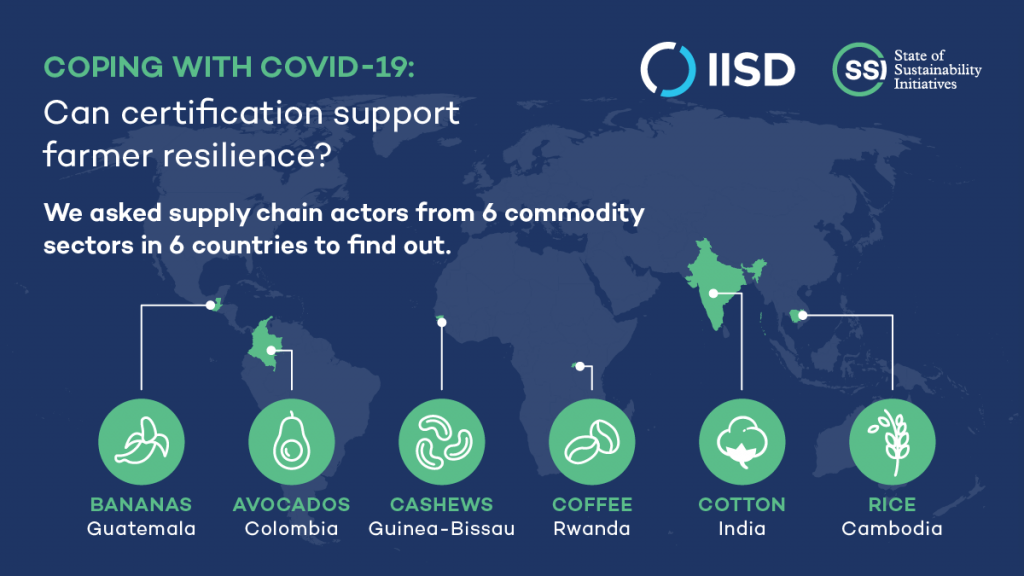
In recent decades, a growing number of voluntary sustainability standards (VSSs) have been established to improve the livelihoods of smallholder farmers. But to what extent do certification schemes help build their resilience? To answer this question, IISD and UNCTAD surveyed key supply chain actors in six countries. These respondents—ranging from producers and buyers to investors and government officials—described four ways that VSSs have helped smallholder farmers cope with supply chain disruptions amid the pandemic.

World map showing 6 commodity sectors and 6 countries surveyed.

1. Standards-Compliant Products Can Offer Producers Higher Incomes 

“Farmers selling to VSS-compliant markets are more able to cope because [they] obtained better prices in comparison to other farmers.”

Coffee farmer, Rwanda

Contracts for coffee farmers in Rwanda have remained mostly stable during the pandemic. However, conventional coffee farms have seen their prices drop from levels that were already below those of certified producers. This growing price disparity leaves conventional producers acutely under resourced and especially vulnerable to any disruption.

“Farmers selling to VSS-compliant markets are more able to adapt and cope with the effect of COVID-19 because they get more income/revenues compared to others,” a Rwandan government official told us. With higher revenues comes a greater ability to invest in the resources, assets, and safety nets required to cope with unexpected events.

In five out of the six case countries, the people we interviewed told a similar story. Organic cashew farmers in Guinea-Bissau and certified banana farmers in Guatemala were better placed financially to adapt to new health and safety protocols. Organic rice markets in Cambodia and niche markets such as organic and extra-long-staple cotton in India still commanded a premium price.

2. VSS-Compliant Markets Often Strengthen Supply Chain Relationships

“Farmers who were part of the standards, they had better connectivity, they knew exactly despite all the disruptions, they could still sell.”

NGO worker, India

When the pandemic first hit global supply chains, Indian cotton farmers saw prices for their products plunge. However, those selling to customers demanding certified cotton tended to have more support from the people and organizations buying their products.

“Our purchase assurances have not changed,” a buyer of organic-certified cotton in India explained to us. “VSS-compliant farmers have been in a better position as they received assured services, timely delivery of seeds, and other inputs despite the lockdown.” The buyer kept their orders intact, respected all contracts, and still paid above market price.

Stronger relationships within VSS-compliant supply chains give smallholder farmers more reliable access to markets. In Guinea-Bissau, organic cashew farmers were able to return to work faster thanks to the advice their buyers provided on adhering to new hygiene standards. In Cambodia, organic rice farmers experienced greater sales stability due to purchase assurances in their contract agreements with buyers.

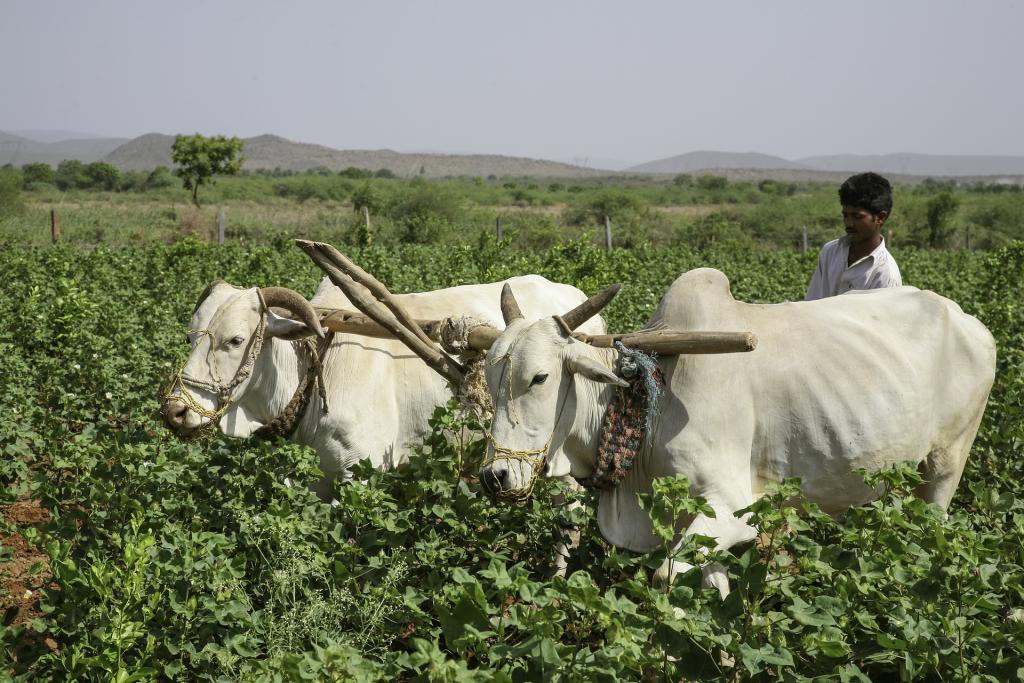
Indian cotton farmer with bullocks
Farmers selling organic-certified cotton in India tended to have more support from the people and organizations buying their products. (Photo: Pixabay/Mohan Nannapaneni)

3. Adhering to Standards Can Grow Farmers’ Customer Base 

“Farmers in the [agricultural cooperative] still produced organic rice and sold it to companies as per contracts, and in addition, they looked for—and found—more buyers.”

NGO worker, Cambodia

Organic farmers in Cambodia had to adapt to an overall decline in orders for organic rice when the pandemic hit. However, farmers in an organic-certified agricultural cooperative proved to be in a better position to cope. They had more secure contracts with buyers and more opportunities to sell their products, which are perceived to be of a higher quality.

“Despite a general decrease in orders, farmers in the [organic agricultural cooperative] have other choices to sell their product for a suitable price,” said a Cambodian rice farmer, “because their production is well known to be for a VSS-compliant market.” Farmers outside the cooperative, on the other hand, experienced more challenges selling their products.

In Cambodia and Guinea-Bissau, VSS-compliant production is still emerging. As a result, certified producers benefit from facing less competition than conventional farmers. However, as VSS-compliant production increases, these benefits may decrease too—unless demand increases at a similar rate.

4. Certified Producers Have More Access to Education and Training

“[VSS-compliant farmers can adapt more easily] because they are already trained on handling protocols, they already have a different culture.”

Avocado farmer, Colombia

Cancelled contracts and price drops are not the only problems for farmers during the pandemic. They have also had to adapt their practices to fit with health and safety requirements designed to prevent the spread of the virus. For avocado farmers in Colombia, this has seemingly been an easier feat for certified producers.

“[VSS-compliant producers] adapt easily,” a Colombian avocado farmer told us, “because they are already used to a culture of standards. Preparation, education, training.” Many other farmers we spoke to agreed. They said that certified farmers can adapt more easily to new health measures because they have already implemented protocols to meet VSS requirements.

We heard similar stories from Guatemala and Rwanda. Certification schemes provide producers with training and education that they can draw upon to cope with shocks. This includes training on specific health protocols that farmers have been able to leverage during the pandemic.

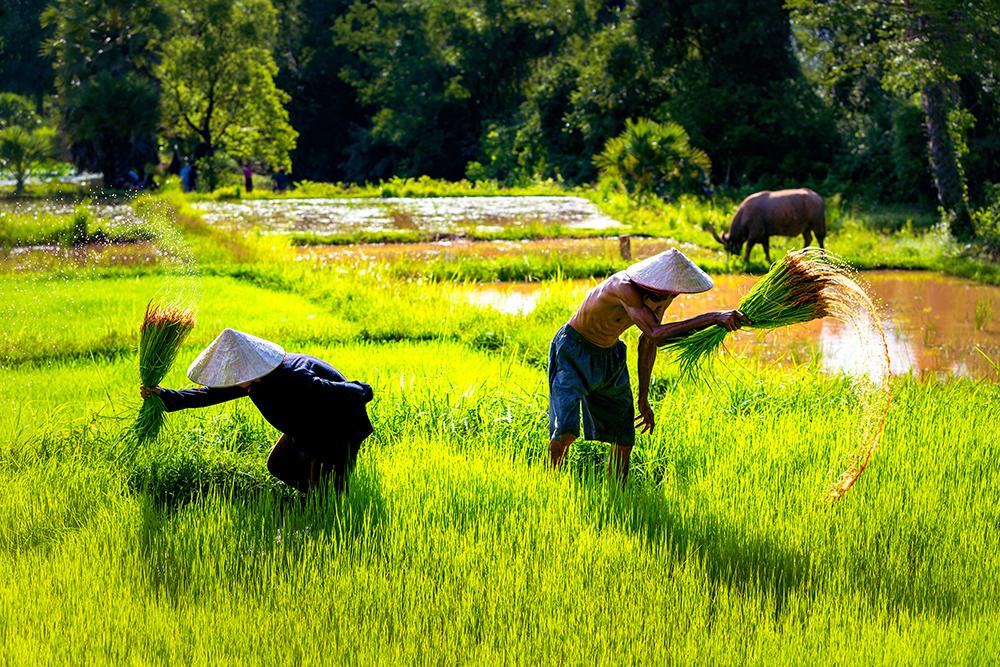
Farmers on meadow terraces
Farmers in an organic-certified agricultural cooperative were in a better position to cope with covid-related supply chain disruptions. (Photo: iStock)

Limitations and Opportunities

While our conversations with smallholder producers and other supply chain actors suggested that VSSs can help farmers to cope with shocks, they also revealed some limitations. VSSs alone do not fully protect farmers from international price volatility, which can affect standards-compliant markets as much as conventional ones. They are also dependent on sufficient consumer demand for sustainable products. Furthermore, VSSs do not provide farmers with much negotiating power in supply chains that are skewed in favour of buyers.

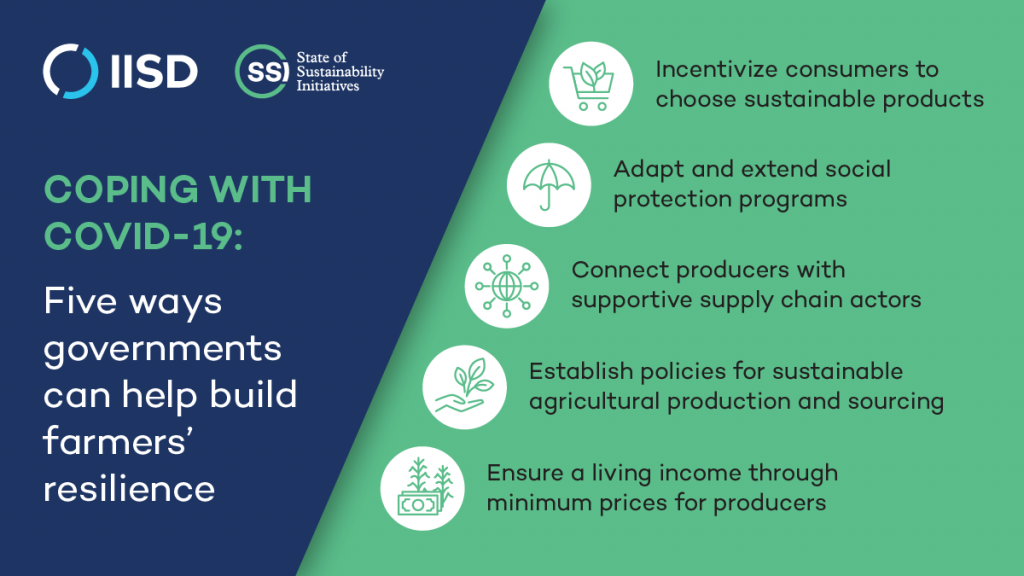
Nonetheless, governments can and should leverage VSSs alongside other measures to improve the resilience of smallholder farmers. We recommend that governments take the following five actions:

  • Encourage consumers to choose sustainable products through tax incentives or charges
  • Establish regulatory frameworks to promote sustainable agricultural practices and sourcing
  • Connect producers with supportive supply chain actors who can provide training and safety nets
  • Adapt and extend social protection programs to support farmers’ recovery after shocks
  • Establish minimum prices to ensure a living income for farmers

This pandemic is far from over and will not be the last crisis to hit supply chains. Climate change, natural disasters, and conflict all have great potential for disruption. Governments must act to ensure farmers have access to the resources they need to cope during crises.

Image showing the five ways governments can help build farmers' resilience

 View the full research results in our policy brief: Coping with COVID-19.

Insight

Can You Build Peace and Adapt to Climate Change at the Same Time?

The scale of the humanitarian crisis in Somalia is immense. It has also been described as the most vulnerable country in the world to climate change. There is growing recognition that it must start adaptation planning now to protect and enhance the peace gains that have been made.

April 12, 2021

For most Somalis, 2020 was an exceptionally hard year.

A brutal, decade-long drought. A devastating pandemic. Flash floods. A catastrophic cyclone and even swarms of desert locusts.

These near-biblical challenges happened against a backdrop of continued instability. It has been 30 years since the government of dictator Siad Barre collapsed, plunging Somalia into a civil war from which it has yet to recover. The political landscape remains fragmented, and, while a fragile peace reigns, the federal government and autonomous regional authorities continue to struggle with coordination, weak institutions, funding shortfalls, and low capacities. Some parts of the country are peaceful; others remain under the control of armed groups, outside of government influence. 

The cumulative impacts of a changing climate and instability, along with the poverty both have wrought, have put nearly six million people—two-thirds of them children—in danger of severe food shortages, and international appeals for help have thus far come up short.

The scale of the humanitarian crisis in Somalia is immense, and within such a context, it can be difficult to make the case that precious time and resources should be put into plans for adapting to future climate risks. However, there is growing recognition that this must happen to protect and enhance the peace gains that have been made.

Somalia has been described as the most vulnerable country in the world to climate change. This vulnerability is complex, differentiated, and multi-dimensional. It is a function of several factors, including high exposure to climate risks, continued instability, weak governance, gender inequality, and widespread poverty. And many of the drivers of climate vulnerability are also root causes of insecurity.  

Somalia is not alone in struggling with converging crises; several other countries are also trying to navigate how to implement effective adaptation actions in contexts defined by or having emerged from violence. In this spirit, the National Adaptation Planning (NAP) Global Network convened a virtual peer learning event for representatives from Somalia, Nigeria, and Sierra Leone to share perspectives, experiences, and lessons learned on adaptation planning in the face of very challenging contexts.

Somalia is not alone in struggling with converging crises; several other countries are also trying to adapt to climate change in contexts defined by violence.

For Sierra Leone, nearly 20 years into a peacebuilding process, the threat of violence has passed. But in the intervening years, constant challenges associated with funding shortfalls and weakened institutional capacities have hampered—though not halted—efforts to build climate resilience. In Nigeria, the government continues to contend with regional instability and violent extremists in the arid north, with the conflict undermining local and national efforts to adapt.

Rich exchanges among the participants during the three virtual sessions quickly showed that many of the challenges associated with aligning adaptation and peacebuilding are shared across borders, and opportunities exist for bringing these agendas together. Participants also agreed that a conflict-sensitive, gender-responsive NAP process was a key means for doing so.

The government of Somalia understands that climate adaptation will be crucial to lasting peace, and adaptation actions must be “integrated within the process of dealing with crises and addressing governance challenges to contribute to greater stability.” Alignment of the country’s adaptation and peacebuilding agendas makes sense, as both look beyond immediate needs to future resilience and development; seek to address shared drivers of vulnerability; and are built on a platform of dialogue and cooperation. As with Sustainable Development Goals 13 (Climate Action) and 16 (Peace, Justice and Strong Institutions), action on one supports achievement on the other.

The government of Somalia understands that climate adaptation will be crucial to lasting peace.

For Somalia, there is reason for hope. Mogadishu is once again a growing, vibrant city of over 2 million, and despite a recent terrorist attack, the peace is holding. The federal government is stable. Vaccine distribution is starting, albeit slowly. And readiness funding has been secured from the Green Climate Fund to kick off the country’s NAP process, a first step of which will be working with the United Nations Development Programme on a much-needed and comprehensive vulnerability assessment. The NAP Global Network is also happy to be partnering with the government in the development of a NAP Framework that will lay out the state’s vision, approach, and guiding principles for adaptation planning.

These are, of course, just small, tentative steps toward lasting peace and resilience. Much more support will be needed from the international community to provide the funding, technical support, and capacity building required to turn adaptation plans into actions and to ensure that these actions complement and amplify peacebuilding activities. Hopefully, that support will come, and Somalis can continue along the path to brighter and more resilient days ahead.

Banner image: Women sell tea in Buur-Hakba, Somalia. UN Photo/Stuart Price

Insight

Seven Ways to Win the Global Race to Net-Zero

Fuelled first by climate science and growing public concern, the global race to net-zero is now accelerating, sped along by the scale of economic opportunity and business risk.

April 1, 2021

This article first appeared on March 31, 2021, as part of a special feature in the National Post called The Future of Our Planet. It was published by MediaPlanet and has been reprinted with permission.

"No issue ranks higher than climate change on our clients’ lists of priorities," writes Larry Fink, head of BlackRock, in his 2021 letter to CEOs. "And there is no company whose business model won’t be profoundly affected by the transition to a net-zero economy."

A net-zero economy is one in which the sum of all greenhouse gases equals zero (after switching to non-polluting technologies, any remaining emissions are zeroed out by sucking carbon out of the atmosphere). And consensus is rapidly building—amongst governments, corporations, investors, and citizens—that the time to ramp up efforts and drive down emissions is now.

The race is turning increasingly competitive. According to the United Nations, the number of companies and countries pledging net-zero commitments doubled last year, despite the COVID-19 pandemic.

Consensus is rapidly building that the time to ramp up efforts and drive down emissions is now.

There is no single strategy to get to net-zero; pathways vary around the world and will continue to evolve as technology matures and costs become more competitive. However, there is growing consensus in national and corporate plans as well as recent expert reports as to what works best:

  • Improvements in energy efficiency: Reducing the amount of energy used, especially in commercial buildings and manufacturing plants, is often the quickest way to lower emissions and save money.
     
  • Massive electrification of products and processes: Electricity typically offers greater efficiency and lower emissions than other forms of energy, so converting heating and cooling systems, industrial processes, and vehicles to electric offers a double dividend.
     
  • Expansion of clean electricity, with significant growth in renewables: This includes wind, solar, hydro, and geothermal as well as other low-carbon sources like nuclear to support the shift to electrification. Improved grid connections and batteries will be required to share and smooth supply.
     
  • Development of low-carbon fuels: For applications that cannot be easily electrified, hydrogen, synthetic fuels, or next generation biofuels are needed as an alternative power source.
     
  • Decarbonization of heavy industry: Steel and cement production represent a significant fraction of global emissions and require specialized approaches—these could be radically different production methods, alternative products, or possibly the incorporation of carbon capture and storage.
     
  • Investments in nature: Nature-based solutions and infrastructure use natural processes to absorb carbon emissions while enhancing surrounding biodiversity and protecting local communities from the impacts of climate change.
     
  • Negative emissions technologies: Recognizing that complete decarbonization will be difficult or impossible to achieve in every sector, carbon capture and other negative emissions technologies may be required to address residual emissions.

It’s exciting to see leading global companies already committing to some or all of these.

Last fall, Walmart announced its plan to hit zero emissions by 2040 through investments in wind, solar, and other renewable energy sources, as well as by electrifying transportation and heating, and using low-impact refrigerants. They have also committed to protect 200,000 square kilometres of land and 1.6 million square kilometres of ocean by 2030.

More recently, FedEx committed to carbon-neutral operations by 2040, with purchases of electric vehicles, funding of sustainable energy initiatives, and carbon sequestration.

We must do more, as our nation’s global competitiveness and future job market depend on it.

And here in Canada, Maple Leaf Foods announced it was the only major food company to be fully carbon neutral today, thanks to investments in wind and biomass energy projects. Telus is aiming for carbon neutrality by 2030, by improving energy efficiency by 50 percent and procuring all of their electricity from renewable or non-emitting sources. Both companies have joined 19 other Canadian businesses in Science Based Targets, a global consortium of companies that have committed to rigorous plans consistent with the latest climate science and goals outlined in the Paris Agreement.  

But we can do more—in fact, we must do more, as our nation’s global competitiveness and future job market depend on it.

The race to net-zero is on. Let’s get Canada to the front of the pack.

Insight details

Insight

IISD Next: Working with (and learning from) young climate activists

The next generation are proving immensely talented at scaling up campaigns for climate action, finding innovative ways to amplify their voices, and working collectively to effect meaningful change.

March 31, 2021

A strategic priority for IISD is engaging with new audiences to ensure our work extends beyond the offices of policy-makers and reaches those who might not otherwise discover it. One important demographic for us is youth, who are proving immensely talented at scaling up campaigns for climate action, finding innovative platforms and strategies to amplify their voices, and working collectively across the globe to effect meaningful change.

The aim of our recent IISD Next project was not to use young influencers as a means of promoting our work; rather, we wanted to learn from them and understand how our expertise could best support their sustainability goals. The partnerships we’ve formed over the past year have given us a new perspective on what effective communication of climate research entails, and we look forward to many more engaging collaborations in the near future.

“Working with youth has not only been fun, it has opened our eyes to how our work can better reach these key audiences,” says Lourdes Sanchez, Senior Policy Advisor and project lead.

Here are just a few insights from our team, based on their experiences:

Youth Have Access to Unique Expertise

At IISD, researchers often have specialized understandings in their areas of expertise, which is what makes them so adept at developing evidence-based solutions, but it can be easy to lose sight of the bigger picture. The next generation, however, is very much attuned to current events, emerging trends, and how these all connect—they can speak about complex issues succinctly and relate them to the real-world consequences we face if we do not act now.

The next generation is very much attuned to current events, emerging trends, and how these all connect.

"Youth have access to many canons of knowledge and modes and platforms of communication that we may not," says Sumeep Bath, IISD Experimental Lakes Area (IISD-ELA) Communications Manager. "Through formal education and their own research methods, young people build up many skills and understandings that are often unique to their generations—and that can certainly teach us a thing or two."

Not All Social Media Platforms Are What They Seem

"Create a video about the impact of climate change on fresh water … but make it festive. And viral."

The IISD-ELA team decided to experiment with a newer social media platform to communicate some heavy truths about the impact that climate change is having on freshwater lakes. While already engaged on Twitter, Facebook, and Instagram, the team had assumed that TikTok was the domain of amateur dancers and influencers and did not hold potential for science communication.

They were wrong. TikTok is indeed a highly dynamic platform that can host every kind of content—including more complex multimedia-based posts. It allows users up to 60 seconds to combine text, video, music, and meme culture to convey information, tell detailed stories, and persuade an audience.

We assumed TikTok was the domain of amateur dancers and influencers and did not hold potential for science communication. We were wrong.

As the final products revealed, "While it can take some work to pull a TikTok together, the results can be informative, engaging and even humorous," says Pauline Gerrard, IISD-ELA Deputy Director. "It’s proven to be an ideal platform for successful science communication."

Young Voices Are Distinct From One Another and Reflect Local Communities

Youth are continuously demonstrating their dedication to the fight against climate change, often with an intersectional and equity-based lens that is missing from mainstream policy circles. What sometimes gets lost in the coverage of protestors hollering for action against polluters is how the next generation is also concerned about climate adaptation.

By turning a conversation with Jamaican activist Jhannel Tomlinson into a creative and interactive article, the team at IISD Resilience amplified on-the-ground perspectives of how climate change is making life harder for farmers while increasing gender inequality in local communities.

illustration of angie daze and jhannel tomlinson with activists

"More importantly, this article sheds light on what a youth leader has accomplished. It demonstrates the important role youth are playing to ensure the opportunities for protection against climate change impacts avoid gender biases," says Catherine Burge, IISD Communications Officer, Resilience. "Youth have a strong collective voice, but there is a lot to learn from them individually, too."

Tomlinson says it best: "Youth are pushing; we are recognizing that we have to be the ones to take command of this because we are fighting for our future."

The Next Generation Needs a Green Recovery More Than Anyone

Fridays for Future Toronto Coordinator Aliénor Rougeot, who worked with IISD’s Energy team on a video and blog post about the green recovery, told our Energy team that if we were going to collaborate, it would need to involve us coming to the table with open minds, not fully formed ideas.

Flexibility is key when it comes to projects with young people; by being open to new ways of thinking and doing, boundaries can be pushed and more meaningful impacts achieved.

"Engaging with people like Allie can help us make our research even more relevant to the generation who will arguably be most affected by the policies put in place today," says Charly Blais, IISD Energy communications assistant. "I really enjoyed joining forces with another young person also working on climate issues, but from a different, on-the-ground activism perspective."

Co-creation and Collaboration Are Critical to Generating Content Everyone Finds Valuable

IISD’s team at the Earth Negotiations Bulletin developed a new web platform (set to launch on Earth Day 2021) that makes understanding and navigating climate negotiations simpler so that young people can participate more easily in these events. It was developed in cooperation with YOUNGO, the official youth constituency of the United Nations Framework Convention on Climate Change (UNFCCC), and CliMates, a youth non-governmental organization that trains youth climate negotiators and runs mock climate UNFCCC Conferences of the Parties (COPs) for educational purposes.

Engaging with (youth) can help us make our research even more relevant to the generation who will be most affected by the policies put in place today.

The website updates the user with the latest negotiation news, explains the different negotiation streams and issues, and walks through the history of climate conferences. Further, it supports youth in identifying their field of action in the world of UNFCCC. Texts are supported by videos, graphics, and audio material to ensure the content is engaging and simple. In addition to the platform available year-round, pre-COP events will be held to prep youth and answer their questions as part of the initiative.

"The process of collaborating with YOUNGOs and CliMates was a great joy and a lot of fun," says Kali Taylor, Policy Advisor at IISD. "It was a true testament to co-creation. We each brought our own skills and networks to the table to create the vision for the site, develop the content, and get input before publishing. By being so iterative and flexible, we can be assured that the final product will be interesting and relevant for our audience."

"We were impressed—but not surprised—by the quality of our partners’ work and the commitment to the project," says Matthew TenBruggencate, IISD Reporting Services’ Media and Communications Officer. "Throughout the course of the project, it became evident that the amount our youth partners were contributing went far beyond a voluntary contribution, and we strove to ensure they were properly recognized and compensated for that effort."