Insight

Addressing the Nature Financing Gap: The role of natural capital accounting and natural asset companies

Could the enthusiasm surrounding natural asset companies drive changes in accounting standards for natural capital? 

January 4, 2023

With a new Global Biodiversity Framework now reached after the Convention on Biological Diversity’s COP 15 in Montreal, one of the key challenges ahead for the international community is not just about implementation of these goals to curb biodiversity loss: it also involves resolving the massive gap in finance needed for a nature-positive future.

New data from the United Nations Environment Programme, for instance, indicates that current financial flows to nature-based solutions, which they value at USD 154 billion annually, must triple by the end of the decade if we are to tackle converging sustainability crises—more specifically climate change, biodiversity loss, and land degradation.

These figures have reinforced that massive changes are needed to help make up that gap, and fast. One crucial change will be a rethink of current accounting practices to value natural capital, which are not fit for responding to these challenges effectively.

What Accounting Practices Look Like Now 

Accounting practices have been conceived in a world of abundance of natural resources. Capital, labour, and flow of goods and services are the main components recorded in a company balance sheet. But under these practices, natural stock and the underlying ecosystem services are treated as being available for free, meaning that companies often overlook how these factors are interdependent with the company’s activities.

This failure to integrate natural capital into company balance sheets has contributed to undermining the environment and the ecosystem. While natural resources such as oil, gas, and minerals are well accounted for, other types of natural stocks, such as water and soil, are usually omitted. This is one of several factors that have enabled the unsustainable exploitation of natural resources to continue while also contributing to the degradation of the environment. Also absent from company balance sheets are biodiversity values, even though biodiversity is essential for well-functioning ecosystem services.

Transitioning to natural capital accounting would both encourage companies to foster conservation practices and help reduce the nature financing gap.

There has been some progress in recent years: there is greater recognition of the need to change the way company balance sheets work, and there have been notable advances in developing accounting solutions that integrate natural assets and the underlying ecosystem services. However, these practices are far from being widely adopted. Significant advances in recent years include the System of Environmental-Economic Accounting developed by the United Nations, the European Commission, the Food and Agriculture Organization of the United Nations, the Organisation for Economic Co-operation and Development, the International Monetary Fund, and the World Bank Group. Among other functions, this system provides a valuation tool for ecosystem changes and services, and it has been adopted by the UN Statistical Commission.

The European Commission is also proposing a review of the regulation on European Environmental Economic Accounts (EEEA) to align natural capital accounting practices with the UN accounting systems. At the national level, additional initiatives are taking place, such as the Natural Capital Accounting standards provided by the British Standards Institution, which serves as the British national standards-setting body.

Natural Asset Companies: A way to spur the conversation forward

Just over one year ago, the New York Stock Exchange and Intrinsic Exchange Group made a landmark announcement: they would be introducing an innovative financing solution known as natural asset companies (NACs). These NACs are companies that hold rights to the preservation and conservation of a natural asset and its underlying ecosystem services. While still in the early stages, they have the potential to push forward the discussion on natural capital accounting.

For example, a company that protects a wetland raises capital through an initial public offering. The proceeds are then used for the protection of the wetland and the ecosystem services, such as water purification and carbon sequestration.

The innovation of this new asset class lies in the establishment of a long-term equity structure based on natural capital accounting. How much this new investment structure can help change companies’ decision making on nature depends on several factors.

First, robust natural accounting standards can provide strong incentives to invest in nature. For example, the Financial Accounting Board Standard has helped define the accounting and reporting standards of NACs. This has the potential to inform international guidance on how to value natural assets and streamline natural accounting practices.

Initial public offering requirements also play a key role, as they help ensure NACs’ credibility and transparency. For example, a company that wants to be listed on the New York Stock Exchange should satisfy governance requirements that ensure the independence and competence of the board. However, transparent governance, accompanied by strong third-party auditing, should allow investors to verify the restoration and conservation practices of the company. Second, by going public, the company has the potential to reach a large pool of investors, ranging from professional to retail investors. The shareholders will benefit from the shares' performance, which is influenced by the revenue stream that the underlying ecosystem benefits generate. Additional revenue streams can materialize in the long term, such as from increased tourism activities and carbon credits. If these NACs become more common, they can contribute to reducing the nature financing gap by unlocking further capital for nature conservation and fostering the standardization of natural capital accounting.

Third, biodiversity considerations can have a significant role in NAC operations. Highly endangered and degraded areas can benefit from regenerative models adopted by the NAC, producing long-term benefits for local communities. The Intrinsic Exchange Group refers to regenerative models such as regenerative farming that improve soil health, biodiversity, and food production.

Therefore, biodiversity can become a crucial ecological indicator for the accounting models adopted by the NACs. 

Putting the Right Safeguards in Place

However, while NACs have significant potential, this new investment vehicle also comes with risks. One major concern involves the privatization of nature. Generally, NACs only hold rights to the production or sustainable use of the ecosystem services, while the ownership of the natural asset remains with the initial possessor, which can be a public entity, government, or farmer.

As there is no direct transfer of ownership from the owner to the asset company, investors and regulators should pay particular attention to how the company handles the rights for the use of ecosystem services. The asset company should not hinder local communities’ rights to access the natural asset. This is particularly crucial when it comes to Indigenous Peoples and minorities who have often seen their rights violated. On the contrary, NACs’ valuations on the natural assets should be interlinked with the prosperity of local communities. This should be in line with sustainable investment practices that integrate both environmental and social considerations.

NACs should not become another speculative financial instrument causing more harm than good, as happened in 2008, when speculations on food futures caused an overvaluation of food prices. The result, at that time, was a market bubble that forced millions of people in low-income countries into extreme poverty. Supervisory and regulatory requirements can provide additional protection by preventing harmful practices.

NACs have enormous potential to mobilize large amounts of capital to finance nature at a global level by valuing and accounting nature. This can only be achieved if market practices are aligned to benefit nature and local communities. 
Insight

The Value of Incorporating Nature in Urban Infrastructure Planning

Cities around the world are struggling to provide people with the infrastructure they need to thrive. Nature-based infrastructure delivers cost-effective, climate-resilient infrastructure services and generates a wealth of co-benefits for citizens, such as reduced air pollution and improved well-being. It also creates an enabling environment for other sustainable infrastructure. To maximize the benefits of NBI, the value of nature must be at the heart of strategic, cross-sectoral urban planning.

December 16, 2022

Infrastructure is a key enabler of sustainable development. It provides people with the services they need to thrive while also protecting the environment from human impacts, such as pollution. At the same time, urban development—if done unsustainably—is one of the main drivers of biodiversity loss and climate change. In cities, infrastructure needs are particularly high because urban areas are challenged by massive population growth and increasing climate impacts.

How can nature-based infrastructure foster sustainable cities?

For cities to be sustainable, urban infrastructure must be sustainable. According to the United Nations Environment Programme (UNEP), sustainable infrastructure systems are “planned, designed, constructed, operated and decommissioned in a manner that ensures economic and financial, social, environmental (including climate resilience), and institutional sustainability over the entire infrastructure life cycle.” This infrastructure can be nature based, built in a conventional way, or combine elements of both to form a hybrid infrastructure.

Building with—rather than against—nature has direct benefits for cities. The term nature-based infrastructure (NBI) includes areas or systems that harness nature to provide infrastructure services for people, the economy, and the environment. Examples of NBI include natural ecosystems, such as forests, mangroves, wetlands, and grasslands. But NBI can also involve engineered or “grey” structures that incorporate nature-based solutions, like rain gardens and green roofs. 

NBI helps make cities more sustainable in three ways:

  1. NBI delivers cost-effective and climate-resilient infrastructure services, such as flood protection, water filtration, and temperature regulation. This helps provide people with the infrastructure they need for their safety, well-being, and livelihoods.
  2. In addition, NBI offers valuable co-benefits for communities and the environment. For example, NBI can support climate change mitigation and adaptation efforts, such as by sequestering carbon. These types of infrastructure can also provide habitats for threatened species, support people’s livelihoods, and offer space for recreation.
  3. Building with nature also enables investments in other sustainable infrastructure, in particular, in the areas of mobility, water, and energy. For example, urban green spaces help keep urban temperatures at bay, which in turn reduces heat-related efficiency losses from power systems and supports a stable energy supply from renewable sources.
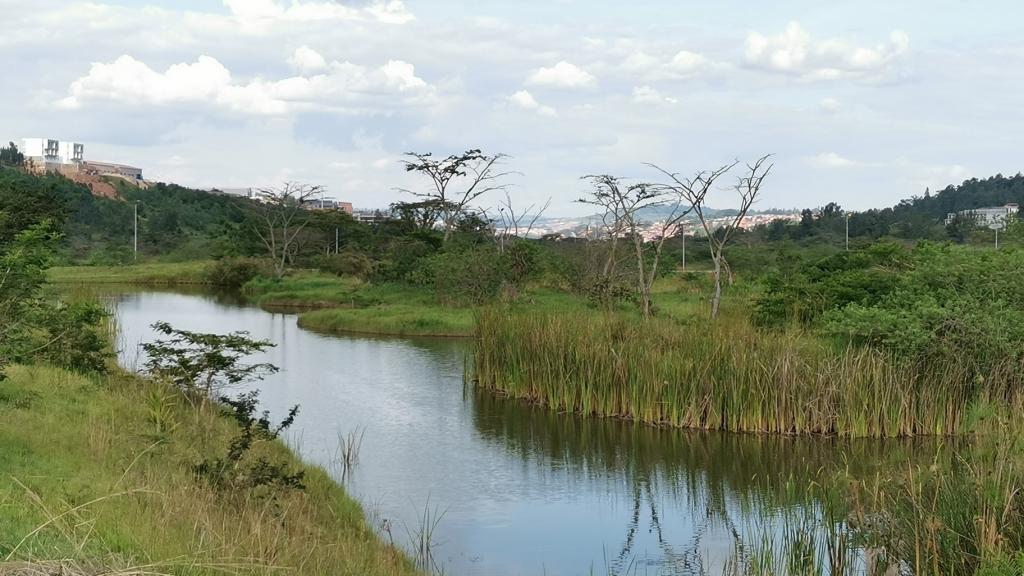
Nyandungu wetland park in Rwanda
Figure 1. The Nyandungu wetland park in Kigali, Rwanda, protects residents from floods, improves water quality, and offers space for recreation. Photo by Ronja Bechauf, IISD.

Valuing nature’s benefits for sustainable urban infrastructure

NBI provides infrastructure services, mitigates costs from increasing climate impacts, and generates many added benefits for citizens. A new International Institute for Sustainable Development (IISD) report finds that if these benefits are taken into account, NBI in cities is, on average, 42% cheaper and creates 36% more value than relying only on grey infrastructure to provide the same infrastructure services. IISD case studies show that for each USD 1 invested, nature-based infrastructure in cities can generate up to 30 times that amount in returns for society, making investments in urban nature economically viable.

How do we know that? At IISD, we have developed an innovative methodology that allows us to quantify the costs, benefits, and risks of infrastructure projects over their entire life cycles. We have applied this Sustainable Asset Valuation (SAVi) methodology to more than 40 infrastructure projects around the world, covering a variety of different assets like roads, wastewater treatment plants, buildings, and NBI.

For example, we analyzed NBI investments in Rainbow Junction, a 140-ha mixed-use development in the city of Tshwane, South Africa. More specifically, we analyzed the outcomes of creating green roofs on new buildings and planting more trees. The assessment indicated that planting 1,000 additional trees would retain more than 6,600 m3 of rainwater, reducing the need to manage and treat stormwater.

NBI can also reduce health risks from extreme heat and reduce the need for conventional forms of cooling, such as air conditioning. Our analysis found that trees in Tshwane would cool down temperatures and cut energy needs for air conditioning by 156,000 kWh, the equivalent of USD 3.82 million per year. In addition, trees in Tshwane could sequester 250 tonnes of carbon dioxide.

Over 40 years, planting and maintaining these trees would cost about USD 142,000. Yet, NBI could help the city avoid costs while delivering additional benefits worth USD 4.42 million. In other words, for each USD 1 invested in planting trees in Tshwane, the result is USD 31 in benefits for society.

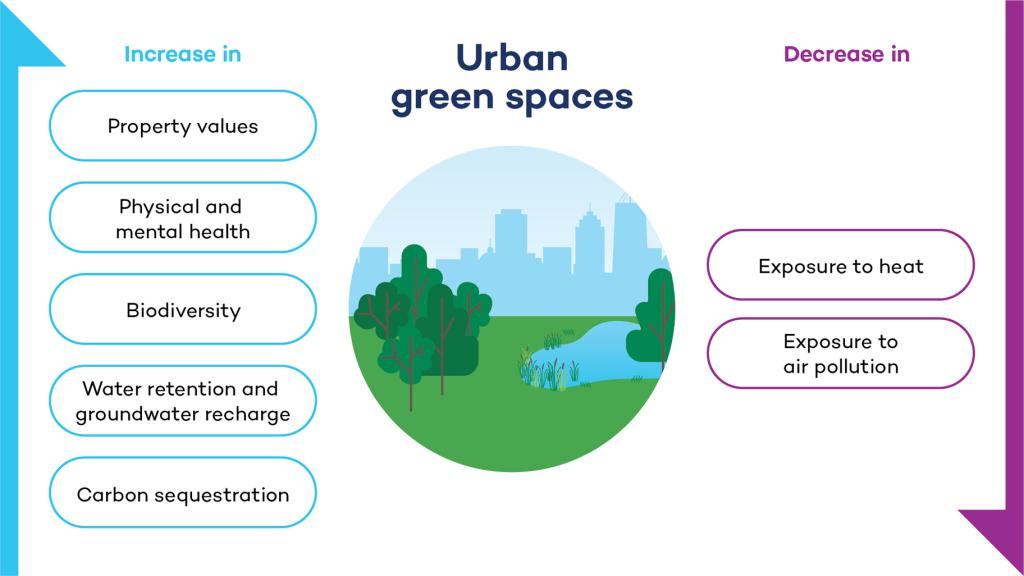
Infographic showing the benefits of urban green spaces
Figure 2. Investing in urban green spaces creates many benefits for cities.

Building with nature also enables investments in other sustainable infrastructure, such as projects that support mobility, water, and energy needs. In a recent SAVi assessment of a non-motorized transport (NMT) proposal in the city of Coimbatore, India, this synergy is clearly evident. The NMT project consists of a comprehensive network of walking and cycling routes across the city, implemented over a 15-year period. It will have a wide range of benefits, including reduced air pollution and carbon dioxide emissions, health benefits from increased physical activity, a reduction in the number of road accidents, and increases in retail and property prices. 

IISD’s economic valuation found that investing approximately USD 121 million in the project will yield net benefits of USD 486 million to USD 510 million over a 23-year period. For example, the NMT network will lead to health benefits worth between USD 84 million and USD 91 million by increasing physical activity and reducing air pollution. In addition, the shift from motorized transport to the NMT network will reduce carbon dioxide emissions worth USD 2 million over the project period.

Yet, the assessment also considers that cycling in a polluting urban environment tends to have worse health effects than using motorized forms of transport. This increased exposure to air pollution reduces the overall health benefits for NMT users. Implementing NBI in Coimbatore would be a way to improve air quality and thus create healthier conditions for walking and cycling. Moreover, expanding NBI, such as parks and street trees, in Coimbatore could make such active forms of mobility more comfortable by reducing extreme heat.

In turn, transport corridors offer a key space for a network of NBI in cities, such as green paths, trees along roads, and green roofs on bus stops. Sustainable mobility options such as mass transit and cycling also require less space than transport systems built around private vehicles, which can free up space for NBI, even in dense urban areas.

Cyclists in Stanley Park in British Columbia, Canada.
Figure 3. Scaling up NBI can improve the conditions for sustainable mobility.

Leveraging the benefits of nature for sustainable cities requires strategic urban planning with NBI at its heart

To make the most of the benefits of urban nature, NBI needs to become a central part of city planning, project assessments, and financing strategies. Planners, policy-makers, and budget holders need to take a systemic perspective that considers a portfolio of infrastructure investments and maximizes their mutual benefits. This means developing cross-sectoral, strategic plans for sustainable urban development and using systemic assessments to evaluate which NBI investments best support the city’s infrastructure and sustainability objectives.

Cities around the world are working hard to create inclusive, healthy, and climate-resilient environments for their residents. Many are committed to ambitious climate goals and to protecting urban biodiversity, for example, as part of the Global Covenant of Mayors and the CitiesWithNature initiatives. In the face of constrained public budgets and mounting global crises, embracing the benefits of NBI and its synergies with urban infrastructure offers the opportunity to support a transition to sustainable cities.

This article builds on IISD’s new report, The Value of Incorporating Nature in Urban Infrastructure Planning. The report is available on the NBI Global Resource Centre website.

Insight

Just Energy Transition Partnerships: An opportunity to leapfrog from coal to clean energy

December 7, 2022

One year on from the announcement of the first "Just Energy Transition Partnership" (JETP) at the 26th UN Climate Change Conference of the Parties (COP 26) in Glasgow, how these types of innovative funding models will work, what they can achieve for climate change mitigation, and what pitfalls they must avoid are questions that are drawing increasing attention and scrutiny. With a new JETP announced in early November and four additional countries also set to take part in these mechanisms, now is a valuable time to take stock of the developments to date and what lessons can help inform these partnerships going forward. 

These JETPs are a nascent financing cooperation mechanism, the aims of which are to help a selection of heavily coal-dependent emerging economies make a just energy transition. The goal is to support these countries' self-defined pathways as they move away from coal production and consumption while doing so in a way that addresses the social consequences involved, such as by ensuring training and alternative job creation for affected workers and new economic opportunities for affected communities.

The first such JETP emerged from COP 26 in Glasgow, when South Africa was promised USD 8.5 billion in financing by France, Germany, the United Kingdom, the United States, and the European Union. A second tranche of countries announced as partners in the JETP approach included India, Indonesia, Vietnam, and Senegal. The donor pool has since been expanded to include multilateral development banks, national development banks, and development finance agencies. As they involve a relatively small group of actors, JETPs can potentially make much faster progress on the energy transition than what would be possible in the UN climate talks themselves, where large oil and gas-producing countries could veto agreement.

In November 2022 at COP 27 in Sharm el-Sheikh, South Africa published its JETP Implementation Plan (JETP IP), which laid out its priority investment requirements in the electricity, new energy vehicles, and green hydrogen sectors. The finance needed to achieve the aims of the JETP IP, at USD 98 billion, is far more than the USD 8.5 billion announced in Glasgow. This means the JETP IP is far broader, and therefore more realistic, in laying out the actual transition needs, but also indicates the scale of change needed in many countries to achieve a just energy transition. 

At the G20 leaders' summit in Bali, also in November, Indonesia's JETP deal was announced: USD 20 billion in finance over 3 to 5 years, half from the donors and half due from the private sector. The JETP laid out an emissions trajectory for the country and how to achieve it: peaking power sector emissions by 2030, not the previous 2037, and capping carbon dioxide emissions levels about a quarter lower than previously expected by the same time.

From Promise to Practice: Ensuring JETPs can deliver

While these announcements show real progress, the implementation of the JETPs will be the true test of their contribution. However, JETPs do have the potential, if their implementation follows the right principles, to extend the scope of climate finance to date because they are more explicitly co-focused on the social aspects of the energy transition and enabling a phase-down in fossil fuel use.

A new IISD policy brief argues that shifting from coal to fossil gas, through JETPs or indeed any international public finance, would not constitute the sustainable and just transition that the JETP model stands for. While there is pressure from some of the JETP countries—and this is something not totally ruled out in South Africa's JETP IP, and Senegal is keen to develop its gas fields—to make a bridging transition to gas, this is technically unnecessary, economically disadvantageous, and dangerous for the climate.

Russia's war in Ukraine has led to high gas prices around the world, which is emblematic of the general volatility of the global gas market. While South Africa, Indonesia, India, and Vietnam source a large proportion of their current coal use domestically, a transition to gas would expose their economies to this volatility. In contrast, leapfrogging from coal straight to wind and solar would enable them to make use of their own natural resources to provide their people with an economically secure source of energy.

Given the technological improvements in renewable and storage technologies, along with the massive cost reductions for these technologies over the past decade, renewable energy is increasingly cost-competitive. In some markets, these technologies are also cheaper than fossil gas infrastructure and the related running costs. Concerns about the supply variability of renewables can be addressed by pump storage and, increasingly, battery storage. These approaches are well suited to grid balancing, as they can be turned on or off in fractions of a second.

All of the JETP countries have considerable wind and solar potential. For example, the International Renewable Energy Agency found that "realistically, and cost-effectively, South Africa could supply 49% of its electricity mix from renewables by 2030" and Indonesia could meet its 31% renewable use goal, which has a 2050 target date, by 2030. However, Indonesia would need USD 16 billion in investments over that period to do so.

Renewable sources of energy are well suited to meeting energy access needs, which remains an issue for all JETP countries with the exception of Vietnam. According to World Bank figures, 36.9 million people in the JETP countries alone lack access to energy. Many people who lack access to modern energy live in rural areas and the modularity and feasibility for energy projects to be installed without needing expensive grid extensions. This makes wind and solar energy ideally suited to meeting the energy access needs that hamper countries' abilities to develop to their full potential. 

Renewables can also have greater social benefits than fossil gas. The United Nations Industrial Development Organization and the Global Green Growth Institute found that for Indonesia and South Africa respectively, investment of USD 1 million in fossil fuels could generate 22 and 33 jobs. In contrast, investing the same amount in clean energy could generate 103 and 66 jobs, respectively. There has not been much detail yet on how the "just" element will be addressed in the two most advanced JETPs. South Africa's JETP IP refers to the need for strategic planning for the skills needed to support economic diversification and place-based "Skills Development Zones" to provide appropriate training for workers so they can contribute within locally relevant value chains. Indonesia's November 2022 JETP statement spoke of "implementation of concrete actions achieving a just energy transition for workers and communities." More granularity will be needed for the planned energy transitions to be considered just.

The urgency of the challenge

The climate imperative to leapfrog from coal to clean energy is clear. Recent IISD analysis shows that "global gas power generation capacity should decrease by more than 55% by 2035 compared with 2020 levels" in order to try to limit average global temperature increases to 1.5°C, in line with the Paris Agreement target. 

Investing in any new long-lived gas infrastructure would create significant risks of stranded assets. This is because gas-fired power plants have a lifespan of over 40 years, and with renewables continuing to fall in price, and as governments increasingly implement climate regulations, the utilization rates of more expensive gas assets will decline. This means less revenue, thus reducing or negating returns on investment. Furthermore, investments in fossil gas now would simply delay the transition to clean energy in JETP countries and would, in turn, necessitate a second round of JETPs to achieve what could—and should—have been achieved the first time around.

There are no good technical, economic, or climate science arguments for the use of public money to support a transition to using gas as a bridge away from coal. Donor countries have agreed so far that JETP finance should be fossil free, but the fact that the JETP IPs that are being developed may not fully follow that principle means that civil society needs to be vigilant so that climate-damaging projects do not get funded. Renewables represent a credible technical alternative to fossil gas and are an approach that can better address other issues, such as energy access, while not endangering the climate further.

JETPs should serve as a beacon to the wider investment community that participating governments are committed to a global clean energy transition. As South Africa, Indonesia, and donors move toward putting these JETPs into practice, and with the prospect of further JETPs for other countries on the horizon, ensuring these partnerships deliver on their potential means avoiding false solutions like fossil gas, prioritizing renewables, and ensuring these efforts are informed by the latest available thinking on how to ensure a just transition. And these are principles that should guide all use of public finance for energy transition, not just the JETPs.

Insight

The Global Biodiversity Framework's "30x30" Target: Catchy slogan or effective conservation goal?

In the lead-up to COP 15, we take a closer look at one of the key targets included under the proposed Global Biodiversity Framework.

December 6, 2022

Still reeling from the difficult 27th UN Climate Change Conference of the Parties (COP 27) negotiations, the international community is now heading into another major meeting on the environmental calendar: the second part of the Convention on Biological Diversity’s (CBD) Fifteenth Conference of the Parties (COP 15), which will take place in Montreal from December 7 to 19. While the biodiversity COPs are normally less embattled than their climate cousin, this year may prove different, as 196 parties come together in the hopes of finalizing negotiations for a new Global Biodiversity Framework (GBF). 

The GBF replaces the Strategic Plan for Biodiversity 20112020 and associated Aichi Targets agreed on by parties in 2010, which were meant to guide international efforts on biodiversity conservation both within the CBD and beyond it. Those targets were largely missed, and the GBF itself is coming 2 years late, given that it was originally due for 2020. An ambitious replacement strategy is urgently needed, given that global loss of biodiversity and ecosystems has accelerated at an unprecedented rate. Humanity is faced with the highest extinction rate in our history, with 1 million animal and plant species currently threatened with extinction, many within decades.

Views differ dramatically over what should be included in this new global framework on biodiversity, including how much of earth’s land and sea to protect, how to finance such an agreement, and how to conserve nature and sustainably use biodiversity in ways that benefit all equitably, particularly for Indigenous Peoples and local communities (IPLCs).

One of the hot-button components of the GBF is the “30x30” conservation target, which is draft target 3. This target calls for 30% of the earth’s land and sea to be conserved through the establishment of protected areas (PAs) and other area-based conservation measures (OECMs). The 30x30 target is more ambitious than its predecessor, Aichi Target 11, which aimed for the protection of 17% of land and 10% of coastal and marine areas. Aichi Target 11 was partially successful in numbers, but less so in quality, due to concerns that many protected areas lack connectivity, do not always safeguard the most important areas for biodiversity, and are not equitably and effectively managed.

Target 3 will clearly be contested as negotiators convene in Montreal this month, as there has been vocal opposition in the lead-up to COP 15. Some delegations worry about focusing too closely on numbers rather than on biodiversity outcomes, while others have flagged concerns about how 30x30 will be implemented fairly and equitably. This article unpacks the key concerns, along with recommendations on how to address these concerns in the final GBF and its subsequent implementation.

Quality Versus Quantity

Critics point out that 30% is an arbitrary number, providing catchy public relations appeal, when it is the quality of the protected area that is far more important. They further argue that the global picture of protected areas needs to be representative of all types of life on earth, and given that climate change is already shifting species' distributions, these protected areas should be well connected through corridors that facilitate species' movements and migration patterns. Indeed, there are more than 100 countries and counting supporting the High Ambition Coalition for Nature and People, which has been a strong advocate for the 30x30 target.

Meanwhile, some want to protect more than 30% and are calling for an additional 20% to ensure there is a “global safety net” that will enable an effective response to the climate and biodiversity crises. Scientific briefs on the GBF targets raise the issue of quality and acknowledge differing opinions on the percent area target, but whether quality-related parameters will make it into the final language of the GBF and that framework’s interpretation remains an open question heading into part two of COP 15.

Implementing 30x30

Fuelled by experiences of land grabs, loss of livelihoods, and human rights violations, some groups argue that the 30x30 target endangers the livelihoods, tenure, and customary access of IPLCs to land and resources. 

The term “fortress conservation” has been used to describe nature-centric conservation initiatives that have closed off access to the traditional territories and livelihoods of IPLCs, when they have been stewarding nature through generations. Research also points to equal or higher levels of biodiversity in Indigenous-managed lands compared to protected areas in some regions. Other critics describe the 30x30 target as a dangerous distraction from the underlying causes of biodiversity loss, which include rampant overconsumption.

Where Do We Go From Here, and How Do We Reconcile Competing Views?

The GBF must place a heavier emphasis on the quality of PAs and OECMs to accompany the 30% target. While the current language refers to ecological representation, connectivity between systems of PAs, and integration into wider seascapes and landscapes, there should be an explicit mention of strategic siting of protected areas to cover intact ecosystems and key biodiversity areas of variable percentages. This will also help ensure that measures are taken to promote the long-term resilience of these conserved areas to climate impacts. 

A closer look at the supporting information for the 30x30 target reveals a scientific basis for increasing the area target from 17%. Leading scientists from both the climate and biodiversity communities have affirmed this: a joint workshop report co-sponsored by the Intergovernmental Science-Policy Platform on Biodiversity and Ecosystem Services and the Intergovernmental Panel on Climate Change noted that conservation targets must become significantly more ambitious and have a greater scope than in earlier iterations. These changes are essential given that many existing protected areas are too small and patchy and are inadequately resourced. Some of these are managed so poorly that they are at risk of degazetting or de-listing—in other words, they could lose the legal protections they have in place or see these protections curbed significantly. 

This increased ambition does not need to result in fortress conservation, as momentum is growing among conservation organizations and national authorities to move toward more integrated, rights-based conservation and development initiatives.

Like the Sustainable Development Goals, the new targets under the GBF should be seen as interlinked, indivisible, and underpinned by human rights-based approaches, including free, prior, and informed consent (FPIC). This means that policy-makers cannot achieve one GBF target without also making gains on the other 21 targets. Successful achievement of 30x30 will mean that Targets 20 on traditional knowledge and 21 on participation are also reached, in addition to targets related to securing investments and capacity building for equitable and transparent governance of PAs. 

While safeguards are mentioned in the draft 30x30 target, FPIC, recognition of land tenure rights, and support for livelihood opportunities should be made explicit. Taking care of the other 70% of the earth, including restoring degraded land and ensuring the effective management of existing protected areas, will also be crucial to the success of GBF implementation.

Voices from IPLCs-led conservation initiatives need to be amplified, as Western science has much to learn from other kinds of knowledge systems. For example, in Canada, the Thaidene Nëné National Park Reserve and Territorial Protected Area is co-managed by local First Nations and the government. Through the Indigenous Guardians Program, which supports Indigenous Peoples’ rights to land stewardship, the Łutsël K’é Dene First Nation established the Ni Hat’Ni Dene Guardians to protect and conserve ecosystems and sacred sites within the PA through ecological monitoring and mapping, Traditional Knowledge sharing with younger generations, and interacting with and educating visitors. 

At the same time, prioritizing conservation over other land use should not be a foregone conclusion. This is part of exercising self-determination—that Indigenous governments choose the management priorities for their traditional territories—and an important reminder of why safeguards like FPIC are vital for the 30x30 target.

Rights-Based Approaches Toward Achieving an Ambitious Target on Protected Areas

No matter the ambition of the GBF, conservation efforts will always be fraught with tensions and trade-offs between competing land uses, values, and knowledge systems. Facing these challenges requires examining underlying assumptions and uncertainties in the framework, undertaking careful analyses about who stands to gain and lose, and engaging in transparent and inclusive dialogue on ways forward to balance these trade-offs

Even if a global biodiversity framework is achieved at COP 15, which will be an important milestone for international environmental governance, the end result is likely to be imperfect to all. There are ways, however, to ensure that implementation helps make up for some of these imperfections. While the success of the 30x30 target hinges both on quantity and quality, the true test of this target will be the degree to which countries implement human rights-based approaches and empower the leadership of Indigenous Peoples and local communities.

The authors of this article would like to thank Viviana Figueroa (Indigenous Women's Biodiversity Network), Alanna Evans, Anika Terton, Alec Crawford, and Sofia Baliño for their feedback on prior drafts.

Insight details

Insight

Four Ways Investors Can Boost Sustainable Agriculture

December 1, 2022

This article was originally published on IISD's State of Sustainability Initiatives website and is reprinted here with permission.

For investors, managing risk is crucial for success. In the agriculture sector, instability driven by price swings, supply chain disruptions, and climate change can discourage financial service providers. Furthermore, agricultural projects that could drive biodiversity loss or deforestation are increasingly being refused by investors, given the risks to their reputation and brand value. These developments come at a time when investment is needed more than ever to establish resilient and sustainable farming that maintains soil health, conserves biodiversity, and enhances community well-being.  

Recent estimates indicate that there is an estimated USD 260 billion annual investment gap that must be bridged to meet the targets of Sustainable Development Goal 2 (zero hunger) by 2030. Moreover, an average of USD 711 billion per year is needed to close the investment gap to protect and regenerate biodiversity, which is the basis of agriculture and the food that we need.

Without innovative and committed investors, there is no way to end hunger and guide the sector toward greater sustainability. Here are four ways investors can manage risks while supporting sustainable investment in agriculture, drawing from on-the-ground success stories that often incorporate voluntary sustainability standards such as Organic, Fairtrade, or the Rainforest Alliance.

Build a supportive, blended financial ecosystem that includes public, private, philanthropic, and first-loss investors.

Investors know the value of a diversified portfolio, and the same logic applies to blended financing models that can reduce and spread risk between private capital and development funding in an investment deal. And first-loss investments (also called first-loss capital)—where a principal investor agrees to take the first losses, should any occur—can similarly improve investee risk profiles and encourage investors to back smallholder farmers and prioritize sustainable operations. 

For example, the Africa Agriculture and Trade Investment Fund uses blended financing to mobilize private and public capital to back cotton producers in West Africa. At the same time, this approach supports the achievement of developmental goals, such as increased productivity, improved cotton quality, and the encouragement of more sustainable practices that protect High Conservation Value areas and water sources. The fund includes a first-loss guarantee by Germany’s Federal Ministry for Economic Cooperation and Development, as well as a technical assistance facility.

Know your farmers, and learn about their financial needs and investment potential.

Understanding crop production, commercial calendars, and other facets of farming can bring investors valuable insights about social and environmental risks and opportunities to make a difference through investment. These details should inform investment analysis and decision making. 

With a good understanding of conditions on the ground, the Moringa Fund made an impactful investment in ComaFruits, a company that helps land-locked mango producers in Mali get their product to market. This investment helped ComaFruits move up the value chain, as they were able to build a production plant that turned potentially wasted fruit into pureed, frozen, and dried mango products. ComaFruits also helped producers become certified under sustainability standards, which led to higher-quality produce, the adoption of agroforestry and sustainable land use practices for enhancing and restoring biodiversity, and greater access to more export markets.

Create custom financial products that respond to farmer needs.

Equities, loans, or hybrid instruments that incentivize sustainability and adjust to fit farmers’ realities—by incorporating elements like grace periods and compensatory interest rates for farmers with good social or environmental performance—can lead to better investment outcomes while supporting farmers, their communities, and the environment. Central banks and development banks can also play a role by creating the products and conditions to support financial service providers, such as lowering tax rates, lowering regulatory capital reserves, or collateral requirements, and allowing for on-lending, wherein financial services providers borrow money from central banks or development banks and, in turn, provide sustainability-linked loans to farmers.

AlphaMundi Group took this approach when its impact debt fund (SocialAlpha Investment Fund) extended a flexible line of credit to Olivado, a Kenyan company that specializes in producing oil from Fairtrade- and Organic-certified avocados. In this case, the loan provided a smaller amount of credit early in the year, and a larger amount in April and May when the avocado season was in full swing. It also allowed for additional credit for a possible secondary harvest in September and October. This arrangement allowed Olivado to pay farmers in real time instead of waiting for them to generate cash from oil sales. Olivado also supports avocado farmers to adopt practices that encourage the efficient use of water and the protection of soil biodiversity by capturing rainwater for irrigation, monitoring water levels in trees regularly, and using only organic fertilizers.

Along the same lines, Conservation International Ventures provides concessionary loans to small and medium-sized enterprises whose business operations support preserving and restoring biodiversity. One such enterprise is CorpoCampo, a family-run company that sources organic-certified acai berries and palm hearts from smallholders in Colombia’s Amazon region. The long-term loan helped in expanding their production plant and installing a facility to process the acai pulp, while Conservation International Ventures charged a reduced interest rate in instances where CorpoCampo sourced from smallholders engaged in biodiversity conservation and ecosystem restoration initiatives.  

Think outside the box to create an impact on sustainability.

Mercon Group got creative when it decided to administer USD 450 million in loans to coffee farmers, largely in Central and South America, with interest rates tied to sustainability results measured against an index aligned with Rainforest Alliance criteria. 

Investors can also support initiatives that bring together farmers that adopt farming practices that protect the environment and support community well-being. When small-scale farmers form groups or cooperatives, they can share facilities and costs, do better at the negotiating table, and realize more market opportunities—all of which can support more resilient, sustainable, and less risky operations. Investors can also partner with sustainability standards and other actors to provide agricultural extension services, such as advice, data, and technology transfer, and technical assistance for producers on sustainable farming, sound business practices, and opportunities to add value to their products. These efforts can open more valuable markets and strengthen the investment case for farmers. 

This article draws on research from IISD’s State of Sustainability Initiatives’ recent report Standards and Investments in Sustainable Agriculture.

Insight

Learning From Gender-Responsive National Adaptation Plan Processes: Insights from countries to inform the review of the UNFCCC Gender Action Plan

Based on the priority actions of 10 African and Caribbean countries for the integration of gender equality in their National Adaptation Plan (NAP) processes, we identified three key recommendations for effectively advancing the Gender Action Plan (GAP) under the United Nations Framework Convention on Climate Change (UNFCCC). Despite being at very different stages of gender integration in their NAP processes, all countries agreed on those points.

November 8, 2022

This article was originally published by the National Adaptation Plan (NAP) Global Network.

At the UN Climate Change Conference (COP 27), UNFCCC parties will resume discussions on the intermediate review of the Gender Action Plan, or GAP, and agree on what actions need to be strengthened, deprioritized, or accelerated in the coming 2 years. This year is an important moment to reflect on what has been achieved by different countries, what they learned, and how it can inform the remaining implementation period of this plan to advance gender integration in climate policies, especially the NAP process.

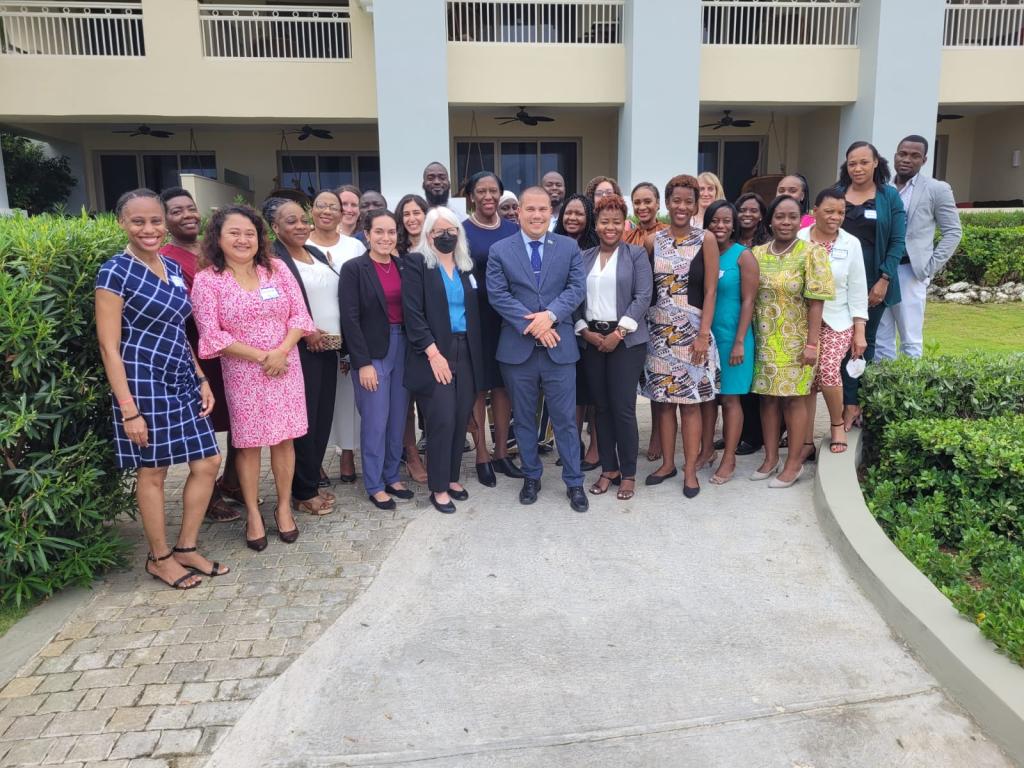
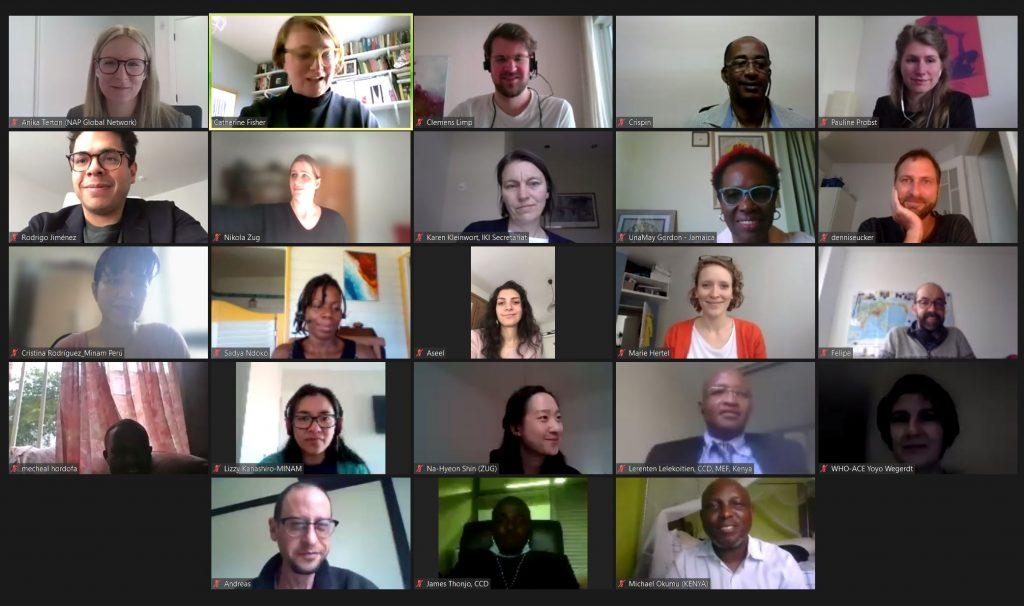
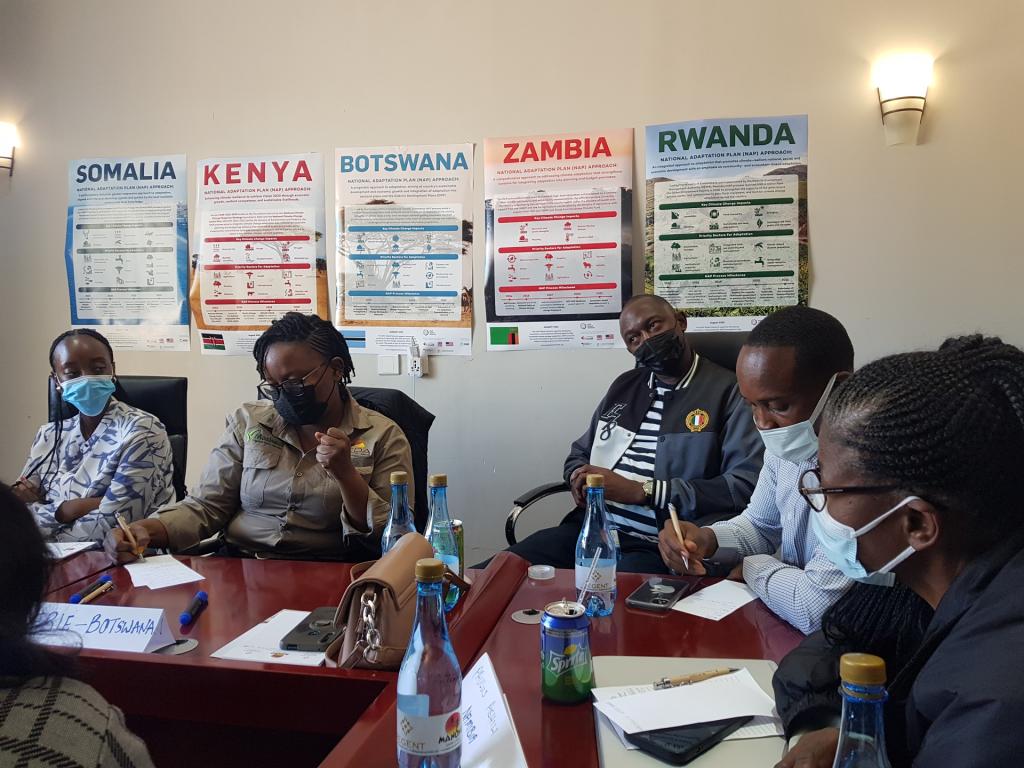
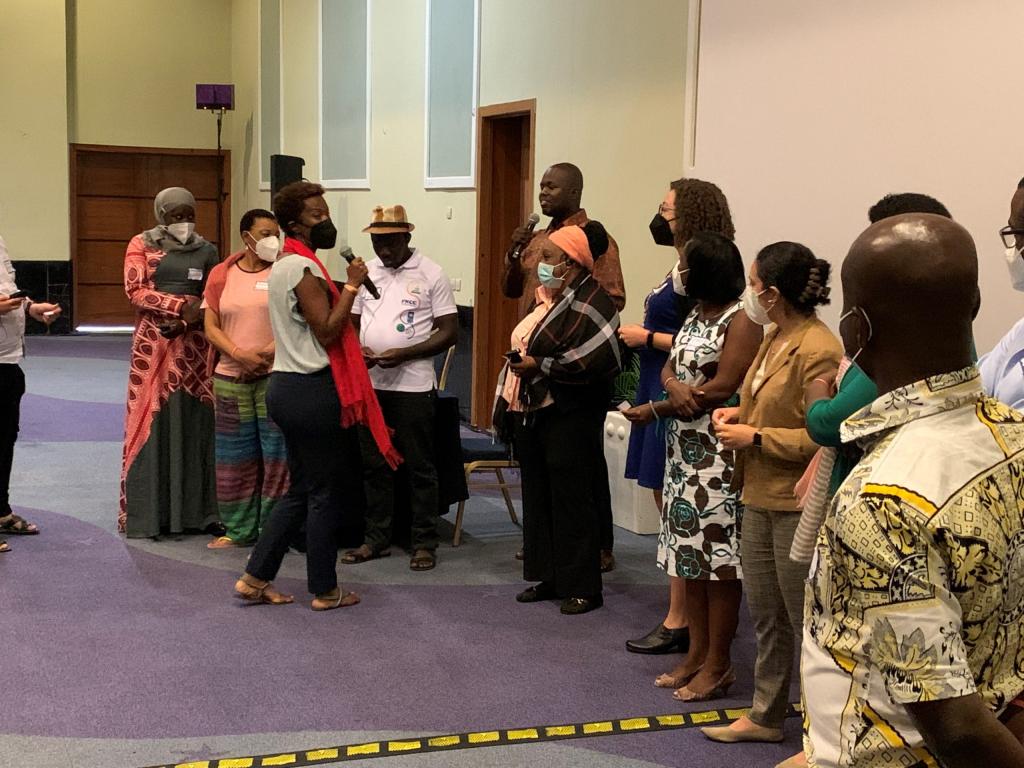
In July, the NAP Global Network and the Government of Jamaica hosted a Peer Learning Summit that gathered experts and government representatives from 10 countries in sub-Saharan Africa (Botswana, Central African Republic, Chad, Côte d'Ivoire, Ghana, Senegal, and Zambia) and the Caribbean (Belize, Jamaica, and Haiti) to share experiences and lessons learned on integrating gender equality into their climate change adaptation processes and programs. Here is what we heard from them.

A group photograph from a National Adaptation Plan Global Network Peer Learning Summit in Jamaica in 2022
A Peer Learning Summit was held in July: Sharing experiences and lessons learned on integrating gender equality into their climate change adaptation processes.

Social norms emerged as one of the main challenges to integrating gender in adaptation processes and actions.

When exploring common challenges, countries at the Peer Learning Summit discussed a lack of awareness and capacities, the absence of data and analysis, and the institutional barriers to a gender-responsive approach to climate change adaptation planning. They also highlighted the key role that social norms play at all levels—from government institutions to households—in either preventing or slowing down efforts to integrate gender effectively in the NAP process and adaptation actions. Social norms influence who is able to participate in adaptation decision making and planning processes, making it more likely that people who are typically underrepresented will continue to be left out.

In Chad, recent research supported by the NAP GN reveals that attitudes appear to be mostly in favour of taking gender into account in climate change adaptation policies, strategies, and programs…. On the other hand, a non-negligible proportion of the participants have favourable attitudes toward practices that run counter to women's rights, such as the use of violence against women or early marriage.

Government of Chad, 2021

Despite these challenges, countries identified concrete actions their governments can take to speed up gender-responsive climate adaptation—actions that are broadly aligned with the priority areas of the GAP.

A key output of the discussions at the Peer Learning Summit was the concrete next steps laid out by countries to better integrate gender considerations in their NAP processes. Most of the actions prioritized by countries align well with the GAP's five priority areas, moving two objectives forward at once.

For example, a number of countries proposed training and sensitization activities that can contribute to the work planned under area A on capacity building, knowledge management, and communication. Several countries prioritized activities to ensure funding is available to roll out the different actions, which links to area D on gender-responsive implementation and means of implementation. Finally, some countries identified activities to strengthen their monitoring, evaluation, and learning (MEL) systems for adaptation to make them more gender-responsive, which will help them report on the status of the implementation of their gender-responsive policies and actions under priority area E.

Still, the GAP can be improved by integrating aspects that are not currently well covered.

Based on what we heard from country partners, the following recommendations should be considered in the remaining implementation period of the GAP.

Recommendation #1: Capacity-building initiatives should address cultural and social norms that negatively influence gender dynamics within governments and other institutions involved in climate policy and action.

The GAP is silent on addressing discriminatory social norms and on strengthening capacities to address this particular point. Recognizing the important role played by social norms in impeding progress on gender equality, it is critical that this is seen as part of a gender-responsive approach to climate action.

In collaboration with gender equality actors, parties must consider how these norms are perpetuated in their own cultures and institutions and how to move toward positive change at all levels. Gathering evidence on how parties and civil society have been working on addressing social norms in climate adaptation planning and actions should help accelerate action. It would also be important to strengthen the decision-makers' understanding of gender and social norms to ensure that they challenge harmful norms and accelerate gender-responsive actions.

Recommendation #2: Activities on MEL should go beyond the disaggregation of data to promote gender-responsive MEL systems.

The GAP includes a few actions that relate to MEL, both under priority area E, the dedicated area of action on this topic—which focuses only on activities undertaken by the UNFCCC secretariat—and under priority area D, where one activity focuses on enhancing the availability of sex-disaggregated data for gender analysis.

As countries establish their MEL systems for adaptation, it will be important to ensure that gender issues are integrated into an intersectional approach from the outset. This will require attention to the collection of disaggregated data, of course, but it will also ensure participatory approaches to MEL and identify metrics that track gender-differentiated impacts of adaptation investments and equity in adaptation outcomes, as well as progress on gender-responsive processes. Thus, it might be interesting for the GAP to ensure that gender-responsive and learning-focused MEL systems are discussed and that some capacity strengthening on those issues is provided.

Recommendation #3: Strengthen activities to reinforce institutional mechanisms for collaboration between gender and climate teams and ministries.

The GAP's priority area on coherence focuses on the constituted bodies under the UNFCCC—it does not propose actions to improve coherence at the national level. Parties could benefit from capacity strengthening and peer learning activities to better align the gender and climate agendas at the national level as a means of ensuring gender-responsive adaptation processes and actions. Many countries are moving forward on this, for example, by creating gender teams in all sectoral ministries or establishing Memoranda of Understanding between gender and environment ministries.

Act on the GAP sign
The GAP is a critical tool for advancing gender-responsive NAP processes, but it can be improved by integrating aspects that are not currently well covered.

Raising the ambition of the GAP 

The GAP is a critical tool for advancing gender-responsive NAP processes, but to accelerate action, some critical elements are still missing. Harmful social norms, gender-responsive MEL, and institutional mechanisms necessary for proper coordination should be properly addressed and supported in the coming years. The intermediate review of the GAP happening this year is a perfect opportunity for parties to reflect on what's missing and revise the GAP to raise its ambition. The learning shared by countries at the Peer Learning Summit provides important insights that can inform these discussions.

"We have more in common than we have differences."

Participant from Jamaica
Insight

What Does an Inclusive Global Stocktake Look Like for Civil Society?

The inaugural Global Stocktake will conclude at COP 28 in 2023. With the process well underway, the current and upcoming phases of the Global Stocktake must be open and inclusive in order to succeed.

November 4, 2022

The Global Stocktake (GST) is the heart of the Paris Agreement's ambition mechanism—an iterative process to increase climate action by all countries by periodically reviewing how well current efforts are doing in achieving the treaty's objectives. The GST's output can then help countries collectively assess and understand what more needs to be done to protect people and ecosystems from the impacts of climate change. To achieve this goal successfully, the inclusion of civil society representatives in the GST is crucial. 

Over the past three decades, the United Nations Framework Convention on Climate Change (UNFCCC) processes have constructed a culture of negotiation and exchange between parties (countries that have signed on to the Convention). This “party-driven” approach leaves very little room for civil society to engage meaningfully beyond observing the meetings. The GST process, however, follows a more flexible and participatory approach. As we reach the halfway point of the GST's preparation phase, we looked at whether the vision for an inclusive GST set out in the Paris Agreement is turning into a reality and how it could go further to ensure a successful outcome at the 28th United Nations Climate Change Conference (COP 28) and beyond.

The Global Stocktake: Co-designing for success

The GST has incorporated an innovative approach to civil society inclusion. In addition to civil society representatives' usual role as observers, they had the option of being the co-designers of the process and made the process more inclusive by encouraging participation beyond the UNFCCC parties. For instance, anyone who wishes to submit data and reports to the GST is welcome to do so via the GST submission portal. Additionally, Technical Dialogues (TDs)⁠—a core activity of the 2-year GST process that includes a series of round table dialogues and workshops—are open to civil society experts who are facilitating, driving, and contributing to the conversation. This “co-designing” process is new to the UNFCCC, and while some aspects could be improved, there is already evidence of success so far.

First, during the first submission phase (February 2022), over 68 non-state actors submitted their inputs to the GST process, in addition to three groups of parties and 10 individual parties. At COP 27, we will also see many civil society organizations' non-written inputs, such as posters, videos, and other innovative formats, at the GST Creative Space. This demonstrates civil society actors' interests and commitments to ensuring the GST output is comprehensive and reflects diverse views. To make these submissions even more inclusive, however, there needs to be a greater focus on accessibility—such as accepting more languages for input submissions or offering support for translation—as the process only accepts English-language submissions at the moment.

Second, the World Café format of discussions during the TD was a real success. Despite the lack of space and time, many civil society representatives could talk with parties at the same table in an open setting, which ignited frank and constructive exchanges between actors who usually do not have the opportunity to have these conversations. During the closing plenary of the first TD in June 2022, parties and non-state actors underlined how much they appreciated such a format and wished to see it continue in the future. The TD round tables, however, remained formal, and interventions were still largely based on pre-prepared statements. Observers also noted that the speakers at the roundtables were not very diverse in terms of age, gender, and social or cultural background.

Third, the summary report of the first TD integrates many views and recommendations from civil society, which demonstrates the value of these inputs. These inputs include the need to scale up climate finance, especially for adaptation and loss and damage; the just and equitable phase-out of fossil fuels around the world; the protection of ecosystems and human rights; and the imperative of calling out greenwashing and considering equity in climate action. The summary report could be clearer in terms of capturing the dynamics in the room and providing more nuanced observations rather than simple synthesizing, but this report remains innovative and novel for an official UNFCCC document.

The last point to consider is the inclusion of non-state actors beyond the UNFCCC, which has the potential to offer new perspectives, insights, and critical questions. It is important to reflect the diversity of society in the TD room and to listen to all of the voices at the table. Yet, it is also important to remember that non-state experts should be chosen in alignment with the priorities of the Paris Agreement, and the GST should not become another place for greenwashing and commercial promotion.

Why is Civil Society Inclusion a Key Success Factor for the Global Stocktake?

As the UNFCCC moves from negotiation to the implementation phase of the Paris Agreement, the inclusive engagement and participation of all relevant stakeholders are key to realizing the visions set out at the 2015 Paris Climate Change Conference. In that context, the modalities of participation must change.

Civil society groups have played an important role in shaping the Paris Agreement and its subsequent negotiations since COP 21. As such, non-state actors, especially civil society and representatives of the most impacted populations, such as women, Indigenous peoples, youth, and people living with disabilities, are also key partners in implementing the Paris Agreement. The agreement will not succeed without national and subnational implementation, and local-level actions will not happen without the expertise, knowledge, mobilization power, and leadership demonstrated by civil society and grassroots groups.

Thus, the GST cannot happen without robust and meaningful civil society representation at the table. Here are three reasons why:

  1. They are essential for taking stock of global climate action. Civil society and community leaders are working at the local level—most of the time, with grassroots organizations and communities directly. They have unique perspectives and experiences with the progress and gaps that people are still facing to mitigate, adapt, and recover from climate change impacts.
  2. They are indispensable partners for implementing improved climate action plans after the GST. Civil society will inevitably be involved in the planning and implementation of the next round of nationally determined contributions (NDCs) and National Adaptation Plans (NAPs). They have the strongest connections for channelling political decisions into concrete measures and projects that benefit people, biodiversity, and the climate.
  3. They are drivers of political visions and momentum for change. Involving civil society in the design of the GST allows for incorporating their ideas and perspectives on how the process should take place, how the outcomes should look, and how to enhance the integration of global climate ambition. The broad participation of civil society groups legitimizes the process and the outputs of the GST. In addition, civil society representatives have the potential to call for more ambitious outcomes from the GST by moving needles from planning to implementation and supporting parties in implementing their climate policies at home. Thus, the output of the GST should consider recommendations from civil society stakeholders and correspond to their needs, and as these discussions continue, civil society must be consulted and heard.

COP 27, and Then What?

The GST is the first UNFCCC process to propose a new way of working together. The critical phase of the GST will continue at COP 27, including at the second TD, which will take place in Egypt. Additionally, political planning for the GST should start at COP 27 and feature the meaningful engagement of and contributions from civil society representatives. This will ensure ample time to produce a strong decision text with political support and a common vision for the 2023 GST outcomes, led by the current Egyptian and the incoming Emirati COP presidencies. These two processes—the second TD and the political discussions on a GST output—for COP 27 should be prepared with civil society and observers to ensure their effectiveness, legitimacy, and relevance.

The GST should not be the only process where steps are taken to adequately include civil society.  It could instead be a starting point for reflection concerning the whole governance of the UNFCCC. Between COP 27 and 28, the secretariat, supported by parties and all UNFCCC civil society constituencies, should undertake a stocktake of the progress and challenges of civil society inclusion and participation with the creation of a task force. With insights from both the GST process and from the task force's review, COP 28 will be a key moment to formalize a process to pursue a number of reforms to the way people can participate and engage in UNFCCC processes.

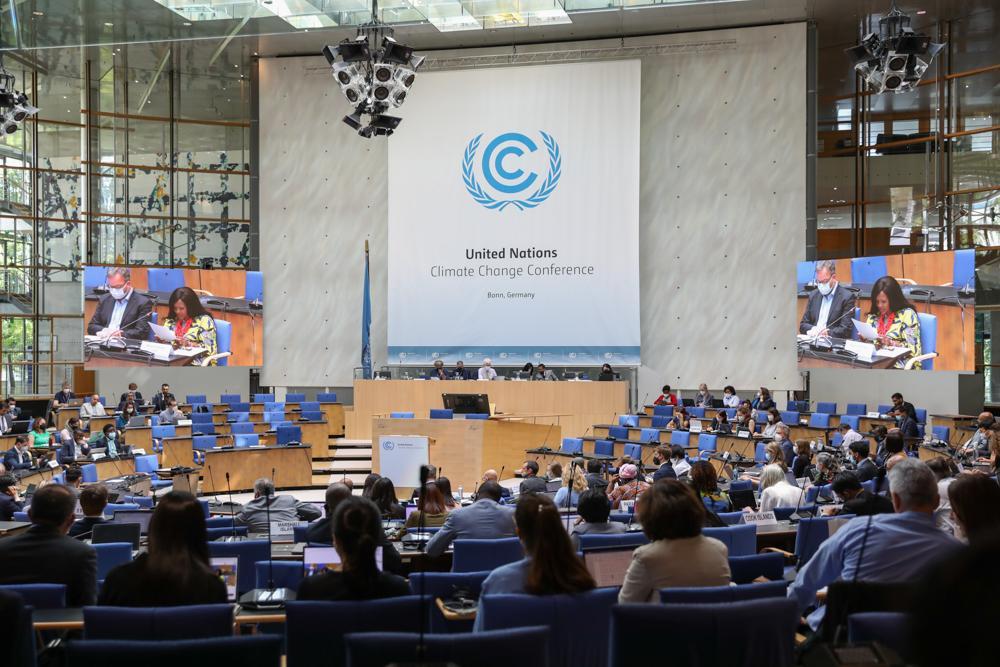
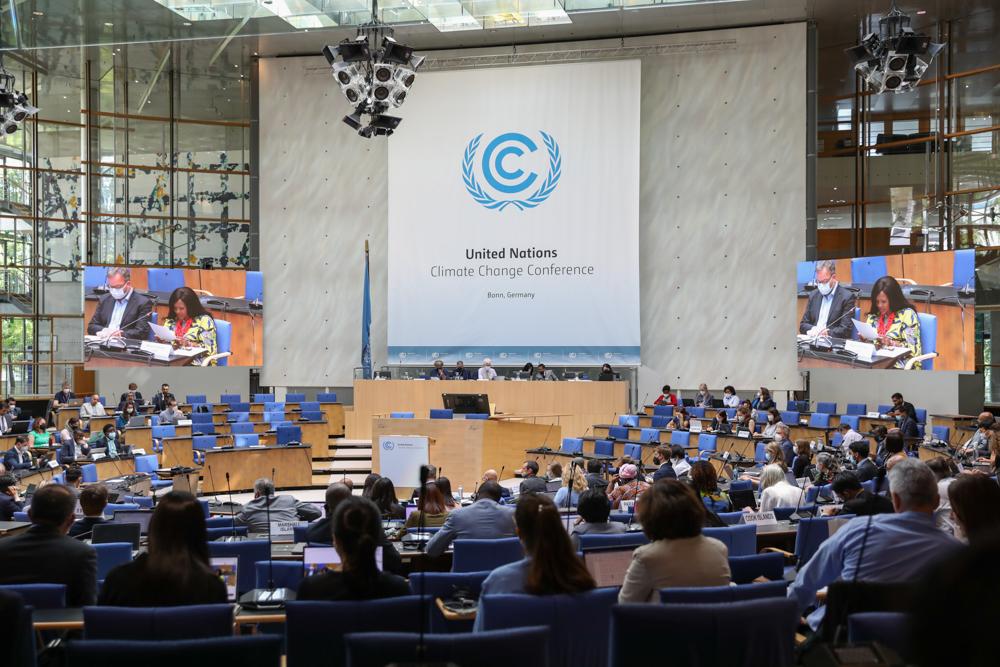
The photo used in the banner image for this article is from the Bonn Climate Conference in June 2022 and was taken by IISD/ENB's Kiara Worth.

Insight

A Natural Path to Conflict Prevention: Unpacking the nature–security nexus

Despite the global scale of nature loss, its security implications are not sufficiently understood. A beekeeping project in Gabon shows how actions to protect, restore, and sustainably manage biodiversity, and ecosystems are crucial for conflict prevention and security.

November 3, 2022

Biodiversity loss and the degradation of ecosystems are accelerating, driven by a host of factors, including unsustainable resource extraction, demographic pressures, pollution, land- and sea-use change, invasive species, and climate change. The latest global assessment estimates that about 75% of the planet's terrestrial and 40% of the marine environment have already been degraded. When ecosystems are disrupted, so too are the important ecological processes that we rely on, including those processes that are foundational to the health and well-being of communities. This, in turn, can increase the risks faced by communities, such as loss of livelihoods and income, interrupted supply chains, forced migration, disease and sickness, and food insecurity. These risks are particularly acute in countries and regions affected by fragility and conflict, where livelihoods and economies are highly reliant on ecosystems and natural resources.

Despite the global scale of nature loss, its security implications are far less understood than those associated with climate change or natural resource competition—particularly within traditional intelligence and security circles. Environmental degradation, biodiversity loss, and climate change are relatively new security threats; they do not represent agents who are intentionally trying to harm people but have instead been described as "actorless threats." Decidedly less attention has been paid to what the unfolding, accelerating biodiversity crisis could mean for human, national, and global security should we continue to see the collapse of pollinators, the dieback of coral reefs, or the loss of tropical forests—to name just a few examples.

Without joint actions to consider and address the drivers of environmental degradation and biodiversity loss alongside more traditional root causes of insecurity, a vicious cycle can emerge where nature loss exacerbates the drivers of instability, which, in turn, contributes to further environmental degradation both directly and indirectly.

For example, greater protection of coral reefs, forests, and grasslands can help address many of the central drivers of instability. By protecting land and marine ecosystems and the services they provide, we can ensure that individuals and communities receive their benefits, such as food, energy, potable water, and—for many—livelihoods. These ecosystems also provide nonmaterial benefits, including recreational and psychological well-being. They serve to regulate or support other ecosystem processes, such as climate regulation and pest control. As more individual and community needs are met, sources of resource competition and tension emerging over scarcity decrease and reduce the likelihood of conflict and the pressures to migrate in search of better economic opportunities.

Beekeeping in Gabon: How training in honey cultivation is helping reinforce human security and conflict prevention

While the security implications of nature loss are not sufficiently understood, there are already valuable examples that show how actions to protect nature can benefit local communities and address some of the drivers of conflict and fragility. One such example can be found in Gabon, a country with diverse wildlife and abundant natural, forestry, and mining resources, but which also faces significant criminal threats due to poaching and the illegal trafficking of its wildlife. Beyond the damage to the environment and biodiversity and the enormous economic loss for the country, illegal trafficking provides essential funding for criminal, terrorist, and rebel groups operating in the sub-region, directly impacting peace, security, and sustainable development. At the local level, a failure to protect a community's rights to forests can threaten livelihoods, leading to tensions and potential conflict, while the revenues raised from illegal poaching and wildlife trafficking can fund transnational conflict. This is particularly challenging in the Congo Basin, which is both a source and transit area for wildlife trafficked to the markets of the Middle East and Asia.

Gabon's agriculture sector is largely reliant on rain-fed agriculture. Decreased water availability and prolonged dry periods have exacerbated land degradation, which, combined with impacts from the COVID-19 pandemic, has taken a major toll on livelihoods, food security, and human capital. The strict mobility restrictions imposed in most countries have also severely disrupted economic activities: in Gabon, revenue declined for more than 70% of household businesses. The resulting loss of livelihoods and economic opportunities, increased food insecurity, and minimal government safety nets increase the incentives for engaging in illegal logging, wildlife poaching, or recruitment into non-state armed groups or criminal organizations, thereby driving further ecosystem degradation and species loss.

In response, Conservation Justice, through EU funding, has introduced training opportunities in honey cultivation to provide effective alternative livelihood strategies to illegal resource use. This is an approach that already has shown immense potential in tackling a range of challenges. Cultivating and protecting bees not only secures the ecosystem services they provide but can also build alternative livelihood strategies, providing additional income and economic opportunities. Beekeeping and honey production can help address household income needs and make important contributions to local development, supporting the underlying drivers of peace and conflict prevention.

Bee pollination directly contributes to food security, biodiversity, income diversity, biofuels, the availability of medicines, stable soils, and diverse wildlife. By facilitating plant reproduction, animal pollination supports the 75% of global food crop types, including fruits and vegetables, that rely on it. Without pollinators like bees, these foods and cash crops, such as coffee, almonds, and cacao, would likely go extinct. Loss of pollination services, coupled with other biophysical and socioeconomic drivers impacting ecosystems, will likely result in yield losses and could have severe economic impacts, especially in sub-Saharan communities and countries, which are highly dependent on small-scale agriculture and cash crops for their income, livelihoods, and food security.

This Conservation Justice project is already showing benefits in practice. The production of honey, the development of api-tourism, and the management of community forests generate new forms of income and enable communities in Gabon to meet some of their needs while reducing pressures on natural resources. These communities, whose main economic activity remains agriculture, have started to diversify to beekeeping and have expanded community forestry based on the development of non-timber forest products.

Similar successes in using honey cultivation to tackle environmental and social challenges can be found elsewhere in the region. Some honey beekeepers in Africa say that their work also contributes to the restoration of degraded forestland and wildlife. The health and productivity of bees are tied to the health and well-being of the environment that they pollinate, which ripples out to benefit crop production and variation. There have even been successful trials of "beehive fences" to keep large mammals safely away from agricultural fields, reducing humanwildlife conflict. The conservation of bees and their habitat can expand to include other wildlife and ecosystem conservation, enhancing crop variety for increased incomes.

Investments in the protection of honey are also investments in household and community security. Funding beekeeping entrepreneurship allows households to gain or diversify employment by selling honey, thus building livelihood security while also supporting pollinator colonies and agricultural livelihoods. Improved personal and household income security, in turn, reduces certain drivers of conflict— contributing to a more peaceful society.

Embracing Nature as a Foundation for Security and Well-being

The honey cultivation project in Gabon is just one example of many where the naturesecurity nexus is at work. This nexus highlights that expanding and strengthening actions to protect, restore, and sustainably manage biodiversity, ecosystems, and their services not only benefits the environment and those that depend on it, but is also vital to prevent conflicts and strengthen security.

Although many of the links between the biodiversity crisis and security remain unclear, stresses to ecosystems and their services nevertheless have profound—and potentially expanding—implications for human, national, and global security. Attention to (and investments in) nature and natural systems before their decline—and before conflict erupts—can be instrumental for conflict prevention, peacebuilding, and security.

National governments need to adjust security planning to better understand and address the growing number of threats that are rooted in the decline of nature and the opportunities for conflict prevention, security, and well-being by increasing investments in ecosystem protection and restoration.

Insight

Putting Equity at the Heart of the Global Stocktake

Capturing the world's collective progress towards achieving the Paris Agreement goals requires a look at who is being left behind and what we could do to create an equitable, climate-resilient future for all.

November 3, 2022

Since the beginning of the UN Framework Convention on Climate Change (UNFCCC), equity has always been emphasized as one of the core guiding principles by countries and civil society alike. Recognizing the importance and everlasting relevance of this principle, the Paris Agreement is firmly anchored in the equity principle, including in the articles and decisions relevant to the Global Stocktake (GST). In Katowice in 2018, countries decided that the GST should be conducted in a “comprehensive and facilitative manner… in the light of equity and the best available science” (Decision 19/CMA.1). This decision document guides the overall GST process, which focuses on assessing the world’s collective progress in meeting the Paris Agreement’s goals and providing a set of policy-relevant recommendations for countries to enhance their climate ambition.

With the Sharm el-Sheikh Climate Change Conference (COP 27) fast approaching, we look at what it means for the GST process to be equitable and what more needs to be done to ensure a successful, fair conclusion of the GST at COP 28 in the United Arab Emirates (UAE).

What Do We Mean by Equity?

The definition of equity differs according to the context. The legal definition of “equity” is still contested within climate diplomacy. However, in the context of climate action, the majority of people agree that “equity” refers to the “fair distribution of responsibilities, benefits, risks, and uncertainties, both in the inter-generational but also intra-generational sense,” taking into consideration historical and socially determined disadvantages.

Equity refers to the fair distribution of responsibilities, benefits, risks, and uncertainties, both in the inter-generational but also intra-generational sense.

This means taking a step back and looking at who are the most responsible actors for the greenhouse gas emissions that led to today’s climate crisis, who are the actors most affected by climate change today, and how socio-economic inequality and other systemic injustices lead to compounded risks and intersecting vulnerabilities.

The mismatch between those who have contributed the most to global warming and those who are the most vulnerable today represents extreme inequality in climate change’s causes and consequences. And therefore, this inequality calls for the fair distribution of responsibilities in terms of emissions reduction, adaptation to climate impacts, and the provision of climate finance, which necessitate special attention to be paid to equity in the GST process in order to arrive at a fair assessment of collective progress.

Three Reasons Why Equity Matters for the GST

It is not easy to craft a collective climate story that includes everyone, everywhere, and touches on everything. But it is the job of the GST to do just that—collect as much information from as many sources as possible, comprehensively and accurately assess the state of global climate action, and then construct a picture that tells the story of where we are, where we want to go, and how we get there. From information collection to technical assessments to the final consideration of outputs, equity, in all forms, needs to be ingrained throughout the life cycle of the GST.

Considering equity ensures no one is left behind

The GST will assess the collective progress on mitigation, adaptation, and resource mobilization (finance, technology, and capacity building). Aside from crunching the numbers on how many emissions countries aspire to reduce or how much adaptation finance was offered to developing countries, the human aspect is equally important. Are existing climate efforts reducing the vulnerability of communities and people to climate change equitably? Are countries’ climate actions advancing gender equality and social inclusion for people of all genders and social backgrounds? And are countries developing, implementing, monitoring, and evaluating their climate action measures in a gender-responsive, participatory, and fully transparent manner, considering vulnerable groups, communities, and ecosystems?

Equitable sourcing of information for the Technical Dialogues contributes to a fair and accurate assessment of the impacts of existing—and planned—climate actions on people’s lives and livelihoods, as well as the gaps and needs of local communities to enhance climate ambition. In the Technical Dialogues, equity should be reflected in the welcoming of knowledge and inputs from diverse sources, especially from the Global South, marginalized communities, or those most vulnerable to climate change, all of whom lack a voice at the international level.

We have to ensure that we give a voice to people who are often considered voiceless in conversations about climate change and climate adaptation.

Jhannel C. Tomlinson, Jamaican youth climate activist 

To address issues of representation, we ask: Is the input submission process accessible to stakeholders in the Global South, many of whom may not speak English or may not be entirely familiar with the jargon climate negotiators use? Are countries and civil society encouraged to gather inputs from the local level for the GST, such as from those who are on the frontlines of adapting to climate change, from young people who are inspiring change, and from community leaders and country practitioners who are making an impact? Is the process gender-balanced? And is knowledge from Indigenous communities and the Global South being put on equal footing and treated with the same credibility and respect as the knowledge generated by Western knowledge systems?

The GST cannot comprehensively capture the progress, gaps, and needs for enhancing global climate ambition unless the inputs reflect the knowledge, experiences, and realities of both developing and developed countries and the people experiencing climate impacts in their daily lives—particularly those who are typically underrepresented in such processes.

Global North–South equity informs fair assessments

Conceptually, Global North–South equity means recognizing the historical emissions by developed countries and the disproportionate impact of climate change on developing countries. In practice, the GST process needs to critically assess if, collectively, countries are doing enough under the principle of common but differentiated responsibilities and respective capabilities: Are developed countries taking on more responsibilities in terms of emissions reductions? Are they providing sufficient climate finance and technologies to developing countries—particularly the most vulnerable among them—for undertaking more ambitious climate actions? And is the current level of adaptation finance enough for developing countries to move from adaptation planning to implementation?

Similarly, the GST is tasked with recognizing the adaptation efforts of developing countries in light of the Herculean nature of addressing cascading climate risks and strengthening resilience. The rising profile of adaptation in the UNFCCC, especially at a time when negotiators are also working to determine what the Global Goal on Adaptation should entail, represents a critical juncture in which developing countries’ adaptation actions can be made more visible than ever before. For instance, this can entail highlighting the record number of countries undertaking the National Adaptation Planning (NAP) process or allocating national funds to climate adaptation. It is also an opportunity for developing countries to highlight the resource mobilization gaps and financing needs for turning their NAPs into reality during the GST.

Capturing these considerations under the GST’s Technical Dialogues allows for a fair assessment of global progress and ambition gaps. Negotiators can then use the results of this assessment to inform the next stage of their GST work, the “consideration of outputs,” where they look at what they have learned and develop policy-relevant recommendations. These same recommendations are directed to countries to help them determine how best to step up their climate ambition and ensure that the provision of climate finance is equitable.

Intergenerational equity reminds us of our responsibilities to future generations

What we do today matters for generations of people in the future, and intergenerational equity is concerned with the fair use and conservation of the environment and natural resources to meet the needs of present and future generations equitably. Commonly applied in the climate justice discourse, intergenerational equity instills a sense of urgency in confronting the climate crisis, highlighting that the type of world that today's youth will inherit depends solely on what we do (and do not do) in the next decade.

In this sense, intergenerational equity matters to the GST in two ways. First, young people need a seat at the table when it is their future the GST is discussing. Making the GST and the broader UNFCCC processes accessible for youth allows their meaningful participation and the contribution of their ingenuity and dedication to solving the world’s biggest challenges, and it prepares them for the difficult road ahead.

On the other hand, intergenerational equity also prompts us to consider not just where we are but how to improve climate action to take us to where we want to go. The forward-looking element—identifying gaps, barriers, best practices, and lessons learned—must be reflected in the final output of the GST to inform countries’ future decision making and implementation. Providing policy-relevant recommendations for governments to step up ambition and improve climate actions is at the core of the GST’s objectives, and keeping an eye on the future reminds us of what we owe future generations. 

Delegates gather for the closing plenary of the Global Stocktake Technical Dialogue (Photo by IISD/ENB | Kiara Worth)
Delegates gather for the closing plenary of the Global Stocktake Technical Dialogue in June 2022 (Photo by IISD/ENB | Kiara Worth).

Telling an Equitable Climate Story at COP 27 and Beyond

The first Technical Dialogue in Bonn and the entire GST preparation process so far have represented a novel approach to inclusivity by the UNFCCC in terms of its openness and genuine desire to engage with as many stakeholders as possible to ensure diversity and equity. However, there is always room for improvement so that equity can be further reflected in the GST process.

Some observers have noted insufficient inputs from the Global South, Indigenous Peoples, and sub-national-level practitioners, and the participant list lacks diversity and gender balance. Improving the participation of these groups must be a priority for the Technical Dialogue co-facilitators at COP 27 and beyond. Furthermore, developing countries are calling for more attention to and discussion space for the insufficient resource mobilization that is impeding the ambitious implementation of climate actions, as well as ways to overcome the barriers and challenges. IISD’s own submissions have noted the importance of assessing good governance, gender responsiveness, social inclusion, and attentiveness to the most vulnerable people during the GST’s technical assessment component.

At COP 27 and at the two UN Climate Change Conferences taking place in Bonn and the United Arab Emirates next year, countries and the Technical Dialogue co-facilitators must ensure that: 

  1. The Technical Dialogues remain inclusive and accessible for various civil society stakeholders, including Indigenous Peoples, representatives of the most vulnerable groups, children and youth, and local communities.
  2. National and sub-national conversations contributing to the Technical Dialogues are held in an inclusive, participatory, and equitable manner. With many grassroots and local stakeholders still excluded from the UNFCCC process, these country-level consultations are imperative to bringing perspectives from people who cannot be in the room for the GST process.
  3. Adequate and focused discussions on resource mobilization and adaptation finance are taking place.
  4. The final output of the GST provides practical, actionable, and policy-relevant recommendations stemming from countries’ and practitioners’ experiences and lessons learned so countries could improve their climate action and address challenges, gaps, and barriers in an equitable manner.

Together, these elements ensure the GST process could craft an equitable climate story and a cautionary tale for countries to act on and step up their ambition.

The banner image used in this article is by IISD/ENB's Kiara Worth from the Earth Negotiations Bulletin team's reporting of the Bonn Climate Conference in June 2022.
 

Insight

What Is Next for South–South Peer Learning on Adaptation? Reflecting on peer learning in post-pandemic times

October 28, 2022

This article was originally published on the website of the National Adaptation Plan (NAP) Global Network, whose secretariat is hosted by IISD, and is republished here with permission.

The role of peer learning in supporting countries with their responses to the urgent and complex challenges of climate change is increasingly understood. But in 2020, the devastating COVID-19 pandemic put an abrupt halt to face-to-face learning events. In many cases, this forced convenors like the NAP Global Network to recreate learning experiences in virtual formats—often with mixed results.

After 2 years of virtual interactions, the lifting of travel restrictions offers the promise of returning to "normal." However, the experiences from different models of interaction during the pandemic, paired with growing concern about the carbon emissions related to international travel, is leading many to consider what role virtual peer learning should play in this "new normal."

The NAP Global Network is one of many organizations thinking strategically about the role of virtual peer learning in its work to support climate action. To help this strategy process, we were commissioned to review the NAP Global Network’s shift to virtual learning in the context of wider trends, drawing on the NAP Global Network community experiences, case studies, and our own practical experience.

In this blog, we share some emerging results from this review because we believe that a better understanding of how to translate in-person learning and exchange into equitable and impactful virtual formats is important for the collective global action on climate change.

What Makes Peer Learning Different?

For many people with Internet access, the pandemic saw day-to-day interactions shift suddenly online, from team meetings to birthday parties. The shift worked well for some interactions and proved a woeful second best for others. Similarly, some types of learning formats had an easier transition to virtual environments than others. Webinars, for example, often involving a presentation followed by a moderated question and answer session, proliferated. For peer learning, however, the transition was more complex.

To explore why, we need to consider the defining features of peer learning and why it is different from knowledge exchange and instruction. Our review defined peer learning as follows:

Peer learning occurs when two or more people learn with and from one another. This learning is reciprocal, intentional, and focused on issues, challenges, or a context that peers have in common. Peers are equal, as everyone has knowledge and experience for their peers to learn from.

In contrast to other forms of knowledge sharing, peer learning emphasizes the exchange of "tacit knowledge" among peers—that is, knowledge and insights based on people’s experiences and jobs. Two-way peer interaction helps bring tacit knowledge to light and make it more explicit through emergent, collective processes. This defining element of peer learning relies on trust and connection, which are notoriously difficult to establish and nurture in virtual settings. 

Screenshot of a NAP Global Network virtual learning event
The NAP Global Network held peer learning events virtually during the pandemic, such as the above event from May 2021 on "Addressing Climate Change Through Integrated Responses: Linking Adaptation and Mitigation."

Virtual peer learning is also complicated by the fact that participants are simultaneously "together" and "apart," with both contexts shaping their ability to engage. Virtual peer learning can struggle for sustained time and attention. This need to compete for attention is a backdrop for our findings, including consideration of the gender and social inclusion implications of the shift to virtual peer learning.

Taking Stock of Peer Learning in the NAP Global Network

South–South peer learning has always been a key pillar at the NAP Global Network in its efforts to advance national adaptation planning and action in developing countries. An independent evaluation found NAP Global Network's peer learning work is "a relevant and effective approach to supporting climate change adaptation efforts."

Participants from Botswana, Kenya, Liberia, Namibia, Nigeria, Rwanda, and Somalia joined a peer learning event in September 2022
Participants from Botswana, Kenya, Liberia, Namibia, Nigeria, Rwanda, and Somalia joined a peer learning event in September 2022.

However, like many other climate and development initiatives, virtual convening was not a focus prior to the start of the COVID-19 pandemic. The two virtual Peer Learning Summits convened by the NAP Global Network did not fully meet with the success hoped.

Our research identified key differences that emerged in the transition from face-to-face to virtual learning: 

  • A tendency to collapse days of learning into a few short hours of virtual engagement, driven by time zone considerations and concerns about screen fatigue.
  • A related shift toward “knowledge transfer” through technical presentations rather than relational and reflexive interactions, affecting the sense of connection between peers.
  • A lack of gravitas and low expectations of virtual events by both participants and convenors. Compared to fly-in-fly-out events, they seem “less consequential” and more forgettable.
  • A shift in the profile of participants; the two virtual events were less selective and less focused on country government representatives. Facilitating reciprocal learning with participants from diverse backgrounds with different motivations can be challenging, especially when many of them have no pre-existing relationships.

In short, design decisions in the shift to virtual served to limit meaningful exchange and relationship building between participants and did not create a context in which impactful peer learning could take place. Although we focused on NAP Global Network events, our review of the wider landscape suggested their experience was not unique.

How Can We Improve Virtual Peer Learning?

The headline lesson from our review is that, though challenging, virtual peer learning can work when it is sustained and builds on existing trust, collaboration, and joint enterprise. How might that be achieved? 

Suggestion 1. Consider virtual peer learning within a broader learning strategy

For the NAP Global Network, this headline lesson underscores the importance of having an overarching peer learning strategy that clearly connects peer learning to the aims of the network and the priorities of its members. It requires seeing peer learning as a process and not an event, and investing in nurturing sustained relationships between participants. Involving funders in this process is important.

Suggestion 2. Build context-driven connection

Focus on fostering connections between peers at all stages of peer learning processes. When planning, this includes considering what connects participants, finding opportunities for co-production and shared purpose while clarifying expectations and building a sense of significance in advance. During processes, it involves facilitation that values relationship building and constantly stresses the significance of each participant’s contribution and dialogue over technical presentations.

Suggestion 3. Consider multiple contexts that shape the virtual peer learning experience

Participants have vastly different constraints and enablers related to their social identities (i.e., gender, race, ethnicity, etc.) and professional roles (e.g., responsibilities, organizational hierarchy). We found limited evidence of gender and social inclusion considerations beyond consideration of connectivity. We see this as an area for considerable exploration and engagement. Proactively seeking to understand and mitigate any negative impacts experienced due to participants’ gender and social differences will be key to achieving equitable peer learning processes, recognizing that these will be intersectional and highly context specific.

Suggestion 4. Track progress and impacts

Tracking progress of peer learning processes is important to sustain engagement by participants, as well as for learning and accountability purposes. The review suggests focusing on three lenses when tracking progress:

  1. The learning outcomes, if/how learning is applied, and what kind of change is generated as a result.
  2. The strength of the foundations for sustained learning and collaboration between stakeholders.
  3. The approach to virtual peer learning and whether it’s the right approach to achieve the intended impact, whether at operational or strategic levels.

Given the scarcity of existing data on equity and social inclusion considerations of peer learning, we suggest that data should be disaggregated where possible in order to understand whether different groups experience virtual peer learning differently and what that means for design and inclusion.


Participants from Botswana, Kenya, Liberia, Namibia, Nigeria, Rwanda, and Somalia joined a peer learning event in September 2022.

The return to in-person convening has led many to want to turn the page on virtual engagement. However, the reality of the climate crisis and the opportunities presented by 2 years of learning call for us to take a more balanced approach. We hope that this analysis and the path forward that it presents will create new opportunities for learning and engagement within the NAP Global Network and the climate change community more widely.

Learn more about how the NAP Global Network facilitates South-South peer learning and exchange.