Insight

What Makes a Successful Environmental Negotiation Possible?

Achieving consensus in multilateral environmental negotiations is not an easy feat. In the run-up to the UN Climate Change Conference (COP 27), the UN Biodiversity Conference (COP 15), and other key sustainable development negotiations during November and December, we asked experts from the Earth Negotiations Bulletin what sets a negotiation up for a successful outcome.

October 24, 2022

Achieving consensus in multilateral environmental negotiations is not an easy feat. With critical political, economic, and social issues at stake, countries send their delegations to the negotiating table with instructions to advance their domestic interests related to climate action; biodiversity conservation, use, and equitable sharing of benefits; and chemicals and waste management, among other topics. The process through which delegates representing the interests of almost 200 countries strive to bring these interests together in an agreed outcome is part art and part science.

Once the negotiators have arrived at the conference venue with instructions about their country’s red lines and input to their coalition’s positions, sorted out their registration, and scouted out their seats in the plenary hall, then the leadership of the conference, preparation of delegates, visibility of the talks, relationships among negotiators, and deadlines take over. While these and other influences will have unique impacts on each negotiation, our 30 years of experience in watching these talks have allowed us to identify trends among these meetings. In the run-up to the UN Climate Change Conference (COP 27), the UN Biodiversity Conference (COP 15), and other key sustainable development negotiations during November and December, we asked experts from the Earth Negotiations Bulletin what sets a negotiation up for a successful outcome.

 

Lynn Wagner

Lynn Wagner, Ph.D., Senior Director, Tracking Progress, IISD

Wagner’s work focuses on multilateral environmental negotiations, including the relationship between negotiation processes and outcomes. She has attended UN environmental negotiations for 29 years.

To get an outcome all parties will be ready to implement when they return to their home countries, procedural justice during the negotiation process is essential. This means that parties need to feel they were fairly represented and treated during the talks. Who can forget the long, drawn-out closing plenary at the Copenhagen Climate Change Conference during which many parties noted that they were excluded from the group that drafted the document the plenary was being asked to endorse? This also means the talks need to be transparent. Documents, draft proposals, and even meeting schedules need to be available to all. The stocktaking plenaries introduced by the Mexican Presidency of the Cancun Climate Change Conference aim to do just this, by keeping delegations updated on the state of play of the talks. Procedural justice also means outcomes must be entered into voluntarily. With consensus-based outcomes, this seems like a given, but when the objections of three countries were overlooked by a quick gavel to close the Doha Climate Change Conference, climate change negotiators lost several days of their subsequent June subsidiary body meetings as they addressed the complaints of these countries. An additional element that should not be overlooked is the value of humour. At one of the first negotiations I attended, the chiding from a contact group chair that the group was working “At the speed of a snail. Taking a corner. With full brakes applied.” demonstrated the usefulness of laughter in breaking the tension and allowing negotiators to reassess their approach to the talks.    

 

Pamela Chasek

Pamela Chasek, Ph.D., Executive Editor and Co-Founder of Earth Negotiations Bulletin, IISD

Chasek’s work focuses on multilateral environmental negotiations, including the roles of coalitions, developing country capacity building, navigating scientific uncertainty, the Sustainable Development Goals, and numerous environmental treaties. She has been attending UN environmental negotiations for 31 years.

To start off, an experienced chair needs to manage the process and understand the positions of the delegations in the room, understanding where their fears are and where their “real” red lines are and ensuring their positions are heard and respected. Iterative negotiations with sufficiently transparent consultations will help to ensure buy-in from everyone. But on the other hand, too much transparency can slow down the process when delegations negotiate on screens in front of the room. The text can be displayed, but amendments should not be added in as they are spoken. Finally, delegates must keep it real. It’s easy to get caught up with wordsmithing and lose sight of the purpose of the negotiations. Bringing in reminders of why the negotiations matter (outside experts, news reports from the outside world, non-governmental organizations, and youth) helps.

 

Asterios Tsioumanis

Asterios Tsioumanis, Ph.D., Team Leader, Writer, and Editor, Earth Negotiations Bulletin, IISD

Tsioumanis’s work focuses on biodiversity. He has been attending UN environmental negotiations for over 11 years.

To increase chances for a successful outcome, significant intersessional work helps to bridge the gaps on the most important controversial issues, especially among major players. Good understanding and flexibility from the presidency, secretariat, and host country of the negotiations that, in turn, fosters and attracts political will and pressure from the public is also key. Then, a negotiating practice that encourages creative solutions to disagreements, potentially including a limited number of civil society interventions, and limiting country interventions that repeat opposing, previously stated positions goes a long way.

 

Dorothy Nyingi

Wanja Nyingi, Ph.D., Team Leader, Team Leader, Writer, Editor, Video Producer, Earth Negotiations Bulletin, IISD

Nyingi’s work focuses on biodiversity, forests, climate change, and energy. She has been attending UN environmental negotiations for 15 years.

There is a disparity in how prepared delegations are to tackle the agenda. On one hand, certain delegations have had adequate regional and national consultations on the agenda, while others, typically developing countries, lack national support or are represented by an unequipped delegate. It is also important that the meeting agenda, location, and time are commensurate to the size of the delegations. This prevents fatigue and allows smaller delegations to take part extensively. In turn, parties or members should ensure that their nominations to the bureau or chair etc. have the abilities and adequate knowledge to steer the process and progress in the right direction. I’ll add that the public should be able to follow the outcomes of environmental negotiations via interactive platforms. This allows delegations—and states particularly—to be more transparent and not become barriers to progress.

 

Tallash Kantai

Tallash Kantai, Team Leader, Writer, and Editor, Earth Negotiations Bulletin, IISD

Kantai’s work focuses on plastic, including negotiations on a new treaty on plastic pollution, conservation, and sustainable use of the marine biodiversity of areas beyond national jurisdictions; the chemicals and waste cluster of multilateral environmental agreements; and talks under the International Seabed Authority. She has attended UN environmental negotiations for 10 years.

My key lesson is a clear, but flexible, negotiating mandate. It is easier to negotiate a treaty if the base problem statement is clear. It allows for solutions-based negotiations instead of endless hours fighting over what the mandate requires, covers, includes, or excludes. However, the mandate should also be flexible enough to factor in developments that may arise over the course of the negotiating period (which can span decades). This "future-proofing" ensures that the agreement is still relevant for real-world applications once it comes into force. In my opinion, having the right entities at the negotiating table is also important. States are the final decision-makers, but they need to be informed by those who will be directly affected by their decisions. A good precedent is being set in the recently launched negotiations on plastic pollution, with stakeholder dialogues, including private sector voices, embedded into the negotiating process.

 

Jennifer Allan

Jennifer Allan, Ph.D., Strategic Advisor, Team Leader, Writer, and Editor, Earth Negotiations Bulletin, IISD

Allan focuses on climate change, chemicals, and waste. She has attended UN environmental negotiations for 11 years

It's vital that everyone knows the rules—formal and informal—and the history of the negotiations. Nothing makes a chair crankier than a negotiator wanting to "circle back" to a previous agenda item or request changing text that everyone previously agreed upon. It makes other countries wonder about the country's motives—are they backtracking or is the negotiator just new? It also helps when all countries accept science. They may have other views on what to do, given what scientists say, but when they are clear that they accept the messages from science, and that their interests are political or economic, it helps set the negotiations on clear ground. Everyone knows where the conversations lay and they can avoid wasting time questioning the conclusions of experts.

 

Elsa Tsioumani

Elsa Tsioumani, Ph.D., Team Leader, Writer, and Editor, Earth Negotiations Bulletin, IISD

Tsioumani focuses on biodiversity and has attended UN environmental negotiations for 22 years.

I would prioritize trust-building among the negotiating parties, good faith, and political will about making substantive commitments (rather than rhetoric only). Knowledge about the agenda items, availability of training and other capacity-building measures to assist small delegations, and institutional memory—for delegations but particularly the secretariat—are also crucial. When it comes to procedural elements, good chairing always helps: someone who is knowledgeable, can manage time and people, has the ability to keep an overview of all positions and proposals, and is fair and committed enough to propose good compromises. 


Stefan Jungcurt, Ph.D., Team Leader, Writer, and Editor, Earth Negotiations Bulletin, IISD

Jungcurt’s work focuses on indicators and data for SDG monitoring. He has attended UN environmental negotiations for over 19 years.

Stefan Jungcurt

Sometimes, it just comes down to face-to-face time. Especially on complex, technical issues, frequent opportunities for informal exchanges to develop a common understanding are crucial to identify solutions that are acceptable and fit the purpose. This is why negotiations often move into informal settings or behind closed doors during key stages of a process. The smaller groups and relative isolation allow delegates from key countries to be frank and build the trust they need to commit to a compromise, especially if interests are far apart. Once they have established common ground, delegates can become quite creative in "making" more time to sort out the last details. Judging by the enthusiastic statements that bleary-eyed delegates make after a new treaty has finally been adopted, as many sticky issues are resolved over dinner or with the help of a few drinks as are determined in the negotiating rooms.

Insight

Maintaining Peace While Building Climate Resilience: Lessons from the Central African Republic

Our NAP Global Network team interviews Mariam Amoudou Sidi, gender and climate change focal point for the Central African Republic’s national adaptation plan (NAP) team and manager of Studies on Climate Change Adaptation for the National Climate Coordination team at the Ministry of Environment and Sustainable Development.

July 12, 2022

This article was originally published by the National Adaptation Plan (NAP) Global Network, whose secretariat is hosted by IISD, and is republished with permission.

The Central African Republic (CAR) has a long history of chronic instability and conflict. Years of violence culminated in the outbreak of civil war in 2013; in the ensuing conflict between government forces and non-state armed groups, thousands lost their lives and a third of the population was displaced. 

A fragile peace was forged in 2016, and after presidential and legislative elections, a political transition began slowly building capacities and stability within the government. For peacebuilding progress to continue, stakeholders must work to address key conflict risks and vulnerabilities, including the harmful effects of climate change that can undermine livelihoods, threaten food security, limit resources, and destroy homes. 

“Though no easy task, integrating climate adaptation considerations into peacebuilding plans and post-conflict development agendas is crucial for the long-term viability of both,” said Alec Crawford, Director, Nature for Resilience at the International Institute for Sustainable Development (IISD).  

Integrating Conflict Management and Planning for the Impacts of Climate Change

There are multiple tasks at hand for the country’s government. In addition to national reconciliation and peacebuilding efforts, alongside preparing for climate change, the government also needs to restore important economic sectors that were damaged by armed conflicts, including the agricultural, forestry, and mining sectors. The National Adaptation Plan (NAP) process can help restore these critical sectors, build their resilience to the effects of climate change, and manage the risks of renewed conflict. 

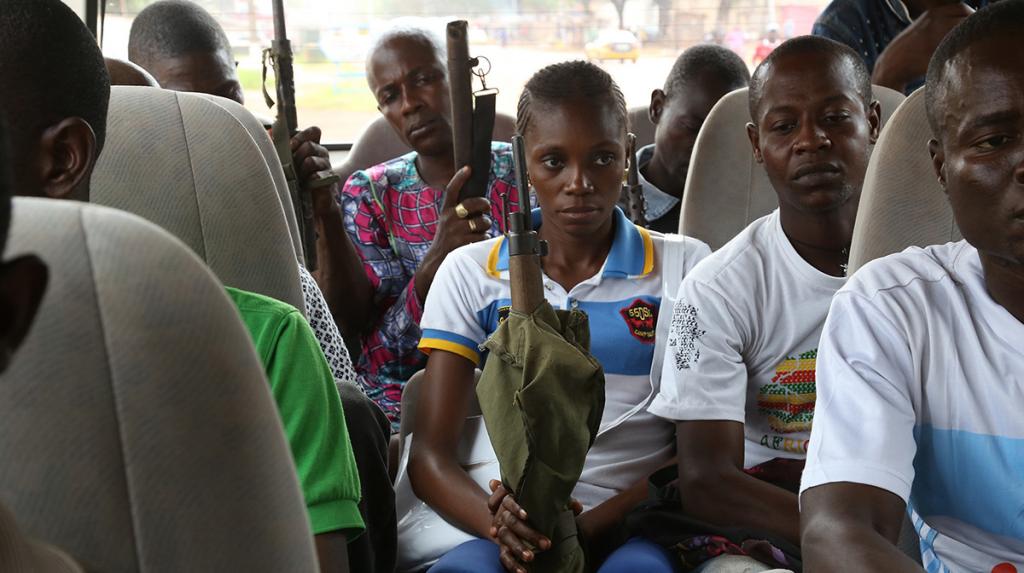
Camp for internally displaced persons (IDPs) known as “Site du Petit Seminaire St. Pierre Claver”, in the town of Bangassou
Camp for internally displaced persons (IDPs) known as “Site du Petit Seminaire St. Pierre Claver”, in the town of Bangassou. A third of the population was displaced as a consequence of the civil war. (UN Photo/Eskinder Debebe)

In 2022, the government officially launched the country’s first NAP document, prepared with support from the United Nations Development Programme and United Nations Environment Programme (UNDP-UNEP) NAP Global Support Program. The NAP sets out a vision for strengthening governance, building capacities, managing knowledge and data, and mobilizing finance for adaptation, among other aims. The Central African Republic also developed an analysis for integrating gender considerations in the NAP process under the framework of the Central African Republic’s National Policy for the Promotion of Equality and Equity. 

As the gender and climate change focal point for the Central African Republic’s NAP team and manager of Studies on Climate Change Adaptation for the National Climate Coordination team at the Ministry of Environment and Sustainable Development, Mariam Amoudou Sidi provides further insights into the Central African Republic’s NAP process and its links to the country’s peacebuilding agenda.

When and how was peacebuilding introduced in the development of the Central African Republic’s National Adaptation Plan?

Conflicts are rooted in the intolerable living conditions of the populations, which are themselves the result of an unequal and inequitable distribution of the resources that most countries in the sub-region have (and often lack). As climate change threatens our natural resources, adapting to its effects is crucial to preventing future conflicts.

Mariam Amoudou Sidi of the government of the Central African Republic
Mariam Amoudou Sidi

Development problems are therefore likely to increase if authorities do not integrate peacebuilding and adaptation at their level of governance. The formulation of the NAP includes data collection activities with local authorities, the population, and key economic sectors—which we held in Mbaïki, Lobaye. Initially, we found that the difficulties lay in mobilizing sectoral departments and organizations because, in their policies and strategies, they had not taken climate change into account—let alone adaptation. After several working sessions, meetings, and awareness-raising initiatives, they soon realized that climate change remains a threat to development and poverty eradication in every sector and community.

How does the government consider conflict and fragility in its broader NAP processes?

We are trying to create synergies between peacebuilding and adaptation to climate change. The Central African Republic’s development vision is defined in the National Plan for Recovery and Peacebuilding in the Central African Republic (RCPCA) as well as in the sectoral development strategies—which are in line with the Sustainable Development Goals. Several crosscutting objectives included in the NAP were also deemed essential to addressing the factors of fragility, conflict, and violence. These include:

  • Addressing regional imbalances and promoting gender equality  
  • Strengthening transparency and accountability at all levels  
  • Increasing national capacity (civil service and civil society)  
  • Promoting youth inclusion 
  • Ensuring environmental sustainability and the sustainable use of natural resources.
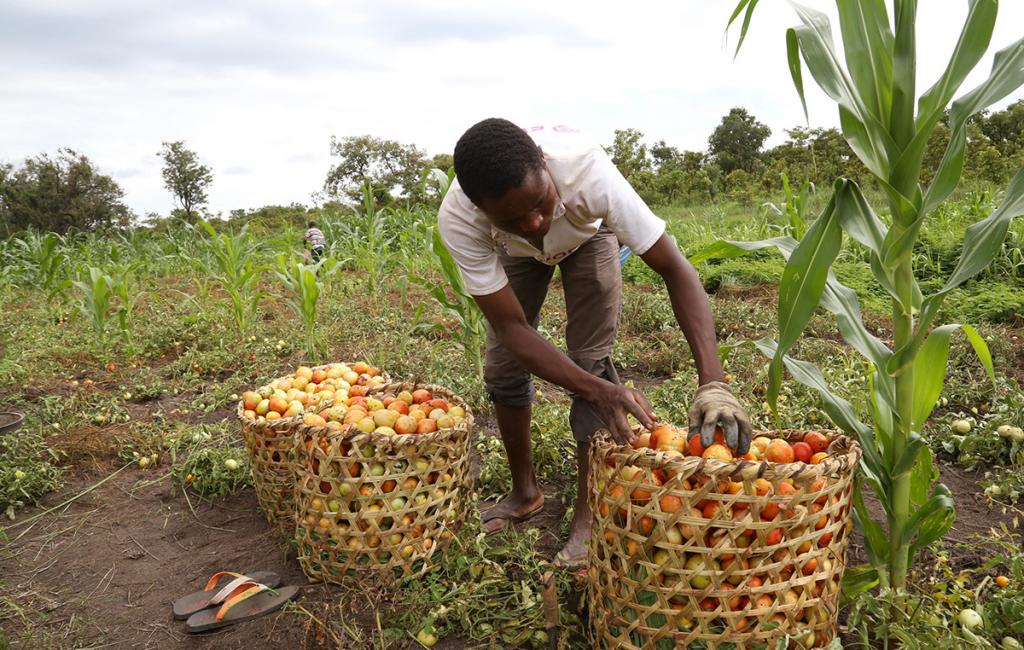
Ex-combatants farm in a UN Disarmament, Demobilization and Reintegration project
Ex-combatants farm in a UN Disarmament, Demobilization and Reintegration project. (UN Photo)

What is the Central African Republic’s biggest challenge today in developing and implementing its NAP?

Funding. Adaptation activities were not included by the government in its finance law, and we are therefore counting on donors and international organizations to help us, including the NAP Global Network. Today, this remains our main focus.

What guidance can you offer future NAP teams for the planning and implementation of adaptation actions in fragile and conflict-affected states?

The concept of adaptation must, at all costs, be integrated into all programs, projects, and policy documents. We propose to hold a high-level dialogue on adaptation to get the message across that adaptation to climate change is one of the sustainable solutions to conflicts.

We propose to hold a high-level dialogue on adaptation to get the message across that adaptation to climate change is one of the sustainable solutions to conflicts.

As with all NAP processes in conflict-effected areas, we must work to involve all levels of society in decision making, avoid inequalities, prohibit the marginalization of minority populations, consider the gender dimension, and carry out activities that support the lives and livelihoods of populations affected by the political-military crisis. All stakeholders (women, civil society organizations, national institutions, etc.) must take ownership of the NAP.

This requires a lot of awareness-raising aimed at changing the population’s mentalities—for example, mobilizing young people to take up farming instead of weapons. We are going to put in place a policy of widening access to schooling for young people and sensitize farmers and herders so that together they can show solidarity in dealing with the impacts of climate change and consolidate peace. 

Mobilizing young people to take up farming instead of weapons is a key objective for both adaptation and peacebuilding, as seen here with ex-combatants on their way to farm in a project organized by a UN pilot project on disarmament, demobilization, rehabilitation, and reintegration.
Mobilizing young people to take up farming instead of weapons is a key objective for both adaptation and peacebuilding, as seen here with ex-combatants on their way to farm in a project organized by a UN pilot project on disarmament, demobilization, rehabilitation, and reintegration. (UN Photo/Herve Serefio)

Upcoming NAP Guidance to Support Fragile States

Along with lessons and experiences provided by NAP focal points in other fragile states, Amoudou Sidi’s insights on the Central African Republic’s NAP process and related peacebuilding efforts will be distilled into a larger guidance document developed by the NAP Global Network Secretariat. 

This guidance will support fragile states in the planning and implementation of adaptation actions that both address climate vulnerabilities and support national peacebuilding objectives. It will soon be added to the NAP Global Network’s Resource Library.

Insight

Governments Must Live Up to Promises to Stop Funding Oil and Gas Internationally

July 1, 2022

In the past 6 months, commitments to end international public finance for fossil fuels have proliferated. At the 2022 UN Climate Change Conference (COP 26), 39 countries and public finance institutions signed the Glasgow Statement on International Public Support for the Clean Energy Transition. In the Glasgow Statement, signatories committed to ending new direct overseas support for fossil fuels and fully prioritizing their international public finance for a clean and just energy transition by the end of 2022. 

Then, in May 2022, G7 climate, energy, and environment ministers agreed on a nearly identical commitment, bringing Japan into the group of countries committed to ending international public finance for fossil fuels and shifting it to clean energy. 

But developments at last week’s meeting of G7 leaders threaten to make it harder for those commitments to prove effective in practice. In their communiqué, the G7 leaders repeated their pledge to end new direct international public support for “unabated” fossil fuels but extended the scope of exceptions to allow for continued investment in the gas sector.

This came in response to the war in Ukraine, which has highlighted the dangers of dependence on overseas oil and gas. Stressing the need to phase out reliance on Russian energy supplies, G7 leaders opened the door for “temporary response” investments in gas.

Despite the G7 leaders’ statement, the Glasgow Statement still stands. And its potential is vast.

Despite the G7 leaders’ statement, the Glasgow Statement still stands. And its potential is vast. If fully implemented, the Statement could shift USD 28 billion per year (USD 39 billion when including Japan) in international public finance from fossil fuels to clean energy, with a majority contribution coming from G7 members. More broadly, acting on the statement could leverage investments in clean energy from other sources of public and private finance and begin to establish a new norm for energy investment.

So how can signatories get back on track to meet their commitments by the 2022 deadline?

Improve Exclusion Policies for Fossil Fuels

Six months on from the Glasgow Statement, most signatories have yet to put in place fossil fuel exclusion policies that match the Statement’s ambition. Export credit agencies lag particularly far behind. This is concerning, given that they provided more than 80% of the signatories’ international public finance for fossil fuels between 2018 and 2020. 

Gas is a key area for improvement. Many signatories still allow full or partial support for gas exploration and production abroad, as well as for downstream end uses. Countries and institutions must close these loopholes if they are to fulfill their commitments.

Gas is a key area for improvement. Many signatories still allow full or partial support for gas exploration and production abroad, as well as for downstream end uses. Countries and institutions must close these loopholes if they are to fulfill their commitments.

The problem with gas investments, either at home or abroad, is threefold. First, very tight carbon budgets remain for limiting warming to the 1.5ºC Paris Agreement target. Under Intergovernmental Panel on Climate Change pathways, no new oil and gas fields can be developed, and no new exploration can be carried out if warming is to be limited to 1.5ºC. 

Second, gas is not needed to further economic development or improve energy access since clean, cost-competitive alternatives for most of its end uses already exist. Distributed renewables are also much better than gas for providing energy access to rural and remote households. 

Third, gas investments abroad pose significant socio-economic risks. Further investment in long-lived gas infrastructure in low- and middle-income countries would undermine development objectives, putting these countries in danger of being stuck with stranded assets, vulnerable to price spikes, and left behind in the global energy transition. 

Even “temporary” overseas investments in gas, as proposed by the G7, do not align with the Glasgow Statement’s ambition. Nor are they an effective way to tackle the short-term energy supply shortage.

Support Clean Energy Growth with International Public Finance

Right now, most high-income Glasgow Statement signatories lack publicly available, concrete targets or strategies to scale up international clean energy and energy efficiency financing. Yet investments in clean energy must more than triple by 2026 if the world is to stay below 1.5ºC.

Most of these investments are needed in middle- and low-income countries to support development and energy access needs. But between 2017 and 2019, middle- and low-income countries received only a quarter as much international public finance for wind and solar as they received for gas.

In the context of the war in Ukraine, there is an overwhelming need to prioritize international public finance for energy efficiency and clean energy solutions that can accelerate the transition to a more peaceful, sustainable, and secure future for all. 

Seize the Six-Month Window of Opportunity

Glasgow Statement signatories now have a critical window of opportunity to live up to their commitments. To do so, by the end of 2022, they must develop and adopt updated policies for ending international public finance for fossil fuels, including gas, and advancing a clean and just energy transition. 

Glasgow Statement signatories now have a critical window of opportunity to live up to their commitments.

Fortunately, signatories have strong existing policy examples to draw on, including those of the United Kingdom, Denmark, the FMO development bank in the Netherlands, and the European Investment Bank, which enforce a nearly full ban on new support for fossil fuel projects across the entire value chain, including unabated gas-fired power plants. 

Countries and institutions can also use the statement as an opportunity to shift the wider international public finance landscape. For example, because many signatories are shareholders at multilateral development banks, they can wield their voices and votes in these forums against new fossil fuel financing.

And those already signed on can work together to expand the Glasgow Statement’s signatory list, which so far does not include large fossil fuel financiers such as South Korea, China, and several multilateral development banks. COP 27 in November is a significant moment when updated policies—and potentially an expanded membership—could be announced.

The opportunity presented by the Glasgow Statement remains pressing and salient, notwithstanding the G7 leaders’ communiqué. Successful implementation could catalyze a breakthrough in the collective effort to align financial flows with Paris objectives. It is clear what signatories must do. Now is the time for action.

Insight

The Significance of Stockholm+50


June 1, 2022

The months leading up to the Stockholm+50 Conference in June 2022 have seen a frenzy of activity, as the international environmental community prepares to celebrate major milestones in its history and channel new momentum into efforts to achieve the Sustainable Development Goals.

Ambassador Johanna Lissinger-Peitz, Deputy Director, Ministry of Environment, Sweden sat down with our Earth Negotiations Bulletin team to examine why it matters that we celebrate the 50th anniversary of the original Stockholm Conference in 1972 and how we live up to its vision.

Follow our Earth Negotiations Bulletin team's coverage of Stockholm+50 and explore with IISD the history, lessons learned, and road ahead for sustainable development.

Insight

The Legacy of the Stockholm Conference

June 1, 2022

In 1972, the United Nations Conference on the Human Environment in Stockholm set off a chain of events that rewrote how countries tackle environmental challenges. How do we take the lessons of the past half century and apply them to our triple planetary crisis?

Our Earth Negotiations Bulletin team sat down with environmental leaders to revisit the legacies of that original conference in Stockholm, from the development of the Rio Conventions and the Basel, Rotterdam, and Stockholm Conventions to the establishment of national ministries on environmental issues around the world. They also look at what work still remains, from implementation to ensuring intergenerational justice.

Watch below to hear from:

  • Elizabeth Maruma Mrema, Executive Secretary, United Nations Convention on Biological Diversity (UN CBD)
  • Carlos Manuel Rodríguez, CEO and Chairperson of the Global Environment Facility (GEF)
  • H.E. Ambassador Peter Thomson, United Nations Secretary-General's Special Envoy for the Ocean


Follow our Earth Negotiations Bulletin team's coverage of Stockholm+50 and explore with IISD the history, lessons learned, and road ahead for sustainable development.


Insight

What Comes After Stockholm+50?

June 1, 2022

World leaders will mark half a century since the 1972 Stockholm Conference ... and then depart. What comes next as we face accelerating societal and environmental challenges, including the growing threats posed by climate change, nature and biodiversity loss, and pollution?

Our Earth Negotiations Bulletin team sat down with environmental leaders to unpack some of the options for the way forward and hear why international cooperation, grounded in multilateralism, is now more important than ever.

Watch below to hear from:

  • Achim Steiner, Administrator of the United Nations Development Programme (UNDP)
  • Ibrahim Thiaw, Executive Secretary of the United Nations Convention to Combat Desertification (UNCCD)
  • Andrea Meza Murillo, Deputy Executive Secretary, UNCCD
  • Donald Kaniaru, 1972 Stockholm Conference delegate for Kenya.

Follow our Earth Negotiations Bulletin team's coverage of Stockholm+50 and explore with IISD the history, lessons learned, and road ahead for sustainable development.

Insight

Three Ways the National Adaptation Plan (NAP) Process Can Be Leveraged to Inform the Global Stocktake

June 1, 2022

This article originally appeared on the website of the NAP Global Network, whose secretariat is hosted by IISD, and is republished with permission.

As we enter the seventh year since the adoption of the Paris Agreement, the international community has taken ambitious actions to address the climate crisis. But how much progress have we really made? The inaugural Global Stocktake (GST) will be an opportunity for us to see how well governments are doing in their collective efforts to achieve the goals of the Paris Agreement—and where they will need to commit to doing more.

This will be a crucial moment for taking stock of progress on implementing national adaptation commitments. And with the Bonn Climate Change Conference coming up in June, we will see one of the components of the GST in action: that of technical assessment, which will continue from now until mid-2023. Notably, the results of National Adaptation Plan (NAP) processes are critical sources of information on assessing the progress of adaptation actions for the GST.

The NAP Global Network has prepared a briefing note demystifying the GST process and how it connects to the progress developing countries are making with their NAP. Here, we summarize the three key ways that the NAP process can be leveraged to inform the GST.

The NAP Process Provides a Coherent National Story on Developing Countries’ Adaptation Efforts and Progress

One of the key mandates of the GST is to recognize the efforts of developing countries toward enhancing adaptive capacity, strengthening resilience, and reducing vulnerabilities to climate change. Robust NAP processes—including assessing vulnerabilities and risks, prioritizing adaptation options, identifying capacity gaps, and staging meaningful consultations with civil society—can operationalize how developing countries will achieve their national adaptation goals.

NAP processes can help tell a coherent story of how countries are mainstreaming adaptation at the national and subnational levels; how climate impacts are assessed and incorporated into fiscal frameworks; how adaptation actions are financed; and how local communities and Indigenous Peoples’ knowledge and participation shape adaptation policies and actions, among other critical information. 

This acknowledgement of adaptation efforts and progress in planning and implementing adaptation policies and actions is especially important when considering equity in global climate action. This could further increase and accelerate global adaptation support in the most vulnerable countries.

The NAP Process and Its Progress Reporting Bring National and Local Lessons to the International Conversation

NAP processes offer valuable insights into what works and what doesn’t—in which contexts and why—at the national and subnational levels. The GST is an opportunity for countries to share these lessons learned and best practices from their NAP processes to inform the global conversation on adaptation and enhance mutual learning. Notably, the growing body of stories and experiences of adaptation from NAP progress reporting can contribute to the collective assessment of the state of adaptation planning and implementation.

Additionally, since NAP processes are informed by local realities and priorities, they situate adaptation in a local context. Although the GST takes on a global-level perspective of adaptation progress, including knowledge on how countries are tackling climate change at the subnational level through the NAP process is a useful approach to illustrate important policy links across levels of governance and across different sectors. For example, sectoral NAPs, submitted by countries like Saint Lucia, offer valuable insights into countries’ efforts and experiences of horizontal integration.

Combined with case studies and examples from subnational levels, countries will have the opportunity to learn from each other, and the outcomes of the GST will help developing countries improve their NAPs and adaptation actions. The inclusion of these lessons from the national and local levels is crucial for the accuracy and the relevance of the GST’s final outcomes.

The NAP Process Offers Valuable Insights into Developing a Global Monitoring, Evaluation, and Learning System on Adaptation

Monitoring, evaluation, and learning (MEL) is a critical part of the iterative NAP process. But there are many methodological, conceptual, empirical, and political challenges associated with creating national MEL systems for NAPs. These difficulties are similarly mirrored at the international level when assessing the world’s collective adaptation progress.

Through the GST, existing national MEL systems for adaptation—like Fiji’s Monitoring and Evaluation Framework for its NAP process, or guidance for the development of Grenada’s MEL system—could inform the global-level discussion on the methodologies, objectives, indicators, and approaches of measuring progress and identifying gaps in adaptation. Conversely, the methodologies and indicators developed at the international level for the GST will support countries’ efforts in crafting effective MEL systems for national adaptation.

As the impacts of climate change become ever more apparent, we need to look at what we’ve learned from countries’ adaptation efforts so far and where we must improve. The NAP process will be a go-to source of information on countries’ priorities on adaptation and the progress they’ve made, shaping the global understanding of progress made toward the implementation of adaptation under the Paris Agreement.

Any opinions stated in this blog post are those of the authors and do not necessarily reflect the policies or opinions of the NAP Global Network, its funders, or Network participants.
 

Insight details

Topic
Climate Change Adaptation
Region
Global
Project
NAP Global Network
Impact area
Climate
Insight

Citizen-Generated Data: Data by people, for people

Investments in a rich data ecosystem that supports citizen-generated data alongside official data sources empowers marginalized groups, provides a holistic understanding of marginalization, and supports inclusive decision-making to ensure that no one is left behind in SDG implementation. 

May 24, 2022

A key challenge in following through on the 2030 Agenda’s principle to address the needs of those who have been left behind is that their perspectives and values are not adequately reflected in official data collected by national statistical offices. People who have been left behind also suffer from data marginalization, with some groups being outright invisible in national statistics. Citizen-generated data can complement official data and provide important context for decision-makers. Investments in a rich data ecosystem that supports citizen-generated data alongside official data sources empower marginalized groups, provide a holistic understanding of marginalization, and support inclusive decision making to ensure that no one is left behind in SDG implementation. 

What is citizen-generated data? 

Put simply, citizen-generated data is “data generated by people, for people,” meaning that the individuals who stand to benefit from data collection are directly involved in the design, collection, analysis, and use of data that describes them. The CIVICUS DataShift program defines citizen-generated data as data that “people or their organizations produce to directly monitor, demand, or drive change on issues that affect them. It is actively given by citizens, providing direct representations of their perspectives and an alternative to datasets collected by governments or international institutions.”

Citizen-generated data includes a wide variety of approaches and methods. Depending on the purpose at hand, the term is used interchangeably with concepts like citizen science, community-driven data, or participatory data. All of these terms represent people taking an active role in one or several stages of the data value chain, from identifying questions and objectives to developing methods, collecting data, and analyzing and disseminating the results.  

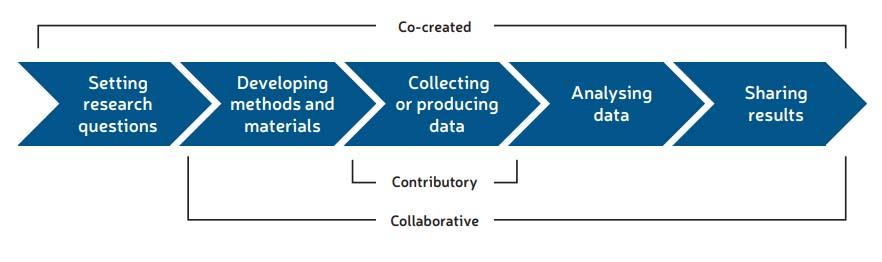
stages of engagement in citizen science projects
Figure 1. Stages of engagement in citizen science projects (Source: Shirk et al., 2012)

In their 2012 study, Shirk et al. distinguish between contributory, collaborative, and co-created data depending on the extent of citizen engagement at different stages. Other forms of partial engagement are also possible; for example, consultations to determine the analysis and interpretation of data sets collected by official sources provide people with the opportunity to influence and correct the messages that are transported through the data in question.   

Why is citizen-generated data needed? 

The UN University Institute on Computing and Society identifies five types of data marginalization that can exclude the voices of marginalized groups in data collection and decision making. Like the factors causing marginalization, the factors of data exclusion can intersect so that a group's voice is missing from official data sets for multiple reasons. 

 
Unknown voices Population groups that are unknown to the institutions collecting data. These groups include isolated and untouched communities; modern-day enslaved people, such as victims of forced labour, human trafficking, and sex slaves; and individuals concealing themselves because they are illegal immigrants, afraid of losing assistance, or involved in criminal activities. 
Silent voices People unable to participate in data collection or other activities through which their concerns could be heard. While their objective well-being can be documented, their lived experience remains hidden. Silent voices include people who are weak and vulnerable because of socio-economic status or old age, persons with disabilities, and children.
Muted voices Population groups that are marginalized because of social norms, societal values, and social practices. Information about their well-being is being suppressed through structural means like missing questions and categories in questionnaires or active exclusion from social life. The muted voices include members of the LGBTQS2S+ community, women, stigmatized groups facing prejudice and racism, and low-skilled migrant workers and refugees.
Unheard voices Population groups that are excluded in sampling approaches and data collection efforts because they are hard to reach or inconvenient to involve. Unheard voices include people that are illiterate, have no permanent address, lack digital connection, experience language limitations, or do not participate in activities that are used to generate data, such as cellphone use, banking, or filing tax returns. 
Ignored voices Individuals whose concerns are lost due to shortcomings of statistical methods, such as aggregation bias or ecological fallacy—assuming that correlations at the aggregate level are true for individuals—leading to the well-being of those individuals being disregarded or misrepresented.

 Figure 2: Data marginalization (Source: UN University Institute on Computing and Society, 2018)

Data is never perfect. Data gaps and the challenges of adequately describing people’s needs, perspectives, and values are more prevalent for marginalized people than other groups, partly because marginalization results from a complex interplay of many factors, some of which also affect data collection (Figure 2). 

The causes of data exclusion vary between countries depending on their economic status and culture, but it is fair to say that marginalized groups in all countries struggle to make their voices heard. Decision-makers, on the other hand, lack adequate information to design effective interventions. Data marginalization of any kind means that even well-intentioned strategies and programs risk being ineffective at best and creating adverse outcomes, such as inflicting harm or reinforcing stigma, at worst.  

Citizen-generated data in action 

Citizen-generated data comprises many methods and approaches, as the following examples show. In each case, data was collected for a specific purpose that determined the process, how people engaged, and ultimately the outcome achieved.  

  • In Canada, many communities participate in Everyone Counts, a community-level survey of sheltered and unsheltered homelessness conducted on a specific day (point-in-time), also referred to as a Street Census. Data collection is conducted by trained volunteers from the community using a toolkit and standard provided by Employment and Social Development Canada as part of Canada’s Homelessness Strategy. The data collected is used to determine community needs for shelter and housing and directly connect with the people affected. In Winnipeg, for example, a Street Census has been conducted in 2015, 2018, 2021 and 2022. The End Homelessness Winnipeg Initiative uses Street Census data to track the progress of its 10-year plan to end homelessness in the city. Some of the data is also made available on Peg, Winnipeg’s community indicator dashboard.  

  • Making Voices Heard and Count is a global initiative by the International Civil Society Center that promotes the use of community-driven data to give a voice and agency to marginalized groups that are at risk of being excluded from official data. National coalitions of civil society organizations and other actors use various community-driven methods to collect data on the most marginalized groups. In Nepal, for example, a local coalition uses community scorecards to collect data on young women and girls to assess gender equality. In India, civil society organizations trained thousands of volunteers to collect community data on 20 marginalized groups across the country.  

  • Open street mapping allows citizens to annotate maps with data on physical features like buildings and infrastructure, as well as data on the incidence of violence, damage resulting from extreme weather events, or the quality of services available. The Humanitarian Open Street Map team supports open mapping to improve disaster management and reduce risks. The IDEAMAPS (Integrated DEprived Area MAPing) Network facilitates the combination of data from geospatial, statistical, and community-driven sources to improve information about informal “slum” dwellings in many counties. In Canada, Statistics Canada has used open mapping to crowdsource data collection about building footprints for the Open Database of Buildings to fill a critical data gap on housing.  

Challenges  

Citizen-generated data is not without challenges and limitations. Any data collection is naturally limited in scope and scale. Citizen-led data collection tends to focus on a smaller set of issues, is conducted in a limited geographic area like a city, or involves only individuals of specific groups. Another constraint is that citizen-generated data cannot easily be joined with other data sets, as it is designed for the purpose at hand and is often incompatible with the standards of official data collection. Finally, like all participatory processes, empowering citizens to collect, analyze, and disseminate their own data takes time and resources to build capacity, develop relationships, and compensate those shouldering the work. Insufficient long-term support or a failure to realize benefits for those involved can quickly lead to a loss of momentum and volunteer fatigue. Citizen-generated data is best thought of as a necessary complementary effort that can reveal gaps and inadequacies in the data used to support marginalized groups, highlight misconceptions, and provide a more holistic picture of the situation of those left behind.  

None of these challenges is insurmountable, but overcoming them requires a coordinated approach by different stakeholders. For example, governments can adopt regulations that create a data ecosystem that supports citizen-generated data and recognizes its legitimacy as a separate but equally important source of information for decision making. National statistical offices can support the ecosystem by acting not only as data stewards but also as partners for organizations collecting data by providing technical support and ensuring that data and its benefits are owned by the organization. Governments and donors should invest in the capacity of people and their organizations to collect and use data. Enhanced data literacy and engagement will create tangible benefits for marginalized groups while boosting the ability of people to engage in the overall implementation of the Sustainable Development Goals.  

The Bern Data Compact for the Decade of Action on the SDGs, adopted at the 2021 World Data Forum, includes a strong call to build trust in data by investing in rich data ecosystems and strengthening the role of all data stakeholders. Citizen-generated data is an essential part of those ecosystems to ensure that no one is left behind.  

Insight

Stockholm+50: Weaving global environmental governance

Today, there is a complex web of global treaties, agreements, programs, and initiatives to address our shared environmental problems. Some are formal and intergovernmental. Others are less formal and involve a range of stakeholders. It’s difficult to think of an environmental issue without international action. Even before the UN Environment Assembly recently launched negotiations for a new plastics treaty, there was action under the Basel Convention and partnerships to stem the plastic tide.

May 24, 2022

These governance structures were created largely in response to the growing recognition of the need for global efforts to address shared challenges. Also in response to the growing recognition of their importance, climate change and, increasingly, biodiversity are joining economic and security issues in the “high politics” of multilateralism. It’s the business of world leaders to routinely discuss climate change and for activists to hold them to account. The United Nations (UN) Secretary-General recently linked the war in Ukraine with the ongoing crises of climate change, COVID, and droughts. The war, he said, shows “how the global addiction to fossil fuels is placing energy security, climate action and the entire global economy at the mercy of geopolitics.”

Yet, environmental politics was once completely missing from global discussions and action. Fifty years ago, the UN Conference on the Human Environment changed that and put environmental politics on the global agenda. The legacies are many. The Stockholm Conference created the framework that still guides how we negotiate environmental deals and action.

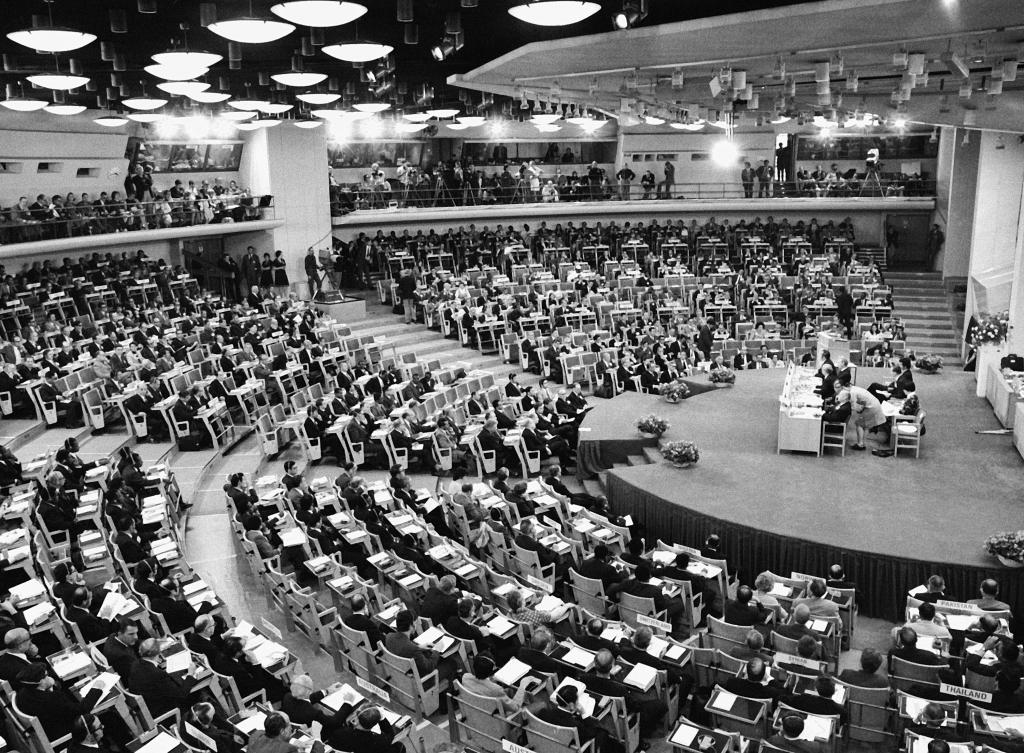
Stockholm Conference opening
United Nations Conference on the Human Environment meets in Stockholm, Sweden in 1972 (UN Photo/Yutaka Nagata)

To mark a half century of environmental multilateralism, Sweden is again hosting the world in Stockholm, on June 2 and 3, for Stockholm+50. It will be both a commemoration and a call to action. The conference aims to accelerate the implementation of the UN Decade of Action to deliver the Sustainable Development Goals—including the 2030 Agenda, the Paris Agreement on climate change, and the post-2020 global biodiversity framework—and to encourage the adoption of green post-COVID-19 recovery plans. 

These are lofty goals, but key lessons from the last 50 years could expedite the next half-century of multilateral action to better the environment—if we embrace them. The incentive to apply these lessons could not be clearer as the accelerating “triple planetary crisis” of climate change, biodiversity loss, and pollution threatens life on our planet.  

Legacies of Stockholm 

Environmental politics is near the core of global politics. Stockholm was the first "mega conference" to discuss environmental issues. It convened in 1972, a time of turbulence in global politics. The Cold War was as tense as ever. The global economic system was in transition after Richard Nixon announced the U.S. dollar would no longer be converted into gold. More fundamentally, former colonies were becoming independent states. By 1970, there were 127 members of the UN, a huge increase from the 35 members in 1945. The world was undergoing enormous change.

In this context, developing countries were wary of a conference devoted to environmental issues. They worried this could be colonialism under a new guise. The Global North consumed the majority of the world’s resources, developing countries pointed out. Why should environmental issues be a concern for the Global South? They worried about green issues as a way to interfere with their development. This worry was not far-fetched. In the 1970s, newly independent countries prioritized building their economies and institutions on their own terms. It was not immediately apparent how a conference initiated and hosted by developed countries on a new set of issues could assist with poverty eradication.

Indira Gandhi and Maurice Strong
Indian Prime Minister Indira Gandhi shakes hands with Maurice Strong, Secretary-General of the United Nations Conference on the Human Environment (UN Photo/Yutaka Nagata)

What emerged was a call to merge the poverty and environmental agendas in a way to protect developing countries’ right to development. Prime Minister Indira Gandhi famously asked those gathered in Stockholm, “Are not poverty and need the greatest polluters?” This call would ripple for decades to come. The concept of sustainable development as defined in 1987, the 2015 Sustainable Development Goals, and intervening mega conferences centred on advancing environmental protection and economic and social development, with poverty reduction at the heart of many discussions.

But developing countries’ initial concerns have at least partially been born out. For example, national parks proliferated, built on Western ideas of “unspoiled nature” that drove Indigenous Peoples from their lands or regulated how they could use the land. Rights abuses are also evident in modern forms of forest conservation, including Reducing Emissions from Deforestation and Degradation initiatives.

Climate change was not on the Stockholm agenda—or even an issue foreseen by those in Stockholm. This year, the Intergovernmental Panel on Climate Change recognized colonialism as a driver of climate change for the first time. Economic and political legacies continue today and are threatening our planet. The poorest are the most vulnerable to climate change. More frequent droughts, floods, storms, and diseases (to name a few impacts) could undermine all the development gains made to date. Support for adapting to the effects of climate change is a fraction of overall climate funding; the Organisation for Economic Co-operation and Developments estimate of 20% is, by some measures, generous. A recent report of climate change finance flows shows that most climate funding remains well below what was promised and is mostly loans, increasing developing countries’ debt burden. Low-carbon, climate-resilient development requires support for developing countries to realize their goals and priorities. After 50 years, on both the material and ideational, there are gaps.

Stockholm’s central challenge—and ultimate insight—was that equity and the environment go hand in hand and that equity is fundamental to multilateralism. It has become more relevant over time. Ongoing colonialism continues to hamper the prospects and rights of people around the world. Technological changes have given us affordable, clean power, which still needs to be made available for all. It has also created new waste problems, including plastics and electronic waste.

Solar powered irrigation
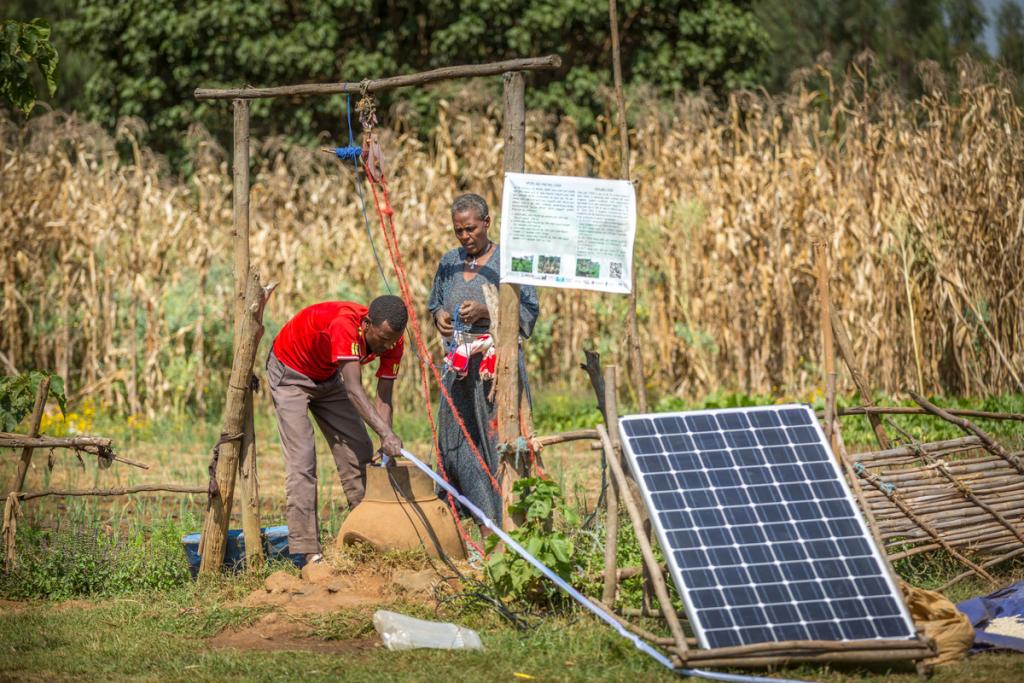
A water tank in Dangesta, Ethiopia, is filled using a small solar-powered pump. (Photo: Mulugeta Ayene/WLE. CC BY-NC 2.0)

In this context, the 2030 Agenda strives to integrate the idea of “leaving no one behind.” It is an evolution of the discussions in Stockholm, built on experience. In Stockholm, delegates sought to mainstream poverty alleviation in environmental action—and vice versa. It was a broad, conceptual starting point. The 2030 Agenda’s focus on the need for universal implementation has taken the agenda to a new level. Everyone matters and must be included in the deliberation, design, and delivery of environmental and poverty alleviation efforts. It is ambitious—and very necessary. Equity is fundamental to effective multilateralism. As we’ve recently seen, all types of equity matter. Vaccine inequities create challenges for delegates and civil society representatives to attend global meetings, while the digital divide proved a barrier to online negotiations.

Equity and the environment are ever more intertwined. Whether it is a downward spiral or a virtuous circle will largely determine if we can stay within the Paris Agreement’s temperature goals. The right to development and all forms of equity must be at the heart of environmental action. Multilateralism will be crucial. Even now, as the war in Ukraine joins other conflicts and pressures in stretching multilateralism to its limits, only truly global action can realize the vision put forward in Stockholm.

Insight

What Is Alternative Data and How Can It Help Efforts to Leave No One Behind?

Official statistics and measures of poverty do not fully capture the causes of marginalization and how they intersect and interact. The 2030 Agenda is catalyzing a shift in how the world thinks about data and the use of "non-official data sources" to better reflect the needs of the most marginalized.

May 13, 2022

The commitment of the 2030 Agenda to leave no one behind and to address the needs of the “furthest behind first” acknowledges that previous efforts to reduce poverty and end marginalization have failed to reach some of the individuals, communities, and countries that need them the most. While poverty has been reduced in many countries, the most marginalized have seen little to no benefit. One reason is that official statistics and measures of poverty do not fully capture the causes of marginalization and how they intersect and interact. The 2030 Agenda is catalyzing a shift in how the world thinks about data to better reflect the needs of the most marginalized. 

Recognizing that better data will be required to achieve the SDGs while leaving no one behind, the UN Statistics Division established the World Data Forum on Sustainable Development Data. The Forum is intended to be a platform for improved cooperation between data stakeholders at the national and international levels to mobilize data for sustainable development and to fill data gaps. At its first session in 2017, the Data Forum adopted the Cape Town Global Action Plan for Sustainable Development Data, which calls for integrating new and innovative data generated outside the official statistical systemincluding administrative data and geospatial datainto official statistics. The Plan also encourages the development of multistakeholder partnerships involving national statistical offices (NSOs), governments, academia, civil society, private sector, and other stakeholders involved in the production and use of data for sustainable development.  

In subsequent discussions, participants in the Data Forum increasingly recognized that NSOs must collaborate with the entire data ecosystem—that is, all stakeholders involved in producing and using data, including communities, government, business, and civil society—to produce data fit for the task of leaving no one behind. Participants highlighted innovative data sources and citizen-driven data as essential tools to “fill data gaps on the status and needs of people by income, sex, age, race, ethnicity, migratory status, disability and geographic location and other characteristics.” The discussion also shifted from a focus on “integrating” non-official data sources into statistical systems, which requires other data stakeholders to apply standards and procedures used by NSOs, to a focus on complementing official data with data from alternative sources using their respective standards.  

The concept of alternative data thus encompasses any data collected by stakeholders other than the NSO using a minimum of standards to ensure privacy, confidentiality, transparency, and accessibility. This broad definition allows for drawing on a wide variety of potentially useful data sources, several of which are emerging as particularly important for leaving no one behind.  

  • Citizen-generated data, where the individuals concerned participate in the development of frameworks and data collection and decide over the use of data that describes them. Citizen-generated data is purpose driven and provides important insights into the drivers of marginalization affecting certain groups or localities.  
  • Human rights data, which includes data on human rights cases and data on legislative review. This data helps understand where marginalization is the consequence of systemic racism or a failure to protect the rights of individuals and groups  
  • Geospatial data, which in combination with other statistical data can identify where marginalized groups live and how geography and locally specific factors influence marginalization. Geospatial data can overcome challenges of data collection arising from the fact that marginalized people often live in informal settlements, lack a permanent address, or are reluctant to share their data for fear of further marginalization.  
  • Administrative data, which is collected by government agencies and non-governmental organizations serving marginalized groups as part of routine operations. While not intended for statistical purposes, this data can be turned into datasets that can fill specific data gaps in official data sources.  
  • Private sector data collected by companies as part of efforts to report on the environmental, social, and governance impacts (ESG). ESG data can enable companies to assess their impact on marginalized groups through their activities as well as their employees, but public access to data is often limited, and common foundations for impact measurement that would enable broader use of ESG data are still being developed.  

These are some examples of a rapidly growing field of alternative data sources and innovative uses of existing data to leave no one behind. In addition to what alternative data can be used to complement existing sources, the 2030 Agenda is also catalyzing a discussion on how data should be used. Traditionally, NSOs or equivalent institutions act as the main data steward for a country, responsible for collecting and publishing high-quality data adhering to agreed standards to protect data privacy and safety. This means that decisions on what data is collected, how it is disaggregated, and ultimately how it is used are centralized in a top-down fashion. 

This model is coming under scrutiny as mounting evidence shows that data can be used far more effectively if people have a say in the collection and use of data describing them. Participation in decisions on what data is collected and how it is disaggregated and communicated ensures that data reflects the experience, values, and perspectives of marginalized groups and that data collection ultimately provides benefits to those who agreed to sharing data about themselves. There are several initiatives that support this transformation in data governance from different perspectives, including, for example, principles for a human rights-based approach to data, the definition of common data values, or best practices for the responsible use of data.  

The latest edition of the World Data Forum, held in Bern, Switzerland, in late 2021, also captured these trends in its final declaration, the Bern Data Compact for the Decade of Action on the SDGs. The compact appeals to all members of the data ecosystem to develop data partnerships and urges investments in data literacy and trust in data to better understand the world through data and leave no one behind. Speakers at the Forum echoed these ambitions, noting that “data is power” and we “have it in our hands to give that power to the people.”