Success story

Hope Springs: How one community brought a river back from the brink

For over a decade, a small group of community members in Zambia have been working to restore the Nsongwe River, once a precious sanctuary for wildlife and the community. Their actions are slowly but surely bringing the river back to life. Now, with support from IISD’s Climate Adaptation and Protected Areas Initiative, their goal is within reach. Susan Sekirime explains.

September 19, 2024

As the world gears up to celebrate World Rivers Day on September 22, we should take a moment to reflect on the vital role that rivers have played in sustaining human evolution.

Rivers are one of the world’s most precious resources, but they are invariably undervalued. Long before we engineered running water, rivers flowed through our landscapes, pumping fresh water to wetlands and lakes and out to sea.  Animals and plants found sanctuary in the rivers, fish swam in their waters, and birds flew overhead. Vegetation was replenished by seeds carried by rivers for thousands of miles, while a multitude of species used rivers as migration routes. These waterways did not just sustain life on Earth, they were also part of the fabric of our culture and history, shaping identities of entire nations. The valleys of some great rivers contain many sites of early human settlement, and for centuries, rivers served as trade routes across the globe, influencing the economic, social, political, and religious development of mankind.

A tranquil river surrounded by trees

Today, these values still exist, and in some ways, are even more significant than before. An estimated 2 billion people globally rely directly on rivers for their drinking water, while about 500 million live on deltas that are sustained by sediment from rivers. But in a world where our climate is rapidly changing, and the global population is expected to increase by nearly 2 billion in the next 30 years, rivers are under pressure. There is a critical need to protect and preserve these invaluable natural resources.

The Nsongwe community, some 30 minutes outside of Mosi-oa-Tunya National Park in southern Zambia, knows this all too well. The Nsongwe River, a spring-fed waterway that was once their lifeline and sanctuary, is no more the victim of poor planning and neglect. However, over a period of 13 years, a small group of community members have been working to desilt, reforest, and restore parts of the river. We spoke to one of the local women from the village, Bridget Meyer, who kicked off this work and has been leading the river’s restoration, and asked her to share her story.

A group of women from the Nsongwe community who have been working to restore the river.

What do you remember about the Nsongwe River growing up?

“I remember the river being vibrant with life and flowing all year round through the heart of a lush forest. We revered the Nsongwe River not only as a recreational spot for swimming but also for its healing waters believed to possess curative properties that could soothe ailments and restore well-being.

The cool, clear waters, shaded by a thick canopy above, offered a serene escape from the heat.

As a young girl, the Nsongwe River was a big recreation area for me and my friends. We spent our weekends enjoying the cool breeze along the river as we collected a special grass to make baskets. We chased butterflies along the Nsongwe River corridor, believing that you would receive a beautiful and colourful gift at Christmas resembling the colour of the butterfly you caught. We swam every day. A section of the river was lined with a wall of basalt rock on which girls and boys listed love notes in chalk. Gossip and other communal information was exchanged on this wall. At any one point in the afternoons, there would be about 10 or more girls swimming and enjoying the river. We made sound echoes that bounced off the rock wall.

A special wild pea with big pods grew every rainy season. We harvested the pods and squeezed one edge that would pop open. We used the opening to slide in our earlobes and wear as earrings. We wore them for Christmas! I really cherish those moments.

The river did not only appeal to the locals who dwelled near it; it was also a critical habitat for wildlife, most notably the hippos. The dense forest and the abundant water provided the hippos with everything they needed: safety from predators, lush vegetation for grazing, and ample space to submerge and keep cool under the hot sun.

A sunset silhouette of a hippo swimming in a river

The Nsongwe River was more than just a body of water; it was a sanctuary, both for the communities who dwelled near it and the wildlife that called it home.

What is the state of the Nsongwe River today?

“The river has undergone a very dramatic transformation. Currently, it stands mostly dry, its former glory significantly diminished. Many of the deep pools that dotted its course have been filled with soil and sand, a testament to the neglect and environmental degradation it has suffered.

The lush forest that once lined its banks, providing shade and a cool microclimate, has been largely cleared. The removal of these trees not only took away the river’s natural cooling mechanism but also exposed the surrounding land to the harsh sun. This deforestation has had a domino effect, leading to increased erosion along the riverbanks. The soil, once held firmly in place by the roots of countless trees, has washed away, leaving behind barren and eroded fields.

The Nsongwe River currently stands mostly dry

Without the protective cover of the forest and the sustaining waters of the river, the local wildlife has suffered. The hippos, which once brought their young to grow and thrive in the safety of the Nsongwe River’s waters, no longer visit. The river, devoid of its life-giving flow, cannot support them, nor the fish.

The community, too, feels the absence of the river's bounty. Swimming, a joyful and communal activity that also served as a respite from the heat, is no longer possible. The river, which once healed and nurtured, now serves as a stark reminder of the fragility of natural ecosystems and the profound impact of human activity on the environment.”

What has the community done to successfully restore the river?

“Over a period of 13 years, a small group of community members have been working to desilt, reforest, and restore parts of the river. To date, we have managed to remove soil deposits and plant native hydrophilic plants along a 300-metre stretch of the riverbank.

A woman works to restore the Nsongwe River

We pumped water from our well to a drinking trough for cattle away from the river to protect the restoration works. These actions, albeit very minimal, have restored some natural springs that had been buried, and the area where we concentrated our efforts has started showing signs of life.

In the vast dryness that has characterized the Nsongwe community for several decades, this stretch is now a cool, green haven.

Community members have started gathering to cool off in the water, and a lone crocodile has also taken permanent residence in the area.

This success serves as a beacon of hope and has sparked a wave of renewed optimism among the local community and conservationists alike that the entire river could potentially be returned to its former state.

What would it mean to the community if the Nsongwe River started flowing again?

“Revitalizing the Nsongwe River would bring numerous benefits, both ecological and economic.

For the village, the resurgence of the river could lead to a revival of local activities and traditions that were once centred around its waters. Swimming and fishing, activities that foster community bonding and support local livelihoods, could once again thrive.

The return of clean, flowing water would also ensure the health and sustainability of local gardens, boosting food production and supporting self-sufficiency.

Moreover, the restoration of the forest surrounding the river would be equally good. Replanting trees and rehabilitating the forest would not only help stabilize the climate around the river by providing much-needed shade and reducing erosion, but would also reestablish a habitat for wildlife, including the once-common hippos. The cooler microclimate would make the area more comfortable for both residents and visitors, enhancing the village’s appeal as a destination for ecotourism.

Such environmental restoration could catalyze economic revitalization. With the river and forest restored, new opportunities could arise in ecotourism and agroforestry, providing jobs and stimulating economic activity. Local markets could see a surge in demand for agricultural products and crafts, further energizing the village’s economy.

In essence, the restoration of the Nsongwe River and its surrounding forest is not just an ecological necessity but a cornerstone for the future prosperity of the village, fostering a sustainable model that could inspire similar efforts elsewhere. That is why the work we are doing with the Climate Adaptation and Protected Areas Initiative is so important!”

Bridget Meyer leads a community discussion

The work already done by the community was the proof of concept that Climate Adaptation and Protected Areas (CAPA) partners IISD and WWF Zambia needed to scale up the nature-based solutions that the community had achieved. With support from Global Affairs Canada, the CAPA Initiative is now supporting the Nsongwe community to restore the river and its tributaries, the Lubemba and Lutwa streams.

So far, this has meant conducting risk assessments to better understand the unique climate, biodiversity, and gender risks faced by the community, alongside hydrological assessments to identify areas suitable for specific restoration efforts, including desilting and the construction of check dams to control water velocity, conserve soil, and improve the land.

Through CAPA, IISD and WWF Zambia have managed to get the whole community involved, including their Senior Chief—who has since encouraged villages outside of the CAPA target area to do the same.

Beyond the river itself, CAPA is also supporting the community in restoring 400 hectares of forest along the Nsongwe River and is constructing fire breaks along a 50-metre buffer zone on both sides of the river to protect the restored areas. These efforts will support effective water recharge, flow, and availability during the dry seasons, thereby contributing to efforts to revive the Nsongwe—which once ran for 5 kilometres before joining the Zambezi—to its former glory.

This work is part of CAPA’s efforts to design and implement concrete gender-responsive, conflict-sensitive, nature-based solutions to support local communities to adapt to climate change while safeguarding critical ecosystems and biodiversity in and around protected areas in the Kavango–Zambezi landscape.

What started as a one-woman effort, with support from a few community members, is now a whole community effort, and we are proud to be working alongside them to restore the whole river and two of its tributaries.

Learn more about what we are doing in the Kavango–Zambezi Landscape.
Success story

Fueling Change: The journey to end fossil fuel subsidies in Canada

How Canada became the first country in the world to introduce a framework for ending government subsidies to domestic oil and gas companies.

October 13, 2023

It may have taken 14 years but what a feeling it was to finally hear the words: “We're eliminating subsidies to produce fossil fuels in Canada.” 

Delivered at a press conference in Ottawa, Canada, by Canadian Federal Environmental Minister Steven Guilbeault, that sentence was the culmination of more than a decade of behind-the-scenes work by Canadian climate organizations to end subsidies supporting domestic oil and gas production. This was an important step forward and a long-awaited landmark towards eliminating support for fossil fuels. 

In front of a group of reporters and government officials, Guilbeault took a moment to acknowledge the efforts of those who worked so hard for this achievement, including IISD and Environmental Defence. 

The Government of Canada’s guidelines on inefficient fossil fuel subsidies are the first transparently published conditions that will be used to prevent any new measures that would constitute inefficient fossil fuel subsidies. A subsidy is a financial benefit that the government gives, usually to a specific business, group or industry. This new policy builds on Canada’s commitment in 2022 to end new direct public support for the international unabated fossil fuel energy sector under the Glasgow Statement.  

Where it started... 

The journey to this seminal decision began in 2010—at least for the organizations determined to tackle the relatively unexplored, but at the time very controversial, topic of government fossil fuel subsidies. It was at this time that IISD launched a ground-breaking report: Untold Billions: Fossil-fuel subsidies, their impact and the path to reform. 

“Our argument was that continuing to have fossil fuel subsidies while introducing policies like carbon pricing was like bailing water out of a leaking boat, without fixing the leak itself. You never really get to the root of the problem”.

Philip Gass, Interim Co-Director, Energy & Lead, Energy Transitions

The report examined the extent of fossil-fuel subsidies, their impact on climate change, and the challenges to reforming them in Canada. It was a critical component of a much broader effort at IISD to map the scope and role of fossil-fuel subsidies in the world economy.  

“It was the first major piece of research to focus on fossil fuel subsidies in Canada,” says Philip Gass, Interim Co-Director, Energy and Lead, Energy Transitions for IISD, “and it was quite contentious at the time. We were criticized for it and were told that we didn’t understand the impact that ending subsidies would have on jobs. We were even getting angry phone calls.” 

But the issue was becoming increasingly important to Canadians, so Gass and his team persisted.  

In 2015, IISD launched a series of initiatives revolving around fossil fuel subsidies with a specific focus on Canada. Experts compiled regular inventories of fossil fuel subsidies at the provincial and federal level and combined these with webinars and public engagement focused on increasing awareness of the economic and climate change-related impacts of subsidies, along with technical advice on how Canada could meet its G7 and G20 commitments on fossil fuel subsidy reform. These endeavours also aimed to convince the government that continuing to provide subsidies would undermine any climate measures it was considering. 

“Our argument was that continuing to have fossil fuel subsidies while introducing policies like carbon pricing was like bailing water out of a leaking boat, without fixing the leak itself.  You never really get to the root of the problem” said Gass. “Fossil fuel subsidies prevent carbon pricing from being fully effective.” 

After eight more years of work on the topic, the team at IISD was happy to see the new policy this summer. It’s a significant advancement, but there’s still more work to be done.  

Where should Canada go from here? 

The focus now, says Laura Cameron, Policy Advisor with IISD, will be on understanding how the framework gets interpreted and implemented. In creating the framework, the government identified 129 subsidy measures, but these haven't yet been made public. How the guidelines in the policy are applied will determine how effective it is in ensuring no further subsidies are introduced. 

Cameron is also hoping to see a mechanism for accountability. It’s not clear who is going to make sure the rules are being followed across government departments. 

And there remains a big gap in current policies: domestic public financing for fossil fuels. Along with the subsidies framework, the government announced they would introduce a plan to end domestic public financing for fossil fuels by fall 2024. This is an essential next step because the majority of Canada’s financial support for fossil fuels is through public financing. IISD is pushing to have that plan released this year. Environmental Defence estimates about CAD 19 billion in financing for fossil fuels has come from the Federal Government in 2022

IISD applauded the framework in a public statement, pointing out that one of its key strengths is the adoption of the World Trade Organization's definition of fossil fuel subsidies. Canada's notable contribution lies in its establishment of a comprehensive definition of inefficiency, thereby bringing some transparency to a term that has clouded the subsidies conversation for over a decade. This clarity plays a crucial role in guiding the classification and eventual elimination of subsidies, encompassing direct transfers, foregone revenue, transfer of risk, and provision of goods and services. 
 
However, the definition of inefficiency still allows for support of “abated” fossil fuel production for projects that include emissions reduction measures, such as carbon capture and storage in the oil and gas sector and fossil-derived hydrogen. A recent report by IISD, Persistent High Costs of CCS: Implications for Canada's Oil and Gas Sector, provides new analysis that shows it is unlikely the costs of CCS will decline significantly over time: the technology is too complex, it demands too much customization with each application, and it is improbable that it will capture the benefits of mass manufacturing in the way technologies such as solar PV have.  

The fossil fuel subsidy framework allows for exemptions in six categories: enabling significant carbon emissions reductions, supporting clean energy, providing essential energy to a remote community or short-term support for an emergency response, supporting Indigenous participation in fossil fuel activities or are projects that have a credible plan to reach net-zero by 2030. 

Solar panels and wind turbines against a cloudy sky

IISD will actively monitor and advocate for the government to reform these exemptions, while ensuring that conditions are implemented in a transparent manner aligned with Canada's climate commitments. The ultimate goal, simply put, is to completely phase out all fossil fuel subsidies and redirect support towards renewable energy. 

Responses by other organizations for the framework also pointed out its shortcomings. Julia Levin, associate director of Environmental Defence, issued a statement saying that the framework marks an important step forward but there are still loopholes in the guidelines to be addressed. Political opponents in the Canadian government said the framework did not go far enough and did not meet the urgency of the moment regarding climate disasters.  

But despite some criticisms, the framework represents meaningful progress. 

“This is a significant step forward and sets a strong example for Canada’s G20 peers,” says Cameron. “But gaps in the framework mean public money could continue to flow toward oil and gas production at a time when the country must swiftly move to renewable energy. With these gaps closed, Canada can ensure public funds are truly advancing climate solutions.”  

Success story details

Success story

A Global Deal to Tackle Harmful Fisheries Subsidies: A look behind the scenes

In June 2022, World Trade Organization members reached a historic deal tackling harmful fisheries subsidies. We unpack how a global campaign by environmental non-governmental organizations and technical policy and legal advice from trade experts in Geneva helped make a difference.

December 6, 2022

"This agreement is a truly remarkable achievement. I'll explain why once I've had some sleep!" tweeted Alice Tipping at 4 a.m. on June 17, 2022, from the lakeside premises of the World Trade Organization (WTO) in Geneva, Switzerland.

That day, after over 20 years of negotiations, a deal to curb harmful fisheries subsidies was finally agreed between the WTO’s 164 members. It marked the first multilateral trade deal to have environmental sustainability at its core, and only the second major trade deal across the organization’s entire membership since the global trade body opened its doors in January 1995. 

Behind Closed Doors

A couple of hours earlier, IISD's Lead on Fisheries Subsidies and Sustainable Trade and her team of policy advisors were sitting outside the closed doors of the WTO meeting rooms where final decisions were being taken, hoping that the last suggestions they had given that night would tip the balance. The conference had already run well over its scheduled time, and whether trade negotiators could clinch both this trade deal and reach outcomes on other key issues like food security and public health remained an open question.

International rules to tackle harmful fisheries subsidies have been under negotiation since late 2001, when the WTO's members launched the Doha Round of trade talks to overhaul the institution’s rulebook. By then, the role of subsidies in depleting marine fish stocks was becoming increasingly apparent, with overfished stocks having almost tripled globally since 1970. In 2015, United Nations member states included a dedicated target on prohibiting harmful fisheries subsidies within the UN’s Sustainable Development Goals. Eliminating subsidies that increase fishing capacity and contribute to overfishing was critical to protecting life below water, with one-third of the world’s fish populations already overfished.

Alice Tipping started her work on this agreement in 2008 as a trade negotiator for New Zealand's government. When I asked her why she decided to move from a government position to an independent policy advisor function, she said: "Negotiating for my country was very satisfying, but I was conscious that all I could ever do or say was within the bounds of my country's position. Stepping outside the foreign service and working for a research organization enabled me to look at the issue objectively and to speak from a completely impartial perspective." 

When Alice left the New Zealand foreign service to work at Geneva-based think tanks, the doors to the negotiating room closed for her. But as an independent advisor who was on the side of the issue rather than on the side of a particular position, she had a different kind of influence on the actual negotiation process. 

Building Trust

Her first job was to convince funders of her vision and start building a team of experts working full-time on supporting negotiations toward a fisheries subsidies agreement at the WTO. In her pitch to donors, she was frank: "I cannot promise you an agreement because it's out of our control. But what I can offer is the best possible research and policy program with the best chances of success at getting you an agreement."

"How did you and your colleagues at Pew know if Alice and her team were the ones to bet on?" I asked Isabel Jarrett, senior manager at The Pew Charitable Trusts, a non-profit organization that has been supporting IISD’s work on fisheries subsidies for over 4 years.

"It was clear to us that Alice and her team were a point of reference for this work in Geneva,” Jarrett said. “The way they stood out was the trust that they built with members and their exceptional reputation as independent advisors."

Isabel knew that these relationships would be critical when it came to making the tough political and technical decisions. The Pew team also took a very hands-on engagement approach. Instead of counting deliverables, Pew was present in the negotiations, with its own—distinct—perspective and set of advocacy objectives. While IISD focused on providing impartial technical support to the negotiations, Pew advocated for an agreement that was high on environmental ambition.  The two teams worked together closely to ensure Pew's advocacy work and IISD's technical work came together. 

"It made a huge difference," recalled Tristan Irschlinger, an IISD policy advisor working on fisheries subsidies and sustainable trade with Tipping. "We were not working for themwe were working alongside them."

Civil Society Joins the Cause

By early 2019, the team started feeling the pressure of a ticking clock. The wording of SDG target 14.6 called on WTO members to clinch a deal by the end of 2020 to set legally binding rules on harmful fisheries subsidies, and to have ended subsidies to illegal, unreported, and unregulated fishing outright. Yet the negotiations did not seem to be moving forward quickly enough to meet that deadline. There was also a long history of missed negotiating deadlines, given that the full Doha Round was meant to have been delivered in 2005. 

The Pew and IISD teams were working hard to provide evidence and analysis to support the process, but there seemed to be one element missing to push things forwardexternal pressure.

When I joined IISD as a communications officer in 2019, the idea of supporting the delivery of Pew's campaign and public engagement strategy to bridge the environmental and trade communities—while ensuring that IISD's policy advisors could remain neutral when working with WTO negotiators—looked like an impossibly tall order. The environmental community had, by and large, lost faith in the possibility that public pressure on the WTO could lead to real outcomes, and trade negotiators had been burned in the past by activism efforts gone awry.

Yet with something this important, we decided that we had to give it a try, while taking into account the lessons from the past. Our communications team sat together with communications colleagues from Pew, discussing different options of engagement, and decided to build the Stop Funding Overfishing campaign around this simple statement: "We urge world leaders to deliver on their mandate to reach a meaningful agreement to stop (…) harmful [fisheries] subsidies as soon as possible."

We tested the campaign's output and tone with our policy experts, who made sure every word was accurate, and that the message was a positive one to elicit the best possible response from members of the WTO. No naming and shaming. No criticism. Our goal was to unite different organizations across the world around one message and build a strong coalition supporting the process, thus showing WTO members that they had the public support they needed to make tough decisions in the negotiating room.

"At first, we identified NGOs working on similar topics and reached out to them one by one using our existing relationships and networks," said Reyna Gilbert, Principal Associate at The Pew Charitable Trusts. "We repeated the same action until we collected over 100 signatures. From that point, NGOs had begun to approach us to sign the statement based on word of mouth. The final count grew to 182 signatories based on the growing visibility of the coalition and the support from our existing signatories as they spread the word to their networks."

The campaign gathered steam as top influencing organizations joined on, including the World Wildlife Fund, Oceana, and the Friends of Ocean Action, the latter of which is convened by the World Economic Forum with the support of the World Resources Institute. In November 2020, just before the deadline of SDG target 14.6, we had more than 20 influencers supporting the campaign. These included leading voices from the scientific community, representatives from the private sector, celebrities, environmental activists, youth, and coastal communities directly impacted by overfishing. As the campaign kept growing, we continued to repeat the same exercise we undertook at the very beginningtesting our message among those who worked within the WTO negotiations to make sure the campaign was not losing touch with what was happening on the inside.

Despite this massive mobilization, by December 15, 2020, it was clear that the 2020 deadline would be missed. To recognize the progress made so far and to keep the momentum alive, members of the Stop Funding Overfishing coalition tweeted: “WTO, you missed the deadline, but you’re getting closer.” All eyes then turned to the WTO's Twelfth Ministerial Conference in the hopes that members could strike a deal there.

All Eyes on You, WTO!

The COVID-19 pandemic led to multiple postponements of the WTO's Twelfth WTO Ministerial Conference, known to trade experts as MC12. Originally set for June 2020 in Kazakhstan, it was rescheduled for December 2021, only for the emergence of the Omicron variant to scupper those plans at the eleventh hour. At last, trade ministers were able to convene in June 2022 in Geneva at WTO headquarters.

At that stage, while an advanced version of a draft negotiating text was ready for trade ministers to consider, it wasn't at all certain whether WTO members could bridge the remaining gaps and get the deal over the finish line. The goal of the Stop Funding Overfishing campaign was simple: to continually remind members that they had the support of organizations and individuals the world over, especially as the ministerial meeting finally approached and stakes grew higher. The campaign reinforced that message every single day, from delegates' arrival at the Geneva airport through to the end of the conference.

When delegates and ministers landed in Geneva, they were greeted at baggage claim with massive banners displaying the message  "All eyes on you, WTO! End the subsidies that drive overfishing."

The Stop Funding Overfishing coalition made sure this message would stay with delegations as they left the airport and got settled into their accommodation. Throughout the city, from buses to trams to displays outside the Palais des Nations, just up the road from WTO headquarters, there were reminders to ministers of the crucial task in front of them: to "Stop Funding Overfishing."

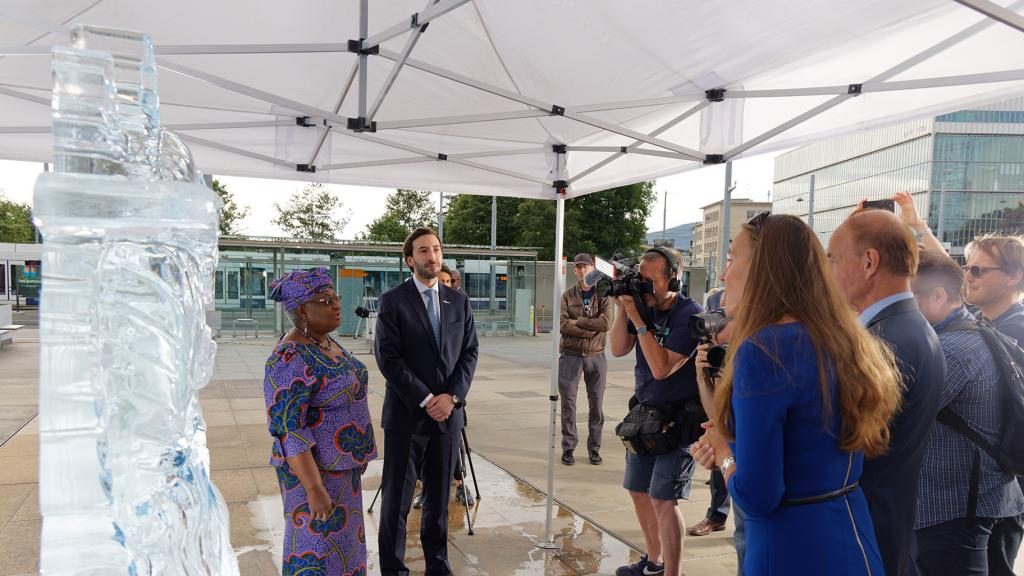
WTO Director-General Ngozi Okonjo-Iweala and Colombian Ambassador to the WTO Santiago Wills at the Stop Funding Overfishing display outside the Palais des Nations in Geneva, Switzerland, on June 8, 2022.
WTO Director-General Ngozi Okonjo-Iweala and then-Colombian Ambassador to the WTO Santiago Wills at the Stop Funding Overfishing display at Place des Nations in Geneva, Switzerland, on June 8, 2022.

"And so, it begins," thought Tristan Irschlinger, getting on the Léman Express train to take him directly to the WTO from his apartment near Lancy-Bachet railway station. The next 3 days would determine whether all that time and all that work done by government officials, influencers, and policy advisors like himself had been worth it.

Between 2019 and 2022, the IISD fisheries team took on over 100 activities, including 14 reports, 67 events, 2 videos, and countless exchanges with WTO members. As a small team, never more than four people, they focused squarely on prioritizing activities that would make a constructive difference in the negotiations, and on adapting how they worked to the phase, even the mood, of the negotiations. They also, over the years, made sure WTO members knew the members of the team and how to reach them if their advice was needed. Those networks of trust paid off big time during the hectic hours of MC12.

Every issue on the conference’s agenda had to go through various exchanges and consultations with ministers before finally being ready for approval in the so-called Green Rooman ongoing meeting at the centre of MC12 including major interests and positions among the entire WTO membership. After that, it went back to the full membership for approval. The problem was that among many different topics on the MC12 agenda, from public health to food security, the issue of fisheries subsidies was not always the priority.

"The group met to consider fish early in the weekthen nothing happened. Then they met once on Wednesday, when the conference was scheduled to endstill no progress," recalled Tipping. "When it got to Thursday night, there was a proposal on the table, but it wasn't clear that everyone would agree to it until the very last moment."

Tough Decisions

In the early hours of Friday morning, when the ministerial conference was finally gavelled to a close, it was clear that a lot had been achieved. It was also clear many people were disappointed with the changes in the text that had been made, and the rules that had been left out, to make the fisheries subsidies deal happen.

When MC12 began, a draft agreement on fisheries subsidies was on the table, yet there were still complicated rules and exceptions on which members were divided. Tough decisions loomed.

The rules on subsidies to illegal, unreported, and unregulated (IUU) fishing and to fishing of overfished stocks, while slightly changed, remained in the final text of the agreement in Articles 3 and 4.

It was Article 5, with its wide-ranging prohibition on subsidies contributing to overcapacity and overfishing and complicated set of exceptions, that left the negotiations on tenterhooks for the bulk of the ministerial conference. To clinch the deal, members agreed to a trade-off: the overfishing subsidies prohibition was cut from the text for now, but with a clause saying that the whole agreement expires if a more comprehensive deal is not achieved within 4 years of entry into force, unless members agree to extend the deal as is. Left in Article 5 were a strict prohibition on all subsidies to fishing on the unregulated high seas and "special care" obligations for subsidies to reflagged vessels and unassessed stocks.

"Real efforts were made until the last moment to reach the big package, but the politics wouldn’t bear it. What we have is a first step, and it was vitally important to take it," said Tipping.

The agreement achieved on June 17, 2022, at the WTO will need to enter in force and be implemented, a process that IISD has already started supporting. WTO members also committed to negotiate further disciplines in this area. But this deal represents, in itself, a significant success: it is the first multilateral trade agreement centred on an environmental issue. 

And it comes amid a fresh wave of activity on trade and environment in Geneva and beyond, with groups of WTO members looking to work more closely together on topics ranging from trade and plastic pollution to trade and renewable energy products and services. While it took more than 20 years to get to this point, one thing is clear: to address the many sustainability challenges we face, from biodiversity loss to climate change, we need to be creative, we need to be persistent, and we need to draw from the full community working on these issues. 

"It took a herculean effort to get this deal over the finish line. And it wouldn't have happened without the dedication of so many people, around the world, willing to keep pushing, despite the delays and the distractions. Now that we know the trading system can deliver agreements with environmental sustainability at their core, we need to look at what else trade and trade policy can do to tackle the many crises we're facing—and we now have the lessons of these negotiations to draw from as we move forward,” concluded Tipping.

Success story

Envisioning Resilience: Bringing underrepresented women's voices into planning for climate change adaptation

Meaningful participation by women who are on the front lines of climate change is essential for gender-responsive, locally led adaptation. However, in many contexts, women remain underrepresented in decision making, from local to national levels. Creative solutions are needed to facilitate dialogue, bridge the gap between different knowledge systems, and ensure that investments in climate action yield equitable benefits for people of all genders and social groups. 

October 28, 2022

Established in 2010 under the United Nations Framework Convention on Climate Change (UNFCCC), National Adaptation Plan (NAP) processes enable countries to build the resilience of their ecosystems, economies, and communities to the impacts of climate change. Led by national governments, the NAP process is intended to be participatory, gender responsive, and inclusive of the most vulnerable groups and communities. This approach presents an opportunity to facilitate dialogue between adaptation decision-makers and the people most affected by the impacts of a changing climate. In most countries, government actors recognize that it is important for effective adaptation planning to be informed by a diversity of voices, particularly those of women, who are often underrepresented in decision making. The challenge is how to make these dialogues happen and how to find a common language to talk about climate change, its impacts, and strategies for building resilience. 

Enabling Women on the Front Lines of Climate Change to Share Their Stories

Together with Lensational, a non-profit social enterprise that aims to elevate the voices of women from underrepresented groups and communities using visual storytelling, the NAP Global Network provided an opportunity to groups of women in Ghana and Kenya to have their perspectives and lived experiences inform their country’s NAP process. 

This pilot initiative was implemented in close collaboration with the Environmental Protection Agency in Ghana and the Climate Change Directorate in Kenya, with financial support from Global Affairs Canada.  Participants undertook training in photography and storytelling while learning from experts who helped them link their observations to climate science, enabling them to develop visual stories that documented their experiences with climate change and their visions of resilience. Over a period of 9 months, the Lensational team and professional photographers mentored the trainees, supporting each one as they developed their personal stories while also bringing them together to develop a collective story for the group.


Two people looking at a photograph during Lensational training in Ghana

"I feel inspired to document stories about women and how climate change is affecting them. From now to 2030, what is the change, what would be the effect? I want women’s voices to be heard."

Emefa Toklo, Photographer, in Ada, Ghana

Visual Stories as a Basis for Policy Dialogue

Equipped with their photos and narratives, the trainees gathered with adaptation policy-makers and other stakeholders at workshops in Nairobi and Accra, where their photos were on display. Surrounded by the images they captured, the women shared their stories, providing unique insights into the impacts of climate change in their communities, how they are responding, and what their communities need to build resilience to future impacts. As the rooms filled with dialogue, decision-makers and newly trained photographers developed a shared understanding of the effects of climate change on women’s lives and the adaptation priorities for their communities. The combination of striking images and personal stories had a powerful impact on the adaptation actors, who approached the dialogue with curiosity and compassion. For the trainees, having their stories heard by national policy-makers represented an opportunity they could not have imagined before starting this journey.

Immaculate Pisoi presenting at a Lensational workshop in Kenya

"The past couple of years have been very uncertain in terms of climate change, and the uncertainty greatly affects us as women in the way and practice of farming and taking care of livestock. As such, it’s a great opportunity to be able to add our voices to not only inform the priorities of climate change adaptation and planning, but also empower our communities to better prepare for resilience in an ever-changing climate."

Immaculate Pisoi, Photographer, in Ilkujuka Loita, Kenya
Thomas Lerenten Lelekoitien Deputy Director, Climate Change Adaptation Climate Change Directorate, Kenya

"As a policy-maker, I’m seeing the direct link to what is happening at the grassroots where the people at the grassroots actually capture the situation and share it with a wider audience. It gives a true picture, and influences how the policy-makers should decide the actions, strategies, and policies."

Thomas Lerenten Lelekoitien, Deputy Director, Climate Change Adaptation, Climate Change Directorate, Kenya

New ways of Thinking About Participation in Policy Processes

Stakeholder engagement in national policy processes typically takes the form of consultation, where stakeholders are invited to share their views on issues or questions defined by policy-makers. In this approach, the stakeholderswomen whose voices are typically not heard in such consultationsestablished the agenda and set the tone for the dialogue by sharing stories of their lived experiences. Their photos provided a common reference point, igniting emotional responses from the decision-makers that created an opening for meaningful dialogue. The value placed on traditional and Indigenous Knowledge in this format helps connect scientific information with realities on the ground, so that different actors can work together toward adaptation action that is locally led and gender responsive.  The decision-makers involved communicated their commitment to incorporating more of this type of participation into their NAP processes, as well as finding ways to share the photos as part of their country’s adaptation story.

Presentation during a Lensational workshop in Ghana

"Adding this element of empowering women to be part of this initiative is spectacular. We see a value in bringing on board women in adaptation planning, especially young girls, through telling stories to depict what climate change has meant for their lives."

Antwi-Boasiako Amoah, Acting Director (Climate Vulnerability and Adaptation), Environmental Protection Agency, Ghana

The pilot projects in Ghana and Kenya were just the beginning. Through a continued partnership with Lensational and with support from Global Affairs Canada, we are taking the approach to other countries, starting in Jamaica. We see immense potential for visual stories and other creative communication methods to bridge the gap between adaptation decision-makers and the people most affected by the impacts of climate change, toward meaningful participation and, ultimately, equitable outcomes from investments in adaptation.

Success story

Getting Their Fair Share: Capacity building on transfer pricing pays dividends for Mongolia


Since Mongolia transitioned to a market-based economy in the early 1990s, foreign investment has flooded in to develop mining projects in the country. But despite this influx of capital, the government saw it was not getting its fair share of revenues from the sector. As a member of the IISD-hosted Intergovernmental Forum on Mining, Minerals, Metals, and Sustainable Development (IGF), Mongolia was able to get the support it needed to eventually collect substantial unpaid taxes and become better equipped to safeguard the public’s financial interests going forward.
 

August 11, 2022

Mining drives foreign investment, trade, and growth in Mongolia, with recent estimates indicating that the sector is responsible for an estimated 19% of the country’s gross domestic product and 94% of its export value. As the sector grew, however, it became clear to the government that multinational mining companies were taking advantage of the government’s relatively limited human resources and experience to avoid paying taxes, thus depriving Mongolia of crucial revenues for public services.

As part of its efforts to ensure that its burgeoning mining sector fully contributes to the country, Mongolia is part of a voluntary forum known as the Intergovernmental Forum on Mining (IGF), which has 79 governments as members. Upon realizing that these crucial mining revenues were being lost, Mongolia asked the IGF secretariat for technical assistance on mining taxation in 2019, given that optimizing the financial benefits from mining is one of that forum’s core activities. 

The IGF secretariat team has developed specialized expertise to help countries address the unique challenges related to tax base erosion and profit shifting (BEPS) in the mining sector. This situation refers to instances where multinational companies use some of the gaps in both domestic and international tax rules to avoid paying tax that is otherwise owed. The BEPS in Mining program, a partnership between the IGF and the Organisation for Economic Co-operation and Development (OECD) and delivered alongside Tax Inspectors Without Borders (TIWB), is a unique initiative that provides mining and international tax expertise along with long-term capacity-building support. 

The Mongolian Context

As foreign mining companies set up in Mongolia’s newly opened economy, the country’s tax administration was facing sophisticated tax avoidance practices for the first time. Transfer pricing is one such scheme where subsidiaries of a parent company manipulate internal transaction prices to lower their tax payable. And mining operators produce commodities with highly variable and fluctuating prices and costs. This can make assessing and collecting the correct amount of tax especially difficult. 

The Mongolian Tax Authority had three top priorities:

  • Building capacity to audit transfer pricing, the process by which multinationals set the price of intra-group transactions.
  • Increasing capital gains tax revenues by valuing mining licences more precisely.
  • Improving corporate income tax collection by preventing companies from unduly offsetting mining profits with mineral exploration or early-stage project development costs.

Motivated to improve its transfer pricing audit practice, Mongolia’s tax administration moved quickly to make key officials available for training. By October 2019, it had launched its first transfer pricing division. Remarking on one such training, the head of the new division, Tugsjargal Sereenendorj, said, “The most useful topic for me was pricing of different types of coal using the world market price database. In Mongolia, underpricing of coal in transactions both with related parties and independent parties is a common issue.”

By the end of 2020, Mongolia issued its first transfer pricing tax assessment as part of a comprehensive audit of a large multinational mining company. Through this assessment, the government collected USD 228 million in tax revenue and denied USD 1.5 billion in carried-forward losses that would have significantly reduced future tax revenue. It is notable that the company promptly paid the tax assessment in full and that the sum collected represented about 1.7% of the country’s gross domestic product in 2020.

“The transfer pricing audit conducted with this essential technical assistance … is a major step forward for the Mongolian Tax Administration,” said Zayabal Batjargal, a commissioner with the administration. “The resulting tax assessment is a testament to the capabilities of the Mongolian tax officials as well as the combined international effort to tackle global tax avoidance.”

Mongolia has also made important legal and regulatory changes that are already yielding additional mining revenue.

In 2019, following capacity building and legal drafting support from the IGF and the OECD, the tax authority introduced new regulations on the valuation of mining and exploration licences for capital gains tax purposes (Decree 302). The new rules mean companies can no longer choose the valuation method that requires them to pay the least amount of tax. Since the regulation was introduced, the tax authority has assessed approximately USD 8.7 million in taxes on the transfer of 246 licences.

Mongolia also introduced ring-fencing rules for the first time in 2020. Such rules prevent mining companies from consolidating income and costs across multiple projects to delay paying corporate income tax, sometimes for years. The IGF and the OECD provided technical input into drafting the new rules, as well as capacity building on implementation. Officials have confirmed the ring-fencing measures are bringing in additional government revenue from mining licence holders while also making the timing and amount of tax due easier to predict.

The IGF, OECD, and TIWB continue to work with the Government of Mongolia to strengthen revenue collection from mining. For more information on this program, see the report Tackling Multinational Tax Avoidance in Mongolia: From Building Modern Legal Frameworks and Mining Industry Expertise to a Major Audit Outcome published by the OECD, TIWB, and IGF and available in English, French, Spanish, and Mongolian.

This story was originally published as part of the IGF Impact Stories series documenting how the IGF’s work has helped its member countries improve mining governance. Read more IGF Impact Stories.

Success story

Measuring Nature for Post-COVID-19 Economic Recovery

In the face of multiple health and environmental crises, the inefficiencies of GDP as the main measure of economic health and government policy are strikingly apparent. The Measuring Wealth to Promote Sustainable Development Project is pushing for a holistic account of nature's assets to truly "build back better" from COVID-19. 

August 26, 2021

As the global economy slowly recovers from the pandemic and governments continue to deploy unprecedented stimulus, an underlying problem persists. Governments are banking on using gross domestic product (GDP) as the main means of assessing recovery from the pandemic. That would be a mistake.

GDP considers the total value of a country’s goods and services but fails to extend into long-term measures of prosperity. To fully “build back better,” metrics of national well-being should examine income distribution, environmental degradation, social inclusion, education etc.—in brief, the underlying factors that make it possible for people to even trade goods and services. For years, economists have spoken on the weaknesses of GDP as a measure of national well-being, and the pandemic has only magnified its inefficiencies.

An analysis of graphs on a tablet

Recent developments in accounting for nature’s assets as economic resources have pushed the needle further on sustainable metrics of economic progress. The Dasgupta Review, a major study commissioned by the United Kingdom government, stressed the need to put a “price on nature.” That is, natural capital should be valued on par with other forms of capital. It argues that society’s rate of natural resource extraction has exceeded the ability of nature and its bounties to regenerate the supply. 

The UN also adopted the System of Environmental-Economic Accounting—Ecosystem Accounting (SEEA EA) that gives countries a baseline to measure the state of ecosystems. These are just a few of the systems that offer complementary measures to GDP to better guide government policy-making.

For years, economists have spoken on the weaknesses of GDP as a measure of national well-being, and the pandemic has only magnified its inefficiencies

The Measuring Wealth to Promote Sustainable Development project aims to help governments adopt a more comprehensive accounting of a nation’s assets to understand if they are truly making progress. It includes natural capital, produced capital, human capital, financial capital, and social capital.  

In November 2016, IISD released a report on Canadian wealth. It introduced the concept of “comprehensive wealth” and the emerging trends within Canada. Another report released in 2018 dove deeper into the five capital assets to highlight areas of concern.  

In a recent expansion of the reports, IISD interviewed respected economists to share their thoughts on the shortcomings of GDP as the main measure of economic progress. The videos were filled with insights on countries’ paths to long-term sustainability from Pushpam Kumar, Chief Economist at the United Nations Environment Programme; Matthew Agarwala, Environmental Economist at the Bennett Institute for Public Policy, Cambridge University; and Grzegorz Peszko, Economist at the World Bank.

As a result of IISD’s outreach to the Canadian government, the Comprehensive Wealth project was cited in Canada’s Ministry of Finance interim report on developing a Quality-of-Life Framework. The report is driven by the Minister of Middle-Class Prosperity’s mandate to develop alternative measures of prosperity for Canadians—similar to those adopted in New Zealand. It speaks to the evolving debates on how we measure success and value the tangible and intangible resources in our society. By re-examining our interactions with nature, we can create a clearer picture of our present reality.  

In July 2021, IISD conducted a High-Level Political Forum for Sustainable Development (HLPF) learning event to support evidence-based decision making as societies move to “build back better” after the COVID-19 pandemic.  

Later in the month, IISD also organized an HLPF side event as panellists discussed expanded wealth measures and their utility for post-COVID-19 recovery and the advancement of the sustainable development goals.

The country partners of the Comprehensive Wealth project

For the next steps, the Measuring Wealth to Promote Sustainable Development Project is partnering with researchers in Ethiopia, Trinidad and Tobago, and Indonesia. Namely, the Mekele University in Ethiopia, Universitas Indonesia in Indonesia, and the University of West Indies in Trinidad and Tobago. Together, we are working toward advancing expanded measures of national wealth within each country’s socio-economic contexts.  

With our partners, we hope to build interest and national capacity to move beyond GDP as the main measure of prosperity and integrate our findings in policy creation and national decision making. By 2022, a new report re-examining Canadian data and progress on sustainability will also be released.  

As global societies look toward a sustainable post-COVID recovery, it presents a unique opportunity to rethink how we value nature. Preventing future pandemics means honouring the indelible links between humans and the natural environment. It is time for a new metric that accounts for varied aspects of national progress and our most pertinent global challenge—climate change.  

We must change our interpretations of economic success if we are to stay ahead of irreparable damage.

Success story

Speaking Each Other’s Language

In Canada, First Nations people are at the highest risk of poisoning from consuming freshwater fish that have been contaminated with mercury (and its toxic form, methylmercury).

January 19, 2021

Mercury poisoning, or Minamata disease, comprises a wide range of physical and mental symptoms. These include hair loss, muscle weakness/paralysis, organ damage, loss of senses, depression, and even death.

First Nations communities in Canada often depend on freshwater fish for sustenance and are traditionally accustomed to catching their own fish.

It is therefore critical that we communicate the potentially harmful impact of mercury on fresh water and freshwater fish.

Historically, there has been little communication available in First Nations languages of the Western scientific understanding of the harmful nature of mercury accumulation in freshwater fish.

A Unique Approach to Western Science

For over 50 years, our very own Experimental Lakes Area has been conducting whole-ecosystem experiments on lakes and the impact of pollutants on lakes in Ontario, Canada. This is the only place in the world you can conduct this kind of research.

Some of this research involved intentionally introducing minute quantities of mercury to a freshwater lake over a given period and tracking the impact and build-up of mercury in the food web—including in freshwater fish. Unsurprisingly, the researchers discovered that the amount of mercury found in the fishes increased, but when they stopped adding mercury, the amount found in fishes decreased.

Scientists with blue gloves holds a fish down and takes a tissue sample

When it came to communicating the results, First Nations communities were top of the list, in the spirit of sharing knowledge and ensuring that we make our science accessible to all of our audiences.

We developed a six-minute animated video in Ojibwe (an Algonquian language spoken in parts of Canada) parsing our Western approach to mercury pollution and what we found.

We collaborated with Ojibwe language experts Elder Nancy Jones and Elder Don Jones, Ojibwe language teacher Jason Jones from Nigigoonsiminikaaning (Red Gut) First Nation in Ontario, and retired science instructor Bruce Townsend.

The translation process depended on innovative methods to develop new terms for concepts that do not currently have Ojibwe equivalents, such as “mercury.” The Ojibwe term for mercury we settled on was “Biiwaabikowaabo gaa-waawaageshkaag,” which literally means “liquid metal that shines.”

Jason Jones, our translator, said it best: 

"Our language has vitality, with the ability to create new words."

Opening Our Doors to the World

Every step of the way, we collaborated with local First Nations in the development, translation, and communication of the video. For the translation, we collaborated with Nancy Jones, Don Jones, and Jason Jones of Nigigoonsiminikaaning (Red Gut) First Nation, and worked with Emma Bruyere of Couchiching First Nation, to voice the video.

This was a critical step in ensuring young First Nations voices were heard and amplified through the project.

Group of people pose for photo

For Emma, this wasn’t just about communicating the science of a particular issue—it was about preserving a language and its parent culture.

"I want to be working with the language my entire life… I know that I want to work with the language and help other people learn because of how much it's dying out."

As tends to be the case when we collaborate with local First Nations, the lessons proved to be a two-way street. Our deputy director, Pauline Gerrard, also learned a great deal from the process of translating our science into a different language.

"On a personal level, I've really learned a lot about the importance of water to Anishinaabe culture and the kind of personal responsibility that Indigenous people take for water management and water protection."

The video was well received by everyone from the CBC to the panel of judges at the 2020 Prospect Magazine Awards in London, who awarded the video the runner-up prize in the Medicine, Science & Technology category.

Next step? Integrating the research and its findings into Canadian school curricula. We are developing a lesson plan (including Ojibwe and English transcripts of the video, breakdown of sentences, neologisms, etc.) to supplement the video and act as an additional resource for all-level Ojibwe language learners or teachers to use. It will be available free of charge—all in the spirit of promoting the Ojibwe language and our understanding of mercury pollution.

Click here to learn more about how the world’s freshwater laboratory is collaborating with local First Nations communities to further our understanding of freshwater health. If you are interested in collaborating with IISD Experimental Lakes Area on any of this work, please contact Dilber Yunus at [email protected].

Success story

Rethinking Investment Policy to Support Sustainable Development

Just a few words in an investment treaty can cost governments millions—or even billions—of dollars when they get sued, making it impossible or costly to roll-out of important new policies, from COVID-19 relief measures to the phase-out of fossil fuels. For years, IISD has been working to reform international investment law and policy—offering advice and guidance, creating new investment models, and hosting an annual forum for negotiators to learn from one another. While progress has been made in newer agreements, the old ones remain to be dealt with and continue doing harm.

September 17, 2020

Economies need investment to grow, support public services and infrastructure, and make the clean energy transition a reality. With only a short time remaining to meet significant global commitments such as the Sustainable Development Goals (SDGs) and the Paris Agreement, every penny is crucial. While the challenge was already great, the devastation wrought by COVID-19 makes this work even harder, yet also more urgent and important. 

Most investment treaties, however, still do little to support investment that advances sustainable development and the post-COVID recovery. Instead of setting up a framework to promote collaboration on sustainable investment, these treaties can stifle government action to develop economies that create value in the country and are respectful of the environment. They can cost governments millions—or even billions—of dollars when a foreign investor decides to bring the government to international arbitration.  

Under most investment treaties, foreign investors have access to a powerful mechanism known as investorstate dispute settlement (ISDS), which allows them to sue the host governments if its actions harm current or future profits and are found in breach of one of the main principles included, such as those relating to non-discrimination, expropriation, or "fair and equitable treatment."

An aerial view of wind turbines on a hill top in Spain

Most investment treaties do little to support the type of investment that advances sustainable development, such as funding for renewable energy projects.

ISDS allows foreign investors to bypass local courts to challenge a wide range of measures, including those to protect public health or the environment, bringing claims directly to international arbitration tribunals, which will have the final say over whether or not the foreign investors should be compensated.

In recent decades, more than 1,000 known ISDS cases have been brought against states hosting foreign investors. Losing a case can be crushing: the average award is over USD 500 million. In at least nine cases, payouts have exceeded USD 1 billion

The mere threat of such a costly dispute can lead to a "regulatory chill," hurting people and limiting governments’ policy space. Now, there is the very real risk of ISDS being applied to emergency measures that governments have adopted to fulfill public health and economic recovery objectives during the pandemic. 

But there is some hope. For several years, IISD has worked to shift the focus on investment at the international level away from a system that prioritizes investor protection to one that emphasizes the advancement of national and global development goals through sustainable investment.

IISD has worked to shift the focus on investment away from a system that prioritizes investor protection to one that emphasizes the advancement of national and global development goals through sustainable investment.

IISD has worked with and advised dozens of countries and regional groups on investment law and policy. Countries are, in fact, hungry for innovative ways to reform their outdated investment treaties, developing their own model investment treaties or creating strategies for renegotiating or exiting outdated treaties.  

A New Investment Model for Sustainable Development

As early as 2005, IISD developed a text for a Model International Agreement on Investment for Sustainable Development. This model has been extremely influential and has heavily influenced the development of modern investment treaty models with respect to the definition of investment that takes into account sustainable development; the formulation of investment principles that allow for the necessary policy space; alternatives to investorstate arbitration; obligations for investors to respect human rights, the environment, and refrain from illegal action, such as corruption and fraud; and obligations on home states to support sustainable investment and allow victims to seek justice in the home state of the investor.  

However, while newer treaties and treaty templates incorporate reforms to varying degrees, the stock of old and outdated treaties remains largely intact. These treaties continue to present a great risk for governments around the world, including in the COVID-19 context. Governments must take action nowthey have the knowledge and the tools. 

A speaker uses a microphone during a meeting

The annual Forum allows negotiators to take a deep dive into systemic reform of ISDS, which is another avenue where IISD has long worked to address some of the myriad imbalances in international investment governance / IISD Reporting Services

The Annual Forum of Developing Country Investment Negotiators

For discussing all these issues, IISD has established the only international platform for government officials exclusively from developing and emerging economies. This one-of-a-kind forum allows investment negotiators to strategize collectively, exchange best practices, and raise questions in a supportive environment. 

This year’s Forum, the 13th of its kind, was the first to be held virtually because of COVID-related travel restrictions. Whether in-person or online, the annual gathering offers developing country government participants a unique chance to share and learn from the experiences of colleagues across continents. Far more than just a meeting, the Forum has evolved into a vibrant community of government officials determined to work together toward systemic reform of international investment governance and to safeguard the best interests of their developing nations. 

The 2020 Forum was no exception. The discussions, co-hosted by the Government of Thailand and held online between September 3 and 11, looked not only at governments’ COVID-19 policy responses and what options investment negotiators have to safeguard these from ISDS challenges, but also debate about the road ahead. Negotiators discussed what investment for a sustainable, resilient recovery might look likeand how countries can shift the focus of discussions in various ongoing international processes on the quality of foreign direct investment, rather than just its quantity. 

Far more than just a meeting, the Forum has evolved into a vibrant community of government officials determined to work together toward systemic reform of international investment governance.

With the stakes so high, we remain committed to ensuring developing countries can attract responsible investment that advances sustainable development while safeguarding their legitimate policy space. COVID-19 may have reshaped our world forever, but it has also reminded us that while the world of investment policy-making may move slowly, the risks can materialize quickly, and having a space where negotiators from developing countries can convene and debate a way forward at the national, regional, and multilateral levels is vital to enabling concrete change and fairer, more resilient economies.

Success story

Sink, Swim … or Fight Back

Helping countries adapt to climate change is central to the mission of the NAP Global Network, hosted by IISD.

August 5, 2020

When Cyclone Winston hit Fiji in February 2016, it killed dozens of people, left thousands homeless, devastated infrastructure, and caused huge economic losses.

“Winston taught us all a lesson and had an indelible impact on the national psyche,” said Josaia Voreqe Bainimarama, Fiji’s Prime Minister.

“We know that because of the stronger and more frequent storms caused by climate change, it is only a matter of time before Fiji is struck again.” 

Fiji Prime Minister Frank Bainimarama delivers a speech

Prime Minister Bainimarama has prioritized climate adaptation for his country. (Photo: UN Geneva CC BY-NC-ND 2.0)

After Winston hit Fiji, the government quickly prioritized creating a National Adaptation Plan or NAP. Adaptation planning enables countries to identify and address their medium- and long-term priorities for adapting to climate change.

Through funding from the governments of Canada and the United States, the NAP Global Network helped Fiji create a national plan to make the country more climate resilient. The Fijian government worked with stakeholders in a participatory process to prioritize 160 actions in key sectors like health and food security. The NAP Global Network, hosted by IISD, is now supporting Fiji to put this plan into action.

It is only a matter of time before Fiji is struck again.

Josaia Voreqe Bainimarama, Prime Minister of Fiji

Fijians recognize that having the means to adapt is not just a policy objective—it’s a matter of survival.

Climate adaptation is one of two main responses to climate change: the other is climate mitigation. Mitigation is about lessening the flow and concentration of heat-trapping greenhouse gases in the atmosphere by reducing emissions and capturing and sequestering carbon.

Adaptation, on the other hand, is about adjusting to the impacts that are already being observed or that are anticipated in future. Put into practice, adaptation can take different forms: everything from building sea walls to guard against rising water levels to behaviour changes like using less water or planting crops that are drought- or flood-resistant.

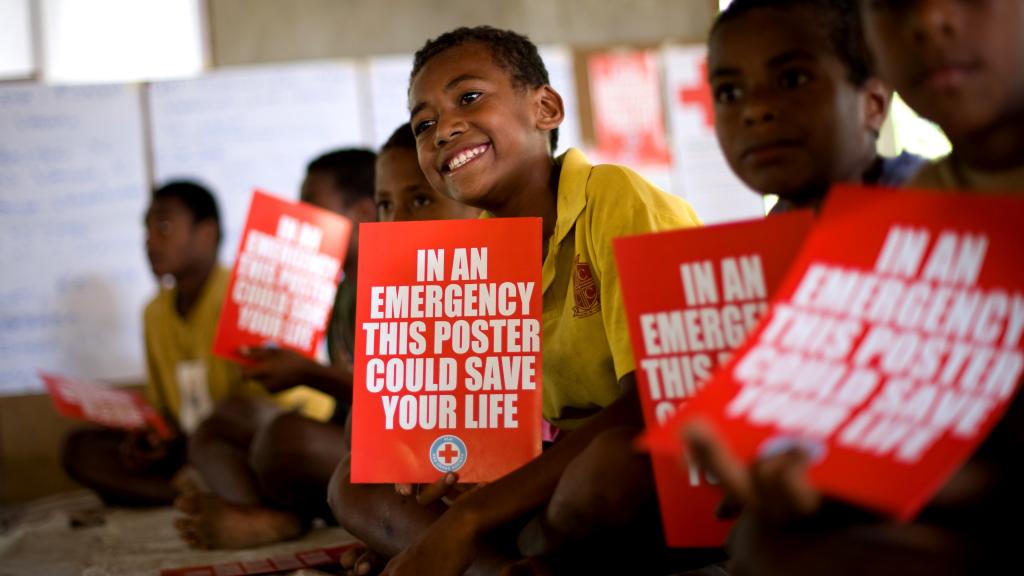
Students in a classroom in Fiji hold disaster risk reduction posters
Photo: UN DRR (CC BY-NC-ND 2.0)

As COVID-19 takes its toll on global economies, Fiji is no exception—its economy is expected to shrink by almost 5% this year due to travel restrictions. Tourism, responsible for 40% of the country’s GDP, has ground to a halt. Climate impacts have not relented either—in April, Cyclone Harold slammed into Fiji, destroying buildings and flooding towns.

NAPs are focused on climate change, but since climate change interacts with so many aspects of societies, economies, and ecosystems, preparing for its impacts often involves simultaneously addressing many issues that shape our lives. This makes the NAP process a valuable tool for responding to other threats, including fast-moving viruses like the one that causes COVID-19.

And that is why having a NAP is so important. As a threat multiplier, climate change will reverse development gains unless Fiji has the systems and capacities in place to anticipate, withstand, and recover from its impacts.

“We all need to focus as nations on our own adaptation measures,” said Bainimarama at the 2018 launch of the National Adaptation Plan. “I want to acknowledge and thank the NAP Global Network for providing us with the technical and financial support to develop this blueprint for our adaptation efforts.”


Downed electrical poles after a storm in Fiji

(Photo: Department of Foreign Affairs and Trade CC BY 2.0)

Success story details

Success story

Solar Power Is Just a Switch Away

Swapping subsidies from fossil fuels to clean options can make renewables the most viable alternative.

July 24, 2020

Kerosene is not an ideal fuel: it can lead to dangerous levels of indoor air pollution, offers poor lighting, emits greenhouse gases, and raises the risk of fire. But millions of households in India still rely on subsidized kerosene as an affordable and accessible source of light and cooking fuel, especially in parts of the country where an unreliable power supply—such as limited hours of electricity per day, blackouts, and voltage surges—make kerosene lamps an important source of backup for lighting.

Crowded market street in Old Dehli with a mess of power lines overhead.

Parts of India still experience unreliable power supply—including limited hours of electricity per day, blackouts, and voltage surges.

Kerosene subsidies cost the government of India USD 1.2 billion in the 2018–2019 fiscal year alone and represented 9% of all fossil fuel subsidies in the country. While energy subsidies can be important for expanding energy access and poverty reduction, they are also often improperly targeted, providing disproportionate benefits to the wealthiest consumers, while making little sense in a world shifting to low-carbon sources of energy to tackle climate change.

In April 2019, IISD and The Energy and Resources Institute (TERI) proposed shifting kerosene subsidies in India to off-grid solar products for marginalized households that rely on kerosene for lighting. Solar products are cheaper than kerosene over their lifetime, offer better lighting, and can even come with the ability to plug in and charge devices like mobile phones.

This is what's known as a "subsidy swap"—redirecting some of the savings from reforming fossil fuel subsidies to clean energy solutions. 

Such approaches could prove to be very popular: a 2018 survey of 9,000 rural households in India found that 84% favoured government support for solar lanterns, even if it involved foregoing their kerosene subsidies.

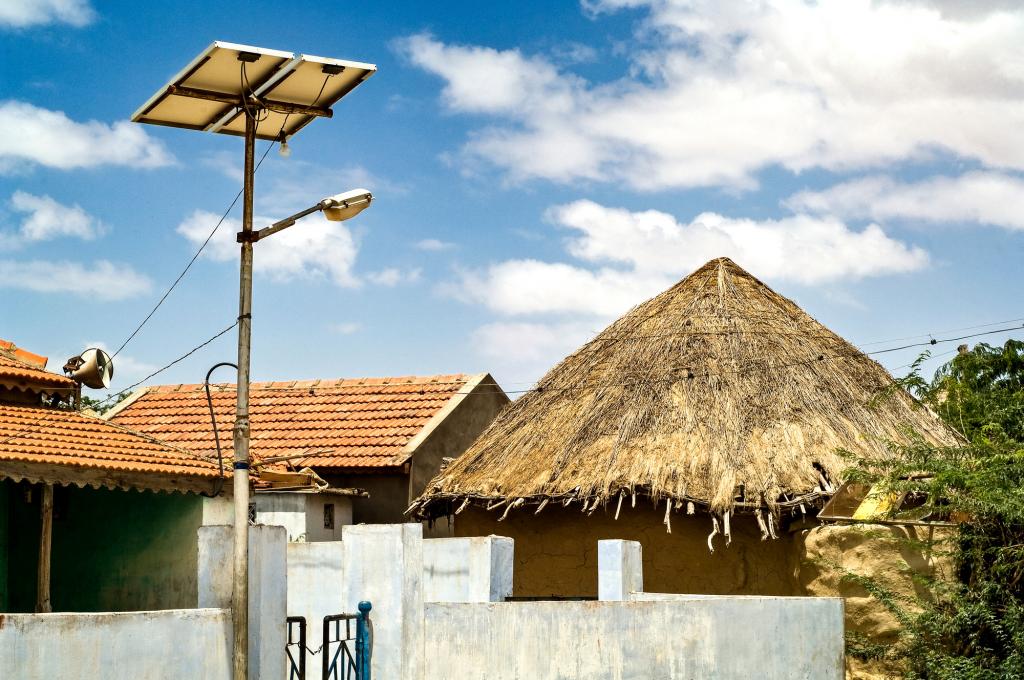
Solar panel above grass-roofed house in India.
A village in Gujarat, India has solar panels to provide street lighting at night.

“Almost everywhere, renewables are so close to being competitive that a subsidy swap tips the balance. It goes from being marginal to an absolute no-brainer.”

Richard Bridle, quoted in the Guardian

Thanks to IISD’s advocacy and awareness efforts, the subsidy swap idea is catching on. In April of 2019, India’s Ministry of New and Renewable Energy requested the Ministry of Petroleum and Natural Gas to divert part of the cooking gas and kerosene subsidy towards solar options. It is not clear if this will result in an explicit reallocation of funds from one budget line to another—swaps of this kind are rare. But IISD’s research shows that public resources are indeed shifting: kerosene subsidies fell from USD 7.7 billion in fiscal year 2014 to USD 0.9 billion in fiscal year 2019, while major new policies on solar irrigation and solar rooftop PV have been announced in coming years.  

As renewable energy becomes cheaper, swapping subsidies from fossil fuels to clean options such as renewables and energy efficiency can tip the balance and turn them into the most viable alternative.

Governments are currently injecting, or planning to inject, trillions of dollars into the global economy to counteract the health, social, and financial shocks caused by the COVID-19 crisis. This unprecedented stimulus spending is an opportunity to accelerate the clean energy transition, and subsidy reform can help fund this spending.

Swapping at least some money from coal, oil, and gas subsidy reform to clean energy offers a real chance for countries across the world to build back better.