Explainer

What Happened at COP 30 on Climate and Health?

This year’s 30th UN Climate Change Conference (COP 30) in Belém, Brazil, aimed to place people’s health and well-being at the centre of the climate talks. Our experts explain why human health is relevant to climate policy and what progress was made in Belém.

December 11, 2025

The negative impacts of climate change on human health and well-being are already being felt worldwide. The 2025 report of the Lancet Countdown on Health and Climate Change, produced in collaboration with the World Health Organization (WHO), finds that rising global heat is now killing one person a minute around the world. The majority of the report’s global indicators tracking health threats have now reached record levels, showing how climate inaction is costing lives, straining health systems, and undermining economies.

IISD hosts an informal group of countries working to foster international collaboration to respond to the growing health threats of climate change, known as the Friends of Climate and Health. The group regularly convenes at COPs and intersessional meetings and explores ways to mainstream health in the United Nations Framework Convention on Climate Change (UNFCCC) negotiations.

COP30-negotiators-huddle
Climate negotiators huddle at COP 30 in Belém. (Photo by IISD/ENB Mike Muzurakis)

So, how did this play out at COP 30 in Belém? Our experts explain the key developments where progress was made on climate and health in Brazil.

People-Centred Climate Action

Climate and health received a lot of political attention in the lead-up to and during COP 30. In 2024, the government of Brazil presided over the G20 negotiations, and led the development of a G20 Health Ministerial Declaration on Climate Change, Health and Equity.

In 2025, Brazil emphasized the health impacts of climate change as a key theme for its COP 30 Presidency. It convened a climate and health round table at the World Health Assembly in Geneva in May 2025, and organized a Global Conference on Climate and Health in July 2025, in partnership with WHO. During the world leaders’ summit in Belém ahead of COP 30, Brazilian president Luiz Inacio Lula da Silva stated that “people must be at the centre of political decisions about climate and the energy transition” and promoted initiatives to reduce inequality, end hunger, and improve access to clean energy for the poorest and most vulnerable groups in society.

Brazil designated a dedicated COP 30 Health Day and launched the Belém Health Action Plan, a blueprint for global health systems to adapt to climate extremes. Brazil’s Ministry of Health and WHO also launched an action library—a collection of real-world examples of solutions that respond to the health impacts of climate change—showcasing what works, what’s been learned, and how others can follow suit.

Stretching at COP 30 Health Day
COP 30 Health Day opened with a short stretching exercise to remind panellists and participants to care for their well-being. (Photo by IISD/ENB Anastasia Rodopoulou)

Health was included as one of 30 priorities under the action agenda—the process that mobilizes non-state actors such as businesses and cities to take concrete voluntary climate actions—and was included in the new 5-year work plan of the high-level climate champions. This highlights the strong leadership from the health sector in supporting the implementation of the Paris Agreement.

Health Benefits From Climate Action

COP 30 also saw renewed political attention for the health co-benefits of climate action. A growing number of countries referred to the large health benefits from a transition away from fossil fuels in their statements—in particular in negotiations on the Just Transition Work Programme and Response Measures.

The health argument for climate action was also reflected in the final negotiated outcomes; the global mutirão decision on increasing climate ambition highlights “the economic and social benefits and opportunities of climate action, including economic growth, job creation, improved energy access and security, and improved public health.” Countries also agreed to develop a just transition mechanism while pointing to “associated gains in energy security, as well as health and environmental benefits, including reduced air pollution.” These represent the first-ever COP decisions to acknowledge the health benefits from climate action, and the first to highlight the role of air pollution.

Despite this, the final mutirão decision did not mention fossil fuels and failed to reference the previous COP 28 decision, which saw all countries commit to moving away from fossil fuels for the first time. Outside of the formal negotiations, however, momentum grew with a coalition of over 80 countries calling for a transition roadmap. In the closing plenary, COP 30 president André Corrêa do Lago proposed the development of a roadmap outside the formal UN regime. This was supported by Colombia, which agreed to host the first-ever International Conference on the Just Transition Away from Fossil Fuels in April 2026.
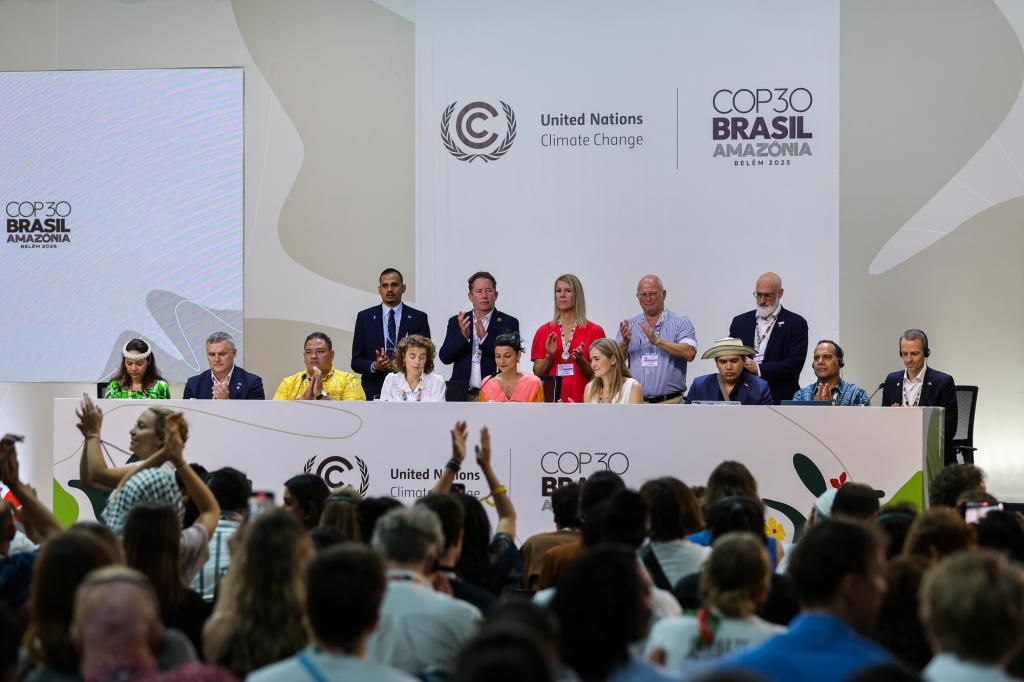
Fossil fuels roadmap press conference at COP 30
At UNFCCC COP 30 at a press conference spearheaded by Colombia, more than 80 countries demanded an outcome on fossil fuel phaseout. (Photo by IISD/ENB Mike Muzurakis)

The growing international collaboration on fossil fuel phase-out provides an important opportunity for continued engagement from the global health community, which has persistently denounced the health harms of fossil fuels since COP 26 in 2021, including through a recent report that systematically mapped out the health costs of fossil fuels across their life cycle.

Tracking Health Adaptation Progress 

One of this COP’s core priorities was agreeing on a set of indicators to track global adaptation progress—including adaptation for health and health systems. This followed the adoption of the framework for the Global Goal on Adaptation at COP 28 in 2023, which highlighted the key areas in which all countries need to build resilience, such as food, water, and health.

COP 30 was the culmination of a 2-year technical process to identify and develop a set of indicators to assess adaptation progress, with several leading global health organizations and experts working to ensure robust and measurable health indicators, a major milestone in health community engagement with UNFCCC processes.

A shared set of adaptation indicators is essential for informing the assessment of adaptation progress in the next global stocktake and ultimately improving the effectiveness of adaptation actions. COP 30 adopted a list of 59 adaptation indicators, including eight health adaptation indicators, several indicators for tracking means of implementation (finance, technology transfer, and capacity building), and suggestions for the disaggregation of indicators (e.g., by gender, age, geography, disease). However, last-minute changes to the list of indicators by some negotiators behind closed doors have compromised their credibility and will make them more difficult to operationalize. The challenge will focus on countries participating in the second round of the global stocktake, drawing on the Biennial Transparency Reports (BTRs) submissions, good practices, experiences, and potential opportunities to strengthen international cooperation on mitigation and adaptation, as well as to increase support for and implementation of nationally determined contributions. In all cases, there is an opportunity—based on nationally prioritized indicators and other relevant information—for countries to enhance the visibility and inclusion of health-related information in the next cycle.

Still, the adoption of a set of health adaptation indicators at COP 30 is an important step forward, as it will help monitor progress, drive support for health adaptation solutions that are context specific and locally relevant, and protect the most vulnerable population groups in a warming world. Further technical work and refinement of the indicators are expected in 2026 and 2027.

Loss and Damage to Health

The climate summit took place in the context of recent extreme weather events, including back-to-back typhoons in the Philippines, which displaced over a million people. This exemplifies the loss and damage that is already being caused by the climate crisis.

COP 30 completed the third review of the Warsaw International Mechanism for Loss and Damage (WIM), which serves as a policy and knowledge hub on Loss and Damage for the Paris Agreement and UNFCCC. As part of the WIM, countries agreed to develop a regular State of Loss and Damage Report, which will likely include a dedicated health chapter. They also agreed to the development of (voluntary) guidelines for the inclusion of Loss and Damage information in BTRs. These guidelines offer an opportunity for countries to improve how they communicate the health impacts of climate change they already face and the actions they take to respond to these impacts.

The Fund for Responding to Loss and Damage launched its first call for funding requests. A total of USD 250 million is available, and developing countries can submit funding requests of USD 5–20 million until June 2026.

Synergies Between the Three Rio Conventions

Since COP 28, momentum has been building to connect the dots between the three Rio Conventions addressing climate change, biodiversity loss, and land degradation: the UNFCCC, the UN Convention to Combat Desertification, and the Convention on Biological Diversity.

At COP 30, countries held informal consultations on how the Rio Conventions could better work together, which were summarized in a short COP decision. Countries are invited to submit proposals to the UNFCCC on ways to enhance cooperation with international organizations and among the three Secretariats of the Rio Conventions, to be discussed at the intersessionals in June 2026. Outside of the negotiations, a new collaborative platform was launched to facilitate collaboration and coordination across these interlocking dimensions of a planet at risk.

During the negotiations on synergies, several countries highlighted the interlinkages between healthy ecosystems and the health of people and communities, as recognized in the right to a clean, healthy, and sustainable environment and acknowledged in the outcome of the first global stocktake. Future negotiations on this topic could explore the role of international health organizations and health treaties to drive the implementation of the Paris Agreement. 

Finance for Climate and Health Solutions

After 2 weeks of late-night talks, governments agreed to triple adaptation finance by 2035. This new goal is a welcome continuation beyond the sunset of the previous goal agreed at COP 26 in Glasgow, but falls short of the 2030 target originally proposed by developing countries. The final Belém political package also launched a new 2-year work programme on climate finance, but saw little progress on operationalizing the existing USD 300 billion climate finance goal.

Outside of the negotiations, however, momentum for climate and health finance gathered pace. A coalition of more than 35 philanthropies pledged USD 300 million to accelerate solutions at the intersection of climate and health. The Climate and Health Funders Coalition—which includes Bloomberg Philanthropies, the Gates Foundation, IKEA Foundation, The Rockefeller Foundation, and Wellcome Trust—announced it will back innovations, policies, and research on extreme heat, air pollution, and climate-sensitive diseases, as well as strengthen health systems and data integration.

During COP 30 Health Day, the World Bank—the world largest multilateral financier of climate and health projects—launched a set of “smart buys” for climate and health; a set of proven and high-value solutions that deliver climate resilience, health benefits and a return on investment, and can be scaled up now, including early warning systems and heat action plans. A similar report by Systemiq was launched ahead of COP and offers a list of 15 “adaptation and resilience best buys,” including for health.

The UNFCCC secretariat also announced a 3-year strategic partnership with the global health philanthropy Wellcome Trust, with the aim of accelerating health-centred climate solutions.
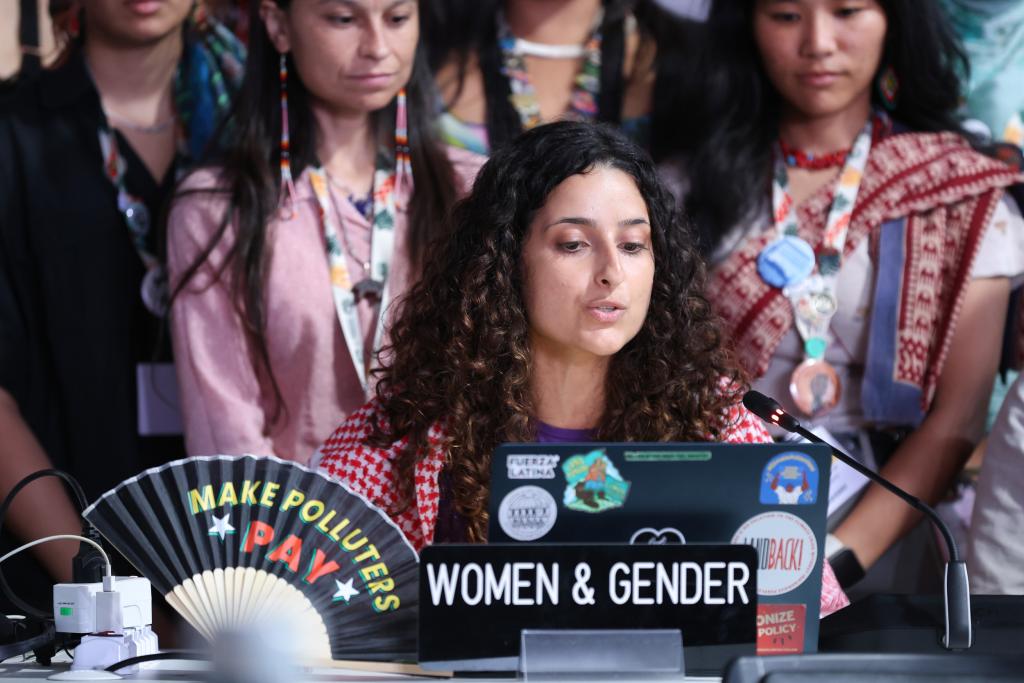
COP 30 closing statement by the Women and Gender Constituency
The COP 30 closing statement by the Women and Gender Constituency (Photo by IISD/ENB Mike Muzurakis)

Gender and Health

One of the major successes coming out of COP 30 was the adoption of the Gender Action Plan (GAP). The plan sets out 27 actions for countries to take over the next 10 years, from enhancing support for national gender and climate change focal points, to improving gender-responsive budgeting and finance, protecting women environmental defenders, and promoting the leadership of Indigenous, Afro-descendant, and rural women. It also addresses care work, health, and violence against women.

The COP 30 decision on gender was achieved despite coordinated pushback from a small group of countries to narrow the definition of gender to male and female sexes. The GAP sends a strong signal that climate change is not gender-neutral, and neither are its health consequences. For the actions in the GAP to be implemented successfully, governments will have to integrate gender across their adaptation and mitigation plans, and ensure oversight mechanisms that track progress rather than intentions.

A Dialogue for Health and Climate Change

Significant progress was made at COP 30 to integrate health considerations across the various negotiation streams, but countries also explored the creation of a stand-alone space to discuss health and climate change.

Following the participation of WHO Director-General Dr Tedros Ghebreyesus in the World Leaders Summit on November 7, where he called for health to be more formally integrated into the UN climate negotiations, the Government of Zimbabwe made a formal request to the UNFCCC on 9 November requesting the creation of a dedicated agenda item on health, which would create space for a structured dialogue between parties, negotiators, and health experts. This follows earlier calls by member countries of the Friends of Climate and Health to establish a UNFCCC dialogue on climate and health, to enable negotiators to identify opportunities for health to be integrated across key areas.

Given that the request was last-minute and did not receive public support from a wide range of countries, the COP 30 Presidency did not approve the creation of a new UNFCCC agenda item and advised that health should be considered under the existing agenda items on adaptation.

While COP 30 did not create a dedicated forum to discuss health, the continued integration of health in existing climate negotiations, alongside the growing momentum to implement climate and health solutions, has laid down an important marker of future ambition for healthier lives on a healthier planet.

What’s Next for Climate and Health?

Following COP 30, there are several opportunities to better integrate health in climate negotiations and processes.

In 2025, many countries integrated health priorities and activities in their new national climate plans—known as nationally determined contributions to the Paris Agreement. In 2026, attention will shift to how these national climate and health priorities get financed and implemented.

The Friends of Climate and Health will continue to explore health entry points across the various climate negotiation tracks in 2026. In the mitigation discussions, countries could further strengthen the health arguments for a transition away from fossil fuels. In adaptation, health indicators will require contextualization and operationalization. In the negotiations on loss and damage, countries will explore how to report on health losses and damages in their BTRs, while the first batch of loss and damage funding will be released.

The next two COPs also provide an opportunity to spotlight the health impacts of climate change. COP 31 in 2026 will be hosted by Türkiye and Australia. The pre-COP meeting will take place in the Pacific, enabling a pathway for Pacific priorities to remain at the centre of the climate talks.

The Pacific has long prioritized climate and health, including through the launch of a special initiative on health and climate in Small Island Developing States at COP 23 in 2019, which was presided over by Fiji.

In 2027, COP 32 will be held in the Ethiopian capital, Addis Ababa, making it the first COP summit to be held in a least developed country. This African COP will progress a set of adaptation indicators, including for health, and might provide a stronger focus on the growing health impacts of climate change.

Explainer

Five Lessons From the IEA’s 2025 World Energy Outlook for the Transition Away from Fossil Fuels

The 2025 World Energy Outlook show a wide range of possible futures. In all scenarios, renewables are the fastest-growing energy source.

November 20, 2025

What does the future of energy look like? It depends who you ask. Some insist oil and gas will dominate for decades, while others see booming renewables sealing the end of the fossil fuel era. The latest World Energy Outlook (WEO) from the International Energy Agency (IEA) shows a wide range of possible futures, to inform governments and investors in making decisions consistent with their goals.

WEO sets out scenarios, not predictions or forecasts. All start from the same assessment of the current landscape, which is one of rapidly growing energy demand and geopolitical tensions. Then they make different assumptions about technological and policy development.

The report models three core scenarios:

  • the net zero emissions (NZE) scenario, showing what is needed to limit global warming to 1.5°C by 2100;
  • the stated policies (STEPS) scenario, a “dynamic reading of today’s policy settings”, which leads to around 2.5°C warming;
  • and the current policies scenario (CPS), which despite the name is more pessimistic than business as usual, as it assumes technological progress stalls and governments do not deliver their policies, resulting in about 2.9°C warming.

Below are the top five takeaways from the WEO 2025.

1. Net zero is cheaper than fossil fuel dependence

The net zero scenario has the lowest overall energy system costs and fossil fuel-dependent CPS the highest. You read that right.

While net zero involves higher upfront investments in clean technologies, it saves trillions of dollars in avoided fuel costs and shields consumers from price volatility. Lower fuel prices and efficiency improvements reduce importers’ fuel bills by more than two-thirds by 2035 from today’s levels. Household energy costs decline in advanced economies in the net zero scenario, and stay near present levels in emerging economies, as higher efficiency and electrification offset growing consumption.

The CPS is the most expensive scenario due to higher operating costs and fossil fuel rents. A high reliance on fossil fuels exposes economies to price shocks and volatility. The average oil price rises from around USD 65 a barrel today to USD 87 a barrel in 2035 and to USD 104/bbl in 2050 in the CPS, as costly frontier projects are developed. STEPS shows oil at USD 80 in 2035 and USD 76/bbl in 2050, while in NZE the price falls to USD 33/bbl in 2035 and USD 25/bbl in 2050. Gas prices in major importing regions such as the EU and East Asia are 30% to 40% higher by 2035 in CPS than STEPS.

Want a competitive and resilient economy, with lower energy bills? Accelerate the renewables rollout and electrify everything.

2. No one country can stop the renewables revolution

In all scenarios, renewables are the fastest-growing energy source, led by solar. Most of the energy demand growth—80%—comes from regions with abundant sunshine.

Drastic policy shifts in the US are having an impact, with 30% less installed renewable energy capacity projected by 2035 in this year’s STEPS compared to last year’s, and 60% fewer electric vehicles (EVs) on the road. The Trump Administration has slashed support for clean energy in the US, notably by removing tax credits for wind and solar power.

Despite this national policy rollback, the world is almost on track for the global target to triple renewable capacity by 2030, with STEPs projecting 2.6 times its 2022 level. China dominates this boom; in STEPS, China accounts for 45% to 60% of global renewable capacity additions over the next decade. Emerging markets outside China are projected to have 20% more EVs by 2035 than in last year’s STEPS, compensating for the US slowdown.

3. Peak fossil fuel demand is coming

The momentum behind renewable energy and EVs make a peak in global fossil fuel demand highly likely over the coming years. Under STEPS, global demand for both coal and oil peaks around 2030, while demand for gas peaks by 2035. Historically, wind and solar have grown faster than previous iterations of this scenario, as technological progress outpaced policy.

The global EV fleet grows sixfold by 2035 in STEPS, preventing over 10 million barrels per day (mb/d) of oil demand. Notably China, which accounted for more than two-thirds of global oil demand growth over the past decade, is expected to see demand peak before 2030.

The IEA is clear that despite having the word “current” in its name, CPS is not business as usual. It assumes that governments do not enact their stated policies and clean technology deployment flatlines.

In the net zero scenario, no new coal, oil, and gas fields are needed, and some close early. While some countries are deprioritizing emissions goals, the WEO shows that renewables are not just the green choice but the safe, cheap choice, particularly for net importer countries.

4. Beware of gas lock-in

The biggest uncertainties in the report are around gas. In IEA’s central case, STEPS, a wave of LNG terminals and new production flood the market, resulting in a 65 billion cubic meter surplus in 2030. “Questions still linger about where all this gas will go,” the IEA notes. Exporters are looking to emerging Asian economies, but many are going straight from domestic coal to renewables, rather than build new gas infrastructure only to be at the mercy of volatile global markets.

The fossil fuel-led CPS projects further LNG expansion, reaching 880 bcm in 2035, with the United States remaining the world’s largest gas producer.

In the net zero scenario, no new gas-fired power stations are built and global demand drops sharply, leading to a massive redundancy of LNG projects. Aggregate LNG capacity utilization would fall to 75% in 2030 and drop further to 50% by 2035, leaving a trail of stranded assets.

5. Climate action and energy access go together

Around 730 million people still live without electricity, and nearly 2 billion rely on polluting cooking methods that harm their health. Expanding access to modern energy is critical to development. The WEO contains two pathways to universal energy access: NZE achieves it by 2030, in line with UN sustainable development goals; and the Accelerating Clean Cooking and Electricity Services Scenario (ACCESS) by 2035 for electricity and 2040 for clean cooking.

In ACCESS, Liquid Petroleum Gas (LPG), a fossil fuel, accounts for the majority of clean cooking access. While LPG may be part of the solution for rural areas, the net zero scenario shows there is no need to sacrifice climate goals for development; the two go hand in hand.

IISD research shows that LPG subsidies benefit wealthy households more than the poor, strain public budgets and expose governments to volatile markets. Electric cooking powered by renewables and biogas offers a more transformative solution. This is where governments and funders should focus their resources.

Conclusion

One scenario missing from this year’s WEO was the announced pledges scenario (APS). Since 2021, this has shown what will happen if countries’ national climate plans and net zero targets are met in full. Countries were due to submit national climate plans covering the period 2031-35 this year, but several major economies left it late or have yet to do so. The IEA said it would incorporate these pledges in future analysis. However, these may not substantially change the outlook: Climate Action Tracker has warned that submissions to date have not bent the temperature curve and stronger action is needed.

The good news from this year’s WEO is that renewables are booming, and speeding up the clean energy transition serves multiple policy objectives. Whether the national priority is to bring down the cost of living, expand energy access, reduce import dependence or prepare for the reshaping of energy markets, NZE shows the way.

Explainer

Fossil Fuel Subsidy Reform Explained: 10 questions you’ve always wanted to ask

November 14, 2025

1. What are fossil fuel subsidies and why do they matter?

Fossil fuel subsidies can take many forms, including direct budget transfers, tax breaks, retail prices held artificially below cost, and preferential finance or regulated tariffs for enterprises that do not reflect full production costs.

While each measure differs in design, the effect is the same: fossil fuels are mostly priced below their real costs. According to the Fossil Fuel Subsidy Tracker, governments provided roughly USD 1.1 trillion in explicit subsidies in 2023. The International Monetary Fund, which also includes unpriced climate and health costs, estimates the total at over USD 7 trillion—around 7% of global GDP.

These subsidies can distort markets, encourage overconsumption, and lock countries into fossil fuel dependence. They divert public funds away from other areas, such as clean energy investment, and they expose economies to global fuel price volatility—undermining the energy security they are often meant to protect.

That’s why countries are joining forces through the Coalition on Phasing Out Fossil Fuel Incentives Including Subsidies (COFFIS), launched at COP 28, to share data, build transparency, and make subsidy reform politically and socially achievable.

2. What does “inefficient” fossil fuel subsidy mean—and who has committed to phasing them out?

The term "inefficient" fossil fuel subsidies first entered the global policy lexicon in 2009, when G20 leaders meeting in Pittsburgh pledged to “phase out over the medium-term inefficient fossil fuel subsidies that encourage wasteful consumption” while providing targeted support for the poor. Similar commitments appear in APEC declarations, Sustainable Development Goal 12.c, and the UNFCCC COP 28 UAE Consensus, which called for a global transition away from fossil fuels and the phase-out of inefficient subsidies.

Most fossil fuel subsidies are inefficient because they are broad, permanent, and opaque. As a result, they distort markets and lock in fossil fuels, delaying the energy transition. A fossil fuel subsidy may be justified if it addresses a clear social or market failure—such as improving energy access for low-income households or supporting remote regions—and there is no better non-fossil fuel alternative available to achieve this. This support should be targeted, temporary, transparent, and complemented with plans to replace fossil fuels. Anything else—especially if it delays the shift to clean energy—is inefficient by design.

3. How does fossil fuel subsidy reform contribute to climate action?

Fossil fuel subsidy reform is one of the fastest, most cost-effective tools to cut greenhouse gas (GHG) emissions. When fossil fuels are cheap, consumers use more; when prices reflect real costs, consumption falls and consumers tend to shift to cheaper clean alternatives, for example, to renewable energy that does not emit greenhouse gases. The IPCC (2022) for example suggests fossil fuel subsidy reform reduces CO2 emissions by a range of 1%–4% and GHGs by up to 10% by 2030, while the IMF (2023) found that the reform of explicit fossil fuel subsidies reduces CO2 emissions by 5% by 2030. Reducing CO2 emissions contributes to mitigating climate change.  

The benefits go beyond these direct impacts. Reforming fossil fuel subsidies can also generate significant fiscal savings, which can be reinvested into renewables, efficiency, and electrification. As such, it also aligns fiscal policy with the Paris Agreement, moving from a system that hinders the transition to one that supports it.

4. How can reforming fossil fuel subsidies strengthen energy security?

Many governments see fossil fuel subsidies as a tool to protect energy security. In practice, the opposite is true as fossil fuel subsidies make countries more vulnerable to global price shocks and fiscal crises in multiple ways.

When international prices rise, governments that fix domestic prices must cover the gap—either by increasing their own spending or forcing state-owned enterprises to absorb losses. In 2022, as oil and gas prices spiked, subsidy bills ballooned worldwide, draining resources from social and clean energy spending.

Phasing out fossil fuel subsidies reverses this vulnerability because consumers respond by using energy more wisely and move to renewables that are often cheaper in an equal market environment. This makes governments less vulnerable to global price swings. They can redirect spending to strengthen long-term security by diversifying energy sources, expanding renewables and storage, and investing in energy efficiency. Households and businesses respond by using energy more wisely, insulating themselves from future volatility. Fossil fuel subsidy reform transforms energy security from a defensive measure into a proactive strategy for resilience.

5. Why is reforming fossil fuel subsidies so challenging?

Fossil fuel subsidies are among the most politically persistent policies in the world. They shape consumer expectations, business interests, and political narratives. Besides that, countries fear losing business activity when prices of energy become higher in their country and not in neighbouring countries. Ending them is never a purely technical question—it’s political and financial.

Governments often fear that raising fuel prices will increase inflation, trigger protests, result in a loss of economic activity, and come with political costs. Powerful interest groups—fuel distributors, utilities, energy-intensive industries—lobby to maintain support. Inside government, various ministries—finance, energy, environment, and welfare—are often at odds: one may seek savings and revenues, another worries about affordability and secure supplies, yet another about protection for the poor. These tensions, along with leadership changes and technical difficulties for collecting data and assessing impacts, can stall reform for years.

Experience shows reform succeeds when it is gradual, transparent, and inclusive. Countries that consult broadly, communicate early, compensate vulnerable households and businesses, and phase in price changes over time sustain support. Moreover, cooperation among countries helps to maintain a level playing field, facilitating the gradual phase-out of subsidies. The politics are challenging, but the rewards—healthy finances, fairer societies, and cutting fossil fuel consumption—are worth the effort.

6. Don’t fossil fuel subsidies help the poor?

Not all fossil fuel subsidies are used to help the poor; some are intended to support competitiveness and therefore boost business activity. However, where fossil fuel subsidies do in practice help the poor—at least in the cases when they can access them—it is an expensive way to do so. In reality, broad fuel subsidies overwhelmingly benefit the rich. High-income households consume more energy—driving cars, using air conditioning, living in larger homes—and thus capture the largest share of benefits. Comparative evidence shows the top 20% of households can receive up to six times more in fossil fuel subsidy benefits than the poorest 20%.

A more cost-effective way that bypasses the fuel is targeted social protection. Cash transfers, lifeline electricity tariffs, and clean cooking initiatives such as India’s Ujjwala scheme directly support low-income households without distorting markets. When governments replace universal fuel subsidies with targeted programs, they still protect the poor while freeing funds that can be invested in areas that benefit everyone, achieving even more equitable outcomes.

7. What happens when fossil fuel subsidies are reformed?

When countries undertake reform, the results can be transformative. In Indonesia, the government removed most gasoline and diesel subsidies in 2014–2015, saving roughly IDR 211 trillion (≈ USD 15 billion)—nearly 10% of national expenditure—which was moved to fund rural development, infrastructure, and social programs.

India’s experience is equally telling. Through its PAHAL/DBTL system and Ujjwala initiative, the government replaced broad liquefied petroleum gas (LPG) subsidies with direct transfers to low-income women, reducing fraud and improving access to clean cooking fuels.

Italy provides a recent example from a high-income economy. In 2024, the government began gradually aligning excise duties on diesel and petrol, ending the long-standing preferential rate for diesel (EUR 0.6174/L vs. EUR 0.7284/L for petrol). The reform is expected to generate EUR 1.1 billion in additional revenue over 5years, all earmarked for the National Fund for local public transport. The proceeds are financing renewed transport contracts, improving service quality, and advancing sustainable mobility.

Not every reform creates immediate fiscal windfalls—some can correct hidden losses at state-owned utilities while others may effectively reduce tax revenues due to changes in consumer behaviour and businesses relocating abroad. But all well-planned and implemented reforms strengthen fiscal stability, market efficiency, and public trust, and lay the groundwork for cleaner and fairer energy systems.

8. What are COFFIS member countries doing to advance reform?

At COP 28 in Dubai, a group of governments launched COFFIS to accelerate reform by improving transparency, establishing domestic reform processes, and strengthening cooperation. Chaired by the Government of the Netherlands and supported by IISD, COFFIS unites countries committed to fair and practical reform.

Members are publishing fossil fuel subsidy inventories to map what measures exist and how much support flows to fossil fuels. Many have already submitted their inventories or indicated a date when they would be published. To strengthen alignment, members committed to also work on a comprehensive framework for such inventories. As a first step, members agreed on Minimum Standards for the National Inventories of Fossil Fuel Subsidies.

They are further developing time-bound national phase-out plans that identify which subsidies need to be phased out when, how to mitigate short-term social impacts, and how to redirect savings toward clean energy and public welfare. To support exchanges and peer learning about reforming fossil fuel subsidies across members but also to strengthen whole-of-government support from different ministries within governments, COFFIS has been hosting regular gatherings on the sidelines of important events, such as meetings organized by the UNFCCC, World Bank, or the IEA.

In addition, COFFIS members are jointly examining international barriers that currently hinder domestic reform efforts—such as tax exemptions and long-standing bilateral or multilateral agreements in international aviation and maritime transport—to explore opportunities to address them. IISD, in its function as COFFIS secretariat, is supporting these efforts through research and expert advice (i.e. on fuel taxation in aviation).

Perhaps most importantly, COFFIS fosters communication, trust, and confidence beyond its members who share the commitment to be proactive, transparent, and engage with civil society and other relevant groups. Through these efforts, COFFIS is turning what once seemed a politically very difficult reform into a practical approach to responsible climate and fiscal policy. 

9. How can governments communicate fossil fuel subsidy reform effectively?

Fossil fuel subsidy reform succeeds when people understand it. Governments that communicate clearly—before, during, and after the reform—build the trust needed to sustain change. The most effective strategies focus on why a reform is necessary and what benefits reinvesting the savings can bring.

Transparency is key. Publishing subsidy data, consulting stakeholders, and showing trade-offs—what is gained versus what is lost—helps counter misinformation. When people see reforms fund health care, education, or cleaner transport, they are more likely to support them. Communication that combines consistency, honesty, and fairness can turn a technical policy into a shared national project.

10. How can citizens and civil society support fossil fuel subsidy reform?

Ultimately, subsidy reform succeeds when it becomes a public demand rather than a technocratic initiative. Citizens, journalists, and civil society organizations can drive progress by demanding transparency, fact-checking claims, and tracking whether processes and alternatives are inclusive and whether savings are spent productively.

Journalists can expose the scale of subsidies and the inequity of their distribution. Researchers can analyze impacts and propose better alternative policies. Non-governmental organizations can amplify stories of success and fairness, showing that reform is not about taking away—it’s about using public money for better purposes.

When people understand that fossil fuel subsidies hold back their country’s development, reforming fossil fuel subsidies becomes not only possible but popular. It begins as an economic correction but ends as a collective step toward justice, resilience, and a cleaner future. Through COFFIS, those national efforts are building a larger movement to ensure fair, transparent, and lasting reforms.

Explainer

Rethinking Tax Incentives for Climate Finance: Lessons for the 30th UN Climate Change Conference (COP 30)

At COP 30, the focus is shifting from big pledges to the policy levers that can drive clean energy investment. Tax incentives are widely used in emerging and developing economies to attract private capital for the energy transition, but their effectiveness depends on targeted design and implementation. Kudzai Mataba examines how countries are deploying green tax policies, what delivers results and what falls short, and the reforms governments should champion at COP to accelerate sustainable green investment.

November 12, 2025

One of COP 30’s top priorities is boosting climate finance from both governments and private investors. Why is this especially crucial for emerging and developing economies? 

Despite record-high investment in renewable energy last year, emerging and developing economies (EMDEs) face a USD 2.2 trillion financing gap each year through 2030 to meet their goals under the Paris Agreement. Countries need to attract investments that can lower emissions while expanding access to affordable energy and creating jobs. Unlike major emerging economies, such as China, India, or Brazil, which attract the majority of global renewable energy investment, the climate transition of many lower-income EMDEs continues to be held back by limited access to affordable finance, perceived country or sector-related risks, and weaker policy frameworks. 

In response, mobilizing both public and private finance is crucial. Public financial support is needed to crowd in larger private investment, such as through targeted subsidies including incentives, budget transfers, concessional lending, and market mechanisms that reduce investment risks. This must go hand in hand with phasing out inefficient tax incentives for fossil fuels to level the playing field and encourage a shift by consumers and investors toward less polluting alternatives. Raising taxes on fossil fuels to reflect their social costs—through excise or carbon taxes can also accelerate the transition in an economically efficient way, provided that protections are in place for vulnerable groups

What have governments already committed to in terms of renewable energy capacity?

At COP 28, 133 governments agreed to the collective goal to triple the world’s installed renewable energy generation capacity by 2030, taking into consideration different starting points and national circumstances. Limited fiscal space and rising debt require that public support be used strategically, such as by lowering investment financing costs. The global FfD4 process has underscored the mounting pressure on public budgets and the need for more efficient deployment of resources.  

Without this combination of public and private finance, EMDEs cannot accelerate the energy transition in line with the COP 28 commitment.  


What mechanisms at COP 30 could help scale green investment and turn commitments into action? 

COP 30 has been framed by the Brazilian Presidency as a COP for implementation, where countries work to turn their climate commitments into action. This could be achieved through the Baku to Belém Roadmap to 1.3T, which sets out a plan for how climate finance from all sources can be scaled up to USD 1.3 trillion annually by 2035. 

However, as IISD has noted, while the Baku to Belém Roadmap recognizes that phasing out environmentally harmful subsidies, including fossil fuel subsidies, can have long-term benefits, these points are not reflected in recommendations. This means we risk COP 30 becoming a missed opportunity for redirecting public finance from fossil fuels to renewables. 

Ambitious reforms also require financial backing. At COP 30, a decision on Article 2.1(c) (the Paris Agreement’s goal on aligning financial flows with climate-resilient, low-carbon development pathways) is expected. For the past 3 years, the Sharm el-Sheikh dialogue on Article 2.1(c) has taken place, leading to a greater understanding of what the Article means. However, more work remains to be done, and COP 30 could establish negotiations toward a framework for Article 2.1(c), perhaps under a work programme. A decision on Article 2.1(c) could contain a commitment to phase out public finance for fossil fuels to ensure investment is climate compatible.  

COP 30 could also move the dial on strengthening public finances and growing governments’ fiscal space for climate action, for example, through advancing the conversation on ambitious debt relief. 

Tax policy is one tool for leveraging public resources to scale private investment. What role can tax incentives play toward closing the green investment gap, especially in EMDEs? 

Tax incentives that target green investment, if strategically designed, can help lower the cost of capital for climate projects, unlocking private finance and accelerating renewable energy deployment. They already have in countries that use them well.

Designing strategically means shifting away from broad profit-based tax holidays toward incentives that address real investment constraints. Targeted tools like allowing businesses to write off the cost of renewable energy capital faster (“accelerated depreciation”), partial relief from import duties for certified green technologies, or time-limited tax credits for investment in energy grids and storage can really move the dial on climate projects through reducing upfront and operating costs. 

What other levers should governments be using to mobilize private finance? 

Incentives work best as part of a broader policy mix that includes planning, regulation, and infrastructure development. Without clear energy targets, ready energy grids, and streamlined permitting for energy projects, even generous incentives will fail to attract investment. 

Tax policy is only one lever among many for promoting green investments.


Countries also use many non-tax instruments to encourage clean energy investment, particularly for technologies that are already cost competitive, such as solar and onshore wind. Market-based mechanisms can provide the certainty that investors need without a large net impact on public finances. 

These include measures that stabilize prices, such as feed-in premiums, contracts for difference, and auctions for long-term power purchase agreements. Domestic and international public financing can reduce the high cost of capital that is common in many EMDEs. While some of these mechanisms can be more complex to administer than broad-based tax incentives, they have proven effective in large EMDEs that are rapidly scaling up clean energy, including Brazil, China, India, and Vietnam.        

Policy stability and an enabling regulatory environment are also key to attracting investment. 

How can countries ensure that green tax incentives achieve results for climate without eroding the tax base unnecessarily? 

Our research shows that tax incentives deliver the strongest results in sectors with high upfront costs, such as early-stage renewables, storage, industrial efficiency, and mini-grids, rather than in mature technologies that already attract private investment. Focusing on these areas is where countries are most likely to see tangible results. 

Countries can ensure that green tax incentives support climate goals without undermining revenues by focusing on efficiency, effectiveness, and targeting. Incentives should directly address barriers such as high upfront costs or technology risks, be time-bound and performance-linked, and include clear monitoring and review mechanisms. 

Shifting from broad profit-based tax holidays to cost-based measures such as accelerated depreciation, which I explained earlier, or investment tax credits, makes sure the support catalyzes new investment rather than rewarding activity that would occur anyway. This is a strategic use of public resources, maximizing climate impact while maintaining fiscal sustainability. 

Additionally, one of the key elements is tying tax incentives to real economic outcomes, like new capacity or job creation or to environmental goals, with priority going to projects that fit a national green taxonomy and meet environmental and community consent standards. 

Transparency throughout the process is also essential. Tax expenditure reporting at the economy-wide level helps governments track the fiscal cost of incentives by clearly presenting revenue forgone across sectors and brings other benefits. The Coalition on Tax Expenditures Reform launched by IISD and partners seeks to support countries in increasing reporting and evaluation of incentives. 

You analyzed 35 different countries for the report The Use of Green Tax Incentives for Renewable Energy Deployment. What trends did you spot in terms of countries’ use of tax incentives to drive green investment? 

Our analysis reflects trends among smaller EMDEs (excluding larger emerging economies such as China, India, or Brazil), where governments are increasingly using tax incentives to attract private investment into clean energy but are often challenged by limited fiscal space, weak targeting, and inconsistent implementation. 

These countries continue to rely on profit-based tax holidays, which tend to be less effective in stimulating renewable energy investment. These incentives only apply once firms become profitable, yet in many lower-income markets, renewable projects often face long development timelines, grid connection delays, and high financing costs, which postpone or reduce taxable profits. 

However, we also observe a gradual shift toward targeted, cost-based measures, with more countries adopting investment tax credits, accelerated depreciation, VAT exemptions, and import duty relief for renewable energy components—policies that are more likely to be cost-effective and better aligned with climate objectives. 

What did you find on the design of these tax incentives?

The design of these tax incentives varies widely, and policy fragmentation remains a major issue. In many countries, incentives are scattered across investment laws, tax codes, and special economic zone legislation, creating complexity for investors and tax administration, and increasing the risk of overlapping or duplicate incentives. Very few countries include clear eligibility criteria, performance conditions, or sunset clauses. 

Most incentives we analyzed were open-ended and did not require any reporting on energy generation, job creation, or emissions reductions. Without reporting requirements, governments have no reliable basis to assess whether tax incentives are delivering value for money or contributing to climate and development goals. As a result, it becomes difficult to evaluate tax expenditures, compare their cost-effectiveness against other policy tools, or justify their continuation when public finances are already squeezed. 

Fresh data shows that, at the global scale, investment in renewable technologies and projects reached a record. To what extent have tax reforms helped make that happen, and what can EMDEs learn from it? 

Indeed, global investment in renewable energy reached a record USD 2.1 trillion in 2024, up 11% from the previous year. Much of this growth came from large emerging economies. 

China alone accounted for over one-third of global clean energy investment in 2024, and India is consistently among the top 10 countries for renewable energy investment. 


While it is difficult to isolate the specific impact of tax incentives, countries that combine fiscal measures with broader policy frameworks such as clear renewable energy targets, grid investments, and stable power purchase mechanisms tend to attract the highest levels of renewable energy investment. This has been an instrumental strategy in China, the European Union, and the United States, where extensive renewable energy support measures are in place. 

Other successful strategies include those of India, which used accelerated depreciation, GST reductions for renewable components, and tax holidays in earlier phases to rapidly scale wind and solar, and South Africa introduced a 125% tax deduction for businesses investing in renewables, helping unlock new private sector projects during its energy crisis. This measure complements the Renewable Energy Independent Power Producer Procurement Programme, which awards long-term power purchase agreements through competitive auctions to provide investment certainty. Together with other renewable energy fiscal policies, these initiatives illustrate how combining fiscal incentives with clear procurement frameworks can effectively mobilize private investment and advance broader development goals. 

The United States showed how powerful tax incentives can be when combined with industrial strategy through the Inflation Reduction Act, which used production and investment tax credits to crowd in manufacturing and deployment. 

The global trend also shows that successful countries adapt their tax incentives over time. China initially relied heavily on VAT rebates and tax holidays to build its solar manufacturing base but has gradually phased these out as the industry became globally competitive. India has taken a similar path, unwinding broad tax breaks as its renewables market matured and shifting toward more targeted measures, like reverse auctions for deployment of renewables and production-linked incentives, viability gap funding, and concessional lending for manufacturing. 

This evolution highlights an important principle: tax incentives should be temporary, targeted, and tied to performance, not permanent giveaways. For EMDEs, this is especially critical given limited fiscal space and competing public priorities. Incentives must therefore be designed to catalyze private investment without compromising revenue sustainability, ensuring that scarce public resources are used efficiently and can continue to support essential development and social spending. 

Explainer details

Explainer

COP 30: Key issues on trade and climate agenda

Ahead of the UN Climate Change Conference in Belém, IISD trade experts Ieva Baršauskaitė, Antoine Bonnet, and Florencia Sarmiento explain why trade is at the heart of the climate conversation—and what’s at stake as trade issues land on the COP 30 agenda.

November 4, 2025

As the world gears up for COP30 in Belém, a new storyline is emerging at the intersection of climate and trade. From border carbon adjustments to deforestation-free import rules, governments are using trade tools to advance their climate goals—and to protect domestic industries from unfair competition. However, these same measures are sparking debate: Can they drive genuine emissions cuts without exacerbating global divides? And how can countries ensure they remain fair, transparent, and cooperative? 

Why talk about trade when we talk about climate mitigation?

Because climate mitigation doesn’t happen in isolation—it happens in an economy that trades. Every measure to cut emissions, from carbon pricing to green subsidies, affects competitiveness, production patterns, and international markets. Trade is the channel through which climate policies in one country ripple across borders, changing who produces what, where, and with what carbon footprint.

If trade policy ignores these effects, climate action risks becoming fragmented—some countries move ahead, others fall behind, and emissions simply shift rather than decline. But if trade and climate are considered together, that friction can be transformed into alignment: trade rules can help disseminate clean technologies, scale up green industries, and ensure that climate ambition is not penalized but rewarded.

The goal is to manage the global transition, not just national emissions, ensuring that as the world decarbonizes, the rules of commerce evolve to support that shift.

What is a border carbon adjustment or carbon border mechanism, and why are they attracting attention now?

A border carbon adjustment (BCA), or carbon border adjustment mechanism (CBAM) charges a carbon price on imports equivalent to what would have been paid if they were produced domestically. It aims to curb carbon leakage, where production shifts to countries with weaker climate rules. Studies suggest that for every 100 tonnes of CO₂ cut domestically, 13–25 tonnes may reappear elsewhere. Attention is rising as the European Union’s (EU’s) CBAM starts its definitive phase in 2026, followed by one in the United Kingdom in 2027. Norway is expected to align around the same time, with Iceland, Chinese Taipei, Canada, Australia, and the United States exploring similar measures.

What are the main design challenges and trade-offs when constructing a BCA?

Designing a BCA is complex. The first challenge is administrative: BCAs require product-level emissions data, unlike most carbon pricing systems, which focus on installations. Flexibility through default values or exemptions for small operators can reduce this burden. Another trade-off concerns product scope: including more downstream products could further prevent leakage but greatly increases complexity. Finally, as BCAs multiply worldwide, ensuring interoperability across systems and harmonized reporting will be crucial to avoid a patchwork of incompatible procedures.

How effective can a BCA be in reducing emissions globally? What are its limitations?

No full-scale BCA has been implemented yet, so evidence remains limited. Modelling by the ifo Institute suggests that, in the EU, a comprehensive CBAM could reduce carbon leakage from 22% to about 7%, preserving domestic climate ambition. Yet its direct global impact will be modest, as it covers only about 0.3% of global emissions. Still, BCAs can influence others indirectly, since carbon prices already paid in exporting countries are deducted from BCA liabilities, creating incentives for partners to introduce their own carbon pricing.

What are the risks or criticisms against BCAs, especially from emerging or developing economies?

A key criticism of BCAs is their possible clash with the principle of Common but Differentiated Responsibilities and Respective Capabilities (CBDR-RC), which recognizes that countries have different historical responsibilities for emissions and varying capacities to mitigate current ones. Because BCAs typically apply uniform treatment to all trading partners, they can appear unfair and risk deepening divides when cooperation is most needed. To bridge this gap, BCAs could integrate the interests of developing countries by offering targeted flexibilities, supporting broader decarbonization efforts, and facilitating compliance.

How should a BCA be phased or scaled to minimize harm and enhance acceptability?

Transition periods are key. The EU CBAM’s initial phase (2023–2025) required importers to report emissions without payment, giving industries time to adapt. The United Kingdom, by contrast, plans no such phase-in, which has prompted criticism from industry stakeholders. Extending flexibilities—such as longer timelines or simplified procedures for small and medium-sized enterprises in developing countries—could improve fairness and acceptance.

What other trade tools do governments use when introducing green policies?

Countries are deploying a range of trade-related instruments to green their economies. Green subsidies and incentives are reshaping global value chains by promoting domestic production of low-carbon goods, from batteries and wind turbines to clean hydrogen. Product standards and sustainability certifications set conditions for market access, making trade a channel for climate ambition. Public procurement is another lever, as governments increasingly demand low-emission materials for infrastructure projects. 

Not all of these measures have the same impact on trading partners, and some have generated substantial concerns about fairness and implementability.

Forests and land use are a focal topic for COP 30. How can trade measures help curb deforestation and support climate goals?

Trade can drive deforestation, especially when global demand for forest-risk commodities fuels agricultural expansion. Soy, palm oil, beef, cocoa, coffee, and timber are prime examples. When commodity production expands unsustainably to meet export demand, forests disappear. Ignoring trade’s role risks undermining global forest conservation efforts and the broader climate agenda.

But trade can also preserve forests. Linking market access to sustainability criteria can create incentives for more sustainable practices and encourage companies to invest in deforestation-free supply chains. 

In short, aligning trade with forest protection is essential to achieving global climate and biodiversity objectives.

What kinds of trade or regulatory tools are being proposed or used to tackle deforestation through trade?

Approaches fall into three categories: public-led, private-led, and public–private approaches.

Public-led measures include domestic regulations such as the European Union Deforestation Regulation, which prohibits imports linked to deforestation, and international-level commitments, such as the provisions on forest conservation in free trade agreements. The European Union Deforestation Regulation operates as a market access regulation, prohibiting the import or export of products that cannot be verified as deforestation-free.

Private-led initiatives include voluntary sustainability standards like the Rainforest Alliance, Forest Stewardship Council, and Roundtable on Sustainable Palm Oil, which set verifiable environmental and social requirements for producers and traders. Numerous companies have also made corporate commitments to eliminate deforestation from their supply chains.

Lastly, public–private partnerships such as the Cocoa and Forests Initiative in West Africa, combine both approaches, promoting sustainable sourcing and restoration.

Together, these tools form a growing ecosystem of measures linking trade and forest conservation.

How do you ensure such deforestation-related trade measures do not inadvertently penalize smallholders or marginalized producers?

Deforestation-related trade measures risk excluding smallholders, who often lack the resources, technology, or institutional support needed to meet strict market requirements. Because small farmers produce much of the world’s forest-risk commodities, their inclusion is vital.

Governments and companies can support this by providing training, finance, and access to traceability tools. Investing in data systems and monitoring infrastructure can enhance transparency across supply chains. At the same time, promoting agroforestry and diversified livelihoods can make forest-friendly practices more viable.

Fair and inclusive implementation is key—trade measures can protect forests only if responsibility is shared across the value chain.

At COP 30, what key “asks” should the trade and climate community push for?

COP 30 presents an opportunity to align trade and climate agendas. The priority should be ensuring that trade policy becomes a lever for climate ambition, not a loophole or a source of new divides. Three broad asks stand out.

First, countries should be open to greater transparency and dialogue on climate-related trade measures—including BCAs, green subsidies, and deforestation-free import rules. Without open information and cooperation, these policies risk fragmenting markets and triggering disputes.

Second, the community should push for supportive mechanisms for developing countries—financial, technical, and institutional—to help them shape, as well as adapt to, evolving trade requirements. Climate change, and the economic tools to tackle it, are a collective responsibility in which everyone has a stake. 

Third, trade and climate communities should explore cooperative frameworks that harmonize standards and reduce regulatory friction. Trade and climate measures should help businesses and societies everywhere decarbonize: climate ambition cannot be credible if it deepens inequities.

Explainer

What's at Stake for Climate Change Adaptation at COP 30?

For years, progress on climate change adaptation has been slow to materialize, with most of the attention during United Nations Framework Convention on Climate Change (UNFCCC) negotiations focused on efforts to reduce emissions. But adaptation is in the spotlight at this year’s UN Climate Change Conference in Belém, Brazil, with some even calling it “the adaptation COP.” Our experts explain why COP 30 is so important for climate change adaptation efforts, and where we need to see progress.

November 3, 2025

With the scale and the severity of climate impacts escalating globally, the urgent need to prepare for and adapt to our changing climate is clearer than ever. Around the world, countries, scientists, and advocates are recognizing that tackling the climate crisis requires both cutting emissions and learning how to live in a rapidly warming world.

Investing in adaptation now will enable us to build resilient economies, safeguard lives and livelihoods, protect biodiversity and ecosystems, and build a future where communities flourish and no one is left behind.

So, what does this mean for COP 30 in Belém? Our experts explain the key areas where progress is needed on adaptation in Brazil.

Bridging the adaptation finance gaps

As climate change impacts communities, ecosystems, and economies globally, countries urgently need to accelerate the implementation of their adaptation priorities. Mobilizing adequate resources to meet these challenges is essential, yet insufficient finance remains one of the main barriers.

The UN Environment Programme’s Adaptation Gap Report 2025 estimated that the global adaptation finance gap is somewhere between USD 284 billion and USD 339 billion per year for developing countries, while the Climate Policy Initiative reported that only 5% of total climate finance flows are directed toward adaptation. The result is a widening gap between what vulnerable countries require and what is currently available.

At COP 29, countries set a new collective quantified goal (NCQG) on climate finance that calls on all actors to work together to scale up climate financing to developing countries to at least USD 1.3 trillion per year by 2035. It also set a goal of mobilizing at least USD 300 billion per year by 2035 from a variety of sources. This year in Belém, the COP 29 and COP 30 presidencies are expected to present the outcome of the Baku to Belém Roadmap to 1.3T that will identify sets of actions and measures to scale up finance for climate action.

Given the persistent underfunding of adaptation, financing needs to be scaled up at a much faster pace. While the NCQG did not set a dedicated target for adaptation, some countries are calling for a renewal of the Glasgow goal of doubling the collective provision of adaptation finance between 2019 and this year, working toward a potential tripling from 2022 levels by 2030.

Overall, the share of climate finance that is dedicated to adaptation should be on par with mitigation to meet the growing needs of the most vulnerable countries.

Some countries, such as Canada, have begun including specific allocations for adaptation within their climate finance pledges—a good practice that should be continued.

But it’s not just about the numbers; the quality of adaptation finance also matters. It must reach those who need it the most, especially the least developed countries and Small Island Developing States. Financial instruments and delivery mechanisms should promote inclusive access, ensure that resources reach vulnerable communities, and facilitate gender-responsive, locally led adaptation that delivers measurable, sustained impacts.

Adaptation finance must also be delivered in forms that do not deepen developing countries’ debt burden, such as through grants and other concessional instruments, to avoid further exacerbating developing countries’ vulnerability to climate impacts and undermining long-term resilience.

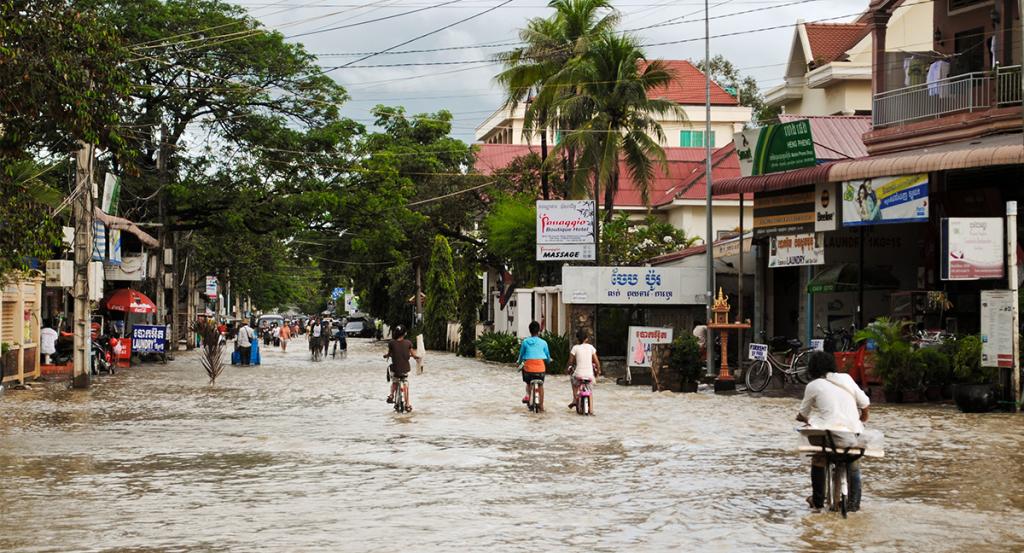
People walk and bike through a flooded city street.
Given the persistent underfunding of adaptation, financing needs to be scaled up at a much faster pace. But the quality of adaptation finance also matters.

COP 30 must deliver a clear pathway to scale up adaptation finance, anchored in the USD 1.3 trillion target. This means moving beyond fragmented pledges toward a coherent and actionable agenda that mobilizes sufficient, predictable, and accessible resources for adaptation from a diverse mix of sources, including international and domestic public finance, as well as the private sector.

Building the tools to track adaptation progress

One of the top priorities at COP 30 will be the final stretch of negotiations on a set of indicators to track global adaptation progress. Unlike mitigation, adaptation has no single global metric, which makes it harder to understand whether the world is becoming more resilient, who benefits from adaptation investments, and how effective adaptation actions really are.

The United Arab Emirates (UAE) Framework for Global Climate Resilience, adopted at COP 28 in Dubai, set a series of 2030 global adaptation targets to guide adaptation efforts and assess progress toward the Paris Agreement’s global goal on adaptation. Now, negotiators are narrowing down a balanced, meaningful set of indicators that can be used to assess progress and understand what is and is not working.

Having a coherent, pragmatic approach to tracking progress will help the global community understand where we stand in terms of reaching the global goal on adaptation, learn from what works in each other’s countries, and inform decision-makers to adjust course when needed.

This is essential for informing the assessment of adaptation progress in the next global stocktake and ultimately improving the effectiveness of adaptation actions.

To fully operationalize the UAE Framework for Global Climate Resilience, the indicators must be fit-for-purpose and feasible for countries to track through their national monitoring, evaluation, and learning (MEL) systems for adaptation. The targets address both the process dimensions, through the iterative adaptation cycle, and key thematic areas for adaptation action. Identifying quality indicators for the adaptation cycle remains a challenge, but it is essential for an effective framework, recognizing that robust processes are needed to produce resilient outcomes. Related to this is the need to integrate gender considerations throughout the indicators—and particularly in relation to the adaptation cycle—to ensure that progress on gender-responsive adaptation is assessed.

The inclusion of indicators for adaptation finance, technology transfer, and capacity building—or means of implementation indicators—is equally critical for strengthening accountability and transparency, as well as promoting fairness and effectiveness in support. They help countries understand why progress may be uneven; identify financial, institutional, and technological capacity gaps; and pinpoint what systemic challenges and barriers are hindering adaptation planning and implementation. If done well, the assessment of progress could help build trust, accountability, and momentum for accelerating adaptation actions.

Ensuring that adaptation action is gender-responsive

It is well established that adaptation efforts will not be effective if they do not address gender and social inequalities that exacerbate vulnerability. The Intergovernmental Panel on Climate Change concluded in 2022 that the intersection of gender with race, Indigeneity, disability, and other social factors compounds vulnerability to climate change, and that inequities linked to gender could be worsened if adaptation actions do not address harmful power dynamics and promote inclusive decision making. Reflecting this reality, the need for a gender-responsive approach to adaptation is enshrined in the Paris Agreement.

young girl walking with water cannisters
Adaptation efforts will not be effective if they do not address gender and social inequalities that exacerbate vulnerability.

The Gender Action Plan (GAP) under the Enhanced Lima Work Programme on Gender serves as the main vehicle under the UNFCCC for advancing gender-responsive climate action. Countries will agree on the next iteration of the GAP at COP 30, presenting an important opportunity to create a robust, actionable roadmap for the systematic mainstreaming of gender considerations across the different workstreams under the UNFCCC, including those related to adaptation.

Ensuring that gender is embedded in key mechanisms such as national adaptation plans (NAPs) and biennial transparency reports (BTRs) will support the implementation of the GAP at the national level.

The GAP also plays an important role in framing gender issues and facilitating collaboration among different actors in the adaptation space. With this in mind, it is critical that countries adopt inclusive language that reflects gender diversity and intersectional approaches. This next iteration is an opportunity to broaden the scope, ensuring that capacities are strengthened across the range of actors involved in driving gender-responsive climate action at the national level, including those involved in NAP processes. The GAP should promote the use of disaggregated data and gender analysis to move toward evidence-based decision making and a deeper understanding of gender issues as they relate to climate change, beyond generalizations about women’s particular vulnerabilities.

As noted above, another key entry point at COP 30 to advance gender-responsive adaptation action is the UAE Framework for Global Climate Resilience and the indicators being established to track progress toward the global goal on adaptation. As countries agree on these indicators, they must keep in mind that gender-responsiveness is fundamental to adaptation effectiveness. This means that gender must be included in the iterative adaptation cycle indicators, and that disaggregated data is needed to assess equity in benefits from adaptation actions under the thematic targets in areas such as biodiversity, food and agriculture, water, and health.

Bringing it home: Delivering on COP outcomes at the national level 

As COPs grow larger and more expensive, many have voiced their concerns about the state of multilateralism and the effectiveness of UN Climate Change Conferences in driving climate ambition and delivering real results.

It is worth noting that all the finance, indicators, and frameworks discussed at the international level matter only if they are implemented at the national and subnational levels. It is up to governments to turn global adaptation commitments and support into national actions that protect people, livelihoods, and ecosystems.

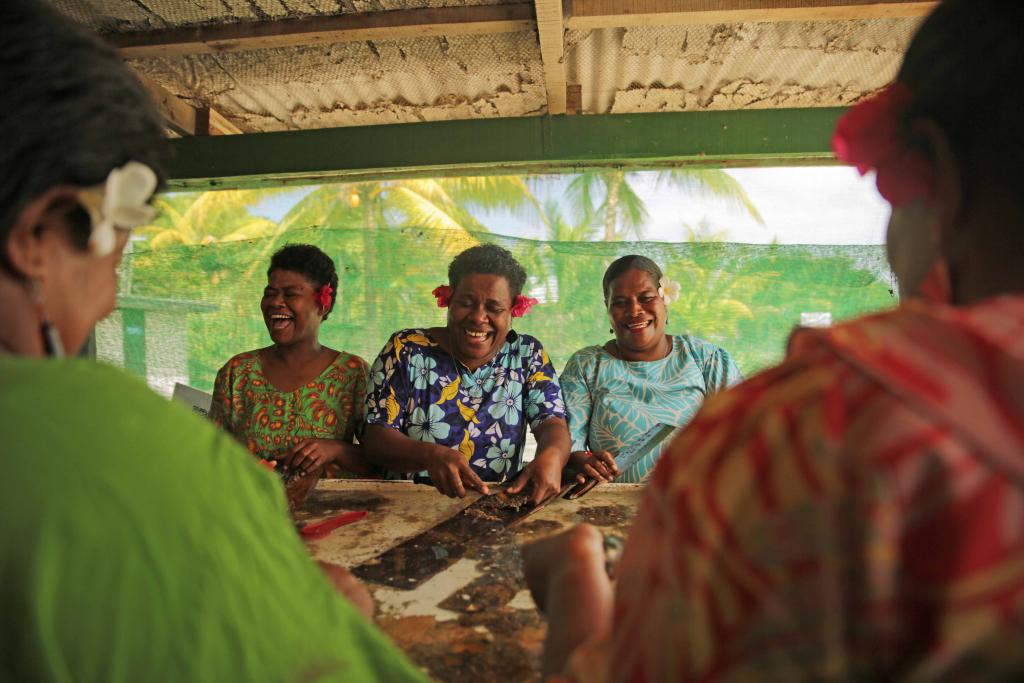
Three local women in Fiji laugh as they prepare oysters indoors.
Done right, the NAP process ensures that adaptation finance is channelled to the right places and used effectively.

This is where the NAP process comes in. It remains the main vehicle for countries to identify and address their medium- and long-term priorities for adapting to climate change and establish the systems and capacities needed to make adaptation an integral part of their development planning, decision making, and budgeting.

Done right, the NAP process ensures that adaptation finance is channelled to the right places and used effectively. Strengthening national MEL systems for adaptation through the NAP process also helps ensure adaptation investments stay effective, equitable, and responsive to evolving local realities, while contributing country-level information to the global assessment of collective progress on adaptation through the UAE Framework for Global Climate Resilience and the global stocktake under the Paris Agreement. Similarly, countries are already integrating gender considerations into their NAP processes to contribute to the implementation of the GAP.

At COP 30, countries will resume negotiations on the NAP assessment to recognize the adaptation efforts of developing countries and the progress they have made in advancing their NAP processes. The final decision would also identify remaining challenges and barriers, as well as best practices and forward-looking mandates to address gaps and help accelerate the transition from adaptation planning to implementation.

Importantly, the outcome of the NAP assessment must signal that strong adaptation governance and systems are the foundation of effective adaptation.

Without adaptation mainstreaming, a gender-responsive and socially inclusive approach, the right institutional arrangements, and technical capacity, the NAP process will not deliver adaptation outcomes where they are needed the most.

COP is important, but ultimately, where the rubber hits the road is when countries need to turn COP decisions into national actions that deliver for people and nature. Bridging the adaptation finance gaps, developing robust indicators to measure progress, and ensuring the systems are in place for gender-responsive and socially inclusive adaptation are all essential pieces of the puzzle. However, their impact will only be felt when countries turn resources into action, data into decisions, and ambition into results.

Explainer

What to Expect at COP 30

Climate change negotiators will soon head to the 30th UN Climate Change Conference (COP 30) in Belém, Brazil, after a year that saw tense geopolitical showdowns, devastating climate change-fuelled events, and the announcement that the average global temperature has exceeded 1.5°C above its pre-industrial level over a calendar year. Jennifer Bansard has covered UN Framework on Climate Change negotiations for IISD Earth Negotiations Bulletin for years and shares what to expect when diplomats hold their talks beside the mouth of the Amazon.

October 20, 2025

Given the tone of the last climate COP and the current geopolitical climate, how hopeful are you that COP 30 will see meaningful progress?

I have to say, it’s a bit of a bleak picture. I spoke yesterday to an experienced negotiator who usually qualifies themselves as a very optimistic person. They always say, “We will rocket over the finish line in the end.” Even they were quite pessimistic about COP 30 because the process is in a rough state. 

The multilateral diplomatic scene has been more difficult than ever in recent years. We also have a lot of logistical constraints for COP 30, with some delegations not sending anyone to Belém and others knowing they’re going to have reduced delegation sizes. That really weighs down the general mood.

We know there are some issues on which we will see progress, but it's a bit hard to pin down exactly what turn this conference will take.

Compared to previous years, the location of COP 30 and conference logistics seem poised to have a much bigger impact on the actual negotiations.

We have read that some smaller European countries aren’t planning on sending anyone. Then again, in the climate negotiations, not all countries negotiate by themselves for themselves. Most countries engage in coalitions, either through their regions or among countries with shared characteristics, like the Alliance of Small Island States. Even if smaller European countries don’t send any delegates, the European Union (EU) as a whole will still be represented. I assume the same thing would be true for other coalitions.

Even so, the logistical barriers of attending COP 30 will mostly hurt countries with limited financial resources: least developed countries. If you’re a delegate from a Small Island Developing State that must take six or seven flights to come to Belém, that adds to the cost. We’ve all seen media reports highlighting accommodation prices of a thousand dollars per night. This is not something governments can typically afford. And it’s not just developing countries; a lot of developed countries are tightening their budgets too.

A big issue is finding a balance between making the process manageable and ensuring balanced participation, especially between developed and developing countries.


Does this in any way help create a smaller, more focused COP? We’ve discussed in the past how COP has become unmanageably large and must be scaled back.

At the Bonn Climate Change Conference this year, we had a lot of discussion about how to increase the efficiency of the process—and those meetings were attended by heads of delegations. This conversation will continue in Belém, but I wouldn't expect a big shift. There’s a lot of sensitivity around any big changes to the process, for example, discussions about limiting delegation sizes. A big issue is finding a balance between making the process manageable and ensuring balanced participation, especially between developed and developing countries. And the question of limiting participation numbers—is that for parties, government representatives, observers, or different types of stakeholder categories?

Let's turn to some of the substance. At the end of COP 29, parties agreed to the new collective quantified goal (NCQG) on climate finance of USD 300 billion per year to support climate action in developing countries. How is COP 30 set to build on that decision?

The NCQG is a step forward compared to the previous goal of USD 100 billion, but it really lags behind developing countries’ expectations. And it doesn’t match the level of expected needs, which is in the trillions.

In the decision on the NCQG adopted last year, it wasn’t just about setting the level at USD 300 billion. Many other things were addressed in that decision. It also called on the COP 30 Presidency to develop a roadmap to step up efforts to reach USD 1.3 trillion per year in climate financing to better reflect developing-country needs. Over the past year, Brazil led these discussions, reaching out to different kinds of actors—including the private sector and multilateral development banks—to see how they can be brought on board. Since this was not conducted in the negotiations, per se, there are a lot of question marks as to the shape of that roadmap.

In Bonn, parties had a chance to provide feedback to the Brazilian Presidency. Observers also had a chance to engage with the Presidency on how to design the roadmap. But truly, Belém will be the moment where we will see what they managed to come up with.

How important is this roadmap in delivering on expectations from developing countries and rebuilding goodwill in the climate negotiations?

That roadmap is very important. Everybody agrees that USD 300 billion per year is not enough to reach the level of climate action we need, even the countries that are providing the finance. How to mobilize actors beyond the process is always a big question, right? Because the parties—the national governments—committed to participating in the Paris Agreement and implementing its objectives, but private actors and development banks have their own agendas. So, the task of designing a meaningful and achievable climate finance roadmap is huge.

It might surprise some people to hear that NDCs are not technically on the agenda in the negotiations at the moment.


Countries were due to submit their updated national climate plans to the UNFCCC this year. Will those plans come up at COP 30?

2025 marks another milestone for the Paris Agreement. Countries are supposed to submit the third round of so-called nationally determined contributions (NDCs) to the agreement. These are the national climate plans that countries put forward every 5 years. The expectation is that these plans are progressively more ambitious—that they constitute parties’ best efforts—and they should be informed by the outcomes of the global stocktake, which is this process of taking stock of where we’re at in implementing the goals of the Paris Agreement. The new NDCs were supposed to be submitted in February 2025. However, few countries had submitted by that time. More arrived over the summer, but some big emitters have yet to submit them formally.

A big question is how well these national climate plans are designed. Looking at the outcome of the first global stocktake, the expectation is that these NDCs are aligned with a 1.5°C pathway and that they cover all sectors and greenhouse gases. Another key question is how this third round of NDCs responds to the calls formulated in the global stocktake decision to transition away from fossil fuels and ramp up renewable energy capacity.

Whether the NDCs will be formally discussed in Belém remains to be seen. While there’s been media attention on the submission process and several country coalitions are calling for a space to reflect on this latest round, it might surprise some people to hear that NDCs are not technically on the agenda in the negotiations at the moment.

Who are the big emitters who have not yet submitted?

Probably the most prominent example is the EU, which came to the UN General Assembly in New York and said it would submit its NDC ahead of COP 30. It shared a range for its emission reduction goal, but agreement is still lacking at the EU level.

What progress do you expect on how countries agree to measure their ability to cope with climate change?

Probably the biggest issue we will see progress on in Belém is the indicators to track progress on the Global Goal on Adaptation (GGA). That goal was established in the Paris Agreement, but it is rather vaguely phrased. It’s all about enhancing adaptive capacity, but it does not describe what that looks like.

To make it more concrete, parties agreed on a set of 11 targets in the GGA framework. These targets relate to sectors—for example, to water, to health. However, they also relate to the cycle of adaptation planning—so, setting specific targets for the planning phase, the implementation phase, and then the monitoring and evaluation phase.

Parties have been moving through a 2-year process where experts examined a range of indicators available to track progress on these targets. At one point, we were talking about several thousand indicators! Now the experts have put forward a set of 100 that parties will hopefully agree on in Belém. We don’t expect much debate on many of the proposed indicators, except for those related to means of implementation (so, finance). And that’s actually something for which the experts provided options for political decisions to be taken in Brazil.

What other items should observers keep their eyes on?

There are always many issues that will be addressed at the climate COP. I want to point to a few.

Countries are expected to adopt a new gender action plan. There have been negotiations on this at several COPs and intersessional workshops. But hopefully at COP 30, they will agree on a list of actual activities to implement in the context of the gender work program.

In the decision on the global stocktake, parties have agreed to establish a technology implementation program, and in Belém, they will continue debating the shape of that program.

There will also be a lot of discussions on capacity building and other typical agenda items, such as agriculture, just transition, and research.

How is Brazil handling its COP Presidency?

Brazil has long engaged in the climate negotiations in its own capacity and within alliances of different forms. It has a huge diplomatic corps, which helps with the enormous task a Presidency has of liaising with parties ahead of the COP.

The Presidency also typically emphasizes issues that are important to them. That’s one of the reasons the COP is taking place in Belém. The issue of deforestation, specifically in the Amazon, is of crucial importance in Brazil. How that will lead to progress in the negotiations and in declarations adopted at the margins of the COP, we’ll see.  

A COP is a mobilizing event for a lot of different types of actors, and the Brazilian Presidency has tried to do exactly that through its action agenda. We’ll see what kind of initiatives are launched this year—and to what extent there will be follow through and monitoring of the commitments announced.

For many negotiators, it doesn’t matter where the conference takes place.


Do you think the symbolism of having this meeting in the Amazon is going to impact the negotiations?

From the outside perspective, perhaps. The world will probably see more pictures about the Amazon and hear more about Belém and the issues on the ground. For some stakeholders, it will provide an opportunity to connect with local communities.

But to be honest, for many negotiators, it doesn’t matter where the conference takes place. We go to the venue early in the morning and then sit in meeting rooms that typically don’t have windows. We’re there for 12, 14, 15 or more hours and go back to our hotel rooms in the dark. I think the human experience is probably going to be rather limited for those hunkered down in negotiation rooms.

We have again seen a U.S. withdrawal from the Paris Agreement. How do you think that will impact the talks?

There are many facets to the U.S. withdrawal. It’s less shocking because it’s the second time, but the fact that we haven’t seen a new NDC put forward by the United States changes the dynamic. It puts the spotlight even more fiercely on others. Attention on China has always been strong, but this year, there were even more questions about the ambition level they’re putting forward in their NDC. It also heightens scrutiny on the EU.

But it’s not just about the NDC or emission reductions from a big emitter. We’re also talking about research capacity. Decisions in the United States about funding climate observations and publicly sharing climate data—including decades-old historical series that researchers around the world rely on—will affect climate action down the line.

We often mention leadership, but I think we need many more frank discussions on that. Governments still shy away from taking difficult decisions or engaging in straightforward discussions with their citizens.


Are there any questions you wish someone would ask you about the COP? Are there any issues you wish we would focus more energy on?

I wish we would talk more about responsibility. In some ways, we had these discussions at the margins of this year’s UN General Assembly and in the context of the work of the International Court of Justice. We often mention leadership, but I think we need many more frank discussions on that. Governments still shy away from taking difficult decisions or engaging in straightforward discussions with their citizens. There are vital debates we need to have on how we want to live, what it takes to get there, and what we are willing to compromise on and collectively resolve. Really, we need to mobilize all of society to have these discussions and chart out a better future for everyone.

To follow IISD Earth Negotiations Bulletin (ENB) daily reporting from COP 30, bookmark their COP 30 event page or subscribe to the free ENB Update newsletter.

For more articles related to COP 30, visit our Inside COP 30 resource hub.

Explainer

Harmful Subsidies Explained: Eight key takeaways from experts

This year marks 20 years since IISD launched the Global Subsidies Initiative (GSI), which was created to shine a light on the hidden costs of subsidies and support governments undertaking reform. To mark the anniversary, IISD convened a high-level panel at the World Trade Organization (WTO) Public Forum with representatives from government, civil society, and international organizations. Together, they reflected on what has been achieved, why subsidy reform remains a political challenge, and the new opportunities for progress. Here are eight key insights from that discussion. 

October 1, 2025

1. Subsidies are powerful market-shaping tools.  

A cargo ship on the ocean near a port.

Subsidies don’t just tweak economies; they shape them. They decide what gets produced and consumed, by whom, and at what scale. Early cross-sector reviews showed just how much money was at stake—running into the trillions globally and growing. Subsidies are legitimate public policy tools, and how they are designed defines whether they advance or undermine climate, nature, and equity. Untargeted subsidies to fuel consumption, for example, provide most of their benefits to wealthy households, because they use the most fuel.


2. They are incredibly hard to reform.

A row of columns line a walkway.

If subsidies are so costly, why do they persist? Because they are deeply political, subsidies are woven into national budgets, often benefitting powerful groups that lobby to keep them—one expert called them “the currency of politics.” Once created, they are rarely removed, no matter how inefficient, making reform one of the toughest policy challenges governments face. Finance ministries are key actors, as they dislike inefficient spending and can drive reform to transcend sector-specific interests.  


3. Transparency is the first step to reform.

People walk through a narrow street lined with shops.

You can’t manage what you can’t measure. From the start, GSI focused on exposing the scale and nature of subsidies—and asking uncomfortable questions about trade-offs. Would you rather maintain an untargeted fuel subsidy or use the same money to fund health care? Shining a light on these issues forces governments and citizens to confront the real costs and benefits of fiscal decisions, enabling them to make informed choices.  

4. Reform is both science and art.

Four people in blue jumpsuits hold paper and smile while looking at a solar panel.

The science lies in getting the numbers right: if data isn’t watertight, opponents will shred it. But once the evidence is in place, the art begins—navigating politics, managing winners and losers, and finding ways to support people through the transition. Reforming a subsidy may look neat on paper, but in practice, it means disrupting entrenched interests and household budgets. Understanding and navigating the domestic political economy, while focusing on helping those who will “lose” when subsidies are reformed, is crucial to successful and durable subsidy reforms.  

5. Supporting people directly works better than distorting markets.

Women buy and sell produce at a market.

Focusing on people is a way to shape reform. Most subsidies are blunt instruments. The Organisation for Economic Co-operation and Development (OECD) notes that only 1.6% of global agricultural support actually improves food security for people. Experts argue that it makes more sense to help people directly—whether through income support for fishers during closed seasons or cash transfers for low-income families—than to keep pouring money into blunt price controls that distort markets and production.  

6. Green subsidies risk creating new distortions and inequities.

A cityscape with a park and greenery in the foreground.

For wealthy economies, subsidies are often strategic: the goal is to support green industries, secure energy supplies, or stay competitive. For developing countries, the picture is starkly different, as they contend with limited fiscal space, pressing poverty concerns, and fewer tools to manage transitions. When rich countries spend lavishly on “good” subsidies to help their companies through the green transition, while poor countries can’t afford to do the same, the playing field tilts further. Green subsidies and incentives are rising, but they risk creating new distortions and inequities if poorly designed.

7. Reform is easier when countries move together.

Members of a new international coalition to phase out fossil fuel subsidies stand at a COP 28 press conference.

There is often a first-mover disadvantage in subsidy reform, which can be overcome through coordinated action among countries. Collective action lowers the political cost of reform and makes bold moves more credible. That’s why international cooperation—whether through the WTO, the OECD, or coalitions on fossil fuel subsidy reform such as the Coalition on Phasing Out Fossil Fuel Incentives Including Subsidies alliance—is key. Change is always hard alone, but it gets easier when you do it together.

8. International rules are starting to catch up.

Men wade through water towards a small fishing boat.

The WTO’s new Agreement on Fisheries Subsidies is one sign of progress. For the first time, global trade rules are explicitly tackling the environmental harm caused by subsidies. Meanwhile, climate and biodiversity commitments are pushing governments to phase out subsidies for fossil fuels and other environmentally harmful products. Such commitments are a positive first step, showing how international frameworks can nudge countries toward change.  

The 20th anniversary of GSI underscored the importance of subsidy design for sustainable development, the importance of international cooperation in driving and shaping subsidy reforms, and the crucial role of civil society and research organizations in helping governments move in the right direction.  

Five people sit on a panel at a conference event. A woman speaks into a microphone.

Experts who participated in the Global Subsidies Initiative panel:  

Mark Halle, Senior Advisor, NatureFinance; H.E. Guilherme de Aguiar Patriota, Ambassador of Brazil to the WTO; Nathalie Bernasconi-Osterwalder, Vice-President, Global Strategies and Managing Director, Europe, IISD; Myrto Zambarta, Director, Multilateral Affairs, Strategy, Analysis & Evaluation, Directorate General for Trade, European Commission; and Julia Nielson, Deputy Director, Trade and Agriculture Directorate, OECD.

Explainer

UNGA80: What is UN80 and key issues to watch

World leaders are in New York for the 80th session of the United Nations (UN) General Assembly. Eight decades after its founding, the UN is confronting urgent calls for reform. Lynn Wagner, IISD’s Senior Director of International Environmental Governance, discusses the UN at 80, the Secretary-General's UN80 Initiative, challenges for multilateralism ahead, and key issues to watch at UN Headquarters.

September 19, 2025

We’re speaking just ahead of the opening of the 80th session of the UN General Assembly. What does this moment represent?

It’s remarkable to think the UN has brought countries together for 80 years. But anniversaries are also moments of reflection. The UN80 Initiative launched by the UN Secretary-General earlier this year is a reform initiative that is asking tough questions about the organization’s design and its future. The world is not what it was in 1945. Change is inevitable. Responding to the shifting geopolitical landscape and keeping the organization nimble are critical if it is to remain relevant for the next 80 years.

Trust is key. Member states drive the UN’s mandates, so their ownership of the process matters.


A year on from the Pact for the Future—which many hailed as a success for the UN—where does multilateralism stand today?

As we approach the deadline for the 2030 Agenda and its sustainable development goals (SDGs), many see the Pact as the last, best chance to strengthen multilateral cooperation for years to come. It’s full of commitments, but in some ways it’s the “what.” UN80 is the “how”—the process for rethinking how the UN can deliver on the commitments.

What is UN80? And what is it trying to achieve?

The UN was set up after the Second World War, at a time when global power and wealth were concentrated in a few countries. Since then, membership has expanded, and middle-income countries have grown in influence. Yet some of the original structures—such as the global financial system—remain largely unchanged and often fail to serve the poorest countries. The UN80 Initiative is about confronting these imbalances and exploring reforms that reflect today’s realities. At the same time, the UN is facing a difficult financial moment, which adds urgency to the reform debate.

Against this backdrop, the UN80 Initiative task force is looking at ways to improve the organization’s efficiency, review existing mandates, and propose structural changes—the initiative’s three workstreams.

The aim is not just financial efficiency, but greater effectiveness—putting UN staff closer to the communities where projects are delivered, rather than keeping them at a distance from the partners they are working with.


How much of this is about efficiency and cost-cutting in the UN, and how much is about building trust and ensuring delivery?

Trust is key. Member states drive the UN’s mandates, so their ownership of the process matters. Reforms may result in some changes to UN agencies and reduced or relocated staff, but these changes are not only about cost savings. For example, one proposal is to shift more staff from headquarters in New York or Geneva to UN offices like Nairobi. The aim is not just financial efficiency, but greater effectiveness—putting UN staff closer to the communities where projects are delivered, rather than keeping them at a distance from the partners they are working with.

Is there anything new about this round of UN reform?  

One of the three workstreams is looking at the sheer number of mandates the UN has accumulated over the decades. There are 4,000 mandate documents and over 40,000 mandates. About 85% have no instruction for review or sunset clauses. Now, new tools such as AI can help assess which mandates overlap, which remain relevant, and which may be redundant. In addition to looking at past mandates, the hope is to support member states as they propose new mandates going forward. The goal isn’t to undermine the UN’s work but to reduce duplication and increase impact.

Looking more broadly at global cooperation within the UN system, it might be disheartening to see how negotiations on pressing issues, such as the plastics treaty talks, failed to conclude successfully. Can multilateralism still make progress in the current geopolitical moment?

It’s true the plastics treaty talks have now stalled, but that’s not the whole story. There are successes, too. For example, alongside the plastics process, countries launched negotiations for a new Intergovernmental Science-Policy Panel on Chemicals, Waste and Pollution. Last year, it wasn’t certain countries would agree to establish this new body to provide the latest science on pollution to policy-makers—but on June 20, 2025, those talks concluded successfully.

We’ve also seen movement on financing for development at the Fourth International Conference on Financing for Development, strong outcomes at the Third UN Ocean Conference and the UN Food Systems Summit +4 Stocktake, and the entry into force of the World Trade Organization deal on fisheries subsidies. Another major step—the Agreement under the UN Convention on the Law of the Sea on the Conservation and Sustainable Use of Marine Biological Diversity of Areas beyond National Jurisdiction, which will help protect biodiversity in the high seas—has been ratified by 57 countries plus the EU as of September 16, 2025. It will come into force after 60 countries ratify it.

So yes, these are difficult times. But we are seeing that despite some realignments, countries around the world still see value in multilateralism. Some countries are emerging as new leaders while others are withdrawing from the international stage. That shifts the dynamics, but it doesn’t change the fact that nations still need the UN as a place to coordinate their efforts.

That shifts the dynamics, but it doesn’t change the fact that nations still need the UN as a place to coordinate their efforts.


Ahead of the high-level week at the UN General Assembly, what should we be watching?

One priority is accelerating the submission of new national climate plans, or nationally determined contributions (NDCs). Under the Paris Agreement, all countries were due to submit updated NDCs by February 2025, but by the end of August, only about 30 had done so. There will be an effort to showcase new submissions during the Climate Summit on Wednesday, September 24.

Another focus is the first Biennial Summit for a Sustainable, Inclusive, and Resilient Global Economy, which was mandated by the Pact for the Future. This summit comes on the heels of the recent Seville meeting and will be critical to sustaining momentum on reforming the global financial system.

The annual SDG Moment comes 10 years after the adoption of the 2030 Agenda and its 17 Sustainable Development Goals, and as we look for renewed commitment to move faster during the final 5 years of this ambitious goal set. We’ll also see high-profile events on gender equality and youth action marking, respectively, 30 years since the Fourth World Conference on Women took place in Beijing, as well as the 30th anniversary of the adoption of the first UN action plan on programs and policies for youth. Both events speak to the longer-term future of the UN—how are member states defining the challenges and opportunities for inclusion and equity? And how will they engage the next generation and ensure diverse voices shape what comes next?

Change is inevitable. Responding to the shifting geopolitical landscape and keeping the organization nimble are critical if it is to remain relevant for the next 80 years.


What are you hoping to see from this week?

During the opening session of the General Assembly, countries preview their positions on global challenges and where they are seeking to take the lead—as well as where roadblocks might emerge. Ideas around the UN80 Initiative will be shared, and we will be listening for the level of ambition that heads of state and government reveal they are ready to embrace. With nearly 150 heads of state expected to gather next week, the opening of the UN General Assembly creates a rare opportunity for leaders to be briefed on pressing global issues and for countries to share where they align on positions. These conversations are vital for recalibrating the system and identifying the actors who can push global priorities forward.
 

Explainer

Mind Your Own Business: Mark Halle talks tough politics of subsidy reform

When Mark Halle and his team at IISD first put forward their bold vision to fight harmful public subsidies, they faced fierce resistance. A lot has changed since then—yet, governments still pour trillions into policies that undermine sustainable development. Can this ever be reversed? For Halle, the answer lies in the tipping-point theory: change often feels impossible—until, suddenly, it isn’t. 

September 8, 2025

Twenty years ago, you and your team launched the Global Subsidies Initiative (GSI) to help governments reform harmful government support measures. What was the vision at the start?

The idea grew out of a 1997 Earth Council study—the first independent attempt to estimate the scale of public subsidies and their impact on sustainable development. Looking at agriculture, energy, water, and transport, the authors concluded—using very conservative calculation methods—that the extent of subsidization was getting close to a trillion dollars and that the impact on sustainable development was overwhelmingly negative. The report, launched at the Rio+5 conference in 1997, drew wide attention.

Our takeaway at IISD was straightforward: we can’t go on trying to do positive things while all this negative influence is undermining everything we try to. If you spend USD 10 doing something good and USD 100 doing the opposite, you’re not likely to succeed. We set up the GSI to shine a light on subsidies, better understand the challenge, and see whether it was possible to have an influence on subsidy policy decisions.

For more research and analysis visit the Global Subsidies Initiative.

Nobody would welcome you poking around in their national budget. Basically, mind your own business and keep out.


And how was this idea received?

There was very little interest. Subsidies are far too political. Nobody would welcome you poking around in their national budget process; nobody would want you shining a spotlight on the way public money is used for partisan political purposes. So, basically, mind your own business and keep out. After a few years, we were pretty discouraged. We thought—yes, this is really important, but it’s just not possible to do at this time.

The turning point came at the World Trade Organization (WTO) Public Forum in 2004, when then-president of IISD David Runnalls and I were walking along the lakeshore in Geneva with Sylvia Ostry, the former Head of Statistics Canada and chief economist at the Organisation for Economic Co-operation and Development. We said we were about to give up on subsidies. We knew it was important, but it just seemed too difficult. And Sylvia said: “Tell me one thing—how can an organization devoted to sustainable development not deal with subsidies? How can you walk away from one of the most important challenges in achieving sustainable development and not have the courage to try? Essentially—you have to.” It was a real wake-up call.

The great majority of ministers love subsidies. It’s a political currency that they can play with, reward their constituents, strengthen support.


What was your strategy, and where did you first start looking for allies?

In most governments, the great majority of ministers love subsidies. They’re a political currency—a way to reward their constituents and strengthen support. But there’s always one exception: the finance minister. Ministers of finance hate spending money, and they especially hate wasting it. They know subsidies are one of the worst uses of public funds, and they’ll often be the ones pushing back. That’s why, if you want reform, you need the finance minister on your side.

I asked a friend at the Dutch mission to the WTO if he could arrange a meeting with the finance minister. He warned me the minister was busy and said I’d only get 20 minutes. I walked in—and came out an hour and a half later. As expected, he thought subsidies were a terrible idea and was keen to see something done about them. He was fascinated by what we were trying to do.

What were the key elements of this work?

We wanted to put these subsidies in the spotlight, and we understood very quickly that the interest groups benefiting from them would come down hard on us, trying every possible way to undermine our work. We knew that our data needed to be 100% robust. No mistakes, no flawed models, no outdated data.

Before long, we put subsidies firmly on the international policy agenda. The focus we brought to the issue, along with our regular publication of figures and estimates of the negative impacts, helped lead to the G20 fossil fuel subsidy resolution in Pittsburgh in 2009.

And although that resolution was not as strong as it should have been, it was nevertheless the first time governments admitted they had to act, recognizing just how damaging these subsidies are.

What we offered was not just the science, but also the “art” of subsidy reform. The challenge is to work out how to phase out subsidies without creating unintended consequences for the most vulnerable. If these subsidies are removed, who ends up paying the price?

“If subsidies are the answer, what was the question?”


And what do you say to those who argue that the social cost is too high?

I ask: If subsidies are the answer, what was the question?

If the goal is to help the poor with transport, is subsidizing fuel really the best way to do it—or are there better options? Take Iran as an example. The government was spending vast sums on fuel subsidies to lower transport costs and ease poverty. But they found that giving poor families direct budget support was far more effective. The money went straight to those who needed it, who could then decide whether to spend it on transport or other essentials. If your purpose is poverty alleviation, subsidizing fossil fuels is rarely an effective public policy tool.

When leaders decide to act, what’s the most compelling reason that drives them?

In times of austerity, or when developing countries are pushed by the International Monetary Fund to cut spending, subsidy reform becomes slightly less difficult to advance. That’s when working with the finance minister is crucial, because it all comes down to how public funds are allocated.

The key is to make people see the real impact. Subsidies are public money that could be spent elsewhere. If you ask the Swiss whether the government should subsidize sugar, most won’t care much. But if you explain that the same money could instead keep a local hospital open, they immediately see the trade-off.

“As with anything in politics, you have to build demand for the alternative—and make sure that demand carries political weight.”


Which voices matter most in convincing governments to act on subsidy reform?

As with anything in politics, you have to build demand for the alternative—and make sure that demand carries political weight.  

Take Switzerland again. The country has a serious problem with disappearing biodiversity. Why? Largely because of the overuse of agricultural chemicals. Why are we overusing these chemicals? Because Switzerland is a major producer of these chemicals, and the chemical lobbies are very powerful. If you are a parliamentarian and want to be re-elected, you’d better stay on good terms with them. We’re not going to change that by saying, “These chemicals are killing insects and birds.” That won’t work. The only way to change it is to create a counter-lobby where a politician’s re-election depends not on pleasing the chemical industry, but on delivering results for biodiversity.

What about international commitments, like the G20 commitment on fossil fuel subsidies? Do they matter anymore?  

Whether we talk about the climate, biodiversity, or plastics negotiations, we need to continue trying to create robust frameworks. But those frameworks have to turn into agreements that are legally binding and enforceable. G20 is not binding. It’s a promise with all sorts of loopholes. We need to get to the point where there are economic consequences of not meeting those commitments.

And how do we get there?

We are in an unfavourable political context today. Does it mean that we should give up? No. We have to keep going. But at the moment, we are giving an overwhelming share of political policy attention to those processes—at the expense of exploring alternative approaches. I often ask people: If you had 100 units to invest, and your goal was to bring about systemic change, how many of those units would you put into multilateral frameworks?

And what’s your answer?

I think much more focus should go to public information—on the trade-offs, on the real consequences of particular subsidies. It’s about coalition-building, networking, targeted alliances, and tackling very specific subsidies at the national level.

We also need to get more sophisticated in financial design. We should be linking more and more to action on subsidies, pushing for systems where government bonds and loans are tied directly to performance on climate or biodiversity goals.

We'll see the tipping point reached in sustainable development much faster than we think.


It has taken us 20 years, and we’re still not there. What makes you hopeful?

My grounds for hope are that we now know exactly what needs to be done. We know how to do it, the technology is there, and so is the money. The only thing missing is political will. It’s a huge piece, but it’s the only one missing. All the other ingredients are in place.  

Over 20 years, GSI has laid an incredibly solid foundation for subsidy reform. We’ve boosted global understanding of subsidies—their scale, their impacts, their importance, and the negative consequences of current subsidy patterns. We’ve learned a great deal about what works and what doesn’t in subsidy reform, and about how much more difficult it is to reform subsidies than to create them.

Now, we need to be much more cautious about considering subsidies as a response to public policy crises—and we need to give much more attention to the alternatives that exist to reach those same public policy goals.

The last step is to build a real movement—one strong enough to counter the lobbies that have captured political decision making. I’m optimistic it can and will happen, because there’s a whole generation coming who is simply unwilling to accept where we are now.  

We need to remember that massive change often follows the tipping-point theory: nothing happens for a long time—then suddenly everything shifts very fast. We’ve seen this over and over again. I believe we’ll reach that tipping point in sustainable development much sooner than we think.