Report

Nature That Works

Benefits and performance of natural infrastructure for water management on the Canadian Prairies

Across the Canadian Prairies, natural infrastructure can contribute to meeting water management needs, while also providing social, economic, and environmental benefits. This publication explores how nature can work with existing water infrastructure to create a stronger, more sustainable future.

September 11, 2025

Key Findings

  • Natural infrastructure can support better water management on the Canadian Prairies. Natural assets, like restored and conserved wetlands provide flood control, drought resilience, and water quality improvements. Constructed assets like green roofs manage stormwater, especially during heavy rainfall

  • Our research describes the key water-related benefits and performance of 17 types of natural infrastructure relevant to the Canadian Prairies. These include eight natural assets—both conserved and restored ecosystems—and nine constructed assets.

  • Climate change means that communities can expect more frequent, higher-intensity floods and droughts. Natural infrastructure can help ensure a reliable water supply, manage stormwater and wastewater, and reduce risks from extreme events.

  • Natural infrastructure takes many forms—from wetlands to rain barrels, streams to aquifers—and protecting, restoring, enhancing, and building these features is a smart, proven path to a stronger, more water-resilient future across the Prairies.

How does natural infrastructure support water outcomes and solutions across the Canadian Prairies?

From flood, to drought, to water quality, this report investigates the performance and real-world application of natural infrastructure on the Prairies. By combining evidence with practical insights, the report equips practitioners, communities, and decision-makers with the knowledge needed to deliver nature-based solutions that truly work. 

Find out how natural and constructed assets are helping protect against floods, improve water quality, and support water supply and drought mitigation, while simultaneously delivering social, economic, and environmental co-benefits. 

Our research describes the key water-related benefits and performance of 17 types of natural infrastructure relevant to the Canadian Prairies. These include eight natural assets—both conserved and restored ecosystems—and nine constructed assets. The assets are organized into four functional families based on the shape (morphology) and position of natural infrastructure assets on the landscape and their role in water management, which includes:

  • conserving and restoring vegetative cover,
  • managing surface water with basins,
  • protecting watercourses, and
  • safeguarding groundwater recharge. 

This report dives into which types of natural infrastructure work best within rural and urban landscapes and how they perform—unpacking the benefits of 17 types of natural infrastructure for Prairie water resilience, including grasslands, wetlands, riparian areas, aquifers, streambank bioengineering, soil cells, permeable pavements, and bioswales.

As Prairie water needs grow, natural infrastructure will need to complement conventional "grey" infrastructure, such as pipes and treatment plants, to support the delivery and enhancement of infrastructure services. This report provides practical guidance on specific natural infrastructure options that can support Prairie water needs, while boosting regional resilience.

Natural infrastructure takes many forms—from wetlands to bioswales, floodplains to aquifers—and protecting, restoring, and enhancing these features is a smart, proven path to a stronger, more water-resilient future across the Prairies.

This report was developed by IISD's Natural Infrastructure for Water Solutions (NIWS) initiative and the Alberta Low Impact Development Partnership (ALIDP). 

Report details

Webinar

Funding the Future: Enabling natural infrastructure through federal programs

From restored wetlands to urban tree canopies, natural infrastructure is proving to be a cost-effective, multi-benefit solution to Canada's infrastructure challenges. IISD's new report, Funding the Future, highlights how federal programs can better support these nature-based solutions—and why doing so matters now more than ever. The webinar will share the results of the report, the updated design of a federal funding program, and municipal perspective on accessing federal funding, wrapping up with discussion and audience questions. 
 

May 22, 2025 10:00 am - 11:15 am CT

(Open to public)

A flexible approach to infrastructure funding, including natural infrastructure, can help Canada build resilience while making the most of every dollar invested. Natural infrastructure, like restored wetlands, urban tree canopies, or rain gardens, can provide specific infrastructure benefits, with the potential for many other social, economic, and environmental benefits. There is increasing evidence that natural infrastructure can deliver much-needed water outcomes cost efficiently while also providing areas for recreation, habitat to support wildlife, and improving the overall resilience of our communities.

IISD's recently published “Funding the Future: Enabling natural infrastructure through federal infrastructure programs” assesses six federal infrastructure programs against 14 enabling criteria for natural infrastructure. Results show two programs are leading the way. IISD recommends 14 practical criteria to better enable natural infrastructure within major infrastructure programs, while highlighting existing models that work well with nature. 

This webinar brought together experts to discuss why incorporating enabling criteria for natural infrastructure is so important, especially as aging infrastructure, decades of underinvestment, and the growing impacts of climate change strain local governments who are grappling for sustainable infrastructure solutions. The webinar shares results from the report, the updated design of a federal funding program, and municipal perspective on accessing federal funding, wrapping up with discussion and audience questions. 

Key Takeaways from the Webinar: 

  • Natural infrastructure can help to deliver critical infrastructure services, while providing solutions at the nexus of interconnected crises; climate, biodiversity, housing, and infrastructure.
  • Of the 6 programs reviewed, the Natural Infrastructure Fund and the Local Leadership for Climate Adaption were identified as the most natural infrastructure “friendly”, with GMF “willing to put more money on the table for projects that incorporate natural infrastructure”.  
  • In order to design federal funding programs that support natural infrastructure, as opposed to exclusively grey infrastructure, the desired outcomes should be identified early on. For the LLCA, GMF was intentional in elevating equity and the delivery of benefits to those that are disproportionately vulnerable to climate impacts and that natural infrastructure is the preferred solution where feasible.    
  • Both dedicated funding programs (like the Natural Infrastructure Fund) and embedded within major funding programs (like the Disaster Mitigation & Adaptation Fund) are critical to enhancing natural infrastructure implementation. Dedicated funds can give local governments the opportunity to try a new approach, while embedded will support more widespread use and application.  
  • “Every infrastructure project should have a natural infrastructure component” where possible, as people are a part of nature, not apart from nature. With Canada’s newly re-elected Liberal party committing to protect nature and fight climate change, with nature-based solutions front and centre to the interlinked crisis, there is anticipation that natural infrastructure could play a role. 

This webinar took place on May 22, 2025. Watch the full recording below or on YouTube.


Our Speakers

Christine Mettler

Christine Mettler is a green infrastructure policy expert and designer. She is currently in school pursuing her Master's Degree in Landscape Architecture to learn how to better support designers and planners to implement functional, beautiful, and thriving GI. Before that, she was the director of Green Infrastructure at Green Communities Canada—a national non-profit organization with member organizations across the country. There, she co-authored the Framework for Living Cities with a research team from the University of Toronto, and worked with environmental organizations across Canada to better integrate GI into local policy, engage local community members, and support the planning and designing equity-oriented GI projects. 

Joanna Eyquem

Joanna Eyquem is an internationally-recognized leader in climate adaptation and nature-based solutions, with 25 years experience in Europe, North America and Western Africa. Her work at the Climate Risk Institute focuses on managing climate risk, including flooding, erosion and extreme heat, in particular working with nature and the financial sector. As part of this work, Joanna leads the development of national guidance and tools for climate resilience and nature-based solutions, including disclosures of natural assets in financial statements and sustainability reporting. In addition, Joanna serves on over 30 boards and committees, including the Canadian Infrastructure Council, the Canadian Sustainable Finance Network, Canada’s TNFD Working Group, the National Research Council of Canada, the Government of Quebec’s Expert Group on Adaptation, and as Chair of the Board for the Natural Assets Initiative.

Dustin Carey

Dustin Carey is the Lead, Climate Adaptation with FCM's Green Municipal Fund and an Expert Consultant with the United Nations Department of Economic and Social Affairs. After receiving his Master of Climate Change degree from the University of Waterloo, he applied his understanding of climate science to practical municipal climate solutions. Specializing in climate adaptation, municipal asset management, capacity development and sustainable land use practices, Dustin works to enable local governments to create low-carbon, resilient communities. He wrote the Climate-Resilient Asset Management chapter of the United Nations' Managing Infrastructure Assets for Sustainable Development Handbook. 
 

Our Moderator:

Asha Nelson

Asha Nelson is a Project Coordinator at ClimateWest, where she manages numerous climate adaptation initiatives and supports the organization’s reconciliation and equity efforts. She brings nearly a decade of experience working in the non-profit sector in Manitoba, leading projects, programs and community-based research in the areas of food sovereignty, climate change, and refugee resettlement. Previously, she worked at Fireweed Food Co-op helping develop critical infrastructure for local food distribution and continues to be an active member of the Winnipeg Food Council. Asha is an experienced facilitator and is based in Winnipeg on Treaty 1 Territory. 


Resources:


Thanks to our webinar series partner:

Climate West Logo


Funded in part by:

BHP Foundation logo


Prairie Watershed Analytics

Prairie Watershed Analytics (PWA) is focused on providing Canadians in the Prairies with the information they need to understand their local watershed. Watershed models can support local decision-makers and businesses with evaluating ecosystem services and connecting with environmental incentive programs. Prairie Watershed Analytics is making this practice simple and accessible using open data and tools to automate and scale watershed modeling tailored to the Prairies.

Quick Project Facts:

  • Watershed managers use models to understand how water moves across the landscape so they can ensure the healthy provision of ecosystem services.
  • IISD is building a simplified watershed model for practitioners in the Prairies, scheduled for release in 2026.
  • The Prairie Watershed Analytics model will use machine learning to estimate flow and phosphorus concentrations for your selected river.

What is a watershed? 

Watersheds are an area of land where all the water—including rainfall, runoff, and snowmelt—flows and drains toward a common body of water, such as a lake or river. Watersheds are integral to our environmental and social well-being. Every province has a different way of protecting and supporting their regional watersheds. In Manitoba, there are 14 watershed districts (see FAQ’s below for more), and a Manitoba Association of Watersheds that collaborate with communities, farmers, landowners, NGOs, and local, provincial, federal, and Indigenous governments in the protection of watersheds.

Why might I need a watershed model?

Watershed management involves balancing the many uses and ecosystem services from a river’s headwaters to its outlet, across the seasons and over the years. This can mean working with Indigenous communities, land managers, industrial water users, residential and urban water users, fishers, and parks and conservation authorities. When balancing these different water uses and promoting best stewardship practices, it helps to have a clear understanding of how water moves across the landscape and contributes to these different ecosystem services. This can be especially challenging under a changing climate. This is the purpose of a watershed model.

Simplified modeling for watershed managers 

There are many watershed models and datasets available globally and across Canada. However, in the context of the Canadian Prairies, existing models and datasets tend to be inadequate to meeting the needs of local watershed managers. Available models are often:

  • Outdated
  • Inaccurate for the Prairies
  • Too complex to use
  • Paywalled

With the support of the RBC Foundation, the Prairie Watershed Analytics project is providing watershed managers with a tailor-made modeling product that can be easily employed on any watershed in the Prairies. 

Model design and features

The PWA model involves 2 major components: flow and water quality.

PWA rests on prior models to estimate runoff across the watershed, that is, the amount of precipitation water that runs over the surface of the landscape, rather than evaporating, seeping into the soil and plant roots, or remaining on the landscape as frozen snow. These runoff estimates have been previously generated using upstream data such as climate, land cover, and soil datasets. PWA takes these runoff estimates (surface runoff and snow melt) and calculates the amount of water stored on the landscape (in wetlands, ponds, and lakes) as well as the timing of the discharge through the river. This discharge modeling is done using a “routing model”.

Once we know where and when the water is flowing, the model outputs from phase 1 can be used to model water quality. Datasets related to phosphorus exports from the landscape, such as land cover, human population, crop cover, and livestock counts are combined with the data from the flow analysis. This combined dataset can then be used to train a machine learning model against the observed changes in phosphorus concentrations in the river. The results of this second modeling phase have not yet been validated.

Does IISD do this work alone? Of course not...

We are using data provided by the Lake Winnipeg Foundation, DataStream, the University of Waterloo, the University of Saskatchewan - Global Water Futures, and the Province of Manitoba. 

PWA is powered by the Raven modeling framework. We are also working with several governmental and non-governmental organizations at the local, provincial, and federal levels to better meet policy priorities and the needs of water management practitioners.

The image shows channels and ponding of water in the Manning Canal Watershed using PWA’s automated hydro-conditioning tool.
The above image shows channels and ponding of water in the Manning Canal Watershed using PWA’s automated hydro-conditioning tool. The tool relies on elevation data from the Government of Manitoba and stream data from the National Hydrological Network. 

Model development schedule 

The Prairie Watershed Analytics model is currently in development. Following a successful proof-of-concept on the Cypress River in fall of 2024, the first fully automated prototype of the PWA model will be released in the summer of 2025. Model performance will be tested and optimized over the following months. The launch date for the fully operational model is anticipated in the spring of 2026. 

FAQs about the Prairie Watershed Analytics project:

What is a Watershed District and why are they important?
Watershed Districts are independent organizations - typically governed by a board of directors - tasked with the promoting sustainable management practices for land and water resources. Districts can work with communities, landowners, and various levels of government (Municipal, Provincial, Federal, or Indigenous) to promote healthy soils, waters, and habitats.

Why are the adoption of BMPs important for producers, watershed districts, and communities? 
In the context of watershed stewardship, Beneficial Management Practices (BMPs) are agricultural or other land management practices designed to ensure the sustainability of those practices. BMPs like the planting of cover crops can allow landowners and producers to achieve long-term productivity (e.g. by improving soil health) while also providing co-benefits for downstream water users and for local wildlife. BMPs seek to improve ecosystem health (relative to conventional practices) while continuing the productive use of lands and waters.

What does it mean to ‘manipulate a watershed model’?
Watershed models take input data (for example, precipitation) and generate predictions about some new data (for example, phosphorus concentrations). In order to do this, models make many assumptions about the physical behavior of water and chemical species in the watershed. However, there is no “perfect model”, and it is often helpful (or necessary) to make adjustments to the model’s assumptions (model “parameters”) as well as to the datasets being provided, in order to improve the model’s performance. Finding the right model fit depends on the research question, the local watershed context, and other factors.

Is PWA free to use?
Yes! The plan is to design PWA as an open-access model, primarily for use by watershed managers, policy-makers, and the general public. The model will rely entirely on publicly available software and datasets and all code will be shared publicly under a copy-left license.
 

Exploring Innovative Financing Solutions for the Regional Green Infrastructure Network in Metro Vancouver

Quick Project Facts:

  • Protecting and connecting ecosystems in a Regional Green Infrastructure Network will enhance biodiversity, improve climate resilience, and support community well-being in Metro Vancouver.
  • IISD is advising on how to identify and implement sustainable financing solutions to support this initiative and ensure its success and longevity.
  • Successful financing in a diverse and complex region such as Metro Vancouver, will require the leadership, engagement, and involvement of various stakeholders and rightsholders including governments, First Nations, and private sector actors to recognize the long-term benefits of protecting nature.

Exploring Sustainable Financing Options

The Regional Green Infrastructure Network (RGIN) is an initiative aimed at connecting and protecting natural ecosystems to enhance biodiversity, resilience, and health benefits in Metro Vancouver. It is guided by the Metro 2050, the Regional Growth Strategy, which set a target to increase the area of land protected for nature from 40% to 50% of the region by 2050.

IISD is currently working with the Metro Vancouver Regional District on a project exploring sustainable financing options for the RGIN. 

Expanding nature protection in the region will involve a variety of collaborative conservation activities, such as purchasing private land, formally protecting previously unprotected public land, and incentivizing landowners to restore ecosystems. The success of the RGIN initiative depends on access to sustainable financing to undertake these activities.

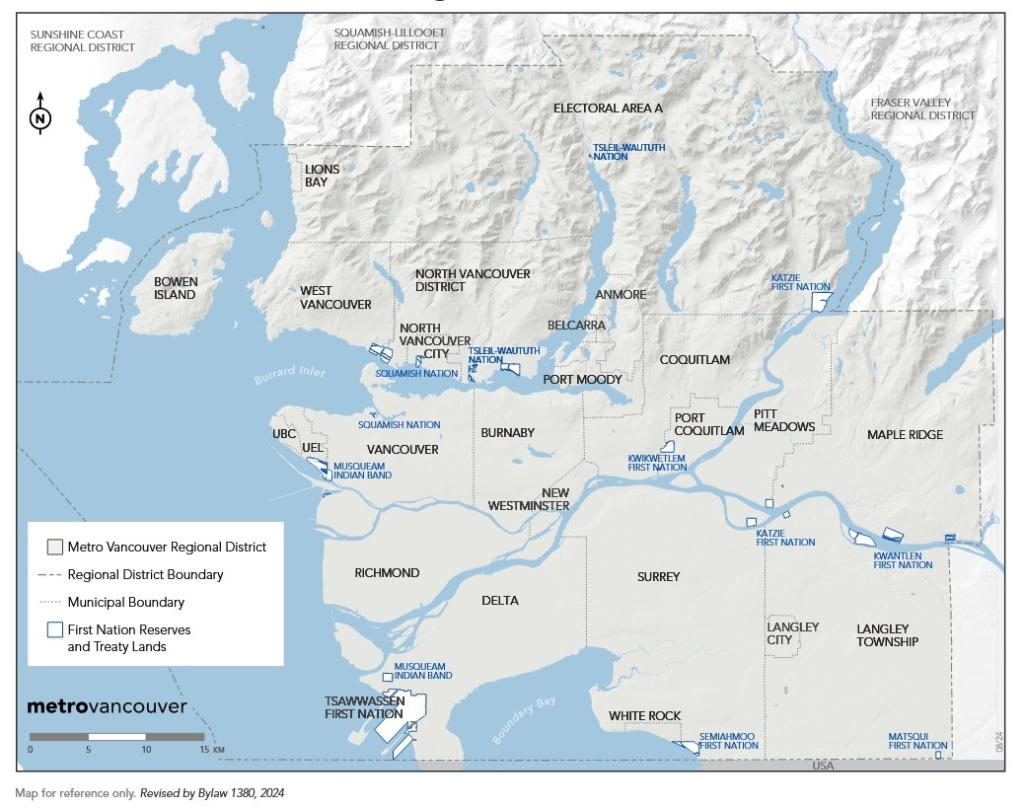
A map showing the Metro Vancouver Region
Source: Metro 2050, the Regional Growth Strategy 

The Metro Vancouver region consists of 21 municipalities, one Electoral Area and one Treaty First Nation. Metro Vancouver respects the diverse and distinct histories, languages, and cultures of First Nations, Métis, and Inuit, which collectively enrich our lives and the region. The region is situated within the traditional territories of 10 local First Nations: q̓ic̓əy̓ (Katzie), q̓ʷɑ:n̓ƛ̓ən̓ (Kwantlen), kʷikʷəƛ̓əm (Kwikwetlem), máthxwi (Matsqui), xʷməθkʷəy̓əm (Musqueam), qiqéyt (Qayqayt), Semiahmoo, Sḵwx̱wú7mesh Úxwumixw (Squamish), scəw̓aθən məsteyəxʷ  (Tsawwassen), and səlilwətaɬ (Tsleil-Waututh). As a result, its ecosystems often span multiple jurisdictions, each with varying capacities to generate revenue. The effective expansion and long-term management of the RGIN will require collaboration among stakeholders and rightsholders, including First Nations, municipalities, and other levels of government, to generate revenue and realize sustainable financing solutions.

Unlocking sustainable finance to support nature-based solutions

Access to long-term, sustainable finance is crucial for the success of nature conservation efforts. More organizations are recognizing the benefits of nature protection and taking action. Governments are setting conservation goals, businesses are recognizing the risks of climate change and the need for resilience through restoration, and Indigenous Peoples are leading nature stewardship efforts on their traditional lands.

This increased awareness and initiative can unlock new funding mechanisms, such as outcome-based financing. Financing structures can be designed to improve outcomes, transparency, and collaboration among municipalities, businesses, and Indigenous communities, fostering a shared vision for conservation and supporting reconciliation.

IISD advising on financing of nature-based infrastructure

Over the years, IISD researchers and IISD’s Nature-Based Infrastructure (NBI) Global Resource Centre has established a strong foundation for mobilizing capital for NBI, providing guidance on a diverse range of financing solutions from traditional public funding to innovative instruments. By engaging key stakeholders, including governments, local communities, and private sector actors, the NBI Centre has supported the development of customized financing strategies that promote ecosystem restoration and climate resilience. 

In the context of the Metro Vancouver Regional District project, IISD aims to assess and recommend financing solutions that are both innovative and practical for implementation. IISD aims to demonstrate how to bridge the gap between environmental goals and financial realities, creating pathways for implementing nature-based infrastructure at scale.

Related Resources:

Deep Dive

Getting Where We Need to Go: Net-zero transport in Canada

This publication is a part of IISD's Clean Energy Insights policy brief series, which outlines the benefits of a net-zero economy for Canadians across the country. (Download PDF)

March 17, 2025
 
policy-recommendations-button

Driving Canadian Economies, Sustainably

It is a fact of modern life that people need to move around. With a net-zero passenger transportation system, this can be done affordably, cleanly, and conveniently. This means prioritizing active transport (e.g., walking and cycling), electrified public transit (e.g., trains, streetcars, and buses), and small zero-emission vehicles [ZEVs]). To support these clean and efficient modes of transportation, urban planning and public infrastructure should be designed for efficiency, with mixed-use urban centres and effective intercity transit connections. Meanwhile, rural areas, small towns, and cities alike can be well-supplied with reliable public transit options and/or ZEV charging infrastructure to reliably meet most transportation needs. These solutions are already being deployed worldwide, benefiting millions of people from small Norwegian towns to large cities like Paris and Tokyo.

In Canada, recent progress in this direction has been mixed. On one hand, falling costs and supportive policies have increased ZEV sales over recent years—representing 16.5% of new light vehicle sales in the third quarter of 2024. Public transit ridership is slowly recovering after the COVID-19 pandemic, and ZEV charging infrastructure is expanding across the country—especially in provinces with ambitious supportive policies, such as British Columbia and Quebec. On the other hand, 70% of new passenger vehicle sales in 2022 were light-duty trucks, such as sport utility vehicles, which are heavier and less efficient than light-duty passenger cars like sedans and hatchbacks, and thus more expensive and polluting. Moreover, most Canadians depend heavily on their personal vehicles because more efficient alternatives, such as public transit and cycling routes, are often unavailable or inconvenient. This is influenced by zoning laws that restrict high-density housing and mixed-use neighbourhoods in cities, as well as governments prioritizing highways and road expansions over public and active transportation infrastructure. As a result, Canada’s transportation emissions have remained high since 2005, accounting for 22% of national emissions in 2022, second only to oil and gas production. The passenger transport system (which excludes freight) accounts for well over 50% of those emissions.

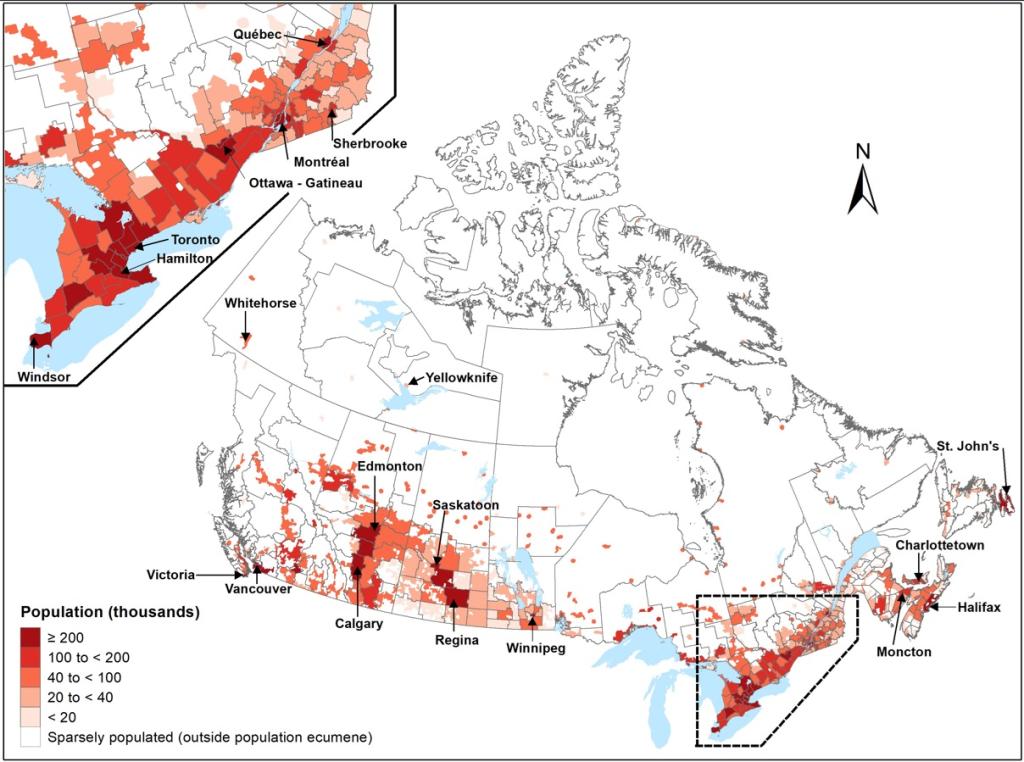
Lessons from around the world demonstrate that ZEVs, public transportation options, active transport infrastructure, and efficient urban planning can work. Meanwhile, the facts on the ground in Canada show that implementing these solutions is feasible. For example, over 50% of the population lives in the Quebec-Windsor corridor, with major cities like Ottawa, Montreal, and Toronto all situated conveniently for a high-speed rail network equivalent to examples in Europe. Despite Canada’s low overall population density (skewed heavily by vast, sparsely populated areas; see map), 82% of Canadians live in urban areas. This is comparable to other wealthy countries like the United Kingdom (85%), France (82%), and Norway (84%). A key challenge in Canada, relative to other wealthy countries, is that the urban spaces themselves have relatively low population densities, as influenced by the urban planning policy decisions outlined above. Remedying this, therefore, is not prevented by physical geography. Rather, the limitations of Canada’s current passenger transportation system—including traffic congestion, unreliable public transit, traffic fatalities, and urban pollution—can be solved by smart policy-making.

Population distribution in Canada, density by census division

Population distribution in Canada, density by census division map
Source: Statistics Canada, 2022.


Rethinking transportation in this way can bring vast economic opportunities. Most notably, a clean and efficient transport sector could directly employ an estimated 1.6 million people across the country by 2050, while reinvigorating Canada’s urban spaces and local economies, sparking growth and employment in a range of other industries, too. Indeed:

  • Investment in public transportation creates more jobs per dollar than car-centric infrastructure. A study of 20 metropolitan areas in the United States found that if half of the public money spent on highway infrastructure was spent on public transportation instead, there would be a net increase of over 180,000 jobs over 5 years. That is, 20% more jobs at no extra cost. Research sponsored by the Ontario Ministry of Infrastructure also found that investing in highways and bridges reduced jobs in the province while public transit created them. These improved employment outcomes follow from increased—and more efficient—economic activity, as explained in the next point.
  • Public transportation and high-density urban planning support local economies. The Ontario study highlighted above also found that public investment in road infrastructure decreased economic activity by crowding out private investment, whereas investments in public transit contributed to significant local growth. This is because public transit and increased urban density improve access to labour for businesses, employment for individuals, and innovation through clustering.
  • Increased ZEV demand could drive a new ZEV and battery manufacturing industry in Canada—particularly in Ontario and Quebec. Clean Energy Canada and the Trillium Network (2023) estimate that with adequate policy support this industry could support nearly 250,000 jobs by 2030, with an annual contribution of CAD 48 billion to the Canadian economy. This industry, in turn, could accelerate ZEV adoption rates across the country.

The limitations of Canada’s current passenger transportation system—including traffic congestion, unreliable public transit, traffic fatalities, and urban pollution—can be solved by smart policy-making.

Day-to-Day Benefits for Canadians


Public and Active Transport Is Typically the Cheapest Option

Car ownership is one of the largest expenses for many Canadian households—costing an average of CAD 16,644 annually—and these costs are increasing well beyond the rate of inflation. Costs include high upfront payments for new or used cars, high-interest loans used by households that cannot afford the one-off payment to purchase a car outright, car insurance, maintenance, and fuel. Well-designed, walkable cities with widespread and convenient public transport options and cycling infrastructure can, therefore, lower household costs by giving people the choice to drive less, reduce the number of cars they own, or opt out of car ownership altogether. People need to move, but with the right policies, many of them don’t need cars to do it. In addition to reducing household costs, public transit can also expand access to employment opportunities for those who cannot afford to own a car.

ZEVs Can Reduce Costs for Drivers

The most recent assessment from the Parliamentary Budget Officer (PBO) highlights that ZEV passenger cars cost 12% less than similar fossil-fuelled alternatives over the course of an 8-year life cycle. This translates to savings of over CAD 1,000 per year. Other studies in Canada suggest that savings can be as high as CAD 4,300 per year over 10 years. In both these studies, ZEVs remain cheaper in Canada—though less so—when government subsidies are excluded from the analysis. Similar statistics can be found in markets worldwide, with savings particularly noticeable for smaller cars and during periods of high oil prices. While the upfront ZEV purchasing costs are typically higher than fossil-fuelled cars, savings in fuel and maintenance more than make up for it over time. Upfront costs for ZEVs are also expected to decline further (relative to fossil-fuelled counterparts) as batteries become cheaper, and competition in the ZEV market grows. Supportive policies like subsidies and ZEV sales standards can accelerate this cost decline even further. For example, the federal ZEV sales standard is projected to reduce ZEV costs in Canada by 22% relative to a 2022 baseline cost trajectory.


Smooth and Fast Journeys

People use public transport when it is frequent and convenient. For commutes within and between cities, public transport avoids many of the inconveniences of car use, such as traffic and parking constraints. Public transport can also be faster on average than car use when supporting infrastructure is in place, as in Stockholm and Amsterdam. Evidence from Europe shows that between cities, highspeed (or at least high-frequency) rail is typically faster and more convenient than the equivalent car journey and even the equivalent flight over short-to-medium distances. Active transport—e.g., walking and cycling—is similarly quick and convenient for short journeys when urban planning supports it. This is especially true for cycling, which is often faster and more convenient than driving for short journeys in cities with supporting infrastructure. While many Canadians may have had difficult experiences with active and public transport due to underfunding and inefficient planning, usership can be expected to increase if these issues are addressed. What’s more, for every person using public or active transport, there is one less person adding to car induced traffic congestion—so drivers ultimately benefit, too.

Equitable and Accessible Transport

Planning for and funding public transit also enables greater mobility for those who are unable to drive. These groups include young people, the elderly, people with certain disabilities, and those who simply cannot afford to own a car. This last group is particularly disadvantaged in the current transportation system as poorer neighbourhoods typically have less access to public transport and greater distances to commute for employment opportunities. Expanding access to cheap, efficient, and accessible public transport can offer vulnerable people greater mobility than they experience in the current car-dependent transportation system. This can, in turn, empower individuals to live more independently, feel more connected to their communities, and take advantage of broader employment opportunities.

Reliable ZEVs

Despite the benefits of public and active transport noted above, some journeys will still be easier with a car—for example, parents travelling with multiple young children or individuals living in rural or suburban areas that lack convenient public transit connections. For most of those journeys, ZEVs—which include both battery electric vehicles (EVs) and hybrid vehicles—are reliable options. EVs already have sufficient range for the vast majority of journeys, and long-distance travel will become easier as charging infrastructure expands across the country. Indeed, the number of public charging ports in Canada almost quadrupled from 2018 to 2023—with this build-out expected to accelerate further as the ZEV sales standard takes effect. In the short term, drivers who consistently drive long distances in areas not yet connected with sufficient charging infrastructure can benefit from hybrid vehicles. These enable drivers to use electricity for short journeys while retaining the option of using fuel for longer drives. Looking ahead, batteries are becoming more efficient due to technological innovation, enabling drivers to reliably travel further on electricity alone. Finally, even if individuals sometimes require a car for specific journeys, this may not necessitate car ownership, as car-sharing services become increasingly common in cities around the world.


Clean Air

One of the clearest benefits of clean transportation is reduced air pollution in cities and towns. Air pollution from fossil-fuelled vehicles has been consistently shown to cause increased rates of respiratory illnesses (such as asthma in children and adults) and cardiovascular diseases. It has also been linked to other conditions, including neurological impacts and several types of cancer. A Canadian government study from 2021 estimated that 15,300 premature deaths are associated with air pollution—much of which comes from fossil-fuelled vehicles—each year, costing an estimated CAD 114 billion (Health Canada, 2021). Similar statistics for road traffic emissions specifically have been recorded in other jurisdictions. By switching to ZEVs, public transport, and active transport, many of these health impacts, economic costs, and premature deaths can be avoided.

Peaceful Spaces

ZEVs, public transport, and active transport all have the benefit of being quiet. Currently, high levels of traffic-related noise pollution—primarily driven by high traffic levels and combustion engines—seriously impact the mental and physical health of residents. Studies consistently identify a link between high traffic-related noise pollution and mental health challenges, such as depression and anxiety, as well as sleep deprivation. When this noise pollution is long-term, it increases the risk of physical health conditions, too, such as heart disease—causing an estimated 11,000 premature deaths in Europe every year. In addition, removing car-centric infrastructure like multi-lane arterial roads and parking lots from city centres creates room for pedestrian areas, green spaces, and parks, all of which improve people’s physical and mental well-being in urban settings.

Healthy Mobility

A combination of active and public transport as primary modes of transport has been consistently shown to improve health outcomes in a range of jurisdictions. This is because active and public transport encourages regular exercise, mitigating risks of severe health conditions like obesity and heart disease. Moreover, reduced car traffic in cities—driven by increased active and public transport usership—can significantly reduce casualties associated with vehicle collisions. Per mile, public transit riders are also around 10 times less likely than car passengers to be injured or killed in a road traffic accident . A clean transportation system saves lives.

Expanding access to cheap, efficient, and accessible public transport can offer vulnerable people greater mobility than they experience in the current car-dependent transportation system.

Key Policies for Federal and Provincial Governments to Develop Canada’s Net-Zero Transportation Sector

The policies needed to achieve net-zero transportation will differ across Canada, particularly between rural and urban areas. That said, common principles of (a) reducing journey distances through urban planning, (b) prioritizing active and public transportation wherever possible, and (c) shifting to ZEVs (especially smaller models) will create a cleaner, cheaper, and more convenient transport system for Canadians across the country. To get there, federal and provincial governments each have a role to play.


Conclusion

A clean transportation system would generate expansive economic opportunities for new industries and jobs across the country while giving Canadians access to cheap, reliable, and convenient mobility in their day-to-day lives. More than that, expanding public and active transport usership across the country would help save many lives and billions of dollars in health care costs by reducing air pollution, noise pollution, and traffic-related fatalities. Getting there will require policy action at federal and provincial levels—that is, Canadian governments must drive the change for the benefit of people nationwide.

A full list of references can be found here.

Re-Energizing Canada is a multi-year IISD research project envisioning Canada's future beyond oil and gas. This publication is part of IISD's Clean Energy Insights policy brief series under this project, which outlines the benefits of a net-zero economy for Canadians across the country.

Deep Dive details

Report

Advancing Gender-Responsive and Socially Inclusive Practices in Nature-Based Solutions for Adaptation

By sharing promising practices and lessons learned, these case studies seek to inform and inspire adaptation practitioners and planners to help ensure that gender-responsive and socially inclusive practices are integrated throughout the lifetime of a project.

February 17, 2025

Key Findings

  • Including diverse voices (women, youth, Elders, and so on) in project activities and providing safe, inclusive spaces for sharing can help enhance operations and improve the effectiveness of nature-based solutions for adaptation projects.

  • For nature-based solutions programming to be effective, it is important to build trust with community members and establish local partnerships and relationships with trusted liaisons and facilitators—particularly those from equity-deserving groups.

  • Investing in citizen science and community-led, gender-responsive, and socially inclusive monitoring, evaluation, and learning processes is key to better understand the varied impacts of climate change and biodiversity loss on local communities.

While there is an increased push for nature-based solutions (NbS) projects around the globe, a gap in evidence exists on projects that promote gender equality and social inclusion (GESI) outcomes. Designing NbS for adaptation projects to be responsive to differences in intersecting identity factors, such as gender, age, sexuality, socio-economic status, Indigeneity, and ability, is important. Considering these factors can help build the adaptive capacity of equity-deserving groups to climate change, enable these groups to participate in adaptation planning and decision making, and strengthen the resilience of their local ecosystems.

To address this gap in evidence, these two case studies have been developed as a supplement to the Nature for Climate Adaptation Initiative report, Mainstreaming Gender Equality and Social Inclusion in Nature-based Solutions for Climate Change Adaptation. They provide practical examples of integrating GESI considerations at various stages of implementing NbS for adaptation.

The first case study showcases a gender-responsive and socially inclusive approach to climate resilience planning for small-scale cooperatives in Zanzibar. The case study demonstrates how understanding the gendered context of operations and governance structures, assessing climate risks using a GESI lens, and identifying and selecting options with inclusivity in mind can enhance the efficacy and sustainability of NbS for adaptation.

The second case study provides a practical example of socially inclusive implementation and monitoring, evaluation, and learning as part of an Indigenous Guardians program that seeks to incorporate Traditional Knowledge and practices into land and wildlife management to better adapt to a changing climate in Canada.

Each case study includes an overview of the local context and climate risks, how the project considered the need for climate change adaptation and integrated gender-responsive and socially inclusive practices, and lessons learned. The case studies were developed through interviews with project implementers and by reviewing relevant reports and documents.

The report is part of a compendium of resources developed by the Nature for Climate Adaptation Initiative (NCAI), which is supported by Global Affairs Canada.

Report

Federal Legislative Authority in Relation to Oil and Gas Development in Canada

General rules and principles

This report sheds light on debates regarding federal authority to regulate oil and gas development in Canada. It begins by explaining the general principles of power sharing across federal and provincial governments, before outlining the extent to which several areas of federal legislative authority could be used to regulate activities related to oil and gas development.

February 10, 2025

Key Findings

  • Oil and gas development is not exclusively the domain of provincial legislative authority. The federal legislature, and through it the federal government of the day, can regulate specific aspects of oil and gas development that engage federal legislative powers as set out in Canada's Constitution.

  • Federal regulation of oil and gas development must, in essence, be about matters that fall within federal jurisdiction, although such regulation may have incidental effects on matters falling within provincial jurisdiction.

Oil and gas development in Canada affects and engages over a dozen areas of federal jurisdiction, both directly and indirectly. Specifically, oil and gas development on federal lands, offshore, and on Indigenous reserves, as well as the interprovincial and international transport and export of oil and gas, all fall directly under federal legislative authority. Indirectly, oil and gas development implicates and engages federal jurisdiction over navigation, fisheries, Indigenous Peoples and their interests in land (beyond reserves), transboundary river pollution, migratory birds, and certain aspects of climate change (e.g., federal carbon pricing and prohibitions on greenhouse gas emissions under the federal criminal law power). Oil and gas development is also affected by the exercise of federal jurisdiction over taxation, spending, patents, and bankruptcy and insolvency. This report outlines the general rules and principles that influence how the federal government can regulate such areas of activity.

Report details

Topic
Energy
Subsidies
Region
Canada
Impact area
Climate
Nature
Publisher
IISD
Copyright
IISD, 2025
Press release

Dogs More Effective Than Any Other Method at Finding Oil Spills under Ice with Practical Implications for Protecting Water Supplies and Oceans: New Study

January 20, 2025

January 21, 2025; WINNIPEG—Scientists in Canada have discovered, for the first time, that dogs can sniff out certain types of oil spilled under ice in freshwater lakes, with a 100% success rate.

In research conducted just last week in freshwater lakes at IISD Experimental Lakes Area in northwestern Ontario, specially trained detection dogs were able to definitively detect the location of two types of oil under lake ice, in six out of six instances in a double-blind study that resulted in no false negative results.

“These findings have enormous implications for speeding up how we deal with oil spills and protecting our freshwaters,” said Vince Palace, Head Research Scientist, IISD Experimental Lakes Area.

“Over the years, we have tried sonar, radar, fluorescence, optical sensors, and old-fashioned, labour-intensive drilling—even the human eye with lights under the ice—but even our most sensitive scientific instruments and manual methods cannot come close to the 100% success rate of our canine friends. Oil Detection Canines (ODCs) are quick—covering up to 400 square metres in twenty minutes—they’re relatively inexpensive to train, and they’re evidently extremely accurate.”

When dealing with the aftermath of an oil spill from a marine pipeline under ice, response teams can spend much of their precious time determining where exactly the oil has spilled before taking action to clean up—a situation made much worse when working in frozen and harsh conditions.

Using dogs in the initial response, with their proven speed and accuracy, could greatly assist the process of oil spill response and clean-up, resulting in less of an impact on our precious and fragile freshwater ecosystems.

“The potential power of the canine nose to make oil spill clean-ups more effective is incredible, but we shouldn’t limit ourselves,” said Paul Bunker, Founder and Principal, Chiron K9 LLC.

“It is now clear that dogs’ unsurpassed olfactory skills should not just be limited to detecting illegal substances in airports or locating earthquake victims (both of which are critically important) but can also be used to enhance environmental protection by more accurately and quickly locating a spill under ice.”

This study is part of a broader research project currently being conducted on freshwater lakes at IISD Experimental Lakes Area to determine the effectiveness of ODCs to detect oil under ice and is being carried out with funding from the United States Coast Guard Great Lakes Oil Spill Center of Expertise and in collaboration with Chiron K9, Owens Coastal Consultants, DF Dickins and SLRoss.

-30-

For more information, or to coordinate an interview with one of the scientists, please contact:

Sumeep Bath

Editorial and Communications Manager, IISD Experimental Lakes Area

[email protected]

Press release details

Report

The Experiment of a Lifetime: IISD Experimental Lakes Area Annual Report 2023-2024

Yep, it’s the big one. It is with great pride, excitement—and a touch of incredulity—that IISD and the Experimental Lakes Area clink our glasses to toast the end of our first decade together.

January 20, 2025

It was over ten years ago in 2014 that the Experimental Lakes Area was taken under the wing of Winnipeg-based think tank the International Institute for Sustainable Development, not only to prevent our closure but to usher in a whole new era for those iconic 58 freshwater lakes and their watersheds.

  • So, what has the last decade achieved?
  • Is science really the best policy?
  • How far have we opened our doors to the world? 
  • And who are Darla and Souris?

Discover all of that and more by diving into the latest annual report from the world's freshwater laboratory.


Report details

Topic
Water
Region
Canada
Impact area
Nature
Publisher
IISD
Copyright
IISD, 2024
Insight

Five Key Priorities to End Fossil Fuel Subsidies in Canada

Despite Canada’s policy to end fossil fuel subsidies, it continues to funnel billions in public funds to the sector without transparent reporting. As the G7 president in 2025, Canada has a pivotal opportunity to lead by fully phasing out fossil fuel supports and investing in a cleaner, more equitable future. Here are five recommendations for effective subsidy reform.

January 17, 2025

Canada has repeatedly pledged to phase out subsidies for the fossil fuel industry, going back to G7 and G20 commitments in 2009 and reiterated several times since then. Canada’s G7 Presidency is a pivotal opportunity to push the G7 to deliver on its commitment. 

While some progress has been made, including policies to end “inefficient” fossil fuel subsidies and stop financing overseas fossil fuel projects, significant gaps remain. Canada continues to commit billions of public dollars to fossil fuels through subsidies such as direct transfers and tax breaks, as well as public financing mechanisms, such as loans, insurance, and bonds. 

The full extent of this funding is unclear due to the lack of transparency. Canada committed to publishing an inventory of its direct and indirect fossil fuel subsidies by December 2024 but failed to deliver. Without a comprehensive and regularly updated inventory of measures, it remains unclear how the “inefficient” subsidies policy is being applied and which—if any—fossil fuel subsidies have actually been phased out. After nearly 18 months since this policy was put in place, transparent reporting is key to ensuring its credibility.  

In a promising move in 2023, Canada joined its international peers in the Coalition on Phasing Out Fossil Fuel Incentives Including Subsidies and the High Ambition Coalition, which are shifting away from the qualifying term “inefficient” and instead focusing on eliminating all fossil fuel subsidies. To align with these efforts and be a leader in fossil fuel subsidy reform as the G7 president in 2025, Canada must work quickly to end the vast majority of its fossil fuel subsidies, allowing only narrow exemptions for exceptional circumstances, such as providing support for remote communities that rely on diesel.  

Here are five areas that must be prioritized to ensure transparency, reform existing fossil fuel subsidies and guarantee no further public funds flow as subsidies to fossil fuels.

Top Five Subsidy Reform Priorities 

1. Major Tax Credits and Reductions From Established Benchmarks 

One way that governments subsidize the fossil fuel industry is by offering tax credits and reductions from normally established benchmarks that reduce public revenue. For example, if most sectors pay a tax rate of 15%, and sector Y pays a tax rate of only 5%, sector Y receives a 10% tax subsidy. Or, if a certain sector receives a disproportionate amount of the benefit of a certain tax reduction, that would be a subsidy. In the government’s own framework, it defines “disproportionate benefit” as “more than 10% of the Measure's expenditures or foregone revenues is received by the Fossil Fuel Sector; or the Fossil Fuel Sector is specifically targeted to benefit from the Measure.” 

While Canada has made important progress in phasing out some tax benefits for the fossil fuel industry, significant tax reductions still exist that must be addressed. These include: 

  • Canadian Exploration Expense Deductions (CEE)—This provision allows mining, oil, and gas companies to deduct costs incurred while exploring for resources in Canada. These expenses include activities to determine the presence, location, size, or quality of mineral deposits, petroleum, or natural gas.  
  • Accelerated Investment Incentive—This measure lets companies quickly deduct the cost of newly acquired capital assets. While it applies across all sectors, it includes a special first-year benefit for faster deductions on Canadian development expenses (CDE) and Canadian oil and gas property expenses (COGPE), with a phase-out period from 2024 to 2028. 
  • Foreign Resource Expense Deductions (FRE)—This provision allows Canadian mining companies to deduct costs related to exploration and development activities conducted outside of Canada. 
  • Carbon Capture, Utilization, and Storage (CCUS) investment tax credit—This tax credit applies to capital investments in eligible CCUS projects made since January 2022. While the credit is not exclusive to the fossil fuel sector, the majority of CCUS projects in Canada are tied to fossil fuel operations.  
  • Steel tariff exemption for liquefied natural gas (LNG)—In 2019, the government announced an exemption on tariffs for imported steel used in the LNG industry in British Columbia.  
  • Tariff exemption for mobile offshore drilling units—Tariffs on these units, used for offshore oil and gas exploration and development, were first exempted in 2004. In 2014, the tariffs were permanently eliminated, costing the government an estimated CAD 13 million annually. 
  • Capital cost allowance (CCA)—Most mining and oil and gas companies’ capital assets qualify for a 25% depreciation rate on a declining basis.  Whether this constitutes a subsidy depends on the capital costs in the fossil fuel sector compared to those in other sectors and if more benefit is received by the fossil fuel sector due to higher capital costs. 

Currently, a lack of transparency prevents us from knowing the full value of these subsidies and how, if at all, the “inefficient” subsidies policy framework is being applied to them. However, the Parliamentary Budget Officer estimates that four tax exemptions—CEEs, CDEs, COGPEs, and FREs—resulted in CAD 1.8 billion in foregone revenue in 2021 alone.  

Canadians for Tax Fairness also found that the oil and gas sector receives a disproportionate amount of CCAs. The oil and gas sector had an excess CCA rate of 36% from 2010 to 2022, meaning that the allowed tax deduction was in excess of the actual depreciation. Comparatively, the excess rate for non-fossil fuel sectors was close to zero.  More transparent reporting is needed on these tax measures, including on the portion of the benefit that is received by the fossil fuel industry compared to other industries.  

2. Trans Mountain Pipeline Expansion and Operations 

The Trans Mountain Pipeline expansion (TMX) is perhaps the biggest commitment of the current federal government when it comes to public spending on the fossil fuel industry. In a vacuum of interest from the private sector, the government bought the pipeline in 2018, and construction costs have since more than quadrupled from initial expectations.   

With oil companies currently paying lower tolls than would be required to recover the capital costs over the expected lifespan of the project, the government is operating the pipeline at a loss. To recover the full cost of the project, companies should be paying CAD 25.53 per barrel of oil shipped, but instead are currently paying only CAD 11.37 per barrel. Continuing to give the industry this discount would result in a subsidy of up to CAD 18.8 billion

Since the pipeline became operational in May 2024, there has already been an estimated CAD 1.2–1.3 billion subsidy from discounted tolls on TMX; that’s over CAD 5 million per day. IISD’s recent report by Professor Tom Gunton proposes a production levy on western oil shipments to recover this subsidy and ensure the industry pays the full cost of the project. 

3. Carbon Capture and Storage 

The federal government has committed over CAD 9 billion to carbon capture and storage by 2030, the vast majority of which would be used by the fossil fuel sector. This support is primarily through the carbon capture and storage (CCS) investment tax credit, which covers 50%+ of the capital costs of new projects. The Parliamentary Budget Officer estimates this credit will cost taxpayers CAD 491 million in the 2024–2025 fiscal year. 

The federal CCS tax credit can be stacked with provincial subsidies such as Alberta’s Carbon Capture Incentive Program, which provides an additional 12% grant on capital expenditures for CCS. Despite these heavy subsidies covering over 60% of upfront CCS costs, the industry is advocating for additional support. Oilsands companies of the Pathways Alliance are seeking public funds to cover 75% of the cost of their CCS network. 

In addition to this generous tax credit for CCS, the federal government continues to provide more support. The Canada Growth Fund, which is mandated to invest public funds and attract private capital to build a low-carbon economy, has put a disproportionate amount of support behind CCS, with its CEO stating, “Canada is the best place in the world to build a CCS industry.” In just over a year since its first investment, Canada Growth Fund has put CAD 200 million into Entropy CCS (which could lead to a 20% ownership stake in the company), CAD 500 million in Strathcona Resources oilsands CCS (which could increase up to CAD 1 billion), and CAD 100 million in Svante Technologies CCS, in addition to a potential 40% ownership stake in a waste-to-energy project with CCS. The Canada Growth Fund has also proposed funding support for the Pathways Alliance CCS network. 

The government needs to stop subsidizing carbon capture and storage in the fossil fuel sector—it is not a net-zero solution, and investing public funds in this technology comes with huge opportunity costs. Instead of investing CAD 10 billion in CCS, the government could have funded energy-efficient housing, renewable energy expansion, clean drinking water, and other critical infrastructure gaps for Indigenous communities across Canada. 

4. LNG  

There is also significant federal support for expanding LNG export infrastructure in western Canada, including through subsidies for the substantial amount of electricity required to electrify LNG infrastructure. Internal government documents show that the British Columbia (BC) government has asked the federal government for CAD 1.5 billion to build the transmission infrastructure required to transport electricity to northern LNG sites. This would primarily serve LNG Canada, a project that received CAD 275 million of direct investments from the federal government in 2019, in addition to an estimated CAD 1 billion in steel tariff exemptions.  

Though the Minister of Natural Resources has suggested the federal government is “not interested” in funding LNG projects, the government’s fossil fuel subsidies policy does leave the door open for subsidies to LNG under the pretense that LNG exports could displace more carbon-intensive fuels abroad. However, IISD research has shown these sorts of international carbon credits are not credible and should not provide a basis for permitting or subsidizing LNG exports. 

The federal government is also supporting LNG expansion through public financing, such as the recent financing of CAD 100 million–200 million for the Coastal Gaslink Pipeline and CAD 400 million–500 million for Cedar LNG. These loans are not covered under Canada’s subsidy policy but must be tackled under Canada’s forthcoming policy to end domestic public finance for fossil fuels.

5. Low-Carbon Funds and Incentives 

The federal government has committed substantial investments and subsidies to advance decarbonization and grow the low-carbon industries Canada needs. It is crucial to ensure that these funds flow to the workers, communities, and institutions that need them—not to the fossil fuel industry. 

Additionally, while it is essential to reform existing subsidies, the overall elimination of fossil fuel subsidies requires the government to ensure that any future financial support for decarbonization, clean technologies, economic reconciliation, and low-carbon infrastructure does not go to fossil fuel companies or companies solely supporting the fossil fuel sector.  The reform and elimination of current subsidies have to go along with the assurance that new subsidies will not be created in their place. This includes funds such as the Strategic Innovation Fund, the Low Carbon Economy Fund, the Canada Growth Fund, the Canada Innovation Corporation, and the Energy Innovation Program, as well as new investment tax credits for clean electricity, clean technology, clean hydrogen, and clean technology manufacturing. 

There has been an increase in subsidies for the fossil fuel industry to support decarbonization. However, any funds invested in the fossil fuel sector, even for reducing emissions or methane leakage, ultimately save companies money or enhance operations and thus contribute to profits. These subsidies also carry significant opportunity costs, diverting limited public funds away from critical investments in renewable energy, electrification, and energy efficiency needed for the transition to a cleaner economy. 

Provinces Have a Role to Play 

Alongside these federal supports, many provinces also subsidize the production or consumption of fossil fuels and have a key role to play in redirecting those resources toward solutions. The Organisation for Economic Co-operation and Development estimates that Canadian provinces and territories provided CAD 4.6 billion in fossil fuel subsidies in 2023. Provincial subsidies include support for infrastructure related to fossil fuel extraction, transportation, and export, such as the estimated CAD 5.4 billion provided by the BC government to LNG Canada through various tax breaks and hydro rate reductions. They also include governments shouldering the burden of cleaning up fossil fuel industry liabilities, such as Alberta’s subsidies to oil and gas companies to clean up abandoned oil and gas wells.  

As well, there is an increasing trend of cutting provincial gasoline taxes, thus incentivizing the use of more fuel, with governments in Ontario, Manitoba, and Alberta enacting such measures in recent years, and the Saskatchewan opposition party proposing to do the same. The Ontario gas tax and fuel tax rate cuts are expected to cost CAD 620 million this fiscal year, while the Manitoba fuel tax cut was estimated to cost CAD 340 million annually prior to being removed in January 2025. Various fuel tax exemptions in Alberta cost an estimated CAD 295 million in 2024. Manitoba has also recently announced a freeze on natural gas rates for 2025, while BC has a tax exemption on residential energy from natural gas and fuel oil that costs around CAD 130 million per year. Saskatchewan has implemented a carbon tax exemption on natural gas, foregoing tens of millions in revenue, which the government vowed to extend in its recent throne speech. It is critical to acknowledge that many Canadians are struggling with increased energy, food, and other product and service costs in times of high inflation, but the default measure to reduce pressure should not be to reduce costs for polluting fuels. There are other avenues to provide support for consumers that are not tied to reducing the cost of fossil fuels that drive climate change. 

There has been some provincial progress, such as BC’s recent decision to exclude oil and gas expenditures from its mining exploration tax credit. However, much more needs to be done. During the compounding affordability and climate crises, governments should focus on directly supporting people rather than subsidizing fossil fuel consumption.  

Canada Needs to Comply With Its International Commitments 

To fully eliminate fossil fuel subsidies, Canada must start by publishing a comprehensive inventory of all financial supports to the sector—whether or not they are labelled as "efficient"—and update it regularly. This should include clear timelines for phasing out existing supports, such as those highlighted above. Canada should also move beyond qualifying terms and address all forms of financial support to the fossil fuel industry. 

This should go hand-in-hand with tackling domestic public finance for fossil fuels from Canadian crown corporations, amounting to at least CAD 7.6 billion to CAD 13.5 billion annually in recent years. Moreover, Canada can support a wider shift in financial flows to drive the energy transition, such as through strong, sustainable finance regulations for the private sector and encouraging pension funds to align their portfolios with credible net-zero scenarios.  

Creating the existing policy framework to tackle fossil fuel supports is a good start but much more work is needed to finish the job.