Insight

What the G7 Ministerial Could Have Delivered on Fossil Fuel Subsidies Reform

Fifteen years after committing to phase out “inefficient” fossil fuel subsidies, G7 ministers are still debating definitions. They need to move from talk to action by the 2025 deadline.

April 30, 2024

G7 climate, energy, and environment ministers gathered in Turin, Italy, this week. It was their first meeting since the historic UNFCCC COP 28 international agreement to transition away from fossil fuels and the penultimate one before a self-imposed 2025 deadline to eliminate “inefficient” fossil fuel subsidies.  

The Ministerial had the potential to be a success in tackling some low-hanging (though prickly) fruit on the climate change mitigation front—in particular, ending governments’ subsidies to fossil fuels that amounted to at least USD 1.5 trillion globally and USD 199 billion in the G7 countries in 2022.  

But the final Ministerial communiqué ultimately falls short when it comes to breaking the 15 years of gridlock on fossil fuel subsidies.  

Here’s how G7 leadership can use their next meetings to demonstrate measurable progress.

Fix the Loophole on “Inefficient” Subsidies 

First, the G7 governments should drop the long-standing loophole in their reform commitment that technically involves the phase-out of only “inefficient” fossil fuel subsidies. The Turin statement finally clarifies what “inefficient” subsidies are: they are those that “do not address energy poverty or just transitions.” This clarification is an improvement over the previous G7 language but demonstrates no leadership as it merely brought the G7 in line with what was agreed at UNFCCC COP 28. A better outcome would have been to drop “inefficient” altogether and require each G7 member to create a national roadmap for phasing out their fossil fuel subsidies. These would require them to justify any remaining subsidies and identify alternative policy levers to achieve the same objectives. 

Commit to Supporting People, not Fossil Fuels 

Second, G7 governments should demonstrate leadership by committing to address energy poverty, just transitions, and other social concerns like inflation under the principle “support people, not fossil fuels.” Russia’s invasion of Ukraine sent oil and gas prices soaring, and many governments introduced emergency measures to shield consumers from the impact on their fuel bills. Within the G7, the United Kingdom and Italy provided the biggest subsidies, of USD 50 billion each, in 2022.  

In Turin, ministers said any crisis measures should be “timebound, transparent, and limited to address vulnerable groups without distortion of the incentives to save energy.” They should have gone further and ruled out fossil fuel subsidies as a crisis response—instead, considering direct cash transfers to vulnerable groups or grants for heat pumps, electric vehicles, and renewable energy.

Phase out All Subsidies to New Fossil Fuel Production

Third, the G7 should prioritize phasing out any support measures to fossil fuel exploration and production. These accounted for a substantial USD 42 billion across the G7 in 2022, even as oil and gas companies posted record profits. The science is clear that there is no room for new oil and gas production under a 1.5°C-compatible pathway, and global production must decline by at least 65% by 2050. Producer subsidies do nothing to tackle energy poverty, as any cost reductions are spread across all industrial and household customers, not just the vulnerable. Removing producer subsidies helps to align demand and supply while reducing the risk of stranded assets. This should be a priority. 

Ministers in Turin stressed the need for a common definition of fossil fuel subsidies. Their statement calls on the G20 and international organizations to work together on a methodology and agree on such a definition—something the G20 has tried and failed to do for many years. It is obvious that countries’ disagreement on definitions is driven by political considerations rather than any methodological challenges, given there is a long-standing—and legally binding—definition of subsidies under the World Trade Organisation (WTO) as well as a detailed and WTO-consistent methodology outlined in Sustainable Development Goal 12.  

While the G7 consensus is frustratingly weak, help is at hand for those member governments ready to take on the challenge. Where there is a will, there is a way. Canada and nine EU countries, including France, joined a coalition launched by the Dutch government at COP 28 to tackle this issue. The rest of the G7 should follow and make every effort to deliver by the 2025 deadline.  
Insight details

Insight

INC-4 Is an Opportunity to Address Fresh Water Pollution – This is how

April 17, 2024

Fresh water is vitally important to everyone. It’s the water we drink and use to hydrate our agricultural lands and livestock. It’s the water in our communities' ponds, lakes, and wetlands.  

Every year, more plastic is being released into these environments, including microplastics, even in the most remote freshwater environments, and the North American Great Lakes, where 90% of water samples had microplastics levels surpassing safe levels for aquatic wildlife. That’s why current research at IISD Experimental Lakes Area is tackling the problem head on.
 

“Microplastics pollution is impacting even the most remote lakes in the world. We need better policies to protect freshwater ecosystems.”

– Michael Rennie, Research Fellow, IISD Experimental Lakes Area

The World Coming Together to Tackle Plastics Pollution

The world has a problem with plastics, and countries are collaborating to find solutions. Negotiators are meeting in Ottawa April 2329, 2024, for the fourth meeting of the International Negotiating Committee (INC-4) to develop an international legally binding instrument on plastic pollution.

A revised draft text for the agreement has already been made available, and from a freshwater perspective, there are reasons for hope and some opportunities for improvement.

We Need to Focus More on Plastics Pollution in Freshwater

The most recent version of the agreement is holistic in scope, accounting for the entire life cycle of plastics. This is encouraging because minimizing plastic production and use is one of the most effective ways to prevent plastic pollution from damaging the environment. The text also takes careful consideration of chemical additives to plastics, acknowledging that they are known to have their own environmental harms.

Even so, we need to go further; freshwater pollution needs to be addressed more explicitly and comprehensively. After all, freshwater bodies have seen an exponential increase in the presence of plastic waste in the past few decades, and act as a source of plastics into marine environments.

Freshwater environments are explicitly mentioned in two sections of the preliminary text going into INC-4, which has a central focus on marine environments—understandable, considering the title of the negotiation itself includes references to marine environments. However, this agreement represents an opportunity to protect all natural environments from plastic pollution that the international community will not want to miss.

There are currently several options for what different parts of the text could look like. In some of these options, broader language such as “aquatic environments” or “water” is used in place of “marine environments” or “ocean” to better represent how various types of environments might all be affected by the same pollution sources. This is a positive step forward that opens opportunities for additional revisions to explicitly address freshwater concerns within the treaty.

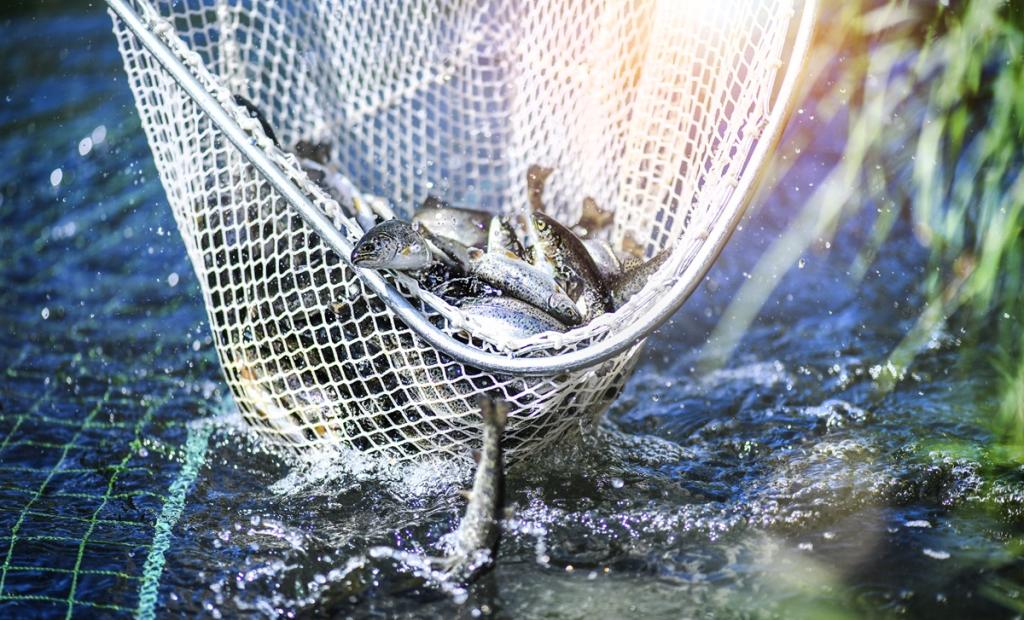
Trout caught in a net


Bringing Fresh Water Into INC-4: A few examples

Looking at the revised draft through the lens of freshwater protection, there are areas where it would make sense to include specific references to freshwater environments, but they are overlooked.

In nearly every section of the draft agreement, the word “marine” is mentioned, appearing 51 times. Meanwhile, specific references to fresh water are made only seven times.

There are many opportunities within the full text of the document released ahead of INC-4 to bolster and explicitly reference freshwater protection in the context of plastics pollution.

Below, we will highlight a few specific options; however, if you are interested in reading the plastic treaty document shared before INC-4 in full, click here.

  • Plastic waste being generated from fishing gear is the specific focus of Section 9b, without considering the hundreds of inland freshwater fisheries worldwide. As the word “marine” is in the agreement title, inclusion of freshwater fisheries would need to be made explicitly to encompass these systems.
     
  • In all clauses that specifically impact freshwater environments, there should be an inclusion of the term “fresh water.” Alternatively, we recommend using the term “aquatic environments” to include both marine and freshwater environments.
     
  • An example of bringing freshwater concerns seamlessly into the INC-4 document can be found in Section 8, Option 4.4 on the Emissions and Releases of Plastics Throughout Its Lifecycle. In this paragraph, which pertains to an aspect of plastic pollution that may specifically threaten freshwater ecosystems, the text reads:

“The governing body,* at its first session, shall adopt guidelines … on preventing and controlling emissions and releases … and remove plastic waste, including microplastics from freshwater bodies, the marine environment and ecosystems.”

Here, freshwater bodies are specifically referenced alongside marine environments, acknowledging their distinct, important role in managing the impacts of plastic pollution.

Overall, the negotiation of such a treaty and the current draft text provide reason for optimism. The inclusion of detailed clauses for preventing the initial release of plastics into the environment, considerations of problematic chemical additives, and plastic emissions throughout the life cycle of plastic products are potentially impactful elements.

INC-4 is a critical international process, and the much-anticipated binding global agreement on plastic pollution could and should have major implications for freshwater quality around the globe.

The global living treaty developed by the end of INC-5 is important for the protection of all natural environments. We eagerly await a final draft at the end of next week that incorporates freshwater considerations as a means for a stronger and more effective agreement to ensure healthier lakes, fish, and drinking water for all.


Insight details

Topic
Water
Region
Canada
Impact area
Nature
Insight

Moving Beyond GDP in the Caribbean

Growth in GDP in the Caribbean isn't capturing the full story of natural disasters, climate change, and social disruption—but action is already underway to move beyond GDP as the sole goal and measure of policymaking

February 1, 2024

The 2023 Statistical meetings of the Caribbean Community (CARICOM) conducted from October 30 to November 3 in Nassau, Bahamas, were an opportunity for statisticians and policy-makers to agree on key statistical initiatives that will better support policy-making across the region. The meeting covered several important issues, including gender statistics, national accounts, censuses, geographical information systems (GISs), and the Sustainable Development Goals (SDGs). Moving beyond GDP emerged as a key step that will contribute to fostering resilience and guaranteeing the well-being of future generations.

In his address, Halim Brizan, Regional Director of Statistics of the CARICOM Secretariat and Chairman stressed, “We should make sure the statistics that we produce are fit for purpose... we need to complement [GDP] statistics to assess the situation of our economy.” In inviting member states to complement GDP statistics, the Director addressed two concerns regarding GDP: its usefulness and sufficiency in policy-making.

On the former, GDP remains an important tool for policy-makers due to its complete coverage of domestic activity, harmonization, and standardization over time and space. Regarding the latter, global leaders, including the United Nations Secretary-General, the Organisation for Economic Co-operation and Development, and the World Economic Forum are raising concerns around the use of GDP to assess national well-being. These concerns have prompted the design of complementary measures to GDP. One such measure is comprehensive (or inclusive) wealth—the sum of natural, produced, human, financial, and social capital. Comprehensive wealth is measured by the World BankUnited Nations Environment Programme, and the International Institute for Sustainable Development.

In the list of assets composing wealth, natural capital is the most at risk today. While GDP in the Caribbean has more than tripled since 1970, the region has lost 80% of its coral reef cover in just a few years. This significant decline jeopardizes the supply of crucial fish stocks and shoreline protection. The region is facing several other environmental risks, including rising sea levels and surface temperatures, depletion of forest resources, pollution of marine ecosystems (with consequences for the tourism upon which many small islands rely) and increasing frequency and cost of natural disasters. Since 1950, Caribbean countries have suffered the impacts of more than 60% of disasters that struck small states. Large segments of the Caribbean population live on coastlines and are dependent on natural resources for economic opportunities. Around 70% of the region’s population lives on coastlines, and the ocean alone accounts for almost 20% of GDP. Estimates suggest that the Caribbean’s 88,170 km2 of seagrass provides more than USD 255 billion in ecosystem services and stores more than 1,300 Tg of carbon. This puts these countries at greater risk of "importing climate effects" despite being among the lowest contributors to greenhouse gas emissions.

Because GDP does not account for these challenges, comprehensive wealth accounting is required to complement GDP measures and equip policy-makers with better tools to monitor the economy’s health.

Comprehensive wealth accounts should be incorporated into current and future data collection, compilation, and dissemination activities in the Caribbean. This is growing in importance as the international reporting requirements for environmental data increase due to rising climate impacts on small states. Work on comprehensive wealth accounting should initially focus on compiling natural capital accounts (NCAs). In this, countries in the region can draw upon the international standards available from the United Nations under the System of Environmental-Economic Accounting (SEEA) framework. SEEA-based natural capital accounts can contribute directly to the efforts to move beyond GDP by measuring the extent and condition of ecosystems, their uses in productive processes, and their degradation over time. NCAs can help countries quantify their stock of natural assets and monitor their contribution to national income and wealth. In this regard, NCAs will be a useful tool to track the losses and damages faced by Small Island Developing States.

To produce NCAs, a whole-of-statistics approach that stretches across data producers, users, and partners is necessary. To achieve this, the Caribbean must address structural issues that inhibit the coverage and scope of data collected. In this regard, improving national statistical systems and building relationships between data producersat local, regional, and international levels–and national statistical offices are essential steps for creating responsive national statistical systems and enhancing the data value chain in these countries. This includes the need for integrated data-sharing systems, a natural asset register through administrative sources, and real-time reporting on the impacts of natural disasters on populations and key natural assets. Such an approach will improve the accessibility, timeliness, and quality of statistics on population, living conditions, and housing conditions, thereby equipping policy-makers with more adequate tools for monitoring the well-being of both current and future generations.

Insight

Lessons Learned at COP 28

The annual UN Climate Change Conference sets global climate policy directions. Because good climate policy requires broad participation, IISD provides a tool to help stakeholders navigate this often opaque and overwhelming process: the Earth Negotiations Bulletin. During COP 28, we helped develop the next generation of climate policy-makers by including two new writers on our ENB team.

In addition to tracking the negotiations alongside our veteran writers, we asked them to write short blogs on what other newcomers need to know to engage in the climate negotiation process. They remind us what veterans take for granted in this annual cycle of incremental progress. They also identify key entry points and ways to understand a meeting that most now simply refer to as “COP.”

January 31, 2024

The annual UNFCCC Conference of the Parties (COP) is always the most awaited climate conference of the year. Thousands of people from around the world come together to agree on ways to address the climate crisis, such as limiting global temperature rise to 1.5°C, helping vulnerable communities adapt to the effects of climate change, and achieving net-zero emissions by 2050. And every year, the COP just keeps getting bigger. Considering there were only an estimated 38,000 participants at COP 21 in Paris, COP 28 might be the biggest yet, with a record-breaking 100,000 people registered. However, one does question the effectiveness of the conference, given the number of participants in the world’s biggest decision-making forum on climate change. With the stakes getting higher, will the large number of participants hinder or help the negotiation process in what can be dubbed as a “mega” COP?

The first day of COP 28 started off with a bang, with delegates already approving the operationalization of the loss and damage fund and several developed countries pledging millions of dollars to the fund. This sent a wave of hope amongst developing countries, particularly the most vulnerable, who need the fund to address the devastating impacts of climate change in their countries. Unfortunately, what started as an early victory soon descended into a battle of voices behind the scenes, with each delegate pushing for their respective country’s interests while doing their best to reach an agreement that collectively benefits all.

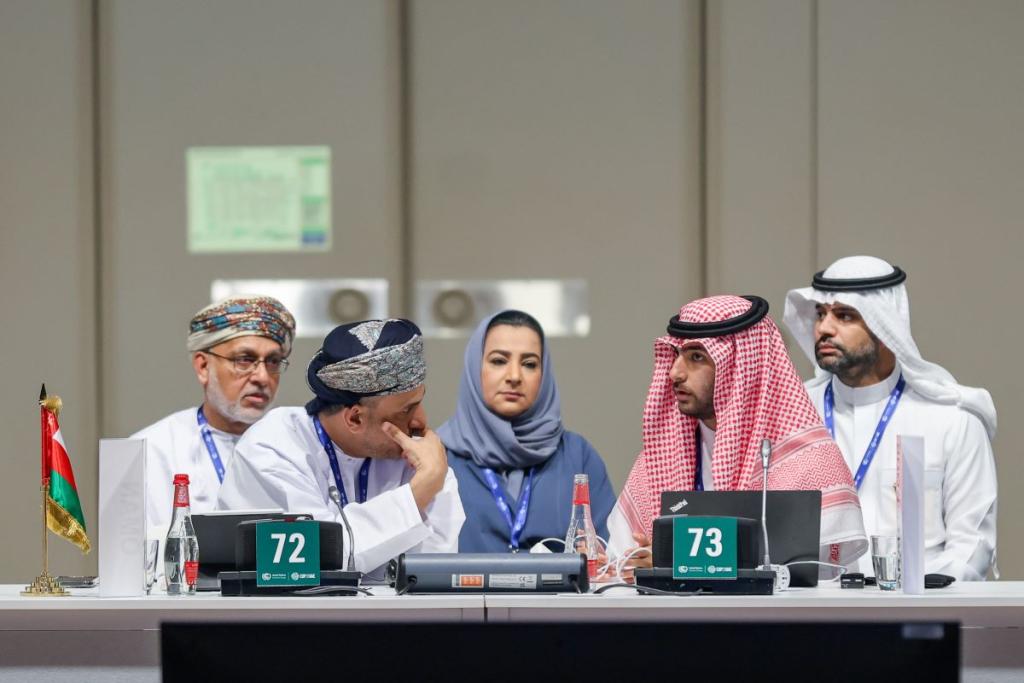
Delegates from the Arab Group conferring COP 28
Delegates from the Arab Group exchange views during COP 28. (Photo by IISD/ENB Mike Muzurakis)

For the next several days, informal consultations were convened to discuss key issues such as the global goal on adaptation, mitigation ambition and implementation work program, just transition pathways work program, and global stocktake, among others. Negotiators debated which principles to include, what targets to set, how work programs can be implemented, and what text should be included in the draft decision, one of which is the highly controversial inclusion of fossil fuels phase-out. One could see some negotiators being part of different consultations, running from one room to the next to ensure their country’s voice would be heard and their interests protected, while other countries have sufficient representation in all the consultations. In several cases, countries that have the same interest over key issues banded together to declare their positions and negotiate as a coalition. It was fascinating to see international diplomacy and cooperation at its best, and sadly, also at its worst. One can sense the frustration in these rooms as some countries chose to take a hard stance on key issues, making it difficult for discussions to move forward. Indeed, the art of negotiations is a tricky one, requiring a delicate balance between protecting one’s own interests and finding common ground with the rest of the world.

Just as I was gaining an understanding of the negotiations process, COP 28 President Sultan Al-Jaber announced he would convene a “Majlis.” This Arabic term for “council” was meant to foster “heart-to-heart” discussions with the aim of helping countries reach consensus and break deadlocks on key issues. Such a step was unexpected and not a usual part of the process, but I learned it was not the first time such a group was convened. At COP 23, the Fiji Presidency established a Talanoa Dialogue. The Majlis was quite a spectacle, with a grand round stage and key country players speaking on contentious issues that need to be resolved.

The next few days brought on a flurry of behind-the-scenes activity, with negotiators working around the clock to finalize discussions and reach an agreement on decision texts, particularly on key issues. Finally, on December 13, one day after the scheduled end of the conference, decisions were adopted and gaveled through. The adoptions were followed by myriad reactions, ranging from applause for progress made to tears of frustration at the lack of a clear call to phase out fossil fuels. Despite the drama and chaos of COP 28, most of the media hailed it as a historic outcome.

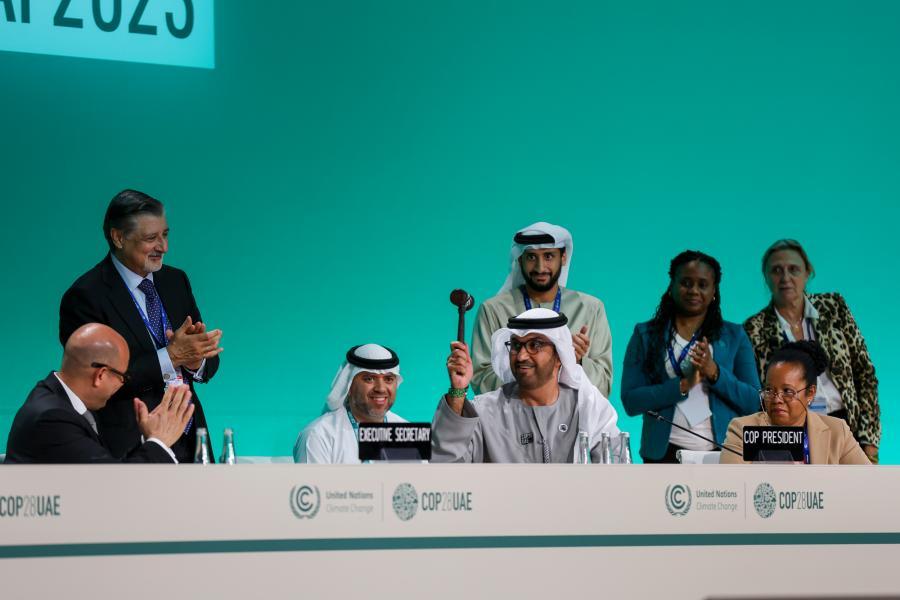
COP 28 adjourned
COP 28 President Sultan Al-Jaber gavels the climate talks to a close. (Photo by IISD/ENB Mike Muzurakis)

Looking back at the events during COP 28, the large number of participants made the negotiation process more transparent. However, it may have also made the negotiations more challenging and, ironically, even less inclusive at times. The ideal solution would be to strike a balance and ensure the participants who do attend COPs are there for the right reasons, although the many definitions of “balance” were the reason we needed a strong outcome in the first place. Ultimately, whether it’s a mega COP or not, what we all hope for is that every COP brings us closer to the world we want.

Maria Cristina Mundin is a Writer with Earth Negotiations Bulletin as well as a lawyer at the International Lawyers Project where she leads the Environment and Sustainable Development Programme. She is a Philippine national based in London.


From the adoption of a key funding decision on the first day of COP 28 to the inclusion of the first-ever explicit reference to “fossil fuels” during the closing plenary, I quickly surmised how each climate COP has critical opportunities to set a new path for climate action. How well these opportunities are acted upon depends partly on how the COP Presidency and the Secretariat steer this annual debate in the direction for global climate efforts. Civil society also prods governments more than I expected.

However, ultimately, it is government leaders who must find the political will to break out of their debates and determine if negotiations will match the evolving global needs. 

I arrived in Dubai expecting to see the COP Presidency and UNFCCC Secretariat actively organizing and leading the discussions, and I was not disappointed. The United Arab Emirates (UAE) provided an impressive venue and worked long hours to facilitate discussions throughout COP 28. The UNFCCC Secretariat also worked tirelessly behind the scenes, as demonstrated by the number of new negotiating drafts that arrived in my inbox on a regular basis. In addition, for the first time, the UNFCCC Secretariat published a detailed list of attendees, including their affiliation. This effort to increase transparency was widely appreciated, and I look forward to COP 28 setting a precedent on this issue for future meetings.

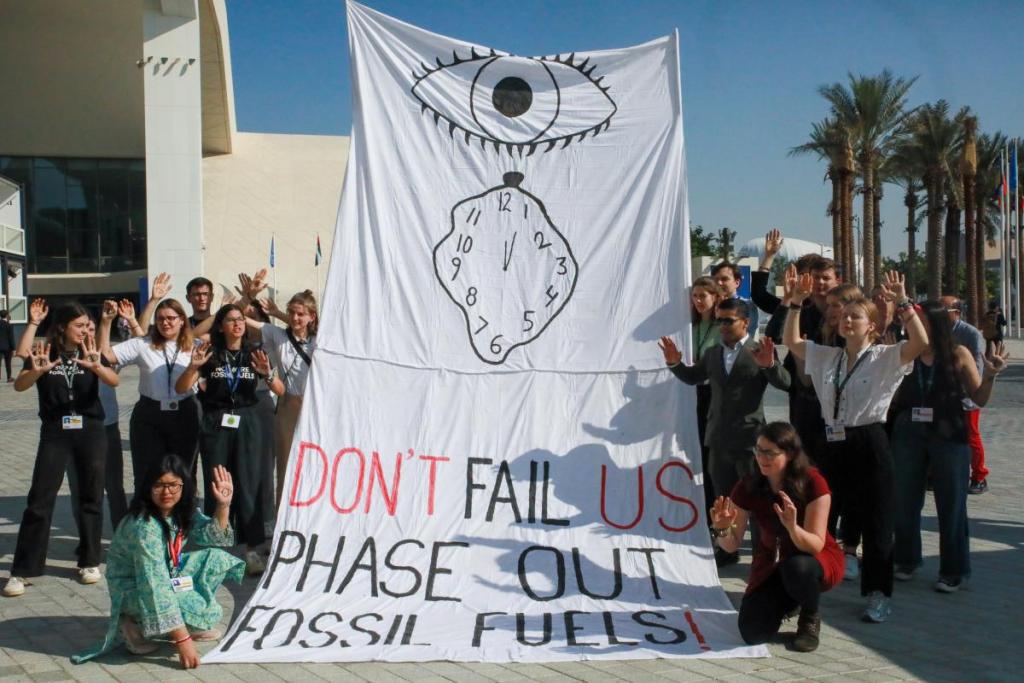
Climate action around COP28
Civil society demonstrators call for a fossil fuel phase-out at COP 28. (Photo by IISD/ENB Mike Muzurakis)

A group of actors that I did not expect to see were the civil society protesters. During a COP, civil society works within guidelines established and negotiated with the meeting organizers to coordinate “actions.” In Dubai, attendees entering the COP were greeted by colourful signs, costumed individuals, and full-throated chants on policies that civil society wishes would change. Although these activities took place on conference grounds—which are temporarily transferred to UN oversight during a COP—it still struck me as remarkable that they were taking place in a country that severely limits demonstrations and some types of organizations.

The decision to operationalize the Loss & Damage Fund, which was based on the recommendations reached by the Transitional Committee established at COP 27, showed that the multilateral process can move forward quickly when there is sufficient political will. The quick capitalization of this fund was impressive, although the size of some pledges indicated that the priorities of those with the most power are still not where they need to be. The UAE announced a relatively significant sum of money towards the new fund: USD 100 million. Developed countries announced sums that ranged from equally significant (including Italy and France’s pledges of up to EUR 100 million each) to paltry (the US pledged USD 17.5 million). The passionate pleas from civil society and government representatives for richer countries to do more on this issue will stay with me for years.

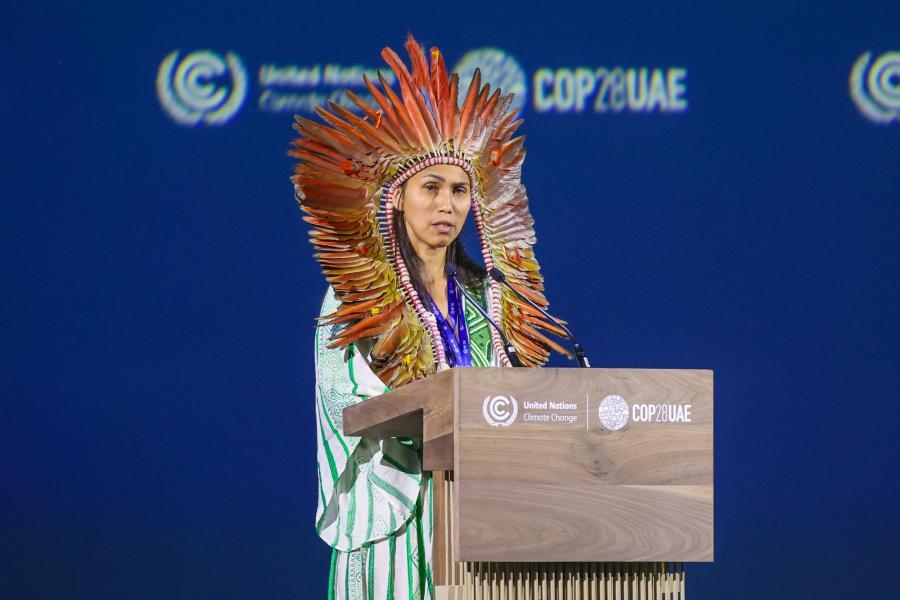
Indigenous leader at COP28
Isabel Prestes Da Fonseca, Instituto Zág, speaks at COP 28. (Photo by IISD/ENB Mike Muzurakis)

The challenge of including a reference to fossil fuels in a decision came from what I was told was a more “traditional” process of give-and-take negotiations. While this stalemate resulted primarily from a bloc of oil-producing countries, the division between developed and developing countries within the UNFCCC establishes a binary context for many debates. A number of countries in the “developing” category have outgrown that status, which was established through the annexes to this treaty that was adopted a few years before I was born. The resulting debates left me with the impression that the assumptions under which parties are expected to negotiate are not grounded in reality. If the basis for their negotiations does not match the current global context, I was left asking if it is a surprise that we are not making rapid progress.

The climate change convention is a landmark international agreement that gathers 198 countries to address a shared challenge. But there is a need to find a way around its built-in limitations. Although many questioned the value of registering around 100,000 individuals to attend COP 28, I saw the side events, special days, high-level forums, and more as evidence of a thriving public consciousness of the needs and solutions to protect this little blue planet we call home. And throughout the meeting, I recognized that I was watching history being made, and was proud to be writing its first draft in the Earth Negotiations Bulletin

Hillary Rosentreter is a policy advisor with IISD’s Tracking Progress team. Her work focuses on the community indicator system Peg and the successful implementation of the United Nations Sustainable Development Goals at the local level.

COP28 delegates
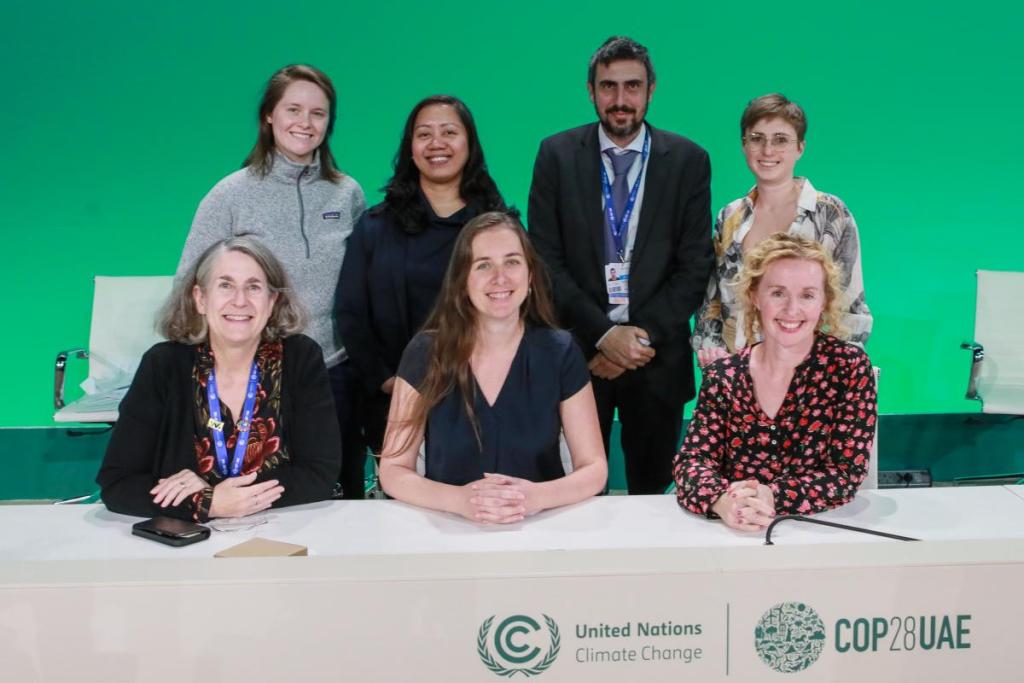
Earth Negotiations Bulletin's COP 28 reporting team (Standing, left to right) Hillary Rosentreter, Maria Cristina Mundin, Mike Muzurakis, Anna Dubrova (seated), Lynn Wagner, Jennifer Bansard, and Jennifer Allan.
Insight

Canadian Youth Want to See Stronger Climate Policy in 2024

IISD takes a look at what Canada's Local Conference of Youth is asking of policymakers after COP 28.

January 25, 2024

The 28th UN Climate Change Conference (COP 28) ended in late 2023, with negotiators heading back to their home countries and member states turning their focus inward to their national climate strategies. However, the discussions on climate policy and strategies don’t end with the COP, and Canadian youth still have a lot to say about what they want to see in the future.

In the months leading up to COP every year, youth from all over the world gather in Local Conferences of Youth (LCOYs), which fall under the UNFCCC’s official youth constituency. Ultimately, they produce policy documents that outline the priorities of young people on climate policy.

Canada’s LCOY in 2023 was hosted by the Human and Nature Youth Club and the Asia Forest Research Centre at the University of British Columbia. It brought together 250 youth from across the country to discuss their priorities in three major areas: sustainable systems, planetary health, and political, societal, and governance practices. They aimed their policy document at Canada’s federal and provincial level governments and focused on changes they would like to see here at home now that negotiations are over.

IISD’s Water Policy and Youth Engagement Officer, Emily Kroft, was one of the youth involved, helping create a policy document outlining key points and demands from Canadian youth on climate policy in Canada.

A Focus on Sustainable Systems

The 10 demands from the LCOY about sustainable systems cover everything from low-carbon energy to climate finance. Focusing on themes of carbon pricing, fossil fuel subsidies, and the need for a climate finance taxonomy, the participants want to see provincial and federal governments divesting from fossil fuels while at the same time investing in sustainable alternatives that align with the warming target of 1.5°C outlined in the Paris Agreement. They acknowledge Canada’s strengths and weaknesses regarding low-carbon energy. The prevalence of low-carbon electricity throughout the country is a strength; however, transportation is highlighted as an area that needs significant improvement. The authors also remind us that even non-carbon-emitting energy sources can have other environmental drawbacks that should also be accounted for. The list also has a section on sustainable cities, where the primary areas of concern are the importance of protecting urban green space and the need to transition away from automobile dependency. The common thread between both of these is intentional urban planning that encourages alternative modes of transportation, like cycling and public transit, and the incorporation of green space into urban areas.  

Cyclist Commuting In Calgary

Prioritizing Our Planet and a Focus on Food

In terms of the health of our planet overall, the youth authors’ statement featured 12 demands. Canada contains a unique richness of biodiversity as well as multiple anthropogenic factors that place this biodiversity at risk. While the authors feel Canada has generally been doing well in meeting commitments to the Aichi Biodiversity Targets, there is still significant room for improvement when it comes to protecting biodiversity. The authors promote the conservation of natural areas as a key priority, as well as using a diverse suite of metrics when measuring biodiversity and determining which areas need special protection. The three oceanic coastlines of Canada are facing plastic pollution and issues regarding sustainability in the fishing industry. Young people prioritize increased protections for the Arctic coast (which is at particular risk from oceanic warming) and greater transparency in the marine fishing industry on all coasts.

A topic that many Canadians are focusing on—food and agriculture—is highlighted in the youth statement, which encourages policy-makers to consider regionally specific strategies that account for the diversity of biomes across the country. The document also urges the reduction of greenhouse gas emissions at all points along the food production chain, from agriculture to household food waste. Reducing excess emissions produced by animal agriculture was also highlighted, in addition to offering more education about sustainable diets for regional populations. They also demand the implementation of easily accessible municipal composting programs so households can better manage their food waste.

Youth discussing climate adaptation

Political, Societal, and Governance Practices

While there were only two demands covering political, societal, and governance practices, the importance of these points highlights the eagerness and ambition of young leaders who want to take action to improve Canada and the world. There is a call for greater accountability from the federal government on hitting climate-related targets and greater inclusion of Indigenous Peoples at all levels of decision making. This takes into consideration climate justice, as Indigenous Peoples are disproportionately harmed by climate change.

Finally, the demands serve as a reminder that Canadian youth are highly motivated when it comes to climate politics and are participating in many different ways, from volunteering during elections to sitting on advisory committees. The contents of this policy document speak for themselves—Canadian youth are knowledgeable when it comes to sustainability policy. All governments need to do is open a seat at the table, and Canadian youth will contribute their incredible passion and knowledge to policy at all levels. Specifically, the authors demand greater inclusion of Indigenous youth, meaningful opportunities for youth co-leadership, and that youth stakeholders who participate in meetings be provided with the same exclusive documents available to other stakeholders.

Pedestrians walking in Montreal

Themes for Our Future

The full list of demands for policy-makers created by the Canadian LCOY goes into greater depth into these points and delves beyond what is covered here. However, there are a few themes emerging as priorities for the Canadian youth involved in its development.

First is the importance of taking greenhouse gas emissions seriously across all sectors of the economy. Whether it be demands for divesting from fossil fuels in the climate finance sector, calls for reduced emissions in agriculture, or reduced automobile dependency, every focus area ultimately comes back to this one issue. Canadian youth name the limiting of fossil fuel emissions as a high priority.

Indigenous inclusion in decision making is at the heart of what Canadian youth want to see when it comes to impacting climate policy. Indigenous Peoples are disproportionately affected by the impacts of climate change, and Canadian youth are taking notice, making clear how important it is that diverse voices are heard.

Finally, the report stresses the need to set up Canadians for success when it comes to living sustainably. This includes designing cities to reduce the necessity of car ownership, making food production more sustainable, and making it easier for everyday Canadians to avoid plastic waste. Canadian youth have identified how hard it is to live a sustainable lifestyle without the help of strong, sustainable policies being implemented at all levels. Policy-makers should take note of this concern among the next generation of leaders.

Canadian youth have a lot to say when it comes to climate policy in Canada, and they have the knowledge to back it up. Make sure to check out the LCOY 2023 Policy Document whether you are a decision maker, a climate expert, or even just a supporter of youth leaders.

If you are a Canadian youth who wants to learn more about policy and its impact or want to prepare for a career in sustainable development, IISD Next hosts a Campus Workshop Series on Sustainability each academic year. Sign up to learn when registration opens and to learn more about the series.

Insight details

Topic
Climate Change Adaptation
Region
Canada
Impact area
Climate
Nature
Insight

The Critical Next Step: What you need to know about Canada’s 2030 climate target

January 22, 2024

At the close of 2023, Environment and Climate Change Canada released the first official Progress Report on its 2022 Emissions Reduction Plan. The report details progress toward the government’s 2030 climate goals as mandated by the Net Zero Accountability Act, forecasting that, if all modelled policies are fully implemented, national emissions will fall to 36% below 2005 levels in 2030. A parallel, independent assessment by the Canadian Climate Institute (CCI) mirrors these findings, forecasting a 34%–36% reduction. While these reports confirm that progress has been made in recent years to reduce Canada’s emissions, they also show that current measures are insufficient to reach the government’s 40%–45% reduction target. To close this gap and help avoid the worst impacts of climate change, it is essential that the federal government implements stronger policies alongside a clearer communications strategy.

What are Canada’s climate targets?

Federally, Canada has two complementary climate targets. The first is achieving “net-zero by 2050,” meaning that any new greenhouse gas emissions from 2050 onwards are offset by verifiable and permanent removals. To prevent the most dangerous effects of climate change, this is a necessary target for all countries, not just Canada. The federal government’s second climate target is to reduce national greenhouse gas emissions by 40% to 45% relative to 2005 levels by 2030.

Provincially, most governments echo the federal goal of “net-zero by 2050,” but 2030 targets are still rare. According to CCI, “three quarters of Canada’s emissions come from provinces and territories without their own legislated emissions reduction targets for 2030.” This discrepancy reflects a tension between the two levels of government regarding the pace of the energy transition, as articulated in the recent statements of Alberta’s premier about the forthcoming Federal Clean Electricity Regulations. That is, Premier Smith notes Alberta already has a target of reaching net-zero by 2050, so why bother with stringent 2030 regulations?

Why Canada’s 2030 target is critical for keeping global temperature rise to 1.5°C

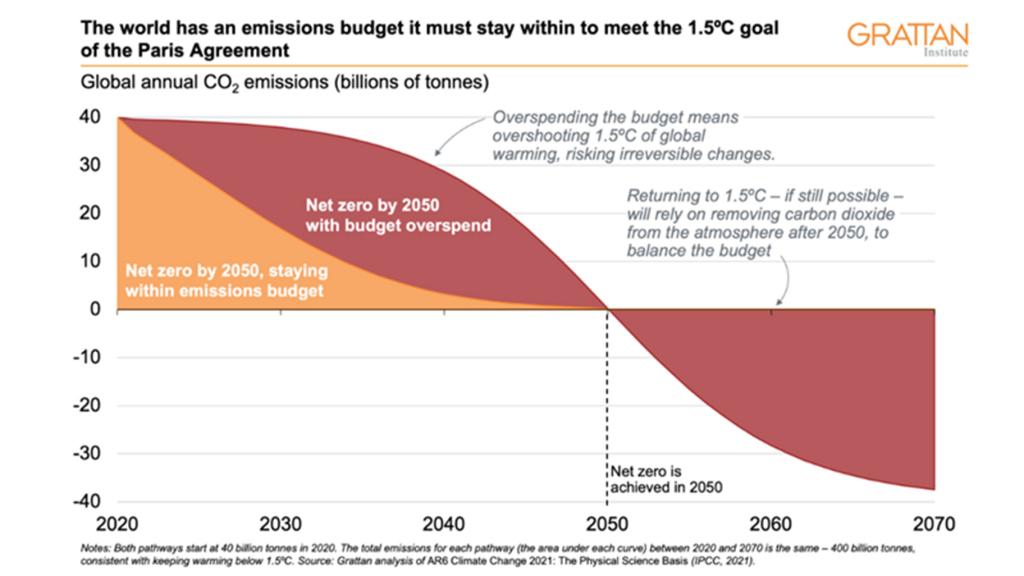
Canada’s 2030 target is essential for maintaining a stable climate for two main reasons. The first is scientific. When the International Panel on Climate Change recommended the world reach net-zero by 2050, it simultaneously called for emissions to fall by 45% (relative to 2010) by 2030. What matters for the climate is not the specific year the world stops emitting greenhouse gases but rather the amount of greenhouse gases in the atmosphere. Figure 1, where total emissions are represented by the area under the line, makes this clear. Even if the world achieves net-zero by 2050, without strong emissions reductions by 2030 it becomes very difficult to prevent more than 1.5°C of global warming. In other words, reaching net-zero by 2050 without taking 2030 targets seriously risks missing the 1.5°C temperature target with disastrous consequences worldwide—including billions of dollars in damage to the Canadian economy.

This figure compares net-zero by 2050 trajectories.
Figure 1. Comparing net-zero by 2050 trajectories. Source: Ha, 2021.

The second reason for a strong 2030 emissions target is political. By establishing a specific and measurable goal, it becomes easier to assess the government’s progress in addressing climate change. This creates an incentive for politicians to fulfill their commitments to the public. The risk with a “net-zero by 2050” target on its own, however, is that political tenures and election cycles are short. Multi-decadal targets like this offer a convenient delay tactic for politicians who are otherwise unmotivated to address climate change. A 2030 target is essential to keep governments on track for net-zero by 2050, and ultimately that 1.5°C temperature target, by holding our representatives accountable along the way.

What more can be done to meet Canada’s targets?

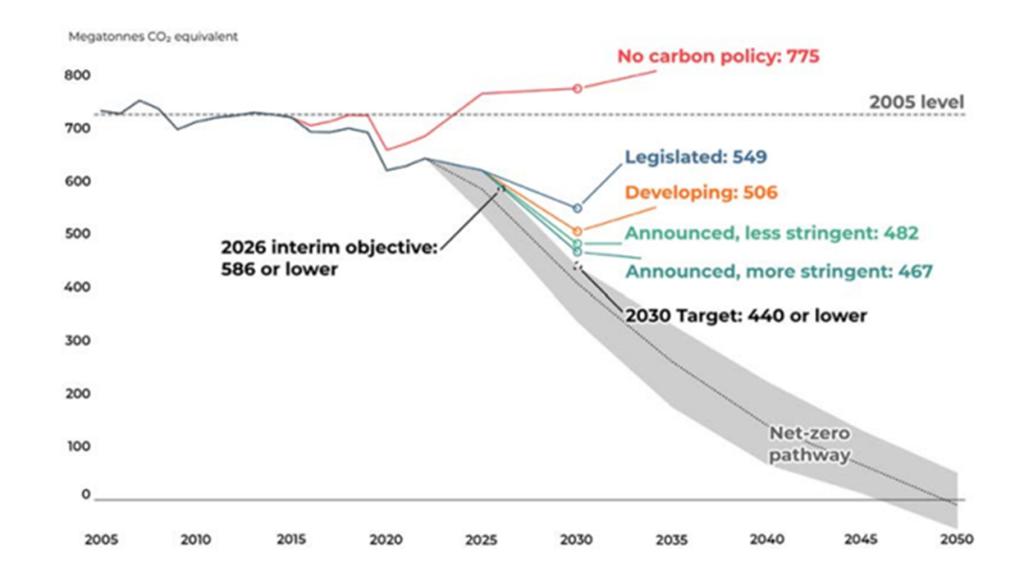
The government’s progress report shows that despite significant advances in climate policy, more must be done to meet Canada’s critical 2030 targets (Figure 2). To start, announced but unimplemented policies must be designed as stringently as possible. A key example here is the proposed emissions cap for the oil and gas sector, Canada’s most polluting industry. To reach a 40%–45% reduction in emissions by 2030, the government must begin by closing the policy’s proposed loopholes, thereby increasing certainty in the emissions reduction outcomes that the government claims the policy will have. Other policies, such as the clean electricity regulations, must also be implemented as soon as possible. Even then, however, new, innovative policies will still be needed. There are only 6 years to 2030, and there is a lot of work left to do.

This figure shows Canada’s emissions pathways, according to the institute’s independent modelling of the 2023 progress report.
Figure 2. Canada’s emissions pathways, according to the institute’s independent modelling of the 2023 progress report. Source: Sawyer et al., 2023, p. 21.

Beyond policy development, there is a broader communications challenge facing the federal government. Opponents of climate policy have often tried to link specific measures to the cost-of-living challenges currently facing Canadians, particularly criticizing the carbon tax. This is in spite of the fact that most households benefit from the tax and rebate system. Some provincial governments, meanwhile, show no intention of setting or meeting 2030 targets, while also disputing the federal government’s authority to intervene in response to their inaction. While it is correct that provinces have jurisdiction over natural resources, the federal government can regulate matters of national concern—such as greenhouse gas emissions—in a way that incidentally affects provincial matters. Opposing legal challenges are thus overstated, but they nonetheless carry weight in public discourse. To build the public support necessary to accelerate Canada’s climate agenda, the government will have to do more to address these rhetorical and legal challenges head-on—confidently and publicly.

Insight

Ending Canada’s Support for Fossil Fuels: Tracking Progress and Charting Next Steps

Canada has committed to ending subsidies and public financing for fossil fuels at home and abroad and has taken some important steps along the path. Our experts set out the journey so far, and how it can improve.

January 15, 2024

One crucial step to speed up the worldwide energy transition is reallocating public financial support from fossil fuels to renewable energy sources. The Intergovernmental Panel on Climate Change warned that government support for the fossil fuel industry financially is “severely misaligned” with the goals of the Paris Agreement. Canada has made promises to stop putting public funds into fossil fuels, but what progress has been made? And how can it improve? 

Funding Fossil Fuels: How far has Canada come? 

Canada has committed to ending subsidies and public financing for fossil fuels at home and abroad and has taken some important steps along the path. In 2021, it signed on to the Clean Energy Transition Partnership, which commits countries to ceasing to provide new direct public support for the international unabated fossil fuel energy sector by the end of 2022 and prioritizing support for clean energy. In 2022, Canada became one of the first countries to make good on this commitment by publishing a policy to stop providing public finance for fossil fuel projects abroad. More recently, the country committed to ending domestic public finance for fossil fuels, pledging to publish a plan by fall 2024. And in July 2023, 14 years after its original commitment, Canada published its long-awaited assessment framework for inefficient fossil fuel subsidies.  

These are all essential steps to moving money away from fossil fuels. But the details of these policies, how they are implemented, and how they are enforced will make or break Canada’s commitments. Let’s take a closer look. 

Plugging the Holes in the Frameworks 

Canada’s policies on international public finance and fossil fuel subsidies have some notable strengths. The subsidies policy includes a strong definition aligned with the World Trade Organization’s. Moreover, the policy requires fossil fuel projects that would receive support to prove a lack of renewable energy alternatives and include an assessment of the risk of stranded assets. 

But the policies also include loopholes that could jeopardize their effectiveness—and Canada’s reputation as a climate leader. These loopholes include the following: 

  • Natural gas. The international public finance policy allows support for the production of natural gas-fired power in some circumstances, which is incompatible with Paris Agreement targets. Any support allowed in an emergency should be clearly defined and time-bound, ensuring no future lock-in of fossil fuel infrastructure.  

  • Carbon capture, utilization, and storage (CCUS). The policies allow support for CCUS technologies in the fossil fuel and power generation sectors. CCUS is expensive, energy intensive, slow to implement, and unproven at scale, making it an inefficient use of public funds. Funding CCUS in the fossil fuel sector violates the polluter-pays principle: those responsible should be financially liable for cleaning up their pollution. 

  • Lack of accountability. The policies lack details on implementation and enforcement, as well as sufficient transparency to be held accountable. It is essential to have guidelines for how the policies will be put in place across departments and who will keep the government accountable for its promises. For example, Canada has not yet published a list of tax and non-tax subsidies identified in its self-review—and publicly disclosing subsidies is a critical first step to ensuring accountability.

To fulfill its own commitment, Canada needs to publish a policy to end domestic public finance for fossil fuels immediately. 

The biggest hole in Canada’s current policies is domestic public finance for fossil fuels. Most of Canada’s financing for fossil fuels comes from within its own borders: Export Development Canada, the national export credit agency, has provided over CAD 88 billion to the oil and gas sector since 2016, including CAD 19 billion in 2022.

Ending Fossil Fuel Financing at Home 

What does the roadmap to ending domestic public financing for fossil fuels in Canada look like? We have three recommendations. 

First, it should close the loopholes in existing policies. Any policy framework should ensure that the government does not enable financing for infrastructure that would lock in fossil fuel use far into the future. Investments in natural gas and unproven, expensive technologies such as CCUS only entrench carbon-intensive infrastructure. 

Second, it should reproduce the strengths of international public financing policy. Canada’s policy for international public financing of fossil fuels is already robust in its scope and requirements for due diligence. A policy for ending domestic public finance of fossil fuels should:  

  • align with the goal of the Paris Agreement to hold the increase in global average temperature to 1.5°C above pre-industrial levels, 

  • exclude the financing of “abated” fossil fuel production, 

  • rigorously assess and manage risks of stranded assets and carbon lock-in, and 

  • require proof that support for fossil fuels will not hinder the transition to renewables where developing renewables would be possible. 

Most importantly, the policy should outline how recovered funding will be redirected to clean energy. Canada’s policies should not only include robust conditions for phasing out financing for fossil fuels. They should also provide details on how the money will be redirected toward renewable energy projects.

Experts estimate that Canada’s public clean electricity support needs to be scaled up nearly tenfold from its current level to be on track with a 1.5°C-aligned scenario.

Canada is already a first mover internationally in ending the financing of fossil fuels, but fully aligning financial incentives with climate policy requires closing the gap in domestic public finance and eliminating loopholes in its existing policies.  

Insight details

Topic
Energy
Region
Canada
Insight

IISD's Best of 2023: Publications

As 2023 draws to a close, we revisit our most downloaded IISD publications of the year.

December 29, 2023

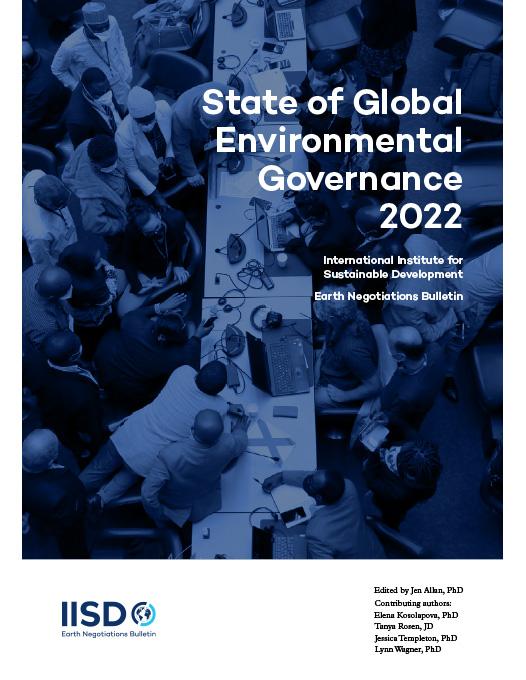
1. State of Global Environmental Governance

State of Global Environmental Governance 2022 report cover showing an overhead view of negotiators at international meeting.

With the pent-up need for countries to agree on how to address climate finance, plastic pollution, biodiversity loss, and other pressing environmental issues, a tidal wave of in-person negotiations swept through 2022. The globetrotting Earth Negotiations Bulletin team reviewed an unprecedented year in sustainable development negotiations, drawing links between talks, considering the context of an uneven pandemic recovery, and reflecting on the next steps in addressing the triple planetary crisis.


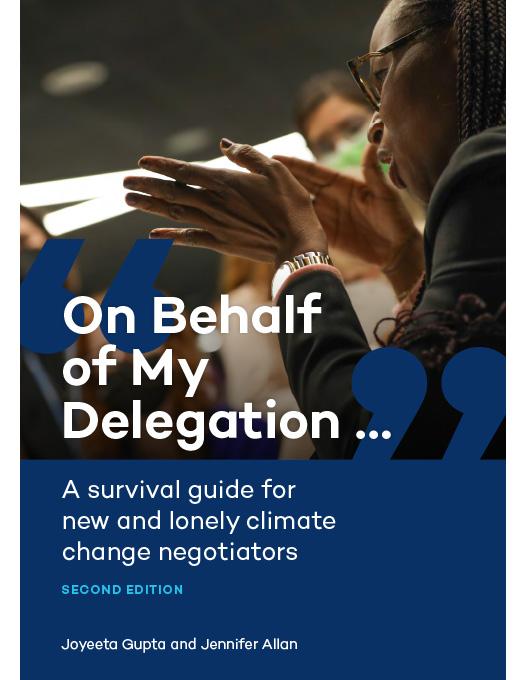
2. On Behalf of My Delegation (Second Edition)

"On Behalf of My Delegation ..." book cover showing a delegate making a speech at an event.

This Survival Guide exists to empower meteorologists, environmentalists, policy-makers, or scientists who have to don the garb of a “negotiator” at the talks or professional negotiators with little understanding of the variety of issues that arise in a climate change negotiation. This practical manual explains the substance and procedures of climate talks, mixing theory with practical tips, ideas with material for further research, and words with figures. This guide is written with special consideration for negotiators from the Global South, who arrive at climate conferences with fewer resources and colleagues than the delegations of the Global North. With accessible definitions and advice for all, this second edition of On Behalf of my Delegation ensures that negotiators are equipped to make an impact in negotiations for our very survival.


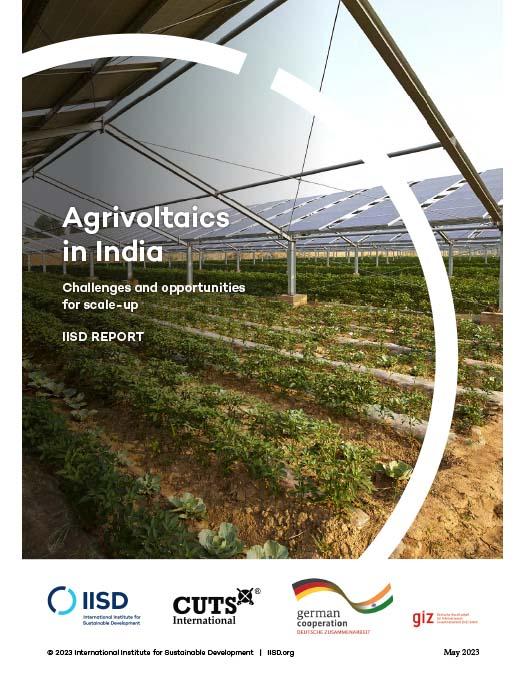
3. Agrivoltaics in India: Challenges and opportunities for scale-up

Agrivoltaics in India: Challenges and opportunities for scale-up report cover

Agrivoltaics —the simultaneous use of land for both agriculture and photovoltaic (PV) power generation—offers a potential solution to the competition between agriculture and renewable energy for land resources that may arise in the future in India. This background paper assesses the current state of development and identifies the challenges and opportunities for the commercialization of agrivoltaics in India. The findings in this paper are designed to support state agencies, developers, and other stakeholders in the faster adoption of agrivoltaics by providing policy recommendations and proposing business models, along with a financial and technical transition mechanism.


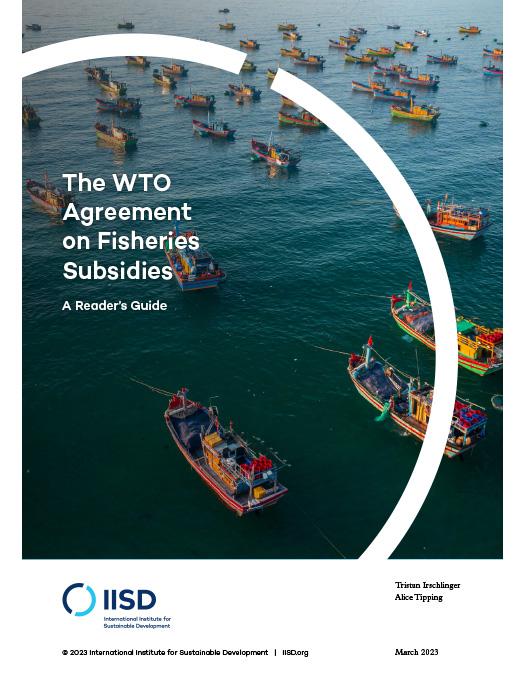
4. The WTO Agreement on Fisheries Subsidies: A reader’s guide

The WTO Agreement on Fisheries Subsidies: A Reader's Guide showing a group of small boats fishing on the coast

Members of the World Trade Organization concluded a multilateral deal to curb harmful fisheries subsidies in June 2022. This reader's guide provides a clear overview of the WTO Agreement on Fisheries Subsidies. It describes the rules and legal provisions that have been agreed upon and succinctly explains what the disciplines require. 


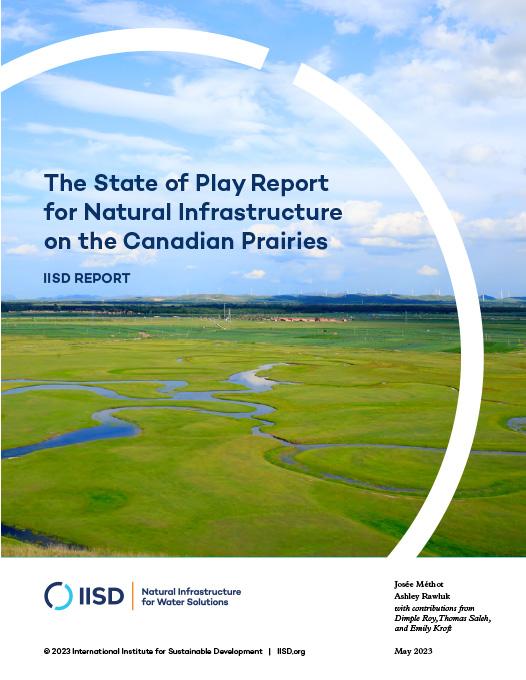
5. The State of Play of Natural Infrastructure on the Canadian Prairies

The State of Play Report cover with photo of water running across Canadian Prairies

Constrained finances, fragile water resources, and catastrophic weather events are driving the need to rethink water infrastructure for present and future generations. With aging and deteriorating water infrastructure across the Canadian Prairies, natural infrastructure can offer a unique and innovative solution. We sat down with key experts across the region and reviewed the latest literature to determine how to take natural infrastructure from novel to normal on Canada's Prairies. 


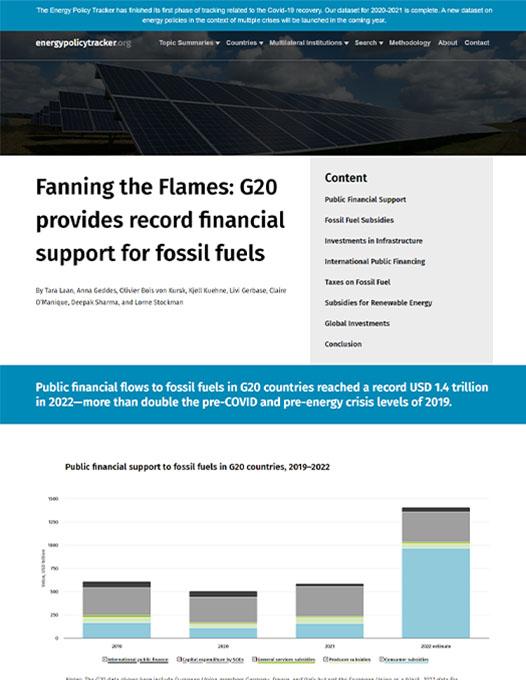
6. Fanning the Flames: G20 provides record financial support for fossil fuels

Fanning the Flames: G20 provides record financial support for fossil fuels digital story landing page

This digital story provides the latest evidence regarding the extent to which the G20, as a whole, has made progress in aligning public financial flows with the need to reduce greenhouse gas emissions. The first four sections cover the main types of support for fossil fuels: subsidies, investments by state-owned enterprises, lending from public financial institutions, and under-taxation. The final two sections examine progress on renewable energy subsidies and investments. Each section contains recommendations for the G20.


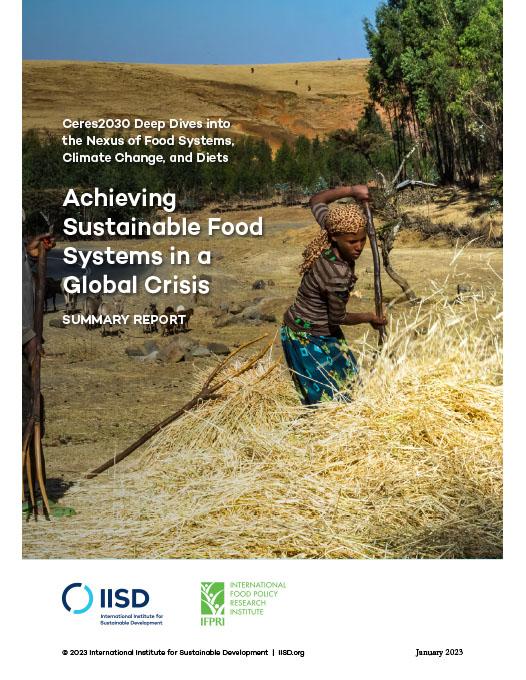
7. Achieving Sustainable Food Systems in a Global Crisis: Summary report

Achieving Sustainable Food Systems in a Global Crisis: Summary Report

This report summarizes the evidence-based and costed country roadmaps for effective public interventions to transform agriculture and food systems in Ethiopia, Malawi, and Nigeria in a way that ends hunger, makes diets healthier and more affordable, improves the productivity and incomes of small-scale producers and their households, and mitigates and adapts to climate change.


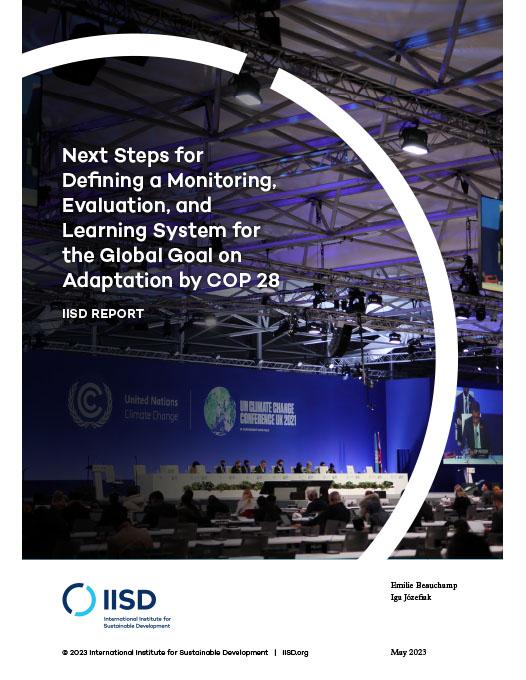
8. Next Steps for Defining a Monitoring, Evaluation, and Learning System for the Global Goal on Adaptation by COP 28

Next Steps for Defining a Monitoring, Evaluation, and Learning System for the Global Goal on Adaptation by COP28 report cover with photo of COP negotiations

In 2022, at the 26th UN Cliamte Change Conference (COP 26), countries created the Glasgow-Sharm-el Sheikh (GlaSS) work program on the Global Goal on Adaptation (GGA), a 2-year program aimed at exploring how the GGA can be operationalized. Additionally, countries agreed to use the last year of the GlaSS to finalize a GGA framework with a view to adopting it at COP 28. This report first provides an overview of key concepts and elements needed under monitoring, evaluation, and learning systems, along with examples and relevant conceptualizations for the GGA for actors to advance their understanding and views of a prospective GGA framework by COP 28.


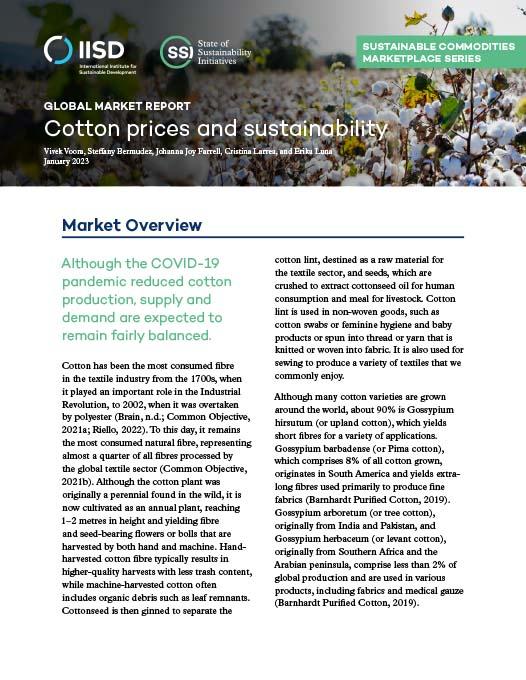
9. Global Market Report: Cotton prices and sustainability

Global Market Report: Cotton prices and sustainability report cover

From the clothes we wear to critical medical equipment, cotton is the most widely used natural fibre in the textile industry today, accounting for almost a quarter of all fibres manufactured worldwide. Cultivating cotton provides livelihoods for 100 million households, of which 90% are in lower-income countries. An additional 350 million people support cotton production and basic processing by working in transportation, ginning, baling, and storage. This report presents and analyzes the sustainable production and consumption trends in the global cotton sector and includes a detailed exploration of how adopting voluntary sustainability standards can affect prices and farmer incomes.


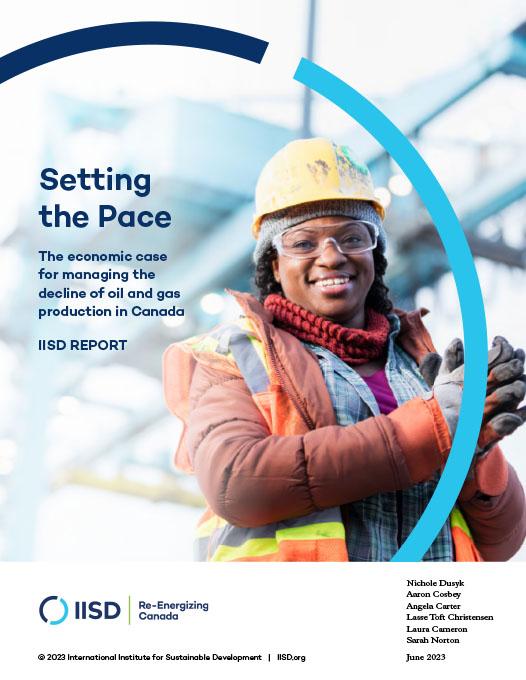
10. Setting the Pace: The economic case for managing the decline of oil and gas production in Canada

Setting the Pace report cover showing a woman in her 30s wearing a hard hat, safety vest, and safety goggles.

The oil and gas sector's role as one of Canada's economic engines is already changing. This report analyzes successful energy transitions in other jurisdictions. It finds that by enacting policies, the government can prepare for the phase-down of oil and gas production, protect Canadian workers and communities, and seize new economic opportunities.

Insight

What's Next After COP 28: Food systems

Slated to be a game changer for food systems transformation, COP 28 ended with mixed results. Our expert unpacks the wins and disappointments for food systems and what’s needed next.

December 19, 2023

The gavel has come down on the 28th UN Climate Change Conference (COP 28). Food systems and agriculture were undoubtedly a central pillar of the UAE’s COP Presidency, but what do delegates take with them as they head home? What do COP 28 food and agriculture outcomes mean for domestic food systems transformation efforts? And where do we need to turn our attention as we look ahead to COP 29 and beyond?

Where Did We Stand on Food and Agriculture at the Start of COP 28?

Food systems continued to climb political agendas in 2023. Growing awareness of the unique role they can play in providing solutions to climate, biodiversity, and sustainable development challenges featured in international processes and forums such as the G7 and G20, the UN General Assembly, and the Africa Climate Summit. 

The UAE was clear in its intention to place food systems transformation at the heart of its COP 28 presidency. It sought to translate growing political will into concrete commitments for action and to unlock additional investment to accelerate closing the food systems transformation financing gap

In reality, the food and agriculture outcomes from COP 28 are something of a mixed bag. 

A Breakdown of Progress Against Both Negotiated and Non-Negotiated Outcomes Tracked by IISD at COP 28

Progress has been made on adaptation, but the ambition and momentum we saw during the World Climate Action Summit—with over 130 countries signing the COP 28 UAE Declaration on Sustainable Agriculture, Resilient Food Systems, and Climate Action—failed to carry over into either the Global Stocktake or the Sharm El Sheikh Joint Work on Implementation of Climate Action on Agriculture and Food Security. 

Negotiated Outcomes

What’s needed for sustainable food systems What the outcome was 
1. Emphasis within the Global Stocktake on the critical importance of food systems transformation to meet the mitigation, adaptation, finance, and loss and damage goals of the Paris Agreement and on food systems-specific indicators in nationally determined contributions (NDCs). Despite the inclusion of language on sustainable agriculture and climate-resilient food production, supply, and distribution, the Global Stocktake decision text fails to acknowledge the huge mitigation potential of food systems and land use. It also does not mention the need to shift food systems away from a dependence on fossil fuels and scale up renewable energies. 
2. An agreed workplan for the Sharm El Sheikh Joint Work, including dedicated workshops on agroecology (and on food systems as a whole) and a robust coordination structure to build linkages across the United Nations Framework Convention on Climate Change as well as with opportunities for financing. The Sharm El Sheikh Joint Work negotiations concluded with no consensus reached on either a roadmap or the content of the work program. Continued disagreement over whether a coordination group would improve implementation of the Joint Work stalled progress. Negotiations will resume in Bonn in June 2024, over a year and a half after the Joint Work was formally adopted.
3. Recognition that food systems transformation is critical to achieving a global adaptation target and the need to include food systems-specific targets and indicators in a global framework to measure progress under the Global Goal on Adaptation (GGA). The GGA decision text includes a target for countries to attain “climate-resilient food and agricultural production and supply and distribution of food” by 2030, as well as emphasizing the importance of sustainable and regenerative food production to improve access to food and nutrition for all. 2030 targets are also included for areas closely linked with food systems—water, health, biodiversity and ecosystems, poverty eradication, and protection of Indigenous Peoples’ culture and knowledge. 

Non-negotiated Outcomes

What’s needed for sustainable food systems What the outcome was 
1. Widespread engagement with—and commitment to—the Emirates Declaration on Sustainable Agriculture, Resilient Food Systems, and Climate Action, particularly from large agricultural producing economies, spearheaded by a dedicated coalition of high-ambition countries to drive implementation. At the time of writing, almost 160 countries have endorsed the Emirates Declaration. This includes large agricultural producers, such as Brazil, the United States, the European Union, and China. The Declaration includes time-bound targets, such as updating NDCs, national adaptation plans (NAPs), and national biodiversity strategies and action plans (NBSAPs) to include food systems targets by 2030 at the latest. It also encourages governments to repurpose domestic support to agriculture to better deliver for people, planet, and nature. 
2. The Food and Agriculture Organization of the United Nations’ (FAO’s) Global Roadmap: Achieving SDG2 without breaching the 1.5C threshold should set out an ambitious package of agrifood actions, as well as clear milestones on issues such as methane emissions reductions. The FAO should also set out clearly the process and actors involved in developing future iterations of the roadmap post-Dubai. The FAO Global Roadmap recognizes interlinkages between food and energy systems, as well as the need for subsidies to drive dietary shifts to improve health and nutrition outcomes. It also includes a target on food loss and waste in line with SDG target 12.3. However, targets for scaling up renewable energies and regenerative agriculture in food systems are currently missing, and the ambition of the methane emissions reduction target remains low and highly dependent on the availability and affordability of relevant technologies. 
3. A strong commitment from parties and observers to recognize the interdependency of food and energy systems transformations and that a focus on food systems transformation must not come at the expense of a focus on the phase-out of fossil fuels. There was a concerted effort from a sizable contingent of the food systems community to make the link between food systems transformation and energy systems transformation, and the FAO Global Roadmap likewise makes the connection. However, both the Emirates Declaration and the Global Stocktake decision text fail to refer to the critical need to phase out fossil fuels in food systems and to scale up renewables in parallel. 

Building Momentum Toward COP 29 and Beyond

As the dust begins to settle on COP 28, how can policy-makers maintain and build momentum toward food systems transformation into 2024? 

Firstly, considerable trust- and bridge-building efforts must be made between negotiating blocs ahead of the Bonn intersessionals in June 2024 and the next formal meeting of agriculture negotiators. Consensus must be reached swiftly on governance of the Sharm El Sheikh Joint Work, to allow sufficient time to advance discussions on a roadmap, operationalization of the online portal, and the content of the thematic workshops. 

Swift and decisive action toward the implementation of the Emirates Declaration is needed to build on the momentum generated in Dubai. The UAE should ideally convene a meeting in the first quarter of 2024 to iron out the framework and timeline for tracking progress on implementation, particularly on country efforts to include food systems indicators in NDCs, NAPs, and NBAPs ahead of the planned COP 29 stocktaking moment. 

World Trade Organization (WTO) rules on agricultural trade will play a critical role in a global transition to more sustainable production, consumption, and trading of food and agricultural goods. Countries that have endorsed the Emirates Declaration and committed to revising how they support their respective agriculture sectors should carry this commitment forward into WTO negotiations ahead of the WTO Ministerial Conference in February 2024, particularly ongoing negotiations around the reform of rules on agricultural support. 

And finally, the GGA sets out 2030 targets for the development of “climate-resilient food and agricultural production, supply and distribution of food.” Achieving these targets will depend on access to sufficient public and private finance. The FAO Global Roadmap is a step in the right direction toward stimulating increased investment. However, future iterations should ensure targets also reflect language in the GGA decision text regarding the need to scale up sustainable and regenerative production, as well as engage more openly and deeply with a wide variety of stakeholders—including smallholder farmers, women, youth, and Indigenous Peoples—to ensure investment generated is channelled to activities that best serve the needs and priorities of frontline food systems actors. 

We saw a suite of encouraging financial pledges for food systems announced at COP 28. Prompt action on these four steps will be key to ensuring they underpin the transition to sustainable, resilient food systems—and help leverage further investment going forward.

Insight

We Are on Course for a Very Dangerous Amount of Warming—But There Is Still Time to Change Course

December 8, 2023

On Monday, December 3, an event at the UN Climate Change Conference (COP 28) conference highlighted findings from United Nations Environment Programme’s (UNEP’s) Emissions Gap Report 2023.

As well as revealing the scale of the disparity between current emissions trajectories and the targets set out under the Paris Agreement, this year's report warns that the world is heading for a temperature rise of about 3°C by the end of the century unless countries now deliver more than they have already promised to tackle climate change.

Greg Muttitt, a senior associate at the International Institute For Sustainable Development (IISD) and lead author of a chapter of the report, was a panellist at the COP 28 event, where he spoke about what is needed to achieve a global energy transformation in line with the Paris Agreement goals.

As attention now turns to whether a "phase-out" of all fossil fuels can be met in the final COP 28 decision, or whether global leaders ultimately agree on a "phase down," Muttitt explains that existing fossil fuel projects have already put us on course for "very dangerous amount of warming," with urgent action now needed to rapidly halt polluting industries.

What are the headline findings in the Emissions Gap Report?

Greg Muttitt: The key finding of the report as a whole is that we are well off course from what is needed to achieve the Paris goals. Based on current policies, we're headed for three degrees of warming, which is a catastrophic level of warming.

Even taking into account the NDCs [countries' agreed climate plans, known as nationally determined contributions], it's 2.5°C to 2.9°C of warming. So there's a massive gap. There's a gap in 2030 ambition, and to get on course for limiting warming to 1.5°C,  the emissions need to be 42% lower than we're currently on course for.

I focused on a chapter which set up the energy part of the Emissions Report. The first part of the report is about assessing the gap—are we on course? The second part is about policy solutions. Clearly, energy is crucial to this—it accounts for the majority of greenhouse gas emissions—and a central finding of our section of the report is if you add up the fossil fuel infrastructure which is already built, operated over its lifetime, the emissions will be several times what we can afford to emit to limit warming to 1.5°C.

What that means is that some of the existing infrastructure needs to be closed. Some oilfields need to be closed. Coal mines, power plants, and some industrial systems which are fossil fuel-based—all must be closed before the end of their natural economic life, and we need to stop opening up new ones.

If we open new ones, then even more have to be closed early. There's a big overhang of too much fossil fuels.

Why should this concern us with COP 28 underway in Dubai?

Greg Muttitt: It matters in two respects. One is the global stocktake, which starts off a process of governments making new emissions pledges targeting 2035, so it's important to highlight that we're way off track and need a massive scale-up of ambition in emissions reductions.

Also, fossil fuels are going to be a central issue at COP 28—a key measure of COP 28's success is: will there be a clear decision on phasing out all fossil fuels?

The last two COPs have had decisions on "phasing down" unabated coal power. There was a big push at last year's COP in Egypt to expand that to all fossil fuels, and a lot of governments are going into COP 28 with that as a key part of their negotiating mandate.

What the Emissions Gap Report and the UNEP’s Production Gap Report do is add to the evidence base that emphasizes how urgent it is to phase out fossil fuels and actually have quite a rapid phase-out pathway.

What would be a good result from COP this year?

Greg Muttitt: At this point, we need a concrete negotiated decision in which all governments commit to a phase-out of all fossil fuels. We would like to see individual governments talking about what the timeline for that is, but the key piece is phase-out of oil, gas, and coal—all three fossil fuels—in the negotiated decision text.

Has there been any meaningful progress so far and what can countries learn from those who have made any progress?

Greg Muttitt: If you express it in terms of emissions pledges, then the Emissions Gap Report finds there is a bit of progress, but it is way smaller than what it needs to be. At the time of the Paris Agreement in 2015, the projections for 2030 were a 16% [emissions] growth from 2015 levels. Now the projections are a 3% growth. So there is less growth than there was and that is because of upgraded NDCs, but actually there needs to be a very rapid decline—approaching 50%—whereas there is still projected growth, albeit small growth. So there's a bit of progress there.

Where I see more progress is in voluntary initiatives in which governments come together and make higher-ambition pledges. So a couple of great examples of that are the Beyond Oil and Gas Alliance (BOGA) where governments commit to phasing out oil and gas production— and the group is growing fast since it was established in Glasgow 2 years ago. The other thing, also from Glasgow, was the Clean Energy Transition Partnership (CETP), which commits to stopping international public finance for fossil fuels and moving it into clean energy.

BOGA signed up its first significant global south producer this year, which was Colombia. Meanwhile the CETP has shifted billions of dollars out of fossil fuels and into clean energy. One thing we really need to see is more governments getting involved in BOGA and CETP and setting more ambitious targets that are more aligned with the science than we're currently seeing.

The UN’s Emissions Gap Report, Production Gap Report, and Adaptation Gap Report revolve around the concept of a "gap." What are the common threads in these reports, and what does the gap mean?

Greg Muttitt: The common thread between the reports is the gap in climate ambition.

Governments need to take climate change more seriously than they are doing. The three reports unpack that in different ways.

As well as the Emissions Gap Report saying they need to cut emissions more deeply than they are currently planning to in their NDC pledges, the Production Gap Report says they need to also plan a reduction in fossil fuel production rather than an increase as currently planned.

The Adaptation Gap Report says there is a gap in adaptation financing, and governments—particularly in the Global North—need to scale up the amount of finance they're providing to enable adaptation in the Global South.

These are three gaps which are all part of the picture on climate ambition, and collectively they say that governments need to get more serious about climate change.