Report

Protecting the Right to Tax Mining Income

Tax treaty practice in mining countries

The goal of this practice note is to help government officials in resource-rich developing countries who may be deciding to adopt or renegotiate tax treaties to protect their right to tax mining income.

November 27, 2021

The mining sector often involves multinational investors. This gives rise to a range of cross-border transactions and a key question for governments: Which country has the right to tax the income from these transactions and under what conditions?

International tax treaties signed by governments seeking to attract foreign investment can become tax avoidance vehicles for multinational corporations, especially in resource-rich developing countries. Under tax treaties without proper consideration for mining, governments can end up collecting substantially less revenue from the sector than under their domestic law.

This publication is a practical tool to help governments avoid financial risks linked to tax treaties—specifically in resource-rich developing countries where the mining sector may be a particularly important source of government revenue.

The practice note outlines the costs and benefits of entering tax treaties as well as how to manage or renegotiate existing agreements. It explains how tax avoidance can occur under poorly crafted treaties and concludes with general recommendations to help governments avoid or reduce their revenue risks. It also highlights several recent examples where tax treaties led foreign investors to avoid paying tax in the resource-hosting country as wells as cases where governments successfully renegotiated treaties to better protect their tax base with fairer and more sustainable tax treaties.

Report

A Business Case for Investment in Canadian Community-Based Water Monitoring

November 25, 2021

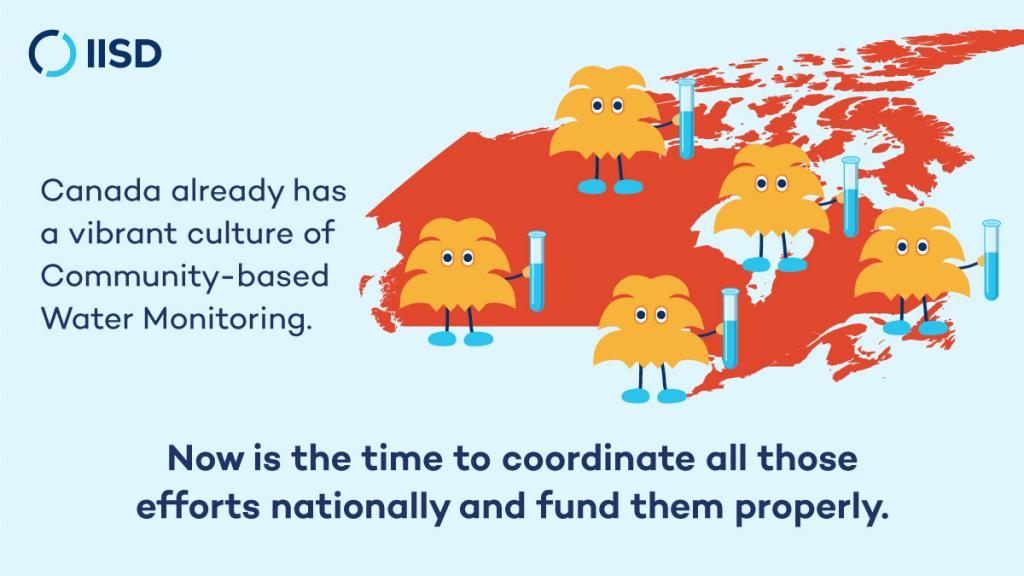
The time to coordinate and fund Canada's vibrant culture of community-based water monitoring (CBWM) is NOW.

In this new report and shorter policy brief we explain:

  • WHY CBWM is a cost-effective and scientifically rigorous way for Canadians to collect data on the quality of fresh water across watersheds,
  • HOW we need to coordinate and fund these efforts,
  • WHEN we need to take action,
  • WHAT the role of the burgeoning Canada Water Agency should be.
Map of Canada with text

Report details

Topic
Measurement, Assessment, and Modelling
Water
Region
Canada
Impact area
Climate
Nature
International Governance
Publisher
IISD
Copyright
IISD, 2021
Report

Notes on a Field Season: IISD Experimental Lakes Area Annual Report 2020-2021

This year, the world's freshwater laboratory's annual report brings you a twist on one of our iconic yellow field notebooks.

November 23, 2021

Take NOTE!

This year, our annual report celebrates our team heading back to the field—to kick off some exciting new research—by offering up one of our classic yellow field notebooks. With a twist.*

Discover whose languages we are speaking, explore how and why we are working with the African Great Lakes, peruse some notes on our field season and—of course—much, much more.

(*The twist is that it's an annual report, by the way...)

Report details

Topic
Water
Project
IISD Experimental Lakes Area
Impact area
Nature
Publisher
IISD
Copyright
IISD, 2021
Report

Mainstreaming Gender in Trade Policy: Practice, evidence, and ways forward

Gender-related provisions are becoming more and more common in trade agreements. But to what extent do they help —or hinder —efforts to achieve gender equality? This report analyzes the success of existing provisions to help maximize the impacts of future agreements.

November 18, 2021

Trade must be inclusive to contribute to sustainable development. This means there must be equal opportunities for women to benefit from trade, and women should not be more adversely impacted by trade or trade-related policies.

There is a growing willingness to “mainstream” concerns about trade’s gendered impacts in trade agreements. As these mainstreaming efforts gather momentum, it is useful to take stock of how well existing provisions on gender and trade contribute to gender equality. Defining metrics against which to gauge whether trade agreements are meeting gender equality objectives will enable us to identify and suggest ways to design gender-responsive measures for future agreements.

As such, this report analyzes different types of gender-related provisions in trade agreements. It proposes a gender equality framework to evaluate these provisions to ensure trade is gender responsive. It also describes mechanisms for anticipating the effects of planned trade agreements on women.

The report concludes by asking how our knowledge of the differential impacts of trade on women and men is—and can be—reflected in trade agreements in such a way as to promote inclusive trade, gender equality, and sustainable development.

Report details

Topic
Gender Equality
Trade
Impact area
Sustainable Economies
Publisher
2021
Copyright
IISD, 2021
Report

Farming the Future: Agriculture and climate change on the Canadian Prairies

What does the future of farming on the Canadian Prairies look like under climate change? This report summarizes climate risks to, and impacts from, agriculture in the Canadian Prairies. It looks at “sweet spot” solutions that can increase producers’ resilience, improve economic viability, and contribute to Canada’s climate change mitigation goals.

November 18, 2021
  • Agricultural GHG emissions in Canada are 12% of the national total.

  • The Prairies face a number of critical risks, from flooding to heat waves and invasive pests, that could jeopardize agricultural productivity and producer livelihoods.

  • Many on-farm practices can increase resilience and long-term viability of Prairie farming operations while also reducing emissions, but they require increased policy support and public investment.

On the Canadian Prairies, modern farms are caught in the cross-currents of multiple fundamental changes, including a decline in the number of farms, an increase in average farm size, growing fertilizer and pesticide use, and the rising costs of inputs, land, machinery, and other expenses. On top of these, climate change will fundamentally affect the future of farming in the region.

The Prairies face a number of critical risks, from flooding to heat waves and invasive pests, that could jeopardize agricultural productivity and producer livelihoods. Producers may also be affected by the impacts of climate policies in export markets and changing consumer behaviours in response to climate change concerns.

Canada’s agricultural producers have a complicated relationship with climate change that goes beyond simply feeling impacts or adapting to them. The way we farm also has impacts that are large scale enough to matter in Canada’s broader greenhouse gas emission profile. Agriculture in the Prairies contributes 64% of all Canadian agricultural emissions. Across Canada, agricultural emissions are 12% of the national total.

The good news is that we already know how to reduce emissions through beneficial management practices (BMPs), many of which have benefits such as reducing input costs or helping producers to adapt. Many farmers have already adopted certain BMPs, including no-till. But government policy plays a critical role in supporting farm-level changes, and much more is needed to spur the adoption of climate-friendly practices.

This report summarizes climate risks to, and impacts from, farming on the Prairies. It examines the types of BMPs that could be beneficial and looks at gaps and opportunities in current federal and provincial policy to support their adoption. It also proposes next steps for how governments, industry and non-governmental organizations can support Prairie producers to move toward a new, more economically, environmentally, and socially sustainable vision of Prairie farming.

Participating experts

Report details

Topic
Food and Agriculture
Climate Change Mitigation
Region
Canada
Impact area
Climate
Publisher
2020
Copyright
IISD, 2021
Report

Just Transition to a Green Economy

Employment, Economic, and Social Consequences of the Transition to an Ecologically Sustainable Economy in Developing Countries

This report demonstrates how just transition policies can address relevant challenges in developing countries and emerging economies. It identifies options for political, economic, and social actors to combine environmental change with sustainable development and evaluate the impact of policy and support instruments on employment and social justice. It also defines possible support from the German Development Cooperation. Commissioned by the Deutsche Gesellschaft für Internationale Zusammenarbeit (GIZ) on behalf of the German Federal Ministry for Economic Cooperation and Development (BMZ), this study is based on extensive literature review supplemented by interviews with GIZ and external experts.

September 30, 2021

Often, a just transition has been associated with the energy sector, but principles for a just transition can be considered across other sectors that may undergo difficult reforms that affect tripartite partners (workers, employers, and government) and stakeholders as countries look to achieve the Agenda 2030, the Sustainable Development Goals, the Paris Agreement on Climate Change (and its Nationally Determined Contributions [NDCs]), and national development and climate strategies.

Based on research into a series of case studies related to a just transition in developing and emerging economies, suggestions emerge for both stakeholders in these countries participating in and supporting just transitions and for German Development Cooperation (GDC) as it looks to support efforts on a just transition at the partner country level. Coal phase-out, fossil fuel subsidy reform, the development of renewable energy, circular economy and waste management, and sustainable agriculture and land use are examined, with case studies in Bangladesh, Colombia, India, Indonesia, Nigeria, South Africa, and other countries.

Report details

Topic
Just Transition
Impact area
Climate
Sustainable Economies
Publisher
GIZ
Copyright
Deutsche Gesellschaft für Internationale Zusammenarbeit (GIZ) GmbH, 2021
Report

The Production Gap

2021 Report

The report, first launched in 2019, measures the gap between governments' planned production of coal, oil, and gas and the global production levels consistent with meeting the Paris Agreement temperature limits. Two years later, the 2021 report finds the production gap largely unchanged.

October 19, 2021
  • The world’s governments plan to produce ~110% more fossil fuels in 2030 than would be consistent with limiting warming to 1.5°C and 45% more than consistent with 2°C. The production gap has remained largely unchanged compared to prior assessments.

  • Governments’ production plans and projections would lead to about 240% more coal, 57% more oil, and 71% more gas in 2030 than would be consistent with limiting global warming to 1.5°C.

  • Global gas production is projected to increase the most between 2020 and 2040 based on governments’ plans. This continued, long-term global expansion in gas production is inconsistent with the Paris Agreement’s temperature limits.

The 2021 Production Gap Report, by leading research institutes and the UN Environment Programme (UNEP), finds that despite increased climate ambitions and net-zero commitments, governments still plan to produce more than double the amount of fossil fuels in 2030 than what would be consistent with limiting global warming to 1.5°C.

The report’s main findings include:

  • The world’s governments plan to produce around 110% more fossil fuels in 2030 than would be consistent with limiting warming to 1.5°C, and 45% more than consistent with 2°C. The size of the production gap has remained largely unchanged compared to our prior assessments.
  • Governments’ production plans and projections would lead to about 240% more coal, 57% more oil, and 71% more gas in 2030 than would be consistent with limiting global warming to 1.5°C.
  • Global gas production is projected to increase the most between 2020 and 2040 based on governments’ plans. This continued, long-term global expansion in gas production is inconsistent with the Paris Agreement’s temperature limits.
  • Countries have directed over USD 300 billion in new funds towards fossil fuel activities since the beginning of the COVID-19 pandemic—more than they have towards clean energy.
  • In contrast, international public finance for the production of fossil fuels from G20 countries and major multilateral development banks (MDBs) has significantly decreased in recent years; one-third of MDBs and G20 development finance institutions (DFIs) by asset size have adopted policies that exclude fossil fuel production activities from future finance.
  • Verifiable and comparable information on fossil fuel production and support—from both governments and companies—is essential to addressing the production gap.

Report details

Topic
Climate Change Mitigation
COVID-19 and Resilient Recovery
Energy
Subsidies
Project
IISD Global Subsidies Initiative
Impact area
Climate
Sustainable Economies
Publisher
Stockholm Environment Institute
Copyright
Stockholm Environment Institute, 2021
Report

How Can Investment in Nature Close the Infrastructure Gap?

An estimate of how much nature-based infrastructure can save costs and create value relative to traditional grey infrastructure

October 19, 2021

How does nature-based infrastructure (NBI) perform compared to grey infrastructure? How can NBI help to bridge the infrastructure gap? And what outcomes would emerge from shifting investments from built infrastructure to nature? Building on this overarching question, this working paper aims to shed light on these questions. We answer these questions by bringing together two elements of research: a literature review on infrastructure investment needs and the results from IISD’s Sustainable Asset Valuations (SAVi) of NBI projects. This research shows that NBI is up to 50% cheaper than traditional “grey” infrastructure to provide the same infrastructure service. In addition, NBI provides 28% better value for money than grey infrastructure. It also shows that this infrastructure swap could create additional benefits worth up to USD 489 billion every year—a figure that rivals the annual GDP of countries such as Austria, Ireland, or Nigeria.

Report

Leveraging Trade to Support Climate Adaptation in Developing Countries

October 4, 2021

This paper aims to support trade negotiators in leveraging trade for climate change adaptation and to explore the critical role National Adaptation Plan (NAP) processes can play in this regard.

It is well understood that climatic impacts on trade can be addressed by a host of climate adaptation measures, ranging from the development of resilient trade infrastructure to designing new financial products that promote investments in climate-resilient products and services. However, the inverse relationship of leveraging trade as a vehicle to support adaptation efforts has not been given much attention until now.

To help assess the role of trade in supporting adaptation measures, three general pathways are identified:

  1. Domestic trade policy measures that enhance access to adaptation goods and services: i.e., designing and applying tariffs, subsidies, government procurement rules, intellectual property rights, private voluntary sustainability standards, labels, and certification schemes, minimum requirements, and trade and investment facilitation measures to enable the importation of products and services needed to implement adaptation priorities but also incentivize the development of climate-resilient goods and services for export.
  2. Access to trade-related financing mechanisms that support climate adaptation, i.e., Using Aid for Trade and the Enhanced Integrated Framework.
  3. International collaborative frameworks on trade in support of climate adaptation: i.e., providing useful platforms for governments to support the advancement of adaptation priorities in a coordinated manner.

NAP processes offer many resources from which to draw to get a strong understanding of how climate change impacts affect the country and the priority actions and investments the government has identified to minimize loss and harm resulting from these impacts. And these can —and should —be used in mapping out how trade can be more strategically used to help a country meet its adaptation goals. Specifically, NAP documents point to the goods and services that will be required for adaptation, associated financing needs, and the cooperation opportunities that might be pursued with other countries. This paper draws from a review of the literature and consultations with key trade experts.

To illustrate the different links and opportunities offered by NAP processes, a review of NAP documents in three countries of the Pacific region (Fiji, Kiribati, and Tonga) was conducted. The Pacific was selected as a case study because it is an acutely vulnerable region in which the International Institute for Sustainable Development (IISD) has worked via the NAP Global Network since 2017.

Report

Global Review: Financial assurance governance for the post-mining transition

This report outlines the current state of—and global leading practices in—mine closure financial assurance to support post-mining transition governance for IGF members.

August 31, 2021

Governments worldwide are struggling with the impacts and associated human and financial resources needed to manage a multitude of existing orphaned or abandoned mines. This, together with the knowledge that many operating mines are nearing closure and have the potential to generate further long-term liabilities if not adequately reclaimed, has placed renewed urgency on identifying and implementing the most appropriate processes, approaches, and mechanisms for accurately determining a site’s closure costs and the required financial assurance.

This report has been compiled in support of the Intergovernmental Forum on Mining, Minerals, Metals and Sustainable Development’s (IGF’s) continued effort to promote, train, and support its member governments around international good practices on the post-mining transition. It provides the outcomes of a review of publicly available information and engagement with industry players on the approaches followed across various global country leaders in determining closure costs and the associated financial assurances, as well as key instruments and mechanisms used to make provision for this assurance.

Report details