Report

A Sustainable Asset Valuation of Non-Motorized Transport in Coimbatore, India

This Sustainable Asset Valuation (SAVi) focuses on the added economic, social, and environmental benefits and avoided costs of a new non-motorized transport (NMT) network in Coimbatore, India.

May 17, 2023

The Coimbatore City Municipality Corporation identified 300 km of non-motorized transport (NMT) routes throughout their city, and the network is being implemented over the next 15 years. The plan will benefit around 60% of the city's population and improve the local environment. This SAVi assessment integrates a monetary valuation of social and environmental impacts, such as health and CO2 emissions (as well as economic benefits), into the traditional cost-benefit analysis process often used to assess transport infrastructure decisions. This project is highly profitable in terms of added economic, social, and environmental benefits and reduced costs for the city, which add up to USD 486.1 million.

These knock-on effects are often overlooked in the current cost-benefit analysis process that most transport infrastructure decision making is based on. We hope that the results of this SAVi assessment can be used by various stakeholders, including policy-makers, investors, and planners, to make informed decisions and advocate for sustainable transport projects.

Report

Adaptation Governance in Canada

Strengthening horizontal adaptation governance within the Canadian federal government

The release of Canada's first National Adaptation Strategy (NAS) provides an opportunity to review and revitalize how the federal government coordinates the development and implementation of adaptation policies and programs across departments. As governance systems play a critical role in efforts to adapt to climate change, establishing an effective and efficient federal adaptation governance system will be critical to determining how actors within the federal government come together to collaboratively plan and align adaptation actions.

May 17, 2023
  • As it begins to implement Canada's first National Adaptation Strategy, the federal government has an opportunity to revitalize its cross-departmental governance structure to better achieve its adaptation goals and objectives.

  • The Intergovernmental Panel on Climate Change stated in its most recent assessment report that strong governance capabilities are a critical enabler of successful adaptation efforts, as they are associated with more ambitious adaptation plans and their effective implementation.

  • Canada can look at the approaches taken by other countries for inspiration when seeking to strengthen governance of climate adaptation across its federal government.

A renewed federal adaptation governance structure will need to clarify institutional roles and responsibilities, establish coordination and knowledge-sharing structures, and formalize accountability mechanisms for measuring and assessing progress. It will need to accommodate departmental differences in mandates, depth of experience in climate adaptation, roles in the adaptation planning process, financing capacities, and relationships with other orders of government. Known factors and characteristics of climate adaptation that make the governance of this issue challenging will need to be addressed, such as limited awareness among senior decision-makers of what adaptation means and involves, ongoing uncertainty regarding the changes to which we are adapting, and a fragmented landscape of actors and priorities.

The report, Adaptation Governance in Canada, outlines options the Government of Canada could consider to augment and strengthen its structures for coordinating climate adaptation policy and programming at the federal level. It draws upon key informant interviews with individuals within and outside of the federal government as well as a review of national-level adaptation governance in other countries. Options are identified for different components of a federal horizontal adaptation governance structure, including its legal mandate, institutional lead, senior- and lower-level coordination structures, knowledge management, and an accountability mechanism.

The paper concludes that the success of any revitalized horizontal adaptation governance system will depend on the extent to which it is supported by the following elements (in reverse order of importance):

  • Sufficient funding to ensure that adaptation units within federal departments, as well as any dedicated secretariat or knowledge-brokering unit, have the time and capacity to effectively engage in interdepartmental coordination.
  • Awareness of the characteristics of climate change adaptation at senior levels of government, particularly with regard to its unique characteristics and differences when compared to climate mitigation and emergency management.
  • Senior-level leadership and its commitment to enhancing the long-term resilience of Canadians to climate change.

Report details

Topic
Climate Change Adaptation
Governance and Multilateral Agreements
Region
Canada
Impact area
Climate
Publisher
IISD
Copyright
IISD, 2023
Report

ASEAN-IGF Minerals Cooperation: Scoping study on critical minerals supply chains in ASEAN

IGF-ASEAN study exploring opportunities arising from rising demand for critical minerals and metals to fuel the energy and digital transitions.

May 16, 2023

The ongoing energy transition and digital transformation present significant opportunities for Association of Southeast Asian Nations (ASEAN) Member States. These countries produce and refine large amounts of many critical metals and minerals and are important manufacturing hubs with high potential to further integrate into advanced global supply chains.The parallel trends present ASEAN countries with a significant two-fold opportunity to expand mining production and integrate and upgrade their critical mineral manufacturing value chains.

This scoping study explores the implications of the twin energy and digital transitions, focusing on minerals and metals that are critical for the transition. Among the key issues explored, the study presents an overview of how critical or strategic minerals can be defined and classified within the context of ASEAN, the wider critical mineral value chains, and policy options to consider.

Report

The State of Play of Natural Infrastructure on the Canadian Prairies

We sat down with key experts across the region and reviewed the latest literature to determine how we take natural infrastructure from novel to normal on Canada's Prairies. 

May 9, 2023
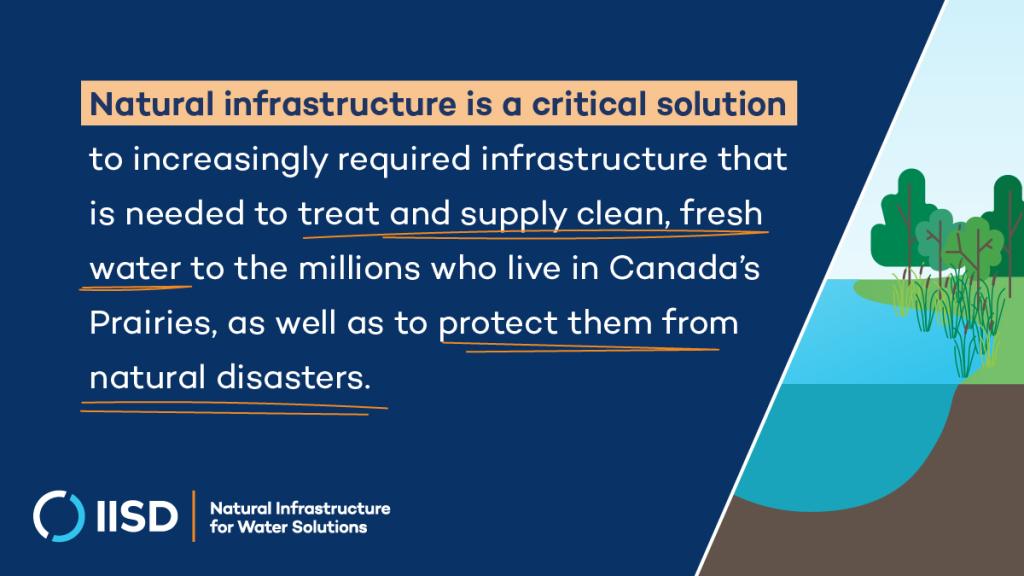
  • Natural infrastructure is a critical solution to the ever-increasing infrastructure required to treat and supply clean, fresh water to the millions who live on Canada's Prairies, as well as to protect them from natural disasters.

  • Canada's Prairies are highly vulnerable to floods, droughts, wildfires, and other impacts from climate change, but they also host unique ecosystems and opportunities for scaling up natural infrastructure.

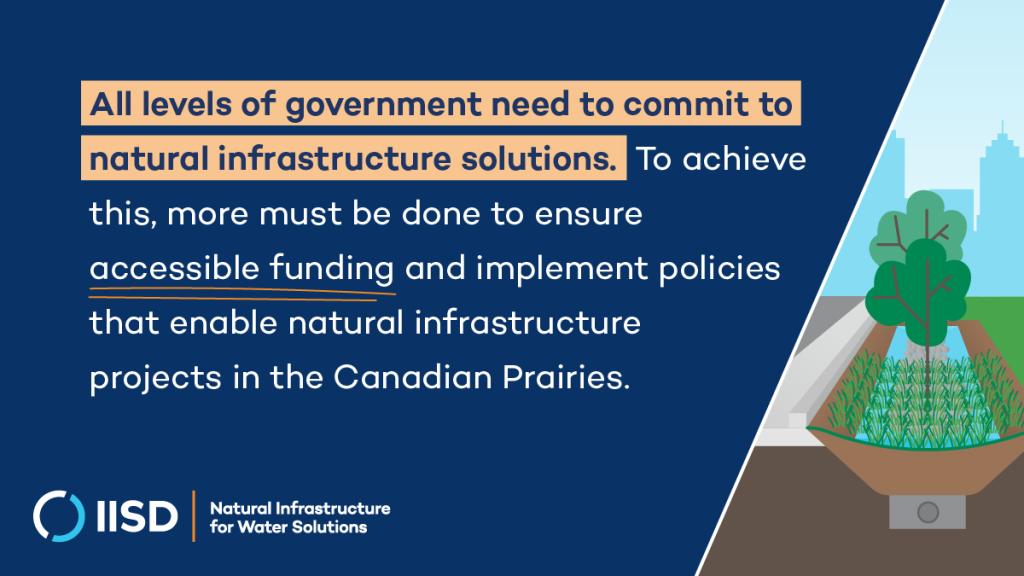
  • We need more natural infrastructure—and soon. There are hundreds of water-related natural infrastructure projects across the region, but we need broad adoption of natural infrastructure at a societal level to reap the benefits it can provide.

Constrained finances, fragile water resources, and catastrophic weather events are driving the need to rethink water infrastructure for present and future generations. With aging and deteriorating water infrastructure across the Canadian Prairies, natural infrastructure can offer a unique and innovative solution.

But what is natural infrastructure, and how can it help?

Text definition of natural infrastructure

We sat down with key experts across the region and reviewed the latest literature to explore these pressing questions and determine what next steps are required to take natural infrastructure from novel to normal on Canada's Prairies.

Text description of how to scale up natural infrastructure in Canada
Report

State of Sustainability Initiatives Review: Standards and the Sustainable Development Goals

Leveraging sustainability standards for reporting on SDG progress

This report explores the role that voluntary sustainability standards (VSSs) can play in helping governments advance the Sustainable Development Goals (SDGs) and better track and report on their progress toward achieving them.

May 4, 2023

The 2030 Agenda for Sustainable Development outlines an ambitious vision for people and the planet. It sets out 17 goals and 169 targets for the global community to work together to achieve by 2030—ranging from eradicating poverty to conserving natural resources.

This report explores the role that VSSs can play in helping governments advance the SDGs and better track and report on their progress toward achieving them.

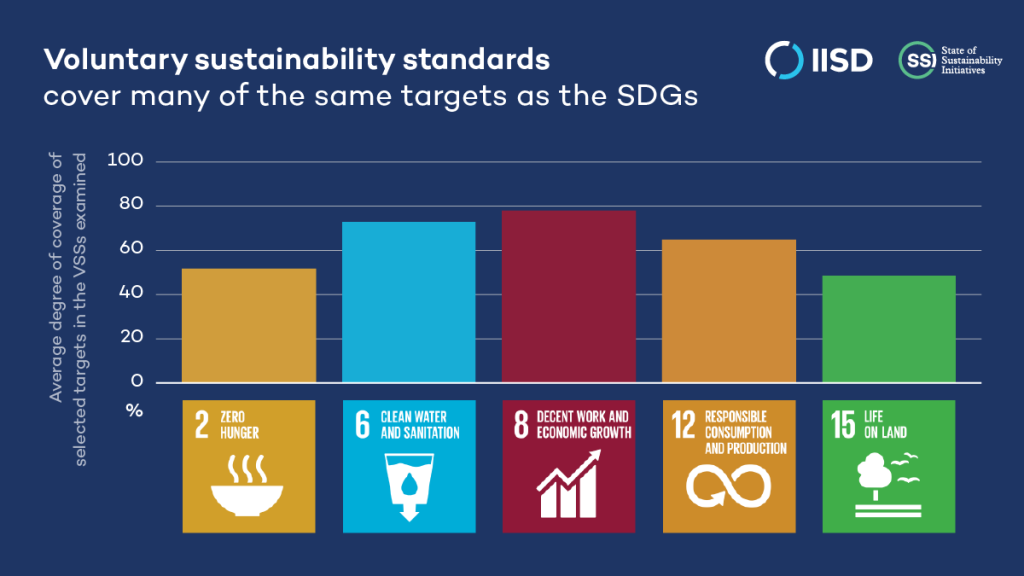
It maps the environmental and social requirements of 13 VSSs against a set of 10 targets from five SDGs. The findings support other studies that indicate a great deal of crossover between VSSs and SDG targets, particularly for SDGs 6, 8, and 12.

Voluntary sustainability standards cover many of the same targest as the SDGs graph showing SDG 2, 6, 8, 12 and 15 covering

It then explores how governments can make the most of work already being done by VSSs when conducting Voluntary National Reviews (VNRs). Countries that have signed the 2030 Agenda are invited to submit VNRs to the High-Level Political Forum on Sustainable Development that outline their progress on advancing the SDGs in their jurisdictions.

These reviews provide governments with an opportunity to share experiences, identify areas that need more attention, and find ways to work with other stakeholders. However, issues such as a lack of data and information can make such reporting challenging.

The report analyzes the most recent VNRs submitted by India, Tanzania, and Uganda against the work VSSs are doing in these countries to identify areas for potential collaboration between governments and VSSs. It then develops three “reporting examples” that illustrate how the three countries could capitalize on their findings in the next reporting round.

From these reporting examples, the authors distill a series of practical guidelines to help governments work together with VSSs to advance the SDGs and fill the data gaps that many face when tracking their progress.

Funded by

Report

A Sustainable Asset Valuation of a Road Infrastructure Project in Queensland, Australia

This report describes how road authorities can expand traditional cost-benefit analysis for road betterment projects. A customized Sustainable Asset Valuation tool was developed for the Queensland Road Authority to expand traditional cost-benefit analysis by including direct and indirect economic, environmental, and social outcomes of road betterment projects. The report describes how this tool can be used to assess past and future investments in road infrastructure.

April 18, 2023

The customized Sustainable Asset Valuation (SAVi) tool for the Queensland Road Authority considers a wide range of benefits, using 15 indicators that include road disruption, access to services, market access, and pollution. The Excel-based tool supports the development of an economic analysis and an estimation of the internal rate of return (IRR), net present value (NPV) and benefit-to-cost ratio (BCR) that consider the economic valuation of several social, economic and environmental non-road benefits. We find that the indirect induced social and environmental outcomes of road resilience investments provide significant economic contributions that should be taken into account in the economic and financial analysis of road infrastructure investments. The report describes how this can be done.

Report

Restoring Wetland Ecosystems in La Mojana, Colombia

Economic valuation of restoring wetland ecosystems in Colombia

This report presents a Sustainable Asset Valuation (SAVi) of infrastructure interventions to reduce floods in Colombia's La Mojana region. We use spatial models, system dynamics modelling, and economic analysis to assess the societal costs and benefits of restoring wetlands and channels, implementing sustainable agriculture practices and building dams along the Cauca River. The economic valuation demonstrates that these investments can significantly reduce flood damages and contribute to sustainable development in La Mojana.

April 6, 2023

La Mojana is a highly biodiverse region with vast swamps, forests, canals, and rivers in northern Colombia. Yet, it is also one of the poorest regions in Colombia and is highly vulnerable to the impacts of climate change, especially floods and droughts. Government stakeholders and international organizations are therefore searching for infrastructure options that mitigate floods and water scarcity while supporting local livelihoods and healthy ecosystems.

In this integrated assessment, we analyze the performance of different infrastructure options for flood mitigation in La Mojana:

  • A grey infrastructure scenario in which the existing dam along the Cauca River is reinforced, and 50 km of new dam is built.
  • Two nature-based infrastructure (NBI) scenarios that entail the restoration of channels to increase drainage to retention areas and a scenario that considers the rehabilitation of wetland areas to increase the buffer capacity for floods.
  • A scenario that considers the implementation of sustainable agriculture practices that increase sectoral productivity but only marginally reduce flood damages.
  • A scenario that includes a combination of the dam and NBI interventions. We compare these investments to a business-as-usual scenario in which the existing dam remains unchanged, and no additional measures are taken.

Key findings:

  • All interventions considered to reduce flooding are investment worthy—with benefit-to-cost ratios ranging from 2.07 to 26.1.
  • Additional dam construction, channel and wetland rehabilitation, and sustainable agriculture could avoid more than USD 1.26 billion (COP 6131 billion) in flood damages to buildings, roads, and agriculture over the next 30 years.
  • The largest economic gains from flood protection investments are the avoided damages to buildings and roads and the increased revenue generation and labour income from agricultural production that will be made possible thanks to better water management. This finding illustrates the importance of estimating such co-benefits and taking them into account when planning and deciding on the required interventions.

The report is complemented by a technical annex with methodological details about the system dynamics model and spatial analysis that were developed for the valuation. An additional story summarizes key results and policy recommendations from the assessment.

Participating experts

Report

Infrastructure Tokenization

Does blockchain have a role in the financing of infrastructure?

The purpose of this report is to assess whether digitizing the equity or debt financing used for infrastructure projects using blockchain (i.e., tokenized infrastructure) provides enough benefits to justify the use of this technology. The information presented here aims to inform the World Bank whether it should explore the possibility of tokenizing one of its infrastructure projects. The conclusions are based on interviews with tokenization start-ups, expert opinions, and a review of current and planned regulatory frameworks in selected jurisdictions and use cases/pilots to date.

April 18, 2023
  • It is important to make the distinction between crypto as an asset class and tokenized securities. In the case of the latter blockchain only serves as a digital vehicle or technological enabler. A tokenized equity or tokenized debt have similar financial characteristics and are regulated the same way as their traditional "off-chain" equivalents.

  • Regulation, or rather the lack of regulation designed for tokenized securities, is the main barrier of using blockchain for the financing of infrastructure. While there has been some notable progress in a few countries, there is still a lot of work to be done on the regulatory front before the full potential of tokenized securities can be realized.

  • It might prove to be difficult for tokenization to deliver on its value proposition to democratize finance. While tokenization can decrease the minimum size of infrastructure investments significantly, many of the infrastructure tokenization projects to date were only accessible for accredited investors due to securities regulation.

Infrastructure investment is a means to generate long-term benefits to society with inclusive economic growth and well-being while contributing to a low-carbon transition. However, the sector is faced with several challenges, including poor governance and management of infrastructure systems. Projects are also often large, capital intensive, and not immediately profitable. Therefore, innovative mechanisms are required to leverage private financing and lower the costs of capital. It is also crucial to maintain information symmetry among stakeholders and provide investors with transparent data to make informed investment decisions. One of the foremost impediments is matching the abundant supply of private capital to the demand for infrastructure. 

The use of distributed ledger technologies (DLT) like blockchain can potentially overcome many of the challenges that hinder the scaling of infrastructure. The efficiency of financing and management of infrastructure projects can improve by leveraging core features of the technology like decentralization, immutability, and transparency. Blockchain is an immutable technological infrastructure designed to enable simultaneous access, validation, and record updating spread across several networks. These features make blockchain a disruptive technology capable of transforming businesses. The most common application of this technology in finance could be capital-raising through Security Token Offerings (STOs) and post-trade processes, like clearing and settlement of securities.

Another application of blockchain technology is the tokenization of real assets. Tokenization is the process of converting rights, a unit of asset ownership, debt, or even a physical asset into a digital token on a blockchain. This enables historically illiquid assets to be broken down into smaller units representing ownership and encouraging the democratization of finance. 

The potential advantages of tokenizing “real-world” assets include efficiency gains driven by automation and disintermediation, transparency, and greater liquidity and tradability of illiquid assets. The tokenization of assets can democratize the ownership of certain assets as a wider range of investors have access. As opposed to blockchain native tokens, like bitcoin, that only have value on the blockchain, real-world assets have an underlying value off-chain as well, backed by the real assets existing outside the ledger. The most prominent use of tokenization of real-world assets is securities (bonds and stocks), commodities (like gold), and non-financial assets (like real estate).

The tokenization of infrastructure claims to address three objectives: financing initiatives,  democratizing infrastructure,  and increasing the efficiency of infrastructure management. These objectives are interconnected and enabled through the core features of blockchain technology—decentralization, immutability, and transparency. The data derived from infrastructure use and performance results can uncover operational inefficiencies and unlock new revenue streams for third-party planning on building new services and capital appreciation opportunities. 

Report details

Topic
Infrastructure
Sustainable Finance
Impact area
Nature
Sustainable Economies
Publisher
World Bank Group
Copyright
World Bank Group, 2023
Report

Women and the Mine of the Future

Global Report

Uncovering the gender-disaggregated employment profile for large-scale mining, focusing on women and their occupations in 12 countries.

April 10, 2023

Rapid technological advances, increasing calls for sustainability, and the low-carbon energy transition are transforming large-scale mining across the globe. But the lack of high-quality, gender-disaggregated employment data leaves decision-makers ill-equipped to effectively support a more equal and inclusive mining workforce.

To help remedy the situation, the Women and the Mine of the Future Global Report looks at a sample of 12 countries to uncover the gender-disaggregated employment profile for large-scale mining, focusing on women and their occupations in the sector.

The report begins with a cross-country analysis that compares the data against commonly held assumptions and key trends in the sector. Next, the researchers consider what the unfolding transformations will mean for mining occupations. The report goes on to identify the main data gaps and challenges hindering evidence-based policy-making and opportunities for women to fully participate in the future of mining. The report concludes with policy recommendations for governments, companies, and workers to consider.

This global report is the final outcome of the first phase of the Women and the Mine of the Future project. It is a collaborative project led by the Intergovernmental Forum on Mining, Minerals, Metals and Sustainable Development (IGF) which has been hosted by IISD since 2015. Project partners are comprised of International Women in Mining, International Labour Organization, German Agency for International Cooperation, and the Environmental Governance Programme run by the Swedish Environmental Protection Agency and United Nations Development Programme.

Women and the Mine of the Future: Country reports 

To come: Colombia.

Report

The Evolving Context and Dynamics of the WTO Joint Initiative on E-Commerce

The fifth-year stocktake and prospects for 2023

This report* provides a state of play of the Joint Statement Initiative (JSI) on Electronic Commerce as of December 2022, focusing on developments in its fifth year, 2022, while situating it in the evolving e-commerce governance landscape at the national, regional, and multilateral levels.

March 31, 2023

At the national level, reports on increased policy activity related to e-commerce have warned against increased fragmentation. Regionally, Digital Economy Agreements have emerged as more flexible arrangements that may be more suitable for capturing technological trends and innovations impacting e-commerce, such as artificial intelligence. At the multilateral level, and in the aftermath of COVID-19, bridging the digital divide became the core objective for discussions on reinvigorating the WTO Work Programme on Electronic Commerce.

Recent literature on e-commerce and global trends of e-commerce governance, the dynamics of the JSI negotiations in 2022, and changes in the updated consolidated negotiating text circulated by the JSI co-conveners on December 22, 2022, point to the likelihood that JSI participants will opt for a less ambitious agreement that focuses on the lower-hanging fruit of e-commerce facilitation by the 13th Ministerial Conference while potentially leaving contentious market access focus issues to deal with them later.

This report has been produced with funding by UK aid from the British Government. The Umbrella Grant is a project of the Trade and Investment Advocacy Fund (TAF2+) and is implemented by the International Institute for Sustainable Development and CUTS International, Geneva. Views expressed in the publication are the author's own and do not necessarily reflect HM Government’s official positions or those of TAF2+.

*Note: This report represents a substantive update of two earlier publications covering developments in the WTO JSI negotiations in 2021 and 2020.

CUTS International Geneva

Report details

Topic
Technology and Innovation
Trade
Project
Digital Trade
Impact area
Sustainable Economies
Publisher
IISD
Copyright
IISD and CUTS International, 2023