Conference

COP 16 | Nature-Positive Infrastructure: Designing and financing the foundation for our future

Our shared global vision of a healthy planet where people and nature thrive is dependent on the choices we make in designing the very foundation of our economies – our infrastructure. The infrastructure of the past has contributed significantly to the biodiversity degradation we are experiencing today. But, with technical ingenuity combined with visionary financial and business models and a deep understanding of how natural systems function – the engineering, finance and science communities can together reshape the future of infrastructure development.  

October 24, 2024 12:00 pm - 1:00 pm COT

(Open with a conference pass)

In this session hosted by the Infrastructure and Nature Coalition, leaders in conservation, economic development, finance, business, and government will share their insights and practical examples of how addressing a suite of Kunming-Montreal Global Biodiversity Framework (KMGBF) targets - in combination - is the best way to generate the sustainable infrastructure of our future. 

The panel will examine the practical advances and complex challenges of mainstreaming biodiversity into this vast sector and engage the audience in a dialogue that draws upon participant questions and shared examples. They will also explore an idea broached by Parties at the last Subsidiary Body on Implementation meeting - to develop a community of practice that can consolidate these streams of action and innovation into accessible capacity building platforms. Is this feasible, desirable or practical? What other ways can we work together to build the enabling environment for nature-positive infrastructure development? 

With a global shift in the norms and practices of this highly impactful sector, we can ensure the successful delivery of the KMGBF and forge a path to restoring the beauty and bounty of this extraordinary planet Earth. 

The program is aimed at supporting the deliberations on COP16 Agenda item 17 on “Mainstreaming of biodiversity within and across sectors”, Agenda item 12 on capacity building and development, technical and scientific cooperation…, and Agenda item 18 on diverse values of biodiversity. 
Conference

Showcasing Practical Tools for Promoting Responsible Investment in Agriculture and Food Systems

October 24, 2024 1:30 pm - 2:45 pm CET

(Open to public)

Background

The CFS Principles for Responsible Investment in Agriculture and Food Systems (CFS-RAI) are 10 principles that apply to all types and sizes of investment in agriculture and food systems. They recognize that all stakeholders have a role to play in promoting responsible investment.

Governments must create enabling environments for responsible agricultural investment and ensure safeguards are in place to balance the needs and interests of investors, smallholders, local communities, and other affected parties.

Investors and agribusinesses are responsible for mitigating and managing the risks associated with their investments and for maximizing their positive social and environmental impacts. They are also responsible for complying with relevant laws and regulations and conducting due diligence.

Stakeholders need guidance and support to apply the CFS-RAI principles effectively. This is why several organizations have come together to develop practical tools that governments, investors, agribusinesses, and other stakeholders can use to promote, support, and apply the CFS-RAI in practice.

About the Event

This side event—organized by IISD, the FAO, Columbia Center on Sustainable Investment, and the governments of Germany, Liberia, and Switzerland—brought together stakeholders to raise awareness about the range of practical tools that can support governments, investors, agribusinesses, and other actors to ensure investments in agriculture and food systems are responsible.

The event showcased a selection of these tools and explore how they can promote responsible investment in agriculture and food systems. It aims to start a conversation among those developing, rolling out, and supporting the use of these tools on how to improve coordination and encourage more actors to join forces on this.

Conference

COP 16 | Can we have it all? Approaches to equitable and inclusive nature-based solutions aiming for climate resilience, gender equality and biodiversity net gain

This event, as part of the Nature Positive Pavilion at CBD COP 16 in Cali, Colombia, will explore how to design and implement inclusive, equitable and biodiversity-positive nature-based solutions for adaptation.

October 21, 2024 10:30 am - 11:30 am COT

(Open with a conference pass)

About the event

Climate change, biodiversity loss, and poverty are inter-related crises that require integrated responses at scale. In this session, we will share perspectives from policymakers, experts and practitioners implementing the Government of Canada’s Partnering for Climate Initiative.

The event will include a moderated panel with discussants sharing perspectives on tools and approaches for integrating inclusive nature-based solutions that are centered on gender equality and social inclusion, biodiversity conservation, and climate adaptation. The session will also include a Q&A period.

This event will be live streamed, click here to join virtually.

Find out more about this and other events taking place at the Nature Positive Pavilion here.

Agenda

Welcome and introduction to panel

NbS can contribute towards multiple societal goals. What is the experience on the ground of partners implementing Canada’s Partnering for Climate initiative?

Opening Remarks

GBF’s whole-of-society approach

Adaptation, human rights, and a whole-of-society approach in the Global Biodiversity Framework

NbS Implementation

What are some experiences and outcomes from NbS implementation, specifically outcomes for biodiversity, adaptation, and gender?

Capacity-building needs

Based on your experience with various initiatives that foster communities around NbS, what capacity needs and knowledge gaps are commonly identified and addressed? 

Human rights

How should human rights, rights of Indigenous peoples and Indigenous science be integrated into Canada’s programming? What are some lessons learned from the Nature and Climate Community of Practice?

Trade-offs and benefits of P4C’s programming approach

What were positive outcomes from the Partnering for Climate initiative? What are the trade-offs that were encountered? How will this knowledge inform GAC’s future programming?

Q & A with audience

Event Partners

Global Affairs Canada and its partners in the Partnering for Climate Initiative, including IUCN, International Union for Conservation of Nature.

Conference

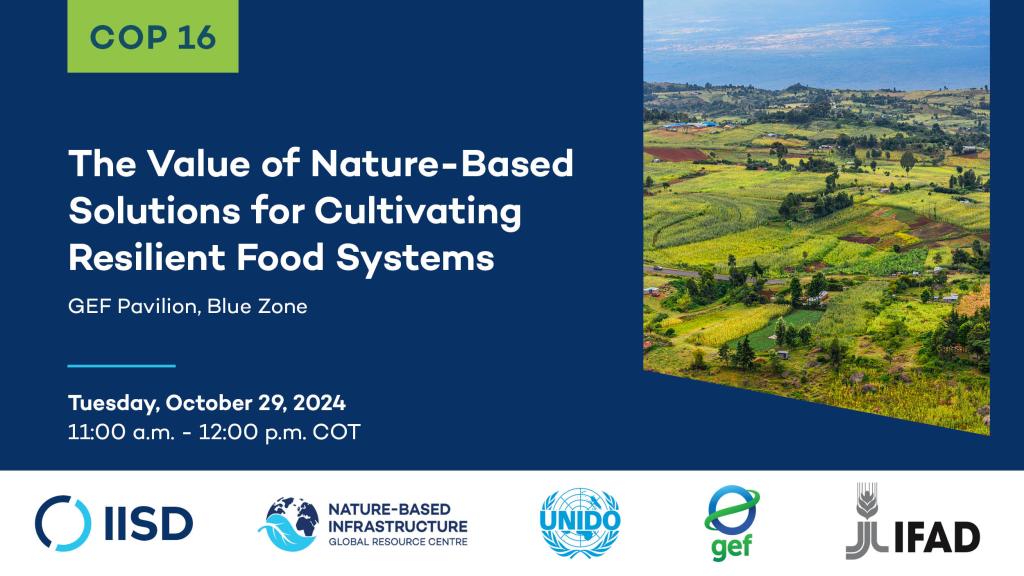
COP 16 | The Value of Nature-Based Solutions for Cultivating Resilient Food Systems

This event, as part of the GEF Pavilion at CBD COP16 in Cali, Colombia, will focus on agroforestry as a powerful tool for enhancing biodiversity, improving climate resilience, securing rural livelihoods, safeguarding food and nutrition, and mitigating water scarcity.

October 29, 2024 11:00 am - 12:00 pm COT

(Open with a conference pass)

COP16 GEF Pavilion Side Event

About the event

Adopted at COP15 in December 2022, the Kunming-Montreal Global Biodiversity Framework (GBF) aims to halt and reverse biodiversity loss by 2030. With focus now shifting to implementation, this side event examined the role and business case for nature-based solutions (NbS) in fostering resilient food systems and advancing the goals of the GBF.  

More specifically, the event reviewed the potential of agroforestry, through integrating trees and shrubs into agricultural landscapes, as a powerful strategy for enhancing biodiversity, improving climate resilience, securing rural livelihoods, safeguarding food and nutrition, and mitigating water scarcity. This event unpacked key findings from new reports by the International Fund for Agricultural Development (IFAD) and the International Institute for Sustainable Development (IISD). IFAD presented a review of its agroforestry projects and efforts to pilot enhanced economic analysis for agroecology, while IISD highlighted results from two new integrated cost-benefit analyses of IFAD agroforestry projects in Kenya and eSwatini, developed by the Nature-Based Infrastructure (NBI) Global Resource Centre. Learnings from a past water stewardship project in Indonesia, developed with UNIDO, was also showcased.

Using these case studies, the event explored the economic value of NbS and how agroforestry practices can lead to increased, more sustainable agricultural productivity, reduce costs through natural resource management, mitigate water scarcity, and create new income streams from diversified farming systems. The discussionemphasized the importance of creating supportive economic and policy frameworks to incentivize the adoption of these practices on a larger scale.

The panellists shared their experiences and discussed relevant examples. This side event aimed to provide stakeholders with practical insights into how new approaches to valuing NbS can make the investment case for supporting agroforestry and sustainable food systems that both work towards the targets of the GBF and enhance food security.

Speakers

Facilitator

  • Benjamin Simmons, Director, Sustainable Infrastructure and NBI Global Resource Centre, IISD

Panellists 

Watch the recording 

Conference

Strengthening the Role of Voluntary Sustainability Standards in Trade Policy

October 8, 2024 12:15 pm - 1:30 pm CET

(Open to public)

With sustainability being recognized as a progressively more important trade goal, trade policy is increasingly referencing and utilizing voluntary sustainability standards (VSSs) to achieve sustainability outcomes. With this increase comes the question of which VSSs are worthy of trust to deliver on sustainability goals and their use in trade policy.

The ISEAL Credibility Principles, among other guidelines and frameworks, outline core values for effective VSSs, lending to their global credibility. Because different VSSs are designed to achieve varying environmental results, establishing their credibility is critical to how (and whether) they can be used in trade policy.

This interactive lunch seminar explored how different stakeholders (standards-setting organizations, policy-makers, non-governmental organizations, and international organizations are approaching the issue of VSSs’ credibility and how the World Trade Organization can advance the integration of VSSs into trade policies.

Conference

Green Reconstruction of Ukraine’s Communities: Key lessons from 2023-2024 recovery projects

This session provided an in-depth conversation on the green reconstruction of Ukraine's communities and focused on practical approaches, challenges, and opportunities. Civil society representatives and field experts presented their experiences with recovery initiatives and offered insights into the development of climate-conscious reconstruction projects and strategies in Ukrainian communities during the conflict.

November 13, 2024 11:00 am - 12:30 pm CET

Expo XXI, Ui. Pradzynskiego 12/14, 01-222 Warsaw, Poland

(Open to public)

The discussion showcased both successful and unsuccessful examples of rebuilding efforts to create more resilient and sustainable infrastructure. Participants explored how innovative solutions in the energy sector, buildings, and public infrastructure can be scaled up to ensure a more sustainable and future-proof recovery process.

The panel shared their insights into implemented recovery projects and provided their assessments and views regarding the following issues:

  • Green and climate-friendly reconstruction projects, concepts, and strategies in Ukrainian hromadas since 2022.
  • Examples of effective and ineffective solutions for rebuilding a more resilient and sustainable infrastructure. 
  • Mainstreaming good projects and practices to build back better the energy sector, buildings and, infrastructure.

Speakers

  • Viktor Zagreba, Chair and Project Leader, Vision Zero
  • Alina Sushchyk, Partnership Manager, Energy Act for Ukraine Foundation
  • Svyatoslav Pavlyuk, Executive Director of the Association “Energy Efficient Cities of Ukraine”
  • Julia Shevchuk, Head of Representative Office in Ukraine and Chief Investment Advisor, Nordic Environment Finance Corporation (NEFCO)
  • Yehor Fareniuk, Director of the Energy Efficiency Fund of Ukraine

Moderator

  • Anna Ackermann, Policy analyst, Green reconstruction of Ukraine, International Institute for Sustainable Development (IISD)


This session was part of the fourth Rebuild Ukraine International Exhibition and Conference, which took place between November 13-14, 2024, in Warsaw.

The event was for in-person attendees of the conference only.

Conference details

Conference

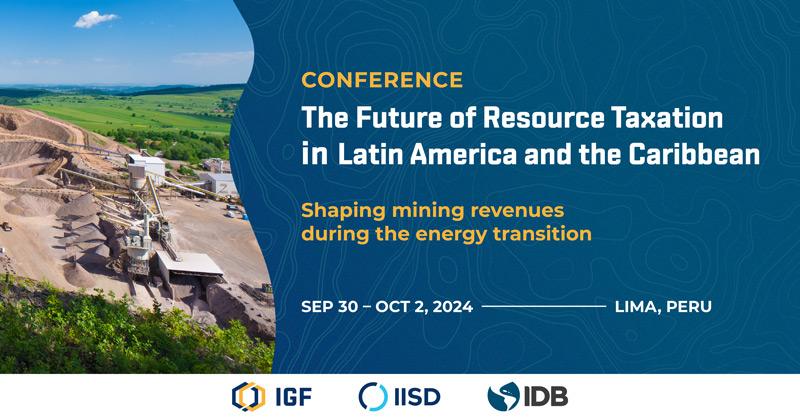
Conference on the Future of Resource Taxation in Latin America and the Caribbean

Exploring effective taxation and fiscal policies to strengthen revenue administration, management, and distribution practices for the evolving mining sector amid the global energy transition.

September 30, 2024 9:00 am - October 2, 2024 5:00 pm Peru Standard Time (GMT-5)

(By invitation)

Event poster

The energy transition is expected to significantly increase demand for critical minerals like copper, lithium and nickel, which are essential for the deployment of green technologies. Latin America and the Caribbean (LAC) is a region rich in these vital resources and well-placed to benefit. Governments in LAC are working on improving fiscal policies and forming key partnerships to ensure their mineral wealth drives economic growth, boosts public revenue, and supports sustainable development across the region. 

To support policymakers in this endeavor, the Conference on the Future of Resource Taxation in Latin America and the Caribbean will provide a unique opportunity to gather key government officials from ministries of finance, mining, and revenue authorities, together with representatives from industry, civil society, academia, and international organizations that are active in the region. This event will explore effective taxation and fiscal policies to strengthen revenue administration, management, and distribution practices for the evolving mining sector amid the global energy transition. Additionally, the program will discuss social and environmental challenges and international cooperation. 

This three-day conference is organized by the Inter-American Development Bank (IDB) and the Intergovernmental Forum on Mining, Minerals, Metals and Sustainable Development (IGF). It will take place from September 30 to October 2, 2024, at the Country Club Lima Hotel. During the event, participants will hear from expert speakers and engage in discussions on topics such as financial benefits sharing, mineral pricing, contract negotiations, revenue distribution, revenue management, and the environmental and social impacts of mining.

Conference

World Water Week Talkshow: Stacked Benefits: Inclusion, Stewardship and Cooperation for Water Security

August 27, 2024 2:00 pm - 2:20 pm GMT+2

(Open to public)

IISD has two sessions at World Water Week 2024 and will be in Stockholm for the full event. If you’re unable to attend the sessions in person, you can register to watch online.

Registration to participate in online sessions is free. Full online access and the ability to watch recorded sessions is available at the World Water Week registration page.

Once registered, search for “International Institute for Sustainable Development” or the Session ID: 11844, to add the below session to your calendar in the programme. Click the “add to schedule” plus sign on the righthand side of the screen. For assistance in converting the GMT+2 time zone to your time zone, we recommend using the Time.Is Time Zone Converter.

Session Description:

Join IISD's President and CEO, Patricia Fuller, formerly Canada’s Ambassador for Climate Change, for a talk show format discussion between her and Prof. Kaveh Madani, the Director of the United Nations University Institute for Water, Environment and Health (UNU-INWEH).

With current progress on water-related Sustainable Development Goals (SDGs) falling significantly short of targets, experts will discuss the critical need for inclusive approaches in achieving global water-related goals.

Speakers will share insights into how inclusive practices vary globally, with specific examples from Canada and other global geographies. From bridging Indigenous and western knowledge systems to co-develop long-term water solutions in Canadian scientific research at the IISD Experimental Lakes Area, to an IISD-ACARE initiative, which empowers African women scientists and integrates their perspectives into efforts to coordinate efforts on large, transboundary lakes in Africa.

Participating experts will emphasize the role of agriculture as a major water stakeholder, and advocate for the inclusion of agricultural voices in water management strategies.

The session will also explore the broader implications of inclusion for future water agendas beyond SDGs—urging local, national, and global leaders to consider these aspects as they plan for 2030 and beyond.

Join us for a thought-provoking session on how meaningful inclusion can drive progress and create equitable, sustainable water management systems worldwide.

Learn more about World Water Week 2024 and IISD's role in water protection globally and find out more about the World Water Week session happening on Monday, August 27: Water Security through Nature-Based Solutions: From Theory to Practice.

Conference

Water Security through Nature-Based Solutions: From Theory to Practice

August 26, 2024 9:00 am - 10:30 am GMT+2

(Open to public)

IISD has two sessions at World Water Week 2024 and will be in Stockholm for the full event. If you’re unable to attend the sessions in person, you can register to watch online.

Registration to participate in online sessions is free. Full online access and the ability to watch recorded sessions is available at the World Water Week registration page.

Once registered, search for “International Institute for Sustainable Development” or the Session ID: 11814, to add the below session to your calendar in the programme. Click the “add to schedule” plus sign on the righthand side of the screen. For assistance in converting the GMT+2 time zone to your time zone, we recommend using the Time.Is Time Zone Converter.

Session Description:

Nature-based solutions (NBS) in both urban and rural contexts are key to ecosystem and human security. NBS can support water supply and quality, and reduce risks associated with extreme weather events. This thought-provoking session will feature representatives from different sectors alongside global NGOs, engaged in dialogue about two critical considerations underpinning NBS projects: roles and capacity. Drawing on lessons from projects like ‘Scaling Urban Nature-based Solutions (NbS) for Climate Adaptation in Sub-Saharan Africa’ (SUNCASA), IISD’s Natural Infrastructure for Water Solutions Initiative in the Canadian Prairies (NIWS), and the CEO Water Mandate, the experts will share insights into the realities of implementing NBS in water-insecure areas. Participants will also be invited to join a facilitated activity building on the session themes, deepening insights on the need for NBS implementation to be place-based and informed by considerations linked to capacity and roles, as well local communities’ visions and aspirations.  

This session is co-convened by IISD, World Resources Institute (WRI), Pacific Institute, Nutrien, and The Nature Conservancy.

Learn more about World Water Week 2024 and IISD's role in water protection globally and find out more about the World Water Week talk show, Stacked Benefits: Inclusion, Stewardship and Cooperation for Water Security, happening on Tuesday, August 27, led by IISD's President and CEO, Patricia Fuller.


Conference

International Institute of Fisheries Economics & Trade Conference 2024

The 21st International Institute of Fisheries Economics & Trade (IIFET) Conference will be held from July 15 to 19 July in Penang, Malaysia. This year's theme,  "Aquatic Food Systems in the Blue Economy," focuses on the intersection of fisheries and aquaculture economics and trade with the major global challenges we are facing today.

July 15, 2024 - July 19, 2024

St. Giles Wembley Hotel, Penang, Malaysia

(Open to public)

The 21st IIFET Conference will be held from July 15 to 19, 2024, in Penang, Malaysia. This edition of the biennial conference, organized by WorldFish and Malaysia's Department of Fisheries, will be held in Asia for the first time since 2008.

This year's theme, "Aquatic Food Systems in the Blue Economy," focuses on the intersection of fisheries and aquaculture economics and trade with major global challenges we are facing today, such as food system sustainability, rising economic and social inequality, the climate crisis, and the fallout from COVID-19, along with the possibility of future pandemics. These issues are all pertinent to shaping a resilient blue economy that delivers on its promise for healthy people, a healthy planet, and shared prosperity.

IIFET 2024 will offer attendees a unique space for sharing ideas and dialogue at the cutting edge of sustainable and equitable economic development through the lens of aquatic foods.

IISD's Co-organized Session

Regenerative Aquaculture: Economics and policy panel discussion

  • Co-organized with the International Development Research Centre (IDRC) and WorldFish
  • July 16, 2024, 15:30–17:00 MYT, Room 9 (Wembley Hotel)

Aquaculture faces changing consumer pressures, volatile geopolitics affecting trade, and regulatory challenges. The sector must also adapt to climate change, reduce emissions, produce nutritious foods, and provide decent work, especially for women and youth in coastal communities—all while offering significant business growth opportunities.

Can aquaculture be nature-positive and inclusive and still meet the demand for nutritious food at affordable prices? What are the production potentials, profitability, required incentive mechanisms, and costs of transition to nature-based or regenerative aquaculture?

The objective of the session is to address these issues and seek solution pathways. We welcome robust debate on what policy actions are needed to achieve such transitions in the Asia–Pacific region. This session is supported by the Nature-based Climate Solutions in Aquaculture Food Systems in Asia-Pacific (AQUADAPT) program, funded by IDRC and the Government of Canada.

Speakers

Moderator

  • Eddie Allison, Principal Scientist, WorldFish

Panel

  • Mélanie Robertson, Senior Program Specialist, Climate Resilient Food Systems, IDRC
  • Nikita Gopal, Senior Scientist, Indian Council of Agricultural Research-Central Institute of Fisheries Technology, and Chair of the Gender in Aquaculture and Fisheries Section of Asian Fisheries Society
  • Ling Cao, Associate Professor, Shanghai Jiao Tong University
  • Justin Hunter, CEO, J. Hunter Pearls
  • Victor Nikijuluw, Senior Ocean Program Advisor, Konservasi Indonesia
  • Andrew Ng, Director of Business Development, HJT Foods Sdn. Bhd.
  • Prashneel Chandra, Fisheries Officer, Ministry of Fisheries, Fiji

Find out more about the conference and sign up here.