Explainer

Key Takeaways From Gender-Responsive Mangrove Restoration in Senegal

Biodiversity-mindful mangrove restoration can be a powerful tool for both environmental and social outcomes. We unpack lessons learned from a gender-responsive restoration project in Senegal.


March 19, 2026

Mangroves are among the most biodiverse and productive ecosystems in the world. 

In Senegal's Sine Saloum and upper Casamance deltas, they support a rich diversity of fish, crustaceans, birds, and insects, acting as critical nurseries and feeding grounds. Their root systems trap sediment, stabilize coastlines, and offer a natural buffer against storm surges and rising sea levels. 
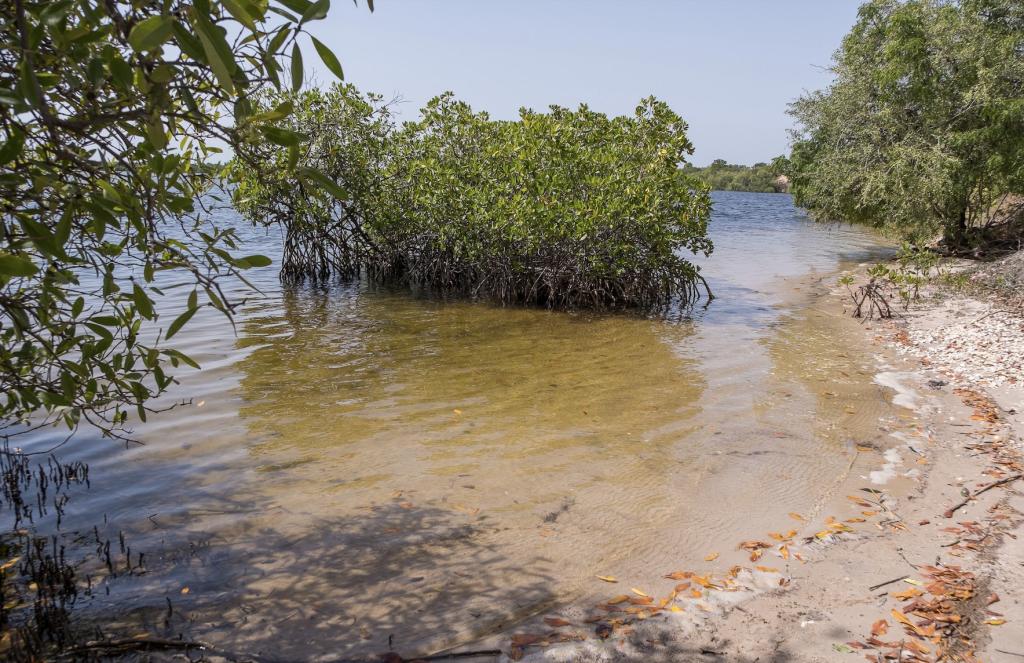
Beach among mangroves on the island of Sipo in the delta of the Sine and Saloum rivers of Senegal

However, Senegal’s mangrove forests are increasingly threatened. Climate change impacts, overharvesting of resources, land-use conversion, and pollution have led to the severe degradation of mangroves in many parts of the country’s coastline. As mangroves degrade and disappear, the biodiversity and the services these ecosystems provide to local communities—and the planet—also decline. 

In response to this challenge, through the Natur’ELLES project, local partners are working to demonstrate how biodiversity-mindful mangrove restoration that is co-designed with women at the community level can be a powerful tool for achieving better environmental and social outcomes. 

Why Gender-Responsive Restoration?

In coastal communities in Senegal and around the world, women are deeply connected to mangrove ecosystems and the livelihoods derived from them. They are often engaged in unpaid or informal sector activities, such as gathering shellfish, producing mangrove-based crafts, collecting fuelwood, and managing nutrition for their families. As mangroves decline due to direct human intervention and human-induced climate change, so too do the resources that women rely on to sustain their households and generate income. 

Many of these livelihood activities, such as small-scale fisheries, shellfish collection, and coastal agriculture, are sensitive to climate change impacts such as more frequent storms. 

As mangroves decline, the protection that they offer against stronger sea surges and coastal erosion is increasingly lost—disproportionately affecting women’s livelihoods in vulnerable communities. Restoring the health and biodiversity of mangroves, therefore, enhances climate resilience, particularly for women-led households. 

Through their informal management of mangrove ecosystems to support their livelihood activities, women have developed critical localized knowledge and skills that can be leveraged to ensure restoration work is long-lasting and effective. Despite this, women are frequently left out of decision making about resource use and ecosystem restoration at the local level. Ignoring gender dynamics in the restoration of ecosystems not only perpetuates inequality but also limits the effectiveness and sustainability of conservation efforts. 

Gender-responsive restoration means ensuring that women are at the decision-making table, not just as beneficiaries but as leaders. It also means designing interventions that address their specific needs, strengthen their capacities, and create new opportunities for income, leadership, and resilience.

What Is Gender-Responsive Restoration?

Launched in 2023, the Natur’ELLES project is funded by Global Affairs Canada and implemented by SOCODEVI with support from the International Institute for Sustainable Development. Its ambition is to restore and conserve mangrove biodiversity while strengthening the climate resilience of women and their communities in Senegal's Sine Saloum and upper Casamance regions. 
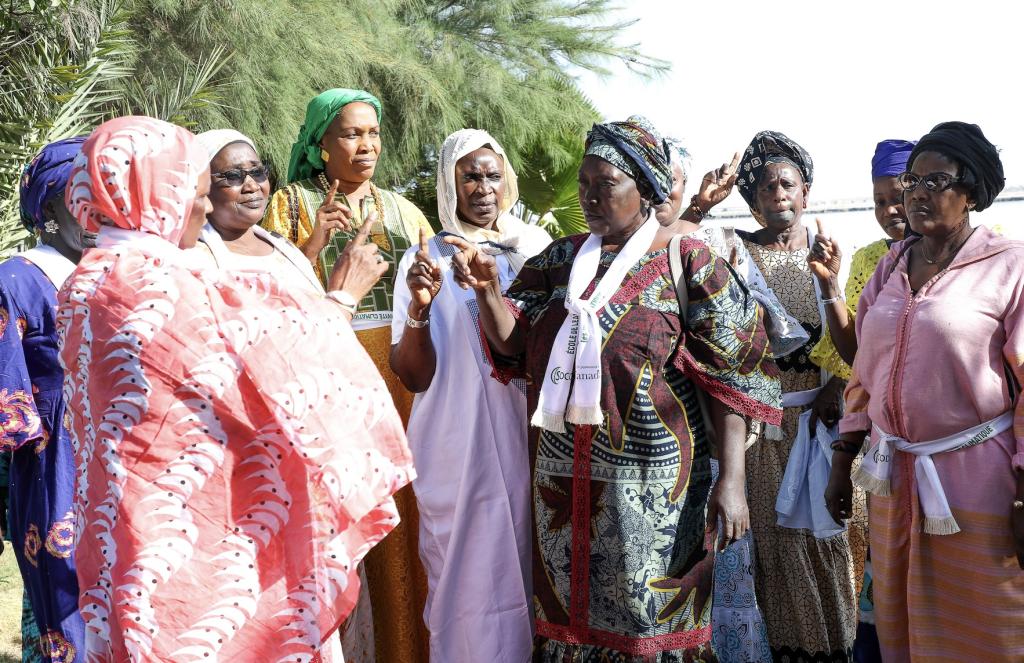
A group of women gather for photography and storytelling training in Kaolack, Senegal.

The project has aimed to adopt a community-based and gender-responsive approach to nature-based solutions for biodiversity conservation and climate adaptation. Restoration activities are co-designed with local women’s groups to ensure local relevance, ownership, and sustainability. 

While biodiversity recovery is a central focus of the project, so too is women’s economic empowerment. Restoration sites are chosen based not only on their ecological potential—such as hydrological connectivity, which determines how well water can move through and connect ecosystems, or species regeneration capacity, which is the ability of plants or animals to naturally recover—but also for their socio-economic importance, particularly to the women who rely on mangrove resources for their livelihoods. This ensures that project activities lead to biodiversity improvements that directly support and enhance women’s existing incomes. 

Restoration efforts are linked to livelihood activities that depend on flourishing biodiversity, from coastal fishing to the sustainable use of mangrove forests. For example, rather than relying on mono-species planting, the project promotes diverse species mixes that reflect natural ecosystem composition. This is heavily informed by local women, who contribute their knowledge of which species support fisheries, attract birds, or resist salinity alterations. By recovering species-rich habitats, women and their communities gain access to more resources to support their livelihoods. 

Another key element of the project is capacity strengthening and training for women in sustainable livelihoods that depend on healthy mangrove ecosystems, such as oyster farming and mangrove honey production.

Lessons for Practitioners

Mangrove restoration efforts, like the natural and assisted regeneration methods implemented through the Natur’ELLES project, can encounter several challenges. For example, changes in salinity levels in water and soil—often driven by altered tidal flows or climate variability—can hinder mangrove growth and survival rates. 

Poor natural regeneration can also pose difficulties for executing organizations, as degraded areas sometimes lack sufficient seeds, seedlings, or suitable conditions for mangroves to regrow naturally. 

In addition, pressure from nearby land use, such as agriculture, infrastructure development, or wood harvesting, can degrade surrounding ecosystems and limit the success of restoration efforts. 

Restrictive gender and social norms can also hinder women's participation in leadership roles. 

But as global attention grows around nature-based solutions, the experience from Natur’ELLES offers important insights, and several priorities stand out. 

First, it is essential to integrate biodiversity benefits and gender equity measures from the very beginning of restoration planning. 

This means integrating gender analysis into participatory climate vulnerability and capacity assessments to more adequately consider gender and social norms and customary practices. This exercise can gather critical information that considers how women and communities use and benefit from ecosystems, as well as a better understanding of how local women participate in leadership and monitoring roles, such as in grassroots organizations and decision-making bodies. 

Activities that encourage women’s participation in ecosystem management should not be limited to their inclusion in income-generating activities, but should also encourage their participation in leadership, planning and monitoring of ecosystems, where they can influence key decisions and restoration strategies. 

Second, restoration outcomes are more sustainable when directly connected to livelihood benefits, particularly for women. Projects should therefore support women’s income-generating activities that benefit from healthy restored ecosystems, such as climate-resilient aquaculture, sustainable tree harvesting, or value-added processing of mangrove ecosystems, such as honey production. 

Third, ecosystem service valuations (e.g., blue carbon, coastal protection services, fisheries productivity and non-monetary benefits, such as social and cultural practices) can be leveraged to make the case for restoration to communities, governments, and potential funders. They can also speak to the importance of women’s management of these ecosystem services. 

Through the use of its SAVi tool, IISD is helping to quantify carbon sequestration of the restored mangroves to ensure that this “blue carbon” is accounted for when conducting cost-benefit analyses of projects situated on mangrove ecosystems. 

The tool estimates the amount of CO₂ sequestered in mangrove biomass and sediments and then assigns an economic value to these climate benefits using carbon pricing or social cost of carbon estimates. By incorporating these values into cost-benefit analyses alongside other ecosystem services—such as fisheries productivity and coastal protection—SAVi helps demonstrate the full economic and environmental value of mangrove restoration and strengthens the case for investing in nature-based solutions in Senegal. 

Finally, building local and institutional capacities is crucial for sustaining gender-responsive, biodiversity-rich restoration at scale. This includes training community members, particularly women, in restoration techniques and monitoring; improving women’s access to financial services and organizational skills; and supporting public-benefit institutions—such as local cooperatives, protected area community committees, and governmental agencies—to integrate gender equality and biodiversity considerations into relevant management plans, financing mechanisms, and policies. 

In Senegal, women’s representation in protected area management committees has tripled thanks to the Feminist Environmental Leadership and Climate Agency Program, coupled with literacy and gender-focused initiatives, and nearly 1,500 women have modernized oyster farming using climate-smart techniques, boosting productivity while reducing physical workload. More than 150 women and men have been trained in nature-based solutions like reforestation, assisted natural regeneration, and over 190 hectares of mangroves and forests have been restored, enhancing ecosystem and community resilience. Building these capacities helps ensure restoration efforts can be scaled up effectively and remain inclusive and ecologically sound in the long run.

Insight

Flooded Cities, Missed Opportunities: Why Ghana’s hybrid infrastructure approach could be a model for climate resilience

As flood risks rise across West Africa’s cities, public budgets are struggling to keep up. In Ghana’s Sekondi-Takoradi, a new economic valuation shows how investing in nature through restored wetlands and green spaces can deliver measurable returns for resilience.

June 10, 2025

Sekondi-Takoradi, a coastal city in Ghana’s Western region, is no stranger to the impacts of climate change. Recurrent flooding has become a persistent threat, regularly damaging infrastructure and disrupting daily life. Rapid urbanization has weakened the city’s natural defences, including wetlands and green areas. In response, the Sekondi-Takoradi Metropolitan Assembly (STMA) has proposed a hybrid infrastructure plan that integrates engineered drainage improvements with nature-based interventions, such as wetland restoration, green corridors, and urban gardens. This approach is gaining global recognition but remains overlooked in funding decisions due to the difficulty of quantifying its full benefits. 

To address that challenge, the Nature-Based Infrastructure (NBI) Global Resource Centre, in collaboration with STMA and the Covenant of Mayors in Sub-Saharan Africa (CoM SSA), conducted a full economic valuation of the city’s hybrid flood resilience plan. 

Avoided flood damage and reduced maintenance costs

The valuation compared a business-as-usual scenario to a hybrid infrastructure scenario, accounting for both direct and indirect effects using spatial modelling, cost-benefit analysis, and climate projections to calculate the full social, environmental, and economic impacts of the interventions over 26 years.

Results show that for every dollar invested, Sekondi-Takoradi could generate between USD 3.26 and 13.53 in returns, depending on the flood economic valuation method. The largest share of benefits comes from avoided flood damage, estimated at USD 747 million under the high-valuation scenario. In addition, reduced infrastructure maintenance costs, thanks to less frequent and less severe flood damage, add another USD 19 million in savings.

The hybrid scenario also delivers the following broader economic and environmental outcomes:

  • 76.85% internal rate of return, far exceeding typical public investment thresholds and demonstrating substantial value for money;
  • increased water retention and reduced flood damage, lowering recovery costs and improving climate resilience;
  • greater carbon sequestration, contributing to national mitigation goals and long-term climate targets;
  • improved air quality and health outcomes through enhanced green cover and reduced pollution;
  • increased land and property values, especially in flood-protected zones, boosting local tax revenues and private sector interest; and
  • local job creation and skills development through the construction and maintenance of nature-based and grey infrastructure systems.

How to compare green and grey on equal terms

The results indicate that NBI can compete economically with grey alternatives—if evaluated using appropriate tools that consider the economic value of externalities. For Sekondi-Takoradi, this insight helps prioritize projects and refine funding proposals. 

"We know that NBI can protect our communities, and with this report, we now have concrete data to guide our decisions and make a stronger case to investors that it is not only effective but also cost-efficient,” says Hon. Fredrick Faustinus Faidoo, Mayor of Sekondi-Takoradi.

But the implications go further. Many West African cities face similar challenges, including how to build climate-resilient infrastructure without overextending limited budgets. This assessment provides a replicable method to assess the full value of hybrid solutions, making it possible to weigh nature-based and grey infrastructure options on equal footing.

By capturing both avoided costs and broader societal outcomes, system-based valuation equips planners with the tools they need to justify long-term, resilience-focused investments.

Moving forward

This case highlights a broader need for decision-makers to look beyond upfront costs and consider the long-term value of interventions, especially those that reduce future risks. Recommendations include the following:

  • Municipal governments should incorporate full-system valuation into planning processes to identify investments with the highest long-term value.
  • National climate and infrastructure strategies should formally recognize hybrid infrastructure approaches for urban resilience and include guidelines for assessing their economic case.
  • Funders and development partners should support or require valuations that account for avoided losses, ecosystem services, and long-term benefits.

The cost of inaction is already measurable. What’s needed now is for governments, funders, and project planners to make nature-based and hybrid infrastructure the default, not the exception. 

Read the full report on Sekondi-Takoradi’s hybrid infrastructure valuation here.

IISD in the news

"Eating its own capital": Investing in a planet-friendly food system

New Food’s Grace Galler investigates why investors may be apprehensive to invest in food systems and how their impact could make a monumental difference when it comes to food insecurity and climate change.

February 10, 2023
IISD in the news

« Sécurité alimentaire – meilleure nutrition pour tous » : La plaidoirie du parlementaire Abdoulaye Wilane (in French)

L’Organisation des Nations Unies pour l’alimentation et l’agriculture (FAO), en collaboration avec l’Institut international du développement durable (IIDD), ont organisé la session thématique « Action parlementaire sur la lutte contre les inégalités entre les sexes pour parvenir à la sécurité alimentaire et à une meilleure nutrition pour tous ». Ce, dans le cadre des événements préparatoires du deuxième Sommet parlementaire mondial contre la faim et la malnutrition, qui se tiendra en 2023.

October 27, 2022
Workshop

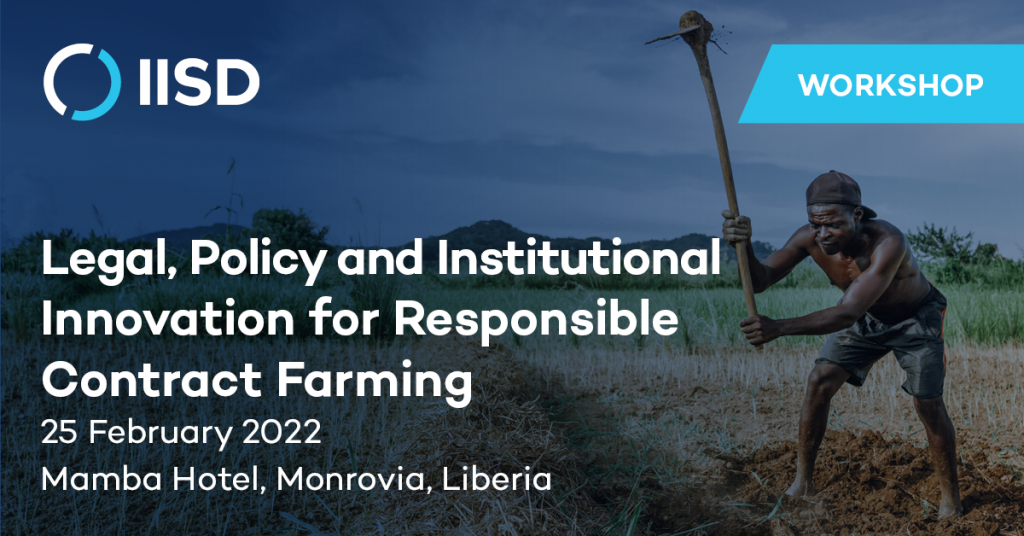
Legal, Policy, and Institutional Innovations for Responsible Contract Farming

February 25, 2022 3:00 am - 12:00 pm

Mamba Hotel, Monrovia, Liberia

(Open to public)

Event card

Contract farming is an inclusive agricultural business model that can help farmers access better inputs, markets, training, and prices. Governments across Africa are increasingly interested in contract farming as a strategy for poverty reduction, rural development, and agricultural transformation. Evidence shows that under a favourable environment, contract farming can sustainably increase investments in agriculture while also safeguarding the livelihoods and incomes of small-scale producers. But contract farming can also be risky or unfair when the right legal and policy frameworks are not in place to correct the power imbalance between small-scale producers and large buyers. Outcomes for women in contract farming can be especially poor. Yet there are legal, policy, and institutional approaches to governing the contract farming relationship and ensuring it is fair, balanced, enforceable, and transparent for all parties, including women.

On February 25, 2022, the International Institute for Sustainable Development (IISD), the Liberia Ministry of Agriculture, the MAP Liberia Land Platform, and the Willian N. Tolbert College of Agriculture and Forestry of the University of Liberia, in collaboration with the International Institute for the Unification of Private Law (UNIDROIT), will hold an in-person workshop on responsible contract farming.

The workshop will bring together 30 participants—including policy-makers, farmer organizations, civil society organization representatives and private sector actors from Liberia—to discuss legal, policy, and institutional innovations to support and promote contract farming as an important inclusive business model for responsible investment in agriculture.

The event will feature presentations on contract farming in law and practice; the IISD–Food and Agriculture Organization of the United Nations’ (FAO) Model Agreement for Responsible Contract Farming; the UNIDROIT–FAO–International Fund for Agricultural Development’s (IFAD) Legal Guide on Contract Farming; the UNIDROIT/IFAD’s Legal Guide on Agricultural Land Investment Contracts, and gender considerations in contract farming. The workshop format will include presentations and roundtable discussions.

Explainer

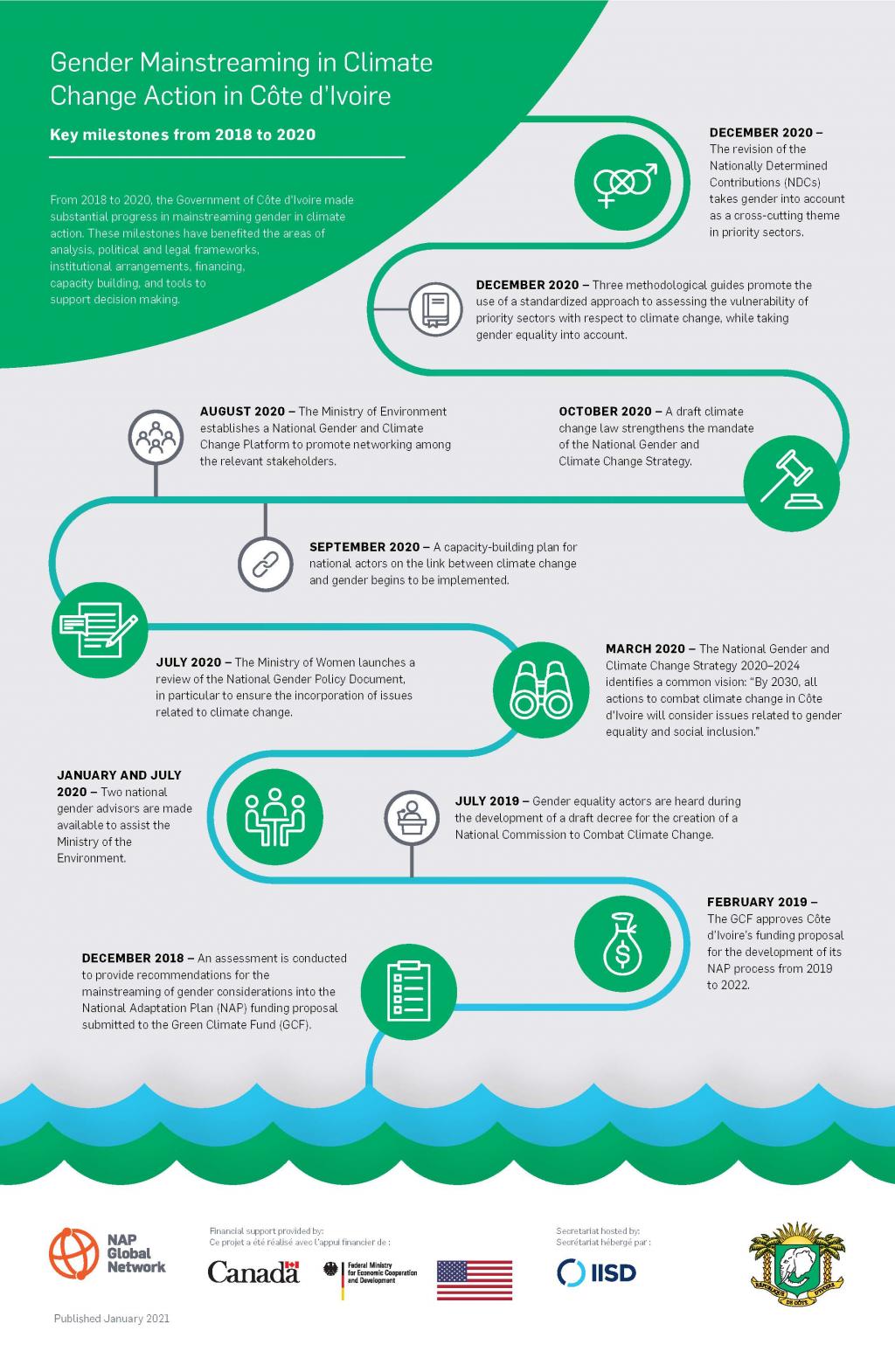
Gender Mainstreaming in Climate Action in Côte d’Ivoire

Key milestones from 2018 to 2020

January 28, 2022

From 2018 to 2020, the Government of Côte d’Ivoire made substantial progress in mainstreaming gender in climate action. These milestones have benefited the areas of analysis, political and legal frameworks, institutional arrangements, financing, capacity building, and tools to support decision making.

Infographic on gender mainstreaming in climate action in Côte d’Ivoire


Explainer details

Workshop

The ECOWAS Energy Protocol: Training workshop for member states of the West African Economic and Monetary Union

This workshop focused on enhancing participants' knowledge of the ECOWAS Energy Protocol, its risks in relation to energy transition policies, and potential options for—and challenges associated with—reform.

December 8, 2021 8:30 am - December 9, 2021 1:00 pm West Africa Time

(By invitation)

The West African Economic and Monetary Union—also known as L'Union économique et monétaire ouest-africaine (UEMOA)—is an organization of eight West African countries established to enhance economic integration in the region. It is committed to promoting sustainable investments that contribute to the African Union's Agenda 2063 and the UN Sustainable Development Goals (SDGs).

Investment protection and promotion measures are important tools used by UEMOA member states to attract foreign direct investment. However, they do not come without challenges. This workshop focused on enhancing UEMOA member states’ knowledge of the Economic Community of West African States (ECOWAS) Energy Protocol, which was negotiated in 2003 as a means to promote investment in the energy sector and enhance trade in West Africa.

The ECOWAS Energy Protocol is—in effect—a sectoral investment treaty inspired by the Energy Charter Treaty (ECT). And like the ECT, it is part of an older generation of investment treaties that are now widely criticized for emphasizing the private interests of investors at the expense of public interests in the host state and sustainable development objectives. In response to these concerns, the international investment regime is undergoing reform at the global, continental, regional, and national levels.

The main objectives of this workshop were to provide participants with an opportunity to learn about and discuss:

  • The content of the ECOWAS Energy Protocol
  • The main risks raised by its various clauses in relation to states’ adoption and implementation of energy transition policies
  • Its interaction with the ECT and the problems it could pose 
  • The challenges of ongoing reform processes at the global level, including those related to the modernization of the ECT
  • Potential options for reform.

This workshop was one of several regional workshops on investment treaties organized each year by UEMOA and IISD as part of a Memorandum of Understanding between the two institutions.

ECOWAS Network of Parliamentarians on Gender Equality and Investments in Agriculture and Food Security

The ECOWAS Network of Parliamentarians on Gender Equality and Investments in Agriculture and Food Security was launched on December 11, 2018, in Abuja, Nigeria, during the Ordinary Session of the ECOWAS Parliament. As a part of our commitment to ending hunger and closing the gender gap—in collaboration with the Food and Agriculture Organization of the United Nations (FAO), Oxfam, and Women in Law & Development in Africa (WiLDAF)  — IISD supports parliamentary efforts to advance responsible investment in agriculture and gender-sensitive legislative action. Our inclusive multi-stakeholder dialogues foster the peer-driven exchange of best practices, and we provide specialized resources and capacity training to strengthen these efforts.

The Network's vision is to foster inclusive and gender-equitable agricultural investment in the ECOWAS countries that is conducive to food and nutrition security and poverty reduction.

The Network is intended to provide members of the ECOWAS Parliament with knowledge and capacities to advocate for gender-equitable agricultural investment and influence policy processes at national, regional, and international levels.

The ECOWAS Network ensures a productive forum for continued exchange across national and regional parliaments, as well as other stakeholder groups. It offers its members the opportunity to share examples of legislative and regulatory best practices and to brainstorm new approaches that can be adapted to local circumstances and needs.

Specifically, the Network seeks to:

  • Raise awareness among parliamentarians about the importance of gender equality and responsible investments in agriculture and food security through multi-stakeholder and South–South dialogues and research. See below our series of webinars Parliamentarians’ Action for Gender Equality and Resilient Food Systems in Response to COVID-19.
  • Develop tailored capacity development for parliamentarians on gender equality and responsible investment in agriculture and food systems, and deliver training workshops.
  • Strengthen the legal and policy frameworks related to sustainable investment in agriculture and food systems through the development of research & advocacy tools. See below our story More and Better Investments Are Needed in Agriculture and Food Systems (iisd.org)
  • Promote the creation of a platform (or consolidation of an existing one) at the national level to work on gender equality in agriculture, responsible investment, and food systems. 

For additional information about this project’s past activities, read the following IISD Commentary. It investigates the political momentum that led to the establishment of this Network and its subsequent expansion in the ECOWAS region. 


Photo: ©2015CIAT/GeorginaSmith


Project details

Report

IGF-WIMOWA Workshop: Gender and mining governance in West Africa

Enhancing women's voices and participation in West Africa

January 15, 2021

The Intergovernmental Forum on Mining, Minerals, Metals and Sustainable Development (IGF) received a request from the West African Monetary and Economic Union (UEMOA, in French) for capacity-building support for members of Women in Mining of West Africa (WIMOWA). Specifically, the IGF was called on to promote a better understanding of the important issues related to gender and mining governance and to highlight relevant examples of good practices for members.

The IGF responded first with a training needs assessment survey to map WIMOWA members’ existing capacities, learning needs, and expectations. In turn, the IGF used the survey results to develop a tailored half-day training program that was delivered to mining-sector stakeholders in 13 West African nations on November 26, 2020.

Workshop

Mining and Gender Governance: Enhancing women’s voices and participation in West Africa

Historically, mining has been male dominated, but women have been entering the sector in greater numbers in recent years. Despite this, men’s participation, consultation, and access to resources still overshadow that of women. This is why we are hosting a workshop on enhancing women’s voices and participation in mining governance on November 26, 2020, for Women in Mining of West Africa (WIMOWA), a branch of the West African and Monetary Union (UEMOA).

November 26, 2020 8:00 am - 11:00 am EST

(By invitation)

The goal of the training is to support WIMOWA members, deepen their knowledge about gender equality, and highlight how women in all stages of mining are impacted, including women in large-scale mining, women in communities, and women in artisanal and small-scale mining and supply chains. Workshop participants will also discuss strategies to foster women’s position as active agents in the mining sector via participation in decision-making processes.

Government officials from the eight UEMOA states will be in attendance to dive into gender and mining governance, the complexities behind women’s systematic exclusion in mining, and how the sector impacts women as professionals as well as community members.

Although the workshop will focus on empowering women’s voices and participation within the sector and their local communities, we will also detail the challenges and impacts of COVID-19 on women in mining.