
Gender Equality in Action: Childcare program enables mothers to work on nature-based solutions in Kigali
SUNCASA partners from AVEGA Agahozo have established a childcare program for children aged 9 to 35 months at tree nurseries to support women by providing care while parents work.
Beyond advancing climate change adaptation through nature-based solutions (NbS), the SUNCASA project (Scaling Urban Nature-based Solutions for Climate adaptation in Sub-Saharan Africa) is strongly committed to promoting gender equality and social inclusion across the implementing sites in Kigali (Rwanda), Dire Dawa (Ethiopia), and Johannesburg (South Africa). A core target is that at least 50% of all community members engaged with SUNCASA’s activities are women or individuals from underrepresented groups.
However, turning this commitment into concrete action—and ensuring women can meaningfully participate in NbS activities—remains challenging, particularly for women with young children. In Kigali, SUNCASA’s partner AVEGA Agahozo has responded by establishing a childcare program at tree nursery sites. This initiative allows women involved in NbS activities to bring their children aged 9 to 35 months to work, where they are cared for on-site through a rotation of parents and caregivers at dedicated childcare facilities.
Why a Childcare Program in NbS?
In Kigali, around 30 women are employed in Kabuye and Mageragere tree nurseries, and 17 of them have children eligible for these childcare services. Previously, while these women carried out NbS activities, many of these children stayed near the nurseries without adequate supervision. They were exposed to harsh weather, safety hazards such as pits and stagnant water, and other risks, while also sometimes damaging seedlings or engaging in unsafe play.
This situation placed a heavy burden on mothers, who had to balance their work with constant concern for their children’s safety. It also affected their ability to fully participate in NbS activities and maintain productivity.
“Before the childcare program began, I had to leave my child with neighbours,” said Mukeshimana Alice from the Kabuye tree nursery. “Sometimes they weren’t available, and I had no choice but to miss work. It was stressful and unpredictable.”
Establishing a childcare program close to the nurseries has had a dual impact on both children and recent mothers. It provides a safe, structured environment for children, while enabling women to participate in NbS activities with greater focus and efficiency—supporting both their productivity and their children’s well-being and development.
Capacity Building on Early Childhood Development
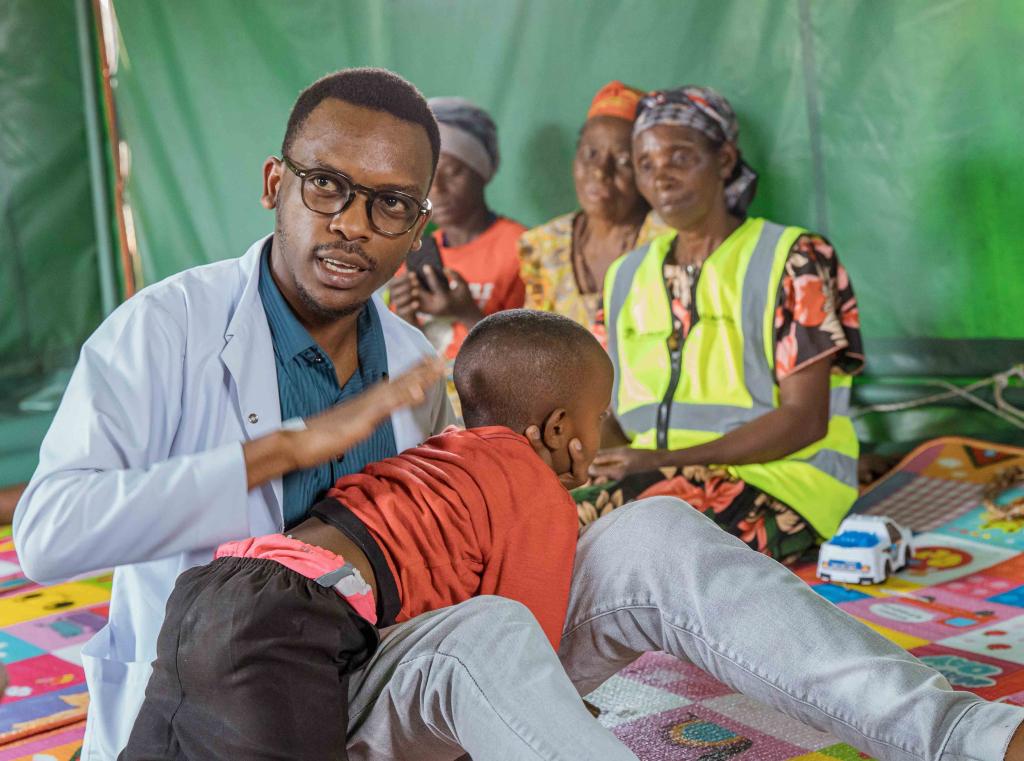
To support the rollout of the childcare program, parents working in seedling production joined a 3-day early childhood development (ECD) training. They learned about the basics of child development, positive parenting and responsive caregiving, and how childcare can support both children’s well-being and the productivity of workers involved in NbS. The training also included practical activities, such as making simple toys using locally available materials.
Local leaders and community health workers attended the training sessions, learning alongside parents to strengthen community-wide engagement. Following the training, each childcare site established a management committee to oversee daily operations, working closely with the site manager from the ARCOS Network, SUNCASA’s NbS partner in Kigali. Local leaders and nearby health facilities also provide ongoing support to ensure the program runs smoothly.
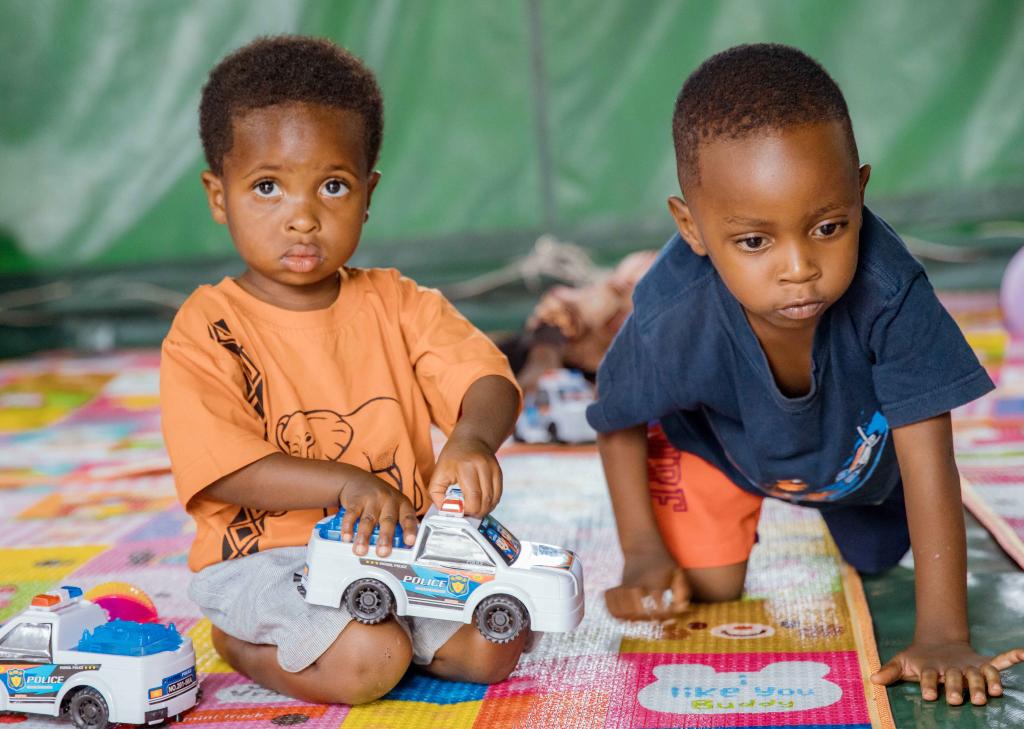
At the same time, parents began creating toys for their children using locally available materials, enriching their learning and play environments while fostering creativity and resourcefulness. Their ingenuity has led to soft balls made from recycled materials, toy vehicles crafted from plastic bottles, dolls sewn from old clothes, and jump ropes made from banana leaves.
What Has Been Done So Far
The AVEGA Agahozo team, in collaboration with the ARCOS Network, began implementing the childcare program by identifying 20 parents with children aged 9 to 35 months. The teams then assessed the materials and equipment needed—including tents for children, mobile toilets, hand-washing stations, hygiene supplies, milk, toys, first-aid kits, plastic mats, and other essentials.
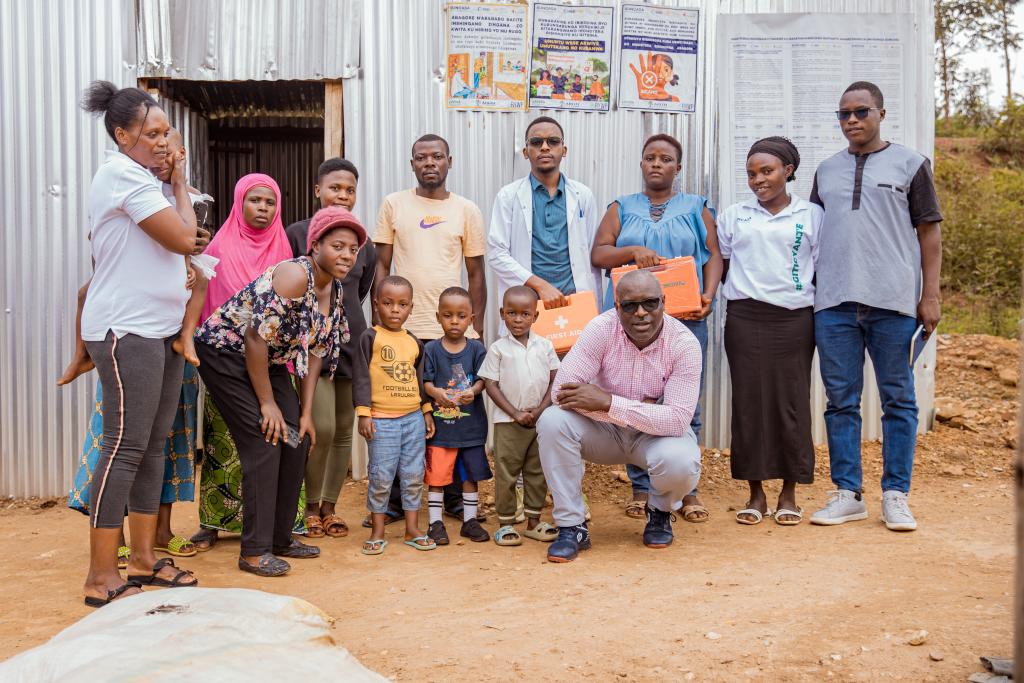
To ensure safety, AVEGA assigned a medical staff member to deliver practical training on the proper use of first-aid kits at each tree nursery site for caregivers and personnel.
Before launching the program, AVEGA Agahozo and ARCOS teams held meetings with caregivers to assess readiness and establish a clear plan. A rotation schedule was created to define how parents and caregivers would take turns managing childcare activities. Each caregiver also signed a code of conduct outlining expectations, prohibited behaviours, and consequences for non-compliance, ensuring a safe and well-organized environment for the children.
Supporting Parents and Boosting Productivity
The participants of the program underlined the importance of adequate nutrition and care provided for their children. Parents also anticipate improvements in their productivity, particularly mothers engaged in NbS activities.
“Our productivity increases because mothers are no longer managing a double role—caring for children while participating in NbS activities. We are confident that our children are safe.”
Local sector officials noted that the initiative is the first of its kind in Kigali. “This is a new initiative that will improve the lives of our children by supporting their holistic development. Mageragere Sector is committed to collaborating effectively with the project to ensure the program achieves its objectives,” said Jean Pierre Maniragaba, the Mageragere Sector social affairs officer.

More about SUNCASA
Challenging Gender Discriminatory Norms, Practices, and Beliefs in Sub-Saharan Africa
SUNCASA held a series of training sessions to support women and other underrepresented groups in overcoming the barriers preventing their access to natural resources and meaningful participation in nature-based solutions governance.
How Biophysical Monitoring Turns Data into Action for Nature-Based Solutions
Rigorous and consistent data analysis provides the feedback needed to refine strategies, attract investment, and strengthen natural infrastructure that delivers multiple social, environmental, and economic benefits.
Tackling flash floods, urban heat, and other climate change threats in three sub-Saharan African Cities
A new project will use solutions found in nature to improve the resilience of 2.2 million people in Dire Dawa (Ethiopia), Kigali (Rwanda), and Johannesburg (South Africa).
How to Measure Mindset Shifts on Gender and Social Inclusion
What is the best way to measure changes in mindsets about gender equality and social inclusion?