Insight

We Must Study Marijuana's Impact on the Environment Before It's Too Late

How could marijuana impact freshwater supplies? The focus on human health with Canada’s legalization has highlighted the lack of discussion on the potential environmental effects.

December 7, 2018

In a flurry of international news, after years of false starts and political wrangling, it was finally written into law: Justin Trudeau’s administration legalized recreational marijuana use in Canada.

Admittedly, the course of true legalization never did run smooth. A myriad of complex province-specific regulations and policies have emerged that have served to reflect the fractured political nature of Canada’s federation, but also to mildly puzzle its citizens.

Marijuana freshwater

Much of the information that had been shared ahead of the big day was intended to clear up some of the public’s confusion focused on the human health risks of cannabis consumption. Billboards and advertising in suitably green font have warned Toronto and Vancouver’s denizens of how smoking marijuana can impair one’s ability to drive, trigger schizophrenia and other mental health issues, and stoke addiction.

While all admirable and necessary warnings, this focus on human health has highlighted the notable lack of public or governmental discussion on the potential impact of cannabis on the environment, and in particular on North America’s abundant supplies of fresh water.

Often featuring in the lower rungs of priority when it comes to determining the safety of a drug, the impact of a pharmaceutical on the freshwater environment can be significant on the health of lakes, rivers and those who reside nearby.

The gamut is wide and worrying – from limpets in the UK no longer able to cling on to rocks for survival as they “bathe in a soup” of antidepressants to Canadian male fish growing eggs in their testes after being exposed to the synthetic estrogen found in birth control pills.

These examples should serve as a reminder that when deeming a drug fit for market, we should research and factor in its impact on the environment and water systems.

Marijuana and fish

As the tide of marijuana legalization seems to be steadily sweeping North America, it also highlights how the USA and Canada, with our shared watersheds and borderless water movement, need to put our heads together on this issue.

When it comes to marijuana, a lot of the research and legislation is patchy and regionally specific. In Canada, some legislation exists to limit the use of more than 95 pesticides that can be used by licensed cannabis producers. There is also guidance to prevent these compounds from leeching into nearby water bodies and reaching its flora and fauna.

But we need to know more.

It’s hard to overstate the importance of fresh water to North America’s economy and peoples. The five mammoth Great Lakes alone account for 21% of the globe’s freshwater supplies and no fewer than 35 million Americans and Canadians depend on them for their drinking water.

Historically, economic development of the continent has depended on its networks of lakes and rivers, and today it provides places to swim, fish for food, and boat – helping to fuel economic activity in the recreation and tourism industry. Put simply, every economic sector in North American depends on fresh water.

We are still limited in our understanding of how much recreational use of cannabis in Canada will increase thanks to legalization. Some projections suggest a steep increase, but we need to be tracking consumption to know what could be leeching into our water.

Second, when cannabis itself is metabolized by humans and excreted into our water supplies, it can result in risks that are yet poorly understood and that are not accounted for when just applied pesticides are examined. We need more research to fill those information gaps.

Our water flows freely across our continent; cannabis flowing down from British Columbia will not stop short at the border with Idaho.

North America’s governments, scientists and industry need to work together to ensure a comprehensive understanding of the effects of marijuana on fresh water, and update wastewater treatment facilities and regulations to protect our lakes and rivers.

This article first appeared in The Guardian on December 4, 2018.

Insight details

Insight

Freshwater Lakes’ Pollution Problems Go Beyond Plastics

Focusing solely on plastic pollution ignores the myriad problems — from algae to pollution — that plague our lakes

December 3, 2018

In case you somehow missed the memo, let this be a reminder—plastics are bad news for our planet.

And with the European Parliament recently banning a full suite of single-use plastics, some of the world’s biggest corporations teaming up to curb plastic waste, and the American public increasingly swearing off plastic straws, it seems as though that memo’s impact has spread far and wide.

Plastic pollution

In fact, I would go so far as to say that the recent wave of action to combat the dangers of plastics on our aquatic environments are products of one of the most successful examples of public and policymaker education on an environmental issue of our time.

What is clear is that groundswells of public support to reduce plastics’ impact on the environment, built through ubiquitous posts shared on social media platforms, extensive media coverage, and popular TV shows, have made the rare yet highly coveted journey from the living room and the cell phone to the policymaker’s pen to be enshrined in law.

What is less clear is the actual impact of plastics (and their smaller yet equally maligned cousins, microplastics) on water bodies around the world and, indeed, how effective the recent changes in legislation around the world will actually be in curbing plastic pollution.

One of the more sober and nuanced takes on the current plastic debate, entitled "The known unknowns of plastic pollution," summarized the science neatly. And it seems as though the jury is still out, and — as scientists are wont to proclaim — we need more research.

It has been firmly established that plastics are in the environment and they should not be there, but what isn’t known is the extent of physiological impacts plastics have on these organisms, whether plastic particles are vectors for other contaminants, and whether plastics bioaccumulate. Much greater research, including at the ecosystem scale, will help to understand how much of a problem plastics really are.

While no one should quibble about governments taking action on pollution, here in North America it is clear that our freshwater bodies are suffering from a more complex and pressing myriad of ills than merely discarded plastic straws.

You may be forgiven, for example, for not knowing that many of North America’s largest lakes still spend their summers sweltering under harmful algal blooms that block light, choke their wildlife and can prove toxic to humans when consumed as drinking water. Lake Erie is still blighted by the issue while those smelly, toxic blooms have been increasing in size and frequency on Lake Winnipeg—one of the world’s largest.

Water sampling

Certain movements are being made to reduce the impact of the toxins produced by algal blooms on humans, but both the USA and Canada are missing a critical pan-national plan to simply reduce how much phosphorous—the key ingredient in algal blooms—gets into our waterways.

Similarly, given our continent’s high dependency on pharmaceuticals, we still have little understanding of what happens when, say, anti-depressants are released into Lake Michigan, or what the products of cannabis (recently legalized in Canada) would do to Lake Ontario. Existing research on the effects of some drugs on fish suggest the news might not be good.

And the inconvenient elephant in the room—climate change—still stands as the great environmental challenge of our time. Despite its projected catastrophic effects on humanity and the environment, public calls to action on climate still pale in comparison to concerns about plastics.

Erik van Sebille, an oceanographer studying plastics, puts it succinctly: “How is plastic public enemy No 1? That should be climate change.”

Now is the time for our policymakers to take the energy generated by the plastic buzz and channel into a more strategic and nuanced assault on the welter of issues that is plaguing our abundant freshwater supplies.

The article first appeared in Salon on November 24, 2018.

Insight

Contract Farming: Challenges and a new tool for success

IISD and FAO have developed a Model Agreement for Responsible Contract Farming to help farmers and responsible buyers address the shortcomings of contract farming.

November 28, 2018

“Sometimes you’re desperate for inputs, so you just sign on the dotted line…”

(Francais suivre)

These are the words of a young woman farmer growing tobacco under a contract farming scheme in Zimbabwe.

Contract farming is an agreement between a farmer and a buyer, often an agribusiness, to grow produce with set terms and conditions for things like price, quantity, quality and inputs. The young farmer was speaking at an event hosted by IISD, the Food and Agriculture Organization (FAO) and the Sam Moyo Africa Institute of Agrarian Studies in Harare this month. For two days, we brought together young farmers, agribusinesses, producer organizations, and civil society and international organizations to discuss the opportunities and challenges posed by contract farming.

Coffee farmer

This diverse group grappled with questions like: Is contract farming inclusive? How can the power imbalances between farmers and agribusiness be addressed? Can contract farming help address the agricultural investment gap? Farmers shared their experiences in contract farming schemes and highlighted some of the key challenges, including:

  • They aren’t given enough time to study the contracts, which use confusing legal jargon.
  • Sometimes they aren’t given a written contract at all.
  • Contracts only give rights to buyers and obligations to farmers.  
  • Buyers delay in giving promised inputs like seeds or give inputs that are low quality.
  • Ultimately, the quality of the produce is determined by the buyer, and they can manipulate this to drive down prices.

In the context of these discussions, we shared a new tool to help farmers and responsible buyers to address these challenges: the Model Agreement for Responsible Contract Farming developed by IISD and the FAO.

The Model Agreement is a simple and practical legal tool to address power asymmetries, create more equitable and sustainable business relationships and support a transparent business environment for contract farming schemes. It provides simple, customizable template provisions, which can be adapted by the parties to suit the commodity, context and parties’ specific needs.

The farmers and buyers in Harare recognized that the Model Agreement isn’t a silver bullet to address all the challenges of contract farming. But it is a practical tool to help contract farming make a positive contribution to responsible investment in agriculture, support rural livelihoods and connect farmers to markets on fairer terms.

You can access the generic template online, as well as templates for coffee and tomatoes to show how customization can be done for different commodities.

Governments, buyers and farmers’ organizations looking to establish new contract farming schemes or enhance the fairness, transparency and sustainability of existing ones may be interested using in the Model Agreement. For advice on using or adapting the Model Agreement, please contact [email protected] and [email protected].

***

L'agriculture contractuelle: ses défis et un nouvel outil pour y remédier  

“ Parfois, tu as tellement  besoin d’intrants, alors tu te contentes de signer sur la ligne pointillée… »

Ce sont les mots d'une jeune cultivatrice de tabac du Zimbabwe participant à un projet d’agriculture contractuelle.

L'agriculture contractuelle est un accord entre un agriculteur et un acheteur, souvent une agroentreprise par lequel l’exploitant agricole s’engage à cultiver des produits selon certaines modalités portant notamment sur  le prix, la quantité, la qualité et les intrants.

La jeune cultivatrice a pris la parole lors d'un événement organisé ce mois-ci  à Harare par IISD, l'Organisation des Nations Unies pour l'alimentation et l'agriculture (FAO) et l'Institut d'études agraires Sam Moyo Afrique.. Pendant deux jours, nous avons réuni de jeunes agriculteurs, des agroentrepreneurs, des organisations de producteurs, la société civile et des organisations internationales pour discuter des opportunités et des défis posés par l’agriculture contractuelle.

Tomato farmer

Ce groupe hétérogène s’est penché sur les questions telles que: l’agriculture contractuelle est-elle inclusive? Comment remédier aux déséquilibres de pouvoir entre agriculteurs et agroentreprises? L'agriculture contractuelle peut-elle contribuer à combler le déficit d'investissement agricole? Les agriculteurs ont partagé leurs expériences en matière d'agriculture contractuelle et ont décrit certains des principaux défis rencontrés:

  • On ne leur accorde pas suffisamment de temps pour étudier le contrat dont le jargon juridique est déroutant.
  • Parfois, ils ne reçoivent aucun contrat écrit.
  • Les contrats donnent des droits qu’aux acheteurs et des obligations aux agriculteurs.
  • Les acheteurs tardent à fournir les intrants promis tels que des semences ou donne des intrants de qualité médiocre.
  • A la fin, la qualité du produit est déterminée par le seul acheteur qui peut le remettre en cause pour faire baisser les prix.

Dans le cadre de ces discussions, nous avons partagé un nouvel instrument pour aider les agriculteurs et les acheteurs responsables à relever ces défis: le Modèle d’accord pour une agriculture contractuelle responsable développé par IISD et la FAO.

Le modèle d'accord est un outil juridique simple et pratique permettant de remédier aux asymétries de pouvoir, de créer des relations commerciales plus équitables et durables et d’assurer un environnement commercial transparent pour les systèmes d'agriculture contractuelle. Il fournit des de modèle de dispositions simples et personnalisables, qui peuvent être adaptées par les parties en fonction du produit, du contexte et des besoins spécifiques des parties.

A Harare, les agriculteurs et les acheteurs ont reconnu que le modèle d’accord n’est pas une solution miracle pour relever tous les défis qui se posent à l’agriculture contractuelle. Mais il s’agit d’un outil pratique pour aider l’agriculture contractuelle à contribuer de manière positive à des investissements responsables dans l’agriculture, à soutenir les moyens de subsistance en milieu rural et à favoriser l’accès des agriculteurs aux marchés et ce des conditions plus équitables.  

Vous pouvez accéder en ligne au modèle générique, ainsi qu'aux modèles pour le café et les tomates qui vous montrent comment le modèle peut être adapté à différents produits.

Les gouvernements, les acheteurs et les organisations d’agriculteurs qui souhaitent mettre en place de nouveaux systèmes d’agriculture contractuelle ou renforcer l’équité, la transparence et la durabilité des systèmes existants peuvent être intéressés par le modèle d’accord. Pour obtenir des conseils sur l’utilisation ou l’adaptation du modèle d’accord, veuillez contacter [email protected] et [email protected].

Insight

Ten Years of G20 Summits: Hopes and failures

Does the G20 have anything to offer in a world of conflict and confusion?

November 27, 2018

As the G20 opens in Buenos Aires, most commentators expect it will be overshadowed by the meeting between U.S. President Trump and China President Xi and the question of whether there will be a full-blown trade war.

This view is superficial. A more relevant question is whether this forum, which played a key role in saving the global economy from a depression after the financial crisis of 2007–2008, has anything to offer in a world of conflict and confusion.

To understand the G20—its dynamics, its potential and its limitations—it is useful to imagine a schematic with two axes: one horizontal and one vertical.

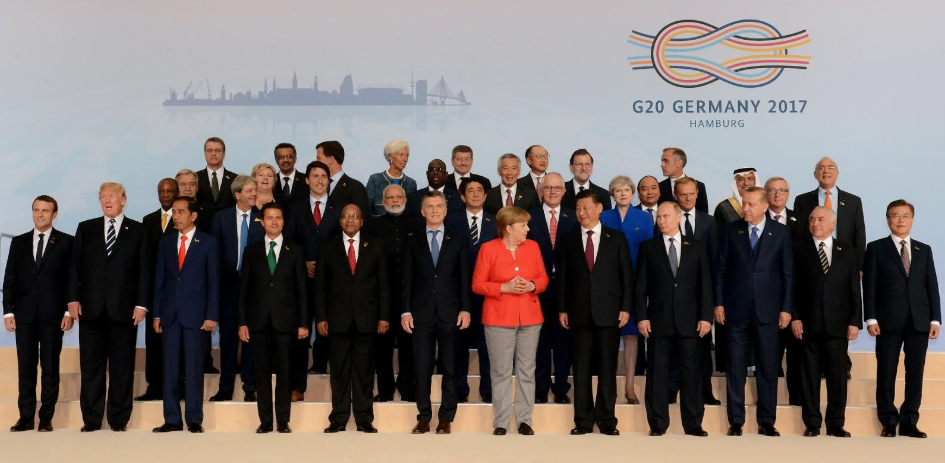
G20 Hamburg
World leaders in Hamburg, Germany for the 2017 G20 meeting (Source: G20)

The horizontal axis can be thought of as dividing the interests of the elite—across all G20 countries—from the interests of the rest, of the 99 per cent, the workers and the poor. You could also describe this as dividing the interests of capital from the interests of labour. So think above and below, the haves and have-less or have-nots.

The vertical axis can be thought of as dividing the interests of different countries and country groupings. So think the G7 versus the BRICS, or United States versus China.

Let me describe how the G20 can be understood along these axes.

The horizontal axis of class

The very existence of the G20 as a presidential- and prime minister-level forum—and its one singular achievement—was to respond to the financial crisis at a scale that could prevent the global economy from falling into a depression.  It did so through a coordinated rescue of the main private sector financial actors and through a public fiscal and monetary stimulus, with the biggest contributions coming from China and the United States.

The initial rescue benefitted the G20 economies broadly, beyond the financial sector. But very quickly the focus turned to the interests of capital—bond holders in particular—as reflected in the 2010 decision at the Toronto summit to call for fiscal consolidation. Even though working people and the poor were still suffering the effects of the crisis in terms of unemployment, lost income and stagnant or declining wages, the G20 agreed to “hit the brakes.”

Over the next few years, several countries and the International Labour Organization (ILO) insisted the G20 needed to address continuing unemployment and rising inequality. They called on the group to act on both the quality and quantity of jobs, wages and the declining labour share. A labour ministers' track was established in 2010, followed by the creation of an employment working group. In 2015, a subgroup on labour income share was created—on a proposal from Argentina with support from host Turkey and several other countries.

However, the G20 never moved to adopt the policies recommended by these working groups, only paying lip service to the need for “more and better jobs.”

When the backlash against the effects of globalization started to manifest politically in 2016, beginning with Brexit, then the election of Trump and so on, the G20 could easily be seen as part of the problem: an instrument of the international elite. In that sense, the G20 missed important opportunities to help coordinate some redistribution from the winners of globalization to the losers, some coordinated increase in wages, that could have mitigated the harsh effects of the crisis on working people or at least slowed the decline in the share of the global and national economies going to working people and the increased share going to wealthy investors.

That is a brief synopsis of the G20 performance along the horizontal axis.

The vertical axis: The alignment of countries and blocs.

This is where we are seeing a fundamental shift in alignment since the election of Trump and other recent developments. Before that, there was a tacit assumption the shared interests of the G20 outweighed the competing or diverging interests, at least enough to make it a useful forum for addressing some critical challenges.  Certainly that was the case during the 2008–2009 rescue of the global economy. 

Under a tenuous assumption of shared interests, the group would try to converge on issues that were in dispute: for example, trade, development and action to address climate change. This was also the case with labour, inequality and economic fairness. On the latter questions a few countries took the lead, along with the ILO: Argentina, Brazil, France, South Africa, sometimes the United States under Obama and sometimes Turkey. Of course, the possible coalition changed when participating governments shifted from centre-left to centre-right governments. But the lack of a broader consensus meant on issues of labour, as well as trade, development and environment, the group agreed only to lowest-common-denominator statements and no new action.

Now, however, the United States under the Trump administration is pursuing an active containment strategy toward China, in both the economic and military spheres. And the United States, United Kingdom and some other countries are doing the same toward Russia. As a result, there is likely to be a more open development of blocs within the G20. The United States is less likely to push for G20 collaboration on trade or other economic issues.  China and Russia are more likely to coordinate their positions. As for the other countries, Brazil under a new president may align more with the United States than with the BRICS during the coming period, for example. 

In this new geostrategic environment, it is likely the G20 will accomplish little in the immediate future, under the current Argentine government’s presidency or under Japanese and Saudi Arabian presidencies in 2019 and 2020.  

A bleak outlook heading into Buenos Aires

The G20 was designated as the “premier forum” for international economic coordination in the face of the rapid global integration of the 1990s, rapid growth of China and the other BRICS in the 2000s and the clear inability of the G7 to continue to dominate and resolve crises in their own interests. The assumption until very recently was that expansion to the broader group of large economies would bring more players to the table but still with a shared interest in the stability of the global economy. 

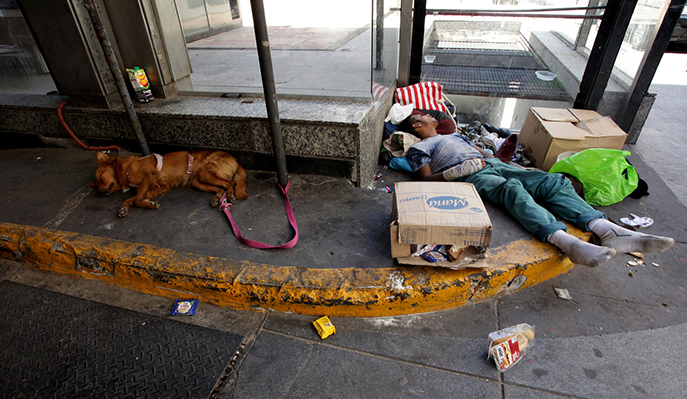
A man and his dog sleep on the streets of Buenos Aires.

For some progressives, there was the hope this more representative grouping of countries could play a moderating role in global economic relations. It seemed it could at least bring more attention to the needs of developing countries—and the needs of the losers from globalization in all countries. However, this hope for some improvement or redistribution along the horizontal axis of class and inequality has been continually dashed.

And now attention will shift to the vertical axis. The G20 for the next few years may be no more than another reflection of a world on the brink of dividing into blocs.

Insight details

Insight

What's Stalling the G20's Move to Clean Energy?

Next year will mark a decade since G20 leaders met in Pittsburgh and promised to identify and eliminate subsidies to fossil fuels. In that time, trillions of dollars in government budgets have been spent to subsidize fossil fuel production and consumption.

November 27, 2018

Momentum toward the transition to clean and low-carbon energy pathways is growing, in G20 countries and beyond.

Many G20 countries have led world markets in renewable energy investments, notably China, Mexico and Australia. Global investments in renewable energy add up to more than USD 2 trillion, according to a new report from UN Environment and the Frankfurt Business School.

A record 157 gigawatts of renewable power—classified by the report as wind, solar, biomass and waste-to-energy, geothermal, marine and small hydro—were commissioned in the world’s electricity sector in 2017.

This transition matters in addressing climate change: just over 12 per cent of the world’s electricity came from renewables last year, avoiding or displacing an estimated 1.8 gigatonnes of carbon dioxide (C02) emissions.

Last year, overall investment in renewable energy grew by roughly 2 per cent, to nearly USD 280 billion. As the costs of renewable energies decrease rapidly, what appears to be modest growth is in fact a strong expansion of renewable generating capacity. These investment trends mean that renewable energy markets are growing much faster than conventional fossil fuels, by a rate of roughly two-to-one in overall investments.

There are various drivers behind this increase, led by a drop in the price of solar technology, which is now the lowest-cost form of power generation across most of the world. Increased exploitation of other clean energy solutions such as geo-thermal and bioenergy at large scale have also been instrumental.

In at least two fundamental ways, the G20 provided the underlying conditions for this accelerated growth:

First, the G20 Finance and Central Bank Deputies adopted a proposal to launch a G20 Green Finance Study Group (GFSG). The remit of that group is to “identify institutional and market barriers to green finance” and identify options to accelerate green investments.

A central part of this mandate is environmental risk in general, and climate risk in particular. The GFSG committed to identify, and help quantify, different kinds of environmental risk. Since their report was adopted, China–which made up roughly 45 per cent of all global renewable energy investments in 2017—has begun to implement the most ambitious, systematic approach to green finance, encompassing not only green bonds (for which it is a world leader) but also insurance, stock markets and other pillars of financial services.

Second, the June 2017 report of the Financial Stability Board (FSB) Task Force on Climate-related Financial Disclosures recommended that, because climate risk poses a material risk to financial markets in G20 countries, preparers of climate-related financial disclosures should provide such disclosures in their mainstream (public) annual financial filings.

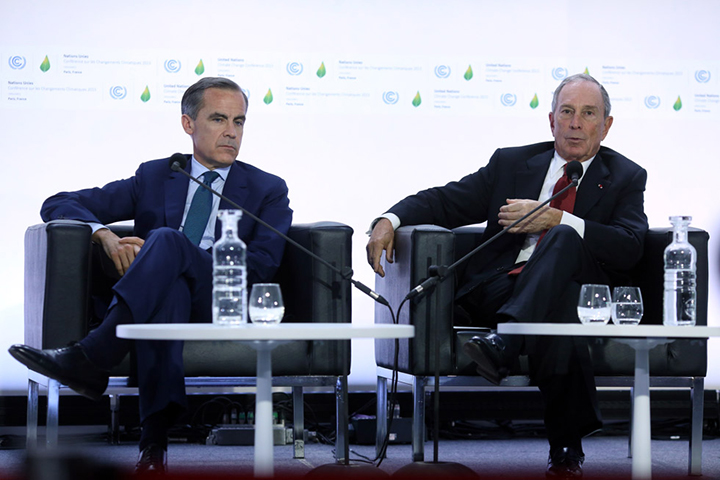
Task Force on Climate-Related Disclosure
Mark Carney (L) Chair of the Financial Stability Board and Governor of the Bank of England and Michael Bloomberg (R) Chair of the TCFD (Source: FSB)

Some of the growing momentum that stemmed from the release of the FSB task force report was on display last December at the One Planet Summit hosted by French President Emmanuel Macron. There, 225 investors–including many of the world’s biggest asset managers—pledged to put pressure on 100 of the most carbon-intensive companies–from oil and gas to aviation and consumer products—which together are responsible for nearly 85 per cent of global greenhouse gas emissions.

A list of the top greenhouse gas emitters was shared at the Paris conference, meaning carbon polluting companies are being "named and shamed" and squeezed on the one side from central bank regulators and on the other by big asset companies like Blackrock, Vanguard and others.

While these two G20 efforts continue to push markets towards low-carbon pathways, 2017 also reminded us of the unfinished agenda in tackling fossil fuel subsidies and of the inertia that makes moving away from fossil fuels difficult.

Next year will mark a decade since G20 leaders met in Pittsburgh and promised to identify and eliminate subsidies to fossil fuels. In that time, trillions of dollars in government budgets have been spent to subsidize fossil fuel production and consumption.

The continued pricing distortions that subsidies exert within energy markets are counterproductive. They not only weaken the fiscal position of governments by increasing deficits and debt, they also slow the energy transformation and thus delay climate action as well as the multiple benefits of the shift to clean energy.

Those benefits include not only improvements in public finance, but also improved public health from reduced air pollution, higher energy security and reduced total cost of energy supply, innovation and a renewable of capital stock, business and employment growth, rural development, and improved balances of trade and payment, notably countries that can reduce their imports of fossil energy commodities and products.

But realizing these benefits needs governments across the G20 to plan and implement an energy transition. While a lack of pricing of local and global air pollution has hampered the ability of markets and investors to pick the clean options, a fear of economic shock and job losses in communities with strong reliance on fossil fuels hampers governments.

The recent Berlin Energy Transition Dialogue, the fourth now held, is one of a series of events and initiatives that have highlighted the fact that transition can be successful and that communities do not need to be left behind. Exchanging experiences and lessons learned—both good and bad—can only help the G20. Common approaches and a commitment would be even better.

This article first appeared on the G20 Portal on November 25, 2018.

Insight

The End of Coal? What to Watch for at the Upcoming UN Climate Conference (COP24)

While COP24 was always intended to be a "technical" conference—with parties focused on finalizing the details required to operationalize the Paris Agreement—there is potential for a strong political element to the discussion.

November 27, 2018

Thousands of people will soon arrive in Katowice—a city of 300,000 in southern Poland—for the latest round of negotiations and discussions at the UN Climate Conference (also known as the 24th UNFCCC Conference of Parties, or COP24).

Each year the conference has an underlying theme, and this year the focus is "Just Transition," used to describe an approach to economic and environmental policies in the transition to a low-carbon economy that minimizes impact on workers and communities.

The theme is especially fitting given that Poland is one of Europe’s largest exporters of coal, and Katowice lies at the heart of Poland’s rust belt. Coal sector workers in Poland generally, and in Katowice particularly, are poised to face a strong impact from a global shift away from coal. The area has gone from having 14 active coal mines in the 1980s to two today.

Katowice coal

Over 72 million tonnes of coal were produced at mines in Poland in 2015. Poland is also the 10th largest coal consumer in the world and second largest in the EU after Germany. With renewables growing around the world and particularly in Europe, but Poland still heavily invested in a long-term commitment to coal, the focus on a just transition for coal workers is obvious, especially as Poland is also pressured by EU climate change policies, and in turn the EU has committed major assets (USD 1.9 billion) to assist Poland with mine closures.

Katowice mining

COP24 could also mark the moment when the "end of coal" discussion hit the forefront. Beyond the link between Poland’s public focus on Just Transition and its behind-the-scenes pressures on its coal future, there is bound to be vocal activity from the Powering Past Coal Alliance (PPCA), which launched last year at the COP in Bonn and has now grown to include 28 national government members, 19 sub-national governments (including seven U.S. states), and 28 businesses. A number of official side events also focus on the phase-out of coal, or on the phase-out of fossil fuels more broadly. Canada, as a founding member of the PPCA, will feature prominently though several planned speaking engagements for Catherine McKenna, Minister of Environment and Climate Change.

There is also likely to be a repeat of the circus-like atmosphere that happened in Bonn, when protestors packed the audience to disrupt a U.S. government-sponsored side event focused on the country’s commitment to clean coal. This year, the U.S. has an official side event ambiguously titled: “U.S. Innovative Technologies Spur Economic Dynamism,” which is almost certain to draw a lot of attention for the wrong reasons. Several American states are also likely to have prominent speaking events on climate change and clean energy, led by Jerry Brown, California’s outgoing governor, who has been a vocal critic of President Trump.

Meanwhile, the focus of the formal negotiations will be the adoption of the Paris Agreement Work Programme (PAWP). This framework will include not only how (and how often) countries will continue to submit nationally determined contributions (NDCs), which embody national efforts to reduce national emissions and adapt to the impacts of climate change, but also the transparency and accountability framework and convening a global stock-take. Several countries are concerned about the state of negotiations after a special session in Bangkok in September did not result in an outcome being made any clearer. There is a lot of uncertainty going into Katowice on the topic of greenhouse gas mitigation.

Uneven and inefficient progress clouded the prior sessions in Bonn and Bangkok leading to concerns Katowice will be unable to deliver the PAWP as expected, especially as compilation text grew to over 300 pages in Bangkok.  Coming out of Bangkok there was little clarity on how resolution will emerge from the current tangled and complicated process, with one assessment noting “parties have yet to even decide what they need to decide.”

As for Canada specifically, the PPCA and the Pan-Canadian Framework on Clean Growth and Climate Change will be the focus areas. Canada will attract questions on its approach to climate change (specifically its carbon pricing plan), and its ability to achieve its NDC when it presents in a multilateral assessment session at the COP.  The Canadian government is expected to speak frequently on the coal phase-out, and it is likely that the outcomes from the Task Force on Just Transition for Canadian Coal Power Workers and Communities will be teased as the report is expected by the end of 2018. At the same time, Canadian environmental groups will be drawing attention to the purchase of the Trans-Mountain Pipeline Expansion, which has been a controversial decision, with questions on how it will impact NDC achievement.

There are high expectations for COP24, particularly on the PAWP. Doubts are starting to creep in, however, that the goalposts may be moved to a later date, as often occurs in this process. It will be critical to ensure a deadlock is avoided and the event at least makes progress toward the ultimate goal. Entering COP24 with a 300-page text with many unknowns is a concern. Leaving COP24 in the same state, or moving backwards, would be unacceptable.

Insight

To Think Local and Act Local You Need Local Data

Data is no exception to the trend of localizing our consumption, charitable giving and development efforts.

November 27, 2018

In recent years, there has been a renewed effort to focus our consumption, charity and development efforts locally.

We’re encouraged to buy, eat and even travel close to home to reduce our ecological footprints. Business groups run Buy Local campaigns in nearly every urban centre. As a counter reaction to our increasingly digital world, leaders of all stripes—political, religious, educational, environmental—have suggested we strengthen our connection to and understanding of our sense of place.

Data is no exception to this trend.

City data

There are increasing calls for urban and rural communities to access and use local-level data for informed decision making, planning, accountability and mobilization. Across Canada, civil society organizations such as the National Climate League and their regional climate hubs call for greater access to local-level environmental data. Similarly, collaborative efforts to localize the Sustainable Development Goals (SDGs), such as those from organizations involved in Alliance 2030, amplify the call for localized data to track progress on the SDGs.

Winnipeggers have taken the local data movement to heart and lead the way on several fronts, sharing their know-how with the rest of Canada. Winnipeg is home to the Prairie Climate Centre (PCC), and the Canadian Climate Atlas. Based at the University of Winnipeg, the PCC shares data for key climate indicators, developing climate data reports for numerous Canadian cities. The PCC makes an impact through knowledge mobilization, sharing documentary-style videos and articles about communities taking action to reduce their carbon emissions and improve community resilience to climate change.

The Climate Reality Project Canada's (CRPC's) Climate Hub in Winnipeg digs deeper into climate trends and impacts data, providing access to climate-related data at the city level. This work has made an impact by involving citizens to advocate for access to environmental data. The Winnipeg-based hub is part of a larger effort by citizen groups across Canada to advocate for, track and compare local-level environmental data.

“Currently, some of the most exciting and effective climate action is taking place at the local level. Having reliable, consistent measurements that we can share is a really useful way to increase visibility of what our neighbours are doing. And hopefully, this will be a gateway to greater collaboration across the country." - Curt Hull, Climate Leader, Climate Reality Project Canada Board Member

The Peg Community Indicator System (CIS), run by the International Institute for Sustainable Development (IISD) and the United Way Winnipeg, curates over 60 indicators to measure community well-being and sustainability related to the seven themes of the built and natural environments, health, basic needs, economy, governance and social vitality and education. Together, this data forms a basis for community priority setting and decision making. Peg’s recent efforts to connect their indicators to the SDGs further acts to inspire action across the city. Peg’s data has helped inform local government officials, educate youth on data literacy, set strategies for philanthropic organizations and stimulated conversations and storytelling on topics that matter to Winnipeggers.

“The indicators presented in Peg were instrumental to the development of the For Every Family Initiative—a project aimed to enhance the well-being of children and families in our community by enhancing the services of family resource centres. The data in Peg provided an evidence-based foundation to this initiative and was key in developing the case for support for our partners, including the Province of Manitoba, The Winnipeg Foundation, and numerous other foundations and philanthropists. By analyzing the data related to readiness to learn, children in care, and household income, we were able to identify how to best focus our energies in order to have the greatest possible impact in our community.” - Kathy Knudsen, Vice President, Community Impact – United Way Winnipeg

Peg is also the flagship CIS on IISD’s Tracking-Progress platform; an easily replicable on-line tool enabling communities across the country to determine and measure their own indicators of sustainability.

The Manitoba Collaborative Data Portal (MbCDP) is a key resource for spatial data and related resources aimed to promote informed discussion and decision making through access to data. The portal shares data on topics related to community health, transportation and housing. The MbCDP and the Winnipeg Data Consortium members lead the way in community data validation through their work to draw the consensus, understanding and shared knowledge needed to strengthen the local data landscape.

Together with other academic, government and civil society institutions, these four initiatives form part of a rich community data landscape that helps to inform, improve and support local efforts to shape the city into a more sustainable and equitable place.

This article first appeared on the Community Climate Hub on November 26, 2018.

Insight

Citizen Science Fills Critical Gap in Monitoring Freshwater Resources

Most of us lack baseline data about our ecosystems, which makes it difficult to recognize changes and detect early warning signs. Enter citizen science.

November 19, 2018

The recent unnerving report by the Intergovernmental Panel on Climate Change (IPCC) showed that time is running out to avoid the rapid, oncoming and serious consequences of global warming.

While the jury is still out on whether our efforts can keep warming below 1.5 C, what is clear is that every scientific report, database, case study and anecdote about our warming planet has provided evidence to encourage us to take action. But across the world, most of us lack baseline data about our ecosystems, which makes it difficult to recognize changes and detect early warning signs.

Citizen science

Collecting data while engaging citizens

According to a recent survey commissioned by the RBC Foundation, Canadians are proud of our freshwater lakes and rivers: 45 per cent say it is our most important natural resource. Canada holds nearly 20 per cent of the planet’s freshwater, but we know very little about our lakes and rivers, which makes it difficult to determine how to best protect our water.

In fact, WWF-Canada recently concluded that 14 of Canada’s 25 major watersheds are insufficiently monitored to assess the overall health of our ecosystem. This needs to change.

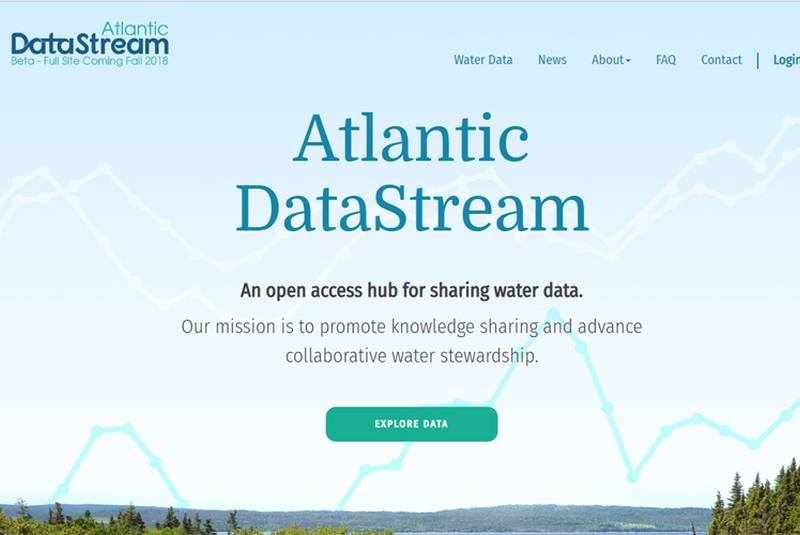
From our office in Winnipeg, we have been gazing longingly at a new initiative called Atlantic DataStream. It’s a platform for community groups, government officials and citizen scientists to archive and share their measurements of water quality from lakes and streams scattered across the four Atlantic provinces. Citizen science engages local volunteers to collect data about their surrounding environment in the name of science.

Atlantic DataStream

This platform helps communities take action in their own backyards, by housing data and most notably, opening it to the public, with features to explore water trends (even without experience combing through file servers or using complicated plotting software).

Atlantic DataStream has even gone a step further by integrating blockchain technology into its platform to create trust between those collecting data and those using it. This technology encodes a fingerprint into each dataset upon uploading, allowing citizens to track use of their data and users to ensure data has not been altered. This feature, along with other technological advancements, encourages governments to use citizen science research to fill data gaps and inform decision-making.

This is a unique and collaborative initiative to reduce data deficiency and engage citizens. Holistic, accessible and understandable data informs citizens and decision makers, ultimately leading to smart decisions for a better planet.

We must see more initiatives like this that bring scientists and citizen scientists together to address data deficiency in the name of environmental protection across Canada. If communities in Atlantic Canada can come together to flag environmental issues and then harness their collective power to address them, then the rest of us need to take note.

The IPCC report resonated through our communities – grabbing headlines and sparking debates – because decades of modelling and centuries of observations allowed experts to address and project the future of the planet. It’s the fruit of massive, worldwide collaboration.

Unlike the climate in general, we don’t know or share enough information about our freshwater to project its future.

Projects like the Atlantic DataStream do not just demystify science; they open it up to local communities to create and share essential data about our water, so that we can all make informed decisions and safeguard a sustainable future.

This article first appeared in The ChronicleHerald on November 14, 2018.

Insight

Not a Case of Either/Or: How government and mines in Zambia can save money through energy efficiency

For years, Zambia’s large hydroelectric dams were able to meet the power needs of its mines, but facing rising electricity demands the country opted to increase generation using coal, diesel and heavy fuel oil.

November 16, 2018

Copper mining has played a decisive role in the economic history of Zambia for more than a century.

Beginning in the 1920s, American and South African mining companies scaled up production and established the Luanshya, Mufulira, Rhokana and Nchanga mines. By the 1960s, Zambia was a major player, producing 12 per cent of the world’s copper. The mining sector is by far the most important industry in Zambia: in 2012 it accounted for almost all foreign direct investment (86 per cent) and export earnings (80 per cent). One quarter of all government revenues and 10 per cent of GDP comes from mining, and it accounts for almost 2 per cent of all formal employment.

Zambia mining

The scale of the mining industry means that it is by far the largest consumer of electricity. Over half of Zambia’s electricity is consumed in the country’s mining sector. For years, Zambia’s large hydroelectric dams were able to meet the needs of the mines, but rising electricity demand, reaching 11 TWh per year in 2017 up from 8.6 TWh in 2010, created a situation in which the country had to the either invest in additional generation or reduce demand.

Faced with this choice, Zambia opted to increase generation using coal, diesel and heavy fuel oil (HFO). This pressure saw the first major coal generator installed since independence. The 300 MW Maamba coal power station was commissioned in 2016 and now accounts for around 10 per cent of Zambian electricity generation. It is reported that a further 300 MW at the site is in development. Diesel and HFO power generators included 55 MW of HFO generators at Ndola installed between 2013 and 2017.

As demand rises, new coal generation could be developed, creating a transition away from today’s relatively clean hydro-generated electricity. The increasing share of coal and diesel makes electricity generation more expensive. This is especially the case during peak demand, as the merit order of the electricity system runs from cheap hydropower to increasingly expensive coal, diesel and HFO, as well as imports from the Southern African Power Pool. A marginal reduction in electricity demand at peak times tends to knock out the most expensive source of generation.

The mines pay low tariffs for electricity. However, this tariff is not thought to be sufficient to cover the costs of the national utility, ZESCO. In August, mining company tariffs were raised to USD 9.3 cents per kWh, but this is still not deemed enough to cover the cost. A much-delayed cost-of-service study was due to increase transparency and lay out the costs of electricity provision, indicating whether further hikes are needed to balance ZESCO’s books. Any gap between costs and revenues that creates losses at ZESCO must ultimately be bailed out by the government through subsidies or other mechanisms. This means that the government is effectively providing a subsidy to the mining industry for every unit of electricity it consumes.

The current uncertainty about electricity tariffs is creating a problem for the mining industry. It is difficult to make investment decisions in the absence of clear information on the costs of electricity going forward.

There is one solution that would help to address all these issues: If the mines increased energy efficiency, they would reduce their electricity bill and become less exposed to the price of electricity. The government would need to provide less power from the most expensive generators, since the most expensive generators tend to be the last to be dispatched, and ZESCO could move closer to cost recovery. Energy efficiency could be a win–win.

Research from the CUTS Lusaka, IISD and Gaia Consulting project team has shown that support for energy-efficiency investments could save money for the government, the mines and the electricity sector as a whole. The meetings were a part of an ongoing project on subsidy swaps to reduce fossil fuel subsidies and use savings to promote sustainable energy. A scheme to promote energy efficiency could be partially funded by savings from offsetting the effective electricity subsidy. We thought this was a brilliant idea—now we wanted to find out whether the mines thought so too.

In October 2018 our team of researchers visited the mines. In Kitwe, one of the major copper-producing regions of Zambia, we discussed with energy managers from the mines how energy efficiency can be promoted and were surprised by the level of enthusiasm. Mining company energy managers reported that they had already identified numerous potential projects that could reduce energy demand and improve efficiency. Some of these projects are already taking place. However, finding capital for larger projects remains a challenge. Providing low-cost loans or risk reduction measures could help these projects to succeed.

Another exciting potential area is self-generation. As electricity tariffs rise, solar energy becomes cost-competitive. With continuous electricity demand for activities like water pumping, there is a constant based load in the mines that could be met during daylight hours by solar photovoltaic generation. The combination of falling solar costs and rising electricity tariffs are making this increasingly attractive. Mining companies reported that they are already exploring the potential for self-generation.

There is an opportunity to create a system that rewards investments in efficiency and self-generation. This can solve two problems at the same time: it can incentivize mines to reduce their electricity consumption and it can make an increase in electricity prices to cost recovery levels easier. To accelerate this transition, a series of further carrots and sticks can be added. For example, tariffs for mining companies could be reduced if they have made energy-efficiency investments or conducted energy audits. A portion of the revenues from the increased tariff could also be recycled into a fund providing low-cost credit to energy-efficiency projects.

IISD, CUTS Lusaka and Gaia plan to publish detailed results from their consultations and hold further discussions on this issue.

Insight

What Do Bears and Smartphones Have in Common?

The challenge that electronics hibernation poses to the circular economy.

November 15, 2018

As the weather cools and the snow threatens to fall, bears, bats and hedgehogs snuggle their way into another season of winter hibernation.

And many of our old smartphones, believe it or not, are joining them.

Bears and electronics share a hibernation habit

Hibernation, as it pertains to smartphones and electronics, refers to the period when a phone or piece of technology is not recycled or thrown away, but is instead kept by its owner long after they have stopped using it. Unlike our furry friends, valuable electronics go into hibernation for years at a time, hidden away in desk drawers and closets, sometimes never to re-emerge.

While the retention of our dead phones keeps electronics out of landfills, thereby reducing e-waste, squirreling away electronics is a major barrier to mineral recycling and the overall aims of the circular economy.

Minerals like lithium and cobalt are both essential building blocks to smartphone batteries but are projected to experience significant supply shortages in the coming decade due to rapidly increasing demand from the makers of electric vehicles (EVs) and other green energy products, which also require these minerals for their battery components.

The price of cobalt, for example, increased by 180 per cent from 2015 to 2018 related to accelerating EV demand. According to Forbes Magazine, demand for cobalt is expected to grow at an annual rate of 11.6 per cent over the next decade. Similarly, in 2017 the demand for lithium increased by 13 per cent, and it is expected to more than double by 2024. Demand for lithium and cobalt is expected to outstrip supply by 2023 and 2025, respectively.

Further, notable conflict risks and human rights abuses have been found in the supply chains of these two minerals. Among these, incidents have been reported in the Democratic Republic of the Congo of child labour in cobalt supply chains, and public demonstrations and grievances have arisen surrounding land and water management in mining communities in the Lithium Triangle.

These supply chain issues—relating to both extraction shortages and failures in responsible sourcing best practices—pose a considerable risk to the contribution that the extraction and trade of either mineral can make to sustainable development in host communities and countries.

One way to stave off these supply shortages and conflict risks is to recycle the minerals and metals already in the system. This has been the subject of many conversations at the 2018 EU Raw Materials Week in Brussels, the theme of which was “Raw Materials for a Low-Carbon and Circular Economy.”

Mineral recycling has the potential to ease supply concerns by extracting and reusing minerals and metals from products already in our economy but currently discarded or unused. Further, the recycling of minerals has an ecological footprint 90 per cent smaller than that of primary mining.

This recycling can also be done with relatively low impacts on the overall energy efficiency of the battery. Many of the products tossed aside by their owners are put into drawers due to physical problems like cracks in the case or simply out of a desire for an upgrade. But their component parts are often far from the end of their useful life. A study by Brunel University collected used laptops and found that only four of the 148 batteries tested were unusable. In fact, most still retained about 89 per cent of their original capacity, making them ideal for recovery and recycling processes.

Mineral recycling rates, however, are low. A report by the United Nations University found that only 20 per cent of electronic waste from mobile phones and laptops were recovered. Another report by Friends of the Earth found that only 4–5 per cent of lithium-ion batteries in the EU were collected for recycling.

These low recycling rates are not due to a lack of technology. Apple’s recycling robot “Daisy” can recover approximately 770 kg of cobalt per 100,000 iPhones, or 96 per cent of the iPhone’s cobalt content.

The main barrier to mineral recycling, according to many experts, is the low rate of end-of-life collection. Christian Hagelüken, Director of EU Government Affairs at Umicore, said at the EU Raw Materials Week that “the pitfall for recycling is that most consumer products are not collected, or not properly collected.”

Instead, they sit in the bottom drawer of our desks gathering dust. Oftentimes, this period of hibernation long surpasses the amount of time the electronic was in use.

If promises of warm weather and honey won’t coerce these electronics out of their hiding places, what is to be done?

For one, awareness needs to be raised about the issue of empowering consumers and companies to take action and reverse low collection rates. At Raw Materials Week, Guy Ethier, Senior Vice President of Sustainability at Umicore, explained that, “as a consumer, we are part of this obligation.”

A study by the European Commission also found that enhancing collection systems and infrastructure, as well as increasing the lifespan of mobile phone use, would positively contribute to a circular economy for smartphones and other electronics.

We could all take a page out of the bear’s book when it comes to our old electronics. For the bear, spring offers the chance to refuel, re-energize and re-engage with the world around them. Our phones, laptops, and other electronics need to do the same. Getting these products out of hibernation and into action will be a key contribution to the sustainability of mineral supply chains and the circular economy.

Insight details