Insight

Forget GDP – for the 21st Century We Need a Modern Growth Measure

Our radar to track progress is far from satisfactory.

November 14, 2018

It is critically important that we monitor societal progress and design responsive policies to 21st-century challenges, such as climate change, the marginalization of more than a billion people, resource depletion and emerging pollution-driven health crises.

We need reliable metrics to know how we are performing on the yardsticks of our economy, sustainability and social harmony. Unfortunately, our radar to track progress is far from satisfactory. Countries still use a 20th-century metric to measure well-being: Gross Domestic Product (GDP).

Comprehensive Wealth

GDP provides measurements of output, income and expenditure quite well, and these are needed to understand and devise fiscal and monetary policies. But this measure flatly fails when it comes to well-being. Its founder, Simon Kuznets, cautioned half a century ago that it is useful mainly in tracking income. More recently, other economists suggest knowing change in per capita wealth of all types is key to monitoring sustainability.

Hence, there is growing international interest in a tool that still captures financial and produced capital, but also the skills in our workforce (human capital), the cohesion in our society (social capital) and the value of our environment (natural capital).

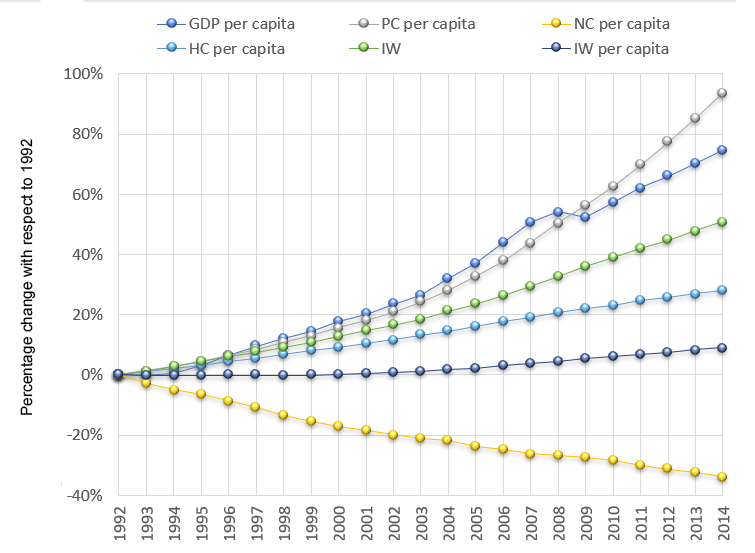
Work has advanced on some of these elements. The UN Environment-led Inclusive Wealth Index shows the aggregation through accounting and shadow pricing of produced capital, natural capital and human capital for 140 countries. The global growth rate of wealth tracked by this index is much lower than growth in GDP. In fact, the 2018 data suggests that natural capital declined for 140 countries for the period of 1992–2014.

Interestingly, many countries record GDP growth while they lose natural capital. One can see the trade-off among various types of capital, but the report clearly conveys that mixing income with wealth is bad economics and dangerous for sustainability measurement.

The index’s findings include strong recommendations to help reach global sustainability targets, including the UN Sustainable Development Goals. Closely tracking countries’ productive bases is key, as a declining asset base implies a non-sustainable trajectory. Many of the assets critical for maintaining productive bases are either not priced or are priced at much lower levels than they should be. This is especially true for natural capital and human capital assets. Natural capital assets such as forests and water bodies have only been valued for the products they provide for the market, such as timber and fish. However, these ecosystems offer a much larger suite of services, such as water purification, water regulation and habitat provisioning for species, among many others. These are clearly valuable services.

Natural Wealth
HC - Human Capital, PC - Produced Capital, IW - Inclusive Wealth, NC - Natural Capital

The Inclusive Wealth Index also helps policy-makers prepare to negotiate for reductions in greenhouse gases as well as for compensations accruing from climate change. Further, past reports have shown conclusively how countries can become unsustainable in absolute terms when population growth is factored into the computation. Understanding the impact population growth has on productive bases is a critical variable that leaders should factor into policy-making.

So analytic progress has been made, but there is still a need to bring all five elements of prosperity—financial, produced, natural, human and social capital—into one framework.

A new Canadian report does this.

Canada's Comprehensive Wealth project adds one number for evaluation and policy-making on top of GDP: a per capita sum of the five elements of prosperity. It draws on data from Statistics Canada—one of the finest statistical organizations in the world—which measures many elements of prosperity separately, to varying degrees of depth.

The report raises several red flags, most notably that Canadians’ comprehensive wealth only grew at an annual average rate of 0.2 per cent from 1980 to 2015. In contrast, GDP grew at an annual average rate of 1.31 per cent over the same period. In other words, the good GDP results of Canadians don’t have a strong foundation reflecting growth in earning potential, sustainable natural stocks, and diversified financial and produced capital.

There’s room for this study to grow in depth and breadth. The Canadian federal government should direct Statistics Canada to regularly report the country’s comprehensive wealth score.

People deserve an accurate sense of how well their economies are performing, with a view to long-term sustainability. GDP has and always will have valuable short-term insights, but to respond to 21st-century pressures we need a modern economic measure. Canada can lead the world as the first nation to adopt comprehensive wealth, making a commitment to the knowledge that empowers meaningful action.

This article first appeared on the World Economic Forum's Agenda on November 13, 2018.

Insight

Making Winnipeg a Smart City With New Technologies

We asked four members of our Winnipeg team how they would tackle some of Winnipeg’s most pressing issues: This is what they came up with.

November 7, 2018

As global populations continue to migrate to cities in search of economic opportunities and higher living standards, the world’s urban centres are continually growing.

However, in a time of limited resources, cities need to actively manage their own sustainable growth. In other words, cities need to get smart.

A smart city is an urban area that uses new technologies and data collection mechanisms to collect information about how the city is working—and then uses it to improve the efficiency of that city’s systems and valuable assets, all in the name of sustainability.

For example, among its many "smart" initiatives, New York City has implemented an internet of things (IoT) system whereby various sources of data, from microwave sensors to traffic video cameras and EZPass readers, are analyzed to alter traffic signals in real time to ease congestion issues in NYC’s busy midtown area and reduce cars’ emissions. Many cities, including Stockholm, London and Singapore have adopted innovative solutions to make their cities more sustainable.

The Peg’s population has grown to 765,800 from 657,800 in the last 10years and is well on course to hitting a million in the next decade.

Winnipeg, in the heart of Canada, is no stranger to fast-growing populations. Thanks mostly to immigration, The Peg’s population has grown to 765,800 from 657,800 in the last 10 years, and is well on course to hitting a million in the next decade.

Nevertheless, Winnipeg still faces a multitude of urban challenges ranging from unreliable public transport to inequitable access to health care. Despite some worthy attempts, Winnipeg also lags behind its Canadian cousins when it comes to implementing smart, city-wide solutions.

To move towards smart city status, however, Winnipeg does not need to reinvent the wheel, given the number of existing smart solutions already out there for cities.

We asked four members of our Winnipeg team how they would tackle some of Winnipeg’s most pressing issues and this is what they came up with.

HEALTH CARE

Jennifer Temmer: Use big data to organize and better target health outreach and education campaigns in libraries.

“In many communities, including those across Winnipeg, libraries have become important public spaces for everything from socializing to accessing the internet. As books and DVDs make way for e-readers and movie streaming services, libraries need to remain relevant.

One unique way to do this would be to take advantage of smart technologies and the power of big data. By connecting library card data with provincial health card data (all of which would be anonymous), community health providers could learn from which health issues library users in certain communities are suffering and then develop targeted approaches for public health education and community interventions on a library-by-library basis.”

ENVIRONMENT

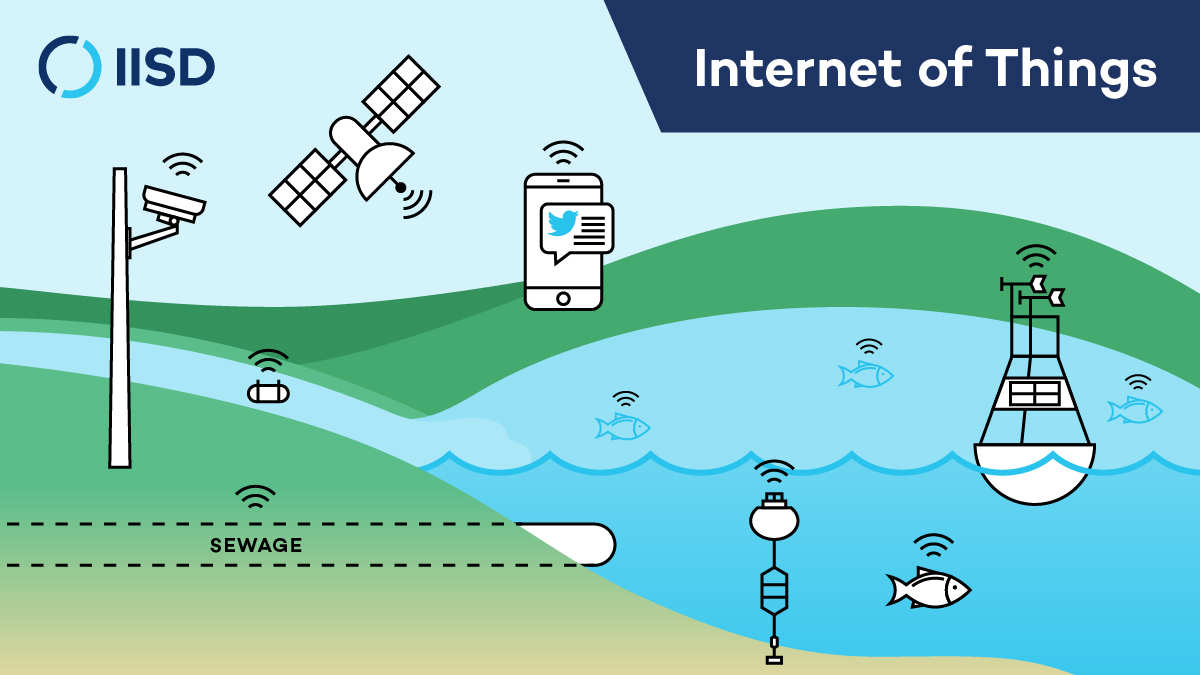
Madeline Stanley: Use sensors and the Internet of Things to detect water quality and sewage spills into Winnipeg’s waterways.

“Manitoba is the land of 100,000 lakes, but here in Winnipeg we continue to release raw sewage into our rivers and lakes. In fact, raw sewage leaks into our waterways daily and we don’t hear about these issues until there is a news flash or extensive harmful algal blooms form on Lake Winnipeg.

When monitoring a lake, the Internet of Things refers to the multitude of sources of data on the health and status of the lake—from photos posted on social media to trackers implanted in fish.

We can learn from the City of Stockholm, which has implemented a source-to-sewer Internet of Things network of sensors to monitor water quality (such as pH, temperature, conductivity, dissolved oxygen) throughout the city’s water system. Data is collected in real time and analyzed with big data analytics to inform and warn city officials about bacterial contamination in drinking water, wastewater release, pollution or algal bloom production so that they can make quick, smart decisions.

To move towards smart city status Winnipeg does not need to reinvent the wheel, given the number of existing smart solutions already out there for cities.

There is a large opportunity for the City of Winnipeg to implement an IoT network throughout our source-to-sewage network. For example, if a sensor detects contamination downstream of a wastewater facility the analytical network could respond by adding chemical treatment or shutting gates to the downstream ecosystem. The integration of these technologies, which are relatively low cost, may resolve some of the largest contributors of point source pollution to downstream ecosystems, such as Lake Winnipeg.”

ENERGY

Geoffrey Gunn: Make buildings smarter to make Winnipeg more energy efficient.

“Although Manitoba’s electric grid is almost entirely powered by renewable hydroelectricity, fully half of our winter energy use still comes from natural gas and fossil fuels. Luckily there are more ways than ever to be smarter about our energy use.

Smart thermostats can now learn how to heat and cool buildings more efficiently and direct heat to the places it’s needed, and in new neighbourhoods we can choose efficient district heating powered by biomass or geothermal systems.

Digital technology empowers networks by linking sensors to controllers with WiFi or cellular technologies. These micro-networks heat rooms, houses and even office buildings more efficiently because they develop more realistic models of airflow and what the needs of users are.

More practically, we can look to innovative projects like the Prince George District Energy System that uses low-carbon biomass to heat multiple buildings across downtown, saving 1,900 tonnes of greenhouse gas emissions each year. This technology used to be more common in industrial facilities, but innovative cities are re-examining it as a way to reduce their carbon footprint and to save money.”

Smart technologies could help Winnipeggers get a better real-time understanding of how long they have to wait for a bus to arrive, so they can plan their trips better, and reduce waiting times, especially in the winter.

TRANSIT

Sumeep Bath: Make Winnipeg Transit more efficient by monitoring usage in real time.

“Despite enjoying a growing population—by an average of 1.7% per year since 2013—Winnipeg’s transit system has been experiencing declines in ridership for the last few years.

While reasons for this decline abound, what is clear is that healthy use of a reliable public transportation system could help Winnipeg to ease traffic congestion issues (and reduce greenhouse gas emissions); allow those with a low income to navigate the city better; and promote tourism.

Smart technologies could help Winnipeggers get a better real-time understanding of how long they have to wait for a bus to arrive, and where their bus is currently located, so they can plan their trips better, and reduce waiting times, especially in the winter.

This can be achieved by placing GPS tracking devices in buses to monitor their actual locations—real-time information that is then accessible via the existing Winnipeg Transit app and informs Google Maps. To improve sophistication, a complement could be using Internet of Things technology to track riders’ cell phone movement to better locate buses, as well as harvesting information from riders’ social media posts regarding transit movements and late arrivals.”

Insight

Biodiversity Conservation: Are we content to fight a rear-guard action?

We have to devote ourselves to working out how nature might be placed at the heart of development to enhance social justice and biodiversity conservation.

November 5, 2018

In the lead-up to the Earth Summit (Rio de Janeiro, 1992) Maurice Strong, the Secretary General of the conference, often referred to it as “the last chance to save the Earth.”

In retrospect, it is not clear whether he felt the stars were optimally aligned for the world’s leaders to make a genuine commitment to sustainable development or whether he saw critical thresholds approaching with such speed that we needed to act or live with the consequences.

Biodiversity conservation

Many of us feared the latter. Subsequent developments have, unfortunately, suggested Strong might have been right.

A quarter century has passed since the euphoria of Rio and its significant achievements: the adoption of the Rio Principles and Agenda 21; the signature of major legal instruments like the United Nations Framework Convention on Climate Change and the Convention on Biological Diversity. These were designed to ensure “the last chance” was not missed and, instead, we would equip ourselves with the instruments to ensure necessary progress was made in addressing the threats to the future.

While Rio didn’t achieve all its goals, it appeared to have laid a solid foundation to build a response to our economic, social and environmental problems. 

And that might have happened were it not for another major wave that was building at the same time.

The solid advance of neo-liberal economic theory—crafted at the time of Ronald Reagan and Margaret Thatcher—gained serious momentum by 1992. Rio took place as the finishing touches were being put on a new wave of global trade rules that led to the creation of the World Trade Organization (WTO) and to the reinforcement of the power of corporate interests and of finance. So complete was the victory of neo-liberal economic theory that Francis Fukushima announced “the end of history,” with a capitalist economy along U.S. lines as the sunny plateau on which humanity would henceforth thrive.

Rio and Marrakech (a reference to the package of trade liberalization agreements that capped the Uruguay Round of multilateral trade negotiations and established the WTO) were to proceed in parallel, each looking after its own area of responsibility, responding to a hopeful fiction that the two were fully compatible. Reality has, sadly, demonstrated how barren this happy harmony is.

Biodiversity conservation plants

Indeed, in the real world, economic policy trumps social and environmental policy. If the latter two policy areas can find ways to advance without undermining the essential interests of economic orthodoxy, then that is well and good. If social justice or environmental care require reforms to the economic orthodoxy, they simply will not progress.

How has this played out in the field of conservation? It is not as if there have been no solid achievements over the past quarter century. There have been, and they are heart-warming. At the same time, even the most optimistic string of anecdotes cannot mask the sorry conclusion that, overall, the indicators track a journey in the wrong direction. The loss of biodiversity since Rio and the adoption of the Convention on Biological Diversity (CBD) has not been stemmed; it is accelerating. Each major milestone on the road from Rio has marked a further retreat from the goal we set in Rio and the many we have set in the decades since.

This is a depressing conclusion for anyone working in the field of nature and natural resources. The fact is, we have been fighting a rear-guard action. Our work is devoted to slowing the rate of decline, not to advancing toward the goals we have set for ourselves. There is no sign indicating the near future will bring any significant change.

The intergovernmental community around the CBD and the far broader community feeding and supporting its work are hell-bent on making the high-level Conference of the Parties in 2020 a “Paris moment,” at which they might achieve a break-through equivalent to that achieved by the climate community. We can only hope they succeed and that we can genuinely begin to reverse the depressing trend that has seen species lost and ecosystems impoverished at an accelerating pace.

More likely, we will have to face reality and devote ourselves to working out how nature and natural resources might be placed at the heart of a new approach to development—one built on a viable economic foundation but that enhances social justice and repairs social marginalization and one that restores degraded ecosystems to health and productivity, beginning to bring back the diversity that has been and continues to be frittered away.

Such an outcome is possible. The real question is whether it is possible within the dominant economic paradigm, or whether it requires—after decades of evidence—a fundamental shift in the economic model.

If we are going to move beyond a task focused on achieving “better than nothing” results, we have to face the fact that neither a stable climate nor a diverse and healthy planet is possible without seriously questioning the economic model that has demonstrated beyond any reasonable doubt its terminal inability to value social and natural capital and to avoid the headlong rush toward ecological destruction.

Insight

Trade Wars Turning Into Investment Wars: Will sustainable development suffer?

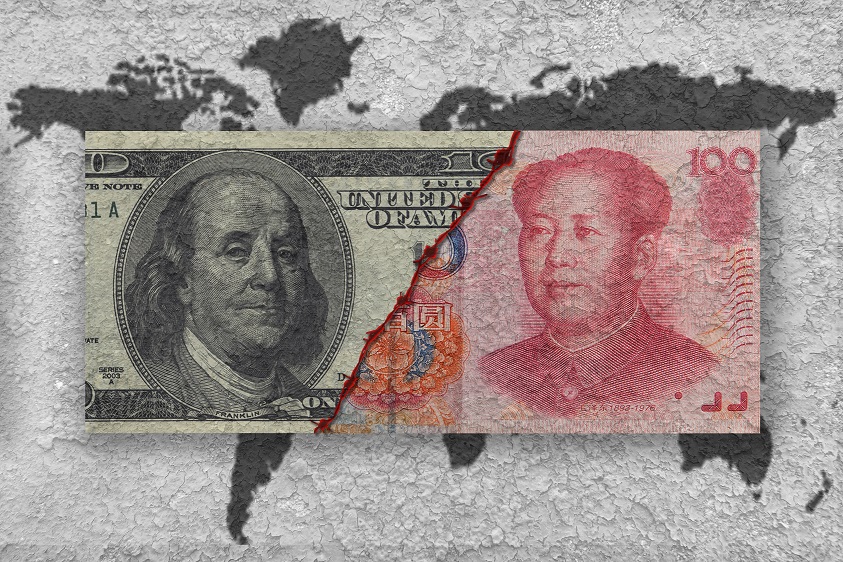
While the U.S.–China trade war rages on and captures headlines, a U.S.–China investment war is emerging. Will sustainable development be the ultimate loser?

November 1, 2018

While the U.S.–China trade war rages on and captures headlines, a U.S.–China investment war is emerging. Will sustainable development be the ultimate loser?

Recently, the U.S. Senate passed a law to create an agency called the International Development Finance Corporation (IDFC) to replace the Overseas Private Investment Corporation (OPIC) set up in 1969. The IDFC will invest up to USD 60 billion in developing countries and, unlike OPIC, is empowered to make equity investments. It is designed to counter what some in Washington describe as China’s “economic warfare” of indebting developing countries and garnering diplomatic influence and support, largely through infrastructure projects such the Belt & Road Initiative.

The IDFC is set up by the Better Utilization of Investments Leading to Development Act (the Build Act), which passed the House of Representatives in August with bipartisan support and is now awaiting signature into law. The Build Act has been lauded in international development circles for its pro-development agenda. But there are at least four very concerning aspects of the Build Act, making it likely that the environment will be the ultimate casualty in this new front in the U.S.–China war of influence.

Investment wars

Key environmental threshold removed

A key environmental safeguard imposed on OPIC has slipped out of the Build Act. OPIC’s authorizing statute required it to refuse support for any project which:

will pose an unreasonable or major environmental, health, or safety hazard, or will result in the significant degradation of national parks or similar protected areas.

This underpinned the very first step in OPIC’s project screening procedures, designed to ensure that environmentally damaging projects don’t get supported. A 2003 report to the U.S. Congress shows that this provision formed the basis for OPIC to decide whether a project was “categorically prohibited” from receiving support. According to OPIC’s environmental handbook, this captured “large dams that disrupt natural ecosystems, infrastructure and raw material extraction in primary tropical forests and other protected or ecologically fragile areas.”

History also shows us how important this provision could be for pulling support for projects already underway. In 1995 OPIC cancelled USD 100 million in political risk insurance for a U.S. company operating the world’s largest gold mine in Indonesia. The cancellation was prompted by environmental contamination from the mine that poisoned fish and local water supplies, and reports of killings and torture by the company’s private security services. While the legal basis for the decision has never been made clear, it could well have been the above provision.

Host country notification requirements removed

Another of OPIC’s environmental mandates has been stripped from its successor organization under the Build Act. OPIC’s authorizing statute required it, before supporting a project, to contact the host country government, inform them of the likely environmental impacts and the international environmental standards applicable to the project, and of any U.S. regulations that would apply if the project were carried out there. OPIC had to share any environmental impact assessments carried out and to take into account any comments received in response. This provision was used by OPIC to notify governments from Liberia to Ghana to Pakistan of OPIC’s potential support to projects in those countries with the potential to “pose significant consequences for the environment.” IDFC, on the other hand, will not be required by its authorizing statute to engage and assist host country governments in this way.

Climate ignored

Climate considerations are entirely absent from the Build Act. OPIC was sued in 2003 by Greenpeace, Friends of the Earth and four cities in Colorado and California. OPIC accepted liability for financially supporting fossil fuel projects from 1990 to 2003 that accounted for nearly 8 per cent of global carbon emissions, or nearly one third of total U.S. emissions. In a settlement agreement, OPIC committed to establishing a goal of reducing greenhouse gas emissions associated with its projects by 20 per cent over 10 years and increasing financing for renewable energy. The creation of IDFC would have been an opportune moment to carry such commitments over to the new body taking over OPIC’s mandates by enshrining them in the Built Act. As it stands, climate does not appear anywhere in the law.

Foreign policy interests prioritized 

The Build Act explicitly mixes sustainable development with geopolitical strategic objectives, stating that one of the objectives of the IDFC is: 

to provide countries a robust alternative to state-directed investments by authoritarian governments and United States strategic competitors using high standards of transparency and environmental and social safeguards, and which take into account the debt sustainability of partner countries;

This explicit inclusion of foreign policy objectives is a major departure from OPIC’s authorizing statute which did not even contain the words “foreign policy.” The reference to environmental and social safeguards rings hollow in light of the key environmental safeguards imposed on OPIC that have been stripped from IDFC’s authorizing statute.

The Build Act requires the IDFC to develop guidelines and criteria to ensure that each project it supports has “a clearly defined development and foreign policy purpose.” The requirement that all projects serve a foreign policy purpose, combined with weakened environmental protections, could see the IDFC supporting environmentally damaging projects if it was seen to be in U.S. foreign policy interests. For example, if it was thought that, if not financed by IDFC, the project would instead be financed by a “strategic competitor,” with debt, influence and diplomatic relations accruing to that competitor rather than the United States, the project could be accepted regardless of its environmental ramifications.

OPIC’s track record has included support to projects that reportedly mismanaged hazardous waste in Chile, contaminated water and degraded forests in Liberia and failed to recognize the existence of an Indigenous community in Bolivia because it did not carry out a social and environmental assessment. It is hard then to see how its successor agency, with a weaker environmental mandate, a broader potential investment portfolio and an explicit dictate to out-compete Chinese money, is well placed to do better.

This article first appeared on EcoWatch on December 4, 2018.

Insight details

Insight

Five Ways Blockchain Technology Can be Used for Resilience

Nine in 10 governments are investing in blockchain technology this year. They are joining organizations like the United Nations and entire industries from healthcare to finance that see it as a major opportunity for innovation and economic development. Though it is best known for being used to track bitcoin, its use is promising beyond cryptocurrencies, including in contracts, certifications, land titles, medical records, personal data and more

October 29, 2018

Nine in 10 governments are investing in blockchain technology this year. They are joining organizations like the United Nations and entire industries from healthcare to finance that see it as a major opportunity for innovation and economic development. Though it is best known for being used to track bitcoin, its use is promising beyond cryptocurrencies, including in contracts, certifications, land titles, medical records, personal data and more.

Distributed ledger technology allows the storing and exchange of assets and valuable information between two entities anywhere in the world in a secure, transparent and immutable way without the need for a trusted centralized authority to authenticate parties and validate transactions. It is a promising approach to transforming society and changing how we trust individuals and institutions. 

The Ethereum blockchain, for example, enables the creation of “smart contracts” that self-execute once certain preconditions have been met, reducing the need for costly intermediaries while still ensuring that contracts and payments are respected. Given the many aspects of society that rely on some form of agreement between two parties, an abundance of applications is currently being conceptualized and developed for the sharing economy, lending, crowdfunding, insurances, games and even energy and environmental markets, through the act of tokenization (digitalization of assets).

Research is being conducted to further explore how this disruptive technology can be used to increase the resilience of individuals, communities and ecosystems. Here are five examples:

  1. Two billion people do not have access to financial services. Blockchain can empower individuals to become their own bank by setting up digital wallets that can store, receive and send money anywhere in the world, instantaneously, and without exorbitant fees. This could increase flows of investments to unbanked populations who would then have access to loans, credit and insurance. This application is already having an enormous impact on remittances, which represents up to half of household incomes in certain countries, and it can help in reducing gender inequality.
     
  2. 1.1 billion people do not have identification documents, critical to access healthcare, insurance, education, employment, phone/internet access, voting rights and property rights. Furthermore, no one’s personal information is invulnerable to being revoked, hacked, misused or sold without consent. A decentralized verification of credentials could allow individuals to own their digital identity and to securely carry it across borders and platforms, sharing only what is needed, when needed, and protecting their privacy and dignity in the process. Development and humanitarian efforts have already tested this with refugees on a private blockchain (meaning limited access to the information) to improve the effectiveness and accountability of aid delivery.
     
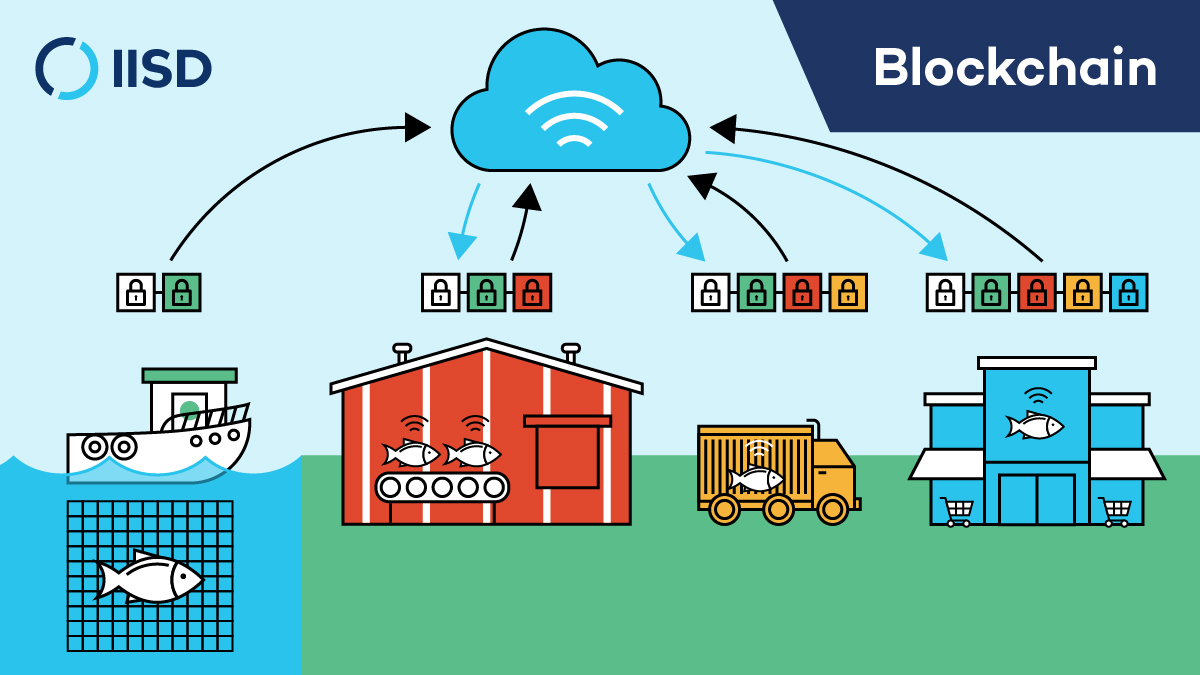
  3. The sustainability and integrity of food and natural resource supply chains can be improved with the use of Internet of Things devices, tracking information every step of the way and logging it on a blockchain along with certifications and audit reports. Anyone could then access the data with a quick scan and verify the information for themselves. For example, one new project plans to track cobalt in the Democratic Republic of the Congo from the mines to the lithium-ion batteries used in smartphones and electric cars, with the goal of improving mining conditions through these verification layers. Similarly, blockchain is being tested to reduce illegal food production, contamination, recalls, fraud and waste. Farmers, under increased pressure to produce faster, cheaper and better-quality food, also stand to benefit from more accurate and rapid market information to be more competitive and negotiate better prices with buyers and brokers.
     
  4. Sustainable management of our environment can become more efficient through a mix of technologies including blockchain and—with the right incentives—potentially even promote better results. As an example, Gainforest puts into practice the results from a recent study showing that incentivizing local farmers to not cut down trees could be an effective way to fight deforestation. In their proposed blockchain-powered Predictive Smart Contracts, farmers and communities become caretakers and have a stake in protecting portions of the Amazon rainforest. An artificial-intelligence-powered system analyzes satellite images and validates the conservation of the areas after a given period. This rapid assessment is then communicated to the blockchain, which automatically redistributes the monetary rewards to the caretakers that have successfully conserved their areas. This concept could be further extended to prevent overfishing, conserve mangroves and coral reefs, protect endangered species and reduce pollution.
     
  5. Perhaps one of blockchain’s greatest contributions could be in the decentralization of the energy sector by facilitating the creation of community-based renewable energy systems that are sustainable and resilient to outages and price fluctuations. It turns consumers into prosumers (consumers who also produce energy), allowing energy to be directly sold and purchased between peers. SolarCoin, for example, plans to deliver incentives to generate 97,500 terawatt hours of solar energy over the next 40 years.

Challenges remain, and it is often tempting to look for easy solutions to complex political and environmental problems. However, with proper regulations, blockchain has immense potential to become a tool for advancing sustainability and fostering resilience.

Insight details

Insight

Five Ways Blockchain Technology Can be Used for Resilience

Disruptive technology has vast applications toward increasing the resilience of individuals, communities and ecosystems. Here are five encouraging examples.

October 26, 2018

Many governments are investing in blockchain technology this year.

They are joining organizations like the United Nations and entire industries from healthcare to finance that see it as a major opportunity for innovation and economic development. Though it is best known for being used to track bitcoin, its use is promising beyond cryptocurrencies, including in contracts, certifications, land titles, medical records, personal data and more.

Distributed ledger technology allows the storing and exchange of assets and valuable information between two entities anywhere in the world in a secure, transparent and immutable way without the need for a trusted centralized authority to authenticate parties and validate transactions. It is a promising approach to transforming society and changing how we trust individuals and institutions. 

The Ethereum blockchain, for example, enables the creation of “smart contracts” that self-execute once certain preconditions have been met, reducing the need for costly intermediaries while still ensuring that contracts and payments are respected. Given the many aspects of society that rely on some form of agreement between two parties, an abundance of applications is currently being conceptualized and developed for the sharing economy, lending, crowdfunding, insurances, games and even energy and environmental markets, through the act of tokenization (digitalization of assets).

Research is being conducted to further explore how this disruptive technology can be used to increase the resilience of individuals, communities and ecosystems. Here are five examples:

1. Access to financial services

Two billion people do not have access to financial services. Blockchain can empower individuals to become their own bank by setting up digital wallets that can store, receive and send money anywhere in the world, instantaneously, and without exorbitant fees. This could increase flows of investments to unbanked populations who would then have access to loans, credit and insurance. This application is already having an enormous impact on remittances, which represents up to half of household incomes in certain countries, and it can help in reducing gender inequality.

2. Providing identification

1.1 billion people do not have identification documents, critical to access healthcare, insurance, education, employment, phone/internet access, voting rights and property rights. Furthermore, no one’s personal information is invulnerable to being revoked, hacked, misused or sold without consent. A decentralized verification of credentials could allow individuals to own their digital identity and to securely carry it across borders and platforms, sharing only what is needed, when needed, and protecting their privacy and dignity in the process. Development and humanitarian efforts have already tested this with refugees on a private blockchain (meaning limited access to the information) to improve the effectiveness and accountability of aid delivery.

3. Tracking supply chains back to their sources

The sustainability and integrity of food and natural resource supply chains can be improved with the use of Internet of Things devices, tracking information every step of the way and logging it on a blockchain along with certifications and audit reports. Anyone could then access the data with a quick scan and verify the information for themselves. For example, one new project plans to track cobalt in the Democratic Republic of the Congo from the mines to the lithium-ion batteries used in smartphones and electric cars, with the goal of improving mining conditions through these verification layers. Similarly, blockchain is being tested to reduce illegal food production, contamination, recalls, fraud and waste. Farmers, under increased pressure to produce faster, cheaper and better-quality food, also stand to benefit from more accurate and rapid market information to be more competitive and negotiate better prices with buyers and brokers.

4. Monitoring environmental management

Sustainable management of our environment can become more efficient through a mix of technologies including blockchain and—with the right incentives—potentially even promote better results. As an example, Gainforest puts into practice the results from a recent study showing that incentivizing local farmers to not cut down trees could be an effective way to fight deforestation. In their proposed blockchain-powered Predictive Smart Contracts, farmers and communities become caretakers and have a stake in protecting portions of the Amazon rainforest. An artificial-intelligence-powered system analyzes satellite images and validates the conservation of the areas after a given period. This rapid assessment is then communicated to the blockchain, which automatically redistributes the monetary rewards to the caretakers that have successfully conserved their areas. This concept could be further extended to prevent overfishing, conserve mangroves and coral reefs, protect endangered species and reduce pollution.

5. Enabling energy hubs

Perhaps one of blockchain’s greatest contributions could be in the decentralization of the energy sector by facilitating the creation of community-based renewable energy systems that are sustainable and resilient to outages and price fluctuations. It turns consumers into prosumers (consumers who also produce energy), allowing energy to be directly sold and purchased between peers. SolarCoin, for example, plans to deliver incentives to generate 97,500 terawatt hours of solar energy over the next 40 years

***

Challenges remain, and it is often tempting to look for easy solutions to complex political and environmental problems. However, with proper regulations, blockchain has immense potential to become a tool for advancing sustainability and fostering resilience.


Further reading

Using Financial Technologies for a More Sustainable Planet

Blockchain and water

Insight

WTO Survival Uncertain as Ministers Meet in Canada

The WTO faces its most critical test—a reaction to the October 2018 Joint Communiqué as international trade evolves faster than the WTO can move.

October 26, 2018

The World Trade Organization (WTO) faces its most critical test.

Since its lofty creation from the old General Agreement on Tariffs and Trade (GATT) in 1994, the landscape of international trade has changed dramatically, from the emergence of fragmented global value chains and the proportion of online trade, to China’s ascent to becoming the world’s second largest economy and the proliferation of a new generation of bilateral trade deals, such as the Canada–EU Comprehensive Economic and Trade Agreement (CETA), and regional deals like the Trans-Pacific Partnership (TPP).

World Trade Organization

While such events are changing the nature of trade, the WTO has been paralyzed, keeping count of the hundreds of new bilateral and regional agreements but incapable of matching them. Indeed, the WTO has been unable to conclude its own sprawling ambitions of the Doha Round or to reach an agreement on narrow mandates, such as ending subsidies that contribute to overfishing worldwide. The current timid leadership of the WTO has only magnified this paralysis.

Into this paralysis comes recent threats that the United States may withdraw from the WTO. They have ignored formal dispute mechanisms for steel and other tariffs, citing national security; they complain about what they perceive as an activist appellate body; and they have specific grievances about not being blocked from so-called "zeroing" in anti-dumping cases.

Unless something changes in Washington, the WTO may cease to operate in 2019.

WTO Ministerial meeting in Ottawa
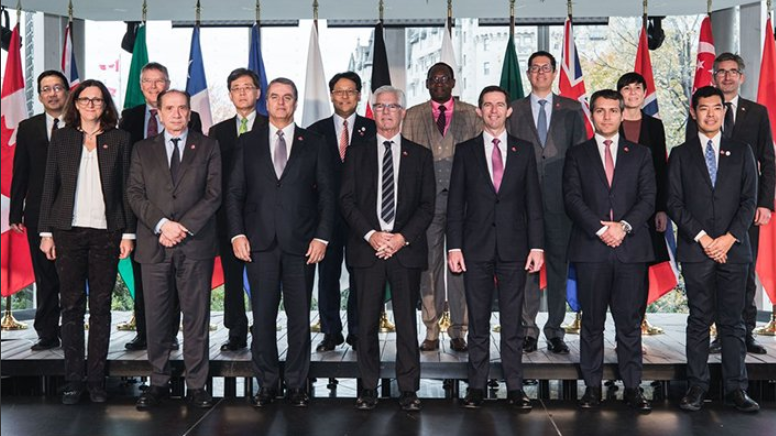
The WTO Ministerial in Ottawa (source: WTO Twitter)

The Ottawa Ministerial statement released yesterday signals that both industrialized and emerging economy countries care about the multilateral system and are committed to reforming the WTO. The attention to improving one of the operational bedrocks of the trading system—a notification system that works—is overdue and welcome. Robert Wolfe and others have offered a practical plan to improve the WTO notification system that makes sense.

The ministerial communiqué references the need to link trade with the wider goals of the SDGs: the trade community needs to explain how it can lift families out of poverty and address hunger, the climate crisis and public health. It needs to be honest about where it has failed, especially in widening wage inequality.

It is doubtful that the White House will be the least swayed by the meeting, but it’s a welcome sign that countries still think the WTO is worth fighting for. They’re right.

Insight

Sustainable Finance Key to Low-Carbon Economic Transition

Canada’s Expert Panel on Sustainable Finance released its interim report yesterday with a clear message that harnessing the country’s financial assets is essential for a successful low-carbon transition.

October 25, 2018

Canada’s Expert Panel on Sustainable Finance released its interim report yesterday with a clear message that harnessing the country’s financial assets is essential for a successful low-carbon transition—with climate change and carbon pricing top-of-mind.

Appointed in spring 2018 by Canada’s Minister of the Environment and Climate Change and the Minister of Finance, the Expert Panel’s mandate is to articulate the key challenges and opportunities for sustainable finance in Canada, providing “next step” recommendations to the government.

Their first message was a reminder of Canada’s economic exposure due to our carbon-intensive economy.

“Many of the sectors underpinning the Canadian economy are carbon intensive, meaning Canadians are exposed.”

The growing reality of climate change means that Canada must start transitioning to a low-carbon economy now. To do so, the Expert Panel pointed to the inescapable fact that this will require significant financial investment to pull it off. Canada’s financial services sector is “capable of the task” in the panel’s opinion. Moreover, we need to see this as “a big opportunity” for Canadian businesses.

Sustainable finance

The Sustainable Finance Imperative

The Expert Panel sets out three points that form a sustainable finance imperative:

Both observable measures and the feedback from our consultations suggest that sustainable finance is growing in Canada, but overall, we are not moving with sufficient determination or at the pace of many of our peers.


If we want to capture the large market opportunities and establish the rules affecting our financial industry and our key economic sectors for ourselves, we need to move faster and more decisively.


Canada should focus on areas where we can significantly move the needle.

Foundational Elements

From there, the Expert Panel went on to list six “Foundational Elements” for sustainable finance in Canada:

  • Clarity on climate and carbon policy
  • Reliable information
  • Effective climate-related financial disclosures
  • Clear interpretation of fiduciary and legal duties
  • A knowledgeable support ecosystem
  • Effective and consistent financial regulation

Financial Products and Markets

The Expert Panel followed with a list of financial products and markets necessary to give effect to these foundational elements and assist emitting sectors with the transition ahead:

Building Retrofits for Energy Efficiency and Climate Adaptation
In Canada, buildings are a major source of greenhouse gas emissions, as our building stock is more energy intensive relative to other countries, including those with similar climates. As a result, there is a tremendous opportunity to reduce Canada’s footprint by retrofitting our existing building sector. Building retrofitting has the potential to be a winning proposition for all stakeholders, with energy savings for building owners, jobs for the construction industry and increased lending activity at financial institutions.

Sustainable Infrastructure
Given the related funding gap, we need to "crowd in" substantial private sector capital toward sustainable infrastructure development, including the transformation needed in energy systems and transportation. 

Cleantech Innovation
Cleantech is a massive cross-cutting opportunity that provides a key link between increased economic efficiency and environmental outcomes, as well as jobs and wealth creation for our communities.

Innovation in the Oil & Gas Industry
We heard an imperative to focus on financing mechanisms to support innovation in this sector as a key enabler to its transition.   

Optimized Electricity Generation and Transmission
Electricity has the potential to provide cost-effective emission reductions related to transportation and heating and cooling, making it an important aspect of the transition. A well-connected electricity grid between key provinces could provide substantial benefits, and many expressed that financial structures could be created that would be attractive to infrastructure investors.

Sustainable Asset Management and Financial Products
There was a consensus view that more reliable information and more reliable and analytical frameworks will be prerequisites for broader integration of environmental, social and governance factors.

Green and Transition-Linked Financial Products 
Many expressed interest in how a market for transition-linked financial products could help bridge the gap between green-focused investors and firms in emission-intensive industries that are transitioning to more sustainable business processes.

Next Steps by the Expert Panel

On the Expert Panel’s next steps and timing:

Our intention is to move from identifying areas that require more attention to developing practical, actionable recommendations for the Government of Canada. ... Our aim is to deliver a final report of findings and recommendations to the Minister of Environment and Climate Change and the Minister of Finance in Spring 2019.

IISD Support for Sustainable Finance

IISD has strong and growing expertise in sustainable finance and low-carbon transition.

Carbon Pricing
IISD has been engaged in developing carbon pricing policies at the federal and provincial levels. Clarity on climate and carbon policy is being met with the federal government’s renewed determination to legislate carbon pricing in provinces unwilling to do so themselves. The need for carbon pricing is “critical” in the Expert Panel’s view.

“Clear policy signals, especially with regard to carbon pricing, allows the market to make long-term choices with regard to sustainability.”

Climate Risk Disclosure
IISD will soon release a new report setting out a specific pathway for mandatory climate risk disclosure for Canadian companies, in direct support for this Expert Panel statement on the topic:

Disclosure is critical for informed decision-making. The industry-led Task Force on Climate-related Financial Disclosures (TCFD) has published recommendations for how firms could put forward more consistent and comparable disclosures of climate-related financial risks and opportunities. Most participants agree on their criticality, and that implementation of these recommendations is a journey involving collective industry efforts. Clarity surrounding the anticipated implementation pathway is needed.

Comprehensive Wealth
As sustainable finance seeks to transition carbon-intensive sectors and businesses to low-carbon opportunities, it underlines the risk exposure that Canada’s economy faces. This reinforces the need to understand and measure comprehensive wealth as part of our longer-term decision-making. IISD will release a new Comprehensive Wealth Index for Canada next week, one that goes beyond the short-term focus just on GDP. GDP measures income today, but what matters in the long run is wealth, the foundation of income in the future. More specifically, a country’s produced, natural, human, financial and social capital determine its prospects for the future.

Insight

Burkina Faso Adopts a New Agricultural Investment Code: How does it contribute to sustainable development?

The strengths and growth potential of Burkina Faso's new Agricultural Investment Code.

October 22, 2018

The agriculture sector is vital to Burkina Faso’s economy.

(Francais suivre)

Reinforcing the sector’s importance, the President of Burkina Faso enacted in June 2018 a new agriculture investment code aiming at promoting productive investments in livestock, fisheries, forestry and fauna management (The Agricultural Investment Code). It establishes an enabling environment and creates incentives to boost investment in the targeted sectors. The adoption of this law completes a long process in which IISD has been engaged with the Ministry of Agriculture and Food Security, together with other partners, since 2012.
 

Eighty-six per cent of the country’s population are active in agriculture, which provide about 45 per cent of households’ incomes, according to the document on agriculture related-sectors investment opportunities.

Burkina Faso’s rural sector contributed nearly 33 per cent of the country’s gross domestic product (GDP) between 2005 and 2015, but this contribution decreased to 27.8 per cent in 2017, in part prompting the government’s ambitious plan to accelerate agricultural transformation. The newly adopted agricultural investment code aims to develop resilient and productive rural sectors, while reinforcing a market-oriented approach based on the principles of sustainable development.

How does the new code reflect key sustainable investment issues? And what aspects could be improved?

The strengths: the code supports and reinforces the primacy of existing environmental, labour, land and tax laws, and prioritizes responsible investment.

The code makes specific and repeated references to the applicability of Burkina Faso’s existing laws and regulations, ensuring agricultural investors will be subject to all the country’s laws, including those on the environment, labour, tax and land. This avoids the risk that the code could be seen or used as a vehicle to allow agricultural investors to bypass other areas of law.

Another positive aspect is the applicability of the code to growth poles, an important emerging tool being harnessed by a number of African governments, including Burkina Faso with Bagrépôle as a pilot project. Agricultural growth poles are specific zones for concentrated production, processing, services and distribution of agricultural products with a view to increase value addition. An earlier version of the code had incorporated provisions excluding its application to growth poles. This was removed from the final draft, meaning that investors operating in growth poles should, in principle, comply with the Agricultural Investment Code.

It should be noted that the code does not extend to industrial processing or marketing of agricultural products, which are key activities more likely to occur in agricultural growth poles. Therefore, while these poles are covered in principle by the code, in practice, a crucial segment of the activities occurring in these areas is excluded.

Some shortcomings: provisions on employment incentives and prioritizing local goods and services could be stronger.

The code could also have stronger incentives for investors to use local goods and services or to establish community development agreements. The code only encourages local employment generation by offering fiscal incentives such as customs duties and tax exemptions based on the projected investment and its impact on job creation and, to a lesser extent, in terms of export of an important part of their production. To maximize job creation and other economic opportunities for the local community, the code could word related provisions as prescriptions for investors, irrespective of the grant of tax incentives. For example, the text could include provisions requiring investors to reserve unqualified positions for nationals and prioritize them, at equal competence, for qualified jobs. Then, more targeted and ambitious objectives could be required from investors willing to benefit from tax incentives.

Despite some shortcomings that can be fixed through implementation, the code is an important step in the right direction to attract responsible investment. At the same time, it provides more clarity and coherence for investors while strengthening the existing legal and regulatory system governing issues such as land and labour rights, environmental protections, and tax obligations.

***
 

Le Burkina Faso adopte un nouveau code d’investissement agricole : comment contribue-t-il au développement durable?

Mohamed Coulibaly et H. Suzy Nikièma

Le secteur agricole est vital pour l’économie du Burkina Faso.

Renforçant l’importance du secteur, le Président du Burkina Faso a promulgué en juin 2018 un nouveau code des investissements agricoles visant à promouvoir des investissements productifs dans l’élevage, la pêche, la foresterie et la gestion de la faune (Code d’investissement agricole). Le code établit un environnement favorable et crée des incitations pour stimuler les investissements dans les secteurs ciblés. L'adoption de cette loi marque le couronnement d’un long processus dans lequel l'IISD a été engagé avec le ministère de l'Agriculture et de la Sécurité alimentaire, et d'autres partenaires, depuis 2012.

Selon le document sur les opportunités d’investissement dans les secteurs liés à l’agriculture, 86% de la population du pays travaille dans l’agriculture, qui fournit environ 45% du revenu des ménages.

Le secteur rural du Burkina Faso a contribué pour près de 33% au produit intérieur brut (PIB) du pays entre 2005 et 2015, mais cette contribution a baissé à 27,8% en 2017, ce qui a en partie motivé le plan ambitieux du gouvernement visant à accélérer la transformation agricole. Le code des investissements agricoles récemment adopté vise à développer des secteurs ruraux résilients et productifs, tout en renforçant une approche axée sur le marché fondée sur les principes du développement durable.

Comment le nouveau code reflète-t-il les principales questions liées à l'investissement durable ? Et quels aspects pourraient être améliorés ?

Les forces : le code soutient et renforce la primauté des lois existantes en matière d'environnement, de travail, de propriété foncière et fiscale, et priorise l'investissement responsable.

Le code mentionne de manière spécifique et répétée l’applicabilité des lois et réglementations existantes du Burkina Faso, garantissant que les investisseurs agricoles seront soumis à toutes les lois du pays, y compris celles relatives à l’environnement, au travail, aux impôts et à la terre. Cela évite le risque que le code soit vu ou utilisé comme un moyen permettant aux investisseurs de contourner d'autres domaines du droit.

Un autre aspect positif est l’applicabilité du code aux zones de croissance agricoles, un outil important de plus en plus utilisé par bon nombre de gouvernements africains, y compris le Burkina avec comme Bagrépôle comme projet pilote. Les pôles de croissance agricoles sont des zones spécifiques pour la concentration des activités de production, de transformation, de services et de distribution de produits agricoles dans le but d'accroître la valeur ajoutée. Une version antérieure du code comportait une disposition exemptant ces zones de son champ d’application La version finale du texte ne comporte pas cette disposition, de sorte que les investisseurs intervenant dans les pôles de croissances doivent se conformer au code d’investissement agricole.

On notera que le code ne s'étend pas aux activités de transformation industrielle ou de commercialisation des produits agricoles, qui sont des activités clés susceptibles de se produire dans les pôles de croissance agricole. De ce fait, même si ces pôles sont en principe couverts par le code, en pratique une part importante des activités qui se déroulent dans ces zones en est exclue.

Quelques limites : les dispositions du code sur les incitations à l’emploi et la priorisation des biens et services locaux auraient pu être renforcées

Le code aurait pu davantage inciter les investisseurs à utiliser les biens et services locaux ou à conclure des accords de développement communautaire. Le code encourage uniquement la création d'emplois locaux en offrant des incitations fiscales telles que des droits de douane et des exonérations fiscales basées sur l'investissement prévu et son impact sur la création d'emplois et, dans une moindre mesure, sur l'exportation d'une partie importante de leur production. Pour optimiser l’atteinte des objectifs en matière de création d’emplois et autres opportunités économiques pour la communauté locale, le code   auraient pu les formuler également sous forme de prescriptions pour les investissements couverts, indépendamment des incitations fiscales offertes. Par exemple, le texte aurait pu inclure l’obligation pour les investisseurs de réserver exclusivement les emplois non qualifiés aux nationaux, et leur accorder, à compétences égales, la priorité pour les emplois qualifiés. Des objectifs plus ciblés et ambitieux pourraient alors être requis des investisseurs pour bénéficier des incitations fiscales.

Malgré certaines lacunes qui peuvent être corrigées lors de la mise en œuvre, le code constitue un pas important dans la bonne direction pour attirer des investissements responsables. Il offre davantage de clarté et de cohérence aux investisseurs tout en renforçant le système juridique et réglementaire en vigueur pour régir des questions telles que les droits à la terre et au travail, la protection de l'environnement et les obligations fiscales.

Insight

What the UN Panel's Special Climate Change Report Means for Canada

We comb the IPCC special report to show how Canada already is, and increasingly will be, affected by global warming and climate change.

October 19, 2018

The recent special report of the Intergovernmental Panel on Climate Change (IPCC) has focused world attention on the accelerating threat of anthropogenic warming and climate change.
Forest fire

Its conclusion is stark: there is a material, negative impact of climate change above 1.5°C of warming. Equally stark is its assessment that countries are not yet travelling the greenhouse gas reduction pathways to prevent this from happening.

Many parts of the world—including Canada—are already feeling the impacts of global warming and changing climates.

Impacts on natural and human systems from global warming have already been observed (high confidence). Many land and ocean ecosystems and some of the services they provide have already changed due to global warming (high confidence).

Canada is not immune

Although not country-specific, the IPCC special report notes many of these observed impacts and anticipates the changes that could occur with further global warming, as well as what these changes could mean for different regions and sectors.

This article provides key citations from the report to show how Canada already is, and increasingly will be, affected by global warming and climate change.

From 1.5°C to 2°C

IPCC’s starting, encompassing point is this:

Human activities are estimated to have caused approximately 1.0°C of global warming above pre-industrial levels, with a likely range of 0.8°C to 1.2°C. Global warming is likely to reach 1.5°C between 2030 and 2052 if it continues to increase at the current rate.

Warming greater than the global annual average is being experienced in many land regions and seasons, including two to three times higher in the Arctic.

For some time, we have known that global warming is neither linear in its growth nor equal in its impact across the globe. As a northern country, the rate of warming in Canada is proving greater than the global mean, having already increased by 1.5°C between 1950 and 2010. One part of Canada that has experienced even more significant warming is the Arctic, which has warmed by 1.9°C over the past three decades. Western Canada is also warming faster than Eastern Canada.

Several regional changes in climate are assessed to occur with global warming up to 1.5°C compared to pre-industrial levels, including warming of extreme temperatures in many regions (high confidence), increases in frequency, intensity, and/or amount of heavy precipitation in several regions.

In short, we will see a change in the frequency of high-intensity weather events throughout Canada, but the type of events will differ. For example, drought conditions are more likely to be experienced on the Canadian Prairies, while in the Maritimes more intense storms are anticipated.

The Arctic

Climate change is capricious. It affects different parts of the globe differently. And it will affect different regions of Canada differently too, with the Arctic experiencing greater change. Both Arctic tundra and sea ice are at risk, according to the IPCC.

High-latitude tundra and boreal forests are particularly at risk of climate change-induced degradation and loss, with woody shrubs already encroaching into the tundra.

The changes already experienced are projected to increase with greater degrees of warming. They will profoundly affect Indigenous ways of life and livelihood in our North. Hunting and gathering patterns will shift forever. Ice roads and transportation routes suddenly are less reliable. Food and necessities for isolated communities become far more expensive and difficult to secure. Think of Churchill, Manitoba, and the recent loss of its single railway line due to degrading rail beds and extreme weather impacts.

Populations at disproportionately higher risk of adverse consequences of global warming of 1.5°C and beyond include disadvantaged and vulnerable populations, some indigenous peoples, and local communities dependent on agricultural or coastal livelihoods (high confidence). Regions at disproportionately higher risk include Arctic ecosystems, dryland regions, small-island developing states, and least developed countries (high confidence).

Coastlines will be more exposed to extreme weather events and erosion. Tundra warming will likely lead to faster permafrost degradation and greater releases of stored carbon into the atmosphere.

This feedback loop between warming and the release of greenhouse gas from thawing tundra represents a potential tipping point.

Tipping points are where climate change impacts become irreversible and lead to a cascade of other negative impacts.

Iceberg

Arctic sea ice has already shown the effects of warming temperatures with shorter seasons and thinner ice. Higher temperatures are projected to have even more profound impacts.

There is high confidence that the probability of a sea-ice-free Arctic Ocean during summer is substantially lower at global warming of 1.5°C when compared to 2°C. With 1.5°C of global warming, one sea ice-free Arctic summer is projected per century. This likelihood is increased to at least one per decade with 2°C global warming.

An ice-free summer in the Arctic would be a significant occurrence. Beyond the major biodiversity impacts, the prospect of new polar shipping transit bears understanding. Canada’s sovereignty footprint would require a renewed financial and national commitment in return. The Arctic as many have known it will simply be changed forever.

Sea level rise

Mari usque ad Mare”—from sea to sea—takes on powerful connotations for a country with three coastlines on the north, west, and east in the face of climate change-induced sea-level rise.

Sea level rise will continue beyond 2100 even if global warming is limited to 1.5°C in the 21st century (high confidence). Marine ice sheet instability in Antarctica and/or irreversible loss of the Greenland ice sheet could result in multi-metre rise in sea level over hundreds to thousands of years.

Higher sea levels put Canada’s coastal regions at risk, as they are more exposed to extreme weather events and erosion. Higher storm surges will ravage coastal properties and communities. Infrastructure failures can result, putting safety and lives at risk. Property values can plummet, undermining financial savings Canadians have invested in their homes, not to mention higher insurance premiums to compensate. Very exposed communities will have to contemplate strategic retreat in the face of coastal erosion and personal safety, as living there will become more and more untenable.

Grey fish

Forests, fish and food

Higher global warming temperatures will affect Canada’s biodiversity in myriad ways.

Impacts associated with other biodiversity-related risks such as forest fires, and the spread of invasive species, are lower at 1.5°C compared to 2°C of global warming (high confidence).

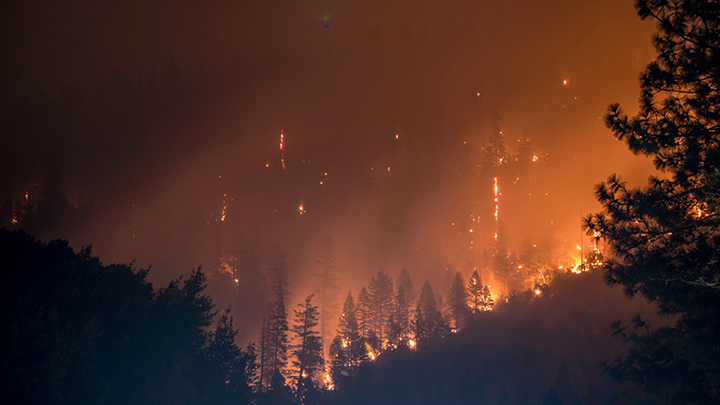
We have already experienced intense forest fires that have burned more area and lasted longer than in the past. Think Fort McMurray or Kelowna. Global warming will intensify this risk. More forest fires affect timber supply for housing and construction, hurting jobs and forest communities. They raise disaster management costs for governments, which must pay for forest fire suppression, community relocations and emergency relief efforts.

The spread of invasive species will, over time, change the complexion of our forests and agricultural supplies and practices. Recall the pine beetle devastation in the forests of British Columbia and Alberta. Even now, Genome Canada, for example, is pondering ways to create hardier, more climate-resilient tree species.

Canada’s fishing industry, rich and central to many coastal communities but precarious too, will be affected by these projections of higher warming.

Global warming of 1.5°C is projected to shift the ranges of many marine species, to higher latitudes as well as increase the amount of damage to many ecosystems. It is also expected to drive the loss of coastal resources and reduce the productivity of fisheries and aquaculture (especially at low latitudes).

As fish migrate and new breeding patterns emerge, fishers and processors will have to adjust. Previous high-value species may diminish or even disappear due not just to climate change but also to short-term human responses such as overfishing to compensate.

Higher temperatures around the world will directly affect current food production practices everywhere. Keeping warming to 1.5°C is clearly advised by the IPCC.

Limiting warming to 1.5°C, compared with 2ºC, is projected to result in smaller net reductions in yields of maize, rice, wheat, and potentially other cereal crops, particularly in sub-Saharan Africa, Southeast Asia, and Central and South America;

For Canada, shifts in food production elsewhere may mean accompanying shifts here. The prospect of greater export opportunities needed to compensate for these changes is obviously appealing. That will necessitate adjustments in planting patterns and crop management in Canada's Prairies in particular—and doing so in a manner that also adapts to the climatic changes we will be experiencing. As food production fails in some parts of the world, regional and nation-state conflicts can exacerbate, leading to population shifts and migration. Canada as a safe and prosperous haven will need to come to grip with "climate refugees" as a consequence.

In summary

The IPCC special report pulls no punches in identifying the risks and likelihoods of just a half a degree of further global temperature change. What sounds like a little adds up to a lot. In our northern part of the globe, Canada is threatened, as we will experience warming greater than the global average. We find ourselves in this litany below:

Unique and threatened systems: ecological and human systems that have restricted geographic ranges constrained by climate related conditions and have high endemism or other distinctive properties. Examples include coral reefs, the Arctic and its indigenous people, mountain glaciers, and biodiversity hotspots.

Keeping Canada the way it is and the way we want it is no sure thing anymore.

This op-ed first appeared in the National Observer on October 17, 2018.