Insight

Preparing for the Next Chapter in Trade and Sustainable Development Governance

The WTO's Marrakesh Agreement famously enshrined the objective of sustainable development in its preamble 25 years ago. Now, policy in this realm has evolved dramatically, but we must not become complacent. Below, our expert reflects on key takeaways from Geneva Trade Week. 

October 7, 2020

The debate over how to ensure sustainable development considerations are incorporated within trade policymaking is now decades old. The World Trade Organization’s (WTO) Marrakesh Agreement famously enshrined this objective in its preamble 25 years ago, shortly after the landmark 1992 Rio Earth Summit that launched some of the key environmental frameworks of our time, including the UN Framework Convention on Climate Change (UNFCCC) and the UN Convention on Biological Diversity (CBD).

Now, the discussion in policy circles has evolved dramatically and the term “sustainable development” is far better known and understood. That does not mean, however, that we should be complacent. Many of the old battles from the early 1990s and 2000s are still being waged, while newer concerns have emerged that would have been difficult to predict at the time that any of these institutions and frameworks were enacted.

There is now an increased understanding that national and global economies function better when they are inclusive, where inequalities are addressed, and where sustainability considerations are put front and centre. Yet while there is now an active, engaged community on trade and sustainable development, often this work continues in silos. Meanwhile, those who do not work directly in this space may have a broad sense of the importance of sustainability, but not have a window into the technical and political nuances of these policy decisions and what these mean for daily life.

National and global economies function better when they are inclusive, where inequalities are addressed, and where sustainability considerations are put front and centre.

Active, creative, and open discussion is vital to ensure that the next 25 years of economic and environmental governance can learn from the challenges of the past, while also future-proofing these frameworks. This was exactly the type of discussion on display during Geneva Trade Week, held virtually from 28 September until 2 October 2020, by the Geneva Trade Platform.

Taking a Holistic View

Geneva Trade Week’s high-level panel on sustainability, organized by the International Institute for Sustainable Development (IISD), sought to set the stage for the week’s sustainability pillar by showcasing the breadth and depth of issues that fall under this heading and how they interact with our trading system. Along the way, it sought to draw from the early lessons of the COVID-19 crisis and from the past few decades of environmental and economic governance.

While the speakers’ backgrounds differed significantly, their subjects complemented each other in ways that were sometimes unexpected, and served as a useful reminder that the silos we may work in may not reflect the interconnectedness of our world.

Asked to consider the road ahead to overcoming COVID-19’s challenges and fulfilling the 2030 Agenda for Sustainable Development, each of the plenary speakers gave us two “to dos” that they felt were valuable for policymakers and civil society to consider. Their responses reflected the diversity of their backgrounds, while also highlighting their complementarity.

One of the recurring themes was the impact of environmentally harmful subsidies, and the role of governments and the trading system in curbing them. Elizabeth Wilson, Senior Director, Environmental Policy, the Pew Charitable Trusts, urged governments to conclude a WTO agreement to discipline harmful fisheries subsidies by year’s end, in line with the target date in SDG 14.6, while also urging them to direct some of their energies to tackling marine plastic pollution over the longer term.

Alexander Shestakov, Director, Science, Society, and Sustainable Futures Division, CBD, called for eradicating all subsidies harmful to biodiversity, while also urging that policymakers mainstream biodiversity into all strategies, including trade. John Murton, the UK’s envoy for next year’s Glasgow Climate Change Conference (COP 26), highlighted the urgency of the climate challenge and stressed the need for promptly abolishing export subsidies for coal and subsidies for coal-fired power stations, while urging big economies to set a target date for becoming carbon neutral over the medium to long term.

African Union Commissioner for Trade and Industry, Albert Muchanga, called for governments to follow an aggressive economic reform programme aimed at poverty reduction to meet the African Continental Free Trade Area’s (AfCFTA) commitments, while also boosting agricultural investment. Taking a longer-term view, he urged governments to work towards reforming the multilateral trading system (MTS) with a renewed focus on development.

Drawing from the lessons of the COVID-19 crisis, Suerie Moon, Co-Director, Global Health Centre at the Graduate Institute of International and Development Studies, Geneva, urged for health-related technology transfer to receive greater funding and political support, especially in terms of the COVID-19 response. Looking further ahead, she said that governments should rework intellectual property rules to ensure that technology transfer is on an equal footing with intellectual property rights protections.

Moustapha Kamal Gueye, Coordinator, Green Jobs Programme, International Labour Organization (ILO), urged for more efforts to be made to support innovation and sustainable entrepreneurship and promote employment and decent work, especially given the current economic climate. In the long term, he said governments need to boost productive capacity to support sustainable production and consumption, especially in food and health.

Preparing for the Future

These to-dos may seem varied, but they carry across them a shared concern over the future of our policy frameworks and their ability to fulfil the ambitions of the 2030 Agenda. They also nod towards a potential sea change that is soon to come, partly influenced by COVID-19 and partly the result of efforts that long pre-date the current pandemic.

Trade negotiators at the WTO have been racing to conclude nearly two decades’ worth of negotiations on fisheries subsidies, while also debating how to approach institutional reform and revitalize the development dimension in the global trade club’s work. After WTO meetings were initially put on hold as a result of the pandemic, discussions have since resumed in hybrid formats and, in some cases, have already begun to integrate what is known about COVID-19’s economic effects. In parallel, there is a growing interest in understanding the nexus between gender and trade, while topics such as the circular economy and plastic pollution are now taking center stage in the WTO’s trade and environment committee.

Continuing engagement is imperative, especially when discussing the future of sustainable development: we are standing at the cusp of a potential new era of environmental and economic governance

Geneva Trade Week also came at another pivotal moment for environmental governance, as climate negotiators look to ensure that the promise of the UN’s Paris Agreement is realized, despite delaying their annual session of the Conference of the Parties (COP) to next year. Meanwhile, UN negotiators are working to finalize a post-2020 biodiversity framework in time for next year’s meeting of the CBD COP in Kunming, China, despite concerns that the existing biodiversity targets for 2020 will go unmet.

New economic rules and frameworks are regularly being negotiated, both in Geneva and beyond. Regional trade agreements are set to reshape the way that entire continents trade internally and with the rest of the world, with one of the key accords to watch being the AfCFTA, though its implementation has also been delayed as a result of the pandemic. The COVID-19 crisis, with its devastating loss of life and painful implications for jobs and livelihoods, has again brought to the fore the question whether our current systems are sufficiently equipped to address these and other large-scale challenges.

Continuing engagement is imperative, especially when discussing the future of sustainable development: we are standing at the cusp of a potential new era of environmental and economic governance, similar to what we saw in the 1990s. Yet we are also facing a series of threats, including the current pandemic, that are testing the resilience of our systems and our ability to prepare for future shocks, including those we cannot foresee.


A version of this article was published on the Trade for Development News platform run by the Enhanced Integrated Framework – an initiative housed at the WTO for helping least developed countries (LDCs) better engage in trade.
Insight details

Insight

Canada Can't Afford to Put Climate Adaptation on the Back Burner

Investing in climate adaptation measures is an opportunity to demonstrate foresight, show leadership, protect our economy, and keep Canadians safe.

September 29, 2020

You may have heard Justin Trudeau and other leaders use the phrase “build back better” to highlight the importance of not merely enduring the COVID-19 pandemic and its economic and social challenges but acting decisively to come back even stronger.

If Canadians truly want to build back better, there must be greater focus now—urgently—on adapting to a changing climate.

Canada, like the rest of the world, is experiencing more severe weather events and natural disasters linked to climate change. The raging wildfires along the U.S. West Coast are only the latest example. The human and financial costs of climate-influenced events continue to escalate.

Between 1983 and 2008, insured losses from natural catastrophes in Canada averaged about CAD 400 million a year. In the last 10 years, that number has jumped to more than CAD 1 billion a year. This year, we expect to exceed that amount in Alberta alone. Just two major events—flooding in northern Alberta and a hailstorm in Calgary—resulted in close to CAD 2 billion in insured losses, along with personal hardship for those affected.

The message is clear: Canada can be a global leader in adaptation and recovery, but we must invest today to reduce the risks we collectively face due to climate change.

Confronting climate change is a two-pronged fight. We absolutely need to reduce emissions. That’s a long-term imperative. But in the immediate future, we also need to adapt. We must take action to defend ourselves against the initial impacts of our changing climate.

Unfortunately, the slow pace of climate adaptation measures has left Canadians increasingly vulnerable to these more frequent severe weather events. It is also putting financial pressure on families and governments and causing heartache and anxiety for Canadians who live in harm’s way.

RedRiver-Flood.jpg
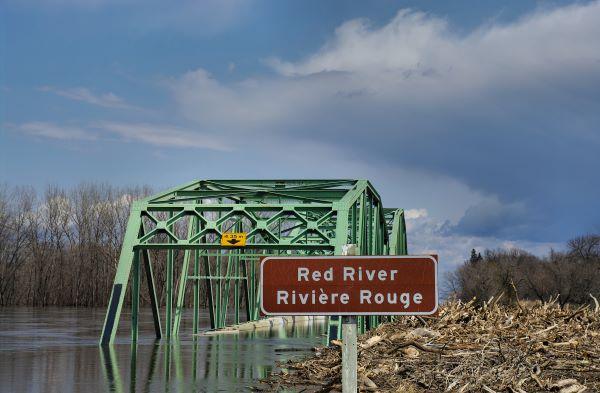
Flooding along the Red River in Manitoba / iStock

One in five Canadian residential properties is at risk of overland flooding, with between 800,000 and 1,000,000 properties at high risk. The risk of wildfire continues to grow. We have entered an era of increased threat to life and property.

No single industry or government can solve this on their own. But if we act now and act together, we can begin to make meaningful progress.

An example is the Task Force for a Resilient Recovery, an independent and diverse group of Canadian finance, policy, and sustainability leaders (including both authors of this blog post) that just released its final report. In it, we recommended five bold yet achievable measures to help Canada build back better, with a focus on investing in the low-carbon economy and bolstering our climate resilience.

Among the recommendations, we called on the Canadian government to put in place a national program that supports efforts to retrofit existing buildings and infrastructure for enhanced climate resilience. This will create good new jobs and position Canada to better endure the growing impacts of our changing climate.

Investing in climate adaptation measures is an opportunity to demonstrate foresight, show leadership, protect our economy, and keep Canadians safe.

To be certain, this isn’t a challenge unique to Canada. The Global Commission on Adaptation, led by former UN Secretary-General Ban Ki-moon, is calling on political leaders around the world to “incorporate climate resilience into [their] economic recovery packages.” In particular, the commission is urging accelerated investments in urban resiliency and disaster prevention.

Here in Canada, the Federation of Canadian Municipalities estimates that CAD 5.3 billion is required annually to help protect our infrastructure from emerging climate risks.

The message is clear: Canada can be a global leader in adaptation and recovery, but we must invest today to reduce the risks we collectively face due to climate change.

Canada’s recent Speech from the Throne had promising signals, with a focus on building retrofits, clean energy, and investments in nature. Canada would benefit from such investments and other achievements in sustainability. But any truly green recovery plan must also recognize and respond to the new reality of climate risk.

Better preparation today—a national flood management plan, for instance—will pay dividends down the road. Smart investments will result in future savings. The longer we delay, the higher the costs and the greater the risk to human life and our natural and human-built areas.

There’s an old saying: Within every crisis is an opportunity. We build back better when we build back smarter, with an eye to confronting the immediate challenges and impacts of climate change, even as we continue working to reduce emissions over the long term.

Investing in climate adaptation measures is an opportunity to demonstrate foresight, show leadership, protect our economy, and keep Canadians safe.


Dr. Richard Florizone is the President and CEO of IISD. Don Forgeron is the President and CEO of the Insurance Bureau of Canada. Both were members of the Task Force for a Resilient Recovery, which just concluded its work.

Insight

Canada’s Long-Term Plan Sets a Course for a Strong, Resilient Recovery

In its Speech from the Throne, the Government of Canada charted an important path forward, setting the course for clean economic growth.

September 25, 2020

This week, in a Speech from the Throne, the Government of Canada outlined its broad plan to respond to COVID-19. The first priorities in that plan are to fight the pandemic and deal with its immediate health and economic impactswhich is exactly where all governments must focus amid this crisis.

The plan also lays out a long-term recovery strategy to "build back better" by fighting climate change and keeping Canada competitive in the fast-growing global clean economy. Canada is not alone in trying to address the twin challenges of economic growth and climate change. Tackling them is a top concern for governments around the world, driving intense study and historic new investment.

With a focus on building retrofits, clean energy, and investments in nature, Canada’s plan aligns well with international efforts and leading academic research.

In July, the European Union committed at least 30% of its extraordinary EUR 1.8 trillion multi-year budget and COVID-19 recovery fund to climate objectives. That is in addition to billions more in green stimulus in member countries. As the UK’s Conservative Prime Minister, Boris Johnson, said: "The green recovery is going to be essential to this country’s success in the next few years."

With a focus on building retrofits, clean energy, and investments in nature, Canada’s plan aligns well with international efforts and leading academic research.

How should this investment be best spent to meet job creation and climate goals? Earlier this year, a group of academics and economists, including Nobel laureate Joseph Stiglitz and Lord Nicolas Stern, tackled the question head-on, identifying five measures with the highest potential on economic and environmental metrics. Those recommended measures include building efficiency retrofits, clean energy infrastructure, and investments in natureall of which feature prominently in Canada’s plan.

For Canada, we addressed the question through the Task Force for a Resilient Recovery, an independent group of Canadian finance, policy, and sustainability experts that gathered and assessed recovery ideas from across Canada and around the world. Over months of analysis and debate, we landed on similar priorities: building retrofits, clean energy, and investment in naturealong with production and adoption of zero-emission vehicles (ZEVs) and efforts to grow clean tech across the Canadian economy. 

Of course, much more remains to be done, with a long road to implementing the lofty goals of the Speech from the Throne. A planned economic update this fall is the next major milestone, when the government will put money against its commitments.

Aligned with global efforts and leading expertise, the Government of Canada has charted an important path forward, setting the course for a strong, resilient recovery.  For that, it should be congratulated.
 

Dr. Richard Florizone is the President and CEO of IISD. Bruce Lourie is President of the Ivey Foundation. Both were members of the Task Force for a Resilient Recovery, which just concluded its work.

Insight

Three Ways COVID-19 Shows Vulnerable Workers Need Stronger Social Protections

The mining sector hasn't been spared from COVID-19; with sites closing and mobility restricted, the livelihoods of vulnerable workers are in jeopardy. What can governments and industry do to ensure no one is left behind when the next pandemic strikes? Let's take a look at the situation in South Africa and Mozambique. 

September 21, 2020

Although COVID-19 is a health pandemic, it has caused a social and economic crisis across the globe unlike anything seen in generations. Up to 340 million full-time workers across all economic sectors are expected to have lost their jobs by the end of 2020.

The mining sector hasn’t been spared. Mine sites have closed temporarily to protect workers’ health and safety. Employees have been laid off. Supply chains have slowed or halted production entirely.

But what does this mean for vulnerable workers?

Temporary, contractual, and migrant workers often don’t have the same protections as full-time employees. This is the case for vulnerable workers in Mozambique, who regularly travel to South Africa to work in gold and platinum mines.

South Africa is known for its gold, platinum, and diamond exports, and its mining sector has relied on labour from its neighbours—including Mozambique—for almost 150 years, with some workers travelling over 500 km to get to mine sites.

South Africa's mining sector has relied on labour from its neighbours—including Mozambique—for almost 150 years, with some workers travelling over 500 km to get to mine sites.

About 10% of South Africa’s 450,000-person mining workforce is made up of migrant workers from four neighbouring countries, including Mozambique, which provides roughly 24,000 workers to South African mines.

Mines across South Africa have seen the movements of goods and people restricted—both within the country and across its borders—because of COVID-19. This puts the livelihoods of vulnerable workers from neighbouring countries such as Mozambique at risk, meaning keeping a roof over their head and feeding their family just became that much more difficult. Despite easing lockdown measures in South Africa, only half of migrant workers from Mozambique have permission to resume working in the mines.

What can governments and industry do to ensure vulnerable workers aren’t left behind when the next pandemic strikes?

Miners mix cement with headlamps on while underground in a dark platinum mine
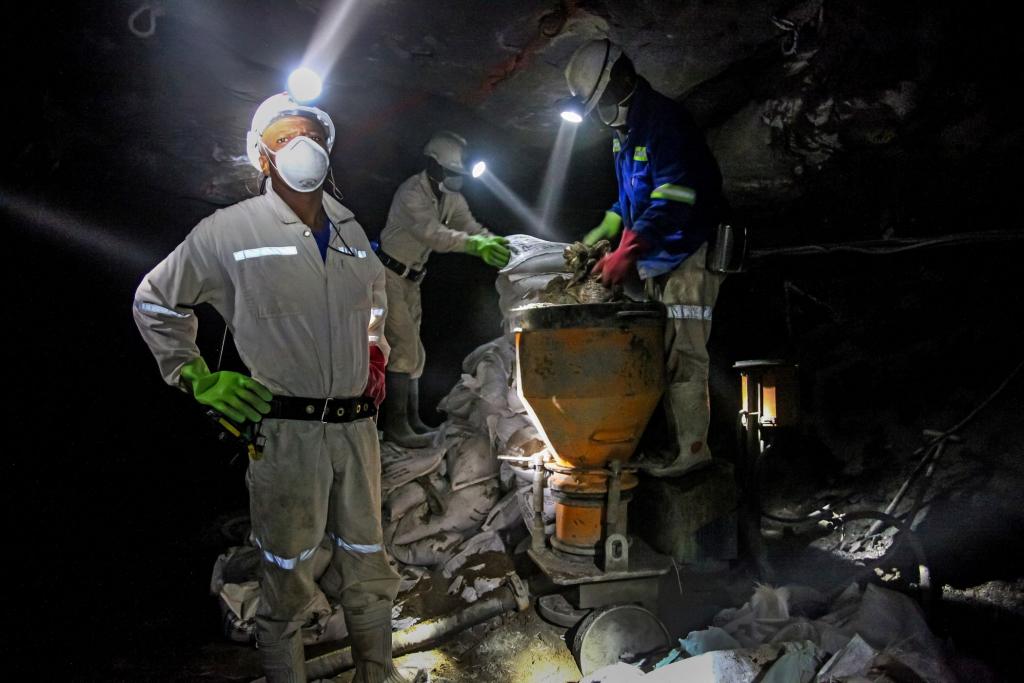
Workers at a platinum mine in South Africa mix cement to reinforce the ceiling and walls underground / iStock

Access to health care

Fleeing South Africa wasn’t the only difficulty facing vulnerable workers, since the conditions of returning to work also pose a challenge. Even once they return to the country, migrant workers like Mozambicans might not be able to access health care, social protection, and financial support from the government of South Africa.

We know of over 27 million cases and more than 900,000 people losing their lives to COVID-19 globally so far. This pandemic highlights the stark divide between those with and without access to medical care, whether it be financial or legal access. Governments should create stronger social protection schemes (such as universal health care), and mining companies should provide job-related health benefits for all their employees, with or without permanent contracts. Vulnerable workers would no longer fear lacking access to life-saving medical services or going into debt if they were sick.

Decent living wages

Vulnerable workers also need financial protection, which guaranteed decent minimum and livable wages would provide.

The hourly minimum wage in South Africa was increased by 3.8% to ZAR 20.76 (roughly USD 1.25) in March 2020. The previous increase had taken place more than two years prior. However, The Congress of South African Trade Unions, the Federation of Unions South Africa, and the National Council of Trade Unions don’t think this increase is enough. The unions were asking for a raise of at least 12.5%, which would be more in line with inflation.

It’s also important to know that minimum wages within South Africa can vary depending on the industry or geographic region. The minimum wage for domestic workers is ZAR 15.57 per hour, while farmworkers make ZAR 18.68 per hour, and contract cleaning staff make anywhere from ZAR 20.83 to ZAR 22.84 per hour.

Mining companies often will operate with subcontractors, who have fewer obligations than mining companies and may not uphold the same standards for social protection in contracts.

What does South Africa’s minimum wage have to do with temporary, contractual, and migrant workers from Mozambique? A lack of job security for these migrant workers means they are especially vulnerable to financial hardships. While mining companies should be adhering to the national minimum wage, many operate with subcontractors who employ vulnerable workers. Subcontractors have fewer obligations than mining companies and may not uphold the same standards for social protection in contracts.

Governments should establish livable, not just minimum, wages to ensure all workers are empowered financially. Mining companies should also improve security measures in vulnerable workers’ contracts to safeguard them against unforeseen circumstances and push for their subcontractors to do the same.

Training and upskilling

Governments and mining companies alike need to look at long-term solutions to foster resiliency and employability among vulnerable workers. They should be entitled to the same professional development, training, and upskilling opportunities as local or full-time employees.

However, training alone is not sufficient: what is necessary is the provision of transferable skills to help workers navigate transitions across sectors if mining jobs disappear, due to technological innovation or in times of global crisis, for example. Mining companies can allocate funds to support community trainings for future employment, not only in mines but other economic activities. This can also be done in partnership with those economic sectors and in line with national development plans to ensure workers find employment opportunities once trained.

Mining companies can also support governments in developing comprehensive skills strategies to address the vulnerabilities of the labour market and to ensure the adequacy of competencies with industrial needs.

COVID-19 has proven to be more than a health pandemic—it’s also a social and economic crisis. Mining companies, governments, and labour representatives need to work together to ensure vulnerable workers aren’t left behind now and help them strengthen their resilience in the event of future global crises.  

We invite you to dig deeper into this topic in our report, The Impact of COVID-19 on Employment in Mining.

Insight

How Cities Can Ensure the Post-COVID World is Green, Fair, and Resilient

The pandemic has shown us what a low-emission city can look like, writes the mayor of Milan. Governments have swiftly created new bicycle lanes and promised greener investments; such commitments are paramount for sustainable development and a healthy planet.

September 10, 2020

This article originally appeared in the World Economic Forum Agenda, in collaboration with the Thomson Reuters Foundation.

What if our new normal offered us more time, health and well-being as well as stronger communities, cleaner air and safer streets? This is the promise driving people and cities across the world to forge a green and just recovery from the COVID-19 crisis.

And it's more than just a promise: The explosion in walking and cycling as equitable, safe, and low-cost transport solutions during recent months is an inspiring example of how this vision is already a reality.

September 7 was the first-ever International Day of Clean Air, a fitting moment to recall the dazzling anomaly of cleaner air and blue skies we witnessed earlier this year, when much of the world stayed home and passenger transport ground to a halt. It’s also a useful reminder of why major cities around the world are aiming higher than a return to ‘business as usual’ in their responses to COVID-19.

Across Europe, nearly two out of every three people say they don’t want a return to pre-pandemic levels of air pollution. Leaders of major cities have set the goal of a better, more sustainable, more resilient and fairer society.

In Milan, clean air, social inclusion and public health are just some of the reasons we moved to create more space for people to walk and to cycle early in the pandemic. With our Strade Aperte (Open Streets) Plan, we set the goal of reallocating 35 km of road space previously used by cars to routes for people to safely walk and cycle.

Even before COVID-19, we knew that walking and cycling are more efficient ways to move people and goods in congested urban areas. They increase everyone’s access to essential services, boost public health and safety, and slash pollution driving both local disease and the global climate emergency.

Italy is known for its fast and sleekly designed automobiles—and the modern, all-electric version has its place in the country’s future. But a densely populated city centre is a place for people, not cars.

The 15-minute city revolves around simple forms of active mobility, ensuring everyone is just a short walk or cycle ride from life’s essential goods and services.

Like many other leading cities across Europe and the world, Milan is now helping drive a new renaissance in people-centred, urban development: the 15-minute city. More convenient, less stressful, more sustainable. It revolves around simple forms of active mobility, ensuring everyone is just a short walk or cycle ride from life’s essential goods and services.

The complex requirements and multiple benefits of the 15-minute city—from high-quality careers to improved health for people and planet—make it an ideal focus for green and just economic recovery packages.

I’m proud of Milan’s innovation and leadership, and I’m inspired by similar efforts bringing this vision to life elsewhere in the world. More than 2,000 km of new cycle lanes have been announced and/or added globally during the pandemic: the distance between London and Rome.

In response to the COVID-19 crisis, Mexico City began the construction of 54 km of new, designated cycle lanes using recycled materials (from old bus lines). The first one runs along Insurgentes, a city landmark and one of the largest streets in the world. The city’s new vision for cycling is to double bike lane capacity in order to have a total of 600 km of cycling paths in place by 2024.

The new paths will not only cover the city centre but will connect areas across the entire city, supporting active mobility out to the wider periphery. Just as in Milan, expanded infrastructure for walking and cycling forms the core of an integrated effort to ensure well-being for all in the near-term context of economic recovery while paving the way for a transformation towards healthy, equitable, and sustainable cities over time.

Also in Latin America, Colombia’s capital Bogotá—one of the first cities in the world to launch emergency bike lanes—has seen major progress in making active mobility a central pillar of its COVID-19 response. Bogotá added 117 km of temporary cycle lanes to its existing, permanent network of 550 km of cycle routes soon after the lockdown began in March.

In Mumbai (India), cycle advocates have recently emulated Bogotá’s approach, appointing a ‘bicycle councillor’ to help promote cycling infrastructure in each of the city’s 24 wards.

As in the U.K. and U.S., the pandemic saw demand for bikes outstrip supply in Bogotá. So a voluntary initiative of civil society and the private sector (Colombia Cares for Colombia) has responded with an integrated effort to develop the broader value chain and policy ‘ecosystem’ required to ensure the city can put cycling and other active transport modes at the centre of recovery efforts. Last month, 19 “bike councils” were formed, with citizen representatives charged with advising local and district administrations on policies for cycling and other alternative transportation modes.

In Mumbai (India), cycle advocates have recently emulated Bogotá’s approach, appointing a ‘bicycle councillor’ to help promote cycling infrastructure in each of the city’s 24 wards. Around the world, many other cities have published hugely inspiring and ambitious plans for better, more equitable road space reallocation: Streetspace for LondonSafe, Active Transportation Circuits in MontrealThe Great Walk of Athens and Paris’ RER V Plan, to name but a few.

These are just a few examples of hundreds of initiatives that have sprouted around the world to put walking, cycling, and other urban transport innovations at the heart of recovery efforts. They demonstrate the global shift towards supporting more high-quality walking and cycling infrastructure and highlighting active mobility’s role in ensuring cities are welcoming and attractive to people from all walks of life.

Clean air is just one of the many benefits of active mobility. But we don’t need a perpetual worldwide lockdown to create clean air for our residents. Our responses to the COVID-19 crisis are already showing how the new normal can be more resilient, inclusive and sustainable. Now’s the time for blue-sky thinking.

Insight

Making the Trading System Work for the SDGs: 10 questions for the next WTO Director-General

With eight candidates now competing to become the next leader of the World Trade Organization, here are 10 questions IISD thinks each one of them should be ready to answer.

August 28, 2020

Trade, if well managed, can be a powerful tool for development. But it must not stand in the way of tackling climate change, safeguarding labour rights, protecting the environment, and achieving the 17 Sustainable Development Goals (SDGs) that world leaders agreed upon at the United Nations in 2015. International agencies, such as the World Trade Organization (WTO), should not operate in a bubble and must mobilize the collective action and political will needed to make difficult decisions.

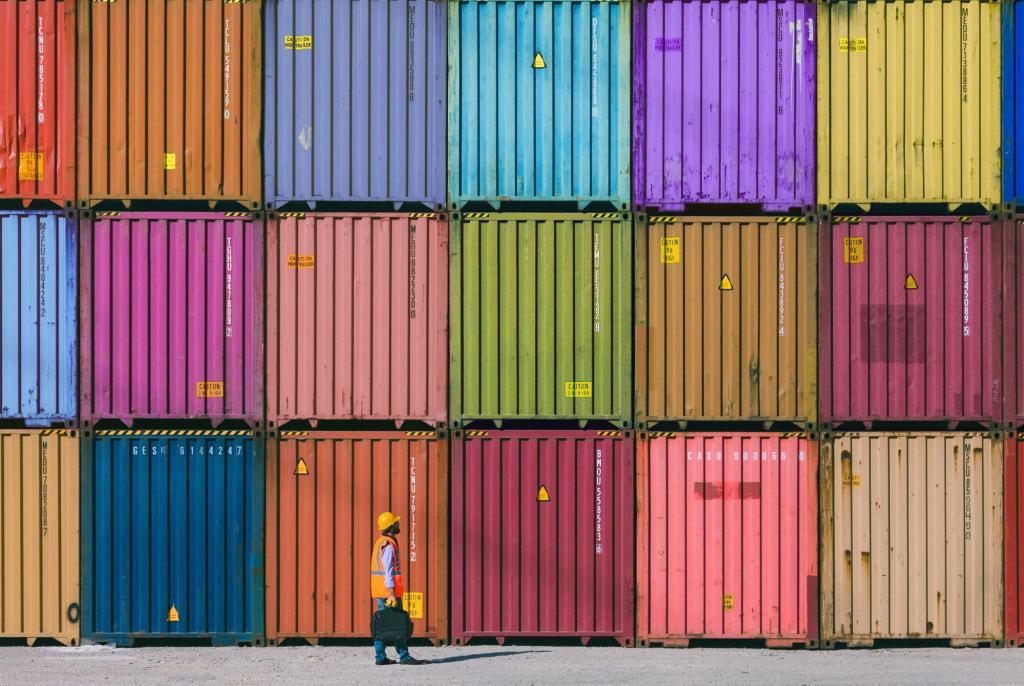
A man in construction vest walks by rows of colourful shipping containers
Trade can play a powerful role in helping us achieve the SDGs / iStock

Introduction

The trade community is abuzz in Geneva after delegations from around the world met with the eight individuals running for the WTO’s top post and heard how they envision the future of the institution and the multilateral trading system.

The timing of this discussion comes at an unusual moment in the trade calendar. Normally, the selection of the next WTO chief would have taken place in 2021, but this process was moved forward by a year after Director-General Roberto Azevêdo announced his plans to depart the post prematurely. Meanwhile, the dates for the WTO’s Twelfth Ministerial Conference are not yet known, after plans to hold the organization’s highest-level meeting in June 2020 were scrapped due to the COVID-19 crisis.

Heading into the discussions, one of the most important issues for delegations to consider is how the next WTO Director-General will work to shore up the organization’s sustainability credentials, especially given the long-standing difficulties in fulfilling the development mandate of its multilateral negotiating agenda. The tenuous state of its dispute settlement mechanism and the heightened trade tensions among WTO members these past few years have also placed in sharp relief the institution’s ability to weather crises and ensure that the voices of all actors are well taken into account, especially those that have traditionally received less attention.

Eight candidates are in the running, with nominations submitted by Egypt, Kenya, Mexico, Moldova, Nigeria, Saudi Arabia, South Korea, and the United Kingdom. Over the coming weeks, they will be working to make their case to WTO members, arguing why they are best suited to take the helm of the global trade club for at least the next four years.

A pillar with the World Trade Organization logo and a building in the background
The incoming Director-General of the WTO will step into the role at a challenging time / iStock

Below, we outline the questions that these candidates should be able to answer in the selection process ahead.

1. How would you seek to generate political commitment to multilateralism in major economies and rebuild trust and confidence among WTO Members?

The WTO has found itself caught in the middle of rising trade tensions between major economies, not least the United States and China. The new Director-General must be able to spell out why working together on trade will deliver benefits to countries both big and small—especially in the face of entrenched skepticism or outright hostility from key players—and forge new ways of overcoming political deadlocks.

2. How would you help overcome the Appellate Body crisis and ensure that the WTO has a properly functioning system for the peaceful settlement of disputes?

The dispute settlement system of the WTO is one of its core pillars, serving as one of the few international forums where countries, regardless of size, can file legal claims and obtain binding, enforceable rulings. However, its highest court, known as the Appellate Body, has been paralyzed since December, without a quorum to operate after the United States repeatedly blocked the start of the selection processes for any new appointments or reappointments. The new Director-General will need to figure out how to bring WTO members together to resolve this crisis, while also working with them to develop novel ways to resolve trade-related disputes.

The WTO's dispute settlement system is one of its core pillars, but its highest court has been paralyzed since December. The new Director-General must resolve this crisis.

3. How would you seek to ensure the WTO contributes to the realization of human rights, in particular labour rights and the opportunity for decent work (SDG 8)?

Workers and policy-makers in many countries fear trade can undermine sustainable development if companies fail to respect labour rights in attempts to be more competitive. While many regional trade agreements now include chapters on labour rights, the discussion at the WTO in this area has been lacking—despite a commitment at the 1996 Singapore Ministerial Conference for the WTO and ILO secretariats to “continue their existing collaboration.” The new Director-General will need to respond meaningfully to these concerns and revitalize the WTO’s relationship with UN agencies responsible for business and human rights, and employment.

4. How would you ensure the WTO supports environmental sustainability, including the potential of fossil fuel subsidy reform to support progress tackling climate change (SDG 12, SDG 13)?

Given the ambitions of the UN’s Paris Agreement and the reference to sustainable development in the preamble to the WTO’s rulebook, the new Director-General will need to foster a more open discussion on how the organization can tackle the challenges posed by climate change and other environmental risks such as biodiversity loss. This will involve making sure trade rules do not undermine environmental protection as well as exploring how trade rules can support environmental objectives.

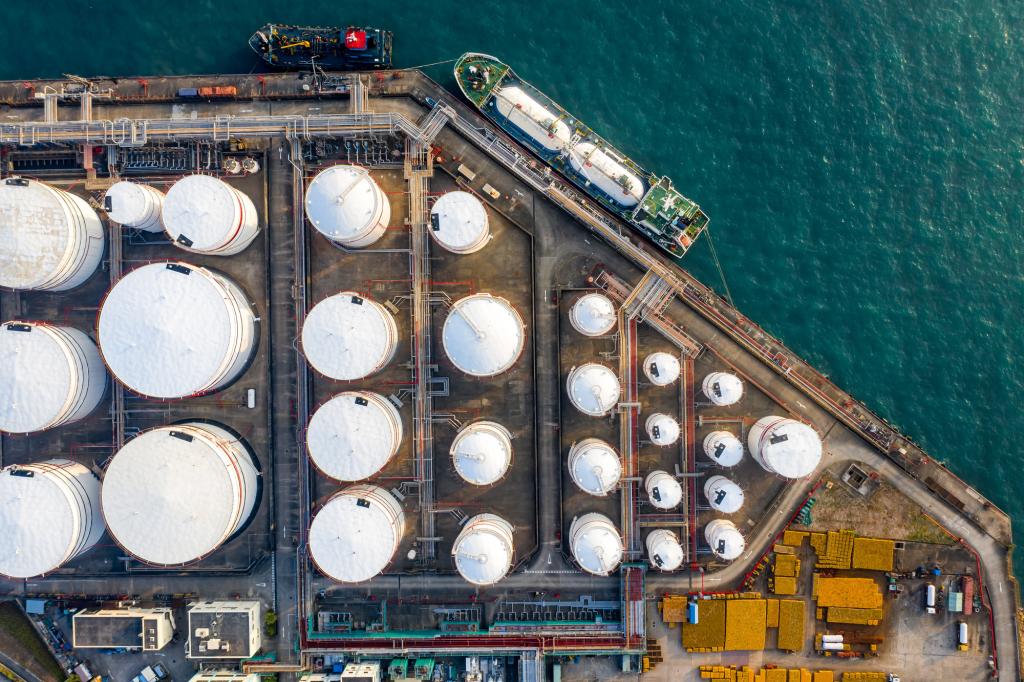
Oil refinery storage units with tanker ship viewed from above
SDG 14 on life below water has a dedicated target for WTO members to fulfil: to conclude by 2020 their decades-long negotiations on harmful fisheries subsidies / iStock

5. How would you seek to ensure the WTO contributes to “building back better” post-COVID?

The new Director-General will take office during a historic economic downturn and a major slump in global trade. Governments have responded with much-needed economic recovery packages, often introduced with little consultation or coordination: many now fear these will inadvertently entrench support for unsustainable firms and sectors and create new market distortions which unfairly harm producers in low-income countries. Positioning the agency as a positive force in the transition to a more sustainable and more equitable trading system will be a key challenge for whoever takes over the role.

6. How would you seek to advance the commitments on trade and sustainable development set out under SDG 17, including those related to the specific challenges faced by Least Developed Countries  (LDCs)?

LDCs make up a minuscule portion of goods and services trade, with their percentage share in the single digits. While WTO members have made commitments to provide duty-free, quota-free access for nearly all LDC goods exports and provide preferential access for LDC services and services suppliers, the implementation of these and other measures has been far from sufficient. The new Director-General will need to foster a renewed commitment from members to fulfil these existing decisions and generate new ideas to ensure that trade benefits developing and LDC members.

7. How would you seek to ensure the WTO respects the SDG 14 commitment on fisheries subsidies?

SDG 14 on life below water has a dedicated target for WTO members to fulfil: to conclude by 2020 their decades-long negotiations on setting binding disciplines on harmful fisheries subsidies, along with eliminating those subsidies that support illegal, unreported, and unregulated fishing.

Before 2020 draws to a close, the new Director-General will need to help members make tough political choices to bring fisheries negotiations across the finish line.

With just months to go before 2020 draws to a close, the new Director-General will need to help members make the tough political choices to bring this negotiation across the finish line—including, for example, on the question of what kind of special and differential treatment for developing countries would be appropriate and effective.

8. How would you ensure the WTO helps to overcome poverty and inequality (SDG 1, SDG 10)?

Although the growth in trade has coincided with a historic reduction in poverty levels, income inequality remains acute, both within and among countries. With commitments in these areas central to progress on Agenda 2030, the new Director-General will need to be able to articulate how policies affecting trade and markets can contribute to more inclusive economies—and galvanize WTO members to take action in support of them.

9. How would you seek to advance gender equity, both within the WTO as an institution and through the impact of the WTO in the global economy (SDG 5)?

While academics, civil society groups, and some international agencies have long worked on understanding the gender-differentiated impacts of trade, at the WTO the topic has only recently grown in profile with the launch of the Buenos Aires Declaration on Trade and Women’s Economic Empowerment in 2017. The new Director-General must guarantee that the momentum around these discussions is not lost, along with ensuring that women are fully represented in senior leadership positions in the secretariat.

10. How would you ensure the WTO contributes to ending hunger and malnutrition, and promotes sustainable agriculture (SDG 2)?

With climate change among challenges facing the global food system, the WTO’s farm trade rulebook has been widely criticized as overdue for an update. The new Director-General could help ensure the trade body contributes positively to efforts to tackle hunger and malnutrition, support farmer livelihoods in developing countries, and promote sustainable agriculture by helping to revitalize talks in this critical area.

Insight

Don’t let green recovery become a political hot potato

In this op-ed for the Ottawa Citizen, IISD's President and CEO argues that ensuring a resilient recovery is not just a question of what’s good for the economy or what’s good for the environment. It is now an issue of national competitiveness.

August 24, 2020

The idea that stimulus spending should drive a green, resilient recovery has wrongly become a partisan issue in this country, apparently playing a role in the departure of Bill Morneau as finance minister on one side and highlighting the lack of strong Conservative leadership on climate on the other.

Ensuring a resilient recovery is not just a question of what’s good for the economy or what’s good for the environment. It is now an issue of national competitiveness.

Leaders around the globe and across the political spectrum are making historic commitments to build a low-carbon future, rejecting the false compromise between economic growth and climate action. The scale of investment and economic change around the world illustrates the urgency with which Canada needs to lift its eyes to this horizon.

Read the rest of the article in the Ottawa Citizen.

Insight

COVID-19 Has Canada Using More Plastic. What impact will this have on our fresh water?

Policy-makers are facing pressure to reverse or suspend legislation on plastic waste and pollution in in order to accommodate an increased need for single-use plastics. But will these changes be temporary or long-lasting? How can Canada's leaders protect our fresh water without compromising our health and safety?

August 11, 2020

Plastics are one of the most popular materials in existence. They are durable, relatively inexpensive to produce, and versatile enough for use in a diverse range of products.

Here in Canada, less than 10% of plastics are recycled, contributing to over 3 million tonnes of plastic being thrown into landfills or into the environment each year. Over a third of plastics produced in Canada are for single-use packaging or products—such as plastic bags, take-out containers, and bottlecaps—which constitute one of the largest sources of plastics found in fresh water.  

What Impact Do Plastics Have on Fresh Water?

Plastics are released into our freshwater systems in many different shapes and sizes, and through various means—including wastewater treatment plants, landfill leakage, storm drainage, agricultural runoff, effluent and scraps from industry, inadequate waste management procedures, and litter.

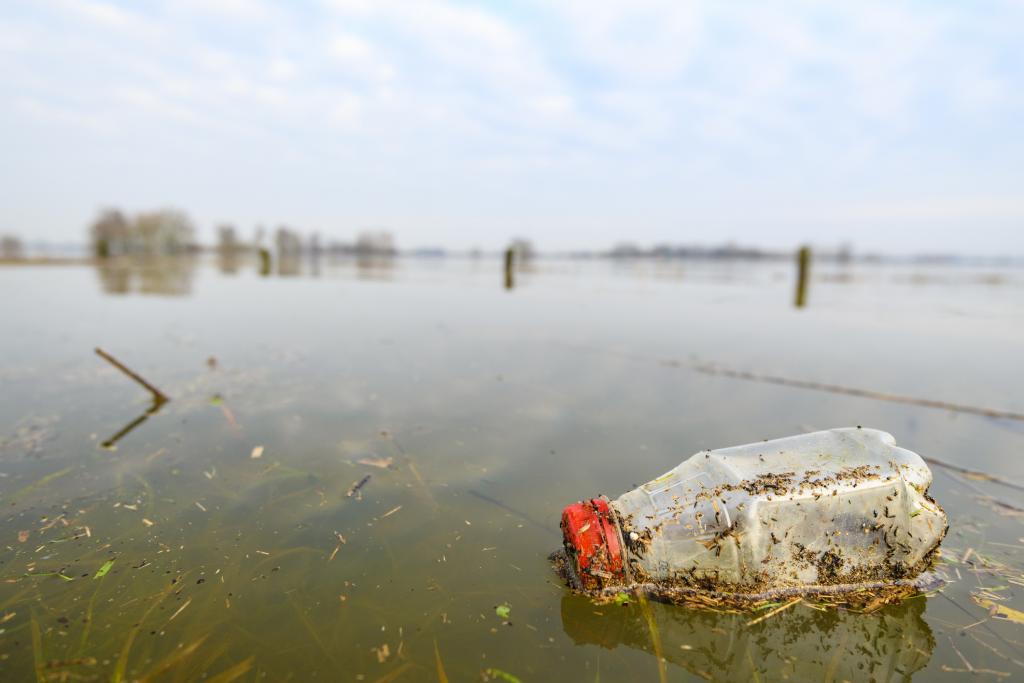
An empty plastic bottle floats in a brown lake
In Canada, less than 10% of plastics are recycled, contributing to over 3 million tonnes of plastic being thrown into landfills or into the environment each year. iStock / sjo

Over time, environmental conditions—such as wind, rain, waves, and sun—cause plastics to break down into smaller pieces (< 5 mm) called microplastics.

Over the past few years, the study of microplastics has grown immensely, but much is still unknown about their short- and long-term ecological effects. As an emerging threat to freshwater environments with potential human health implications, further scientific research on the sources, fate, and effects of microplastics is critical. 

How Has COVID-19 Impacted Plastics Usage and the Health of Our Fresh Water?

As part of the changes to our daily life brought about by COVID-19, Canadians’ reliance on certain types of single-use plastics has increased. Policy-makers are also facing pressure to reverse or suspend legislation that would address plastic waste and pollution, such as Canada’s proposal to ban harmful single-use plastics by 2021.

For example, at the height of the outbreak, some provincial health officials advised against using reusable bags and containers in grocery stores, with several chains banning them outright in favour of plastic bags. Although many of these restrictions are now being lifted, it may still be a while before consumers return to reusable bags and coffee cups.

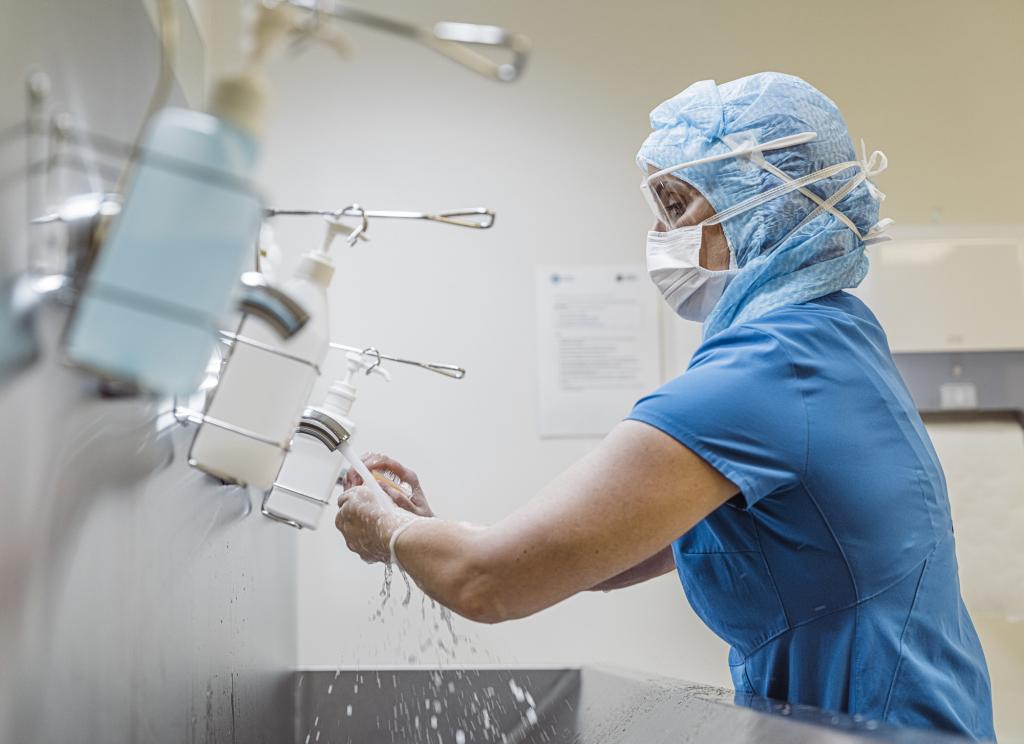
COVID-19 has also brought a new source of plastic pollution in the form of single-use personal protective equipment (PPE), such as masks and gloves. Single-use PPE is a necessary and effective public health measure, but these products are not always discarded properly and may end up as litter that enters our waterways. Indeed, a recent study identifies plastic face masks as a potential source of microplastic fibres in the environment. Although research is already underway to develop biodegradable or recyclable masks, even a temporary surge in plastic litter can lead to long-term impacts for freshwater environments.

What Needs to Happen Now?

First up, researchers at IISD Experimental Lakes Area have already proposed a whole-lake experiment (in this case, by carefully and safely adding microplastics and closely monitoring the ecosystem), to allow us to better understand the impacts on the whole lake and food web that it supports.

A woman in scrubs, mask and hairnet washes hands with soap over a sink
COVID-19 has also brought a new source of plastic pollution in the form of single-use personal protective equipment, such as masks and gloves. iStock / HRAUN

More than 50 years of existing data about the chemistry, biology, and weather patterns at the site will help us understand and validate what we discover. And once we know more about what microplastics do to our freshwater lakes and the aquatic life residing within, we can then work directly with governments and industry to develop relevant and effective policies and procedures that protect our precious freshwater resources from plastics pollution.

When it comes to larger policy changes to reduce the impacts of COVID-19 on plastic pollution in our fresh water, the Government of Canada should:

Move forward with the Canada-wide strategy on zero plastic waste: Canada should proceed with implementing its existing strategy and legislation on plastic waste reduction, including a ban on harmful single-use plastic items by 2021.

Provide educational resources to the public on more sustainable PPE use and disposal: Use social media and traditional marketing campaigns to raise public awareness about proper disinfection, reuse, and disposal of PPE to help ensure we do not produce excess waste and that it does not end up as litter in our environment, including fresh water.

Invest in research and innovation on plastic pollution in fresh water as part of sustainable recovery measures: Part of Canada’s action plan to ensure a green recovery from COVID-19 should include the implementation of financial programs and incentives for small businesses, entrepreneurs, and researchers to develop innovative and sustainable solutions to reduce and prevent plastic pollution in fresh water, as well as better understand its effects.

Support and develop sustainable plastic waste management systems: The federal government needs to work in collaboration with industry, provinces, territories, municipalities, and Indigenous governments to coordinate localized and harmonized waste management procedures, as well as invest in appropriate infrastructure and markets to help implement a circular economy for plastics within Canada.

Insight

Sustainable Cotton or Recycled Polyester? The conscious shopper’s dilemma

Some brands claim to be sustainable but not all of their products meet the same criteria and transparency gaps abound. How can the average consumer make the right decisions? Our experts offer some guidance.

August 10, 2020

Today’s USD 3 trillion fashion industry offers eco-minded consumers a plethora of “sustainable” and ethical clothing options, from organic cotton t-shirts to leggings made from recycled plastic bottles.

However, assessing the environmental and social impacts of the various materials used in such apparel can be tough in a marketplace where brands will deploy any number of tactics to sell you a hemp scarf that warms your shoulders while easing your conscience.

In a recent report, IISD provides a market performance overview of the most popular fibre used in textiles and a pillar of the fashion industry—cotton. One thing is clear: consumers must consider many factors when shopping for eco-friendly garments. Sustainability performance can vary between products of the same brand, and transparency gaps abound in the garment industry, which can make informed decisions challenging.

Here are some guidelines to help make the process easier:

Look for Brands With Public and Ambitious Sustainability Commitments

Our cotton report, launched in July 2020, tracks how large fashion brands are driving the growth of cotton produced under voluntary sustainability standards (VSSs), such as the Better Cotton Initiative (BCI), Organic (including Global Organic Textile Standard [GOTS] and Organic Content Standard [OCS]), and Cotton made in Africa (CmiA). VSS-compliant production of cotton made up at least 14.1% of the global total in 2016 and is expected to rise in the coming years.

VSSs push cotton producers to limit their negative environmental and social impacts, for instance, by reducing water and pesticide use and improving wages and working conditions.

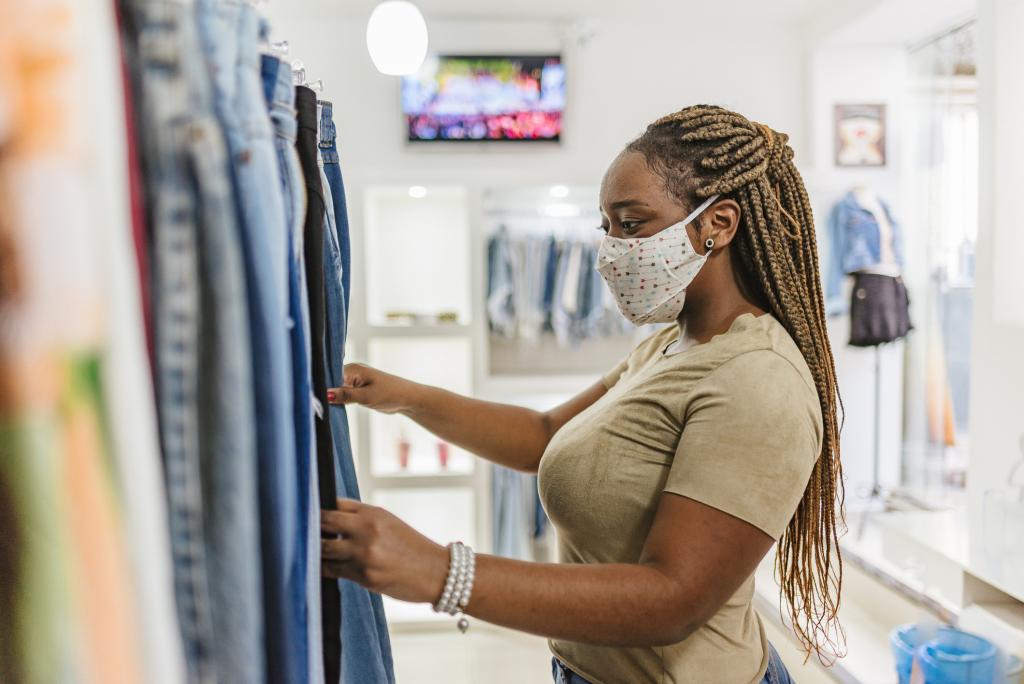
A young woman browses a row of jeans in a store while wearing a face mask
So many factors go into making an item of clothing sustainable, it can be hard for consumers to make informed choices / iStock

Big apparel companies such as H&M, C&A, and Nike have all publicly pledged to source 100% sustainable cotton by 2020. Commitments like this should be the norm, and companies should disclose their performance progress to promote accountability. These public pledges encourage companies to be more accountable and put pressure on the rest of the industry to improve their sustainability performance.

Not All Voluntary Standards Are Created Equal

Our research shows the most prevalent VSS schemes in the cotton sector (in order of production volume) are the BCI, CmiA, Organic, and Fairtrade International. While all of these standards can push producers to mitigate negative environmental and social impacts related to cotton production, their compliance criteria vary.

Assessing the environmental and social impacts of various materials used in a product can be tough in a marketplace where brands will deploy any number of tactics to sell you a hemp scarf that warms your shoulders while easing your conscience.

For instance, schemes such as Organics, GOTS and OCS ensure that certified cotton is labelled and identified as such at all stages of the supply chain (identity preserved), this means that organic fibres are not mixed with conventional ones, while others, such as BCI, provide physical traceability of certified fibres at the farm and gin levels, and allow the mixing of certified and conventional fibres after the ginning process. Also, some standards (such as BCI), allow the use of genetically modified cotton, while Organic, Fairtrade, and CmiA do not.

Natural vs. Synthetic? It’s complicated

The negative environmental impacts come early in the life cycle of natural, plant-based fibres such as cotton, linen, and hemp. For instance, farming can often involve intense water and pesticide use. However, after production, these natural fabrics perform well on sustainability because they are often recyclable and are fully biodegradable.

Concerning cotton, VSSs are helping to mitigate the negative impacts of producing the crop by prohibiting the use of pesticides, reducing water usage, improving soil fertility, and creating positive impacts on health and working conditions in farming communities. One study by the Textile Exchange found that farming organic cotton reduces the crop’s global warming potential by 46% compared to conventional cotton.

VSSs are helping to mitigate the negative impacts of producing the crop by prohibiting the use of pesticides, reducing water usage, improving soil fertility, and creating positive impacts on health and working conditions in farming communities.

Synthetic fibres such as polyester and nylon are based on oil, which has major environmental and climate change impacts, including a high level of greenhouse gas emissions in the extraction of oil and processing of the fibres. On the flip side, synthetic fabrics often use less water, last longer, and can be produced from recycled plastic.

It’s important to note that there is no middle ground here: blending natural and synthetic fibres will sacrifice a garment’s recyclability and biodegradability.

Read Labels Closely

Brands are eager to put the sheen of sustainability on their products, but be wary of vague claims, such as “Made with recycled material” (or other eco-friendly fabric), which doesn’t mention how much of the garment is comprised of the sustainable material. Look for clear, quantified sustainability claims, often expressed as a percentage.

Stay Informed

More-informed consumers can make more-informed demands in the marketplace. Platforms such as CottonUP and Fashion for Good have surfaced to promote more sustainable decision making in the marketplace. In our research on cotton, we’ve seen how consumers can play an important role, as environmental and social concerns have pushed some of the big global brands to purchase more VSS-compliant cotton.

Moving something as large as the global fashion industry toward sustainability will take a massive effort, but the payoff could be huge; if the sector continues on its current path, doing “business as usual,” it may comprise up to 25% of the world’s carbon budget by 2050, making it the second most polluting industry after oil and gas.

Insight

Green Recovery Know-How From the Nordics

Nordic countries are well recognized for combining healthy economic growth with strong social and environmental policies. What's their secret to a green recovery?

July 30, 2020

Nordic countries are well recognized for combining healthy economic growth with strong social and environmental policies. Since 2000, the Nordic economies grew 28%, while carbon dioxide emissions fell by 18%. Denmark, Finland, Norway and Sweden aim to be carbon neutral by 2050, driven by investments in renewable energy, bioenergy, and carbon offsets. Denmark recently made achieving “net zero by 2050” a legal responsibility. What is their secret?

One of the keys to Nordic success was their pioneering use of energy taxation in the early 1990s when faced with a recession caused by a major banking crisis arising from excessive financial deregulation, exacerbated by low oil prices in the late 1980s (for Norway) and the collapse of the Soviet Union (for Finland). While the conditions of the 1990s recession were different from today, the Nordics have shown how to use energy taxation to recover from an economic crisis.

Turning crisis into an opportunity for reform

In the wake of an economic crisis, governments desperately need cash. Nordic experience shows that taxing fossil fuels is an effective way to raise revenues and reduce budget deficits.

Finland became the first country in the world to introduce carbon pricing in 1990, followed by DenmarkSweden introduced a suite of new energy taxes, including on carbon and sulphur emissions in 1991, accompanied by a reduction in income taxes. Norway implemented a carbon tax in the same year and applied the highest rate to the oil and gas production sector, beyond what has been achieved by many countries.

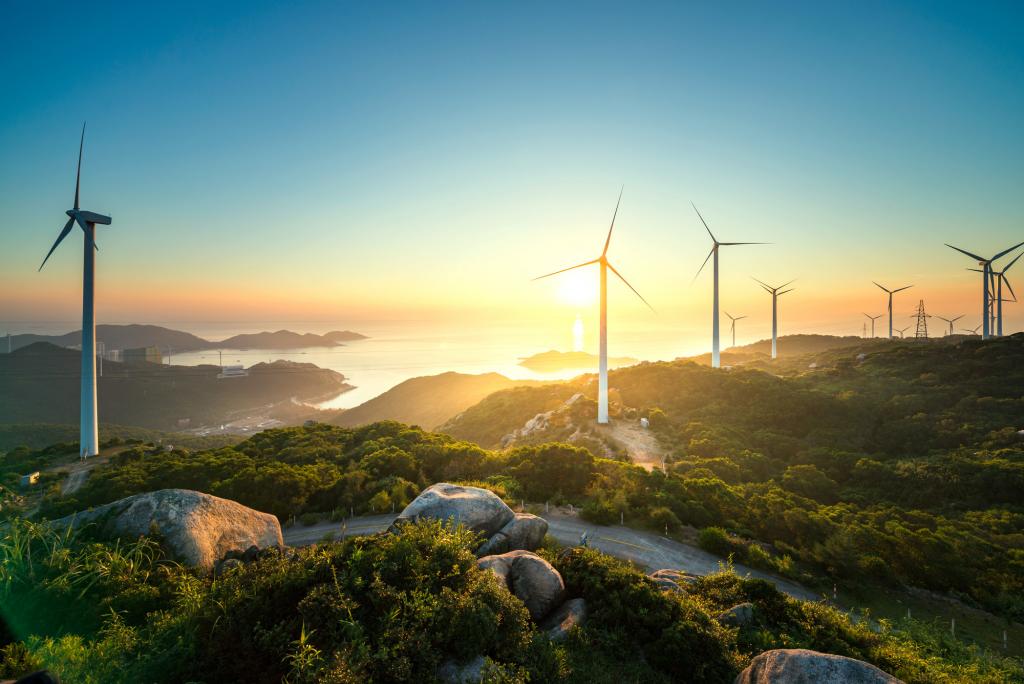
A row of wind turbines along rolling hills at sunset
Supporting clean energy and implementing a carbon tax are key steps to a green recovery / iStock

Contrary to arguments against energy taxation, these measures did not cause an economic slump. The Nordics thrived. In Sweden, economic activity grew by 58%, while CO2 emissions declined by 16% from 1990–2011. Denmark increased industrial output by 27% while achieving a 7% decline in industrial emissions from 1991–1999. Over the past 30 years, the Danish economy grew by 78% while energy consumption stayed largely unchanged.

Norway’s GDP grew 73% between 1990 and 2012. Growth was partly driven by oil and gas extraction, with a resultant rise in overall emissions. However, Norway’s reforms still achieved significant reductions in emissions per unit of GDP arising from reduced energy intensity, changes in the energy mix, and cutting process emissions. 

By the end of the 1990s, all Nordic countries had turned their budget deficits into surpluses and significantly reduced their unemployment rates.

Today, countries such as India and Costa Rica have increased taxation on oil and gas consumption as a way to generate funds for their COVID-19 responses. But more countries could seize the opportunity for reform. A tax of 12.5 cents per litre on gasoline and diesel, for example, could raise USD 1 billion per day globally.

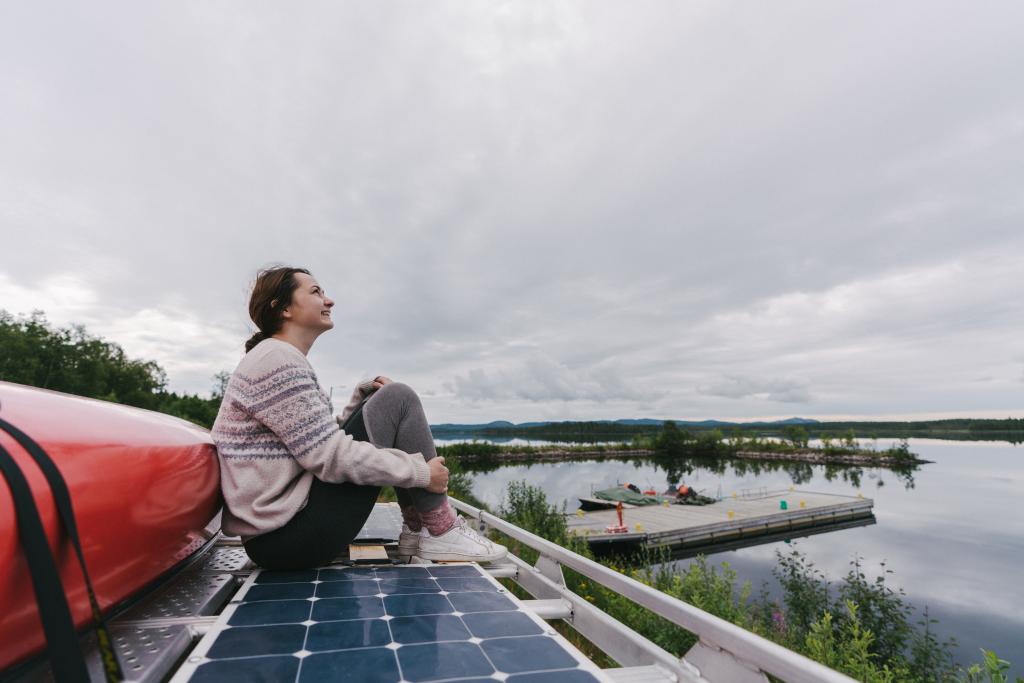
A young woman wearing a sweater sits on top of a camper van next to solar panels looking into an overcast sky and smiling
The Nordics are experts at green recovery and social spending / iStock

Using energy taxes to fund social spending

The Nordics wisely combined higher energy taxes with a drop in income taxes, social security contributions, and pension payments for employers. The shift in taxation from labour to fossil fuels ensured the Nordics had enough revenue to maintain high social spending and reduce the impact of higher energy prices on the public. As a result of such policies, the Nordics have a lower Gini coefficient (a measure of inequality) than the OECD average and perform well on the Human Development Index.

Shifting spending in this way also helped to avoid the public backlash that frequently accompanies higher energy prices, such as France’s yellow vest movement and Ecuador’s protests against the removal of fuel subsidies in 2019.

The shift in taxation from labour to fossil fuels ensured the Nordics had enough revenue to maintain high social spending and reduce the impact of higher energy prices on the public.

For countries with less well-developed tax systems, alternative benefits can be provided through other tools such as basic income payments, cash transfer schemes, or free public transport. Using revenues to fund employment, health or education programs is another way to enhance the acceptability and inclusiveness of higher energy taxes while stimulating economic capacity and growth.

Energy taxes as part of a green recovery package

The Nordics included energy taxation within a package of policies to support clean energy and combat pollution. Clean energy is a strong generator of employment, while pollution taxes drive technology adoption and improvements in air quality.

Denmark earmarked electricity taxes to subsidize wind energy, leading to the country becoming a global leader in wind energy. To drive energy efficiency, Denmark provided higher carbon tax rebates for companies that signed energy efficiency agreements and invested in energy-saving equipment.

Nobody likes a tax increase, especially following an economic crisis. But what if we were consulted about how the money will be reinvested to make our quality of life better?

Sweden put a tax on nitrogen oxide (NOx) for large combustion plants, which resulted in a 60% decline in these emissions from 1990–1995. A similar story can be found in Norway, where an NOx tax, combined with investments in energy efficiency, led to a 21% decline in NOx emissions since 2008. Sweden also introduced a renewable energy certificate scheme in 2003, which led to renewables moving from 4% of the electricity mix to 15% by 2017. Finland encouraged the use of wood waste for biofuels and biogas as well as investments in energy efficiency through its voluntary agreements.

Today, similar green energy packages have been put in place, as evidenced by the EUSouth Korea’s Green New Deal and Spain’s draft climate law.

Putting people first

Nobody likes a tax increase, especially following an economic crisis. But what if we were consulted about how the money will be reinvested to make our quality of life better? In Sweden, public acceptance of the carbon tax was bolstered by extensive social dialogue and public deliberation. Earmarking funds for popular and worthy purposes can help. Management of energy tax revenues by an independent institution, such as Denmark’s Energienet.dk, can build confidence that funds will be spent as promised.

Nordic green recovery from COVID-19

In response to the COVID-19 crisis, several Nordic countries are continuing their trend of investing in a green economy. Finland’s recovery plan includes approximately EUR 500 million for green investments, including public transportation, recapitalizing its climate fund, and phasing out oil heating. Denmark has adopted 13 climate partnerships with the business sector to build a green economy. The energy and industry agreement includes 4 gigawatts (GW) of offshore wind, subsidies for energy efficiency, tax reform for heating (higher taxes on fossil fuels, lower on green electricity), and consideration of green tax reforms that will make it easier to choose solutions that reduce negative impacts on the environment.

Experience from the Nordic countries demonstrates that increasing taxes on fossil fuels provides an effective way to raise cash for social welfare and economic stimulus. At a time when governments around the world are facing unprecedented costs, reduced revenue, and climate change, taxing fossil fuels simply makes sense.