Insight

The United Nations Environment Assembly’s Role as a Governance Architect

As the resumed Fifth United Nations Environment Assembly (UNEA) gets underway, what can we learn about its role as a coordinator and catalyst for international environmental action?

February 28, 2022

Once called “the world’s parliament on the environment,” the UN Environment Assembly (UNEA) has a unique role in global environmental governance. The meeting is high level and universal—the only forum for stakeholders from all countries to discuss the environmental challenges we face. Rescheduled and split into two parts due to the COVID-19 pandemic, the resumed fifth edition of UNEA is currently underway in Nairobi, and the developments seen there will showcase how these meetings help shape environmental policy-making on the international stage.

UNEA is an initiator or catalyst. It starts negotiations for new treaties or bodies, but it doesn’t finish these negotiations. It identifies emerging issues and (hopefully) agrees to the next steps for learning about and addressing these issues.

It is also a coordinator. It oversees the work of the UN Environment Programme (UNEP) and was created in 2012, during the Rio+20 negotiations, with the objective of strengthening and upgrading UNEP. In less than 10 years, UNEA has become a central body for identifying, prioritizing, and coordinating global responses to environmental issues. 

UNEA was born into a world already full of environmental treaties and bodies, each with its own mandate.

UNEA was born into a world already full of environmental treaties and bodies, each with its own mandate. In its initiator and coordinator roles, it must consider carefully existing mandates and avoid adding to already overlapping sets of rules. While doing this, UNEA has emerged as a body that can help clarify where those overlaps lie as a first step to coordinating environmental governance beyond UNEP.

UNEA at Work

UNEA negotiations are unlike talks at any other environmental body. Delegates at UNEA meetings do not negotiate new treaties. Instead, country representatives put forward resolutions. Sometimes, multiple countries put forward a resolution on the same issue. These resolutions outline the nature of the problem and potential solutions, as the proponents see them.

Immediately before UNEA, the Open-Ended Committee of Permanent Representatives (OECPR) meets to debate these resolutions. By this time, proponents have often worked together to merge multiple resolutions into one joint resolution. Negotiators then refineor reworkthe ideas and text therein.

After OECPR, UNEA convenes. Ideally, the OECPR has forwarded a clean, agreed text, yet sometimes outstanding issues will require the attention of higher-level UNEA delegates. UNEA members further discuss these resolutions and the Ministerial Declaration. High-level speeches help signal common interests and priorities. Finally, resolutions are (usually) adopted.

Yes, No, or Keep Talking

Some resolutions do not succeed. For example, India and supporters failed to realize a clear call at UNEA-4 to phase out single-use plastics, although the Ministerial Declaration calls for a phase-out by 2030. In 2019, Switzerland ultimately withdrew its proposed resolution on geoengineering, following questions about what technologies count as “geoengineering” and concerns about veering into climate issues, given the established bodies and rules for reducing emissions and building resilience to climate change. Others argued that UNEP should get ahead of the geoengineering experiments and assess these technologies’ potential benefits and drawbacks before their extensive deployment.

Some resolutions are passed and lead directly to implementation actions. This route tends to happen under two scenarios. The first scenario is when there are established bodies in place to take up further actions. UNEA identifies additional actions and sends an important signal on the need to do more. The resolution on nitrogen management, for example, highlights linkages to a range of issues, including climate change, and identifies other organizations that could better coordinate, including the Food and Agriculture Organization of the United Nations.  

The second scenario is when parties struggle to reach agreement on the mandate for further work. A resolution may then be adopted asking the UNEP Executive Director to work with existing institutions or regions to strengthen a response. For example, UNEA-3 struggled with the scope of a resolution on air quality first proposed by Canada and the African Group, with delegates debating whether to take a regional or local focus on air pollution’s impacts or instead stress its transboundary and global effects. The resolution calls for member states to consider joining regional and global initiatives and for the UNEP Executive Director to examine how to strengthen these efforts.

Other resolutions trigger a progression of work, particularly when there is a gap in global governance. Marine plastics is a prime example. Since 2014, the issue progressed from identification as a global threat to a proposal to begin negotiations for a global treaty. Since then, the Basel Convention, which regulates the transboundary movement of hazardous wastes, adopted two decisions on plastics. Shipments of certain plastics now require the prior informed consent of the importing country. At the same time, there was a growing consensus in the Ad Hoc Open-Ended Expert Working Group on marine litter established by UNEA that a global treaty might be necessary. 

The resumed UNEA-5 meeting will consider establishing negotiations for a marine plastics treaty and will likely hotly debate its scope. Reaching this stage has not been easy.

The resumed UNEA-5 meeting will consider establishing negotiations for a marine plastics treaty and will likely hotly debate its scope. Reaching this stage has not been easy. There was pushback against establishing the Working Group at UNEA-4, and its role was scaled back to a stocktake of existing efforts and consideration of options.

Strengthening Scientific Input

UNEA is tasked with including stakeholders’ access and participation in global environmental governance at the highest levels. Before UNEA meetings, major groups and stakeholders get together to coordinate their responses and input from civil society. The Youth Environment Assembly has become a recurring event organized by youth, for youth.

Among these stakeholders and views, science is singled out in UNEA’s mandate. Sciencepolicy interfaces play a crucial role in environmental governance. They provide timely information, sound the alarm, and assess the effectiveness of current efforts. UNEA is tasked with continuing to strengthen the scientific foundations of environmental action.

UNEA oversees the work of the Global Environmental Outlook (GEO), a report on the state of the global environment that has been produced six times since 1997. The GEO has been multi-issue, unlike the Intergovernmental Panel on Climate Change (IPCC), the Intergovernmental Science-Policy Platform on Biodiversity and Ecosystem Services (IPBES), or the Global Chemicals Outlook. Past GEOs have also sought to build capacity for integrated environmental assessments through providing information on the state, trends, and outlook of the environment. Like the IPCC and IPBES, the GEO-6 Summary for Policymakers was discussed by member states to distill the main messages from the overall report.

The role of GEO, amid all the issue-specific and other scientific outlets, will be discussed at the resumed UNEA5. How can the GEO remain UNEP’s authoritative flagship report, while respecting the vast work undertaken by other sciencepolicy interfaces? Again, the congestion of environmental bodies may influence UNEA decisions and the GEO moving forward.

How can the GEO remain UNEP’s authoritative flagship report while respecting the vast work undertaken by other sciencepolicy interfaces?

At the same time, some UNEA delegates support the resolution calling for establishing a sciencepolicy interface devoted to chemicals issues. This type of an “IPCC for Chemicals” poses interesting questions on the varied roles of these interfaces. Beyond providing expert advice, they tend to raise awareness of environmental issuessomething sorely needed for chemical pollution. But this is an added, unintentional benefit of these bodies. Given the unique characteristics of the chemicals scientific community, the resources required to establish this interface, and existing bodies doing similar work, some have questioned whether this is truly required.

Coordinating Congestion

By design, UNEA is a body aimed at drawing linkages among issues and efforts. We know more about all the varied multilateral and regional environmental agreements and initiatives than before the advent of UNEA. UNEA resolutions often acknowledge the scope of work undertaken across existing agreements.

Working within a crowded space brings challenges. All the existing agreements resulted from carefully crafted compromises. With equal care, UNEA must adeptly avoid upsetting these negotiated solutions. But UNEA is also meant to bring high-level attention to environmental issues and push for greater ambition. It has to walk a delicate line in catalyzing and coordinating action amid a growing body of global environmental law.
 

Insight

More Say for Smallholders Will Help Standards Address Poverty

February 16, 2022

Having a say in the decisions that affect their lives is critical for poverty reduction among smallholder farmers, and the case of voluntary sustainability standards (VSSs) is no exception. At IISD, we recently took a close look at how VSSs contribute to poverty reduction among smallholders by assessing how they address three crucial dimensions of poverty: access to resources, opportunities and choice, and power and voice. 

We examined 13 widely adopted agricultural standards and found that VSSs can help producers access resources (e.g., via increased crop income, soil and forest conservation, and social capital) and opportunities for training, employment, and sustainable farm management. But we also saw that these standards fall short in enhancing farmers’ power and voice, a gap highlighted by farmer representatives speaking at the report’s global launch webinar

“Lack of consultation leads to a huge range of standards not always adapted to local conditions, and not always built on farmers’ needs and priorities, not always matched to their capacities."

Marike de Peña, Chair of the Latin American and Caribbean Network of Fair Trade Small Producers and Workers; Director, Banelino

VSSs are making some progress to include the voice of producers through grievance mechanisms that provide an avenue for worker input, as well as by opening consultations when designing or updating a standard. These are encouraging developments, but they do not always reach smallholder farmers and are not yet standard practice. Many smallholders still lack all the information on VSS requirements, processes, and implementation and have limited say in VSS design, decisions, and governance systems. This represents a missed opportunity for standards to bring smallholder voices into value chains.

“Lack of consultation leads to a huge range of standards not always adapted to local conditions, and not always built on farmers’ needs and priorities, not always matched to their capacities. They need to be built on these and adapted to local contexts,” said Marike de Peña, Chair of the Latin American and Caribbean Network of Fair Trade Small Producers and Workers and Director of the cooperative Asociación de Bananos Ecológicos de la Línea Noroeste (Banelino).

Power asymmetries in global commodity markets disempower smallholders in both conventional and VSS-compliant commodities alike. “Normally, the standards … are developed by value chain players, then they are pushed onto smallholder farmers,” said Norbert Tuyishime, Program Officer with the Eastern Africa Farmers Federation (EAFF). “They will adopt them, forcefully, because they know at the end of the day [if they don’t] they will not have anywhere to offload their produce.”

"We need to analyze how we can improve the leverage and marketing power of farmers within their own country and vis-à-vis a supply chain system buying from them."

Henk Gilhius, Manager, Research and Impacts, Rainforest Alliance

VSSs may be voluntary for buyers and end-consumers, but understanding the not-so-voluntary dynamics facing small-scale farmers is important. Going forward, smallholders must be recognized as key value-chain players and have a say during discussions and decision making around standards. “We need to analyze how we can improve the leverage and marketing power of farmers within their own country and vis-à-vis a supply chain system buying from them,” stressed Henk Gilhuis, Manager, Research and Impacts with Rainforest Alliance.

There are many ways VSSs can better support the direct involvement of smallholders, ensuring they have information as well as a greater share and power in decision making. For instance, VSS bodies could support farmers’ access to VSS-related knowledge (e.g., requirements, processes, and complaint procedures) with materials provided in farmers’ language and in an accessible medium, such as local radio. They could facilitate regular community-based consultations and involve local smallholder delegates in VSS decision-making processes and ensure small-scale producers have votes as well as veto power in standards governance bodies.  

The good news is that there is already progress underway to make VSSs more inclusive and shift the balance of power toward farmers, such as the emergence of local standards and living income benchmarking.

In some cases, international standards are being adapted to local contexts, so they are less costly and aligned with farmer priorities, making it easier for them to participate and helping to ensure the standards meet their needs. For instance, in several countries, national good agricultural practice (GAP) standards have been developed (e.g., KenyaGAP, ChileGAP) that are benchmarked against international GLOBALG.A.P. standards. In other cases, alternative local standards are being developed, such as Trustea (India) and EcoMark Africa. There are also participatory guarantee systems that certify organic production for local markets, which promise to be more inclusive and accessible for farmers.

Some VSSs are starting to incorporate criteria addressing a living income—one that would enable producers and their families to meet their basic needs based on their actual cost of living. VSS bodies could play a role in calculating living wages and product prices, which could then serve as a reference to support broader wage and price increases. Standards are well placed to coordinate with authorities, buyers, traders, and producers to do so while involving and encouraging all value-chain actors to support living incomes for farmers.

Our research shows that standards can contribute to poverty reduction by offering farmers resources and opportunities. But smallholders still need a greater voice in the value chain and a seat at the decision-making table, and VSS bodies must continue to take steps toward inclusive practices that increase the power and augment the voices of farmers.

The author would like to thank David Perri and Cristina Larrea for their valuable feedback on earlier drafts of this blog.

Insight

What Does the Global Minimum Tax Deal Mean for Developing Countries?

February 10, 2022

Just months after the global minimum tax was approved by over 130 countries, the agreement is quickly on its way to becoming a reality. With rules for the tax’s implementation now unveiled and some governments already preparing to bring the tax into effect by next year, what impact could this have for developing countries and how should they prepare?

The global minimum tax was agreed in October 2021 between 136 (now 137) of the 141 countries who are members of the Organisation for Economic Co-operation and Development (OECD)/G20 inclusive framework on tax base erosion and profit shifting (BEPS), capping years of negotiations. The long-anticipated deal is designed to ensure that multinational enterprises (MNEs) will be subject to a minimum 15% tax rate in every country of operation from 2023, thus preventing situations where these MNEs take advantage of differing tax regimes between jurisdictions and effectively avoid paying tax.

While the headlines around the agreement have largely focused on taxing the digital economy, the global minimum tax, which is the second pillar of the overall global tax reform agreement, should have more of an impact on developing countries. It should reduce the use of tax havens by MNEs to shift profits out of their main operating companies. The global minimum tax could also limit tax competition between developing countries in a range of economic sectors, such as mining, manufacturing, or telecommunications, reversing a decades-long “race to the bottom” on corporate taxation.

While the headlines around the agreement have largely focused on taxing the digital economy, the global minimum tax should have more of an impact on developing countries.

Two months after the global minimum tax deal was announced, the OECD published rules for countries to implement it. Some countries are already taking steps to begin implementation as early as next January.

The OECD is eyeing a rapid implementation timeline and plans to release a commentary explaining the recently issued rules in March while launching a related consultation. The consultation is mostly addressed to businesses and tax experts, with the goal of clarifying some of the most complex elements of the global minimum tax rules. The template for global minimum tax rules should not change.

The Potential Impact

The OECD/G20 deal should increase tax collection in most countries, which could be a major step forward in supporting the achievement of the Sustainable Development Goals (SDGs). Target 17.1 of the SDGs, for example, calls upon governments to “strengthen domestic resource mobilization, including through international support to developing countries to improve domestic capacity for tax and other revenue collection.” 

This is an important outcome, given that corporate income taxes can provide governments with crucial revenue for achieving public policy objectives. Corporate income tax rates have been declining for decades because of tax competition. Developing countries in particular rely more heavily on corporate income tax revenue, and given the economic toll of the ongoing COVID-19 pandemic over the past 2 years, these governments need to find resources to finance better physical and digital infrastructure. 

This is an important outcome, given that corporate income taxes can provide governments with crucial revenue for achieving public policy objectives.

However, in practice, the impact of the global minimum tax rules will depend on their interaction with domestic tax policies and on how different countries change their fiscal regimes as a result. 

Firstly, offshore investment centres such as the Cayman Islands, Bermuda, or the British Virgin Islands will have no reason to continue to offer reduced or zero income tax rates to multinational companies. Some countries are already planning to change their headline corporate tax rate. This could make them less attractive for MNEs, possibly leading to a “reshoring” of taxable profit to other countries.

Secondly, developing countries may find that the global minimum tax could actually lead to tax revenue being lost to other jurisdictions. Developing countries are typically not considered tax havens, given that they often have relatively high headline corporate income tax rates. But after decades of giving tax exemptions to specific sectors, investors, or regions, the effective tax rate paid by many large companies can be quite low. Under global minimum tax rules, which set a 15% minimum benchmark, developing countries whose tax incentives lead to an effective tax rate below 15% may find themselves in effect giving up tax revenues to the jurisdiction where the MNE is based. Because the jurisdiction where the MNE is based will be collecting the minimum tax itself, developing country governments might not even be aware that this is happening.

Developing countries should therefore review their domestic tax and investment frameworks to identify and modify those tax incentives that will be affected by a global minimum tax. The timing for this work is crucial, and governments need to start now. Tax incentives are often included in laws, regulations, contracts, or other legal instruments, which may be protected by stabilization provisions. These stabilization provisions often make these tax incentives difficult to change, especially for those investment projects that are already underway. Amending tax or investment laws, as well as sectoral codes, also takes time. Reviewing investment contracts will take even more time, effort, and political capital. 

That is why IISD has joined forces with the International Senior Lawyers Project (ISLP) to publish a guide for policy-makers in developing countries as they consider revising domestic tax incentives that could be affected by a global minimum tax. As the new global tax deal is implemented worldwide, we should ensure that multinational firms pay tax first and foremost in the developing countries where they operate, extract, and generate profits.

Insight

Youth Climate Activism: Running a marathon, not a sprint

IISD youth engagement and water policy expert Emily Kroft sat down with climate educator Kristina Hunter to discuss how youth climate activists can prepare for a lasting future in sustainability.

February 10, 2022

For young people actively engaged in fighting the climate crisis, the task can feel overwhelming, especially amid continued warnings that climate mitigation efforts are falling short of the ambition we need to limit global temperature increases to 1.5°C from pre-industrial levels. Yet youth activists are crucial for galvanizing public momentum in support of more ambitious climate action and will have to live with the consequences of today’s decisions. Many of them will also be tomorrow’s policy-makers. 

To discuss how to best support youth activists amid the challenges they face, I sat down with activist and educator Kristina Hunter, who has worked with youth in sustainability spaces for over 20 years. Kristina began her career by teaching environmental science courses at the University of Manitoba, where she mentored many students. In recent years, she has launched her own website featuring online content to support young people who want to be more involved in sustainability. 

Below is our conversation on how youth climate activists can reconnect with their larger movement, beat climate fatigue, and engage with their peers at home and abroad. It has been edited and condensed for clarity.

Learning From Sustainability Mentors

Emily: You started your career as a university professor but have since moved on to creating more online content. Can you tell us what inspired you to move to the bigger platform?

Kristina: Like a lot of people, I was feeling like we’re not focusing on the things we need to focus on. I felt like the earth is on fire and here I am talking about grades. I was lucky enough to talk to people about the environment each and every day, and yet it wasn’t enough of a focus on true action, and I think we also weren’t really respecting the urgency of the situation. 

I was seeing myself heading toward burnout and really seeing my students and others in the industry heading down that path as well. I thought that we need to refocus, and that's why I started a podcast and my own blog and website and online courses.

Emily: Something unique about your career is that you've dedicated so much of your time to working in a mentoring role, particularly to young people. What inspires you to be that mentor figure?

Kristina: Clearly, they [the young people] do. It’s so exciting and invigorating to be reminded that there are endless possibilities and to be challenged about asking, “Why not”? 

So many of us get stuck in that rut of “This is how we do things” and “This is how the world is.” We need to challenge ourselves and ask why. Why can't we do it differently? That is honestly what keeps me going, and I love being inspired by those young adults who are changing the world. 

I also love helping to give them the tools to be as effective as possible and to do it in a way that protects their own wellness and really understands that yes, it is urgent and serious. But we first need to care for ourselves.

Blending New Technologies and Historical Skills

Emily: Have you noticed any changes in how young environmentalists approach environmental issues, compared to when you got started?

Kristina: I’m so glad you asked this. It’s such an interesting thing to have observed this deepened connection that people have with the broader movement online. I know the social media and online world can be very challenging from a mental health perspective. But the connections that it gives have also been very beneficial in that we are much more connected now to global movements. 

When we see things like protests in Standing Rock, we feel and understand those issues much better because of this connection we can have with them. But young people now are also doing interesting things that some of my colleagues and I had always hoped for. 

They're going back in terms of understanding what was valuable about our historical skills and behaviours, so they’re learning how to preserve food and doing gardening with their grandparents. And these beautiful things are not just a throwback but preserving the heritage and knowledge that we need to capture. That also makes me very hopeful.

Forging Lasting Connections and Preparing for the Long Haul

Emily: I think there's sometimes a stereotype that young people don't care about things that happened in the past, but there really does seem to be a resurgence of recognizing how valuable that knowledge is. Something else that there seems to be a big resurgence of is in awareness in the climate community of activists from different parts of the world being more aware of each other and more willing to work together. What do you think is the driver behind that trend?

Kristina: You know I have seen that, and I have experienced it as well, and I understand this term “global community” on a new level. The pandemic has forced me personally to get online more. I think it's forced a lot of us to get online more, and we have recognized there are ways to forge real relationships, even if you've never met in person. To me, that is one of the upsides of the technology that we have and how we can use it to develop true relationships.

Emily: Something that I’ve heard you say a few times before is that when we take action on these big global issues, especially in sustainability, that we’re running a marathon and not a sprint. Can you explain what you mean by that?

Kristina: When I got into teaching, I really thought that I would be working myself out of a job. We’d educate more people about the problems, and then I wouldn’t need to teach this anymore. It didn’t quite happen that way. By the time I left teaching 20 years later, I was honestly feeling some despair about it all. 

The good thing is that I have seen a huge amount of change in that time. I have seen people really take a deep interest in understanding the root issues and how things are truly interconnected, how sustainability is not separate from equality and issues of racial justice and ecological injustices, and how those all connect and are part of the same issue. 

However, we also know we’re not acting fast enough. It’s definitely been my experience that we are in this for the long haul. And when we recognize that, I think we do things a little bit differently in terms of our own self care.

I think that this is a vital piece that we’re not talking about enough in the environmental movement in the movement of sustainability and justice. Yes, the big changes should have all happened already. We are behind, and it is urgent, and it’s an emergency on all fronts. Yet I think we need to approach it in the sense that we will be working on this for the foreseeable future. In order to do that, we must protect our own personal well-being.

So, how do we get there? It's really not how we sometimes think about self care. It's not about bingeing your show online. It's getting to the heart of what really is good for us. Sleeping right and eating right overlap with what's good for the planet. When we eat whole foods, eat lower on the food chain, that's good for the planet and our bodies. 

We also have to respect that we have a lot to do, but we're already doing good work. For anybody who feels kind of desperate that they’re not doing enough, make a list acknowledging all of the things you are doing that are good for the planet that are also good for yourself. Things that are good for your community, that build social justice. Make that list and refer back to it. We really want to avoid being overwhelmed by grief and be able to keep working at it and not burnout. 

Emily: Thank you so much Kristina for being here. If someone wants to know more about your work or contact you, where can they find you?

Kristina: I have a website—it is https://www.kristinahunterflourishing.com/. I chose the word flourishing because I truly believe that's what we all can do. Humanity can flourish along with the natural world, and to me that's what sustainability is. I also have a podcast called Live. Well. Green. I'd love to connect.

Insight

2022: A Full Calendar for SDG Discussions and Global Environmental Governance

January 14, 2022

This article was originally published on IISD's SDG Knowledge Hub.


2022 will be a significant year for governing the 2030 Agenda and other global frameworks on protecting the environment. While 2020 was anticipated as a super year for nature, and 2021 was considered all the more crucial for biodiversity after the pandemic froze many global discussions, 2022 now holds the cumulative need for high-level negotiations driven by renewed political will to adequately tackle environmental issues. It also inches the world closer to key deadlines for human and planetary wellbeing.

Due to many pandemic-related postponements–they seem too numerous to count, but the SDG Knowledge Hub’s calendar has been documenting these changes for nearly two years–2022 will bring us twice as many meetings of environmental treaty governing bodies as we would expect during non-COVID times. In addition, several negotiation processes on new frameworks and treaties have reached a point for delegates to conclude their talks and adopt new binding commitments.

The more we look at the calendar, the more it emphasizes the importance of 2022 for global governance decision making.

The more we look at the calendar, the more it emphasizes the importance of 2022 for global governance decision making. Multiple COPs are planned for 2022. While the biodiversity and climate COPs are likely to receive the most media attention, decisions to be taken by the United Nations Convention to Combat Desertification (UNCCD), the Convention on International Trade in Endangered Species of Wild Fauna and Flora (CITES), the Ramsar Convention on Wetlands, and the chemicals and wastes and mercury conventions will all have implications for the success of multilateral environmental efforts.

Furthermore, the United Nations Environment Assembly (UNEA) will consider the governance of marine plastics and a new science-policy interface on chemicals, among other agenda items. A new marine biological diversity of areas beyond national jurisdiction (BBNJ) treaty nears the final stage of negotiations. If adopted, governance arrangements for the conservation and sustainable use of BBNJ will be subject to this new global framework. The UN Ocean Conference will seek to keep a holistic focus on oceans. And preparations for the first meeting on water policy at the summit level in over 40 years–which will take place in March 2023–will be in full force.

In smaller rooms around the UN, consultations will be held on a set of proposals offered by the UN Secretary-General in September 2021 to help the UN face new challenges and achieve ‘Our Common Agenda’ over the next few decades. The report’s recommendation to hold a summit on transforming education is already in motion for September 2022. On the environmentally focused proposals in the report, intergovernmental consultations are scheduled for 3-4 March.

We also enter 2022 as perhaps the true start of the Decade of Action on the SDGs and the Decade on Ecosystem Restoration.

This is not all the year holds in store. We also enter 2022 as perhaps the true start of the Decade of Action on the SDGs and the Decade on Ecosystem Restoration. The July 2022 session of the UN High-level Political Forum on Sustainable Development (HLPF) will provide a platform for judging how much progress is needed on a shorter timeline and exchanging proposals on the best way to do it. Among the SDGs being considered in depth this year are Goal 14 (life below water) and Goal 15 (life on land). The overall theme for the session puts these ambitions into their challenging context: ‘Building back better from the coronavirus disease (COVID-19) while advancing the full implementation of the 2030 Agenda for Sustainable Development.’

The HLPF is the apex of the international governance arrangements for the SDGs and 2030 Agenda, and it recently underwent a review itself. This year’s Forum will be the first chance to see the effects of these shifts, including the guidance that:

  • voluntary national reviews (VNRs) presented during the HLPF should identify not only achievements and success factors, but also challenges and gaps
  • discussions should focus more on the availability of data and national capacities for data collection
  • the HLPF should provide stronger analysis of interlinkages across the SDGs and their targets, including policy implications of synergies and trade-offs, and more attention should be paid to local efforts to advance the SDGs, and the outcomes of the regional forums.

Regional meetings and workshops in preparation for the HLPF will begin in March.

2022 is an important anniversary year, arriving 50 years after the UN Conference on the Human Environment in Stockholm that resulted in the creation of the UN Environment Programme (UNEP).

And finally, 2022 is an important anniversary year, arriving 50 years after the UN Conference on the Human Environment in Stockholm that resulted in the creation of the UN Environment Programme (UNEP), and 30 years after the UN Conference on Environment and Development in Rio de Janeiro. These conferences led to the recognition of sustainable development, defined as the intersection of environmental, social, and economic development, and marked its growing importance for global governance.

From ENB’s 30th anniversary on 2 March, UNEP’s 50th anniversary celebrations immediately after, to Stockholm+50 in June, we will examine how global environmental governance works, how it has evolved, and where we stand heading into the next 50 years.

At IISD’s Tracking Progress program, our job in helping sustainable development policymakers to track global policymaking processes will be more important than ever. We anticipate many of the dates and locations of the events we have flagged above will be adjusted as the pandemic evolves, so check our events calendar frequently.

Insight

A Great Year for National Adaptation Planning and the Network to Watch in 2022

January 7, 2022

A new sense of urgency for climate action is being felt all around the world. We spent the past year watching climate disasters cause heartbreaking scenes of destruction, all the while continuing to deal with the global COVID-19 pandemic. Other impacts of climate change—like rising sea levels, intensifying droughts, and irregular rainfall patterns—are harder to see and not as prominent in the media, but they are increasingly putting communities and ecosystems at risk as well.

These stories and images were backed by the latest science last year. In August, the Intergovernmental Panel on Climate Change (IPCC) report confirmed that some climate impacts are inevitable and irreversible. It raised alarm bells and confirmed that we cannot afford to delay our efforts to prepare for and protect ourselves against what’s to come. This means accelerating national efforts to put adaptation at the heart of decision making, which is exactly the goal of the NAP Global Network, which brings together adaptation policymakers from developing countries and donor agencies. 

The National Adaptation Plan (NAP) is a critical tool in the fight against climate change, using research and on-the-ground analyses to plan for adaptation efforts that will generate the most sustainable, just, and cost-effective solutions.

With the International Institute for Sustainable Development (IISD) hosting its Secretariat, the NAP Global Network supports developing countries throughout the NAP process to accelerate the implementation of adaptation actions around the world. While reflecting on the past year’s progress in our work, it’s clear that the momentum being built for climate action will continue into the new year, and NAPs will have a big role to play.

- Anne Hammill, Senior Director, Resilience, International Institute for Sustainable Development, NAP Global Network Secretariat.
 

10 Countries Submitted Their National Adaptation Plans in 2021

Despite contributing the least to climate change, developing countries suffer the most from its impacts. Developing country governments are witnessing first-hand the importance of developing an effective NAP that identifies different risks and priority actions for addressing them.

“I hope that this plan will be a cornerstone in the policy framework of reducing the risks of climate change and increasing the resilience towards it, continuously, for the benefit of present and future generations,” said Sheikh Abdullah Ahmad AlHumoud AlSabah, Chairman of the Board and Director General of Environmental Public Authority (EPA), in the foreword of Kuwait’s NAP—the development of which was led by the EPA.

For example, Albania has made progress on preparing for climate change impacts through its NAP process, including by implementing priority activities with a focus on gender equity and ecosystem-based adaptation.

In the last year, 10 countries submitted their NAP documents to the United Nations Framework Convention on Climate Change (UNFCCC), including six countries that we, through the NAP Global Network, have worked with on technical assistance and peer learning. As more and more countries submit their NAPs, we expect governments to increasingly focus their support requests on how to implement these plans.

“The support we provided for South Africa’s adaptation cost estimates and their resource mobilization strategy, or Peru’s efforts to ensure a participatory NAP development process, are important pieces of their transition from planning to implementation,” said Hammill.

This substantial number of submitted NAP documents is an exciting achievement, as it doubles the previous record for NAPs filed in a single year (in 2019, five NAPs were submitted to the UNFCCC). Between the NAP Global Network’s country partners and other nations working on their adaptation plans, we can expect more submissions to follow in 2022.

More Technical Support Requests for Adaptation Than Ever

In 2021, the NAP Global Network received 47 requests for short-term technical assistance—more than all the previous years combined. These requests are sent through the Country Support Hub. Our Secretariat’s researchers and policy advisors have worked with 45 countries since the Hub’s launch in 2016.

With funding from Germany and the United Kingdom, the NAP Global Network worked with 20 countries in preparing their first Adaptation Communication (ADCOM) to the UNFCCC after sending out an open call for requests in May. By compiling and analyzing information on adaptation progress, priority actions, and support needs, a country’s ADCOM is an important resource for elevating the profile of adaptation. It is also a valuable input for the upcoming global stocktake under the UNFCCC, which will assess how the Paris Agreement has been implemented to date and is slated for late 2023. 

These efforts will continue in 2022, and we expect a surge of ADCOM submissions to take place before the call for inputs into the global stocktake closes next year.

Other results from the NAP Global Network’s technical support requests from last year included:

  • Burkina Faso’s first NAP progress report, which identifies lessons learned and recommendations for future actions, and assesses results from adaptation efforts in each sector.
  • A national gender advisor assisting the government of Côte d’Ivoire in mainstreaming gender considerations into climate action.
  • A new analysis led by the government of the Republic of the Marshall Islands that explores opportunities and challenges in integrating gender equality and human rights objectives in the NAP process.

Informing the Way Forward

The NAP process enables countries to manage systematically the climate risks they face, while doing so in a way that advances a range of other development priorities. This year, our researchers conducted deep dives on different themes to help governments use their NAP processes to address and elevate these priorities when building climate resilience.

  • We reviewed 19 NAP documents to provide guidance on how to use the NAP process to scale up ecosystem-based adaptation measures when building resilience to climate change.
  • We provided recommendations on how countries can create opportunities for diverse stakeholders at all levels—from citizens and local organizations to sub-national and national policymakers—to collaborate in an inclusive NAP process.
  • We examined how sexual and reproductive health and rights (SRHR) have been treated in NAP processes to date, finding that while governments are prioritizing adaptation in the health sector in their NAP processes, there has been limited attention to SRHR in overarching NAP documents so far.

Donors Committing Funding for a New Era of Adaptation Efforts

At the 2021 UN Climate Change Conference (COP 26), the NAP Global Network received new funding from Canada, the United States, Germany, Ireland, and the United Kingdom to increase support for national adaptation planning and action in developing countries. This announcement highlighted how much NAP processes are valued and recognized for their role in building a resilient future.

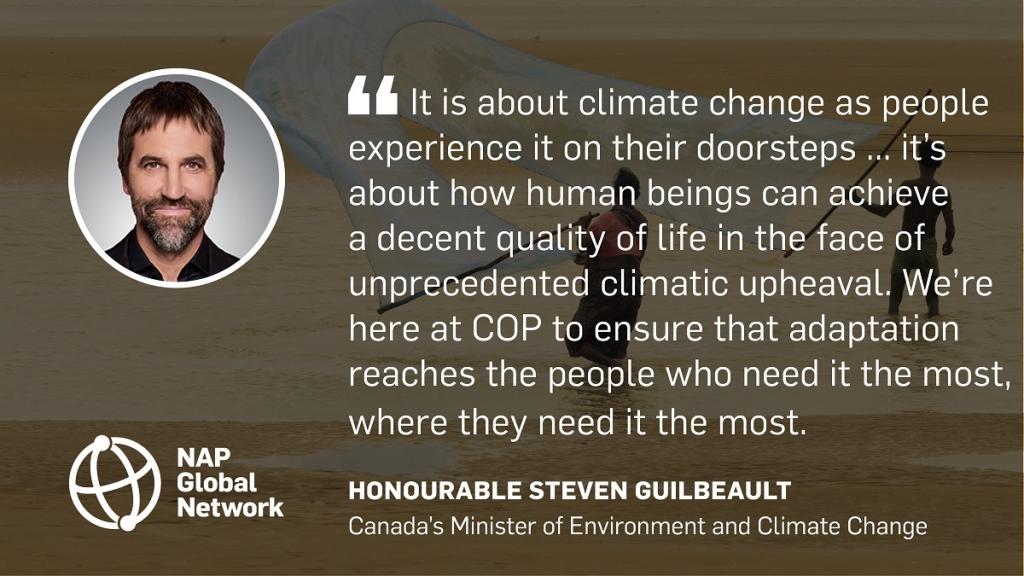
A quote card with text from Canadian Minister of Environment and Climate Change Steven Guilbeault on the 2021 funding from Canada to the National Adaptation Plan Global Network
A quote from the Honourable Steven Guilbeault, Canada’s Minister of Environment and Climate Change, during Canada's funding announcement for the NAP Global Network at COP 26.

With this new funding and the momentum built from the past year, our team at the NAP Global Network Secretariat, hosted by IISD, is ready for the work ahead and excited to see real change as NAPs start being implemented around the world.


Insight

Climate Finance for South Africa May Kick-start a New Fossil Industry — Gas

December 14, 2021

This originally appeared as an op-ed by Business Day on December 9, 2021, and is reprinted below with permission.


On the margins of the 2021 UN Climate Change Conference (COP 26) in Glasgow, a group of developed countries, including France, Germany, the UK, and the US, pledged to mobilise $8.5bn (R131bn) over the next few years to help South Africa move away from coal and speed up its transition to a low-carbon economy.

The partnership is potentially excellent news. If successful, it will serve as a model for climate progress, ensuring that the costs of the energy transition and climate change are split in a more equitable way between developing countries facing high bills, and developed countries bearing the responsibility for most carbon emissions in the atmosphere.

Reactions to the announcement have ranged from cautious optimism that international climate finance may finally deliver transformational funding to strident opposition to foreign governments interfering in South Africa's domestic energy policy. Still, the majority agree the deal lacked detail and clarity on what exactly it would deliver.

No matter what it says, though, one thing should be clear: these funds cannot be used to support gas projects and unwittingly kick-start a whole new fossil fuel industry in South Africa. But as it stands, this dangerous outcome remains a possibility.

The deal stated that the money would help accelerate the development of renewable energy, electric vehicles, and hydrogen, and would support coal workers facing job losses due to plant closures. However, it also noted that state-owned power utility Eskom would have access to financing to decommission — or repurpose — part of its fossil fuel-based electricity fleet. And Eskom — whose total generation fleet of 46GW includes 39GW of coal-fired capacity — has not explicitly ruled out a conversion of existing coal plants to gas-fired units. 

Advocates of gas might argue this is a good idea as gas plants are generally thought to emit less carbon than coal, and repurposing coal plants might be quicker than developing new gas-fired plants. Yet, the long-term effects of investing in gas would be detrimental.

While carbon emissions from gas-fired plants are indeed considered to be lower than coal, emerging evidence on emissions due to methane leakage across the gas supply chain — from production and transport to final burning — shows that coal-to-gas switching cuts the emissions 0% to 30% at best, making the technology dirtier than previously believed, and perhaps no better than coal at all.

In addition, developing gas infrastructure would put the next generation of gas workers and their communities in the same challenging position that coal workers are experiencing today. Gas assets are likely to become stranded and unable to operate due to worsening economics and tightening emissions standards long before the end of their technical lifespan. The new climate finance for South Africa is meant to deal with precisely these kinds of issues, by accelerating, not hindering, a just transition. Imagine the irony if, instead, it was used to create the same problem for the next generation of workers.

Finally, as more than 20 countries recently pledged to end fossil fuel finance abroad, support for gas projects is becoming harder to find, which is weighing heavily on the economic viability of the gas sector — from exploration and production, to pipelines and power stations.

This is not to say that no gas investment should be allowed to take place in the country at all, but simply that there is no reasonable justification for including gas-fired generation among the projects funded by climate finance. Truly low-carbon technologies, such as renewable electricity generators, green hydrogen, and storage technologies, are available and should be at the centre of any serious climate-financed investment package.

So let there be no mistake. Substantial volumes of gas-powered generators that have not been fitted with carbon capture and storage technology to stop the emissions from entering the atmosphere are not compatible with net-zero emissions pathways. Gas can no longer be seen as a “bridge fuel'” between coal and renewable technologies as the latter are now cost-competitive with thermal plants. To qualify for climate finance, projects should generate close to zero carbon emissions, rather than represent a self-claimed improvement on coal, which, for gas plants, is likely to be marginal, or even negative, depending on gas-related methane emissions. 

The next step for the climate finance partnership is to establish a task force and determine an unambiguous action plan. It is vitally important that these climate funds are not the catalyst for the development of a fossil gas industry in South Africa. The task force should explicitly rule out substantial investments in fossil fuel-based projects to ensure that these funds support workers and communities while building a climate-safe future for all South Africans.

Insight

Canada’s Energy Future Report Must Go Further to Support Climate Action

December 9, 2021

Today, the Canada Energy Regulator (CER) published its flagship Canada Energy Future 2021 report, the federal government’s most important source of energy supply and demand forecasts. This information is critical for guiding public and private sector decision making. But there is a major catch: the forecasts in this report fail to provide the information that policy-makers and the business community need to transform Canada’s climate ambitions into concrete action. This is crucial for ensuring that Canada is able to do its part alongside other countries to help keep global average temperature increases below 1.5°C from pre-industrial levels. 

Reaching climate targets requires the right information

As part of its national contribution to help meet the Paris Agreement target of limiting temperature rise to 1.5°C, Canada has committed to reaching net-zero emissions by 2050. In the nearer term, Canada has also pledged to slash emissions by 40–45% by 2030, relative to 2005 levels. 

Reaching these targets requires scaled up policy action from federal and provincial governments and business action from the private sector. Having the right information to guide these policies and decisions is a critical piece of this puzzle. 

The Canada Energy Future 2021 report acknowledges that more work is needed to transform Canada’s energy system to meet net-zero targets but fails to provide the critical scenarios that could help guide us there. The report includes two core models (the Evolving Policies and Current Policies Scenarios), which provide energy sector projections to 2050 based on different levels of policy ambition to mitigate climate change. 

A discussion of net-zero goals is also included but is not fully modelled with in-depth supply and demand projections to the extent of the two core scenarios. The report does provide some net-zero modelling for the electricity sector, projected to 2050, but does not provide an in-depth core scenario.

Canadian governments and businesses need a fully modelled scenario to 2050 for our energy sector in line with the Paris Agreement’s 1.5°C target.

Canadian governments and businesses need a fully modelled scenario to 2050 for our energy sector in line with the Paris Agreement’s 1.5°C target. Without this scenario, public and private actors lack the information they need to make economic decisions to ensure Canada can decarbonize effectively and in a way that supports a just transition as it joins other countries in moving toward net-zero emissions.

Catching up with the global conversation

In this 2021 report, the CER has updated its Evolving Policies Scenario, which integrates announced federal, provincial, and municipal climate policies and charts a forward-looking forecast to 2050. However, this scenario assumes that Canada’s oil production will peak at 2.1 billion barrels/year in 2032, and its natural gas production will peak at 5,657 billion cubic feet/year in 2040. 

These production levels are entirely misaligned with a net-zero world. The Production Gap 2021 Report indicates that governments worldwide plan to produce more than twice the amount of fossil fuels than would be consistent with a 1.5°C scenario in 2030. Other governments are already addressing this gap. The Beyond Oil and Gas Alliance, launched by Denmark and Costa Rica at COP 26, brings climate leaders together who have committed to phasing out fossil fuel production. We are seeing this leadership in Canada already; Quebec has joined the initiative, announcing plans to ban new fossil fuel exploration and production licences. 

CER’s Evolving Policies Scenario does define the gap between current policy trajectories and Canada’s stated ambitions for both 2030 emissions reduction targets and the longer-term goal of net-zero emissions by 2050. The Evolving Policies Scenario indicates that fossil fuels will still make up the majority of Canada’s energy mix in 2050, which is out of step with net-zero goals. 

Neither of CER’s scenarios integrate net-zero targets as a starting point, and so there are outstanding questions on how Canada can meet its Paris Agreement obligations. The CER scenarios are widely used by policy-makers and the private sector, but these models are out of step with the policy decisions that Canada needs to make. So now we need the CER to contribute to climate ambition by guiding decision-makers on how to chart that path to net-zero. A fully modelled scenario aligned with the Paris Agreement goals is critical for assessing government spending and providing Canadian businesses with the tools they need to assess climate risk.  

The CER already has other examples to draw from on how to do this. The International Energy Agency’s (IEA) Net Zero by 2050 report, as well as its recent World Energy Outlook, foregrounded net-zero by 2050 goals, illustrating a global roadmap for oil, gas, and renewable energy. These reports, released in 2021, were groundbreaking developments in charting energy futures—and Canada should follow their lead. Canada needs a similar domestic scenario that charts a pathway to the deep decarbonization of our energy system. 

Providing certainty for investors, policy-makers

The CER’s attention to Canada’s updated climate policies (including updated carbon pricing) in the 2021 report is welcome, but it demonstrates the need for more thorough analysis in 2022 and beyond. A fully-modelled 1.5°C scenario would provide certainty to investors, reduce the possibility of stranded assets, and help us close policy gaps. Without this scenario, Canadian firms and investors could make choices that increase financial risk, given that the risks of continuing investment in fossil fuels will not be properly quantified. 

Canadian governments need this scenario to help them make policy that supports a just transition and economic diversification.

Canadian governments need this scenario to help them make policy that supports a just transition and economic diversification. This data will help inform where federal and provincial governments should (and should not) be investing public money. Recent federal commitments to establish an oil and gas emissions cap, along with Canada’s decision to join several other countries at COP 26 in pledging to phase out international public finance for fossil fuels, are important steps. But rolling out effective policy to meet these pledges would benefit from clearer data about how Canada’s energy sector must transform to meet net-zero by 2050.

The IEA’s recent reports underscore the urgency of ending investment in new coal, oil, and gas production—as well as the opportunities that exist for scaling up the use of renewables and improving energy efficiency. But we need to know what levels of fossil fuel production are consistent with reaching our net-zero targets and minimizing economic risk.

What Canada and the international community need

The CER should publish, on an annual basis, a fully modelled scenario in line with warming of 1.5°C. This scenario must include net-zero emissions by 2050 in Canada’s energy sector and should use an oil price in line with recent analysis from the IEA. Like the IEA, such a scenario must be the central scenario in future Energy Future reports.

People across Canada need to know how our energy systems can transform to create the future we want. Canadian policy-makers and businesses deserve guidance on how and where they need to go to reach national climate goals. The CER can provide this critical guidance and help Canada chart its path to a climate-safe future where workers and communities thrive. This can also send an important signal to other countries also looking for models on how to decarbonize quickly, effectively, and in line with a just transition.

Insight details

Insight

What Does an Alliance to End Oil and Gas Mean for India?

With the launch of the Beyond Oil and Gas Alliance during COP 26 in November, where India positions itself could have far-reaching implications.

December 8, 2021

The below paragraphs are from an op-ed published by The Economic Times website on December 3, 2021, and are reprinted with permission.


On November 11, at the recently concluded UN Climate Change Conference (COP 26) in Glasgow, the Beyond Oil and Gas Alliance (BOGA) was launched: a diplomatic initiative led by Denmark and Costa Rica to bring together ambitious governments committed to phasing out oil and gas production. In the aftermath of COP 26, India has been singled out for its resistance to international pressure on coal. But what stance would India adopt on the new oil and gas focused alliance?

To answer this question, we first need to understand why BOGA was created, and what it aims to do. The alliance is driven by the scientific consensus that there is no room left for fossil fuel expansion. This was a central focus of the Production Gap report, co-sponsored by the UN Environment Programme (UNEP), which found that countries plan to produce 120% more fossil fuels by 2030 than would be consistent with limiting global warming to 1.5°C. Similarly, IEA analysis has highlighted that no new development of fossil fuels is possible if we are to reach net-zero carbon emissions by 2050.

Read the full op-ed at The Economic Times website.

Insight

Seeking Common Ground for Climate, Biodiversity, and People: How to get the debate on nature-based solutions right

To protect ecosystems and people, we must learn from past mistakes and work together on inclusive and robust nature-based solutions.

December 2, 2021

Nature-Based Solutions at COP 26 

At the Glasgow Climate Change Conference in November, the UK Presidency highlighted the role that nature could play in helping solve the climate crisis by making it one of the conference’s key action items and themes. A myriad of side events and announcements held on the first-ever “Nature Day” elevated the prominence of nature-based solutions, also known as NbS, within the UN Climate Change venue. Supporters see this new wave of recognition as a promising step toward bridging the climate and biodiversity agendas while also setting the scene for the second part of the UN Convention on Biological Diversity’s (CBD’s) Conference of the Parties (COP 15) in 2022.

But against this backdrop of growing popularity was criticism that NbS could provide a “false solution” that is susceptible to green-washing and may undermine local communities' rights. By the end of the Glasgow talks, all references to NbS were scrubbed from the final Glasgow Climate Pact due to the strong objection of some of the parties and observer constituencies. The same objections were raised during the preparation of the Kunming Declaration, released in October 2021 during the first part of the CBD’s COP 15: NbS was opposed as a “contentious concept.”  It remains to be seen if NbS will be included in the final text of the Post-2020 Global Biodiversity Framework, expected in May 2022. 

What Are the Concerns? 

COP 26 has proven that NbS remains a polarizing concept. The perceived risks can be summarized in three main points:

NbS is perceived as a human-centric ideal that ignores the fundamental value of nature. 

Due to the relative newness of the concept and its scope, many have argued that the underlying logic of NbS to protect, conserve, and restore nature as a means to protect human interests ignores that nature has value in its own right, independent of human uses. For example, Bolivia argued during the recent COP 26 negotiations that the proposed language on NbS for the final Glasgow Climate Pact “assumes that nature is only in service of people’s needs, but nature has an intrinsic value. It is sacred. That must be reflected.”

Insufficient involvement of all relevant stakeholders could contribute to continued exploitation in developing countries. 

Indigenous Peoples and civil society argue that NbS may be used as a promotional tool, enabling the privatization of nature and its commodification through market-based mechanisms. This has led to concerns that the possible negative effects that NbS may cause effects for one group might be ignored, given its benefits for other stakeholders. Similarly, some are wary that key societal protection standards like proper consultation and engagement; free, prior informed consent; and the involvement of local communities in decision making will be reduced to formalities and box-ticking, rather than being implemented in a meaningful way. 

There is the potential for NbS to be misused as offsetting. 

NbS projects have been used to help achieve a wide range of policy objectives, such as flood control and freshwater management or the restoration and sustainable use of farmlands. However, recent attention to NbS (predominantly tree planting) within the climate community as a climate-mitigation solution, supported by optimistic studies on estimates around carbon sequestration, has led to widespread criticism that the benefits of NbS are being oversold.

More specifically, critics warn that NbS could be treated as a carbon-offsetting option that would enable the private sector to claim net-zero or carbon neutrality, while letting these companies avoid much-needed emissions cuts. It could also cause companies to neglect efforts to invest in developing better, more climate-friendly technologies. 

Working Together for Climate, Biodiversity, and People 

These concerns are well-justified. However, we must acknowledge that when implemented correctly, NbS can be highly effective in building long-term resilience for nature and people. It is a valuable asset in our toolbox for linking biodiversity and climate and addressing these twin crises. But how do we get it right? 

We reviewed several principles, guidelines, and standards developed by research institutions and organizations. Among these were the International Union for Conservation of Nature’s Global Standard on NbS, the World Bank’s NbS guidance, the Oxford Nature-Based Solutions Initiative’s Four Guidelines for NbS, World Wide Fund for Nature’s enabling conditions for NbS, and the recently published NbS Youth Position

Based on this review, we summarize three key principles below that are crucial for guiding NbS implementation.

Principle 1 – Nature for nature’s sake 

The commodification of nature (and the human-centred view of our relationship with it) has led to our current state of environmental degradation. Policy-makers and practitioners of NbS must recognize the intrinsic value of healthy ecosystems and vibrant biodiversity—not merely their contributions to human and societal goals. 

While this might sound abstract for practitioners, the bottom line for good NbS design hinges upon an understanding of why we are doing it in the first place: the multiple benefits, not just for protecting human lives and livelihoods, but also for preserving healthy ecosystems for all species. The emphasis of the 2021 Dasgupta Review on valuing nature capital in its own right should guide all NbS practices, thereby avoiding the narrow monetization of ecosystems, and prohibiting NbS projects that undermine ecological capital (such as planting a single species of trees in a forest restoration project). 

Principle 2 – Rights-based, inclusive, and participatory implementation 

Stringent and robust social safeguards are essential for delivering NbS projects that are just, equitable, and inclusive. This entails respecting human rights and the rights of Indigenous Peoples, as well as local communities, at the earliest stages of NbS. It also means creating partnerships and ownership among diverse actors to design NbS that reflect the needs, priorities, values, and knowledge of the local beneficiaries. Decision-makers and practitioners must adhere to free, prior, and informed consent of Indigenous Peoples, local communities, and vulnerable groups when designing NbS, which would, in turn, create an enabling environment for working together and generating local benefits. 

Principle 3 – NbS are only a part of the answer 

Relying solely on NbS will not help us solve the climate and biodiversity crises altogether. For NbS to be effective and sustainable, they must be accompanied by rapid emission reductions from sectors like energy, industry, transport, and land use. These emissions cuts must also be implemented alongside other policies to protect our ecosystems. Sustainable consumption and production of natural resources, a rapid and just transition to renewable and clean energies, and proactive adaptation measures are key for a global transformation in which NbS are one building block to build resilience of local communities and protect lives and livelihoods. Recognizing the limitations of NbS and the need for rapid decarbonization also prevents its “misuse” and ensures accountability.

Getting the Debate Right

It is vital to understand that the concept of NbS goes far beyond a single focus (e.g., mitigation or a single ecosystem). Rather, it draws attention to established and new approaches (ecosystem-based adaptation, water resource management, green and blue infrastructure) and puts them under one umbrella. Ideally, this will generate new momentum and increased visibility among a wide range of policy actors of nature’s potential contributions to adaptation, disaster risk reduction, biodiversity conservation, and much more.

At the same time, NbS is not a perfect concept. Fundamentally, criticisms of the NbS concept stem from a lack of globally recognized standards and principles guiding its implementation. This vacuum opens NbS up for harmful interpretations and misguided applications. 

This means credibility is key. A crucial aspect of our work on NbS is to acknowledge these criticisms and jointly advocate with the above organizations for clear and coherent principles, safeguards, and ecological integrity and social standards for implementation. By doing so, we hope to help make it possible to deliver effective and sustainable NbS that produce equitable benefits for people and nature.