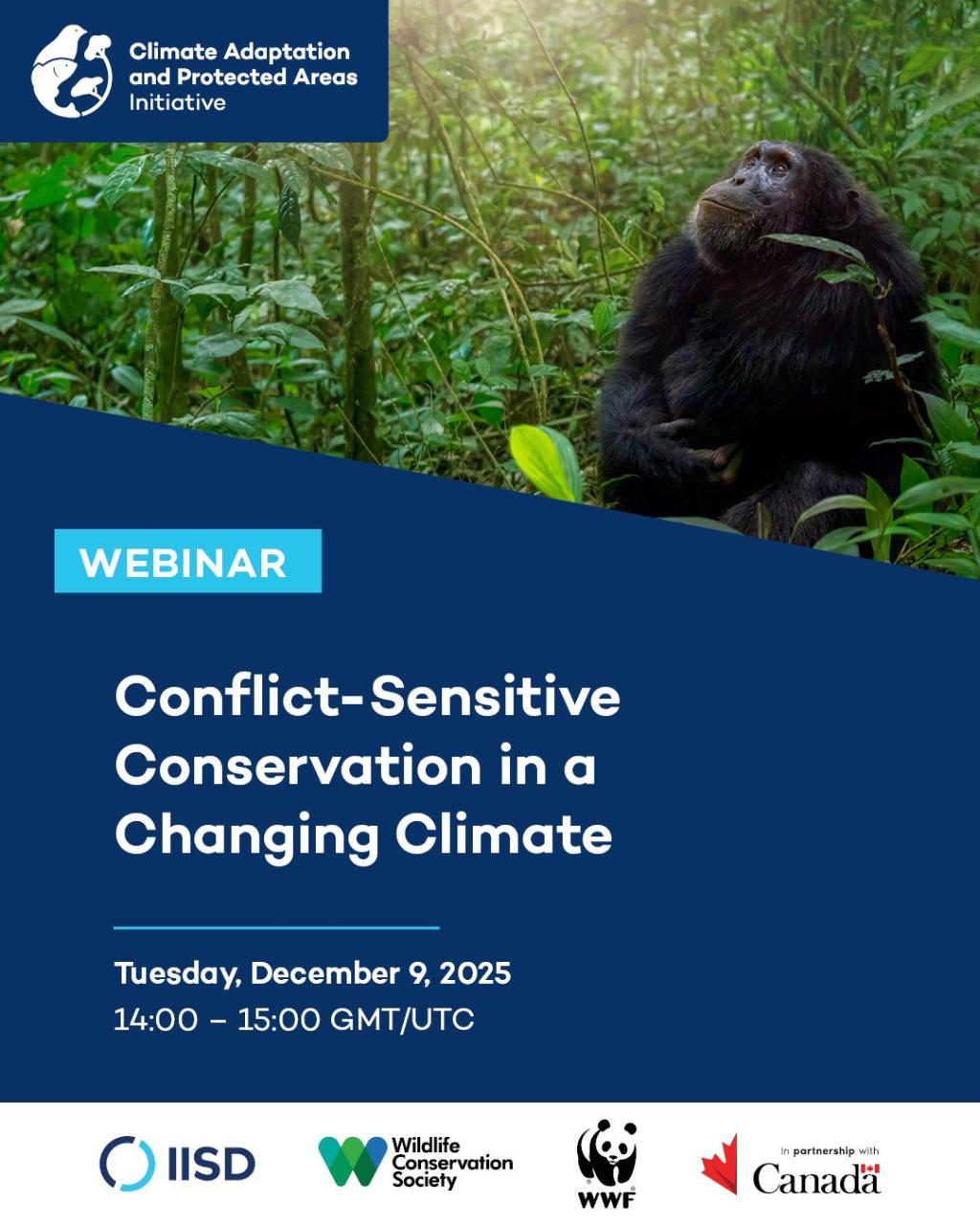
Conflict-Sensitive Conservation in a Changing Climate
On December 9, the International Institute for Sustainable Development (IISD) hosted a webinar to explore the links between climate change, biodiversity loss, and conflict, and the role that protected areas can play in addressing these challenges. The session unpacked what conflict-sensitive conservation is, why it matters, and how to design and implement effective interventions. Drawing on the panel’s expertise and real-world examples, the webinar also highlighted how conflict-sensitive approaches can help people and ecosystems thrive together in times of dramatic change.
December 9, 2025 2:00 pm - 3:00 pm GMT/UTC
(Open to public)
About the Event
Protected areas are increasingly seen as an essential tool in tackling the twin crises of climate change and biodiversity loss. In addition to being critical refuges for flora and fauna, the health of these ecosystems and the services they provide underpins the resilience of local populations and economies.
Unfortunately, the impacts of both climate change and ecosystem degradation are rapidly changing protected areas and the context in which decisions on their management and conservation are made. Conservation planning and interventions have always been linked to conflict management, given that they are typically concerned with competing visions of natural resource control, access, and use. This is not necessarily a bad thing; such conflicts, if handled peacefully, can often lead to positive change. Climate change and ecosystem degradation are, however, complicating this context and can often be contributing factors in the rise of local resource-, water-, and land-based conflicts, tensions, and grievances.
As such, it is imperative that conservation interventions consider the broader social, economic, and environmental context in which they are designed, implemented, and evaluated, so that they do not unintentionally create new conflicts or exacerbate existing ones. This involves applying a conflict-sensitive approach to conservation matters.
Conflict-sensitive conservation encompasses activities designed and implemented to protect and conserve ecosystems and landscapes in a way that considers the causes, actors, dynamics, and impacts of conflict.
This 1-hour webinar:
explored the links between climate change, biodiversity loss, and conflict, and the role of protected areas in addressing the climate and biodiversity crises;
introduced conflict-sensitive conservation, exploring the benefits it offers to both people and nature, and why it is a vital component of both biodiversity protection and climate adaptation;
showcased real-world examples of what this approach looks like in practice, including the conservation efforts in the Climate Adaptation and Protected Areas (CAPA) initiative (with a focus on human–wildlife conflicts driven by drought in Zambia);
highlighted a Conflict-Sensitive Conservation e-learning course and some practical tips for designing and implementing conflict-sensitive conservation activities and interventions.
Moderator
Onyinye Oguntoye, Communications Officer, IISD
Speakers
Alec Crawford, Director, Nature for Resilience, IISD
Nalucha Nganga, Country Director, World Wide Fund for Nature (WWF) Zambia
Reforming Agricultural Subsidies for Soil Health: An inclusive dialogue
December 5, 2025 9:00 am - 12:30 pm EAT
(By invitation)
Healthy soils are critical for productive, sustainable, and climate-resilient food systems. Yet in Kenya, and across much of East Africa, soil degradation threatens agricultural productivity, livelihoods, and food security.
Rethinking how agricultural subsidies and incentives can better promote sustainable land management and regenerative farming practices is vital to reversing soil degradation and supporting a just transition to more resilient food systems.
This closed-door dialogue brought together farmer representatives, civil society, and philanthropy to share experiences, challenges, and lessons on agricultural subsidies and soil health in Kenya. Through these exchanges, the dialogue explored and identified practical, inclusive pathways and partnerships to ensure that agricultural subsidies contribute to improving soil health in Kenya.
The forthcoming International Union for Conservation of Nature(IUCN) World Conservation Congress(WCC) will take place in Abu Dhabi, United Arab Emirates (UAE), from October 9 to 15, 2025. Held every 4 years since 1948, the Congress brings together world leaders and decision-makers from government, civil society, Indigenous communities, business, and academia to advance solutions that protect and restore the environment, as well as harness the power of nature to address global challenges.
This year’s Congress comes at a pivotal moment: only 5 years remain to achieve the 2030 targets of the Paris Agreement and the Sustainable Development Goals. With urgency and ambition, WCC 2025 will focus on accelerating action and scaling up collaboration to ensure that sustainability efforts are effective, equitable, and just. Discussions will centre on five priority themes:
scaling up resilient conservation action
reducing climate overshoot risks
delivering on equity
transitioning to nature-positive economies and societies
disruptive innovation and leadership for conservation
The International Institute for Sustainable Development (IISD) will contribute to these conversations by sharing expertise and insights from its work to halt biodiversity loss, strengthen environmental protection, and scale up nature-based solutions (NbS) where they are most urgently needed. Our experts will participate in events and discussions, highlighting activities and achievements of IISD’s NbS projects, particularly the Scaling Nature-based Solutions for Climate Adaptation in Sub-Saharan Africa (SUNCASA) and Climate Adaptation and Protected Areas (CAPA) initiatives.
Both projects will be featured during the session “From cities to parks: Nature-based solutions for climate resilience,” which will present preliminary findings from the integrated cost-benefit analysis conducted by the Nature-Based Infrastructure Global Resource Centre in SUNCASA cities: Dire Dawa, Ethiopia; Kigali, Rwanda; and Johannesburg, South Africa. In addition, the CAPA Initiative will launch a new infographic on conflict-sensitive NbS for climate adaptation.
Do you want to learn how to analyze the economic performance and co-benefits of nature-based infrastructure? Don't miss the NBI Centre's free 5-week live program!
See below for the full list of IISD’s participating events at the IUCN World Conservation Congress 2025.
Mainstreaming biodiversity is key to ensuring a prosperous future for people and the planet. But is it feasible? This virtual session will explore challenges, share insights, and discuss opportunities to integrate nature into infrastructure development.
Speakers
Rodney van der Ree, WSP Australia and The University of Melbourne
Anna Ackermann, International Institute for Sustainable Development (IISD)
Marina Kosmus, Competence Centre Biodiversity, Forests and Agriculture, GIZ
Savina Carluccio, International Coalition for Sustainable Infrastructure
Johan Robinson, GEF Biodiversity and Land Degradation Unit, UNEP
This 90-minute session, co-organized by IISD and Parks Canada, will highlight challenges, achievements, and lessons learned from implementing the SUNCASA and CAPA projects in protected and urban areas across sub-Saharan Africa, the Caribbean, and Oceania.
The session will feature presentations from local implementing partners in Belize, Rwanda and Zambia, offering insights into on-the-ground experiences. Attendees will also participate in an interactive world café activity, rotating through three stations to discuss the following:
promising practices and opportunities for scaling up NbS in urban and protected area contexts
key barriers and challenges to implementation
strategies for integrating gender-responsive and socially inclusive considerations
The session will conclude with a plenary discussion, where participants will share key takeaways and reflections from the conversations, fostering actionable insights for advancing NbS globally.
Speakers
Alec Crawford – Director of Nature for Resilience, IISD
Migration of people and species shapes the future of conservation. By understanding movement patterns driven by environmental change and conflict, we can better anticipate pressures on ecosystems. This session will look at strategies for addressing the intersections of climate change, migration, and conservation, including innovative policies and cross-sector collaboration. Participants will leave the event equipped to adapt conservation planning and management to dynamic, complex migration challenges.
Many biodiversity hotspots are located in regions affected by conflict, instability, or weak governance, making conservation goals harder to achieve. This session will showcase lessons from conservation practitioners on conflict-sensitive conservation and introduce a new free, online conflict-sensitive conservation course, hosted by the IUCN Academy.
The session is a collaborative effort between IISD, PeaceNexus Foundation, Africa Wildlife Foundation, Conservation International, Environmental Peacebuilding Association/Environmental Law Institute, Global Youth Biodiversity Network, IUCN (CEESP and Academy), and WWF.
Discussions will explore these topics:
integrating conflict sensitivity and rights-based approaches
ensuring inclusivity and a gender-responsive approach
particular challenges and opportunities for young conservation activists
monitoring, evaluation, and learning in conflict-sensitive conservation
This interactive session will explore how community-led ecosystem-based adaptation can drive scalable, inclusive climate resilience. Drawing on lessons from the CBAScale+ project in southern Africa, participants will learn about participatory processes, gender-responsive approaches, and policy integration in community-based adaptation. Voices from government, technical teams, and development partners will share insights on responding to climate risks through participatory approaches, fostering both resilient communities and ecosystems.
Without Land Justice and Social Equity, Carbon Markets Will Fail
Carbon markets are expanding rapidly, but without secure land rights and social equity, they risk harming local communities and failing to meet climate goals. Robust land laws, human rights safeguards, and community engagement must be included in carbon market policies if we are to secure just and effective climate action.
September 3, 2025
Carbon Markets Are Here to Stay—Institutions underpinning them must be sound
The Intergovernmental Panel on Climate Change projects that limiting global warming to 1.5°C will require large-scale carbon dioxide removal in addition to emissions reductions. Many governments have developed carbon market policies and actively seek investments in carbon removal projects, especially as other forms of climate finance remain elusive.
At the 29th United Nations Climate Change Conference (COP 29), one major outcome was agreement on Article 6 of the Paris Agreement, which regulates carbon credit trading between parties. These and other developments suggest that carbon markets are here to stay, despite concerns about their effectiveness in tackling global emissions, and their impact is also likely to expand.
Indeed, carbon markets are driving a proliferation of land-based projects and investments aimed at capturing, removing, and storing carbon emissions, including through tree planting and forest protection. Such projects now span 24 million hectares, about the size of Uganda. Notably, over 90% of these projects were registered after 2017, underscoring the rapid expansion of land-based carbon initiatives. For reference, the land area that is covered by carbon offset projects already stands at 80% of the land area of agricultural land acquisitions between 2000 and 2020.
In response to such risks and the advocacy by communities, some governments are improving their legal and policy frameworks on international carbon markets and non-market approaches. Verra, the world’s largest carbon standard, is revising its rules (Version 5). Justice networks, including Namati and the Grassroots Justice Network, have submitted recommendations calling for stronger safeguards, clear recognition of land and carbon rights, and greater transparency and benefit sharing. The risks and shortcomings of current carbon market practices are clear.
It is, therefore, critical to engage with the design of carbon markets at national and global levels and the implementation of projects that generate carbon credits to ensure that they meet the necessary conditions for responsible investments.
Land Rights and Climate Action Are Mutually Reinforcing
While agreement on Article 6 of the Paris Agreement is recent, the struggle to secure land rights for Indigenous Peoples, local communities, and women is not. It builds on decades of global agreements, progressive national policies, and established tools and frameworks. Research shows that communities can be effective stewards of land and natural resources when supported by an enabling environment. Securing their land rights is therefore not only a human rights obligation—it is the foundation for sustainable land management practices. In the absence of secure land rights, net-zero policies risk failing to achieve their objectives.
The Human Rights Basis for Just and Equitable Carbon Markets
A persistent challenge remains: carbon market-related projects and investments are proliferating faster than efforts to equip affected communities to engage with them effectively. It is crucial to systematically support community-based and civil society organizations so they can empower communities to act as agents in carbon markets. However, in many contexts, this support is lacking, and often, no grievance or accountability mechanisms exist. Shrinking democratic space further restricts communities’ ability to engage in advocacy. For carbon markets to operate with integrity, actors must proactively help create an environment in which these organizations can operate safely.
This cannot depend on goodwill alone. Companies have a responsibility to respect human rights, a responsibility that exists independently of a state’s capacity or willingness to uphold its obligations. This is especially important in rural areas, where states often lack the ability to ensure good governance.
Moreover, parties to the United Nations Framework Convention on Climate Change (UNFCCC) have already adopted binding human rights agreements, such as the rights to food and housing. Their carbon market policies must reflect these obligations.
Robust Land Laws and Policies Are Critical
Across Africa, several governments have enacted progressive land laws that recognize and protect customary and collective land rights. Legal recognition of women’s land rights is also advancing. Many countries already have frameworks in place that cover key elements of responsible carbon market development, such as ensuring that Indigenous Peoples and local communities have the right of Free, Prior, and Informed Consent. These laws and policies now need to be systematically linked with emerging national carbon market policies.
Comprehensive, robust, well-enforced laws remain the best way to ensure that investments related to carbon markets respect the rights of legitimate tenure holders, ensure local community involvement in decision making, promote local food security, and contribute positively to building climate resilience. Adequate enforcement mechanisms are also needed to ensure these laws are followed.
Making Use of Available Guidance to Promote Responsible Carbon Investments
Guidance exists to support governments in Africa and elsewhere to improve their legal and policy frameworks governing carbon market-related investments, including by introducing safeguards to prevent forced displacement, land dispossession, and loss of access to food and other resources, and mandating equitable benefit-sharing arrangements. For example, Namati and the Grassroots Justice Network have developed a policy toolkit to support the development of robust laws and policies that advance carbon justice.
Governments and investors can also draw on a wealth of guidance and tools to promote responsible land-based investments, including for investments in carbon sequestration. In this regard, the African Land Policy Centre developed the Guiding Principles on Large-Scale Land-Based Investments in Africa, while the International Institute for Sustainable Development has produced practical guidance on the use of memorandums of understanding and model contracts as legal instruments that can help mitigate risks associated with land-based investments, including in contexts where national legislation is not yet sufficiently robust. Model contracts can be a useful tool for highlighting risks associated with investment projects, and for ensuring that carbon investments are made responsibly and inclusively, on fair and equitable terms, and include safeguards to protect the rights and livelihoods of local communities. Implementing this guidance remains an ongoing challenge, but securing land rights for just and equitable carbon markets does not need to start from scratch.
Taking This Discussion to the Second Africa Climate Summit and Africa Climate Week 2025
Within climate policy circles, the impact of carbon markets and net-zero strategies on land and land rights is still a relatively new area of discussion. Furthermore, discussions on climate policy and land governance often occur in separate forums, creating a risk of disconnection. It is vital to bring these discussions together.
The moment is right to advance human rights-based guidance and safeguards for just and equitable carbon markets.
We believe the moment is right to advance human rights-based guidance and safeguards for just and equitable carbon markets. The UNFCCC workshop Unlocking Finance: Accelerating NDC Implementation through Carbon Markets in Africa offers one crucial opportunity. At the 2nd African Climate Summit, the New Partnership for Africa's Development will launch consultations on the African Integrity & Equity Principles for Carbon Markets. These are just two examples: more will follow in the run-up to COP 30 in Belém.
Let us jointly shape these discussions to create carbon markets that advance both climate and land justice.
This article was inspired by the webinar on Securing Land Rights and Social Equity in the Pursuit of Net Zero, jointly hosted by the International Institute for Sustainable Development, the Robert Bosch Foundation, and TMG Think Tank for Sustainability ahead of the 2nd African Climate Summit and Africa Climate Week 2025.
Both the webinar and this article benefited from the insights of the following distinguished speakers: Providence Mavubi (Director, Industry and Agriculture Development, Common Market for Eastern and Southern Africa), Andrew Y. Y. Zelemen (Head of Secretariat, National Union of Community Forestry Development Committees, Liberia), Dr. Joan Kagwanja (Chief, African Land Policy Centre, United Nations Economic Commission for Africa), Benard Opaa (Deputy Director, Natural Resources and Environment, Kenya National Land Commission), Anne Njoroge (Senior Climate, Land, and Environmental Justice Officer, Namati), and Nyaguthii Maina (Associate and International Law Advisor, International Institute for Sustainable Development). We sincerely thank them for their excellent contributions.
The second edition of the Africa Climate Summit will take place in Addis Ababa, Ethiopia, from September 8 to 10, 2025. Under the theme “Accelerating Global Climate Solutions: Financing for Africa's Resilient and Green Development,” the flagship gathering will bring together 45 heads of state and government and more than 25,000 delegates from the private sector, civil society, academia, youth, and women’s organizations.
Discussions will focus on
nature-based solutions (NbS) and technologies for climate change adaptation and sustainable development;
Africa’s climate risks and opportunities for scalable responses;
climate finance pathways, shifting from international aid to investment in local innovation and African-led solutions.
The SUNCASA project (Scaling Urban Nature-based Solutions for Climate Adaptation in Sub-Saharan Africa) will be featured across panels and side events on climate finance, green infrastructure, and gender equality and social inclusion. Representatives from the International Institute for Sustainable Development, the World Resources Institute, and local partners in Dire Dawa (Ethiopia), Kigali (Rwanda), and Johannesburg (South Africa) will highlight the following:
progress achieved in implementing NbS;
the economic benefits of NbS investments projected through 2050;
how SUNCASA is partnering with local communities to challenge gender-biased social norms and foster the meaningful participation of women, girls, and underrepresented groups in NbS and climate adaptation governance.
Co-organizers: World Resources Institute, World Bank, African Development Bank, International Institute for Sustainable Development, Resilient Cities Network
As African cities confront rising climate risks, NbS offer powerful tools to build resilience—if they can be scaled effectively. This session will showcase how data, finance, and community leadership are unlocking NbS at scale. Examples will include the SUNCASA project in Ethiopia, Rwanda, and South Africa, as well as urban NbS initiatives in Tanzania, Kenya, South Sudan, and Somalia. Speakers will highlight how climate data and technology are guiding NbS planning, forecasting climate impacts, and demonstrating results over time.
Greening African Cities: How nature-based solutions can help build just, equitable, climate resilient communities
Date: September 9, 2025
Time: 9:00 AM – 10:15 AM
Venue: WRI Pavilion
While NbS provide cities with multiple benefits, their integration into urban planning requires careful, inclusive approaches to avoid reinforcing existing inequalities. Drawing from SUNCASA's implementation in Dire Dawa, Kigali, and Johannesburg, this session will highlight how gender-responsive NbS are reducing flood risks, biodiversity loss, and urban heat while also strengthening community cohesion between men and women, and across generations.
Presentations from this webinar are now available to watch:
IISD presentation on the opportunities and challenges of implementing investment facilitation at the national level - watch here.
UN Trade and Development presentation on maximizing the development impact of the WTO Investment Facilitation for Development Agreement - watch here.
UN Trade and Development presentation on the key characteristics and trends of international commitments on investment facilitation over time - watch here.
South Centre presentation on South–South investment facilitation frameworks and strategic lessons for sustainable development in Africa - watch here.
Jumia presentation on the private sector perspective of key challenges to investment within Africa and investment facilitation measures - watch here.
Makane Moïse Mbengue on advancing sustainable investment facilitation in Africa through the African Continental Free Trade Area (AfCFTA) Investment Protocol - watch here.
Sustainable investment is essential for Africa’s economic transformation, driving growth and employment. However, many countries struggle to attract and retain such investment, often due to limited institutional and technical capacity to implement facilitation measures.
About this webinar
Regional and global agreements, including the Agreement Establishing the African Continental Free Trade Area's Protocol on Investment and the World Trade Organization's Investment Facilitation for Development Agreement, provide useful frameworks and support to overcome these barriers. Realizing their full benefits, however, requires implementation that aligns with sustainable development priorities.
This webinar from IISD and UN Trade and Development will explore how African countries can navigate these opportunities and challenges in the run-up to the World Trade Organization's 14th Ministerial Conference in March 2026 in Cameroon. It is designed to help investment negotiators, investment promotion agencies, and policy-makers strengthen the sustainable development outcomes of their commitments, with practical guidance on how to make the most of technical assistance, capacity building, and special and differential treatment provisions in agreements.
Participation is open to policy-makers and government officials from across Africa. Please register here and indicate your institutional affiliation.
Securing Land Rights and Social Equity in Pursuit of Net-Zero
August 28, 2025 3:00 pm - 4:30 pm CET
(Open to public)
As climate negotiators, policy-makers, and advocates gear up for the Africa Climate Week and the Africa Climate Summit in Addis Ababa, on the road to the 30th UN Climate Change Conference (COP 30), now is the time to place land rights, responsible investment, and inclusive, community-led approaches at the heart of the climate agenda. Following COP 29, which left many unanswered questions regarding the mobilization and delivery of climate finance for developing countries, the question of climate finance remains high on the agenda for Africa Climate Week.
With the New Collective Quantified Goal including provisions for carbon markets as a tool for channelling climate finance to developing countries, this webinar comes at a pivotal moment to ask: What do net-zero strategies and investments in land-based carbon removal mean for land rights and communities, and how can we transform risks into opportunities to meet climate goals?
Why This Matters
Encouraged by the financial promise of carbon markets, investments in land-based climate solutions, such as afforestation and ecosystem restoration, are gaining ground globally. These investments hold the potential to advance climate and socio-economic development objectives. But they also require large areas of land, often in places where tenure systems are weak and community rights insecure. In the absence of robust legal processes and strong and enforceable safeguards, such investments risk deepening inequalities and driving land dispossession.
On August 28th, 2025, IISD held a dialogue along with TMG Research, and Robert Bosch Stiftung on how to make climate action both effective and just.
African Tax Administration Forum and International Institute for Sustainable Development Sign Cooperation Agreement to Strengthen Domestic Resource Mobilization
New Memorandum of Understanding builds on years-long, impactful record of work with taxation and revenue authorities.
July 1, 2025
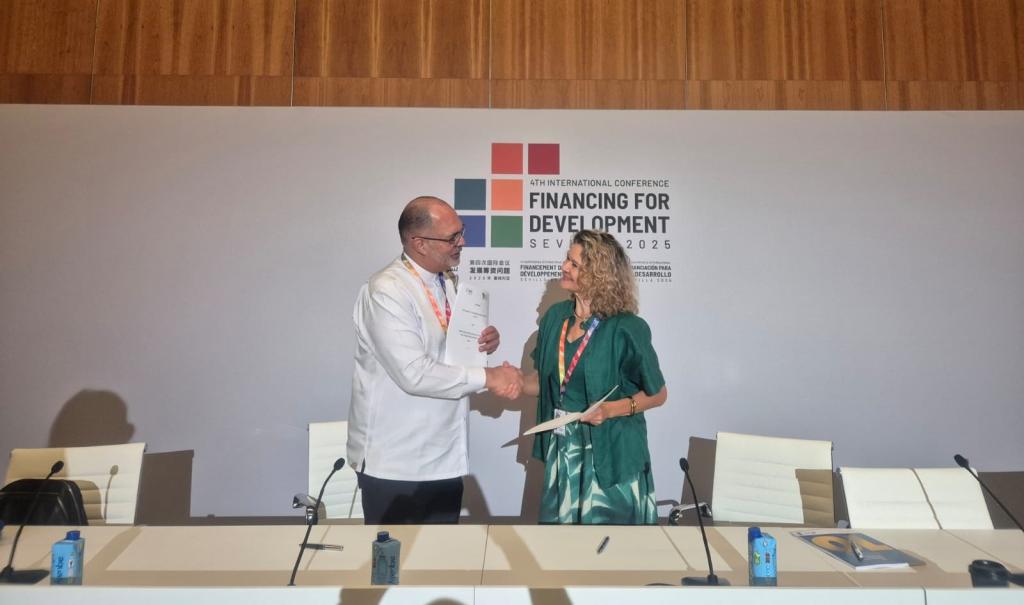
Seville, Spain – The African Tax Administration Forum (ATAF) and the International Institute for Sustainable Development (IISD) have signed a new cooperation agreement to support stronger tax policy and administration, especially in the mining sector.
The new Memorandum of Understanding outlines how ATAF and IISD will collaborate to enhance domestic resource mobilization through policy development, research, capacity building, technical assistance, knowledge sharing, and peer learning. The partners signed the agreement during the 4th International Conference on Financing for Development.
This agreement builds on years of collaboration. ATAF has worked with the IISD-hosted Intergovernmental Forum on Mining, Minerals, Metals and Sustainable Development (IGF) to improve how governments collect revenue from mining. For example, ATAF and IGF’s work has recently helped Zambia improve mining revenue collection. They have also delivered training to hundreds of tax and revenue officials and published joint research, including The Future of Resource Taxation: 10 Policy Ideas to Mobilize Mining Revenues.
Quotes
“As Africa works to increase domestic resource mobilization, collaboration is key. This agreement with IISD marks a significant step forward in supporting our member countries in designing and implementing effective, fair, and context-specific tax policies—particularly in high-potential sectors such as mining. We are building on an already strong foundation of collaboration, having worked closely with IISD through the Intergovernmental Forum on Mining (IGF), particularly on initiatives such as the Future of Resource Taxation project. Through joint applied research, statistical analysis, and technical support, this partnership will deepen our shared efforts to generate evidence-based solutions, enhance transparency, and drive reforms that respond to the realities of African economies. It reaffirms ATAF’s commitment to supporting member countries in advancing their domestic resource mobilization priorities in a way that is both strategic and sustainable.” Mary Baine, Executive Secretary, ATAF
“ATAF has always been a great partner for IISD. Our work together has proven impactful in Africa and beyond. We look forward to deepening our relationship to strengthen our impact on domestic resource mobilization under this new agreement.” Nathalie Bernasconi-Osterwalder, Vice-President, Global Strategies and Managing Director, Europe, IISD
Lauren George Communications Officer, IISD [email protected] 0033682462094
About ATAF
The African Tax Administration Forum (ATAF) is a platform that brings together African tax administrations to engage in mutually beneficial discussions and capacity-building initiatives. ATAF works toward promoting efficient and effective tax systems that contribute to the sustainable development of African nations.
Climate Change Impacts on Women in Senegal: Here's how nature-based solutions can help
Senegal’s mangrove forests have been severely depleted, with devastating consequences: vanishing fish habitats, entire villages being washed away by floods, and women losing their main source of income. How can nature-based solutions address all these challenges at once?
June 16, 2025
How is climate change impacting Senegal right now?
Senegalese mangrove forests lost 31.9% of their area between 1980 and 2005 due to the impacts of climate change and deforestation. Meanwhile, rising sea levels have caused massive coastal erosion, destroying homes and entire villages. More communities are at risk of disappearing, including in Gandiol, where the entire village of Doune Baba Dièye was lost following the decision in 2003 to open a breach—a small canal to evacuate rainwater. This worsened erosion in the area, eventually wiping out the entire village. A few years later, 30 homes were wiped out in Djiffer, a community in the Sine Saloum delta. The phenomenon has also occurred in other areas, such as Rufisque, Mbao, and Bargny, where at least 30 houses were engulfed by the sea in August 2024.
To help the country face these challenges, the non-profit organization SOCODEVI is supporting local communities in adapting to climate change. Their project, Natur’ELLES, funded by Global Affairs Canada, places women at the heart of these efforts, recognizing their vulnerability and critical role in sustaining local livelihoods.
How are climate change impacts increasing the vulnerability of women and girls in Senegal?
In Senegal, women play an important role in small-scale entrepreneurship. A study by Senegal’s National Agency of Statistics and Demography, released in 2022, shows that 62% of informal production units are owned by women. Many of them collect oysters and other seafood growing within the mangrove ecosystems to sell at markets. The destruction of these vital ecosystems effectively wipes out this source of income.
With livelihoods lost, options become limited—especially for women and girls. Migrating to urban areas to look for other job opportunities, while socially accepted for men in Senegal, is widely viewed as unsafe when it comes to women and girls due to higher rates of gender-based violence (GBV).
Senegalese women taking part in SOCODEVI’s leadership program know these impacts all too well, and they are voicing what comes next for those who lose their livelihoods.
“Women are the most affected group because they are at the forefront when it comes to providing for the basic needs of their families and supporting children's education,” notes Awa Sylla, one of the participants in the training.
When schooling is disrupted, it’s women who often step in to fill the gap. “They feel an additional burden of having to guide their children to avoid seeing them become delinquents,” notes another participant of Natur’ELLES feminist leadership program, Niorta Fatou Diatta, who is also president of the Women’s Fish Processing Union in Kafountine.
For girls, this support is crucial, as the consequences of abandoning school can be severe. As Diatta explains, some girls who cannot proceed with their studies due to financial hardships might engage in prostitution to meet their basic needs.
What solutions could help curb the effects of climate change and empower women?
As climate change-driven poverty gains ground, locally owned initiatives can help fight its effects and better support women. That is why the Natur’ELLES project puts communities and women at the forefront of nature-based solutions. These actions restore and protect vital ecosystems while also helping communities adapt, sustain livelihoods, and build long-term resilience.
Restoring mangrove ecosystems in communities
In Casamance and Sine Saloum, mangrove ecosystems are hotbeds of rich biodiversity, and their extensive root systems protect against wave action and storm surges to help curb coastal erosion.
But despite their benefits, these ecosystems are at risk. In Casamance and Sine Salome, a quarter of the total surface area - 45,000 hectares - of mangroves has already been lost since the 70s. To help reverse this trend, projects like Natur’ELLES are emphasizing the cost savings and co-benefits of restoring mangrove forests, including carbon storage, enhancing fishing opportunities, and conserving biodiversity. The Natur’ELLES project is supporting restoration initiatives in 123 villages affecting the lives of over 85,000 people. The project will reach 8,000 direct beneficiaries, including 5,600 women. More mangroves mean more habitats that support fish and oysters, leading to greater food security, higher income for women and their communities, and greater well-being. The more women improve their financial security, the more they are equipped to escape any form of GBV while also increasing their self-confidence and investing in their growth.
Building the capacities of women
Natur’ELLES supports women by empowering them with technical and soft skills to enhance their financial independence and their professional opportunities through the literacy program and the Women’s Leadership program. The literacy program offers women who did not attend school the opportunity to learn how to read and write, thereby improving their independence. The Women’s Leadership program equips participants with the necessary soft leadership skills and tools to advocate for their causes, assume greater leadership roles within their communities, and participate effectively in decision-making processes related to the governance of natural resources in Senegal.
To date, 661 women have been enrolled in the literacy program, with 100% graduation expected by the end of 2025. For the Women's Leadership program, 79 women have been enrolled to date, including 45 young women identified as “emerging leaders” and 34 established leaders (most experienced leaders).
By providing comprehensive services, Natur’ELLES ensures that women and girls have safe spaces to express their leadership. These include awareness-raising programs on gender equality and the prevention of GBV—targeting spouses, community leaders, traditional chiefs, and rights-holders. This process helps establish community dynamics that are conducive to empowering women and creating GBV-free communities.
Social and behavioural change for gender equality and the adoption of good environmental practices
Natur’ELLES brings together local organizations—such as the Coordination of Actions for Mangrove Ecosystem Restoration, NEBEDAY (Moringa), and the Network of Women in Small-Scale Fisheries in Senegal—who work at the community level on issues of biodiversity, fishing, mangrove restoration, women’s empowerment, etc. These organizations are helping to raise awareness locally through community radio programs and campaigns to promote positive masculinity, women’s leadership, and good environmental practices.
Informing policies through evidence generation and Sustainable Asset Valuation analysis
IISD’s unique Sustainable Asset Valuation (SAVi) methodology provides a comprehensive framework for decision making, incorporating gender-sensitive perspectives to align nature-based infrastructure projects with national economic goals, community needs, and environmental protection. As an economic valuation tool, SAVi integrates system dynamics to map an infrastructure project’s key indicators and analyze the connections between social, economic, and environmental factors, recognizing that challenges, causes, and consequences are inherently linked.
Why is it critical to involve women in decision-making processes, and specifically the governance of natural resources?
Climate change has important impacts on communities, including loss of homes and income-generating activities, as well as loss of life. Women are particularly vulnerable to the impacts of climate change because they rely on natural resources that they primarily safeguard, and they have fewer backup options when facing the loss of their livelihoods.
Considering the role they play in the well-being of their families and communities and their critical contributions to the overall economy—including their leadership on fish value chains—it is past time to equally involve them in decision-making processes, fully considering their insights and concerns, as well as specific challenges and needs. Achieving climate and social justice depends on recognizing and valuing the role of women and their knowledge while also including them in decision-making processes. This is, first and foremost, a matter of human rights as well as a necessary condition for economic development.
Leveraging Intraregional Trade of Organic Products from the Eastern Africa Region
June 11, 2025 8:30 am - June 12, 2025 5:00 pm EAT
(By invitation)
The International Institute for Sustainable Development in collaboration with the East African Community (EAC), the African Organic Agriculture Network, and the National Organic Agricultural Movement of Uganda, is convening a multistakeholder workshop to explore strategies for enhancing the formal trade of organic products in the EAC.
The workshop will serve as a platform for policymakers, national bureaus of standards, organic producers, certification bodies, and value chain actors to engage in dialogue and co-create solutions for strengthening the formal trade of organic products in the continent.