
One Underestimated Threat to Biodiversity, and How We Can Invest Wisely to Overcome It
Invasive alien species (IAS) are a key driver of biodiversity loss, driving up to 60% of all recorded global extinctions either on their own or alongside other factors. However, with early detection, this loss is preventable. On International Day for Biological Diversity, Susan Sekirime, the International Institute for Sustainable Development’s (IISD's) Climate Adaptation and Protected Areas (CAPA) Initiative Africa Lead, explains why we must make stopping the spread of IAS a priority, and the difference it can make to wildlife, ecosystems, and communities in protected areas.
Home to over 95 mammal and 600 bird species, Uganda’s Queen Elizabeth National Park (QENP) is being dramatically altered by invasive plant species whose arrival is being supercharged by increasing temperatures. Once a healthy savannah grassland, the park is rapidly transforming into a dense, thorny scrubland. Most problematic among these invasive species is dichrostachys cinerea, commonly known as sicklebush.
Each year, on International Day for Biological Diversity, we are called upon to reexamine our relationship with the natural world and recommit to respecting and protecting it.
This year, the focus is on the linkages between the 2030 Agenda and its Sustainable Development Goals (SDGs) and the goals and targets of the Kunming–Montreal Global Biodiversity Framework (GBF) as two universal agendas that must be pursued in tandem. The call to action is to accelerate action on the SDGs and the GBF in the last 5 years before the agreed implementation period expires.
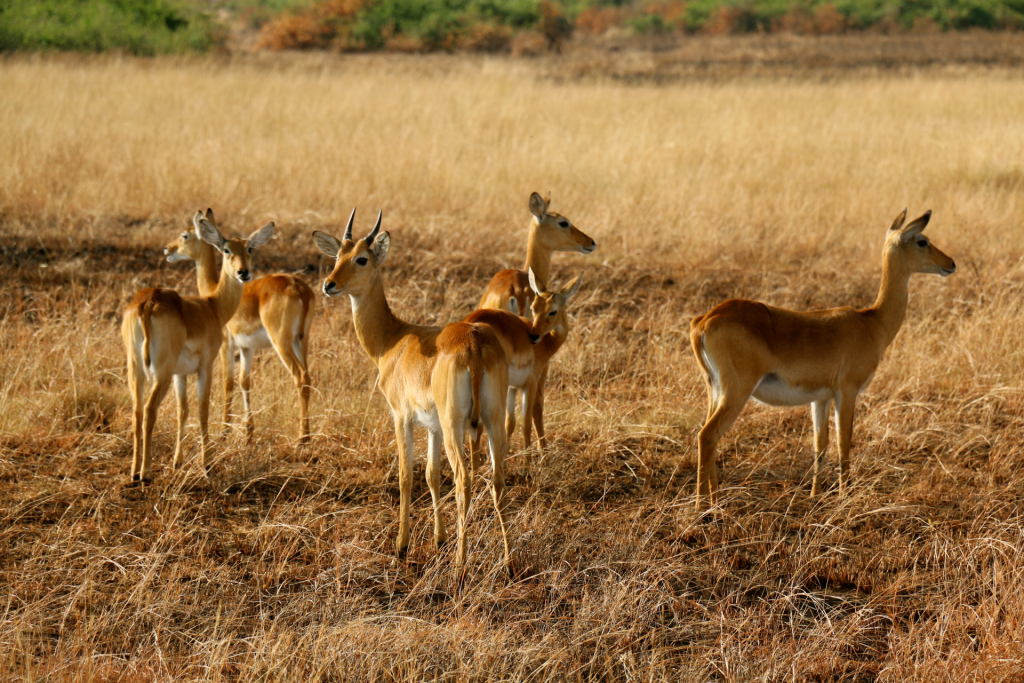
The threat of IAS was last highlighted in 2009 as an issue of concern and theme for the International Day for Biological Diversity. This threat continues to grow, and, according to a recent report by the Intergovernmental Science-policy platform on Biodiversity and Ecosystem Services, it is now one of the five major drivers of biodiversity loss.
According to the report, IAS are the sole driver in 16% of documented global extinctions, and have contributed, alone or alongside other drivers, to 60% of all recorded global extinctions. The scale and severity of the problem helped ensure that minimizing the spread and impact of IAS is enshrined as a core target for the GBF (Target 6)
Besides the threat they pose to wildlife, IAS impose enormous costs on agriculture, forestry, fisheries, and other natural resource-based sectors and human health. These costs have been estimated at more than USD 423 billion per year—an amount scientists believe has quadrupled every decade since 1970. Without concerted effort, and with the increased movement of people and goods brought about by globalization, as well as the compounding effects of climate change and habitat degradation, the number of IAS and their impacts are projected to increase.
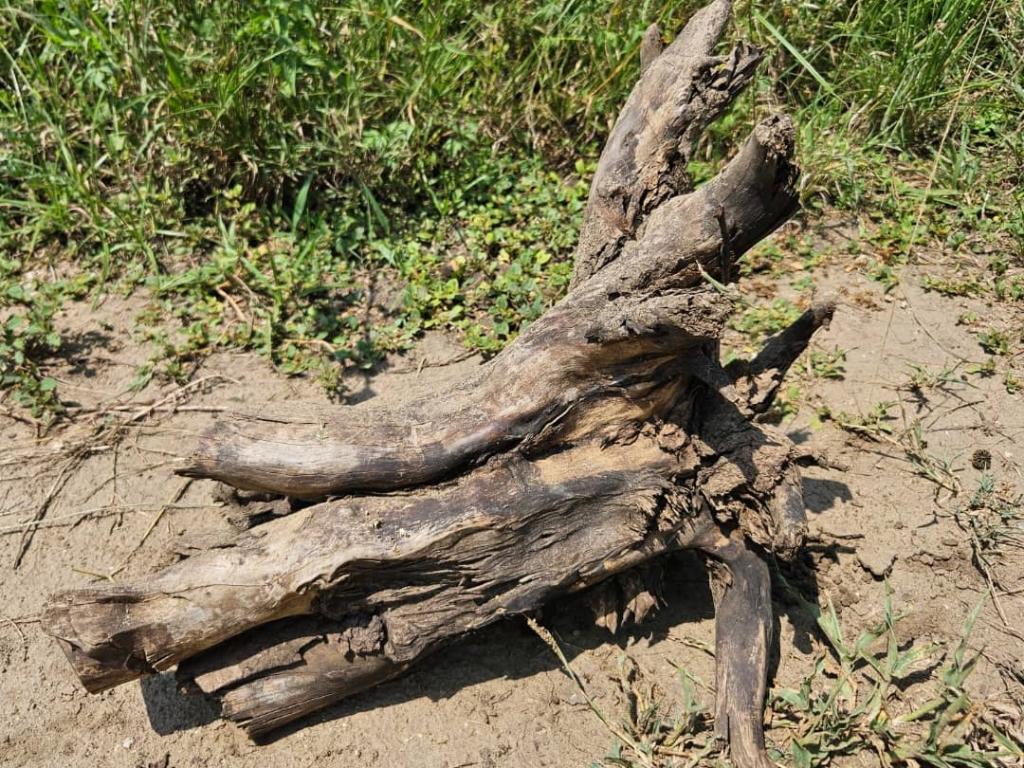
Removal Brings Relief, but at a Price
The most economical way to manage IAS is through prevention, along with early detection and rapid response (EDRR). These two approaches are much more effective than trying to manage a widespread infestation. What is now happening in QENP is proof of this.
Sicklebush has a wide natural distribution, ranging from southern and tropical Africa to India, though its true native range is still disputed. What is true for QENP is that while sicklebush has always existed in the park, its rapid spread, driven by drought conditions and higher temperatures, has meant that it now covers almost 50% of the park, according to the Uganda Wildlife Authority (UWA). This has created impenetrable thickets that have lowered the park's carrying capacity for grazing wildlife species, restricted wildlife movement, and blocked access to water points. Animals, both prey and predators, are now leaving QENP to seek food and water in the neighbouring communities, exacerbating human–wildlife conflict in the area, affecting the lives, livelihoods, food security, and well-being of many already-vulnerable people living in and around the protected area. This is also affecting the tourism industry—a significant source of revenue for the country and the local communities—as those animals remaining in the park are increasingly difficult to see.
Under the CAPA Initiative, IISD and the Worldwide Fund for Nature have worked with local communities to clear sicklebush from over 200 hectares in strategically important areas in QENP, providing urgent relief to wildlife that could no longer access critical grazing grounds and watering points. The work made an impact quickly, but it is just a drop in the ocean given the scale of the problem. A total of 110,000 hectares of the park are estimated to be impacted by sicklebush and other IAS, according to the UWA.
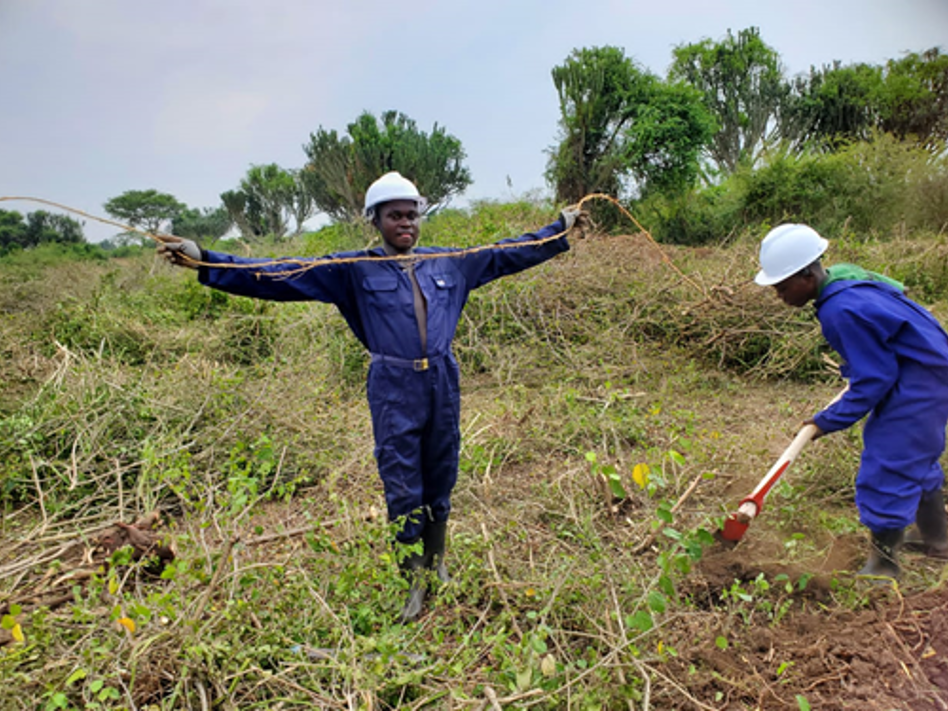
The cost of removing these invasive plants is high; it costs roughly USD 1,120 to clear 1 hectare of sicklebush manually. With the affected area totalling close to 110,000 hectares, roughly USD 124 million would be needed to fully eradicate the problem, and this would only cover the initial removal. To achieve effective results, more funding would be needed for follow-up management action to eliminate resprouts. UWA had attempted to eliminate and control sicklebush in QENP and other protected areas across the country through mechanical removal, but the use of machinery, while less expensive, did not adequately remove the root structure of the plant and catalyzed massive sprouting through remnant root systems, as well as leaving soils over-compacted, which hindered natural regeneration.
Investing in Early Detection
A similar trend of overly costly removal of IAS is observed in most cases where attempts are made to eradicate IAS after it has spread, making investment in EDRR by far the best way forward. This is even more important now, with more than 1 million animal and plant species considered to be threatened with extinction and given the stark shortfall in global conservation funding [paywall] revealed last year at the 16th United Nations Biodiversity Conference (COP16) in Cali, Colombia. Tight budgets mean that conservation decision-makers must identify and prioritize those management strategies and investments in critical ecosystems that are most likely to achieve better results per dollar invested for species’ recovery and conservation.
Addressing tomorrow’s IAS invasions must begin today, with smart investments in EDRR in the form of surveillance systems to detect invaders in areas at high risk or of high biodiversity value, and aggressive quarantine and eradication techniques to eliminate potential IAS from specific locations before they spread and cause harm. Given the current climate change context, it will also be essential to recognize the interactions between IAS and climate change so that the appropriate forward-looking adaptation management strategies can be considered and adopted.
In QENP, the removal of invasive species had an immediate, localized impact. Within a day of the clearance work being completed, antelope and buffalo were once again grazing in these areas, and elephants were drinking from the Kazinga Channel; their path was no longer blocked by thorny scrub. Native plants are regenerating because they have more room. The ecosystem, including its wildlife, can recover; we just need to make the right decisions for its future.


You might also be interested in
How to Make Nature-Based Solutions for Adaptation Work for Everyone
Effective nature-based solutions (NbS) for adaptation start with integrated climate risk assessments. These take-aways will help practitioners plan for inclusive and sustainable NbS.
Biodiversity Is in Crisis—Here's one way to fix it
A growing movement of projects and partnerships is using locally driven and gender-responsive nature-based solutions to address the twin crises of climate change and biodiversity loss. Scaling up this work to match the urgency and reach of the crises will be a challenge—but it’s one we must embrace.
New initiative harnesses power of nature to build resilience and protect biodiversity
The Climate Adaptation and Protected Areas (CAPA) initiative will use nature-based solutions to support local communities in adapting to climate change while safeguarding critical ecosystems in and around protected areas.
Nature-Based Solutions for Adaptation in Uganda
This inventory showcases interventions implemented in Uganda from 2015 onward that employ ecosystem processes, ecosystem restoration, ecosystem management, or sustainable ecosystem use to reduce climate vulnerability and enhance resilience. It includes both government-led and partner-led initiatives.