Webinar

Summit of the Future Debrief

After the Summit of the Future, participate in a virtual debrief organized by Cepei and IISD.

September 26, 2024 9:00 am - 10:00 am EST

(Open to public)

This week, world leaders gathered at the United Nations for the Summit of the Future to reinvigorate action in addressing global challenges and harnessing opportunities for the benefit of current and future generations. “We are here to bring multilateralism back from the brink,” said UN Secretary-General António Guterres in his opening remarks. The Summit's outcome documents—the Pact for the Future, the Global Digital Compact, and Declaration on Future Generations—were adopted, though not without drama.

As Summit attendees head home, engage with leading SDGs practitioners to delve into the Summit’s main messages and explore what follows as we head into the final five years for achieving the 2030 Agenda for Sustainable Development.

Featuring insights from:

  • Philipp Schönrock, Director, Cepei (moderator)
  • Lynn Wagner, Senior Director Tracking Progress, International Institute for Sustainable Development
  • Carole Osero-Ageng’o, Global Initiatives Lead & Africa Regional Representative HelpAge International, Co-Chair, UN Civil Society Conference in Support of the Summit of the Future
  • Romeral Ortiz-Quintilla, Programme Management Officer, Youth Engagement Partnerships, Advocacy & Communications Section, United Nations Youth Office
  • Wangu Mwangi, Team Leader, Earth Negotiations Bulletin
Webinar

What Makes Minerals and Metals ‘Critical’? Financial benefits and other key considerations for governments

Presenting guidance to help governments understand the concept of mineral criticality and take stock of related opportunities and risks.

October 23, 2024 9:00 am - 10:30 am EST (GMT -4)

(Open to public)

webinar poster

How should governments assess and determine which minerals are critical? The answer depends on a country’s unique context and priorities. This webinar will present guidance from the  Intergovernmental Forum on Mining, Minerals, Metals and Sustainable Development (IGF) to help governments understand the concept of criticality and take stock of related opportunities and risks to inform strategic decision-making. The IGF will also share highlights from its in-depth research for countries seeking to optimize financial benefits from critical minerals. The session will also include expert discussants working directly on these issues.

Details 

  • Date: Wednesday, October 23, 2024 (rescheduled from earlier date)
  • Time: 9:00 – 10:30 EST (GMT -4) 
  • Languages: This webinar will be conducted in English with interpretation for participants in French and Spanish 
  • Registration link 
Webinar

Launch of the SSNUP-IISD Case Studies on Agribusinesses’ Compliance With Responsible Agricultural Investment

Unveiling a set of case studies to support agribusinesses to align their practices, procedures, and operations with the principles of responsible investment in agriculture and food systems.

September 17, 2024 3:00 pm - 4:30 pm CET

(Open to public)

Background

Investments in the agricultural and food sectors of developing countries can play a transformative role in disseminating new technologies, building markets, linking supply chains, generating employment, and increasing the income of smallholder farmers. 

To this end, agribusinesses and investors in the food and agriculture sector increasingly seek to ensure their activities generate positive social and environmental outcomes. This requires the implementation of responsible business practices in agribusinesses on the one hand and responsible investment strategies by the investors on the other hand.

IISD has partnered with the Smallholder Safety Net Up-Scaling Programme (SSNUP) to provide the private sector with detailed, context-specific evidence on good business practices for responsible investment and business conduct. We are launching five case studies that analyze how well investees of impact investors perform and comply with the Committee on World Food Security’s Principles for Responsible Investment in Agriculture and Food Systems (CFS-RAI).

The case studies are intended to provide agribusinesses with examples of how to implement concrete actions that result in positive outcomes for farmers, rural communities, local businesses, and other stakeholders.

About the Event 

Organized by Appui au Développement Autonome (ADA) and IISD, this webinar presented the main findings of the case studies and offered a platform for discussing how to encourage more agricultural value chain actors in developing countries to align their business practices with the internationally recognized CFS-RAI principles to make them attractive for impact investors.

This was followed by an interactive exchange with participants to explore options and opportunities for uptake and use of the case studies as a learning device to further responsible investment in agriculture by agribusinesses, industry associations, financial investors, and others.

Webinar

Fitting the Pieces of the Puzzle: Making sense of sustainability due diligence regulations across the globe

October 10, 2024 3:00 pm - 4:30 pm CET

(Open to public)

With increasing demand from companies to uphold environmental, social, and governance standards, the regulatory environment around sustainability is becoming increasingly complex. There is growing recognition that more needs to be done to hold companies accountable for their social and environmental impact. While this is a step in the right direction for promoting responsible and sustainable business practices, it is important that we ensure this doesn't come to the detriment of developing countries and small and medium sized enterprises, who face greater challenges with compliance.

To help make sense of this evolving landscape, we carried out an analysis of a selected set of regulations, including the European Union (EU) regulation on deforestation/free products (EUDR), the German Supply Chain Act, the UK Modern Slavery Act, and the EU Corporate Sustainability Due Diligence Directive. 

This online event unpacks commonalities between these regulations and look at how tools like sustainability standards can help support compliance, exploring if they can work together more effectively.

Speakers 

  • Matthew Hogarth, Senior Policy Advisor to Lara Wolters MEP
  • Valentina Bolognesi, Senior Social Policy Advisor, amfor
  • Rémi d'Annunzio, Forest Officer, FAO
  • Christopher N.H. Schwarz, Global Associate Director, Agricultural Value Chains team, South Pole
  • Patrick Owusu, General Manager, Asunafo Cooca Farmers

Webinar details

Webinar

Pricing Emissions in International Aviation and Maritime Transport: Subsidy reform and other options

September 17, 2024 3:00 pm - 4:30 pm CEST

via Zoom

(Open to public)

At last year's United Nations Climate Change Conference (COP 28), a new coalition of 13 countries chaired by the Netherlands was formed to phase out fossil fuel subsidies. This coalition is exploring how to effectively address sectors that have broad exemptions on fossil fuel taxation—including aviation and shipping. According to a 2022 review, these sectors make up almost half of fossil fuel subsidies in the Netherlands.

Together, aviation and shipping represent  6% of global CO2 emissions, and both sectors are rapidly growing. Their reform presents particular challenges. The majority of both aviation and shipping are primarily international, requiring engagement with international treaties and governance mechanisms. They are also both highly competitive sectors, raising concerns about the displacement of industry to jurisdictions with lower standards.

Fossil fuel subsidy reform aims to create an even playing field for sectors with lower emissions and encourage a more rapid transition to sustainable fuels. This public online forum, including member states from the coalition and international experts, examines the opportunities and challenges to fossil fuel subsidy reform in the shipping and aviation sectors.

Agenda

Welcome and Introduction

Dutch Ministry of Climate Policy and Green Growth

Fossil Fuel Subsidy Reform Complexity, Urgency, and Multilateral Agenda Setting

Dr. Ivetta Gerasimchuk, Director, Energy Program, International Strategy, IISD

Fossil Fuel Subsidy Reform in the Aviation Sector

Giovanni Sgaravatti, Energy and Climate Research Analyst, Bruegel

Fossil Fuel Subsidy Reform in the Shipping Sector

Dr. Tristan Smith, Associate Professor, University College London

Q&A

Concluding Remarks

Webinar

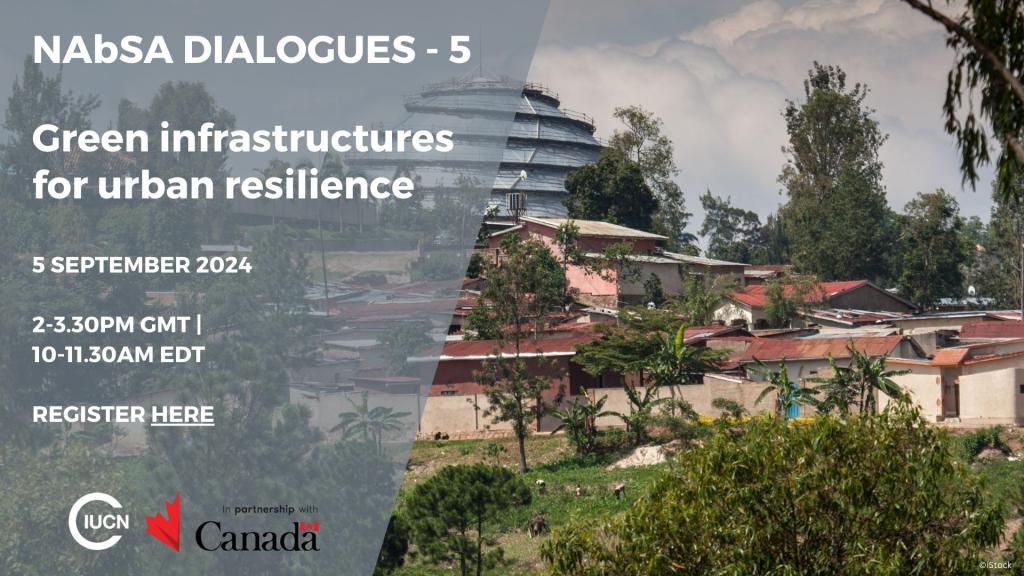
NAbSA Dialogues | Green Infrastructures for Urban Resilience

Green infrastructure and nature-based solutions (NbS) are proven, cost-effective means to reduce climate risks and strengthen the resilience of vulnerable communities to the impacts of climate change, such as floods, landslides, and the urban heat island effect.


The fifth session of the NAbSA Dialogues series highlighted IISD’s Scaling Urban Nature-Based Solutions for Climate Adaptation in Sub-Saharan Africa (SUNCASA) Project. The discussion explored how NbS and green infrastructure can help cities adapt to climate change, manage extreme weather, preserve biodiversity, and provide healthier living environments.

September 5, 2024 10:00 am - 11:30 am EDT

(Open to public)

Social Media card - NAbSA Dialogues Green Infrastructure for Urban Resilince


Green infrastructure and NbS play a vital role in preparing urban communities for the impacts of climate change. By integrating green spaces and natural systems into city planning, NbS enhance urban resilience, reduce flood risks, improve air quality, and boost biodiversity. These approaches help cities adapt to climate change, manage extreme weather events, and create healthier living environments.

The fifth session of the NAbSA Dialogues series was held on September 5, 2024, and featured the SUNCASA Project. Funded by Global Affairs Canada through the Partnering for Climate (P4C) initiative, SUNCASA collaborates with the World Resources Institute and a diverse group of local partners to implement NbS in Dire Dawa (Ethiopia), Kigali (Rwanda), and Johannesburg (South Africa). The project aims to enhance resilience, gender equality, social inclusion, and biodiversity protection in the three cities.

This session included a panel discussion with speakers from SUNCASA partner governments and organizations, as well as the International Union for Conservation of Nature's Urban Team. They shared their experiences with NbS in urban contexts, focusing on water resources and watershed management to ensure equitable access and use for communities.

Watch the recording of the event and check out slideshow below to learn more:


The NAbSA Dialogues is a platform for experts and stakeholders interested in the practical implementation of NbS, green infrastructure techniques, and water resource management to increase climate adaptation and resilience in urban landscapes. Don’t miss this opportunity to learn more and hear from experts!

 Upcoming Topics in the NAbSA Dialogues:

  • September 25: Safeguarding Coastal Communities With Nature
  • October 29: Policy and Governance for Supporting NbS
  • November 26: Financing NbS
Webinar

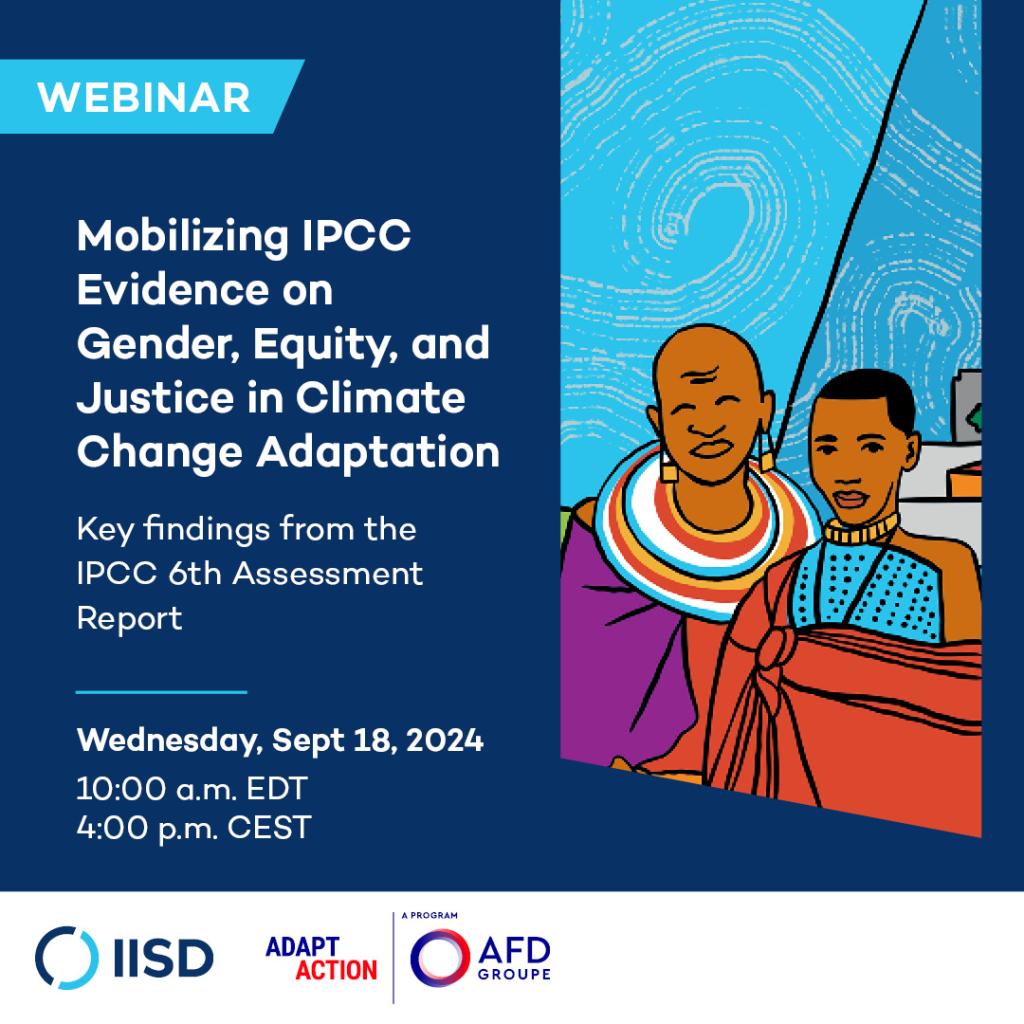
Webinar: Mobilizing IPCC Evidence on Gender, Equity, and Justice in Climate Change Adaptation

September 18, 2024 10:00 am - 11:00 am CEST

(Open to public)


About the event

The 6th Assessment Report of the Intergovernmental Panel on Climate Change (IPCC) – Working Group II on Impacts, Adaptation, and Vulnerability includes more references to gender, equity, and justice than any previous IPCC report. This evidence is needed by policy-makers and practitioners working to advance climate change adaptation; however, the length and technical nature of the IPCC reports make it difficult to capture and apply the key messages. In this webinar, IPCC authors, researchers, practitioners, and advocates will discuss the key findings of the IPCC related to gender, equity, and justice and explore how they can be applied, towards more just and effective adaptation. 

The webinar is organized by the International Institute for Sustainable Development (IISD), with support from AdaptAction, a program of the Agence Française de Développement (AFD) Group.

Moderators

  • Angie Dazé, Director, Gender Equality and Social Inclusion, International Institute of Sustainable Development (IISD)

Speakers 

  • Mathilde Bord-Laurans, Head of the Climate and Nature Division, AFD
  • Colette Benoudji, Civic & Social Organization Professional
  • Manal Bidar, Communication Coordinator, Water Youth Network
  • Lisa Schipper, Professor of Development Geography, The University of Bonn
  • Cameron Hunter, Policy Advisor, International Institute of Sustainable Development (IISD)
  • Chikondi Chabvuta, Southern Africa Region Advocacy Advisor, CARE
  • Christine Ogola, National Coordinator, African Youth Initiative on Climate Change (AYICC)
Webinar social card designed with figures in traditional African attire against a blue backdrop.
Webinar

Nature-Based Infrastructure 5-Week Program

The Nature-Based Infrastructure Global Resource Centre's 5-Week Live Program is back this autumn, helping investors, policymakers, infrastructure planners, and other stakeholders to make the case for building with nature.

September 25, 2024 3:00 pm - October 23, 2024 5:00 pm CEST

(Open to public)

The Nature-Based Infrastructure Global Resource Centre's 5-week live program aims to empower policy-makers, infrastructure planners, investors and other stakeholders by providing them with the tools to evaluate and analyze the economic performance and co-benefits of Nature-Based Infrastructure (NBI).

This course will explore a world of nature-based solutions which can contribute the same services as, or combine with, “built” or “grey” infrastructure, especially in communities most-effected by climate change. Every year, the program convenes professionals from all over the world. Last year, we registered over 650 stakeholders from 95 countries and received a 98% course satisfaction rate.

“This has been the best course in relation to NBI that I’ve done until now. The combination of remote classes and written material is very good, and the presenters have been excellent. It also covers a great range of things related to NBI.”

– Iñigo Ruiz-Apilanez, Associate at Arup

How does it work?

Taking place every Wednesday from 25 September to 23 October 2024, we will meet on Zoom for a 2-hour session at:

Washington DC, USA         09:00 EDT

Geneva, Switzerland         15:00 CEST

New Delhi, India                 18:30 IST

The program combines online reading materials with interactive Zoom sessions, allowing you to ask our experts questions, exchange experiences with other participants from around the world, hear from guest speakers, and dive deeper into the course topics in real-time exercises. Remember to sign up for Zoom at the link when you create your account!

The training is free of charge, and you will be awarded with a named certificate after the course is complete. You can attend selected sessions only, but it is strongly recommend you participate in the entire program.

What does it cover?

In this course, you will learn how NBI contributes to climate adaptation and sustainable development. You will be able to make a compelling case for NBI by explaining its economic, environmental, and social benefits, as well as compare this to conventional grey infrastructure.

The course will explain how to use a variety of different methods to value NBI, as well as present real-life NBI case studies from around the world. With this knowledge, we hope that policy-makers, infrastructure planners, and investors will be better equipped to make informed decisions about infrastructure investments and utilize NBI for climate adaptation and mitigation.

Course Schedule

25 SEPTEMBER: 1. NATURE-BASED INFRASTRUCTURE AND CLIMATE ADAPTATION

In this first session, we introduce you to NBI and its value for meeting infrastructure needs in adapting to climate change. We will look at the potential of NBI for various environments: Cities, Forests, Rivers, Coasts and Wetlands, as well as guidelines for planning NBI.

2 OCTOBER: 2. SYSTEMS THINKING FOR INFRASTRUCTURE DECISION-MAKING

In our second session, we look at the benefits of using integrated valuations for infrastructure decision-making, as well as solutions for overcoming the barriers for sustainable infrastructure. We will introduce you to our Sustainable Asset Valuation (SAVi) methodology and the use of systems thinking and system mapping to understand the wider impacts of an NBI project for the environment, society and the economy. Through examples, we will highlight how you can use this approach to plan and value your own NBI projects.

9 OCTOBER: 3. INTEGRATED COST-BENEFIT ANALYSES USING EXCEL-BASED MODELS

In this third session of the live program, we will dive into using excel-based modelling to quantify the indicators of an NBI project, as well as take you through the steps of creating an integrated Cost-Benefit Analysis. From integration of qualitative knowledge to data collection and scenario analysis, you will grasp the step-by-step modelling process allowing you to make the business case for NBI projects.

16 OCTOBER: 4. CLIMATE DATA AND SPATIAL ANALYSIS FOR NBI

In our fourth session, we will explore how climate data can be used to evaluate the impacts of NBI under various scenarios, modelling projects in a way that takes the effects of climate change into account and reduces the guesswork of a project’s long-term efficacy. We will also delve into the world of spatial modelling, a valuable tool in achieving the most effective NBI interventions for your specific geography, illustrated through case studies and demonstration.

23 OCTOBER: 5. FINANCING ANALYSIS AND SOLUTIONS FOR NBI

In this final session, we will dive into the crucial world of financing solutions for NBI, looking at a variety of methods, instruments and practices. Using our excel-based financing model, we will demonstrate how to approach this critical final step towards project implementation.

Webinar

Moving Beyond GDP at HLPF 2024: From ambition to action on SDG target 17.19

The last target in the Sustainable Development Goal (SDG) framework—Target 17.19—calls on governments “to develop measurements of progress on sustainable development that complement gross domestic product and support statistical capacity-building in developing countries” by 2030. Though discussions on moving beyond GDP have been underway for decades, further efforts need to establish a shared language and community of practice to move beyond GDP.

July 18, 2024 9:00 am - 10:00 am EST

(Open to public)

Despite appearing at the end of a list of 169 noble objectives, Target 17.19 should not be an afterthought on the road to 2030. Indices that are complementary to GDP can assess countries’ long-term sustainability by considering natural, social, and human capital. Measurements of comprehensive wealth and its components can provide decision-makers with important insights about their country’s sustainability pathway. National agencies can use these data to prioritize investments to improve climate resilience, protect biodiversity, and manage natural capital.

Identifying ways to implement SDG Target 17.19 is especially important in the lead-up to the United Nations Summit of the Future. The UN Secretary-General identifies “complementary measures to GDP” as a key step for accelerating the achievement of the SDGs and leaving no one behind.

This virtual side event at the 2024 High-Level Political Forum on Sustainable Development (HLPF) explored the lessons learned from recent studies measuring comprehensive wealth in Ethiopia, Indonesia, and Trinidad and Tobago over a 25-year period. Presenters reflected on developing indices with existing national data sources and share recommendations for using these complementary indices to better guide decision making and deliver on the 2030 Agenda.

Agenda

Opening: Lynn Wagner, Senior Director, Tracking Progress, IISD

IISD presentation on pilot studies measuring comprehensive wealth in Ethiopia, Indonesia, and Trinidad and Tobago: Livia Bizikova, Lead, Assessment and Monitoring, Tracking Progress

Panel Discussion

1. Why is it critical to move beyond GDP to advance the SDGs?

2. What are the specific examples of policies, measures, and investments that countries may put forward if different metrics of measuring progress are used?

3. What are the specific capacity gaps and needs at the national and international levels to advance the efforts to move beyond GDP?

Panelists:

  • Anu Peltola, Director Statistics, United Nations Conference on Trade and Development 
  • Heinrich Bohlmann, Research Director, Partnership for Economic Policy
  • Juliana Makonise, Winner of the Beyond Lab, UNCTAD and Rethinking Economics Beyond GDP Essay Competition
  • Florencia Caro Sachetti, Associate Researcher at CIPPEC, part of the Southern Voice network

Closing: Next steps, including the Summit of the Future

Webinar

WTO E-commerce Joint Statement Initiative Negotiations: Nearing the finish line

As participants in the WTO e-commerce JSI negotiations approach finalizing the draft legal text, this session will provide a comprehensive update on the negotiations, the agreement's content and unresolved elements, and an understanding of its development dimension.

July 4, 2024 1:30 pm - 3:00 pm CEST

(By invitation)

About the event

As the e-commerce JSI negotiations at the WTO near the completion of their draft legal text, this session serves as a crucial moment to review and assess the current draft. Attendees will receive the latest updates on the negotiations, gain insights into the agreement's contents, and understand the remaining points of discussion. Additionally, the session will focus on the development goals of the agreement, exploring the expected benefits for developing countries and LDC parties and identifying areas where stronger outcomes may be achieved. This event is exclusively for WTO developing and LDC member government delegates from Geneva and their capitals. Both signatories and non-signatories are welcome, and we encourage sharing this invitation with knowledgeable colleagues who would find the seminar beneficial. 

Agenda

1:301:35 pm. Welcoming remarks

  • Alice Tipping, Director, Trade and Sustainable Development, IISD

1:352:15 pm. Session 1: State-of-Play of the E-Commerce JSI Negotiations at the WTO

  • Moderator: Alice Tipping, Director, Trade and Sustainable Development, IISD
  • Gerbera Choo, Mission of Singapore to the WTO
  • Rashmi Jose, Senior Policy Advisor, IISD

2:152:50 pm. Session 2: A Closer Look at Development

  • Moderator: Rashid S. Kaukab, Senior Specialist, IISD
  • Débora Cumes, Counsellor Permanent Mission of Guatemala to the WTO
  • Joel K. Richards, Counsellor, Mission of the Organisation of Eastern Caribbean States (OECS) in Geneva

2:503:00 pm. Closing remarks.

  • Alice Tipping, Director, Trade and Sustainable Development, IISD

Webinar details

Topic
Trade
Project
Digital Trade