Webinar

International Experience on Energy Subsidy Reforms: How can Indonesia lead the way?

June 17, 2021 3:00 am - 7:00 am EST

(Open to public)

When the Budget Committee of the House of Representatives of the Republic of Indonesia approved the Indonesian government’s Energy Subsidy Reform Plan in April 2021​, it was a huge milestone for the country's energy subsidy policy. This hard-driving plan, which includes LPG and electricity subsidy reform, aims to transform the subsidy mechanism from commodity-based to direct targeted subsidies.

Direct targeted subsidies have financial, environmental, and social benefits as they limit subsidies only to those that need them to meet their energy needs. With the involvement of 29 million poor and vulnerable households and the utilization of payment technology innovation using facial biometric technology, this reform could potentially become a best practice not only for energy subsidy reform, but also for other targeted social assistance reforms. Around the world, energy subsidy reform has mainly just been done through raising energy prices. What Indonesia is planning to do could therefore become a new model of energy subsidy policy reform in the future. The world is now closely watching Indonesia to learn more about this ambitious plan.

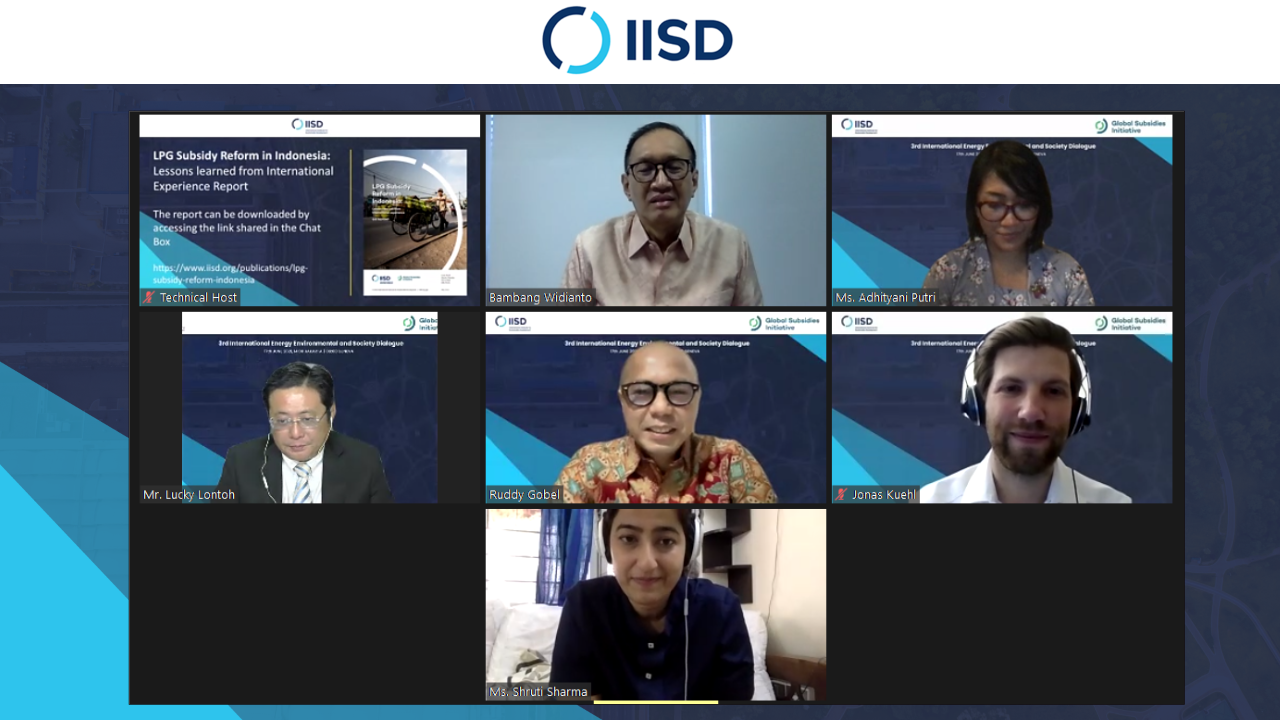
The International Institute for Sustainable Development (IISD) organized a High-Level International Policy Dialogue to help move the reform plan forward. This event facilitated a close dialogue amongst policy makers and international experts, providing​ new insights and international examples to support the success of Indonesia's energy policy reform process.

This is the third session in IISD's International Energy, Environmental, and Society Dialogue (IEESD) series.

Agenda

Opening Remarks

MC & Moderator: Adhityani Putri, Executive Director, Yayasan Indonesia Cerah 

Keynote speeches: The Importance of Energy Subsidy Reform for the Economy and Social Welfare

General (Ret) Dr. Moeldoko, S.I.P., Chief of Presidential Staff, Executive Office of the President of the Republic of Indonesia (Download Slides)

Hon Phil Twyford, Minister of State for Trade and Export Growth, New Zealand

Session I: Policymaking Perspective

Indonesian Parliament’s Perspective on Energy Subsidy Reform
MH. Said Abdullah, Chairman of Budget Committee, The House of Representatives of the Republic of Indonesia

Indonesian Government’s Perspective on Energy Subsidy Reform 
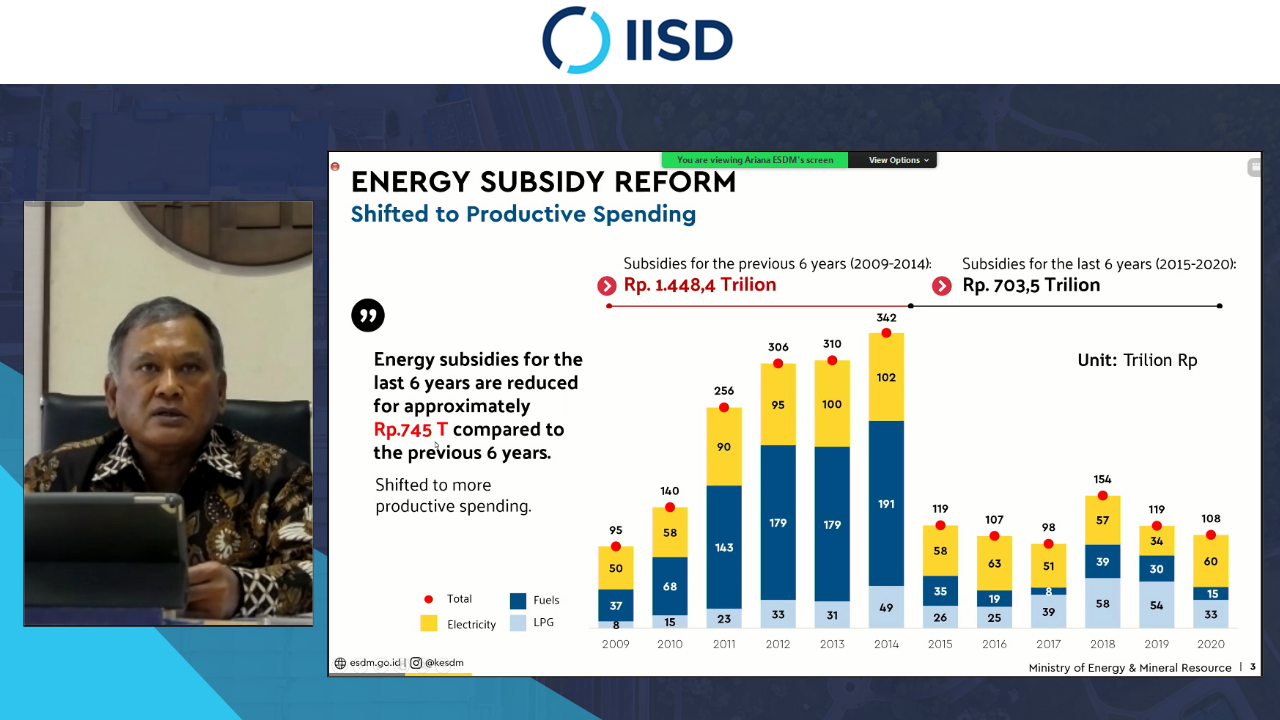
Ir. Ego Syahrial, Ph.D, Secretary General, Ministry of Energy and Mineral Resources, Republic of Indonesia (Download Slides)
Febrio Nathan Kacaribu, S.E., MIDEC., Ph.D., Head of Fiscal Policy Agency, Ministry of Finance, Republic of Indonesia

International Government Perspective on Energy Subsidy Reform (Download Slides)
Aldo Ravazzi Douvan, Professor, University of Roma 2 and Luiss and Former President, OECD Committees on Environmental Performance Country Reviews

Session II: Policy Implementation Perspective—How Do We Operationalize Energy Subsidy Reform Policy? The Indonesian Way and Lessons Learned from Other Countries.

Dr. Ir. Bambang Widianto, M.A., Special Staff to Vice President of the Republic of Indonesia & Executive Secretary of the National Team for the Acceleration of Poverty Reduction (2010–2020) (Download Slides)

Ir. Zulkifli Zaini, MBA, President Director, PT. Perusahaan Listrik Negara (Persero) (Download Slides)

India’s LPG Subsidy Reforms (Download Slides)
Shruti Sharma, Associate and Energy Specialist, International Institute for Sustainable Development

South Africa’s Electricity Subsidy Reforms
Dr. Tracy Ledger, Senior Researcher, Public Affairs Research Institute

Closing

HMA Owen Jenkins, British Ambassador to Indonesia and Timor Leste, The British Embassy in Jakarta

MC & Moderator
Webinar details

Webinar

IEA-IGF Webinar | The Role of Critical Minerals in Clean Energy Transitions

Join the IEA and IGF on June 2 at 10:00 EST (GMT +4) / 16:00 CEST (GMT -2) for a webinar discussing the important issues surrounding critical minerals and a clean energy transition.

June 2, 2021 10:00 am - 11:00 am EST

(Open to public)

IGF-IEA webinar card

The International Energy Agency (IEA) has issued a new report, the Role of Critical Minerals in Clean Energy Transitions, which analyses the complex links between these minerals, energy security and the prospects for a sustainable, sequential yet rapid transformation of the energy sector. The report was informed by extensive consultation with partners, including the IGF.

Join the IEA and IGF on June 2 at 10:00 EST (GMT +4) / 16:00 CEST (GMT -2) for a webinar discussing the important issues identified in the IEA’s report, including:

  • Mineral demand implications of a rapid shift to clean energy technologies
  • Far-reaching implications for the metals and mining sector
  • The global shortfall in mineral supply and investment for energy transformation
  • International coordination and due diligence

Speakers

  • Tomás Bredariol, Energy and Environmental Policy Analyst, IEA
  • Alec Crawford, Senior Policy Advisor, IGF
  • Tae-Yoon Kim, Energy Analyst, IEA
  • Pascal Laffont, Chief Legal Counsel, IEA
  • Jeremy Lagelee, Junior Legal Advisor, IEA
  • K.C. Michaels, Legal Advisor, IEA
  • Greg Radford, Director, IGF
  • Isabelle Ramdoo, Deputy Director, IGF
  • Rebecca Schulz, Energy Analyst, IEA

Register today.

Webinar

IISD-UNIGE Webinar | Trade and Gender: Translating Knowledge into Practice

What do we know about the impacts of trade and trade rules on women, and how does this knowledge get translated into policy? 

June 8, 2021 3:00 pm - 4:30 pm CEST

(Open to public)

As gender provisions become increasingly common features of international trade agreements, and an informal working group of World Trade Organization (WTO) members and observers considers the tradegender nexus, what have we learned, and where can we improve?

This webinar, the latest in the joint series organized by the International Institute for Sustainable Development (IISD) and the University of Geneva's Faculty of Law, explored in detail the relationship between trade, gender, knowledge, and policy, considering what we know, how we know it, and where we can do more to ensure that this knowledge is translated into practice.
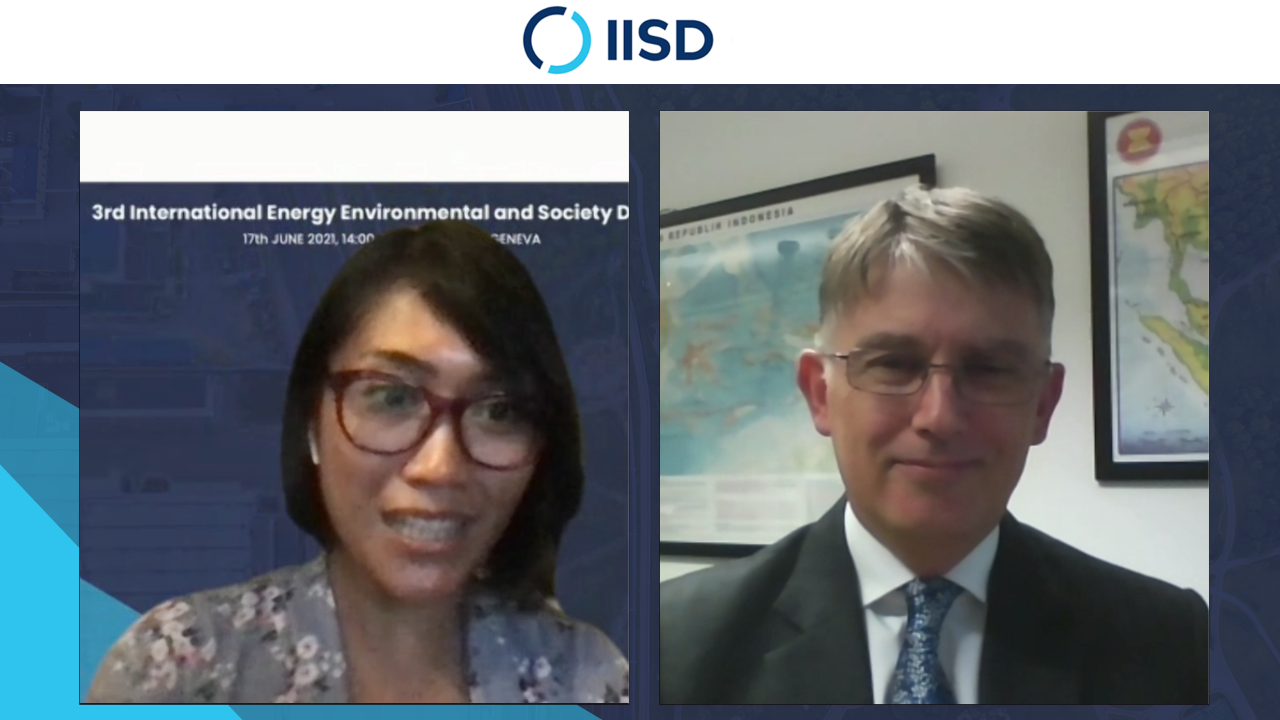
The event was held on June 8, 2021, on the Zoom platform from 3 p.m.  4:30 p.m. CEST.

Speakers considered:

  • What gender provisions in trade agreements mean to achieve.
  • What are the positive aspects of the knowledge we have in this field and the processes that exist to generate this knowledge.
  • Why this knowledge is not always translated into practice.
  • What options may exist to ensure that knowledge about the impacts of trade and trade policy on women is translated into policy that favours gender equality.

Confirmed speakers included:

  • Nathalie Bernasconi-Osterwalder, Executive Director, IISD Europe, and Senior Director, Economic Law and Policy, IISD (moderator)
  • Caroline Dommen, Associate, IISD
  • James Harrison, Professor, University of Warwick School of Law
  • Georgina Wainwright-Kemdirim, Special Advisor, Inclusive Trade, Global Affairs Canada
  • Ignacia Simonetti, Independent Gender Consultant

Watch the webinar's full recording


Webinar

Fisheries Subsidies: Update and Perspectives on the State of Play in WTO Negotiations

June 4, 2021 8:00 am - 10:00 am EST

(By invitation)

As part of its activities to support WTO negotiations towards a meaningful agreement to discipline harmful fisheries subsidies, the International Institute for Sustainable Development organized an online session for WTO negotiators to discuss the current state of play in this negotiating process. The webinar provided participants with a clear overview of the Chair’s latest draft consolidated text, highlighting the key decisions in front of WTO Members with respect to the different disciplines, and offered a range of different perspectives on the implications of the proposed rules from a sustainable development perspective.

Webinar

Oil and the Future of Alberta's Economy

This event will focus on the role of oil in the future of Alberta's economy, with key experts weighing in on the challenges and growth opportunities for the province's future prosperity.

June 3, 2021 12:00 pm - 2:00 pm EDT

via Zoom

(Open to public)

Alberta’s oil sector has been an economic workhorse for decades. As of 2019, it was contributing over CAD 68 billion to the province's economy. But, according to a new IISD report, its long-term market outlook is challenging. By the end of this decade a combination of market forces, global climate policies and geopolitics will drive a long-term decline in the sector as a producer of burnable hydrocarbons. Even in the interim, oil’s contribution to Alberta’s prosperity will be nothing like what it has been in the past.

So where do we go from here?

This event took place on June 3 (10:00-12:00 MDT). Key experts weighed in on critical questions, including:

  • What are the short-term and long-term prospects for Alberta’s oil sector?
  • What are Alberta’s next growth opportunities? What are the obstacles?
  • What is the role for government, the private sector, and others in transition and diversification?

Agenda at a glance

Context: Key insights from IISD report In Search of Prosperity (5 mins)

  • Aaron Cosbey – International Institute for Sustainable Development

The challenge: Oil’s future as a driver of Alberta’s prosperity (50 minutes)

What are the short and long-term prospects for oil as a driver of prosperity? What are the policy implications in terms of government support for the sector? What role is there for oil in the transition, diversification of the Alberta economy?

  • Jennifer Winter – University of Calgary School of Public Policy (Moderator)
  • Andrew Leach – Alberta School of Business, University of Alberta
  • Richard Masson – U of C School of Public Policy; World Petroleum Council
  • Aaron Bennett – Sustainable Investment Strategy and Research, Jarislowsky Fraser
  • Nina Lothian – Pembina Institute

The possibilities: Transitioning to new growth opportunities (50 mins)

What are the key areas of potential for future prosperity? What obstacles are there to achieving that potential? How to address them? How to support workers in the transition?

Webinar details

Topic
Energy
Region
Canada
Impact area
Climate
Webinar

Webinar on Informing National Governments’ Efforts to Scale Up Finance for Adaptation: Where to next?

The substantial gap between the amount of financing required by developing countries to meet their climate change adaptation needs and current levels of investment must be closed if we are to achieve a climate-resilient recovery.

May 26, 2021 9:00 am - 10:15 am EDT

(Open to public)

As the global community increasingly experiences the impacts of climate change, the need to scale up financing for adaptation becomes even more important. Efforts to scale up finance for adaptation, though, must be undertaken in a strategic manner. They should ensure that limited public sector finance is used in a targeted way to deliver country-defined adaptation priorities and, where possible, crowd-in private sector finance. 

This webinar elaborates on the adaptation finance gap in developing countries, identifies the knowledge gaps that impede the capacity of developing countries to scale up financing for adaptation, and discusses ways in which these knowledge gaps might be overcome.

Examples is also shared of the different approaches developing countries are taking to diversify their finance for adaptation and align investments with their national adaptation priorities.

Scaling up finance for adaptation requires overcoming several barriers, including a need to increase knowledge within developing countries on issues such as: 

  • the benefits of integrating climate adaptation needs in investment decisions, 
  • the feasibility of using innovative financing mechanisms to expand finance for adaptation, and
  • how public finance can be used strategically to leverage financing for adaptation from national and international sources, including multilateral development banks and the private sector.

These issues are explored though this virtual discussion, hosted by the International Institute for Sustainable Development (IISD) in partnership with the International Development Research Centre (IDRC).


Video


Presentation

Webinar

Reflecting on a Year Online: Lessons from an IISD survey of international investment negotiators

May 27, 2021 2:00 pm - 3:30 pm CEST

(Open to public)

How do you negotiate online? In early 2020, officials and governments found themselves facing this question, as the COVID-19 pandemic meant that in-person negotiations were paused indefinitely and global negotiations moved online.

After one year of experience with virtual negotiations, what do we know? How do negotiators gather information, build coalitions, and reach compromises during virtual negotiations? What are the opportunities offered and challenges posed by virtual negotiations for developing countries?
 
This webinar presented preliminary answers to these questions based on a forthcoming IISD publication co-authored by Zoe Williams and Taylor St John, entitled Reflecting on a Year Online: Lessons from a Survey of International Investment Negotiators.

The paper reports results from a survey of negotiators participating in two large virtual negotiations:

  • The United Nations Commission on International Trade Law (UNCITRAL) Working Group III on investor–state dispute settlement (ISDS) reform.
  • The Joint Statement Initiative on investment facilitation among a group of World Trade Organization (WTO) members.

 
The survey asked officials about barriers to participation in person and online; how they prepare for both types of negotiations; who attends in-person and virtual negotiations and whether this differs; how communication and the conduct of negotiations have changed with the shift online; overall views on the benefits and drawbacks of virtual negotiations; and what negotiating arrangements they would prefer moving forward. 
 
Participants in this webinar had the opportunity to discuss the report’s suggestions for improving virtual negotiations and good practices for virtual negotiations, as well as sharing their experiences and views on the challenges and opportunities of virtual negotiations.

Speakers and discussants included:  

  • Geoff Pigman, global policy and strategy consultant, and Associate Researcher at the University of Lausanne's Global Sport and Olympic Studies Centre 
  • Taylor St John, Assistant Professor, University of St Andrews 
  • Cissé Aminata Traore, Permanent Secretary of the Superior Council of the Private Sector, Mali
  • Quynh Vu, Deputy Director-General, Department of Legislation, Ministry of Planning and Investment, Vietnam. 
  • Zoe Williams, Associate, Managing Editor of Investment Treaty News, IISD 

Watch the webinar's full recording

Check out the webinar's slides

Webinar

National Oil Companies’ Roles in Renewable Energy and Economic Diversification

This event will focus on potential roles that national oil companies (NOCs) could play in countries’ efforts to transition to cleaner energy and a more diversified economy.

May 27, 2021 9:30 am - 10:45 am EST

(Open to public)

Flyer for the event series "National Oil Companies and Climate Change"

A growing number of oil companies have announced intentions to shift their business model “from barrels to electrons” and to invest in renewable energy. NOCs are no exception, and some governments are looking to their NOCs to help drive growth in clean energy. Most of these plans have been short on detail however, and NOCs’ financial incentives and status within the legacy oil and gas industry create questions about their paths to adaptation. And while renewables can provide a sustainable alternative supply of domestic energy, they are unlikely to replace oil as an export commodity to underpin countries’ economies.
 
Can NOCs also promote and support development of new sectors to help meet their governments’ objectives of economic diversification? Speakers in this session will examine the pros, cons and challenges associated with efforts to adapt NOC business models for a low-carbon future.

Featuring:

  • Joe Amoako-Tuffour, Secretary and Member of Ghana's Economic Management Team, Office of the Vice President, Republic of Ghana
  • Devapriyo Das, Senior Communications Advisor, Ørsted
  • Angela Picciariello, Senior Research Officer for Climate and Sustainability, ODI
  • Aaron Sayne, Senior Governance Officer, NRGI

 
This event is the second webinar in the NRGI-IISD series National Oil Companies and Climate Change following the launch event in April.

Webinar

Virtual Policy Dialogue on Trade and Food System Shocks

May 20, 2021 1:30 pm - 3:00 pm CET

(By invitation)

Virtual Policy Dialogue on Trade and Food System Shocks: Webinar Meeting Image

Shocks to the food system, such as the COVID-19 pandemic, can disrupt supply chains, exacerbate unemployment, and reverse progress fighting hunger and poverty. Climate scientists have also warned that shocks associated with more frequent and intense extreme weather events are among factors set to destabilize markets and undermine food security in years ahead.

This event explored how trade policy can help governments anticipate and respond to food system shocks while avoiding harm to producers and consumers in other countries. It also looked at the particular role of major importing and exporting nations in helping to safeguard the stability of global food markets.

With the UN set to convene a Food Systems Summit this September, three months before the WTO’s twelfth ministerial conference, this event represented a timely contribution to the discussions among governments and other actors on the role of trade policy in addressing food system shocks.

This event was by invitation only.


Webinar

National Oil Companies: Climate Change, Economic Challenges, and Potential Responses

April 21, 2021 10:00 am - 11:15 am EST

via Zoom

(Open to public)

Flyer for the event series "National Oil Companies and Climate Change"

National oil companies (NOCs) are navigating uncharted waters. Pemex, Mexico’s state oil enterprise, is far from the cash cow it once was. Companies in new oil producers such as Ghana and Uganda are reexamining their strategies in the face of future market uncertainties. Even Saudi Aramco has seen profits tumble and scaled back investment plans. The world’s essential move toward greener energy places these companies in evermore challenging positions.
 
Discussants at this event—the first in discussion series National Oil Companies and Climate Change convened by the International Institute for Sustainable Development (IISD) and National Resource Governance Institute (NRGI)—will spell out the major challenges now facing NOCs, their governments, and international climate initiatives. Participants will explore implications of companies’ choices around which projects to pursue—and how to manage them sustainably—on national economies and international climate goals.
 
While several NOCs have initiated measures to reduce their scope 1 and 2 emissions, fewer have engaged with larger questions about investments in future oil production in a climate-constrained world. The session, consisting of a moderated panel discussion with dedicated time for questions and answers, will examine the drivers of NOC spending on new upstream oil and gas projects, and how governments and NOCs can revitalize governance priorities for this new era.
 
NOCs vary significantly in their size, capabilities and role in global oil and gas markets, and participants in the session will unpack the prospects facing different types of NOCs. The pathway to more sustainable decisions—on public investments, future production pathways, and adapting companies’ roles in their societies—will look different for different kinds of NOCs. The importance of different NOCs in global climate efforts also varies. This session will dig into these categories, moving beyond generic notions of “good practice” to illuminate concrete reform approaches for governments, investors, and NOCs.