Press release

African Tax Administration Forum and International Institute for Sustainable Development Sign Cooperation Agreement to Strengthen Domestic Resource Mobilization

New Memorandum of Understanding builds on years-long, impactful record of work with taxation and revenue authorities.

July 1, 2025

Seville, Spain – The African Tax Administration Forum (ATAF) and the International Institute for Sustainable Development (IISD) have signed a new cooperation agreement to support stronger tax policy and administration, especially in the mining sector.

The new Memorandum of Understanding outlines how ATAF and IISD will collaborate to enhance domestic resource mobilization through policy development, research, capacity building, technical assistance, knowledge sharing, and peer learning. The partners signed the agreement during the 4th International Conference on Financing for Development.

This agreement builds on years of collaboration. ATAF has worked with the IISD-hosted Intergovernmental Forum on Mining, Minerals, Metals and Sustainable Development (IGF) to improve how governments collect revenue from mining. For example, ATAF and IGF’s work has recently helped Zambia improve mining revenue collection. They have also delivered training to hundreds of tax and revenue officials and published joint research, including The Future of Resource Taxation: 10 Policy Ideas to Mobilize Mining Revenues

Quotes

  • “As Africa works to increase domestic resource mobilization, collaboration is key. This agreement with IISD marks a significant step forward in supporting our member countries in designing and implementing effective, fair, and context-specific tax policies—particularly in high-potential sectors such as mining. We are building on an already strong foundation of collaboration, having worked closely with IISD through the Intergovernmental Forum on Mining (IGF), particularly on initiatives such as the Future of Resource Taxation project. Through joint applied research, statistical analysis, and technical support, this partnership will deepen our shared efforts to generate evidence-based solutions, enhance transparency, and drive reforms that respond to the realities of African economies. It reaffirms ATAF’s commitment to supporting member countries in advancing their domestic resource mobilization priorities in a way that is both strategic and sustainable.” 
    Mary Baine, Executive Secretary, ATAF


  • “ATAF has always been a great partner for IISD. Our work together has proven impactful in Africa and beyond. We look forward to deepening our relationship to strengthen our impact on domestic resource mobilization under this new agreement.”
    Nathalie Bernasconi-Osterwalder, Vice-President, Global Strategies and Managing Director, Europe, IISD 

Media Contacts

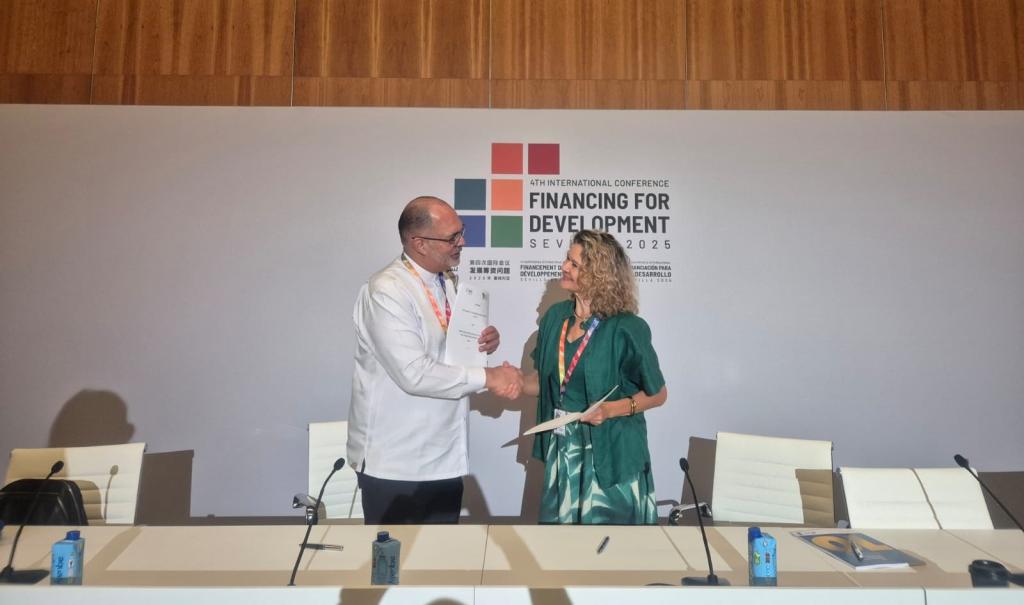
A representative of ATAF and a representative of IISD are shaking hands after signing the MoU

About ATAF

The African Tax Administration Forum (ATAF) is a platform that brings together African tax administrations to engage in mutually beneficial discussions and capacity-building initiatives. ATAF works toward promoting efficient and effective tax systems that contribute to the sustainable development of African nations.
Press release

New Coalition to Drive Reform on Tax Expenditures Launches at FFD4 in Seville

New coalition builds on years of research and technical support to help governments reform tax expenditures and strengthen public finances.

July 1, 2025

Seville, Spain – July 1 – Five leading global research and policy organizations launch a coalition to accelerate reforms of tax expenditures through evidence-based research and technical assistance on the opening day of the Fourth Financing for Development Conference (FfD4) taking place in Seville this week.

Governments worldwide forego an estimated 4% of global GDP—around a quarter of all tax revenues—each year through tax holidays, exemptions, and incentives. Most of these tax expenditures are untracked, unevaluated, and underreported, continuing without clear evidence of impact. This creates a major fiscal drain, leaving fewer resources for infrastructure, health, education, climate action, and other development priorities.

With the Compromiso de Sevilla calling for "enhanced oversight and management of tax expenditures," the FfD4 outcome provides a clear mandate and momentum for this initiative, ensuring the agreement leads to concrete actions like standardized reporting to improve transparency and oversight, and the rationalization of ineffective tax expenditures. 

The new initiative will scale up research and independent technical support to governments, exchange expertise and best practices, leverage complementary strengths from different members to provide holistic support, and work on strengthening international momentum, ensuring tax expenditure reforms remain a priority in forums like FfD4. 

As of now, the United Kingdom, Brazil, France, Guinea, Nigeria, Rwanda, Senegal, and Spain have already endorsed the initiative, signalling growing political will to bring transparency and accountability to this area of public finance.

Quote

  • “Despite their fiscal cost, tax expenditures are often poorly understood, weakly scrutinized, and inadequately reported. This coalition aims to close that gap with rigorous research, hands-on technical support to governments, and international cooperation.”
    Elisângela Rita, Tax Policy Advisor, International Institute for Sustainable Development

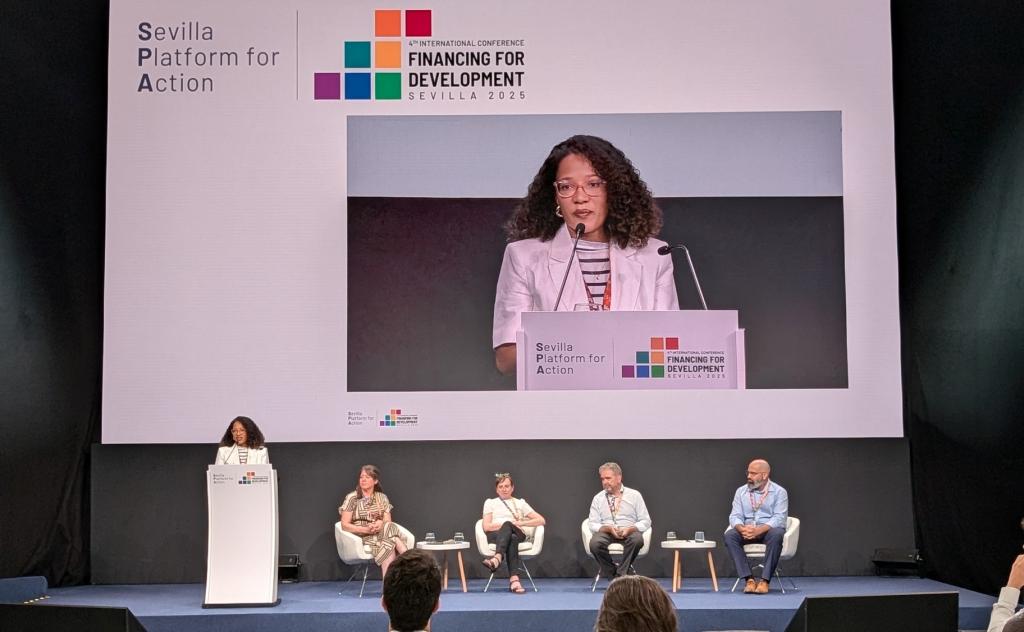
Elisangela Rita on the podium in the FfD4 conference hall


About the Lead Implementing Entities

The five partner organizations are the Council on Economic Policies, the International Centre for Tax and Development, the German Institute for Development and Sustainability, the International Institute for Sustainable Development, and ODI Global. Together, they bring decades of experience supporting governments, civil society, and international institutions in advancing fiscal reform. Their combined strengths in research, policy design, and on-the-ground implementation position the platform to support meaningful, sustained reform across diverse contexts.
 

Media Contacts

Press release details

Topic
Taxation
Impact area
Sustainable Economies
Press release

Canada’s Oil and Gas Growth Could Backfire—Study finds billions in oil and gas investment at risk as global demand declines

Up to 66% of future capital investments in Canadian oil and gas projects are in danger of becoming stranded.

June 25, 2025

Toronto/Winnipeg, June 25, 2025 — A new report released today by the International Institute for Sustainable Development and Environmental Defence warns that Canada’s continued expansion of oil and gas production risks stranding billions in future investment as the world accelerates its shift to cleaner energy.

Canada’s oil and gas industry is highly exposed to shifting international markets, with 81% of its oil and 44% of its gas exported abroad. This report reveals the extent to which new Canadian production is vulnerable to weakening international demand, rising competition, and trade disruptions, putting industry investments and government revenues at risk. 
Using data from the International Energy Agency and global oil and gas market modelling by Rystad Energy, the report finds that

  • Up to 66% of future capital investments in Canadian oil and gas projects (2025–2040) are at risk of becoming stranded in uncompetitive projects under a 1.5°C climate scenario.
    • This percentage of stranded investments could be even higher in a world where carbon capture and storage technologies underperform.
  • Under announced climate policies, including existing net-zero pledges, the share of stranded forecasted investments (2025-2040) is 39%.
  • Even under current policies, new and existing oil and gas projects in Canada are at risk of deflated returns.

“The more Canadian supply outpaces global demand, the greater the financial risk to investors, governments, and workers,” said Steven Haig, Policy Advisor for IISD. “We need to stop thinking of oil and gas expansion as a safe bet for Canada’s economy because it is quickly becoming the opposite.”

The report also highlights that Canadian oil is expensive compared to other international producers, while Canadian gas faces growing market access challenges. Export routes rely heavily on trade with the United States, which is increasingly subject to geopolitical risk, or expensive new liquefaction terminals, which are only viable in the unlikely scenario that long-term demand and prices remain high.

“Canadian governments must rethink what real leadership looks like in the energy sector,” said Aly Hyder Ali, Program Manager (Oil and Gas) at Environmental Defence. “As the world continues to move away from fossil fuels, the most strategic move is not to expand oil and gas, but to manage its decline while investing in renewable energy.”

Policy options to reduce risk 

The report lays out two complementary approaches that could protect the value of Canada’s oil and gas industry during the global clean energy transition:

  • restricting new oil and gas production projects to avoid overinvestment and overproduction
  • working with international partners to coordinate reductions in global oil and gas supply.

Modelling suggests these approaches could reduce stranded asset risk, increase public revenues, and help stabilize the value of remaining production, especially if the global energy transition accelerates.

“It may seem counterintuitive, but limiting new development could actually safeguard what we already have,” said Haig. “It’s about protecting the value of the sector from an overbuild that leaves future projects unprofitable.”

A call for strategic planning

The report urges Canadian governments, regulators, and financial institutions to take these risks seriously. It also calls for stronger alignment between domestic policy and international climate goals, noting that past investments, particularly those in long-lived infrastructure, may already be facing diminished returns.

“Business-as-usual investment in oil and gas production is out of line with the future global energy market,” said Ali. “The sooner we shift course, the better positioned we’ll be to protect workers, communities, and public revenues.” 

Download the full report here

Read the media backgrounder.

Media contact: 

For IISD: Trish Tervit, [email protected] 
For Environmental Defence: Midhat Moini, [email protected]

About Environmental Defence:  

Environmental Defence is a leading Canadian environmental advocacy organization that works with government, industry, and individuals to defend clean water, a safe climate, and healthy communities.

Press release details

Press release

Hudson Bay Lowlands bring nearly CAD 250 million to the Manitoba economy every year: New report

June 23, 2025

Winnipeg, MB, June 24, 2025 — The Hudson Bay Lowlands provide nearly CAD 250 million in ecosystem goods and services (EGS) per year through the value of biodiversity conservation, hunting, tourism, and mental health benefits. This vast landscape also stores an estimated 7 billion tonnes of soil organic carbon.

This is all according to a new report from the International Institute for Sustainable Development (IISD), commissioned by the Manitoba chapter of the Canadian Parks and Wilderness Society (CPAWS). The report highlights the economic, environmental, and social benefits of conserving these 67,000 square kilometres.

“The Hudson Bay Lowlands are one of Canada’s most powerful climate solutions and are part of the largest wetland and peatland system in the world,” said Marina Puzyreva, senior policy advisor at IISD. “The carbon storage value alone exceeds CAD 1.2 trillion, which is a substantial contribution in our efforts to mitigate climate change.”

The Hudson Bay Lowlands in northeastern Manitoba are one of the world’s most ecologically intact landscapes and, according to new research, provide millions in economic value every year. The region also holds immense value due to its rich Indigenous heritage, globally significant carbon stocks, and diverse wildlife, making it an excellent candidate for conservation.

Not only are they ecologically significant, but they are culturally vital. Five Indigenous Nations—York Factory First Nation, Fox Lake Cree Nation, Tataskweyak Cree Nation, War Lake First Nation, and Shamattawa First Nation—are working to conserve a vast expanse of this region as an Indigenous Protected Area and safeguard lands, waters, and ways of life.

“Protecting the Hudson Bay Lowlands means honouring generations of Indigenous stewardship and ensuring this globally significant landscape remains intact for our grandchildren’s grandchildren,” said Ron Thiessen, Executive Director of CPAWS’ Manitoba chapter.

The Lowlands cover nearly 10% of Manitoba’s landmass. Conserving large areas of this region would significantly advance the provincial government’s commitment to increasing protected lands and waters for future generations, a critical step in tackling climate change and biodiversity loss.

Read the full report: Manitoba’s Hudson Bay Lowlands: Ecosystem goods and services valuation  
 

Media Contacts

Brittney Le Blanc, Communications Officer, IISD: [email protected]

About CPAWS Manitoba

The Manitoba Chapter of the Canadian Parks and Wilderness Society (CPAWS Manitoba) is a not-for-profit organization dedicated to protecting Manitoba’s lands and waters for future generations. Founded in 1991, we are proudly built in Manitoba and committed to making sure the voice of conservation is heard on issues that affect our parks, wild spaces, and natural heritage.

We take a grassroots, science-based, and respectful approach to conservation—working collaboratively with communities, Indigenous Nations, and governments to safeguard nature and ensure sustainable land-use decisions. Our efforts have helped establish 23 parks and protected areas across the province, covering nearly 26,000 square kilometres—an area larger than Lake Winnipeg.

As Manitobans, we live, work, and play here—and we are passionate about protecting what makes this province so special.

Press release details

Topic
Water
Climate Change Mitigation
Region
Canada
Impact area
Nature
Press release

Republic of the Marshall Islands Joins Coalition to Phase Out Fossil Fuel Subsidies

June 23, 2025

June 23, 2025, Bonn, Germany — The Republic of the Marshall Islands has become the 17th country to join the Coalition on Phasing Out Fossil Fuel Incentives Including Subsidies (COFFIS), reaffirming its commitment to accelerating the global transition away from fossil fuels and the harmful subsidies that prop them up.

Membership will help the island nation deliver on its 2025 nationally determined contribution commitment to end fossil fuel subsidies as soon as possible in pursuit of accelerating the transition away from fossil fuels this decade.

Hon. Bremity Lakjohn, Minister in Assistance to the President and Environment, Republic of the Marshall Islands, said:

“The Republic of the Marshall Islands is proud to join the Coalition on Phasing Out Fossil Fuel Incentives Including Subsidies. We committed to do this in our Nationally Determined Contribution earlier this year, because it’s vital that governments keep the promises we made together in Dubai to urgently transition away from fossil fuels and the subsidies that support them. We’re doing everything we can to keep 1.5 alive.”

The Netherlands launched COFFIS at the 28th UN Climate Change Conference (COP 28) to accelerate the phase-out of domestic fossil fuel subsidies and encourage international cooperation to help maintain a level playing field between countries.

Other member countries include Austria, the federal government of  Antigua and Barbuda, Belgium, Canada, Colombia, Costa Rica, Denmark, Finland, France, Ireland, Luxemburg, the Netherlands, New Zealand, Spain, Switzerland, and the United Kingdom.

Sophie Hermans, Minister of Climate Policy and Green Growth, the Netherlands, said:

"The Marshall Islands are particularly vulnerable to the effects of climate change. Phasing out fossil fuels and their subsidies is important for mitigating the effects of climate change. For that reason, all nations—large and small—should work toward phasing out fossil fuel subsidies. It is great news the Republic of the Marshall Islands has joined the coalition, and I look forward to sharing knowledge and working together with the other coalition members.”

World governments have pledged to phase out inefficient fossil fuel subsidies, most recently as part of the global stocktake agreement at COP 28 in Dubai in 2023. However, the implementation of these commitments has been slow, with subsidies globally reaching a record USD 1.1 trillion in 2023, according to the Fossil Fuel Subsidy Tracker.

By joining COFFIS, countries commit to working together to improve transparency, remove international barriers, and facilitate the phase-out of fossil fuel subsidies.

This commitment includes publishing an inventory of their fossil fuel subsidies a year after joining and developing national action plans for phasing out fossil fuel subsidies, with the aim of translating international commitments on phasing out fossil fuel subsidies into specific national actions to remove this support.

Media Contacts

Aia Brnic, Communications Manager, IISD (COFFIS Secretariat): [email protected]
Pieter ten Bruggencate, Senior Spokesman Climate & Energy, Ministry of Economic Affairs and Climate, the Netherlands: [email protected]
COFFIS website: https://www.iisd.org/coffis/ 

Press release

Petrobras Oil Rush a Bad Bet for Brazil, Report Shows

June 12, 2025

June 12, 2025 - Brazil’s plans to expand oil and gas production by more than 20% by 2030 pose significant economic risks, with up to 85% of state-owned company Petrobras’ planned extraction unprofitable under a 1.5°C climate scenario, according to new analysis.

The study, released today by the International Institute for Sustainable Development (IISD), World Benchmarking Alliance, and WWF-Brazil, finds that Petrobras’s most high-risk ventures would only turn a profit if global temperatures rise by 2.4°C or more—well beyond internationally agreed climate limits.

The company is responsible for more than half of Brazil’s planned expansion, including some of the most expensive and risky frontier projects. Amid intensifying competition for market share, and given the cost structure of Brazilian oil fields, the majority of Petrobras’s new ventures can only be profitable in a dangerously overheated world, the report warns.

Brazil’s government is set to auction exploration permits on June 17, including 47 offshore blocks in the ecologically sensitive mouth of the Amazon basin.

The report, Brazil at a Crossroads: Rethinking Petrobras Oil and Gas Expansion, shows the following:

  • Up to 85% of the oil in Petrobras’ new projects is not economically viable to extract in a scenario compatible with holding global warming to 1.5°C, the international goal. Petrobras’ riskiest ventures would only be profitable in a world where global warming exceeds 2.4°C.
  • Petrobras plans to sink USD 97 billion into exploration, production, transportation, and refining of oil and gas throughout 2025–2029. Only 15% of its budget is to decarbonize operations and diversify into clean energy.
  • Petrobras lags leading oil and gas companies on climate performance measures. There is significant room for improvement in the carbon intensity of its products, emissions targets, and diversification strategy.

Ricardo Fujii, co-author of the report and energy transition lead at WWF-Brazil, says, “Our analysis shows that oil and gas exploration in the mouth of the Amazon not only poses environmental risks to local populations but also contributes to the loss of biodiversity throughout the Amazon. Petrobras can help prevent this by redirecting its investments in new frontiers toward the energy transition.”

Shifting spending from oil and gas to clean energy would mitigate the risk of stranded assets, help to close Brazil’s investment gap for renewables, and position Petrobras as a leader in the energy transition.

Polling suggests Brazilians want Petrobras to take this leadership. In a 2024 survey by Pollfish for Climainfo, 81% of respondents said Petrobras should shift into renewable energy immediately, against 19% who said it should remain a fossil fuel company.

“Brazil has a real opportunity to lead on climate and future-proof its economy,'' says Joachim Roth, report co-author and Climate Policy Lead at the World Benchmarking Alliance. ''It can do this by redefining Petrobras's mandate, ending new oil and gas licences and aligning national and private sector transition plans through a whole-of-government approach.”

The Brazilian government can influence this path, both through policy actions and its controlling stake in Petrobras. For a stable, secure, and sustainable future, the report recommends that the Brazilian government:

  1. Make a roadmap to curb domestic oil and gas expansion. Stop issuing fossil fuel exploration licences and phase out development licences, starting with assets most likely to become stranded under low-carbon pathways. Link national transition planning with credible sectoral and regional pathways and implementation at the company level.
  2. Redefine Petrobras’ mandate. Work with Petrobras on a credible, ambitious transition plan in line with climate and sustainable development goals. Adopt a “harvest mode” strategy to maximize cash flows and shareholder returns by avoiding capital expenditure on oil and gas development. Address policy contradictions that hold back Petrobras’s transition through whole-of-government coordination.
  3. Shift financial flows from oil and gas to clean energy. Encourage Petrobras to redirect investment into clean energy. Preventing the development of new fields that are still in the exploration phase could help Petrobras avoid between USD 13 and USD 36 billion in stranded asset losses, depending on the speed of the energy transition. Create a level playing field for different energy technologies and companies through fossil fuel subsidy reform and sustainability regulations on financial institutions.

“Brazil’s vast oil and gas expansion plans are unfit for a 1.5°C world,” says Olivier Bois von Kursk, report co-author and policy advisor at IISD. “The majority of Brazil’s new offshore oil fields will be economically unviable if countries align their climate policies with the Paris target. Brazil’s bid for market share can only pay off if other producers shut fields early or governments collectively breach international climate targets. Clean energy is the safest bet.”

Notes for editors
  1. Brazil at a Crossroads: Rethinking Petrobras Oil and Gas Expansion
  2. Official information on Brazil’s upcoming oil auctions, including timeline, maps of available blocks, registered companies, and draft contracts
  3. Brazilians want the country to lead the energy transition - Correio Braziliense (article in Portuguese)
Media contacts

Aia Brnic, communications manager, IISD: [email protected] (English)
Rachel Leung, communications and content lead, WBA: [email protected] (English)
AViV, press office of WWF-Brazil: [email protected] (Portuguese, English)

Press release

Kigali Shares Lessons on Flood Risk Reduction and Gender Equality With Other Sub-Saharan African Cities

KIGALI, RWANDA—Representatives from 14 organizations and city governments delivering the CAD 29 million (USD 21 million) SUNCASA project will meet in Kigali this week to exchange experiences and insights on advancing nature-based solutions (NbS) for reducing flood and climate risk while improving the lives of women and vulnerable groups.

February 6, 2025

From February 10 to 12, experts in NbS, climate change adaptation, gender equality and social inclusion (GESI), water systems, and data management drawn from governments and civil society organizations in Kigali, Johannesburg, and Dire Dawa will come together for the SUNCASA project’s peer learning event. The event will take place at the Mille Collines Hotel and will be opened by the Mayor of Kigali, Samuel Dusengiyumva, on February 10 at 9 am.

Experts will review the first year of the SUNCASA’s project’s activities, which included tree planting, invasive species removal, watershed restoration, and community workshops to set out strategies grounded on the lessons learned across the three cities.

"At the heart of this event is the opportunity to come together and learn from one another what works, what doesn't, for whom, and why. It's a chance to exchange, engage and reflect on the SUNCASA story so far across three very unique, dynamic African cityscapes,” explains Samantha Boardley, IISD’s climate adaptation specialist and one of the event’s lead facilitators. “It is an occasion so few projects or stakeholders make the time for, but one that offers so much not only to the project but to our broader understanding of nature-based solutions for climate change adaptation."

The first year of SUNCASA in Kigali achieved significant results. Fruit trees and shrubs were planted in 820 hectares and urban green areas were expanded with 56,000 new trees. Other NbS actions, such as reforestation and afforestation, will kick off in March 2025.

In Dire Dawa, Ethiopia, implementing partners planted more than 313,000 seedlings in 2024, established new forests on 60 hectares, revitalized 131 hectares with 142,600 fruit trees, and created 14 hectares of buffer zones along the Dechatu River.

In Johannesburg, South Africa, the tree-planting activities started in December 2024, with more than 6,300 seedlings planted to expand urban areas and create buffer zones to protect the Jukskei River. Additionally, alien invasive species were removed from 2 hectares, and another hectare was strategically rehabilitated by planting indigenous species. In one of the crucial project sites, Alexandra Township, local communities are manufacturing litter traps from waste collected in the river, which will contribute to reducing watercourse pollution.

Launched in 2024, SUNCASA is a 3-year project developed and implemented in close collaboration with local organizations. Delivered by the International Institute for Sustainable Development (IISD) and the World Resources Institute (WRI), with funds from the Government of Canada, SUNCASA seeks to enhance resilience, gender equality, social inclusion, and biodiversity protection in urban communities in Ethiopia, Rwanda, and South Africa. The project aims to benefit 2.2 million people living in climate-vulnerable areas.

SUNCASA PEER LEARNING EVENT

Where: Mille Collines Hotel, 2 KN 6 Ave, Kigali

Available Interviews: 

  • Lord Samuel Dusengiyumva, Mayor of Kigali
  • Janina Schnick, Lead, SUNCASA Project
  • Marc Manyifika, Country Lead for Urban Water Resilience, WRI Africa
  • Project scientists and community leads are available for interview. (Please request in advance to confirm availability.)

QUOTES

“Climate change is a reality. As a matter of fact, this year alone (2024), in the month of September, Kigali recorded its highest urban heat in history. And if you look at the amount of rain we are having, we have to do something. And I have to say that it can only be done in a coordinated manner. SUNCASA project is an initiative that symbolizes not only progress but a shared vision for our city and our continent. Kigali has long been a city that embraces bold ideas and transforms them into tangible results.”

Lord Samuel Dusengiyumva, Mayor of Kigali

“SUNCASA partners have made incredible progress on our NbS targets during the first year of project implementation, and we are excited to bring them together in Kigali to exchange achievements, challenges, and learnings. This will allow them to optimize their approaches and interventions in the three SUNCASA cities and maximize the project's impact. I can’t wait to see what they accomplish in Year 2 of SUNCASA!”

Janina Schnick, Lead, SUNCASA, IISD

“The peer learning event is SUNCASA’s first milestone—after a year of implementation, it’s bringing together partners from all three cities to exchange lessons, share valuable tools, and inspire new approaches for advancing nature-based solutions and gender equality and social inclusion. From the ARCOS Network showcasing their approach to community engagement, Haramaya University spotlighting their research on soil moisture and GenderCC sharing their expertise in integrating gender & social inclusion, participants will have the chance to learn, collaborate, and spark new and innovative pathways for building more inclusive and resilient cities.”

Marc Manyifika, Urban Resilience Lead, World Resources Institute - Africa

SUNCASA IN NUMBERS

  • 2.2 million people benefited from the NbS actions.
  • CAD 29 million will be invested in NbS actions in the three cities.
  • reforestation: 640 ha will be recovered with the planting of 1.4 million trees.
  • afforestation: More than 1.5 million trees will be planted in 867 ha of degraded land.
  • agroforestry: Over 500,000 fruit trees will be planted in an 885-ha area.
  • 1,143 ha of buffer zones will be established to protect the riverbanks.
  • 469 ha will be revitalized by removing alien invasive species and debris.
  • Public green spaces will be expanded with the planting of 150,000 trees.
  • Around 22,000 people from vulnerable communities will directly benefit from capacity-building and implementation activities.


For media inquiries, please contact:

Cesar Henrique Arrais

Senior Communications Officer, IISD

[email protected]

Eden Takele

Engagement & Communications Specialist, WRI Africa

[email protected]


Press release

Dogs More Effective Than Any Other Method at Finding Oil Spills under Ice with Practical Implications for Protecting Water Supplies and Oceans: New Study

January 20, 2025

January 21, 2025; WINNIPEG—Scientists in Canada have discovered, for the first time, that dogs can sniff out certain types of oil spilled under ice in freshwater lakes, with a 100% success rate.

In research conducted just last week in freshwater lakes at IISD Experimental Lakes Area in northwestern Ontario, specially trained detection dogs were able to definitively detect the location of two types of oil under lake ice, in six out of six instances in a double-blind study that resulted in no false negative results.

“These findings have enormous implications for speeding up how we deal with oil spills and protecting our freshwaters,” said Vince Palace, Head Research Scientist, IISD Experimental Lakes Area.

“Over the years, we have tried sonar, radar, fluorescence, optical sensors, and old-fashioned, labour-intensive drilling—even the human eye with lights under the ice—but even our most sensitive scientific instruments and manual methods cannot come close to the 100% success rate of our canine friends. Oil Detection Canines (ODCs) are quick—covering up to 400 square metres in twenty minutes—they’re relatively inexpensive to train, and they’re evidently extremely accurate.”

When dealing with the aftermath of an oil spill from a marine pipeline under ice, response teams can spend much of their precious time determining where exactly the oil has spilled before taking action to clean up—a situation made much worse when working in frozen and harsh conditions.

Using dogs in the initial response, with their proven speed and accuracy, could greatly assist the process of oil spill response and clean-up, resulting in less of an impact on our precious and fragile freshwater ecosystems.

“The potential power of the canine nose to make oil spill clean-ups more effective is incredible, but we shouldn’t limit ourselves,” said Paul Bunker, Founder and Principal, Chiron K9 LLC.

“It is now clear that dogs’ unsurpassed olfactory skills should not just be limited to detecting illegal substances in airports or locating earthquake victims (both of which are critically important) but can also be used to enhance environmental protection by more accurately and quickly locating a spill under ice.”

This study is part of a broader research project currently being conducted on freshwater lakes at IISD Experimental Lakes Area to determine the effectiveness of ODCs to detect oil under ice and is being carried out with funding from the United States Coast Guard Great Lakes Oil Spill Center of Expertise and in collaboration with Chiron K9, Owens Coastal Consultants, DF Dickins and SLRoss.

-30-

For more information, or to coordinate an interview with one of the scientists, please contact:

Sumeep Bath

Editorial and Communications Manager, IISD Experimental Lakes Area

[email protected]

Press release details

Press release

Increased Support for Offshore Wind, EVs, and Green Hydrogen Needed to Achieve India's Clean Energy Goals

December 17, 2024

New Delhi, December 17, 2024—India is on track to achieve many of its 2030 clean energy goals but needs to step up government support measures to accelerate the deployment of offshore wind, electric vehicles (EVs), and green hydrogen (GH2), according to a new report.

The Central Government has set ambitious goals to ramp up a range of clean technologies by 2030 as part of its strategy to increase energy independence, energy security, and energy access while promoting industrial development and reducing air pollution and greenhouse gas emissions.

The report from the Center for Study of Science, Technology and Policy (CSTEP) and the International Institute for Sustainable Development (IISD), titled, Budgeting for Net Zero: Government support needed to meet India’s 2030 clean energy goals, finds that India’s current government support measures are on track to reach goals for solar PV and battery energy storage systems (BESSs), driven by government subsidies and policy support. No additional direct financial support is required, but regulatory reforms and accelerated auctions are essential to maintain momentum.

However, emerging technologies like offshore wind and GH2 require immediate additional and sustained investment to reach cost competitiveness.

"India’s clean energy ambition is remarkable, and delivering on these goals will require bold investments and policy alignment," said Swasti Raizada, Policy Advisor at IISD and co-author of the report. "Emerging technologies like offshore wind and green hydrogen represent transformative opportunities for the country’s energy landscape but need sustained support to realize their potential."

Offshore wind accounts for the largest cost gap and current levels of government support fall short in bridging it. The cost gap identifies how much the cost of a clean technology needs to drop to reach cost parity with conventional equivalents (such as thermal power and internal combustion engine vehicles) and meet the clean energy goal for a specific technology. To tap into India’s 71 GW of offshore wind potential, additional government support of at least ~INR 9,000 crore per GW (~USD 1.08 billion per GW) will be needed.

The cost gap analysis is useful to inform future government support. The report finds that current financial support by the Central Government for solar PV and BESS is sufficient to fully cover the cost gap till 2030 of INR 14,500 crore (USD 1.76 billion) for solar PV and INR 2,637 crore (USD 0.3 billion) for BESSs respectively.

For other technologies, the cost gap until 2030 is much higher: INR 19,000 crore (USD 2.29 billion) for electric two-wheelers, INR 2.8 lakh crore (USD 34 billion) for GH2, and INR 5.1 lakh crore (USD 61 billion) for offshore wind. 

The report underscores the urgent need for both central and state governments to act now, noting that small but early investments in clean energy technologies will crowd in much larger private investments and yield long-term economic and environmental benefits. Achieving clean energy goals will drive economic growth, job creation, and increased public revenue while reducing greenhouse gas emissions and air pollution. 

“Investing now in clean energy technologies, even for high-cost sectors like offshore wind and green hydrogen, will ensure India’s global competitiveness and long-term economic and environmental resilience,” said Anasuya Gangopadhyay, Senior Associate at CSTEP and co-author of the report.

Media contacts

Swasti Raizada, Policy Advisor, IISD: [email protected]

Aia Brnic, Communications Manager, IISD: [email protected]

Anasuya Gangopadhyay, Senior Associate, CSTEP: [email protected]


About CSTEP 

CSTEP is one of India's leading think tanks, with a mission to enrich policy-making with innovative approaches using science and technology for a sustainable, secure and inclusive society. CSTEP’s interdisciplinary research encompasses diverse fields such as energy, climate, and air pollution. CSTEP is involved in solving some of the grand challenges India faces currently. Our cutting-edge research combines emerging technologies and artificial intelligence with rigorous modelling studies and data analyses to provide effective solutions for complex developmental issues prevailing in the country. 

Press release details

Press release

Scaling Nature-based Solutions for Kigali's Climate Resilience

November 28, 2024

KIGALI, RWANDA, November 29, 2024 —Kigali is embarking on a new endeavour to harness solutions readily found in nature to address the city’s most pressing climate hazards, particularly flash floods, landslides, and soil erosion. Designed and implemented in collaboration with the City of Kigali and local organizations, Scaling Urban Nature-based Solutions for Climate Adaptation in sub-Saharan Africa (SUNCASA) is a three-year project aiming to strengthen the resilience of 975,000 residents while promoting gender equality, social inclusion and biodiversity conservation.

A launch ceremony will take place on November 29, 2024, at 3:30 pm local time, at the Marriott Hotel, with the Mayor of the City of Kigali, Samuel Dusengiyumva, representatives from the National Government, and the Canadian High Commissioner in attendance.

Delivered by the International Institute for Sustainable Development and the World Resources Institute, with funds from Global Affairs Canada, SUNCASA will invest USD 7 million by 2026 in gender-responsive nature-based solutions (NbS), restoring nine critical sub-catchments in the lower Nyabarongo River watershed, where steep slopes expose households to both landslides and downstream flooding.

SUNCASA is working with its local partners—the ARCOS Network, AVEGA-Agahozo, and the Rwanda Young Water Professional—to implement NbS across Kicukiro, Nyarugenge, and Gasabo districts. Women-led cooperatives are already preparing hundreds of thousands of seedlings—mostly of indigenous species— in 11 nurseries across the city to support the project’s activities.

SUNCASA | Women and men from ARCOS Network planting seedlings in a project nursery in Kigali. (Photo: William Bidibura | ARCOS Network | SUNCASA)
Members of ARCOS Network preparing millions of seedlings to implement SUNCASA nature-based solutions in Kigali, Rwanda. 975,000 residents will have their resilience enhanced. (Photo: William Bidibura | ARCOS Network | SUNCASA)

SUNCASA aims to plant over two million trees through NbS activities that include: 

  • Establishing new forests on 220 hectares of bare and degraded land with 827,000 trees.
  • Reforesting 650 hectares with more than 1 million trees.
  • Planting 125,000 fruit trees and shrubs to support agroforestry and create sustainable livelihoods.
  • Creating 395 hectares of buffer zones to stabilize gullies and riverbanks and mitigate soil erosion.
  • Planting 88,475 trees in new public gardens and along roadways. 

The project is also committed to fostering gender equality and social inclusion. SUNCASA has committed that at least 50% of its project participants will be women and progress towards this goal is already underway. Women-led cooperatives are actively involved in seedling production and site preparation. Alongside these efforts, SUNCASA conducts community workshops with women, men and local leaders to promote gender inclusion. 

Over its three-year implementation, SUNCASA aims to create thousands of green jobs alongside training opportunities for communities.

 
In addition to its activities in Kigali, the SUNCASA project works with the cities of Dire Dawa, in Ethiopia, and Johannesburg, South Africa, to advance nature-based solutions for urban climate adaptation. In total, USD 21 million will be invested in gender-responsive NbS in the three cities, enhancing the resilience of 2.2 million people in high-flood-risk areas. 

QUOTES

“The SUNCASA project is a perfect match with the city plan to become a city in the forest. We really intend to increase our greening scope from households to public places. But we also want to really ensure that we bring nature-based solutions to our interventions beyond the trees.”
Samuel Dusengiyumva, Mayor of Kigali

“SUNCASA is about more than implementing nature-based solutions; it’s about catalyzing transformative resilience in the City of Kigali. Together with local partners and communities we’ve now begun planting 2 million+ trees across the city, which will contribute to the City of Kigali’s green vision and drive long-lasting climate resilience through protected riverbanks, rehabilitated land, as well as income sources and green spaces for local communities.” 
Marc Manyifika, Urban Resilience Lead, World Resources Institute - Africa

“SUNCASA’s rapid progress in Kigali is truly inspiring, especially the active participation of communities in cultivating seedlings and planting trees. Kigali is well on track to achieve the project’s ambitious goal of planting 3 million Indigenous trees by 2026. This effort not only enhances the city’s resilience and greening infrastructure but also establishes Kigali as a global role model for sustainability and climate adaptation.”
Tristan Easton, Senior Project Manager, SUNCASA and IISD

“This project reflects Canada’s steadfast climate action commitment, supporting climate adaptation and fostering equitable and sustainable development. It is inspiring to see this vision come to life here in Kigali.”
Julie Crowley, High Commissioner for Canada in the Republic of Rwanda
 

Press release details