Insight

Canada's Trade Troubles Make a Perfect Opportunity

NAFTA uncertainty, global shakeups prompt Canadian trade to do the unthinkable: evolve.

August 2, 2018

There was a time when trade policy was a slow-moving, dull and predictable file that attracted scarce outside interest. Not so much these days. Since the Trudeau government cabinet shuffle of barely two weeks ago, the ongoing trade roller coaster shows no sign of letting up.

Last week, the U.S. Trade Representative told Congress that NAFTA talks are back on. While the wounds of the June G7 Summit are still healing, a "no-NAFTA and two bilateral deals" scenario seems behind us. Canada and Mexico have promised to negotiate in solidarity for a trilateral NAFTA. At the same time, the Trump administration said they will leverage this solidarity to gain concessions from Mexico first, and then Canada.
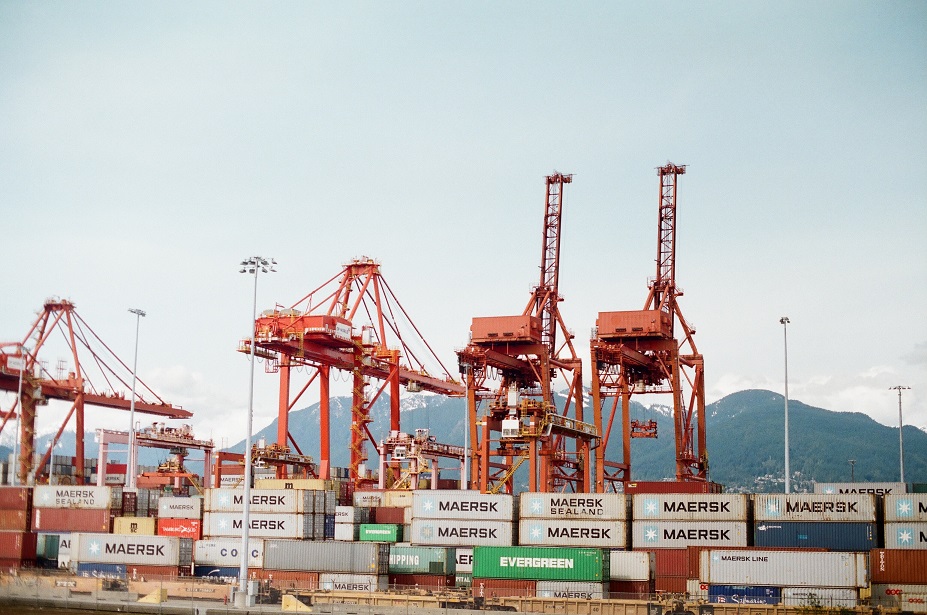
Port of Vancouver

Last week, after an earlier taunt that Europe was a foe, Trump announced a ceasefire in escalating tariffs with Europe and eyed a possible new deal. At the same time, a coalition involving the European Commission, the United States and Japan has been working to save the World Trade Organization. The plan—as outlined by Europe’s Trade Commissioner over the weekend—calls for new WTO rules that allow smaller trade clubs to agree to new deals without requiring the consent of all members.

The aim of this coalition goes beyond the noble goal of breaking WTO paralysis. Its members are intent on curbing China’s influence. A growing number of countries have fallen in line with the big Trump trade card that frames the China trade question as a broader ideological split between state capitalism and market-based economies. Their proposal sees the ending of the WTO most-favoured nation clause. It’s unclear what will replace it. 

Into this mess comes a new Canadian trade minister. Jim Carr has a proven record as a strong, capable minister and effective communicator. Importantly, he comes with a new title: Canada’s Minister of International Trade Diversification.
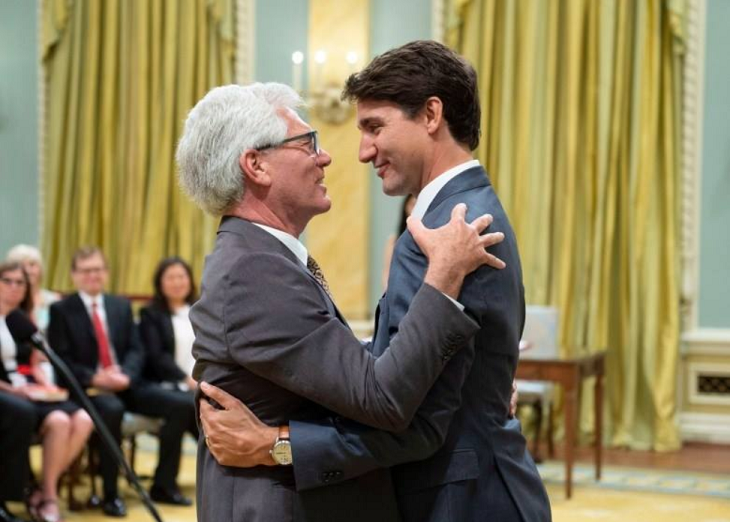
Cabinet veteran Jim Carr steps into a newly minted portfolio with high expectations (Source: Twitter)
Cabinet veteran Jim Carr steps into his newly created portfolio (Source: Twitter)

If there ever was a time for Canada to diversify its approach to trade, it’s now.

Should a NAFTA deal be struck, urgency in diversifying Canada’s trade will fizzle. That would be a mistake. Here are three ways for Canada to diversify its trade that set the country up for long-term gains.

First, focus on new places. Expanding Canadian exports and trade beyond the United States is hard.  Currently, roughly 70 per cent of Canadian trade is with our nearest neighbour. However, recent agreements like the Transpacific Partnership, the Canada-Europe Economic and Trade Agreement (CETA) or emerging deals with South America’s biggest trade bloc show the potential for Canada to expand to new markets with hundreds of millions of people. 

The toughest trade decision facing Minister Carr is China. The United States and others in the WTO are focused on what constitutes a "public body" and how subsidies have fuelled China’s state-owned enterprises. Canada’s history with crown corporations operating in competitive markets can form the basis of a joint China-Canada effort to flesh out the principle of competitive neutrality. It would be a start to framing a possible bilateral free trade deal.

Second, focus on new products. Canada is among the least-diversified economies of industrialized nations. Its share of manufacturing as a percentage of total GDP has shrunk in the last three decades, and its main economic engine is natural resources. This resource engine is sputtering, however: data from Statistics Canada show Canada’s natural capital has declined by 25 per cent since the 1980s. 

We have other options. Environmental goods and services make up a booming global market, including rapidly growing markets in cleaner energy, along with sustainable agriculture and forestry products. The size of the global clean market is currently roughly CAD 800 billion a year and is set to exceed CAD 1 trillion by 2025.

Finally, new trade procedures. Canada has always punched above its weight in the trade arena.  At this volatile time, it should step up again to bolster transparency, carve out environmental goods and services tariff preferences, and toughen rules for subsidies. Current practices see over USD 450 billion for fossil fuel subsidies alone, and much more in fishing and farming subsidies. Together these practices push the planet’s natural capital to a tipping point and keep families in poorer countries from competing.

There’s a slim chance the U.S. administration may develop a taste for predictable trade policy, but chances are remote. The stakes are too high for Canada to hope the next tweet carries good omens. Diversification not only hedges risks but opens new opportunities ahead.

Insight details

Topic
Trade
Region
Canada
Report

Floating Treatment Wetlands: Keeping our fresh water clean and healthy

This short, engaging storybook takes you through what Floating Treatment Wetlands are, and how they could really help us keep bodies of fresh water clean and healthy.

July 30, 2018

Freshwater lakes around the world, especially shallow lakes, are in trouble.

Wetlands can improve water quality of storm water runoff and manage watershed nutrients, as well as treatment of wastewater and other industrial contaminants.

IISD is exploring how Floating Treatment Wetlands could be used to improve fresh water health, even potentially after an oil spill.

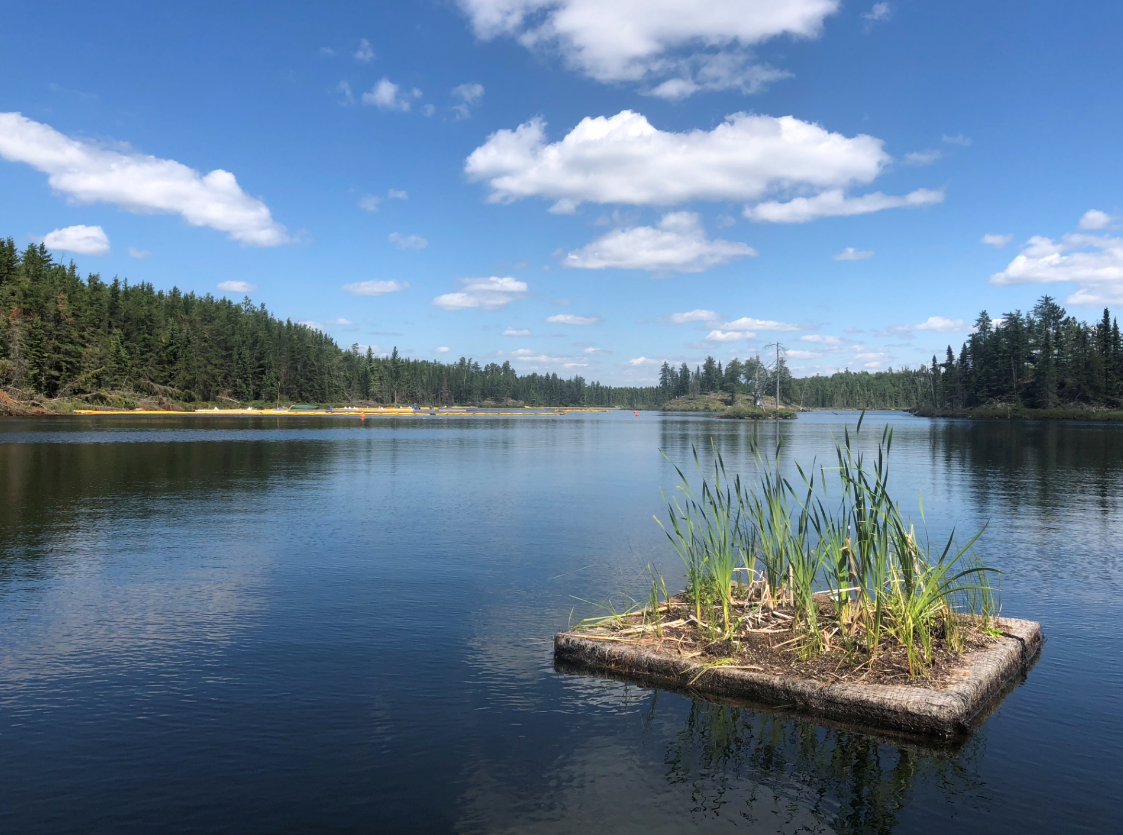
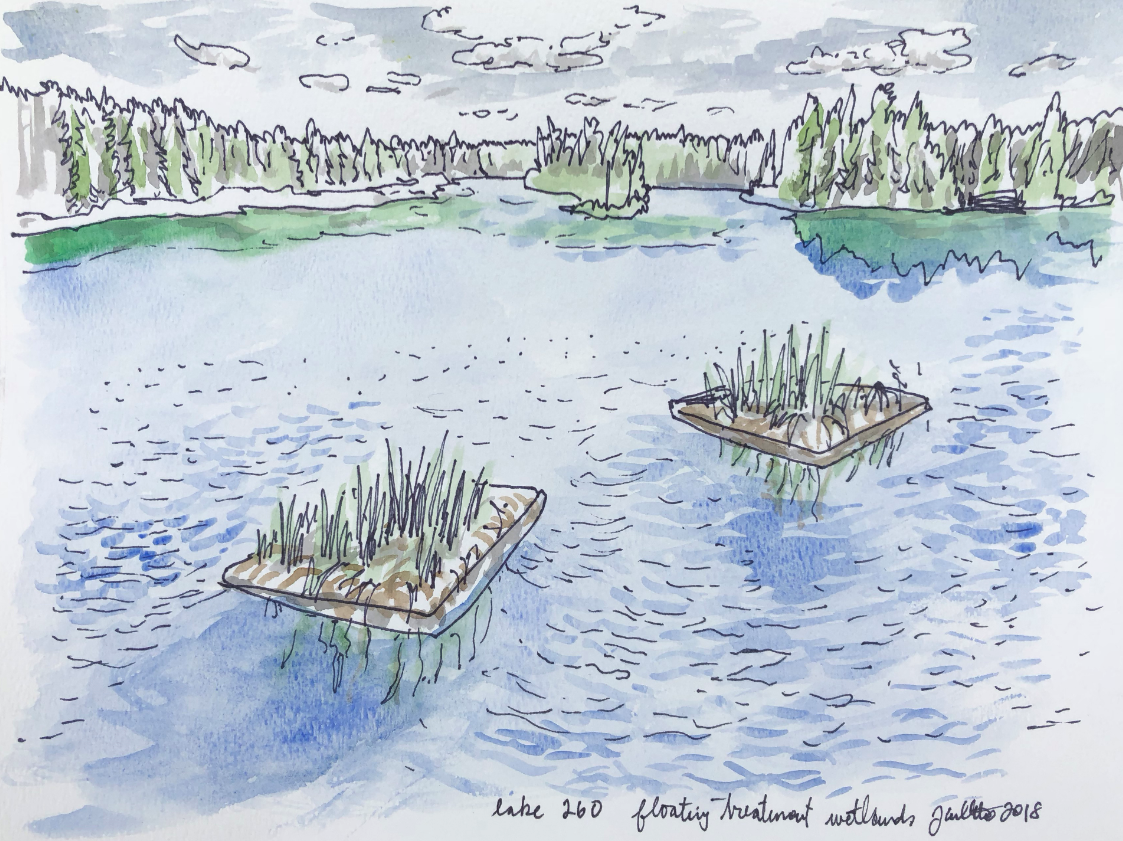
Floating treatment wetlands (FTWs) or islands are small artificial platforms that allow these aquatic emergent plants to grow in water that is typically too deep for them. The unique ecosystem that develops creates the potential to capture nutrients and transform common pollutants that would otherwise plague and harm our lakes into harmless byproducts.

We have just started exploring the role of FTWs in cleaning up lakes in Canada and at IISD Experimental Lakes Area.

This short, engaging storybook takes you through what FTWs are, and how they could really help us keep bodies of fresh water clean and healthy.

Floating treatment wetlands or islands are small artificial platforms that allow these aquatic emergent plants to grow in water that is typically too deep for them.

Report details

Insight

Let's talk, not bicker, about Canada's energy future

A clean energy transition requires Canadians to find consensus and act.

July 6, 2018
Image removed.
Canada's Minister of Natural Resources Jim Carr, IISD Managing Director Jane McDonald, Enbridge Inc. Chief Sustainability Officer Linda Coady at the launch of the Generation Energy Council report.

(This op-ed first appeared in the Winnipeg Free Press on June 30, 2018)

Last fall, at the request of federal Natural Resources Minister Jim Carr, I joined a diverse council of experts to discuss ways Canada can transition to a low-carbon energy system in the next 20 years. Among us were executives from the oil and gas sector, renewable energy companies, an energy storage entrepreneur, heads of environmental groups, efficiency experts and First Nations leaders.

Our mandate was clear: come up with a vision of how Canadians will turn on their lights, heat their homes and get to work a generation from now if we make changes that allow us to meet our Paris emissions targets.

There were things we didn’t agree on. Canada’s a big country with very different regional energy assets and people brought different priorities to the table. What was surprising was just how much consensus there was.

Everyone agreed we need to move much more aggressively on efficiency measures. We call on governments to work together to rapidly implement more efficient building codes. Retrofitting our homes and offices creates jobs. And saving energy also means saving money for Canadians; in Nova Scotia, the country’s first efficiency utility saves its citizens $110 million every year.

We agreed Canada should use clean electricity to our advantage. More than 80 per cent of our grid is already powered by low-carbon sources. Expanding the activities that tap our grid will reduce emissions. We could start by electrifying our transit fleets. The company supplying more than 7,000 heavy-duty transit buses powered by electric motors and battery propulsion across Canada and the U.S. is headquartered here in Winnipeg.

Council came together around the idea that renewable fuels need to be a bigger piece of the puzzle. As a country, we sit on immense feedstocks of agricultural, forestry and landfill waste materials that could create a bio-economy that creates jobs and boosts economic competitiveness. Edmonton has already started, building the world’s first commercial-scale facility that turns household garbage into biofuels and renewable chemicals.

Council shared the view that new opportunities are emerging, and needed, for Indigenous Peoples to provide leadership on energy strategy and energy development. Right now, there are 31 Indigenous-owned energy projects — or 50-50 partnerships between renewable energy companies and First Nations — underway across Canada.

Across all topics, we agreed governments should create conditions to allow entrepreneurs to build low-carbon solutions. A great example hit the news this month when B.C.-based Carbon Engineering — a firm backed largely by Bill Gates and Canadian oilsands mogul Murray Edwards — announced a breakthrough with technology that can suck carbon dioxide out of the air and produce a clean-burning fuel.

Regarding its success so far, the company’s CEO said: "We would not be in business if carbon pricing did not exist." And guess what the company is looking for as it licenses its technology? Clean fuel standards that will provide incentives for markets to purchase those fuels.

It is going to be complicated to shift our energy infrastructure. Governments will need to align efforts and ensure funding and fiscal incentives no longer support the status quo, but are deployed to attract capital and investment into energy solutions that improve Canada’s carbon profile. Our oil and gas sector will need to rapidly innovate to stay competitive in global markets seeking more affordable and least polluting supplies.

But the cost of failing to engage in a serious energy transition isn’t just that Canadians won’t compete in new markets. It’s that we contribute to a global failure to curb the real costs on the horizon, like repairing and replacing infrastructure increasingly threatened by more severe weather events and warmer temperatures.

The 2011 Manitoba flood displaced about 7,000 people; more than seven years later, 1,700 evacuees from several Manitoba First Nations still wait to go home. The overall cost for flood preparation, flood fighting, repairs to infrastructure and disaster payments that year was $1.2 billion. That same year, Canada’s National Roundtable on the Environment and Economy published a report estimating the economic impact of climate change for our country at between $21 billion and $43 billion per year by 2050.

So, let’s not get stalled in simplified, divisive narratives about climate change; as a country, we can’t afford it. Canadians need to recommit to a civil and serious conversation about an energy transition. That won’t happen if we retreat behind political calculations or near-term stock prices, or if we tune out as consumers. More is needed of each of us as citizens.

Let’s make an effort to come out of our corners and keep talking. Our energy future is about much more than a pipeline — if we make it so.

Insight details

Region
Canada
Policy Analysis

Big Data for Resilience

Summary of a recent event looking at the links between Big Data, resilience and achieving long-term development goals, and the implications for practitioners, policy-makers and researchers.

June 27, 2018

Experiences around the world suggest that Big Data is enabling larger, creative and often socially driven changes involving highly diverse stakeholders.

But there is still a lot to learn about the links that exist between Big Data, resilience and the achievement of long-term development goals, and the implications for practitioners, policy-makers and researchers.

Seeking to address this gap, the International Institute for Sustainable Development (IISD) led the development of The Big Data for Resilience (BD4R) Storybook. The publication examines the experiences of six international organizations that are actively using Big Data to strengthen the resilience of vulnerable communities and ecosystems to a variety of shocks and stressors.

The BD4R Storybook was launched at an event hosted by the Wilson Center in Washington, D.C. This article summarizes some of the highlights from these discussions.

Policy Analysis details

Report

2018 Our City: A Peg Report on Sustainability

Winnipeg is changing. Winnipeg has always been changing. The fourth edition of Our City, A Peg Report looks at Winnipeg through the lens of the three pillars of sustainability and integrates the Sustainable Development Goals.

June 14, 2018

Winnipeg is changing. Winnipeg has always been changing.

The fourth edition of Our City, A Peg Report looks at Winnipeg through the lens of the three pillars of sustainability: environmental, economic, and social well-being. These three pillars are examined together because, as a whole, they provide a holistic understanding of well-being.

This is the first Peg report to include the integration of the United Nations Sustainable Development Goals. This is a new approach and lens for Peg that has also been embedded within the online tool (mypeg.ca). Showing the linkages between Peg indicators and the Sustainable Development Goals allows us to not only track our own well-being, but also provides an opportunity to see how we are influencing, and part of, change globally. 

Winnipeg is changing, and Peg is tracking our progress.

Report details

Topic
Measurement, Assessment, and Modelling
Sustainable Development Goals
Region
Canada
Project
Peg
Impact area
International Governance
Publisher
United Way of Winnipeg
Copyright
IISD and United Way of Winnipeg, 2018
Report

New poll shows Canadians want to end public subsidies for oil and gas companies

New polling shows that Canadians are strongly opposed to federal and provincial governments using public dollars to subsidize oil and gas companies. 

June 6, 2018

New polling shows that Canadians are strongly opposed to federal and provincial governments using public dollars to subsidize oil and gas companies.

Despite this significant public opposition, Canadian governments continue to hand out billions of dollars in fossil fuel subsidies, without disclosing to the public the value of the financial supports and tax provisions available to the industry.

In this report, polling data from Ekos shows that Canadians want transparency on how much public money is supporting fossil fuel companies; that Canadians understand the environmental and climate benefits of ending these subsidies; and that they are more likely to support political parties that promise to phase them out.

Report details

Topic
Subsidies
Region
Canada
Impact area
Climate
Publisher
Environmental Defence
Copyright
Environmental Defence, 2018
Report

2017 Our City: A Peg Report on the Natural and Built Environment

The third edition of Our City, A Peg Report examines how the physical, mental, and social health and well-being of Winnipeggers is shaped by their environment.

June 5, 2017

Sustainable communities are places that have well-functioning social, economic, and environmental realms that enhance and strengthen the community in a holistic manner. While Winnipeg’s natural and built environment indicators lie within the environment realm, they overlap with and influence both the economy and society. Winnipeggers' ability to work, live, play, and care for one another is what makes their city a great place to live.

Dive into this moment-in-time report drawn from the online Peg data dashboard, which measures the health of IISD's headquarters city year-over-year in ways that count.

Report details

Topic
Sustainable Development Goals
Region
Canada
Project
Peg
Impact area
International Governance
Publisher
IISD
Copyright
IISD, 2017
Report

The End of Coal: Alberta's coal phase-out

Alberta implements one of the most ambitious coal phase-outs the world over. What are the politics and economics behind it? Learn more from our new report. 

May 10, 2018

In November 2015, the Canadian province of Alberta committed to a phase-out of coal power by 2030. The phase-out of coal power in Alberta will involve the retirement of over 40 per cent of Alberta’s 2016 installed capacity and the de facto phase-out of local thermal coal mines.

Alberta's coal phase-out is part of the province's wider Climate Leadership Plan. To implement the phase-out, Alberta's NDP government relies on three pillars. First, the government announced a CAD 1.1 billion payout to coal power companies under Off-Coal Agreements that aim to ensure political longevity and foster a positive investment climate. Second, CAD 45 million has been allocated in programming to transition coal workers and communities. The funding for Off-Coal Agreements and transition support to workers and communities comes from carbon tax revenues. Third, Alberta launched a new electricity market design to bring in replacement power. While public opinion is still divided, Alberta’s solution gained the support of organized labour, power companies, public health advocates, environmental non-governmental organizations and the federal government.

This paper explores the circumstances leading to the phase-out and the actions taken by affected players for those who may draw inspiration and lessons from Alberta: policy-makers, campaigners, environmental groups, the coal industry and others transitioning to a low-carbon economy in Canada and the world over.

Report details

Topic
Energy
Climate Change Mitigation
Just Transition
Region
Canada
Impact area
Climate
Publisher
IISD
Copyright
IISD, 2018
Policy Analysis

Don't put taxpayers on the hook for the Trans Mountain Pipeline

April 24, 2018

Over the past few days we’ve watched Alberta, British Columbia and the federal government in a game of chicken, with billions of taxpayer dollars potentially in play in an end run around BC’s opposition to the Trans Mountain pipeline. It has felt a little like watching a bad horror movie, the kind where you crouch at the edge of your seat praying the hapless protagonist won’t be stupid enough to open that door.

And yet it’s argued that the Federal government should do just that. The main argument is that Alberta oil needs foreign markets, but two new arguments have emerged: if the pipeline isn’t built it will shake foreign investor confidence in Canada, and the proponent may react to project failure with international arbitration against Canada under NAFTA.

Let’s unpack those arguments. Yes, it would be nice for Alberta’s oil to have another export route (though the recent estimates of losses via price differential are grossly overstated). But is it the place of Canadian governments, federal or provincial, to support private sector profits when these are not otherwise supported by the market? Some would argue that the obstacles in this case are not market-based but political. This is a badly outdated understanding of the dynamics of large extractive projects; if the proponent has done such a poor job of obtaining its social licence to operate that protesters are surging to the barricades in waves, ready to be arrested, that is a market problem.

More fundamentally, if billions of dollars of Canadian taxpayer support is to go to any sector, why should it be the fossil fuel sector? This sector already benefits from over $3 billion a year in public subsidies, an amount that could actually be dwarfed by promises to de-risk this project alone. The point of a good industrial policy is to invest in emerging sectors. Pouring money into zombie-like infrastructure whose days are as numbered as the internal combustion engine is not a future oriented economic development strategy.

As renewable energy costs hit parity with conventional sources, and electric vehicles start their inevitable exponential rise, there is an ever-increasing certainty that fossil fuel resources and infrastructure will be stranded, becoming uneconomic before the end of their anticipated productive lifespan because of regulatory and/or costumer preference changes. Why should Canadian taxpayers sink billions into assets with that kind of risk profile?

Will Canada lose standing with foreign investors if Trans Mountain is not built? Hardly. Canada has a solid rule of law framework, a sound fiscal framework, an educated work force – all the elements needed to continue to attract investment.

But even the poorest developing countries are reassessing the objective of attracting any and all investment, in favour of attracting quality investment. It may be that if Trans Mountain fails Canada will be seen as riskier for fossil fuel investors. But not for all investors. And ultimately Canada should be targeting investment that diversifies our economy away from it’s unhealthy over-dependence on fossil fuel exports. That would be true even if it were not a doomed sector for both economic and environmental reasons. But the realities of climate change, and the speed of change in private sector and governments worldwide, make diversification even more urgent. If we want to signal to the rest of the world that Canada is a great place to invest in fossil fuels, then by all means we should spend taxpayer money. If we want to say it is time to shift, as other governments are doing, then this will be a small blip on the radar that disappears as quickly as it was manufactured by Kinder Morgan’s threats.

Finally, we have the risk of arbitration under NAFTA. Though Kinder Morgan has said it is too early to consider this possibility, it is unfortunately real and may have the federal government running scared; NAFTA’s Chapter 11 gives firms the right to force binding arbitration on governments that can result in multi-billion dollar payouts. The risk is made worse by the government’s potential response to Kinder Morgan’s threats: to publicly promise first that the pipeline will be built at all costs, and second that the governments of Canada and Alberta will de-risk the project. Should the project fail, this could give Kinder Morgan the very arguments it needs to initiate and potentially win an international arbitration against Canada, based on a doctrine called “legitimate expectations”.

Canada will have given the firm every reason to legitimately expect first that the pipeline will be built and, secondly that it will be profitable.

Yet, it can guarantee neither; it can only make Canadian taxpayers liable to pay for any failures. De-risking here is not about removing risks of failure – the federal government cannot alter the government of BC’s right to take legal actions to stop the pipeline, nor can it avert the inevitable demise of the fossil fuel sector. Rather, it is about allocating the liability for paying for the failures, shifting it from Kinder Morgan to the Canadian public.

NAFTA arbitration is not just a problem if the project is blocked. If the pipeline goes ahead and Canadian governments vow to de-risk it, they are putting taxpayers on the hook for anything other than long-term success. If the pipeline fails, whether due to climate change policies, changing demand, or other factors, the “de-risking” language may give Kinder Morgan the ability to sue Canada not just for monies invested, but for lost future profits as well.

Does it make sense from any perspective to put Canadian taxpayers on the hook for billions of dollars chasing assets at odds with climate realities and rapidly changing technologies? No. But we can picture Kinder Morgan’s shareholders crouched on the edge of their seats, impatiently listening for the creak as that door opens.

Brief

Manitoba's Biomass Fuel: Protecting our environment and saving us money

Biomass is a viable, abundant and environmentally sound source of renewable energy in Manitoba. This is what we need to do to make it a major renewable energy player in the province.

March 12, 2018

Biomass is a viable, abundant and environmentally sound source of renewable energy in Manitoba. It can provide a great host of environmental and economic benefits.

As the province looks to expand its growing renewable energy portfolio, the Government of Manitoba needs to play a crucial role to enable bioenergy markets in the province, so that Manitobans can enjoy those benefits.

In this policy brief, we explain the benefits of using biomass as fuel in Manitoba and how we can make it happen.

Brief details

Topic
Water
Region
Canada
Impact area
Nature
Publisher
IISD
Copyright
IISD, 2018