Report

Comprehensive Wealth in Canada 2018 – Measuring What Matters in the Long Term

Comprehensive wealth measures the country’s produced, natural, human, financial and social capital.

October 26, 2018

Comprehensive wealth measures the country’s produced, natural, human, financial and social capital.

  • Produced capital is made up of the buildings, machinery and infrastructure owned by households, businesses and governments.
  • Natural capital includes the forests, lakes, minerals, fossil fuels, land and other elements that make up the natural environment.
  • Human capital is the value of the skills and knowledge bound up in the people that make up the workforce as represented by lifetime earning potential.
  • Financial capital includes stocks, bonds, bank deposits and other financial assets owned by households, businesses and governments.
  • Social capital measures the degree of civic engagement and trust/cooperation among the members of society.

Unlike GDP and other short-term indicators used to assess national progress, comprehensive wealth measures the assets that are the foundation of well-being in the long run. Examining data from Statistics Canada from 1980 to 2015, this report raises a number of red flags on the sustainability of Canadians' levels of prosperity, namely:

  • Unprecedented Canadian household debt.
  • The average lifetime earning potential of a Canadian has gone down—$496,000 in 2015 compared to $498,000 in 1980.
  • Reliance on foreign lenders for nearly three quarters of investment flows after 2012.
  • Concentration of business investment in produced capital in just two areas: housing and oil and gas extraction infrastructure.
  • An 86 per cent drop in the market value of Canada’s most valuable natural asset: the oil sands.
  • Vulnerability of Canada’s comprehensive wealth portfolio to climate change impacts.

These concerns don't emerge when examining Canada's relatively good GDP performance over the same time period, prompting the report's author to call on governments to report comprehensive wealth measures alongside GDP.

Report details

Insight

Sustainable Finance Key to Low-Carbon Economic Transition

Canada’s Expert Panel on Sustainable Finance released its interim report yesterday with a clear message that harnessing the country’s financial assets is essential for a successful low-carbon transition.

October 25, 2018

Canada’s Expert Panel on Sustainable Finance released its interim report yesterday with a clear message that harnessing the country’s financial assets is essential for a successful low-carbon transition—with climate change and carbon pricing top-of-mind.

Appointed in spring 2018 by Canada’s Minister of the Environment and Climate Change and the Minister of Finance, the Expert Panel’s mandate is to articulate the key challenges and opportunities for sustainable finance in Canada, providing “next step” recommendations to the government.

Their first message was a reminder of Canada’s economic exposure due to our carbon-intensive economy.

“Many of the sectors underpinning the Canadian economy are carbon intensive, meaning Canadians are exposed.”

The growing reality of climate change means that Canada must start transitioning to a low-carbon economy now. To do so, the Expert Panel pointed to the inescapable fact that this will require significant financial investment to pull it off. Canada’s financial services sector is “capable of the task” in the panel’s opinion. Moreover, we need to see this as “a big opportunity” for Canadian businesses.

Sustainable finance

The Sustainable Finance Imperative

The Expert Panel sets out three points that form a sustainable finance imperative:

Both observable measures and the feedback from our consultations suggest that sustainable finance is growing in Canada, but overall, we are not moving with sufficient determination or at the pace of many of our peers.


If we want to capture the large market opportunities and establish the rules affecting our financial industry and our key economic sectors for ourselves, we need to move faster and more decisively.


Canada should focus on areas where we can significantly move the needle.

Foundational Elements

From there, the Expert Panel went on to list six “Foundational Elements” for sustainable finance in Canada:

  • Clarity on climate and carbon policy
  • Reliable information
  • Effective climate-related financial disclosures
  • Clear interpretation of fiduciary and legal duties
  • A knowledgeable support ecosystem
  • Effective and consistent financial regulation

Financial Products and Markets

The Expert Panel followed with a list of financial products and markets necessary to give effect to these foundational elements and assist emitting sectors with the transition ahead:

Building Retrofits for Energy Efficiency and Climate Adaptation
In Canada, buildings are a major source of greenhouse gas emissions, as our building stock is more energy intensive relative to other countries, including those with similar climates. As a result, there is a tremendous opportunity to reduce Canada’s footprint by retrofitting our existing building sector. Building retrofitting has the potential to be a winning proposition for all stakeholders, with energy savings for building owners, jobs for the construction industry and increased lending activity at financial institutions.

Sustainable Infrastructure
Given the related funding gap, we need to "crowd in" substantial private sector capital toward sustainable infrastructure development, including the transformation needed in energy systems and transportation. 

Cleantech Innovation
Cleantech is a massive cross-cutting opportunity that provides a key link between increased economic efficiency and environmental outcomes, as well as jobs and wealth creation for our communities.

Innovation in the Oil & Gas Industry
We heard an imperative to focus on financing mechanisms to support innovation in this sector as a key enabler to its transition.   

Optimized Electricity Generation and Transmission
Electricity has the potential to provide cost-effective emission reductions related to transportation and heating and cooling, making it an important aspect of the transition. A well-connected electricity grid between key provinces could provide substantial benefits, and many expressed that financial structures could be created that would be attractive to infrastructure investors.

Sustainable Asset Management and Financial Products
There was a consensus view that more reliable information and more reliable and analytical frameworks will be prerequisites for broader integration of environmental, social and governance factors.

Green and Transition-Linked Financial Products 
Many expressed interest in how a market for transition-linked financial products could help bridge the gap between green-focused investors and firms in emission-intensive industries that are transitioning to more sustainable business processes.

Next Steps by the Expert Panel

On the Expert Panel’s next steps and timing:

Our intention is to move from identifying areas that require more attention to developing practical, actionable recommendations for the Government of Canada. ... Our aim is to deliver a final report of findings and recommendations to the Minister of Environment and Climate Change and the Minister of Finance in Spring 2019.

IISD Support for Sustainable Finance

IISD has strong and growing expertise in sustainable finance and low-carbon transition.

Carbon Pricing
IISD has been engaged in developing carbon pricing policies at the federal and provincial levels. Clarity on climate and carbon policy is being met with the federal government’s renewed determination to legislate carbon pricing in provinces unwilling to do so themselves. The need for carbon pricing is “critical” in the Expert Panel’s view.

“Clear policy signals, especially with regard to carbon pricing, allows the market to make long-term choices with regard to sustainability.”

Climate Risk Disclosure
IISD will soon release a new report setting out a specific pathway for mandatory climate risk disclosure for Canadian companies, in direct support for this Expert Panel statement on the topic:

Disclosure is critical for informed decision-making. The industry-led Task Force on Climate-related Financial Disclosures (TCFD) has published recommendations for how firms could put forward more consistent and comparable disclosures of climate-related financial risks and opportunities. Most participants agree on their criticality, and that implementation of these recommendations is a journey involving collective industry efforts. Clarity surrounding the anticipated implementation pathway is needed.

Comprehensive Wealth
As sustainable finance seeks to transition carbon-intensive sectors and businesses to low-carbon opportunities, it underlines the risk exposure that Canada’s economy faces. This reinforces the need to understand and measure comprehensive wealth as part of our longer-term decision-making. IISD will release a new Comprehensive Wealth Index for Canada next week, one that goes beyond the short-term focus just on GDP. GDP measures income today, but what matters in the long run is wealth, the foundation of income in the future. More specifically, a country’s produced, natural, human, financial and social capital determine its prospects for the future.

Insight

What the UN Panel's Special Climate Change Report Means for Canada

We comb the IPCC special report to show how Canada already is, and increasingly will be, affected by global warming and climate change.

October 19, 2018

The recent special report of the Intergovernmental Panel on Climate Change (IPCC) has focused world attention on the accelerating threat of anthropogenic warming and climate change.

Forest fire

Its conclusion is stark: there is a material, negative impact of climate change above 1.5°C of warming. Equally stark is its assessment that countries are not yet travelling the greenhouse gas reduction pathways to prevent this from happening.

Many parts of the world—including Canada—are already feeling the impacts of global warming and changing climates.

Impacts on natural and human systems from global warming have already been observed (high confidence). Many land and ocean ecosystems and some of the services they provide have already changed due to global warming (high confidence).

Canada is not immune

Although not country-specific, the IPCC special report notes many of these observed impacts and anticipates the changes that could occur with further global warming, as well as what these changes could mean for different regions and sectors.

This article provides key citations from the report to show how Canada already is, and increasingly will be, affected by global warming and climate change.

From 1.5°C to 2°C

IPCC’s starting, encompassing point is this:

Human activities are estimated to have caused approximately 1.0°C of global warming above pre-industrial levels, with a likely range of 0.8°C to 1.2°C. Global warming is likely to reach 1.5°C between 2030 and 2052 if it continues to increase at the current rate.

Warming greater than the global annual average is being experienced in many land regions and seasons, including two to three times higher in the Arctic.

For some time, we have known that global warming is neither linear in its growth nor equal in its impact across the globe. As a northern country, the rate of warming in Canada is proving greater than the global mean, having already increased by 1.5°C between 1950 and 2010. One part of Canada that has experienced even more significant warming is the Arctic, which has warmed by 1.9°C over the past three decades. Western Canada is also warming faster than Eastern Canada.

Several regional changes in climate are assessed to occur with global warming up to 1.5°C compared to pre-industrial levels, including warming of extreme temperatures in many regions (high confidence), increases in frequency, intensity, and/or amount of heavy precipitation in several regions.

In short, we will see a change in the frequency of high-intensity weather events throughout Canada, but the type of events will differ. For example, drought conditions are more likely to be experienced on the Canadian Prairies, while in the Maritimes more intense storms are anticipated.

The Arctic

Climate change is capricious. It affects different parts of the globe differently. And it will affect different regions of Canada differently too, with the Arctic experiencing greater change. Both Arctic tundra and sea ice are at risk, according to the IPCC.

High-latitude tundra and boreal forests are particularly at risk of climate change-induced degradation and loss, with woody shrubs already encroaching into the tundra.

The changes already experienced are projected to increase with greater degrees of warming. They will profoundly affect Indigenous ways of life and livelihood in our North. Hunting and gathering patterns will shift forever. Ice roads and transportation routes suddenly are less reliable. Food and necessities for isolated communities become far more expensive and difficult to secure. Think of Churchill, Manitoba, and the recent loss of its single railway line due to degrading rail beds and extreme weather impacts.

Populations at disproportionately higher risk of adverse consequences of global warming of 1.5°C and beyond include disadvantaged and vulnerable populations, some indigenous peoples, and local communities dependent on agricultural or coastal livelihoods (high confidence). Regions at disproportionately higher risk include Arctic ecosystems, dryland regions, small-island developing states, and least developed countries (high confidence).

Coastlines will be more exposed to extreme weather events and erosion. Tundra warming will likely lead to faster permafrost degradation and greater releases of stored carbon into the atmosphere.

This feedback loop between warming and the release of greenhouse gas from thawing tundra represents a potential tipping point.

Tipping points are where climate change impacts become irreversible and lead to a cascade of other negative impacts.

Iceberg

Arctic sea ice has already shown the effects of warming temperatures with shorter seasons and thinner ice. Higher temperatures are projected to have even more profound impacts.

There is high confidence that the probability of a sea-ice-free Arctic Ocean during summer is substantially lower at global warming of 1.5°C when compared to 2°C. With 1.5°C of global warming, one sea ice-free Arctic summer is projected per century. This likelihood is increased to at least one per decade with 2°C global warming.

An ice-free summer in the Arctic would be a significant occurrence. Beyond the major biodiversity impacts, the prospect of new polar shipping transit bears understanding. Canada’s sovereignty footprint would require a renewed financial and national commitment in return. The Arctic as many have known it will simply be changed forever.

Sea level rise

Mari usque ad Mare”—from sea to sea—takes on powerful connotations for a country with three coastlines on the north, west, and east in the face of climate change-induced sea-level rise.

Sea level rise will continue beyond 2100 even if global warming is limited to 1.5°C in the 21st century (high confidence). Marine ice sheet instability in Antarctica and/or irreversible loss of the Greenland ice sheet could result in multi-metre rise in sea level over hundreds to thousands of years.

Higher sea levels put Canada’s coastal regions at risk, as they are more exposed to extreme weather events and erosion. Higher storm surges will ravage coastal properties and communities. Infrastructure failures can result, putting safety and lives at risk. Property values can plummet, undermining financial savings Canadians have invested in their homes, not to mention higher insurance premiums to compensate. Very exposed communities will have to contemplate strategic retreat in the face of coastal erosion and personal safety, as living there will become more and more untenable.

Grey fish

Forests, fish and food

Higher global warming temperatures will affect Canada’s biodiversity in myriad ways.

Impacts associated with other biodiversity-related risks such as forest fires, and the spread of invasive species, are lower at 1.5°C compared to 2°C of global warming (high confidence).

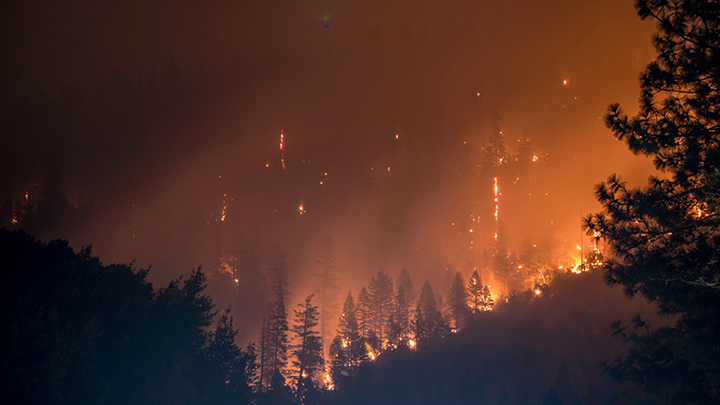
We have already experienced intense forest fires that have burned more area and lasted longer than in the past. Think Fort McMurray or Kelowna. Global warming will intensify this risk. More forest fires affect timber supply for housing and construction, hurting jobs and forest communities. They raise disaster management costs for governments, which must pay for forest fire suppression, community relocations and emergency relief efforts.

The spread of invasive species will, over time, change the complexion of our forests and agricultural supplies and practices. Recall the pine beetle devastation in the forests of British Columbia and Alberta. Even now, Genome Canada, for example, is pondering ways to create hardier, more climate-resilient tree species.

Canada’s fishing industry, rich and central to many coastal communities but precarious too, will be affected by these projections of higher warming.

Global warming of 1.5°C is projected to shift the ranges of many marine species, to higher latitudes as well as increase the amount of damage to many ecosystems. It is also expected to drive the loss of coastal resources and reduce the productivity of fisheries and aquaculture (especially at low latitudes).

As fish migrate and new breeding patterns emerge, fishers and processors will have to adjust. Previous high-value species may diminish or even disappear due not just to climate change but also to short-term human responses such as overfishing to compensate.

Higher temperatures around the world will directly affect current food production practices everywhere. Keeping warming to 1.5°C is clearly advised by the IPCC.

Limiting warming to 1.5°C, compared with 2ºC, is projected to result in smaller net reductions in yields of maize, rice, wheat, and potentially other cereal crops, particularly in sub-Saharan Africa, Southeast Asia, and Central and South America;

For Canada, shifts in food production elsewhere may mean accompanying shifts here. The prospect of greater export opportunities needed to compensate for these changes is obviously appealing. That will necessitate adjustments in planting patterns and crop management in Canada's Prairies in particular—and doing so in a manner that also adapts to the climatic changes we will be experiencing. As food production fails in some parts of the world, regional and nation-state conflicts can exacerbate, leading to population shifts and migration. Canada as a safe and prosperous haven will need to come to grip with "climate refugees" as a consequence.

In summary

The IPCC special report pulls no punches in identifying the risks and likelihoods of just a half a degree of further global temperature change. What sounds like a little adds up to a lot. In our northern part of the globe, Canada is threatened, as we will experience warming greater than the global average. We find ourselves in this litany below:

Unique and threatened systems: ecological and human systems that have restricted geographic ranges constrained by climate related conditions and have high endemism or other distinctive properties. Examples include coral reefs, the Arctic and its indigenous people, mountain glaciers, and biodiversity hotspots.

Keeping Canada the way it is and the way we want it is no sure thing anymore.

This op-ed first appeared in the National Observer on October 17, 2018.

Policy Analysis

The Multiple Benefits of Natural Infrastructure

October 19, 2018

The Government of Canada slated billions of dollars in its 2016 budget to water, wastewater and green infrastructure funding in an effort to ramp up its commitment to environmental protection.

The government’s Disaster Mitigation and Adaptation Fund (DMAF) also pledged to "support large-scale infrastructure projects, including natural infrastructure, to help communities better manage risks of disasters triggered by natural hazards."

This is all encouraging news, as it signals an increasing effort to mainstream a critical piece of infrastructure that can provide multiple advantages—natural infrastructure.

WHAT IS NATURAL INFRASTRUCTURE?

What does this term mean, and how can humans and the environment gain from it? Natural infrastructure is an area or system that is either naturally occurring or naturalized and then intentionally managed to provide multiple benefits for the environment and human well-being.

Natural infrastructure can be considered an active form of nature likely focused on the most important of these benefits. Natural infrastructure comprises an active management component aimed at providing (or conserving) the key advantages—such as climate resilience, clean water and biodiversity.

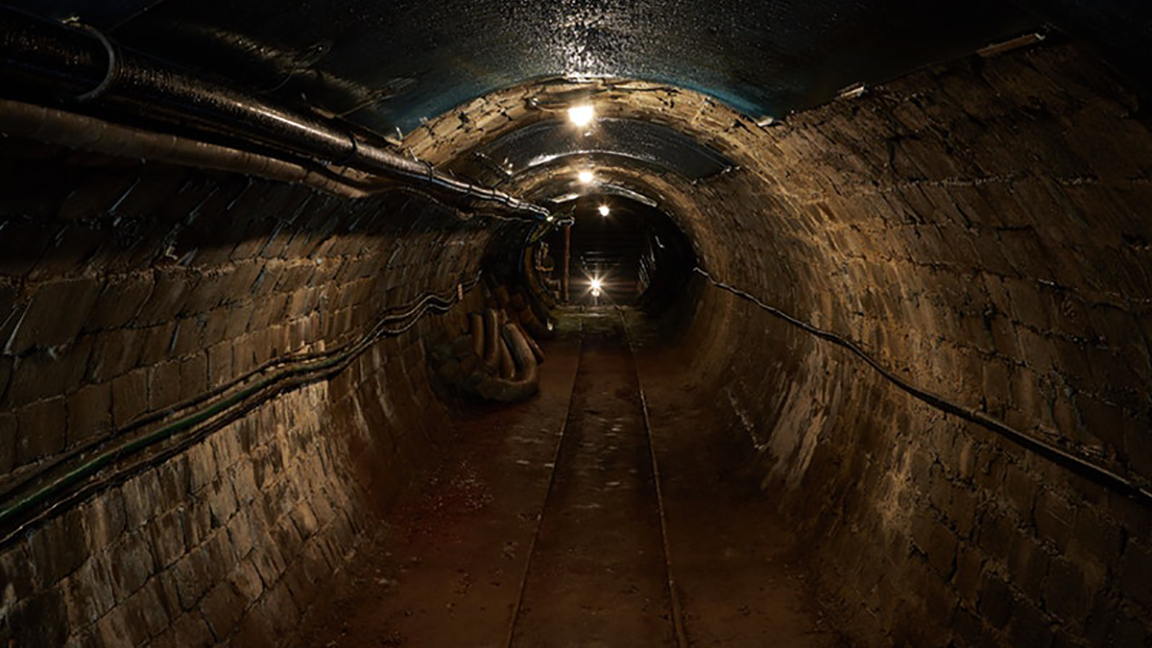
It differs from traditional "grey" infrastructure, such as pipes, tunnels and factories, which are completely constructed by humans. Natural infrastructure is a form of "green" infrastructure, a term that also includes systems with positive environmental outcomes, such as renewable energy or electric vehicles.

For a system to count as "natural infrastructure," it needs to tick three boxes:

  • It is natural or naturalized. For example, naturally occurring wetlands are included as well as constructed wetlands or even floating treatment wetlands that emulate the functions of natural ones.
  • It is targeted at and/or managed by humans. Natural systems or processes that occur without human management don’t count. This active management means natural infrastructure provides higher benefits than comparable natural systems in neighbouring areas and similar contexts.
  • It provides enhanced gains, including, for example, climate resilience to communities, enhanced water quality, floodwater retention, etc.


Bird house inside a river

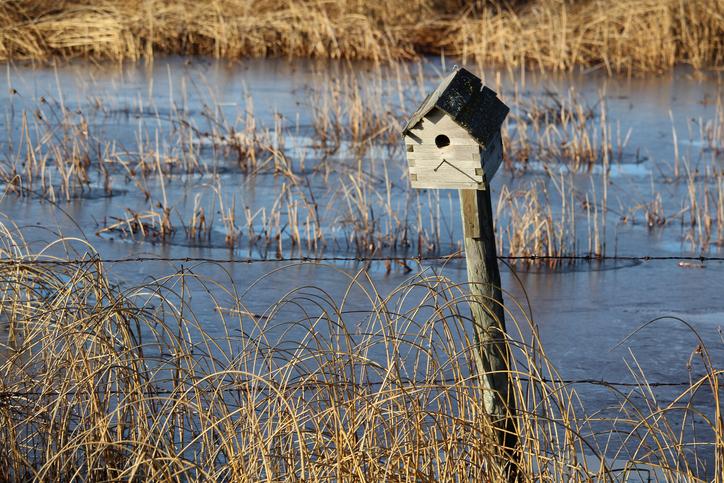
Natural infrastructure is an area or system that is intentionally managed to provide multiple benefits for the environment and human well-being.

In addition to naturally occurring and constructed wetlands, other examples of natural infrastructure include riparian buffers, urban forests and woodlots, meadows and pastures, and community gardens. Green roofs, treatment lagoons and urban stormwater drains can be naturalized with human intervention and therefore also count as natural infrastructure.

WHAT’S THE DIFFERENCE BETWEEN NATURAL INFRASTRUCTURE AND JUST PLAIN OLD NATURE?

Nature provides us with a range of benefits—many of which are quantifiable and valuable in real economic terms.

Natural infrastructure can be considered an active form of nature likely focused on the most important of these benefits. Natural infrastructure comprises an active management component aimed at providing (or conserving) the key advantages—such as climate resilience, clean water and biodiversity.

Consider a ditch or low-lying area that collects water when it rains. Left to its own devices, it might provide some positive effects, including water filtration and a habitat for insects and birds. This is defined as "nature." If not actively managed, over time some benefits might decrease and others might increase.

A managed wetland might involve manipulating the water levels at specific times, cleaning out the plant growth and enhancing the ability of the wetland to provide cleaner water, carbon storage and habitats for a range of species. Wetland management might also enhance some flood damage mitigation effects or provide water in times of drought. This is defined as "natural infrastructure."

One way to think of natural infrastructure is “nature at its best.”

WHAT KIND OF VALUE CAN NATURAL INFRASTRUCTURE BRING TO HUMANS?

Many of the benefits provided by nature and natural systems are not valued in real economic terms.

These benefits, or "ecosystem services," are gaining in popularity as a means to improved well-being and sustainable development. While we need clean water and pay millions to build or upgrade water treatment facilities, there isn’t a dollar value on clean water provided by natural systems, such as wetlands. As a result, it’s harder to value natural infrastructure.

Making the business case is the next challenge. Questions of cost, value depreciation and returns on investment will abound, and proponents of natural infrastructure need to be ready with answers.

Even so, natural infrastructure is emerging as a useful means to acquire these benefits on a larger scale. Moreover, policies and markets are starting to emerge to deliver some ecosystem benefits, such as carbon sequestration. Other systems are being prioritized because they deliver multiple gains (for example, soil health that improves carbon storage, agricultural productivity and water management) or are increasingly important in a time of global growth and deteriorating natural systems (such as cleaner water).

HOW DOES NATURAL INFRASTRUCTURE COMPARE TO TRADITIONAL GREY INFRASTRUCTURE?

In many instances, natural infrastructure can be more cost efficient and sustainable.

At lower costs than those associated with building and materials, and often at lower operational costs to manage compared to ongoing built infrastructure costs, we can offset millions in spending on a grey infrastructure system that may provide only one key benefit. For example, while a wastewater treatment plant’s sole function is to pump out clean water, well-managed wetlands can perform that function while also providing habitats for key flora and fauna, recreational capacity and removal of greenhouse gases.

cloudy sky

In June, Canada announced CAD 1.8 million to restore 75 hectares of salt marshes to combat rising sea levels in Eastern Canada’s Bay of Fundy.

In addition, while built infrastructure like dams and pipelines perform one function but can be damaging to the environment and people in other ways, natural infrastructure generally enhances natural systems, often more efficiently and in longer-lasting ways.

WHERE IS NATURAL INFRASTRUCTURE ALREADY HAVING AN IMPACT?

Perhaps the best-known example of natural infrastructure is in New York City. As part of a larger effort to protect the city’s drinking water sources, Boreas Lake, upstream of the city’s drinking water supplies, is maintained within the protected areas of the Adirondack Park by The Nature Conservancy to provide clean waters, as well as to maintain habitats, tourism and recreation. Thanks to its strategic investment in natural infrastructure, New York City continues to enjoy inexpensive clean drinking water and other valuable benefits.

WHERE DO WE GO FROM HERE?

We should start to envision a future where combined natural and built infrastructure systems meet our not only our water needs but also enhance air quality, biodiversity and provide other benefits.

Making the business case is the next challenge. Questions of cost, value depreciation and returns on investment will abound, and proponents of natural infrastructure need to be ready with answers.

Despite the barriers, we are on the move! In June, Canada announced CAD 1.8 million in funding under the DMAF program to restore 75 hectares of salt marshes to combat rising sea levels in Eastern Canada's Bay of Fundy.

Seizing that momentum through more strategic investments in natural infrastructure will help us ensure that we harness the best of what nature has to offer without putting more strain on an already stressed planet.

Policy Analysis

Carbon Dividends Could Save Carbon Pricing – and Create a New National Climate Consensus

Dividend payouts could hold the key to Canada's carbon pricing strategy getting back on track.

October 11, 2018

Canada’s Pan-Canadian Framework on Clean Growth and Climate Change is perilously close to collapsing. The federal-provincial consensus that gave it birth two years ago is unravelling.

The problem: changes in provincial governments and rising opposition to carbon pricing. Most recently, Manitoba announced it would change course and abandon its proposed carbon tax. With Saskatchewan unalterably opposed, Ontario eliminating cap and trade, New Brunswick with a precarious minority government and unlikely to move ahead, and Alberta likely to change governments, the future of carbon pricing under the Pan-Canadian Framework looks doubtful.

The main reason for increased skepticism toward carbon taxes and cap and trade is concern about the costs of carbon prices on ordinary households. Nobody likes higher taxes, or higher prices on gasoline or home heating. Opposition politicians and anti-carbon-tax groups have focused on this, and carbon pricing faces more resistance than two years ago.

Gas station

A new report from Canadians for Clean Prosperity points a way out of this dilemma: Governments can ease the burden of carbon prices with carbon dividends. And with a carbon-dividends approach, the stage can be set for a new national climate policy.

Ottawa has said that any province that does not bring in a carbon-pricing system that meets national standards will face a federal “backstop” carbon tax. To start, this will apply in Saskatchewan and Ontario, and now apparently Manitoba. Other provinces such as New Brunswick or Alberta may get added to the list with potential changes in government.

Legislation requires Ottawa to return any carbon revenues raised within a province back to that province – either to the provincial government or directly to individuals. Prime Minister Justin Trudeau has made it clear that he intends to send the money to citizens, not to provincial governments that are fighting the national climate plan.

This is where carbon dividends come in. Carbon dividends are direct rebate cheques, paid for out of carbon revenues, and sent in an equal amount to every individual and household in a province. Clean Prosperity’s study showed that if all revenues raised through the federal carbon-tax backstop were sent to households as equal per capita payments, almost all households would benefit, regardless of income level or family type.

For example, a typical middle-income household in Ontario would expect to pay about $340 in increased carbon costs in 2020 under the backstop, but would get back a $517 dividend – $177 more than their carbon costs. In Saskatchewan, that family would end up $1,099 ahead (since Saskatchewan has more carbon-intensive industries which would be subject to carbon taxes). Lower-income families would do even better, since while everybody receives an equal dividend payment, lower-income households generally spend less on transportation fuel or home heating.

With families likely to come out ahead economically even after paying carbon taxes, carbon dividends may change the debate about carbon pricing in Canada. Canadians may feel less resistant to paying a few cents more per litre when they know that they will be getting quarterly cheques that more than compensate them.

But solving one dilemma may create another. The backstop – and the dividends – will only apply in those provinces that do not have an adequate carbon pricing system of their own. The combination of a carbon tax backstop with carbon dividends may shore up carbon pricing between provinces, but it will still leave Canada with a patchwork climate policy, with wide anomalies between provinces in carbon-pricing mechanisms and uses of carbon revenues. And, it is vulnerable to the next change in provincial government.

The answer to this problem would be for the federal government to bite the bullet and turn the backstop into a truly national carbon-pricing policy by applying it uniformly across the country. All provinces would have a uniform carbon tax, with most revenues refunded directly to households. Instead of fretting about benchmark climate policy equivalents, it would simply institute a benchmark carbon price equal across Canada. Provinces would be free to go beyond that price, but could not go below it. Quebec, with its established cap-and-trade system, could be given an opt-in choice.

The same price, equitable dividends and better outcomes. A very Canadian approach across a very diverse country.

The growing opposition in provinces toward carbon pricing cannot be ignored by Ottawa. Instead of trying to patch up a patchwork system, it should see this as a new opportunity and assert itself in the national interest.

The carbon tax backstop paired with carbon dividends may apply only to some provinces next year. But it could point the way to a truly national carbon and climate policy that works for all of Canada very soon.

Mark Cameron is Executive Director of Canadians for Clean Prosperity.

David McLaughlin is Director of Climate Change, Canada, with the International Institute of Sustainable Development.

This op-ed first appeared in The Globe and Mail on Tuesday, October 9, 2018.

Report

Public Cash for Oil and Gas: Mapping federal fiscal support for fossil fuels

This report examines the inventory of federal fossil fuel subsidies in Canada

September 13, 2018

This report maps and updates IISD's inventory of federal fossil fuel subsidies in Canada.

The top-line message of the report is that subsidies that were quantified are down substantially from IISD's last report due to a combination of three dynamics:

  1. Reform of fossil fuel subsidies through government policy changes since the last inventory
  2. A decline in global oil prices since the last inventory, which resulted in less exploration/production
  3. Companies deferring some tax benefits that could be taken in the future

Report details

Topic
Subsidies
Climate Change Mitigation
Region
Canada
Impact area
Climate
Publisher
IISD
Copyright
IISD, 2018

Financial Technologies and the Environment

IISD and IISD Experimental Lakes Area are some of the first in Canada to explore those in the sustainable development world can adopt fintech and apply them to sustainable development practices.

If you have heard of the Internet of Things (IoT), big data, artificial intelligence (AI) and blockchain, then you have probably heard of "fintech." These financial technologies are used across consumer and industrial spaces and are now being embraced by financial organizations with large global investments.

In parallel with the data and fintech revolutions are ongoing efforts at national, regional and global levels to reach the Sustainable Development Goals. Could these technologies, associated with concepts like observation, information, context and trust, be the tools we need to build a more sustainable and equitable world?

Artifical Intelligence is one of the four financial technologies IISD is exploring and applying to sustainable development practices.

IISD and IISD Experimental Lakes Area are some of the first in Canada to explore how actors in the sustainable development world can adopt these financial technologies and apply them to sustainable development practices.

We are discovering existing adoptions, such as the City of Stockholm using IoT to monitor their water quality, to the Jefferson Project Lake George in New York State which is using IoT and AI to create a computing platform that captures and analyzes data from sensors tracking water quality and movement.

We then plan to work with IISD Experimental Lakes Area's unparalleled dataset to demonstrate the potential—and the challenges—of an AI-driven prediction on the physics, chemistry and biology of lakes and rivers.

This work is funded by RBC, who is working with partners like us to explore new and exciting technologies to solve the world’s pressing environmental challenges.

Insight

High-tech data needed to stop sewage overflows

Financial sector technology could help as cities struggle with waste.

August 28, 2018

Toronto residents were surprised to wake up recently to discover their harbourfront visibly soiled by the sewage of millions of toilets, after heavy rains overflowed aging sewer systems in the area.

When Lake Ontario Waterkeeper members took their phones and cameras to document the sewage on Toronto’s beaches, they were contributing to an alarmingly small dataset that tells us how much of our waste is flowing into waterways.

Wastewater is, admittedly, not the sexiest of topics. Canadians are witnessing the impacts of climate change on our aging infrastructure. These unpleasant but necessary stories about our sewage are capturing everyone’s attention.

It is shocking how little we monitor wastewater overflows. We are trying to manage a problem the extent of which we don’t even comprehend.

In Canada, some municipalities and provinces report on sewage overflows, but these numbers come from rough-hewn models or rainfall calculations. Most of our cities don’t track sewage overflows into oceans, rivers or lakes in real time, and any data used to make decisions on freshwater management and sewage infrastructure are based on little more than informed conjecture.

And that’s only the ones that report. In 2017, more than a hundred municipal wastewater systems did not report their sewage overflow, meaning that major urban areas’ contributions are unaccounted for.

In a country like Canada, where we are proudly home to 20 per cent of the world’s fresh water, getting a handle on where and when sewage enters the streams and rivers is a logistical nightmare.

But there is hope. Collecting, processing and using large amounts of data is not an impossible challenge, nor is it unique to sewage management. In fact, we do it every day.

The network of internet-connected devices we use daily has come to be known as the Internet of Things. This network provides us with data on any number of topics, from when a cluster of cell phones is stuck in a traffic jam to Instagram posts tagging lakes affected by algae blooms. Inexpensive web-connected sensors are becoming the norm.

Our friends in the financial sector are using data harvested from the IoT to understand their clients better and improve customer experience. In the humanitarian sector, data from satellites and cellphones fills in gaps missing from maps, helping experts and local officials plan risk reduction and disaster response activities accordingly.

Stockholm is rushing to become the “world’s smartest city” by putting sensors across the entire water delivery and sanitation system, so residents and waste managers can understand the human and environmental impacts with real data in real time. There is no reason why a similar system cannot be developed for Canada.

Kofi Annan once said, “[w]ithout good data, we’re flying blind. If you can’t see it, you can’t solve it.” The political and social will to fix aging infrastructure can come from simple data that lets us know how we are affecting the environment and where—and prevent the worst problems before they begin.

This editorial first appeared in the Toronto Star on August 28, 2018.

Insight

Climate at the Crossroads

August 24, 2018

It began and ended with two new cabinets and two new words: climate change.

They were added to the title of Prime Minister Justin Trudeau’s first Minister of the Environment and Climate Change in 2015; and taken away from the new title for Ontario Premier Doug Ford’s first Minister of the Environment, Conservation and Parks in 2018.

Those two cabinet changes mark the high- and low-water marks of climate change progress in Canada. With the first, the Trudeau government set about creating the Pan-Canadian Framework on Clean Growth and Climate Change (PCF) in December 2016. With the second, the Ford Progressive Conservative government repealed its cap-and-trade system and commenced a legal challenge to Ottawa’s plan to require provinces to implement carbon pricing regimes by 2019.

In just over two years, Canada has swung from a seeming inevitability on climate action with carbon pricing to a pitched political battle between Liberals and Conservatives, some provinces and Ottawa, challenging the very notion of carbon and climate action at all. Climate policy has reached a crossroads in Canada. Next year’s federal election looks now as the deciding event.

Despite the federal Liberal government’s avowed commitment to global and Canadian climate action under the slogan “Canada is Back”, the terrain for what became the PCF was tilled by “the two Stephens”: Harper and Dion. The 2008 federal election put paid to the notion of a carbon tax to reduce emissions. Then Liberal leader Stéphane Dion promoted his Green Shift carbon tax. Prime Minister Stephen Harper castigated it as a “tax on everything”, winning an increased minority government.

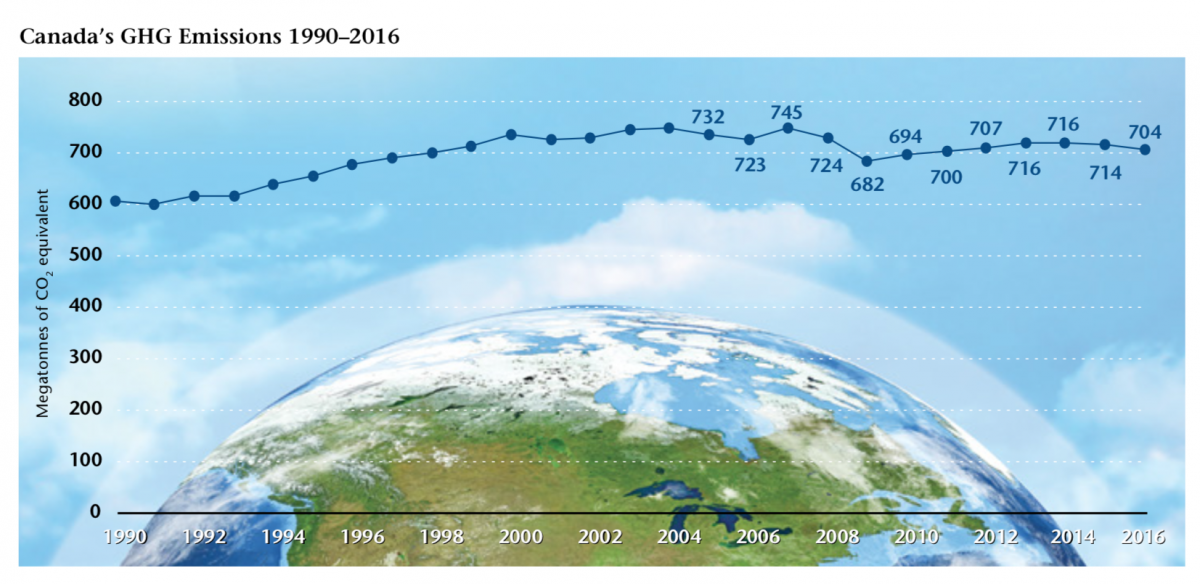
From that moment on, federal Conservatives became unalterably opposed to formal carbon pricing as a tool to reduce emissions, despite their own, soon-to-be-discarded cap-and-trade plan known as Turning the Corner. A slow, sector-by-sector regulatory approach was adopted instead. But the high-emitting oil and gas sector was consistently left out and Canada’s emissions rose until the 2008-09 recession caused them to drop, before rising again.

But if Harper effectively poisoned the political well on using a carbon tax, he bequeathed a poisoned chalice to both his own party and the Trudeau government: his Paris 2030 targets. By setting yet another ambitious GHG reduction target of 30 per cent below 2005 levels by 2030, he just as effectively boxed-in future government action. Thinking this target would be politically bullet-proof from their Conservative opponents, the Liberals adopted it with alacrity in 2015. Andrew Scheer, the new Conservative party leader, then drank from it earlier this year with a public commitment to reach the Paris target but without a carbon tax.

Yet, this target is proving just as resistant to actual achievement as every other Canadian climate target from Kyoto onwards. Now owning it, the Liberals are criticized for instituting a modest carbon tax to help achieve it (it is either too much or not enough, say the same critics). Meanwhile, the Conservative position will be extremely difficult, if not outright impossible, to accomplish with a regulatory approach alone.

The basis, then, for sound climate public policy in this pre-election year is increasingly looking like a re-run of the 2008 campaign.

The Trudeau government’s initiative to knit together a pan-Canadian climate approach was based on the realism of federalism and the state of climate play when he took office. Under the Harper government, provinces had been the leaders in climate action, from British Columbia legislating the country’s first-ever carbon tax to Ontario closing down its coal-fired electricity plants to Quebec bringing in cap-and-trade. Any national policy had to realistically account. Here’s a thought experiment: if the Liberals took office today determined to bring in a national climate policy, would they bring in their current PCF plan?

The answer is very likely “no”. With dimming provincial support for climate action, it would be up to the federal government to impose a uniform carbon price and the elements of a pan-Canadian climate plan. In less than two years, Canada has moved from a provincially-led, federally-backstopped climate policy to one that looks more and more ‘federally-led, provincially-backstopped’.
In that vein, the Ford government’s withdrawal from the climate sphere can be seen as either a brake or an accelerator to a truly pan-Canadian climate policy for the country. Carbon pricing opponents are framing it as unstoppable momentum to ending the “Trudeau carbon tax”—the brake. Seen another way, it actually creates an opportunity for the federal government to re-cast its pan-Canadian climate policy and bring about the carbon price uniformity and certainty sought in the PCF—an accelerator. The tool to do so: revenue recycling to people.

There is today a window to implement a truly national PCF that fits more directly into a federally-mandated carbon and climate policy. One that does not focus on price stringency to achieve environmental outcomes. Here are the elements that could make it up:

First, leave Quebec alone to implement its cap-and-trade system with California under the Western Climate Initiative. There is no movement currently in Quebec to withdraw from carbon pricing or climate action. As this is an international agreement, Ottawa should not sunder it.

Second, bring in a national carbon tax floor of $25 or $30 per tonne (or 5-7 cents per litre of gasoline) for all other provinces at once. Instead of just doing this for two provinces now and presumably Alberta later, apply it to all of them. Provinces could have a higher price if they so desired, but they could not have a lower price. This is higher than the current $20 per tonne price set for 2019 but not unduly so. A higher price would also incent more emissions reductions at the outset.

(A $30 per tonne “carbon price collar” was in fact recommended by the now-defunct National Round Table on the Environment and the Economy in 2010 as a competitiveness measure to allow Canada to move on climate action without getting too far ahead of the U.S.)

Third, keep that price flat until the 2022 review. Business is worried about escalating carbon prices and a “layering” of regulations on top of it, and this would give a pause to businesses’ benefit while NAFTA is settled with the United States.

Fourth, recycle all of the carbon tax revenue directly back to residents in each jurisdiction in the form of dividend or rebate cheques. Better still, do it for individuals, not households, to maximize the size and visibility of the dividend. For those provinces with revenue recycling systems already in place, they could have the choice of retaining their current system or withdrawing in favour of the federal government’s dividend cheques, which would actually be worth $200-$300 for each person. A four-person household could wind up receiving rebates totalling more than a thousand dollars.

Fifth, bring in output-based carbon pricing for large emitters as currently being implemented in Alberta, and planned for Saskatchewan and Manitoba. This system of industrial performance standards reduces the cost of carbon pricing for emitters by returning a portion of their payments in the form of a subsidy. This prevents carbon leakage and reduced production for trade-exposed sectors. The recent adjustments by the federal government to its proposed output-based system actually eased the cost burden even further on industry; smart recognition that industry needs more transition support to implement carbon pricing, even if the politics of doing so has left the Trudeau government open to largely specious charges of back-tracking on its carbon policy.

At one bold stroke, the federal government would take the policy responsibility to go with the political responsibility it has for all practical purposes already assumed for its carbon and climate approach. The effect of hundreds of dollars in rebate cheques going into peoples’ pockets is the best, and frankly, only way at this juncture to ease carbon pricing into place for all Canadians.

The federal government’s legal authority to tax and distribute is widely agreed. By having an equal carbon floor price across the country, all jurisdictions are being treated the same. A uniform carbon price for the country takes root. Since the effect of the legal challenge from Saskatchewan and Ontario is to curtail federal action period on climate, it can be seen as a necessary but limited assertion of federal authority in this important field.
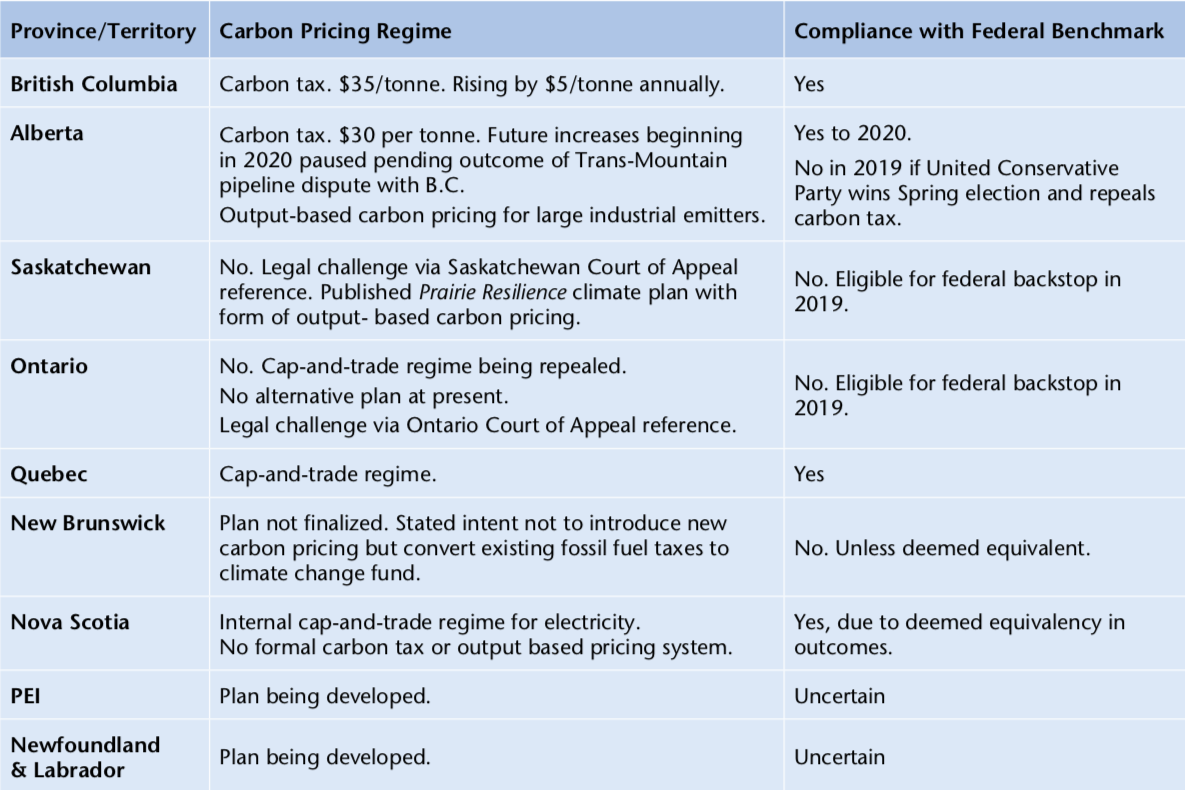
The effect of this would be to impose a carbon price on the following provinces: Alberta (if there is a change in government), Saskatchewan, Ontario, New Brunswick, PEI, and Newfoundland and Labrador. The floor carbon price is modest enough not to create significant economic differentials between provinces. The flat rate ensures the political impact is equally modest as consumers and businesses are not hit with rising fuel bills each year. And, it requires governments to look at more politically-acceptable non-pricing measures to close the Paris gap.

Ottawa has lost control of the climate narrative in the country. 2018 is not 2015 or 2016 in terms of its political authority and willingness of provinces to collaborate on climate. Only a bold move will suffice to salvage it. But to bite the bullet on climate, it must water its wine too. A revised national carbon floor price with full revenue recycling cheques back to individuals does just that.

It still features key elements of the current PCF: carbon pricing, output-based industrial pricing, revenues kept in each jurisdiction, a 2022 review, and provincial flexibility to do more.

Next year—an election year—is likely to determine whether Canada will act as one on climate or reanimate the fragmented approach of the recent past. If elections matter, this next one promises to be consequential.

This op-ed first appeared in Policy Magazine on August 24, 2018.

Report

A Dialogue on a Just and Managed Transition to a Paris-Aligned Low-Carbon Future

The International Institute for Sustainable Development (IISD) and Oil Change International (OCI) hosted a Chatham House Rule round table discussion on Canada's energy transition in May 2018. This discussion paper highlights key outcomes from this round table for the purposes of informing continuing conversation.

August 13, 2018

In Paris in 2015, the world agreed to limit global warming to well below 2°C and aspired to keep it to 1.5°C.

Canada was a champion of this ambitious outcome and now faces the task of both meeting existing targets and increasing ambition.

As a wealthy, major fossil fuel producer, Canada has the opportunity to be among the leaders in charting abpathway away from fossil fuel production toward a low-carbon future.

Movement to end the expansion of oil, gas and coal production is quickly becoming a hallmark of climate leadership, as are calls to begin a managed phase-out and just transition in line with the Paris goals. Canada has taken important steps with its Just Transition Task Force and the phase-out of coal, but this work should inform a near-term parallel process for oil and gas.

A dialogue to define how to manage this transition such that it protects workers, communities, economies and the climate is a critical one that can only benefit from starting sooner rather than later. To this end, the International Institute for Sustainable Development (IISD) and Oil Change International (OCI) hosted a Chatham House Rule round table discussion on the topic in May 2018.

This discussion paper highlights key outcomes from this round table for the purposes of informing continuing
conversation.

Report details

Topic
Climate Change Mitigation
Region
Canada
Impact area
Climate
Publisher
IISD
Copyright
IISD, 2018