Insight

Canada's Unsung Female Heroes of Life Sciences

International Day of Women and Girls in Science is February 11, 2018. To mark the occasion, let’s look back at some of Canada’s women life scientists. 

February 10, 2018

International Day of Women and Girls in Science is February 11, 2018. To mark the occasion, let’s look back at some of Canada’s women life scientists. 

They’ve been pioneers in providing a foundation of knowledge through the sheer force of their world-class talent —going back more than a century. Their legacy has established a knowledge foundation that represents the impact of real science.

Largely unknown by Canada’s decision-makers in government, industry and even the general public, their work is unheralded by ribbon-cutting ceremonies. Their relative obscurity in Canada, then and now, appears to be the preoccupation of how budgetary decisions are made as opposed to a consideration of talent and merit.

It’s high time to give them their due:

Maud Menten

At the turn of the century, University of Toronto medical graduate Maud Menten was barred from doing independent research in Canada as part of the accepted sexism of the day.

Her discovery in Berlin in 1913 provided the first insight into how chemical reactions in every cell of our body are regulated by enzymes. The discovery enabled enzymes to be purified, modified and targeted for drug therapy for disease.

Today enzymes serve as targets for about a third of all drugs in clinical use.

Maude Abbott

Maude Abbott was a world-renowned scholar, Bishop’s University medical graduate (1894) and a McGill University medical museum curator and pathology lecturer.

Her work in 1905 on congenital heart disease is critical to modern surgery. Abbott’s stunning pathology dissections are preserved today at the McGill Maude Abbott Medical Museum and remain unsurpassed to this day.

Brenda Milner

In the middle of the 20th century, McGill’s Brenda Milner, a renowned scholar and founder of the field of neuropsychology, discovered that memory in humans is multiple and stored in several different parts of the brain.

Her discoveries in 1957 led to better treatments for a variety of brain disorders including trauma, degenerative and psychiatric diseases.

Annette Herscovics

At McGill, Annette Herscovics discovered in 1969 that thyroglobulin, a precursor to thyroid hormone, undergoes carbohydrate modifications.

This was one of the first discoveries of a class of proteins known today as “glycoproteins.” Carbohydrate addition to proteins is today known as the most abundant protein modification for all life forms on the planet.

At Harvard in 1974, Herscovics then discovered the exact mechanism for carbohydrate addition that is a universal mechanism for all organisms with nucleated cells.

Upon returning to McGill in 1981, she discovered how these modifications are relevant to human disease, including cancer.

Rose Johnstone

Herscovics’s PhD supervisor was Rose Johnstone, who made a monumental discovery at McGill in 1983.

She discovered exactly how red blood cells in our body are made from precursor cells through a previously unknown structure she named “exosomes.”

Exosomes are now recognized as a universal protein delivery mechanism used by all cells in our body. They’re actively studied by academics and industry for the understanding and treatment of cancer, autoimmune diseases and neurodegenerative diseases, including Alzheimer’s and Parkinson’s disease.

Morag Park

At the U.S. National Cancer Institute in 1986, Morag Park’s work on mutant “MET” gene association with several different cancers led to international prominence.

Today, Park is head of the McGill Cancer Research Centre, and has extended her discoveries to breast cancer and the importance of the surrounding normal cells in tumour progression.

Janet Rossant

Janet Rossant discovered the mechanisms used by embryos to generate organs and tissues with direct relevance to childhood diseases.

Her talent was first recognized at Brock University in 1977 and was followed by recruitment to the Lunenfeld Institute in Toronto. She was then director of the Research Institute of the Hospital for Sick Kids, and is now president and scientific director of the Gairdner Foundation.

Mona Nemer

Mona Nemer is currently Canada’s Chief Scientific Adviser discovered [sic] in Ottawa how genes that regulate the development of the heart help understand heart disease.

Nada Jabado

The discoveries of Nada Jabado, a McGill physician scientist and paediatric cancer specialist, focus on how proteins are modified in cancer via the epigenome that mark the DNA in our genes to change the function of the gene.

Heidi McBride

McGill cell biologist Heidi McBride has made transformative discoveries on the role of mitochondria (the energy factory in our cells) in cancer and neurological diseases, including Parkinson’s disease.

Freda Miller

Freda Miller at the Hospital for Sick Kids in Toronto has deciphered the mechanisms used to generate neuronal circuits during development from a thin sheet of non-neuronal precursor cells.

Anne Claude Gingras

Anne Claude Gingras of the Lunenfeld-Tanenbaum Research Institute in Toronto is a specialist in “quantitative proteomics.” It’s led to enormous advances in our understanding of cell organization with direct application to disease.

Andrews, Arrowsmith and Edwards

Brenda Andrews, Cheryl Arrowsmith, and Elizabeth Edwards are internationally renowned for their discoveries at the University of Toronto.

Andrews defines the new field of systems biology to understand cell organization using robots and Artificial Intelligence and its application to disease.

Arrowsmith’s discoveries focus on cellular protein structure resolved at the atomic level to understand how chemical modifications regulate gene expression and their relevance to disease.

Edwards’ work on “bioaugmentation” through anaerobic microbes to detoxify environmental pollutants is of direct relevance to the nightmare of toxic industrial and municipal waste accumulation.

Impressive display of talent

Taken together, these discoveries represent an impressive display of talent for real science that rivals scientists anywhere in the world.

Whatever country recognizes and establishes a genuine priority to enable real science by talented women scientists, and helps them thrive in discovery research, will be rewarded enormously.

Discovery research institutes such as the Crick Institute in the U.K. gather the most talented scientists, men and women, early in their careers, when discoveries are usually made. That assures a critical mass and merit-based value system that then provides the best of the discovery researchers to go out to populate universities, research institutes and industry.

A Canadian model could—and should —focus on women scientists, since they now may be Canada’s most talented. And also its most undervalued.


Image removed.John Bergeron gratefully acknowledges Kathleen Dickson as co-author.

John Bergeron, Emeritus Robert Reford Professor and Professor of Medicine at McGill, McGill University

This article was originally published on The Conversation. Read the original article.

Insight details

Topic
Water
Region
Canada
Brief

Measuring Winnipeggers' Convenient Access to Public Transit

IISD has developed a method to track convenient access to public bus transit in Winnipeg, in Canada and globally. 

February 5, 2018

Public transit is a key component of sustainable urban development. It enables access to services and opportunities and provides mobility to those who choose to use public transit and to those who have no other choice.

Recognizing the important role public transit plays in cities, the United Nations included “convenient access to public transit” as an indicator among the 17 Sustainable Development Goals (SDGs), linked to Target 11.2 and Indicator 11.2.1.

Despite public transit’s inclusion in the SDGs, there is currently no standard method to measure what convenient access to public transit looks like.To provide information and analysis in support of the SDGs, IISD has developed a method to track convenient access to public bus transit in Winnipeg, and in other cities in Canada and globally. By proposing a method to measure convenient access to public transit, this brief highlights how localizing SDGs can advise policy, inform local narratives and guide sustainable development.

See the interactive map we have created to show Winnipeggers' access to public transit.

Brief details

Topic
Sustainable Development Goals
Measurement, Assessment, and Modelling
Region
Canada
Impact area
International Governance
Publisher
IISD
Copyright
IISD, 2018

Measuring Wealth to Promote Sustainable Development

The Measuring Wealth to Promote Sustainable Development project encourages governments and citizens to move “beyond GDP” as the fundamental measure of societal progress.

What's Wrong with GDP?

Concern is growing around the use of conventional economic indicators to gauge and guide national development, notably GDP. Conventional indicators like GDP lead decision-makers to favour policies with short-term benefits over those focused on long-term sustainability.

For over half a century, Gross Domestic Product (GDP) has been accepted as the universal measure of economic health and national progress. However, GDP does not reflect many basic components of societal progress. It does not address gender equality, health, education, social inclusion, income distribution or environmental quality. The deficiencies of using GDP as a measure of well-being have been widely shared for decades, yet it has proven challenging to change direction. A recent publication by the UN Secretary-General notes that member states could move beyond GDP by implementing comprehensive wealth measures, following the steps proposed by the World Bank (latest report in 2021) and the UN Environment Programme (latest report in 2023).

The Measuring Wealth to Promote Sustainable Development project aims to encourage governments to move “beyond GDP” as the main measure of societal progress. Wealth is, simply put, the sum total of the assets we own as a society. Wealth is important because it represents the resources we have at hand today to ensure our social and economic activities continue in the future. For this reason, measures of wealth provide an important lens to judge our prospects for future well-being.

Wealth at a Glance

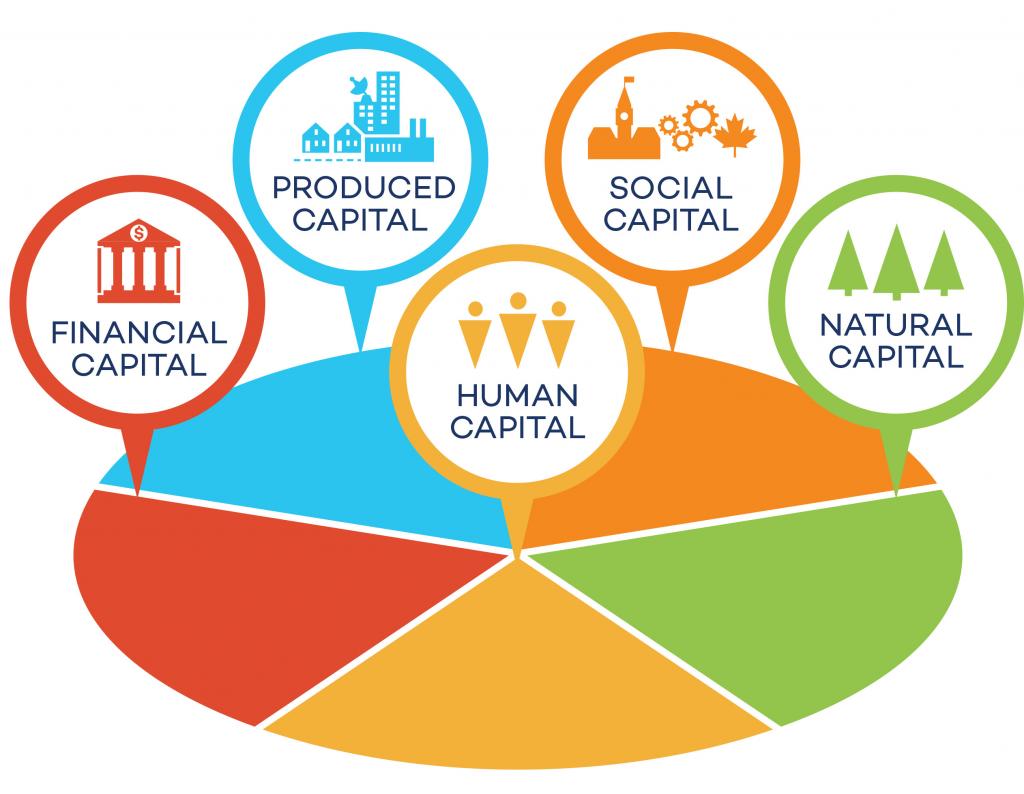
Wealth measures five fundamental types of assets a nation has:

  • Produced capital consist of roads, railways, ports, houses, machinery, and the wide variety of other manufactured assets found in the economy.
  • Natural capital includes market natural resources such as timber, minerals, oil, and gas. It also includes ecosystems of all kinds; for example, wetlands that help create clean drinking water and forests that act as carbon storehouses. 
  • Human capital is made up by the collective knowledge, skills, and capabilities of the labour force —the result of lifelong learning in both formal and informal settings.
  • Financial capital covers stocks, bonds, and other forms of financial assets. Investments by governments, businesses, and households are often aimed at building up stocks of produced and financial capital.
  • Social capital represents the norms and behaviours that define interactions between members of society, including how safe people feel in their communities, inclusivity, and trust in important institutions.
The five elements of Comprehensive Wealth

A key question is whether the size of a country’s comprehensive wealth portfolio is growing over time. If it is, then national development is likely sustainable and well-being should be stable or increasing. If it isn’t, development is on an unsustainable path and well-being will decline at some point. This is why measures of comprehensive wealth are increasingly understood to be crucial to assessing societal progress.

Working with Countries to Measure Wealth and Move Beyond GDP

Comprehensive Wealth Summary Report Small


In May 2024, IISD released reports with partners in Ethiopia, Trinidad and Tobago, and Indonesia to expand the push to measure well-being beyond GDP. The findings over the 25-year study period (1995 to 2020) indicate that comprehensive wealth tells a different development story than GDP in all three countries—a story policymakers and citizens need to know if they're to make good policy choices for long term sustainability.

In Ethiopia, IISD partnered with Mesfin Tilahun Gelaye's research team at Mekelle University. Ethiopia’s interest in moving beyond GDP was initially transmitted through its Growth and Transformation Plan II, which focuses on “broad-based growth.” The country also started valuation of its forest as natural capital in 2017. The study in Ethiopia found that despite considerable social, economic, and environmental challenges, Ethiopia has made reasonable progress in expanding its comprehensive wealth. Specifically:

Comprehensive Wealth in Ethiopia


  • Comprehensive wealth more than doubled during the study period, growing annually at an average rate of 3.3%
  • However, this growth ceased in 2017
  • Ethiopia's comprehensive wealth remained very low relative to those of Trinidad and Tobago and Indonesia (In 2020, just 11% and 10% of the two countries’ wealth, respectively)
  • Natural capital increased moderately until 2013 before beginning to decline
  • Produced capital is concentrated in the manufacturing sector, which accounted for a small share of GDP (4% in 2022). On the other hand, agriculture contributed around 40% of GDP the same year, but only 8% of produced capital was devoted to that industry
  • There is a high concentration of human and natural capital in traditional agriculture, which is labour intensive with low returns

In Indonesia, IISD partnered with Alin Halimatussadiah and researchers at the SDG Hub of Universitas Indonesia. The study found that wealth nearly tripled during the 25-year period, growing at an average annual growth rate of 4.3%. However, the relatively slow growth of GDP index (2.8%) over the same time compared with the comprehensive wealth index suggests the Indonesia has not benefited as much from its increasing wealth as it should. Specifically:

  • The comprehensive wealth index nearly tripled thanks to changes in human and produced capital, which grew at average annual rates of 4.4% and 5% respectively. However, it then began to decline in 2019.
    Comprehensive Wealth Indonesia
  • Produced capital grew significantly during the study period, though it remains far below industrialized countries on a per capita basis.
  • Financial capital dragged overall wealth down, though slightly, as Indonesia is a net debtor.
  • In contrast, natural capital hardly changed during the study period. Roughly 36% of Indonesia's market natural capital is made up of fossil fuels, with continued use contradicting Indonesia’s climate goals
  • Indonesia is a steward of considerable biodiversity, but is not getting the returns it should when it harvests this biodiversity. Policies to improve rent generation and capture should be considered to generate greater returns and lower the pressure to over exploit its biodiversity.
Comprehensive Wealth Trinidad and Tobago


In the Caribbean, IISD collaborated with Dr. Godfrey St. Bernard at the University of the West Indies in Trinidad and Tobago. While GDP growth over the 25-year period suggests somewhat sound economic development—with some concerning recent trends—comprehensive wealth paints a picture of moderate progress with a considerable number of red flags. A number of issues are tied to Trinidad and Tobago's economic overreliance on fossil fuels:

  • Following the 2008 global financial crisis, the comprehensive wealth index began a steady decline until 2020, falling 3.6% annually. The GDP index fell much less than the comprehensive wealth index during this time, however, sending a less obvious signal of unsustainability.
  • Oil and gas is the only market natural asset of real value and its value had fallen to near zero by 2020 due to depletion and falling prices.
  • Half of produced capital is tied to the petroleum industry, with a risk of ”stranding” this investment as the world shifts away from fossil fuels.
  • Human capital is quite high but falling since the late 2000s. According to World Bank data, Trinidad and Tobago fell from 35th in 2009 to 46th in 2018 in terms of human capital globally.
  • There were only limited contributions of financial capital to overall wealth despite the country’s efforts to build up a sovereign wealth fund.

As well as examining changes in comprehensive wealth in each country, the three national reports and synthesis report provide recommendations for national statistical offices, central banks, policymakers and everyday citizens on how to address individual national issues—and give greater prominence to comprehensive wealth overall.

Financial Capital in Ethiopia, Indonesia, and Trinidad and Tobago


Produced Capital in Ethiopia, Indonesia, and Trinidad and Tobago


Human Capital in Ethopia, Indonesia, and Trinidad and Tobago


Natural Capital in Ethiopia, Indonesia, and Trinidad and Tobago


Canadian Comprehensive Wealth

The methodology for building these three national reports was built on earlier IISD studies on Canadian wealth in 2016 and again in 2018. Using data from Statistics Canada from 1980 to 2015, both reports' findings raised a number of red flags for the sustainability of Canadians' prosperity; namely:

  • Unprecedented levels of Canadian household debt
  • Stagnant human capital (lifetime earning potential) since 1980
  • Reliance on foreign lenders for nearly three quarters of investment flows after 2012
  • Concentration of business investment in just two areas: housing and oil and gas extraction infrastructure
  • An 86 per cent drop in the market value of Canada’s most valuable natural asset: the oil sands
  • Vulnerability of Canada’s comprehensive wealth portfolio to climate change impacts

These concerns don't emerge when examining Canada's GDP performance over the same time period, which paints a far rosier picture of the country’s success.

Next Steps: Building Capacity to Move Beyond GDP

The next phase of the project will focus on capacity building for experts, policymakers, and academia to improve their skills and capacities to measure wealth. IISD team members identified important gaps and challenges relevant for low- and middle-income countries to develop the requisite statistical and methodological capacities for comprehensive or inclusive wealth indices.

In addition to the data management and analytical capacities, it will be crucial to identify practical linkages between comprehensive wealth and policymaking so these new wealth measures can be applied in a timely and effective way to relevant policy decisions—such as public investment strategies and prioritization; and assessment of alternative development project proposals.

IISD will provide targeted learning for senior policymakers and experts as well as young professionals, growing networks and similar initiatives elsewhere through sharing of experience and invite interested stakeholders to connect with team members Livia Bizikova and Zakaria Zoundi.

Peg

Peg is a community indicator system that has been developed for Winnipeg by Winnipeggers, led by a community-wide consortium of partners spearheaded by IISD and United Way of Winnipeg.  

Peg is a community indicator system developed for Winnipeg by Winnipeggers, led by a community-wide consortium of partners spearheaded by IISD and United Way of Winnipeg.  

In 1999–2000, over 3,200 Winnipeggers participated in United Way of Winnipeg’s Journey Forward process to identify Winnipeg’s most pressing social issues and imagine what the community could accomplish if people and organizations worked together to address these issues. At that time, Winnipeggers wondered how they would know if they were making progress on the issues most important to them. These same sentiments have been expressed through a number of subsequent community engagement and planning processes, most recently the City of Winnipeg's OurWinnipeg process.

Peg is a response to this. Peg is a community indicator system developed for Winnipeg by Winnipeggers, led by a community-wide consortium of partners spearheaded by IISD and United Way of Winnipeg. On December 3, 2013, Peg was publicly launched, broadly introducing Winnipeggers to the completed system. 

Peg presents data on key indicators of our community's well-being, along with stories from the community about how the issues underlying the indicators are reflected in the lives of Winnipeggers. Individuals, community groups, and organizations in all sectors can use the information to guide decision-making and collective action to achieve progress that reflects their values and aspirations. Community Indicator Systems enhance collaboration to address public issues, provide tools to encourage progress, inform decision-making, improve research and increase public knowledge about key economic, environmental, social and cultural issues.

Brief

Tracking the SDGs in Canadian Cities: SDG 8

IISD’s SDG Indicator Portal tracks SDG progress in 13 cities across Canada. The third brief in this series provides an overview of SDG 8—promote sustained, inclusive and sustainable economic growth, full and productive employment and decent work for all—across cities in Canada.

January 10, 2018

IISD’s SDG Indicator Portal tracks SDG progress in 13 cities across Canada.

The third brief in this series focuses on Sustainable Development Goal 8 (SDG 8), which aims to “promote sustained, inclusive and sustainable economic growth, full and productive employment and decent work for all” (United Nations Economic and Social Council, 2017). The three primary components of this goal are to: improve employment and provide decent work and social protection for all; support green growth; and encourage sustainable tourism.

Brief details

Topic
Sustainable Development Goals
Region
Canada
Impact area
International Governance
Publisher
IISD
Copyright
IISD, 2018
Insight

Federal government announces next steps for establishing carbon pricing across Canada: Reaction

Jane McDonald, Managing Director at the International Institute for Sustainable Development, responds to the federal government announcing its next steps for establishing carbon pricing across Canada.

December 21, 2017

Jane McDonald, Managing Director at the International Institute for Sustainable Development, made the following statement in response to the federal government announcing its next steps for establishing carbon pricing across Canada:

Today, the federal government sent letters to all provinces and territories outlining the timeline for when it will implement common minimum requirements for a price on carbon across the country. This is a key step forward in enacting the Pan-Canadian Framework on Clean Growth and Climate Change in order to meet Canada’s commitment under the Paris Agreement.

Pricing carbon emissions is a well-established approach to climate change in Canada and around the world. Even before the Pan-Canadian Framework was announced in 2016, 85 per cent of Canadians already lived in a province with carbon pricing. And this year, 67 different jurisdictions around the world are pricing carbon, including the European Union, China, Mexico and major U.S. states.

There are no real surprises in these letters; the minimum common requirements announced in 2016 have not changed. The price has to apply to a broad set of emission sources—not just one sector—and rise over time according to a national floor. Provinces and territories have the flexibility to choose between three different carbon pricing approaches, recognizing the efforts of provinces that have already implemented this policy. If a province or territory does not implement a carbon pricing system according to these guidelines, the federal government’s system is applied and all revenues are returned to that jurisdiction.

What we have not known until now is how this process would roll out. The letters outline three steps:

  1. Any province and territory that chooses to have the federal government apply a carbon price will have to confirm this with the federal government by March 30, 2018.
  2. By September 1, 2018, every province and territory will have to submit details of how their own plans meet the common minimum standards laid out in 2016 in the Pan-Canadian Framework.
  3. If a province’s or territory’s plan does not meet those minimum standards, the federal approach will apply (in whole or in part) so that by January 1, 2019 every Canadian jurisdiction has a CAD 20 per tonne levy or equivalent emissions target.

That means the federal government's carbon price will start at CAD 20 per tonne in 2019, rather than the originally planned CAD 10 per tonne in 2018.

Impacts on provinces and territories will vary. Provinces who already have carbon prices—British Columbia, Alberta, Ontario and Quebec—will not be affected in the next few years. In provinces like Saskatchewan, where the government has so far refused to move ahead with any price on carbon, the federal government will apply the full minimum price of CAD 20 per tonne on January 1, 2019. Some provinces will be subject to the federal price, but only in part and at a later date. Manitoba’s flat CAD 25 per tonne means that a federal top-up will apply starting in 2020 when the minimum national price hits CAD 30.

Insight details

Insight

What Are Algal Blooms and Why Do They Matter?

Algal blooms on lakes are unsightly and can be toxic. Want to know what they are and how we can help combat them?

December 13, 2017

Over the past few years, you may have noticed the phrase “phosphorus free” on the labels of many products in stores. If so, you may wonder why it is so important to eliminate phosphorus from dish soaps, detergents, lawn fertilizers and shampoos.

Phosphorous occurs naturally and in the right amounts is not necessarily a bad thing. But important work at IISD Experimental Lakes Area proved that too much phosphorus in our water leads to environmental trouble such as algal blooms.

The policy changes that led to phosphorus being taken out of many of the products on grocery store shelves were strongly informed by that work.

The list of lakes that are suffering from algal blooms in North America is lengthy and growing. Algal blooms can affect environmental and human health, as well as have an impact on economies that depend on fishing and tourism.

So what are algal blooms? How are they caused and what can help clear our lakes of them?

Here, we look at the science behind those thick layers of green sludge and explore where we need to go from here.

First things first. What are algal blooms?

Algal blooms are dense layers of tiny green plants that occur on the surface of lakes and other bodies of water when there is an overabundance of nutrients (primarily phosphorus) on which algae depend.

This effect is called eutrophication. These high levels of nutrients are often caused by human pollution, such wastewater, sewage, manure and fertilizer runoff from agriculture.

Lake eutrophication can, however, be a natural process resulting from the gradual accumulation of nutrients, sediments, silt and organic matter from the watershed. IISD recently published a study on Pelican Lake in Manitoba—a lake that suffers from eutrophication—that explores the natural and human sources from which phosphorus is originating and ultimately entering the lake.

Should we be concerned about algal blooms?

Yes.

The green scum formed by dense algal blooms is unsightly, smells bad and can make water toxic to humans and fish, causing illness and—in some cases—death. When algae die, they are decomposed by bacteria, which can remove oxygen from the water, occasionally killing fish.

Algal blooms can also make water unfit for even recreational use. These tiny organisms can therefore have a huge impact on health, wildlife and economies that depend on fishing and tourism.

How widespread a problem are algal blooms?

Algal blooms plague many bodies of water across North America due to excess amounts of phosphorus.

In Canada, Lake Winnipeg has been experiencing a steady increase in algal coverage over the last 30 years, threatening wildlife, tourism and the fishing industry. In fact, in 2013 Lake Winnipeg was given the dubious honour of being named the World’s Most Threatened Lake by the Global Nature Fund, mainly due to its algal bloom problem.

The National Oceanic and Atmospheric Administration reports that every coastal and Great Lakes state in the United States is affected. Recent examples show algal blooms affecting Lake Erie, Lake Utah and even the Pacific Ocean. Lake Erie was recently covered with a bright green layer of algae and has been dealing with eutrophication issues for decades, while Lake Utah was recently closed due to health concerns from a large algal bloom.

What is IISD Experimental Lakes Area doing about algal blooms?

Algal blooms are IISD Experimental Lakes Area’s reason for being—the site was originally set up in 1968 to determine what was causing them. By adding different nutrients to isolated sections of a lake, researchers at the research station determined that phosphorous is the most important limiting nutrient for algal blooms.

This groundbreaking discovery helped changed water policy around the world. It is thanks to this research that we have better sewage treatment plants, better water quality guidelines, and mandated phosphate-free laundry detergents and dish soaps. These policy changes resulted in fewer algal blooms due to "point source pollution" (where nutrients are released directly into a body of water—in this case from wastewater plants) in lakes such as Lake Erie.

Algal blooms on a lake in Northwestern Ontario
Researchers at the Experimental Lakes Area were able to determine that phosphorus is the leading cause of algal blooms.

The problem of algal blooms is not going away, especially with phosphorus emanating from non-point sources (entry points far from where the nutrient ends up), and so we are continuing to explore the issue and potential solutions.

IISD is researching how we can clean up, or remediate, algal blooms. Just last year, we published a review of the current literature on the most effective methods of "in-lake" remediation of lakes that suffer from eutrophication.

Our continuing work adding nutrients into Lake 227 has revealed that cutting off artificial nitrogen entering lakes does not have an effect on algal blooms, suggesting that jurisdictions should focus their limited resources on removing phosphorus from water.

IISD Experimental Lakes Area’s work on phosphorus now examines the role of this nutrient on algal blooms, food web dynamics, greenhouse gas emissions and the generation of harmful algal blooms (e.g., blue–green algae that produce harmful toxins). For example, since 2017 we have been researching what impact iron may have on harmful algal blooms in Lake 227.

IISD Experimental Lakes Area’s research on phosphorus and algal blooms is done in collaboration with multiple researchers across Canada, including the universities of Waterloo, York Wilfred Laurier, Toronto and New Brunswick.

Insight details

Topic
Water
Region
Canada
Report

The Potential for Carbon Dioxide Equivalent Sequestration in Agro-Manitoba

IISD and the Prairie Climate Centre conducted a high-level quantitative analysis of the sequestration potential of land use practices in Agro-Manitoba that are additional to business as usual. 

December 7, 2017

As the province of Manitoba moves toward a new climate policy paradigm, the land use-based practices in private, seeded lands within Agro-Manitoba present an opportunity to sequester or reduce net emissions.

To this end, the International Institute for Sustainable Development and the Prairie Climate Centre conducted a high-level quantitative analysis of the sequestration potential of land use practices in Agro-Manitoba that are additional to business as usual. The land use practices that were considered in this study include those related to wetlands, forestry, riparian buffers, minimum tillage, perennials and cover crops.

Report details

Topic
Food and Agriculture
Climate Change Mitigation
Region
Canada
Impact area
Climate
Publisher
IISD
Copyright
IISD, 2017
Insight

In a World of ‘Fake News’, Why Think Tank Transparency Matters

Transparify has just deemed IISD “highly transparent” about our funding sources in its latest report. In a world of 'fake news' our CFO Grace Mota explains this really matters.

December 5, 2017

Transparify—an initiative that provides a global rating of the financial transparency of major think tanks and policy-relevant non-profit organizations—has just released its latest assessment.

And there is some great news for us!

The International Institute for Sustainable Development (IISD) has earned the maximum rating of five stars for the third year in a row, meaning we are deemed “highly transparent” about our funding sources.

A five-star rating from Transparify means we list all our donors and clearly identify funding amounts and sources of funding for particular projects.

Street in Toronto
IISD was one of the few Canadian think tanks whose financial reporting was deemed "highly transparent" by the
non-profit initiative Transparify.

For IISD, this news could not come at a better time. Like other non-profit organizations, we are feeling the effects of the current, strained funding climate—with fewer potential sources of funding in our sphere of work (namely sustainable development) and much more intense competition for it.

Think tanks play an important role in shaping public policy and public opinion in many countries. The research and evidence generated by organizations like IISD is unbiased, independent-minded and rigorous. Our goal is to provide knowledge that can impact decisions that affect us all. However, if some think tanks are less transparent than others about their motives and funding sources, a shadow of doubt is cast over the entire sector.

Transparent donor recognition can be a crucial criterion for a funder to consider when determining which non-profit to fund. It can really set an organization apart.

As Transparify notes on its website: “…there are concerns that some policy advice provided by some think tanks may be driven more by the vested interests of their funders than by truly independent research and analysis.”

Given this backdrop, a five-star transparency rating matters more than ever—indeed our financial sustainability rests on it. Transparent donor recognition, along with overall financial reporting, can be a crucial criterion for a funder to consider when determining which non-profit to fund. It can really set an organization apart.

Existing and potential funders need to have quick and easy access to financial reporting, to see who else is funding our work, where their money is going, and what it is being spent on. Moreover, funders need to see how their support for our work leads to impact. They want to be able to attribute changes for the better to the dollars they have contributed.

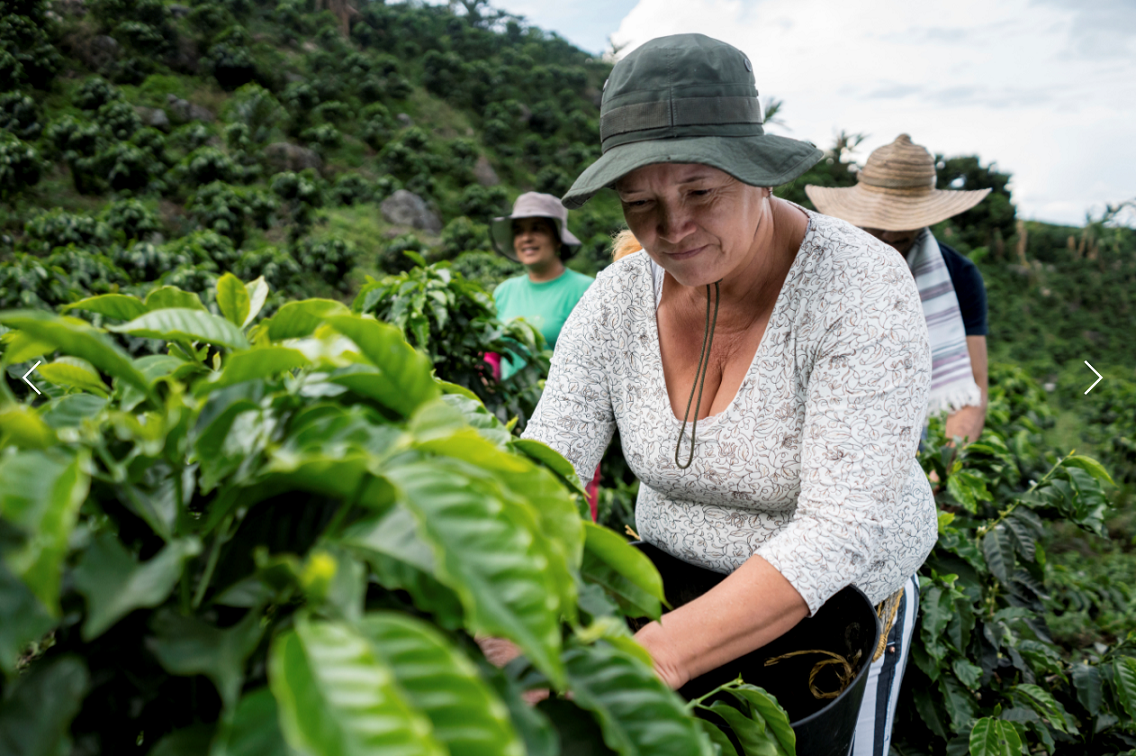
Woman picking coffee in Columbia
IISD's staff of over 120 people come from across the globe and from many disciplines.
Our work impacts lives in nearly 100 countries.

Openly listing all who choose to fund our work is, for us, a source of great pride. These organizations and individuals have selected us over other organizations and have placed their faith in us to use their funds wisely and responsibly. We are grateful for this and afford our funders due respect and recognition, whether in an annual report, or an easily accessible listing on our website.

It is gratifying to receive this positive news as the calendar year draws to a close. We thank everyone who supported our work this year, as well as all our staff, and look forward to another five-star year in 2018. 

Insight details

Region
Canada
Insight

Exploring What Oil Spills Do to Fresh Water

You may be surprised to learn that we actually know very little about what happens to fresh water systems when an oil spill occurs. That’s why IISD Experimental Lakes Area is planning a large project to answer those very questions.

December 1, 2017

Keystone Pipeline. The Dakota Access Pipeline. The Trans-Alaska Pipeline System. North America has the largest network of energy pipelines in the world, and unfortunately periodic oil spills from pipelines do occur.

Even so, you may be surprised to learn that we actually know very little about what happens to freshwater systems when an oil spill occurs. Moreover, we know very little about how best to clean up those oil spills. A new large project, taking place at IISD Experimental Lakes Area in three stages, is setting out to answer those very questions.

Before we get into the research, let’s take a look at why oil spills could be a problem, how they could affect the surrounding environment and where we need to go from here.

What exactly is an oil spill?

Oil spills occur when oil being transported by truck, rail or pipeline unintentionally spills into the surrounding environment. In some cases, oil may end up in freshwater systems.

There are many types of oil. In North America, bitumen extracted from the Alberta oil sands is one of the most commonly transported types (by volume). Bitumen is too thick to be transported in pipelines, so it is diluted with other, lighter oils to allow it to flow more easily. The diluted bitumen is called “dilbit” and flows through many pipelines in North America.

Oil spills (dilbit) research at IISD Experimental Lakes Area
Surprisingly there are large gaps in our knowledge regarding the impacts of oil spills in freshwater systems.

Don’t we already know happens when oil enters fresh water?

Surprisingly, no.

Most existing research concentrates on the impact of oil spills on marine environments. In fact, leading and authoritative sources, such as the Royal Society of Canada and the National Academy of Sciences, have identified gaps in our knowledge regarding the impacts of oil spills on freshwater systems.

The implications of potential spills for freshwater systems and their surrounding environments remains uncertain.

And this is all the more surprising given the number of existing or proposed inland pipelines adjacent to freshwater systems. There are already approximately 840,000 km of oil and gas pipelines in Canada and 3.9 million km in the USA.

The implications of potential spills for freshwater systems and their surrounding environments remain uncertain. Because many methods for cleaning up oil spills were developed for the ocean, we also do not know which are most effective in freshwater systems.

We just don’t know enough.

What is happening at IISD Experimental Lakes Area to find out what oil spills do to fresh water?

Given the significant knowledge gaps, a groundbreaking project is taking place at IISD-ELA that will answer pressing questions about what happens when oil enters freshwater systems.

There are three stages of this research.

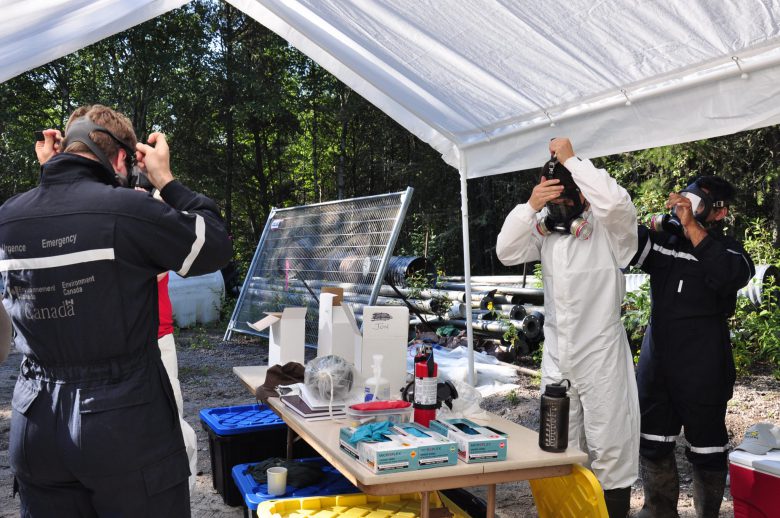
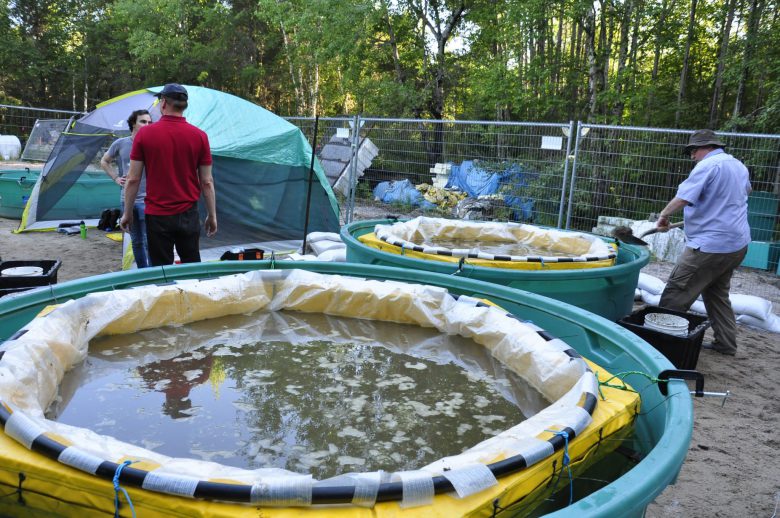
First, a pilot study using three small (2-m diameter) land-based microcosms has already been completed to examine the chemical and physical behaviour of dilbit in fresh water.

Oil is a complex mixture of chemicals whose nature changes with time in the environment. These changes can affect how easily it can be cleaned up (for example, does the oil remain floating or sink?) and its potential toxicity to freshwater wildlife. This early-stage study provided important preliminary information regarding these changes in fresh water that will help to guide the later phases of the research, which will begin in 2018.

Oil spills (dilbit) research at IISD Experimental Lakes Area
A pilot study, using land-based microcosms has already been completed to examine the chemical and physical behavior of dilbit in freshwater.

The second stage is a field study. Researchers will use large enclosures (10-m diameter) placed in a lake to examine how diluted bitumen reacts in fresh water over longer periods of time. Researchers will also be directly testing changes in the oil’s toxicity to freshwater bugs, fish and amphibians.

The information from these first two studies will guide a third study, where researchers will examine the most effective methods of cleaning spilled oil from shorelines. Again, only small, contained model spills in an IISD-ELA lake will be used. This study will focus on the shoreline, which is most sensitive to oil and presents the biggest difficulty in terms of cleanup efforts.

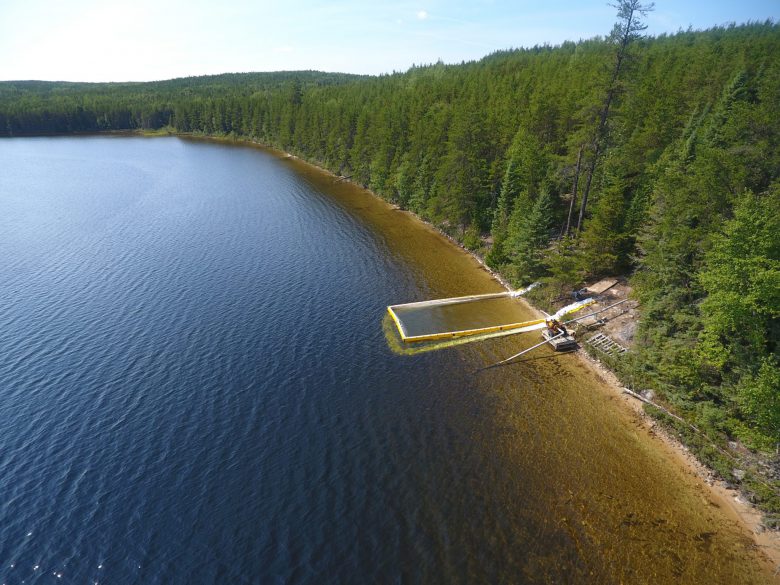
Shoreline at IISD Experimental Lakes Area
Researchers will also explore the effectiveness of oil-spills remediation (clean-up) techniques in a study conducted on the shoreline of an IISD-ELA lake

Is it safe to study oil in an IISD-ELA lake?

IISD-ELA never embarks on any experiment without rigorous measures to protect the long-term health of the lakes. This includes a comprehensive contingency plan and a scientifically reviewed process to return the lake to the condition it was in before we started the research.

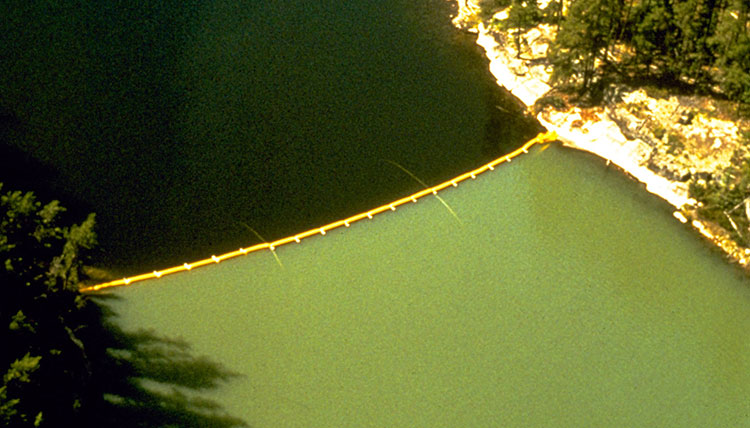
This oil research project is no exception and is going through a rigorous review process. All of the proposed model oil spills will be limited in volume and will be added into contained areas that are isolated from the rest of the lake. We will also install a series of absorbent booms around the isolated areas and at the lake outflow to double and triple protect against any leakages from the isolated areas.

As always, we are committed to removing leftover oil from the lake once the research is complete. A detailed plan to do that is an integral part of the study design as well.

IISD-ELA never embarks on any experiment without rigorous measures to protect the long-term health of the lakes.

What is IISD-ELA doing to ensure that our results are as useful as possible?

As scientists, we strive to approach our research objectively.

Our interest is in providing reliable results that can be used to inform better decision making around pipeline development and to develop more effective methods for cleaning up lakes after oil spills.

Throughout the project development stages, we have made every attempt to collaborate with those who might be affected by the research. IISD-ELA has sought input from First Nations and government departments, the oil production and transportation industries, regulators, universities and local community members.

For example, in September we held an Open House in Kenora (a small town in Ontario close to the research site) to discuss the project with citizens, explain the finer details and answer any questions.

Several studies are currently being pursued at the IISD-ELA to address public and regulatory concerns regarding potential environmental effects of oil spills and uncertainty regarding the best clean-up methods following a spill, especially for freshwater environments. One study, led by Drs. Jules Blais (University of Ottawa), Mark Hanson (University of Manitoba) and Diane Orihel (Queen’s University) will examine the ecological impacts of contained diluted bitumen model spills in a freshwater boreal lake. A companion study, led by Dr. Vince Palace (IISD-ELA) will compare the effectiveness of different methods for cleaning spilled oil form shorelines. Both studies are part of a large multidisciplinary program that includes participation from governments (ECCC, DFO, NRCan, OMECC, OMNRF),  regulators (NEB), academic partners (Universities of Manitoba, Ottawa, Queen’s, INRS, Calgary, Saskatchewan, Mcgill)  and industry (Canadian Association of Petroleum Producers (CAPP), Canadian Energy Pipelines Association (CEPA)). For more information, please contact Sumeep Bath at [email protected].


Insight details

Region
Canada