Research at an experimental lake suggests that phosphorus inputs from runoff may affect the health of aquatic ecosystems long after external additions of the nutrient are reduced.
COVID-19 Has Canada Using More Plastic. What impact will this have on our fresh water?
Policy-makers are facing pressure to reverse or suspend legislation on plastic waste and pollution in in order to accommodate an increased need for single-use plastics. But will these changes be temporary or long-lasting? How can Canada's leaders protect our fresh water without compromising our health and safety?
August 11, 2020
Plastics are one of the most popular materials in existence. They are durable, relatively inexpensive to produce, and versatile enough for use in a diverse range of products.
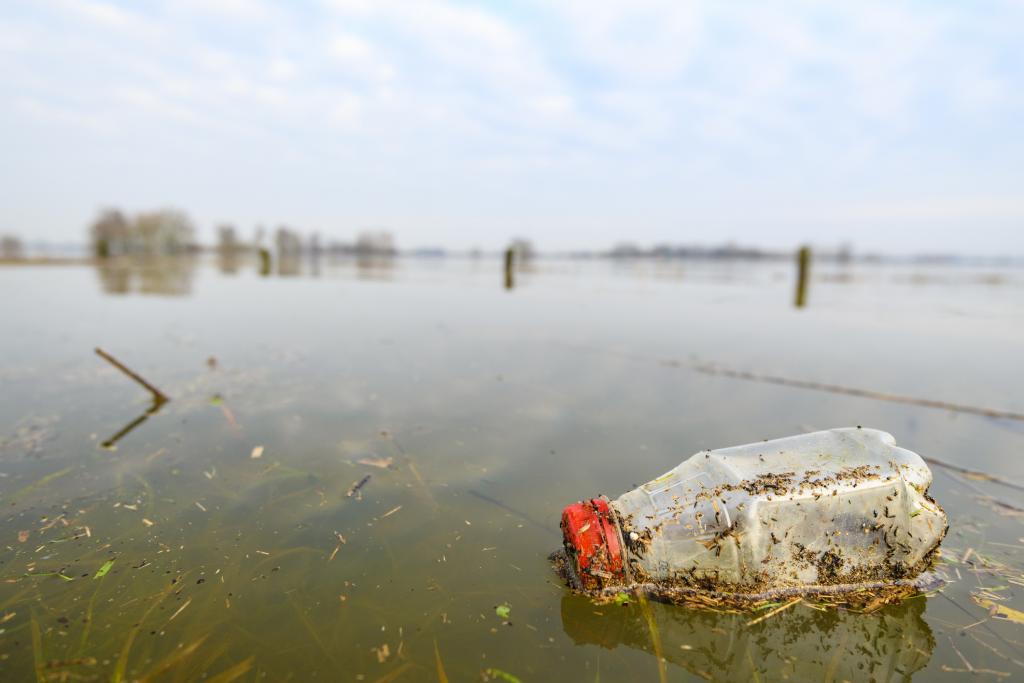
Plastics are released into our freshwater systems in many different shapes and sizes, and through various means—including wastewater treatment plants, landfill leakage, storm drainage, agricultural runoff, effluent and scraps from industry, inadequate waste management procedures, and litter.
In Canada, less than 10% of plastics are recycled, contributing to over 3 million tonnes of plastic being thrown into landfills or into the environment each year. iStock / sjo
Over time, environmental conditions—such as wind, rain, waves, and sun—cause plastics to break down into smaller pieces (< 5 mm) called microplastics.
Over the past few years, the study of microplastics has grown immensely, but much is still unknown about their short- and long-term ecological effects. As an emerging threat to freshwater environments with potential human health implications, further scientific research on the sources, fate, and effects of microplastics is critical.
How Has COVID-19 Impacted Plastics Usage and the Health of Our Fresh Water?
As part of the changes to our daily life brought about by COVID-19, Canadians’ reliance on certain types of single-use plastics has increased. Policy-makers are also facing pressure to reverse or suspend legislation that would address plastic waste and pollution, such as Canada’s proposal to ban harmful single-use plastics by 2021.
For example, at the height of the outbreak, some provincial health officials advised against using reusable bags and containers in grocery stores, with several chains banning them outright in favour of plastic bags. Although many of these restrictions are now being lifted, it may still be a while before consumers return to reusable bags and coffee cups.
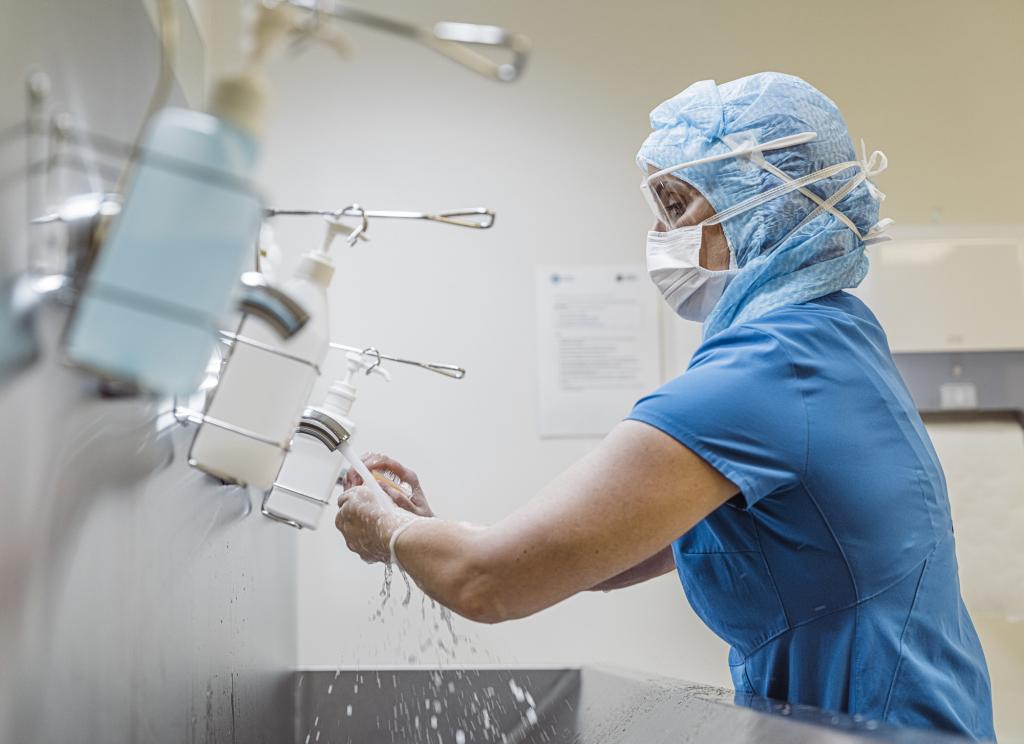
COVID-19 has also brought a new source of plastic pollution in the form of single-use personal protective equipment (PPE), such as masks and gloves. Single-use PPE is a necessary and effective public health measure, but these products are not always discarded properly and may end up as litter that enters our waterways. Indeed, a recent study identifies plastic face masks as a potential source of microplastic fibres in the environment. Although research is already underway to develop biodegradable or recyclable masks, even a temporary surge in plastic litter can lead to long-term impacts for freshwater environments.
COVID-19 has also brought a new source of plastic pollution in the form of single-use personal protective equipment, such as masks and gloves. iStock / HRAUN
More than 50 years of existing data about the chemistry, biology, and weather patterns at the site will help us understand and validate what we discover. And once we know more about what microplastics do to our freshwater lakes and the aquatic life residing within, we can then work directly with governments and industry to develop relevant and effective policies and procedures that protect our precious freshwater resources from plastics pollution.
When it comes to larger policy changes to reduce the impacts of COVID-19 on plastic pollution in our fresh water, the Government of Canada should:
Move forward with the Canada-wide strategy on zero plastic waste: Canada should proceed with implementing its existing strategy and legislation on plastic waste reduction, including a ban on harmful single-use plastic items by 2021.
Provide educational resources to the public on more sustainable PPE use and disposal: Use social media and traditional marketing campaigns to raise public awareness about proper disinfection, reuse, and disposal of PPE to help ensure we do not produce excess waste and that it does not end up as litter in our environment, including fresh water.
Invest in research and innovation on plastic pollution in fresh water as part of sustainable recovery measures: Part of Canada’s action plan to ensure a green recovery from COVID-19 should include the implementation of financial programs and incentives for small businesses, entrepreneurs, and researchers to develop innovative and sustainable solutions to reduce and prevent plastic pollution in fresh water, as well as better understand its effects.
Support and develop sustainable plastic waste management systems: The federal government needs to work in collaboration with industry, provinces, territories, municipalities, and Indigenous governments to coordinate localized and harmonized waste management procedures, as well as invest in appropriate infrastructure and markets to help implement a circular economy for plastics within Canada.
A major obstacle to achieving a more ecologically sane, socially just and healthy future is that we lack both a clear understanding of the scale and significance of the global ecological crisis we face and its social and economic implications, and an appropriate set of values to guide our response.
Our Fresh Water Is Seeing More Plastic Litter due to COVID-19: Here’s what Canada should do about it
Plastics are one of the most popular materials in existence. They are relatively inexpensive to produce, durable, and can be used in a diverse range of products.
As part of the changes to our daily life brought about by COVID-19, Canadians’ reliance on certain types of single-use plastics has increased. Policymakers are also facing pressure to reverse or suspend legislation that would address plastic waste and pollution, such as Canada’s proposal to ban harmful single-use plastics by 2021.
We explore the impact that this could have on our freshwater supplies, and what the Government of Canada needs to do about it.
Why scientists intentionally spilled oil into a Canadian lake
The issues of inland spills aren’t new. They are more common than marine spills but often overlooked or unreported. Generally, we know much less about how oil spills affect freshwater ecosystems than the ocean and, when it comes to dilbit spills, we know even less.
Groundbreaking new research into the impacts of diluted bitumen on fresh water systems.
North America has the largest network of energy pipelines in the world, and unfortunately periodic oil spills from pipelines do occur.
Even so, leading and authoritative sources, such as the Royal Society of Canada and the National Academy of Sciences, have identified gaps in our knowledge regarding the impacts of oil spills on freshwater systems.
Given the current situation, a groundbreaking project is taking place at IISD-ELA that will enhance our understanding of what happens when oil enters freshwater systems.
There are three stages of this research.
First, a pilot study using three small (2-m diameter) land-based microcosms has already been completed to examine the chemical and physical behaviour of dilbit in fresh water.
Oil is a complex mixture of chemicals whose nature changes with time in the environment. These changes can affect how easily it can be cleaned up (for example, does the oil remain floating or sink?) and its potential toxicity to freshwater wildlife. This early-stage study provided important preliminary information regarding these changes in fresh water that will help to guide the later phases of the research, which will begin in 2018.
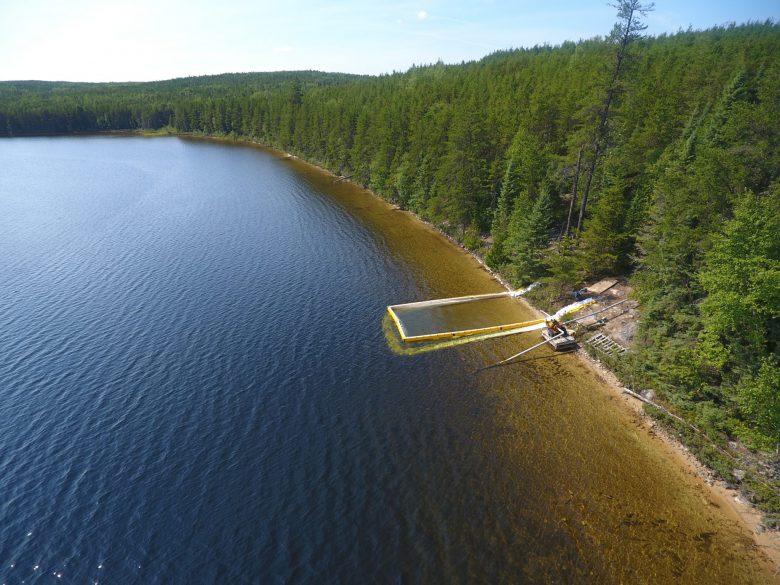
The second stage is a field study. Researchers will use large enclosures (10-m diameter) placed in a lake to examine how diluted bitumen reacts in fresh water over longer periods of time. Researchers will also be directly testing changes in the oil’s toxicity to freshwater bugs, fish and amphibians.
The information from these first two studies will guide a third study, where researchers will examine the most effective methods of cleaning spilled oil from shorelines. Again, only small, contained model spills in an IISD-ELA lake will be used. This study will focus on the shoreline, which is most sensitive to oil and presents the biggest difficulty in terms of cleanup efforts.
You can read more about this research into diluted bitumen and fresh water in this blog post.
In 2019, PBS’ Great Lakes Now show visited the site, and featured our research on oil spills in an episode of their show, ‘Polluting With Purpose,’ and developed an excellent lesson plan, including a simulation of the experiment, for grades 5-8.
Several studies are currently being pursued at the IISD-ELA to address public and regulatory concerns regarding potential environmental effects of oil spills and uncertainty regarding the best cleanup methods following a spill, especially for freshwater environments. One study, led by Drs. Jules Blais (University of Ottawa), Mark Hanson (University of Manitoba) and Diane Orihel (Queen’s University) will examine the ecological impacts of contained diluted bitumen model spills in a freshwater boreal lake. A companion study, led by Dr. Vince Palace (IISD-ELA) will compare the effectiveness of different methods for cleaning spilled oil from shorelines. Both studies are part of a large multidisciplinary program that includes participation from governments (Environment and Climate Change Canada, Fisheries and Oceans Canada, Natural Resources Canada, Ontario Municipal Employees Coordinating Committee, Ontario Ministry of Natural Resources and Forestry), regulators (National Energy Board), academic partners (universities of Manitoba, Ottawa, Queen’s, Institut national de la recherche scientifique, Calgary, Saskatchewan, McGill) and industry (Canadian Association of Petroleum Producers, Canadian Energy Pipelines Association). For more information, please contact Sumeep Bath at [email protected]
The longest-running experiment at IISD Experimental Lakes Area has involved adding phosphorus and nitrogen to a lake since 1968 to study nutrient contributions to algal blooms.
Researching the effects of nutrients on algal blooms and phytoplankton in lakes was the reason that the research site was founded back in 1968. It found that phosphorus is the main factor in algal growth.
Since 1990, no nitrogen has been added to this lake (Lake 227), but we have continued to add phosphorus. Despite the absence of artificial nitrogen inputs, algal blooms have not diminished. This and other studies have demonstrated that phosphorus control is highly important to limit algal blooms.
This research project has also supported multiple studies on nutrient and contaminant cycling. For example, in 2017 we started a research project to explore the potential role of iron in affecting harmful algal blooms.
In 2019, we also started intentionally eutrophying two lakes (a process that will take about two years) so we can determine the necessary preconditions for harmful algal blooms—all with the ultimate goal of targeting one factor per lake to reduce and prevent these blooms from occurring.
This research has been developed and carried out in collaboration with multiple researchers across Canada including the universities of Waterloo, York, Wilfrid Laurier, Toronto, and New Brunswick.
Measuring the Impact of Microplastics on Fresh Water
The impact of plastics on aquatic systems is big news and of major concern these days.
Microplastics (or plastic particles that are smaller than 5 mm) have also been acknowledged as a truly ubiquitous contaminant in recent years. Studies demonstrating the presence of microplastics in freshwater rivers, lakes and in atmospheric deposition have shown that microplastics don’t just affect oceans, and therefore need to be researched in freshwater environments.
In 2019, researchers at IISD Experimental Lakes Area are monitoring a remote lake (Lake 378) for microplastics—all with the ultimate goal of manipulating a lake in a few years to discover how the lake and its inhabitants respond to microplastics.
It doesn’t require a ‘social revolution’: pandemic reshaping what’s possible, say experts
In a span of fewer than six months, the pandemic has upended, encroached, and transformed just about every facet of life. The months ahead may help set the course for how society adapts to the pandemic, as governments turn their focus to recovery efforts while also bracing for another onslaught of outbreaks.