20 Questions with Corner Brook international student Abdul-Latif Alhassan
Alhassan is part of a team called AbbaTek. Its members are from all across the country and — unstopped by COVID-19 — meet virtually to develop a solution for reducing uncertainty in microplastics research.
Trevor Hancock: Stop using taxpayers' money to fund pollution
In May, The World Health Organization released its “Manifesto for a healthy and green COVID-19 recovery.” It is in many ways an astonishing document, because it speaks briefly and plainly to the many global problems we face and how we need to respond. But perhaps the most astonishing and heartening part is the last of its six-point prescription: “Stop using taxpayers’ money to fund pollution,” by which is meant “subsidizing the fossil fuels that are driving climate change and causing air pollution.”
This event has now passed. You can watch a video of the full event below.
Join us and a group of distinguished panelists for on September 17, 2020 at 12:00 p.m. (Central Daylight Savings Time) to explore how data systems and technology could improve our management of freshwater systems and foster innovation in the water tech sector—all while strengthening community engagement.
You will hear exciting examples of innovation and excellence in Canada and discuss how a new Canadian Water Agency could support ongoing work while furthering continued innovation and success.
This is an event hosted by the Gordon Foundation, Aqua Forum and the International Institute for Sustainable Development and supported by Global Water Futures and Massey College as part of the ongoing engagement series How the Canada Water Agency can Deliver Water Security for Canadians.
Two Westwood students are working together to save Lake Winnipeg. Bentley Turner, a Westwood Collegiate graduate, and Megan Smith, a University of Manitoba undergrad, are finalists in the 2020 Lake Winnipeg AquaHacking Challenge hosted by the International Institute for Sustainable Development.
Canada's Pandemic Response Sends $16 Billion to Fossils, Just $300 Million to Clean Energy, Global Energy Policy Tracker Shows
Canada’s pandemic response to date has sent just C$300 million to clean energy, compared to more than $16 billion to fossil fuels, according to new data released this week by Energy Policy Tracker, a joint effort by multiple civil society organizations including the Winnipeg-based International Institute for Sustainable Development (IISD).
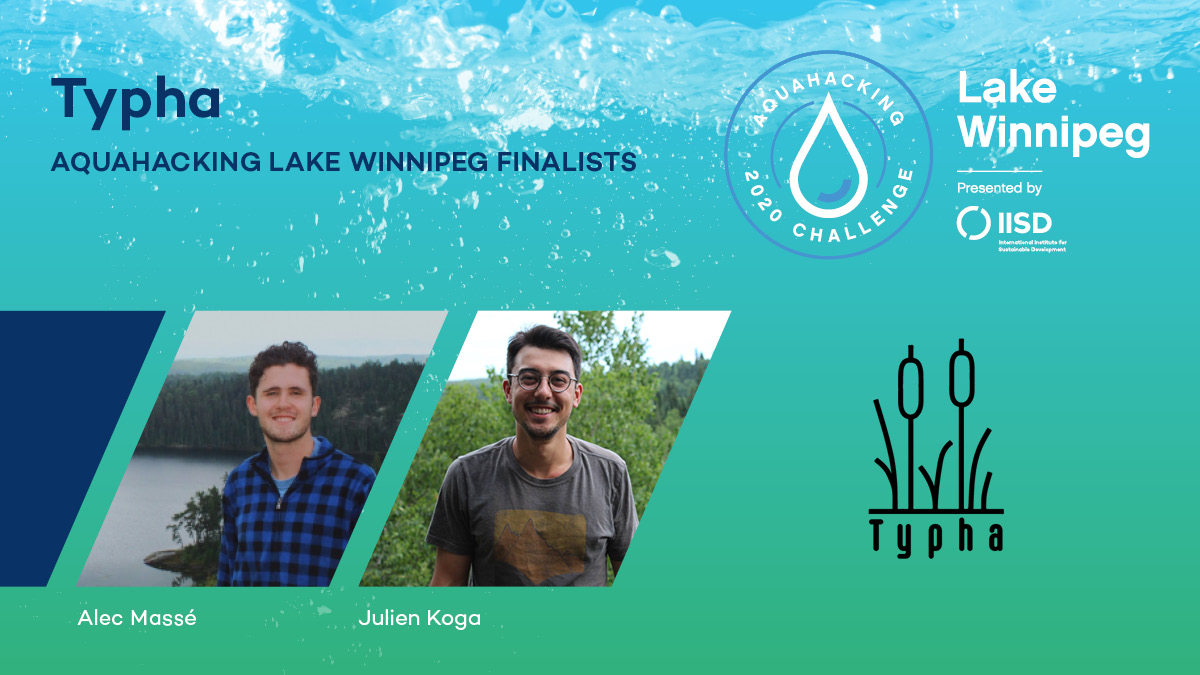
The virtual final for IISD’s AquaHacking Lake Winnipeg Challenge is just around the corner!
October 20, 2020 4:00 pm - 5:15 pm Central
(Open to public)
Since our semi-final in June, five teams of students and young professionals have been working with mentors to develop innovative tech solutions to urgent freshwater issues facing the Lake Winnipeg basin.
At the final, these teams will pitch their solutions to a panel of expert judges from the business, tech, and water sectors, who will determine which team will walk away with the top prize of $20,000 in seed funding. You’ll discover all the exciting solutions Canada’s young innovators have been developing over the last few months and meet the next generation of water entrepreneurs.
Tune in on Tuesday, October 20, at 4:00 p.m. (CST) on Facebook live to watch the top five finalist teams battle it out for top spot!
You can confirm your attendance for this Facebook live event on our Facebook event page. Be sure to share this page too!
Don’t let green recovery become a political hot potato
In this op-ed for the Ottawa Citizen, IISD's President and CEO argues that ensuring a resilient recovery is not just a question of what’s good for the economy or what’s good for the environment. It is now an issue of national competitiveness.
The idea that stimulus spending should drive a green, resilient recovery has wrongly become a partisan issue in this country, apparently playing a role in the departure of Bill Morneau as finance minister on one side and highlighting the lack of strong Conservative leadership on climate on the other.
Ensuring a resilient recovery is not just a question of what’s good for the economy or what’s good for the environment. It is now an issue of national competitiveness.
Leaders around the globe and across the political spectrum are making historic commitments to build a low-carbon future, rejecting the false compromise between economic growth and climate action. The scale of investment and economic change around the world illustrates the urgency with which Canada needs to lift its eyes to this horizon.
True recovery means looking to the future, not the past
The global call for a just, green recovery from COVID-19 will require planning for the short and long term. One immediate need is to stop subsidizing the polluting, climate-altering fossil fuel industry, other than to create opportunities for workers displaced by automation, market forces and now this pandemic.
Canada supporting fossil fuels at 10 times the G20 average during pandemic
If we’re going to have economic stimulus, it ought to be green. That sentiment has achieved surprising levels of agreement around the world, and not just from the usual suspects.
We, the people, should demand green strings attached
What have the B.C. and Canadian governments got themselves and their taxpayers into? The $40 billion LNG Canada project was to be the largest private sector and natural resource investment in Canadian history. Now prospects for nearly half of the world’s projects to build infrastructure for exporting liquefied natural gas have faltered in recent months, amid rising concerns about climate change, public protests and delays due to the coronavirus pandemic.