Insight

CEO Transition

Scott Vaughan ends his tenure as President and CEO of IISD, having set the organization up for future success, growth and relevance.

January 31, 2019

As IISD announced in November last year, today is Scott Vaughan’s final day as President and CEO.

The Board, staff and wider IISD community wish him tremendous success as he takes on the role of International Chief Advisor of the China Council for International Cooperation on Environment and Development (CCICED).

Scott Vaughan
 
Under Scott’s leadership, not only has IISD’s governance and financial position strengthened, but the research and institutional strategy has evolved to meet clear needs in the world. Scott has always preferred to avoid attention, setting other people up for both the spotlight and success. Nonetheless, he does deserve real credit for the clear progress made under his leadership. We owe him a great debt of gratitude for the passionate and professional way he has served our organization.
 
Jane McDonald assumes the role of Interim President and CEO on February 1, 2019 with strategic support from the Executive Group. Her insights into IISD as Managing Director as well as her expertise connecting government, the private sector and the non-governmental organization community will ensure a smooth transition as the Board conducts our executive search.
 
It’s the mark of a great organization that a leadership change neither slows nor distracts from the core mission. The Board has already seen from the staff, key partners and the wider IISD community that this will be the case. IISD’s voice has never been more vital on the world stage and we look forward to finding the right person to help us raise it. 

Alan Young
Chair of the Board, IISD

Insight

Reducing IIA Risks to Climate Change Rules Using Permits

The purchase of Washington Gas holds important developments for permitting foreign investment without hampering the growth of climate change regulations.

January 30, 2019

Using Permits and Contracts to Reduce International Investment Agreement (IIA) Risks to Climate Change Regulations: The Washington Gas Purchase.

On April 4, 2018, the Maryland Public Service Commission (Maryland PSC) issued an Order approving the purchase of Washington Gas in the State of Maryland by AltaGas, a Canada-based natural gas company.

The Order of the Commission, which was subject to negotiation with AltaGas and involved public hearings and inputs from expert witnesses, acts as a regulatory approval by the responsible government for the purchase. In the United States, decisions permitting foreign investment are almost exclusively taken at the state level rather than the national level, due to the division of powers in the U.S. constitution. The negotiating process leading to the decision also makes it similar to a contract negotiation process.

Washington Gas is a subsidiary of WGL Holdings. AltaGas acquired WGL Holdings in full, completing the process in July 2018. Other WGL Holdings subsidiaries include New Hampshire Gas, though Washington Gas is the largest. The Maryland PSC Order is binding over this purchase. AltaGas, upon completing the acquisition, said that the value overall of WGL Holdings was USD 9 billion.

Eliminating risk from future climate change regulations

What made the Maryland PSC’s Order to approve the purchase unique was the inclusion of legally binding conditions, negotiated with AltaGas, designed specifically to address the potential of future regulatory decisions to reduce or prohibit carbon-based energy use in Maryland. (The author of this blog was an expert witness on behalf of the Office of Public Counsel of the State of Maryland and drafted the preliminary version of the conditions of the Order discussed here,  ultimately agreed to by the investor.)

These potential actions would be primarily, though not exclusively, for climate change purposes.

Balancing investment and climate regulations
Given the precedent in the Washington Gas sale, governments should feel empowered to protect the public interest.

The need to tackle carbon-based pollution, including from energy, has been a recurring topic in Maryland. It has become widely recognized that ongoing climate change policy-making processes could lead to future regulatory limits and prohibitions. Hence, the issue was very much a live issue during the Maryland PSC approval process.

In investment treaty terms, the Maryland PSC’s decision—specifically the conditions involving future regulatory decisions to lower or ban carbon-based energy use in the state—acts as a means to eliminate the risk of actions against the government for breach of fair and equitable treatment (FET) and expropriation obligations. The conditions also act as the antithesis of a regulatory stabilization provision. Each of these issues is discussed briefly below.

The text of Conditions 20-21 of the Order is found at p.A-11:

NAFTA

20. Notwithstanding any other provisions of these conditions, AltaGas, Washington Gas, and WGL recognize that the State of Maryland and the Government of the United States retain the full right to enact bona fide laws and regulations in relation to the production and distribution of natural gas and other carbon-based energy sources. Nothing in these conditions or the Commission’s orders restrict or alter these rights, or creates or implies any limitation on the State of Maryland or its agencies, or on the Government of the United States and its agencies, with respect to future measures in this regard. This includes measures to address climate change and other public interest issues such as air quality.

21. AltaGas, Washington Gas, and WGL expressly acknowledge that the Commission, by approving the Merger, is not creating any special expectations to induce AltaGas, as an entity covered by North American Free Trade Agreement (“NAFTA”), to close the Merger.

Expropriation

Some interpretations of expropriation include a concept of “regulatory expropriation.” Under this theory, which itself is far from unanimously accepted as part of the meaning of expropriation, a change in regulations that impacts a business’s profitability can be an act tantamount to expropriation. This notion relies on the view that investors have some form of right to operate in perpetuity in the same manner as when the investment was made. Enacting a new regulation would thus be akin to removing such a right.  

The conditions quoted above make it clear that the investor, AltaGas, has no extended rights to operate as it did at the start of the investment, at least as it relates to laws and regulations to reduce carbon-based energy use. By expressly denying any such right, the conditions act to preclude any effective claim to regulatory expropriation under NAFTA’s Chapter 11, Article 1110.

FET

The provision above has the effect of preventing a claim that a new measure to reduce natural gas use would constitute a breach of FET obligations in Article 1105 of NAFTA or under FET language. These provisions have been found, under some readings, to create barriers to new legislation on the basis that the investor had a “legitimate expectation” to be free of future regulations that would negatively impact its investments.

A less stringent reading of the legitimate expectation concept has held that, where the investor had been given reason to expect a government will act or refrain from acting in a certain way and this specific expectation is then frustrated by the government, a claim under FET would hold.

The conditions above make it clear that the investor could have no expectation that the government will not act to reduce greenhouse gas emissions from carbon-based energy sources. The text acknowledges that the government has the right to do so and could act accordingly. Thus, at a substantive level of interpreting and applying an FET clause, both stricter and more flexible readings of legitimate expectations have been negated by the conditions.

Antithesis to a regulatory stabilization provision

At a functional level, these legally binding conditions act as the exact opposite of a regulatory stabilization provision that would either prohibit a government from enacting new laws or regulations that impact an investment or would require the government to compensate the investor for any negative economic effects resulting from the new measure. Such stabilization provisions are fraught with difficulties for governments but remain a demand of many companies, especially in the oil and gas sector, when making investments.

Maryland
Binding conditions were introduced to the sale of Washington Gas to address the potential of future laws to reduce carbon-based energy in Maryland.

The conditions imposed by the Maryland PSC Order in this case produce precisely the opposite result: rather than the government assuming the risk of introducing new laws or regulations, and thus being disincentivized from doing so, the above provisions make it clear that the investor is the sole actor that bears this risk.

Special importance in the oil and gas sector

That this provision is by an investor in the oil and gas sector is especially important. Analysts from around the world have forecast literally trillions of dollars in “stranded assets” in the sector due to necessary and foreseeable restrictions to combat climate change. Stranded assets are production, transportation and transmission facilities that lose economic value after legal measures restrict or prohibit their ability to continue producing, transporting or delivering their products. 

Who covers the costs of these stranded assets is a key question. In many cases, analysts anticipate that the cost of these assets would be part of a claim under a regulatory expropriation or FET provision in an investment treaty. Thus, claims could stretch easily into the billions of dollars for climate change regulations. In the Washington Gas case, the above provision negates this risk, clearly allocating the risk of stranded assets to the investor.

Acting in the public interest

The fact that a top-tier oil and gas company agreed to this precedent-setting provision shows that the demand for a stabilization provision in this sector can be counter-acted by a provision recognizing governments’ right to take measures to protect the environment. 

Given this precedent, governments should thus feel more empowered to protect the public interest, including on environmental issues and including in relation to oil and gas investments.

Insight

Trade Can be a Driver of Climate Action

CETA, the landmark trade agreement between the EU and Canada, holds established best practices for trade-accelerated climate action, Bernice Lee and Scott Vaughan argue as the business, civil society and policy communities gather in Brussels to consider how to merge trade and climate action.

January 29, 2019

If the findings of the 2018 special report on the impacts of global warming of 1.5° C from the Intergovernmental Panel on Climate Change have yet to convince decision makers of the urgency of climate action, the economic costs of climate impacts should.

The International Monetary Fund has long warned that climate change poses the biggest economic risks to the global economy. In its latest annual risk report, the World Economic Forum has again placed extreme weather events and the failure to deliver the Paris commitments as the two top risks facing decision makers. The Asian Development Bank recently estimated countries in Southeast Asia could see a loss of 11% in gross domestic product by the end of this century.

Merging trade and sustainable development
A noticeable laggard as part of the climate solution is trade policy.

All the while, the two indicators that matter – annual emissions and average global temperature increases – are going in the wrong direction. Global greenhouse gas emissions have climbed each year since 2012. The years 2015-2017 were, according to the World Meteorological Organization, the hottest ever recorded.

This means more action engaging all economic levers is urgently needed to shift the current trajectories towards lower-carbon outcomes.

A noticeable laggard as part of the climate solution is trade policy. Certainly, actual trade in clean technologies is now substantial and markets are growing.

Yet, experts have argued that trade agreements can support and accelerate climate action, with special measures. Trade levers include getting rid of tariffs and non-tariff barriers that hinder trade in green goods and services, disciplining subsidies that support fossil fuels or other environmentally harmful products and services, and many other areas. The World Trade Organization has discussed these and other opportunities since its founding, but is incapable of acting.

All the more reason why this week’s meeting in Brussels – bringing business leaders and non-governmental organisations together to implement trade and climate action – is so welcome.

The Canada-European Union Comprehensive Economic and Trade Agreement was signed just over a year ago and carves out a number of important provisions to support climate action. All tariffs on all goods – including a growing cluster of low-carbon products and related specialised services – are now or soon will be at zero. CETA sets out new provisions to enable the exchange of professionals. It also opens new and substantial opportunities in public procurement.

Much of the conceptual work that has led to this week’s meeting has been in the works for years, driven by the Organisation for Economic Co-Operation and Development and others. The International Centre for Trade and Sustainable Development – a Geneva-based think tank that recently closed after more than 20 years of work – played an indispensable role in identifying the benefits of aligning trade and environmental protection in ways that deliver benefits measured both in higher environmental outcomes and in helping households see bottom-line benefits in terms of income and improved labour market conditions, especially in developing countries.

CETA provisions have zeroed out all tariffs while introducing innovative clauses, such as a new regulatory forum to provide a non-negotiating setting to identify opportunities for better regulatory alignment. CETA also includes novel provisions like corporate social responsibility, opening potential avenues to examine how voluntary standards championed by a long list of business in low-carbon pathways could be accelerated within a bilateral trade arrangement.

Effective climate action must involve an array of economic solutions. The world can’t wait for the crawling negotiations of the WTO to support climate action. We hope newer examples of trade agreements, including CETA, can show that they can be one part of the larger actions within markets to find low-carbon pathways. This week’s meeting is thus a welcome first step.

Bernice Lee is Research Director for Global Economy and Finance at Chatham House and Executive Director of the Hoffmann Centre for Sustainable Resource Economy.

Scott Vaughan is President and Chief Executive Officer of the International Institute for Sustainable  Development and chairman of the IISD Experimental Lakes Area Board.

This article first appeared on Borderlex on January 23, 2019.

Insight

Davos, Sustainable Development and an Open Mind

What did a sustainable development professional take away from mingling with the billionaires, world leaders, technocrats and financiers of Davos?

January 28, 2019

“Wear hiking boots.”

That’s the number one piece of wisdom you are given by veterans of the World Economic Forum (WEF) when you mention you will head to Davos. This is not only good advice, it is essential for survival on the snow-packed roads as a normally quiet Swiss skiing village transforms into the largest global gathering of the economic and political elite each year.

Davos
At the annual World Economic Forum in Davos, Switzerland, world leaders and celebrities mingle with the financial elite.

This was my first experience in Davos. It came somewhat late and with a cost risk: many WEF attendees reserve hotels a year in advance to avoid the steep CHF 4,000–5,000 room rates per night that await last-minute guests. Luckily, I got a tip about a little mountain town 45 minutes outside Davos that still had warm beds, reasonable room rates and an early train to get me to a breakfast meeting on improving the contribution of private finance to achieving the United Nations' Sustainable Development Goals (SDGs). 

I didn’t know what to expect. On my way I heard of several controversies—notable world leaders cancelling participation because of challenges at home, the enormous carbon footprint of attendees’ private jets, the irony of the planet’s elite meeting to discuss issues of the middle class—but I kept an open mind. After all, I am a member of the Global Shaper community, and the WEF is an active member and collaborator with my main project, the Geneva 2030 Ecosystem. In all of my interactions with the WEF, it has been clear that they are 100 per cent committed to achieving sustainable development by leveraging the power of business—not working against it.

New Perspective

Kali Taylor in Davos
Kali Taylor leads a discussion on encouraging private sector financing in sustainable development.

I attended WEF to host and moderate a panel at the Sustainable Impact Hub on Accelerating SDG Finance through Collaboration. The Sustainable Impact Hub is a joint initiative by several United Nations, development and humanitarian organizations. It’s dedicated to creating a space to dig deeply into sustainable development and humanitarian issues. The panel featured leading experts from finance:

  • Lise Kingo, CEO & Executive Director, UN Global Compact
  • Simon Smiles, Chief Investment Officer, Ultra High Net Worth Individuals, UBS
  • Gabriela Ramos, Chief of Staff and Sherpa to G20, OECD
  • Nadina Stodiek, Fund Manager PPP Mandates, Impact Manager, BlueOrchard Finance
  • Francois Jung, Lead on Finance and Innovation, The Global Fund

At home in Geneva, I act as the lead facilitator on a collaboration that brings together development actors and private financial players to develop solutions to SDG finance, so this topic is well-trodden territory for me.

However, this panel of experts put a very different spin on the topic:

1. Innovation matters but so do the basics.

In the development arena, we are intensively examining novel financial instruments that can bring more financing to the SDGs (for example, blended finance and tokenization for infrastructure finance). The expert panel, however, highlighted the need to go back to basics to create consistency and clarity for market players to build upon. It was highlighted again and again that an “impactful” investment must be clearly defined so investors can more easily compare and make informed choices. There are a number of initiatives happening in this space, but consolidation is necessary—and the World Bank’s International Finance Corporation Principles for Impact Management were given as a good starting point.

2. Measure what you treasure, don’t treasure what you measure.

In other words, there is an influx of data in the world, but making sense of it all can be a challenge. As a global community, we need to be clear what goals matters to us—such as leaving no one behind while achieving sustainable development—and find the right measurements to quantify progress.

3. Everyone has a role to play.

Mobilizing USD 5 trillion to 7 trillion per year to achieve the SDGs will require every sector of society to play its part—awareness raising, policy frameworks, measurement and standardization, financial product builders and corporate alignment must all be there in order to make a material difference for sustainable development. This means that each of our individual roles will be most impactful if we do it in collaboration with others.

Youth: Loud and clear.

I certainly took new perspectives and ideas from Davos, but there was one lesson that was not new. Davos reinforced something I have always known and will always believe: youth represent our greatest hope for progress and change.

Youth took centre stage in several important ways at Davos and made their voices heard. The Global Shapers community launched the #VoiceForThePlanet campaign that has already garnered over 35,000 pledges. One young refugee defied all odds by making it to the WEF to tell his story despite not having a passport and having lived in a refugee camp for over 20 years.

And Greta Thunberg put the show in perspective, taking a 32-hour train ride to the forum to tell leaders to “act as if your house is on fire” when it comes to climate.

“Our house is on fire.”
A part of my speech at the World Economic Forum today. Thank you for inviting me! #wef pic.twitter.com/LvTWiwEiOu

— Greta Thunberg (@GretaThunberg) January 25, 2019

Davos may be cold, but the need to act now has never burned stronger.

Insight

Should Farmers Who Follow Sustainable Practices Be Rewarded?

Meeting sustainability standards can have valuable benefits for smallholder farmers, but what happens when the product fails to sell?

January 23, 2019

Ensuring certification reaps rewards: the case of a Rwandan coffee cooperative.

Participating in certification programs and meeting sustainability standards can have valuable benefits for smallholder farmers and fulfil environmental and social objectives. But what happens when, despite the time and money invested in certification, the product fails to sell?

Sustainable farming
Despite the many benefits of sustainability certification, hefty financial burdens can cripple progressive farmers. 

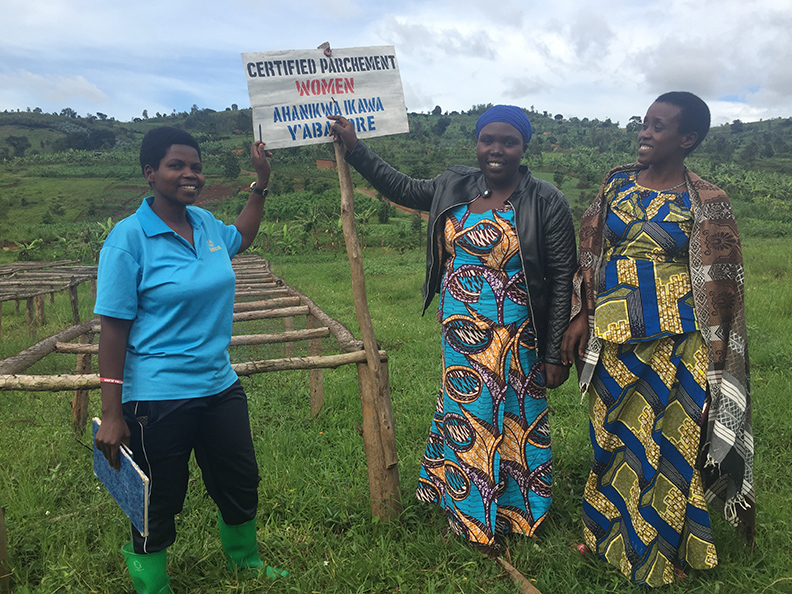
Last month, as part of IISD’s State of Sustainability Initiatives program, I visited a coffee farmers’ cooperative in the eastern region of Rwanda to see how their efforts to obtain certifications had affected their community.

The group, known as Cooperative Abakangukiyekawa, has 540 members and has been certified Fair Trade since 2006. It is now working to obtain Rainforest Alliance certification.

Meeting certification criteria requires farmers to invest money and time in reshaping their production, processing and business practices. The expectation is that the market will reward farmers for these efforts, by buying their certified product at a higher price, for example, and improving their market access.

Domestic advances, international challenges

While I was in Rwanda, the farmers proudly showed me the advances they had made in their efforts to meet the certification criteria. They set up terraced plots to prevent soil erosion; nurseries to grow trees provided shade for coffee bushes and created live fencing, thus reforesting their community; and filtration tanks prevented water source contamination from coffee bean processing.

They also showed me how they segregate their coffees throughout the process, ensuring the coffee’s traceability from farm to buyer. The cooperative even revised its payment process, to pay farmers immediately when they deliver their coffee “cherry” to the processing (washing) station.

The cooperative has to borrow money to pre-finance the harvest, which covers operational costs and ensures immediate payment for farmers when they deliver the cherry beans. This particular cooperative is fortunate enough to borrow from a semi-governmental bank that charges 8.5 per cent annual interest, compared to fully commercial banks that charge two or three times that amount.

But the cooperative members then showed me their warehouse, which housed a full third of the year’s production that has not yet sold. The Rwandan harvest runs from March to May, meaning this coffee has been sitting, unsold, for the past eight months. If the cooperative cannot sell the coffee by February 2019, they will pay a fine of 2 per cent.

This situation is largely created by volatile commodity markets, which farmers cannot control. The price of coffee on international commodity markets (New York “C” market for coffee) dropped substantially in 2018, making many buyers unwilling to pay the Fair Trade minimum price. That price is designed to cover the investments and costs that farmers must bear to obtain the certification.

The Fair Trade minimum price and price premium are fundamental for the cooperative and its members to manage their farms sustainably. The money these farmers earn also allows them to invest in social and community development projects, which cooperative members often run themselves.

Farmers such as these ones in Rwanda are ultimately operating within a larger international trading system that often does not value the environmental, social and economic efforts of farmers. However, these same farmers are also running a business and must feed themselves and their families from what they sell, especially if they are smallholders.

Despite the many benefits from certification, the fines, loans and uncertainty around prices have placed a hefty financial burden on the cooperative and its members, and they are desperate for a solution.

Identifying challenges and solutions

At IISD, we work with key stakeholders in Rwanda, such as government representatives, the private sector and producers, to help improve the situation of smallholders using certification. The goal is to identify and address the major challenges facing smallholders who enter sustainable coffee programs.

Sustainable farming
Consumers and global supply chains have responsibilities to support sustainable small-scale farmers.

Together with institutions such as the Rwanda National Agricultural Export Development Board (NAEB) and Sustainable Growers, IISD is developing a multistakeholder platform to share impact data on sustainability programs so that we can better assess what does and doesn’t work. This information is essential for stakeholders to identify and implement solutions to these challenges.

Cooperative Abakangukiyekawa is a prime example of some of the challenges farmers often face, particularly that of oversupply—a costly problem that, if not addressed, could disincentivize farmers from participating in certification programs and meeting sustainability standards. Some possible solutions include matching the supply with the demand of certified products, along with supporting government policy to enable sustainable supply chains and trade. Further steps include lowering the transaction costs involved in obtaining certifications, along with providing access to training and affordable finance for smallholders.

These farmers are helping the global environment and their local communities by undertaking environmentally and socially responsible actions and investments. Unfortunately, despite their efforts, they are unable to sell much of their certified product, making it harder to support their families and communities.

The entire supply chain, and fundamentally consumers, has a responsibility to support these important actions by demanding high-quality, sustainably produced and certified products, such as the coffee from Cooperative Abakangukiyekawa.

Abakangukiyekawa
Members of Cooperative Abakangukiyekawa have embraced sustainable farming and certification.

The SSI is an international transparency and capacity-building project aiming to improve strategic planning and sustainable development outcomes related to VSSs by providing in-depth, credible and needs-based information. The project is funded by the Swedish International Development Cooperation Agency (SIDA).

Insight

What Effect Will Automation Have on the Environment?

We know automation will change or eliminate jobs, but what impact will it have on energy use, natural resource use and the environment?

January 22, 2019

There seems little doubt the Fourth Industrial Revolution—and particularly the uptake of digital and highly automated systems—will transform our economies in coming decades.

Effects of that transformation are the subject of multiple debates, such as those currently happening at Davos, and there are multiple signals that the spread of artificial intelligence, the Internet of Things, advanced robotics, 3D printing and autonomous transport are set to change society as we know it.

One major stream of conversation about the forthcoming transformation has focused on the changing role of human labour in an age of automation. Indeed, existing technologies already allow automation of half of all activities people are currently paid to do. They also significantly transform current business models and producer-customer relationships and create new employment opportunities for those able to use them. With a good chunk of the global labour force expected to be looking for new jobs by 2030, a robust response is obviously needed to manage adverse social side effects.

But what impact will all this have on energy use, natural resource use and the environment?

Automation and the environment
A greener, more equitable world won’t be an automatic outcome of the digital revolution.

Upsides and Downsides

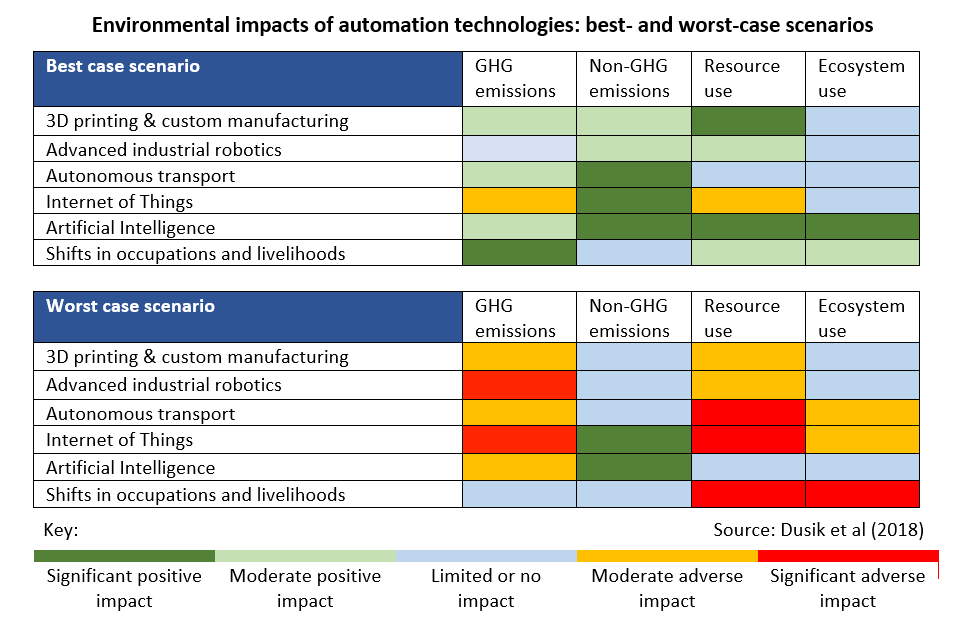
If carefully managed, changes in production and consumption patterns could create environmental improvements compared with the processes used today. But without proper environmental objectives and management systems, automation alone could have significant adverse impacts—especially on energy use (and emissions generated from the current energy mix), resource use and ecosystems. The figure below visualizes the best- and worst-case scenarios of these disruptive innovations.

Automation energy use
 Best- and worst-case scenarios of these disruptive innovations

Many emerging technologies offer the potential to reduce emissions. They could also theoretically improve resource-use efficiency, provided increased efficiency does not trigger over-consumption. This is a big "if," since customer relationships are increasingly based on detailed digital surveillance of behavioural patterns and involve highly effective marketing techniques that can ramp up demand for products or services.

On the other hand, changes in both consumption and production patterns increase the total demand for electricity and can easily raise greenhouse gas emissions, depending on the carbon footprints of the power sources used. They could also enhance unsustainable exploitation of natural resources—especially if our dependency on rare metals for production of electronic equipment further deepens. Proliferation of all sorts of electronic equipment and future composite materials also bring new challenges for recycling and waste management.

Lastly, potential large-scale dislocation of the labour force—particularly in low-/middle-income export-oriented economies with high population growth rates—could lead to a return migration to rural areas and increased use of available natural resources for livelihood purposes. This may worsen already significant pressures on ecosystems.

Double-Edged Swords

Considering these facts, there are no upfront guarantees new technological capabilities will automatically foster environmental sustainability. The forthcoming disruptive technologies are double-edged swords that may generate diverse outcomes based on the intentions and skills of their users.

Automation and the environment
Automation's impact on employment has captured popular interest (and concerns), but what about the environment?

Thus, it’s a good time to explore the linkages between these new technologies, the changing economic premises that will accompany their deployment, emerging patterns of production and consumption, and their potential environmental and social impacts. Such an enquiry may be guided by (even if not limited to) global aspirations to reach the Sustainable Development Goals.

From that perspective, the ongoing technological transformation could be strengthened by the use of economic instruments, especially those that: (a) incorporate environmental and natural resource use externalities of emerging business models, products and services; (b) promote resource- and emission-saving innovations; and (c) potentially also generate revenue for social support programs that may need to accompany a transition to new occupations and sources of livelihood. Other mitigation and enhancement options could be identified as our understanding evolves.

As the founder of the World Economic Forum, Klaus Schwab, rightly noted, before we devise strategies to cope with the Fourth Industrial Revolution, we first need to better understand it.

To that end, interested experts are invited to analyze the range of environmental impacts of forthcoming technological changes and their interaction with economic and social considerations. A preliminary scoping paper is available at Research Gate, and we invite interested parties to identify emerging issues of concern, give comments and suggest potential future steps for a  deliberative enquiry (including a possible open discussion forum).

A greener, more equitable world won’t be an automatic outcome of the digital revolution. It’s our duty to shape its development even as its pace takes our breath away.

---

Jiri Dusik is a Technical Specialist with UNDP Viet Nam.

Barry Sadler is an Environment and Sustainability Analyst.

Opinions expressed are those of the authors and do not necessarily reflect views of the United Nations Development Programme.

Insight

Success Stories and a Network on Fossil Fuel Subsidy Reform

Many countries and private sector leaders shared fossil fuel subsidy reform success stories at the recent United Nations climate talks in Katowice, Poland.

January 17, 2019

If there is one place countries can get the best bang for their carbon buck it’s looking to their own fiscal incentives: reforming government subsidies to fossil fuels and taxing them properly.

The resulting savings can then be redistributed into incentivizing sustainable energy and to communities and sections of society affected by rising fuel prices and loss of jobs. Research has found governments could save an average of USD 93 per tonne of carbon abated through fossil fuel subsidy reform and could generate a whole lot more revenue if carbon fuels and energy were taxed appropriately to account for ill health and climate damage.

Greenhouse gas emissions reductions would be significant too—around a quarter of the current country effort committed toward Paris through one fiscal instrument.

Many countries are leading the way and along with the private sector: several organizations shared stories and actions for success at the recent United Nations climate change talks in Katowice, Poland. These groups included the Friends of Fossil Fuel Subsidy Reform, the Nordic Council of Ministers and the Global Subsidies Initiative (GSI) of the International Institute for Sustainable Development (IISD). Countries that were able to highlight successful stories and opportunities for change included Argentina, Costa Rica, Denmark, Ethiopia, Finland, India, Indonesia, Italy, New Zealand, Norway, Sweden, Switzerland and Zambia.

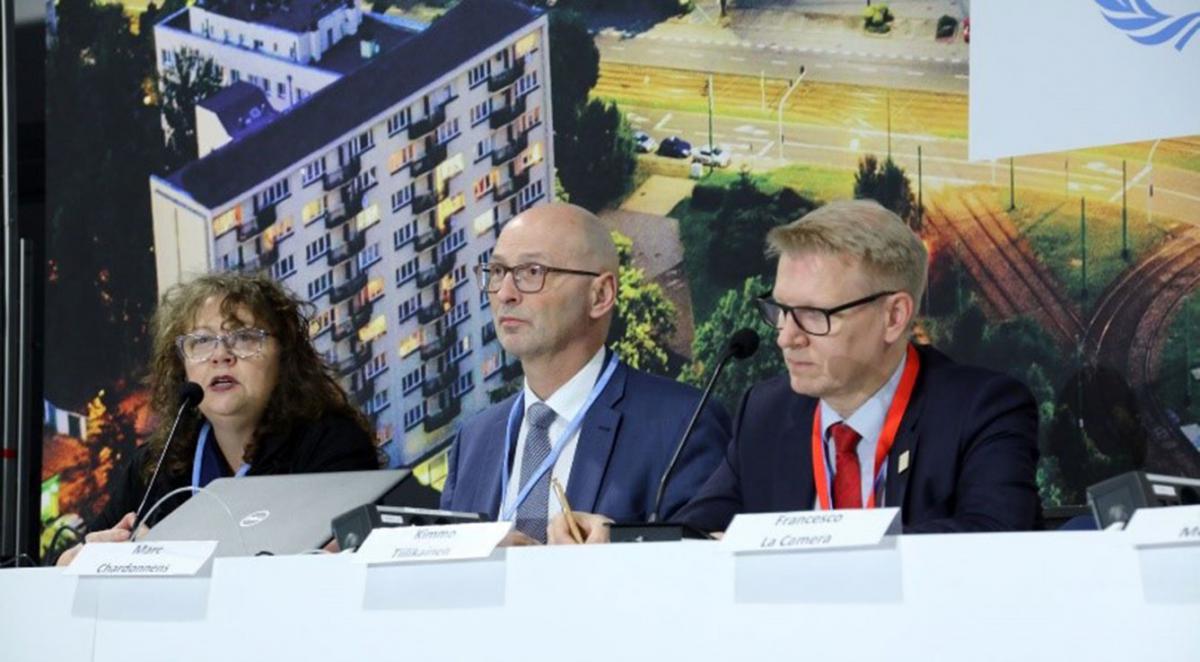
Katowice meeting on fossil fuel subsidy reform.
From left to right: Kimmo Tiilikainen, Minister of the Environment, Energy and Housing, Finland (Friends); Stephanie Lee, Ministry of Foreign Affairs and Trade, New Zealand (Friends); Rachmat Witoelar, President's Special Envoy for Climate Change, Indonesia (Network); Francesco La Camera, Director General, Ministry of Environment, Land & Sea, Italy (Network); Sveinung Rotevatn State Secretary, Ministry of Climate and Environment, Norway (Friends); Kangwa Muyunda, CUTs International, Zambia; and Marc Chardonnens, State Secretary, Director of the Federal Office for the Environment, Switzerland (Friends).

On December 11, the Friends of Fossil Fuel Subsidy Reform launched a Network for action on fossil fuel subsidy reform. Countries had previously come together virtually throughout 2018 to share stories of success on themes including peer review, communicating subsidy reforms, subsidy swaps for sustainable energy, investment in a just transition and mitigation measures via cash transfers.

brochure accompanied the launch and outlined the lessons shared across the Network in 2018 and how more countries can get involved with the Network in the future.

Marc Chardonnens of Switzerland said, “We must learn from each other’s successes to enable smooth changes and reforms toward adequate pricing of fossil fuels.”

Kimmo Tiilikainen, Finland said, “These subsidies take us in the opposite direction of the Paris Agreement.”

Francesco La Camera of Italy (incoming Director General of IRENA) explained, “When we talk about reform … there are the environmental and social aspects that are to be considered at the same time if we want to succeed.”

Kangwa Muyunda from Consumer Unity & Trust Society (CUTS) International, Zambia explained that in a country where energy access is low “the cost of subsidizing the system is a barrier to energy access.”

Sveinung Rotevatn, Norway explained that “unfortunately, we are not on track to reach either 1.5 degrees nor 2 degrees at the moment and while this is happening, we are spending USD 400 billion on fossil fuel subsidies.” He noted, “The group has been instrumental in bringing forward strong arguments for why subsidy reform is necessary.”

Stephanie Lee of New Zealand chaired the conference and explained that having lived in Indonesia she understood that “the Indonesian story is a brave one.”

Rachmat Witoelar of Indonesia then explained the practical steps that Indonesia took to save USD 15 billion from reforms in 2015.

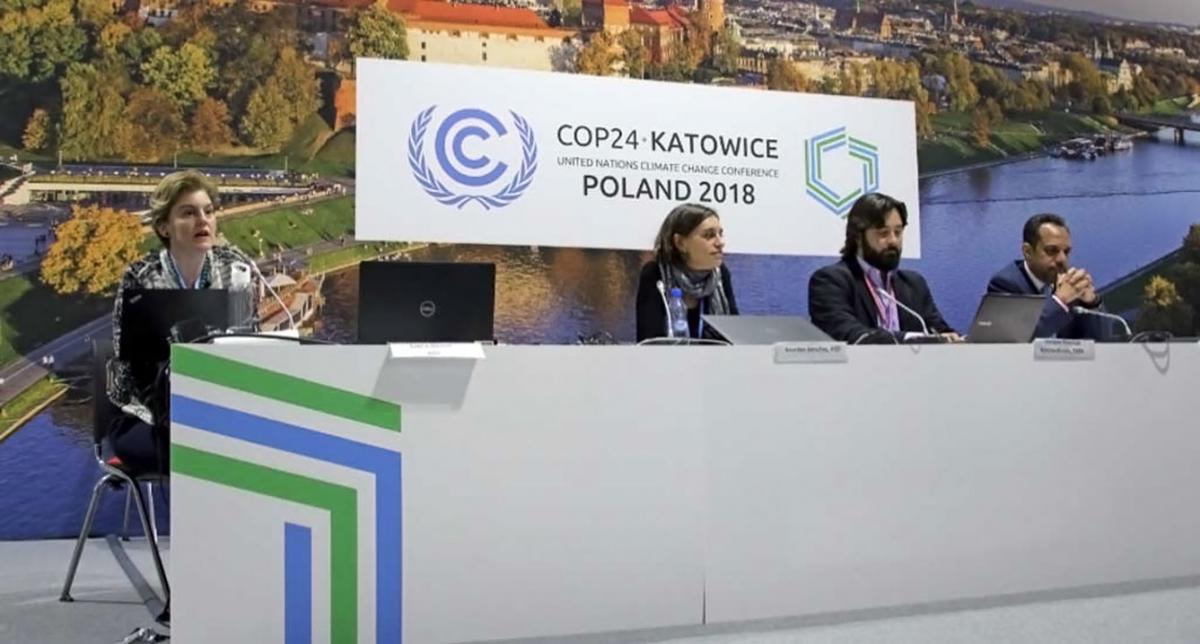
Katowice fossil fuel subsidy meeting.
Kangwa Muyunda, CUTs International, Zambia and Sveinung Rotevatn State Secretary, Ministry of Climate and Environment, Norway.

On December 7, a side event organized by the GSI of the IISD with the Fundación Ambiente y Recursos Naturales (FARN) talked about the benefits of reforming fossil fuel subsidies. The event discussed successful reform examples from different countries around the globe and presented a new report about success stories of fossil fuel subsidy reform and taxation across the G20.

Lourdes Sanchez (IISD) reported how Indonesia significantly increased public investment in programs to boost growth and reduce poverty, including infrastructure and social support for the vulnerable, after reforming diesel and gasoline subsidies in 2015—which saved the government USD 15 billion a year. CEEW’s Arunabha Ghosh discussed the effects of the current shifting of fossil fuel subsidies toward renewables in India. This shift has facilitated access to electricity and clean cooking fuels for tens of millions of Indians—notably the poor and vulnerable.

Enrique Maurtua of Argentina’s FARN concluded the event with a presentation on the evolution of fossil fuel subsidies in Argentina following the major subsidy reforms that the country has undertaken in the past couple of years. The reform of incentives to oil producers in that country saved at least USD 780 million in 2017 in public finance. These and other stories presented in the new report show that reform is possible and has significant related benefits. There are challenges, such as higher fuel costs, but when oil prices increase it is important countries stay on course with reforms and put in place compensation measures for the vulnerable.

Katowice fossil fuel subsidy meeting
From left to right: Stephanie Lee, Ministry of Foreign Affairs and Trade, New Zealand (Friends); Marc Chardonnens, State Secretary, Director of the Federal Office for the Environment, Switzerland (Friends) and Kimmo Tiilikainen, Minister of the Environment, Energy and Housing, Finland (Friends).

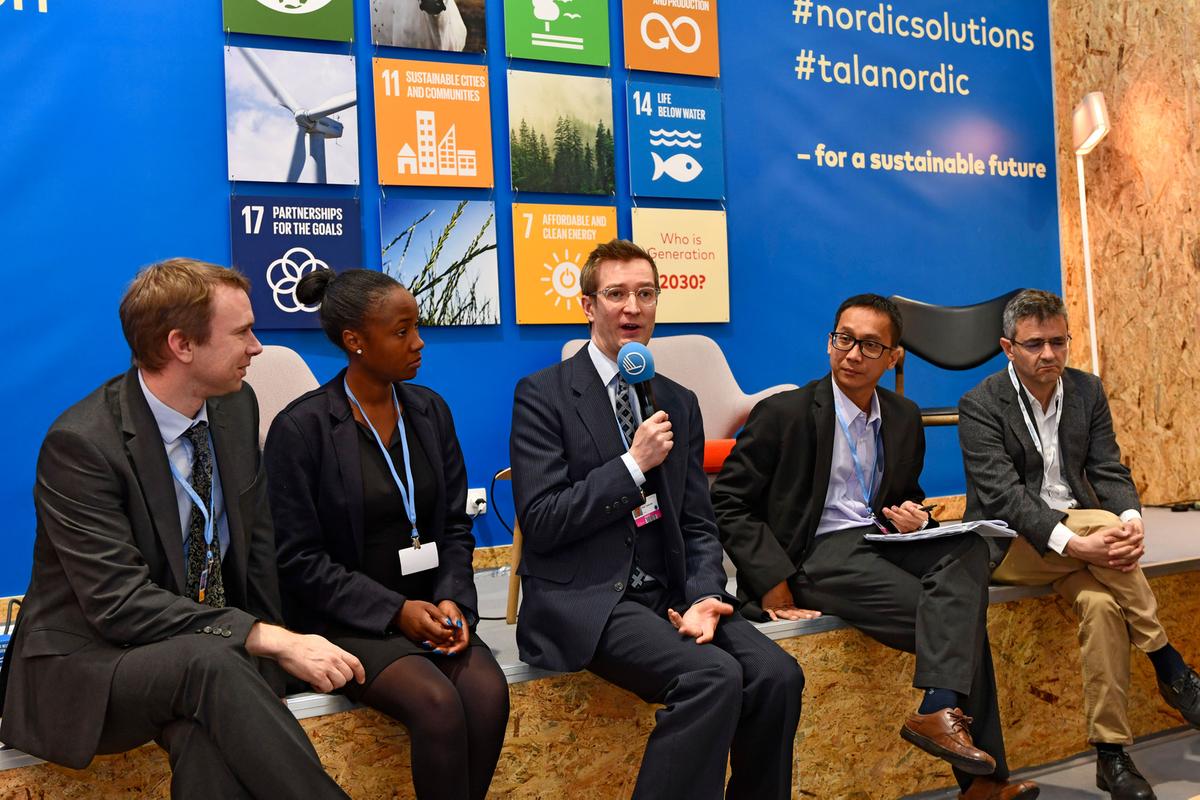
On December 10 a side event organized by IISD/GSI with support of the Nordic Council of Ministers took place at the Nordic Pavilion. Participants included: Hannele Pokka, Permanent Secretary, Ministry of the Environment, Finland; Richard Bridle and Laura Merrill, IISD/GSI; Kangwa Muyunda, CUTS Lusaka; Astrid Knutsen Hårstad, Political adviser, Ministry of Climate and the Environment Norway; Oras Tynkkynen, SITRA; Eka Hendra Permana, Fiscal Policy Agency, Indonesia; and Gonzalo Sáenz de Miera, Director of Climate Change, Iberdrola.

The event provided an opportunity to learn about the impact of government subsidies from a private sector energy company perspective, as well as about active reforms from a country-level perspective (Indonesia and Zambia) and to learn more about opportunities for countries to implement swaps and thus move away from government subsidies for fossil fuels and toward sustainable energy and transport. The event launched the latest report from the Nordic Council of Ministers on this issue, with a focus on the business model and concept of swaps, including a detailed roadmap with Zambia and potential for action in Morocco.

Katowice fossil fuel subsidy meeting
From left to right Laura Merrill and Lourdes Sanchez, GSI/IISD; Enrique Maurtua, FARN; and Dr. Arunabha Ghosh, CEEW

Elsewhere within the CoP, the financial sector called for the phase out of fossil fuel subsidies by set deadlines, signed by 415 investor signatories with well over USD 32 trillion in assets. The issue of FFSR was also echoed in other publications, including the UNE 2018 Emissions Gap Report and 2018 Brown to Green report.

Katowice climate change conference
From left to right Richard Bridle, GSI/IISD; Kangwa Muyunda, CUTS Lusaka; Oras Tynkkynen, SITRA; Eka Hendra Permana, Fiscal Policy Agency, Indonesia; and Gonzalo Sáenz de Miera, Iberdrola.

Despite difficulties within the negotiations from some Parties, coalitions of the willing are forming to translate the Paris Agreement into action on the ground and between countries via peer to peer support and encouragement. What this means for true multilateral and international action and institutions, across the board, is unclear. Agreement was reached in Katowice, but in terms of early action, such first mover country groupings of the willing (like the Friends of Fossil Fuel Subsidy Reform and others) will be key to success.

Key Links

Further information about the Friends Network and BrochureVideo of the launch.

Further information about the Nordic Council of Ministers report and work “Swapping fossil fuel subsidies for sustainable energy.”

Further information about report “Stories from G20 countries: Shifting public money out of fossil fuels.”

This article first appeared on the GSI Subsidy Watch Blog on January 15, 2018.

Insight

Why Financing Rural Infrastructure Is Crucial to Achieving Food Security

Financing infrastructure, including roads, storage and localized energy grids, will help provide food security for the millions of people living in hunger worldwide.

January 9, 2019

Most of the people suffering from hunger around the world live in rural areas and engage in agricultural activity.

It is not a coincidence that they also often lack basic services, such as energy and irrigation provision, due to a lack of infrastructure. This lack of infrastructure is an important reason for their vulnerability to hunger. 

(Français ci-dessus) 
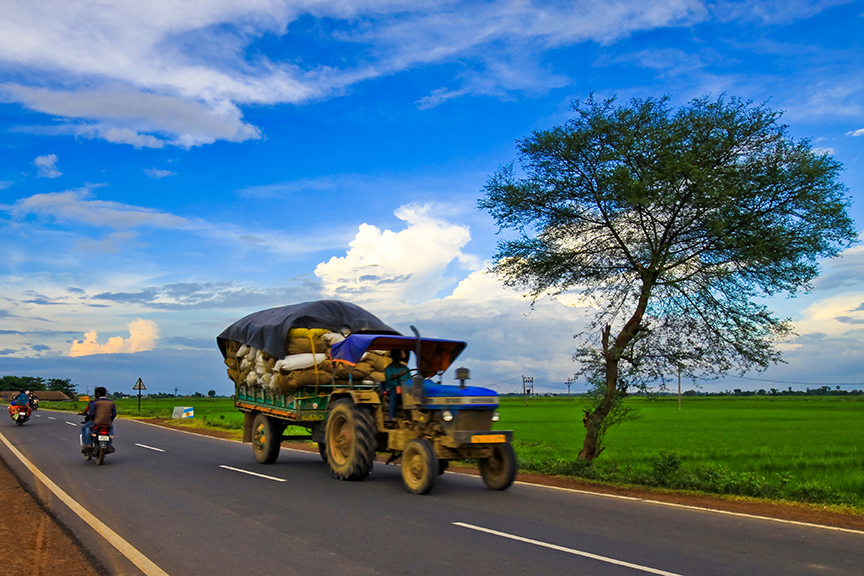
Rural infrastructure

Financing infrastructure, including roads, storage and localized energy grids, will help provide food security for the 821 million people estimated to live in hunger worldwide.

Our report, Financing Rural Infrastructure: Priorities and pathways to ending hunger, highlights how new financial instruments can support a decentralized and robust infrastructure base for farmers, food processors and rural communities.

We break down some of the financing approaches below.     

Storage infrastructure

About one third of food produced for human consumption is lost or wasted globally, amounting to about 1.3 billion tonnes per year. Storage facilities, including grain and rice silos, warehouses and cold storages, play a critical role in ensuring food security and ending hunger.

Governments should create dedicated funds with a mandate to provide financing for storage infrastructure projects. Loans with preferential terms, either through a dedicated infrastructure scheme or partner bank, can also be provided to farmers or cooperatives for investment in agricultural storage.

Improved storage infrastructure capacity, quality and practices are crucial to reducing post-harvest loss.

Decentralized renewable energy infrastructure

As much as a quarter of the world’s population lack access to electricity. Almost 85 per cent of these people live in rural, dispersed communities across sub-Saharan Africa and South Africa.

Increases in energy prices result in higher food prices, reducing access for poorer households.

Tax incentives at different stages of the decentralized renewable energy (DRE) transition, such as setting up wind turbines, can encourage deployment both on the supply and demand side. Concessional loans are also a viable option. These loans, with preferential interest rates provided either by government or international development agencies, enable DRE projects to have access to finance at a lower cost.

Energy is a game-changer in agriculture. It is essential for a wide range of tasks, from operating machinery to powering and lighting facilities to charging communication devices.
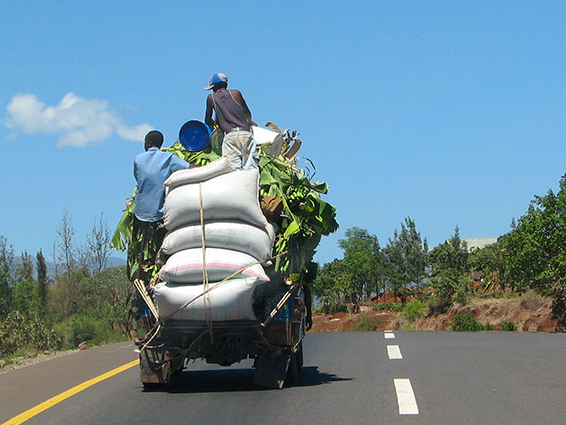
Rural infrastructure feeder roads

Feeder roads

Without access routes to obtain inputs and reach markets, other food security investments, including technical assistance and access to finance, underperform.

One approach to financing roads is under the availability payment scheme, in which governments would pay a predetermined amount for a private party to operate and maintain the roads. Co-financing road projects is another viable option. When municipalities, national governments or multilateral development banks (MDBs) co-invest in a project, it gives a strong signal to investors about the project’s legitimacy.

Investing in feeder roads can contribute to growth, poverty alleviation and food security.

Irrigation infrastructure

Agricultural productivity resulting from irrigation can be more than twice as high on a per-hectare basis than rainfed production.

This is why investing in water distribution is critical. Public-private partnerships are one financing option. This entails engaging with the private sector in either the construction or maintenance of irrigation and drainage infrastructure, helping spur agricultural productivity.

Access to reliable water sources positively contributes to women’s empowerment through increased asset ownership and control over resources, better sanitation, local job creation and food security. 

---

Pourquoi le financement des infrastructures rurales est crucial pour atteindre la sécurité alimentaire ?

La plupart des personnes souffrant de la faim dans le monde vivent dans des zones rurales et travaillent dans le secteur agricole.

Ce n’est pas une coïncidence s’ils n’ont pas  accès aux services de base, tel que l’approvisionnement en énergie et l'irrigation en raison d’un manque d’infrastructure. Celui-ci constitue un facteur important de leur vulnérabilité à la faim.

Le financement des infrastructures, qu'il s'agisse de routes, de stockage ou de réseaux d’énergie localisés contribuera à assurer la sécurité alimentaire des 821 millions de personnes dans le monde qui souffrent de la faim.

Notre rapport, Financement des Infrastructures Rurales : Priorités et voies d’accès pour éradiquer la faim, met en évidence comment de nouveaux instruments financiers peuvent soutenir une infrastructure décentralisée destinée aux agriculteurs, aux transformateurs d'aliments et aux communautés rurales.

Nous décrivons ci-dessous certaines des modes de financement.     

Les infrastructures de stockage

Environ un tiers des aliments produits pour la consommation humaine sont perdus ou gaspillés dans le monde, soit environ 1,3 milliard de tonnes par an. Les installations de stockage, y compris les silos à grains et à riz, les entrepôts et les chambres froides, jouent un rôle essentiel pour assurer la sécurité alimentaire et éradiquer la faim.
Rural infrastructure food storage

Les gouvernements devraient créer des fonds spécifiques dédiés au financement des projets d'infrastructure de stockage. Des prêts à des conditions préférentielles, soit par le biais d'un programme d'infrastructure spécifique, soit par l'intermédiaire d'une banque partenaire, peuvent également être accordés aux agriculteurs ou aux coopératives pour des investissements dans le stockage agricole.

L'amélioration de la capacité l'infrastructure de stockage ainsi que la qualité et les pratiques demeure primordial pour réduire les pertes après récolte et protéger les approvisionnements alimentaires. Elles constituent également un outil important pour donner aux agriculteurs un meilleur contrôle pour pouvoir déterminer à quel moment et à quel prix vendre leurs produits.

Les infrastructures pour l'énergie renouvelable décentralisée

Près d’un quart de la population mondiale n'a pas accès à l'électricité. Près de 85 % de ces personnes vivent dans des communautés rurales dispersées en Afrique subsaharienne et en Afrique du Sud.

L'augmentation des prix de l'énergie entraîne une hausse des prix des denrées alimentaires, réduisant l'accès aux services pour les ménages les plus pauvres.

Des incitations fiscales à différents stades de l'opération des énergies renouvelables décentralisées (ERD), comme l'installation d'éoliennes, peuvent encourager son déploiement tant du côté de l'offre que de la demande. Les prêts consentis à des conditions favorables sont également des alternatives viables. Ces prêts, assortis de taux d'intérêt préférentiels accordés par le gouvernement ou par des organismes internationaux de développement, permettent aux projets d'ERD d'avoir accès au financement à un coût moindre.

L'énergie est un second souffle pour l'agriculture. Il est essentiel pour un large éventail de fonctions, allant de l'utilisation de machines à l'alimentation et à l'éclairage d'installations, en passant par le chargement d'appareils de communication. Les nouvelles technologies combinées à un financement novateur mettent cet aspect vital mais négligé de l'infrastructure rurale à la portée de tous.

Routes de desserte

Les autres investissements dans la sécurité alimentaire y compris l'assistance technique et l'accès au financement, en l'absence de voies d'accès pour obtenir des intrants et accéder aux marchés, resteront en dessous des objectifs désirés.

L'une des méthodes de financement des routes consiste à utiliser des systèmes de paiement de disponibilité par lesquels les gouvernements versent à une partie privé un montant prédéterminé pour l'exploitation et l'entretien des routes. Le cofinancement de projets routiers est une autre option viable. Lorsque les municipalités, les gouvernements nationaux ou les banques multilatérales de développement (BMD) co-investissent dans un projet, cela donne un signal fort aux investisseurs sur la légitimité du projet.

Investir dans les routes de desserte peut contribuer à la croissance, à la réduction de la pauvreté et à la sécurité alimentaire.

Rural infrastructure irrigation

Les Infrastructures d’Irrigation

La productivité agricole résultant de l'irrigation peut être plus de deux fois plus productive par hectare que la production pluviale.

C'est pourquoi il est essentiel d'investir dans la distribution de l'eau. Les partenariats public-privé constituent l’une des options de financement. Cela implique de travailler avec le secteur privé dans la construction ou l'entretien des infrastructures d'irrigation et de drainage, contribuant ainsi à stimuler la productivité agricole.

L'accès à des sources d'eau fiables contribue positivement à l'autonomisation des femmes grâce à une plus grande propriété de l’actif, un meilleur contrôle des ressources, un meilleur assainissement, à la création d'emplois locaux et à la sécurité alimentaire. 

Insight

Why Public Policy Matters When It Comes to Gender Equality for Sustainable Development

Cold statistics on gender equality in government reveal only part of the story; the cultures and processes behind the stats can teach us much more about where we are headed. 

January 3, 2019

Gender inequality has always been an impediment to development. 2018 proved to be a year when explorations of gender parity burst forth into the mainstream more than ever before.

Against this global backdrop, IISD continues to spotlight gender concerns in sustainable development. For example, two of our recent reports reveal how gender, water and climate change are interwoven in policies emanating from Ugandan and Kenyan government institutions.

This matters greatly given that women—as adopters of new agricultural and energy technologies, educators of the young and main users of water for household needs—offer valuable insights and solutions into better managing the risks of climate change.

Working on these reports, I was impressed by the variety of public policy responses that can be incorporated in the water sector to empower women—a process known as gender mainstreaming—but also saddened at the reality of how traditional discriminatory mentalities still have deep roots. With this came the realization that progress to achieve gender equality in these countries is going to be very slow.

First let’s consider how well women are represented in positions that can effect change.

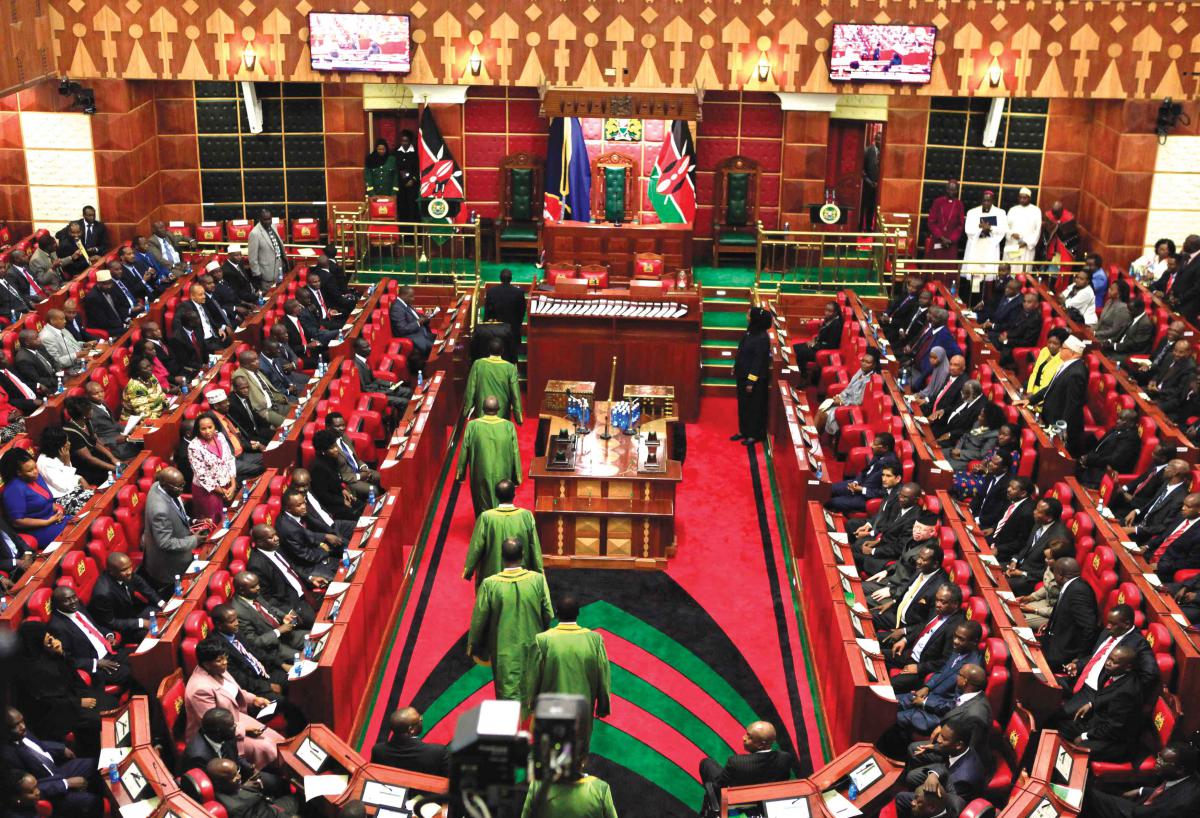
At first glance, statistics on women in leadership positions were disappointing—Kenya has elected only three female governors in 2017 out of a total of 47—a meagre 6.4 per cent.

Gender inequality and development
Kenya has elected only three female governors in 2017 out of a total of 47—a meagre 6.4 per cent.

But is the rest of the world really doing much better?

Having been born in Russia, I am always inherently interested in how my country is doing compared to the world on various issues. I discovered that Russia has only two women as heads of federal subjects (governors, presidents of republics and other heads of administration) out 85—an even less encouraging percentage of women’s representation (2.3%) compared to Kenya.

It’s clear, therefore, that statistics in both countries are strikingly similar; however, a peek behind the curtain reveals that these statistics have different stories to tell.

In Kenya and Uganda, the empowerment of women is firmly on the agenda. Significant improvements are being made in legislation with respect to representation of women in decision making, gender budgeting, and government staff training on gender issues. Furthermore, institutions such as the National Gender and Equality Commission in Kenya and the Equal Opportunities Commission in Uganda, have been set up to monitor and influence the state of gender equality.

Moreover, in in Kenya, a two-thirds gender rule in the Constitution’s Article 27(8) mandates that “not more than two-thirds of the members of elective or appointive bodies shall be of the same gender,” which not only guarantees 30 per cent women’s representation but also ensures there is no bias in areas where women may be overrepresented.

Undoubtedly, more work is needed at the policy implementation level in both countries, but the progress is evident. No women were elected governors in Kenya’s 2013 election; however, the situation improved when three were elected in 2017.

Women, as adopters of new agricultural and energy technologies, educators of the young and main users of water for household needs, offer valuable insights and solutions into better managing the risks of climate change.

In Russia, on the contrary, the existence of problems related to gender is not recognized at the official level. Various acts violating women’s rights serve as evidence, such as the recent legislative change decriminalizing domestic violence to which women mainly fall victim. Moreover, there is a lack of government commitment, knowledge and capacity for gender sensitive budgeting or planning.

Furthermore, any stipulations such as Kenya’s two-thirds gender rule are absent in the policies of Russian governments.

Turning the lens back on the advancement of a sustainable world, having women in positions of power matters greatly, not only in the name of gender equality and representation, but because women’s experiences and roles in society and households bring invaluable insight into how to protect important resources and deal with climate change.

The current state of affairs may reveal one layer, while a closer look at policy landscapes and broader cultural shifts may better reveal where we are headed. As we have seen, though Kenya and Uganda may have similar percentage of female policy-makers as Russia, the trajectories towards gender parity are quite different.

Therefore, in light of the processes happening in East Africa as policies becomes better enforced, we can expect countries like Uganda and Kenya to advance further towards gender equality, and thus find themselves better equipped to construct sustainable futures.

And what I have certainly learned by conducting this research is that in the world of sustainable development commonly understood East/West binaries about gender equality don’t always prove to be true, and that an appreciation of context and broader landscapes can prove just as valuable as homing in on existing facts.

Insight

India's Energy Subsidies Moving in the Right Direction

India has become an outspoken proponent of renewable energy, but do the facts back up the rhetoric? Is the central government walking the talk when it comes to India's energy subsidies?

December 27, 2018

India has become an outspoken proponent of renewable energy, including at the just-concluded COP 24 in Poland and as champion of the International Solar Alliance (ISA).

But do the facts back up the rhetoric? Is the central government walking the talk?

Money, as they say, isn't everything, but an analysis of expenditure patterns reveals a lot about government priorities. And government subsidies affect energy prices, which drive investment and consumption decisions.

India's energy subsidies

A recent study of India's energy subsidies sheds light on exactly which energy types the government is backing. And it's no small amount—INR 151,484 crore (USD 23 billion) in the 2017–19 fiscal years (FYs). The report is an update of a comprehensive inventory released last year.

Consistent with the government's position has been its shift away from subsidizing fossil fuel and toward renewable energy. FY 21016/17 saw a record increase in support for renewable energy of INR 5,766 crore (USD 0.8 billion). At the same time, government support for coal, oil and gas fell by INR 13,418 crore and by INR 120,687 crore from 2014 to 2015, reflecting reform in consumer price subsidies for fuels such as petrol and diesel.

But this is not the full story. Subsidies for fossil fuels were still over three times those for renewables in FY 2017/18 at INR 52,982 crore. Coal alone received more than renewables at INR 15,992 crore and even increased by INR 1,148 crore.

Subsidies for coal can undermine the development of renewables by artificially reducing prices for coal-fired power, the renewables' main competitor. This contributes to air pollution and carbon emissions. Even where there are environmental standards for coal, they aren't always well enforced. One such example is non-compliance with coal washing laws, delivering a benefit of INR 980 crore in FY 2017/18 to coal companies—and incentivizing dirtier air for everyone.

Some energy subsidies are important to achieving certain policy objectives, such as access to energy. Around 70 per cent of India's energy subsidies aim to keep prices low for consumers or to connect households with modern energy, such as the Ujjwala program for cooking gas or the Saubhagya program for electricity.

The single largest support measure in FY 2017/18, accounting for almost half of all energy subsidies, was transfers to electricity companies to keep power prices low (INR 74,925).

Programs to improve access to clean, modern energy are vital for health and improving development outcomes across many areas, as recognized in the UN Sustainable Development Goals. But this does not mean that such programs should be exempt from review? On the contrary, evaluation is essential to ensuring they are effective and delivering value for money.

At the moment, most of India's spending on energy consumption, particularly electricity, is poorly targeted, with many benefits being captured by higher-income households. Efforts have been made to improve targeting, but given their high remaining costs, renewed efforts to direct support to the poor are critical.

India's energy subsidies

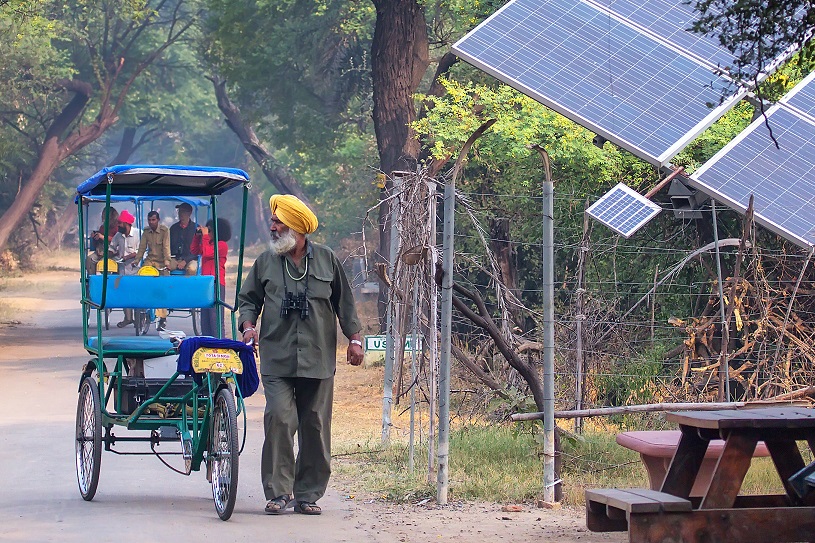
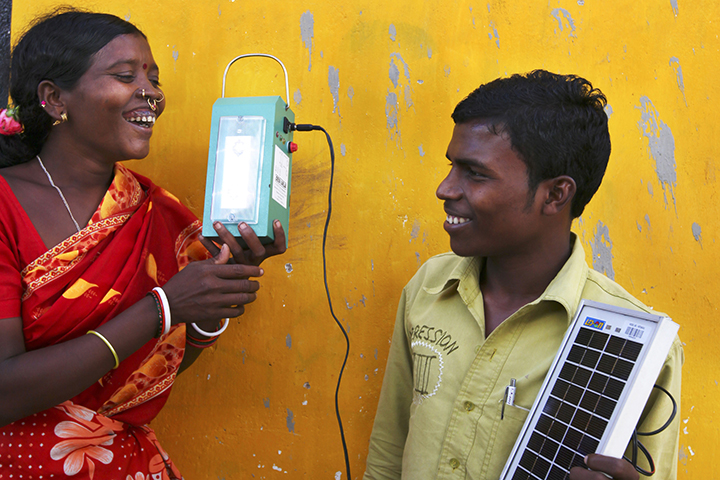
Looking at expenditure patterns, alternative ways of providing access to modern energy can also be considered. Kerosene, for example, is still used as the primary source of lighting for 30 per cent of households in some states and by many more as a backup during power outages. Subsidizing kerosene might seem like a lifeline to these households. But kerosene causes indoor air pollution and poses a fire risk, as well as providing low-quality light. Renewable alternatives such as solar lanterns or home systems are available for comparable costs to kerosene over time, but subsidies are needed to help poor households meet the initial upfront costs.

Further support may also be warranted for electric vehicles (EVs), which can help reduce pollution and de-link India's economy from volatile international oil prices. At the moment, when oil prices rise, the subsidy bill increases at the same time that revenues decline due to a variable fuel tax on petrol and diesel. Subsidies for EVs are only in their early stages in India, totalling INR 148 crore in FY 2017/18 and rising to INR 250 crore in FY 2018/19.

Looking forward, the central government's support for renewable electricity is likely to head in the opposite direction to EVs in coming years. Reforms associated with the Goods and Services Tax (GST) will see tax breaks for coal and renewables both decline by about INR 2,000 crore in FY 2018/19, but total tax breaks for coal will still be five times those for renewables. In addition, the largest subsidy for renewables, "viability gap funding," is likely to decline in line with increasingly competitive pricing for renewables.

Despite the increasing competitiveness of utility-scale solar and wind projects, certain clean technologies may continue to require budgetary support. They include offshore wind, energy storage and off-grid solutions. In addition, support for integration costs (such as energy storage) is likely to be needed to accelerate greater uptake of renewables. One potential source of funding is to shift savings from fossil fuel subsidy reform or better subsidy targeting.

Hard data, such as that in this review, provides a welcome anchor point in a debate that is frequently shrouded in spin by governments, interest groups and commentators. Greater transparency and reporting are needed to get the full picture.

Financial information is sorely lacking for many government energy policies, particularly at the state level. Only with full accounting and disclosure can there be the necessary evaluation of energy policies to ensure they are meeting their objectives and delivering value.

This article first appeared on Business Standard on December 20, 2018.

Insight details