IISD Reaction to Canadian Environment Commissioner’s 2019 Spring Reports
“Slow action on climate change that is disturbing.” That stark assessment wraps up Canada’s Commissioner of the Environment and Sustainable Development Julie Gelfand’s final report, released earlier today.
April 2, 2019
“Slow action on climate change that is disturbing.”
That stark assessment wraps up Canada’s Commissioner of the Environment and Sustainable Development (CESD) Julie Gelfand’s final report, released earlier today. Coming a day after a government study on Canada’s rapidly rising temperatures was leaked, the report continues Commissioner Gelfand’s work to hold Canada accountable to its environmental pledges.
While the CESD audit found Canada had taken steps to defend against Asian carp, other species like zebra mussels were not resisted as strongly.
When it comes to protecting Canada’s abundant water supplies from aquatic invasive species such as zebra mussels, the report found Fisheries and Oceans Canada (DFO) “did not distinguish its responsibilities with regard to aquatic invasive species from those of the provinces and territories.” Invasive species are a transboundary issue and a federal responsibility. The federal government should be coordinating provincial efforts to combat invasive species and providing the necessary provincial funds.
While the news that DFO has taken significant action to prevent Asian carp species from becoming established in the Great Lakes is encouraging, Canada’s approach to dealing with aquatic invasive species should be risk-based and informed by a national database of current invasive species in Canada that, surprisingly, still does not exist. This will likely result in stronger efforts to tackle, for example, zebra mussels, which pose a great threat to Western Canada, including Lake Winnipeg.
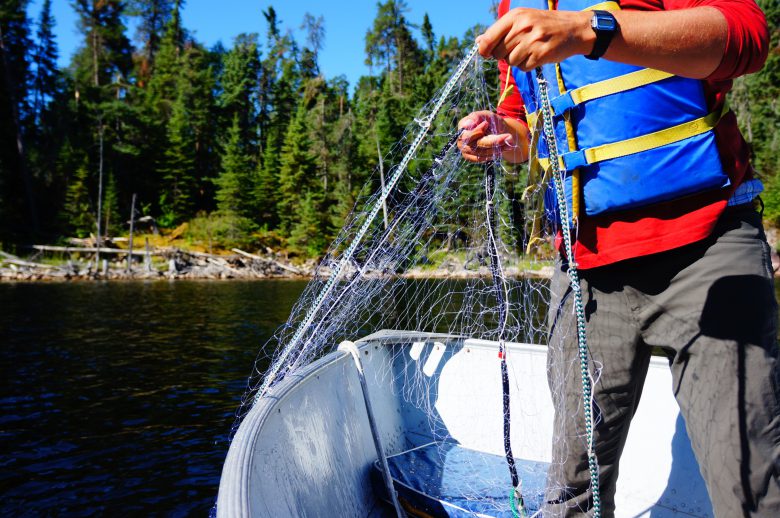
The report also found that DFO “met requirements to protect fish and their habitat from mining effluent.” To improve the monitoring process further, non-lethal methods of testing mining effluent impacts on fish should be more broadly adopted. This would protect fish populations—a pillar of Canada’s economy.
We also need to recognize fish are mobile and not necessarily exposed to contaminants at the site where they were captured. This opens the door for modelling exposures based on other means that do not require lethal sampling of fish—for example, passive samplers. Furthermore, with millions of dollars being spent by mining companies to compensate for loss of fish habitat, it is essential that such compensation be effective and that it be adequately monitored to ensure that it is having the desired effects.
Using an accurate definition is essential to eliminating fossil fuel subsidies.
On fossil fuel subsidies, Commissioner Gelfand found both the Department of Finance’s and Environment and Climate Change Canada’s (ECCC's) work to define both subsidies and “inefficient” subsidies to be incomplete and “not rigorous.” IISD is concerned that both Finance and ECCC disagreed with the audit’s findings, though last week ECCC put out a public call for feedback on non-tax subsidies.
Definitions matter. They are the first step toward meaningful action on eliminating fossil fuel subsidies, which in turn will speed the country’s energy transition and reduce the greenhouse gas emissions that contribute to damaging climate change impacts.
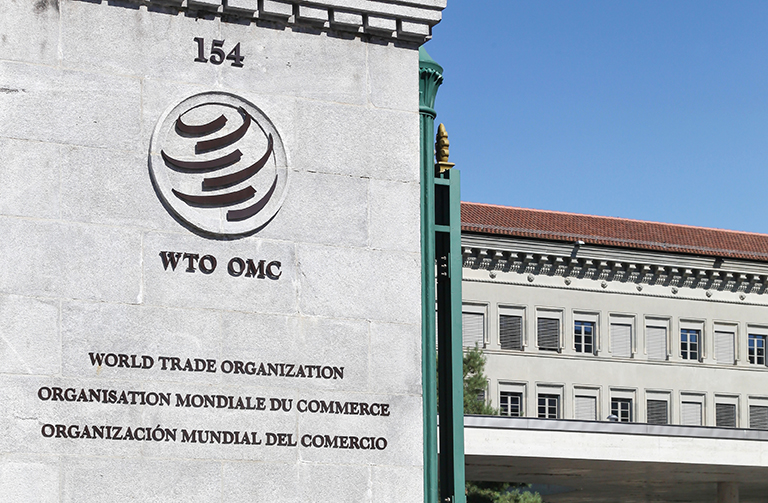
From an international trade perspective, definitions also matter because countries can bring legal action against other countries’ subsidies through the World Trade Organization (WTO). That is why IISD uses the WTO definition of a subsidy in its work, a choice we will emphasize during the ECCC consultations. It is essential to get this first step right as Canada heads into its peer review with Argentina.
Transparency is good, and it is positive to see two major developments on Canadian fossil fuel subsidies in less than a week. However, the CESD report and our own preliminary assessment of the ECCC discussion document show that there is a lot more work to do on this file if the G20 process is going to be productive. ECCC and Finance must take a harder look at their prior assessments and strengthen both their approach and their definitions.
Investor–State Dispute Settlement Reform Talks Resume at UNCITRAL
The next meeting of a United Nations working group debating options for reforming investor–state dispute settlement takes place in New York April 1 to 5.
March 29, 2019
The next meeting of a United Nations working group debating options for reforming investor–state dispute settlement (ISDS) will take place in New York from April 1 to 5.
Two years into the process, it remains unclear whether this work will lead to the desired reforms or what shape these changes may ultimately take.
The next chapter in reforming ISDS agreements moves to New York in April 2019.
Meanwhile, countries remain frustrated with the current system, and have extensively voiced their concerns in the ongoing multilateral ISDS reform discussions being held under the Working Group III process within the United Nations Commission on International Trade Law (UNCITRAL).
UNCITRAL is a UN body mandated to “further the progressive harmonization and unification of the law of international trade.” Their focus is on laws that involve private actors and how their activities affect interstate commerce.
The multilateral deliberations on possible ISDS reform began in 2017, when UNCITRAL gave the working group the mandate to “work on the possible reform of investor–State dispute settlement” and deemed that discussions would need to be “Government-led… consensus-based and fully transparent.”
Since then, delegates have met formally twice a year, in April and November, alternating between New York and Vienna. Delegates are now preparing for the third and final phase of their deliberations.
The two initial phases were devoted to having delegates (i) “identify and consider concerns regarding ISDS” and (ii) debate “whether reforms are desirable.” Phase three will be dedicated to “which type of reform would be preferable and which solutions would need to be developed.”
What is coming up at UNCITRAL Working Group III
Among the main subjects at next week’s session is third-party funding, which refers to cases where financial support is provided to the claimant investor from a third party, typically a litigation fund. Now increasingly common in investment arbitration, third-party funding is seen by many developing countries as a source of speculative and costly claims, putting them in a highly disadvantaged situation and making it difficult to settle the dispute amicably.
Delegates are also due to discuss “other concerns not already covered by the broad categories of desirable reforms already identified,” as agreed at their November session. Many issues that developing countries and observers have previously raised as concerns—such as investors’ ability to skirt domestic court systems for ISDS arbitration or the right to participation by affected parties—have ultimately ended up in an “other concerns” category, without giving them the time or space they deserve.
Also on next week’s agenda are proposals for developing a work plan for upcoming deliberations on phase three of the mandate. Delegates at the November 2018 session agreed that the work plan “would address: (i) how some or all of the concerns …identified as desirable for reform should be addressed in phase three of the mandate, and (ii) questions such as sequencing, priority, coordination with other organizations, multiple tracks, ways to continue the work between sessions of the Working Group, and any other matter that the Working Group considered necessary.”
Aside from third-party funding and the work plan for phase three, another item expected to draw intense scrutiny is the European Union’s proposal for a multilateral investment court (MIC). The European Commission submitted this proposal to the UNCITRAL process in January and accompanied it with a separate submission for a work plan leading up to an MIC.
Chile, Israel and Japan have also jointly made a work plan submission, where they propose an approach that prioritizes the concerns identified to date. They propose the Working Group “develop a Schedule for addressing the list of solutions, beginning with solutions that can have the most immediate material impact.” A submission by Costa Rica also proposes “prioritizing reform options,” while a submission by Thailand advocates for discussing and deciding on the best reform options based on their advantages and disadvantages, and discussing the details of the most desirable options that have been prioritized.
A third path to consider
The submissions are an indication of the crucial issue that the working group will have to decide: whether to prioritize certain concerns and put holistic reforms on the backburner or whether instead to tackle the more complex holistic reforms with the risk of leaving states for many years without solutions to the challenges they are facing today.
In our view, neither solution is desirable. Rather, the working group should consider a third approach. Its members should conduct both discussions in parallel: this will allow them to begin discussing the much-needed holistic or systemic reform while addressing certain pressing issues that can be fixed as a priority.
This parallel two-track approach would require creative thinking in Working Group III, as some of the work would have to be undertaken and prepared at a distance, possibly through sub-committees, between the biannual UNCITRAL sessions. Similar approaches are often undertaken in trade negotiations, with intersessional meetings and exchanges in between major negotiating rounds. Of course, this will require travel support to developing countries, who are eager to participate and find solutions.
Only a parallel two-track approach can steer clear of mere tinkering while also avoiding getting caught up in long conversations about the pros and cons of deeper change.
How Can Sustainability Standards Contribute to Empowering Women’s Food Security?
Food security is an intersectional issue and development organizations can use voluntary sustainability standards (VSSs) to contribute to empowering women’s food security in agriculture.
March 21, 2019
Gender power hierarchies in rural households mean women have secondary access to food.
Food security is an intersectional issue, touching income, access to resources, gender-based discrimination and health.
In times of crisis, women also suffer from food insecurity at greater rates than men in most countries. Shockingly, this can also be the case for pregnant or lactating women with anemia, affecting 38 per cent of pregnant women.
Food security is an intersectional issue. It touches on income, poverty, access to resources, gender-based discrimination and health.
With food security being critical to so many facets of a woman’s livelihoods, how can development organizations utilize voluntary sustainability standards (VSSs) to contribute to empowering women’s food security in agriculture?
Foster sustainable production practices that contribute to diverse and nutritional diets
VSSs can contribute to food security through sustainable production requirements, making new sources of subsistence crops available. One example is, when shade requirements within several coffee certifications are followed, new sources of nutrient-dense foods, like bananas, become available for women and their households.
In many areas of agriculture, men and women are also responsible for different crops due to the gender division of labour. Development organizations working on the ground can promote food security and women’s empowerment by promoting the use of female-grown crops. This includes the new, nutrient-dense crops, such as bananas.
Promote women’s financial decision making and independence
According to research, certified producers, such as those growing organic or Fairtrade crops, can sometimes earn 7 per cent higher net income than non-certified producers due to productivity increases and price premiums.
Higher incomes can be linked to improved food security. In Uganda, for example, certified producers consumed 19 per cent more calories, 35 per cent more iron and 48 per cent more zinc than non-certified households because of the improved soil fertility in their crops, which they are able to grow due to their increased incomes. However, these nutritional advantages tend to disappear when men control the household income. This is likely due to the differences in how men and women manage household finances: women tend to invest their funds back into the household and crops, while this isn’t always the case for men.
Development organizations working with farmers and agricultural communities can take a gender-transformative approach to encouraging gender-equal food security in households by working with men and women in agriculture to promote women’s decision making around household income and their economic independence.
Conduct gender impact assessments to reduce cash crop incentivizing
VSSs can inadvertently incentivize cash cropping, the practice of creating agricultural crops for their commercial or financial value, often for export, as opposed for individual consumption. Cash crops are typically overseen by men, therefore unintentionally reinforcing gender biases.
Development organizations working with farmers and agricultural communities should invest time in learning local gender dynamics and developing a gender-impact assessment when considering certification programs for agricultural producers and smallholders to ensure women’s food security and income are not jeopardized by converting their lands into cash crops.
By using VSSs as a development tool and implementing them in a gender-sensitive way, development organizations can foster women’s food security, economic independence and health.
We explain how President Trump wants the EPA to changes its policies on mercury, and how it could impact the United States and potentially Canada.
March 18, 2019
Even before President Trump took office in January 2017, he pledged to jump-start the country’s struggling coal industry and create more jobs. Since he has been in office, it is a promise that’s led to substantial policy changes at the United States Environmental Protection Agency (EPA).
In what’s seen as another stage in this process, in December 2018 the EPA proposed a revision to the cost–benefit methodology behind its Obama-era regulations on mercury. The EPA now argues that limiting mercury and other toxic emissions from coal- and oil-fired power plants is not cost-effective and should not be considered "appropriate and necessary" under the Clean Air Act.
Mercury poisoning has a wide range of physical and mental symptoms including paralysis, organ damage, even death.
In short, the EPA is reconsidering the importance of co-benefits in its calculations to determine the impact of its mercury regulations on industry and public health. Co-benefits—side benefits that are in addition to the direct benefits resulting from a policy—are traditionally assigned a monetary value and included in EPA policy calculations to justify pollution regulations.
For mercury regulations, the monetized direct benefits of reducing mercury are the increases in I.Q. and lifetime earnings of children born to recreational fishers who consume mercury-laden freshwater fish during pregnancy. The monetized co-benefits include significant health benefits from the reduced emissions of other contaminants not directly regulated by the rule—PM2.5 and sulfur dioxide (SO2). These additional contaminants are reduced due to the installation of required mercury control technology.
When the EPA set up mercury regulations, co-benefits accounted for 90 per cent of the total monetized benefits. Removing them allows the EPA to suggest it is no longer “appropriate and necessary” to regulate mercury emissions since industry costs grossly outweigh the monetized benefits to the public. If this proposal moves forward, it could potentially lead to a loosening of mercury regulations.
What do the United States’ mercury regulations currently look like?
In 2011 the Mercury and Air Toxics Standards (MATS) were established under the Clean Air Act. It affected new and existing commercial coal- and oil-fired power plants—about 600 across the country. It set standards that were expected to not only dramatically reduce releases of mercury and other hazardous air pollutants into the atmosphere but also releases of nitrogen oxides, sulfur dioxide and particulate matter. Utilities have spent more than USD 18 billion to comply with the requirements.
Even before President Trump took office in January 2017, he pledged to jump-start the country’s struggling coal industry and create more jobs.
MATS has significantly contributed to reducing mercury in the environment and improving public health at a lower cost than anticipated.
The EPA’s Toxic Releases Inventory National Analysisreported that mercury air emissions from electric utilities have fallen by nearly 90 per cent over the past decade. Furthermore, the MATS regulation has been instrumental in fulfilling the country’s requirements under the international Minamata Convention on Mercury.
Why is mercury a problem anyway?
Mercury is emitted into the environment from many natural and human-made sources. Industrial processes like coal combustion, chemical manufacturing and waste incineration can release mercury as a by-product into the atmosphere (nonpoint source pollution). It can also be released in wastewater from a factory or mine directly into the environment or into bodies of water (point source pollution).
Atmospheric mercury can be transported over long distances before it is deposited on land and water. Once mercury enters bodies of water, bacteria convert it into methylmercury—its toxic form—which is then carried up the food web into top predator species like sport fishes. When people eat those fishes, they also ingest the methylmercury contained in them.
Once the mercury is in our bodies, it is not easily excreted, meaning it accumulates over time causing serious health problems. Mercury poisoning, or Minamata disease (named after the Japanese town in which it was first documented), has a wide range of physical and mental symptoms. These include hair loss, muscle weakness/paralysis, organ damage, loss of senses, depression and even death.
Even so, aquatic systems can recover when mercury stops being added. Just ask the scientists at IISD Experimental Lakes Area, who, in a highly controlled experiment, intentionally added small amounts of traceable mercury to a lake to see how it moved through the ecosystem and food web. Predictably, the amount of mercury found in the fish increased. When they stopped adding mercury, the amount found in fish decreased, suggesting that reducing the amount of mercury that enters the atmosphere may have a significant impact on the amount of methylmercury that ends up in fish (and therefore humans). It should be noted, however, that the response time will vary considerably between lakes.
What happens next?
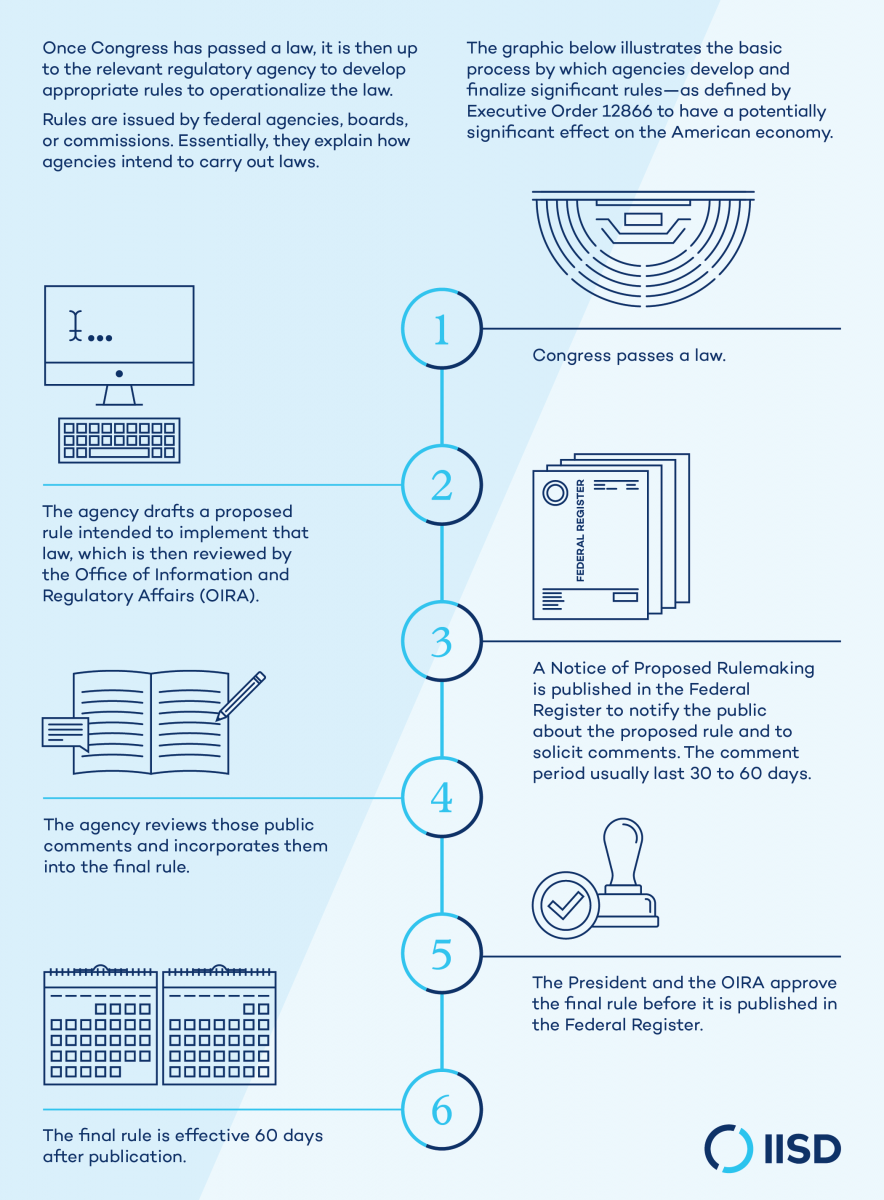
Typically, a rule-making process in the United States must follow an open public process, which includes publishing a statement of rulemaking authority in the Federal Register for all advanced notices, proposed and final rules.
A rule-making process in the United States must follow an open public process.
These proposed changes are currently at the second stage: notifying the public and soliciting comments. The deadline for comments is April 17, 2019. The EPA will also hold a public hearing on March 18, 2019. Before the final rule is published, it will undergo a review by the president and the Office of Information and Regulatory Affairs.
Interestingly, some of the greatest criticism of the proposed regulation changes has already come from industry itself. Several umbrella organizations representing hundreds of electric utilities wrote a letter to the EPA in July 2018 asking that the Trump administration to leave the existing standards in place, given the money and time has already been spent to implement the current standards, and given the benefits those regulations have delivered.
What could this mean for Canada?
According to Environment and Climate Change Canada, 17 per cent of mercury deposited in Canada (through nonpoint source pollution) comes from the United States.
The impacts of proposed changes for the health of Canadians are uncertain. They will depend on the outcome of the consultation process, the U.S. EPA’s next steps and industry’s response to any mercury regulation changes. However, if new plants are built and mercury emissions do increase, Canada may expect adverse health impacts for populations fishing for subsistence, particularly its First Nations populations.
Canada could take inspiration from U.S. environmental policy preventing algal blooms
Recent US legislation to combat algal blooms and protect fresh water shows bipartisan environmental action is still possible—and sets an example for other countries.
March 11, 2019
Division and belligerence are now par for the course in a deeply divided American Congress, but while the political fault lines appear to be ever widening, there are still some significant shows of bipartisanship that provide us with some hope for the future.
Take a recent piece of bipartisan legislation that ensures federal funding to combat harmful algal blooms—just signed into law by the President. With political theatrics dominating most column inches, many of these critical environmental stories born from congressional collaboration receive scant coverage. You will be forgiven for having missed it.
Algal blooms are expected to grow as an environmental hazard in North America due to climate change.
Nevertheless, this legislation matters greatly and should provide inspiration for future Canadian environmental policy.
The new law reauthorizes the Harmful Algal Bloom and Hypoxia Research and Control Amendments Act of 2013, allowing federal funds to be released to combat algal blooms deemed of “national significance.” Further, it provides funding for scientific research into the causes and impacts of algal blooms, with a complete national assessment required at least every five years.
This is a clear signal America is taking its algal blooms problem seriously.
From Lake Erie in the north, to the Floridian coasts in the south, Americans have experienced the economic, environmental and health impacts of harmful algal blooms on their doorstep, and have decided to take action.
Such is the expanse of the United States that a federal response is necessary, given algal blooms are the product of complex, wide-ranging networks of inflows and watersheds, most of which span multiple American states and cannot be neatly localized into one jurisdiction.
Sound familiar?
Algal blooms can prove harmful to people who drink it or even inhale its toxins from the air.
In Canada, we suffer from similar ills. Half of perennially algae-infested Lake Erie is situated in Canada, while Lake Winnipeg has long been the poster child for Canada’s algal bloom problem. Similarly, Canadian tourism suffers due to closed beaches and health warnings, and billions of provincial dollars are zapped up trying to combat the issue locally.
Much like the United States, our algae-infested waters are products of many activities from multiple jurisdictions. Consider, for example, the Lake Winnipeg watershed, which spans no fewer than four Canadian provinces and three American states.
A federal mechanism in Canada, allowing local jurisdictions to flag significant flourishes of algal blooms to the federal government, which could then release funds from its coffers to tackle it, would be the only logical way to address this transboundary issue.
Further, the new law’s provision for new research and regular assessment of the state of algal blooms in the country is equally necessary in Canada. While there is some exciting Canadian research being conducted into what causes algal blooms, an allocated federal pot for that type of science would yield even more significant and useful findings.
As the impact of climate change only continues to intensify, algal blooms will prove to be more of an environmental hazard in North America. Canada should proactively safeguard its abundant freshwater supplies by taking algal blooms seriously and treating them as a national issue.
It seems as though a recent bipartisan success story in Congress could prove to be just the blueprint.
Is a newly introduced Goods and Sales Tax stalling India's move away from fossil fuels toward renewable energy?
March 8, 2019
India, the world’s third-largest energy consumer is undergoing a clean energy transition.
This transition must not only advance climate commitments but also development needs and economic priorities. This is a delicate balancing act. As we tread this tightrope, introduction of new macroeconomic policies could add further complexities.The goods and services tax (GST), introduced in July 2017, is one such example. The GST removed tax exemptions offered previously to solar photovoltaic (PV) and added much uncertainty during the first year of its introduction. How has the GST implementation impacted the cost of solar PV power?
India's GST changes have increased the cost of solar photovoltaic (PV) power generation by almost 6 per cent.
According to a recent study published by the Council on Energy, Environment and Water (CEEW) and the International Institute for Sustainable Development (IISD), the introduction of GST has led to an increase in cost of generation of solar power by almost 6 per cent, while simultaneously reducing the cost of coal-based thermal power by nearly 2 per cent for existing plants.
Overall, it appears that the GST has implicitly widened the gap between coal-based power and solar PV, which has otherwise narrowed in the past few years, and could delay the onset of much needed ‘parity’ between the two sources. Combined with the imposition of safeguards duty (making majority of the PV panels used expensive) and the cap on solar power tariffs, the GST impact may have a bearing on profitability of companies in the sector.
Renewables deserve preferential treatment
The utility-scale solar power projects have become increasingly cost competitive against conventional energy sources. The scaling back of tax exemptions for solar PV under the GST regime and plans to further reduce subsidy support to renewables, suggests that the sector has already achieved critical mass to compete on its own merit.
Yet, it is also important to recognise that segments such as rooftop solar, microgrids, offshore wind, and floating solar continue to remain expensive or are too nascent to be deployed without adequate support in the short- and mid-term. The National Clean Energy and Environment Fund (NCEF), fed by the Clean Environment Cess applied on coal, was earmarked for supporting clean energy technology research and projects. With the GST, the Clean Environment Cess has been replaced with the GST Compensation Cess, which is no longer directed into the NCEF. This void must be plugged by the government through an alternative source. Policymakers should distinguish between emerging and mature renewable energy technologies and extend continued support to nascent but critical alternatives.
Another distinction that the GST regime must make is between the variety of contracting structures that exist for solar PV. According to a recent notification by the GST Council, 70 per cent of the gross value of the contract will attract 5 per cent GST, while the remaining 30 per cent will be treated as services and attract 18 per cent GST. This approach seems arbitrary since, for instance, the share of services in solar parks projects is close to 17 per cent. Ideally, services associated with installation of solar PV must be part of a composite supply and attract 5 per cent GST just as the solar power generating system.
It is also worth noting that the above clarification from the GST Council came after more than a year of implementation of GST. Until then, there was confusion on the GST rates applicable for solar power projects, with states differing from each other in their interpretation. The introduction of the safeguards duty on solar panels has only compounded the uncertainty, resulting in delays in deployment of solar projects.
The GST must increase relative competence of solar power with due consideration to second-order effects. One could argue that taxation on coal must reflect the health and environmental costs it imposes on the society but a higher tax on coal would make energy unaffordable for economically vulnerable groups. Hence, policymakers must focus on targeted subsidies, just as those being provided for LPG consumption under the Ujjwala scheme, to ensure that benefits accrue to the deserving, while also pursuing decarbonisation of India’s energy sector. Further, it is also important to evaluate the net impact of fiscal measures and budgetary support on promoting sustainable energy choices.
The GST was introduced to rein in inefficiencies in India's tax system–but it carries unintended consequences.
The GST was introduced with the intention of simplifying indirect taxes and reining in inefficiencies in the tax system. It is not surprising for a major shift in fiscal policy to have unintended consequences, which will be resolved over time. However, it is important to continuously monitor and examine if such fiscal measures are being effectively wielded, to support India’s larger national objectives with implications for sustainable development.
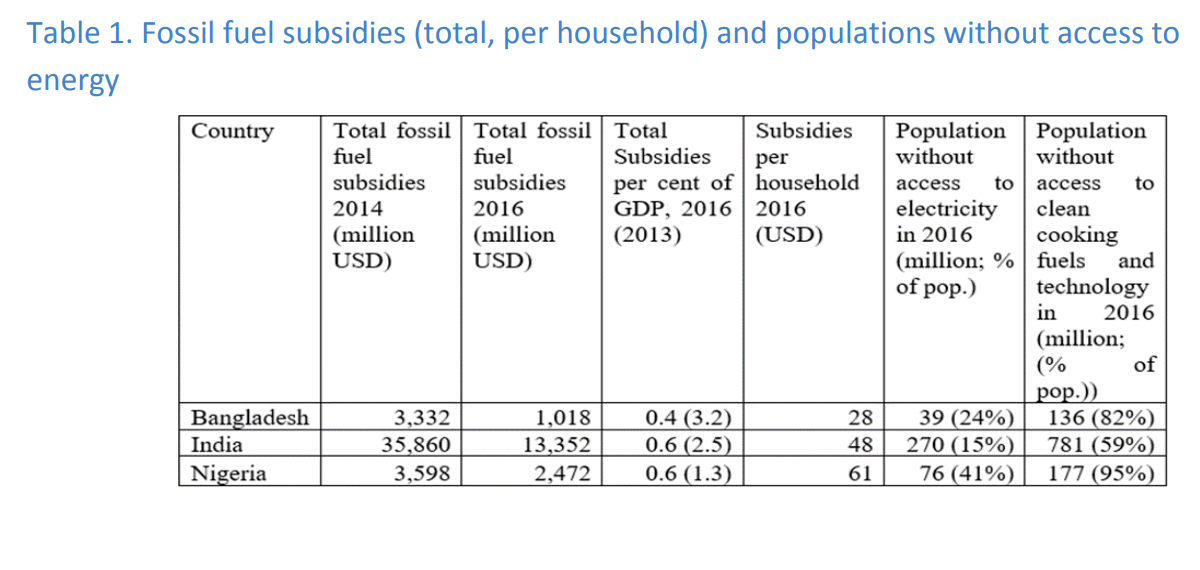
Overall, the research found fuel subsidies do not work well for poor women. A large share of subsidies accrues to wealthier segments of the population because they consume more energy and have better access to it. This effect is particularly strong for liquified petroleum gas (LPG), as the researchers found in India, but also for a “poor people’s fuel” like kerosene, as observed in Bangladesh and Nigeria.
Source: World Bank, 2018a; IEA, 2014; IEA, 2018; United Nations Department of Economic and Social Affairs, 2017; World Bank, 2018b; authors’ calculations.
Subsidies do not guarantee lower fuel prices—and may even create price premiums by increasing fuel scarcity. Even in countries with fixed fuel prices, households were found to pay significantly more. In Nigeria, low-income women reported paying between two to six times more than the official price for kerosene, and in Bangladesh 14 per cent more for the same fuel. Indeed, households in these countries were often not even aware of the existence of a subsidy. These findings imply that any benefits from subsidies are even lower than previously estimated.
The burden of queuing for scarce cooking or lighting fuels frequently falls on women. In Nigeria, women reported queuing for hours and sometimes all day to get kerosene. In Lagos, Nigeria, 57 per cent of survey respondents preferred informal dealers for convenience and availability, despite higher prices and safety risks of adulterated fuel.
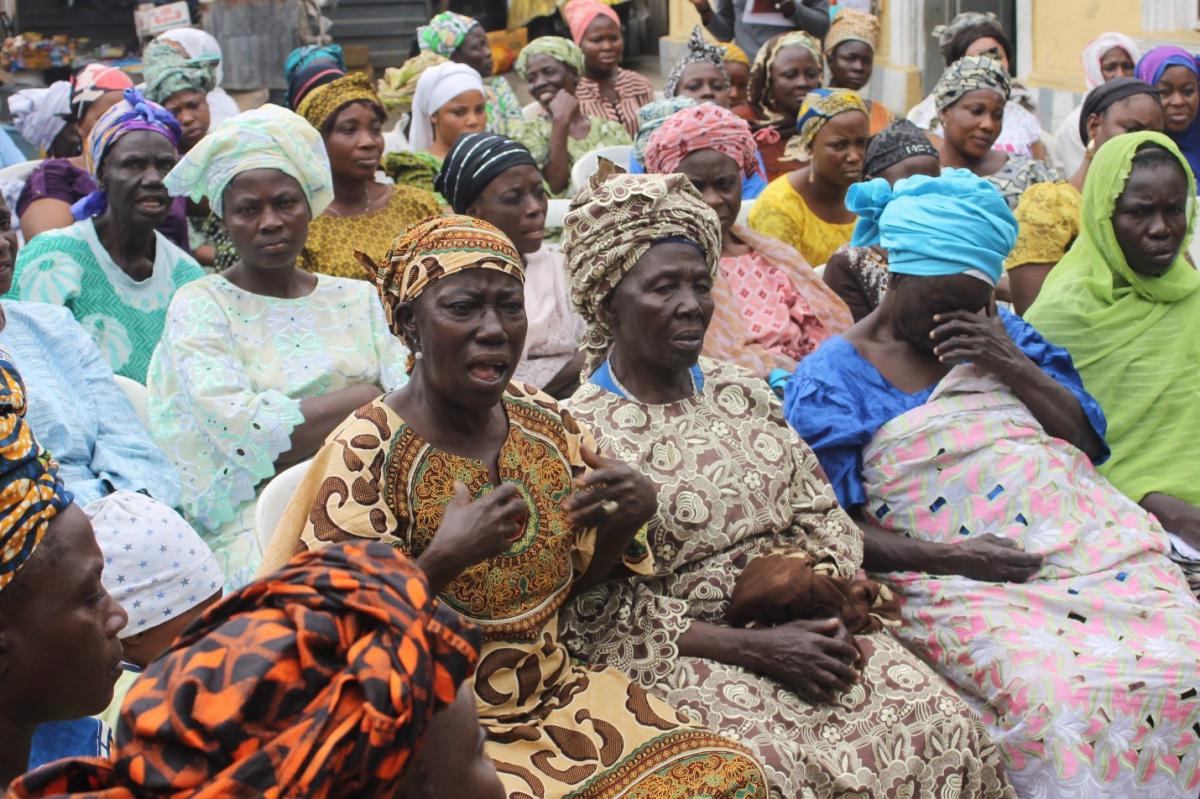
Women taking part in a Focus Group Discussion, Nigeria.
Not all subsidy schemes resulted in fuel scarcity, however. In India, Pratyaksh Hanstantrit Labh (PAHAL, formerly known as the Direct Benefits Transfer scheme for LPG, or DBTL) appears to have been successful in preventing large-scale illegal diversion of fuel, with very low rates of shortages or price premiums. However, the subsidy has still not reached everyone. In the states of Chhattisgarh and Jharkhand, almost half of the households surveyed did not use LPG and therefore did not benefit from the subsidy at all. Biomass remained a cheaper option for the poorest people in all three countries where the research focused, and many households continue to use biomass alongside LPG, so problems with indoor air pollution are not immediately resolved just by subsidizing LPG.
Connection subsidies directed at women could help
Better targeting of support for energy access is needed and could counteract some of the problems identified in the research. For example, connection subsidies can encourage gender empowerment around decisions to purchase new cooking equipment for LPG and overcome upfront connection costs. In India, the new LPG Pradhan Mantri Ujwala Yojana (PMUY) scheme aims to help women in low-income households switch to LPG. Such connection subsidies, however, also require good targeting. Only 48 per cent of PMUY beneficiaries were among the poorest 40 per cent of households. And PMUY relies on a poverty card identification system that is well known for having major errors of exclusion.
While these schemes are not perfect, some poor women are accessing subsidy benefits. Therefore, any attempt to remove or better target subsidies must be done with care, and mitigation measures are needed to protect poor women. Increasing the price of subsidized fuels without any support measures could cause additional hardship for poor women who are accessing subsidized fuels.
Poor women can be impacted by fuel price increases in several ways. In Bangladesh and India, around half of higher-income households report being able to absorb price increases (implying that there is still scope for better targeting). However, two-thirds of households in Bangladesh said they would reduce expenditure on both kerosene and other goods (such as food) if faced with a doubling of prices. With a 40–50 per cent price increase in India and Nigeria, the majority said they would reduce subsidized fuel consumption and/or revert to biomass.
Switching back to biomass has time and health implications for women, given they were found to be the primary cooks in all three countries surveyed. Women more frequently collect the wood or dung and are exposed to its smoke. Some households also reported secondary impacts such as a reduced ability for members to undertake activities that require lighting, such as studying and leisure time (e.g., in Bangladesh linked to use of kerosene).
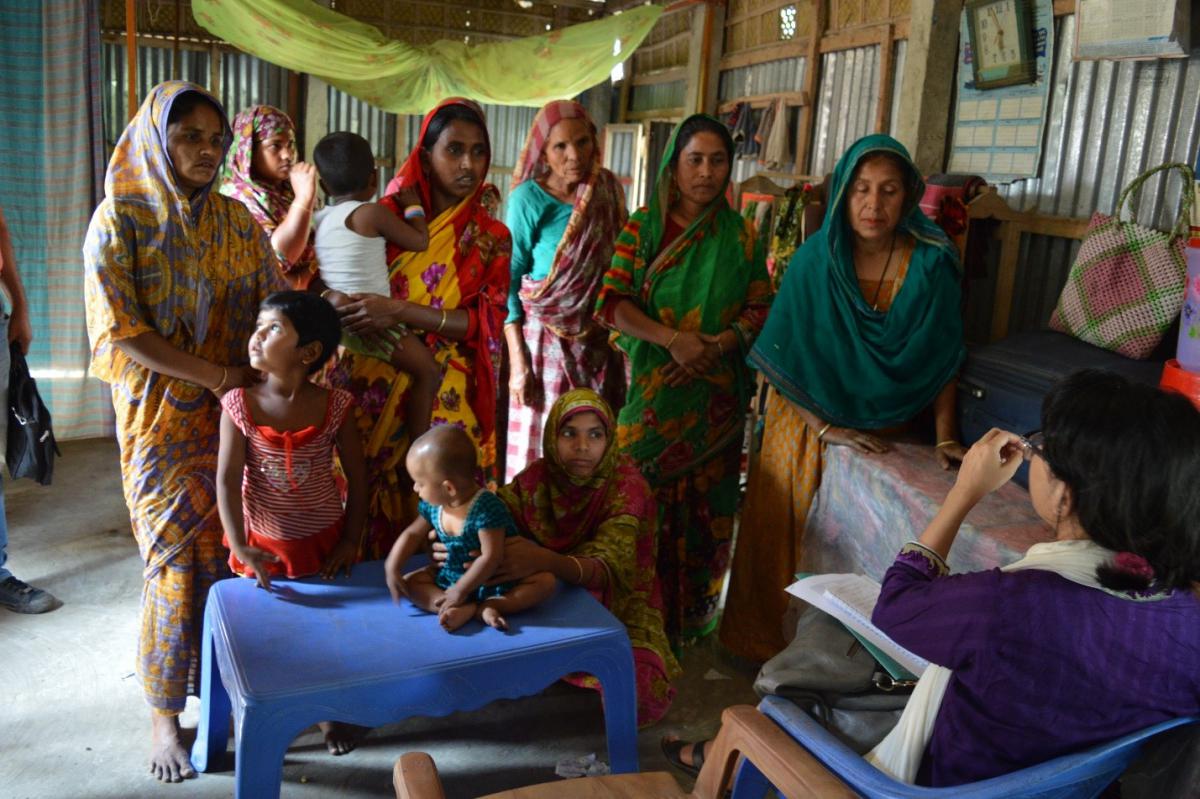
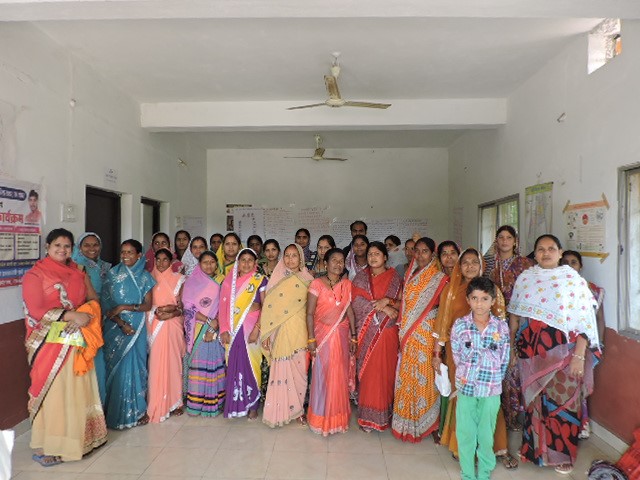
Women involved in focus group discussions, in Raipur, Tilda Block, India.
Education and awareness are key
The research found other factors that could be significant for fuel switching and better access to cleaner fuels for women:
Better-educated women are more likely to choose LPG (as in Nigeria).
Existing patterns of decision making and purchasing power over energy choices within the household also need to be considered (educating men as well as women around energy choices).
In Bangladesh, for example, women have the dominant role in household chores, but men make the decisions on energy sources for lighting (46 per cent) and cooking (39 per cent). Furthermore, men also had the role of purchasing kerosene (94 per cent).
Other likely important factors include improving distribution or the electricity system, especially to rural areas and to the poor, in order to provide alternatives. In India, large drives to expand LPG distribution have played an important role in enabling greater access. Culture (tastes and preferences) may still matter more (e.g., in Nigeria).
Finally, investing in subsidy alternatives could empower women more directly. In Nigeria, surveyed households did not prioritize energy subsidies over other kinds of support. When asked what kind of government support they preferred, households indicated jobs, health, financial support and education to access to modern energy. While households might undervalue the benefits of modern energy, this nevertheless raises the question whether the billions spent on an inefficient subsidy system might not be better spent on social protection programs.
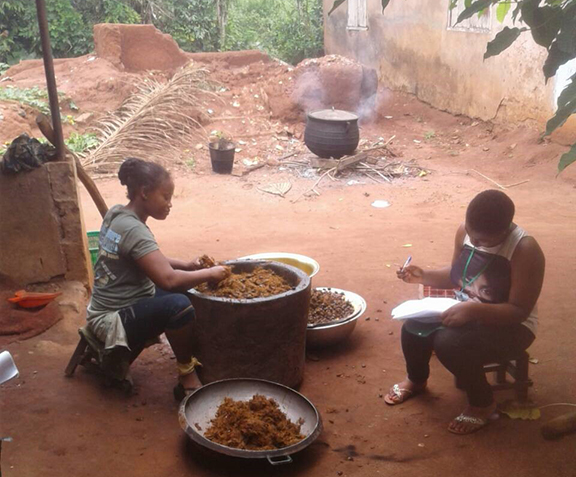
Survey in Imo State, Nigeria.
More diverse and technology-neutral subsidies, conditional on outcomes, may be more effective in achieving access, avoiding technology lock-in and fostering affordable solutions adapted to context. Energy policies should ensure that the right market incentives and structures are in place to cultivate new and renewable lighting and cooking technologies such as solar or grid electrification (to replace kerosene subsidies). Social policies may deliver better outcomes for women including social safety nets, health care, education or business loans for women.
In terms of broad policy recommendations to governments, the research suggests that governments should:
Continue to phase out fossil fuel subsidies that do not support energy access or the target population. In particular, there is a need to phase out subsidies for kerosene, which is prone to large-scale diversion, is more costly than other lighting alternatives and is not clean-burning, while also ensuring there is a clean alternative to switch to.
Better target subsidies for fuels currently deemed necessary for sustainable energy access, and ensure more resources are available to help achieve SDG7 on energy access and fund programs supporting women and promoting gender empowerment.
Consider technology-neutral subsidy mechanisms that focus on outcomes not fuels and avoid technology lock-in.
Recognize that subsidy reform needs to be undertaken carefully, based on an impact analysis of effects on women alongside a robust package of measures to mitigate negative impacts of price increases.
Use comprehensive strategies for energy access that recognize the importance of gender and incorporate it into policy design.
The full report can be downloaded from the HIVOS, ENERGIA website here.
Canadians Deserve Decision-Making Based on More than GDP
If Canadians (or citizens anywhere) want well-being to continue for their children and grandchildren, the country’s comprehensive wealth must be sustained.
The original report was a beacon for those concerned about GDP’s inadequacies as a measure of social and economic progress, helping to launch the global movement to go “beyond GDP”. The second report continues to shine that light, showing how over-reliance on GDP as the yardstick of economic performance can mislead decision-makers. It kept them, for example, from seeing the 2008 financial crisis until it hit.
A major contribution to the beyond-GDP movement in the time since has been the series of “inclusive wealth” reports released by the UN Environment Programme (UNEP). Their latest report is cause for both optimism and worry if you’re a Canadian.
Inclusive (or comprehensive) wealth is the value of a nation’s assets: its produced, natural, human, social and financial capital. Comprehensive wealth is important because these assets – factories, forests, skills, relationships, savings and the like – are the basis for most well-being. They provide the foundation on which all goods and services – both market and non-market – are produced. We use them to create products as diverse as food, healthcare, public transit, clean air, wilderness tours, soccer balls and movies, not to mention the thousands of others that are part of a “good life”.
As the foundation for all market and non-market production, comprehensive wealth is clearly important for current well-being. More important is its link with well-being in the future.
In simple terms, if Canadians (or citizens anywhere) want well-being to continue for their children and grandchildren, the country’s comprehensive wealth must be sustained. If not, declines in future well-being are unavoidable.
Here is where the yin and yang for Canadians comes in UNEP’s report.
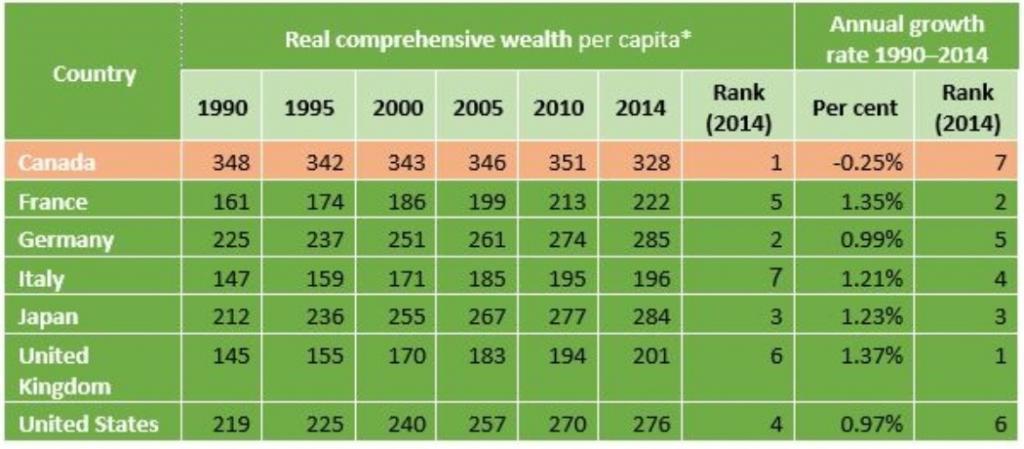
On the positive side, UNEP ranked Canada top among G7 nations in 2014 in terms of comprehensive wealth per capita. In other words, the average Canadian had more assets at his/her disposal in 2014 than any other G7 citizen, largely due to Canada’s massive endowment of forests, minerals, water and other natural capital. Canada had nearly four times as much natural capital per capita as its closest G7 peer, the United States.
The bad news is that Canada ranked last in terms of growth in comprehensive wealth. By the UN’s estimates, Canadian comprehensive wealth actually fell by 0.25 per cent on average each year from 1990 to 2014. In contrast, every other G7 nation succeeded in growing its comprehensive wealth substantially over this period (Table 1).
Table 1: United Nations' estimates of comprehensive wealth for G7 countries, 1990-2014.
Note: All values expressed in thousand constant 2005 U.S. dollars. Source: Managi, S. & P. Kumar (Eds). 2018. Inclusive Wealth Report 2018. London: Routledge
Clearly, other countries are outperforming Canada. In 1990, the average comprehensive wealth in other G7 countries was 53 per cent of Canada’s; by 2014, that share had climbed to 74 per cent. At current rates of growth, Canada will lose its first-place position to Japan in 2024 and will fall to fifth place in less than a generation (by 2039).
This is a recipe for declining well-being in Canada. From failing infrastructure to more pollution, lower wages and cities that are less safe, Canadians stand to lose a lot.
UNEP is not the only organization to find that Canada is managing its comprehensive wealth poorly. In the most detailed study of comprehensive wealth completed for a single country, colleagues at the International Institute for Sustainable Development (IISD) and I came to essentially the same conclusion. Though our findings aren’t quite as dramatic as UNEP’s (we find Canadian comprehensive wealth grew weakly in recent decades rather than declining), they nonetheless point to real concerns about the sustainability of Canadians’ well-being. Canada’s robust GDP growth, on the other hand, tells a much more upbeat – but potentially misleading – story about the country’s progress.
"If Canadians want well-being to continue, the country’s comprehensive wealth must be sustained."
Perhaps most troubling is the fact that the Canadian government, like governments everywhere, does not have a handle on measuring comprehensive wealth. GDP, in contrast, is well measured and, consequently, very influential. As we note in our study, this tips the decision-making scales in favour of short-term GDP growth over long-term sustainability. We think it is time the scales were balanced.
To start with, Statistics Canada should be funded to regularly report on comprehensive wealth – as it has long done with GDP. Then the government should build comprehensive wealth metrics into its decision-making, ensuring that short-term growth objectives do not overshadow the well-being of our children and grand-children.
Every Canadian deserves a future that is as prosperous as the present.
As Members Debate WTO Reform, What Lies Ahead for 2019?
The international trade community is returning to action in what promises to be a jam-packed year that could set the stage for an overhaul of the World Trade Organization.
February 6, 2019
Coming Up in Global Trade
The international trade community is returning to action in what promises to be a jam-packed year that could set the stage for an overhaul of the World Trade Organization (WTO) as we know it.
Early hints of what may lie ahead came from the World Economic Forum’s Annual Meeting in Davos last month, where trade ministers debated how to safeguard the WTO’s Appellate Body—now bordering on collapse—and how to help the organization adapt to an increasingly uncertain political and economic landscape.
"We note with concern the sharp rise in trade restrictive measures over the past year and encourage all Members to exercise restraint." - Joint communiqué from Ministers and Heads of Delegation representing a group of like-minded World Trade Organization (WTO) members at Davos.
The past year at the WTO was, by all accounts, an especially challenging one, as the organization’s members sparred over the increasing use of unilateral tariffs by the United States, as well as the growing strain on the organization’s dispute settlement mechanism. As 2019 begins, these subjects will remain contentious, even as the WTO works to advance and reinvigorate its negotiating agenda on multiple fronts.
Normally, this would be a “ministerial year,” with the organization’s members laying the groundwork for their highest-level meeting. In a relatively unusual development, there will be a 2.5-year gap between ministerials, rather than the statutory two years, with the next one set for June 2020 in Astana, Kazakhstan.
The deadlines set at the 2017 WTO ministerial, such as reaching a deal to discipline harmful fisheries subsidies by late 2019, remain intact. Should WTO members meet those deadlines, it leaves the Kazakhstan meeting agenda virtually wide open in a year that coincides with the next U.S. general election, where trade is expected to again play a headlining role.
WTO reform: “Like-minded” countries reconvene
It’s clear, though, 2019 will be anything but quiet.
For example, the WTO’s Appellate Body now has only three members—the bare minimum to sign off on any ruling. Several WTO members have submitted proposals, either individually or jointly, on Appellate Body reform—but whether any of these will serve to quell the United States' stated concerns about “persistent overreaching” remains to be seen.
There is growing momentum among many WTO members to “modernize” the organization, including the Appellate Body—though the details and feasibility of reform are unclear at this stage. In Davos, Canada led a meeting of “like-minded” countries to gauge what contribution this group could make on dispute settlement, the WTO’s negotiating function, monitoring and transparency, and development.
Their communiqué said they hoped to achieve “significant progress” by the upcoming G20 leaders’ summit in Japan this June—a short window for achieving a political commitment on what these reforms could look like, much less for the technical negotiations and consensus building that need to occur among the WTO’s much wider membership.
Also notable was the announcement that the group would convene “open-ended consultations with all interested Members,” aiming to craft proposals that would “improve the WTO’s deliberative and monitoring functions and ability to solve trade concerns without litigation.” The approach would entail strengthening existing WTO bodies to head off disputes before they escalate to formal cases, thus alleviating some of the pressures on the legal system.
These proposals would be designed as “cross-cutting and committee-by-committee basis,” covering initially the relevant WTO bodies that work on rules of origin, sanitary and phytosanitary measures, technical barriers to trade, and services. Moving important issues to committees will require transparency to ensure important regulatory outcomes are not hatched behind closed doors. Also, the participation of developing countries (including those that do not have missions in Geneva) would be essential in order not to erode their say in the multilateral trading system.
The concluding remarks of Swiss Federal Councillor Guy Parmelin after the separate Davos “mini-ministerial” on trade indicated that while there is wider interest in WTO reform beyond the Canada-led group, there are also questions on the work’s “content and modalities.” Other WTO reform discussions are also underway in parallel groupings, such as the US-EU-Japan trilateral format.
The scope of WTO regulation of e-commerce remains unclear, even as heavyweight China joins discussions.
E-commerce: questions remain about approach, objectives
Also on the horizon is the start of formal negotiations on electronic commerce rules among a group of WTO members. The countries endorsed a joint statement on the subject at Davos, with the notable addition of China to the list of participants, with its rapidly growing e-commerce market.
The group confirmed its “intention to commence WTO negotiations on trade-related aspects of electronic commerce,” pledging they would pursue “a high standard outcome that builds on existing WTO agreements and frameworks with the participation of as many WTO Members as possible.” The statement also referred to the situation of small and medium-sized enterprises and developing and least developed countries.
The statement is scant on substantive details or timeframes, and otherwise reads similarly to the joint statement most of these WTO members already endorsed over a year ago in Buenos Aires. The start of these new negotiations will likely fuel renewed questions over what such rules should entail and whether an international regime on e-commerce is even plausible—points Simon Lester has raised in his International Economic Law and Policy blog.
Trade watchers will also be considering whether the WTO is the right forum for such an effort and what new ideas may emerge from these discussions. Looking ahead, WTO members will still have to address long-standing disagreements over whether to start new negotiations on topics such as e-commerce or investment facilitation while old processes are still outstanding.
With all that activity, why would IISD Experimental Lakes Area also be considering research on the potential impacts of Canada’s recent cannabis legalization on its freshwater resources?
Quite simply, it is because we have reason to be concerned.
All of our planet’s water is connected
To understand how a human consumption issue can affect fresh water, we need to consider the connectivity of our planet’s water. Water is a finite resource, and when we use it for one purpose it can be altered, affecting how that water can be used afterward. IISD-ELA scientists have been studying this phenomenon for more than 50 years.
Now that cannabis legalization is sweeping North America, we need to better understand its impact on freshwater systems.
For example, in the late 1990s and early 2000s, Dr. Karen Kidd, now a professor at McMaster University, led a team of scientists at IISD-ELA to examine the impacts of the female reproductive hormone, estrogen, on freshwater lakes. The work was based on the understanding that estrogen, either naturally produced by humans or synthetically prescribed in birth control pills, is excreted in urine but is not completely removed by sewage treatment plants. Therefore, measurable concentrations of estrogen are discharged from sewage treatment plants and can be found in rivers downstream from these facilities.
Dr. Kidd and her team showed that, even at the minute concentrations released, fish populations could be dramatically and negatively affected. There are similar examples related to other chemicals routinely found in our fresh water, including other pharmaceuticals such as lipid-lowering drugs, antidepressants, pain medication—even caffeine!
The case for cannabis
Dr. Kidd’s estrogen study is important, because prescriptions for ethynlestradiol, the synthetic form of estrogen found in birth control pills, can be linked to increased concentrations of total estrogen measured in rivers downstream from major Canadian cities. Similarly, when a new prescription drug appears on the market, there is the potential for increased usage, excretion of the original chemical or active metabolites, and impacts to receiving waters.
Why would IISD-ELA be considering research on the potential impacts of Canada’s recent cannabis legalization on its freshwater resources?
Quite simply, it is because we have reason to be concerned.
People consuming cannabis metabolize tetrahydrocannabinol, or THC as you may know it, primarily to a metabolite known as THC carboxylic acid (THC-COOH). This non-psychoactive metabolite is eliminated in urine and feces, is directed to our wastewater treatment facilities and could ultimately appear in bodies of fresh water. But does this necessarily suggest cause for concern following the legalization of cannabis?
Will more Canadians be using marijuana now that it is legal?
A recent study in the United States found that, in Washington State, perceived harmfulness declined and usage increased among adolescents after legalization, while this association was less clear in Colorado. Another recent study from Oregon found that cannabis use by adolescents increased after legalization occurred, but only among active users and not among those who didn’t use cannabis before it was legalized.
In the Netherlands, some association of increased use after adopting a policy of “non-penalization” may have been tempered by the fact that prices remain higher than in other jurisdictions. Health Canada commissioned a study by the Denver-based Marijuana Policy Group, which predicted increased cannabis usage after legalization but with a significant degree of uncertainty included.
IISD Experimental Lakes Area has been researching on whole lakes for over 50 years—a type of research that produces different results from research performed solely in a laboratory.
All of these findings should be taken with a pinch of salt, given that the researchers themselves acknowledge that usage patterns are difficult to nail down, because they are based on self-reporting surveys and there is a tendency for people to either underestimate their usage or simply deny that they use cannabis at all.
Are cannabis metabolites already reaching Canadian waters?
In 2018, Statistics Canada conducted a pilot research program to estimate cannabis usage patterns by analyzing concentrations of THC metabolites in waste water from major Canadian cities. Just the fact that such a study could be initiated emphasizes that cannabis metabolites are present in appreciable concentrations in wastewater and that these compounds could be reaching our freshwater. And we know that cannabis metabolites have also been found in other studies around the world. For the five Canadians cities studied by Statistics Canada, an average load for all sites combined was estimated at 540 micrograms/person/week.
Even though that’s a pretty abstract number, it allows us to make some basic calculations to estimate potential concentrations reaching downstream surface waters. For example, if we apply that loading rate to Winnipeg’s South End treatment plant, which serves 176,000 people, and combine it with the highly variable flow of the Red River, concentrations of THC-COOH could vary between 0.13 and 3.1 nanograms/litre (ng/L), depending largely on the season. That estimate is based on the incoming load to wastewater treatment facilities and does not necessarily account for the removal of THC-COOH by the treatment process.
Each of the existing studies has used short exposure durations, unrealistic concentrations or has been conducted using one species in the laboratory. IISD-ELA knows that results in realistic field settings can be quite different from those obtained in the lab.
What happens when those cannabis metabolites hit our fresh water?
It is important to remember that there is a great distinction between how much of a chemical is in the environment versus the detrimental effects that it may have on aquatic ecosystems and resident wildlife.
Researchers at IISD-ELA are planning to research how long THC-COOH can be present once it is discharged to fresh water; the effects on aquatic life at realistic concentrations; and how much of the metabolite is removed by current wastewater treatment processes.
There have been relatively few scientific studies that have examined potential effects of environmentally relevant concentrations of THC-COOH on aquatic organisms. Increasing oxidative stress and damage to DNA were detected when zebra mussels were exposed to THC-COOH. While the exposure concentrations were high in this study (70–700 ng/L), the amount of time they were exposed to the THC-COOH was short (only 14 days) leaving open the possibility that more chronic exposures could also have effects. It is important to recognize that THC-COOH is relatively stable (days to months) in water, so longer-term exposures are possible in continuously impacted environments.
Where is IISD Experimental Lakes Area planning to take the research next?
Each of the existing studies has used short exposure durations, unrealistic concentrations or has been conducted using one species in the laboratory. IISD-ELA knows that results in realistic field settings can be quite different from those obtained in the lab.
And that’s why IISD-ELA is continuing to consider further investigations into the potential effects of cannabis on our fresh water.
Specifically, we are embarking on research using enclosures to examine the how long THC-COOH can be present once it is discharged to fresh water. We are also studying the effects on aquatic life at realistic concentrations and processes that determine how much of the metabolite is removed by current wastewater treatment processes.