COVID-19 Has Changed our Freshwater Use. We Need To Be Careful
In an op-ed for the Ottawa Citizen, Matt McCandless argues we often take fresh water for granted, but we must protect it as usage patterns change.
June 4, 2020
In an opinion piece for the Ottawa Citizen, Executive Director of IISD Experimental Lakes Area Matt McCandless argues that, in Canada, we often take fresh water for granted but that, as responsible citizens, there are critical steps we need to take to safeguard its health as water usage patterns change.
"Buoyed by an increased prevalence of lockdown-related good-news stories, such as tales of clearer Vancouver skies and Venetian canals, our general assumption is that the current limitations on human movement will ultimately result in a significant net positive effect for our environment.
Well, that’s only part of the story. Notably absent from much of this discussion, perhaps because of its perceived perennial ubiquity, especially in Canada, is our supply of fresh water..."
Recent polling data shows Canadians agree; a majority believe we must keep up efforts to combat climate change regardless of the health and economic impacts of COVID.
Extreme weather events have not stopped while the world is on lockdown: just last week, the most powerful cyclone in 20 years hit eastern India and Bangladesh, with India now bracing for another; two dams in Michigan were breached in what is being called a “500-year flooding event”; and scientists warned of a grim outlook for Atlantic hurricane season.
The Task Force for a Resilient Recovery, of which IISD is a member, is currently formulating recommendations for how Canada can ensure our economic recovery supports the jobs, infrastructure, and growth needed to keep us competitive in a changing climate.
Our recovery efforts have started on the right foot, but we must do more
Canada has already made steps in the right direction by announcing the conditionality of COVID-19 loans to large businesses based on the disclosure of climate impacts and risks, a first-of-its-kind approach that has garnered international interest. Another welcome move was the federal government’s decision to put CAD 1.7 billion into helping clean up orphaned and abandoned oil and gas wells.
But Canada can and must do more or risk getting left behind while the rest of the world moves on. IISD’s research into stimulus packages in Europe and Asia, which will feed into the Task Force’s recommendations, shows four areas of opportunity:
Buildings:Australia, New Zealand, South Korea, and the European Union (EU) through its Green Deal, are rolling out energy efficiency retrofits for low-income homeowners and for publicly owned buildings. Public investments vary between USD 7 and USD 750 per capita (in Denmark), with the aim of saving much more on energy bills and creating thousands of local jobs. The same rationale holds true for energy efficiency retrofits in Canada, where buildings are the third largest source of greenhouse gas (GHG) emissions (13% of the total in 2018).
Mobility: France has committed EUR 8 billion (around USD 130 per capita) to “cash for clunkers” programs and subsidies for the purchase of electric vehicles (EVs). Iceland and China are investing in EV charging infrastructure, while the EU is considering a VAT exemption for “zero-emission” cars. In addition, the United Kingdom and many European cities have announced large investments in cycling and walking infrastructure, while China is planning more funding for high-speed rail. Mobility is the sector hardest hit by the COVID-19 crisis and the second largest source of Canada's GHG emissions (25% of the total in 2018). Using stimulus to green and electrify the Canadian mobility sector appears a viable solution, with the added benefit of preparing Canadian manufacturers to compete in export markets.
Nature restoration: The EU, through its Biodiversity 2030 Strategy, has committed around USD 500 per capita to nature restoration; New Zealand has committed USD 140 per capita. Similar efforts are underway in Iceland and Pakistan, with locals employed to plant trees, improve waterways, promote organic agriculture, and restore wildlife habitats. Canada is world-famous for its vast outdoors, but those spaces also suffer from industrial and agricultural pollution requiring investments in natural infrastructure.
Clean energy: Many countries have come up with investment plans for clean energy. Australia, Norway, and Portugal are backing hydrogen, while Denmark and Germany are building out additional wind investments. The EU has also pledged EUR 40 billion in a Just Transition Fund to support coal phase-outs, retrain workers, and decarbonize businesses. Energy is the largest source of Canada's GHG emissions—26% of the total came from oil and gas in 2018.
None of this is to suggest Canada should abandon its current climate efforts. Its existing commitment to phasing out coal, for example, is vital and needs to be complemented by investments in renewable energy, grids, and storage. Similarly, a federal carbon tax is necessary, but insufficient on its own. To meet the international commitments we have made to limit global warming by 2030, we need to use all the tools in the toolbox.
A federal carbon tax is necessary, but insufficient on its own. To meet the international commitments we have made to limit global warming by 2030, we need to use all the tools in the toolbox.
In fact, Canada was late in introducing carbon pricing and should learn from those who got there first. Europe, which has had carbon pricing for a long time, has also experienced problems with its implementation. As the above examples demonstrate, many countries in Europe have recognized carbon pricing alone is not enough and are rolling out sizable green stimulus plans now.
And, while some commentators have suggested there are risks in allowing governments to pick winners and losers in the marketplace, the history of innovation—from the Internet to the iPhone—demonstrates the critical role of direct government support in developing new technologies. Risks can and must be managed, including through private sector participation.
As we face a once-in-a-generation opportunity to shape our future, Canada also has an opening to not just keep up with international peers but show true leadership in the face of unprecedented adversity. To do any less would be a betrayal—of ourselves and future generations.
Financing COVID-19 Stimulus: Will high levels of public debt come back to haunt us?
The majority of COVID-related stimulus financing comes from government borrowing. Can this debt be paid back? Is it even meant to be?
May 26, 2020
As the Task Force for a Resilient Recovery begins work on low-carbon, resilient pathways for post-COVID-19 recovery, it’s worth taking a step back to examine how stimulus spending is actually financed and what patterns are emerging from the design and implementation of such packages in Europe, Japan, South Korea, and Australia.
The majority of COVID-related stimulus financing comes from increased government borrowing. For example, the US Treasury has said that in order to roll out its new COVID stimulus package, it would need to borrow USD 3 trillion before the end of June. To put this number into perspective, it borrowed USD 1.28 trillion during the whole year of 2019.
The majority of COVID-related stimulus financing comes from increased government borrowing ... This raises bigger questions about debt sustainability. Can all this debt be paid back? Is it even meant to be paid back?
This raises bigger questions about debt sustainability. Can all this debt be paid back? Is it even meant to be paid back? As Angel Gurría, secretary-general of the OECD, points out: “The extra debt being taken on by already heavily indebted governments and companies to tackle the coronavirus crisis will come back to haunt us.”
Central banks and quantitative easing as sources for stimulus funding
The other major sources of financing for stimulus measures are central banks. With interest rates at historic lows, quantitative easing (QE) has become the dominant monetary policy tool to respond to COVID-19. Central banks, especially in developed economies, are significantly increasing the size of their existing asset purchases. In some cases, such as Japan and the United States, the central bank has even removed the upper limit for its QE operations.
The majority of COVID-related stimulus financing comes from increased government borrowing / iStock
In terms of asset classes, many central banks have moved beyond government bonds and scaled up purchases of commercial papers, corporate bonds, asset-backed securities, exchange-traded funds, and even real estate investment trusts. This has resulted in the ballooning of central bank balance sheets. For example, even before the pandemic, the Bank of Japan had a bigger balance sheet than the Japanese economy, owning 43% of all outstanding government debt.
The main purpose of all this QE is to push down long-term interest rates, alongside short-term rates, so businesses can have access to cheap financing. At the same time, it raises the question of whether central banks are directly financing their countries, which is illegal in most jurisdictions, and could potentially lead to runaway inflation. Indeed, this might be an opportune time to reopen the debate over the merits and downsides of modern monetary policy.
A new approach: COVID-19 bonds
COVID-19 bonds have emerged as a new way to tap capital markets to finance COVID stimulus measures. By the end of April 2020, about EUR 60 billion of bonds have been issued: 90% of it coming from sovereign supranational agency (SSA) issuers, and the remaining 10% from corporates. AXA Investment Managers expect the total issuance to reach EUR 100 billion by the end of 2020 if the current trend continues.
While in absolute numbers, COVID-19 bonds lag behind the monetary and fiscal measures discussed earlier, they can become a popular way to raise financing without increasing already high public debt levels. For example, Kookmin Bank in South Korea has recently issued a Covid-19 Response Sustainability Bond, where proceeds were used to extend loans to COVID-hit small and medium-sized enterprises (SMEs), home businesses, and small offices.
Another notable example is from the European Investment Bank. It has tweaked its existing Sustainable Awareness Bond program to make COVID-related interventions eligible for the use of proceeds. Its recent Euro-denominated COVID-19 bond was issued with a negative yield (issue price above par >100, no coupon), while seven times oversubscribed.
As the integration of environmental, social, and governance (ESG) factors are becoming mainstream in the financial sector, COVID-19 bonds are likely to generate significant interest.
This confirms the significant investor interest for high-investment grade, sustainable bond issues. As the integration of environmental, social, and governance (ESG) factors are becoming mainstream in the financial sector, COVID-19 bonds are likely to generate significant interest. This will translate into a low cost of financing for response measures while decreasing reliance on public resources.
Surprisingly, only a few countries are taking advantage of government loan guarantees as a response to COVID. Guarantees are a great way to leverage government balance sheets to decrease the cost of financing for businesses in COVID-hit sectors. Governments would do well to explore where these instruments could be used to address the financing bottlenecks in their economies.
What to watch for: sustainability targets for stimulus measures
Finally, the question arises whether governments are accompanying stimulus measures with conditionalities or targets on sustainability performance? As the pandemic ebbs and our focus on recovery takes precedence, this is indeed the space to watch in the weeks to come.
The reliance on government borrowing and quantitative easing as a source of financing for early stimulus measures is understandable given the urgency of implementation. At the same time, it is crucial that long-term recovery measures take advantage of alternative sources of financing. COVID-19 bonds should play a significant role here (alongside loan guarantees and other privately financed solutions) in helping avoid overloading government balance sheets. Indeed, this is the only way to ensure that inflation and high public debt levels do not come back to haunt us.
As COVID-19 Continues, Governments Must Shield Emergency Measures From Investor-State Arbitration
Governments need to be able to issue COVID-19 support packages without worrying about the possibility of facing a wave of arbitration.
May 21, 2020
How governments are responding to COVID-19 was the focus at this year’s virtual World Health Assembly (WHA), which concluded on May 19. The premier annual event in the international public health community tackled not only medical issues such as drug patent rules and neglected tropical diseases but also the economic fallout of the worst pandemic in our lifetimes.
Throughout the weeks prior, officials engaged in intense horse-trading over the language of a resolution on COVID-19. Some of the main areas of contention, media reports said, were how to address things like the pandemic’s impact on vulnerable workers and poverty levels and how to use international treaties to protect emergency health measures from unnecessary legal hurdles, such as from intellectual property rules.
One issue that officials should consider as they prepare for the short- and medium-term aftermath of COVID-19 is the prospect that they may soon face massive arbitration targeting such measures, due to the investor–state dispute settlement (ISDS) mechanism embedded in a vast web of international investment treaties.
Potentially hundreds of claimants could bring suits in international arbitration as a result of COVID-related government measures.
These treaties allow foreign investors to sue host governments and demand damages on different grounds, including direct or regulatory expropriation, allegations that they have been treated “unfairly or inequitably,” or concerns that local investors enjoy better conditions. Potentially hundreds of claimants could bring suits in international arbitration as a result of COVID-related government measures. In fact, with the vast number of foreign investors impacted by these measures, it is only a matter of time before the first investor–state claims start being filed. Private law firms have already begun promoting advice on how foreign investors could go about it.
Under investor–state arbitration, each case is decided by an individual tribunal consisting of three arbitrators. This forces governments to fight cases on the same issue on multiple fronts, while running up hefty legal costs—not to mention the damages they could face if they lose, which can add up to hundreds of millions, or even billions, of dollars.
Many of the measures governments are taking or have taken to curb the spread of the virus—such as lockdowns, strict containment, privatizing hospitals, and banning exports of critical supplies and foods—have been vital for public health reasons. Looking at the longer term, though, these will have devastating economic impacts on both workers and companies, as public health officials have acknowledged at the WHA.
Governments worldwide need the policy space now, more than ever, to issue economic support packages and protect their public health systems, without worrying that their budgets could face even more strain from an all-consuming wave of arbitration.
Governments worldwide need the policy space now, more than ever, to issue economic support packages and protect their public health systems, without worrying that their budgets could face even more strain from an all-consuming wave of arbitration. This is crucial for all governments, but especially so for poorer countries, which already have limited public budgets and other fiscal pressures to contend with. As the economic impact of COVID-19 worsens, it is these countries that will be hit the hardest, and where we are likely to see levels of income inequality grow dramatically both within and between countries.
Working together, governments can avoid this arbitration risk by agreeing to suspend treaty-based investor–state arbitration for all COVID-19-related measures. A political declaration could be a valuable first step, and there are forums where such declarations could be made, such as the G20. But political declarations on their own will be insufficient, as private parties will be able to use the vast web of investment treaties to launch legal claims regardless of the statements of leaders.
Governments can address this by reaching out to their investment treaty partners bilaterally, as a group or multilaterally, to agree on a suspension of ISDS on such measures, ensuring that such a response is adapted to governments’ economic and health priorities. There are legal options for doing so, drawing from public international law principles. Taking this approach is not only important from a practical perspective: it will also be a valuable sign of solidarity in the face of this crisis, especially as the strain of the pandemic continues to wear on individuals, communities, governments, and international organizations.
Understanding the interlinkages between public health and economic impact is vital, and the WHA resolution agreed on Tuesday was right to consider it and call for a “whole-of-government” and “whole-of-society” response.
Understanding the interlinkages between public health and economic impact is vital, and the WHA resolution agreed on Tuesday was right to consider it and call for a “whole-of-government” and “whole-of-society” response. Indeed, the WHA has already sent an important signal supporting the use of flexibilities built into international economic legal frameworks, including by naming outright those built into World Trade Organization rules and declarations on intellectual property rights and public health.
It also showed that, even if not all governments agree, a concerted response is still possible. The United States dissociated itself from the intellectual property language of that final resolution, for example, along with paragraphs that made references to sexual and reproductive health. Even so, that did not bar others from moving ahead with a statement that they viewed as vital for the health system response, and that was backed in international law. The investment community would do well to learn from the WHA example.
We must aim to support businesses, incomes, and food security while creating a more sustainable future for fisheries.
May 19, 2020
The COVID-19 pandemic has forced previously unimaginable changes in economic activity and lifestyles around the world. In an effort to slow the spread of the virus, many governments have ordered businesses—including food processing factories and restaurants—to suspend operations.
While this protects people’s health, it can also make access to income and food more precarious. The impacts of the pandemic on agriculture and fisheries sectors, key sources of nutrition and employment, are now becoming a focus for many governments.
The challenge for policy-makers is to provide the most effective support possible to preserve businesses, incomes, and food security while creating a path toward more sustainable fishing in the future. As others have already pointed out, government responses to the crisis could be harmful to the health of fish stocks and those who depend on them, so choosing our next steps wisely will be of utmost importance.
Support that helps capital markets function will provide the greatest bang for government buck: this can bring real benefits to fishers without having a negative impact on fishing effort or capacity.
What are the options? The Food and Agriculture Organization of the United Nations has just released a useful policy brief describing ways in which governments can support the fishing and aquaculture sectors during the pandemic. Modelling by the Organisation for Economic Development and Co-operation has identified the relative impacts of different kinds of support measures, which could help governments choose how best to support the sector within their specific context.
In the current context of COVID-19, support measures should be designed to target a particular problem a country faces regarding its fisheries.
Choose cash over fuel
Subsidies for fuel are one of the most common forms of support to fishers but also one of the most problematic, as they often benefit those selling fuel more than fishers themselves; if fishing levels aren’t well-controlled, cheaper fuel can lead to excessive fishing, depleted stocks, and reduced catch.
Instead, the focus should be on assistance that helps capital markets to function, such as bank lending, along with support that focuses on fishers’ incomes, such as unemployment relief. These measures provide the greatest bang for government buck: they can bring real benefits to fishers without having a negative impact on fishing effort or capacity, or on marine resources.
What if the problem is a lack of demand?
Some fishers in developed economies, where the restaurant trade represented the bulk of the market, are seeing demand for fresh fish evaporate and prices plummet. While to some extent this has been balanced out by increased purchases of fish in supermarkets, prices often remain low. In this scenario, support that encourages more fishing can be doubly harmful, increasing catch beyond sustainable levels without any market for the fish to begin with. A better option here would focus on temporary support for fishers’ incomes until demand revives and value chains readjust.
What if the problem is a lack of supply?
The pandemic could affect the global supply of fish, raising its price and making it less accessible to many consumers; this could occur as a result of disruptions along the value chain, from transport to processing to retail.
In India, the absence of fish workers and basic supplies to support storage and transport, such as ice, has generated significant challenges, with some forced to throw their catch away. On the other hand, there have been small-scale fishers in Kenya seeing prices for their catch rise as imports of frozen fish have dropped.
If the challenge is meeting a supply-side shock that has raised the price of fish, a policy intervention might be most useful if it targets not the fishing sector per se but the incomes of vulnerable groups who might not be able to afford to eat fish.
Act together
For businesses that depend directly on natural resources, such as fishing, the sustainability of these resources is key to surviving. But the nature of fisheries as a shared resource means that governments’ decisions will be influenced by how others respond. The temptation to reach for interventions such as fuel subsidies, which can quickly facilitate more fishing, could push other governments with competing fleets to do the same in order to “keep up.”
In the context of the current pandemic, collective agreement on how government support should be shaped to support both economic recovery and a sustainable future for the fishing industry becomes even more important.
Governments have the chance to reach this agreement at the World Trade Organization by the end of this year. This agreement needs to set out rules that will help fishing to be sustainable in the long term. It is an immediate opportunity to ensure fisheries, and the communities that depend on them, not only recover from this crisis but are better prepared for what lies ahead.
Remembering Sylvia Ostry, a Pioneering Winnipegger
The proud Canadian saw in IISD an organization prepared to take risks in pursuit of its mission, defy the status quo, and challenge accepted wisdom.
May 13, 2020
Sylvia Ostry, who passed away on May 7, 2020, at the age of 92, was surely one of the great international Canadians of her generation.
A leading economist and public servant, she was the Chief Statistician at Statistics Canada from 1972 to 1975, then became Deputy Minister of Consumer and Corporate Affairs (the first female deputy minister at the federal level). Prominent roles followed at the Economic Council of Canada and the Organisation for Economic Co-operation and Development. More recently, she served as Chancellor of the University of Waterloo, followed by a stint as Chair of the University of Toronto's Centre for International Studies.
On top of her professional accomplishments, Sylvia was awarded 18 honorary doctorates from universities around the world. The UN High Commissioner for Refugees launched a lecture series in her honour.
Less well known is that Sylvia had a particular affection for IISD. Born in Winnipeg, MB, she was proud that such an eminent worldwide institution should be based in her home province of Manitoba but, more importantly, she saw in IISD an organization prepared to take risks in pursuit of its mission, defy the status quo, and challenge accepted wisdom.
Sylvia saw in IISD an organization prepared to take risks in pursuit of its mission, defy the status quo, and challenge accepted wisdom.
Sylvia was delighted when IISD challenged the World Trade Organization (WTO) to live up to its commitment to ensuring that trade serves sustainable development. She was intolerant of ill-considered policy with no convincing economic or social purpose that only rewarded individual politicians.
Early on, IISD decided to examine the impact of subsidies on sustainable development. Initial findings were alarming: many subsidies are clumsy economic policy tools that too often undermine rather than advance sustainable development. We resolved to test the waters with a first phase of work on biofuel subsidies, then launch an initiative on fossil fuel subsidy reform. Early efforts to gather support were discouraging, and we considered throwing in the towel.
During a long walk around the grounds of the WTO, after listening to IISD President David Runnalls and myself bleakly conclude that we couldn’t make it work, Sylvia stopped and asked point-blank: “How can an institute dedicated to sustainable development not address subsidies?”
She was right, and the result was IISD’s flagship Global Subsidies Initiative, for which Sylvia later chaired the Senior Advisory Council. Her impish humour and her maverick’s healthy disrespect for established power set the tone for the initiative, guiding it through the first shoals and out into open water.
She also pounded home the importance of unimpeachable data and robust analysis. Challenging subsidies would make IISD many enemies and opponents’ first line of attack would be to discredit us by suggesting our analyses were incomplete or out of date and that our data were flawed. Any thread left hanging would be used to unravel the entire fabric, Sylvia cautioned. This advice served IISD well, not only in its controversial work on biofuel subsidies but more generally in all our work on sustainable development. After all, in the end, sustainable development is a challenge to the status quo and no thanks are to be expected from those who benefit from unsustainable behaviour.
She taught us that, if there is no precedent for doing something or approaching things in a particular way, the best thing to do is set that precedent.
IISD owes a debt of gratitude to this great child of Manitoba. She represented the spirit IISD tries to bring to its work. She taught us that no idea is stronger than the analytic base on which it rests. She taught us that, if there is no precedent for doing something or approaching things in a particular way, the best thing to do is set that precedent.
And, perhaps most importantly, she taught us not to take ourselves too seriously. Humour, disruption, questioning of authority, innovation, and creativity are all part of the magic mix that makes for a successful professional and institutional life, all of which she so fully embodied.
Palm oil has become synonymous with deforestation and biodiversity loss. It's also the most consumed edible oil in the world. Can we make it sustainable?
May 12, 2020
IISD’s latest Global Market Report focuses on one of the world’s most controversial crops: palm oil. The report examines sustainable production and consumption trends in the sector, specifically the use and impact of voluntary sustainability standards (VSSs). Cristina Larrea, one of the report’s authors, answers some of our questions about it.
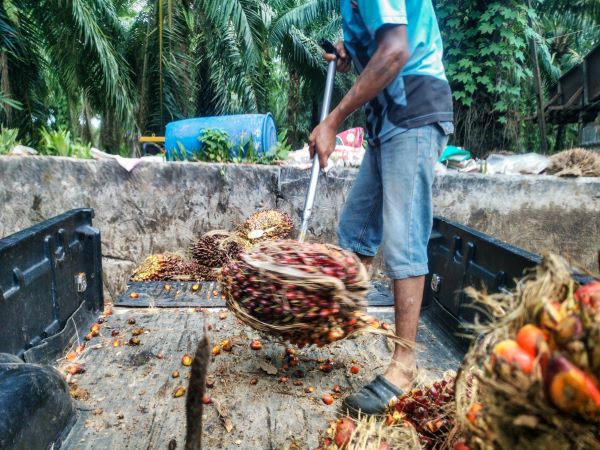
A worker shovels palm fruit out of a truck in Thailand / Credit: iStock
How sustainable is palm oil?
Not very. It has become synonymous with deforestation and biodiversity loss. Large tracts of tropical forests and peatlands have been converted into palm oil plantations, affecting about 200 threatened species and releasing significant stores of carbon. More than half of the deforestation on the island of Borneo, Indonesia, was reportedly linked to this commodity between 2005 and 2015. Consequently, it's facing consumer boycotts in some markets, and the European Union has resolved to cut palm oil imports for biofuels by 2030 over environmental concerns.
With a track record like that, why do we need palm oil?
Today, it is the most consumed edible oil in the world. It can support food security, poverty reduction, and economic growth; plus, it’s nutritious, versatile, and shelf-stable. As a crop, it's remarkably productive, five to 10 times that of other vegetable oil crops. One estimate showed that palm oil accounted for 39% of global vegetable oil while occupying just 7% of land dedicated to oil vegetable crops in 2014. However, its monoculture is clearly responsible for major negative impacts on our planet, and we can’t afford this.
How can voluntary sustainability standards (VSSs) mitigate environmental destruction and biodiversity loss in the palm oil sector?
VSSs encourage producers to follow more responsible practices, such as protecting high-conservation-value and high-carbon-stock forests, as well as rare, threatened, and endangered species. The good news is that producers are increasingly using sustainability standards. Our report found VSS-compliant palm oil production had a 110% compound annual growth rate between 2008 and 2016 to make up at least 17.4% of global production. These standards can limit some of the worst environmental impacts but will not completely prevent deforestation and related habitat loss.
Which standards are most effective?
From an environmental stewardship perspective, reports have shown the most robust standards are the International Sustainability and Carbon Certification (ISCC) and the Roundtable on Sustainable Palm Oil (RSPO). The latter is the most widely used standard, and it certified more than 50 million tonnes of palm oil in 2016.
How are these standards enforced?
Enforcement capacity remains difficult in the sector. Some VSS-certified producers have reportedly continued land grabbing and clearing forests outside their concessions. VSSs are increasingly adopting a continuous improvement approach and incorporating new technologies to help strengthen their criteria and enforcement. For instance, satellite-based sensor technology is now used to monitor illegal logging in palm oil operations. Increasing collaboration between governments and buyers also shows the potential to strengthen standards enforcement.
Do consumers care about certification?
It depends. Europe and the United States are driving demand for certification, largely via corporate sourcing commitments that are meant to help manage supply chains, reputational risk, and compliance with regulations. But on a global scale, supply is outstripping demand, with only half of the RSPO-certified palm oil sold as such in 2018. It is critical to grow demand for VSS-compliant palm oil in Asia. India and China, which consume the most of this product, have committed to raising VSS-compliant sourcing of it to 30% and 10%, respectively, by 2020.
Can palm oil ever be sustainable?
It is hard to imagine it as a fully sustainable industry. Such a transformation would require a massive effort from all stakeholders, including consumers, producers, investors, governments, and international organizations. But palm oil production and consumption will continue for the foreseeable future, so we need to use all the tools available to mitigate the damage, including VSSs.
How Can a Six-Digit Trade Code Help the Environment?
Every single thing that gets shipped from one country to another has a special trade code assigned to it. How can this help the environment?
May 11, 2020
Both the tariffs that countries impose on imports of physical things—from live horses to antique statues of horses—and the statistics on such trade are based on a set of around 5,400 six-digit numerical codes generated by the World Customs Organization (WCO) that comprise the Harmonized Commodity Description and Coding System, or HS for short.
Every five or so years, the WCO’s HS Review Sub-Committee (RSC) of the Harmonized System Committee (HSC), which includes representatives of each of the Organization’s 158 Contracting Parties—still with me?—reviews the HS and issues amendments intended to maintain its relevance to the constantly evolving nature of world merchandise trade. Many of these changes assign codes to new product streams, but some are intended to enable customs authorities and regulators to better address environmental and social issues.
Each successive version of the HS is known by the year in which it first started to be applied. The latest amendments to the HS were released at the end of January this year and will go into effect on January 1, 2022, as part of HS 2022.
In Code Shift: The Environmental Significance of the 2022 Amendments to the Harmonized System, I examine the specific amendments that will soon enable customs officials, as well as trade negotiators, to more effectively address environmental issues. Many of the amendments introduce codes for specific chemicals or waste products, to allow regulators to monitor the cross-border flow of specific substances or goods that are potentially hazardous to the environment. But there are also a couple of dozen amendments that should allow for more precise targeting of so-called environmental goods for the purposes of tariff reductions or elimination, which is where things get exciting.
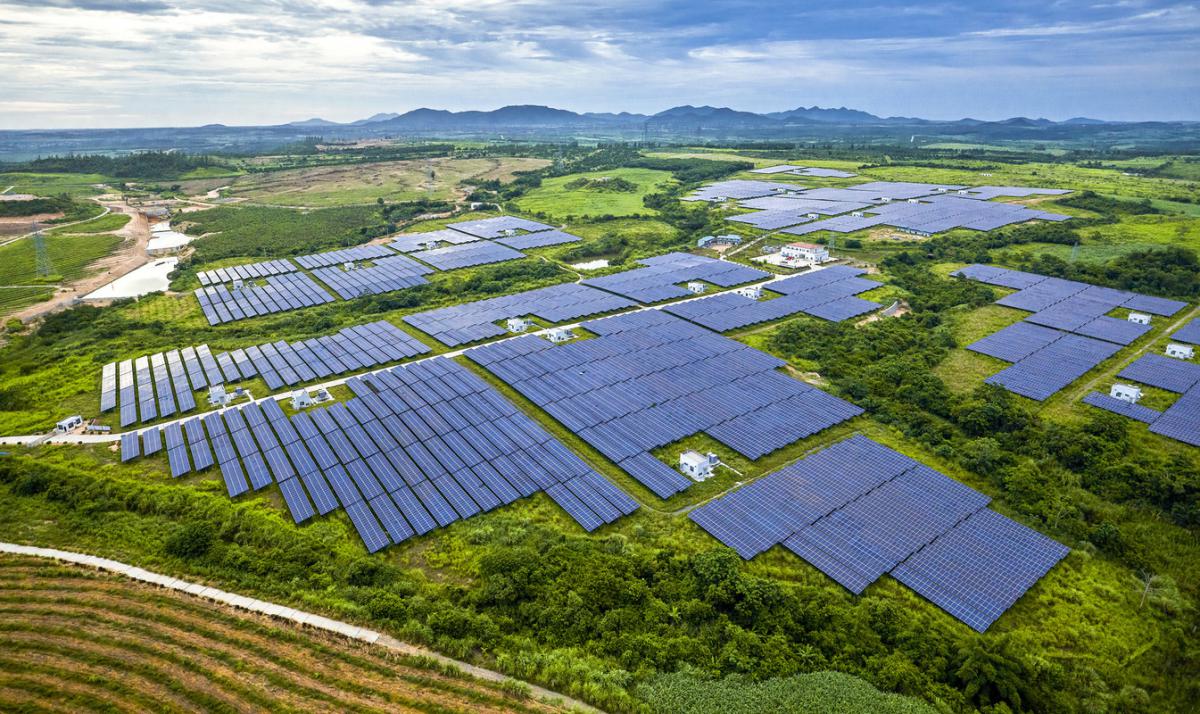
Environmental goods include technology such as solar panels / Credit: iStock/Jenson
The “specificity problem” of environmental goods in trade
The term “environmental goods” is not very precise and the universe of products that qualify as such continues to grow and evolve over time. More than 20 years ago, for the purpose of tracking trade in such goods, the Organisation for Economic Co-operation and Development (OECD) and the European Union’s statistical office, Eurostat, produced a serviceable definition: environmental goods are those that are used “to measure, prevent, limit, minimize or correct environmental damage to water, air and soil, as well as problems related to waste, noise and eco-systems, [including] cleaner technologies … that reduce environmental risk and minimize pollution and resource use.” It sounds specific at first glance, but it is open to different interpretations, and as technologies evolve, so do notions as to which ones should be added and which dropped.
Since the first attempt in the late 1990s by the 21-member Asia-Pacific Economic Cooperation (APEC) to reduce import tariffs on environmental goods, those nominated for tariff reductions have, in all cases, been drawn up with reference to the HS. A persistent irritant has been that few of the HS’s six-digit subheadings—the most granular level of codes—cover goods that are mainly used for environmental purposes.
The case of solar panels
For example, in all the previous attempts to negotiate a multilateral (i.e., including all members of the World Trade Organization) or plurilateral (involving a sub-set of WTO members) agreement on environmental goods, a technology included on all the lists has been solar photovoltaic (PV) cells and modules. These are the semiconductor devices that, when assembled into flat panels, are increasingly being deployed across the world to generate electricity cleanly.
PV cells and modules are classified under the HS subheading 8541.40—but so are other photosensitive semiconductor devices and light-emitting diodes (LEDs), which are themselves considered by many to be environmentally preferable to other light sources because of their low energy consumption per lumen. Combined, world trade in goods classified under HS 8541.40 has averaged around USD 55 billion annually since 2010, making it the 48th leading product category (out of 5,386) in 2018.
These new subheadings will make easier the task of trade negotiators, especially those who are in the process of nominating specific environmental goods for tariff elimination as part of the six-nation Agreement on Climate Change, Trade and Sustainability
To get around the “specificity” problem, trade negotiators have had to name the product, the subheading under which it is classified, and then tag it with the phrase “ex out,” leaving it up to each economy to create a specific code for that commodity at the 8- or 10-digit level in their national tariff schedules, which are not internationally harmonized beyond the first six digits. Having a technology specifically described and coded in the HS makes the negotiation process easier and quicker—in contrast with the situation with ex-outs, in which participants at the start of the negotiations may have slightly different descriptions in their national tariff schedules and must therefore negotiate a commonly agreed description.
The amendments to the HS for 2022 will finally assign separate six-digit codes to PV cells that are assembled in modules or made into panels (8541.43), or not (8541.42), as well as to LEDs (8541.41). In addition, they create distinct subheadings for PV electric generators and solar water heaters. Several kinds of lighting that incorporate LEDs, including even “Lighting strings used for Christmas trees,” will also benefit from new subheadings.
Even “Lighting strings used for Christmas trees” will benefit from new subheadings / Credit: iStock/Koszubarev
Several types of electric and hybrid-electric motor cars and motorcycles were first separately identified in the revisions that produced the current (2017) HS. HS 2022 creates several more categories, including fully or partially electrified “road tractors for semi-trailers” (i.e., the “big rigs” that pull trailers laden with goods) under heading 87.01 and non-articulated trucks or lorries used for transporting goods under heading 87.04.
Other environmental goods that will be separately classified in HS 2022 include catalytic converters and particulate filters for purifying or filtering exhaust gases from internal combustion engines (both under subheading 8421.32); various furnaces and ovens that are often used for treating waste products or pollutants (heading 85.14); and mass spectrometers, which are used extensively in environmental monitoring, for example, to detect toxins and identify trace contaminants in food, water, or soil (9027.81).
Tackling climate change by eliminating tariffs
These new subheadings will make easier the task of trade negotiators, especially those who are in the process of nominating specific environmental goods for tariff elimination as part of the six-nation Agreement on Climate Change, Trade and Sustainability (ACCTS). Eliminating tariffs on environmental goods, especially those important for reducing carbon dioxide emissions from the combustion of fossil fuels, should be one of the easiest and most cost-effective ways for countries to address climate change.
The HS revisions will also facilitate the collection of statistics, and in turn the analysis of trade, on a wider range of goods of environmental significance. Of course, these statistics will not even start to become available for the whole world until well into 2023, and then only for the year 2022. But it’s a start.
Eliminating tariffs on environmental goods, especially those important for reducing carbon dioxide emissions from the combustion of fossil fuels, should be one of the easiest and most cost-effective ways for countries to address climate change.
Soon the RSC will begin anew considering what amendments to the HS may need to be made when a new version of the HS starts to be applied in the year 2027. It is therefore not too early to start thinking about what additional environmental goods could be assigned their own subheadings in the next HS version. In Code Shift, I suggest a number of candidate goods, including:
Silicon semiconductor wafers for photovoltaic cells
Wind-powered and solar-powered water pumps
Pollution-control devices for treating flue gases—specifically, electrostatic precipitators, bag filters, cyclone filtering devices, flue-gas desulphurization devices, and flue-gas denitration devices
Ground-source heat pumps and hydrothermal heat pumps
Electrolyzers (for generating hydrogen gas from water)
Fuel cells
Electric-powered and hybrid-electric aircraft
Electric-powered and hybrid-electric ships, boats, barges, ferries, and similar vessels.
These are just a small sample of products for which greater resolution in the HS would help policy-makers, market analysts, and participants in the environmental goods and services industries better understand and more quickly identify emerging trends in trade of some of the most important goods for protecting the environment and using resources more efficiently.
After the Oil Crash, We Need a Managed Wind-Down of Fossil Fuel Production
To meet climate goals and avoid further market chaos, governments need to plan the decline of coal, oil and gas production, with support for workers.
May 11, 2020
To meet climate goals and avoid further market chaos, governments need to plan the decline of coal, oil and gas production, with support for workers.
Last year, we joined dozens of researchers to release a report that found countries around the world are planning to produce far more oil, gas, and coal than compatible with climate goals.
Little did we or anyone else expect that, just four months after that first Production Gap Report, major oil-producing regions would be reeling from the consequences of over-investment in and over-dependence on fossil fuels, exposed by a virus that has wreaked havoc across sectors and livelihoods.
Of course, our report did not predict a pandemic.
The risks we examined were of a different, more predictable, and less immediate nature. We looked ahead to 2030 and found that governments’ zeal to extract every possible drop of oil, lump of coal, and cubic meter of gas could lead to twice the levels of fossil fuels than would be consistent with the Paris Agreement’s 1.5°C limit on warming.
Now, the tide has turned. Calls to “keep oil in the ground” are typically a mainstay of environment and human rights activists. Now this message has seeped into some of the world’s most conservative institutions, even if for different reasons, amounts, and timescales.
In an effort to stabilise the market, members of Organisation of the Petroleum Exporting Countries (OPEC) and their allies agreed to unprecedented production cuts last month. Even this could not prevent the price of oil dropping, a few days later, to below zero dollars for the first time ever.
This historic moment is largely the consequence of the drop in oil demand due to COVID-19-related lockdowns. But it certainly didn’t help that up until recently, many fossil fuel producing countries were angling to boost output and increase market shares.
Our research put specific numbers on the scale of the problem, finding that by 2030, governments are planning to extract 60% more oil, 70% more gas, and 280% more coal than would be consistent with a 1.5°C pathway.
This is not a trajectory we can go back to.
If the world is to recover better from the pandemic, we must avoid a scenario where efforts to overcome one crisis lock us into another. That is why this year’s Production Gap Report will examine how government bailouts, stimulus measures and strategies are delaying—or accelerating—the transition away from dependence on fossil fuel production.
In the immediate future, the key priority is to support vulnerable groups around the world, including fossil fuel workers, who face significant hardships as the economy suffers and jobs are lost. Even at this stage, it’s possible to support both fossil fuel workers and the environment, as Canada’s recently announced programme to clean up orphaned and abandoned oil and gas wells demonstrates.
But we can’t stop there. We also need to address our longer-term future. Unabated extraction is incompatible with a safe climate—as is government support that props up an industry that needs to be winding down.
As governments marshal stimulus funds, bail out industries and nationalise stranded assets, they should make their support to industry conditional on diversification beyond fossil fuels. Now is also the time to invest in green industry and clean energy, to ensure the long-term viability of communities that currently rely on fossil fuels.
Reforms to subsidies for coal, oil, and gas consumption—which amounted to at least $400 billion in 2018—are also overdue. The present moment represents an opportunity to drop subsidies for consumers in particular, with oil and gas prices at record lows.
Moreover, there is an opening for countries to increase taxes on oil and gas consumption to mobilise funds for the COVID-19 crisis response, as India and Costa Rica have already done.
As they emerge from the COVID-19 crisis, countries need to pursue equitable transitions away from fossil fuels—ones that do not echo the chaos and volatility of recent energy market behaviour.
This means social dialogue and inclusive just transition planning processes that ensure the needs of workers and communities are met, that alternative livelihoods are made available, and that those affected by change are not left behind.
Multilateral and bilateral cooperation is also of paramount importance, including support for countries with fewer resources to achieve a just transition.
At this crucial time in history, the world finds itself at crossroads. The path towards a safer, greener and more resilient future involves a just and planned wind-down of fossil fuels.
This article was originally published in Climate Home News and has been re-posted with permission.
Resilient Recovery: Using climate adaptation plans to build back better
Though focused on climate change, National Adaptation Plans offer important assessments of the risks a country faces and can be valuable in devising comprehensive pandemic response strategies.
May 5, 2020
It’s been two months since the World Health Organization declared COVID-19 a pandemic. In this short time, several things have become clear: 1) this pandemic has exposed and amplified the structural inequalities and inefficiencies that make our societies fragile; 2) recovering from its impacts will require swift and massive investments; and 3) if we want to come out of this stronger, such investments need to be green, fair, and resilient to a range of shocks and stresses.
Investments also must be identified and deployed quickly—especially in low- and middle-income countries, as we’re dealing with a crisis that is expected to increase global poverty for the first time in 30 years. We’re seeing recommendations from top economists and specialized task forces for designing relief and recovery packages that simultaneously address the social and economic fallout of the pandemic and the ongoing challenges of climate change, social exclusion, food insecurity, and biodiversity loss. But translating these into meaningful action relies on aligning them with national contexts and priorities.
This is where vehicles such as NAPs and adaptation planning processes can help. Through them, governments have already invested considerable amounts of time and effort to crystallize their medium- and long-term priorities for becoming more climate resilient. Though focused on climate change, these NAPs offer important assessments of the risks a country faces and can be valuable in devising more comprehensive pandemic response strategies. Since climate change interacts with so many aspects of our societies, economies, and ecosystems, preparing for its impacts often involves addressing multiple development objectives, including health. What’s more, NAPs are country-owned, informed by the best-available science, and address the needs of the most vulnerable communities and places—all valuable for informing crisis relief and recovery efforts.
Since climate change interacts with so many aspects of our lives, preparing for its impacts often involves addressing multiple development objectives, including health. What’s more, NAPs are country-owned, informed by the best-available science, and address the needs of the most vulnerable communities and places—all valuable for informing crisis relief and recovery efforts.
While meant to focus on medium- and long-term priorities, NAPs can provide entry points for immediate action. First, they can identify particularly vulnerable places and populations—those that are disproportionately affected by shocks and stresses, hardest to reach, and too often left behind. Second, they can point to existing mechanisms for delivering support to vulnerable communities. Kenya’s NAP mentions its Hunger Safety Net Programme, and Ethiopia’s NAP mentions its Productive Safety Net Program. These programs, important to building the climate resilience of the poorest and most marginalized, may also provide an architecture for delivering relief during a pandemic. Third, NAPs engage and coordinate actors already working on risk management who could help inform relief efforts. Malawi’s NAP “core team,” for example, has experts from health, environmental affairs, finance, and disaster management, among other agencies. They should be involved in devising sustainable relief efforts.
Looking beyond immediate relief and toward longer-term recovery, NAPs can provide a roadmap for action. Take the example of Fiji. While the country seems to have contained the spread of COVID-19, its economy is expected to shrink by almost 5% this year due to travel restrictions. Tourism—responsible for almost 40% of the country’s GDP—has ground to a halt. On top of this, climate impacts haven’t relented: in early April, Cyclone Harold slammed onto its shores, destroying buildings and flooding towns. This country needs investments that help address both types of shocks.
A closer look at three aspects within Fiji’s NAP—it bears mentioning these aspects are often cited in COVID-19 recovery strategies—reveals the myriad benefits in adaptation solutions. For its health sector, Fiji’s NAP prioritizes actions to make health infrastructure more disaster resilient, boost diagnostic capacities, and train healthcare workers in disaster medicine. These are investments that would leave the nation’s health system better able to deal with the next crisis, whether climate-related or not. Fiji’s NAP also outlines ways to reinforce its food system by implementing any number of its 23 priorities related to food and nutrition security, such as encouraging agronomy practices, climate-based crop planning, and building more resilient seed and food storage facilities. And in terms of infrastructure—often a central piece of economic recovery packages—we see investment priorities highlighted throughout the NAP across sectors; these will be climate-informed and involve a mix of hard and natural infrastructure, addressing many development objectives.
Adaptation planning can be essential to building national systems that prepare a country for dealing with the next crisis, whether it be a viral outbreak or a cyclone.
Fiji’s national adaptation plan is just one example. Other countries have similar "no-regrets" actions in their NAPs that should be included in pandemic recovery strategies—such as improving health surveillance systems in Saint Lucia, micro-irrigation schemes in Togo, forest restoration in Guatemala, or climate-resilient school retrofits in Kiribati. The actions listed in these plans are not wishful thinking. They offer a basis for action and important parameters—including time frames and budgets—for getting sustainable and resilient recovery off the ground.
Looking beyond the plans and engaging with the planning process
While NAPs aren’t the only documents that can inform recovery, we shouldn’t only look at documents anyway. In the case of adaptation plans, they are underpinned by a larger process that works to change how countries plan their economies and support their citizens. According to the United Nations, over 120 developing countries have launched these processes and established structures for bringing together actors from within and outside of government to assess and prioritize climate risks, and design and implement risk management solutions. The systems being established as part of this effort should be integrated into broader whole-of-government responses to the pandemic. For example, Colombia’s National Climate Change System (SISCLIMA) provides a useful framework for collaboration across sectors and levels of government for pandemic recovery.
Adaptation planning processes are also tackling complex issues of gender and social inclusion, ensuring that different social groups are reflected in adaption actions and benefits are shared equitably. Peru’s Indigenous Platform, for example, is a legally mandated mechanism for the country’s Indigenous Peoples to articulate their priorities, as well as share their knowledge and practices, to inform national climate action. The platform may provide a useful basis for identifying climate-friendly recovery actions that address the needs and capacities of these populations across the country.
The current pandemic has brought to light many weaknesses in how we respond to severe shocks and stresses. As we recover from its effects, let’s not mortgage our future by simply recreating the conditions that led to this crisis in the first place or by overlooking the challenges that will shape future crises. Investing in actions that countries have prioritized in their national adaptation plans can be essential to building national systems that prepare a country for dealing with the next crisis, whether it be a viral outbreak or a cyclone
Learn more about National Adaptation Plans and the NAP Global Network here.