Webinar

WTO Agriculture Negotiations on Domestic Support: Making new rules work for LDCs and other vulnerable economies

This webinar brought insights from the research community to WTO delegates on how to advance the negotiations on domestic support ahead of MC14 in Cameroon and how WTO rules on domestic support could benefit LDCs and other vulnerable economies.

May 2, 2024 1:30 pm - 3:00 pm CET

(By invitation)

As WTO members resume agriculture negotiations after MC13, IISD and IFPRI organized a webinar to bring insights from the research community on: (i) how to advance the negotiations on domestic support ahead of MC14 in Cameroon; and (ii) how WTO rules on domestic support could benefit LDCs and other vulnerable economies.

During the webinar, agriculture experts dissected the most recent proposals on domestic support by the African Group and Pakistan, the Cairns Group and Ukraine, and India to identify: (i) areas of possible convergence on domestic support ahead of MC14 in Cameroon; and (ii) how new WTO rules on domestic support could be designed to be of most benefit to LDCs and other vulnerable economies.

Agenda

1:30 - 1:35 pm. Welcoming remarks. Overview of WTO agriculture negotiations on domestic support.

  • Alice Tipping, IISD.

1:35 - 1:50 pm. The perspective of the LDCs and other vulnerable economies.

  • Omar Cisse, Permanent Mission of Senegal to the WTO. What are the priorities of the LDC Group in the WTO agriculture negotiations on domestic support?
  • Tyesha Turner, Permanent Mission of Jamaica to the WTO. What are the priorities of the NFIDCs and SIDS in the WTO agriculture negotiations on domestic support?

1:50 - 2:20 pm. Flexibilities for LDCs and other vulnerable economies.

  • David Laborde, FAO. What changes in WTO rules on domestic support could benefit LDCs and other vulnerable economies the most?
  • Joe Glauber, IFPRI. What changes in WTO rules on public stockholding could benefit LDCs and other vulnerable economies the most?

2:20 - 2:35 pm. Finding convergence on domestic support ahead of MC14 in Cameroon.

  • Lars Brink, Agriculture trade expert. Possible areas of convergence in the most recent proposals on domestic support by the African Group and Pakistan, the Cairns Group and Ukraine, and India.

2:35 - 2:50 pm. Q&A.

2:50 - 2:55 pm. Wrap-up and conclusions.

  • Alice Tipping, IISD. 


Useful references

  • JOB/AG/242/Rev.1 - African Group and Pakistan’s proposal on domestic support.
  • JOB/AG/243/Rev.2 - Cairns Group and Ukraine’s proposal on domestic support (based on Costa Rica’s proposal on domestic support JOB/AG/243)
  • JOB/AG/216/Rev.1 - India’s proposal on domestic support.


Webinar organized with the support from the Government of Sweden.
Sweden logo
Webinar

Global Launch of the 2023 Progressing National SDGs Implementation Report

The Progressing National SDGs Implementation report series provides independent analyses of how UN member states share progress at the annual High-Level Political Forum on Sustainable Development (HLPF). Supported by a global coalition of civil society organizations, the 2023 report examines Sustainable Development Goal (SDG) trends at the halfway mark of the 2030 Agenda.

March 19, 2024 2:00 pm - 3:30 pm UTC

(Open to public)

This year's edition, building on the rich insights from previous reports since 2017, focuses on evaluating the delivery of the 2030 Agenda in alignment with the UN Secretary-General’s guidelines. Key areas of assessment include governance, civil society participation, and the principle of Leaving No One Behind, bringing together official Voluntary National Reviews (VNRs) with independent analysis from civil society organizations.

As the HLPF undergoes a review by UN member states, our report aims to present specific recommendations to enhance the VNR process, emphasizing:

  • governance, institutional mechanisms, and stakeholder engagement;
  • policy frameworks for the 2030 Agenda implementation; and
  • partnership models for SDG delivery focusing on localization and inclusivity.

This launch event provided a moment for dialogue, offering insights into the synergies and discrepancies between official reports and civil society perspectives. To enable the inclusion and active engagement of participants, this meeting had simultaneous interpretation in English, French, and Spanish.

The report was compiled by Action for Sustainable Development, BOND, Cooperation Canada, Forus, IISD, Save The Children, and Sightsavers.

Webinar details

Webinar

Navigating the Landscape of Voluntary Standards and Initiatives for Carbon Management

This webinar unpacked the different types of voluntary standards and initiatives for carbon management and explored companies' experiences in using them to reach their climate goals.

March 21, 2024 9:00 am - 10:15 am EDT

(Open to public)

Voluntary standards and initiatives for carbon management (VSICMs) have developed rapidly in the past 30 years in response to the climate emergency. They offer companies guidance to help them initiate or increase the ambition of their climate change mitigation strategies.

But the co-existence of—and competition among—multiple VSICMs has created a complex landscape. We hosted a webinar on March 21 to present our latest research unpacking the different types of VSICMs and how they can help companies to advance their carbon management practices.

Panelists from a range of sectors and organizations also joined us to share their experiences in adopting VSICMs. They discussed the challenges they have faced, the lessons they have learned, and the outcomes they have managed to achieve when implementing carbon management initiatives.

Speakers

  • Panagiotis Karamanos, Senior Advisor, Airports Council International Europe
  • Elena Marro, Research Associate, European University Institute
  • Jamie Richards, Director of ESG, Amika and Eva NYC 
  • Austin Whitman, CEO, The Change Climate Project

Moderators

  • Arturo Balderas, Senior Consultant on Climate Action
  • Erika Luna, Junior Policy Analyst, IISD

Webinar

The WTO E-commerce Joint Statement Initiative in the run-up to MC13

January 18, 2024 2:00 pm - 3:00 pm CET

(By invitation)

The participants of the E-commerce JSI process are aiming to conclude negotiations in 2024, with the objective of reaching agreement on as many issues as possible in time for MC13. 

The goal of the virtual seminar is to help WTO delegates and capital-based officials to get up to speed on the latest status of the E-commerce JSI in the run-up to the WTO MC13. The session provides a state of play, an understanding of the draft text's contents, and insights on the development dimension.

The seminar is organized as part of the TAF2+ Umbrella Grant, an initiative financed by UK aid from the UK government. The project since 2020 has been offering timely, highly tailored yet flexible research and advisory support geared towards helping developing countries and LDCs build knowledge and enhance their understanding of technical topics, define positions in line with their national interests, and promote these interests at the WTO with a focus on the JSI discussions on Investment Facilitation and E-commerce.

Regardez le webinaire en français :


Vea el webinario en castellano:

Webinar details

Topic
Trade
Project
Digital Trade
Impact area
Sustainable Economies
Webinar

Understanding the WTO Investment Facilitation for Development Agreement (IFDA)

January 16, 2024 2:00 pm - February 16, 2024 3:00 pm CET

(By invitation)

More than 115 WTO members participating in negotiations for an IFDA recently produced the final version of the accord’s text. The participants have also been engaging with the broader WTO membership to advocate for the inclusion of the IFDA as a Plurilateral Agreement under Annex 4 of the Marrakesh Agreement establishing the WTO. Consequently, the debate on whether to legally incorporate the Agreement within the WTO framework- i.e., the legal architecture debate-is likely to be a prominent discussion in the run-up to and at the WTO’s MC13 in Abu Dhabi in February 2024.

The objective of the virtual seminar is to help WTO delegates and capital-based delegates to get up to speed on the latest status of the IFDA in the run-up to the WTO MC13. The session provides a state of play, an understanding of the Agreement's contents, and insights on the political dynamics driving the legal architecture debate. 

The seminar is organized as part of the TAF2+ Umbrella Grant, an initiative financed by UK aid from the UK government. The project since 2020 has been offering timely, highly tailored yet flexible research and advisory support geared towards helping developing countries and LDCs build knowledge and enhance their understanding of technical topics, define positions in line with their national interests, and promote these interests at the WTO with a focus on the JSI discussions on Investment Facilitation and E-commerce.

Regardez le webinaire en français :


Vea el webinario en castellano:

Webinar details

Webinar

COP 28 Halfway Point Webinar

Halfway through the year's biggest climate change conference, the Earth Negotiations Bulletin team invites you to a condensed webinar to review Week One progress and predict what to expect from Week Two.

December 7, 2023 1:00 pm - 2:00 pm UTC+4

(Open to public)

In what's expected to be the best-attended UN Climate Change Conference, world leaders, civil society, businesses, and stakeholders will meet in Dubai to try to advance a collective response to accelerating climate impacts.

Join Earth Negotiations Bulletin team leader Jennifer Allan, Ph.D. in Dubai as she discusses:

  • What negotiating items have seen progress.
  • Where the greatest obstacles have arisen—and why.
  • What we can hope for as the talks head to their finish line.

Following a summary of the first week of negotiations, participants in the COP 28 Halfway Point Webinar will be invited to pose questions to the team behind the world's most authoritative record of climate negotiations. Register now and then subscribe to the Earth Negotiations Bulletin newsletter to get daily updates from COP 28.

Webinar

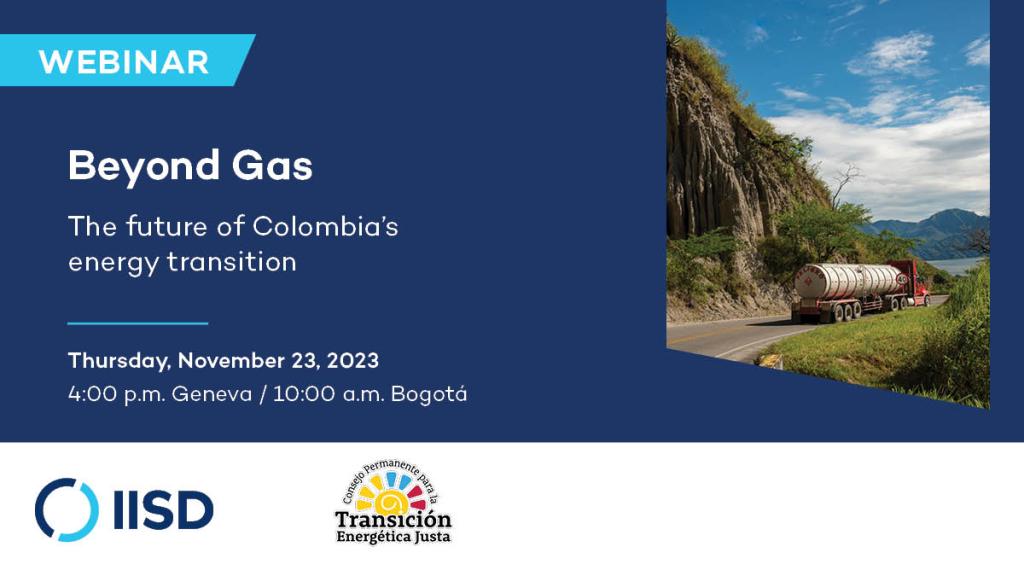
Beyond Gas: The future of Colombia’s energy transition

November 23, 2023 4:00 pm - 5:30 pm CET

via Zoom

(Open to public)

Webinar card for "Beyond Gas: the future of Colombia's energy transition"

At the end of 2022, the Government of Colombia announced its commitment to not grant any new licences for oil and gas exploration. This political will is also behind Colombia’s decision in August 2023 to join the Beyond Oil and Gas Alliance (BOGA) as a Friend of BOGA.

These decisions have sparked important debates in the country, both from an energy and economic security perspective, with some discussions focused on the role of ongoing exploration of existing gas reserves and others on the ongoing characterization of fossil gas as clean fuel.

To address the intensifying global climate crisis, gas needs to be phased out as quickly as possible. While it is evident that gas will continue to be present in Colombia’s energy matrix in the coming years, it is essential for the country not to deepen its dependence by developing new gas fields and to promote its phase-out by deploying alternatives that are already competitive.

This webinar questions some of the narratives in favour of gas extraction and discusses various arguments around the need to phase out fossil fuels, including gas. This is a fundamental discussion for Colombia, which aims to become a global leader in building a public policy for fossil fuels phase-outs.

Webinar details

Webinar

Strengthening Natural Infrastructure Through Public Policy

December 5, 2023 11:00 am - 12:00 pm CT

(Open to public)

The need for strong public policy to strengthen the use of nature in meeting our water (and other) needs is increasingly clear. However, exactly how and what public policy can help in this space is perhaps less understood.

This webinar brings together experts to highlight some efforts in the public policy arena. We hear about the U.S. Nature-Based Solutions Roadmap developed by the United States Presidency to “unleash nature’s full potential,” as well as leading efforts and opportunities in this space from a Canadian perspective.

Some key takeaways from this webinar were:

  • There seems to some general consensus on natural infrastructure related terminology across the board—we're now using nature based solutions, natural infrastructure and related terms in more specific ways to enable governments and other stakeholders.
  • The US roadmap on NBS is an exciting and inspiring enabling policy that gives us great examples of not only what is needed in Canada, but also how it might be achieved through coordination between multiple agencies, including for provincial governments in Canada.
  • The National Adaptation Strategy is an exciting policy enabler for natural area management and natural infrastructure in Canada and incorporates some much-needed regional resource centres and tools for capacity building for these efforts.
  • Upcoming Green Municipal Funds will include funding for adaptation actions and will target smaller communities, incorporating capacity building and project design elements- clearly in response to some of the critical gaps we've seen in relation to NI.
  • Funding is key—both in the U.S. and in Canada there are big dollars being put towards efforts, and more and more these are directed not just to the easy wins, but to the long-term systems that are needed to scale up efforts in this space.

This webinar took place on December 5, 2023. Watch the full recording below or on YouTube.


This webinar is the third in a series of three fall webinars by IISD's Natural Infrastructure for Water Solutions (NIWS). Learn about Overcoming Capacity Limitations for Rural and Small Municipalities Across the Prairies from our first webinar and watch our second webinar, Pathways to Financing Natural Infrastructure in Canada.


Our Speakers

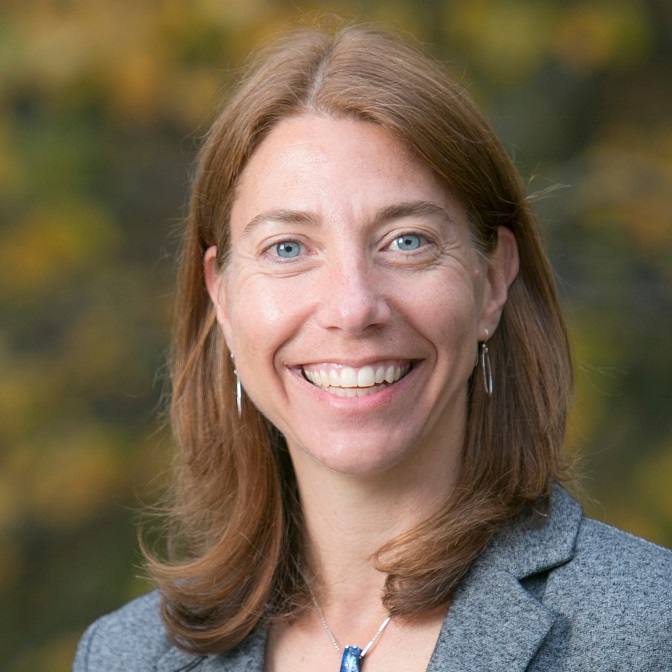
Dr. Lydia Olander

Dr. Lydia Olander is the Director of Nature-Based Resilience at the White House Council on Environmental Quality, where she leads work on nature-based solutions, coastal resilience, and community-driven relocation. 

She also works on compensatory mitigation, climate resilience for natural systems, natural capital accounting, and incorporating ecosystem services into benefit-cost analysis. She has worked at the intersection of science and policy for two decades, supporting decision-makers in addressing environmental challenges.

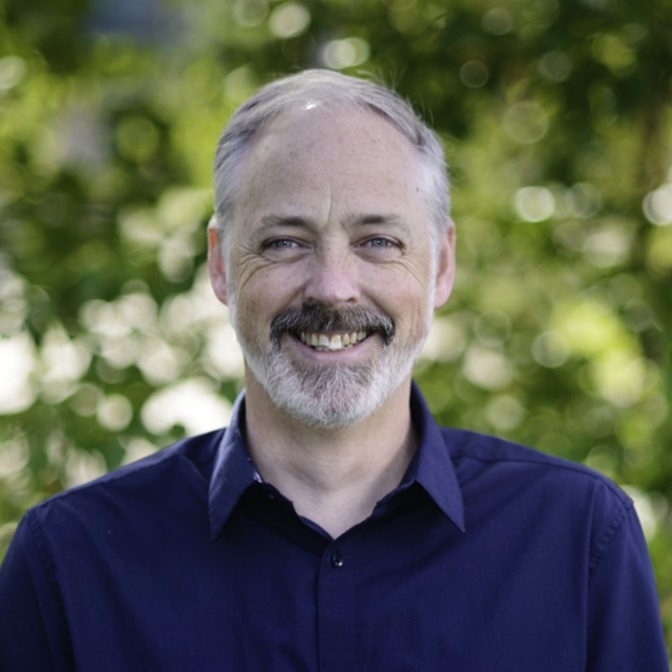
Guy Greenaway

Guy Greenaway is the Executive Director, Corvus Centre for Conservation Policy. 

Guy’s 25-year career has involved research, facilitation, and communication in several areas of nature conservation in Canada, primarily through non-government organizations but also through private consulting and volunteering.

Guy’s work has focused on natural infrastructure, private land conservation, market-based instruments, sustainable land use, strategic planning, ecosystem services valuation, agricultural land conservation, conservation policy development, community visioning, and municipal conservation planning.

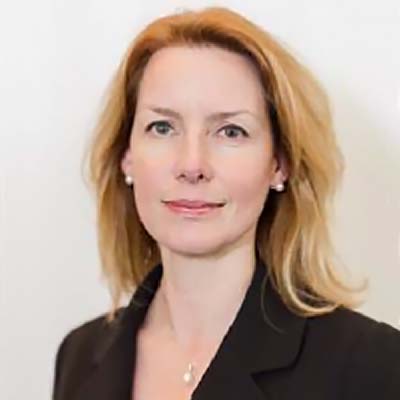
Laniel Bateman

Laniel Bateman is the Director for Climate Change Adaptation and Resilience Policy at Environment and Climate Change Canada. She joined Environment Canada in 2003 and has worked on a broad range of files, primarily related to climate change and nature.

Prior to joining the Government of Canada, she worked for an environmental non-government organization and in the private sector in wetland remediation. Laniel holds an Environmental Science degree from the University of Guelph.


Resources:


Resources shared by Environment and Climate Change Canada:

National Adaptation Strategy:
Funding Programs:
Looking Forward:
Awareness and Capacity:


Thanks to our funder and to our webinar series partner:

NAI logo
Webinar

Governance and Policy Innovation in Agrifood Systems: Country experiences, tools and approaches

November 9, 2023 2:00 pm - 4:00 pm CET

(Open to public)

Striving to achieve the ambitious objective of fostering more efficient, inclusive, resilient, and sustainable agrifood systems—with the aim of improving production, nutrition, the environment, and quality of life for all—the Food and Agriculture Organization of the United Nations (FAO) has organized a virtual event to gain valuable insights from stakeholders and partners who have implemented various tools and approaches in policy and governance innovation at the national level. This event will explore the tangible progress achieved, the challenges overcome, and the invaluable lessons learned from practical experiences in countries such as Cambodia, Indonesia, Malawi, and beyond.

During the event, IISD's Sean Woolfrey will share insights from IISD’s collaboration with FAO, the International Food Policy Research Institute (IFPRI), the International Institute for Applied Systems Analysis (IIASA), and Kiel University to pilot an innovative approach to food systems modelling to inform governance innovations for food systems transformation in Indonesia.

Learn more about this virtual event on FAO's website

Agenda

  • Opening remarks.

    • David Laborde, Director, Agrifood Economics Division, FAO.

  • Panel: governance and policy innovation in action.

    • Anna Rappazzo, Coordinator, Governance Innovation for Sustainable Development of Food Systems, FAO.

    • Delgermaa Chuluunbaatar, Agricultural Research Officer, FAO.

    • Jarot Indarto, Director of Food and Agriculture, Ministry of National Development Planning, Indonesia.

    • Sarah Tione, Research Ethics Secretariat Administrator, Lilongwe University of Agriculture and Natural Resources (LUANAR).

  • In focus: experiences, tools and approaches in policy and governance innovation.

    Breakout discussions diving into cases from Cambodia, Indonesia, and Malawi, presented by:
    • Ifan Martino, Planner, Directorate of Food and Agriculture of the Ministry of National Development Planning, Indonesia.

    • Choulong Heng, Chief of ICT Office, Department of Extension for Agriculture, Forestry and Fisheries, Ministry of Agriculture, Forestry and Fisheries (MAFF), Cambodia.

    • Alfred Tsitsi, Project Manager, FAO Malawi.

    • Sean Woolfrey, Leader, Sustainable Agriculture and Food Systems, International Institute for Sustainable Development (IISD).

  • Synthesis of experiences, tools and approaches

    Key takeaways from breakouts
  • Closing remarks

    • Vincent Martin, Director, Office of Innovation, FAO

Webinar details

Topic
Food and Agriculture
Impact area
Nature
Webinar

Sustainability Standards and Commodity Prices: How to better support farmers' livelihoods

Disruptions in international commodity prices are threatening livelihoods in developing countries. This webinar explored how sustainability standards can better support farmers to get higher prices and incomes and use more sustainable practices.

November 22, 2023 9:00 am - 10:30 am EST

(Open to public)

Agricultural commodity markets are often volatile. Over the past 2 decades, they have experienced a higher degree of volatility than ever before. Their precarious nature has also been exacerbated in recent years by extreme weather events, the COVID-19 pandemic, and global geopolitical dynamics that have limited the availability and affordability of key inputs for agricultural production.

Disruptions in international commodity prices threaten livelihoods in producing and exporting countries in developing regions. Price volatility risks and market power are disproportionately distributed downstream in value chains, which means that smallholder farmers shoulder an unfair share of the risks of producing the food and goods we consume. Additionally, many farmers keep receiving low prices at the gate, and their production costs have increased, compromising their already meagre standard of living and holding them back from making much-needed investments in their farms. 

Our research shows that agricultural producers associated with voluntary sustainability standards (VSSs) can be better protected from market price volatility and may receive higher prices than those selling conventional products, as well as higher crop incomes. However, VSSs’ ability to improve farmers’ prices and incomes is limited by factors such as a lack of demand for VSS-compliant products, asymmetrical power relations in value chains, and a reliance on international market prices for conventional products when determining prices and premiums for VSS-compliant products.

This webinar explored the findings from IISD’s latest research on pricing in eight sustainable agricultural commodity markets. It provided a series of recommendations for how VSSs can better support farmers in receiving higher prices and incomes and suggested other potential ways to adequately reward farmers for investing in more sustainable agricultural practices.

Speakers

  • Charlotte Eba, Lecturer in Economics and Member of the Centre for African Research on Enterprise and Economic Development, University of the West of Scotland
  • Julie Francoeur, CEO, Fairtrade Canada
  • Andrea Rusman, Food Transition Lead, Impact Institute
  • Emily Stone, Founder and CEO, Uncommon Cacao

Commentator

  • Rupal Verma, Secretariat Advisor for the United Nations Forum on Sustainability Standards

Moderators

  • Steffany Bermúdez, Policy Advisor, IISD
  • Cristina Larrea, Lead, Sustainability Standards, IISD