Beyond Irrigation: Turning sunlight into supper for Kenya's women and farmers
A pilot of secondary use of solar irrigation power for clean cooking
The pilot demonstrated that solar irrigation systems and associated batteries can power electric pressure cookers (EPCs) used by communities in rural Kenya, with small but promising reductions in use of traditional fuels and improvements to the lives of smallholders, particularly women and children. Technology design and behavioural changes would be needed to increase uptake and reduce reliance on other sources of cooking energy.
Secondary use of solar irrigation power for cooking is feasible: rural households in Kenya used the provided EPCs and liked them, but technology design and behavioural changes would be needed to increase uptake and reduce reliance on other sources of cooking energy.
To realize the potential of solar irrigation systems, policies can promote inclusive access to productive secondary energy uses, adequate battery storage, gender-equitable control over household energy assets, targeted financing or subsidies for EPCs, and training and behavioural support.
Integrating gender analysis and household behaviour into energy access programs is essential for achieving equitable and sustained transitions to clean energy.
Governments can work with businesses, consumers, and other stakeholders to better understand how to scale secondary use in different contexts and markets and to identify innovative technologies and financing models.
Energy from solar irrigation systems can be harnessed to expand access to clean energy, promote gender equality and social inclusion, and maximize public investments. A randomized controlled trial in Kenya found that solar irrigation systems with batteries could power EPCs. When offered for free, the EPCs were enthusiastically accepted and actively used, especially among educated households. Tentative reductions in solid fuel use and increased solar electricity consumption hint at positive synergies between clean cooking and solar irrigation systems. However, battery constraints, competing energy demands from lighting/TV, and gendered control of batter use (men) versus cooking choices (women) limited the realized impact. For businesses and policy-makers, these results underscore that the availability of technically compatible cooking devices needs to be supported with adequate power and behavioural interventions. Solar irrigation systems could support e-cooking more effectively if battery capacities align with multi-use demands or if cooking is scheduled during solar hours when generation is abundant.
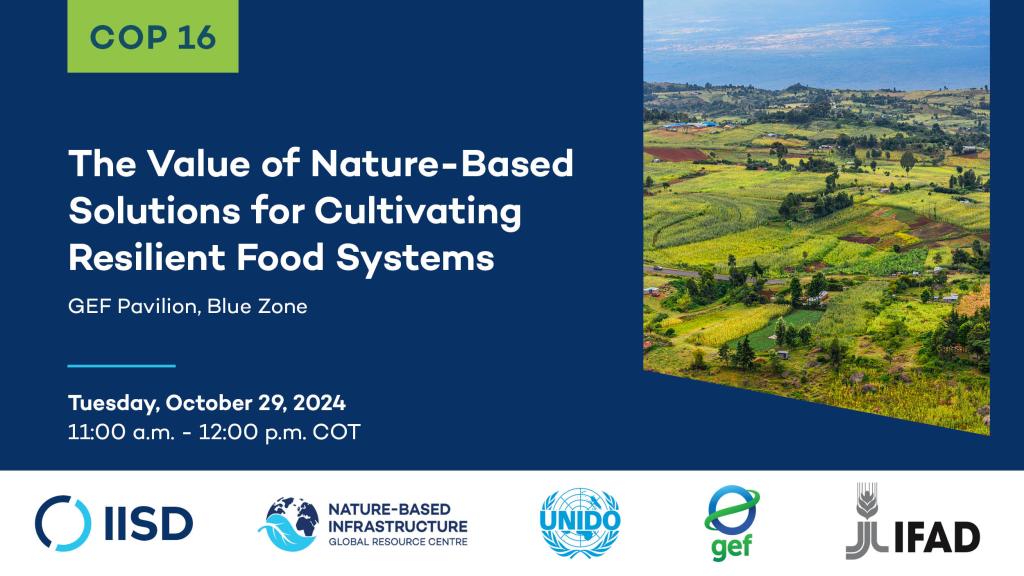
COP 16 | The Value of Nature-Based Solutions for Cultivating Resilient Food Systems
This event, as part of the GEF Pavilion at CBD COP16 in Cali, Colombia, will focus on agroforestry as a powerful tool for enhancing biodiversity, improving climate resilience, securing rural livelihoods, safeguarding food and nutrition, and mitigating water scarcity.
Adopted at COP15 in December 2022, the Kunming-Montreal Global Biodiversity Framework (GBF) aims to halt and reverse biodiversity loss by 2030. With focus now shifting to implementation, this side event examined the role and business case for nature-based solutions (NbS) in fostering resilient food systems and advancing the goals of the GBF.
More specifically, the event reviewed the potential of agroforestry, through integrating trees and shrubs into agricultural landscapes, as a powerful strategy for enhancing biodiversity, improving climate resilience, securing rural livelihoods, safeguarding food and nutrition, and mitigating water scarcity. This event unpacked key findings from new reports by the International Fund for Agricultural Development (IFAD) and the International Institute for Sustainable Development (IISD). IFAD presented a review of its agroforestry projects and efforts to pilot enhanced economic analysis for agroecology, while IISD highlighted results from two new integrated cost-benefit analyses of IFAD agroforestry projects in Kenya and eSwatini, developed by the Nature-Based Infrastructure (NBI) Global Resource Centre. Learnings from a past water stewardship project in Indonesia, developed with UNIDO, was also showcased.
Using these case studies, the event explored the economic value of NbS and how agroforestry practices can lead to increased, more sustainable agricultural productivity, reduce costs through natural resource management, mitigate water scarcity, and create new income streams from diversified farming systems. The discussionemphasized the importance of creating supportive economic and policy frameworks to incentivize the adoption of these practices on a larger scale.
The panellists shared their experiences and discussed relevant examples. This side event aimed to provide stakeholders with practical insights into how new approaches to valuing NbS can make the investment case for supporting agroforestry and sustainable food systems that both work towards the targets of the GBF and enhance food security.
Women Turning the Table on Food Loss and Waste in Kenya
A group of changemakers led a movement to tackle food loss and waste in Kenya. IISD experts have been working closely with local women leaders to make change happen.
October 2, 2024
More than a quarter of Kenyans were undernourished in 2021, and food insecurity continues to rise. At the same time, food loss and waste in sub-Saharan Africa exceeds 30% of production—more than double the global average. This means that countries like Kenya are losing and wasting more food than they receive each year through global aid.
But change is on the horizon. Women leaders from across Kenya, with support from IISD, are making strides toward tackling the issue—from influencing the development of a new post-harvest management strategy to spearheading food redistribution efforts among retailers. Their efforts highlight the power of partnerships in creating viable solutions. Here’s their story.
How a Group of Women Leaders United to Find Solutions
IISD experts Cristina Larrea and Erika Luna attend a food loss and waste workshop in May 2024 with local champions Jane Ngigge, Joy Muya, and Wambui Mbarire.
Women are leading the way on tackling food loss and waste in Kenya. IISD experts Steffany Bermudez, Livia Bizikova, Cristina Larrea, and Erika Luna have been working closely with local food loss and waste champions to make change happen.
In 2019, commodity sectors expert Jane Ngige joined IISD in Kenya for a workshop on boosting sustainability in the Kenyan tea sector. As Chairperson of the Warehouse Receipt System Council, a key body in Kenyan agriculture trade, Jane played a key role in helping IISD build relationships with influential figures in Kenya’s food and agriculture sectors. This meeting marked the beginning of IISD’s growing relationship with key actors in the region.
Then, it was at a 2022 workshop in Rwanda on the role of voluntary sustainability standards in supporting East African farmers, that IISD first met Wambui Mbarire. Wambui is the Chief Executive Officer of the Retail Trade Association of Kenya (RETRAK), a body that represents the voice of local retailers. She identified tackling food loss and waste as a key priority for Kenya and set the scene for an ambitious new focus for the team’s growing partnerships.
IISD and RETRAK organized a workshop focused on finding solutions in 2023. This event brought together various actors involved in the day-to-day work of tackling food loss and waste, including Brendah Nakhumicha, Team Lead at the Division of Food Safety at Kenya’s Ministry of Health, and Joy Muya, a legal advisor for Food Banking Kenya, a food-recovery organization that recovers and redistributes food from all levels of the supply chain. To further support efforts in addressing food loss and waste, FAO Kenya food systems specialist Winnie Yegon, who has supported coordination of the development of the government strategy for tackling postharvest food loss and food waste, was able to receive feedback on the strategy that will be helpful especially in the implementation stages.
These three meetings brought the right people together, at the right time. By working with local partners, IISD ensured its work remained relevant to the issue at hand, responding to the emerging needs of policy-makers and ensuring the strategic actors necessary to make change were talking to each other and taking notice of IISD’s recommendations.
“Our work with IISD has been phenomenal. We have been able to work with partners on the ground and really look at how to harness the power of partnerships around food loss and food waste,” said Jane Ngige. “IISD has been great in terms of bringing people together—from farmers and agronomists to government regulators . . . to look at the bigger picture of the policy situation, see how effective these policies have been and what needs to be reviewed. Some policies were created decades ago, and the situation has changed. We must look and see whether they're still relevant today.”
A New Post-Harvest Management Strategy
Food loss refers to food lost during production, post-harvest, and processing stages, while food waste refers to food discarded at the retail and consumer levels. Most food loss tends to happen due to post-harvest issues, whether that is poor handling of products, supply chain issues, or improper storage, processing, and packaging.
After 2 years of working on its new Post-Harvest Management Strategy for Food Loss and Waste Reduction, the Kenya Government released it to the public in October. The strategy seeks to build partnerships across supply chains to address recurring issues that have led to food loss and waste, as well as maximize the value of investment by ensuring resources are used effectively and sustainably
“The strategy represents a key milestone in our efforts to meet the food and nutritional needs of our people, while also improving the sustainability and efficiency of our food systems”
Brendah Nakhumicha
The strategy was drafted by a multi sectoral national task team with support from the FAO. “It has been a truly collaborative effort,” said Winnie Yegon. “We are delighted that several ministries of the Kenyan government have now signalled their support for the strategy.” You can read the full report here.
IISD has engaged with key actors throughout the different stages of the strategy’s development. Some of our recommendations to draft versions of the strategy have been included in the final version, with our contributions recognized by the government as “actionable activities.” IISD experts also continue contributing to its development by suggesting further engagement in implementation activities in 2025 and beyond.
Guidelines for Retailers on How to Redistribute Food Effectively
Participants of a Nairobi workshop on food loss and waste in Kenya, organized by RETRAK and IISD in June 2023.
Food is often wasted as a result of strict regulations, narrow rules around fresh produce in retail and hospitality, and a lack of legal frameworks to allow for the donation of food that is still fresh.
IISD’s workshops also highlighted that Kenya’s retailers needed a set of clear guidelines to help them redistribute surplus food more effectively. RETRAK has led the way in putting together such guidelines, in coordination with the Ministry of Health, with support from the FAO and development organizations such as the World Resources Institute, Solidaridad, and IISD. IISD experts assisted in drafting the guidelines during a workshop in June 2024.
“We hope the new guidelines will reduce or minimize the amount of food surplus that becomes waste and create a pathway for supermarkets and eateries to donate their food,” said Wambui Mbarire. “We want to create a situation where food is available, for free or at a discount, for people unable to feed themselves effectively.” Wambui also suggests that the next step should be to pilot the guidelines with retailers and gauge how effective they are at making sure food goes to those who need it—instead of being turned into animal feed or going to the landfill.
However, challenges remain when it comes to effective redistribution. “One of the barriers we've experienced is our infrastructure capacity,” said Joy Muya. “Retailers say, ‘we want to work with you, but we want it to be all or nothing.’ They want us to recover from all their stores countrywide and this is a limitation for us because we just don't have the capacity.
“Even when we've partnered with organizations to see if we can pool our collective resources to recover and redistribute, it's still a challenge because of the amount of waste. With retail outlets scattered across Kenya, it's difficult to meet retailer requirements because, in many cases, they require that we have refrigerated trucks. More resources would help us to scale significantly.”
For the guidelines to realize their potential, there must be more support to ensure retailers can manage their stock, minimize waste, and guarantee food is distributed more effectively. Investing in these initiatives will be critical in enabling retailers to play their part in creating a future without food insecurity.
Sowing the Seeds of Change
Over the last few years, IISD’s collaboration with local food loss and waste champions, the Kenyan government, and other key actors has laid the foundation for meaningful progress in addressing food insecurity. With the new Post-Harvest Management Strategy for Food Loss and Waste Reduction and guidelines to aid retailers with redistribution, steps have been taken to tackle the root causes of food loss and waste and begin to bring down the country’s high levels of food insecurity and malnutrition.
These outcomes demonstrate the power of forming effective partnerships and being responsive to the needs of local partners. But there is still a great deal of work left to do, and it will be incumbent on all parties involved to ensure these initiatives are effectively implemented. IISD will continue to play its role in ensuring their success, and we invite all those who are interested in contributing to tackling food waste and food loss in Kenya to get involved and work together to help create lasting meaningful change.
Envisioning Resilience: Women's Voices on Climate Change in Ghana and Kenya
As countries advance their National Adaptation Plan (NAP) processes, the need for meaningful participation by people on the frontlines of climate change becomes increasingly clear. This need is particularly important for women, who remain underrepresented in adaptation decision making due to discriminatory power structures and social norms. Inclusive dialogue is essential for effective, gender-responsive adaptation processes; however, it can be challenging to bring people with differing backgrounds and perspectives together to develop a common understanding of climate risks and vulnerabilities and identify locally led solutions.
IISD is attending Women Deliver 2023 to engage in important discussions and address current issues affecting women and girls in climate change adaptation planning processes, such as the lack of participation by women in climate policy dialogues.
Under the theme "Spaces, Solidarity, and Solutions," Women Deliver’s sixth edition aims to enable inclusive and co-created spaces that foster solidarity for sustainable solutions on gender equality.
Members of IISD's team, including at the NAP Global Network Secretariat, will be in Kigali to engage with grassroots advocates, decision-makers, representatives of private sector and non-profit organizations, as well as youth, to address current issues affecting women and girls in climate change adaptation planning processes, such as the lack of participation by women in climate policy dialogues.
Join us in Kigali and online for the events we are organizing during the conference! All times listed below are local.
Generation Equality: Networking event
IISD, through the NAP Global Network, is a commitment maker under the Feminist Action for Climate Justice (FACJ) Action Coalition, focusing on advancing gender-responsive adaptation through National Adaptation Plan (NAP) processes. The reception will be an occasion for participants to engage with other Women Deliver attendees working at the intersection of gender equality and climate action. Note that participation in this event is by invitation only.
Creative Solutions for Amplifying Underrepresented Women's Voices in Climate Action: Concurrent session
The NAP Global Network is co-hosting a session on the transformative potential of visual storytelling to generate inclusive climate change adaptation policy dialogues.
The session will feature Envisioning Resilience, a groundbreaking initiative that is providing six young women with photography and storytelling training. The aim is to enable them to use visual storytelling to inform National Adaptation Plan (NAP) decision-makers about how climate change affects their lives and how they envision resilience to its impacts. NAP processes are a vital opportunity to address gender inequalities while planning and implementing measures to protect communities, economies, and ecosystems from the effects of climate change.
Date: Wednesday, July 19, 13:30 - 15:00 Location: Room MH1-2, Kigali Convention Centre
This session is co-organized with Lensational and GirlsCARE.
Amplifying women’s voices in climate change adaptation planning
Through the Envisioning Resilience initiative, women on the front lines of climate change are developing their skills in photography and storytelling, learning about climate impacts in their region, and sharing their visions of resilience with decision-makers involved in National Adaptation Plan (NAP) processes.
It is well-documented that the impacts of climate change are not gender neutral. Women disproportionately suffer the consequences of climate change due to the inequitable distribution of roles, resources, and power. Despite this, women remain underrepresented in adaptation decision-making processes.
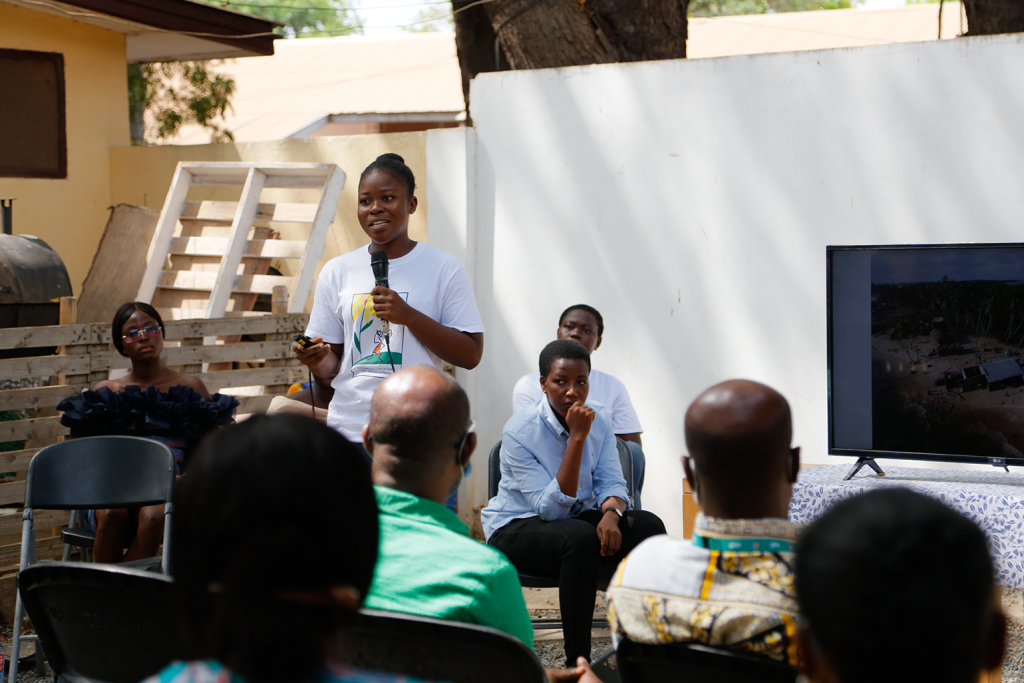
Photo: Participant of the Envisioning Resilience initiative telling the story behind her photo that shows the impacts of climate change on her life. Credit: Dennis Nipah, Ghana (2021).
Led by national governments, the NAP process enables countries to build the resilience of their ecosystems, economies, and communities to the impacts of climate change. To be effective, NAP processes must consider the impact of climate change on the lives of women in all their diversity – this demands a participatory and gender-responsive approach. The process therefore presents an opportunity to facilitate dialogue between adaptation decision-makers and women on the front lines of climate change. However, there are challenges in creating appropriate spaces and finding a common language to talk about climate change, its impacts, and strategies for building resilience.
Founded by the NAP Global Network and Lensational in 2021, with financial support from Global Affairs Canada, Envisioning Resilience aims to address these challenges.
The initiative trains underrepresented women in photography and storytelling, enabling them to develop visual stories that capture their experiences with climate change and their visions of resilience. These stories then provide a basis for dialogue with decision-makers toward a shared understanding of the effects of climate change on women’s lives and the adaptation priorities for their communities. Further, the process supports economic empowerment by offering to sell the trainees’ photographs on Lensational’s online platform.
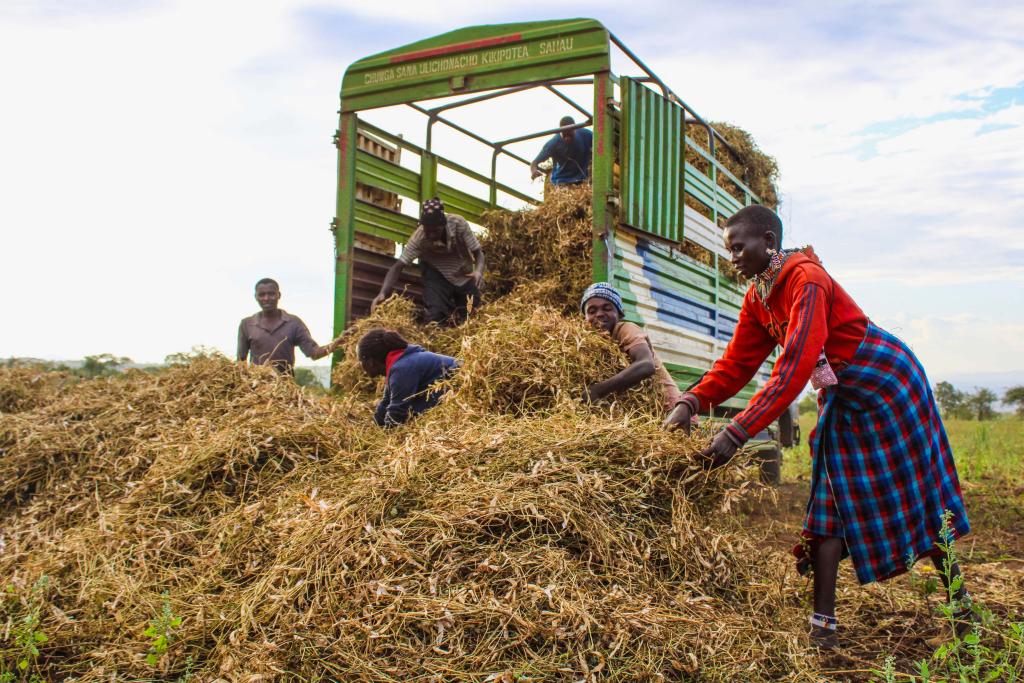
Photo: To manage through shortage of pasture, Kenyan people accumulate stubble remains from everything they harvest and use it to feed cattle. Credit: Esther Tinayo, Envisioning Resilience, Kenya (2021)
To date, Envisioning Resilience has been implemented in Ghana, Jamaica, Kenya, and Rwanda, with implementing partners including GirlsCARE, Rwanda Women’s Network, and Spring of the Arid and Semi Arid Lands (SASAL). We are grateful for the collaboration of our government partners, the Environmental Protection Agency in Ghana, the Climate Change Directorate in Kenya, and the Ministry of Environment in Rwanda.
You can view the photo essays and purchase photos here. Proceeds from the sale of photos are shared between the photographer and Lensational.
Find out more about what we’re learning from Envisioning Resilience in this briefing note.
Multilateral Development Bank Efforts to Mainstream Climate Adaptation
Progress from the perspectives of three countries
Multilateral development banks (MDBs) are expected to play a critical role in closing the gap between the volume of finance needed by developing countries to prepare for climate change and the amount of funding they currently have available. They have committed to increasing their financing for climate adaptation as well as aligning their country portfolios with the adaptation priorities of developing country governments. This paper explores the progress of four MDBs—the African Development Bank, the Asian Development Bank, the Inter-American Development Bank, and the World Bank—on meeting their adaptation finance commitments based on the experiences of Kenya, Nepal, and Peru.
Between 2013 and 2020, the total amount of adaptation-related financing provided by the World Bank to Nepal amounted to USD 1,197.8 million, compared to USD 453.6 million in financing for projects with mitigation co-benefits.
MDBs have increased their use of climate risk screening and assessment since 2013, which appears to have increased the proportion of project budgets determined to have adaptation co-benefits.
MDBs are beginning to establish processes to align their financial flows with developing country governments' adaptation priorities set out in National Adaptation Plans and nationally determined contributions.
Specifically, this report explores the progress made by MDBs to
Scale up finance for adaptation at the country level across the full breadth of their investment portfolio, including designated climate finance and development finance streams.
Incorporate climate risk screening and assessment in project design and implementation.
Align their portfolios with adaptation priorities identified by national governments in their National Adaptation Plans (NAPs) and nationally determined contributions (NDCs).
Drawing upon case studies prepared by three research organizations—the African Centre for Technology Studies based in Kenya, the Prakriti Resources Centre based in Nepal, and Libélula based in Peru—the paper’s key findings are:
The four MDBs examined have increased their flows of finance for adaptation over the past decade at the global level. At the country level, the reviews of finance for adaptation provided by these MDBs in Kenya, Nepal, and Peru indicate that while they are generally increasing, it is difficult to discern clear trends.
Screening for and assessing climate change vulnerability and risk have become standard practices with most MDBs, with an observed increase in the number of projects now being assessed for climate risk in the design and implementation stages. It is likely that this allocation of upfront funding to assess climate risks, particularly for large infrastructure investments, has led to an increase in the proportion of project budgets tagged by the MDBs as having adaptation co-benefits.
MDBs are beginning to draw on information in national documents—such as NAPs and NDCs—to guide their programming and project identification at the country level.
Despite this progress, the paper highlights ongoing challenges in scaling up MDB finance for adaptation. Among these challenges is a lack of transparency in how allocations of finance for adaptation are determined at the project level. Finance ministries also need a greater understanding of the economic case for and benefits of adaptation, as well as the need to mainstream adaptation in national economic development strategies and budgets. Consequently, scaling up finance for adaptation in developing countries like Kenya, Nepal, and Peru will require continued MDB support for technical analysis and country-led climate adaptation planning processes.
The paper concludes that MDBs could also place greater emphasis on funding discrete adaptation projects, in addition to financing the additional costs of ensuring that climate risks are reduced in the design and implementation of development projects. It also calls for consideration to be given to programmatic finance for adaptation and utilization of a wider range of financial instruments to support long-term adaptation programs. These efforts should be anchored in an ongoing commitment to using countries’ NAPs and NDCs to identify the best and most strategic use of MDB climate and development finance.
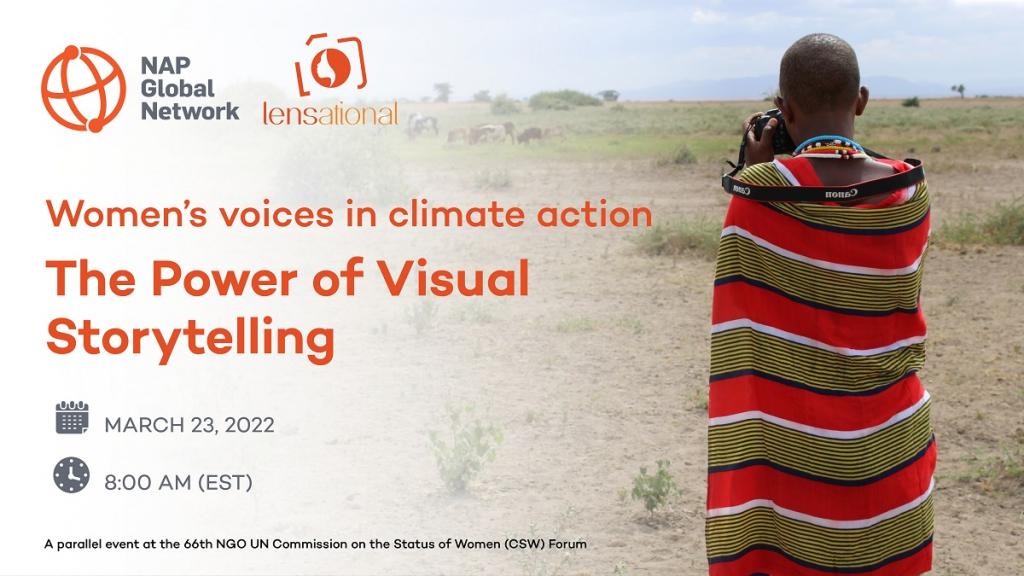
Women’s Voices in Climate Action: The power of visual storytelling
Organized by the National Adaptation Plan (NAP) Global Network and Lensational, this event explores the power of visual storytelling in bringing women’s voices into climate change adaptation planning processes.
A parallel event at the 66th NGO UN Commission on the Status of Women (CSW) Forum
Women’s leadership is crucial for effective climate action, but policy and planning processes may not create the space for women, in all their diversity, to meaningfully participate and drive solutions.
This event, organized by the National Adaptation Plan (NAP) Global Network and Lensational, will explore the power of visual storytelling in bringing women’s voices into climate change adaptation planning processes—especially women from underrepresented groups and communities. It will showcase visual stories captured by women on the frontlines of climate change in Ghana and Kenya and discuss how these can influence decision-making in NAP processes towards locally-led and gender-responsive adaptation action.
To learn more, check out the digital story and video about the NAP Global Network and Lensational partnership in Kenya and Ghana.
This partnership between Lensational and the NAP Global Network was made possible through generous financial support from Global Affairs Canada.
In this session, our experts will showcase the outcomes of two projects that IISD and the NAP Global Network supported to foster innovative and creative ways to communicate the climate crisis through images: the Next Season project, which brought together scientists and contemporary artists to create artwork depicting the climate crisis in Costa Rica; and the collaboration with Lensational, which enabled women in Ghana and Kenya to share their experiences on climate change adaptation through participatory photography.
Growing Tea Sustainably: Examples from Kenya, India, and Sri Lanka
From climate change impacts to price fluctuations, producing tea can be a volatile business. Here's how some of the world’s major tea-producing countries are making the industry more stable—and sustainable.
July 26, 2021
A hot cup of freshly brewed tea is a beverage beloved by many. But how often do we think about the origins of each neatly packaged tea bag on our kitchen shelf? Millions of people across the planet earn livelihoods from the tea industry, but many tea-producing regions face a myriad of sustainability challenges. From climate change impacts to price fluctuations, producing tea can be a volatile business.
As part of our advisory services work for governments, IISD’s State of Sustainability Initiatives (SSI) team conducts research to identify practices to help address these challenges. These practices include the use of voluntary sustainability standards (VSSs)—certification schemes that define a set of requirements for producing and selling products sustainably. Here are three examples of how VSSs and other measures have been used effectively in Kenya, India, and Sri Lanka.
Kenya
Tea production provides five million Kenyans with livelihoods
Tea is a big industry in Kenya. First introduced to the country in 1903, it now contributes an estimated 5 million direct and indirect jobs. That means 10% of Kenyans rely on the industry for their livelihoods, including more than half a million smallholder tea farmers.
Kenya is also one of the top tea-exporting nations, with an export value of a whopping USD 1.2 billion in 2019. It is leading the way in the trade of sustainable tea, with nearly all of its tea production complying with VSSs like Rainforest Alliance and Fairtrade. But with so many people relying on the industry, has this made a difference to farmers’ incomes?
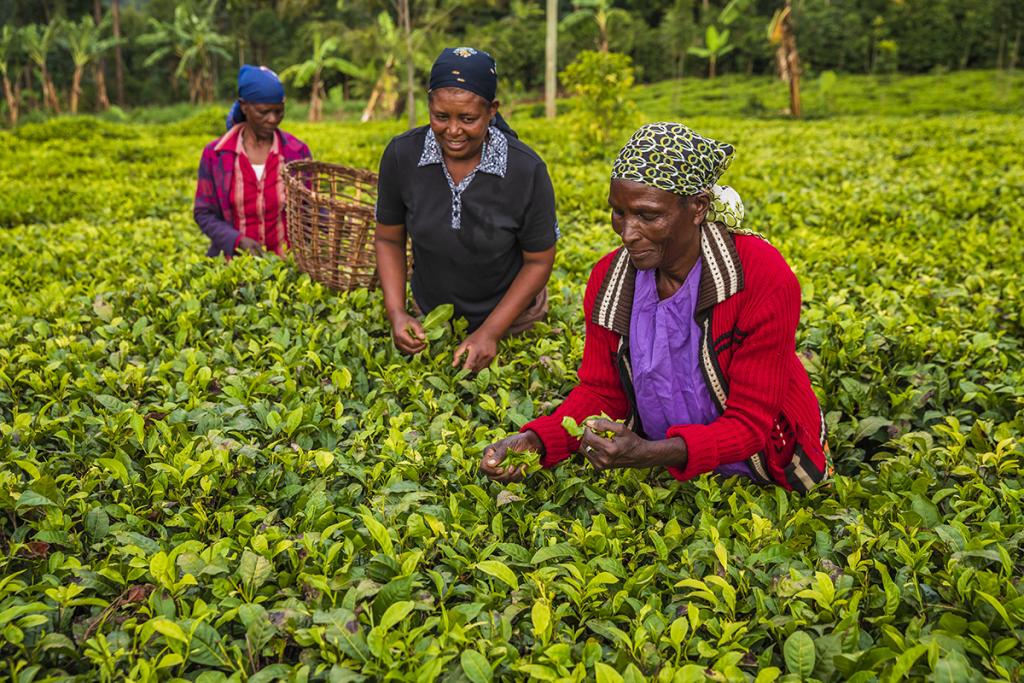
10% of people in Kenya rely on the tea industry for their livelihoods. iStock/hadynyah
Certification and training can help ensure fair, stable wages
Thanks to the growing global demand for sustainable tea, complying with VSSs can provide farmers with access to new markets, which can offer higher prices and premiums. Providing fair wages is also often part of the criteria for certification. For example, Fairtrade sets a minimum price for most of its products and provides farmers with additional fundsto invest in the community. When used to fix roads and bridges, this can also improve farmers’ connections to supply chain actors.
In Kenya, Farmer Field Schools also help train farmers in how to use sustainable production methods, such as better pest and soil fertility management. Introduced by the Kenya Tea Development Agency Holdings Limited and partners in 2006, the schools have helped producers increase yields. Studies show that they have also encouraged farmers to work collectively to source equipment and sell their produce—all of which can enhance farms’ profitability.
India
Poor working conditions and inequality affect tea growers in India
Records suggest that tea drinking has been part of Indian society since the 12th century. Cultivation was escalated by the British in the 19th century, and India is now one of the world’s leading tea-producing countries. In 2016, the Tea Board of India estimated that the country produced 1.3 billion kilograms of tea.
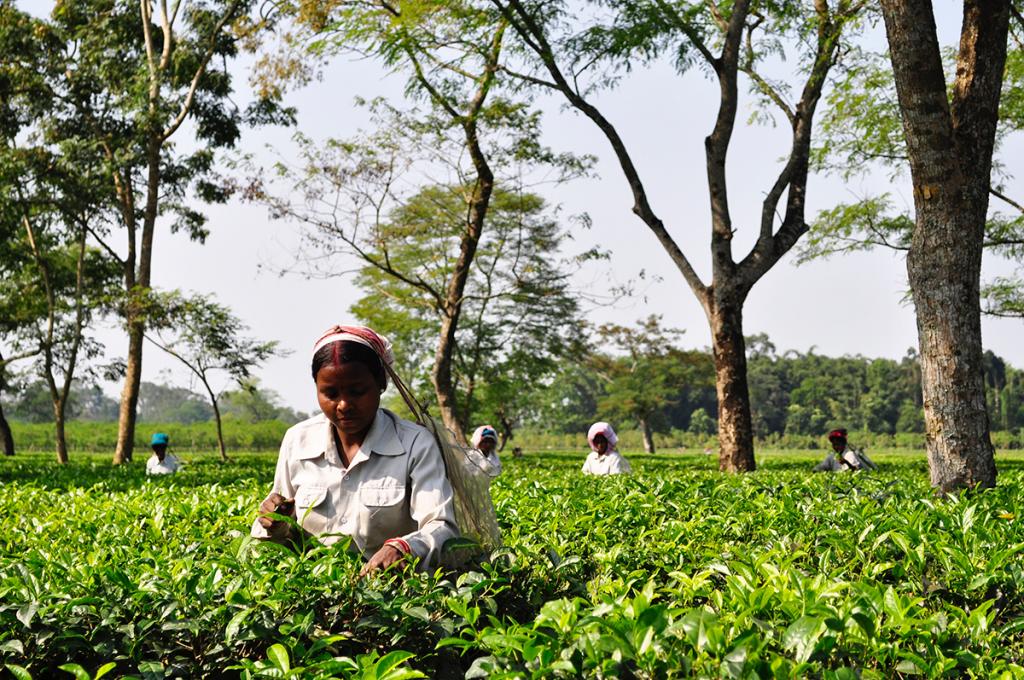
However, studies have shown that many tea plantation workers are denied their rights to decent working conditions. Tea-growing regions like Assam and Darjeeling often experience labour conflicts over issues like wages and access to healthcare. In addition, women bear the biggest brunt of inequality as they are most likely to be involved in plucking, which is low-paid and can lead to health issues.
Many tea plantation workers in India are denied their rights to decent working conditions. UnSplash/Amit Ranjan
Certification and policies can improve living standards
Respect for human rights and protecting the health of workers are two criteria often included in VSSs. In India, almost half of tea is produced under the Trustea label, a VSS developed specifically for the Indian context. Trustea includes requirements for appropriate working conditions in their criteria for certification, including the provision of adequate training, maternity entitlements, and equal pay.
The Indian government has also helped improve working conditions for tea farmers and workers. For example, the Plantation Labour Act legally requires plantations to provide certain health and welfare benefits, from housing to medical facilities. Additionally, organizations like the Ethical Tea Partnership are increasingly focusing on gender equality projects, such as training to enhance women’s nutrition and participation in decision-making.
Sri Lanka
Sri Lankan tea production is vulnerable to climate change
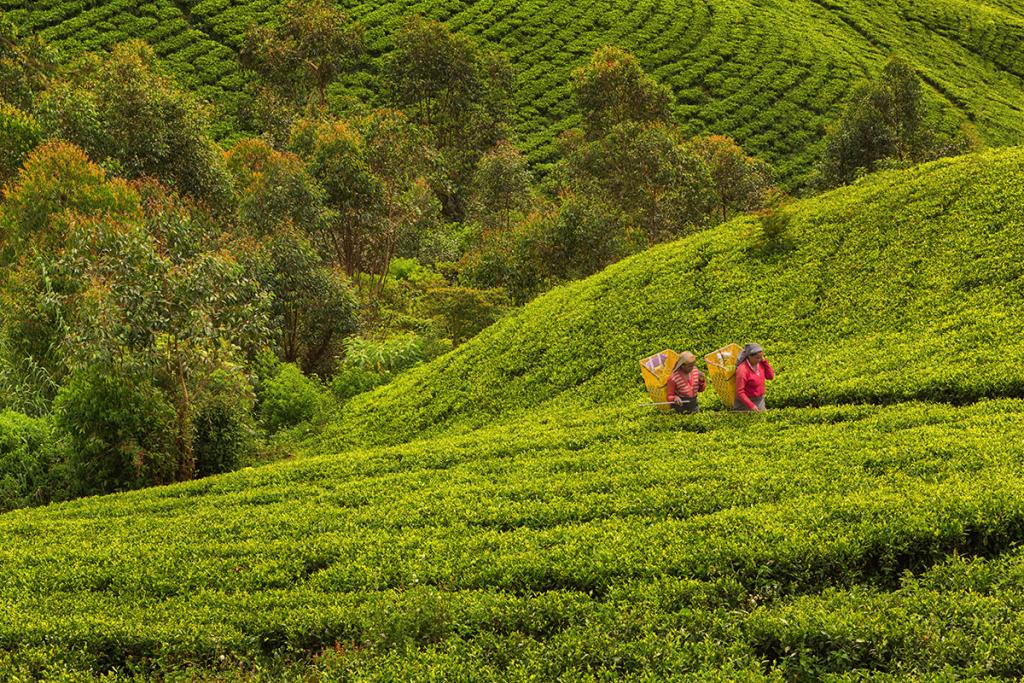
Sri Lanka is one of the oldest tea-producing regions in the world. Ceylon tea exports contribute to around 2% of the country’s GDP, and the industry supports more than 450,000 smallholder farmers. Due to favourable climates, tea is primarily grown in the central highlands and southern inland regions.
However, given that Sri Lanka is a developing island nation, tea production is particularly vulnerable to stresses induced by climate change. Rising temperatures, unpredictable weather patterns, and pests are putting strain on an industry already weakened by competition and labour costs. What is more, these challenges are exacerbated by deforestation and the excessive use of chemicals and pesticides.
The tea industry supports more than 450,000 smallholder farmers in Sri Lanka, but production is vulnerable to stresses induced by climate change. iStock/tunart
Certification and governments can support climate adaptation
Many certification schemes seek to help communities adapt to climate change. The Rainforest Alliance runs programs in Sri Lanka that help workers adopt climate-smart agricultural practices. They educate tea farmers on how to maintain tree cover and reduce synthetic pesticide use. Their research shows that such practices benefit not only the environment but also the profitability of certified farms.
In addition, the Sri Lankan National Adaptation Plan for Climate Change has outlined a strategy to combat the effects of climate change. Measures range from introducing new heat, drought, and flood-tolerant cultivars to establishing a climate communication system that connects with tea farmers via mobile and Internet alerts.
Learning From Others
Amid a variety of intense and complex sustainability challenges, these examples show that there is a range of approaches that can help tea farmers adapt and thrive. The impacts of these practices are the subject of ongoing research, but it appears that VSSs can play a major role in the quest for a more sustainable tea industry—particularly when supported by measures put in place by governments and other actors that support farmers. Identifying such practices forms a central part of the SSI team’s advisory services work, as it can help inform authorities seeking to tackle similar challenges.
This blog was written from research conducted by Vivek Voora and Sara Elder. The author would like to thank Sara Elder, David Perri, and Cristina Larrea for their valuable feedback on earlier drafts of this article.