IISD in the news

Experts welcome India reaching 100GW installed RE capacity milestone

India reached a significant milestone with the country's total installed renewable energy capacity, excluding large hydro, crossing 100 GW.

August 18, 2021

IISD in the news details

Topic
Energy
Region
India
Project
IISD Global Subsidies Initiative
Impact area
Nature
Climate
IISD in the news

Rolling out DBT for power subsidy may not be easy

India’s electricity distribution sector is in tatters. Its total debt is estimated to have breached the Rs 5 lakh-crore mark in FY20 and is expected to cross Rs 6 lakh crore in the current financial year, while high aggregate technical & commercial losses (AT&C) — basically unpaid bills and power theft-have only served to pile on to the misery.

July 30, 2021

IISD in the news details

Policy Analysis

Is India Ready for an Electric Vehicle Revolution?

IISD's Tom Moerenhout looks at what India needs to do to keep up with countries already embracing the trend toward EVs. 

July 28, 2021

This article was originally published in IISD's Trade and Sustainability Review, Volume 1, Issue 3

Electric vehicles (EVs) are revolutionizing the world of road transport. The global EV market grew 43% annually on average over the last five years, and the worldwide automobile market penetration rate of EVs stood at about 2.6% in 2019.

This is expected to explode during the coming decade.

Many COVID-19 recovery packages in countries including China, Germany, France, and Canada, as well as the newly proposed plan in the United States, focus heavily on EVs. Deloitte predicts that annual new sales of EVs will top USD 30 million by 2030.

To date, India lags behind other key markets such as China, Europe, and the United States. The global EV stock reached 7.2 million units in 2019, of which 47% were in China, 25% in Europe and 21% in the United States. The rest of the world accounted for only 600,000 units, with just 170,000 sold in India.

But EVs are of great interest in India. The electrification of road transport serves multiple purposes. It is a green industrial policy that supports a post-pandemic economic recovery. It is intended to reduce oil imports and strengthen energy security. And it is central to reducing air pollution and mitigating climate change. It is a central component of net-zero ambitions worldwide and an important carbon emission reduction measure, second only to greening power sectors.

“Almost 97.5% of all electric vehicles sold in India were two-wheelers, indicating an especially strong market in the two- and three-wheeler segment.”

Those objectives feature strongly in India’s push to electrify transport.

While less than 0.5% of Indian car sales in 2019 were EVs, the level of stock here is not the right indicator by which to judge the country’s readiness or interest. India sold 69,000 units in 2017–2018 and about 143,000 units in 2018–2019. This indicates a strong growth rate that is likely to accelerate in the next years. Almost 97.5% of all electric vehicles sold in India were two-wheelers, indicating an especially strong market in the two- and three-wheeler segment.

The national government and state governments have adopted several encouraging policies since the start of the pandemic. Nationally, for example, the government has incentivized the deployment of e-buses and charging stations. On the state level, Telangana has exempted the first 200,000 two-wheeler EVs from road tax and registration fees, while Gujarat will offer government subsidies for students purchasing two-wheeler EVs, and rickshaw drivers and self-employed people buying three-wheeler EVs. In 2020, Delhi also launched a progressive EV policy including purchase incentives based on battery range and category.

These measures are promising, but need more streamlining and coordination between policies from the central government, state governments, and local (city) governments.

Suitable Policy Framework and Incentives Are Needed

To truly improve EV adoption and India’s role as a value chain participant, the government cannot rely solely on subsidies; it will also need to attract more private investment to the country. The good news is that there are positive signs of investor interest. Just last year, Tesla announced the opening of a factory in Karnataka in southwest India, and venture capitalists are expected to invest more than USD 300 million in EV companies across the country.

This, however, pales in comparison to global investment in EVs.

Of known automaker investment plans before the pandemic, at least USD 300 billion was earmarked for EV investment in the next 5 to 10 years. More than 45% of that budget was intended for operations in China, with most of the remainder divided among Germany, the United States, South Korea, Japan, and France. To become a major EV investment destination, India must create the right policy framework and incentives.

It has started doing so with the government’s Faster Adoption and Manufacturing of Electric Vehicles scheme, or FAME. The program, launched in 2015, aimed both to promote EV adoption and to incentivize manufacturers to build EVs in India. In the first phase of FAME, the government provided USD 130 million in subsidies to support the purchase of electric two-wheelers and three-wheelers and hybrid and electric cars and buses. The first phase was generally considered a success as far as sales are concerned.

FAME’s second phase was a considerable upgrade to USD 1.4 billion of EV subsidies, of which about 85% was earmarked for purchasing subsidies and 10% to charging infrastructure. It started in 2019 and was intended to run until 2022.

A core component of this phase was again to accelerate local manufacturing. Two years in, however, the results are not what had been anticipated. By early 2021, only about 10% of the EV deployment target for Phase 2 had been reached.

“To truly improve EV adoption and India’s role as a value chain participant, the government cannot rely solely on subsidies; it will also need to attract more private investment to the country.”

The Society of Manufacturers of Electric Vehicles said this was because of a slower evolution of the domestic component manufacturing market and regulatory requirements for fiscal incentives that keep EV costs too high. Additionally, an uncertain medium-term regulatory environment and the lack of affordable finance continue to deter private investment.

As a result, the Indian EV revolution is not yet at cruising speed, and policy priorities were moved to deployment and investment ahead of local manufacturing requirements. The government also launched a production-linked incentive scheme to encourage companies to start manufacturing EV batteries locally.

An updated analysis of investor, trade, and skill gap barriers is needed to tweak the regulatory environment in a way that facilitates such deployment and value chain investment. This process could also be the perfect moment to kickstart policy coordination and design related to end-of-life EVs, particularly with regard to urban mining and EV battery repurposing and recycling.

India Can Play a Key Role in EV Battery Recycling

In terms of end-of-life EVs, India is also not yet prepared. In all fairness, few major players are.

About 70% of hazardous waste in global landfills comes from e-waste. Just 94,000 metric tons of lithium-ion batteries (LIBs) were recycled globally in 2019, most of them from portable consumer electronics. In the next decade, however, EV batteries will start flooding the end-of-life battery market. The World Economic Forum forecasts that for half of those EV batteries to be recycled by 2030, recycling capacity would need to grow by a factor of 25.

Currently, however, the EV battery recycling industry suffers on different levels, from profitability linked to relatively cheap primary raw material costs, to changing chemical compositions of EV batteries and inefficiencies in the recycling process. While China has specific guidelines on removing, discharging, disassembling, and storing used EV lithium-ion batteries, the other major players—i.e., the United States, Europe, and Japan—still struggle with a regulatory framework that would facilitate profitable recycling.

“With the right incentives and policy framework, India can leapfrog some EV battery recycling barriers and become a major player within the next decade.”

Reassuringly, the number of patents in EV battery recycling has increased dramatically in the last 10 years, showing the potential for innovation.

With the right incentives and policy framework, India can leapfrog some EV battery recycling barriers and become a major player within the next decade. The potential is huge, with a global market expected to surge to 705,000 end-of-life LIBs by 2025 and to 9 million by 2040—most of which will be EV LIBs.

Like China, India has a major EV growth market and would thus be able to count on a reliable supply of end-of-life batteries in the future. Unlike China, India does not have global supply chains for primary materials such as lithium and cobalt, and so urban mining and recycling are also needed for India to become a large-scale EV battery manufacturer.

The first stages of EV LIB recycling are also barely automated and thus require a lot of manual labour. Here, too, India could have a comparative advantage compared to other major players since it has a large population and lower labour costs compared to Western countries.

India’s Government Has Its Work Cut Out

The success of circular economy policies is not guaranteed, however. It took China a decade of regulatory development to become the market leader in LIB recycling.

India’s government has work to do—from improving regulations related to battery collection, transport, and storage, to coordinating training programs to handle batteries; from crafting labelling and traceability requirements to clarifying contractual and ownership models; and from improving extended producer responsibility to facilitating clustering and joint ventures that can drive efficiencies and cost reductions.

It is clear that EVs are set to transform global road transport, and India will be a colossal market for deployment. It is both logical and necessary that India also seek to become a manufacturing hub that can contribute to both EV value chains and battery recycling.

To do so, however, the government needs to analyze barriers and adjust its regulatory and institutional frameworks to accommodate those barriers and attract private investment on a larger scale.

Tom Moerenhout is a Senior Associate with IISD’s Global Subsidies Initiative.
Insight

Growing Tea Sustainably: Examples from Kenya, India, and Sri Lanka

From climate change impacts to price fluctuations, producing tea can be a volatile business. Here's how some of the world’s major tea-producing countries are making the industry more stable—and sustainable.

July 26, 2021

A hot cup of freshly brewed tea is a beverage beloved by many. But how often do we think about the origins of each neatly packaged tea bag on our kitchen shelf? Millions of people across the planet earn livelihoods from the tea industry, but many tea-producing regions face a myriad of sustainability challenges. From climate change impacts to price fluctuations, producing tea can be a volatile business.

As part of our advisory services work for governments, IISD’s State of Sustainability Initiatives (SSI) team conducts research to identify practices to help address these challenges. These practices include the use of voluntary sustainability standards (VSSs)—certification schemes that define a set of requirements for producing and selling products sustainably. Here are three examples of how VSSs and other measures have been used effectively in Kenya, India, and Sri Lanka.

Kenya

Tea production provides five million Kenyans with livelihoods

Tea is a big industry in Kenya. First introduced to the country in 1903, it now contributes an estimated 5 million direct and indirect jobs. That means 10% of Kenyans rely on the industry for their livelihoods, including more than half a million smallholder tea farmers. 

Kenya is also one of the top tea-exporting nations, with an export value of a whopping USD 1.2 billion in 2019. It is leading the way in the trade of sustainable tea, with nearly all of its tea production complying with VSSs like Rainforest Alliance and Fairtrade. But with so many people relying on the industry, has this made a difference to farmers’ incomes?

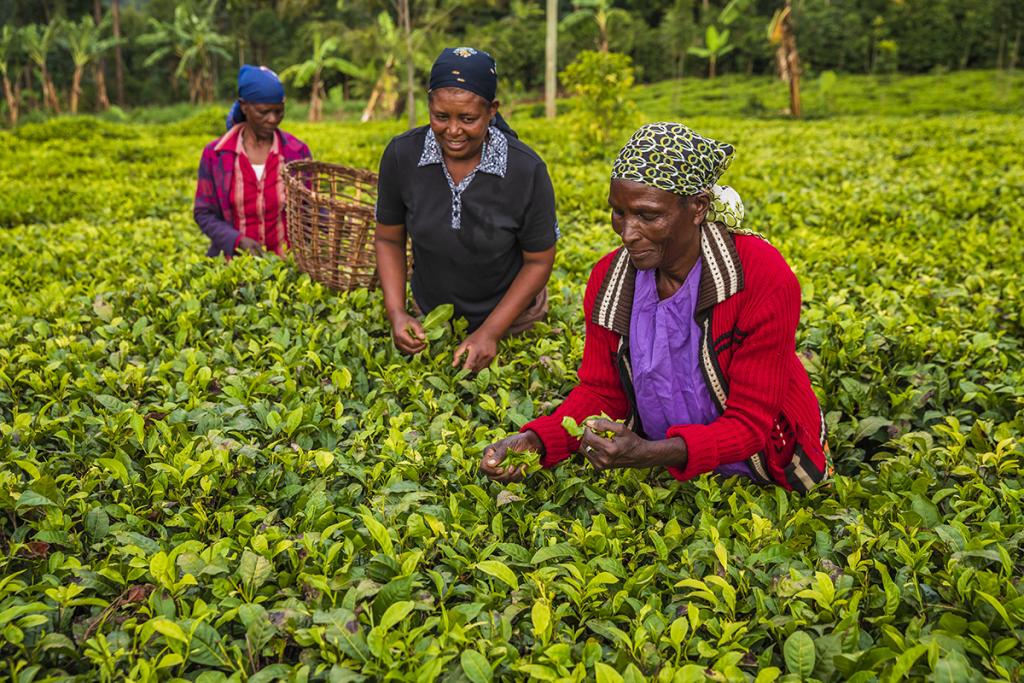
Women plucking tea in Kenya
10% of people in Kenya rely on the tea industry for their livelihoods. iStock/hadynyah

Certification and training can help ensure fair, stable wages

Thanks to the growing global demand for sustainable tea, complying with VSSs can provide farmers with access to new markets, which can offer higher prices and premiums. Providing fair wages is also often part of the criteria for certification. For example, Fairtrade sets a minimum price for most of its products and provides farmers with additional funds to invest in the community. When used to fix roads and bridges, this can also improve farmers’ connections to supply chain actors.

In Kenya, Farmer Field Schools also help train farmers in how to use sustainable production methods, such as better pest and soil fertility management. Introduced by the Kenya Tea Development Agency Holdings Limited and partners in 2006, the schools have helped producers increase yields. Studies show that they have also encouraged farmers to work collectively to source equipment and sell their produce—all of which can enhance farms’ profitability.

India

Poor working conditions and inequality affect tea growers in India

Records suggest that tea drinking has been part of Indian society since the 12th century. Cultivation was escalated by the British in the 19th century, and India is now one of the world’s leading tea-producing countries. In 2016, the Tea Board of India estimated that the country produced 1.3 billion kilograms of tea.

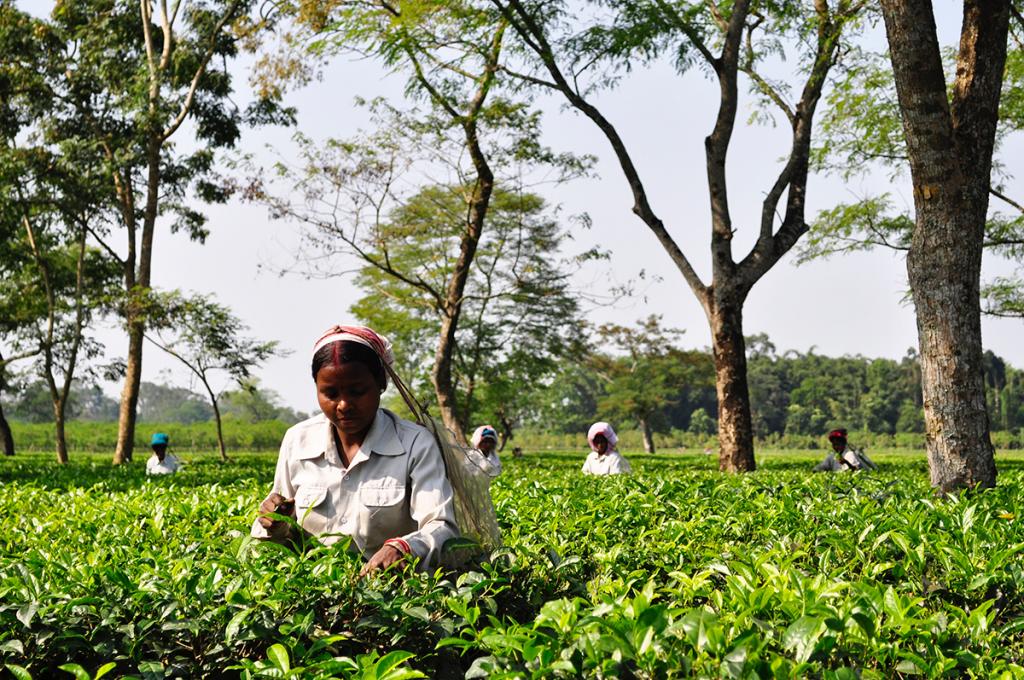
However, studies have shown that many tea plantation workers are denied their rights to decent working conditions. Tea-growing regions like Assam and Darjeeling often experience labour conflicts over issues like wages and access to healthcare. In addition, women bear the biggest brunt of inequality as they are most likely to be involved in plucking, which is low-paid and can lead to health issues.

Women plucking tea in India
Many tea plantation workers in India are denied their rights to decent working conditions. UnSplash/Amit Ranjan

Certification and policies can improve living standards

Respect for human rights and protecting the health of workers are two criteria often included in VSSs. In India, almost half of tea is produced under the Trustea label, a VSS developed specifically for the Indian context. Trustea includes requirements for appropriate working conditions in their criteria for certification, including the provision of adequate training, maternity entitlements, and equal pay.

The Indian government has also helped improve working conditions for tea farmers and workers. For example, the Plantation Labour Act legally requires plantations to provide certain health and welfare benefits, from housing to medical facilities. Additionally, organizations like the Ethical Tea Partnership are increasingly focusing on gender equality projects, such as training to enhance women’s nutrition and participation in decision-making.

Sri Lanka

Sri Lankan tea production is vulnerable to climate change

Sri Lanka is one of the oldest tea-producing regions in the world. Ceylon tea exports contribute to around 2% of the country’s GDP, and the industry supports more than 450,000 smallholder farmers. Due to favourable climates, tea is primarily grown in the central highlands and southern inland regions.

However, given that Sri Lanka is a developing island nation, tea production is particularly vulnerable to stresses induced by climate change. Rising temperatures, unpredictable weather patterns, and pests are putting strain on an industry already weakened by competition and labour costs. What is more, these challenges are exacerbated by deforestation and the excessive use of chemicals and pesticides.

Tea workers in Sri Lanka
The tea industry supports more than 450,000 smallholder farmers in Sri Lanka, but production is vulnerable to stresses induced by climate change. iStock/tunart

Certification and governments can support climate adaptation

Many certification schemes seek to help communities adapt to climate change. The Rainforest Alliance runs programs in Sri Lanka that help workers adopt climate-smart agricultural practices. They educate tea farmers on how to maintain tree cover and reduce synthetic pesticide use. Their research shows that such practices benefit not only the environment but also the profitability of certified farms.

In addition, the Sri Lankan National Adaptation Plan for Climate Change has outlined a strategy to combat the effects of climate change. Measures range from introducing new heat, drought, and flood-tolerant cultivars to establishing a climate communication system that connects with tea farmers via mobile and Internet alerts. 

Learning From Others

Amid a variety of intense and complex sustainability challenges, these examples show that there is a range of approaches that can help tea farmers adapt and thrive. The impacts of these practices are the subject of ongoing research, but it appears that VSSs can play a major role in the quest for a more sustainable tea industry—particularly when supported by measures put in place by governments and other actors that support farmers. Identifying such practices forms a central part of the SSI team’s advisory services work, as it can help inform authorities seeking to tackle similar challenges.

This blog was written from research conducted by Vivek Voora and Sara Elder. The author would like to thank Sara Elder, David Perri, and Cristina Larrea for their valuable feedback on earlier drafts of this article.

IISD in the news

Subsidies for India’s renewable sector are falling, needs renewed support, says study

The government’s push for renewable energy has been one of its main defence against criticism for using fossil fuels. However, government subsidies to the renewable sector have fallen by nearly 45 percent since their peak in (financial year) 2017.

July 22, 2021

IISD in the news details

Press release

Subsidies to Renewable Energy Fell Nearly 45% since Their FY 2017 Peak

Renewed support is needed, experts say.

July 15, 2021

July 15, 2021, New Delhi—New research suggests that India needs to grow financial support for renewable energy to reach its goals for Aatmanirbhar Bharat and clean energy transition as part of the economic recovery from COVID-19.

A study titled Mapping India’s Energy Subsidies 2021: Time for renewed support to clean energy, released today by the International Institute for Sustainable Development (IISD) and the Council on Energy, Environment and Water (CEEW), finds that subsidies to renewable energy fell by 45% from the fiscal year (FY) 2017 peak of INR 15,470 crore to INR 8,577 crore in FY 2020.

According to IISD and CEEW experts, new funding for clean energy is crucial to progress the transition that is already underway in India. Researchers point to positive trends such as the increasing subsidies for electric vehicles, which jumped 135% from FY 2019, reaching INR 1,141 crore in FY 2020 due to growing public demand for electric mobility. But they also note that the full benefits of electric transport can only be achieved if there is a green electricity mix.

The report explains that renewable energy subsidies are at a standstill due to a combination of factors including grid-scale solar and wind achieving market parity, lower deployment levels, and subsidy schemes nearing the end of their allocation period.

“It is time for a new wave of support measures focused on emerging technologies such as grid integration and storage, decentralized renewable energy, green hydrogen, and offshore wind,” says study co-author Balasubramanian Viswanathan of IISD. “India must deploy historic levels of about 39 GW every year to meet its admirable target of 450 GW of renewables by 2030. It is hard to imagine achieving this goal without the right support policies. And the prize is big: curbing air pollution, addressing the climate crisis, and kick-starting a green economic recovery.”

On the other hand, oil and gas subsidies jumped 16% from FY 2019 to FY 2020, largely due to financial support for household consumption of liquefied petroleum gas (LPG). Experts note, however, that LPG subsidies were suspended during the FY 2021 oil price crash and have not yet been reintroduced. This may reduce oil and gas subsidies in future years, but has led to new concerns around clean energy access, as no alternative support for clean cooking has been provided. Meanwhile, the researchers commended the government on its commitment to successfully phase out kerosene subsidies by FY 2022, which should also reduce total oil and gas subsidies.

Overall, the study finds that support for fossil fuels has increased as of the latest year of comprehensive data, hitting INR 70,578 crore in FY 2020. This is over seven times the sum of subsidies to clean energy.

Experts highlight that reforming fossil fuel subsidies can generate valuable additional resources for economic recovery from COVID-19 and investments in clean energy.

The report also identifies other government measures that can promote energy transition.

“Redirecting a share of coal tax revenues to clean energy and supporting communities, regions, and livelihoods impacted by the transition will help ensure a just and equitable energy transition,” says co-author Prateek Aggarwal of CEEW. “Further, the government should encourage public sector undertakings, which are currently investing more in fossil fuels, to set ambitious targets for high levels of investment in clean energy and establish national capacity in manufacturing.”

For the government, now is an excellent opportunity to support a green recovery aligned with Aatmanirbhar Bharat by designing a new generation of support measures for clean energy—in a way that ensures no one is left behind.

Press release details

Report

Mapping India's Energy Subsidies 2021: Time for renewed support to clean energy

This report examines how the Government of India has used subsidies to support the various energy sectors in India since announcing its renewable energy target of 175 GW by 2022, a goal that has now been increased to 450 GW by 2030. It also projects shifts in energy subsidies due to COVID-19. Two special segments look at how subsidies can best promote solar manufacturing in India and how India's public sector undertakings can support the clean energy transition.

July 14, 2021
  • In FY 2020, subsidies to renewable #energy in #India fell nearly 45% from their 2017 peak.

  • Fossil fuels continue to receive far more subsidies than clean #energy in #India. This disparity became even more pronounced from FY 2019 to FY 2020, going from 7 times to 7.3 times the size of subsidies to renewables.

  • In FY 2020, seven major Indian energy public sector undertakings spent USD 3.1 billion on fossil fuel projects—11 times as much as they invested in renewable #energy projects.

Tracking the shift of government resources to fund clean energy instead of fossil fuels is important to ensure public money supports India’s goals for energy access, affordability, energy security, and sustainability. Mapping India's Energy Subsidies 2021 covers India’s subsidies to fossil fuels, electricity transmission and distribution, renewable energy, and electric vehicles between fiscal year (FY) 2014 and FY 2020.

We found that fossil fuels continue to receive far more subsidies than clean energy in India. This disparity became even more pronounced from FY 2019 to FY 2020, going from 7 times to 7.3 times the size of subsidies to renewables.

Key figures:

  • Subsidies to electricity transmission and distribution make up the largest bucket at around INR 1.3 lakh crore (USD 18.2 billion) in FY 2020. While this amount stagnated between FY 2019 and FY 2020, it is likely to grow again as the economy recovers.
  • Oil and gas subsidies increased by 16% from FY 2019 to FY 2020, reaching INR 55,347 crore (USD 7.8 billion).
  • Subsidies to renewable energy fell nearly 45% from their peak in FY 2017, stagnating at around INR 8,000 crore in FY 2020.
  • Electric vehicle subsidies have more than doubled since FY 2019, reaching INR 1,141 crore (USD 161 million) in FY 2020.
  • In FY 2020, seven major Indian energy public sector undertakings (equivalent to state-owned enterprises) spent INR 22,261 crore (USD 3.1 billion) on fossil fuel projects—11 times as much as they invested in renewable energy projects.
  • Total capital expenditure of energy public sector undertakings in India stood at INR 1.5 lakh crore (USD 22.4 billion) in FY 2020 and is expected to increase in the near term.

We also looked at how the government could support its “Make in India” initiative, asking what kind of policy support the domestic solar manufacturing industry needs. We found that:

  • Domestic manufacturers require demand-side certainty to trigger expansion and integration.
  • States must develop healthy manufacturing ecosystems.
  • To improve competitiveness, the government needs to target fiscal incentives together with research and development.

The report is accompanied by an interactive online database to help browse the subsidy data in detail and includes detailed spreadsheets and annexes for policy-makers and researchers. The analysis is the latest update in the India's Energy Transition series from the International Institute for Sustainable Development's (IISD) Global Subsidies Initiative (GSI) and the Council on Energy, Environment and Water (CEEW). For previous iterations of this study, see:

Report details

Webinar

Mapping India's Energy Subsidies 2021: Time to Renew Support for India’s Clean Energy Ambitions?

July 15, 2021 5:30 am - 7:00 am EST

via Zoom

(Open to public)

Government support is more important than ever for the energy transition in the wake of COVID-19. Shifting government support from fossil to clean energy can ensure that every rupee of public money helps in achieving the goals of access, energy security, and the shift to a low-carbon economy.

The session, hosted by IISD and the Council on Energy, Environment and Water (CEEW), features insights on how the Government of India has used subsidies to support different types of energy from FY 2014 until FY 2020, and describes major shifts since the onset of COVID-19. Further, we explore how subsidy policy can best promote solar photovoltaic (PV) manufacturing, and how investments by Public Sector Undertakings (PSUs) are supporting the clean energy transition.

Brief

Building Bridges to a Just Transition: Connecting India's challenges and solutions with international experience

This brief provides an initial assessment of priorities and opportunities for research and information sharing on Just Transition in India, based on a review of international literature and expert interviews. Specifically, the brief identifies: global just transition elements most relevant for India; research topics needing further investigation to help support just transition in India; and India's experiences that might be useful for other emerging economies.

June 30, 2021
  • There are ~4 million direct & indirect jobs in #coal mining in #India. Further, coal is a significant identity issue—many workers consider themselves "coal warriors." Careful long-term planning for jobs & communities is essential for a #JustTransition.

  • In #India, state-owned enterprises focused on coal & coal power contribute ~3% of federal gov revenue, while states such as Jharkhand, Chhattisgarh & Odisha receive over 5% of revenue from coal. Part of a #JustTransition is planning for a fiscal transition.

  • In FY20 in #India, coal mining & power companies spent over INR 1k crore (USD 144 million) on corporate social responsibility (CSR) in over 90 districts. Long-term planning for #JustTransition must account for such contributions in coal-bearing areas.

Among the key research needs, it highlights:

  • Examination of other countries’ just transition plans for coal.
  • Mapping of stakeholders and their needs, particularly unionized and non-unionized workers and their communities, including to better understand the implications for just transitions of coal in personal and community identity.
  • Opportunities to diversify coal state-owned enterprises (SOEs) and coal-dependent regional economies based on international experience and research into local needs and attributes.
  • Options to reform coal sector pension funds, based on international experience, to ensure all current and future pensions are fully funded.
  • Potential for coal mining and coal power plant sites to become sources of employment and ongoing regional income; how funds could be raised for rehabilitation and development of sites.

Brief details

Topic
Climate Change Mitigation
Energy
Just Transition
Region
India
Impact area
Climate
Sustainable Economies
Nature
Publisher
IISD
Copyright
IISD, 2021