Press release

Remembering Jason Potts

It is with great sadness that we announce that Jason Potts, visionary and leader in championing inclusive sustainability standards, has died. His work towards making trade more sustainable and fair will always live on, emboldened forever by his leadership.


January 30, 2018

It is with great sadness that we announce that Jason Potts, visionary and leader in championing inclusive sustainability standards, has died.

He passed away peacefully on the morning of January 31, 2018 in Montreal, surrounded by his family.

“Jason was a much beloved colleague at IISD; everyone admired his passion for justice and greatly enjoyed working with him. He brought principle, creativity and fervour to each moment of his work,” said Scott Vaughan, President-CEO, IISD. “His work towards making trade more sustainable and fair will always live on, emboldened forever by his leadership.”

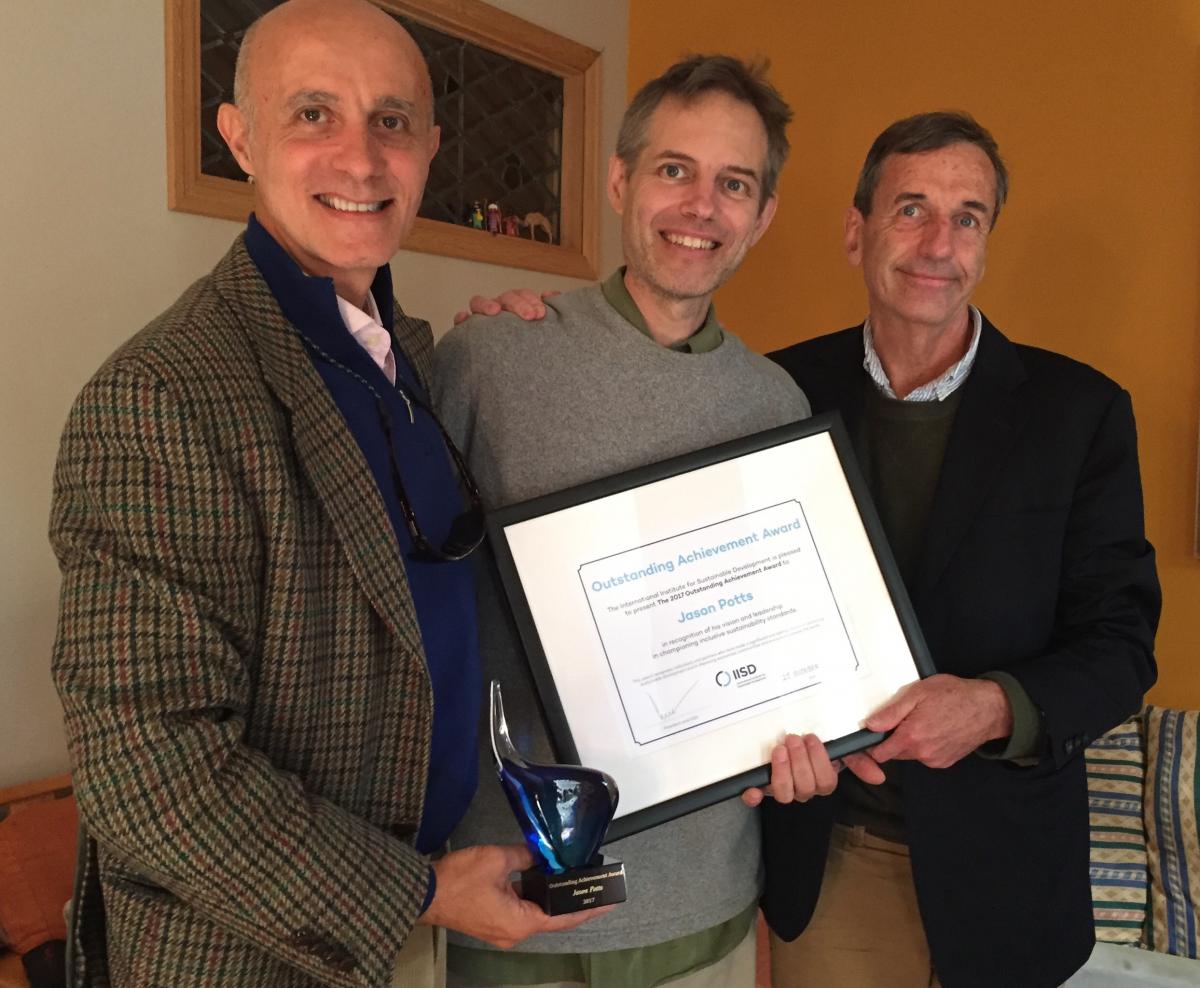
Daniele Giovannucci, co-founder, COSA (left) and Scott Vaughan, President-CEO, IISD (right) present Jason Potts (centre) with IISD's inaugural Outstanding Achievement Award for his work on sustainability standards. 

"Jason was always an incredibly inspiring colleague," said Nathalie Bernasconi-Osterwalder, Director, Economic Law and Policy, IISD. "He was always full of wisdom. He was precise, and a brilliant writer. He was always persuing perfection in his work in the spirit of making the world a better and fairer place. It was never to put himself forward but the cause. He leaves a great vacuum. We will miss him." 

"Jason was truly inspiring as a colleague and as a leader in his field," said Flavia Thomé, Senior Operations Manager, IISD. "His IISD family will miss him, his good humour and brilliant ideas. We hope to make him proud by continuing to work on his projects and advance his work."

Throughout his career, Jason dedicated himself to forging new paths of sustainability and justice to advance communities and protect nature around the globe. At IISD, Jason led the State of Sustainability Initiatives, which tracks and issues regular reports on the characteristics, performance and market trends of sustainability initiatives internationally.

His innovative leadership resulted in globally respected entities such as the Committee on Sustainability Assessment, the Finance Alliance for Sustainable Trade and the Sustainable Commodity Assistance Network, all of which work to champion and monitor sustainable trade.

In recognition of his lifelong commitment to sustainable trade, Jason was recently the first recipient of the IISD Outstanding Achievement Award.

Press release details

Impact area
Sustainable Economies
Press release

Reducing How Much Nitrogen Enters a Lake Has Little Impact on Algal Blooms, Find Canadian Scientists

Lakes suffering from harmful algal blooms may not respond to reduced, or even discontinued, artificial nitrogen loading. Many blue-green algae responsible for algal blooms can fix atmospheric nitrogen dissolved in the water, and therefore water stewards should focus their efforts on removing phosphorus from lakes to combat algal blooms. 

December 17, 2017

WINNIPEG, December 18, 2017—Lakes suffering from harmful algal blooms may not respond to reduced, or even discontinued, artificial nitrogen loading.

Many blue-green algae responsible for algal blooms can fix atmospheric nitrogen dissolved in the water, and therefore water stewards should focus their efforts on removing phosphorus from lakes to combat algal blooms.

This is according to a recently published article in Springer’s Ecosystems journal, Biological Nitrogen Fixation Prevents the Response of a Eutrophic Lake to Reduced Loading of Nitrogen: Evidence from a 46-Year Whole-Lake Experiment. The paper presents the results of a 46-year whole-ecosystem experiment at IISD Experimental Lakes Area in northwestern Ontario, Canada.

Since 1969, researchers have been artificially manipulating a lake by adding varying amounts of carbon, nitrogen, and phosphorus to investigate the nutrients responsible for algal blooms. Throughout the experiment, researchers have been continually adding phosphorus. 

However, forty years ago, researchers began reducing the amount of nitrogen they were adding to the lake, and from 1990-2013, they cut artificial nitrogen loading to zero. Despite these dramatic cuts in nitrogen loading algal blooms continued to cover the lake.

“We have been researching the role of artificial nitrogen in algal blooms for almost 50 years now, and these latest results clearly demonstrate that ceasing nitrogen loading into lakes has little effect on the size or duration of algal blooms,” said Dr. Scott Higgins, Research Scientist at IISD Experimental Lakes Area and lead author on the paper.

“A number of algal species can make up for nitrogen deficits by fixing atmospheric nitrogen that is dissolved in the water. What is clear here is that phosphorus is the key driver of algal blooms in lake environments,” added Higgins.

These results have clear implications for policy geared towards reducing algal blooms—especially for jurisdictions dealing with limited budgets.

“When governments are tackling algal blooms while working with limited resources, these results demonstrate that their efforts should be firmly focused on reducing phosphorus loading in lakes,” said Dr. Michael Paterson, Senior Research Scientist at IISD Experimental Lakes Area, and secondary author on the paper.

Algal blooms are unsightly growths on water bodies that can produce toxins harmful to humans and animals, affect drinking water supplies, cause low oxygen ‘dead zones’ that result in fish kills, and a number of other negative consequences.  Many freshwater lakes around the globe, including Lake Erie, Lake Winnipeg and Lake Taihu, have suffered from algal blooms for decades.

Research at IISD Experimental Lakes Area, the world’s freshwater laboratory, identified phosphorus as the leading cause of algal blooms in lakes back in the 1970s, in a groundbreaking experiment on a whole lake ecosystem.

-30-

For more information, and to arrange an interview with the scientists, contact:

Sumeep Bath, Media and Communications Officer, IISD Experimental Lakes Area,

[email protected] or + 1 (204) 958 7700 ext. 740

Press release details

Topic
Water
Impact area
Nature
Press release

Winnipeggers’ Need for Better Quality, More Affordable Housing Increases for First Time Since 1996

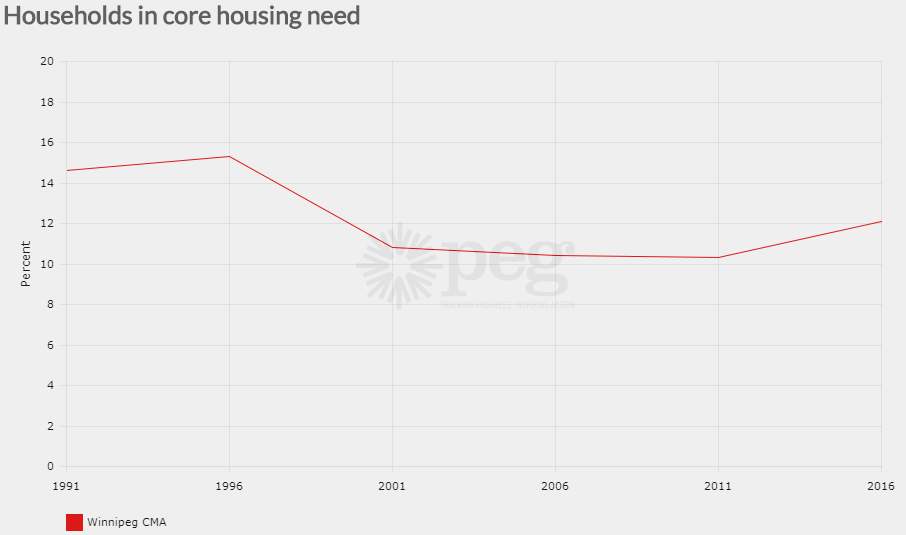
The number of Winnipeggers in "core housing need" increased to 12.1 per cent in 2016, up from 10.3 per cent in 2011. This is according to new data released by Peg. 

December 11, 2017

WINNIPEG, December 12, 2017—The number of Winnipeggers in "core housing need" increased to 12.1 per cent in 2016, up from 10.3 per cent in 2011. This is according to new data released by Peg. 

"Core housing need" measures the percentage of households within a city whose housing either: i) costs them more than 30 per cent of their income; ii) requires major repairs; or iii) is not big enough for their family size.

What else can Peg tell us about core housing need in Winnipeg?

Peg tells us…

  • Winnipeg’s core housing need increased by 17 per cent between 2011 and 2016.
  • Winnipeg has a lower rate of core housing need than the Canadian national rate (12.7 per cent), largely due to the affordability of housing. A total of 68.7 per cent of households in core housing are unaffordable, versus 76.1 per cent in Canada. If housing prices in Winnipeg were to increase to a level more in line with other major Canadian cities, the rate of households in core housing need would likely jump.
  • Compared to Canada as a whole, more Winnipeggers can afford their homes, but a higher percentage of people live in crowded homes (7.2 per cent) and in homes needing major repairs (5.2 per cent).
  • An additional 18.9 per cent of households in core housing need do not meet two or more of the standards of adequacy, suitability and affordability.
Graph showing core housing need in Winnipeg
Winnipeg’s core housing need increased by 17 per cent between 2011 and 2016.

Definitions:

  • The Canada Mortgage and Housing Corporation (CMHC) defines a household as being in core housing need if it is “unable to afford shelter that meets adequacy, suitability, and affordability norms.” The norms have been adjusted over time to reflect the housing expectations of Canadians. 
  • Affordability, one of the elements used to determine core housing need, is recognized as “a maximum of 30 per cent of the household income spent on shelter” (http://cmhc-schl.gc.ca/en/corp/faq_002.cfm).
  • A household is considered adequate if it does not require major repairs. 
  • Suitability refers to having enough bedrooms for the size and makeup of households.
  • This indicator does not include individuals that are homeless.


Why does this matter?

  • Adequate, suitable and affordable housing is a crucial basic need.
  • Individuals in core housing need are unable to meet one of these three standards, thereby placing a large stress on their resources and health (HRSDC, 2011). 
  • As housing costs often account for significant portions of household budgets, these costs could make the difference between comfortably meeting basic needs and substantial financial stress (HRSDC, 2011).


Source of the data:

-30-

Media inquiries:

For interviews on understanding the trend (or the story behind the numbers), organizations making a difference in the community, Peg, or the data, please contact:

Sumeep Bath, Media and Communications Officer

International Institute for Sustainable Development

(204) 958-7700 ext. 740 | [email protected]


Social media:

Twitter: @Pegindicators

Facebook: MyPeg

Youtube: MyPegCIS


About us:

Peg (mypeg.ca) is a community indicator system that measures the health of our community year over year—in ways that count. Peg is led by two partnering organizations—the International Institute for Sustainable Development and United Way Winnipeg.

Peg is the starting place for Winnipeg citizens, educators, policy-makers and many others to learn more about our city so we can lead change to create a better city for our children and their children. Through Peg, we can all learn how our lives, our neighbourhoods and our city are changing. Learn more at www.mypeg.ca.

Press release details

Press release

Members Call for WTO to Play a Central Role in Ending Inefficient Fossil Fuel Subsidies

A coalition of 12 World Trade Organization Members is urging the WTO today to advance the discussion on fossil fuel subsidies, asking for transparency and reform of inefficient fossil fuel subsidies that encourage wasteful consumption.

December 10, 2017

Buenos Aires, December 11, 2017—A coalition of 12 World Trade Organization (WTO) members is urging the WTO today to advance the discussion on fossil fuel subsidies, asking for transparency and reform of inefficient fossil fuel subsidies that encourage wasteful consumption.

The announcement took place during the WTO Eleventh Ministerial Conference (MC11) in Buenos Aires, where the participating economies released a Ministerial Statement calling on the WTO to “achieve ambitious and effective disciplines on inefficient fossil fuel subsidies that encourage wasteful consumption including through enhanced WTO transparency and reporting that will enable the evaluation of the trade and resource effects of fossil fuel subsidies programmes.” The Ministerial Statement also notes that any efforts to phase out fossil fuels must take into account the needs of the poor. The endorsing WTO members also encouraged the international community to follow their lead. This is the first time the WTO has accepted a Ministerial Statement specifically targeting fossil fuel subsidy reform.

“Fossil fuel subsidy reform shows how trade can help the environment. Huge and inefficient subsidies harm the environment, adding to smog and worsening climate change. Subsidies also undermine much needed investment in the renewable sector. The US$425 billion that governments spend each year subsidizing fossil fuels could be redirected to health, education or other development priorities. This is an issue that deserves the attention of all WTO Members,” said Hon David Parker, New Zealand Minister for Trade and Export Growth.

Supported by the Friends of the Fossil Fuel Subsidy Reform, the WTO members who have signed onto the statement include Chile; Costa Rica; Iceland; Liechtenstein; Mexico; the Republic of Moldova; New Zealand; Norway; Samoa; Switzerland; the Separate Customs Territory of Taiwan, Penghu, Kinmen and Matsu; and Uruguay.

“Fossil fuel subsidies—to coal mines, infrastructure and power plants; in tax breaks to oil and gas; and to consumers—are major contributors to climate change and local pollution, but their reform is a cause of serious concern on trade and competitiveness for countries. The WTO has a key role to play in building a common understanding of the scale and impacts of these subsidies and supporting its members to move forward together with reform,” said Peter Wooders, Director of the Energy Program at the International Institute for Sustainable Development (IISD). 

In 2015, research from IISD’s Global Subsidies Initiative revealed that subsidies for fossil fuels were estimated at USD 425 billion, including production and consumption subsidies. Fossil fuel subsidies amounted to 20 per cent of the value of internationally traded fuels. A phase-out of fossil fuel subsidies would contribute to the global target of keeping temperatures from rising 1.5°C above pre-industrial levels, and would also help release funds for other development priorities.


For media inquiries please contact:

Lourdes Sanchez: [email protected]

Ziona Eyob: [email protected]

Press release details

Impact area
Climate
Press release

Sustainability Think Tank Opens Doors in Toronto

We have just opened our new office in Toronto, Canada, which marks our fifth office around the world.

December 4, 2017

TORONTO – November 30, 2017 – The International Institute for Sustainable Development (IISD) has opened its new office in Toronto.

This opening marks the fifth office for the non-governmental, non-profit research organization headquartered in Winnipeg, with international offices also located in Ottawa, New York City and Geneva.

“Toronto is a hub for innovation and collaboration,” said IISD’s Resilience Director Anne Hammill, who is also head of the new Toronto office. “Being in the city brings us closer to some of our partners in government, academia, and the private sector, and places us in a great position to act as a bridge between global and local sustainable development issues.”

The team members in the new Toronto office bring with them a range of expertise and backgrounds. From protecting the endangered eastern lowland gorilla in the DR Congo, to supporting developing country governments in adapting to the impacts of climate change and strengthening governance in the mining sector, the team hopes to use these experiences to connect Toronto’s already thriving environmental community to international peers and partners.

The Toronto office currently houses team members from two of IISD’s five programs: 1) Resilience and 2) Economic Law and Policy. Team members from IISD’s Freshwater program, as well as IISD’s Experimental Lakes Area are also expected to use the office as a hub frequently.

“We hope that being based in Toronto will be an opportunity to partner with the City of Toronto and Ontario provincial government to advance sustainable development,” continued Hammill. The Resilience team also hosts the National Adaptation Plan Global Network, which supports developing country governments’ efforts to prepare for climate change impacts.

The new office is based out of Toronto’s Centre for Social Innovation (CSI), Spadina location. “Our team is very excited to be working alongside fellow environmental innovators and change makers from the CSI community,” Hammill said.  

For more information, please contact:

Sumeep Bath, Media and Communications Officer, 

[email protected]

+1 (204) 958 7700 ext. 740

Press release details

Impact area
Sustainable Economies
Press release

India reduces expenditure on energy subsidies by USD 15.4 billion: IISD, ODI and ICF India

Renewable subsidies rise but coal subsidies remain stagnant, despite increased social costs to India’s GDP driven by air pollution and health care expenses.

November 30, 2017

Renewable subsidies rise but coal subsidies remain stagnant, despite increased social costs to India’s GDP driven by air pollution and health care expenses

NEW DELHI, December 1, 2017—A new report released by the International Institute of Sustainable Development (IISD), the Overseas Development Institute (ODI) and ICF India shows a decline in India’s central government energy subsidies by over USD 15 billion between 2014 and 2016.

According to the report, the total value of energy subsidies from the central government has declined substantially between financial years (FY) 2014 and 2016, from INR 2,16,408 crore (USD 35.8 billion) to INR 1,33,841 crore (USD 20.4 billion). The report states that the decline could be because of India’s reforms to curb wasteful consumption in oil and gas subsidies as well as due to the decrease in global oil price.

“While the decline is significant, subsidies still favour fossil fuels much more than renewables. This is not well aligned with several government objectives—reducing harmful air pollution and tackling climate change through its Nationally Determined Contribution (NDC), both of which require less fossil fuel use, particularly coal, and more renewables. The government is gradually transitioning its support to favour renewables—but more could be done. With the introduction of the Good and Services Tax [GST], it isn’t clear how some fossil fuel subsidies will go up or down, and there is still a very incomplete picture of state-level subsidies. To make informed decisions, policy-makers need ongoing transparency on these issues,” said Vibhuti Garg, Associate, IISD

The report reveals that India has been steadily increasing central government subsidies on electricity transmission and distribution, while reducing subsidies on oil and gas over the last three years. Central government subsidies for electricity transmission and distribution increased from INR 40,331 crore (USD 6.7 billion) in 2014 to INR 64,896 crores (USD 9.9 billion). In 2016, transmission and distribution became the main recipient of energy subsidies in India. These sums do not include the even larger volume of state government subsidies that have been provided through the government’s UDAY program, which provided an additional INR 170,000 crore (USD 25 billion) over 2016 and 2017. The total subsidies to coal mining and coal-fired electricity have remained stable to a slight decline over the reviewed years and amounted to INR 14,979 crore (USD 2.3 billion) in 2016. Changes in tax subsidies due to the introduction of the  GST make it difficult to ascertain if coal subsidies will go up or down in 2017. Subsidies to renewables have significantly increased from INR 2,607 crore (USD 431 million) in FY2014 to INR 9,310 crore (USD 1.4 billion) in FY2016.

As a member of the G­20, India committed in 2009 to “phase out inefficient fossil fuel subsidies that encourage wasteful consumption while providing targeted support for the poorest.” Overall, the scale of support to fossil fuels (coal, oil and gas) has remained more significant than subsidies to renewables through the entire reviewed period.

“Though there have been significant positive changes in terms of a decline in India’s subsidies to oil and gas consumption, there is still very limited transparency in terms of subsidies provided to the energy sector. The scale of several subsidies could not be determined due to gaps in government reporting. More information on subsidies is critical for ensuring subsidies are aligned with wider government objectives. Reallocating the balance of government support to sustainable energy, or other priorities like health and education, may be better able to serve people’s interests,” said co-author Shelagh Whitley, Head of Programme - Climate and Energy ProgrammeODI.

Garg added: “China and Indonesia, India’s largest peers in Asia and fellow members of the G20, have both opted for self-reports and peer reviews of fossil fuel subsidies. More countries are expected to announce reviews in the coming months, and many others will be encouraged to start reporting fossil-fuel subsidies under the Sustainable Development Goals. This is a good opportunity for India to provide leadership with a voluntary self-report or a peer- review that can help to address its domestic policy-making needs with the help of the international best practices.” 

In 2016, INR 28,500 crore was collected through the Clean Environment Cess, a tax on coal whose revenues are allocated to a clean energy fund. Yet only INR 9,310 crore was utilized for clean energy development. In the same year, India incurred an expenditure of INR 14,990 crore to coal subsidies. Such subsidies have ramifications for the markets, society and the environment. As per a recent report in The Lancet medical journal, outdoor air pollution caused more than a million premature deaths in India in 2016.

—30—

See the following links for the:

For more information, contact –

Press release details

Topic
Subsidies
Impact area
Climate
Press release

Sitting International Court of Justice judges worked as arbitrators in at least 90 investor–state cases: study

At least seven current and thirteen former International Court of Justice (ICJ) judges worked as arbitrators during their tenure, an IISD study found. 

IISD researchers identified 90 investor–state dispute settlement (ISDS) cases in which sitting ICJ judges have worked–or are currently working–as arbitrators. A total of more than USD 1 million in fees were paid to ICJ judges in nine of those 90 cases. The full amount is unknown because arbitrator fees are typically not disclosed in ISDS cases.

November 26, 2017

Geneva–November 27, 2017–At least seven current and thirteen former International Court of Justice (ICJ) judges worked as arbitrators during their tenure, according to a study published Monday by the International Institute for Sustainable Development (IISD).

The Statute of the ICJ prohibits judges from engaging “in any other occupation of a professional nature.”

IISD researchers identified 90 investor–state dispute settlement (ISDS) cases in which sitting ICJ judges have worked–or are currently working–as arbitrators. The true number may be higher given that many ISDS cases are not public.

A total of more than USD 1 million in fees was paid to ICJ judges in nine of those 90 cases. The full amount is unknown because arbitrator fees are typically not disclosed in ISDS cases. The average fee paid to a three-arbitrator panel is USD 1.28 million per ISDS case, according to the OECD.

“We are not questioning the integrity of the judges who are being pulled into these other functions,” said lead author Nathalie Bernasconi-Osterwalder, Director of IISD’s Economic Law and Policy Program.

“However, we are concerned that the court’s reputation could be damaged by the fact that some judges are simultaneously working as arbitrators in multiple cases. The ICJ is the world’s most important and respected court charged with the sound administration of international justice. Its representatives need to be held to the highest standards of independence.”

ICJ judges are accepting work as arbitrators in an increasing number of ISDS cases, she noted. A third of the 90 cases identified were registered in the past five years.

The study was published days after the United Kingdom lost its seat on the world court for the first time in its 71-year history. Sitting Judge Christopher Greenwood was withdrawn as a candidate following an acrimonious series of votes at the United Nations. Sitting Judge Dalveer Bhandari of India retained the final open seat.

The study found that Greenwood worked as an arbitrator in at least nine investment arbitration cases during his tenure at the ICJ. He was paid more than USD 400,000 in fees in two of those nine cases. It did not identify any cases in which Bhandari worked as an arbitrator during his tenure.

"It is disappointing to see how the business dynamics of ISDS have been allowed to make their way into the ICJ,” said Gus Van Harten, a professor at York University’s Osgoode Hall Law School whose research focuses on international investment law.

“The ICJ is the preeminent international court, whose judges must strive to protect the court from appearances of bias tied to investment treaties,” Van Harten added. “The judges can do so easily, by avoiding paid side work as ISDS arbitrators while and after they sit on the court. When the judges take on such work, they put the reputation of the ICJ at risk."

ICJ’s 15 judges are elected by UN member states for nine-year terms.

Nearly half of the court’s current members have worked as arbitrators during their tenure. Three of those judges each worked as arbitrators in nine cases. Of those 27 cases, fees were disclosed in nine of the concluded cases and amounted to USD 1.1 million. The remaining four judges were identified as arbitrators in only one or two cases each. Several current judges also worked on annulment committees.

IISD researchers also found that sitting ICJ judges have a dominant role in investor–state arbitration: they have sat or are sitting as arbitrators in nearly 10 per cent of the 817 known investment treaty cases.

Read the full study and an annex detailing the 90 cases here: http://www.iisd.org/sites/default/files/publications/icj-judges-isds-commentary.pdf

For more information please contact Mira Oberman, senior communications manager, IISD at [email protected] or 204-958-7700 ext 728.

Press release details

Press release

IISD Welcomes Ambassador Therese Adam to its Board of Directors

IISD is pleased to welcome Ambassador (ret.) Therese Adam to its board of directors, following a unanimous vote at the board’s most recent general meeting.

November 20, 2017

WINNIPEG—November 20, 2017—The International Institute for Sustainable Development is pleased to welcome Ambassador (ret.) Therese Adam to its board of directors, following a unanimous vote at the board’s most recent general meeting.

“Switzerland is a leader in advancing sustainable development, climate action, green finance and freshwater stewardship at home and globally,” said IISD Chair Alan Young. “The IISD Board is therefore immensely honoured to welcome Ambassador Therese Adam, who has nearly 30 years of experience as a Swiss diplomat.”

During her time as head of the Global Environment Division at Swiss Development Cooperation, Ambassador Adam focused on issues such as the sustainable use of natural resources, agricultural research, prevention of natural disasters, sustainable development and the Rio Conventions. She has also headed missions to more than 40 countries in Eastern Europe and Central Asia, Africa and Latin America as Assistant Director General of Cooperation with Eastern Europe and the CIS.

Her areas of expertise include political analysis, diplomacy, conflict prevention, facilitation of peace processes and post-conflict reconstruction, the peace-security and sustainable development nexus and the UN Agenda 2030, human rights and rule of law, gender, urban safety, prevention of violent extremism and transnational organized crime.

“With IISD’s global reach and important programmatic work—such as investment, fossil fuel subsidy reform and climate refugees—coordinated from its Geneva office, IISD looks forward to benefiting from Therese’s strategic advice,” Young said.

Press release

Media Availability: With Keystone spill, questions remain about oil's impact on fresh water

Oil spills, such as the recent spill from the Keystone pipeline in South Dakota, will have an impact on the surrounding environment. Experts from IISD Experimental Lakes Area are available for media to break down what we know about the impact of oil on fresh water systems.

November 18, 2017

Oil spills, such as the recent spill from the Keystone pipeline in South Dakota, will have an impact on the surrounding environment.


Experts from IISD Experimental Lakes Area (IISD-ELA)—the world's freshwater laboratory—are available for media to break down what we know about the impact of oil on fresh water systems.
 
Groundbreaking research at IISD-ELA is currently exploring how oil behaves when it enters fresh water systems, and what the most effective clean-up methods are.

To speak with any of the experts below, please contact Sumeep Bath at [email protected] or +1 (204) 958 7700 ext. 740.

Vince Palace, Senior Scientist, IISD Experimental Lakes Area

Dr. Vince Palace is an aquatic toxicologist with over 25 years' experience working on chemical and non-chemical stressors on fresh water. He is leading one of the studies at IISD-ELA on the effects of oil on fresh water, and has led projects on the impacts of agriculture, hydroelectric power, the oil and gas industry, and mining on aquatic ecosystems.


Matthew McCandless, Executive Director, IISD Experimental Lakes AreaMatthew McCandless has over 20 years' experience in hydrology, water quality and bioprocessing—combining both policy and technical research. Matthew is the executive director of IISD Experimental Lakes Area. He directs the science and policy portfolios of the world's freshwater laboratory, and oversees its administration and operation.


Several studies are currently being pursued at the IISD-ELA to address public and regulatory concerns regarding potential environmental effects of oil spills and uncertainty regarding the best clean-up methods following a spill, especially for freshwater environments. One study, led by Drs. Jules Blais (University of Ottawa), Mark Hanson (University of Manitoba) and Diane Orihel (Queen’s University) will examine the ecological impacts of contained diluted bitumen model spills in a freshwater boreal lake. A companion study, led by Dr. Vince Palace (IISD-ELA) will compare the effectiveness of different methods for cleaning spilled oil form shorelines. Both studies are part of a large multidisciplinary program that includes participation from governments (ECCC, DFO, NRCan, OMECC, OMNRF),  regulators (NEB), academic partners (Universities of Manitoba, Ottawa, Queen’s, INRS, Calgary, Saskatchewan, Mcgill)  and industry (Canadian Association of Petroleum Producers (CAPP), Canadian Energy Pipelines Association (CEPA)). For more information, please contact Sumeep Bath at [email protected]

Press release details

Topic
Water
Impact area
Nature
Press release

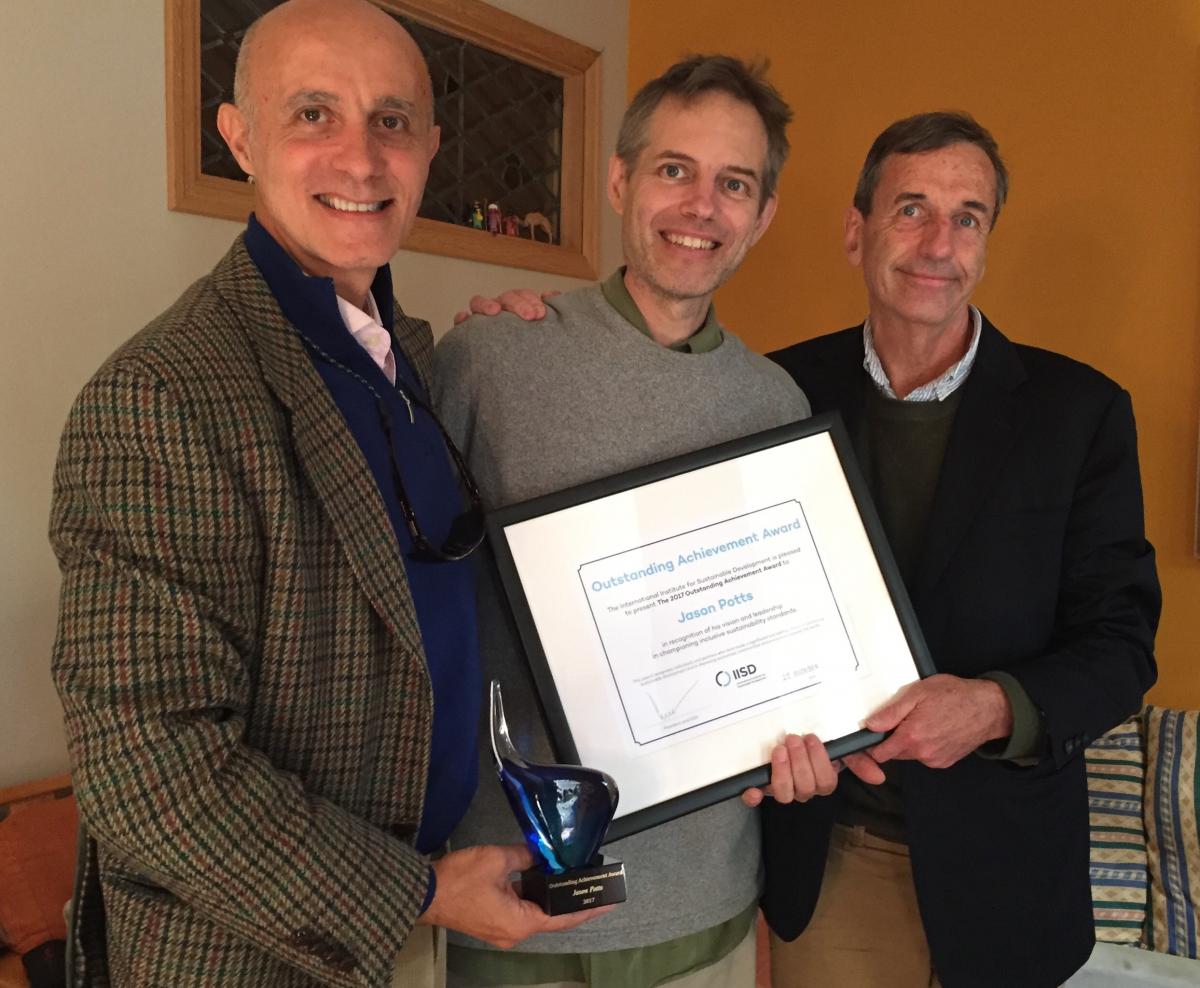
Jason Potts Presented with First IISD Outstanding Achievement Award

IISD is pleased to announce Jason Potts as the recipient of the inaugural Outstanding Achievement Award in recognition of his vision and leadership in championing inclusive sustainability standards.

October 26, 2017

IISD is pleased to announce Jason Potts as the recipient of the inaugural Outstanding Achievement Award in recognition of his vision and leadership in championing inclusive sustainability standards.

“At this critical moment in the world’s history, IISD recognizes the value of creative, smart and visionary leadership,” said Scott Vaughan, President-CEO of IISD. “This award shows our appreciation for the hard work and dedication of so many individuals working to advance sustainability solutions.”

Daniele Giovannucci, co-founder, COSA (left) and Scott Vaughan, President-CEO, IISD (right) present Jason Potts (centre) with IISD's inaugural Outstanding Achievement Award for his work on sustainability standards. 

Throughout his career, Jason has dedicated himself to forging new paths of sustainability and justice to advance communities and protect nature around the globe. At IISD, Jason led the State of Sustainability Initiative (SSI), which tracks and issues regular reports on the characteristics, performance and market trends of sustainability initiatives internationally.

His innovative leadership has resulted in globally respected entities such as the Committee on Sustainability Assessment (COSA), the Finance Alliance for Sustainable Trade (FAST) and the Sustainable Commodity Assistance Network (SCAN), all of which work to champion and monitor sustainable trade.

Jason has common and civil law degrees from McGill University, is an Ashoka Fellow and acts as an advisor to a host of multistakeholder and multilateral initiatives.

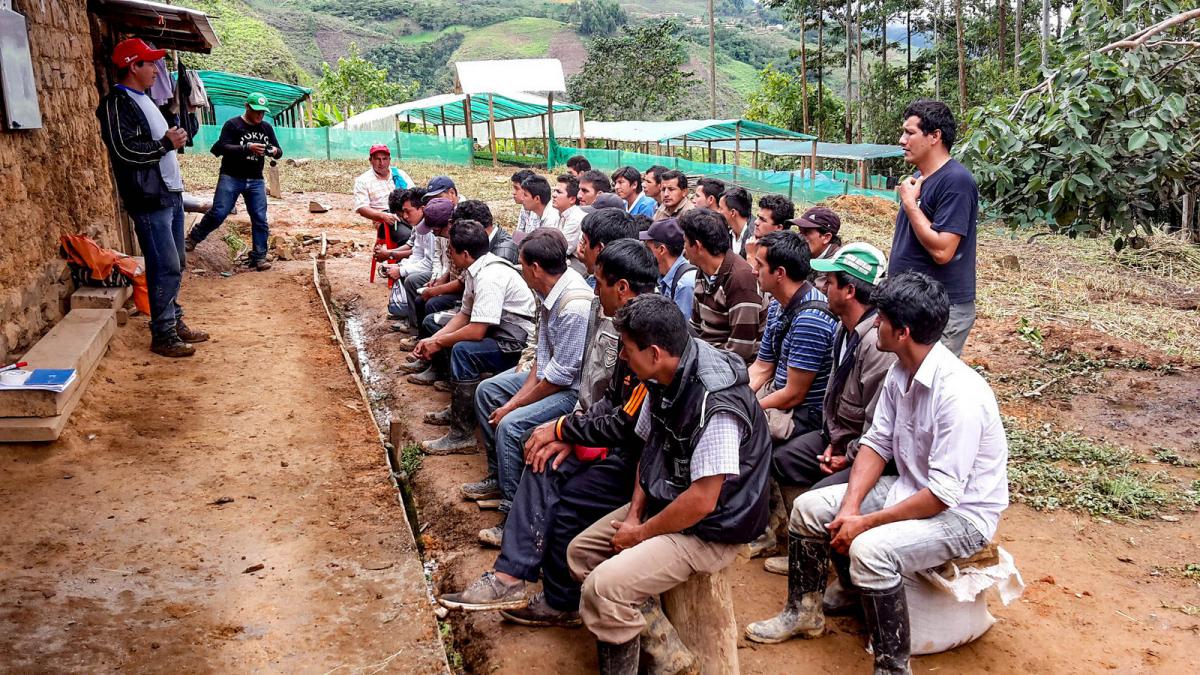
Photo and copyright: Sol y Cafe, Peru - a partner of IM Fair Trade
Jason Potts is being recognized for his innovative leadership on sustainability standards, which impact farmers, producers and supply chains.

In addition to his highly impressive list of achievements, Jason has always proven himself to be a gracious and generous colleague to all at IISD.

“Jason truly embodies sustainability in everything he does, inspiring everyone to endeavour to a sustainable future,” said Vivek Voora, an associate of IISD who has worked with Jason for years on SSI. “His uncanny ability to remain thoughtful no matter what the circumstance, along with his insightful and delightful personality, are some of the many qualities enabling him to coalesce people together to address sustainable development challenges.”

“It is a privilege to work with Jason,” says Nathalie Bernasconi-Osterwalder, Director of IISD’s Economic Law and Policy Program. “His tireless search for excellence and precision, and his ability to distill the essence of complex processes and to work towards a more sustainable world are incredibly inspiring.”

The Outstanding Achievement Award is issued annually to recognize individuals and partners who have made a significant and lasting impact in advancing sustainable development and in improving economies, communities, ecosystems and lives.

Congratulations, Jason!

Press release details