Insight

The True Cost of Coal and Renewables in Indonesia

Indonesia is facing an energy crunch as demand for electricity rises across the country. The country is one of the world’s largest coal producers, and is developing plans for an additional 35 gigawatts (GW) of new coal-fired power stations. Proponents of the development claim that coal is the cheapest source of energy available. Is this really true? 

June 12, 2017

Indonesia is facing an energy crunch as demand for electricity rises across the country. The country is one of the world’s largest coal producers, and is developing plans for an additional 35 gigawatts (GW) of new coal-fired power stations. Proponents of the development claim that coal is the cheapest source of energy available.

Is this really true?

IISD’s Global Subsidies Initiative (GSI) analyzed the costs of coal compared to renewable energy and found that coal use actually brings with it additional costs that are not traditionally taken into account:

  • First, coal producers often receive subsidies. The GSI identified 15 subsidies worth at least USD 644 million in 2015.
  • Second, air pollution due to coal use is estimated to cause more than 6,000 deaths annually.
  • Finally, greenhouse gas emissions from coal threaten to undermine targets under the Paris Agreement on Climate Change and contribute to dangerous levels of global warming. If we monetize these impacts, the total cost of coal is estimated to be around USD 11 cents per kilowatt hour (kWh), more than double the cost of competing renewable energy based on recent global renewable auction results.

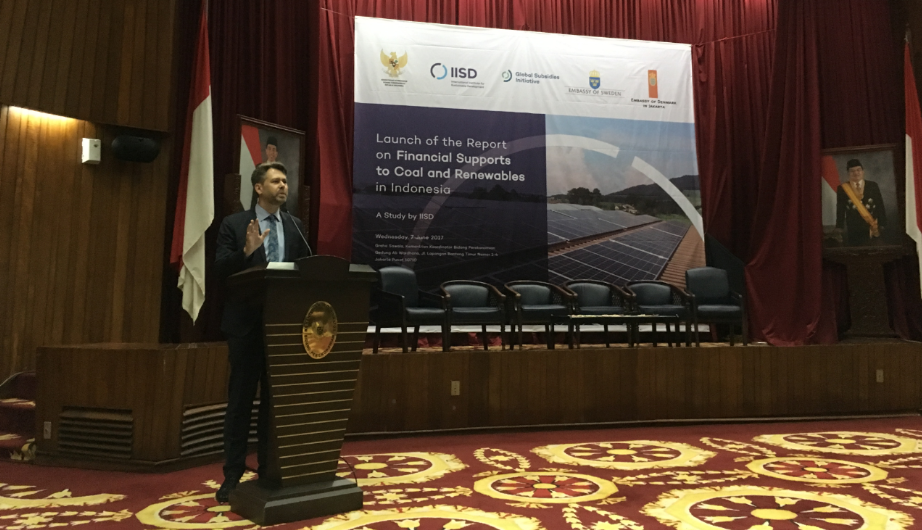
The findings were recently published in a report launched in Jakarta with the collaboration of the Coordinating Ministry for Economic Affairs and the support of the Danish Embassy and the Swedish Embassy in Jakarta.

Speaking at that event, the Ambassador of Denmark to Indonesia, Casper Klynge, said:

Indonesia is facing difficult challenges ahead in achieving targets in the electricity sector, including boosting electricity generation and distribution. Costs of electricity generation from different sources, including costs of externalities, should be fully accounted for and factored into economic models in order to arrive at the true cost of electricity. Denmark stands ready to share its lessons learned in the electricity sector with Indonesia and to assist Indonesia in achieving a more sustainable energy future without jeopardising energy security.

The findings are supported by the recent falls in solar PV prices that have led India to cancel new coal capacity, in addition to rising concern about the impacts of coal use on air pollution. For example, in China this concern led to a moratorium on new coal plants in 28 out of 31 provinces. With the tide turning against coal across the world, there is real concern that investments made today could soon be impossible to operate on environmental, public health and cost grounds, leaving a legacy of stranded power stations as the last monuments to the age of coal.

The evidence is starting to mount that the removal of subsidies to coal and a general shift to a renewable energy-focused energy policy would reduce risk and create a more sustainable future across Indonesia. 

Insight details

Topic
Subsidies
Region
Indonesia
Insight

Listening to Local Voices: What makes adaptation unique in the agriculture sector?

Achieving a more resilient agricultural sector is fundamental not only for a low-carbon future, but also to realize developmental goals related to the eradication of poverty and hunger, while learning how to better cope, adapt and transform in the face of climate change impacts.

June 2, 2017

We reached the upper part of the mountain on a cloudy afternoon, just as the rain had started to recede. Salvador Diaz, a Colombian coffee producer with a small plot of land, greeted us with a smile and a strong handshake. He had agreed to meet us to discuss the impacts of climate change and variability in the region, and to shed some light on the way in which small agricultural producers are adapting to changing conditions and growing uncertainty. His testimony, a local narrative of change, was crucial to understanding the complex environment within which adaptation takes place.

Very soon into the conversation, it became evident that the impacts of climate change and variability had had a deep impact on Mr. Diaz’s livelihood, and on the way in which he perceived his own vulnerability. As he explained:

“The weather is what influences our livelihood the most…70 per cent of this municipality depends on coffee, so climatic variations affect a lot of the coffee varieties, the occurrence of plagues and diseases…of every crop in general. The climate...has a direct impact. And it has changed. In the past, the crops were so good because we had 6 months of summer and 6 months of winter…Older people like me are witness of that.…Particularly in the last four years, the weather has been more disorganized…crazy.”

He talked about increasingly unpredictable “summer” and “winter” periods, and of “extreme conditions” during those cycles, which have direct effects on the farmer’s vulnerability:

“This area has been affected by climatic variability, of course…it's a mountainous area, so there are a lot of landslides in all the farms; even houses have been destroyed due to the winter.…There are several farms that have been isolated by the landslides for more than two months.…There is a caserio[1] that can not be reached by car or by motorbike…so the people have to go there walking or by horse”.

Feeling vulnerable and at risk in the face of climatic manifestations plays a role in shaping local behaviour, and can be key in the decision to undertake (or not) adaptive actions.

But are these perceptions, along with the urgency of the need to adapt to climate change, unique to the agricultural sector? The answer is: not necessarily. However, there are important factors that, when considered together, distinguish adaptive approaches in this sector.  

What characterizes adaptation processes in the agricultural sector? 

  • A close adaptation-mitigation connection: While the sector is a major source of greenhouse gas emissions, its performance is crucial for ensuring food security and nutrition, and implementing innovative solutions to meet the needs of a growing population. Adaptation is closely linked to mitigation, and involves the analysis of co-benefits and collateral effects of adaptive actions.
  • The need for broad multisectoral articulation: Agricultural adaptation requires the involvement of multiple sectors (e.g., forestry, health, water) in sectoral planning processes, along with the integration of multiple stakeholders involved in agricultural value chains (from input providers and producers, to markets).
  • The importance of considering diverse types of producers: Agricultural adaptive approaches involve a distinct level of “granularity” in regards to the scale of implementation, as they involve the differential needs and priorities of diverse types of agricultural producers—in particular those of small-scale farmers that are at the forefront of climate change impacts.
  • Balancing risk and timescales: Agricultural adaptation planning requires a clear understanding of short-, medium- and long-term risks, and a balance between responding to the needs of today (e.g., subsistence, in the case of small producers) and those of tomorrow (e.g., food security). The Food and Agriculture Organization (FAO) estimates that food production will need to be 60 per cent higher in 2050 than it was in 2006 to meet the demand of a larger population.
  • The premise that “context matters”: Adaptive efforts in agriculture need to be firmly anchored in the context-specific needs of local livelihood systems, which differ between regions, countries and value chains.
  • Building upon an ecosystem-based perspective: In the agricultural sector, adaptive actions need to be planned and implemented within the broader socioecological context, considering ecosystem services, local biodiversity and natural resource management.
  • Combining new and traditional knowledge: Agricultural producers possess a wealth of Indigenous and traditional knowledge that need to be considered in the design of adaptive pathways, along with emerging scientific knowledge and technologies. Adaptation tools and methodologies should acknowledge and integrate both. 

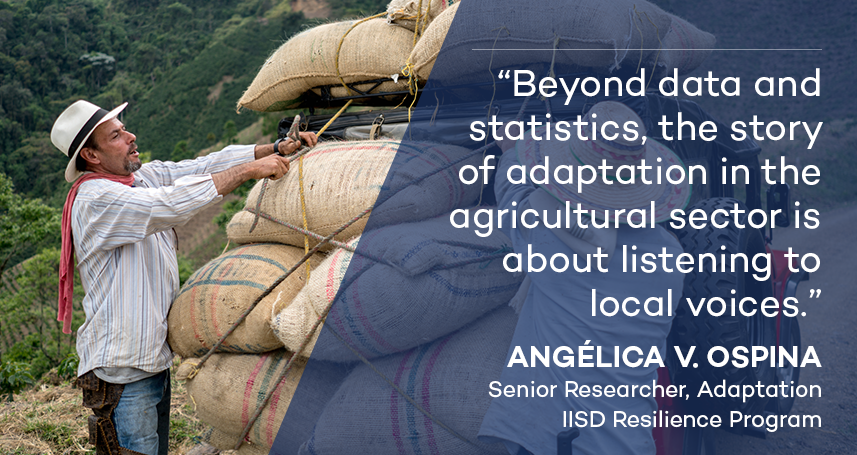
According to the FAO, climate-related disasters disproportionately affect food-insecure, poor people—over 75 per cent of whom derive their livelihoods from agriculture. But beyond data and statistics, the story of adaptation in the agricultural sector is about listening to local voices.

In the agricultural sector, adaptation has a tangible “human” component: it affects the individual producer, his or her family, and the livelihoods of millions of men and women around the globe. It involves both short- and long-term changes that need to be undertaken by the majority of the world’s rural population, precisely the most vulnerable to the impacts of climate change.

Achieving a more resilient agricultural sector is fundamental not only for a low-carbon future, but also to realize developmental goals related to the eradication of poverty and hunger, while learning how to better cope, adapt and transform in the face of climate change impacts. 


[1] Caserio is a Spanish term that refers to small groups of houses located in rural areas, and constitute the smallest form of collective settlements. 

Insight details

Insight

G20 must support good jobs in the low carbon transition

Donald Trump’s unrealistic promise to put coal miners back to work shows why we need a positive strategy to create green jobs.

May 23, 2017

Donald Trump won the US presidency railing against “job-killing regulation” and promising to put coal miners back to work.

Delivering against this promise is proving difficult: US high-cost coal is crowded out not just by increasingly low-cost renewables, but also by shale gas and lower-cost coal from other countries. And as a way to bring down the costs, automation takes away even more jobs in mining.

But in US coal counties, Trump’s unrealistic promise beat Hillary Clinton’s $30 billion plan for transition of coal communities. Because the magnetism of mirage jobs is so strong, as is the fear of failed politicians’ promises, having a good transition plan may not be enough. Those affected require real world examples of how peer communities are going through the same challenges, both in the US and abroad.

That is the problem taken on in a report launched by the Organisation for Economic Cooperation and Development (OECD) today. It urges the G20 to make sure the transition to a low carbon economy is a “just transition“, creating decent, green jobs and smooths the impact on vulnerable workers and communities.

If we are serious about holding global warming well below 2C as the Paris Agreement states, all sectors, industries and jobs will have to change. At all levels, a just transition is essential to ensure that people see a future for themselves in climate action, and that no one is left behind.

The policies needed to help workers in moving into new jobs vary depending on national and local circumstances. But there is one profound reason for the G20 to embrace a just transition at an international level too: countries need broader social support for climate action, and knowing how others are managing to bring working people and communities on board through just transition approaches can change the game.

In contrast to the US, the world’s largest coal producer, China, has seen the writing on the wall. In 2016, its third consecutive year of declining coal production and use, China set up a 100 billion yuan ($15 billion) fund to facilitate the reallocation of jobs in the coal and steel sectors.

Germany, the convener of the G20 this year, is closing the last remaining hard coal mines by 2018, following decades of managed decline efforts.

The sunsetting of an industry is never easy, especially for fossil energy production that is highly concentrated and often provides the basis of employment and revenue for entire towns and cities. But there is a critical mass of experience – from Spain’s Asturias to UK’s South Wales – that can help implement future transitions in a smoother and more predictable way.

This existing knowledge can give the G20 a head start on the just transition agenda. In 2015, the International Labour Organisation (ILO), a UN body, published “Guidelines for a just transition towards environmentally sustainable economies and societies for all”. These multi-sector guidelines rely on the four pillars of the Decent Work Agenda – social dialogue, social protection, rights at work and employment – and go into quite specific recommendations including on sectoral and industrial policy, skills and support for job seekers.

The OECD report also cites dedicated funds to cover the costs of early retirement and retraining of workers as well as other complementary policies. Several jurisdictions have successfully implemented the “polluter pays” principle to raise revenue for such funds. In Kentucky, which is now at the centre of Trump’s effort to rekindle coal mining, such a mechanism was introduced back in 1972 in the form of a coal severance tax. This tax on coal production (later extended to coal processing) is used to support the diversification away from coal. Similarly, in Canada’s Alberta, the government has committed to fund a transition for coal miners through the carbon tax.

The G20 is only one of the global governance forums that needs addressing the just transition agenda. Others include UN’s ILO, Sustainable Development Goals and climate negotiations as well as OECD, OPEC and regional intergovernmental forums. But it is precisely a G20 topline commitment that can lift just transition to the level than will help enhance the ambition for climate action.

Ivetta Gerasimchuk is sustainable energy supplies lead at the International Institute for Sustainable Development

Anabella Rosemberg is environment and occupational health and safety officer at the International Trade Union Confederation

Reposted with permission from Climate Home.

Insight details

Topic
Subsidies
Insight

Extracting the Voluntary Sustainability Standards Opportunity for Biodiversity Protection: The need for a dedicated policy response

Voluntary sustainability standards have a strong potential for supporting efforts to protect biological diversity.

May 19, 2017

Voluntary sustainability standards have a strong potential for supporting efforts to protect biological diversity. But policy makers will have to expand their role beyond mere supporters and users of such initiatives to that of watchdogs and regulators if this potential is to be realized.

As the world marks the International Day for Biological Diversity on May 22, it is well worth considering the potential contribution of voluntary sustainability standards (VSS).

Agriculture is responsible for 70 per cent of projected losses in terrestrial biodiversity due to widespread land conversion, pollution and soil degradation. Thankfully, the market for certified agricultural products is booming as major retailers and manufacturers adopt voluntary sustainability standards.

Agricultural production compliant with these standards has grown at an average of 35 per cent per annum between 2008 and 2014, with standard compliance across four of the eight key commodities boasting standard compliance across at least 10 per cent of global production.

In its forthcoming review, Standards and Biodiversity—which covers 15 major VSS operating in the agriculture sector—IISD confirms the substantive relevance of sustainability standards to biodiversity protection. Virtually all of the major agriculture standards place strong emphasis on habitat protection, with many prohibiting production on recently converted land.

The Convention on Biological Diversity has recognized this potential. In its most recent Conference of the Parties, delegates to agreed to place an emphasis on the mainstreaming of biodiversity protection. Within Decision XIII/3, paragraph 17 (h) in particular calls on the Parties to, “make use of voluntary sustainability standards and/or of voluntary certification schemes, and promote their further development.” 

But the potential of voluntary standards to promote biodiversity friendly practices needs to be weighed against their corresponding potential to rubber stamp unsustainable practices through either weak standards or weak conformity assessment processes. In its 2014 Review, the State of Sustainability Initiatives documented a downward trend in the rigor associated with voluntary standards over the past several decades as such initiatives became increasingly tailored to serve mainstream markets. On the other hand, the effectiveness of standards can be severely limited by leakage when sufficient market demand for unsustainably produced products exists to continue the use of such practices at current or even growing rates.

One of the major risks associated with voluntary standards is the ability of the “imperfect” market to dictate “imperfect” outcomes—even across markets for voluntary standards initiatives. The externalization of social and environmental costs in conventional markets is all too easily translated into the externalization of such costs across so called “sustainable markets” as well—often forcing standards initiatives and their proponents to decide between market share and system rigor. 

Economists have long recognized the central importance of policy intervention in overcoming market imperfections.  Ensuring that voluntary standards do not become subject to such forces themselves will almost certainly require closer engagement, management and strategic investment in the voluntary sector by policy makers—not as blind supporters, but as the arbiters of meaningful market claims and appropriate fiscal incentives for producers or supply chains that can guarantee desired performance outcomes. 

The uncertainties associated with voluntary standards provide plenty of room for skepticism regarding the appropriateness of supporting such initiatives with public policy. But they also provide one of the greatest arguments for increased attention and investment by policy makers. 

For more information, please read our policy brief Voluntary Sustainability Standards and Biodiversity: Understanding the potential of agricultural standards for biodiversity protection

Jason Potts manages the Sustainable Markets and Responsible Trade (SMART) Program at the International Institute for Sustainable Development.

Insight

Scaling Up Green Energy Finance Swapping Fossil Fuel Subsidies for Sustainable Energy Solutions

This video by IISD Reporting Services provides an overview of the Bonn side event hosted by GSI, "Scaling Up Green Energy Finance: Swapping Fossil Fuel Subsidies for Sustainable Energy Solutions.". The event focused on how governments can scale up investments in green energy by “making the switch” from fossil fuel subsidies to sustainable energy subsidies.

May 16, 2017

On Thursday, 11 May 2017, the event, ‘Scaling Up Green Energy Finance: Swapping Fossil Fuel Subsidies for Sustainable Energy Solutions, was presented by the IISD Global Subsidies Initiative (GSI), the Government of Denmark, the Nordic Council of Ministers (NCM) and the Friends of Fossil Fuel Subsidy Reform (FFFSR). in Bonn.

This video by IISD Reporting Services provides an overview of the event. The event focused on how governments can scale up investments in green energy by “making the switch” from fossil fuel subsidies to sustainable energy subsidies.

Insight details

Topic
Subsidies
Insight

Microplastics: What are they and what can we do about them?

What exactly are microplastics? What are they doing to our water? And why should you be worried? We sat down with IISD Experimental Lakes Area research fellow Dr. Michael Rennie, who has recently worked on the impact of microplastics on fresh water, and he gave us the lowdown on them.

May 10, 2017

You’ve seen the headlines. In fact, it seems like everyday we are exposed to articles about how plastic pollution is affecting our environment and water supplies—microplastics in particular. Recently, Canada and the United States took action to remove microplastics from cosmetic products and scrubs.

But what exactly are microplastics? What are they doing to our water? And why should you be worried? We sat down with our research fellow Dr. Michael Rennie, who has recently worked on the impact of microplastics on fresh water, and he gave us the lowdown on them.

What are microplastics?

Basically, microplastics are small particles of plastic that are smaller than 5 mm.

Where do they come from?

Microplastics come from a variety of sources. While much hype has been made about the presence of microplastics in facial scrubs and cosmetic products (take a look at your scrubs or toothpaste at home—if they list polyethylene in the ingredients, those are microplastics), these sources actually make up a relatively small quantity in most regions.

It is estimated that up to 75 per cent of the microplastics found in the ocean are from the breakdown of larger material (bottles, plastic bags, fishing gear, etc.). For anyone who has participated in a riverbank cleanup this spring, this should not be terribly surprising. More recently, another major culprit of microplastic fibers is turning out to be synthetic clothing (like your favourite cozy solar fleece that you might be wearing right now).

Image removed.

While wastewater treatment plants can effectively remove a large quantity of microplastics moving through them (up to 98 per cent), a 2016 study determined that the average wastewater treatment plant was still releasing 4 million particles per day (and as many as 65 million) despite these high removal rates.

Another recent study also demonstrated that microplastic particles are airborne and settle in large quantities in urban settings.

How much of this stuff is out there?

In 2014, it was estimated that the ocean had approximately 270,000 tonnes of plastic floating on the surface, and we don’t really know how much has settled out. However, somewhere between 5 million and 13 million tonnes is added annually from coastal cities—a shocking number.

In a recent study on Lake Winnipeg, researchers at Lakehead University, the University of Manitoba and IISD Experimental Lakes Area found densities of around 1 microplastic particle for every square metre of water, which was comparable to how much was found previously in Lake Erie.

Why should we care?

For starters, plastic is a manufactured product—it does not occur naturally, so anywhere we find it in nature is directly because of us. In the case of microplastics, there are few applications where one can say it was intentionally added to ecosystems, so this represents the waste product of our current lifestyle, which is heavily reliant on plastic products.

Secondly, there is evidence that these particles can act as vectors of contaminants and carry these harmful substances from the water column and into the organisms that consume them, such as fish.

Subscribe | Get IISD blogs delivered to your inbox

There is also increasing evidence that fish do ingest these microplastics. While this contaminant transfer has been demonstrated in the lab, there is still a lot of work to be done to figure out what the effects are on fish in the wild, as they are exposed to the levels of plastics that we observe currently.

What can we do about it?

We have seen some good moves in the right direction, but there is still a long way to go. Many governments have legislation in place to ban microplastics from personal care products in the very near future, but, as we have learned, this only addresses a small part of the problem. Outdoor clothing manufacturers have been proactive, and are actually funding research into the rates of shedding of their clothing and evaluating new manufacturing methods that can reduce these losses.

Most of all, people can have a positive impact on plastic pollution through their lifestyle choices. You should avoid purchasing products with excess packaging; choose glass or metal drink containers over plastic; avoid disposable plastic bags and bring reusable bags with you; choose wool over synthetic garments. And to help with the plastic that you don’t purchase, why not sign up to participate in a shoreline cleanup near you?

Image removed.

Insight details

Topic
Water
Region
Canada
Insight

Connecting the Dots: How ecosystem services support adaptation to climate change

What does Ecosystem-based Adaptation (EbA) look like in practice? This blog looks at lessons from recent work in Nepal.

April 24, 2017

Over the last few months, we have been giving a lot of thought to the role that ecosystems play in adaptation to climate change. 

We know that healthy ecosystems are critical for sustaining livelihoods and building adaptive capacity, but what does Ecosystem-based Adaptation (EbA) look like in practice? And how can we equip people working in the fields of adaptation, conservation and development with the information and guidance they need to design, implement and monitor effective EbA options?

IISD is exploring these questions in collaboration with IUCN through the development of an EbA planning tool.  We understand EbA to mean restoring, conserving and managing ecosystems in ways that increase people’s adaptive capacity while also building the resilience of the ecosystems themselves.

The new tool we are developing aims to provide practitioners with a systematic process to identify and prioritize EbA options based on a context-specific analysis of ecosystems, livelihoods and climate change.

EbA in Action: Testing the tool in Nepal

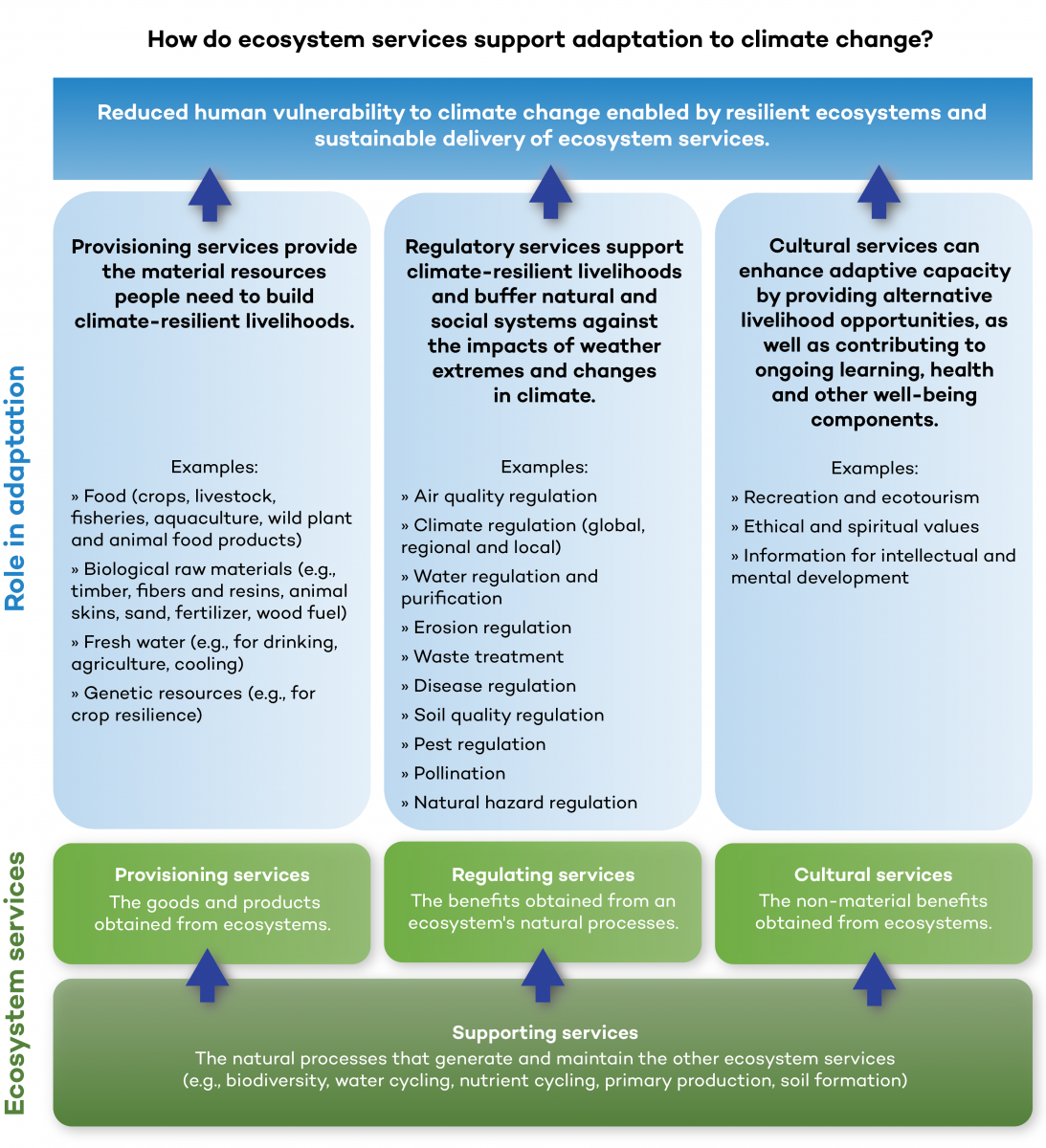
Recently, we had the opportunity to test our early thinking on the tool in the context of the Ecosystem-based Adaptation (EbA) in Mountain Ecosystems (EbA flagship) Project, recently implemented by IUCN in the Panchase Protected Forest Area of Western Nepal. Below is a working framework outlining the critical role that ecosystems play in climate change adaptation. It describes how each of the major categories of ecosystem services identified by the Millennium Ecosystem Assessment can support people in building climate-resilient livelihoods and increasing their adaptive capacity.  

“The EbA planning tool is very effective as it takes a step-by-step approach. During the process we were able to understand and visualize what EbA is and why it is important for people, their livelihoods and nature. Particularly, the process of identifying and prioritizing EbA options is very useful, considering multiple criteria and multiple indicators, looking at livelihoods, ecosystems, opportunities, barriers and other factors in one process.” – Anu Adhikari, IUCN Nepal 

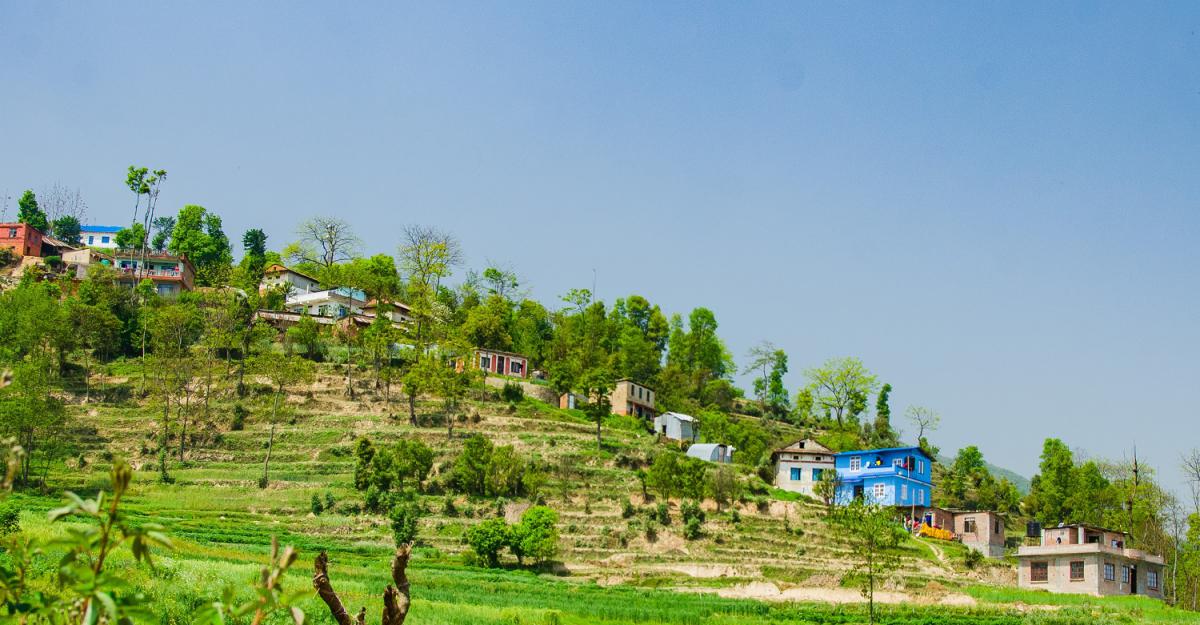
In Nepal, more than three-quarters of the workforce engage in agriculture and therefore depend on climate-sensitive natural resources for their livelihoods. This means that climate change impacts on ecosystems—and the consequences for people and their livelihoods—are a fundamental consideration when thinking about climate change adaptation strategies. Considering the interlinkages means that ecosystem services are a good place to start when thinking about options for adaptation. In analyzing livelihoods, ecosystems and climate change in the Panchase region specifically, we found many examples that support this working framework:

  • Provisioning services provide the raw materials for livelihoods in rural areas. In the Panchase region these include fuelwood, non-timber forest products, medicinal and aromatic plants, fodder, flowering plants and freshwater sources—all of which support essential livelihood activities. Our analysis found that conservation and sustainable management of these resources are critical to enable people to build climate-resilient livelihoods and to ensure the health and resilience of the local ecosystems over the longer term.
  • Regulating services determine the quality and availability of provisioning services through natural processes. In the Panchase region, regulating services are provided by the protected and community forest, wetlands, lakes and ponds, rivers and cropland. Effective functioning of these regulating processes, despite climate change, is critical for the sustained supply of provisioning services and for buffering against climate risks. In Panchase, for example, a healthy, diverse forest plays a key role in stabilizing slopes and reducing erosion, which protects communities and their livelihoods from hazards such as storms and floods.  Conserving the forest therefore protects the supply of the services that it provides to enable livelihoods adaptation, while also reducing risks associated with climate hazards.
  • Cultural ecosystem services have a less direct link to adaptation; however, they are important to livelihoods as a considerable economic resource and often have very specific and important value to local people. In the Panchase region, ecotourism and homestays (renting rooms in one’s home to travellers) are helping local people diversify their livelihoods by providing a new source of income that is less dependent on climate-sensitive resources than, for example, agriculture.
  • Supporting services, such as water cycling or soil formation, maintain the other services by providing the building blocks that underpin all other ecosystem services and determine the health and functionality of ecosystems. As demonstrated by the Panchase example, only healthy and well-functioning ecosystems can provide adaptation services, support livelihoods and enhance natural resilience to the adverse impacts of climate change. Supporting services are fundamental to ecosystem health and therefore must be sustained for EbA to occur.     

Piloting the EbA planning tool with the IUCN Nepal team allowed us great insights about the practice of EbA and the challenges faced by practitioners in planning and implementing adaptation projects with an ecosystem focus, such as prioritizing effective EbA options and designing long-term monitoring and evaluation frameworks. 

We are now applying what we learned to further refine and develop the EbA planning tool before our next pilot test.  Working with those who will be using the tool is critical to ensure that it is as practical and useful as it can be. IISD is grateful to IUCN for the opportunity, and we look forward to our continued collaboration.

The project is funded by EbA South, a GEF-funded project implemented by UNEP and executed by the National Development and Reform Commission of China (NDRC) through the Institute of Geographic Sciences and Natural Resources Research, Chinese Academy of Sciences. 

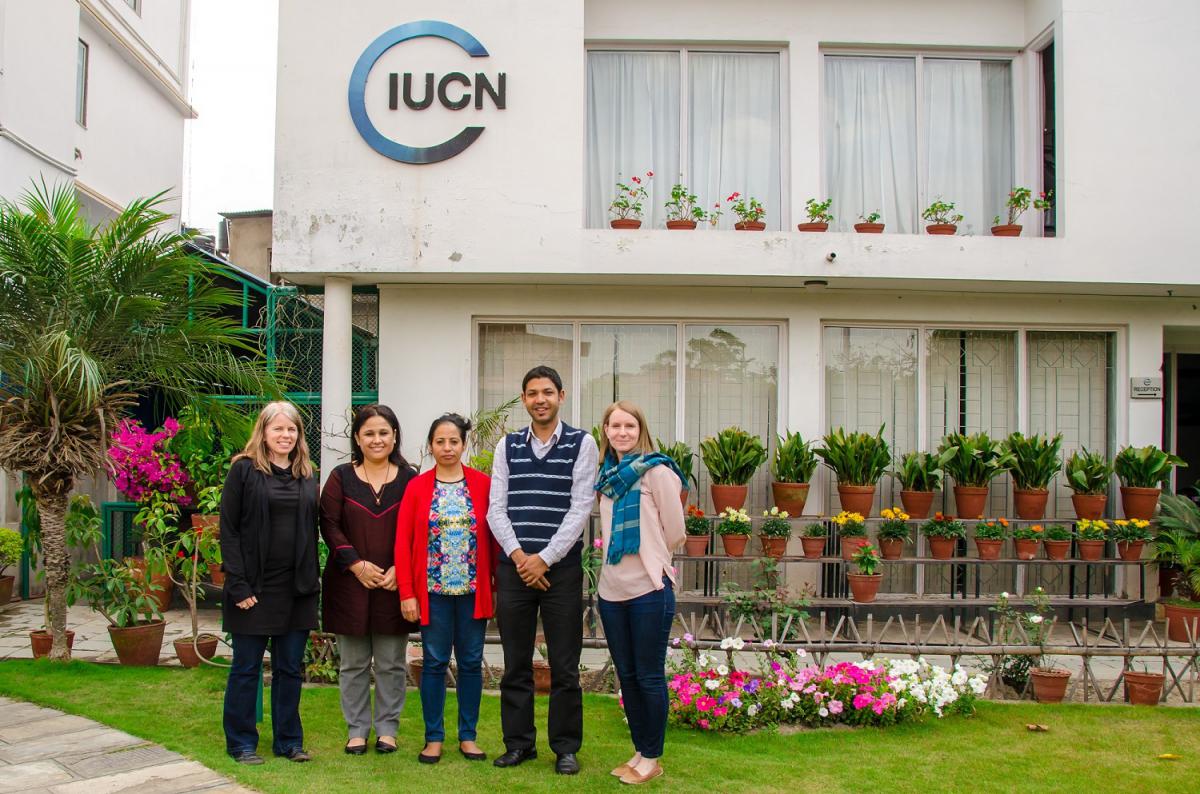
Photos above: Anika Terton

Pictured (left to right): Angie Dazé, Racchya Shah, Anu Adhikari, Amit Poudyal, Anika Terton


Insight

UK is in no position to lecture Saudis on oil dependence

PM Theresa May has offered to help wean Saudi Arabia off oil, but her government’s subsidies to North Sea producers are a poor model for the Middle East petrostate.

April 20, 2017

UK prime minister Theresa May visited Riyadh in early April with the intent of “deepening a true strategic partnership” and “helping to wean Saudi Arabia off oil dependency”.

That’s rich. In the North Sea oil fields, Britain is propping up a dying industry. Multi-billion tax breaks, supplemented in the 2017 budget, are given at the expense of diversifying the economy towards lower-carbon energy sources. In 2016, the UK’s oil and gas industry not only failed to bring in any tax revenue, but generated a net cost of £396 million to the government.1

May could learn a thing or two from the Saudis about the strategy behind sunsetting the petroleum sector.

As long ago as the 1970s Sheikh Zaki Yamani, Saudi Arabia’s oil minister and one of the OPEC masterminds said: “The stone age did not end for lack of stones, and the oil age will end long before the world runs out of oil.” Saudi Arabia’s leadership well understands the fundamental shift in energy markets due the plummeting cost of renewables and other innovations.

The consequence is the “green paradox”, a phenomenon described by the German economist Hans-Werner Sinn. An anticipated transition away from fossil fuels provokes their producers to accelerate the extraction of oil, gas and coal. This is exactly what happened over 2015-2016 when Saudi Arabia, with its world’s lowest cost production, chose to flood the market with cheap oil in competition with Iran and US shale gas over market share.

In doing so, Saudi Arabia drained its tax revenues – and those of all other oil-producing nations from Iran to the UK. This led to an unprecedented budget deficit for the country, estimated at 12% of GDP in 2017.

Saudi Arabia took important steps and used the budget deficit as a context for phasing out fossil fuel consumer subsidies, estimated at $71.3 billion in 2014. For decades, Saudi Arabia’s consumer prices for energy were among the lowest in the world, distorting the level playing field for renewables and making them uncompetitive.

The new fiscal pressure created the sense of urgency for this much-needed change that would otherwise be stifled by the political economy. In 2015 Saudi Arabia raised retail gasoline prices by about 50% and is considering further price increases in 2017.

Saudi Arabian leaders more and more frequently speak about “leaving oil behind” and diversifying into the new economic activities including new energy technologies, particularly solar. In 2016 Saudi Arabia launched its Vision 2030 and the National Transformation Programme that deserves praise for a focus on renewables.

Prime Minister May’s programme of meetings with King Salman and other counterparts in Riyadh included a pitch for Britain’s strategic role in advising Saudi Arabia on implementation of the Vision 2030 and “tax and privatisation standards” for the initial public offering (IPO) of Saudi Aramco, the world’s largest petroleum company.

It is not difficult to imagine what kind of tax advice can come from the UK experts: more tax breaks. Indeed, at the end of March 2017 Saudi Arabia cut the corporate income tax rate from 85% to 50% – which is estimated to have boosted Aramco’s capitalisation by roughly $1 trillion.

Whereas UK tax cuts have come in the context of falling revenues to government from oil and gas, the Saudi cut will allow the government to raise much more money (at least in the near term) from the IPO.

Unfortunately, both types of subsidies to fossil fuel production unlock “zombie energy”, encouraging oil consumption worldwide and driving more emissions. A recent study by the International Institute for Sustainable Development and the Overseas Development Institute estimated that a complete removal of subsidies to fossil fuel production globally would reduce the world’s emissions by 37 Gt of CO2 over 2017-2050, equivalent to global aviation emissions over the same period.

It is high time the UK stops trying to export its “expertise” on subsidising oil and gas production around the globe and rethinks how to use public resources for the low carbon future. The question is not if the oil age will end, but when, and how disruptive this end can be.

A much more useful avenue for UK’s cooperation with Saudi Arabia and other petroleum-producing nations would be to agree on a plurilateral plan to manage the fossil fuel industry’s decline in a just, transparent and predictable way. The first step should be elimination of tax breaks for the petroleum industry and other fossil fuel subsidies.

Ivetta Gerasimchuk and Peter Wooders are energy experts at the International Institute for Sustainable Development and Shelagh Whitley leads the climate and energy programme at Overseas Development Institute. Reposted with permission from Climate Home.

Insight details

Insight

A Low-Hanging Fruit for Financing and Implementing SDGs: End Fossil Fuel Subsidies

Phase-out and reallocation of fossil fuel subsidies (FFS) is a low-hanging fruit for financing and implementing SDGs.

April 13, 2017

Phase-out and reallocation of fossil fuel subsidies (FFS) is a low-hanging fruit for financing and implementing SDGs. 

First, it has a diverse support base of both sustainable development advocates and “government downsizers.” Second, instead of requiring financing like many sustainable development policies, it could free up hundreds of billions of dollars for implementing multiple SDGs.

The SDGs call to “rationalize inefficient fossil-fuel subsidies that encourage wasteful consumption by removing market distortions” (target 12.c). This formula reproduces similar commitments within the G7, G20, Asia-Pacific Economic Cooperation (APEC) and Fossil-Fuel Subsidy Reform Communiqué. Both the G20 and APEC have an ongoing process of voluntary peer reviews of FFS. Moreover, 13 countries included FFS reform in their Intended Nationally Determined Contributions in the lead-up to the Paris Agreement on climate change in 2015.

The FFS commitment was reaffirmed even by Rick Perry, the new US energy secretary, while the US Government’s position blocked language on the implementation of the Paris Agreement supported by all other G7 countries at their meeting on 10 April 2017, in Rome, Italy.

Sustainable development proponents and “government downsizers” (also known as libertarians) condemn FFS for different reasons. From a sustainable development perspective, the concerns include that FFS benefit the rich more than the poor, and encourage the use of dirty fuels, creating pollution and undermining human health. Acting as a negative carbon tax, they distort the playing field for energy efficiency and renewables. Further, they create zombie energy, i.e. production from fields that would be economically unviable without government support. They lock in fossil fuel dependency and tie up scarce resources that countries could otherwise reallocate for sustainable development.

“Government downsizers” oppose subsidies as they do any other form of government intervention that leads to inefficient allocation of resources. From this standpoint, subsidies cause market distortions and undermine fair competition – the very reason countries file cases against each other in the World Trade Organisation. Of course, an important caveat is that libertarians oppose all subsidies, to fossil fuels, to renewables, and to other sectors. And politicians can be eclectic, for example mixing downsizing government with elements of protectionism, as we can observe happening now in the US. However, when it comes to countries other than their own, populist politicians tend to be very strong critics of subsidies abroad, for example, in China.

Governments’ interest in reforming FFS should not be surprising, given the scale of financial resources at stake. According to International Energy Agency (IEA), the value of FFS to consumers in 41 developing and emerging economies amounted to US$493 billion in 2014 and US$325 billion in 2015. Meanwhile, the Organisation for Economic Co-operation and Development (OECD) estimates that subsidies to both production and consumption of fossil fuels in its 35 member countries and six key emerging economies reaches US$160-200 billion annually. Combined, global producer and consumer FFS exceed OECD countries’ total development aid, estimated at US$130 billion in 2015, and global subsidies to renewables, valued at US$150 billion in 2015.

Since 2014, dozens of countries – from Saudi Arabia to Ukraine, India to Ghana – have reformed FFS, creating fiscal space for repayment of debt and funding development. For example, in 2014, Indonesia abandoned its gasoline subsidies, which accounted for roughly 10% of the government’s total expenditure. As a result, Indonesia saved IDR211 trillion (US$15.6 billion). These savings in 2015 were reallocated to major investments in social welfare and infrastructure through increased budgets for ministries (IDR148 trillion or US$10.1 billion), state-owned enterprises (IDR63 trillion or US$4.5 billion) and transfers for regions and villages (IDR35 trillion or US$2.5 billion).

FFS reform has linkages to the majority of the 17 SDGs, with particular significance for climate action (SDG 13) due to its positive impacts on emissions reduction. The Global Subsidies Initiative (GSI) estimates emission reductions from the removal of consumer FFS at an average of 11% in 2020 in 20 countries. This average rises to 18% by 2020 with modest recycling of saved revenues toward renewables (10%) and energy efficiency (20%). According to GSI, removing global production of FFS would save an additional 37 Gt of emissions over 2017-2050.

FFS reform has been included in the SDG architecture as a means of implementation for SDG 12 on sustainable consumption and production, but its linkages with other Goals should be taken into account to catalyze action on multiple issue areas. Such linkages will be facilitated through accurate measurement of efforts to achieve this target, using the SDG indicator framework. The corresponding indicator by which the FFS target will be measured is “Amount of fossil-fuel subsidies per unit of GDP (production and consumption) and as a proportion of total national expenditure on fossil fuels” (12.c.1). However, this indicator is currently classified as ‘Tier III’ for the UN’s statistical purposes, which implies a lack of an agreed methodology for measuring it.

This indicator should be lifted up to Tier I or Tier II, so that FFS are reflected in the annual SDG progress report of the UN Secretary-General. There is already a very solid body of methodology and data developed by IEA, OECD, IMF, World Bank, GSI and other expert organisations that can support not only countries’ reporting on FFS, but also the actual implementation of FFS reform and, thus, implementation of this SDG target.

Consistent and accurate reporting on the FFS indicator within the SDG framework will create the transparency that is crucial for efficient allocation of resources and policy evaluation. This will be welcomed not just by sustainable development advocates, but also “government downsizers.”

Key reports:

“Financing Development with Fossil Fuel Subsidies: The reallocation of Indonesia’s gasoline and diesel subsidies,” available here

“Financing the SDGs through Fossil Fuel Subsidy Reform: Opportunities in Southeast Asia, India and China,” available here

“A Guidebook to Fossil Fuel Subsidy Reform,” available here

Cross-posted from IISD's SDG Knowledge Hub.
Insight details

Topic
Subsidies
Region
G7
G20
Insight

Soil Remediation in China: How a huge pollution problem is putting the green finance movement to the test

IISD, with Chinese and international partners, is testing the potential of the entire spectrum of green finance approaches to deal with China’s legacy of toxic soils and the urgent need to restore them to health and productivity.

April 11, 2017

Sustainable development is an investment problem. Without shifting the bulk of investment funds from unsustainable activities to sustainable ones, it will be impossible to move the planet onto sustainable foundations, and there is no chance that we will attain the Sustainable Development Goals.

This is not a new insight. The need to align investment and finance with the needs of sustainable development was recognized at the Earth Summit in Rio in 1992, and there has been an explosion of interest in how to “green” investment ever since. This surge has had an impact, with the strong growth of financial market actors signing up to green standards, disclosing their carbon footprint, or joining global initiatives such as the Global Compact for corporations and the Equator Principles for banks. No respectable company of any size today can afford not to implement measures to improve its environmental, social and governance (ESG) performance.

The greening of the financial system is underway

More recently, there has been a surge of creativity in financial and capital markets—with the rapid growth of green bonds, green insurance products, impact investment vehicles, and even green banks and credit funds. Central banks are examining environment and climate as potential prudential risks—namely risks to the stability of the economy itself. Pension funds are divesting coal assets, and legal developments in some countries extend liability for environmental harm to lenders. The development of green digital financial technology is opening new horizons for financial transfers that entirely avoid traditional banking institutions. The greening of the financial system is genuinely underway.

In the end, though, the test of green finance is whether it addresses and resolves real environmental problems. It is not sufficient to create new green boutique opportunities for investors with a conscience. Nor is it sufficient to ensure that new investments meet green criteria, important as that may be.

The real test lies in the ability of green finance to move to scale in addressing the legacy of environmental damage that plagues the planet.

One such experiment is underway in China where IISD, with Chinese and international partners, is testing the potential of the entire spectrum of green finance approaches to deal with China’s legacy of toxic soils and the urgent need to restore them to health and productivity.

Decades of rapid industrialization and the sacrifice of environmental standards at the altar of growth have left China with vast areas of contaminated soil—urban sites, farmland, and industrial areas and their surroundings. China’s leadership recognizes the problem as urgent, and a new law on soil remediation is being developed.

Cost of cleaning China's contaminated soil: USD 1.3 trillion 

The problem is that, while the techniques for soil cleanup are known, they are expensive—especially at the scale of the problem in China. Estimates of the cost of addressing the challenge run to USD 1.3 trillion. While in the past the public budget might have allocated the funds, this is no longer possible. The government itself estimates that it might be able to cover some 15 per cent of the overall cost. The rest will have to come from private sources.

The challenge is two-fold. The first is how to make soil remediation a worthwhile investment for holders of private capital. This is not immediately obvious. What, after all, is the revenue model for someone who invests in cleaning up a plot of land? The answer, of course, depends on the situation. Contaminated urban sites with high intrinsic value will attract investment more easily than farmland, where raising capital will be more challenging.

The second challenge is to ensure that the limited investments from the public purse are used optimally—namely that they are deployed in such a manner as to leverage the maximum private investment. This can take the form of incentive schemes, measures that reduce the perceived investment risk for private capital, measures that lower the cost of capital, blended capital, and both insurance and guarantee schemes. And in the case of some mining or industrial heritage sites, there may be no alternative to government funding.

Prospects for replication and scaling are almost infinite

To meet all these challenges, the full range of innovative financing vehicles and “new finance” approaches will need to be assessed and tested—something that has never before been undertaken at this scale. The soil remediation initiative will examine the potential for green bonds—a debt-finance mechanism that has become highly popular in China—crowd funding, peer-to-peer investment vehicles, local community mobilization, fintech-enabled investment, and more. It will revive mechanisms such as debt-for-nature swaps that, at one time, were prominent.

Resolving real environmental problems in the here and now through innovative green finance and dealing with the decades-old legacy of environmental degradation and pollution will take the green investment movement to another level.

If this initiative succeeds, the prospects for replication and scaling are almost infinite.