Insight

Financing Infrastructure – How can multilateral development banks avoid crowding out institutional investors?

David Uzsoki takes a look at the role multilateral development banks should play in financing infrastructure.

April 5, 2017

IISD recently had the opportunity to participate in the B20 Joint Task Force Meeting (including the Financing Growth and Infrastructure Taskforce meeting, where IISD is a taskforce member) and the OECD Annual Network Meeting of Senior Infrastructure and PPP Officials.

Both events covered interesting topics and offered valuable insights on issues around infrastructure financing. However, there was one area, touched upon in both forums, that I would like to discuss here: the role of multilateral development banks (MDBs) in financing infrastructure.

The fact that MDBs play a significant role in deploying infrastructure, in both developed and developing countries, is not something new. Nonetheless, there are still ongoing discussions and debates on what instruments to use and the best ways to leverage their resources. Unlike financing projects outright, MDBs can use their capital to de-risk deals so other (mostly private) sources of capital can be attracted to the project. In other words, the primary role of MDBs should be crowding in private capital.

In one of the sessions, the chief investment officer of a major insurance company shared an interesting anecdote that seems to suggest the opposite is happening (at least in some cases): his company was interested in increasing its asset allocation of infrastructure and identified an attractive investment opportunity. After he quoted a price based on their due diligence and risk assessment, an MDB offered a better price for the loan and managed to get into the deal instead of them. I would focus on two aspects of this story here: crowding in/out investors and direct financing of deals by MDBs.

Insurance companies are one of the main types of institutional investor, whose capital can play an important role in closing the global infrastructure deficit. Infrastructure as an asset class, with its long-term, stable, inflation-linked cash flows with low correlation to public markets, can be especially appealing for insurers with long-term liabilities. This is particularly the case now, as government bond yields have been near historical lows the last couple of years.

In order to stimulate infrastructure development, MDBs need to find ways to crowd in insurers as opposed to crowding them out, which unfortunately seemed to be the case above. Additionality should be the main criteria during project selection. In other words, MDB capital should be put into use when other sources are not available, or should be applied as risk capital encouraging institutional investors to come in. Investors will never be able to compete on pricing with MDBs. This is simply due to the different mandates and cost of financing.

Investors need to focus on maximizing shareholder value, while MDBs also have a development mandate that allows them to have some flexibility with pricing. Also, their source and cost of financing are different.  MDBs are funded by their member countries in the form of equity and often from capital markets through bond issues. As MDBs often have the sovereign backing of their member countries, they are usually assigned the highest (AAA or equivalent) credit rating, making their cost of financing especially low. Institutional investors, on the other hand, can have a wide range of credit ratings, and often are even unrated, depending on investor type. Their financing comes solely from private or public markets with higher return expectations.

The final point I would like to cover here is that MDBs need to carefully evaluate what is the best way to leverage their limited resources. MDB financing should mobilize other sources of financing by de-risking projects through some form of credit enhancement, e.g., subordinated capital tranches, guarantees, etc. MDBs should have a higher appetite for risk than private investors, which should be reflected in their asset allocations accordingly.

One noteworthy example demonstrating the potential of leveraging MDB resources is the EIB’s European Fund for Strategic Investments (EFSI). The EFSI’s goal is to overcome the investment gap in the EU by mobilizing private financing for strategic, and potentially higher-risk investments. The EFSI has a core funding of EUR 21 billion, which includes an EU guarantee of EUR 16 billion and EUR 5 billion EIB funds.[1] This will allow the EIB and the European Investment Fund to increase their financing activities and mobilize investment worth EUR 315 billion over three years, i.e., 15 times the initial seed capital.

If MDB lending decisions are based on the principals of additionality and leverage, then situations of crowding out private capital, such as the one above, can be avoided. In this case, MDBs and investors would not compete on pricing, since their risk-return expectations, place in the capital structure and role in the financing of the project would be very different.


[1] See European Investment Bank. (2015). European Fund for Strategic Investments – Questions and Answers. Retrieved from http://www.eib.org/attachments/press/investment_plan_for_europe_qa_en.pdf

 

Insight details

Insight

How We Do Things at IISD-ELA: Researching Estrogen

Some interesting results have come from IISD-ELA research on the impact of estrogen on fresh water. This short video explains how we researched the issue, and what we discovered.

April 5, 2017

How We Do Things at IISD-ELA is a series of videos that highlight research conducted by scientists at the IISD Experimental Lakes Area (IISD-ELA), a unique freshwater science research facility in northwest Ontario, Canada.

Some interesting results have come from IISD-ELA research on the impact of estrogen on fresh water. This short video explains how we researched the issue, and what we discovered.

Insight details

Topic
Water
Region
Canada
Insight

How We Do Things at IISD-ELA: Researching Eutrophication

Ever since its inception, IISD-ELA has been researching what causes algal blooms in fresh water bodies. This short video explains our work on phosphorus and nitrogen at IISD-ELA, and what impact it has gone on to have on policy around the world.

April 5, 2017

How We Do Things at IISD-ELA is a series of videos that highlight research conducted by scientists at the IISD Experimental Lakes Area (IISD-ELA), a unique freshwater science research facility in northwest Ontario, Canada.

Ever since its inception, IISD-ELA has been researching what causes algal blooms in fresh water bodies. This short video explains our work on phosphorus and nitrogen at IISD-ELA, and what impact it has gone on to have on policy around the world.

Insight details

Topic
Water
Region
Canada
Insight

How We Do Things at IISD-ELA: Researching Mercury

This video explores the groundbreaking work that has been carried out at IISD-ELA to determine what impact mercury has on our water, and how we can best improve it.

April 5, 2017

How We Do Things at IISD-ELA is a series of videos that highlight research conducted by scientists at the IISD Experimental Lakes Area (IISD-ELA), a unique freshwater science research facility in northwest Ontario, Canada.

This video explores the groundbreaking work that has been carried out at IISD-ELA to determine what impact mercury has on our water, and how we can best improve it.

Insight details

Insight

Zebra Mussels in Manitoba: Here are the facts

Do you really understand why zebra mussels are dangerous to our water? Moreover, what can you do about them? IISD Experimental Lakes Area research scientist Scott Higgins breaks it down for you.

April 4, 2017

If you live in Manitoba, you are likely familiar with the annual advisories encouraging lake users to protect our bodies of water from invasive species, such as zebra mussels.

But do you really understand why zebra mussels are dangerous to our water? Moreover, what can you do about them?

IISD Experimental Lakes Area research scientist Scott Higgins breaks it down for you…

First up, what are zebra mussels?

Zebra mussels are small (typically smaller than two cm) freshwater molluscs originating from the Ponto–Caspian region of Eastern Europe. Zebra mussels are filter feeders. This means that they filter and eat algae and other particles from the water.

Unlike nearly all other freshwater molluscs (such as clams and snails) zebra mussels grow while attached to hard surfaces such as rocks and plants and, unfortunately, boats, motors and water intakes. One of their other unique qualities is the density in which they congregate. For example, it is common to find more than 10,000 individual mussels per square metre on hard surfaces.

Image removed.

When did zebra mussels arrive in Canada?

Zebra mussels were first detected in Lake Erie in 1986. Within a few years, they had spread all around Lake Erie and into the rest of the Great Lakes. Within 10 years, zebra mussels had travelled from the Great Lakes to smaller inland lakes, through the Mississippi drainage to the Gulf of Mexico. They now occupy over 800 lakes, mostly in eastern North America.

Do we know how zebra mussels first arrived in Manitoba?

We will likely never know for sure. The current weight of evidence, however, suggests that they came in via the Red River, either in the form of a veliger (the planktonic larva of many kinds of sea snails and freshwater snails), or as adults floating down the river, attached to debris or plant material. It is also possible that they arrived overland attached to a boat or other equipment being transported from an invaded habitat. The closest invaded habitats are in North Dakota and Minnesota.

Image removed.

How widely have zebra mussels invaded fresh water bodies in Manitoba?

They have been found in the Red River in several locations, in the south basin of Lake Winnipeg (where they are rapidly expanding) and the north basin of Lake Winnipeg near George Island. There was a veliger detected in Cedar Lake, immediately west of Lake Winnipeg’s north basin. It is possible that zebra mussels are present in other locations but have not yet been detected.

What effects will zebra mussels have on aquatic ecosystems in Manitoba?

The short answer is that this will depend on the size of the zebra mussel populations that establish themselves. In some places, zebra mussels are able to filter the entire volume of water within a lake within a few days, removing algae and other particles from the water. The reduction of algae (i.e., food) has led to declines in fauna (i.e., insects and fish) in some lakes. Because the mussels live at the lake bottom, this is also where they release their nutrient-rich waste products that can stimulate plant growth at the lake edges. In some cases, like the Laurentian Great Lakes, zebra mussels have caused large shoreline algal blooms that were unsightly, released noxious smells and promoted high bacterial growth when decomposing.

What will we likely see in Lake Winnipeg specifically?

The limiting factor for Lake Winnipeg will be the availability of hard surfaces (rocky lake bottom, docks, etc.). We should expect most rocky surfaces in the southern basin to be completely covered in zebra mussels within a few years. This is also true for docks, watercraft, water intakes and other infrastructure that are left in the lake for long periods of time. The implications of zebra mussels for the ecology and fisheries of Lake Winnipeg are going to take longer to appreciate and will require careful monitoring.

Image removed.

In the meantime, what can the public and other lake users do?

All lakes in proximity to the Lake Winnipeg watershed are now at risk of being invaded, so the most important action that individuals can take is to ensure that they thoroughly clean items (boats, boat trailers, buoys, etc.) removed from Lake Winnipeg before placing them in another water body. Second, boat hulls, motors, water intakes and other “in lake” infrastructure will likely require increased maintenance. Third, if you live or access areas of the lake where adult zebra mussels are found, you should be cautious and wear correct footwear in the water. The shells of the mussels can be quite sharp when stepped on and can easily cut exposed skin.

Insight details

Topic
Water
Insight

Caribbean Perspective: How is the NAP process helping countries prepare for climate change?

How are countries using the National Adaptation Plan process to prepare for climate change?

March 28, 2017

How are countries using the National Adaptation Plan (NAP) process to prepare for climate change?

In this new NAP Global Network video, watch interviews with participants from a Caribbean NAP Assembly in October 2016, which brought together representatives from 11 countries and bilateral development partners active in the region.


Insight details

Insight

Sticks and Toxic Carrots: Clearing the air in China and India

Both countries can do more to ensure that policies on air pollution and clean energy are aligned.

March 23, 2017

Common problems often require common solutions and the need for a dialogue. This is true in the case of China and India when it comes to tackling air pollution and switching to clean energy.

Poor air quality has become a major political concern in both countries. It was a headline topic at the opening of the National People’s Congress in March, with China’s Prime Minister Li Keqiang reaffirming the government’s commitment to clearing the skies through increased investment in clean energy and implementing tougher sanctions for polluters.

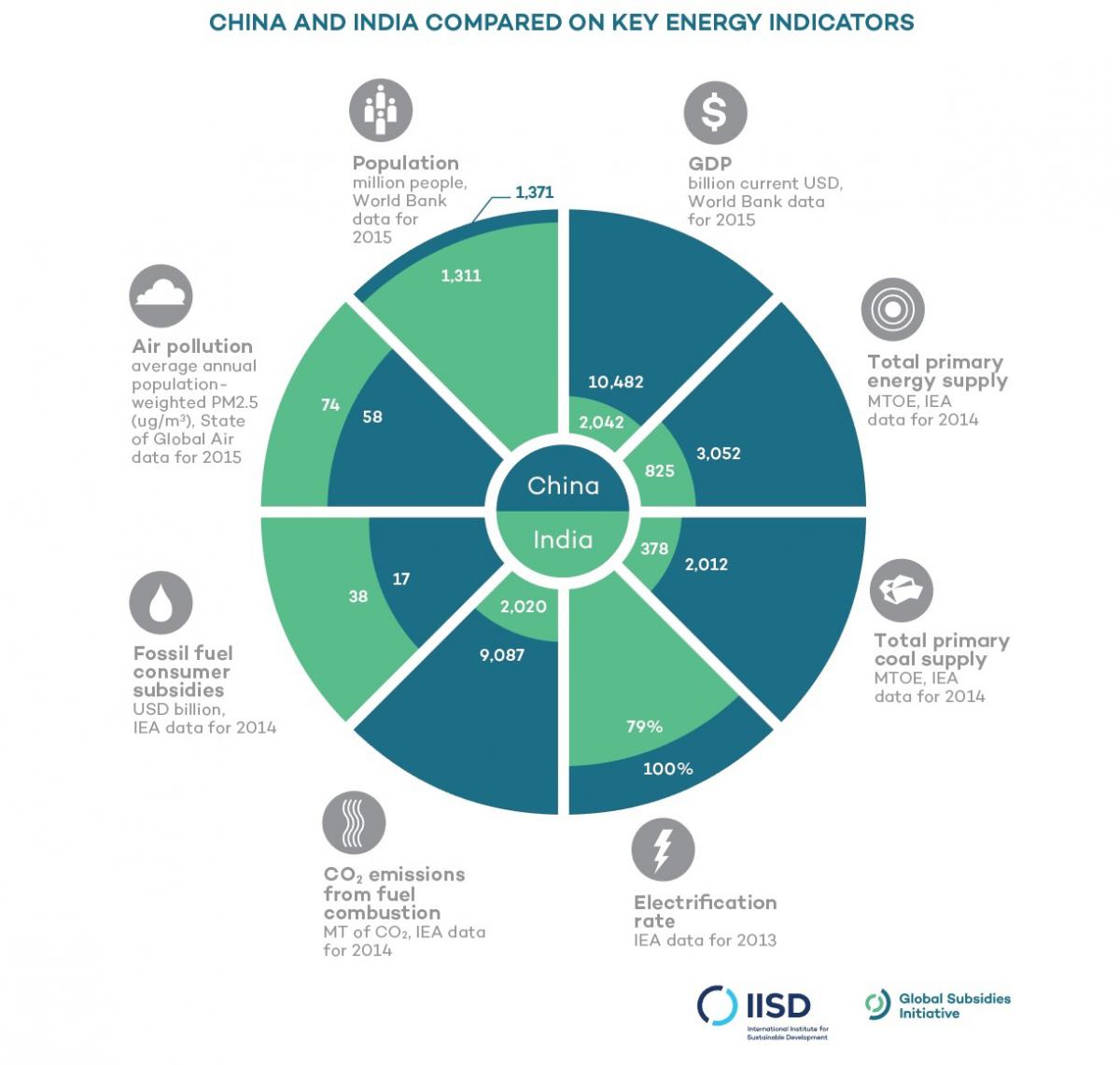
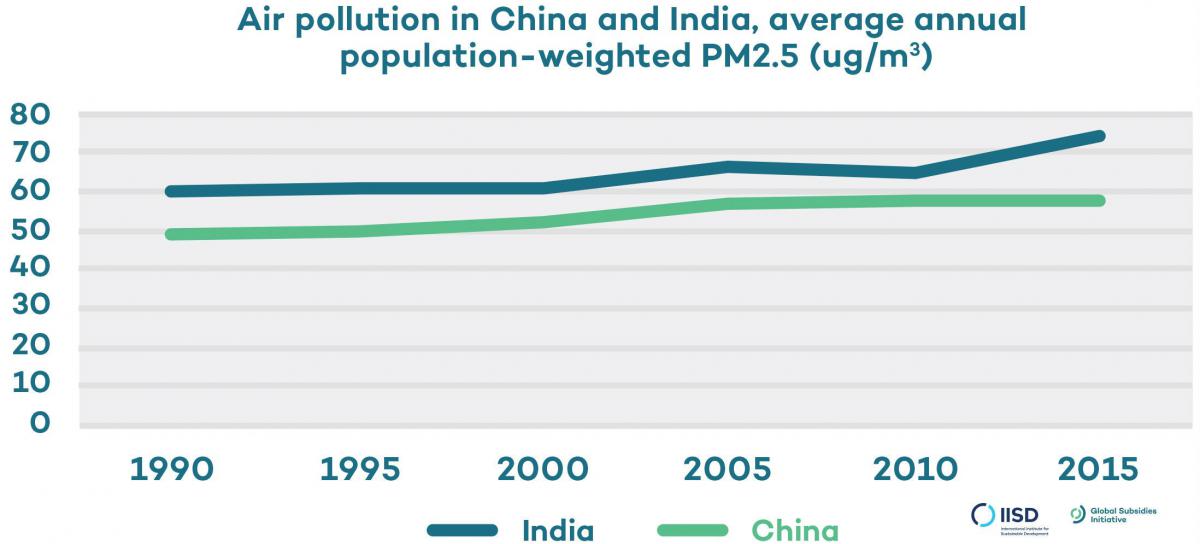
Based on data from www.stateofglobalair.org

In India, independent estimates of the devastating health impacts of emissions from electricity plants, industry and transport cause non-stop public controversies.   

In order to effectively tackle the pollution crises, technologies that support clean air, water and soil in both China and India must gradually replace polluting alternatives. Implementation of this transition will largely depend on local factors. So what is the best approach for each government to take in promoting these technologies: the stick or the carrot? And which incentives or disincentives are most effective?

Both countries face similar challenges. Each has prioritized the installation of de-sulfurizing, de-nitrating and de-dusting equipment at existing coal-fired electricity plants to curb harmful emissions. Both China and India have applied emissions standards to their electricity, transport and industrial sectors. However, compliance with these standards remains a major challenge. Beijing, for instance, is still believed to be at least a decade away from blue skies, whereas India lags behind further still.

To complement command-and-control regulations such as emission standards—the "stick”—China is also using a “carrot” by offering a premium sale price to coal-fired generators that have installed emissions abatement equipment. The value of this incentive was estimated at around 100 billion yuan per annum (USD14.5 billion) in 2014 and 2015.

Given its lower level of economic development combined with budgetary constraints, India cannot afford to encourage a reduction of pollution from coal plants in the same way. India prioritizes provision of affordable electricity to its population and improving energy access for the 20 per cent of people that still do not have electricity in their homes. This is very different from China, a country with an electrification rate of 100 per cent that is addressing a major challenge of over-capacity in coal-fired generation.

India also has the cess charge (a form of carbon tax) on coal use that is partially allocated to support clean technologies. Charged at INR400 (USD 6) per tonne of coal, the cess has seen an eightfold increase since 2014. Between 2011 and 2016 an estimated 13,616 crore (over USS 2 billion) from the coal cess revenues was transferred to the National Clean Energy Fund.

Feed-in tariffs and other "carrots" for renewable energy have driven a rapid increase in installed renewable energy capacity in both China and India. However, this additional capacity will only enable a switch to cleaner energy if it is used, and in both China and India some of the new wind capacity has faced curtailment problems.

Among its causes are “toxic carrots” given each government. In China, energy policy is conflicting. While some policies seek to curb coal capacity, others guarantee coal-fired power plants a certain number of hours of operation. Thus, the value of wind curtailment in Liaoning, Jilin, Heilongiang and East Inner Mongolia was estimated at 6.9 billion yuan (USD 1 billion) in 2016 driven partly by the priority given to the use of coal power.

In India, renewable energy developers enjoyed a generous accelerated depreciation allowance but were not given a guarantee for generation or dispatch. However, India has capped this allowance at 40 per cent, and wind power is being developed through a reverse auction mechanism, whereby the bid is won by the seller quoting the lowest price.

These and other examples illustrate that there is a lot of money and also regulations already on the table. What is missing is a system that traces the efficacy of both carrot and stick policies on energy waste and air quality in a way that is simple for governments and other stakeholders to use.

Given increasing budgetary pressures, identifying, quantifying and evaluating policies that assist or interfere with the clean energy transition could help China and India assess the best use of public resources.

One way of doing so would be a voluntary peer review with an expert organization or another country—bilaterally or within such forums as G20 or BRICS. For example, many members of Asia-Pacific Cooperation (APEC) have undertaken voluntary peer reviews on energy efficiency

Another opportunity is the voluntary review of fossil fuel subsidies within the G20 that China completed jointly with the United States when it was hosting the G20 summit in 2016. The purpose of this review was to identify "toxic carrots"—those measures of government support in the energy sector that result in wasteful consumption of energy. China’s review listed nine subsidies worth USD 14.5 billion and included a timeline for their phase out. India will host the G20 summit in 2019, and, as more G20 countries (Germany, Mexico and Indonesia at the time of writing) volunteer for peer review, there are increasing expectations on India to do the same.

Reposted with permission from chinadialogue. Read IISD's brief on energy subsidy reforms in China and India here.

Insight details

Topic
Subsidies
Region
India
China
Insight

How Can We Successfully Integrate the Sustainable Development Goals Into Our Current Policies?

How can we make sure that the Sustainable Development Goals are part of our governments' polices?

March 17, 2017

The Sustainable Development Goals (SDGs) outline an ambitious vision for 2030, clearly articulating that sustainable economic development is not possible without protecting the environment and ensuring basic human rights. While national development priorities often align with this vision, they are frequently insufficient for making sustainable development a reality.

If we are serious about achieving the SDGs and associated targets by 2030, we need to effectively integrate them into national and subnational development strategies and plans.This may prove complicated because every goal has economic, social and environmental dimensions closely intertwined, whereas national governments often develop sector-driven policies (e.g., social, economic and environmental). The Federal Sustainable Development Strategy of Canada is a case in point, as it only covers environmental concerns.

What can be done to transform such sector-driven approaches into more holistic thinking and action? The good news is that some countries and policy-makers have best practice experience of policy integration efforts. Recent examples include efforts to integrate multilateral environmental agreements (MEAs) into national policy-making, such as the Convention on Biological Diversity, the United Nations Convention to Combat Desertification, the United Nations Framework Convention on Climate Change and the Convention on International Trade of Endangered Species of Wild Fauna and Flora.

Mainstreaming is a way to integrate MEAs into national strategies, sectoral plans and policies. It enables the integration of obligations defined in these agreements (i.e., goals and targets) into national policy-making, to ensure that sectoral strategies and policies (e.g., agriculture, fisheries, tourism and poverty reduction) align with and contribute to the advancement of agreed multilateral commitments.

A critical part of mainstreaming is policy coherence. While mainstreaming focuses on connecting high-level policy objectives, policy coherence looks into the details to ensure that specific policy and programs work cohesively toward agreed higher-level goals and targets, such as those outlined in the SDGs.

In our recent paper Environmental Mainstreaming and Policy Coherence: Essential Policy Tools to Link International Agreements With National Development—A Case Study of the Caribbean Region we conducted a detailed review of current experiences of mainstreaming MEAs. Our results indicate that mainstreaming requires a bottom-up approach so that key stakeholders can contribute to implementing goals and priorities listed in the MEAs. This approach also ensures policy coherence by building up stakeholder groups that will implement the actual policies. Given the short timeline for achieving SDGs, it is critical to create regular reviews of policy development and consultation processes to allow for a two-way exchange with key stakeholders outside policy arenas. This would increase buy-in from non-governmental sectors (e.g., NGOs and businesses) for the SDGs, and the adaptive implementation of actions and policies to ensure they advance the set targets of the SDGs. Governments can tie these processes into the preparation of their progress reporting on the SDGs to the UN High-Level Political Forum.

Because MEAs are supranational, there is strong potential for international and regional agencies (e.g., MEA secretariats and national focal points) to help countries integrate them into national-level strategies and plans, through for example:

  • Developing guidelines for preparation of coherent national and sectoral strategies that integrate multiple MEAs into priorities of sustainable development, tourism, agriculture and citizen well-being.
  • Providing examples of specific benefits—including quantified benefits—of MEA implementation to support policy-makers in negotiations with their counterparts from economic development, agriculture, tourism and other departments and ministries on key priorities of national strategies and plans.
  • Developing guidelines for mainstreaming using participatory approaches, including co-learning, training and capacity-building events at national and regional levels with a focus on multiple MEAs to decrease the burden on policy-makers.
  • Creating opportunities to share best practice on strategies, policies and targets relevant for multiple MEAs that can be integrated into diverse strategies while maintaining coherence.

Our findings highlight the importance of sharing views and experiences across different sectors, within specific countries and/or across regions. Translating practical experience in whole-of-government approaches to actions and policy improves the usefulness and usability of strategies, uncovering positive and negative impacts of sectoral policies on advancing the SDGs.

Click here for more information.

Insight details

Insight

Could Canada stay on course if the U.S. pulls a U-turn on vehicle fuel efficiency?

Amin Assadolahi takes a look at the implications of the Trump Administration reopening the mid-term review of the Corporate Average Fuel Economy standards, which would have seen vehicle fleet efficiency rise more than 50 miles per gallon by 2025.

March 16, 2017

Roughly a quarter of Canada’s greenhouse gas (GHG) emissions originate from the transportation sector. In Ontario and Québec, that number soars to a third, and for these provinces in particular transportation remains one of the most difficult sources of GHGs to tackle.

Provinces do have some levers to reduce emissions from the sector, such as potentially mandating zero-emission vehicles (ZEVs), as California has done. They could build their rapid-charging infrastructures around such mandates and become leaders in clean transportation.

However, a piecemeal set of policies can increase costs, both in terms of compliance but also in costs passed down to consumers. To make matters even more difficult, the Canadian automobile sector cannot be taken in isolation from its U.S. and Mexican counterparts. North American vehicle manufacturing is heavily integrated, and regulations can have cross-border implications. The three countries can introduce their own requirements (e.g., daytime running lights) but significant differences (e.g., fuel economy standards) are hard to imagine. If anything, demand and requirements in the United States effectively drive the vision for the sector.

Today, the Trump Administration threw a wrench in the mix by reopening the mid-term review of the Corporate Average Fuel Economy (CAFE) standards, which would have seen vehicle fleet efficiency rise more than 50 miles per gallon by 2025. The review was scheduled to end by April 2018, but the Environmental Protection Agency (EPA) wrapped it up before the new administration took power. In response, the auto industry called for its reopening. Alongside these rules are also state-level ZEV requirements, which can interact with federal fuel efficiency rules, and it remains uncertain how the two levels of government will navigate the road ahead. As Resources for the Future rightly notes, when it comes to designing vehicle fuel regulations it makes sense to take time to get it right. In this time of uncertainty, regulatory review and any changes to the regulations in the United States will have far-reaching consequences and will significantly affect the Canadian vehicle manufacturing sector.

Canada has passenger automobile and light truck GHG regulations that extend from 2017 to 2025. Canadian regulations do not include a mid-term review; however, they reference U.S. requirements for the 2022 to 2025 model years. In other words, by default, the results of the U.S. mid-term review affect Canadian vehicle regulations. Although Canada could make an amendment to remove this reference, this would be quite unlikely. Instead, Environment and Climate Change Canada can continue with its commitment to collaborate with its U.S. counterpart when informing the mid-term review.

While the sector again puts its case before the government, a few reminders are in order. Confronted with an increasingly changing climate and commitments under the Paris Agreement, governments will face increasing pressures to reduce emissions and strengthen their climate obligations. Getting ahead of the regulatory curve could result in increased economic opportunities and competitiveness. Regarding the Paris Agreement, some of the major players in the sector declared their commitment to “catalyze combined action and initiatives from the automotive industry sector” to maximize the benefits of mobility while mitigating its environmental impacts. It would be important to see this vision reflected in the mid-term review process, and to have the sector champion more ambitious targets rather than undoing progress already made.

More fuel-efficient vehicles mean more miles for less fuel, which could translate into saving for consumers in a future of higher oil prices. The electric vehicle revolution could also result in savings and lower pollution. Although it is important to improve the fuel efficiency of vehicles, solutions to the transportation sector’s emissions are often closer to home.

At the centre of emissions from the transportation sector lies the challenge of transportation itself. We have built and modified our cities around the car, with ever-expanding suburbs. Our large city centres, in a country as big as Canada, are far from one another and connected through a network of roads designed to accommodate vehicles. Canada and its subnational governments can still tackle the transportation emissions challenge irrespective of the outcomes of the mid-term review. To this end, sustainable solutions to the movement of people and goods—combined with integrating sustainability considerations more deeply into city planning—will be critical to any climate action plan and have far-reaching impacts as we build the cities of the future.

Insight details

Insight

How Can the SDGs Contribute to Gender Equality?

How are the Sustainable Development Goals looking to ensure gender equity. This International Women's Day, Livia Bizikova takes a look.

March 8, 2017

Today, March 8, 2017, is International Women’s Day, which emphasizes the unfortunately continual struggle for women’s rights, even in the 21st century. Let’s take a look at some of the statistics.

Globally, women make an average of 23 per cent less than men, and women take home one tenth of the global income, while accounting for two thirds of global working hours. Moreover, only 22.8 per cent of all national parliamentarians were women as of June 2016, a slow increase from 11.3 per cent in 1995.

We cannot imagine a sustainable future without achieving equality for women. The 2030 Agenda outlines ambitious priorities for sustainability for the next 13 years. It is therefore critical that women’s rights and gender are addressed in the Sustainable Development Goals (SDGs).

Women’s and gender issues are captured as a stand-alone SDG, #5 on Gender Equality, as well as in a number of areas important for women. SDG 5 focuses on critical issues such as ending all forms of discrimination (5.1), eliminating all forms of violence against all women and girls (5.2); eliminating all harmful practices, such as child, early and forced marriage and female genital mutilation (5.3); and also valuing unpaid care and domestic work (5.4).

These are important steps, but in order to effectively work towards achieving gender equity, we must integrate gender across all the SDGs, and include gender considerations in all sustainable development work.

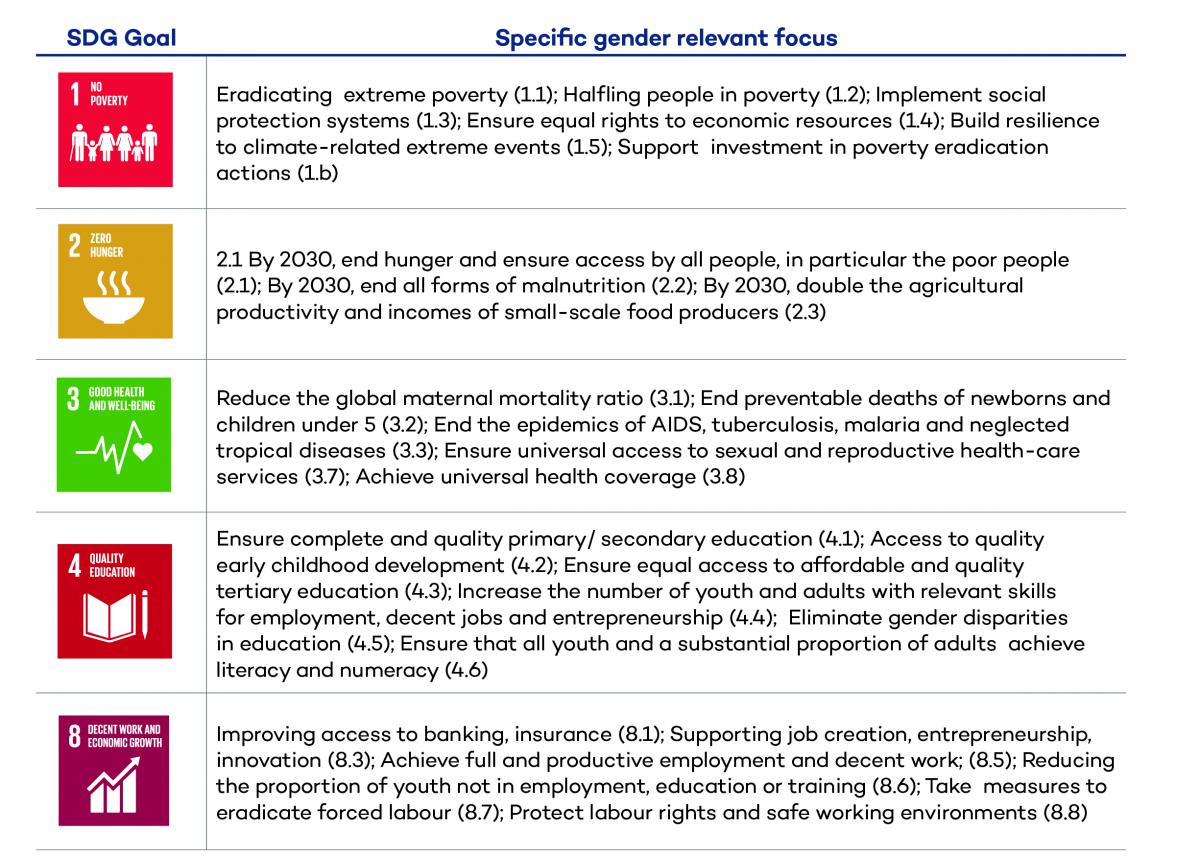
To that end, here at IISD we have identified the five most relevant goals on which we can focus on gender equity. These goals cover important issues aiming to tackle specific aspects of inequality, for example, ensuring equal access to economic resources for women (1.5); access to nutrition food (2.1. and 2.2); access to education at all levels (4.1–4.3); and creating access to decent jobs (8.1–8.5).

It is the role of all national and subnational governments, and all of us, to make sure that the SDGs are implemented, with an eye kept on ensuring gender equity, to make sure that the sustainable development agenda works for all.