Insight

Together, Canada, China and the EU Can Fill Trump's Climate Leadership Void

A critical summit offers the chance for 34 major world economies to raise their collective climate efforts—without the aid of the U.S.

September 15, 2017

A critical summit offers the chance for 34 major world economies to raise their collective climate efforts—without the aid of the U.S.

This weekend, environment ministers from more than 30 countries are meeting in Montreal at the invitation of Canada, the European Union and China. They may be just a short flight away from the Trump administration, but these governments are a world away in terms of their determination to speed up climate action.

The meeting takes place against the backdrop of catastrophic weather events, reinforcing the urgent need to increase ambition in responding and adapting to a changing climate. Nothing shows that more than the ferocious string of storms that just hit the Caribbean and southern United States—among the worst ever seen. This, just weeks after millions of people in South Asia were struck by the most devastating floods to hit that region in a decade.

Welcome to the new normal.

Over the 800,000 years leading up to the middle of the 20th century, atmospheric carbon dioxide concentrations never exceeded 300 parts per million (ppm). In July 2017, they reached 406 ppm. This increase in carbon dioxide and other greenhouse gases is resulting in a rise in average global temperatures, with 2016 the warmest year yet.

With rising emissions, scientists expect more frequent and more severe weather events to keep coming. Outside of the headlines, the chronic effects on lives and livelihoods are also dramatic – from lands becoming uninhabitable due to sea level rise, to the stress caused by increasing heat, failed crops or changing rainfall patterns.

Taking action on climate change has therefore never been more urgent.

Canada, the European Union and China are sending a powerful signal that they are willing to fill the leadership void created by the Trump Administration backing out of the Paris agreement. This weekend’s summit in Montreal offers the chance for governments to raise their collective efforts and demonstrate how they are leading by example.

A good case in point is the recent announcement to ban gasoline and diesel vehicles coming out of the U.K., France, India and Norway, which could dramatically change the demand for fossil fuels. Following such ambitious moves, China is also considering similar actions.

Meanwhile, Canada is implementing a national carbon price. The European Union is revising its emissions-trading system. China is launching a nationwide cap-and-trade system this year, while moving to scale up climate finance and take aggressive actions such as investing in zero carbon energy, near-zero emissions buildings and climate adaptation. Efforts towards linking these markets can broaden the coverage and improve emission reduction efforts.

The Paris agreement has climate finance as one of its key pillars. With U.S. federal support expected to decline, the international community must step in to fill the gap. In addition to financial support for developing countries to reduce their emissions and adapt to climate change, industrialized nations should accelerate technology transfer that can support developing countries in their efforts to adapt to a changing climate.

Countries should also aim to integrate and link environmental outcomes with international trade. The three hosts, with others, should push for an agreement at the World Trade Organization Ministerial meeting later this year to scale up clean technology and clean energy trade through establishment of a club of like-minded countries working towards zero tariffs, the elimination of non-tariff barriers and phasing out fossil fuel subsidies.

This weekend’s meeting can demonstrate a commitment to working together, in particularly with lower-income countries. In a few months, France is expected to host a similar event, with another hosted by the state of California in 2018.

Such gatherings are symbolic, however, unless they are backed by strong political will and ambitious actions. There is an opportunity here for the international community to showcase in tangible form its unwavering commitment to moving forward on climate action.

Recent scenes of devastation—from Dhaka to Mumbai to Houston to Miami, and many other places—must serve as a forceful wake up call to us all.

We can’t afford not to act.

This article was made possible by the readers and supporters of AlterNet. It was originally published by AlterNet on September 16, 2017.
Insight details

Insight

Pan African Parliament President: "I believe in One Africa, One Voice. I believe in the integration of the continent."

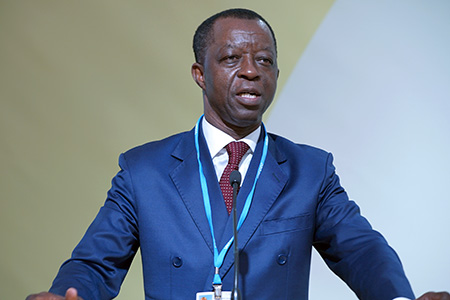
"I believe in One Africa, One Voice. I believe in the integration of the continent.": His Excellency the Honorable Nkodo Roger Dang, President of the Pan African Parliament, shared his thoughts on regional integration ahead of the parliament’s upcoming Continental Conference.

August 21, 2017

We are witnessing a period in which nation states—and the relationships between nation states—are suffering from direct or indirect shocks that undermine previous assumptions of Western stability and are difficult to assess.

Brexit and the rise of nationalism in Europe, the election of Donald Trump and his "America First" rhetoric in the United States: these shocks reflect an isolationist movement that could hamper the growing integration advanced by globalization and the logic of liberalism.

His Excellency the Honorable Nkodo Roger Dang
President of the Pan African Parliament


At the same time, developing countries are expressing more forcefully a desire—and the necessity—for openness and expansion. Thus, Agenda 2063 carries the aspirations of the African continent and expresses the desire to see the birth of a politically united, secure and economically-integrated Africa within a common market that would carry an inclusive development of the continent.

I would like to acknowledge a strongly personal motivation to advance Aspiration 2 of Agenda 2063, which deals with the regional integration of the continent. It is fortunate, therefore, that in response to these new global dynamics the Pan-African Parliament will continue its reflection on the theme of "The problem of political and socio-economic integration of the African continent: The role of the Pan-African Parliament" during the Continental Conference, which will be held in Yaoundé, Cameroon, August 22–26, 2017.

Political and economic integration in Africa are "inextricably linked" and involve the democratization of African regional organizations, greater movement of people and goods, and the development of common measures to combat collective problems such as HIV-AIDS, climate change, education and poverty.

The political regional integration unfolding on the continent results from a dynamic that is in line with the declarations of intent in favour of a pan-African political ideal. The institutional architecture of the African Union includes bodies designed to ensure a balance between the legislature, the judiciary and the executive.

It must be acknowledged that much progress has been made: ECOWAS issued a common passport to facilitate intra-state travel. African countries are also making progress towards better coordination of their sectorial policies (agriculture, electricity, water, etc.) and this offers promising prospects for continental integration. Nevertheless, the economic record remains mixed. The volume of intra-African trade has steadily increased over the last 20 years, but still accounts for only 12 per cent of total trade in Africa compared with 60 per cent for the European Union. We must work on barriers to integration such as lack of infrastructure, cumbersome administrative procedures, border controls and corruption.

A more advanced integration can only be accomplished with the transfer of power to supranational entities.

The Pan African Parliament—while affirming its unwavering commitment to national sovereignty and the prerogative of states—can only be functional and operational if it is able to exercise its mandate. The ratification of Protocol to the Constitutive Act of the African Union relating to the Pan-African Parliament is one of the imperatives underlying such progress.

I do believe that Africa has the actors and the will to meet the challenges that mark its path. I believe in One Africa, One Voice. I believe in the integration of the continent.

His Excellency the Honorable Nkodo Roger Dang, President of the Pan African Parliament, shared his thoughts on regional integration with IISD's Perspectives Newsletter ahead of the parliament’s upcoming Continental Conference.

Cette blog et aussi disponible en Francais ici.

Insight

Président du Parlement panafricain: « Je crois en une Afrique, une voix. Je crois en l'intégration du continent. »

« Je crois que l’Afrique possède les forces vives et la volonté de relever les défis qui jalonnent son parcours. Je crois en une Afrique, une voix; je crois en l’intégration du continent. »: Son Excellence l’honorable Nkodo Roger Dang, Président du Parlement panafricain, partage ses pensées sur l’intégration régionale.

August 21, 2017

Les États et les rapports entre États, que l’on a parfois tendance à considérer comme particulièrement stables, singulièrement en Occident, ont été l’objet de chocs directs ou indirects qui, bien qu’annoncées par des signes avant-coureurs, ont des conséquences qui sont tout autant difficiles à évaluer.

Le Brexit, avec en toile de fond la montée des nationalismes en Europe, ou encore l’élection de Donald Trump aux États-Unis et la politique de l" « America First », témoigne d’un mouvement de repli sur soi-même susceptible d’infléchir l’intégration croissante qu'avance une mondialisation d’inspiration libérale.

En parallèle, les pays en voie de développement expriment plus ouvertement, et comme une nécessité, une volonté d’ouverture et d’expansion. Ainsi, l’Agenda 2063 exprime la volonté de voir naître une Afrique politiquement unie, sécuritaire et économiquement intégrée au sein d’un marché commun qui porterait le développement inclusif du continent.

Son Excellence l’Honorable Nkodo Roger Dang
Président du Parlement panafricain


J’aime à reconnaître en l’aspiration 2 de l’Agenda 2063 qui traite de l’intégration régionale du continent une motivation fortement personnelle. Et il m’est d’autant plus réjouissant que le Parlement panafricain poursuive, face à ces nouvelles dynamiques mondiales, une réflexion sur le thème « La problématique de l’intégration politique et socio-économique du continent africain: le rôle du Parlement Panafricain », réflexion qui donnera lieu à une rencontre du 22 au 26 août 2017 à Yaoundé.

L’intégration politique et économique de l'Afrique sont « inextricablement liées ». Elles  passent par la démocratisation des organisations régionales africaines, par une circulation des personnes et des biens facilitée et surtout, elle passe par la formulation de réponses communes aux enjeux collectifs auxquels le continent doit faire face tels que le VIH/sida, le changement climatique, l’éducation ou la pauvreté.

L’intégration régionale politique telle qu’elle se déroule sur le continent résulte d’une dynamique qui est en phase avec les déclarations d’intention en faveur d’un idéal politique panafricain. L’architecture institutionnelle de l’Union africaine dispose en effet d’organes pour assurer l’équilibre entre le législatif, le judiciaire et l’exécutif.

Il faut reconnaître que bien des avancées ont été réalisées : la CEDEAO délivre un passeport commun pour faciliter les voyages intra-États. Les pays africains progressent aussi dans le sens d’une meilleure coordination de leurs politiques sectorielles (agriculture, électricité, eau, et cétéra) et ceci vaut promesses de belles perspectives en matière d’intégration continentale. Il n’en demeure pas moins que le bilan économique reste mitigé. Le volume du commerce intra-africain a constamment augmenté au cours des 20 dernières années, mais ne représente toujours que 12 pourcent du commerce total en Afrique contre 60 pourcent pour l’Union européenne. Plusieurs obstacles à l’intégration comme le manque d’infrastructure, la lourdeur des procédures administratives, les contrôles aux frontières ainsi que la corruption sont autant de chantiers sur lesquelles nous devons travailler.
 
Une intégration plus avancée, ne peut se ráliser sans les transferts de pouvoirs vers des entités supranationales. Le Parlement panafricain, tout en affirmant son attachement indéfectible à la souveraineté nationale, prérogative des États, ne peut être fonctionnel et opérationnel qu’en exerçant le mandat qui lui échoit. La ratification du Protocole à l’Acte constitutif de l’Union Africaine relatif au Parlement panafricain est l’un des impératifs qui sous-tendent un tel progrès.

Je crois que l’Afrique possède les forces vives et la volonté de relever les défis qui jalonnent son parcours. Je crois en une Afrique, une voix. Je crois en l’intégration du continent.

Son Excellence l’honorable Nkodo Roger Dang, Président du Parlement panafricain, a partagé ses pensées sur l’intégration régionale avec notre Bulletin Perspectives en vues des conférences régionales que le Parlement panafricain organise du 22 au 26 août 2017 à Yaoundé.

This blog is also available in English here:

Insight

Wetlands: Protecting us from floods and saving us money

Can wetlands protect us from floods, while also bringing us financial benefits? Hisham Osman thinks so...

July 27, 2017

How can we use wetlands to help protect Manitoba from flooding?

First up, let’s define what we mean by "wetlands." Wetlands are natural depressions in a landscape that are filled with water either throughout the year (permanent wetlands) or for part of the year (seasonal wetlands) and support a variety of vegetation. In both cases, the soil is always saturated with water. Examples that you might recognize include bogs, fens, marshes and swamps.

The Canadian Prairies are becoming more and more susceptible to extreme weather events such as flooding and droughts, due to the ever-intensifying effects of climate change. The 2011 flood that hit southwestern Manitoba is a recent example of this. Wetlands can play a crucial role in reducing the impacts.

Wetlands naturally protect surrounding areas from flooding, as they absorb a significant amount of water and temporarily store it—imperative when inundated with excess water. They are therefore also valuable sources of water during periods of drought.

We can encourage this natural process by fortifying wetlands with human-made constructions that enclose the wetlands, which allows more water to be trapped during flooding season and then released or used for irrigation during droughts.

Once the water is captured, do the wetlands provide any further benefits for that water?

Of course! Wetlands are crucial for so many reasons—both environmental and recreational.

They are teeming with life, and provide essential habitats for many flora and fauna, including birds, geese, frogs and more.

Many of the plants found in wetlands remove nutrients, such as nitrogen or phosphorus and other pollutants, from the water that can prove harmful in abundance. This water purification role is why wetlands are often referred to as the "kidneys" of the watershed.

The great volume of water that collects in wetlands during floods also encourages plant growth, so there is a great increase in biomass, or plant materials, which can be used as sources of renewable energy.

And let’s not forget the great cultural value that wetlands bring. They’re great places for children and families to learn about nature. You can use them for birdwatching, photography, hiking, hunting and so many more fun activities.

Are there any economic benefits?

When you think about all of the benefits (or "ecosystem services") that we get from wetlands, listed above, you need to remember one crucial thing: they do it all for free. The cleaning of the water (which would otherwise be performed by water treatment plants), the biomass production, the water storage for drought seasons: these are all essential process that are carried out by nature, at no financial cost to us. It is therefore very important for us to recognize the economic value of these services, and the financial loss if these wetlands are destroyed.

When thinking about flooding, we need to remember that wetlands—by themselves or artificially fortified—can play a role in protecting rural and urban areas for flooding. This means that we are saving ourselves from millions of dollars in damage and insurance payments—let alone the emotional toll on citizens.

Need some figures? The University of Waterloo (the Intact Centre on Climate Adaptation) just estimated that leaving wetlands intact could reduce the financial costs of floods by up to 38 per cent.

What is IISD doing to promote all of the benefits and flood protection that wetlands provide to Manitoba?

First and foremost, IISD is a vocal proponent of the protection and preservation of wetlands. We have partnered with small and large conservation groups to talk about the extensive benefits that wetlands provide in a joint publication, Nature’s Wealth.

Moreover, based on extensive research on the Netley–Libau Marsh adjoining Lake Winnipeg, we have developed an innovative way of using much of the excess biomass, namely cattails and grasses, that wetlands produce during wet season. These plants remove many undesirable nutrients from the water system—and we have also found another use for them as a smart source of energy. In our award-winning and innovative "bioeconomy" approach, we have developed bioenergy pellets from wetland plants that can be used as locally sourced, renewable energy. The use of these pellets as a sustainable energy alternative is growing in Manitoba.

We have also teamed up with the University of Waterloo’s Intact Centre on Climate Adaptation to develop a tool that will not only study the benefits of preserving wetlands to protect us from flooding, but also calculate the economic gains from doing so. The financial case for protecting wetlands is perhaps the one that will best resonate with many farmers who want to "drain the swamp," so this tool will help show them how they can remove water during floods, provide water for irrigation during droughts and grow biomass to sell off for energy: a win-win-win situation.

Insight

Behind the Scenes of the G20: a Substantive Process Leads to a Significant Statement

After months of working behind the scenes to help develop recommendations for G20 leaders, I can tell you that it is a substantive process that led to a significant statement.

July 24, 2017

It’s easy to be distracted by politics and protests when evaluating the outcome of the 2017 G20 summit in Hamburg. After months of working behind the scenes to help develop recommendations for G20 leaders, I can tell you that it is a substantive process that led to a significant statement.

Headline outcomes ranged from converging thinking on heightening security, to the diverging stance of the United States on climate change, and an acknowledgement that the benefits of international trade and investment have not been shared widely enough.

These headlines miss the bigger picture: the G20 has made a major commitment to advancing sustainable development.

We applaud the G20 stance that the “Paris Agreement on Climate Change is irreversible” and we greatly welcome the alignment of the G20 Action Plan with the 2030 Agenda for Sustainable Development. Indeed, a subsection of the G20 Communique is dedicated to “Leading the Way Towards Sustainable Development.”[1] 

Much has been said about the outcomes of the 2017 G20 summit in Hamburg, which ranged from converging thinking on heightening security, to the diverging stance of the United States on climate change, and the acknowledgement that the benefits of international trade and investment have not been shared widely enough. We are encouraged by the focus on resource efficiency, food security, water sustainability and marine litter. The G20 Communique makes particular reference to sustainable global supply chains, calling for the “implementation of labour, social and environmental standards and human rights in line with internationally recognised frameworks."[2] It also calls for more concerted attention to the opportunities offered by digital and technological innovation (from financial technology to genome research) while acknowledging that the regulations needed to curb associated tail risks are lagging behind.

Many of these topics are appearing in the G20 dialogue for the first time. Indeed—under the leadership of Germany, the 2017 Summit marks the first time that the G20 agenda interlocks with sustainable development in such a concerted manner.

I am privileged to have served the 2017 Business 20 (B20), an official G20 dialogue with the global business community that developed concrete, actionable recommendations to lead the global economy towards a sustainable future. As part of the Financing Growth & Infrastructure Working Group, I attended meetings, wrote statements, agreed and disagreed with many speakers, sat in on many long phone calls and joined several conferences. I experienced first hand the interactions, the positioning and the posturing that formed the all-powerful B20 recommendations to the G20 leaders. When businesses speak, governments do listen. I met and debated with the B20 and the G20 Sherpas and shared their preoccupation with the EU debt crises, the USD 90 trillion global infrastructure deficit, the migrating millions and their common but differentiated responsibilities under the Paris Accord. (I also sat on the 2017 Think 20 [T20] and regret that I could not engage more concretely in this process)

These interactions made me acutely sensitive to the value of critical thinking and informed dialogue. They made me realize that there is a point to all this conversation. I was one of many who had previously questioned the value of the G20, and even dismissed it as merely a party for 20. This misguided perception is partly founded in the fact that the media focuses more on the politics and personal interactions amongst the leaders rather than on the substance being debated.  This is a pity, as it hides just how much value the G20 process creates along the way.  

The G20 works through a series of working groups and task forces that are coordinated and facilitated by the country that holds the G20 Chair. This Chair rotates every year, and there is no permanent secretariat.

 In 2017, under the Chairmanship of Germany, the G20 processes included:

  • Seven formal dialogues and summits in the form of the B20, T20, L20, C20, W20, and S20.[3]  
  • 14 Agreed Documents.[4]
  • Series of specialized Minister’s meetings. This included the central bank governors’ meetings and meetings of ministers in charge of health, labour, agriculture, finance and foreign affairs.[5]
  • Twelve G20 working groups covering a host of topics including Green Finance and Sustainability.[6]

All these processes convened a host of parallel gatherings. Their intellectual output was divvied up in the form of working groups, task forces, study groups and more. They brought together hundreds of intelligent, thoughtful and articulate people from all over the world. Together, they represented every sector, every discipline, every industry and every specialization. Over 12 months they met in person and liaised electronically. They debated, researched, did business, negotiated deals, wrote articles, held webinars and financed films and theatre productions. The G20 provided us with a unique opportunity to create synergies, appreciate our differences and find ways to make global societies’ work for the greater good. While this all culminated in the G20 summit—and the media focused on the G20 Communique and the G20 Finance Ministers Communique—the collaborative and cohesive work leading up to the G20 summit was almost invisible. This is a missed opportunity, for these processes are worthy of praise and recognition.

The value created by the G20 most certainly lies in its process, which demonstrates the value of globalization and why it is worth fighting for.

The process shows that national and local development policies need not be at odds with global markets, and help leaders and stakeholders find common ground to agree to disagree and so find consensus. Many argue that the latter is the downfall of the G20. They argue that all this talk to arrive at a consensus leads to little action. Indeed, I was one of these critics, but now I know better. I realize that all this talking is necessary to find synergies, to create scale, and to determine the trade-offs. Only then can we make globalization work for more people that it currently does.


[1] The 2017 G20 Summit Declaration. Posted at https://www.g20.org/Webs/G20/EN/Home/home_node.html

[2] The 2017 G20 Summit Declaration. Posted at https://www.g20.org/Webs/G20/EN/Home/home_node.html

[3] The fill list of the G20 non-governmental dialogues is posted at https://www.g20.org/Webs/G20/EN/G20/Civil_society/civil_society_node.html

[4] The full list of agreed documents can be consulted at https://www.g20.org/Webs/G20/EN/G20/Summit_documents/summit_documents_node.html

[5] The full list of G20 Ministers meetings can be consulted at https://www.g20.org/Webs/G20/EN/G20/meeting_ministers/meetings_ministers_node.html

[6] The full list of G20 Working Groups can be consulted at https://www.g20.org/Webs/G20/EN/G20/meeting_ministers/meetings_ministers_node.html


Insight details

Insight

Can Trade Help Deliver the Paris Agreement? Lessons learned from the G20

This year’s G20 Summit in Hamburg, Germany, saw long and heated discussion on the urgency of delivering the Paris Agreement. 

July 19, 2017

This year’s G20 Summit in Hamburg, Germany, saw long and heated discussion on the urgency of delivering the Paris Agreement. The so-called “G19” took a firm stance—“the Paris Agreement is irreversible”—while the United States, having recently opted out of Paris, underscored its support for an energy future with a major role for fossil fuels, freely traded.

On trade, a look at the twitter feed for the World Trade Organization’s (WTO) Director General, Robert Azevêdo shows how active he was in Hamburg. A major talking point there was how the US’s “America First” stance—examples include its withdrawal from the Trans-Pacific Partnership (TPP) “mega-regional” trade agreement and its decision to renegotiate NAFTA with Canada and Mexico—could be accommodated into the fight against protectionism.

So will trade help deliver climate change mitigation and, more widely, sustainable development? This year’s Leaders’ Declaration reaffirmed that the G20 will be “(b)uilding on the G20’s Action Plan on the 2030 Agenda for Sustainable Development, the Hamburg Update emphasises our collective and concrete commitments.”

But it is notable how weak the link made between trade and climate change was in this year’s Leaders’ Declaration, with the full text on trade and investment making only one reference to delivering on sustainable development. However, the debate is advancing elsewhere. At a specific workshop focused on trade and climate change at the WTO on June 19,[1] Director General Azevêdo welcomed the debate on the “role that the WTO can play in supporting climate action.” WTO Member and expert suggestions include those steps that could be taken now, and those that would require further focus of the WTO on climate change (and, by extension, sustainable development), potentially by restricting free trade of some goods and services—including fossil fuels and the technologies that use them.

Short-term actions with significant potential include the reform of fossil fuel subsidies, a conclusion of the Environmental Goods Agreement (EGA)—and its extension to more goods and to services—and the conclusion of a plurilateral agreement limiting subsidies to fisheries. Other options include permitting some clean energy subsidies and extending and harmonizing government practices around green procurement, standards and labelling across countries, benefitting trade.

Any of these options could have a significant impact on reducing greenhouse gas emissions. For example, models show that fossil fuel subsidy reform (FFSR) globally could lead to at least 10 per cent global reductions, with potential for more if the savings were at least partially reinvested in renewable energy and energy efficiency. FFSR has also been discussed recently at other Geneva workshops.

But implementing these options could see disputes at the WTO; countries implementing them will argue that their benefits to reducing emissions of greenhouse gases should outweigh any restrictions in trade of less environmentally beneficial options. Workshop delegates stressed how seeking to pre-emptively solve issues between WTO members before they are brought to dispute and ruled on by a small group of lawyers would be much preferred. A more ambitious option for the long term is to consider fundamentally different “alternative international economic governance,” to govern trade and investment in economies. This would need to deal both with the concerns noted in the G20 Leaders Declaration—that the benefits of international trade and investment have not been shared widely enough—but also the role WTO needs to play in delivering climate goals in general and the Sustainable Development Goals (SDGs) in particular.

The main messages emerging from the Hamburg G20 seem to be that the US position may be a first salvo in how strongly the fossil fuel industry will seek to defend itself, and that there are many competing and important demands for action by the G20’s members within which a focus on climate must compete.

But there is other good news. Deployment rates of renewable energy are exceeding projections in large parts of the world. Similarly, news that car manufacturers such as Volvo and countries including France, the Netherlands and Germany will phase out internal combustion engines over the next 15 years or so is extremely positive. Wrapping up the June 19 workshop, WTO Ambassadors Molinari (Costa Rica), Neple (Norway) and Chambovey (Switzerland) passionately noted both the urgency of acting on climate change and the fact that WTO members must step up their actions to push forward options in both the trade and climate change regimes. There is a clear role for trade to support climate change mitigation, and many paths forward to develop this role.


[1] Co-sponsored by WTO Members Canada, Chinese Taipei, Costa Rica, Mexico, New Zealand, Norway and Switzerland.

Insight details

Insight

Telling Climate Change Stories: Five lessons from Saint Lucian journalists

Journalists play an important role as watchdogs for many social problems. But with a problem as large and complex as climate change, how can journalists tell stories that spur action and help audiences prepare for its impacts?

July 18, 2017


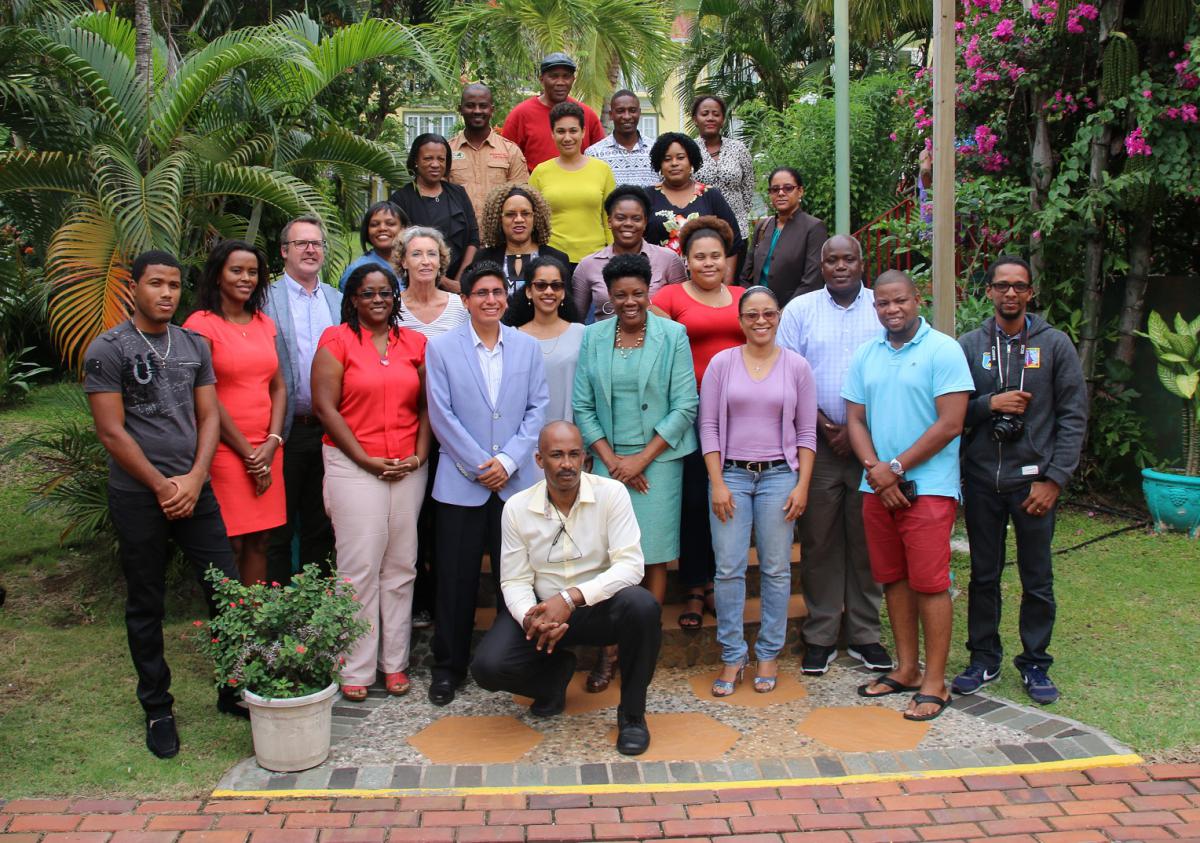
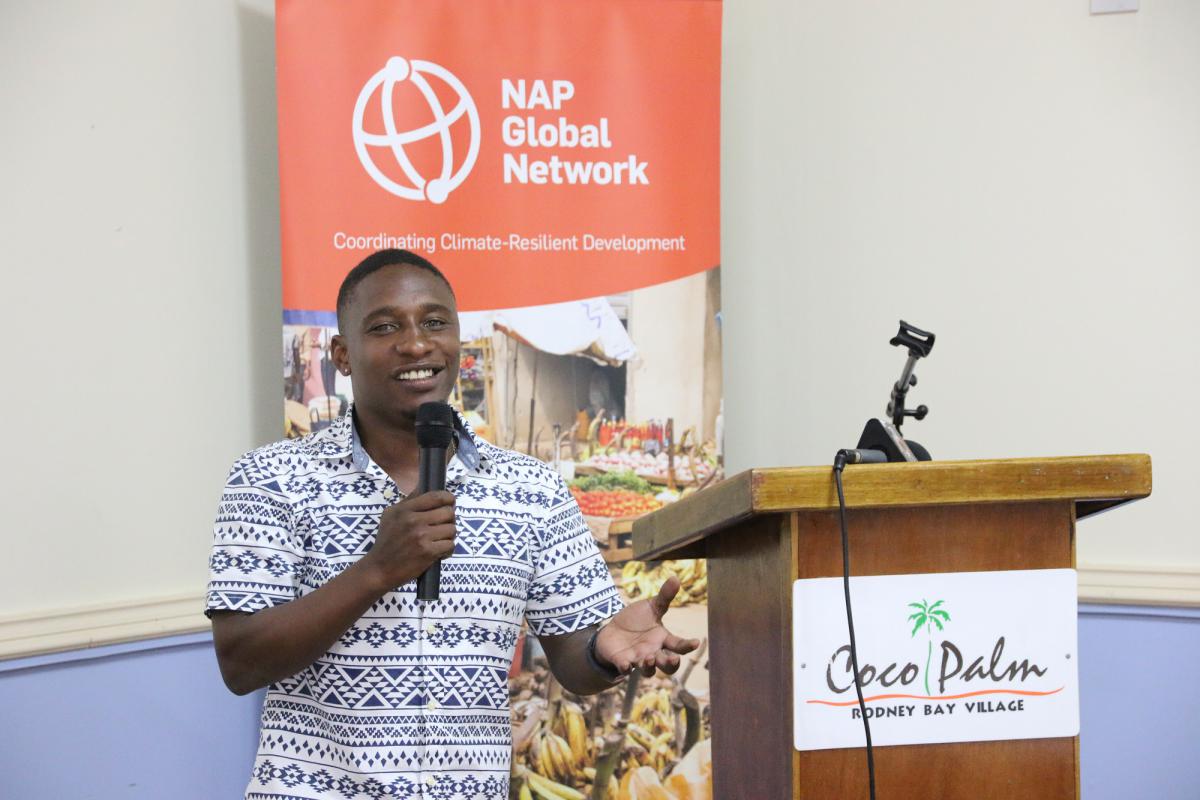
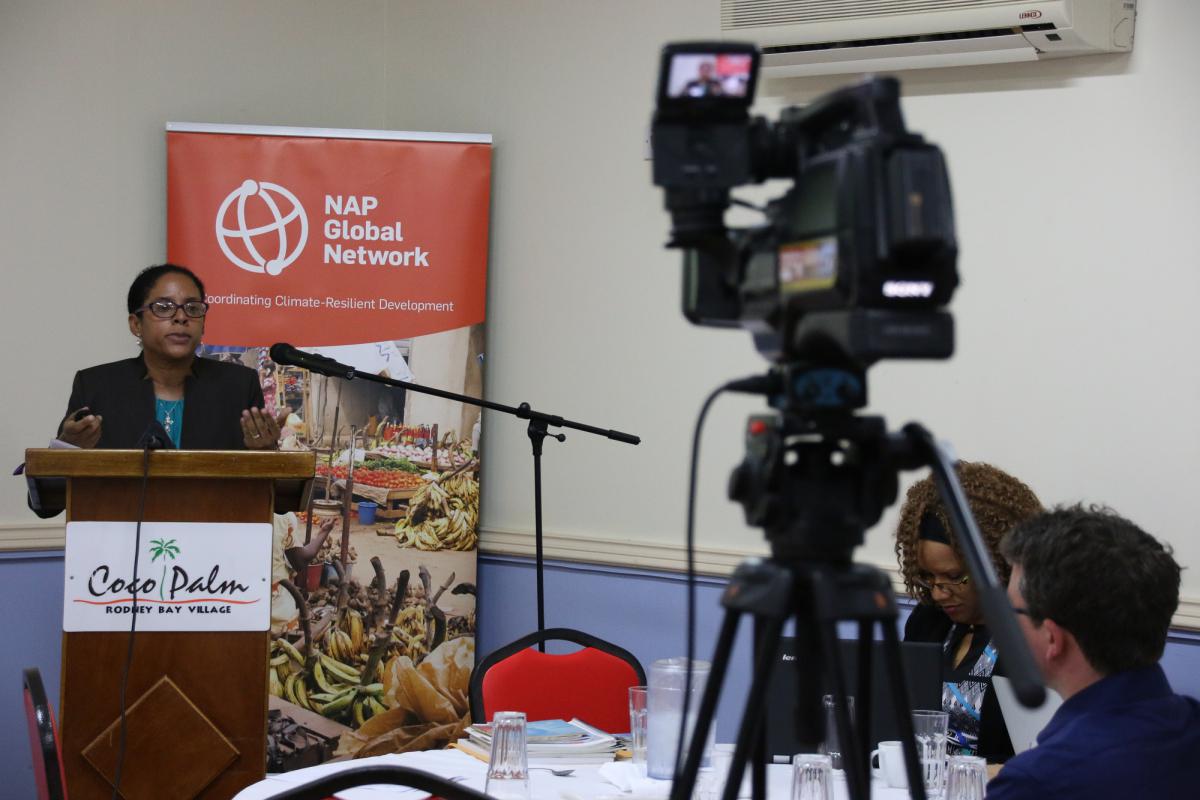
Recently, journalists and government communicators in Saint Lucia joined staff from the National Adaptation Plan (NAP) Global Network, which IISD hosts, in a workshop discussing strategies for telling stories about climate change adaptation.

Representatives from the Government of Saint Lucia and from the Organisation of Eastern Caribbean States set the scene by presenting on climate change science and the state of play of international negotiations (read their presentations here). In the discussion that followed, journalists shared great advice based on their experiences. Here are five key lessons to help with impactful reporting on climate change. 

1 | Keep it local

Echoing recent research by Climate Outreach, Saint Lucian journalists at the workshop told us how images of polar bears and ice caps melting just don’t resonate locally. To shift climate change from a problem that seems “out there” and abstract, several journalists stressed the need for stories that show local impacts on people’s lives.

Examples include how warmer waters cause fishers to go further from shore in pursuit of mahi-mahi seeking colder water, which impacts their bottom line. Other ideas include focusing on how a warmer climate will increase the risks of mosquito-borne diseases, and how that might affect health and the economy.

2 | Tell human interest stories

Saint Lucians are no strangers to extreme weather. In the past decade, the combined costs of Hurricane Dean in 2007, Hurricane Tomas in 2010 and the December Trough in 2013 amounted to over USD 400 million, more than a third of the country’s annual gross domestic product.

As climate change will make extreme weather more frequent and intense, journalists said telling individual stories is a powerful way to build awareness about the importance of preparing for extreme weather events.

Alison Kentish, a TV presenter at HTS News, gave an example of how personal stories resonate with her audiences. She described her 2015 story on the effects of drought in several Caribbean countries as an example of telling a story through the eyes of local farmers who struggled to save their crops. 

3 | Highlight solutions, not just catastrophe

Bernard Fanis of Calabash TV also emphasized this need to report on solutions that encourage Saint Lucians to take action on climate change. Fanis said reporting that emphasizes the negative impacts can cause audiences to feel helpless in the face of climate change. You can watch Fanis’ “1.5 to Stay Alive: Saint Lucia's Reality – A Youth Perspective” here

4 | Give stories about policy a news value

A number of journalists mentioned the maxim “If it bleeds, it leads.” Too often, stories about climate change in Saint Lucia focus on government meetings, but these events can have less news value than a robbery or arrest. Despite the importance of the topic, climate change policy stories are often couched in technocratic phrases and acronyms that just don’t pack the same punch as a crime story.

In pitching stories about climate change policy, it’s vital to think of what journalists need: statistics related to people’s livelihoods, success stories from sectors that are tackling climate challenges, and sound bites in plain language that relate to individuals’ experiences.

5 | Increase access to government spokespeople

At the same time, several journalists also spoke about their need for government spokespeople to be available to respond quickly to interview requests about climate change issues.

There is no shortage of excellent spokespeople in the Government of Saint Lucia—we spoke to many staff who are highly knowledgeable and articulate about climate change impacts and issues. But recognizing that journalists’ have strict time-bound “headlines and deadlines” routines, governments need to ensure they have procedures that can pass interview requests on to the right people and deliver the interviews journalists need. 

Gaining traction on climate change action

Telling evocative, relatable stories about adapting to climate change is no simple task. But as Valerie Leon, Permanent Secretary of Saint Lucia’s Department of Sustainable Development, noted in speaking about past extreme weather, “Our Saint Lucian media has been with us through it all.”

As Saint Lucia prepares for climate change through the National Adaptation Plan process, we hope the concrete reporting strategies that journalists raised in this workshop will help keep climate change high on the media’s agenda. As independent journalist Janeka Simon put it: journalists have a key role to play in ensuring there is “sufficient traction on climate change action.”

Read coverage of this event in The Voice Newspaper and watch coverage by MBC News.

Insight details

Insight

Can Resource Management Boards Help Co-Manage Watersheds in Northern Manitoba More Effectively?

When it comes to watershed ecosystems in northern Manitoba, we see a need for coordinated strategic large-area planning to ensure that the benefits derived from these ecosystems are maintained.

July 13, 2017

Watershed ecosystems are crucial to human well-being, animals and the environment, as they provide environmental benefits such as clean water, aquatic habitat and regulating temperatures, as well as cultural and spiritual benefits.

When it comes to watershed ecosystems in northern Manitoba, IISD has identified the need for coordinated strategic large-area planning to ensure that the benefits derived from these ecosystems are maintained.

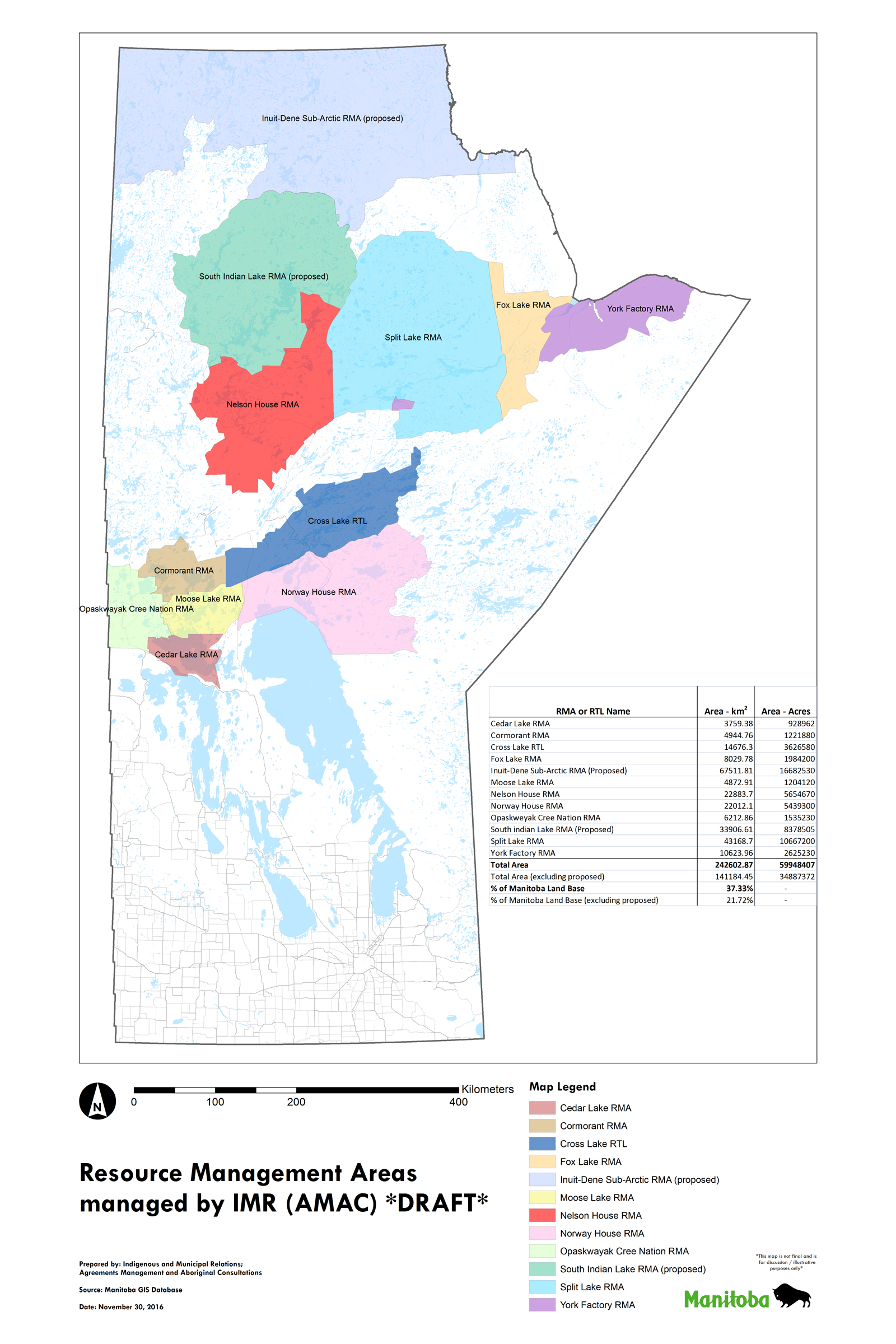
In this blog, Amanda Appasamy, a first-year master’s student at the University of Winnipeg and a summer intern here at IISD, explores the potential role of Resource Management Boards (RMBs) in the co-management of watershed ecosystems in northern Manitoba. She also looks more broadly at the use of Indigenous traditional knowledge in planning and decision making with the goal of maintaining long-term sustainability.

What are Resource Management Boards?

RMBs were established to co-manage natural resources in Resource Management Areas (RMAs), which refers to an area of traditional use. There are 10 existing RMBs and two proposed ones in northern Manitoba. Each RMA has a board that is represented by about 8–10 people, with half of the members appointed by the province and the other half by the Indigenous community. Indigenous and Municipal Relations (IMR) serves as the provincial lead in the management and implementation of the RMBs.

What do RMBs do?

Each RMB is mandated to develop and implement land use and resource management plans. The focus and priorities of each RMB are unique and vary depending on the area, economy and geographic location. Some of the RMB priorities in 2015 included co-management of:

  • Resource and land use planning
  • Water management
  • Commercial and domestic harvesting activities
  • Mineral development activities
  • Wildlife and forestry management

How could RMBs help us co-manage large area planning in northern Manitoba?

The RMBs could play an important role in large area planning, based on their structure and mandate. While IMR is focusing on relationship building by respecting community leadership, consultation and communication, there are however, a myriad of factors that contribute to the challenges that RMBs face in resource management planning. For instance, some communities tend to have more pressing issues than planning, such as housing, forest fires and floods, among others. Moreover, leadership change is another issue, as elections every two years result in new board members, which poses problems for long-term planning.

According to David Hicks, the director at IMR, the organization is playing an important role in recognizing and incorporating Indigenous traditional knowledge in planning. However, this information is not available to the public at this time. Each community is unique in terms of their customs, traditions, rights, language and lifestyle. Hence, issues such as language barriers, trans-jurisdictional components, settlement agreements, sovereignty and land title claims often arise.

Some recommendations for improving resource use planning proposed by the IMR would be to first focus on relationship building and effective communication, and to involve, accommodate and ensure that there is mutual understanding of the planning process by each community. Having a full commitment from the Government of Canada to the agreements could help in terms of funding. Finally, more efforts will be required to establish a stronger link between regional planning and the specific priorities of the communities.

What does the future hold?

Exploring the role of RMBs helps us understand trans-jurisdictional challenges and socioeconomic issues faced by northern Indigenous communities and their lack of trust in the government due to the legacy of colonization. Even so, it is encouraging to learn that the IMR is actively working on a path towards reconciliation by building relationships and valuing community leaderships.

Amanda Appasamy is a first-year student in the Masters of Development Practice program (MDP) – Indigenous Development at the University of Winnipeg. The program aims to create learning experiences from the crucial contributions and innovations of Indigenous peoples in the practice of sustainable development since time immemorial, providing students with hands-on skills to promote reconciliation and to create just and inclusive societies. There are 28 MDP programs in the world and the MDP at the University of Winnipeg is the only one guided by Indigenous principles, rights, knowledge and experience as well as disciplines in economic, environmental, social sciences, health and management. 

Insight

From C20 to the G20: What we need on carbon pricing and fossil fuel subsidy reform

IISD’s Global Subsidies Initiative presented at a side event on June 18 at the C20 Summit, a gathering that facilitated exchanges among civil society from G20 countries on the upcoming G20 Summit agenda and beyond.

July 7, 2017

IISD’s Global Subsidies Initiative presented at a side event on June 18 at the C20 Summit, a gathering that facilitated exchanges among civil society from G20 countries on the upcoming G20 Summit agenda and beyond.

Organized by Carbon Market Watch, Overseas Development Institute and Climate Action Network Europe, the side event shed light on actions taken by different countries regarding carbon pricing and fossil fuel subsidy reform measures and tools, and how such efforts need to be further reinforced to address fossil fuel subsidies.

Image removed.
C20 Summit, June 18 2017

I presented recent initiatives by the Government of India to reform energy pricing and subsidies. In particular, I focused on how the carbon tax (clean energy [coal] cess) has funded research and innovative projects in clean energy technologies, or renewable energy sources, to reduce dependence on fossil fuels.  While the clean energy tax has given the right incentives and reduced the price gap between fossil fuels and renewable energy, there is considerable support in the form of direct budget support, tax incentives, income or price support being extended to fossil fuels, which makes renewable energy uncompetitive. Sale prices of both wind and solar energy have gone down in recent auctions in India, but it needs to be seen that the renewable energy will not have the same fate as coal-based generation, where developers are not honouring their commitments at low prices.

 Image removed.
Vibhuti Garg, Associate with IISD Global Subsidies Initiative, delivering her presentation

Clearly, much more needs to be done in order to influence fossil fuel subsidy reforms and the phase-out of inefficient subsidies by a host of G20 countries.

IISD’s Global Subsidies Initiative presented at a side event on June 18 at the C20 Summit, a gathering that facilitated exchanges among civil society from G20 countries on the upcoming G20 Summit agenda and beyond. 

GSI-IISD recommends the following actions:

  • Countries join an international peer review process. This will bring transparency, provide an opportunity to share experiences and insights, and strengthen bilateral relations between peer review partners.
     
  • Amplify the debate on how fossil fuel subsidies are contributing to the stranding of assets, leading to further pressure on scarce resources.
     
  • Advance the debate on renewable energy adoption, focusing on favourable impacts on employment, job creation and health, which are key to the government development agenda.
     
  • Deploy innovative measures like the Clean Energy Subsidy Swap by reallocating the existing fossil fuel subsidies towards more clean energy alternatives. A recent report by Oil Change International, Friends of the Earth – U.S., Sierra Club and the WWF European Policy Office reveals that G20 nations give four times more public financing to fossil fuels than to renewables. A framework that allows for reallocation of subsidies towards clean energy lies at the centre of fossil fuel subsidy reforms. GSI is currently working on a program in India to promote a kerosene subsidy swap, using innovative policy business models to reform kerosene subsidies while redirecting subsidy-related public finance to enhance energy access through solar PV.

The C20 Communiqué and policy recommendation on sustainability, climate and energy was presented to German Chancellor Angela Merkel. It emphasizes the G20’s commitment to climate action through phasing out fossil fuel subsidies and setting effective and fair carbon price signals. As the whole world watches this weekend’s G20 summit in Hamburg, all eyes will be on U.S. President Donald Trump and potential conflicts triggered by him. Countries will either allow themselves to fall for his attempts to undermine their role in the Paris Agreement, or they will leave the United States behind and move forward with their own commitments to a long-term, low-emitting development strategy.

Insight details

Topic
Subsidies
Region
India
G20
Insight

Creating the Space for SDG Innovation: A Geneva case study

What role should innovation be playing in sustainable development? We look at an example of its application: the Geneva 2030 Ecosystem under our SDG Knowledge Program.

July 5, 2017

What role should innovation be playing in sustainable development? We look at an example of its application: the Geneva 2030 Ecosystem under our SDG Knowledge Program.

What is "innovation"?

Innovation.

We hear this buzzword often in our ever-changing world where new approaches are urgently required to match the pace and scale of technological transformation as well as economic, social and environmental challenges.

The simple definition of innovation is the act or process of introducing new ideas, devices or methods. I tend to gravitate to a definition used in social innovation circles: an intervention that changes the flow of power, information or resources. For me, this definition more comprehensively encompasses what innovation is all about: altering the dynamics of a complex system.

Innovation does not always take the form of a completely new idea. In fact, many innovation practitioners often say that there are no new ideas. Innovation may come from using well-established models in a new context or it may involve taking individual elements of existing approaches and putting them together in new ways—a concept referred to as bricolage by the systems-thinking community.  

What role should innovation play in sustainable development?

We need to incorporate innovation into sustainable development practices if we are to achieve the 2030 Agenda for Sustainable Development. The status quo will not get us across the finish line when it comes to the lofty Sustainable Development Goals (SDGs), adopted in 2015.

New policy and implementation practices will be required, but finding the channels to experiment, and sometimes fail, is easier said than done. People’s lives and well-being are stake—we need to ensure that we are creating the right conditions to innovate.

We need to incorporate innovation into sustainable development practices if we are to achieve the 2030 Agenda for Sustainable Development. 

What can we learn from the business sector?

The private sector can provide an interesting model for doing just this. Some companies have become experts in taking innovation processes outside of their core business so that they can develop new products, processes or approaches. Companies often channel dedicated resources and space to thinking outside the box, because innovation requires different mindsets, timelines, investment and risk tolerance. Examples include 3M’s Innovation Centres and Lockheed Martin’s Skunk Works. These companies have recognized that, if they judge new ideas on the same scale as the established ones, the new ideas will never get off the ground.

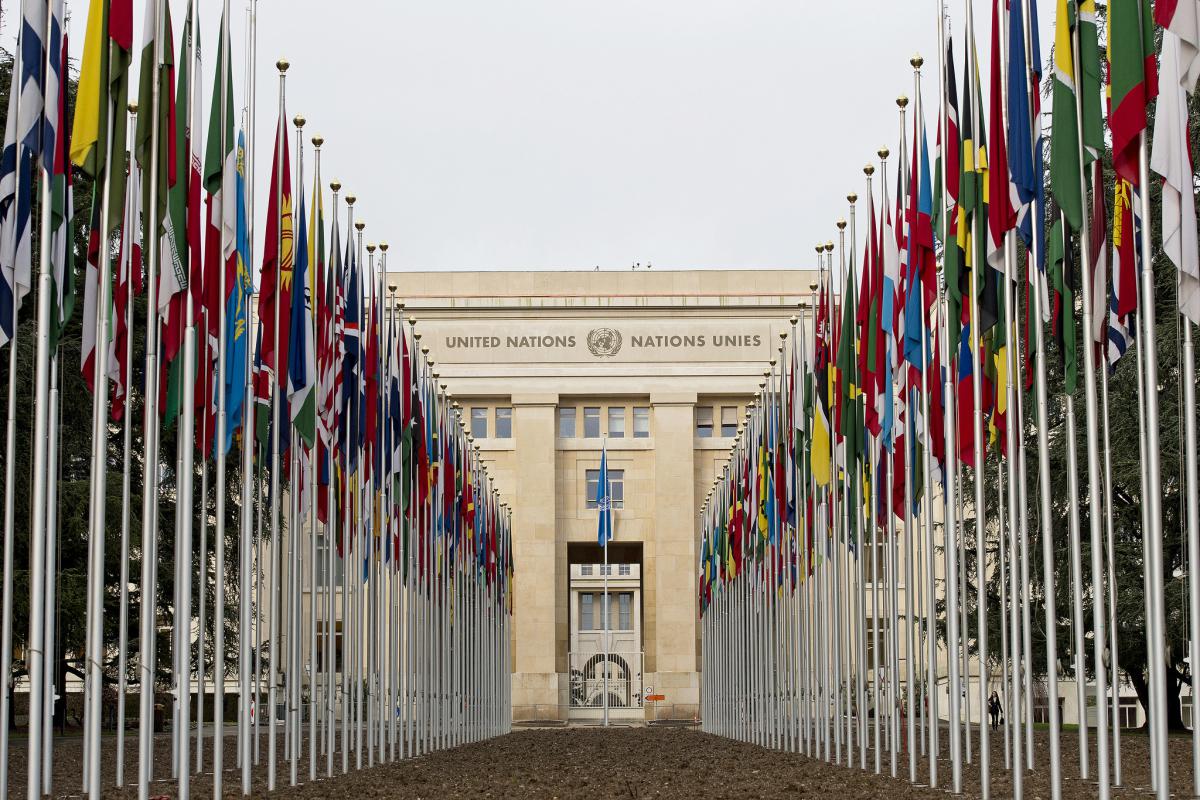
UN Photo / Jean-Marc Ferré

UN Photo / Jean-Marc Ferré

How is IISD applying this thinking to the sustainable development field?

Here at IISD, in the spirit of innovation and experimentation, we are promoting new approaches.

We recently established the Geneva 2030 Ecosystem under our SDG Knowledge Program. This initiative brings together the community of actors located in Geneva who are working on the SDGs to collaborate and experiment with new approaches. The concept is simple: with a large concentration of organizations focused on the SDGs, Geneva is an ideal place to develop a model for collaboration and innovation around the 2030 Agenda.

IISD facilitates the group, which is comprised of over 80 individuals, including United Nations organizations, non-governmental organizationss, academic institutions, private sector entities and social entrepreneurs. The Geneva 2030 Ecosystem meets to create a common vision for how Geneva can support implementation of the SDGs at the national and international levels, and exchanges information about their individual initiatives to find potential areas for collaboration.

The Geneva 2030 Ecosystem is an experiment in itself. We expect there will be obstacles, some failures, many lessons and some big wins for sustainable development

IISD has just launched an “Innovation Sprint” for the members of the Geneva 2030 Ecosystem. A cohort of 30 individuals is participating in a 6-month innovation process centred on design thinking, systems mapping and rapid prototyping. The Innovation Sprint will increase each individual’s understanding and capacity for innovation. It will also create a platform for the Geneva community to develop new ideas. By using the Geneva 2030 Ecosystem as a safe space for innovation, the community is endeavouring to create a mechanism that allows ideas to be proven to the point where they can then be scaled.

This is a new way of functioning for most of the organizations participating, so we are gathering feedback throughout the process and adjusting course where needed.

In this way, the Geneva 2030 Ecosystem is an experiment in itself. We expect there will be obstacles, some failures, many lessons and some big wins for sustainable development

It wouldn’t be innovation otherwise.