Report

How The World is Using New Technologies for a Sustainable Planet

Across the globe, innovations from the Internet of Things to Artificial Intelligence are building a sustainable future for all. This beautiful storybook takes you through just a few examples.

October 5, 2018

If you have heard of the Internet of Things (IoT), big data, artificial intelligence (AI) and blockchain, then you have probably heard of "fintech."

These financial technologies are used across consumer and industrial spaces and are now being embraced by financial organizations with large global investments.
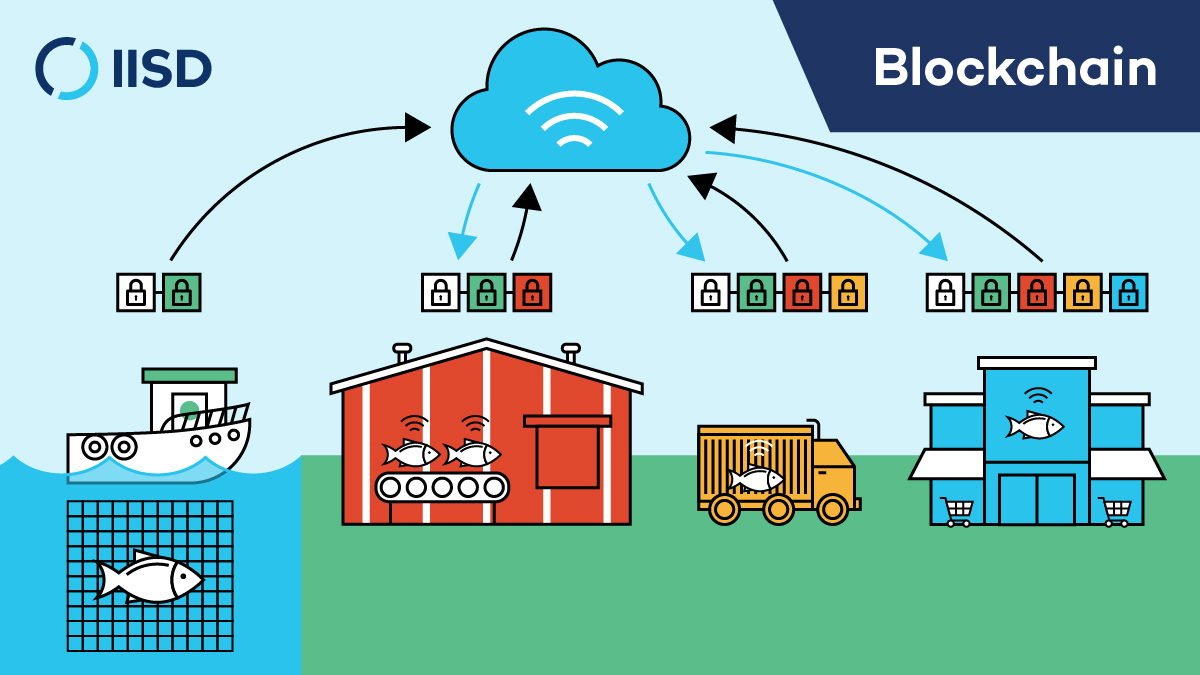
Blockchain—just one of the fintech solutions the sustainable development world can be adopting—could help us track a fish from a lake to a grocery store, using a network of users to encrypt and secure that information.

In parallel with the data and fintech revolutions are ongoing efforts at national, regional and global levels to reach the Sustainable Development Goals (SDGs).

Could these technologies, associated with concepts like observation, information, context and trust, be the tools we need to build a more sustainable and equitable world?

Across the globe, innovative organizations have already jumped into these challenges to promote sustainable policies and better understanding of the natural and human environments.

Here are just a few examples...

Report details

Topic
Water
Impact area
Nature
Copyright
,
Report

Credit Enhancement for Sustainable Infrastructure

The paper identifies the demand and supply-side barriers for upscaling credit enhancement solutions for sustainable infrastructure projects.

October 2, 2018

As a part of the IISD Global Survey on Credit Enhancement, we conducted interviews with users and providers of credit enhancement instruments, including multilateral development banks, development finance institutions, export credit agencies, private guarantors and other de-risking facilities.

Our objective was to find answers to the following questions:

  • Why do we not see more infrastructure deals taking advantage of credit enhancement solutions?
  • What can be done to increase the use of credit enhancement instruments?
  • Do we need more instruments? If yes, which project risks should they address?

IISD has started this project with the hypothesis that the answers to these questions lie in the lack of public sector expertise in planning and preparing infrastructure projects. Financial structuring is the primary responsibility of the financial advisors to the public sector, but governments also need to have a general understanding of the de-risking
solutions available to them. How else can they instruct their advisers and negotiate with donors and private financiers on the cost of capital? Moreover, how can they integrate this into their preliminary financial viability assessments and raise it with the relevant parties throughout the procurement and financial structuring processes?

Our research confirms that, while this hypothesis is correct, the reasons behind the limited uptake of credit enhancement are complex.

Report details

Report

Advancing Linked Carbon Pricing Instruments: Lessons on governing carbon pricing clubs from non-climate institutions

September 21, 2018

The implementation of the Paris Agreement is anchored in a wide variety of climate targets and domestic policies, captured in Parties’ Nationally Determined Contributions (NDCs) and intended to help countries meet the goals of the agreement. Economic instruments—and more specifically carbon pricing instruments (CPIs)—are increasingly considered as a key policy tool to reduce greenhouse gas (GHG) emissions.

In this report, IISD analyzes the possible development of innovative approaches to linking CPIs. If jurisdictions around the world are interested in enhancing cohesion between various CPIs, what kind of institution(s) might be designed—beyond or building on existing linked instruments like the Western Climate Initiative (WCI) and the Regional Greenhouse Gas Initiative (RGGI)—to aid their efforts? What cooperative arrangements would be best suited to develop common or reciprocal standards to ensure environmental integrity and robust accounting, share market infrastructure and allow members to share experiences? What governance models could help develop and oversee these types of cooperation?

This paper considers how carbon pricing club members could govern their interactions to ensure emissions reductions and raise their mitigation ambitions while keeping transaction costs low. However, unlike many studies conducted to date, we draw on examples from institutions that are not focused on carbon markets or climate change, the Organisation for Economic Co-operation and Development (OECD), the Asia-Pacific Economic Cooperation (APEC), the International Fuel Tax Agreement (IFTA) and the Missile Technology Control Regime (MTCR).

Report details

Topic
Climate Change Mitigation
Impact area
Climate
Publisher
IISD
Copyright
IISD, 2018
Report

Combatting Canada’s Rising Flood Costs: Natural infrastructure is an underutilized option

​This report presents ample evidence to suggest that efforts by governments to limit flood risk may be consistent

with – and reinforce – their fiduciary responsibility to administer good governance.

September 18, 2018

Beyond the specific methods needed to assess and compare grey infrastructure against natural infrastructure options relative to their utility to mitigate risk, a framework is required that would provide guidance to those considering or opting for a natural infrastructure solution.

​This report presents ample evidence to suggest that efforts by governments to limit flood risk may be consistent with – and reinforce – their fiduciary responsibility to administer good governance.

Flood risk is mounting across Canada from fluvial sources, such as rivers and lakes; pluvial sources, such as intense rainfall inundating urban environments; and coastal sources, such as storm surges compounded by rising sea levels.

Description from the Insurance Bureau of Canada (IBC).

Report details

Topic
Climate Change Adaptation
Impact area
Climate
Publisher
Insurance Bureau of Canada (IBC)
Copyright
Insurance Bureau of Canada (IBC), 2018
Report

Public Cash for Oil and Gas: Mapping federal fiscal support for fossil fuels

This report examines the inventory of federal fossil fuel subsidies in Canada

September 13, 2018

This report maps and updates IISD's inventory of federal fossil fuel subsidies in Canada.

The top-line message of the report is that subsidies that were quantified are down substantially from IISD's last report due to a combination of three dynamics:

  1. Reform of fossil fuel subsidies through government policy changes since the last inventory
  2. A decline in global oil prices since the last inventory, which resulted in less exploration/production
  3. Companies deferring some tax benefits that could be taken in the future

Report details

Topic
Subsidies
Climate Change Mitigation
Region
Canada
Impact area
Climate
Publisher
IISD
Copyright
IISD, 2018
Report

IGF Mining Policy Framework Assessment: Namibia

 An assessment of Namibia's mining law and policies, conducted by the IGF at the request of the Government of Namibia and in collaboration with the Ministry of Mines and Energy.

September 12, 2018

For the mining sector to make a strong, positive contribution to Namibia’s sustainable development, a strong legal and policy framework that maximizes the benefits accrued to the nation and to communities is required, a framework that promotes the development benefits of mining while upholding strong environmental and social standards.

Mining can play a significant role in a nation’s long-term social and economic development: it can generate revenues for the government; provide employment, skills development and business opportunities for local communities; and support investments in education, health, clean technology and infrastructure. At the request of the Government of Namibia, and in collaboration with the Ministry of Mines and Energy (MME), the Intergovernmental Forum on Mining, Minerals, Metals and Sustainable Development (IGF) conducted an assessment of the country's mining laws and policies, using its Mining Policy Framework (MPF). 

This assessment report first presents Namibia’s development, mining and legal contexts. It then highlights the key strengths and gaps in Namibia’s mining policies and laws, across all six of the MPF’s thematic areas, before making recommendations for further capacity building and reform. The six MPF thematic areas are: the Legal and Policy Environment, Financial Benefit Optimization, Socioeconomic Benefit Optimization, Environmental Management, the Post-Mining Transition, and Artisanal and Small-scale Mining (ASM). 

Report details

Report

Harnessing the Flow of Data: Fintech opportunities for ecosystem management

This report explores how new technologies—like big data, the Internet of things, blockchain and artificial intelligence—can support smarter ecosystem management.

September 12, 2018

There are a wealth of new technologies to help us analyse large amounts of data—from the Internet of Things to artificial intelligence and blockchain—that could be adopted by those working in sustainable development to manage our ecosystems better.

This report demystifies those technologies for a broader audience and explores how sustainable development actors may adopt them, flagging some potential risks.

Looking at broad trends in both science and technology, we see how unique approaches to scientific research, like those used at IISD Experimental Lakes Area, could adopt these technologies to help bridge the gap between science and policy.

Report details

Report

Adaptive and Inclusive Watershed Management: Assessing policy and institutional support in Kenya

This report explores existing institutional linkages between gender, water and climate change in Kenya.

September 4, 2018

Climate change is negatively affecting Kenya’s water systems. The degradation of wetlands, changing rainfall patterns, increased severity of drought and floods have serious implications for food security and human health.

In Kenya, women are the main collectors of water for household needs and are extensively engaged in the agriculture sector which is the most intensive user of freshwater resources through irrigation. Although women interact with water on a daily basis, they tend to contribute less than men to decision making in water resource management. Moreover, women are denied equal access to land, technology, credit, and other critical resources essential to cope with the adverse impacts of climate change.

Public policies can challenge socially constructed gender stereotypes and empower women in many sectors, including in the water sector. Through its legislative framework, Kenya has made positive steps towards helping women to be well represented in decision-making structures, formulated requirements for government budgets to support women’s empowerment and made some progress in establishing gender-sensitive monitoring systems. Gender equality is also being considered in relation to climate change through various government mainstreaming efforts.

This research is the result of a desk review of policies and institutions and interviews with stakeholders and experts in Kenya working on issues of water resources management, gender and climate change. These include the Ministry of Water, the National Gender and Equality Commission and the University of Nairobi.

See our similar analysis on Uganda.

Report details

Topic
Climate Change Adaptation
Gender Equality
Water
Region
Kenya
Project
Adaptive and Inclusive Watershed Management in East Africa
Impact area
Nature
Publisher
IISD
Copyright
IISD, 2018
Report

Financing Soil Remediation: Exploring the use of financing instruments to blend public and private capital

A collection of 17 case studies on a variety of financing instruments that blend public and private capital that could be used to finance the remediation of contaminated soil.

September 4, 2018

This report examines innovative approaches to financing the cleanup and regeneration of contaminated soil.

As public budgets tighten, governments around the world are looking at opportunities to attract private capital participation in both land remediation and its productive use and redevelopment thereafter. The business case is intrinsically the value capture in the increase in retail price of land and related business opportunities once the remediation is complete. However, where land value capture is lower and related revenue streams remain uncertain, the case for private capital participation is much less compelling. Governments, in this case, have to fund the remediation through public budgets and thereafter seek opportunities to partner with private counterparties to use the land as “fit for purpose.”

The current report presents 17 case studies on a variety of financing instruments that blend public and private capital. Each case study includes a short discussion on the extent to which each instrument could be used to finance the remediation of contaminated soil.

This report is a part of a series of outputs of a four-year project, Financing Models for Soil Remediation. The overall objective of the project is to harness the full range of green finance approaches and vehicles to manage the associated risk and fund the remediation of contaminated soils.

Report details

Report

Green Finance Approaches to Soil Remediation: International examples

A collection of seven case studies on different financing instruments used to support soil remediation projects.

September 4, 2018

The scale of global ecological degradation requires ever-greater scales of natural resources in need of repair.

With much of the degradation being the result of historic and cumulative environmental pressures for which traditional liability rules cannot generally work, new financial instruments and sources must be harnessed to fund restoration and remediation projects. Often environmental degradation will have direct, negative impacts on human well-being, most evidently on local communities living near affected areas. When degraded ecosystems pose an immediate threat to people’s livelihoods and health, such as in the case of contaminated soil or sediments, the political imperative to undertake remediation will be particularly strong.

A remediation strategy intended to ameliorate contamination in a specific area can have different costs and different results when applied to the same ecosystem type in a different geographic area due to variations in regional or country-specific cost structures, such as workers’ salaries and fuel costs. The size of the project also is a material factor.

Focusing on seven different cases using different financial measures, this report documents and analyzes how different financing instruments have been used to support soil remediation projects.

This report is a part of a series of outputs of a four-year project, Financing Models for Soil Remediation. The overall objective of the project is to harness the full range of green finance approaches and vehicles to manage the associated risk and fund the remediation of contaminated soils.

Report details

Topic
Sustainable Finance
Public Procurement
Project
Financing Models for Soil Remediation in China
Impact area
Sustainable Economies
Publisher
IISD
Copyright
Norwegian Institute for Water Research (NIVA), 2018