Explainer

How Can Research and Data Drive Sustainable and Gender-Inclusive Fishing: The case of Natur'ELLES in Senegal

As fish stocks decline and pressure on marine ecosystems grows, fisheries worldwide must adopt more sustainable and inclusive practices. The Natur'ELLES project implemented along the coast of Senegal demonstrates how research and data can make the case for sustainable fishing in mangrove forests. 

April 9, 2025

What sustainability challenges does the fishing sector face in Senegal?  

While fishing generates income and livelihoods for communities living along coastal marine ecosystems, this sector faces several challenges such as overfishing, non-compliance with fishing regulations and standards affecting the reproduction of species, as well as lack of access to relevant equipment. These factors have led to a scarcity of fish observed in Senegal in recent years. The Natur'ELLES project supports local communities in addressing these issues by promoting sustainable fishing practices, such as not fishing during biological rest periods and adjusting net dimensions so younger fish can continue breeding. 

Why is empowering women critical for Senegal’s fishing sector? 

In Senegal, women play a significant role in the informal economic sector. They are active throughout the fishing value chain, from collecting oysters and processing fish to selling fish products and preparing fish meals for their families. That is why empowering women also means empowering entire communities.  

However, women are still under-represented in high-level decision-making institutions around natural resources, including fish. This is due to several barriers, including a lack of access to education and some restrictive and discriminatory practices. 
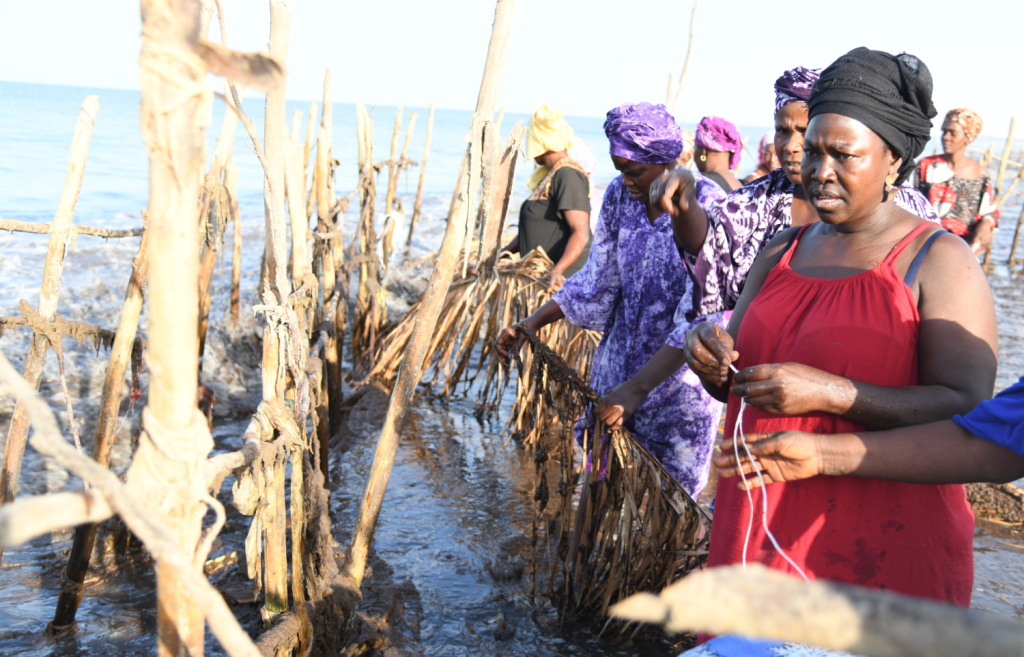
A group of women fishing.

How does the Natur’ELLES project support women—and why are data and knowledge key in this support? 

Natur'ELLES provides women with the knowledge and skills they need to take their seats at the decision-making table and play an active role in the management of natural resources, including fisheries. Access to data and knowledge puts them in a better position to raise awareness on best fishing practices, such as the necessity of observing biological rest periods and the strict respect of regulatory standards regarding net dimensions for the reproduction of species.  

How could IISD’s SAVi analysis tool help address data gaps?  

IISD will contribute to the Natur’ELLES project through its Sustainable Asset Valuation (SAVi) analysis tool. It’s an assessment methodology that provides a comprehensive analysis of environmental, social, economic, and governance (ESG)-related risks on infrastructure projects, capturing the full costs as well as the benefits of any intervention. For example, in a coastal region, a SAVi assessment could compare the benefits of planting mangroves—tsunami protection, carbon sequestration, habitat for fish that increases fisheries’ yields—to the benefits of a concrete storm barrier while weighing the costs involved. 
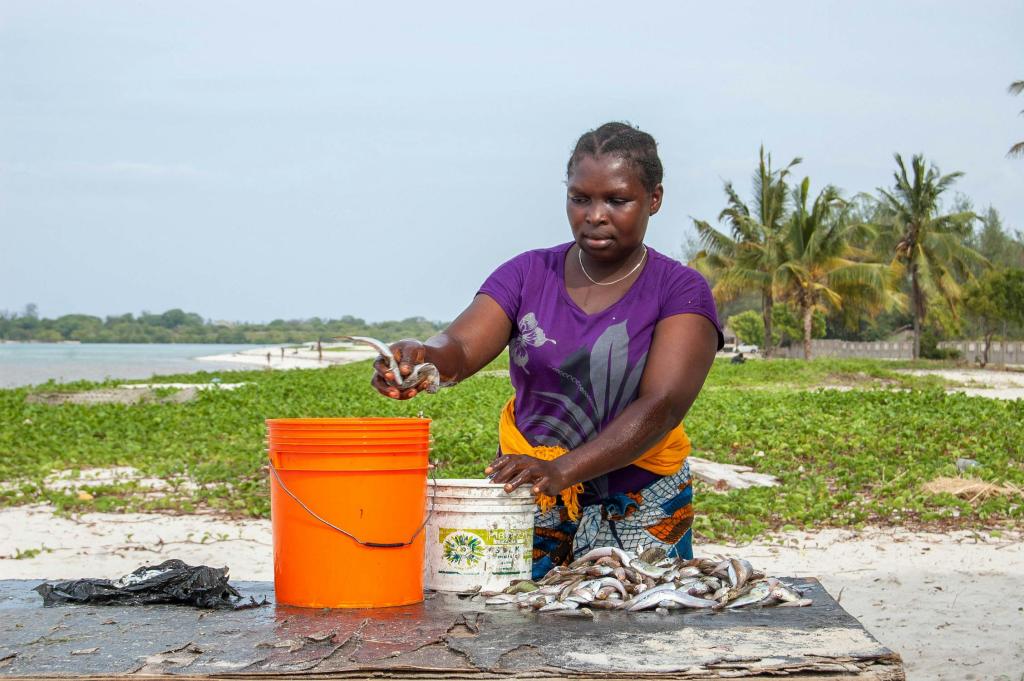
A woman places fish into a bucket.

SAVi uses system dynamics—including the cause-effect and risk factors—to forecast a project’s impacts. The goal is to deliver reputable infrastructure financing recommendations to governments and investors so they can make informed decisions and “steer capital toward sustainable infrastructure.” Past work has shown that SAVi assessments make compelling arguments for nature-based infrastructure interventions, including the ESG benefits for women. For example, IISD has already implemented a successful experience of this in Morocco through the “Contournement de Rabat” project. 

How does Natur’ELLES’ support for women look in practice?  

Natur’ELLES supports women in Senegal through several initiatives. In partnership with the International Union for Conservation of Nature, Natur’ELLES supports "mangrove platforms”regular meetings that gather all stakeholders to discuss issues related to the conservation of mangroves as well as challenges and solutions. These dialogue platforms offer an opportunity for women to equally influence decisions on the planning and the management of natural resources. 

Another upcoming project supported through Natur’ELLES is (Google Earth Engine Mangrove Mapping Methodology) app. This app will be used to collect data, monitor and measure the health of mangroves — which play an important role for the development fishery resources." 

The GEM app offers the possibilities for communitieswomen in particularto participate in data collection activities and collaborate with public authorities to monitor progress themselves, take ownership of their natural resource management systems and fully understand the evolution of mangrove-based ecosystems while adopting best practices.   

Natur’ELLES is also implementing an educational program tailored to women who did not have a formal education, titled “classe d’alphabetisation.” This program will reduce the education gap of women while building their capacities to read and write (necessary skills to produce and analyze data) and meet their full potential. Besides, the project has been implementing a feminist leadership program that equips women with technical and soft skills so they can adopt best practices, improve their self-confidence, and better participate in decision-making processes while amplifying their voices on climate change-related issues.

The Natur'ELLES project endeavours to enhance the resilience of women and their communities in the Sine Saloum and Casamance deltas who are vulnerable to climate change. Find out more about the initiative

Workshop

Workshop for Government Officials in the United Republic of Tanzania on Negotiating Better Agricultural Investment Contracts and Reforming Investment Treaties

February 10, 2025 8:00 am - 4:00 pm EAT

(By invitation)

IISD will deliver a 3-day in-person training for government officials in Dar es Salaam, Tanzania, focusing on two critical issues: strengthening the design and negotiation of investment contracts to enhance agricultural and forestry investment governance and the reform of international investment agreements (IIAs).

This training will provide practical guidance and explore:

  • The relationship between IIAs, investment contracts, and national laws and their role in attracting sustainable investment
  • Legal risks associated with IIAs and investor–state contracts in agriculture and forestry
  • How investor–state contracts can be designed and negotiated to mitigate risks posed by foreign direct investment in agriculture and forestry sectors
  • Legal tools that could promote more responsible investment in agriculture, including model contracts, memorandums of understanding, and institutional frameworks
  • How investment treaties impact national policy space and strategies for reform
  • National strategies to align investment policies with sustainable development goals

Officials in attendance for this workshop include:

  • President’s Office – Planning and Investment    
  • Attorney General’s Office (Mainland & Zanzibar)
  • Solicitor General’s Office
  • President’s Office – Labour and Investment (Zanzibar)
  • Ministry of Constitutional and Legal Affairs
  • Ministry of Agriculture, Irrigation, Natural Resources, and Livestock  
  • Ministry of Finance
  • Tanzania Investment Centre
  • Zanzibar Investment Promotion Authority
  • Southern Agricultural Growth Corridor of Tanzania
Workshop

Stakeholder Consultation of the East African Organic Products Standard

November 21, 2024 4:00 pm - 5:30 pm EAT

(By invitation)

The African Organic Network (AfrONet) is collaborating with National Organic Agriculture Movements (NOAMs) in East Africa to update and strengthen the East African Organic Product Standard (EAOPS).

To this end, AfrONet commissioned the International Institute for Sustainable Development, through the State of Sustainability Initiatives, to conduct a benchmarking of the Final Draft East African Standard (FDEAS) 456:2024, Organic production – Requirements, against criteria based on a set of indicators related to regional policy objectives and the Sustainable Development Goals of the 2030 Agenda, while comparing it with other internationally recognized voluntary sustainability standards operating in the region. A regional organic agriculture standard like the FDEAS 456:2024 has the potential to boost the formal trade of organic products in East Africa, opening market opportunities for thousands of organic-certified producers who comply with other international regulations, such as the new European Union’s Deforestation Regulation and the new EU Organic Regulation. Therefore, to strengthen the FDEAS 456:2024 for wider adoption, it is essential to look at its current state in relation to social, economic, and environmental conditions.

This online event sought to

  • convene representatives from NOAMs, national bureaus of standards, and the Secretariat of the East African Community;
  • present an overview of the FDEAS 456:2024 along with the requirements of the new EU Deforestation and Organic regulations;
  • identify issues that are relevant to address in the updated version of EAOPS.

Participants

  • AfrONet and NOAMs
  • Burundi Bureau of Standards
  • Kenya Bureau of Standards
  • Uganda National Bureau of Standards
  • Office Congolais de Contrôle
  • Rwanda Bureau of Standards
  • South Sudan National Bureau of Standards
  • Somali Bureau of Standards
  • Tanzania Bureau of Standards
  • East African Community
  • International Institute for Sustainable Development
Long-form article

SUNCASA in Kigali: Beyond planting trees

The City of Kigali and SUNCASA launched the “My Tree” campaign to promote tree sustainability and community ownership.

The City of Kigali, in collaboration with SUNCASA and its local partners, launched the ‘#IgitiCyanjye’ (#MyTree) community tree planting campaign on October 26, with the goal of ensuring the long-term sustainability of trees planted across the city. In Kigali, SUNCASA aims to restore the Nyabarongo River catchment through gender-responsive nature-based solutions, reducing flash floods, landslides, and erosion risks to enhance the resilience of 975,000 residents. 

November 4, 2024

As part of Rwanda’s monthly Umuganda community service, the campaign engages residents, organizations, and the broader community to ensure the long-term sustainability of trees planted throughout Kigali, encouraging shared responsibility for their care and maintenance. The October event also marked the community launch of SUNCASA in the districts of Kicukiro, Nyarugenge, and Gasabo. Hundreds of residents gathered at the three sites to participate in the community work, planting around 9,200 trees. The City of Kigali expects to plant 3 million trees in 5 years. SUNCASA will be pivotal in achieving this goal, as the project seeks to collaborate with 2 million new trees planted to restore the Nyabarongo River catchment.

Speaking at the event, Lord Mayor of Kigali Samuel Dusengiyumva underscored the importance of the partnership with SUNCASA and community-driven environmental initiatives, stating, “What we are doing with the ‘My Tree campaign,’ Igiti Chanje, is to encourage citizens to go beyond planting trees to ensure that the trees that we plant, we take care of them, we ensure that they grow so that they can serve the purpose.”

“Together with the SUNCASA project, we are aiming to plant 2 million trees within only 3 years or 2 years to come. The SUNCASA project is a perfect match with the city plan to become a city in the forest,” remarked Lord Mayor Samuel Dusengiyumva.

Lord Mayor of Kigali, Samuel Dusengiyumva, speaking at lthe aunch the “My Tree” campaign to promote tree sustainability and community ownership.
Lord Mayor of Kigali, Samuel Dusengiyumva: "The SUNCASA project is a perfect match with the city plan to become a city in the forest.” (Photo: Willian Bidibura | ARCOS Network | SUNCASA)

Through various communication channels, the campaign seeks to create a lasting commitment to tree care, positioning Kigali as a green, sustainable city where every individual and organization plays an active role in preserving and nurturing the urban environment. “By leveraging the voices of community champions and influencers, the campaign aims to raise awareness about the environmental, social, and economic benefits of trees while fostering a deep sense of ownership, particularly among Kigali’s residents,” said Lord Mayor Samuel Dusengiyumva.

Check out the highlights of the launch of the “My Tree” campaign. (Footage and edition: Willian Bidibura | ARCOS Network | SUNCASA)

Through a gender-responsive nature-based solution approach, SUNCASA will see the reforestation of steep slopes, the creation of agroforestry systems, and the establishment of urban tree-planting efforts that will help protect high-risk households, stabilize gullies, and reduce the vulnerabilities associated with Kigali’s rapidly urbanizing topography. In addition to the City of Kigali, SUNCASA is being implemented along with ARCOS Network, AVEGA-Agahozo, and Rwanda Young Water Professionals.

Marc Manyifika, World Resources Institute Lead of Urban Water Resilience for Africa, observed that the ‘My Tree’ campaign and SUNCASA align with global efforts to tackle climate change. “Kigali is leading by example. We cannot ignore the pressing threats of landslides and flooding that affect thousands of households. By working together, we are actively shaping the future we want to see for a greener Kigali. The city is setting a strong example in addressing climate challenges.

The ‘#IgitiCyanje’ campaign aligns perfectly with SUNCASA’s vision and mission, as it not only promotes tree planting across this vibrant city but also fosters community engagement to ensure the long-term sustainability of the NbS that are making Kigali greener and more resilient to the impacts of climate change,” said Kulupa Mkindlanyana, SUNCASA’s Project Manager representing IISD at the event.

SUNCASA IN KIGALI

  • Investing CAD 9 million (USD 7 million) in gender-responsive nature-based solutions through 2026.
  • Enhancing the resilience of 975,000 residents living in climate-risk areas.
  • Planting 827,000 trees in 220 ha through afforestation (new forest) actions.
  • Reforesting 650 ha with more than 1 million trees.
  • Planting 125,000 trees through agroforestry across 1,292 ha.
  • Developing 395.6 ha in buffer zones.
  • Urban green gardening with the planting of 41,600 trees along 52,488 km of roadways and 43,400 trees in 44.7 ha of public gardens.
  • Creating 5,000 green jobs in SUNCASA implementation activities.

ABOUT UMUGANDA

Umuganda, also known as community work with the purpose of contributing to the overall national development, was reintroduced to Rwandan life in 1998 as part of efforts to rebuild the country after the 1994 Genocide against the Tusti. It takes place on the last Saturday of each month.


Conference

Showcasing Practical Tools for Promoting Responsible Investment in Agriculture and Food Systems

October 24, 2024 1:30 pm - 2:45 pm CET

(Open to public)

Background

The CFS Principles for Responsible Investment in Agriculture and Food Systems (CFS-RAI) are 10 principles that apply to all types and sizes of investment in agriculture and food systems. They recognize that all stakeholders have a role to play in promoting responsible investment.

Governments must create enabling environments for responsible agricultural investment and ensure safeguards are in place to balance the needs and interests of investors, smallholders, local communities, and other affected parties.

Investors and agribusinesses are responsible for mitigating and managing the risks associated with their investments and for maximizing their positive social and environmental impacts. They are also responsible for complying with relevant laws and regulations and conducting due diligence.

Stakeholders need guidance and support to apply the CFS-RAI principles effectively. This is why several organizations have come together to develop practical tools that governments, investors, agribusinesses, and other stakeholders can use to promote, support, and apply the CFS-RAI in practice.

About the Event

This side event—organized by IISD, the FAO, Columbia Center on Sustainable Investment, and the governments of Germany, Liberia, and Switzerland—brought together stakeholders to raise awareness about the range of practical tools that can support governments, investors, agribusinesses, and other actors to ensure investments in agriculture and food systems are responsible.

The event showcased a selection of these tools and explore how they can promote responsible investment in agriculture and food systems. It aims to start a conversation among those developing, rolling out, and supporting the use of these tools on how to improve coordination and encourage more actors to join forces on this.

Success story

Hope Springs: How one community brought a river back from the brink

For over a decade, a small group of community members in Zambia have been working to restore the Nsongwe River, once a precious sanctuary for wildlife and the community. Their actions are slowly but surely bringing the river back to life. Now, with support from IISD’s Climate Adaptation and Protected Areas Initiative, their goal is within reach. Susan Sekirime explains.

September 19, 2024

As the world gears up to celebrate World Rivers Day on September 22, we should take a moment to reflect on the vital role that rivers have played in sustaining human evolution.

Rivers are one of the world’s most precious resources, but they are invariably undervalued. Long before we engineered running water, rivers flowed through our landscapes, pumping fresh water to wetlands and lakes and out to sea.  Animals and plants found sanctuary in the rivers, fish swam in their waters, and birds flew overhead. Vegetation was replenished by seeds carried by rivers for thousands of miles, while a multitude of species used rivers as migration routes. These waterways did not just sustain life on Earth, they were also part of the fabric of our culture and history, shaping identities of entire nations. The valleys of some great rivers contain many sites of early human settlement, and for centuries, rivers served as trade routes across the globe, influencing the economic, social, political, and religious development of mankind.

A tranquil river surrounded by trees

Today, these values still exist, and in some ways, are even more significant than before. An estimated 2 billion people globally rely directly on rivers for their drinking water, while about 500 million live on deltas that are sustained by sediment from rivers. But in a world where our climate is rapidly changing, and the global population is expected to increase by nearly 2 billion in the next 30 years, rivers are under pressure. There is a critical need to protect and preserve these invaluable natural resources.

The Nsongwe community, some 30 minutes outside of Mosi-oa-Tunya National Park in southern Zambia, knows this all too well. The Nsongwe River, a spring-fed waterway that was once their lifeline and sanctuary, is no more the victim of poor planning and neglect. However, over a period of 13 years, a small group of community members have been working to desilt, reforest, and restore parts of the river. We spoke to one of the local women from the village, Bridget Meyer, who kicked off this work and has been leading the river’s restoration, and asked her to share her story.

A group of women from the Nsongwe community who have been working to restore the river.

What do you remember about the Nsongwe River growing up?

“I remember the river being vibrant with life and flowing all year round through the heart of a lush forest. We revered the Nsongwe River not only as a recreational spot for swimming but also for its healing waters believed to possess curative properties that could soothe ailments and restore well-being.

The cool, clear waters, shaded by a thick canopy above, offered a serene escape from the heat.

As a young girl, the Nsongwe River was a big recreation area for me and my friends. We spent our weekends enjoying the cool breeze along the river as we collected a special grass to make baskets. We chased butterflies along the Nsongwe River corridor, believing that you would receive a beautiful and colourful gift at Christmas resembling the colour of the butterfly you caught. We swam every day. A section of the river was lined with a wall of basalt rock on which girls and boys listed love notes in chalk. Gossip and other communal information was exchanged on this wall. At any one point in the afternoons, there would be about 10 or more girls swimming and enjoying the river. We made sound echoes that bounced off the rock wall.

A special wild pea with big pods grew every rainy season. We harvested the pods and squeezed one edge that would pop open. We used the opening to slide in our earlobes and wear as earrings. We wore them for Christmas! I really cherish those moments.

The river did not only appeal to the locals who dwelled near it; it was also a critical habitat for wildlife, most notably the hippos. The dense forest and the abundant water provided the hippos with everything they needed: safety from predators, lush vegetation for grazing, and ample space to submerge and keep cool under the hot sun.

A sunset silhouette of a hippo swimming in a river

The Nsongwe River was more than just a body of water; it was a sanctuary, both for the communities who dwelled near it and the wildlife that called it home.

What is the state of the Nsongwe River today?

“The river has undergone a very dramatic transformation. Currently, it stands mostly dry, its former glory significantly diminished. Many of the deep pools that dotted its course have been filled with soil and sand, a testament to the neglect and environmental degradation it has suffered.

The lush forest that once lined its banks, providing shade and a cool microclimate, has been largely cleared. The removal of these trees not only took away the river’s natural cooling mechanism but also exposed the surrounding land to the harsh sun. This deforestation has had a domino effect, leading to increased erosion along the riverbanks. The soil, once held firmly in place by the roots of countless trees, has washed away, leaving behind barren and eroded fields.

The Nsongwe River currently stands mostly dry

Without the protective cover of the forest and the sustaining waters of the river, the local wildlife has suffered. The hippos, which once brought their young to grow and thrive in the safety of the Nsongwe River’s waters, no longer visit. The river, devoid of its life-giving flow, cannot support them, nor the fish.

The community, too, feels the absence of the river's bounty. Swimming, a joyful and communal activity that also served as a respite from the heat, is no longer possible. The river, which once healed and nurtured, now serves as a stark reminder of the fragility of natural ecosystems and the profound impact of human activity on the environment.”

What has the community done to successfully restore the river?

“Over a period of 13 years, a small group of community members have been working to desilt, reforest, and restore parts of the river. To date, we have managed to remove soil deposits and plant native hydrophilic plants along a 300-metre stretch of the riverbank.

A woman works to restore the Nsongwe River

We pumped water from our well to a drinking trough for cattle away from the river to protect the restoration works. These actions, albeit very minimal, have restored some natural springs that had been buried, and the area where we concentrated our efforts has started showing signs of life.

In the vast dryness that has characterized the Nsongwe community for several decades, this stretch is now a cool, green haven.

Community members have started gathering to cool off in the water, and a lone crocodile has also taken permanent residence in the area.

This success serves as a beacon of hope and has sparked a wave of renewed optimism among the local community and conservationists alike that the entire river could potentially be returned to its former state.

What would it mean to the community if the Nsongwe River started flowing again?

“Revitalizing the Nsongwe River would bring numerous benefits, both ecological and economic.

For the village, the resurgence of the river could lead to a revival of local activities and traditions that were once centred around its waters. Swimming and fishing, activities that foster community bonding and support local livelihoods, could once again thrive.

The return of clean, flowing water would also ensure the health and sustainability of local gardens, boosting food production and supporting self-sufficiency.

Moreover, the restoration of the forest surrounding the river would be equally good. Replanting trees and rehabilitating the forest would not only help stabilize the climate around the river by providing much-needed shade and reducing erosion, but would also reestablish a habitat for wildlife, including the once-common hippos. The cooler microclimate would make the area more comfortable for both residents and visitors, enhancing the village’s appeal as a destination for ecotourism.

Such environmental restoration could catalyze economic revitalization. With the river and forest restored, new opportunities could arise in ecotourism and agroforestry, providing jobs and stimulating economic activity. Local markets could see a surge in demand for agricultural products and crafts, further energizing the village’s economy.

In essence, the restoration of the Nsongwe River and its surrounding forest is not just an ecological necessity but a cornerstone for the future prosperity of the village, fostering a sustainable model that could inspire similar efforts elsewhere. That is why the work we are doing with the Climate Adaptation and Protected Areas Initiative is so important!”

Bridget Meyer leads a community discussion

The work already done by the community was the proof of concept that Climate Adaptation and Protected Areas (CAPA) partners IISD and WWF Zambia needed to scale up the nature-based solutions that the community had achieved. With support from Global Affairs Canada, the CAPA Initiative is now supporting the Nsongwe community to restore the river and its tributaries, the Lubemba and Lutwa streams.

So far, this has meant conducting risk assessments to better understand the unique climate, biodiversity, and gender risks faced by the community, alongside hydrological assessments to identify areas suitable for specific restoration efforts, including desilting and the construction of check dams to control water velocity, conserve soil, and improve the land.

Through CAPA, IISD and WWF Zambia have managed to get the whole community involved, including their Senior Chief—who has since encouraged villages outside of the CAPA target area to do the same.

Beyond the river itself, CAPA is also supporting the community in restoring 400 hectares of forest along the Nsongwe River and is constructing fire breaks along a 50-metre buffer zone on both sides of the river to protect the restored areas. These efforts will support effective water recharge, flow, and availability during the dry seasons, thereby contributing to efforts to revive the Nsongwe—which once ran for 5 kilometres before joining the Zambezi—to its former glory.

This work is part of CAPA’s efforts to design and implement concrete gender-responsive, conflict-sensitive, nature-based solutions to support local communities to adapt to climate change while safeguarding critical ecosystems and biodiversity in and around protected areas in the Kavango–Zambezi landscape.

What started as a one-woman effort, with support from a few community members, is now a whole community effort, and we are proud to be working alongside them to restore the whole river and two of its tributaries.

Learn more about what we are doing in the Kavango–Zambezi Landscape.

Deep Dive

How Can We Work With Nature to Tackle Drought and Desertification?

Drought is one of the most devastating and pervasive challenges exacerbated by climate change. However, we can work to reduce its effects through nature-based solutions for land restoration and climate-smart agriculture. 

June 14, 2024

Drought and Desertification

Drought has affected more people than any other natural disaster over the last 40 years, by drastically reducing both water quality and quantity, increasing the risk of disease and illness, and severely impacting livelihoods and nutrition through land degradation and food scarcity.

Extreme weather patterns, exacerbated by climate change, have resulted in some areas receiving a whole season’s rainfall in a single day, followed by an entire season with no rainfall at all. This variability is disastrous for communities, as it impacts soil health, agriculture, biodiversity, and hydropower, and often damages vital infrastructure. Such extremes leave land damaged through desertification: a form of land degradation in which drylands lose moisture and nutrients, becoming arid. This process can also be sparked through human activities, including agricultural factors like overgrazing and tilling, urban expansion and deforestation. Globally, more than 2 billion hectares of previously productive land has been degraded through desertification. That is an area twice the size of the United States!

Drought affects 1.84 billion people globally—that’s one in eight people

Currently, drought affects 1.84 billion people globally—that’s one in eight people. And it is set to get worse. The duration and frequency of droughts have increased by 29% since 2000, compared with the previous two decades. With further global warming, the latest Intergovernmental Panel on Climate Change (IPCC) report found that every region is projected to experience more frequent heatwaves and droughts. By 2040, one in four children will be living in areas with extreme water shortages, with far-reaching impacts for future generations.

Drought is one of the most devastating and pervasive challenges exacerbated by climate change. However, we can work to reduce its effects by learning from nature.

Mongolian nomad woman milking a cow

As intense weather worsens, droughts increase in intensity and frequency and the Earth heats up, there will be devastating impacts on communities, people's livelihoods, food security, and global economies.

Drought: A global problem

Drought is a global concern. The greatest impact is on low- and middle-income countries, where 85% of people affected by drought reside, according to the World Bank. Agriculture is at the heart of these economies and is the sector most affected by drought, absorbing up to 80% of all direct impacts. Nearly 1.3 billion people rely on agriculture as their main source of income. As intense weather worsens, droughts increase in intensity and frequency and the Earth heats up, there will be devastating impacts on communities, people's livelihoods, food security, and global economies.

An average of 70 countries are affected by drought each year. The World Bank mapped recent drought and desertification hotspots from 2019 to 2022, demonstrating that this phenomenon is intensifying in five out of seven continents. These hotspots are illustrated in the below map, which will name the country when you hover over it.


Even the areas currently not affected by water scarcity will soon feel its effects due to climate-related migration. By 2030, an estimated 700 million people will be at risk of displacement from drought alone. More people will lose their livelihoods. They will be forced to flee their homes. Food will become harder to come by, as millions of hectares of land dries up and becomes uninhabitable. Drought has the potential to be a silent tsunami, sweeping across great swathes of our landscape over the next decade, with developing and least developed countries set to be the worst affected.

By 2030, an estimated 700 million people will be at risk of displacement by drought alone

Nature-based solutions—an antidote to drought

Nature is a resilient teacher. By employing nature’s own checks and balances for environmental extremes like drought and desertification, we can adapt the landscape to absorb some of the impacts of climate change.

Lessons found in nature are implemented through nature-based solutions (NbS) that help protect, restore, and sustainably use ecosystems while simultaneously providing human well-being, resilience, and biodiversity benefits. Examples of NbS include planting trees to improve air and soil quality, retain water, and provide wildlife habitats, or restoring wetlands to create buffer zones for flooding and to support erosion protection. This green approach to infrastructure services can complementand sometimes replacetraditional grey infrastructure, such as concrete drains, seawalls, or breakwaters. Known as nature-based or natural infrastructure, this type of NbS can be employed to reduce the impacts of drought and desertification.

River in Namibia

By 2040, one in four children will be living in areas with extreme water shortages, with far-reaching impacts for future generations.

Combatting extreme droughts in Burkina Faso

In West Africa, Burkina Faso is experiencing severe impacts of climate change in the form of increasingly extreme rainfall and flooding events coupled with prolonged droughts. As a result, 46% of the country's arable land is now degraded. 80% of the population relies on agriculture for income, so drought and heat stress have detrimentally affected livelihoods and resulted in food scarcity.

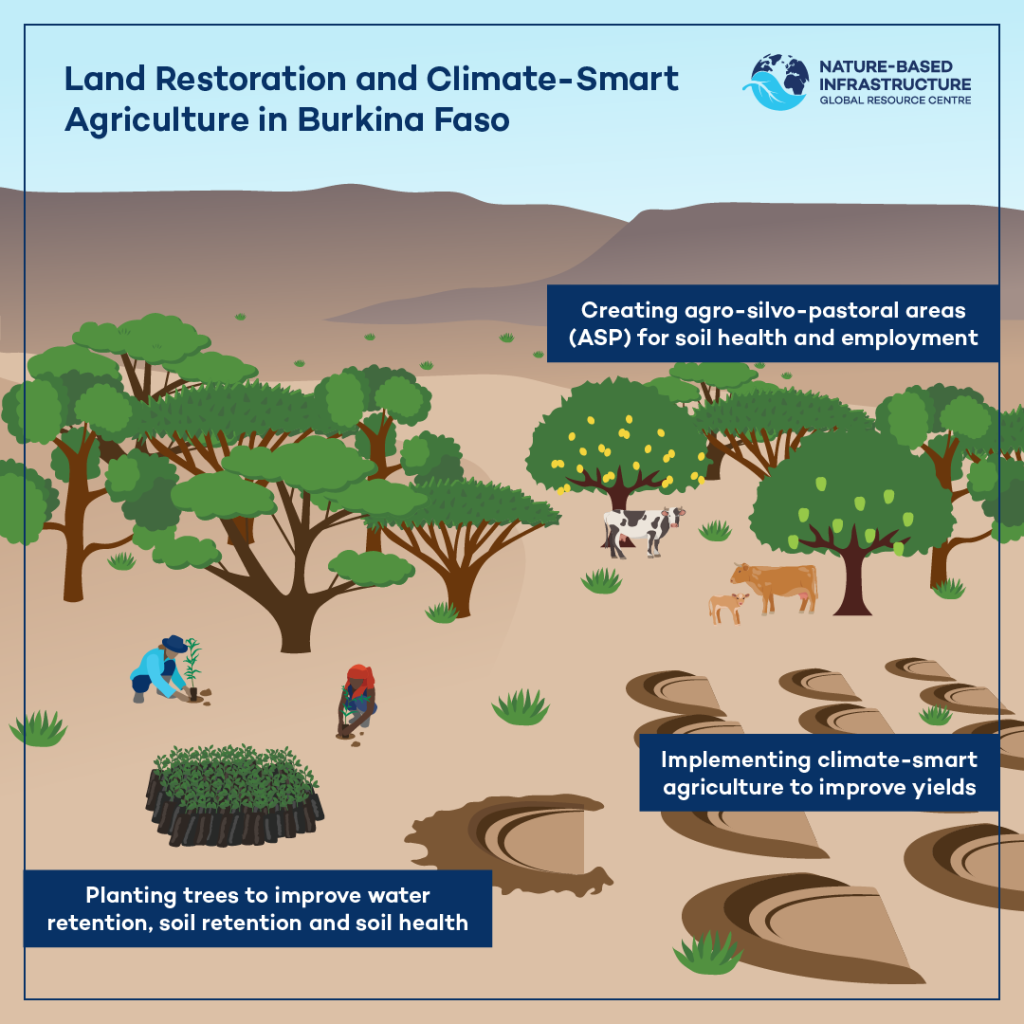
To combat this, the government has proposed a new land restoration project that aims to regenerate over a third of the country’s total land cover. Through the Nature-Based Infrastructure (NBI) Global Resource Centre, an initiative aiming to demonstrate the investment case for nature-based approaches to climate change adaptation, IISD assessed three potential methods for land restoration: nature-based, hybrid and traditional grey infrastructure. Working with Burkina Faso’s Ministries of Finance and Agriculture, and supported by the NDC Partnership, the NBI Global Resource Centre developed financial and economic models, calculating that the nature-based approach performed better than traditional grey infrastructure, to the tune of USD 1.7 billion in added benefits to the community over 30 years.

Burkina Faso NBI for Land Restoration

Consisting of tree planting, climate-smart agriculture, regenerative agriculture practices, and the establishment of agro-silvo-pastoral areas (which integrate agriculture, grasslands, fruit crops, and livestock farming), the combined methods reduce land erosion, enhance water retention, and improve soil quality, thereby helping to restore the degraded land and boost agricultural productivity. This modelling demonstrates the remarkable potential of nature in restoring land and reversing desertification while creating a wealth of environmental, social, and economic benefits for rural communities.

At least 100 million hectares of healthy land, an area the size of Egypt, is lost every year.

Nature-based solutions are like a Swiss Army knife. They can help us tackle many problems in a single project: drought, flooding, climate-related migration, food scarcity, nutrition, public health, rural livelihoods and the economy, CO2 emissions, heat stress, biodiversity protectionand even social inequality. Because of its inherent resilience, working with naturerather than against iteffectively reduces the impacts of drought and stops desertification in its tracks. But we need to deploy nature urgently; at least 100 million hectares of healthy land, an area the size of Egypt, is lost every year.

Deserted homes in Kolmanskop ghost town near Luderitz in Namibia, the site of an abandoned diamond mine

By 2030, an estimated 700 million people will be at risk of displacement from drought alone.

Three ways to include nature in climate adaptation

Increase awareness to demonstrate the diverse returns on investment

The first critical step for the successful implementation of NbS is to increase awareness of how nature can deliver these benefits by engaging with local communities, farmers, policymakers, and investors.

IISD has worked on a variety of projects doing just that all over the world. The Nature for Climate Adaptation Initiative developed an online course to raise awareness of the benefits of ecosystem-based adaptation and equip learners with transferable and replicable skills in designing and implementing these initiatives. Furthermore, in Manitoba, Canada, our Natural Infrastructure for Water Solutions team worked with the Seine Rat Roseau Watershed District to demonstrate the financial and economic benefits of their Water Retention program to local farmers and communities. The program helps protect farms from floods and drought, conserves habitats, and improves water quality downstream. David Wiens, a dairy producer in the district, said of the program: “My initial concern was about having the pastures flooded for a period of time. But when I understood the design, it became clear that it would actually be winwin.”

We can also tackle social inequalities by empowering underrepresented groups to pave the way for nature-based approaches. For example, a project that aimed to improve women’s land ownership in Rwanda also increased investments in soil conservation. In the Amazon, securing land rights for Indigenous People helped reduce deforestation. The impacts of the climate and biodiversity crises interact with social and gender inequalities, disproportionately affecting marginalized populations, and NbS initiatives must take this into account to boost societal benefits.

Collaboration is keyconsider drought as part of a wider problem

Drought and degraded land are not isolated issues. They have far-reaching impacts and implications for all areas of society, including public health, agriculture, the economy, and migration. An intersectional, unified approach between local communities, farmers, and policy-makers is crucial to gaining investment. Government ministries must come together to find solutions for climate change adaptation and mitigation. Local governments need to work with farmers and communities to support projects on the ground. Non-governmental organizations and governments can align with private investors to encourage financial flows to land restoration projects that sequester carbon and improve agricultural yields. Overall, stakeholders must break out of their silos and work together with an intersectional and coordinated approach to the problem.

Encourage and implement climate-smart and regenerative agricultural practices

In areas worst affected by drought, raising awareness, and funds and providing training for agricultural communities on implementing climate-smart and regenerative agricultural practices is crucial to maintaining land-restoration progress. Depending on the location, these practices can include reduced- and no-tilling techniques, “half-moons” or “earth smiles” (a traditional method of rainwater collection and soil restoration in the Sahel), keeping soil covered to prevent erosion, increasing crop diversity to boost soil health, nature-based water retention methods like channel rehabilitation, planting agroforests, creating agro-silvo-pastoral areas, and many more. These strategies are necessary to both recover already degraded land and prevent further desertification as droughts worsen with climate change.

Drought has been a concern for agriculture around the globe. Even in areas that are not directly affected to the extreme levels seen in low- or middle-income countries, action needs to be taken. By implementing NbS and making changes now to agricultural practices, farmers, communities, and policymakers can do their part to lessen future impacts of the climate crisis.


Learning more about how nature can help

With drought intensifying in five of seven continents, as well as the other climate crisis effects we are facing globally, it can feel a bit hopeless.  However, if we collaborate on solutions, using nature as our example, we can improve our climate adaptation strategies locally and globally.

Here at IISD, we have a number of ways for you to explore solutions, learn from case studies, and discover more about working with nature for climate adaptation.

Webinar

Rethinking Investment Treaties: Lessons for policy-making

Leading experts from IISD, academia, and international institutions explored how investment treaties can be redesigned to address the urgent issues facing the world today–and to support genuine sustainable development. The discussion was based on IISD's new report, Rethinking Investment Treaties: A Roadmap.

May 30, 2024 12:00 pm - 1:30 pm Central European Summer Time (CEST)

Zoom

(Open to public)

If we were building the investment treaty regime from scratch today, what policy problems should the regime seek to solve, and how should it contribute to solving them? 

This was the question at the heart of this IISD webinar on international investment treaties. Instead of scrutinizing existing flaws in existing treaties, the webinar aimed to guide policy-makers on how to reevaluate investment treaties to tackle the burning environmental, social, and climate change issues of the 21st century.

The webinar was based on a fresh report from IISD, Rethinking Investment Treaties, which sets out a detailed roadmap for how the international investment treaty system can be redesigned to acceleraterather than obstructgenuine sustainable development.

The report authors, Josef Ostřanský and Jonathan Bonnitcha, and leading experts from academia and international institutions discussed the report's key findings and further unpacked how investment treaties could be redesigned to improve international cooperation on investment governance, align financial flows with the Paris Agreement, ensure that host states benefit from investment projects, and ensure strong human rights and environmental standards in investment projects.

Read the first paper in our Rethinking series, Rethinking National Investment Laws.

Speakers

Alessandra Mistura, policy analyst, Organisation for Economic Co-operation and Development (OECD)

Chantal Ononaiwu, director of external trade, Caribbean Community (CARICOM) Secretariat

Dafina Atanasova, economic affairs officer, United Nations Conference on Trade and Development (UNCTAD)

J. Benton Heath, associate professor of Law, Temple University

Jonathan Bonnitcha, senior associate, IISD

Josef Ostřanský, policy advisor, IISD

Joshua Paine, senior lecturer, University of Bristol

Roslyn Ng'eno, Senior Investment Expert, African Continental Free Trade Area (AfCFTA) Secretariat

Yuanita Ruchyat, senior officer for investment, Association of Southeast Asian Nations (ASEAN) Secretariat


The discussion was moderated by Suzy H. Nikièma, Director of Investment, IISD.

Press release

CSDDD: EU's due diligence law vote should drive supply chain sustainability efforts

April 24, 2024

April 24 – The European Parliament has today voted to adopt the Corporate Sustainability Due Diligence Directive (CSDDD), following months of negotiations between the European Union (EU) institutions and member states.

“Ensuring that corporations take responsibility for preventing and managing the environmental, labour, and human rights impacts of their supply chains is key to global sustainable development efforts. The adoption of the CSDDD is a step in the right direction”, Suzy H. Nikièma, Director of Investment at the International Institute for Sustainable Development (IISD) said.

“However, the watered-down nature of the final directive compared to the original proposal is concerning. Now, only companies with more than 1,000 employees and a net turnover of over EUR 450 million EUR annually are within the scope of the rules, compared to 250 employees and a net turnover of EUR 40 million as the threshold for high-impact sectors in the original text.

Due diligence initiatives, such as the CSDDD, will only truly deliver their promised sustainability benefits if they address the unique needs of the suppliers in the countries where most of these requirements will be applied. If we get the implementation right, due diligence regulations should help generate genuine responsible investment in developing countries.

European policy-makers must now focus on providing the technical support and resources necessary for local suppliers in developing countries to comply, which includes making sure that the large international companies in scope of the CSDDD take their share of the responsibility for this crucial work.”

Media Contacts

Suzy H. Nikièma, Director of Investment, IISD: [email protected]
Isaak Bowers, Communications Officer, Investment, IISD: [email protected]
 

Natur'ELLES

The Natur'ELLES project endeavors to enhance the resilience of women and their communities in the Sine Saloum and Casamance deltas vulnerable to climate change. It will advocate for the adoption of nature-based solutions aimed at restoring and conserving mangrove coastal biodiversity among local populations.

Through a community-based approach, Natur'ELLES aims to bolster the critical environmental services provided by mangroves, particularly for the benefit of women, such as enhancing fisheries productivity and mitigating coastal erosion, flooding, and salinization.

Supported by the International Union for Conservation of Nature (IUCN), the project seeks to empower stakeholders in Marine Protected Areas (MPAs) and Indigenous Community Heritage Areas and territories (ICHAs) to spearhead conservation and governance strategies, placing local communities at the forefront.

Activities will encompass restoration campaigns, awareness-raising, and the promotion of climate-smart, biodiversity-respecting energy and production alternatives, with a focus on sustainable fisheries and microenterprise federations to provide tailored products and services, enhancing income crucial for climate change adaptation and biodiversity conservation.

Additionally, the project aims to establish a pilot mechanism for payment for environmental services (PES) geared towards women and their communities. Based on an economic assessment of the value of blue carbon sinks using IISD's Sustainable Asset Valuation (SAVi) methodology and targeting the blue carbon market, this model will be widely disseminated to demonstrate the holistic economic value of the ecosystem to the community.

Natur'ELLES will directly benefit 8,000 people, including at least 6,000 women and young women vulnerable to climate change, as well as their communities in the Sine Saloum and Upper Casamance deltas (including more than 85,000 indirect beneficiaries across 113 villages, who will benefit from improved fishery resources, food security and environmental services for climate risk mitigation).

SOCODEVI will lead the project, with partners including the International Institute for Sustainable DevelopmentIUCN and Ostrom Climate Solutions.