Webinar

South Asia - Food and Agricultural Trade in the New Policy Environment: How Can WTO members Support Economic Recovery and Resilience?

December 17, 2020 4:30 pm - 5:30 pm IST

(Open to public)

twittercard

Trade in food and farm goods has been affected by the COVID-19 outbreak, imperilling efforts to make progress on tackling hunger and malnutrition according to the framework set out under the Sustainable Development Goals (SDGs). At the same time, the farm sector is under increasing pressure to respond to new environmental challenges, and especially those associated with climate change. With the World Trade Organization’s next Ministerial Conference postponed due to the pandemic, both the substance and process of talks in Geneva on updating the global trade rulebook have been affected, amid ongoing tensions between major economies. As governments revisit their priorities in this new context, it is important that they engage with different constituencies in their regions and beyond to ensure that negotiating strategies reflect an inclusive vision of public policy goals—one that can contribute to economic recovery and improve resilience to future food system shocks.

With South Asia home to millions of small farmers, and food insecurity a persistent challenge in both rural and urban areas, policies affecting markets for food and agriculture remain highly controversial. While economic growth has contributed to rising average incomes and evolving patterns of demand across the region, extreme weather events associated with climate change represent an increasing challenge to the food and agriculture sector, along with increasing water scarcity. Designing national policies to address these challenges not only requires governments to navigate the impact of new measures on different domestic constituency groups, but also on producers and consumers elsewhere in South Asia and beyond. Meanwhile, with major economies around the world increasingly pursuing their trade policy goals through bilateral and regional deals, countries in the region have faced new challenges in advancing their objectives in this area at the multilateral level. 

This was the fourth of a series of events on the same topic but with a regional perspective. The events covered Africa, South Asia and Latin America. 

Date: December, 17, 2020 Time: 06:00 a.m.to 07:15 a.m. EST

Speakers

  • Ms. Aisha Moriani, Joint Secretary WTO, Ministry of Commerce, Pakistan 
  • Prof. Abhijit Das, Head, Indian Institute of Foreign Trade (IIFT), India
  • Amb. Gothami Silva, Sri Lanka Mission to the WTO 
  • Dr Fahmida Khatun, Centrefor Policy DIalogue, Bangladesh
  • Ajay Vir Jakhar, Bharat Krishak Samaj
Webinar

Africa Launch | The Role of Parliamentarians in Enhancing Responsible Investments in Agriculture for the Transition Toward More Sustainable Food Systems in Africa

December 15, 2020 2:00 pm CET

(Open to public)

* Un version française de cette page est disponible. Veuillez cliquez sur French en haut de la page au dessus de la photo.

The Food and Agriculture Organization of the United Nations (FAO), International Institute For Sustainable Development (IISD), the Pan-African Parliament, East African Legislative Assembly (EALA) and the Economic Community of West African States (ECOWAS) Parliament jointly organized an event on the role of parliamentarians in enhancing responsible investments in agriculture for the transition toward more sustainable food systems in Africa on Tuesday, December 15, 2020.

Because of the agricultural sector’s influence on people and development, investment in the sector and in food systems is critical to supporting economic growth and reducing poverty and food insecurity. At the same time, it contributes to rural development and creating job opportunities, especially for young people, women, and other vulnerable social groups. In the context of the current COVID-19 pandemic, additional investment in agriculture is required to reduce its consequences and support recovery efforts toward the achievement of the UN’s Sustainable Development Goals (SDGs).

In order to generate sustainable benefits for all, it is essential to ensure not only more, but above all, better investments that prioritize people’s food security and nutrition, uphold decent work, secure land rights and resources, recognize participation in consultation, and protect the most vulnerable.

Parliamentarians’ strategic position is fundamental to promoting enhanced public investments in the agricultural sector, such as the provision of public goods and services, including infrastructure, energy, research and development, especially in rural areas. These investments can also contribute to the emergence of the conditions to increase private investments, made by smallholders, by youth-led and women-led small and medium-sized enterprises (SMEs), and by larger-scale agribusiness investors, while ensuring well-defined safeguards are in place to protect legitimate interests and prevent damages to the environment and communities. Finally, they can act to facilitate complementarity between different kinds of investments. Members of parliament and parliamentary advisors also play a central role in building public awareness about the challenges and opportunities related to responsible investment in agriculture and food systems while ensuring that investments do not jeopardize vulnerable groups. 

Based on their experience working with parliamentarians, in 2020, FAO and the IISD joined forces to develop a practical handbook that provides a comprehensive and systematic overview of the role that parliamentarians can play in the creation of “enabling environments” in several areas related to investment in agriculture and food systems. It includes guidance notes alongside examples of legislation and good practices.

This event aimed to 
•    Raise awareness of the importance of responsible investment in agriculture and food systems for the achievement of the SDGs.  
•    Bring together parliamentarians from different parties and catalyze discussions on their concrete role in the enhancement of responsible agricultural investment (RAI) within Africa.  
•    Launch Responsible Investments in Agriculture and Food Systems. A Practical Handbook for Parliamentarians and Parliamentary advisors.


Watch the full recording of the event 

Download the Handbook here


The E-Book version of the report is now available at the following links


Check out a related story written by Francine Picard, Emma Jessie McGhie and Carin Smaller: More and Better Investments Are Needed in Agriculture and Food Systems - What can parliamentarians do about it?

Webinar

Africa English Panel – Food and Agricultural Trade in the New Policy Environment: How can WTO members support economic recovery and resilience?

December 8, 2020 2:30 pm - 3:30 pm GMT

(Open to public)

Twitter card English Panel in Africa

Policies affecting agricultural trade and markets must be part of Africa’s response to COVID-19 and to recent trade tensions between major economies, said participants at a virtual regional dialogue for English-speaking Africa on December 8, 2020.

The event, organized by the International Institute for Sustainable Development (IISD), the International Food Policy Research Institute (IFPRI), and AKADEMIYA2063, came three weeks after a similar dialogue for francophone African countries and was the third in a series of four such virtual meetings.

While the pandemic and trade tensions formed a major focus of the discussion, participants also explored how governments could better ensure that trade policy supports food security and environmental sustainability, and the role of both regional integration and multilateral trade talks at the World Trade Organization (WTO).

COVID-19 and Africa’s Agricultural Trade

Event moderator Jonathan Hepburn, senior policy advisor at IISD, asked participants how COVID-19 had affected markets for food and agriculture.

“The main story is a big shock in terms of demand,” said David Laborde, Senior Fellow at IFPRI. He told participants that trade in staple foods had been relatively resilient, although some sectors such as cut flowers or fruit and vegetables had been more seriously affected.

Falling demand for many products had led people’s income to fall, Laborde added, highlighting the particular vulnerability of poor people in the crisis.

Elizabeth Nderitu, Senior Regional Manager with TradeMark East Africa, told participants that COVID-19 testing requirements for truck drivers had initially caused long queues to form at borders until government agencies agreed to online certification and other mechanisms that eased the movement of goods and people.

However, despite being more resilient than other sectors, the farm sector was also vulnerable to the impact of the pandemic on trade in services and manufactured goods, noted Doaa Abdel-Motaal, Senior Counsellor in the WTO’s Division on Agriculture and Commodities.

She highlighted in particular the impact of reduced trade in fertilizers and farm machinery for the farm sector.

Trade Tensions: African households hit

Meanwhile, African countries had not been left unscathed by the trade war between major economies, participants said.

“Africa depends heavily on China and the US as their primary trading economies,” said Elizabeth Nsimadala, President of the Pan Africa Farmers Organization and the Eastern Africa Farmers Federation.

She highlighted especially the impact on exports of fresh fish, horticultural products, vegetables and fruit, beef and pork, milk and dairy products, and maize. A lack of storage infrastructure was a key problem that producers faced, she said.

Nderitu concurred, noting that many export commodities are produced largely by small-scale farmers, and underscoring the impact of weakened prices “on household economies at that level.”

Nsimadala told participants that a shortage of storage infrastructure was a particular problem facing farmers. Falling foreign exchange earnings and debt servicing requirements had also pushed governments to raise taxes on agricultural inputs, pesticides, fuel, and mobile financial transactions, creating a double burden for producers.

Regional Integration: From rhetoric to action?

Participants highlighted the significant challenges that producers and consumers in Africa still faceand the potential for closer economic integration on the continent to help overcome these.

Nsimadala highlighted conflict, poor infrastructure, inadequate transport and communication networks, poor road and railway connections, and insufficient telephone connectivity, which she said “really makes it difficult to trade and move food within the continent itself.”

Closer economic integration under the African Continental Free Trade Area (AfCFTA) could help address some of these challenges, Nderitu said.

She highlighted the agreement’s potential to “ensure the flow of goods from regions and countries with food surpluses to regions that experience seasonal or chronic food shortages as a result of their climatic environment.”

Different regional economic communities, ministries, and stakeholder groups should collaborate across areas where action was needed, she added. These areas included improving intermodal transport, enhancing the physical connectivity of markets, digitalizing trade processes, addressing non-tariff barriers, and ensuring that rules of origin facilitate intra-African trade.

Nsimadala said that African governments have excellent policies in place on regional and continental integration: the challenge was now to move “from rhetoric to action.”

Adding Value, Meeting Standards

One participant highlighted the issue of value addition, asking panelists how governments can best help firms meet international regulations and standards.

Nsimadala emphasized the importance of building an ecosystem of different actors who can support value chain development.

“Value addition should not be looked at as just a stand-alone, but it should be in a holistic approach where we look at the entire production chain from the farm to the fork,” she said.

Laborde reminded participants that most African countries already benefit from duty-free, quota-free access to markets such as the EU, although this alone has not been sufficient to support significant value addition in African countries. More important will be the emergence of domestic and regional markets in Africa, he said.

He noted that, for a long time, Africa did not have a “middle class” of urban consumers demanding more processed food.

“Now we have it,” he said.

What Role for the WTO?

Hepburn asked panelists what they were hoping governments would do at the WTO in the run-up to the global trade body’s next ministerial conference, as well as afterward.

Abdel-Motaal emphasized that WTO members can and should make progress on outstanding issues outside of the context of high-level conferences and large negotiating rounds. “We needn’t await a ministerial conference in order to have a result,” she said.

She also drew participants’ attention to the possibility of harvesting “low-hanging fruit,” i.e., negotiating topics where agreement may be easier to achieve, as broad consensus already exists.

These include issues such as food export restrictions, where WTO members are discussing how to improve transparency, as well as a possible exemption for the UN World Food Programme’s purchases of humanitarian food aid. In the area of agricultural market access, this could involve more clarity for exporters on the tariff duties that can be imposed on shipments of goods already “en route.”

Nsimadala emphasized the importance of fairer competition in global markets, highlighting in particular the challenges African producers face when subsidized production is dumped on the continent’s markets.

“There should be stricter and more stringent measures taken on countries and companies that deliberately misuse their production subsidies to distort the African market,” she told participants.

This issue was on the WTO agenda, Abdel-Motaal said, with governments exploring options for new disciplines on domestic support to the farm sector: along with other more complex issues, the question could form part of a work program that WTO members pursue after the next ministerial conference.

Laborde noted that Africa’s participation in both regional and international markets was set to grow, meaning the continent needed to play an active role both in helping shape global trade rules and participating in settling disputes about those rules.

Africa’s involvement in WTO talks and in reform of the global trade body is now “more important than ever,” he concluded.

The video recording is now available at this link.

This event was the third of a series of events on the same topic, each with a regional perspective. The events, organized by IFPRI and IISD, will cover Africa, Asia, and Latin America. For more information on the Regional Series of Dialogues check out this page (in English and in French).
Insight

Toward a Sustainable and Transformative Recovery in Sub-Saharan Africa

There is no doubt COVID-19 shattered progress toward the Sustainable Development Goals (SDGs). On top of a horrific loss of life, an additional 95 million people globally could be thrust into poverty and hunger because of the pandemic. Two decades of global development progress are at risk of disappearing in a single year.

November 16, 2020

Governments around the world are responding to the crisis with unprecedented stimulus packages, both to answer immediate health needs and to cushion the economic downturns that immediately followed national lockdowns. While ubiquitous financing efforts are being deployed in Sub-Saharan Africa (SSA) to put economic growth and well-being back on track, the overall pandemic recovery efforts need to be more sustainable and transformative if they are to avoid two possible threats: lagging further behind the 2030 Agenda deadlines and long-term prosperity and resilience downturns.

Recovery, financing, and the 2030 Agenda

As part of the recovery effort, Nigeria’s Central Bank planned to support manufacturing and other key sectors of the economy with NGN 1 trillion (USD 2.7 billion). The West African Central Bank (BCEAO) took a series of measures aimed at widening commercial banks’ liquid assets, supporting small and medium-sized enterprises (SMEs), relaxing loan conditions, and digitizing transactions to minimize contacts. Social protection measures in Kenya and South Africa have translated into cash transfers and unemployment insurance. To date, fiscal stimuli are widespread in SSA, debt repayments are being frozen or forgiven, official development assistance is well mobilized, and philanthropic initiatives are on the rise.

However, a rapid increase in financial support must be strategically deployed if it’s to put sustainable development back on track. A deluge of capital is not a solution in itself. Countries could misallocate or poorly target financial resources, leaving some sectors in precarious positions even as others become flooded with capital. Financial resources may be invested in low-priority, low-impact activities, such as fossil fuel subsidies or political campaigns. On the latter point, the 2020 elections in many countries loom as a possible threat to COVID-19 recovery – especially if individual wills win out over national priorities.

The UN Department of Economic and Social Affairs (DESA) recently warned about the risks of ad hoc financing, underfunding, and a lack of long-term goals in recovery policies that can take countries away from the 2030 Agenda. Its report stresses the capacity of the SDGs as a framework to address the impact of the pandemic and guarantee a better recovery. Aligning COVID-19 financing with the 2030 Agenda seems an ideal strategic choice, but its effectiveness in SSA is hampered by a serious challenge: the vast majority of developing regions do not have clear ideas of what it will cost them to reach the SDGs despite efforts to mainstream the Goals into national development plans.

Why does this matter for the 2030 Agenda and pandemic recovery? Many of the elements of society most deeply impacted by the pandemicincluding good health, decent work, robust social support, care for mental health, freedom from domestic violenceare at the heart of the SDGs. Hence, a more efficient recovery strategy should be the one designed around the 2030 Agenda and its targets. It is essential to understand what it would cost to avert the impact of the COVID-19 on preponderant Goals, such as hunger, and how to estimate the required investment needed for each Goal nationally.  

Both the recovery and the SDGs entail significant financing interventions in various sectors. Lack of coordination between the two types of interventions can rapidly deplete the limited financial resources and lead to misallocations and duplications. Understanding the size and composition of the investment needs is critical to developing more efficient and realistic financing strategies for both the recovery and the 2030 Agenda. The costing exercise can help to adequately catalyze the financing needs for each sector and target of the SDGs, including those hit by the pandemic in a single lens. 

As noted by Guido Schmidt-Traub, Executive Director of the UN Sustainable Development Solutions Network, costing the SDGs helps to better identify knowledge gaps, feasibility and scalability of the Goals; design public and private contributions; assess public expenditure needs and track the investment gaps; and identify external official financing needs to close the gap.

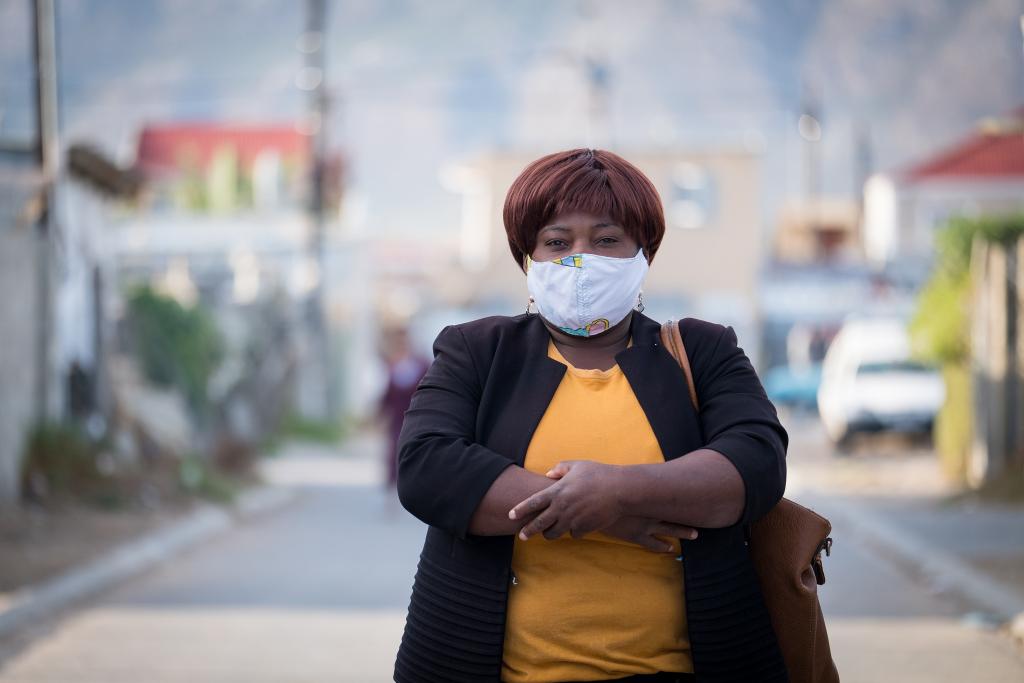
South African woman in health mask
A rapid increase in financial support must be strategically deployed in countries such as South Africa if it’s to put sustainable development on track. (Photo: iStock)

Toward a transformative and sustainable recovery 

Efforts to mainstream the SDGs in COVID-19 recovery should be complemented by a full revisit of the concept of growth. Economic growth has been the overriding ambition of national governments for the past centurythe key indicator used by leaders to declare “things are going well.” It has been impressive for decades: six of the top fastest-growing SSA economies in 2018 were in West Africa. Yet, inequality in the region is among the highest in the world. 

COVID-19 has upended GDP forecasts, shrinking both supply and demand. The global pandemic is pushing millions into poverty, but it is important to remember millions were already there despite years of sustained GDP growth. This coming period of unprecedented international crisis recovery must look beyond GDP expansion as its measure of success. It should go beyond leveraging industries' productivity and competitiveness; beyond negotiations of contracts and new trade partners; beyond FDI incentives and regulations. 

Social capitaltranslated through actions such as basic services, inclusiveness, and income redistribution policies—should be an important measure in planning and gauging the recovery. For example, according to Oxfam, West Africa loses USD 9.6 billion each year through corporate tax incentives to attract FDI. This is the equivalent of 100 modern and well-equipped hospital each year in each region. The social capital these hospitals would add to their communities must be considered as countries decide how to build back better.

Human capital—particularly education and jobs—should be expanded by taking full advantage of digitization and technology advances. While jobs and the education system in developed economies were able to transition quickly to virtual formats during the pandemic, schools and companies in many SSA countries had to remain closed or in limited operations due to technology, equipment, and software challenges. 

Another consideration in shaping pandemic recovery efforts beyond GDP growth is economic diversification, including a firmer emphasis on renewables. Drops in fossil fuel demand from top trading partners (EU, China) and the plunge in global commodity prices have reinforced the need to diversify the region’s economy. This need remains even as the understandable ambition to return to economic growth tempts countries to quickly exploitand possibly depletetheir natural resources. The recovery should exploit energy-efficient technologies in extractive industries and more diversified sources of revenue. 

A sustainable and transformative recovery implies that finance mobilization in SSA should align with an overall SDG financing strategy, with rigorous attention to how much capital goes where. COVID-19 and the 2008 global recession have taught us our economies are far from being resilient. Our plans to build back better ought to be much broader than last century’s outdated thinking.

Webinar

Presentation of Ceres2030 at the European Commission - Sustainable Solutions to End Hunger

November 25, 2020 4:00 pm - 5:30 pm CET

(Open to public)

85 researchers spanning 25 countries worked intensely for the past three years to identify the most promising solutions to end hunger sustainably, with a focus on the role of donors. Their efforts, which combined artificial intelligence, state-of-the-art modelling, and a strong partnership with Nature Research, was released on October 13,  as part of a series of events, hosted by the German Federal Ministry of Economic Cooperation and Development (BMZ), and a call to action from the research community. 

Ceres2030’s team will engage EU stakeholders on their new research and show that by doubling aid between now and 2030 and spending it wisely, we could end hunger, double smallholder farmer incomes and protect the climate. 

The audience for this meeting will be composed of a mix of the European Commission staff, non-profit organizations, Brussels-based international organizations, Parliamentarians, lobbyists and academics.

You can register here.

Speakers

  • Leonard Mizzi, Head of Unity of Rural Development, Food Security, Nutrition, DEVCO C1
  • David Laborde, Senior Research Fellow, IFPRI & Co-Director Ceres2030
  • Jaron Porciello, Associate Director, Cornell University & Co-Director Ceres2030
  • Carin Smaller, Director, Agriculture, Trade and Investment, IISD & Co-Director Ceres2030


Webinar

Regional Dialogue Series | Food and Agricultural Trade in the New Policy Environment

November 17, 2020 9:30 am - December 17, 2020 4:30 pm EST

(Open to public)

banner regional dialogue series

Together with the International Food Policy Research Institute (IFPRI), IISD is organizing a series of four virtual regional dialogues. The events will cover anglophone and francophone Africa, South Asia, and Latin America and the Caribbean.

The regional dialogue series will seek to bring together policy-makers and other relevant constituencies to revisit how policies affecting trade in food and agriculture can better deliver on food security, environmental sustainability, and other public policy goals in the context of the COVID-19 pandemic and the ongoing World Trade Organization (WTO) negotiations in the run-up to the 12th Ministerial Conference.

Trade in food and farm goods has been affected by the COVID-19 outbreak, imperilling efforts to make progress on tackling hunger and malnutrition according to the framework set out under the Sustainable Development Goals. At the same time, the farm sector is under increasing pressure to respond to new environmental challenges—especially those associated with climate change. With the WTO’s next Ministerial Conference postponed due to the pandemic, both the substance and process of talks in Geneva on updating the global trade rulebook have been affected, amidst ongoing tensions between major economies. As governments revisit their priorities in this new context, it is important that they engage with different constituencies in their region and beyond to ensure that negotiating strategies reflect an inclusive vision of public policy goals—one that can contribute to recovery and improve resilience to future food system shocks.

Partners:

IFPRI and IISD will partner with the Inter-American Institute for Cooperation on Agriculture (IICA) for the dialogue focusing on Latin America and the Caribbean region, and with Akdemiya2063 for the two dialogues focusing on Africa.

Dates:

1. Africa (French panel) on November 17, 3:30 p.m. WAT / 2:30 p.m. GMT.  

The report and video recording for this event are now available  here.  The event report is in English and in French.

2. Latin America and the Caribbean (Spanish panel) on November 23, 9:30 a.m. EST.  The page is available in English and in Spanish

3. Africa (English panel) on December 8, 2:30 p.m. GMT

4. South Asia (English panel) on December 17. 4:30 p.m. IST (6 a.m. EST)

Live-cast : The events will be live-cast from IFPRI website

Format

All four dialogues will be organized as virtual roundtable discussions. Each event will last approximately 1 hour and will be moderated by a facilitator who will give a brief introduction of the topic of the event and ensure that interventions remain within the pre-allotted time.


Webinar

Parliamentarians Action #4 |Engaging young women and men in rural and agriculture development and resilience building in the face of COVID-19 and beyond

November 12, 2020 11:00 am - 1:30 pm CET

(Open to public)

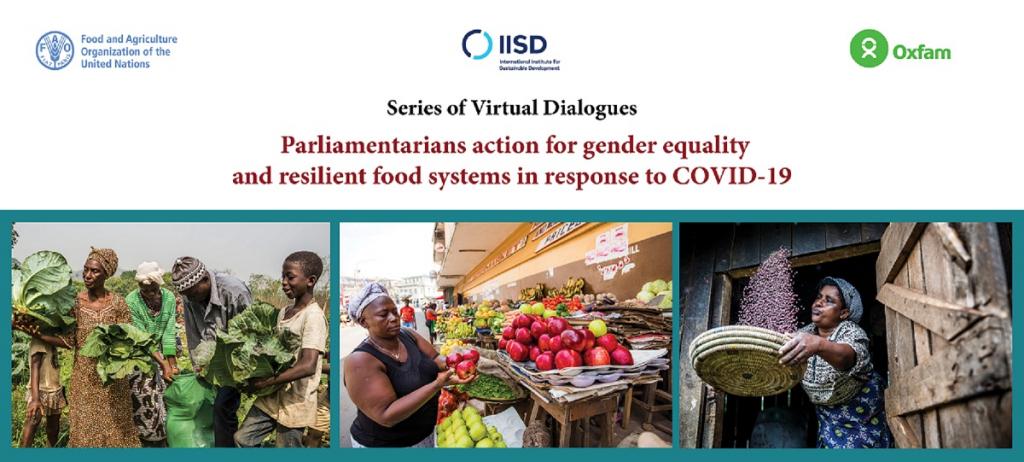
joint banner fao oxfam iisd

Africa has the highest youth population in the world, with 218 million people aged between 15 and 24. This burgeoning youth population presents a great opportunity for harnessing a potential demographic dividend, but also economic and social challenges that can lead to political instability or conflict. With the COVID-19 crisis exacerbating the existing vulnerabilities of rural young women and men, better and more age- and gender-responsive policy and legislation become crucial. 

The fourth virtual dialogue in the Parliamentarians’ Action for Gender Equality and Resilient Food Systems in Response to COVID-19 series was held on November 12, 2020, from 11 a.m. to 1.30 p.m. 

This dialogue provided a space for parliamentarians, youth, and other stakeholders to discuss how to engage young women and men in our efforts to eradicate rural poverty, food insecurity, and malnutrition, as well as measures to foster youth empowerment, gender equality, and the Sustainable Development Goals. 

The specific objectives include: 
•    Raising awareness on the challenges faced by rural young women and men and the interlinkages with rural poverty and food insecurity, and potential opportunities to strengthen youth rights.
•    Sharing policies and strategies in the Economic Community of West African States (ECOWAS) region on youth employment in the agribusiness sector and enhance parliamentarians’ commitment toward the achievement of the SDGs, as well as the objectives of the ECOWAS regional support strategy to youth employability in the agro-sylvo-pastoral and fisheries sectors.
•    Promoting an exchange of experiences and good practices among parliamentarians, regional economic communities, youth organizations, and other stakeholders on approaches to empower rural young women and men and promote gender equality during and beyond the COVID-19 pandemic.

This virtual meeting was the fourth in a series of dialogues organized by the Food and Agriculture Organization of the United Nations (FAO), IISD, and Oxfam as part of their policy support to the ECOWAS Network of Parliamentarians on Gender Equality and Investments in Agriculture and Food Security. The objective of the series is to enhance the role of African parliamentarians in mitigating the gender-differentiated impacts of COVID-19 on food systems.

Watch the event's full recording

Event hashtag: #ParliamentAction2020

Webinar

Geneva Trade Week Session: Ensuring Food Security, Sustainably: What role for trade?

September 29, 2020 3:00 pm - October 29, 2020 4:30 pm CEST

(Open to public)

How can trade—and trade policy—contribute to food security and environmental sustainability? The International Institute for Sustainable Development (IISD) joined forces with the  Food and Agriculture Organization of the United Nations (FAO) and Zurich University of Applied Sciences (ZHAW) to explore this question at a virtual session during Geneva Trade Week on September 29, moderated by FAO economist Ahmad Mukhtar.

ZHAW’s Professor Martina Bozzola laid the groundwork for the discussion, looking at definitions of sustainability and food security, and reminding participants of the three interconnected components of sustainable development—economic, social, and environmental.

“You really need to embrace all the three pillars,” Bozzola said.

Trade: Not an end in itself

Jonathan Hepburn from IISD then explored how food security and sustainability relate to trade policy in today’s world, and what governments can do differently to make progress in the future.

“Trade is a means of implementation—it’s not an end in itself,” he said.

Hepburn said that, alongside domestic productivity improvements, trade was set to become increasingly important in meeting future demand for food across the developing world. But he also cautioned that markets for food and agriculture remain poorly functioning and highly distorted.

Furthermore, the persistence of poverty means that many people remain unable to afford to access the food and nutrition they need even when food is otherwise available in the market.

Sustainable Agriculture in Action

Federica Angelucci, from the International Trade Centre (ITC), told participants how the ITC’s “Alliance for Action” was contributing to more sustainable agricultural value chains in practice. She also outlined what actions governments could take to support them.

She gave the example of the Sankofa cocoa project in Ghana, where the number of farmers adopting sustainable farming practice has quadrupled under the program.

“Policy-makers should also look at the barriers, especially non-tariff barriers, that are still affecting regional markets,” Angelucci said.

A “Key Role” for the World Trade Organization

Jamaica’s Ambassador Cheryl Spencer told participants that the World Trade Organization (WTO) had “a key role” to play in addressing these questions.

She highlighted how subsidies that distort patterns of trade and production continue to threaten producer livelihoods in the developing world and undermine food security. She also argued that global trade rules should ensure governments maintain the flexibility to provide other types of support to the sector.

“Trade distorting subsidies are, of course, the biggest danger to agricultural production and trade,” she said.

The COVID-19 crisis had seen some governments adopt large stimulus packages, she said, but warned that these could lead to unfair competition for farmers in low-income countries.

Ambassador Spencer emphasized that, although the pandemic has prompted governments to impose restrictions, countries should do their best to keep food flowing to where it’s needed.

“WTO members have a duty to keep supply chains open to facilitate movement of agricultural products, inputs, and workers across borders in order to prevent food shortages,” she said.

Restricting Food Exports

During the discussion, one participant asked what the panellists thought of moves to exempt humanitarian food aid from export restrictions when it is purchased by the World Food Program (WFP) for non-commercial purposes. Trade negotiators are currently discussing this question at the WTO.

“We believe this is one of those ‘low-hanging fruit’ for MC12,” Ambassador Spencer said, in reference to the trade body’s upcoming 12th ministerial conference.

Hepburn concurred, reminding participants that major economies in the G20 had already agreed to do so in a declaration earlier this year, as well as in another they issued in 2011.

“At the end of the day, we need to be able to bring the results of those declarations back to the WTO and turn them into something that’s actionable,” he said.

Event moderator Mukhtar underscored that WFP food aid “is targeted to people in extreme humanitarian need”: unlike other consumers, they may therefore have no choice in how they access adequate food and nutrition.

Climate Change and Future Shocks

“COVID is in the front of our minds—but we know that climate change is going to mean there’ll be a lot more extreme weather events in the years ahead,” Hepburn warned.

He said that WTO members needed to start thinking differently about risks and food system shocks, so as to ensure that countries have the tools they needed to respond to unexpected events, but without exporting shocks and volatility onto other markets in ways that could harm vulnerable producers and consumers.

Ambassador Spencer agreed. “The WTO has a role to play in cushioning shocks and guaranteeing food security,” she said.

Summing up the exchange, Mukhtar told participants that trade and trade policy “look very different” if seen from a developmental, rather than a transactional, perspective.

“It’s up to us,” he said: “How do we use trade to achieve food security or to achieve sustainability?”

See the recording of the panel session below

Webinar

Launch Event of Ceres2030: Uniting Science and Policy to End Hunger Sustainably

October 13, 2020 12:15 pm - 1:00 pm CEST

(Open to public)

Almost 80 researchers spanning 23 countries worked intensely for three years to identify the most promising solutions to building sustainable food systems and to tell donors how much it would cost to end hunger by 2030. Their efforts, which combined artificial intelligence, state-of-the-art modelling, and a strong partnership with Nature Research, will be released at the launch event for Ceres2030: Sustainable Solutions to End Hunger.

Ceres2030 is a joint project between Cornell University, the International Institute Food Policy Research Institute (IFPRI), and the International Institute for Sustainable Development (IISD).

This launch event will focus on how much public spending is needed in low- and middle-income countries, including donor contributions through official development assistance (ODA), to achieve the UN Sustainable Development Goal 2, zero hunger. Panellists will also explore a diverse mix of agricultural interventions in three broad areas—farm-level interventions to directly improve farm productivity, drivers in market systems that can facilitate storage and services that farmers need, and social interventions to empower rural populations.

This session is part of a series of  hosted by the German Federal Ministry of Economic Cooperation and Development (BMZ). For more information on this event please see this programme.

Interpretation in French will be available for this meeting. See the event webpage in French.

En français  (The English recording is below, please scroll down)

Presenter

Dr. Eugenie Maiga - Lead author, Associate Professor, Norbert Zongo University

David Laborde - Senior Research Fellow, IFPRI & Co-Director Ceres2030

Jaron Porciello - Associate Director, Cornell University & Co-Director Ceres2030

Moderator

Carin Smaller, Director, Agriculture, Trade & Investment, IISD & Co-Director Ceres2030


Event hashtag: #GoodFood4All

In English


IISD in the news

Canadian, African researchers partner on lake protection

Research conducted at northwestern Ontario's Experimental Lakes Area is soon set to be deployed intercontinentally, as the owner of the freshwater science station partners with a foundation seeking to preserve the health of the African Great Lakes.

September 15, 2020

IISD in the news details