Report

Beyond Fossil Fuels: Fiscal transition in BRICS

This report makes the case for preparing government budgets for the clean energy transition in BRICS (Brazil, Russia, India, China, South Africa).

November 12, 2019


Key Messages

  • As the clean energy transition advances, the BRICS governments need to start preparing their budgets for a fiscal transition out of revenues from fossil fuel production and consumption. The clean energy transition offers alternatives to fossil fuels and thus can lead to the decrease in revenues for the BRICS governments in two ways: through a drop in fossil fuel prices and, over the longer term, through the shrinkage of absolute amounts of fossil fuel production and consumption.
  • In 2017, taxes and other revenues from fossil fuel production and consumption amounted to 23.6 per cent of general government revenue in Russia, 17.8 per cent in India, 6.8 per cent in both Brazil and South Africa, and 4.2 per cent in China. These revenues should be used strategically to help diversify BRICS economies away from fossil fuels and cover the social costs of transition, including for vulnerable groups of consumers, workers and communities currently depending on fossil fuels.
  • The BRICS governments’ budgets are also being eroded by subsidies to fossil fuel production and consumption. Phasing out these subsidies will both increase government revenues and promote transition beyond fossil fuels.

For the first time, this report brings together official data on governments’ revenues and subsidies associated with fossil fuels in Brazil, Russia, India, China and South Africa (referred to collectively as BRICS). It offers initial recommendations on aligning BRICS's fiscal policies with a clean energy transition. 

First, the cross-country analysis discusses external and domestic drivers of the clean energy transition and what they mean for BRICS as exporters and importers of different fuels. After an overview of the BRICS  countries’ revenues and subsidies associated with fossil fuels, the report discusses avenues for fiscal transition beyond fossil fuels. The conclusion presents policy recommendations. The cross-country analysis also includes an Annex with data tables and a methodology and scope description.

In addition to the cross-country analysis, the report includes country briefs on Brazil, Russia, India, China and South Africa that highlight the role of fossil fuels in respective economies. These briefs present the aggregated data on both revenues and subsidies related to fossil fuels in each country. The country briefs can be downloaded separately.  

This analysis has been prepared in partnership with the Leave it in the Ground Initiative.


Report details

Brief

Beyond Fossil Fuels: Fiscal Transition BRICS | Case Study: South Africa

The South Africa case study is part of the report Beyond Fossil Fuels: Fiscal transition in BRICS. It presents the aggregated data on both revenues and subsidies related to fossil fuels in South Africa.

November 12, 2019
  • In 2017, taxes and other revenues from fossil fuels amounted to 6.8% of general government revenue in #SouthAfrica. These revenues should be used to help diversify the economy away from fossils and cover the social costs of a #JustTransition.

  • #SouthAfrica's government budget is being eroded by subsidies to fossil fuels. Phasing out these subsidies in a socially equitable way will both increase government revenues and promote the #JustTransition to clean energy.

  • In 2017, fossil fuels made up 92% of #SouthAfrica's primary energy supply.

Key Messages

  • As the clean energy transition advances, South Africa, along with the other BRICS governments, needs to start preparing its budget for a fiscal transition out of revenues from fossil fuel production and consumption. The clean energy transition offers alternatives to fossil fuels and thus can lead to the decrease in government revenues in two ways: through a drop in fossil fuel prices and, over the longer term, through the shrinkage of absolute amounts of fossil fuel production and consumption.
  • In 2017, taxes and other revenues from fossil fuel production and consumption amounted to 6.8 per cent of general government revenue in South Africa. These revenues should be used strategically to help diversify the economy away from fossil fuels and cover the social costs of transition, including for vulnerable groups of consumers, workers and communities currently depending on fossil fuels.
  • The government’s budget is being eroded by subsidies to both fossil fuel production and consumption. Phasing out these subsidies in a socially equitable way will both increase government revenues and promote transition beyond fossil fuels.

This case study is part of the report Beyond Fossil Fuels: Fiscal transition in BRICS. The report consists of a) a cross-country analysis for all BRICS countries (Brazil, Russia, India, China and South Africa), which offers initial recommendations on aligning BRICS fiscal policies with a clean energy transition, and b) five country briefs that present the aggregated data on both revenues and subsidies related to fossil fuels in each country. The cross-country analysis and each of the five country briefs can be downloaded separately from the report’s home page.  

This analysis has been prepared in partnership with the Leave it in the Ground Initiative.
Brief details

Topic
Just Transition
Energy
Subsidies
Region
South Africa
Project
IISD Global Subsidies Initiative
Impact area
Climate
Sustainable Economies
Publisher
IISD
Copyright
IISD, 2019
Insight

South Africa: Is a transition away from coal just around the corner?

In South Africa, coal has long been king, but emerging factors suggest the fossil fuel may soon be pushed off its throne.

April 9, 2019

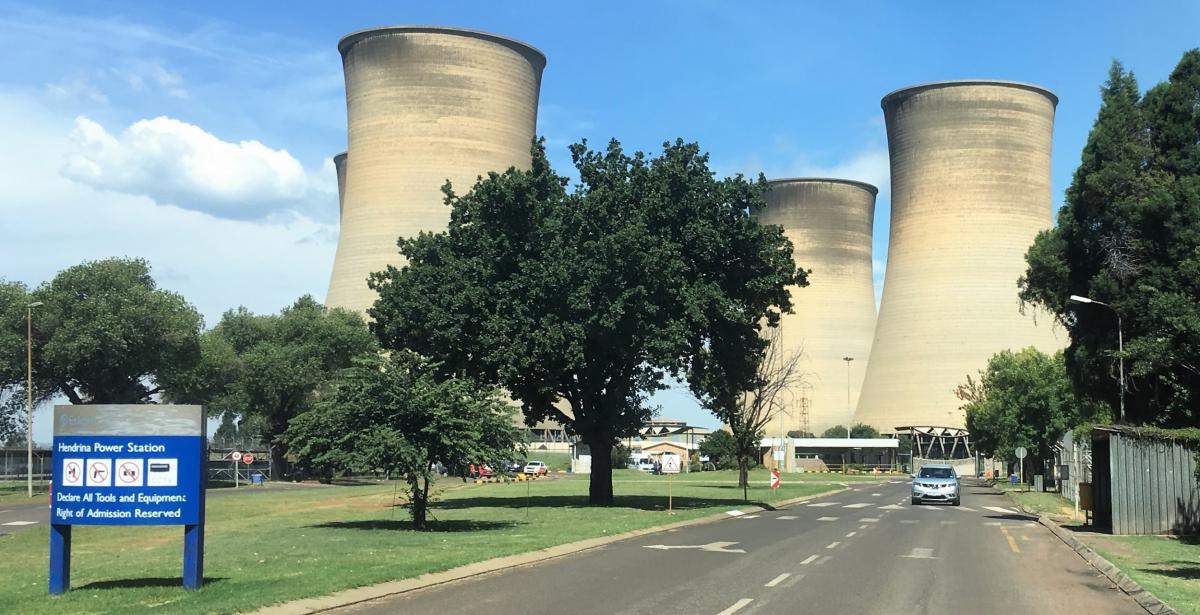
Workers at the Hendrina coal power station in Mpumalanga, South Africa, are unsure if they will soon be joining the former workers at the nearby Optimum coal plant, protesting outside a shuttered plant.

Former miners at the Optimum mine have not been paid since the mine was closed in September. Two units at Hendrina are reported to have already closed with more units under threat. Workers in older coal mines and power stations across the region are starting to question whether these closures will soon be replaced by a new fleet of modern power stations as a natural part of the project cycle or if it is the beginning of a fundamental shift away from coal.

Old King Coal

Coal has long been king in South Africa: 92 per cent of electricity and 20 per cent of transport fuels come from coal. Approximately half of the 140 million tonnes of coal produced each year is exported (production is 142 million tonnes and exports are reported to be 73 million tonnes) predominantly to India, China, Korea and Japan. However, there are several factors on the horizon that might derail the coal train.

Export demand for South Africa’s coal is starting to wobble. India has a target to reach zero coal imports, and China faces a massive overcapacity problem of its own, with more than 1 million coal workers facing unemployment. This creates pressure to avoid imports and buy local in key export markets. A drop in exports, where much of the best South African coal currently ends up, could push many mines into insolvency.

Hendrina power station
Cooling towers sit unused as several units are closed at Hendrina Power Station, Mpumalanga, South Africa.

An aging coal fleet means that a number of coal power plants, including Hendrina, Camden and Arnot, face decommissioning by 2025. This is significant because existing coal plants, which have long since recovered their capital investment, are considered reasonably competitive against new alternative forms of power generation, including renewables. New coal plants are estimated to be significantly more expensive. The latest auctions for renewable energy and coal power purchase showed renewables costing ZAR 62 cents/kWh for wind and ZAR 79 cents/kWh for solar photovoltaic. Wind is approximately 40 per cent lower than the Thabametsi and Khanyisa projects, the two recent coal independent power producers that won bids through the coal-baseload independent power producers’ procurement program at a price of ZAR 1.03/kWh.

The need to get ready for a transition

If policy catches up with economics, there is a risk for the coal industry that old plants will close as they reach the end of their life cycle but new coal capacity will not materialize. This would lead to a gradual decline in domestic demand for coal.

Together these international and domestic factors create the conditions for the current coal-dominated energy industry to unravel faster than many commentators are predicting.

If a transition away from coal is starting to appear more likely, the impact on the workers in the coal mines and coal power sectors must be considered. Indeed, South Africa was the only country that included a mention of the need to ensure a just transition in its Nationally Determined Contribution under the United Nations Framework Convention for Climate Change (UNFCCC) process.

IISD recently published a report reviewing international examples of how governments have responded to low-carbon transitions in terms of reducing negative impacts on energy consumers and workers. A key finding of that research is that, to ensure a just transition, it is important for the government, industry, workers and other stakeholders to be prepared for a possible sunset of the coal sector. A just transition requires policies that include social dialogue and a careful mapping of the transition's winners and losers. Such policies should give workers and communities opportunities to acquire skills and roles beyond coal while minimizing the negative impacts of the energy transition.

Policy Analysis

Social Impact Bonds Are Helping Solve South Africa’s Hardest Challenges

March 11, 2019

Pay-for-Performance Allows Governments to Embrace Creativity and Experimentation

In South Africa, reducing the incidence of new HIV infections in young women is a complex behavioural issue that requires multiple interventions and stakeholders. As Fareed Abdullah, the former CEO of the South African National AIDS Council points out, it is about sex—which is about relationships, which is about power dynamics.

How do you address the health of a young woman, while ensuring that she completes her schooling, finds economic opportunity, and gains agency in her relationships? If you are in government and contracting an organisation to address this issue, how do you wrap all of that into a service?

The old ways don’t work

Our experience at the Bertha Centre for Social Innovation and Entrepreneurship at the UCT Graduate School of Business is that traditional mechanisms are often inadequate in cases such as this. They concentrate too much on committing to certain inputs, and not enough on delivering outcomes. In many cases, they also lead to piece-meal efforts that fail to deliver a coordinated response.

A possible solution to this problem is emerging in the form of social impact bonds, an innovative financing model sometimes called pay-for-performance or outcomes-based contracts.

These are public sector contracts that are structured to leverage private investors to pay for social services so that providers (i.e., government departments) do not have to front the cost of delivery. Investors are rewarded only if providers meet agreed-upon outcomes: a fall in new HIV infections, for instance.

"Social impact bonds create an environment for experimentation."

The exciting thing about social impact bonds is that they represent an entirely new approach to social interventions. Vitally, they reduce the restrictions placed on the organisations delivering programs to vulnerable people where they have to follow specific input and activity checklists.

Pay-for-performance tools, in contrast, allow for far more flexibility in execution. Instead of being limited by having to meet pre-determined deliverables, organisations are able to adapt and improve their programs during the delivery period and tailor them to achieve the desired results.

These models have already been successful in many developed countries, but their potential in emerging countries is gaining recognition. They are not only able to reduce the financial risk to the state, but are also a powerful tool in preventative interventions.

How social impacts are breathing new life into social interventions

One of the first pay-for-performance contracts in South Africa, which was also the first Early Childhood Development (ECD) bond to be issued in the Global South, is focused on meeting nutritional and educational needs at the ECD stage. It has been demonstrated that if you get this right, you increase an individual’s earning capacity by 10 per cent over the age of 20 throughout their life.

The Bertha Centre is now working with government to set up an outcomes-based contract on literacy, which is one of the biggest constraints in the country’s schooling system. Only 28 per cent of children in South African schools at the end of grade four can read for meaning.

Our vision is to create a national fund to invest in multiple programs, with government and civil society working in partnership, on a scale that has the potential to support foundation phase teachers and establish the right environments in which proper learning can take place.

"The result is a much richer environment for collaboration and problem solving"

We are also supporting the design of a pay-for-performance contract that will similarly convene multiple stakeholders to address the high levels of HIV infections in young women. We anticipate this will be scalable and able to attract significant capital.

While the efficacy of these innovative mechanisms still needs to be rigorously tested and the issues of data-poor environments, government capacity and high transaction costs have not been fully resolved, hopes are high that social impact bonds will make a positive impact on some of South Africa’s intractable social challenges.

One of their clear advantages is that, as the initial funding is not coming out of the government purse, they create an environment for experimentation. Governments traditionally prefer to commission goods and services with which they are familiar and have already tested. However, if you are contracting on the basis of results, you are relatively agnostic to how that service is delivered.

This allows governments and the organisations they are contracting to be more creative with what they are doing. The result is a much richer environment for collaboration and problem solving that delivers a genuine opportunity to solve even the most complex of social issues.

NAP Global Network

The National Adaptation Plan (NAP) Global Network supports developing countries to advance their NAP processes to help accelerate climate change adaptation efforts around the world.

The Network was established in 2014 at the 20th session of the Conference of the Parties (COP 20) in Lima, Peru, initiated by adaptation practitioners from 11 developing and developed countries. Today, the NAP Global Network connects over 1,400 participants from more than 150 countries working on national adaptation planning and action, and has delivered direct support to more than 40 countries. Financial support for the Network has been provided by Austria, Canada, Germany, and the United States. IISD hosts the Network's Secretariat.


Our vision is a world where communities and countries—particularly the poorest and most vulnerable—are able to articulate, work toward, and realize their development aspirations in a changing climate. This is possible by having robust adaptation planning processes that are:

  • Aligned with development priorities and plans. 
  • Effective in channelling resources to the people, places and systems that need them most. 


Our mission is to harness the collective knowledge and resources of governments, practitioners, donors, and civil society to build capacities and accelerate the formulation and implementation of NAP processes.


Insight

Cape Town’s Water Woes: An uncomfortable parable on climate change

Can the current water crisis that Cape Town is experiencing be seen as a parable for climate change? Aaron Cosbey thinks so and explains all.

February 8, 2018

Cape Town, the beautiful South African coastal city from which I write, is grimly counting down the days until it runs out of water.

“Day zero,” as it’s called here, when reservoir levels reach the critical level of less than 14 per cent, is currently thought to be May 11, merely weeks away.

On that day, when four million people go to turn on their water taps or showers, or flush their toilets, nothing will happen. The local government is in crisis mode and has said it will truck in water and set up 200 water distribution points, where residents can go every day to use public toilets and collect meagre rations of 25 litres apiece (that’s less water than a two-minute shower if you have old fixtures). If we’re doing the math, each collection point would service just under 20,000 people. If that sounds apocalyptic to you, you’re not alone.

It is as if someone set out to write an alarming allegory portraying civilization’s troubled future if we don’t soon change course. 

To me, it sounds like a parable about climate change. At the core of the problem is an historic three-year drought driven by climate change, but that’s not what I mean. I mean that the story of Cape Town has uncanny similarities to the story of climate change globally, complete with what threatens to be an uncomfortable ending.

“Day zero,” when reservoir levels in Cape Town reach the critical level of less than 14 per cent, is currently thought to be May 11—merely weeks away.

Scientists have been saying for years that this day might come, but the political response has been completely dysfunctional. Local officials have ignored the warnings against allowing urban areas to rapidly become denser. When it became clear the drought was serious, they were loath to impose hard limits on water use, especially with agricultural and tourism interests lobbying hard against them, arguing that they would be bad for business. State officials accuse the national government (ruled by an opposing party) of underfunding critically needed water infrastructure. Even when it was clear that crisis was pending, the national authorities increased the Cape’s agricultural water allotment.

If they shock the rest of us to action, Cape Town’s woes may end up having some redeeming value.

Some Cape Town residents took the warnings seriously and conserved, but most didn’t. They either didn’t know about the issue, didn’t think it was their responsibility to do anything, or didn’t believe that things would ever really get bad, and so they went about their business drawing down the reservoirs.

There are staunch deniers, who even now claim the whole thing is a hoax and believe the water will not run out. There are overdue and inadequate adaptation measures (the collection points, emergency attempts to set up desalinization). And there is the frightening prospect of a rending of the social fabric if the crunch actually comes, with the poor and marginalized being the hardest hit.

To anyone that deals with climate policy, it’s all uncomfortably familiar, as if someone set out to write an alarming allegory portraying civilization’s troubled future if we don’t soon change course.

In that sense, if they shock the rest of us to action, Cape Town’s woes may end up having some redeeming value.

Aaron Cosbey is a Senior Associate at IISD and a development economist whose work focuses on climate change and energy, trade and investment law and policy, subsidies and green industrial policy. He is currently in Cape Town, South Africa at the Investing in Africa Mining Indaba to present draft guidance on local content policies for the Intergovernmental Forum on Mining, Minerals, Metals and Sustainable Development.

Insight details

Brief

sNAPshot | Information Sharing for Adaptation Planning at Subnational Levels: South Africa's Let's Respond Toolkit

This sNAPshot policy brief explores South Africa's approach to information sharing in the National Adaptation Plan (NAP) process to promote vertical integration, which is the process of linking national and subnational adaptation planning, implementation, and monitoring and evaluation.

April 30, 2017

Recognizing the important role played by provincial and local actors in addressing climate change vulnerability, South Africa has demonstrated a strong commitment to vertical integration, the process of linking national and subnational adaptation planning, implementation, and monitoring and evaluation (M&E).

Building on an earlier overview brief, this sNAPshot policy brief from the NAP Global Network focuses on information sharing, using South Africa’s Let’s Respond Toolkit as an example of how web-based platforms can be used for sharing information between different levels of government, as well as with non-governmental stakeholders.

Brief details

Topic
Climate Change Adaptation
Region
South Africa
Africa
Project
NAP Global Network
Impact area
Climate
Publisher
IISD
Copyright
IISD, 2017
Report

G20 subsidies to oil, gas and coal production: South Africa

September 14, 2015

Jointly prepared by IISD, OCI and ODI, this country study and accompanying data sheet compiles publicly available information on fossil fuel production subsidies in South Africa in 2013 and 2014.

It is a background paper to the report Empty promises: G20 subsidies to oil, gas and coal production and provides a baseline to track progress on the phase-out of such subsidies as part of a wider global energy transition.

To download the related Sourth Africa Excel information click here.

Report details

Topic
Subsidies
Region
South Africa
Impact area
Climate
Publisher
ODI
Copyright
ODI, 2015
Report

Implementing Sustainable Public Procurement in South Africa: Where to start

May 24, 2014

This report investigates the extent of policy space for the practical uptake of sustainable public procurement (SPP) in South Africa.

It also assesses opportunities for the launch of pilot tenders that will yield greater environmental, social and economic value across the life cycle of the asset or service being procured. Most importantly, this report also demonstrates that the Government of South Africa can use sustainable public procurement to drive green industrial growth, implement Broad-Based Black Economic Empowerment, increase green innovation and deliver better value-for-money for the South African tax payer.

Report

Border Carbon Adjustments: What Risk for South African Exporters?

August 31, 2011

This policy brief, based on a longer analysis prepared by the IISD for South African Renewable Initiative, estimates the costs that would be borne by South African exporters in various sectors if the U.S. and/or the EU implemented border carbon adjustment (BCA) policies.

Using plausible assumptions about the characteristics of any eventual BCA scheme, it identifies the vulnerable sectors, and shows what costs each would bear assuming current production methods and trade flows. It ends by speculating about the ways in which South African exporters might avoid such charges, should BCA ever be implemented.

Participating experts

Report details

Topic
Trade
Region
South Africa
Impact area
Sustainable Economies
Publisher
IISD
Copyright
IISD, 2011